- Causes and consequences
- Signs by which you can determine if there are air pockets in pipes and radiators
- Types of air vents and their design features
- Automatic
- Manual
- Radiator
- Filling the heating circuit with coolant
- Scenario 1: apartment building, bottom filling
- Solution 1: run the elevator to reset
- Solution 2: air vents
- Solution 3: bypassing the riser to discharge
- Signs of system airing
- De-airing in central heating, ways to eliminate traffic jams
- Mayevsky crane
- Automatic air vent (fig. 3)
- Lower heating supply in a high-rise building
- Option number 1 to solve the problem - start the elevator to reset
- Option number 2 to fix the problem - installing the air vent
- Option number 3 to fix the problem - bypassing the heating riser to discharge
- Installing air bleed valves
- Mayevsky air valve
- Automatic air release valve
- Salt cleaning
Causes and consequences
Air pockets are caused by the following factors:
- During installation, errors were made, including incorrectly made kink points or incorrectly calculated slope and direction of pipes.
- Too fast filling of the system with coolant.
- Incorrect installation of air vent valves or their absence.
- Insufficient amount of coolant in the network.
- Loose connections of pipes with radiators and other parts, due to which air enters from the outside into the system.
- The first start and excessive heating of the coolant, from which, under the influence of high temperature, oxygen is more actively removed.
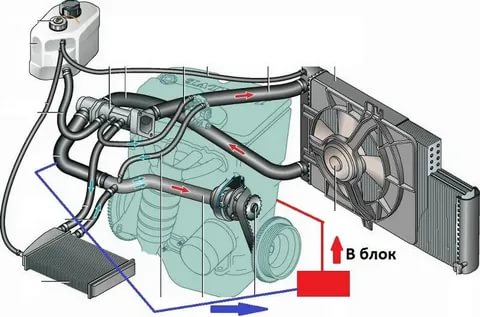
Air can cause the greatest harm to systems with forced circulation. During normal operation, the bearings of the circulation pump are in the water at all times. When air passes through them, they lose lubrication, which leads to damage to the sliding rings due to friction and heat, or completely disables the shaft.
Water contains oxygen, carbon dioxide, magnesium and calcium in a dissolved state, which, when the temperature rises, begin to decompose and settle on the walls of pipes in the form of limescale. Places of pipes and radiators filled with air are most susceptible to corrosion.
Signs by which you can determine if there are air pockets in pipes and radiators
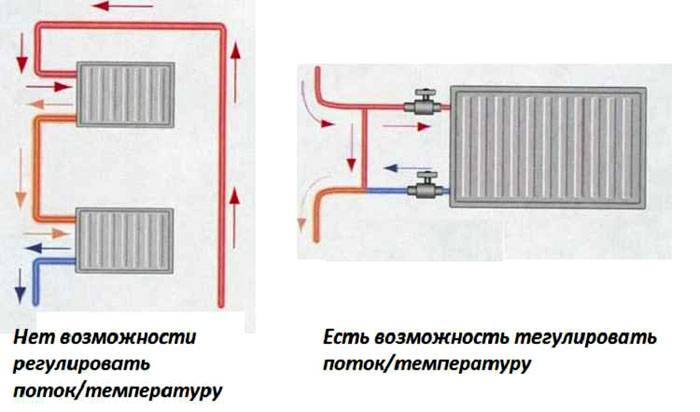
Due to the air in the heating system, the batteries heat up unevenly. When checked by touch, their upper part, in comparison with the lower one, has a noticeably lower temperature. The voids do not allow them to warm up properly, therefore the room is heated worse. Due to the presence of air in the heating system, when the water is very hot, noise appears in the pipes and radiators, similar to clicks and water flow.
You can determine the place where the air is located by ordinary tapping. Where there is no coolant, the sound will be more sonorous.
Note! Before removing air from the network, you should find the cause of its appearance and eliminate it. Especially carefully check the network for leaks.When heating is started, it is extremely difficult to identify loose connections, since water quickly evaporates on a hot surface.
When heating is started, it is extremely difficult to identify loose connections, since water quickly evaporates on a hot surface.
Especially carefully check the network for leaks. When heating is started, it is extremely difficult to identify loose connections, since water evaporates quickly on a hot surface.
Types of air vents and their design features
There are automatic and manual air vent valves, the former are mainly installed at the upper points of collectors and pipelines, manual modifications (Maevsky taps) are placed on radiator heat exchangers.
Automatic devices are distinguished by a wide variety of options for locking mechanisms, their cost is in the range of 3 - 6 USD, a wide range of models from domestic and foreign manufacturers is presented on the market. The cost of standard Mayevsky cranes is about 1 USD, there are products at a higher price, designed to operate in non-standard radiator heaters.
Rice. 6 An example of the construction of an air vent with a rocker mechanism
Automatic
Automatic taps have a different design depending on the manufacturer, the main differences between the devices:
- The presence of a reflective plate inside the case. It is placed at the entrance to the working chamber, protecting internal parts from hydraulic shocks.
- Many modifications are supplied complete with a spring-loaded shut-off valve, into which the air vent is screwed, when it is removed, the spring is compressed and the sealing ring closes the outlet channel.
- Some models of automatic taps are designed for operation in conjunction with radiator heat exchangers; instead of straight lines, they have side threaded pipes of the appropriate size for screwing into the radiator inlet. If necessary, angular automatic air vents of any type can be used, for example, at the points of connection of underfloor heating circuits, hydraulic switches, if their threaded diameters of the inlet and outlet fittings are the same.
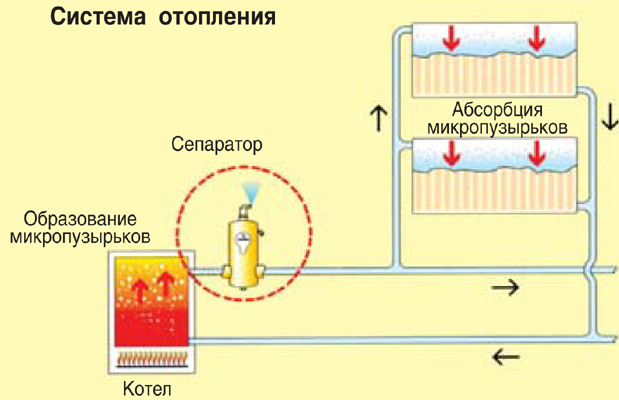
- There are analogues of air vents on the market - microbubble separators, they are mounted in series in the pipeline on two inlet pipes corresponding to the diameter of the pipes. When the liquid passes through the body tube with a soldered copper mesh, a vortex water flow is created, which slows down the dissolved air - this contributes to the rise of the smallest air bubbles, which are bled through the automatic air release valve of the chamber.
- Another common design (an example of the first was given above) is the rocker model. In the chamber of the device there is a float made of plastic, it is connected with a nipple shut-off needle (like a car). When the float is lowered in an air-laden environment, the nipple needle opens the drain hole and air is released, when water arrives and the float rises, the needle closes the outlet.
Rice. 7 Principle of operation of separator-type air vents for bleeding microbubbles
Manual
Manual devices for removing air from the system are called Mayevsky taps, due to the simplicity of the design, mechanical air vents are everywhere installed on radiators.On the market, you can find manual taps in the traditional design for installation in various places, and some modifications of shut-off valves are equipped with Mayevsky taps.
A mechanical air vent for removing air from the heating system works as follows:
- In operation, the cone screw is turned in and securely seals the housing outlet.
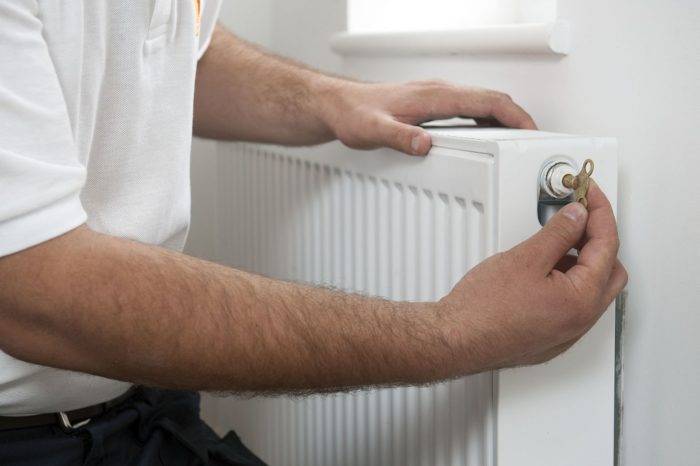
- When it is necessary to remove excess air from the battery, one or two turns of the screw are made - as a result, the air flow under the pressure of the coolant will exit the side hole.
- After the air is released, the water begins to bleed, as soon as the water jet acquires integrity, the screw is screwed in again and the de-airing operation is considered completed.
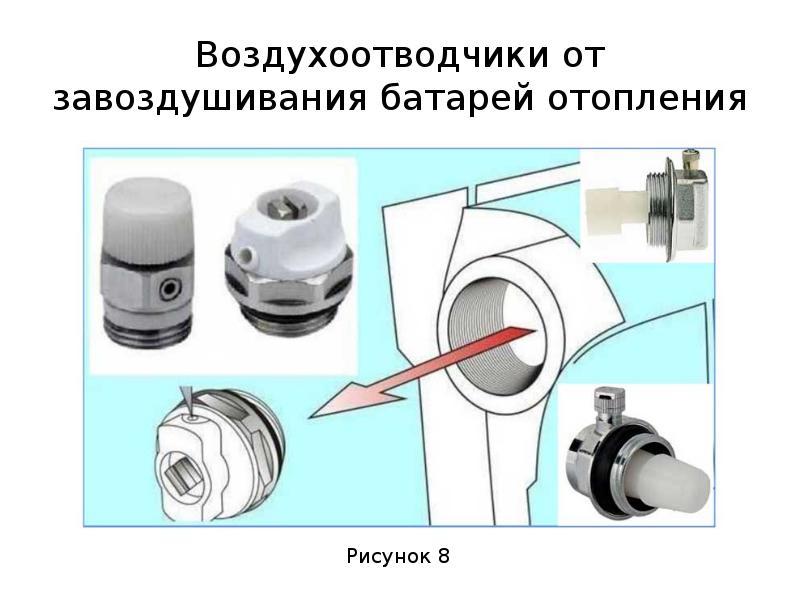
Rice. 8 Air vents from airing radiators
Radiator
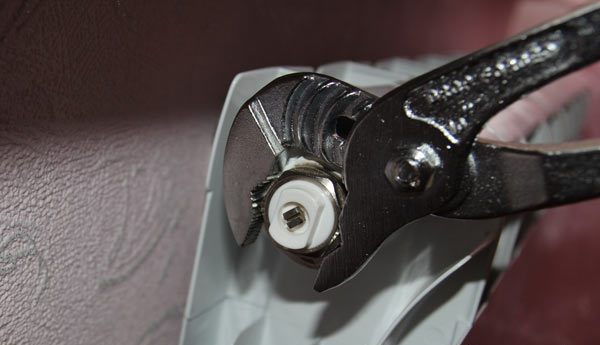
Cheaper manual mechanical air vents are most often installed in radiators, if the body consists of two parts, the element with the outlet pipe can be turned around its axis to direct the drain hole in the right direction. The radiator device for bleeding air from the heating system has the following options for unscrewing the bleed screw:
- Swivel handle made of plastic or metal.
- Special plumbing tetrahedral key.
- Screw with a slot for a flat screwdriver.
If desired, an automatic-type angular air vent can be installed in the radiator - this will entail additional costs, but will simplify the airing of the batteries.
Filling the heating circuit with coolant
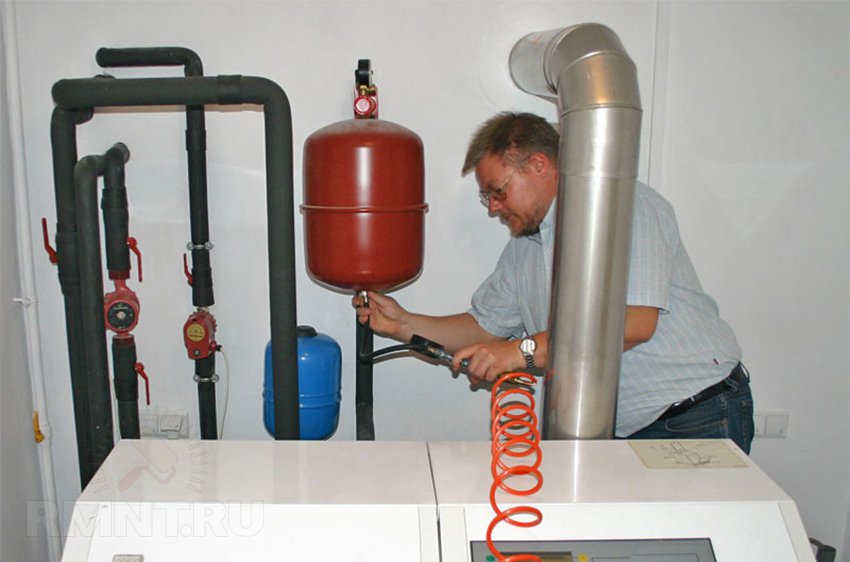
For the heating system to work properly, it must be flushed and then refilled with water.Often it is at this stage that air seeps into the circuit. This is due to incorrect actions during the filling of the contour. In particular, air can be entrapped in too fast a flow of water, as mentioned earlier.
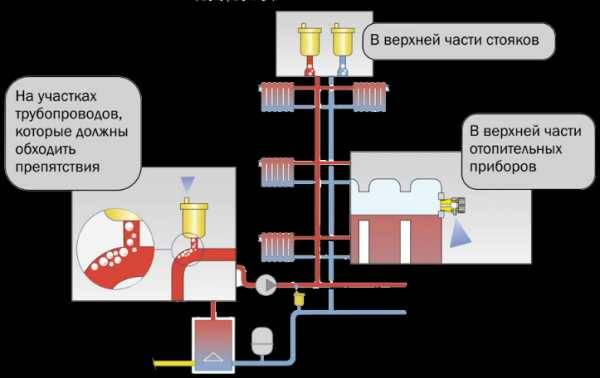



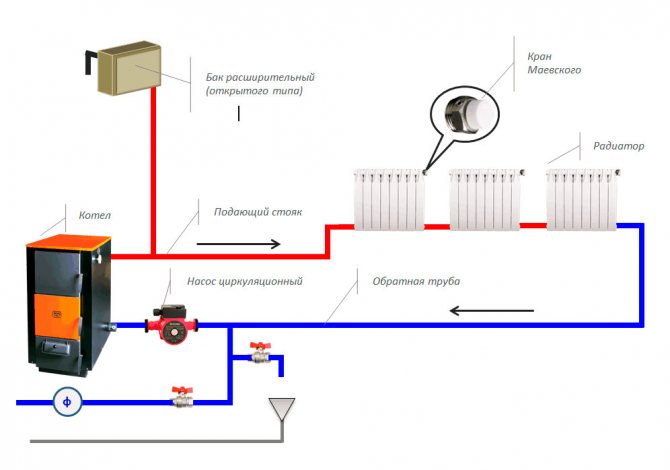
The scheme of the expansion tank of an open heating circuit allows you to get an idea of the procedure for filling such a system with coolant after flushing
In addition, the correct filling of the circuit also contributes to the faster removal of that part of the air masses that are dissolved in the coolant. To begin with, it makes sense to consider an example of filling an open heating system, at the highest point of which an expansion tank is located.
Such a circuit should be filled with coolant, starting from its lowest part. For these purposes, a shut-off valve is installed in the system below, through which tap water is supplied to the system.
A properly arranged expansion tank has a special pipe that protects it from overflow.
A hose of such length should be put on this branch pipe so that its other end is brought to the site and is outside the house. Before filling the system, take care of the heating boiler. It is recommended to disconnect it from the system for this time so that the protective modules of this unit do not work.
After these preparatory measures are completed, you can start filling the contour. The tap at the bottom of the circuit, through which tap water enters, is opened so that the water fills the pipes very slowly.
The recommended flow rate during filling should be about three times less than the maximum possible.This means that the valve should not be turned off completely, but only one third of the pipe clearance.
Slow filling is continued until water flows through the overflow hose, which is brought out. After that, the water tap should be closed. Now you should go through the entire system and open the Mayevsky valve on each radiator to bleed the air.
Then you can reconnect the boiler to the heating system. These taps are also recommended to be opened very slowly. During the filling of the boiler with coolant, a hiss can be heard, which is emitted by the protective air vent valve.
This is normal. After that, you need to add water to the system again at the same slow pace. The expansion tank should be about 60-70% full.
After that, it is necessary to check the operation of the heating system. The boiler is turned on and the heating system is warmed up. Radiators and pipes are then examined to identify areas where there is no or insufficient heating.
Insufficient heating indicates the presence of air in the radiators, it is necessary to bleed it again through the Mayevsky taps. If the procedure for filling the heating circuit with coolant was successful, do not relax.
For at least another week, the operation of the system should be carefully monitored, the water level in the expansion tank should be monitored, and the condition of the pipes and radiators should be checked. This will allow you to quickly resolve the problems that have arisen.
In a similar way, closed-type systems are filled with coolant. Water should also be supplied to the system at a low speed through a special tap.
You can fill the heating system of a closed type with a working fluid (coolant) on your own
It is important to arm yourself with a manometer for this. But in such systems, pressure control is an important point.
When it reaches a level of two bars, turn off the water and bleed air from all radiators through Mayevsky's taps. In this case, the pressure in the system will begin to decrease. It is necessary to gradually add coolant to the circuit in order to maintain pressure on level two bar
But in such systems, pressure control is an important point. When it reaches a level of two bars, turn off the water and bleed air from all radiators through Mayevsky's taps. In this case, the pressure in the system will begin to decrease. It is necessary to gradually add coolant to the circuit in order to maintain a pressure of two bar.
It is difficult to perform both of these operations alone. Therefore, it is recommended that the filling of a closed circuit is carried out together with an assistant. While one bleeds air from the radiators, his partner monitors the level of pressure in the system and immediately corrects it. Joint work will improve the quality of this type of work and reduce their time.




Scenario 1: apartment building, bottom filling
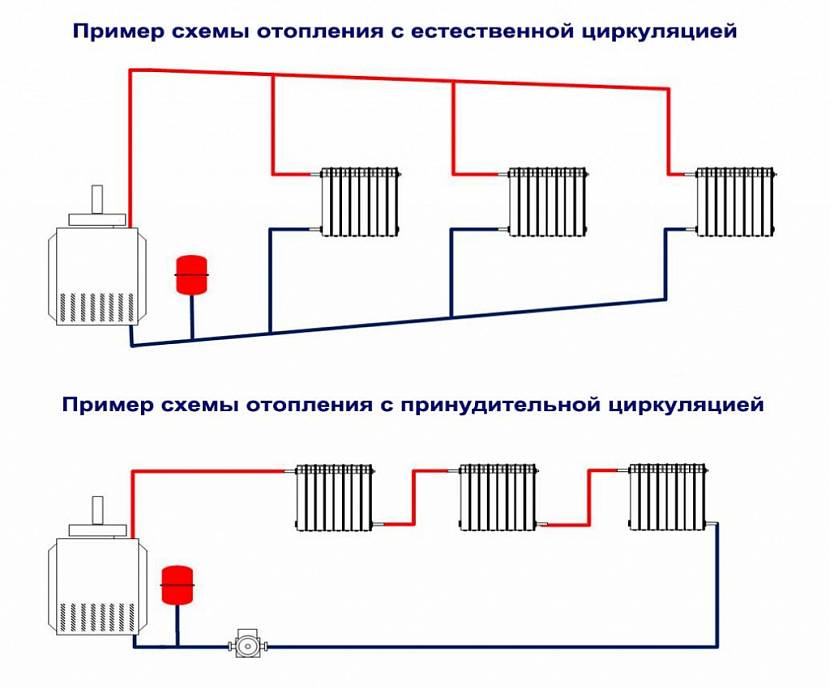
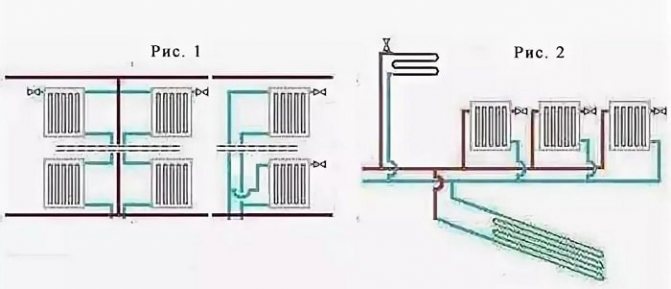
The bottom pouring scheme is the most typical solution for modern-built houses. Both return and supply pipelines are located in the basement. The risers connected to the bottlings are connected in pairs (supply with return) by a jumper on the top floor or in the attic.
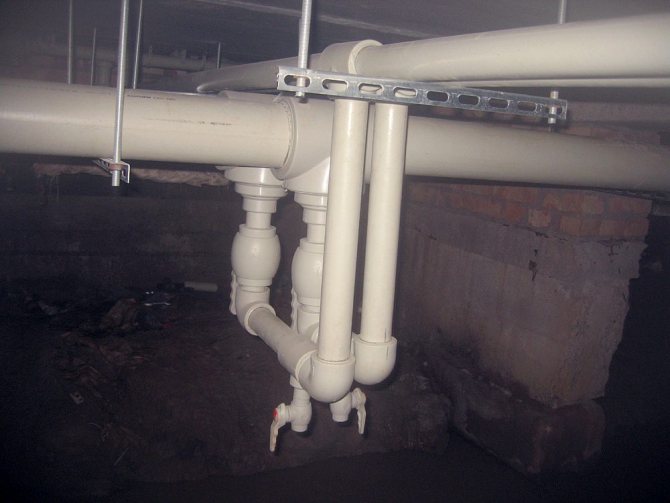
Bottom bottling: heating supply and return are laid in the basement.
Solution 1: run the elevator to reset
Removal of air from heating system is carried out housing and communal services workers are still at the stage of launching a completely or partially discharged circuit.
To do this, it is bypassed to reset:
- One of the house valves opens, the second remains closed;
- In front of the closed valve on the side of the heating circuit, a vent connected to the sewer opens.
The release of most of the air is evidenced by a uniform, without air bubbles, water flow in the discharge.
Solution 2: air vents
At the top point of each pair of risers (in the radiator plug or on the jumper brought under the ceiling) in bottom filling systems, an air vent is always mounted. This is not necessarily a Mayevsky faucet designed specifically for bleeding air: it can be successfully replaced by a ball valve, a screw valve or a tap installed with a spout up.
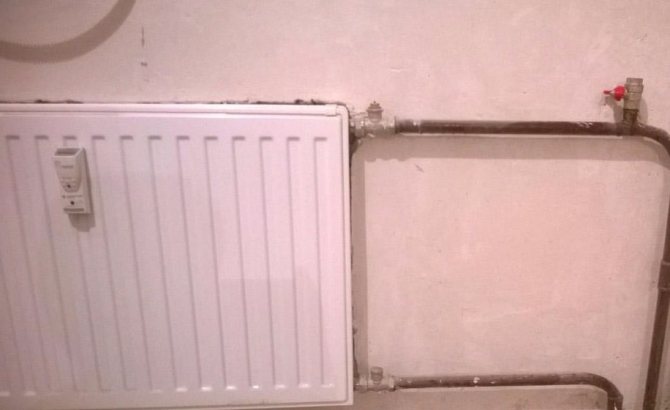
The ventilator may well look like this.
The air outlet from the riser looks like this:
- Open the valve slightly (no more than one turn). You should hear the hiss of escaping air;
- Substitute any wide dishes under it. A basin or bucket will save you from having to wipe a puddle on the floor;
- Wait until the air is replaced by water;
- Close the faucet. The riser should heat up within 5-10 minutes. If this does not happen, bleed the air again: it is possible that the circulation that has begun has expelled new air bubbles to the upper point of the circuit section.
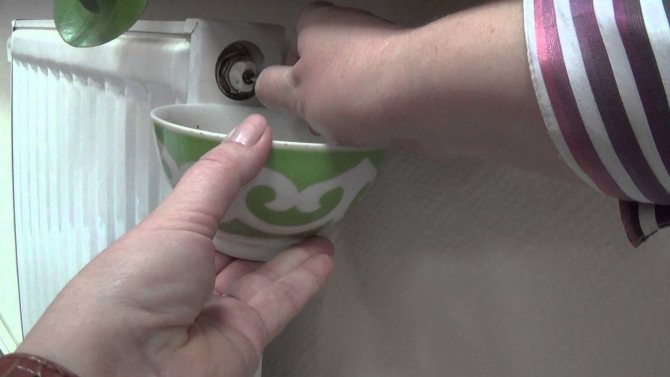
The Mystery of Air Bleeding.
A few important points:
- Never unscrew the screw in the Mayevsky crane completely. With a pressure of 5-6 atmospheres and boiling water whipping from the hole, you don’t have the slightest chance to screw it back in. The consequence of rash actions will be the flooding of your apartment and apartments under you along the riser with hot and dirty water;
- Do not unscrew the air vent itself under pressure. Even half a turn: you don't know what condition its thread is in. If the drain valve for heating is faulty, before repairing or replacing it, it is necessary to shut off both paired risers and make sure that the valves on them hold water;
You can unscrew the air vent only when the risers are dropped.
If you live on the top floor, make sure you have something to open the air vent before the heating season starts. Modern Mayevsky taps are opened with their own hands or with a screwdriver, but in old houses you may need a special key;
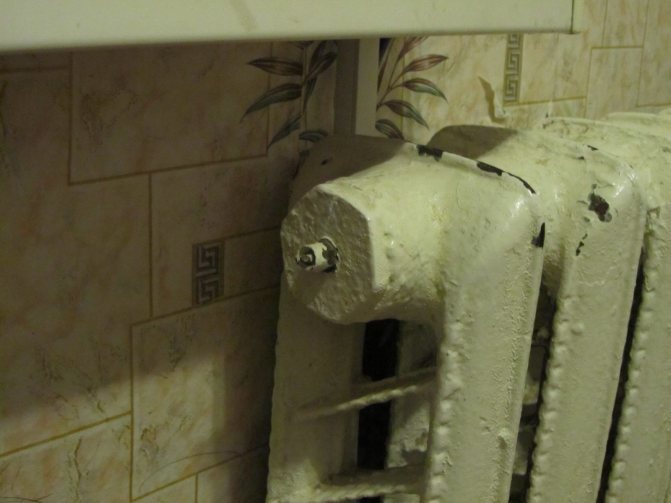
Brass air vent sample 70-80s.
Solution 3: bypassing the riser to discharge
The main problem of air vents on the lower bottling is that they are located in the apartment of the upper floor. What to do if its tenants are chronically absent from home?
Paired risers can be tried to bypass from the basement.
For this:
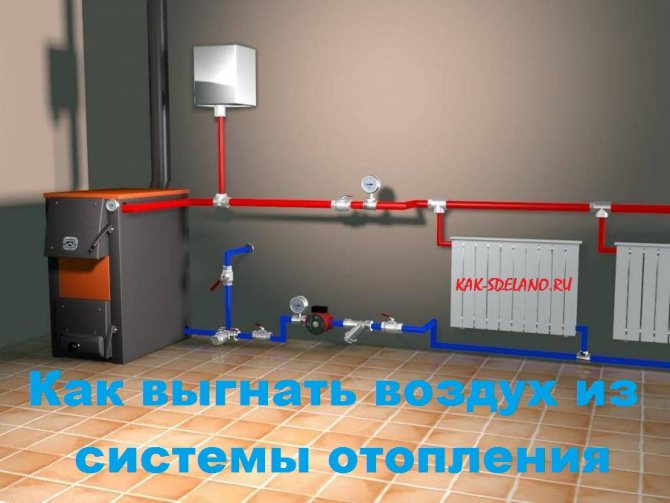
- We examine the stands. After the valves, vents or plugs can be installed on them. In the first case, there are no expenses, in the second, you need to purchase a ball valve with male-female threads of the same size as the plugs;

Perfect. Both paired risers are equipped with vents.





- We close the valves on both risers;
- We unscrew the plug on one of them;
- We screw in a ball valve instead of a plug, after rewinding the thread;
- Fully open the installed reset;
- Open the valve on the second riser. After the pressure of water will expel all the air, close the vent and open the second riser.
There are subtleties here:
If all radiators are located on the supply riser, and the return riser is idle (without heaters) - put the vent on the return line. In this case, all the air will come out guaranteed. In the presence of batteries on both paired risers, the resulting air lock can not always be driven out;
Wiring with idle riser return line.
- If you were unable to bypass the risers in one direction, move the bleeder to the second riser and overtake the water on the opposite side;
- If screw valves are installed on the risers, avoid the flow of water through them in the direction opposite to that indicated by the arrow on the body. Attempting to open the valve with pressure pressed against the seat by the valve is fraught with the risk of the valve being separated from the stem. To fix the problem, it is often necessary to reset the entire heating system at home.
Signs of system airing
Before airing the battery, you need to make sure that the system is really aired.
The following signs indicate the presence of air congestion in the heating network:
- Extraneous noises appear in the heating circuit. As a rule, gurgling water or a characteristic hum always indicate the presence of air in the pipes.
- Another sign of air masses getting in is uneven heating of the radiator. This happens when airing or clogging the device with impurities. Understanding why this happened is very simple. If the sections and pipelines are cold, then the cause is air ingress. If the sections are cold and the pipes are hot, then the problem lies in clogging with deposits.
- The pressure in the heating circuit can drop critically. If air pockets form due to depressurization, then you can find this place by leaks.It is the decrease in pressure that indicates the depressurization of the circuit. Be sure to check the connecting nodes and tighten all the elements more tightly. If there is no leak at the junctions, then most likely it is along the pipelines or in the radiators.
De-airing in central heating, ways to eliminate traffic jams
Central heating of apartment buildings, private sectors provides for the presence of air collectors. These elements are designed in the heating system at its upper point, they accumulate air. The air collector has a tap, it is used to eliminate air locks that may form.
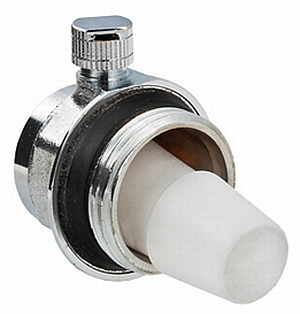 Rice. 3 Automatic air vent
Removal of air in a house or apartment is impossible without the presence of an air collector. You can eliminate the cause of the air lock as follows: air out the place where the plug appears exactly at the place of its formation.
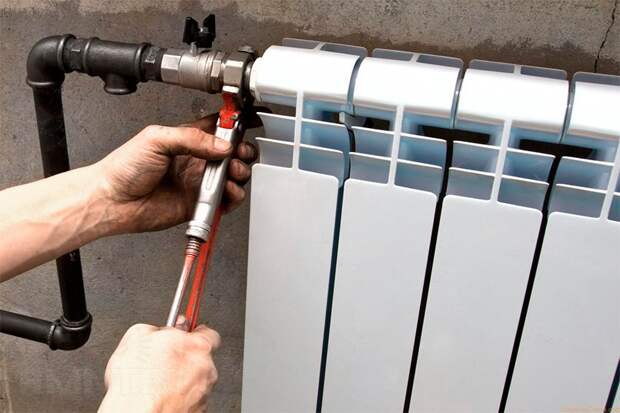
Airing the heating system will be effective if you install taps (air vents) on each battery (radiator) of the system. Ordinary water taps on radiators are unacceptable. If the heating is central, then when the coolant is drained in their own housing, the owner will pay a fine, provided for by law. To fix the problem, you need either a screwdriver (Fig. 1), which is present in any home, or a special key.
In order to avoid problems with the law, the issue with the cork can be solved by an alternative option: installing a Mayevsky crane.
Mayevsky crane
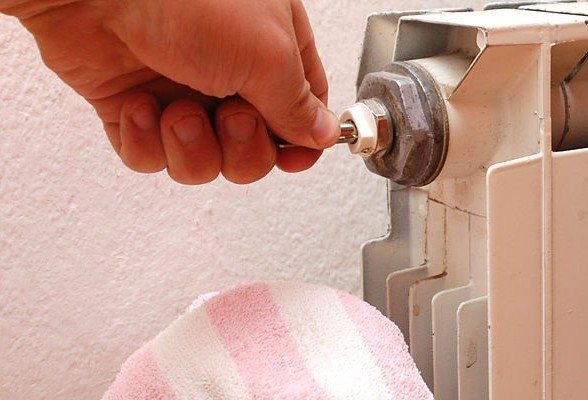
With the help of a device called Mayevsky's tap (Fig. 2), air pockets in the heating system can be effectively removed.
The air lock is removed after the tap is opened.The unscrewing process must be continued until air begins to escape from the radiator. In parallel with the opening of the air vent, water may also partially come out. To do this, it is necessary to prepare a container for collecting the outgoing coolant. The tap boldly closes after the air plug is completely released, although the water continues to ooze.
Having a very small hole, such a device will in no way affect the significant loss of coolant, so the installation of this element is not prohibited. The only drawback of removing air from the radiator is that the process is carried out manually. And if the problem recurs systematically, then unscrewing can be a problem for a lazy homeowner. Therefore, there is another option to fix the problem - an automatic air vent.
Automatic air vent (fig. 3)
Air vents of automatic type remove the air lock from the battery by opening a hole in the case. This element automatically closes if the coolant tries to go outside.
All methods of air removal are effective, but it is worth noting that the process of manually removing the air lock can be dangerous, especially if the problem requires frequent intervention to fix. The central heating main works under the strongest pressure. Therefore, frequent unscrewing can lead to its failure, which is fraught with serious consequences.
Lower heating supply in a high-rise building
For modern buildings, the standard solution is the bottom pouring scheme. In this case, both pipes - both supply and return - are laid in the basement. The risers connected to the bottlings are combined in pairs using a jumper in the attic or upper floor.
Option number 1 to solve the problem - start the elevator to reset
Bleeding air from the heating system is performed by housing and communal services specialists at the stage of starting the circuit, which is partially or completely discharged. To this end, it is passed to the discharge: one valve is opened, and the second is left closed.
From the side of the heating circuit to the closed valve, a vent is opened, which is connected to the sewer. The fact that the main part of the air has escaped can be seen from the water flow in the discharge - it moves evenly and without bubbles.



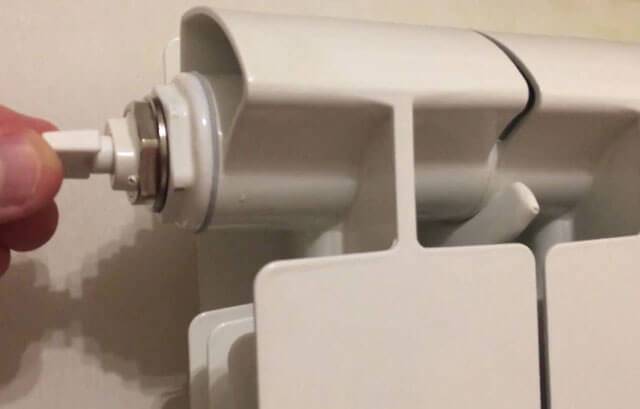
Option number 2 to fix the problem - installing the air vent
Before releasing air from the heating system, an air vent is installed in the upper part of all steam risers in case of bottom filling. It can be not only a special Mayevsky faucet, but also a screw valve, a water-folding or ball valve, mounted with a spout up.
Air is vented from the heating system in a certain sequence:
- Open the tap for more than one turn. As a result, a hiss of moving air should be heard.
- A wide container is substituted under the tap.
- Waiting for water to flow instead of air.
- Close the faucet. After 10 minutes, the riser should warm up. If this does not happen, it is necessary to bleed the plugs again.
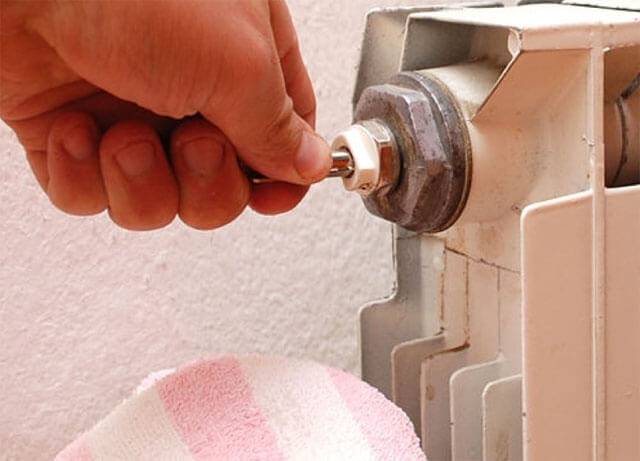
Before you get rid of the air in the heating system, you should remember the following important rules:
- It is impossible to completely unscrew the screw in the Mayevsky tap, since at a pressure of 5–6 atmospheres and boiling water pouring from the hole, it is impossible to return it to its place. The result of such actions may be the flooding of your own apartment and located below.
- It is not necessary to unscrew the air vent under pressure, even half a turn, since it is not known what condition its thread is in. When the drain valve is defective, shut off the two twin risers and make sure that their valves hold water before replacing or repairing it.
- If you live on the top floor before the start of the heating season, you need to make sure that there is a tool that works with the air vent. Models of modern Mayevsky cranes can be opened with a screwdriver or hands, and in old buildings a special key is required. It is easy to perform - you should take a bar of the desired diameter and cut it on the end.
Option number 3 to fix the problem - bypassing the heating riser to discharge
With the lower bottling, the main problem of air vents is that they are located on the upper floors in apartments. If their owners are constantly not at home, how to remove the airiness of the heating system?
Can skip paired risers from the side basement, for which:
- They are examined for the presence of valves, after which plugs or vents can be installed. In the second case, there will be no costs, and in the first case, you need to buy a ball valve with a thread of the same size as the plugs.
- Shut off the valves on two risers.
- On one of them, the plug is unscrewed for several turns and the pressure of the liquid that hits the thread is expected to decrease. So you can make sure that the valves on the floors are working.
- A ball valve is mounted in place of the plug, first winding the thread.
- The mounted vent is opened completely.
- Now slightly open the valve located on the second riser.When the pressure removes air from the heating system, close the vent and open another riser.
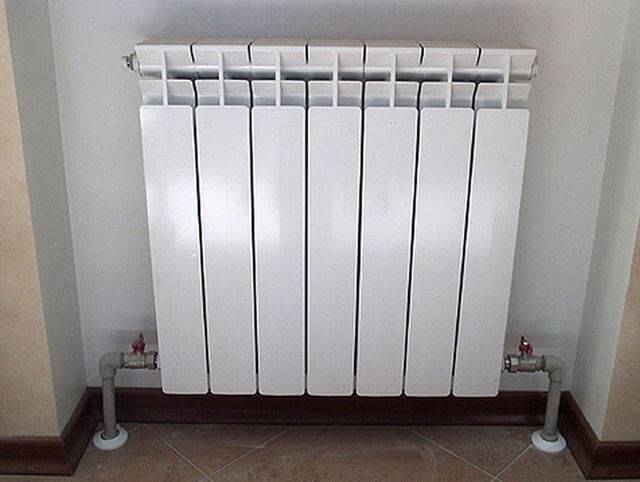
This also has nuances:
- When all the batteries are installed on the supply riser, but they are not on the return riser, the vent must be mounted on the return line and then the problem of how to remove the air plug from the heating system will be solved. In the case of radiators located on paired risers, it is not always possible to etch the air.
- If it was not possible to bypass the risers in one direction, then the vent is moved to the second riser and the coolant is distilled in the opposite direction.
- If there are screw valves on the risers, it is necessary to avoid the movement of water through them in the opposite direction to the arrow on the body. The desire to slightly open the valve with the valve pressed down by pressure may result in its separation from the stem. To eliminate the problem of how to bleed the air from the heating system, it is quite often necessary to reset the heating system of the building.
Installing air bleed valves
To remove air from heating, air vents are installed on radiators - manual and automatic air valves. They are called differently: a bleeder, an air vent, a bleed or air valve, an air vent, etc. The essence of this does not change.
Mayevsky air valve
This is a small device for manually bleeding air from radiators. It is installed in the upper free radiator manifold. There are different diameters for different sections of the collector.
Manual air vent - Mayevsky crane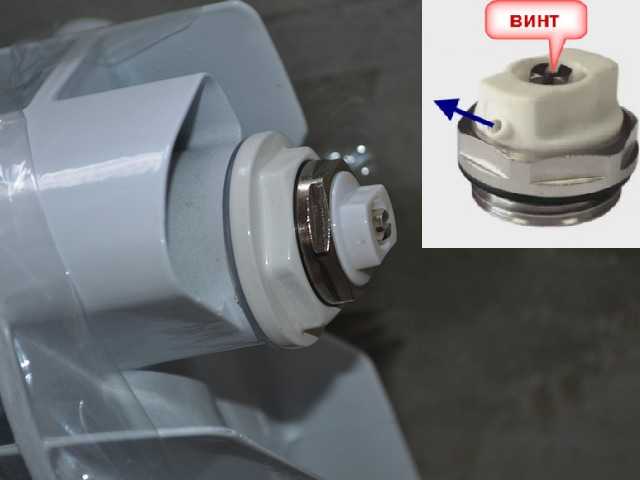
It is a metal disc with a conical through hole. This hole is closed with a cone-shaped screw.By unscrewing the screw a few turns, we allow air to escape from the radiator.
Device for removing air from radiators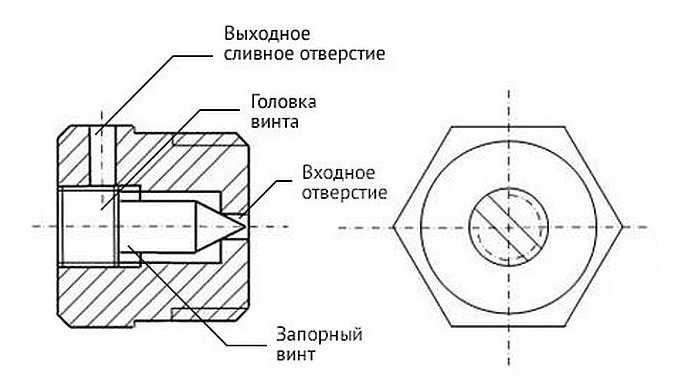
To facilitate the exit of air, an additional hole is made perpendicular to the main channel. Through it, in fact, the air exits. During de-airing with the Mayevsky crane, direct this hole upwards. After that, you can unscrew the screw. Loosen a few turns, don't over tighten. After the hissing stops, return the screw to its original position, move on to the next radiator.
When starting the system, it may be necessary to bypass all the air collectors several times - until the air stops coming out at all. After that, the radiators should heat up evenly.
Automatic air release valve
These small devices are placed both on radiators and at other points in the system. They differ in that they allow you to bleed air in the heating system in automatic mode. To understand the principle of operation, consider the structure of one of the automatic air valves.
The principle of operation of the automatic descent is as follows:
- In the normal state, the coolant fills the chamber by 70 percent. The float is at the top, it presses the rod.
- When air enters the chamber, the coolant is forced out of the housing, the float drops.
- He presses the protrusion-flag on the jet, wringing it out.
Working principle of the automatic air bleed valve - The pressed jet opens a small gap, which is enough to release the air that has accumulated in the upper part of the chamber.
- As the water exits, the air vent housing is filled with water.
- The float rises, releasing the stem. It springs back into place.
Different designs of automatic air valves work according to this principle. They can be straight, angular. They are placed at the highest points of the system, present in the security group. can be installed in identified problem areas - where the pipeline has the wrong slope, due to which air accumulates there.



Instead of Mayevsky's manual taps, you can put an automatic drain for radiators. It is only slightly larger in size, but it works in automatic mode.
Automatic air bleed valve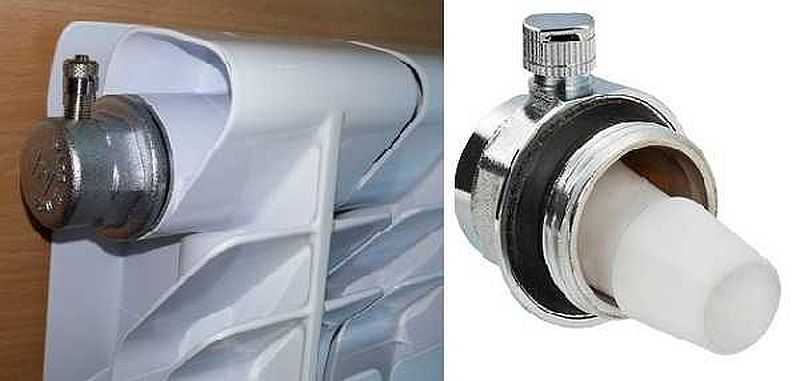
Salt cleaning
The main trouble with automatic valves for venting air from a heating system is that the air outlet is often overgrown with salt crystals. In this case, either the air does not come out or the valve starts to “cry”. In any case, it needs to be removed and cleaned.
Disassembled automatic air vent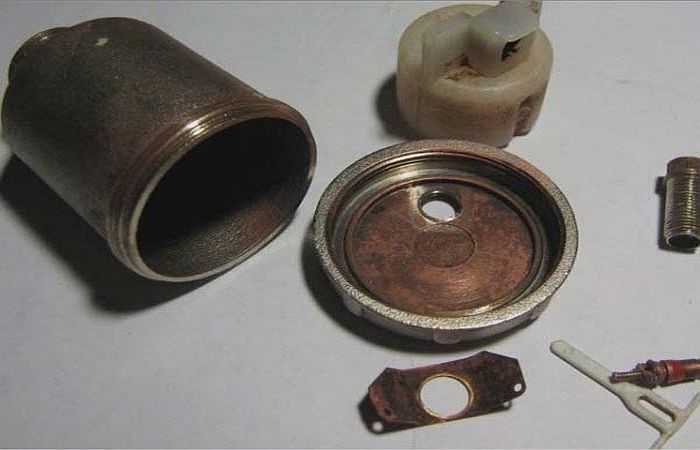
So that this can be done without stopping the heating, automatic air valves are installed paired with reverse valves. The check valve is mounted first, an air valve is mounted on it. If necessary, the automatic air collector for the heating system is simply unscrewed, disassembled (unscrew the cover), cleaned and assembled again. After that, the device is again ready to bleed air from the heating system.