
- What is bath piping: its varieties and features
- Criterias of choice
- Options for constructive solutions for strapping
- Universal
- semi-automatic
- Automatic system
- Prevention of blockage of the drain hole in the bathroom.
- Replacing an old siphon in the bathroom assembling a new device
- Varieties and features of siphons
- Necessary materials and tools
- Siphon assembly
- Installing a new device
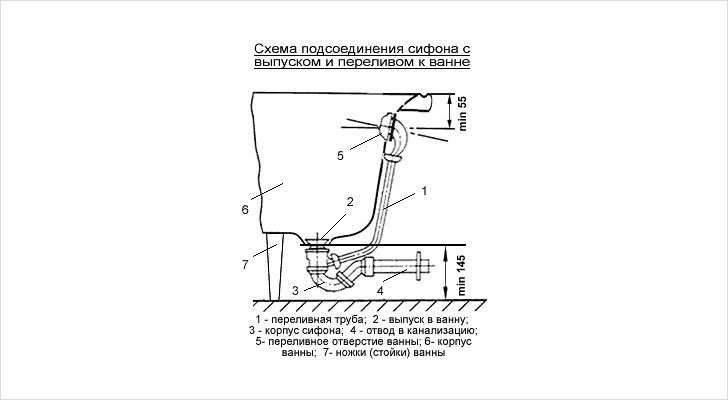
- So, how does a bathtub overflow drain work?
- Let's analyze in more detail the drain overflow for the bath
- How to install a bathtub trim?
- Full and gentle dismantling of the bathroom - video and detailed instructions
- The procedure for disassembling communications and removing the cast-iron bath
- Dismantling the problematic old strapping
- Conclusions and useful video on the topic
What is bath piping: its varieties and features
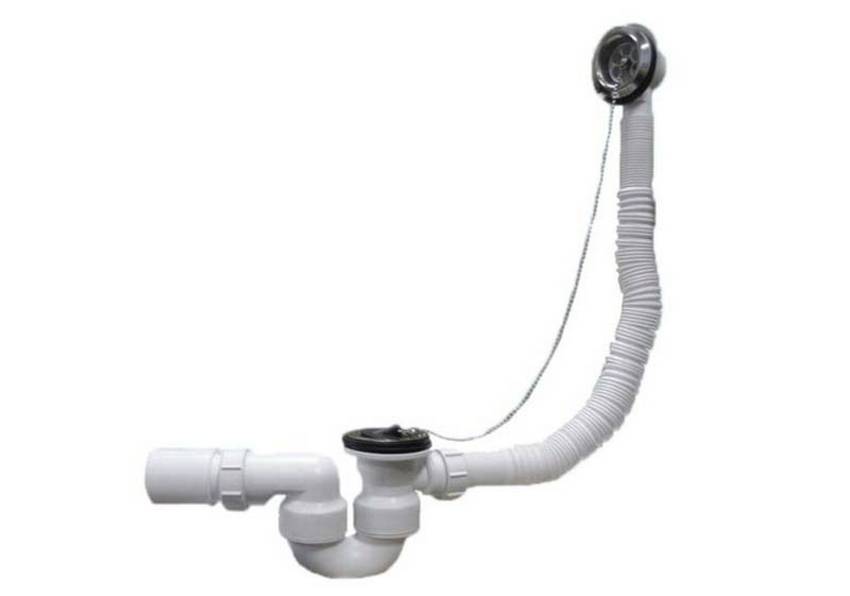
The strapping for the bath is not very diverse, and it can be classified only according to two criteria: according to the material from which it is made, and also according to design features. Things are quite simple with the material - these bathroom devices can be made of plastic or metal.
-
Plastic piping in the bathroom lasts a long time, despite its low cost - it is made of a material that is resistant to most chemicals and high temperatures.This is the most common type of product that can be selected for a bath of almost any type and type. The disadvantage of such overflow drains is some fragility and capriciousness in the installation, which is primarily associated with the technological process of manufacturing these products. They are poured and soldered from plastic, which leads to the appearance of burrs, which must be removed before installation - otherwise, you cannot get rid of leaks.
-
Bath fittings made of metal - usually copper, brass or polished stainless steel. In principle, all these metals are equally well suited for the manufacture of products of this type. Unlike plastic strapping, metal strapping has a lot of disadvantages: firstly, it is a more difficult installation associated with precise fitting of the system elements, secondly, it is quickly overgrown with dirt and grease, and thirdly, it is a high cost, which is on a par with with other shortcomings of the metal strapping for the bath, make it of little demand.
Now about the design differences that may differ in one or another model of overflow drain for a bath - in this regard, they can be divided into three types.
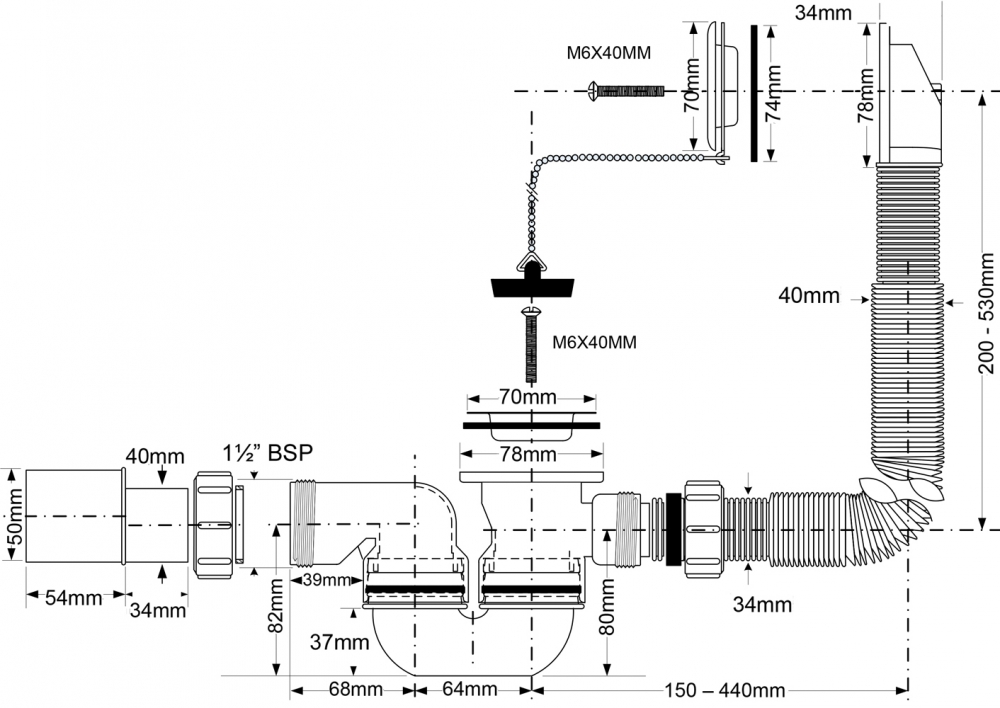
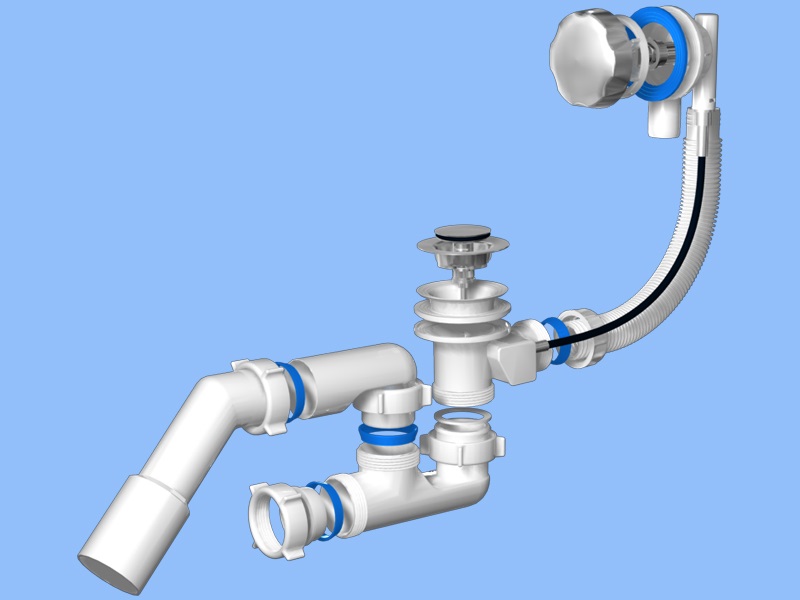
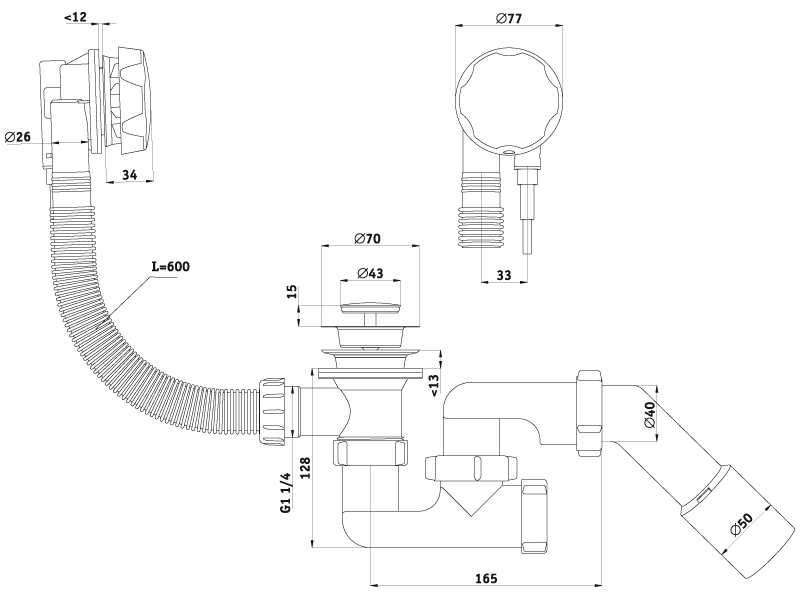
- Universal - this is the simplest and most inexpensive piping for a cast-iron, steel or acrylic bath. Its distinguishing feature is the presence of a cork with a chain. In general, such a strapping is familiar to many people under the phrase "bath siphon".It is a device consisting of four main elements - this is the siphon itself, the drain neck, equipped with a metal lining for installing the cover, the overflow neck, with almost the same lining and a flexible corrugated hose connecting the overflow and drain neck with each other by means of union nuts or by simply pulling on the fitting.
-
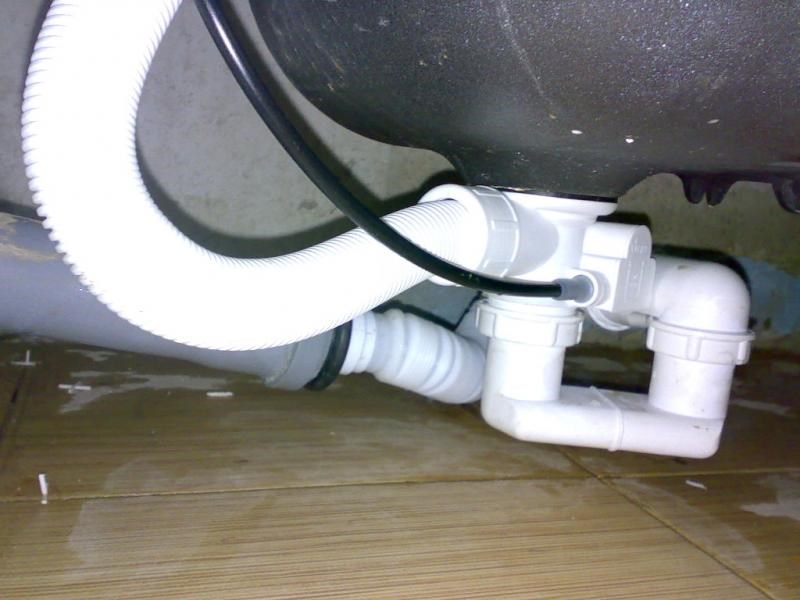
strapping bathtub semi-automatic. Its difference lies in the presence of a swivel lever on the overflow neck, connected by a cable to the plug - by turning this lever in any direction, you can open and close the drain neck. The disadvantage of such a system is its fragility - as a rule, all its plastic parts break easily if too much force is applied to the lever.
-
Strapping for a bathtub the automatic machine. There are no cables and fragile parts here - opening and closing the drain neck is carried out by lightly pressing the cork with your hand or even your foot. The disadvantage of such a drain system is a small hole left under the drain plug. As a rule, it quickly becomes clogged with hair and other debris washed off the human body in the process of receiving water procedures.
If you choose between all these types of siphons, then an ordinary bath tub overflow drain will be much more reliable and durable. The simpler the device, the less elements of unreliability in it and, as a result, their life is much longer and maintenance is easier. Well, you can put up with the manual installation of the cork - it's not such a hard task.
See the video for the nuances of replacing the strapping for the bath with your own hands.
Criterias of choice
No matter what the components of the system are made of, their quality should not be in doubt.There should be no shells, cracks, inclusions on the surface of the parts
Read more: Heating elements for Bosch dishwashers: flow and tubular, do-it-yourself repair and replacement
Before you buy a harness, you need to make sure that all its components, including seals, are included in the package. This will eliminate the need to run around the shops and pick up a non-standard gasket.
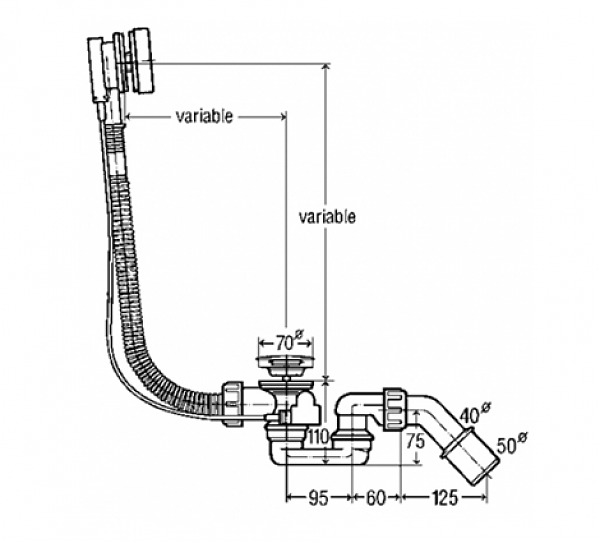
Bathtubs differ markedly from each other, therefore, before going to the store, you must carefully measure the size of the bowl, the distance between drain and overflow hole, parameters of the sewer pipe.
You should not buy too cheap models, as well as chase the most expensive ones. The price must match the quality.
For example:
- Price category. With a small budget, plastic equipment with manual drain is optimal. A more expensive device with automatic / semi-automatic mechanisms is suitable for those who are looking for a solution with an original style and a convenient modern design.
- Material. The quality indicator of propylene is a dense shell, brass is a perfectly smooth surface, cast iron is the absence of the slightest cracks, since they cannot be repaired.
- Additional options. Siphons can have several connections for connecting other consumers, in addition to the bath. You can not use them by closing them with a nut. In the future, this thoughtful step will give a chance to save on branching the drain for the sink, washing machine and dishwasher.
- Correspondence of the diameter - at the siphon and the sewer pipe. If the sections are incompatible, you need to choose rubber or plastic adapters.
- Completeness.The kit of any system should include all elements for connection, sealing rings, gaskets for pipes and overflows, excluding leaks.
Another criterion, which is far from the last value, is the manufacturer of sanitary fittings. The service life and serviceability of the selected drain-overflow system depends on it.
Options for constructive solutions for strapping
Bath strappings are classified according to two criteria: according to the design solution and the material of manufacture. If we take design differences as a basis, then we distinguish: universal, semi-automatic and automatic systems.
Universal
The simplest strapping option is often used when connecting and installing bathtubs of any type: acrylic, steel, cast iron.
The main requirement for installing a universal system is that the distance from the center of the overflow to the drain hole is no more than 57.5 cm
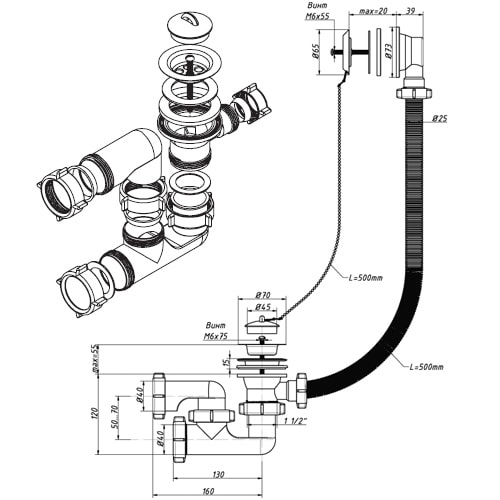
The main elements of the system are:
- Drain neck. It is equipped with a metal plate designed to install the cover.
- Overflow neck. It has the same overlay.
- Siphon. An element that provides water flow and prevents the spread of "aromas" of the sewer. It can have a collapsible or monolithic body.
- Corrugated hose. It is designed to connect the drain and overflow neck and is mounted by pulling on the fitting or tightening the union nuts.
The outer part of the overflow is framed with a grate, and the reverse part is connected to the receiving unit. An outflow tube is attached to it, connected to a branch pipe coming from the lower outlet.
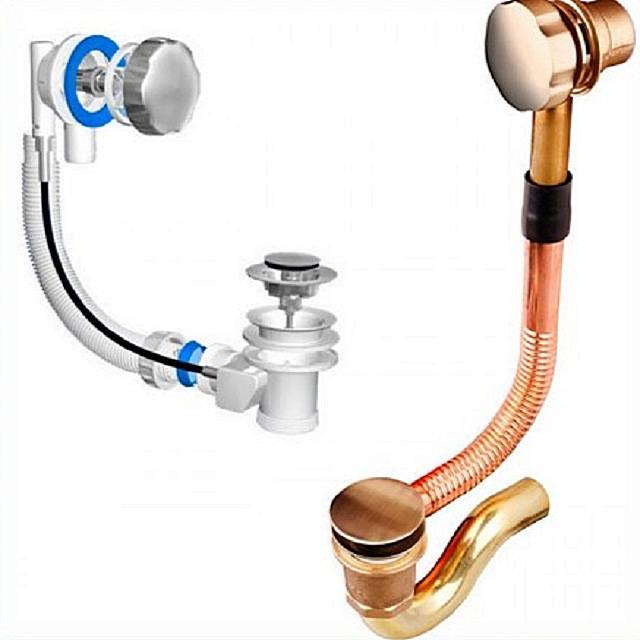


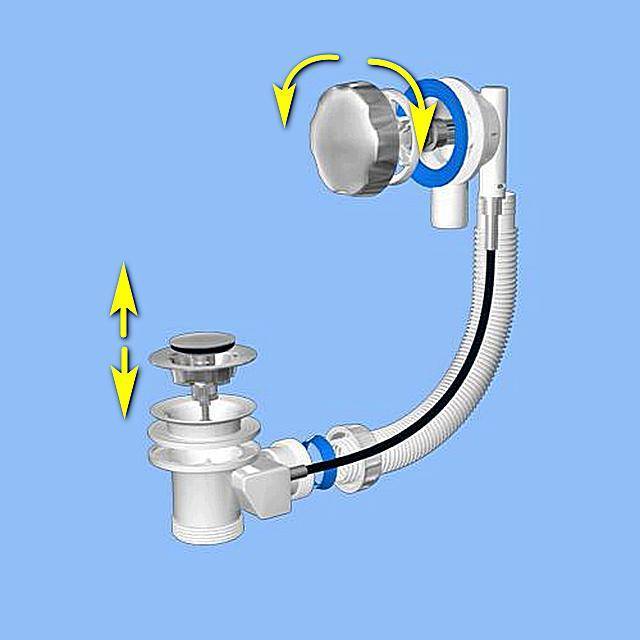


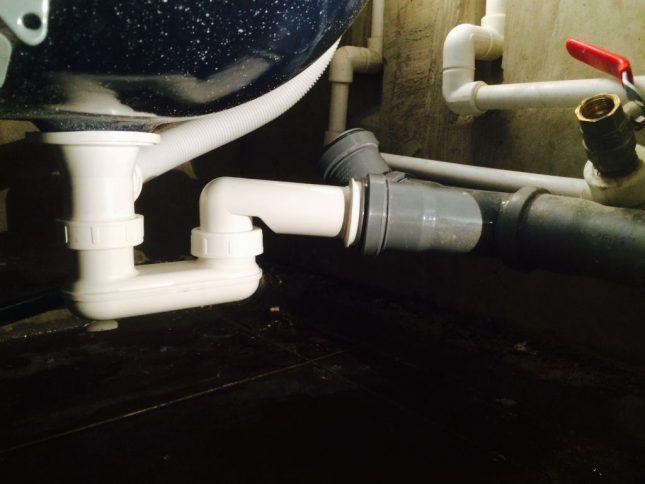
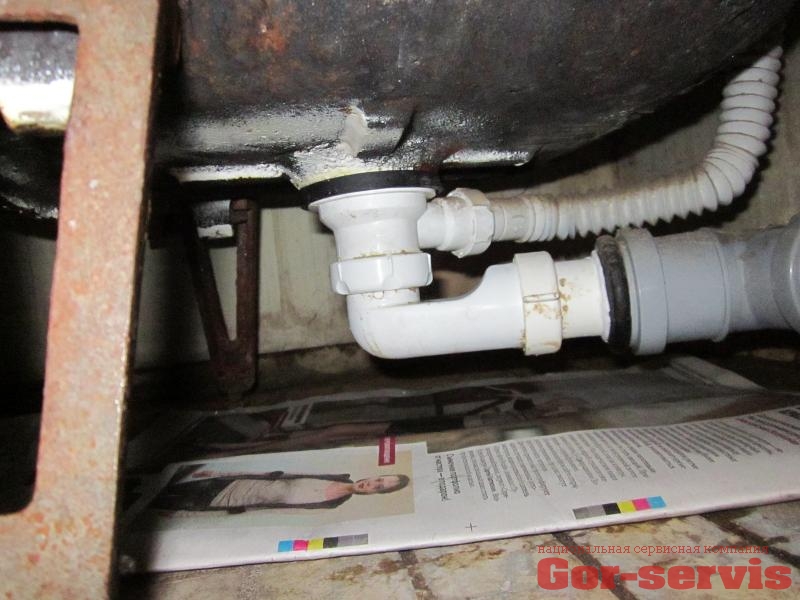
The regulation of the descent of water in universal strapping models is carried out by manually removing the plug tied on a chain
Among the presented types, universal strapping, including a minimum of movable elements, is considered the most reliable and durable.
semi-automatic
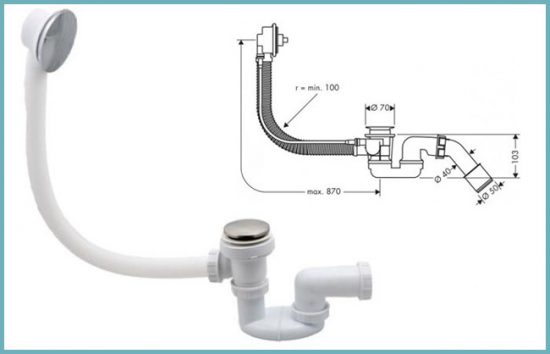
The peculiarity of the system is that it is equipped with a swivel lever, with which the drain is blocked. It is convenient to operate such a mechanism even while lying in the bathroom. You just need to get used to it, learning how to shift the lever with your toe.
The semi-automatic bath strapping is based on the mechanical principle. The device is driven by a rotation lever or a valve installed on the overflow neck of the siphon. The start lever, like a bicycle derailleur, is connected by a cable to another lever located in the drain neck of the device.
By turning the rotation lever in one direction or another, the cable is tightened or, on the contrary, loosened, under the action of which the plug located above the drain hole is lowered or raised.
The main advantage of such a system is ease of use: in order to lift the cork and drain the water, you do not have to bend down into the bath
Consumers who have installed semi-automatic drain systems in their bathrooms complain about the fragility of the design. It is enough just to press a little harder on the plastic lever, and it can break.
Automatic system
Automatic systems are devoid of any cables and fragile elements. The drain plug is opened by pressing the plug.
Under the action of a spring, supplemented with a latch, the cork, when pressed, easily rises above the surface, providing a free flow of water.When pressed again, it lowers, closing the neck of the drain hole.
The external accessories for the automatic bath trim can be made in any color scheme: white, painted bronze, gold or silver metal
The disadvantages of the system include only the small size of the hole that remains under the drain plug. It often accumulates hair and small debris, which makes it difficult to drain water.
In products of low quality, the increased complexity of the design often leads to breakdowns, which cannot always be repaired. And to fix the problem, you can only completely replace the automatic system.
To protect yourself from unforeseen expenses, choose equipment from trusted manufacturers. The best choice is automatic bath straps made of metal.
Prevention of blockage of the drain hole in the bathroom.
As you can see, the procedure for cleaning the drain hole in hair bath uncomplicated. But it takes time. Therefore, it is easier to avoid such situations.





- in the drain hole we install small nets that will hold not only hair or wool, but also small rubbish.
- periodically pour chemicals into the drain hole to clean the sewer pipes.
- once a quarter we clean the siphon under the bathroom.
And then there will be no need to puzzle over how to clean the drain hole of the bathroom from clogged hair.
- October 19, 2017
- 729
- 0
-
(0)
This note is about one of the elements of the roofing system, which the customer, most likely, will never see if the builder or technical supervision does not show him, namely the drain hole in the gutter. The one through which water from the gutter enters the exit from the gutter (funnel) and then into the pipe.
Sometimes it's done like this:
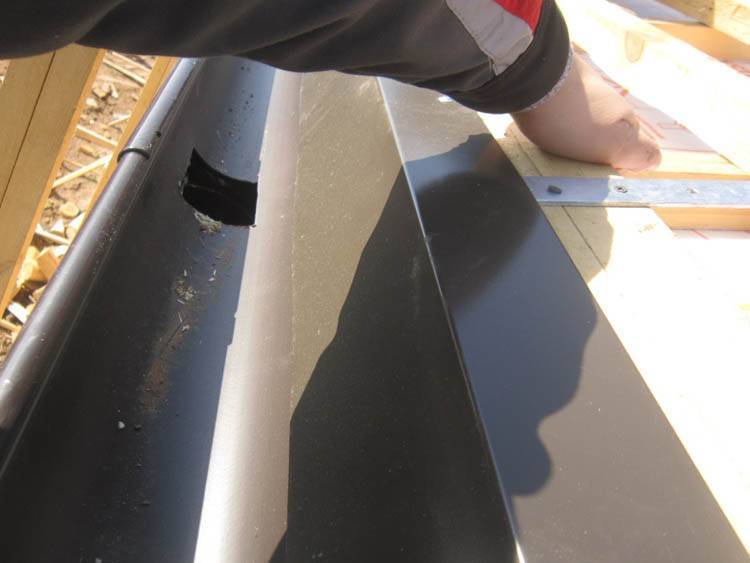
So.
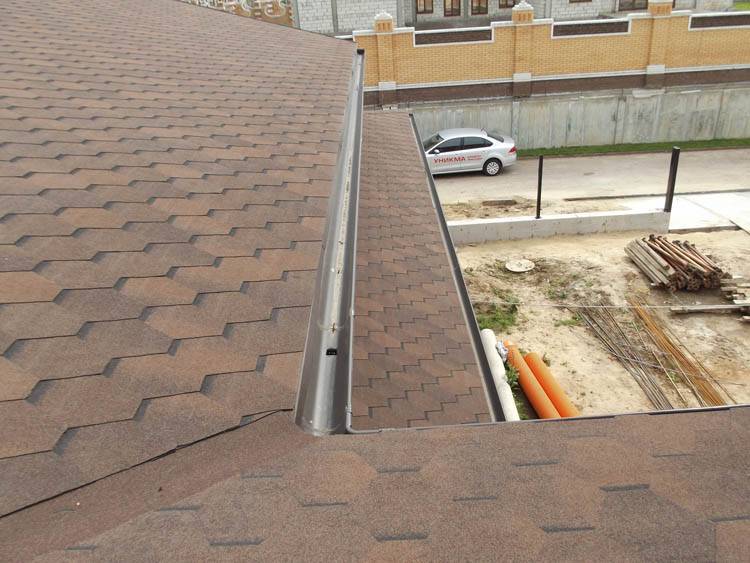
Stroke the "grinder" four times - and a hole is ready in the gutter. Of course, its shape can only be rectangular, and the edge will be uneven - with splinters and burrs. It is difficult to make such a hole large, because the design features of the tool impose restrictions. Scale flies from the angle grinder to the sides and after a short time, “saffron milk mushrooms” of rust may appear on the drain. It is obvious that this method of arranging a drain hole in the gutter is a sacrifice of quality for the sake of speed and simplicity and a forced tribute to the low qualification of the worker. If you do not know how to use anything other than the "Bulgarian", where to go?
Sometimes they do this:
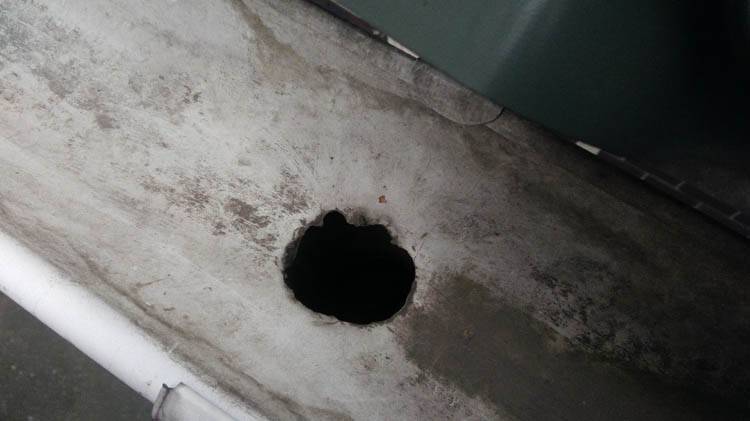
This hole seems to have been made by repeatedly drilling the gutter along the perimeter, after which a circle of metal was broken out or “bitten out” with the tips of scissors, and the resulting notches were slightly bent down with a hammer. You can guess why the drain is so small. Drilling hole after hole is hard work. If you increase the diameter, the number of holes will increase in proportion.
And sometimes they do it like this:
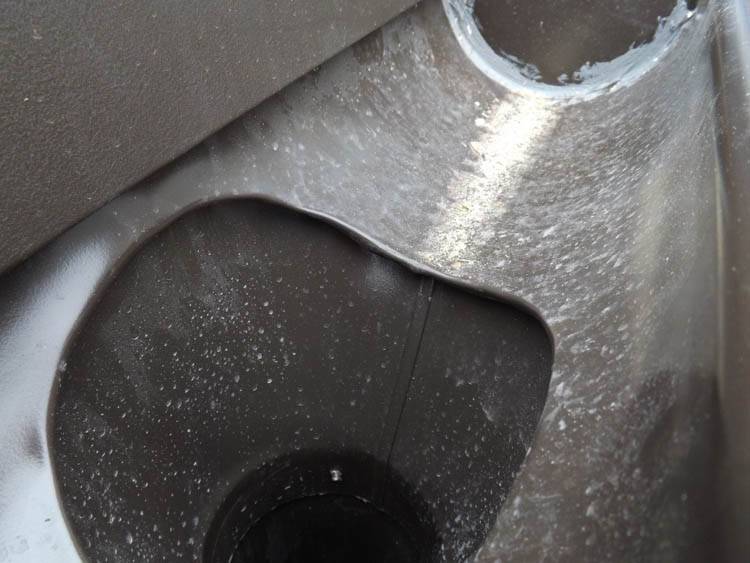
Here - let's try to unravel the technology - they drilled metal once. And not on the edge (so as not to damage the smooth line of the edge), but in the place that will then be completely removed. Drilled only to "bite" with scissors. Then, with small scissors for metal, they went to the perimeter of the hole and cut along the perimeter. Then they processed the edge with a small mallet, performing a reverse bend. There may be other variations on this theme, but in general, this is probably the case.
Question to the builders - which is better? Or - to rephrase - how would you like the gutter to be made on your house?
With your permission, I will not believe that the most common answer will be “I don’t care, as long as there is a hole for water drainage.” Because, in general, every builder (and not only a builder) understands that the drain hole should be no smaller than a pipe (or slightly larger), rounded in shape, with smooth edges - so as not to collect debris on burrs and notches. By the way, all builders also know that it is impossible to cut galvanized steel with a polymer coating (not only metal tiles, but any) with a grinder.
So, the correct option is in the last photo.
The technology for making a neat drain hole is easy to master. If you know how to hold a mallet and scissors in your hands, it turns out well the first time, it has been tested on yourself. But then you can safely show the gutter to the client and / or technical supervision, without causing questions and comments, but, on the contrary, receiving compliments, thanks and recommendations on word of mouth.




And to be proud to realize that one more step has been taken on the way to a high level of roofing craftsmanship.
Replacing an old siphon in the bathroom assembling a new device
Replacing the siphon in the bathroom can be done by hand. This will require a minimum set of tools and materials.
It is important to choose the right device that removes wastewater and prevents the spread of unpleasant odors in the room.
Features of siphons.
Varieties and features of siphons
Based on the design features, 3 types of bath siphons are distinguished:
- Bottle. The structure includes a flask that always contains some water.Effluent is discharged to the sump through a pipe of smaller diameter. When the desired level is reached, the water begins to drain into the sewer. Such systems are suitable for installation in country houses. Even if the siphon is not used for a long time, it does not dry out. Several drain hoses can be connected to the flask.
- Tubular. Equipped with flexible or fixed hose, S or U curved.
- Combined. The design includes a corrugated tube and a flask. Such systems are well suited for installation in apartment buildings.
Plastic siphons also have disadvantages:
- Short service life. Some parts fail in the first year of use.
- Insufficient tightness. When assembling systems, it is not possible to achieve a tight fit of the nuts. Therefore, the connections have to be provided with rubber seals.
Pig-iron plums differ in reliability and durability. Chrome-plated elements give the siphon an aesthetic appearance. Internal surfaces are protected from settling of dirt. The disadvantages include high cost and complexity in installation. Cheaper designs are subject to corrosion, which reduces the life. When replacing such a siphon, repair of the walls may be required.
Necessary materials and tools
In the presence of a complete set, the following materials and tools are purchased:
- screwdriver with a flat head;
- wrench;
- silicone or rubber sealant;
- sealing tape;
- basin for collecting water;
- rag.
A hacksaw may be required to change the length of the pipe. The edges are smoothed with sandpaper.
To install the siphon tools.
Siphon assembly
The assembly process includes the following steps:
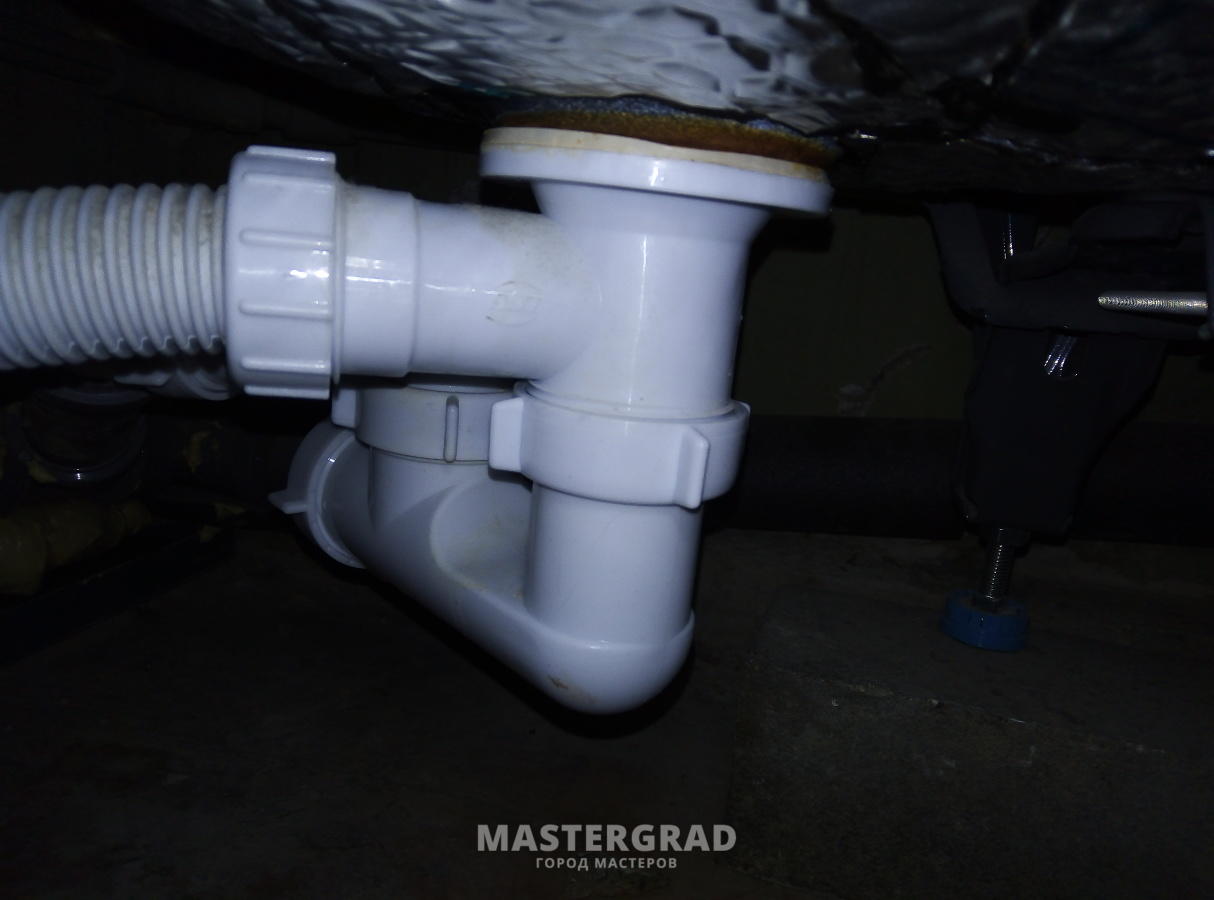
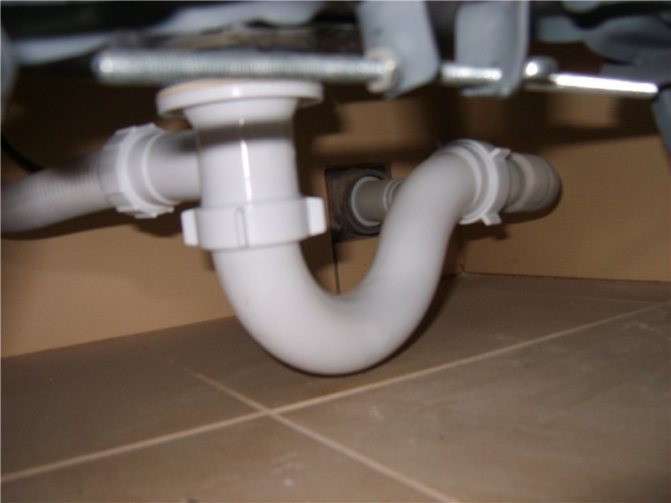
- Flask formation. The bottom is screwed to the cylinder. The connection is sealed with a rubber gasket.Both ends of the drain tube are provided with fixing nuts. This also requires the installation of a seal. One end of the tube is inserted into the top hole of the flask, the other end will be connected to the neck of the siphon. The joints are coated with sealant.
- Overflow installation. The height of the hose must match the location of the bathtub overflow. It is necessary to measure the parameter before starting installation work. If the indicators match, the overflow hose is connected to the desired outlet of the flask. The height of the collection pipe is adjustable. The part is pulled out like a telescope. The required length of the corrugated hose is given by stretching. A bend is formed at the desired point. The outlet and overflow pipe are connected with a nut. It is wound by hand, with moderate effort.
Siphon assembly for a bath.
Before tightening the screws, make sure that the opening of the tub matches the diameter of the hose. When fixing the overflow between the surfaces, the gasket supplied with the siphon is placed.


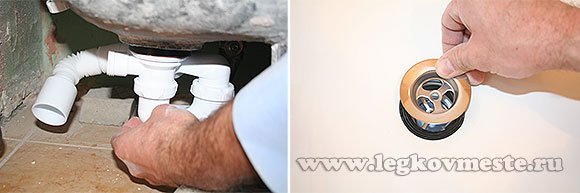


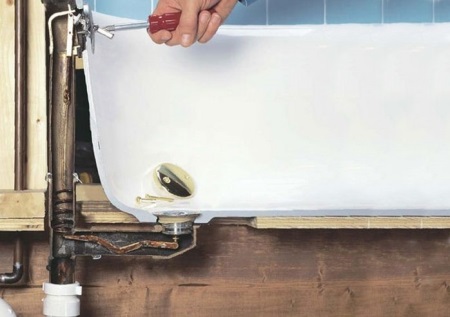


Installing a new device
You can change the siphon by doing the following:
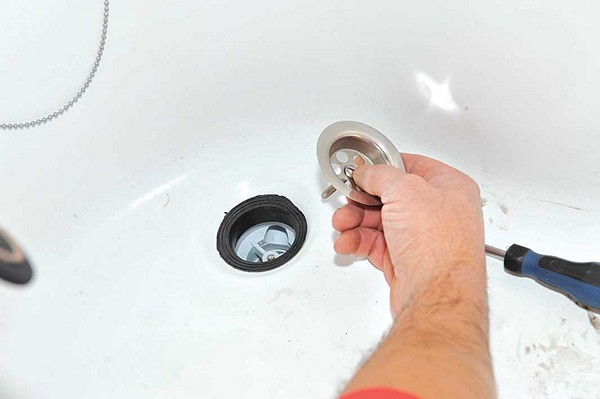
- Surface preparation. The cast-iron bath near the drain hole is cleaned of contaminants and treated with a degreasing agent.
- Installation of a decorative grill. If the size of the part does not match the diameter of the hole, the gap is closed with sealant.
- Outlet connection. The neck of the siphon is connected to the grate with a screw, which is tightened, ensuring a snug fit of the parts.
- Connecting the structure to the sewer pipe. A chamfer is removed from the bottom of the siphon, which allows the part to be inserted into the outlet. The elements are fixed with a nut, before screwing which a conical gasket is installed. The connection is treated with a sealant.If the outlet diameter does not match the size of the sewer pipe, use a plastic adapter.
The corrugated siphon is supplied with special nozzles that facilitate installation. One side connects to the neck, the other - is displayed in the sewer system. The corrugation is stretched, giving it the desired bend.
So, how does a bathtub overflow drain work?
Without knowing how the drain in the bathroom is arranged, you will not be able to solve some everyday situations, such as poorly draining water from the bath or an unpleasant smell.
Surely everyone knows that there are two openings in the bathroom - upper and lower. The bottom one is drain and the top one is overflow. Therefore, they are called so-called drain-overflow.
The bathtub overflow device is actually quite simple.
The product can be divided into 4 parts (if you take into account additional connecting elements, you can get more parts), which do not really matter, except for ease of connection and assembly
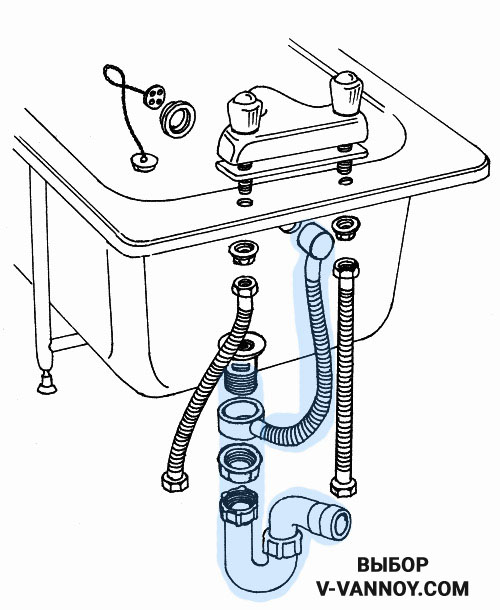
- Drain - it is located at the bottom of the bath and consists of 2 parts. Its lower part is a branch pipe with an extension and a built-in nut. The top part is made in the shape of a chrome plated cup. These parts are placed at the top and bottom of the bath and are connected to each other with a long metal screw. In such an attachment, tightness is achieved by a special sealing gasket.
- Overflow neck - in principle, it has the same device as the drain. The only difference is that the outlet for water is not straight, but lateral. It is designed to remove excess water from the bath if the bath suddenly overflows uncontrollably. But do not count on the overflow hole at 100%.The overflow pipe is small and with a large pressure of water, it may not be able to cope.
- Siphon - can be made in different configurations, but almost always it is a removable curved pipe, in which water always remains. This is precisely the water seal that prevents the unpleasant smell of the sewer from entering. Here it is worth noting one important factor - the volume of the water seal is of great importance. If the ventilation of the sewer riser does not work well, then this water (besides, if it is not enough) can be sucked out of the siphon, in which case an incredible stench is provided to you. It is better to choose a siphon with a deeper water seal, which will fit no less than 300-400 ml of liquid.
- Corrugated hose for connection - used to divert water into the siphon from overflow. In this area, the water pressure is relatively low, so most often this hose is pulled onto special pipes (brushes) without crimps. In more serious siphons of this type, the overflow and hose connection is sealed with a gasket and a compression nut.
- Pipe for connecting the siphon to the sewer - it can be of 2 types: corrugated and rigid. The first is more convenient to connect, but the second is more reliable. In addition, the advantage of the corrugated pipe is the length, which can be adjusted according to your needs.
Let's analyze in more detail the drain overflow for the bath
We have listed all the parts into which almost all bathtub drains offered today can be divided.The only additional thing you need to know in order to assemble a bathroom overflow drain is how to connect the individual parts. There are 2 types of fastening: with a flat sealing gasket and with a conical one. In both cases, a union nut is used to fasten the drain parts.
If we talk about cone gaskets, then they are mounted with a sharp edge from the nut. The thin part should go inside the opposite part, but not vice versa. If on the contrary, then leaks will begin, you will have to use silicone, and in the end everything will end up calling a plumber and you will have to pay extra money. Unfortunately, these situations happen quite often.
Now let's look at the types of drain siphons for the bath. There are not very many of them. If you do not take into account some design and technological features, then siphons can be divided into a conventional one with a plug and a drain-overflow machine. They differ in the plug opening system, which consists in turning the lever on the overflow. This system allows you to get the plug from the bathroom drain without bending over to it. You will only need to turn the round lever, which is located on top of the tub. As for simple drains, they can differ in the shape of the pipes (the shape can be round or rectangular), the method of attachment to the sewer (rigid pipe or corrugation) and the type of sealing of the attachment (straight or conical gaskets).
How to install a bathtub trim?
Consider how the strapping is installed on the bath. The work is carried out according to the following algorithm:
The old harness is dismantled. If it was plastic, then there are usually no problems with removal. Even if she does not want to unwind, she can be easily broken and removed.Difficulties can arise with a metal strapping, sometimes you have to use a grinder to remove it.
- Now you should check the completeness of the new harness, making sure that all gaskets and other elements are in place.
- Next, you need to disconnect the grates from the drain and overflow pipes.
- Mounting the outlet from the bath is rather inconvenient, since it is located low, and you have to work in an extremely uncomfortable position. To facilitate the task, you can first connect the siphon to the sewerage system, and then put the bathtub. But this method is only suitable for baths made of light materials. When installing a cast-iron bath, it is better not to use the described installation method, since such a heavy model will be difficult to install exactly in the right place the first time.
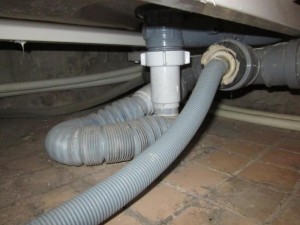
- On the reverse side of the bath, a receiving pipe is attached, on which a rubber gasket should be put on.
- A grate is installed from the inside of the bath, then the structure is fastened with a coupling bolt. This operation is more convenient to perform with a partner. One will press the outlet pipe to the hole from below, and the second will be able to insert the neck and tighten it.
- When performing work, you do not need to make great physical efforts, otherwise the strapping parts may burst, which will necessitate the purchase of a new part.
- The overflow tube is installed in the same way. It is only necessary to pre-stretch the corrugated tube to the required size so that it enters the nozzle.
- Some models of harnesses are equipped with four rubber gaskets, in this case, they are installed both inside the bath and on its reverse side.If there are only two gaskets in the kit, then they should be installed on the back (outer) side of the bath, otherwise, you will have to face the problem of leaks. Additionally, a silicone-based sealant can be used.
So, there are several varieties of drain / overflow systems for bathtubs. If a simple plastic harness is chosen, then it is easy to install it yourself. In the event that a semi-automatic bath piping is purchased, it is better to entrust its installation to specialists, since the installation of such a system is much more difficult.
Full and gentle dismantling of the bathroom - video and detailed instructions
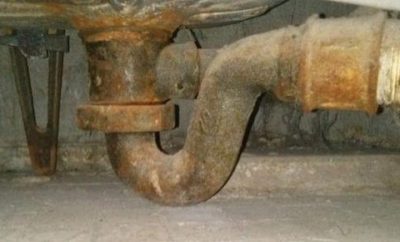
During the repair of a bathroom in an apartment or when replacing old, worn-out sanitary equipment, it is often necessary to disassemble and dismantle the bath on your own - a video of this noisy and dusty stage of repair work, as well as detailed instructions for all steps, will help you prepare in advance for possible difficulties and avoid problems. Consider two options - the preservation of the bowl and its complete elimination.


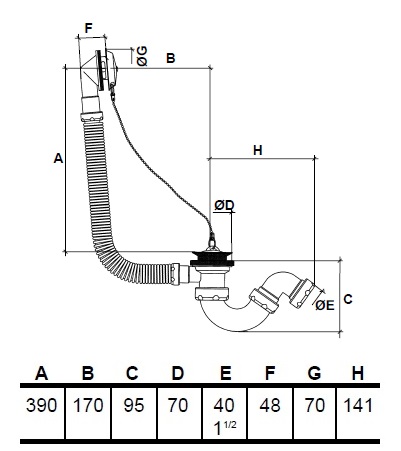


The procedure for disassembling communications and removing the cast-iron bath
The most difficult of all possible options is the dismantling of plumbing made of cast iron. The task is complicated if the plans include taking out the entire bath, so that later it can be used, for example, in the country. The forces of one person are clearly not enough here - a cast-iron product can weigh under 100 kg, so at least two people will have to work.
There is no trace of the bath
Dismantling the problematic old strapping
After removing all objects that interfere with work from the room, the bath must be disconnected from the entire piping, including the drain.Cast iron plumbing has been in many homes since ancient times, when drain communications were made up of cast iron pipes. It is usually not possible to simply disassemble them after many years, therefore, it will be necessary to dismantle the cast-iron bathroom with export in other ways.
Conclusions and useful video on the topic
Principles of operation of automatic systems in video:
In the video, an overview of the semi-automatic drain-overflow:
A competent choice of a drain-overflow system guarantees the full, comfortable and high-quality functioning of the bath. It is not difficult to cope with its installation, the main thing is to correctly assemble the parts and properly seal the junction areas. If you still have incomprehensible problems, it is always better to turn to professionals.
Do you want to share the experience gained during the installation of the drain-reilva with your own hands? Do you have information that may be useful to site visitors? Please write comments in the block below, publish photos on the topic of the article, ask questions.



