- Is it possible to refuse?
- Dismantling rules
- Responsible persons for the repair and replacement of heating risers in the MKD apartment
- Who pays the costs
- Step by step replacement instructions
- Stage # 1 - dismantling the old sewer
- Stage # 2 - assembly and installation of the riser
- Stage # 3 - internal piping
- What to do so as not to flood the neighbors
- Possible conflict situations
- The risers of the heating system belong to the common property of the owners of the premises of apartment buildings
- Repair
- general information
- Who should change?
- At whose expense?
- How to change?
- When can homeowners be sued?
- How to protect yourself
- Safe replacement steps
- Responsibility for violations
- Heating
- Conclusion
Is it possible to refuse?
The law says that none of the owners of residential premises has the right to create additional obstacles for inspectors, management companies. The same applies to emergency services, State control bodies. The frequency of control examinations is 1 time every 90 days. In emergency situations, such events can be organized at any time.
Do not delay in resolving conflict situations if they arise.If one of the participants refuses to carry out work without good reason, the owner of the apartment has the right to go to court. The main thing is to collect as much evidence as possible in your favor. You can try to organize negotiations, but they do not always lead to the desired results.
Dismantling rules
Before replacing the sewer pipe in the riser, it is necessary to dismantle the old element of the system. This procedure has two solutions:
- Repair activities are carried out on the site, without capturing the floor slabs.
- The pipe is being replaced in the area located between the floors.
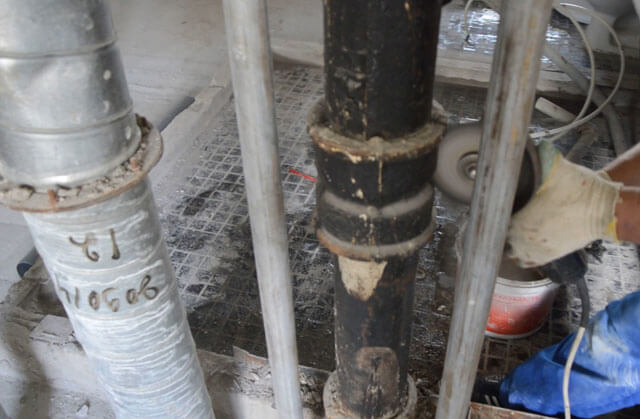
In general, the work is carried out according to the same scheme, however, in the second case, the dismantling of the interfloor floor slab is required.
The dismantling of the sewer riser is carried out in a certain order:
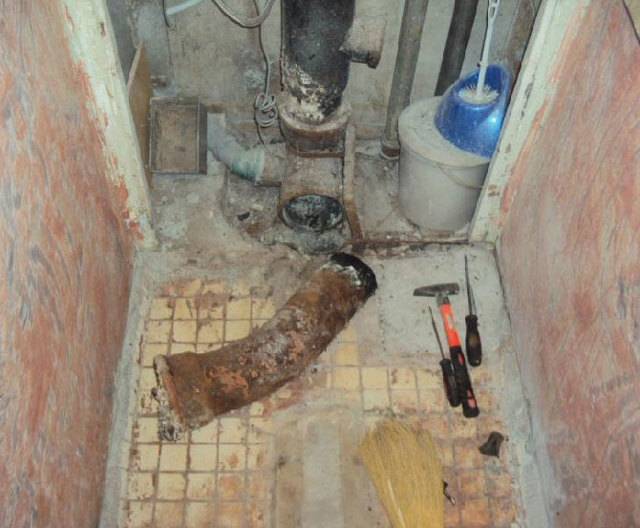
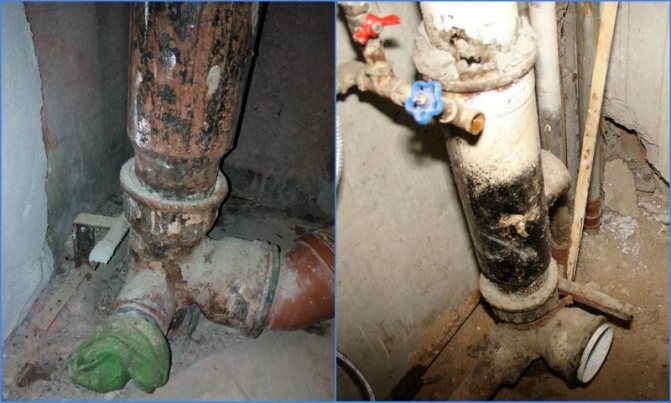
- Having retreated at least 1 meter from the adjustable fittings, the cast-iron pipe is cut with the help of a grinder and a section of the pipe is pulled out of the socket from below. To facilitate the process, use a crowbar, nail puller or chisel.
- The riser is disassembled from top to bottom, moving from one connection to another.
- It is necessary to open the floor slabs after agreement with the neighbors.
Responsible persons for the repair and replacement of heating risers in the MKD apartment
Replacing risers in an apartment building is a process familiar to most homeowners. When deciding on issues related to the installation of new equipment, the property owner should know whose responsibilities include installing pipes and at whose expense the procedure is carried out.Responsibilities of the owner and managing organization The authority to maintain and repair any equipment located in an apartment building is vested in both the owner of the living space and the management company to which the building belongs. It all depends on the installation location of the elements and devices necessary for the optimal functioning of the building and apartments in it, as well as whether the equipment is common or personal property.
Who pays the costs
To the question, at whose expense the replacement or repair of the sewer riser is carried out, it is impossible to give an unambiguous answer. The fact is that this element of the system is a common house property, therefore, repair work or partial replacement is carried out at the expense of the owners of their own housing. In the case of tenants living under a social tenancy agreement, the situation is slightly different, the owner of the housing here is the state, therefore, all expenses are compensated from the municipal budget.
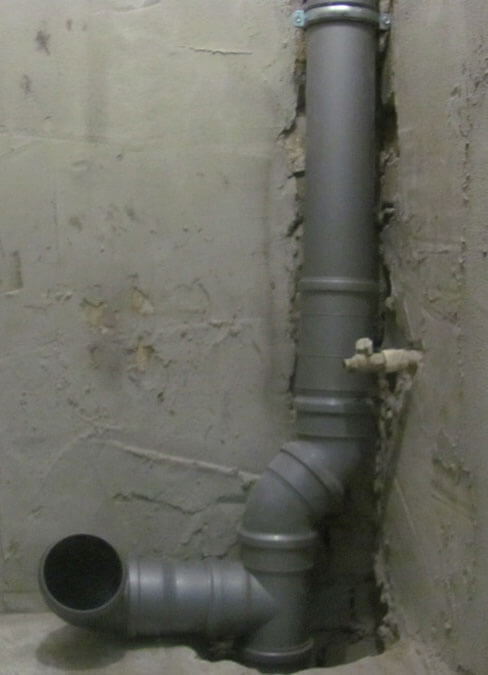
In the event of a planned replacement of the sewer riser, the financing of measures is carried out with funds that the residents deduct for the overhaul of the house.
If the owner or tenant decides to replace part of the sewer riser located on their property, they must pay the costs themselves, including the purchase of consumables. Most often, this situation can occur during the redevelopment of the premises or during the overhaul.
Step by step replacement instructions
From the tools you will need a drill or a puncher, a mounting gun, a chisel, a hammer, an adjustable wrench, a grinder, a level and a pencil.The set of necessary devices depends on the type of connection and the material of the sewer pipes: ceramics, metal or polymers.
Stage # 1 - dismantling the old sewer
Reading now
Upstairs homeowners can immediately begin work on replacing the sewer system. The rest of the residents of multi-storey buildings, before changing the old sewage system in their apartment, need to warn the neighbors from above so that they do not drain the water yet.
Before starting dismantling work, turn off the water and disconnect all plumbing so as not to damage it during the repair work. Old pipes that are adjacent to the riser must be cut in a convenient place and removed from the pipeline system. After that, proceed to the dismantling of the riser. All this must be done carefully so as not to spoil the pipes that go to the neighbors.
Dismantling algorithm:
- At a slight angle, the grinder makes two horizontal cuts: the first is indented 10 cm from the ceiling, the second is 80 cm from the tee. You should not immediately cut the pipe to the end, because you can pinch the grinder disk.
- The chisel is applied to the upper file - you need to hit it with a hammer. Perform the same manipulation with the lower incision. The old cast iron pipe between the cuts should split and its pieces can then be easily removed.
- The protruding part of the pipe from the ceiling is covered with a film.
- Disassemble the lower part of the riser with a tee and fittings. You can loosen the soured fastening of the tee with a crowbar. Cement at the points of connection of the tee is removed with a perforator.
- Remove the old tee from the system. If the tee cannot be removed, then the fitting is cut off with a grinder, stepping back from the socket 3 cm.
- The pipes that remain are being prepared for the installation of a new riser. It is necessary to remove dirt and process the ends of the pipes with a grinder.
The quality and speed of installation of a new sewer depends on the correct dismantling of the old sewer system.
Stage # 2 - assembly and installation of the riser
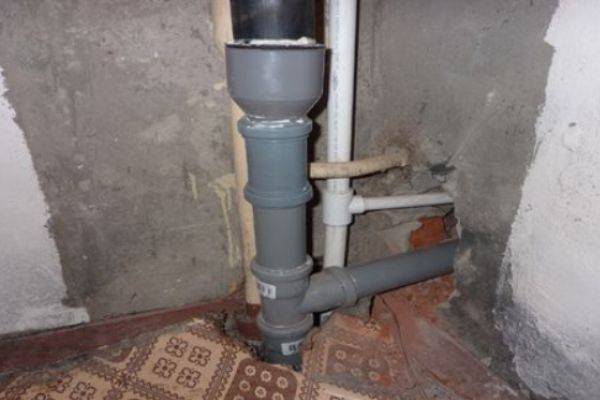
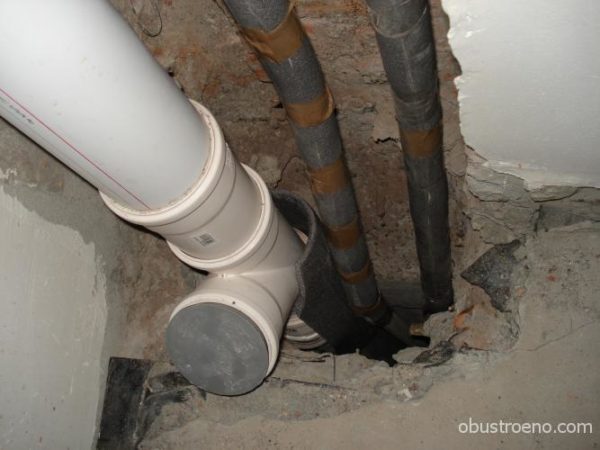
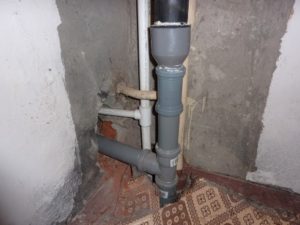
The sewer riser in high-rise buildings is a complex structure. To replace it in the apartment, you will need polypropylene pipes with a diameter of 110 cm, a tee with bends made of the same material, clamps or a special mount for the riser.

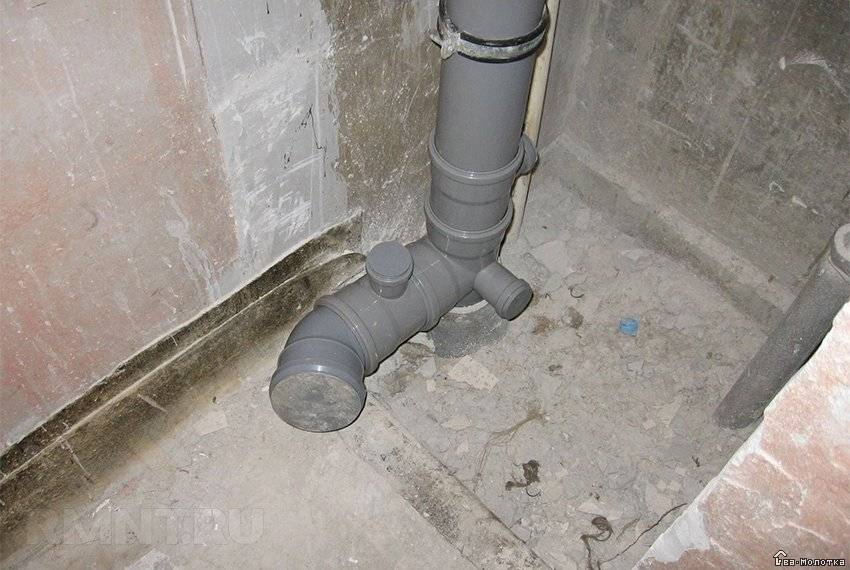

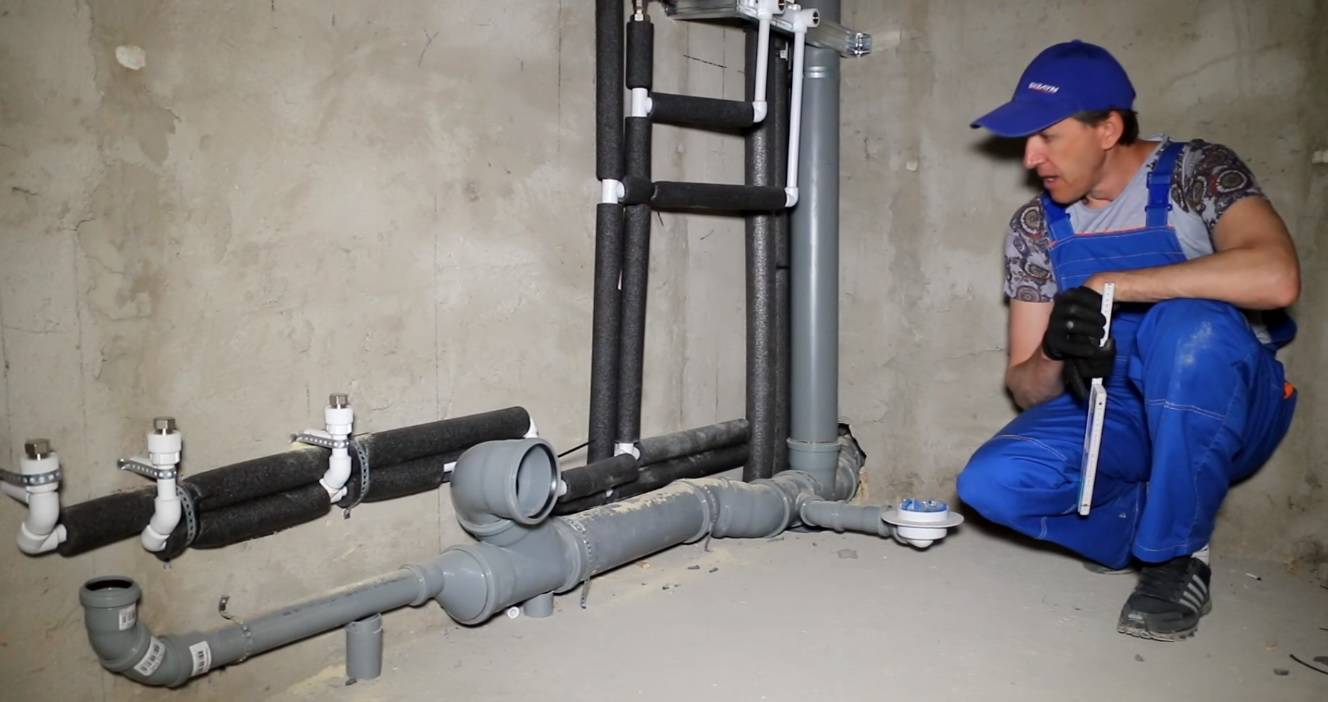
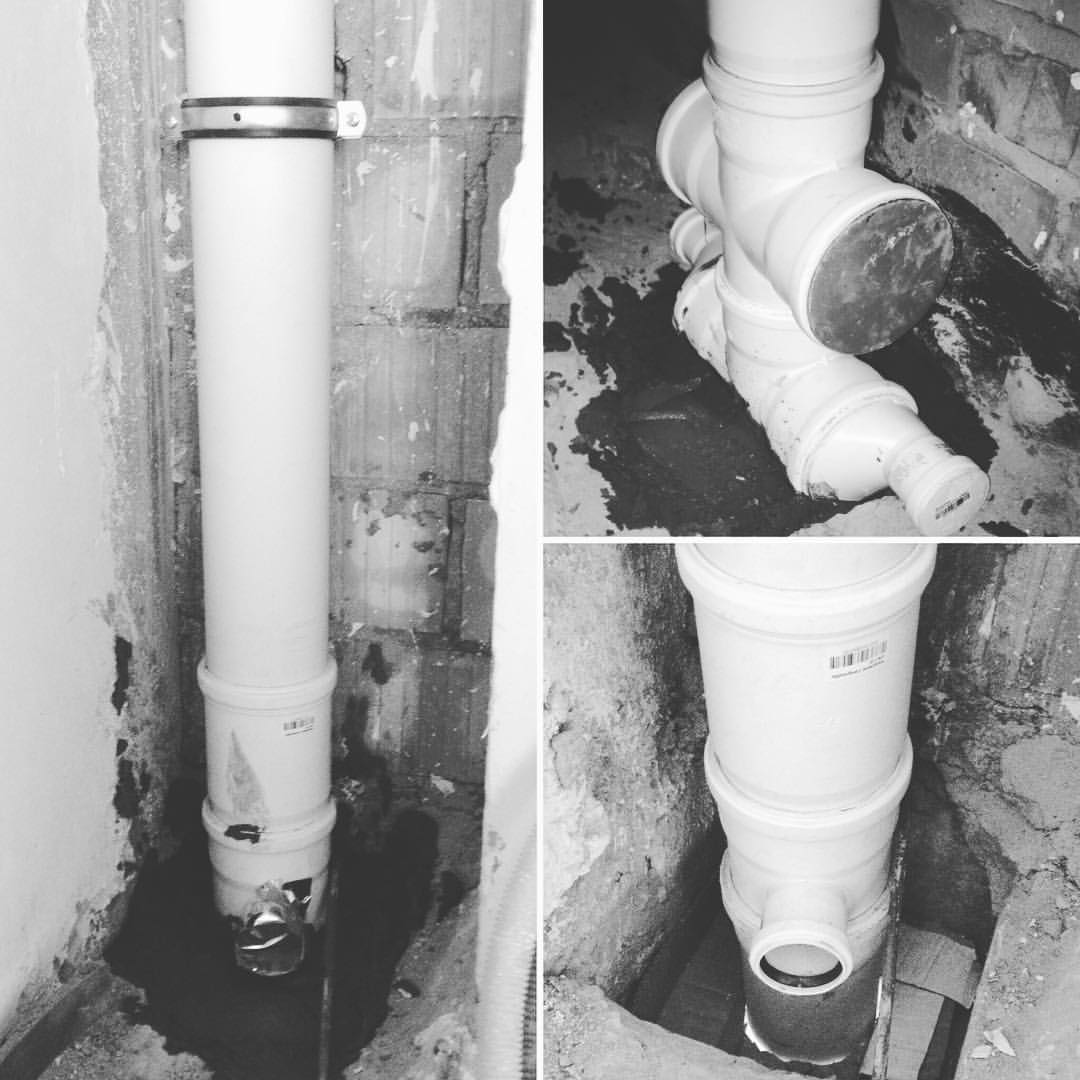


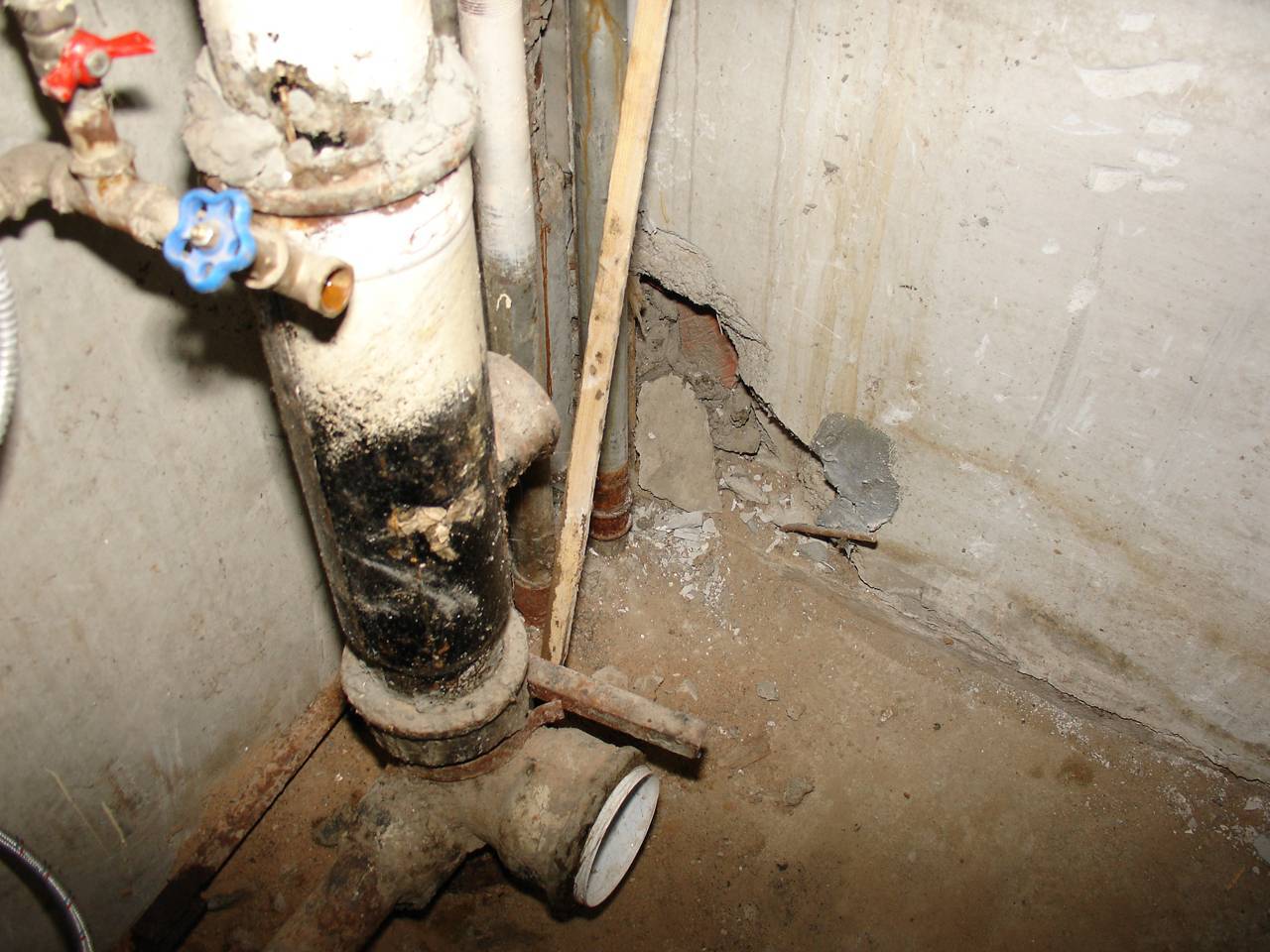
To arrange the transition between the remains of a cast-iron pipe and plastic tubular products, you need to purchase rubber cuffs, as well as an expansion pipe.
You will need liquid soap during the installation process. It is applied to the edges of the pipes, thereby facilitating their entry into the connecting elements. You will also need a vertical level.
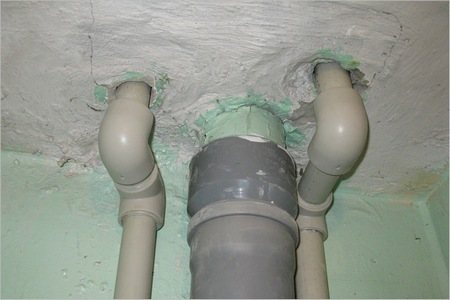
First, install the tee at the bottom. To do this, it is inserted into the socket of a pipe with a rubber cuff and the resulting joint is sealed with winding or sealant. The gap between the vertical pipe and the tee should be minimal - no more than 10 mm.
You should also attach a rubber cuff to the end of the pipe that sticks out of the ceiling. Next, a special adapter is connected from above.
Try on the pipe for the riser and cut off the required length. Perform a control fitting of all elements already put on compensators.
After doing the markup of the fasteners and install the upper and lower clamps. If there is a small gap between the wall and the future riser (up to 7 cm), the clamps are attached with dowels.In another case, metal corners or a board pre-treated with an antiseptic are first attached to the wall.
Rubber gaskets are inserted into the structure and the riser is mounted in the lower tee. After connecting the upper part and tighten the clamps. In apartments with a standard ceiling height, three clamps are usually used for fixing.
Stage # 3 - internal piping
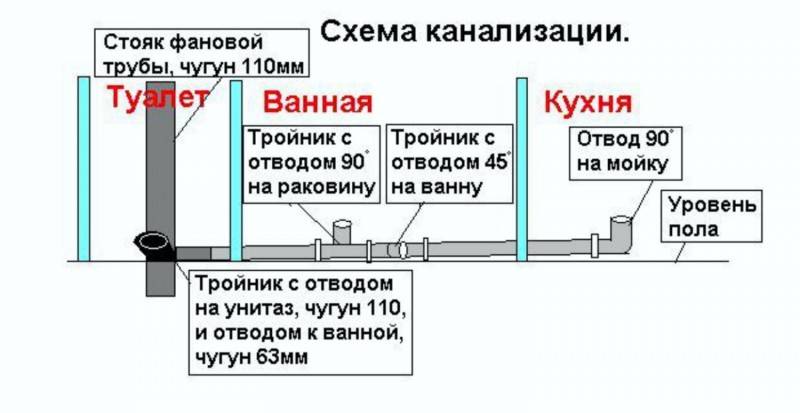
But the internal wiring of pipes is performed according to a pre-compiled scheme, starting from the riser. After installing and connecting plumbing.
Pipe fastening should be combined: rigid and in some places floating. Otherwise, internal tension cannot be avoided.
The nuances of the work:
to prevent the system from flowing, the sockets should be mounted towards the movement of drains;
the slope of the sewer system is made towards the riser;
it is impossible to change the shape or dimensions of shaped parts;
the connection of the riser and the outlet pipe cannot be made at a right angle.
When the installation work is completed and all plumbing is installed, the system must be tested. To do this, drain the water from all devices, look at the outflow rate and check for leaks.
What to do so as not to flood the neighbors
The owners themselves should change the electricity meters in the apartment, and the management company on the landing. Repair of a balcony The question of repair of a balcony is ambiguous. After all, it partly belongs to the owner of the premises - a parapet, a roof, a visor, and partly housing and communal services - a protruding slab and a load-bearing wall. Accordingly, what is broken is repaired by those to whom it belongs. The duties of the owner include: Strengthen the parapet. Replace window frames, broken glass, damaged doors. Remove rust, mold.Paint the facade and balcony ceilings with a special anti-corrosion compound. Check the condition of external fasteners.
Possible conflict situations
A privatized apartment is considered private property. Employees of the managing organization and housing and communal services assume that if the riser is located in a specific room, then the repair and replacement of such plumbing equipment should be carried out at the expense of the homeowner. But the riser belongs to the general engineering communications, and the company should repair it.
The concepts of current and major repairs are defined in the law ambiguously. Paragraph 2 of the Methodological recommendations of the MDK 2-04-2004 indicates the possibility of partial replacement of utilities - but does not specifically mention risers.
The definition of the term "overhaul" is the elimination of malfunctions of the structural elements of an apartment building. The list of such works includes the complete replacement of the water supply system, distribution lines and risers.


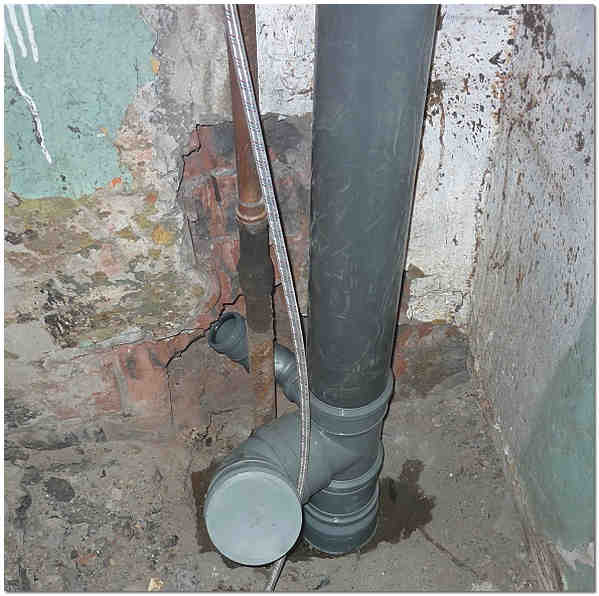
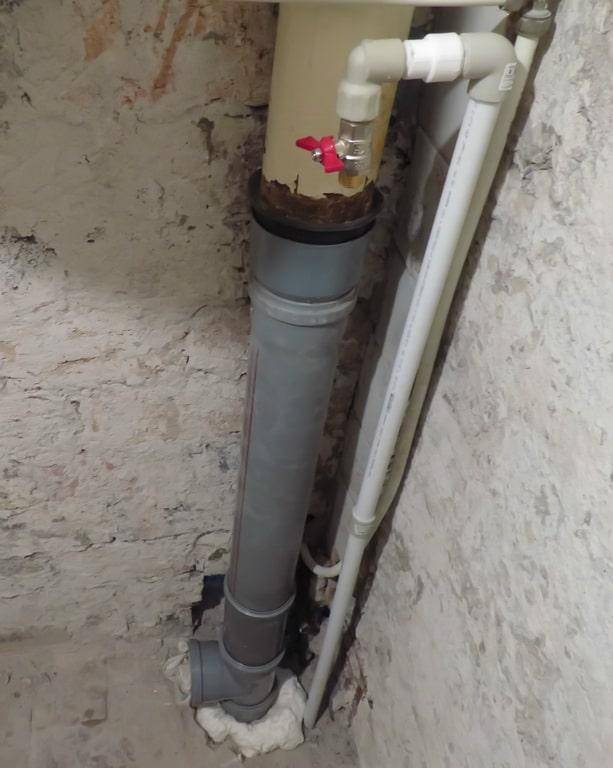


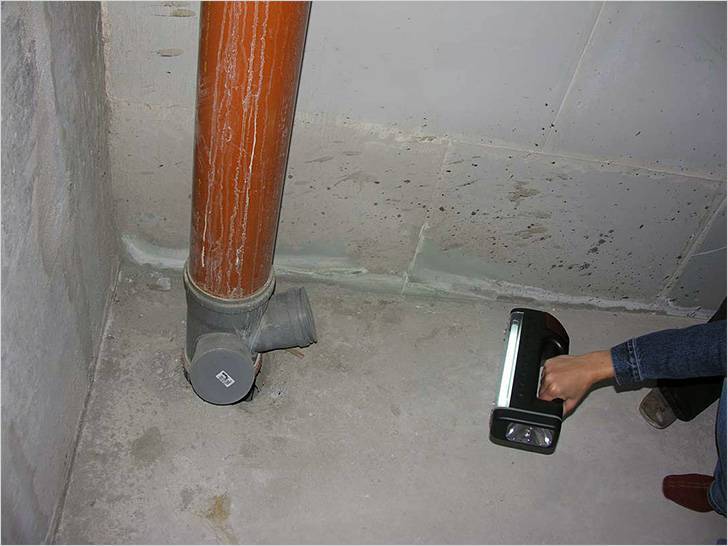
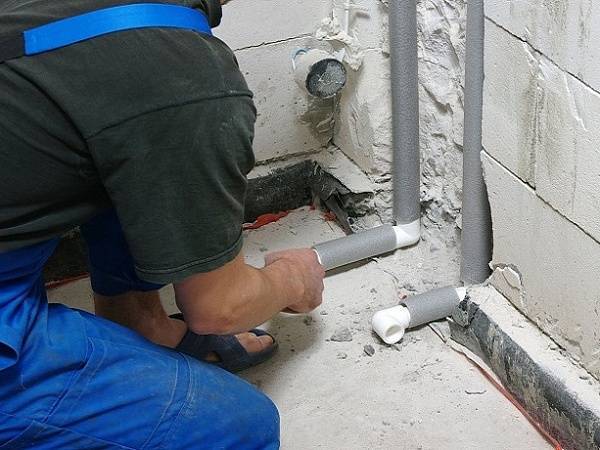
Before carrying out current and major repairs in the house, it is necessary to organize a general meeting of homeowners. Who is responsible for such work is the managing organization, because it takes a lot of money every month for this.
The risers of the heating system belong to the common property of the owners of the premises of apartment buildings
It is indicated that, in accordance with paragraph 6 of the Rules for the maintenance of common property in an apartment building, approved by Decree of the Government of the Russian Federation of August 13, 2006 N 491, the common property includes an in-house heating system consisting of risers, heating elements, control and shutoff valves, collective (common house) thermal energy meters, as well as other equipment located on these networks. Thus, the in-house heating system is a combination of risers, heating elements, control and shut-off valves, a collective (common house) heat energy meter, as well as other equipment located on these networks.
According to the position of the Supreme Court of the Russian Federation, equipment located in an apartment building can be classified as common property only if it serves more than one residential or non-residential premises. Heating elements (radiators) of the in-house heating system serving only one apartment, including those with disconnecting devices (stop valves), the use of which will not entail a violation of the rights and legitimate interests of other owners of the premises of an apartment building, are not included in the common property.
Repair
The procedure for repairing a sewer riser depends entirely on the type of breakdown. It can be reduced to the installation of a patch or sleeve, and to the installation of new equipment. Of course, for the perfect operation of the sewer system in an apartment building, it is desirable to completely change the entire riser from the basement to the fan pipe, due to which ventilation and pressure equalization in the system are carried out.However, in practice, this is extremely rare, since it is difficult to coordinate the actions of all neighbors.
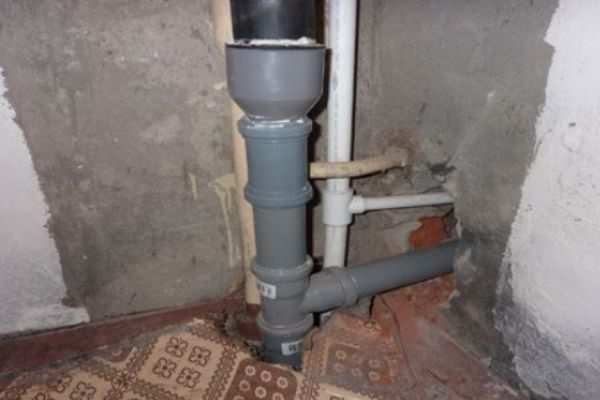
So, the pipe can crack, burst, blockages or leaks can appear in it, how can they be eliminated?
If a leak has formed, the procedure is as follows:
- Temporarily turn off the sewer in your apartment;
- To dry the joint, use a hair dryer or a regular rag, clean the surface of debris and cement;
- To fix the leak, use a poly-cement compound or a special sealant;
- If you used a polymer composition, you will have to wait a day until it dries completely. In the case of using a sealant, the sewer can be used after five hours.
Cracks in old cast-iron pipes are also not uncommon; to troubleshoot this kind of problem, the following manipulations must be performed:
- A wooden wedge of the required size is hammered in at the place where the defect has formed;
- The area with a crack is wrapped with gauze impregnated with epoxy glue;
- With an elastic bandage, this area is wrapped in several layers, after which it is additionally fixed with wire;
- In addition, this design can be replaced with a rubber patch, securing it with a special clamp.
Please note that these measures are only temporary. In order for the sewer system to work properly for a long period of time, it is necessary to replace the entire riser
Usually, cast-iron pipes are replaced with modern plastic ones.
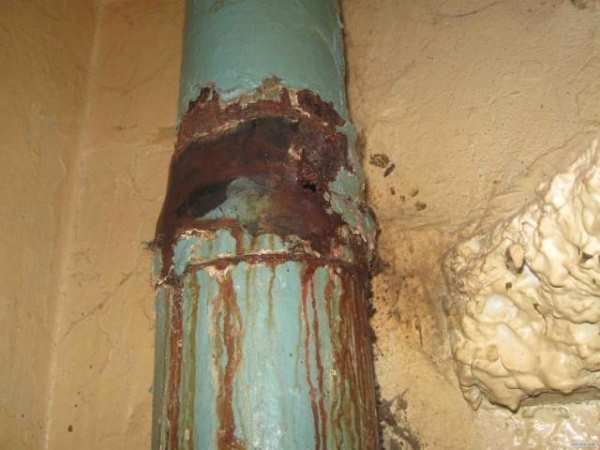
general information
In old houses, sewer risers and pipes in bathrooms are made of cast iron - a reliable, but not the most durable material.
Sooner or later, such pipes begin to fail, after which there is a danger of leakage, pipe splitting, damage to property and liability.
In order to prevent sad consequences, the riser and sewer branches should be replaced. In such a situation, the owners often manage on their own and change the riser in the apartment on their own.
Not everyone knows that it is possible to replace sewer and other risers at the expense of the management company.
Sooner or later, such pipes begin to fail, after which there is a danger of leakage, pipe splitting, damage to property and liability.
In order to prevent sad consequences, the riser and sewer branches should be replaced. In such a situation, the owners often manage on their own and change the riser in the apartment on their own.
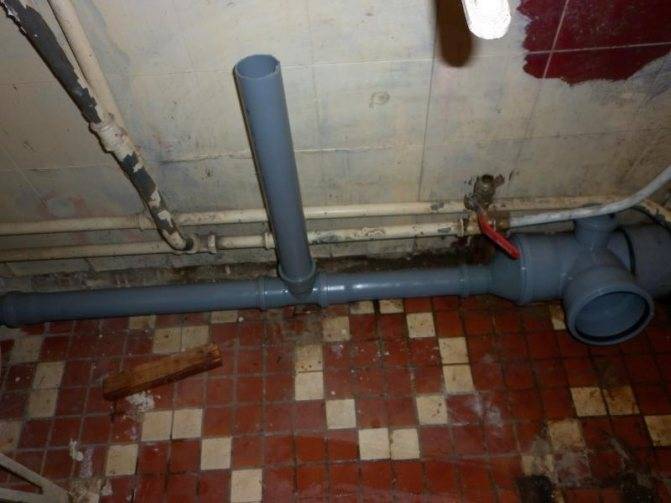

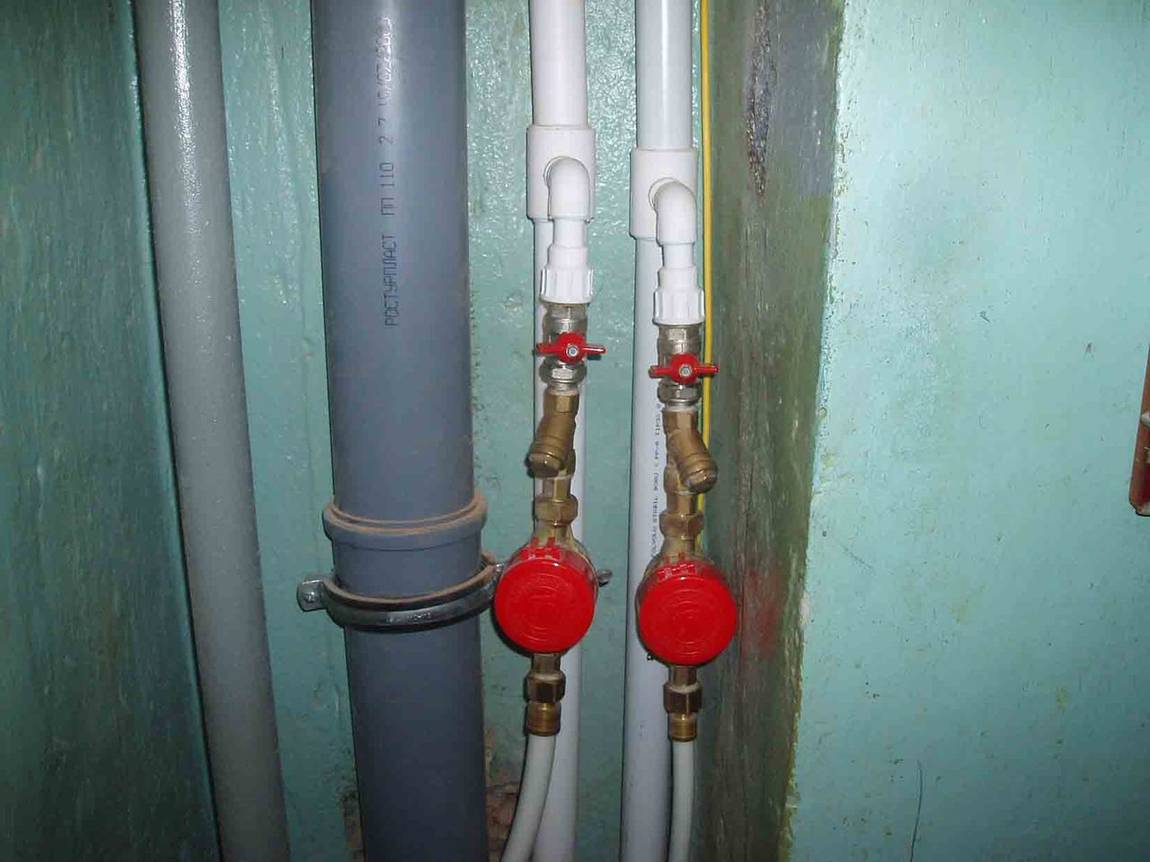
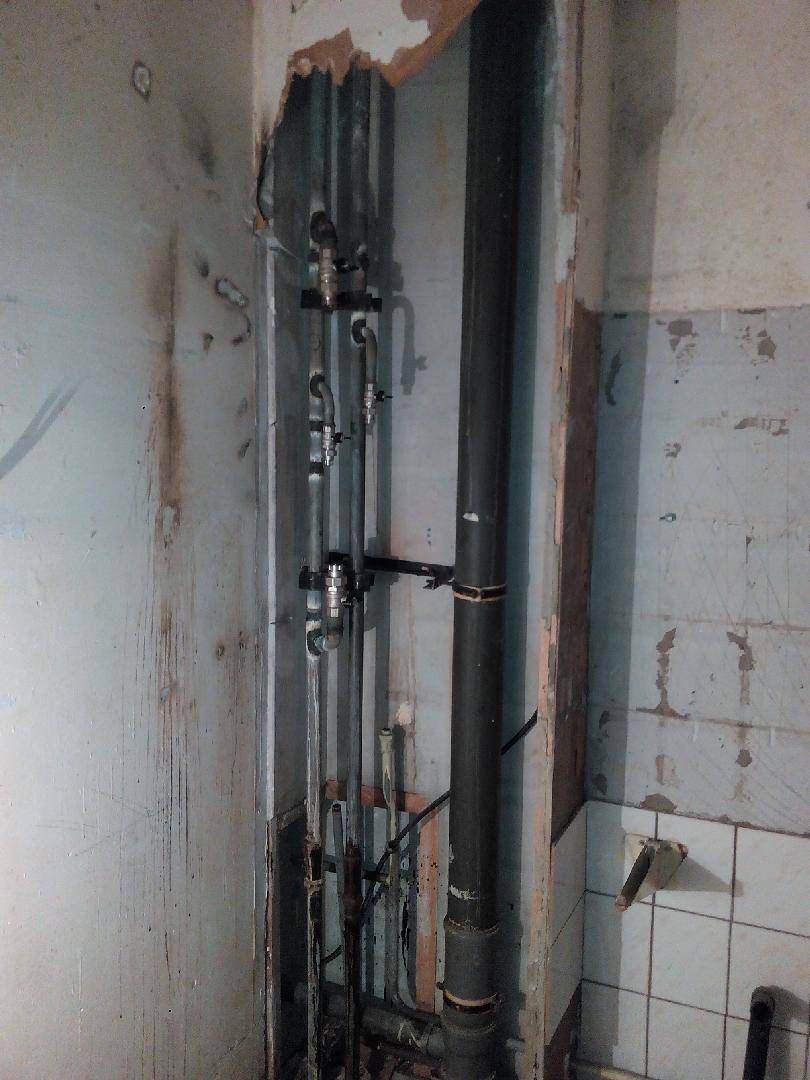
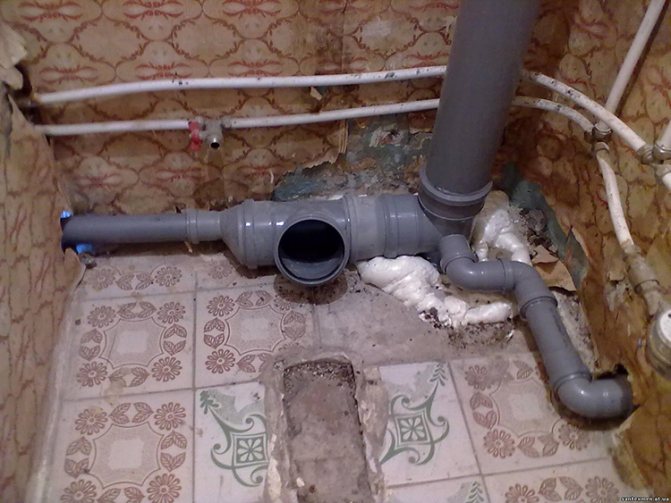
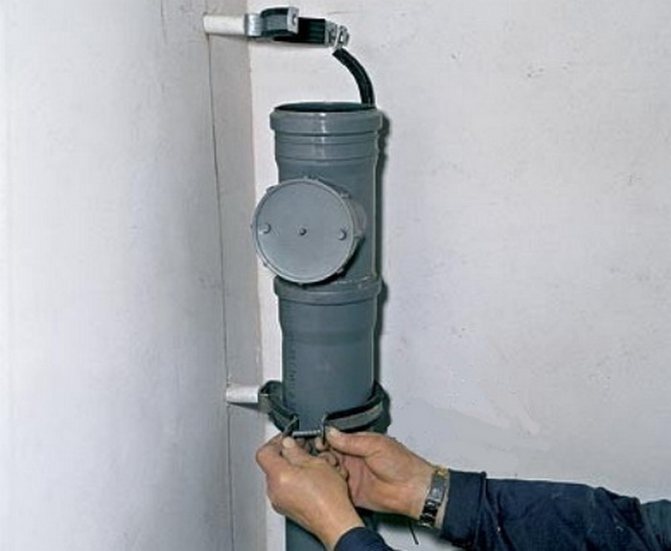
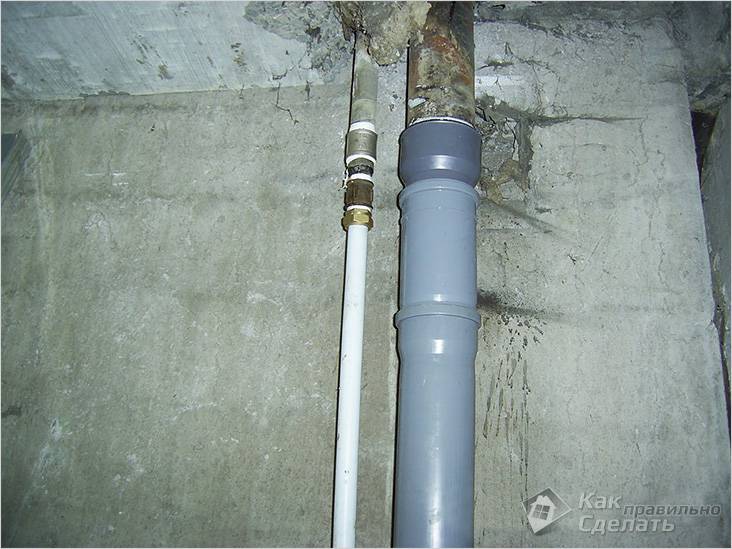
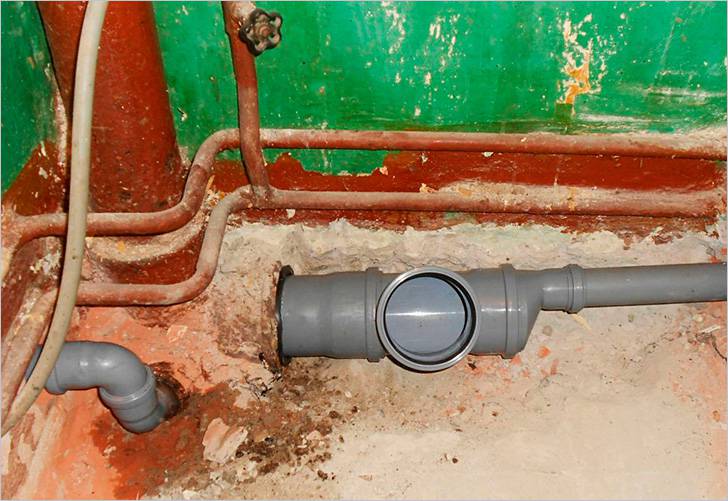

Replacement and repair of sewer, water pipes and heating pipes are regulated by:
- rules for the maintenance of common property in the MKD;
- rules and regulations for the technical operation of the housing stock;
- methodological guide for the maintenance and repair of the housing stock MDK 2-04.2004.
- According to the rules, the obligation to maintain and repair communications lies with the owners.
- Water pipes, which are branches from riser pipes, are maintained, repaired and changed by the owners independently and at their own expense.
- Riser pipes that are used by several apartments are common property in accordance with the rules for maintaining common property in an MKD.
- The common property also includes branches from the riser to the first docking connection.
Who should change?
Repair of the common house property is carried out by the management company, to which the tenants have delegated the right to manage the common house property.
The replacement of sewer and water risers is carried out by the Housing and Public Utilities Management Company, HOA or other companies. The decision to repair is made by the management company at the request of the homeowners.
At whose expense?
- By law, homeowners are responsible for the upkeep of common property.
- If the sewer riser is out of order and needs to be repaired or replaced, then the management company must perform and pay for these works from the funds contributed by the owners.
- Homeowners pay these costs in their utility bills under the item “maintenance and repair of housing”.
- If a major replacement of risers on all floors is made, then funds can be taken from payments for major repairs.
- A completely different situation arises when the homeowner wants to replace a serviceable riser for some personal reason, for example, when redeveloping a bathroom.
- In this case, all the costs of replacing the riser are borne by the owner, the work is also carried out independently.
- Replacement of risers in municipal housing is carried out at the expense of the landlord, that is, the municipal authorities.
- In this case, the replacement is made free of charge at the request of the employer to the municipal authorities responsible for citywide housing and communal services.
How to change?
- To replace a failed or in need of replacement riser, you should contact the management company with an application addressed to its head.
- Before you write an application to the Criminal Code, you can call a plumber to the house, who will draw up an inspection certificate for the sewer riser, fix the damage and the need to replace the riser.
- Next, you need to draw up an application for the replacement of the riser in a free form addressed to the head of the Criminal Code with a justification of the reason why the replacement work should be performed.
At the end of the application, write a specific request for the replacement or repair of the sewer riser. Next is the date and signature of the owner. The application is drawn up in two copies, one of which remains with the owner, the other is given to the Criminal Code.
Sample request letter for sewer line replacement.
The homeowner submitting the application must be a bona fide utility bill payer in order for their application to be accepted and considered.
After consideration of the application, a convenient time for the work is agreed with the owner. The replacement of the riser is carried out by employees of the management company or contractors involved by the management company.
The owner must provide free access to the bathroom in order for the pipes to be replaced. How much does it cost to replace a sewer line in an apartment?
The approximate cost of replacing a sewer riser in one apartment is from 4 to 7 thousand rubles.
When can homeowners be sued?
Replacing the riser of any communication system is considered a complex and lengthy process, during the implementation of which numerous rules and conditions must be observed.
Some apartment owners replace old and rusty pipes with new polypropylene pipes. They can do the work themselves or with the help of invited experts. But after the repair is completed, they can get a subpoena.
The management company or neighbors can act as a plaintiff.Such actions on the part of other owners of apartments or management companies are due to the following points:
- risers of communication systems are the common property of the building, therefore it is the management company that should be involved in the maintenance or replacement of these elements;
- homeowners do not have the right to independently engage in repair work, as they do not have the necessary powers and skills for this;
- apartment owners should only competently maintain common property.
Many people constantly write statements to the Criminal Code, where they indicate the need for urgent repairs, but do not achieve any result by their actions. Repair by the employees of the Criminal Code is carried out only after permission for the procedure is received from all the owners of apartments in the house.
In this video, a good example shows how to change sewer risers in apartments:
Due to the duration of decision-making and process implementation, people often have to deal with leaks and floods. Therefore, owners often replace part of the riser at their own expense.


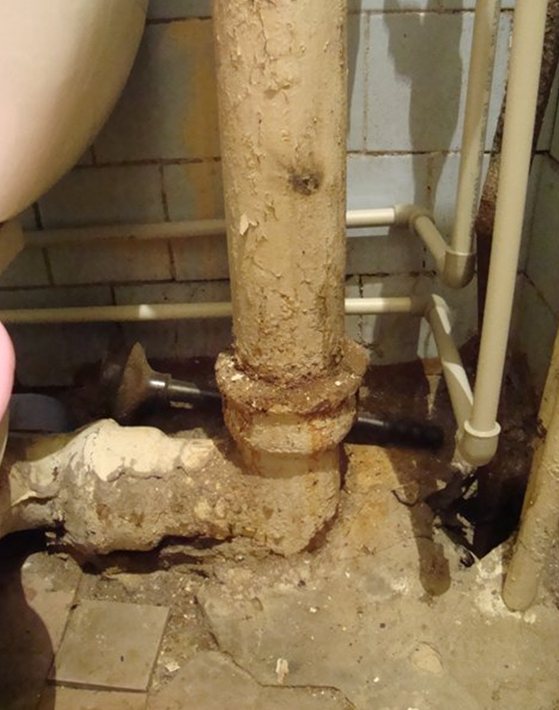

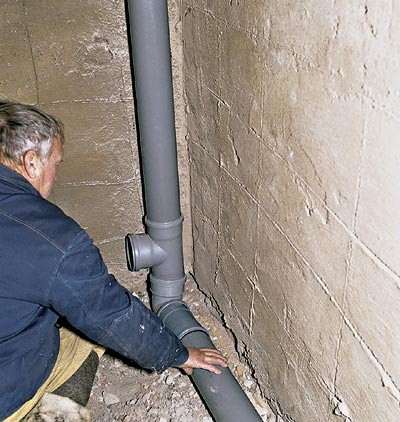

Due to such actions of citizens, the water pressure in the pipes often worsens. Neighbors begin to send complaints to the Criminal Code, as a result of which an investigation is carried out. Based on the results of this process, it is revealed that a certain owner of the apartment replaced part of the riser without prior approval.
The company's specialists draw up an act, after which they file a claim with the court against the violator.
Often, by a court decision, citizens have to eliminate violations, for which pipes are dismantled, in place of which old pipes that are in poor condition are installed.
How to protect yourself
So that the owner of the apartment, who replaced the pipes on his own, does not face the negative consequences of his actions, it is necessary to secure repairs performed by oneself.
What fine can the owner of a gas stove pay - here you can find out everything on this topic.
Safe replacement steps
For this, the following steps are implemented:
- before replacing the riser, it is necessary to send a written notice of the ongoing repair to the Criminal Code;
- the application shall indicate the requirement to conduct an inspection and draw up a conclusion;
- in the conclusion drawn up by the employees of the Criminal Code, the need for urgent repair work should be prescribed;
- specialists must issue an inspection certificate to the owner of the housing, which indicates that the pipes are in poor condition, and the Criminal Code also allows the owner of the apartment to carry out repairs;
- the company's specialists should provide assistance in the repair process, and it should be free of charge, since such actions are part of their duties.
Only with the above actions can you safely and legally replace the riser in the apartment.
Responsibility for violations
If the Criminal Code or neighbors file a lawsuit, then a citizen who illegally replaced the riser will be forced to face negative consequences. They consist in the need to pay a fine of 2 to 3 thousand rubles, and they also consist in restoring the previous state of the riser.
Therefore, if a person decides to replace the riser, then the process must be carried out under full control by the management company
To do this, it is important to notify the company's specialists about the planned work, as well as to perform all actions under their control.
Examples of replacing a sewer riser in an apartment - in this video:
Heating
Unscheduled replacement of heating risers is the most difficult case. As a rule, there are no problems with neighbors: pipes of heat risers do not stick to ceilings due to regular temperature deformations, damage to the floor and ceiling when dismantling the old ones is minimal, and the prospect of reducing heating costs or living warmer in winter for the same money (if heat meters not in the house) outweighs the annoyance.
It is much more difficult to understand the formal "troubles". There will be no accidents on the heating system in the summer, because. it is not filled. In new houses above the budget class, where the heating system is sealed and filled with antifreeze all year round, there is no need to change risers. And if the heating pipes burst in an old house, then at least one section of the entrance will be defrosted, which inevitably entails great damage and is even fraught with human lives. Therefore, the heat supply system after overhaul and replacement of risers is pressure tested under excess pressure of the coolant. Which, in turn, requires expensive and troublesome unscheduled power supply of the system, because it is technically possible to change heating risers in the order of current operation only not during the heating season. Only employees of the heating network or a technical service officially affiliated with it can do this. As a result, the replacement of heating risers is organized in the next. order:
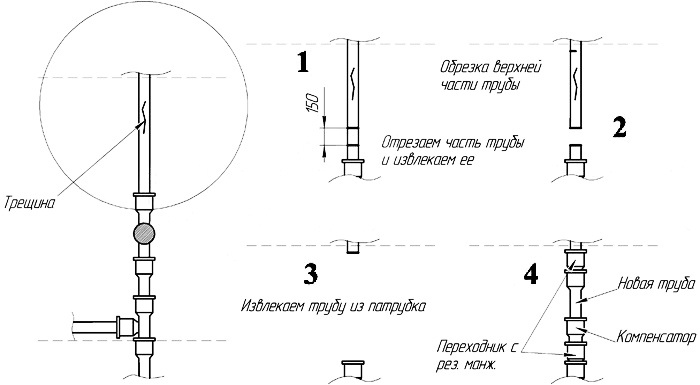




- Before the start of the current heating season, an application is submitted to the Criminal Code (ZHEK, DEZ) to replace the riser with an indication of the reason;
- On its basis, the management company submits an application to the heating network;
- During the heating season, the heating network specialist conducts an audit of the declared riser and determines the validity of the application.The desire to reduce heat loss by replacing steel with propylene is a very good justification;
- Until the end of the current heating season, the heating network and the management company are required to develop specifications for replacement, a list of requirements for the applicant and his neighbors in the riser (for example, remove stretch ceilings by a certain time) and familiarize all interested residents with them. It may be the applicant's responsibility to inform the neighbors;
- By the same time, if the riser is not emergency, written (in the form of a signature) consent of the neighbors for replacement must be obtained. This is entirely the applicant's troubles - there are no known cases of tenants with a signature sheet being bypassed by the management company or the heating network;
- If everything is done on time, then at the end of next summer or at the beginning of autumn, before the planned power supply of the system, the riser is replaced. If not, wait and tactfully remind. There is no other way;
- If your application is before the start of the heating season next. year was not satisfied, and during it on this riser (not necessarily yours) there was even the slightest technical problem - feel free to sue the heating system together with the Criminal Code. You can count not only on an unscheduled free replacement and full compensation for damage, but also compensation for non-pecuniary damage.
There is an important point here: if the heating riser is emergency, then it is not necessary to obtain the consent of all neighbors due to the high importance of heating. In this case, the management company and / or the heating network have the right to resort to the help of law enforcement agencies without a court decision
And in the moment - an equally important sub-moment: if someone has already arbitrarily replaced a piece of steel with plastic in their apartment, the riser becomes emergency, because. the insert was not made according to specifications and it is not known whether it will withstand the next pressure test.
You can change heating radiators (batteries) at your own expense and with your own hands outside the heating season after the first shut-off valve from the riser with permission from the Criminal Code; see below for more details. It is impossible without permission, because There are no shut-off valves on the return line from the battery. Formally, for the same reason, radiators are part of the riser (also see below), but if the heating leaks, defrosting the system does not threaten the house, so it’s still possible. However, if the neighbors are flooded at the same time, all responsibility will fall on you.
Conclusion
Don't forget to inspect the sewer system from time to time. Missed defects will result in problems with neighbors and expensive repairs. It is better to replace a suspicious section or a pipe that has expired in advance. Strengthen the joints with additional rubber gaskets and clamps, this will become a guarantee against leaks.
I hope you use all the tips that I have collected with success in practice. Share the article with your subscribers and on social networks, write comments. Tell us about your personal ways of troubleshooting sewers. All the best, success in household chores!