- Regulatory framework governing the scope
- Procedure for replacing an old gas boiler
- Reasons for replacement
- How to arrange the transfer of the boiler in a private house?
- Why is it being replaced
- Installation of new boiler equipment
- What documents are needed for work
- Procedure for replacing an obsolete boiler
- What documents are needed when replacing a gas boiler
- Do I need a new project when replacing a gas boiler
- Features of replacing a boiler of the same power
- Is it possible to replace a gas boiler with an electric one
- Replacing a gas boiler in 2019: rules, documents, fine
- What you need to replace in 2018
- Dismantling and installation of wall and floor equipment
- Reasons for replacement
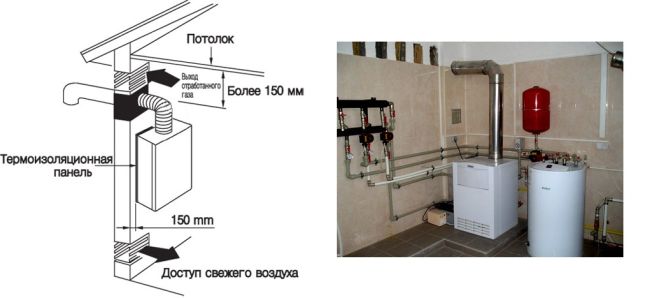
- Requirements for a room for installing a gas boiler in a private house
- Current standards for installing a boiler in the kitchen
- Proper organization of an extension for a boiler room
Regulatory framework governing the scope
Improper use of gas equipment often leads to negative consequences. Therefore, the state has regulated this area to the smallest detail.
And, in view of this feature, one, even a voluminous document, will not be able to contain all the necessary information.
All the necessary rules for the installation of gas boilers are set out in the governing profile documents.But the problem is that there are a lot of them and it will take a lot of time to get to know them. Therefore, in most cases, you have to rely on specialists
As a result, there are indeed many kinds of instructions. For example, certain related issues regulate:
- SP-401.1325800.2018, which sets out the design rules for all kinds of gas consumption systems in residential buildings;
- SP 62.13330.2011, which indicates what the gas pressure should be, how to properly lay pipes to the boiler, etc.;
- GOSTs with numbers R 52318-2005; R 58121.2-2018; 3262-75. Where it is indicated which pipes and fittings can and should be used when installing a gas boiler. In addition, steel and other types of gas pipelines are described. And also their characteristics are indicated;
- GOST 27751-2014; SP 20.13330. These documents set out the requirements for the load on external and internal gas pipelines used to install boilers;
- SP 402.1325800.2018, which sets out the rules for connecting boilers to the power grid;
- SP 28.13330, and in some cases GOST 9.602-2016, which describes methods for combating corrosion;
- SNiP 21-01-97. This document outlines the safety measures that should be observed during the operation of buildings, including those heated by gas boilers. As well as the division of building materials into combustible, non-combustible. And such information is important when equipping the room in which the boiler will be placed.
In addition, you should familiarize yourself with the rules set forth in SP 60.13330.2016 (this document is an updated version of the well-known SNiP 41-01-2003). After all, it is in this by-law that it is indicated that individual heating sources and what they should be can be used to heat housing.
And this is not all that you need to know to ensure the correct placement of the boiler and further safe operation.
It is imperative to comply with the current requirements when installing boilers. Since otherwise, the specified unit will simply not be allowed for operation. And for unauthorized connection, severe sanctions are provided in the form of large fines (from 10 thousand rubles). This is stated in Art. 7.19 of the Code of Administrative Offenses, as well as in Art. 215.3 of the Criminal Code
And if, for example, the question arose of why you need to know the safety measures or loads on pipes during construction. Then it should be remembered that the installed boiler will be allowed for operation. And, when the established rules set out in the relevant document are not followed, the identified shortcomings will have to be eliminated.
In the case when the purchased gas boiler is being installed in your own wooden house and the requirements for the size of the foundation are not met, which at any point must exceed the dimensions of the boiler by at least 30 cm. Then, instead of enjoying comfort, you will have to dismantle the structure and perform new work.
Procedure for replacing an old gas boiler
Difficulties caused by the replacement of blue fuel equipment are initially eliminated in the legal aspect and, only after receiving the approval of gas control institutions, they proceed to direct technical work. The procedure for this process is as follows:
• An application for approval from the gas control organization that controls the area where the replacement will be made.• Acquisition of engineering conditions: compliance with the previously approved project, discussion, if necessary, of increasing the restriction on the consumption of blue fuel (renewal of the contract for the provision of gas), conclusion on the key inspection of the spent gas meter and compliance with the assortment of pipes in the gas pipeline. • Execution of a contract with a specialized company that installs and takes responsibility for diagnostics and repairs. • Dismantling of the old technical equipment for heating. • Installation of a new device. • Acceptance-delivery for use by the gas supervision institution.
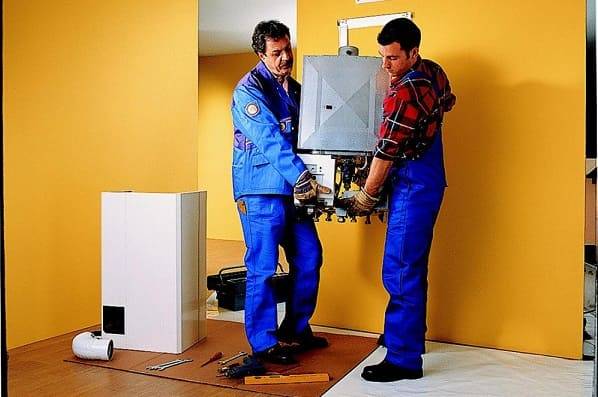
Reasons for replacement
The thermal energy generator for water heating of a private house is calculated based on the rated power and efficiency (productivity).
The reduction of these parameters, as well as a number of other points, require the renewal of boiler equipment.
The reasons for installing new boilers to replace old units are the following circumstances:
- Insufficient performance. An increase in the heated area due to extensions to the house or connecting new appliances to the water circuit that heat the attic, covered terrace or basement.
- The need for additional functionality. The comfort and coziness of a private household is determined largely by the presence of a hot water circuit. The ability to combine a water-heating device and a heating boiler in one device is provided by double-circuit gas models.
- Issues of rational use of blue fuel. Atmospheric boilers and units with forced flue gas extraction (with a closed combustion chamber) are being replaced by condensing heating technology.When calculating the productivity of new generation equipment using old templates, the efficiency exceeds 110%.
- Removal of the old boiler. The cost of maintenance and repair of an installation operated for years is unreasonably high, timely replacement will save money.
How to arrange the transfer of the boiler in a private house?
Coordination on the movement of gas-using equipment and gas distribution is carried out with representatives of the resource supply organization. The application is filled out in the form approved by Decree of the Government of the Russian Federation No. 266.


During your visit to the gas service, you should have a package of the following documents with you:
- Passport of the applicant (owner of the dwelling).
- House gas supply project.
- Technical passport for residential premises.
- Passport for a gas-using device.
- The consent of all other homeowners, if the house is in shared ownership (representative of the interests of minor owners).
The exact list of documents should be clarified in advance during a call or visit.
You will receive the decision of the commission on a separate form by mail or in person.
A sample application for re-equipment and re-arrangement must contain information about the applicant, the object, the list of attached documents and information about the planned work. If you receive a refusal to reorganize, it must be justified by the relevant paragraphs on the reasons for such a decision.
In practice, there are practically no failures. They can only be related to the non-compliance of the new boiler room with the established standards, the lack of documents for the object confirming the rights of the owner.Gas workers do not care how many times and where you will transfer the boiler.
If you want to speed up and simplify the procedure, try using the services of a gas service that offers to perform all types of turnkey work. Some organizations provide a similar service and all you need to do is write an application and conclude an agreement.
Representatives of the company will come to the site, draw up the protocols for the replacement and transfer of all required equipment, carry out coordination and installation work from the installation and gas boiler grounding before starting and setting it up.
Why is it being replaced
During the operation of the boiler, its power and efficiency level gradually decrease. The equipment is outdated and no longer meets modern standards.
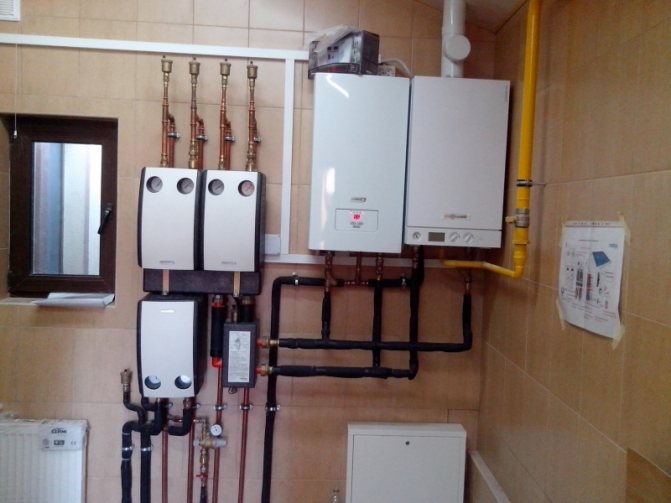
The most common reasons for replacing equipment:
- The performance of the boiler is no longer satisfactory. If you made an extension or connected additional devices to the circuit (for example, a boiler), then the old unit may not pull the load.
- Inappropriate functionality. Installing a double-circuit device instead of a single-circuit one allows not only to heat the room, but also to use hot water supply (DHW).
- Questions of rationality. Standard boilers consume a lot of gas. But more modern, condensing devices use not only gas, but also steam. This approach increases efficiency by 110%.
- Depreciation or breakdown of equipment.
Therefore, if your old AOGV is working “on its last breath”, if the cost of maintenance is equal to buying a new device, then a replacement is a must.
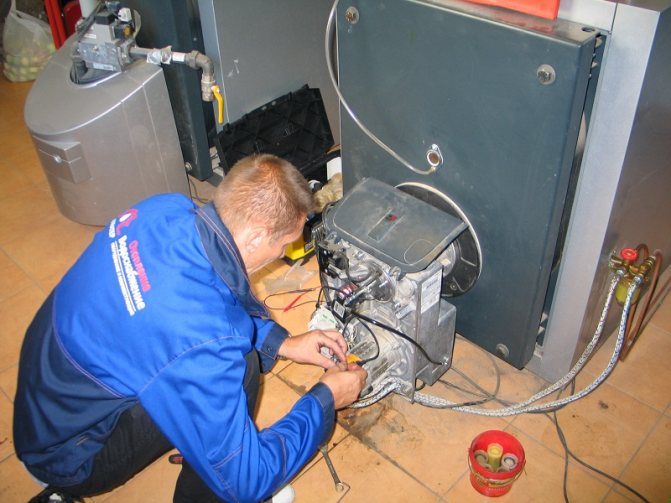
What designs does the market offer?
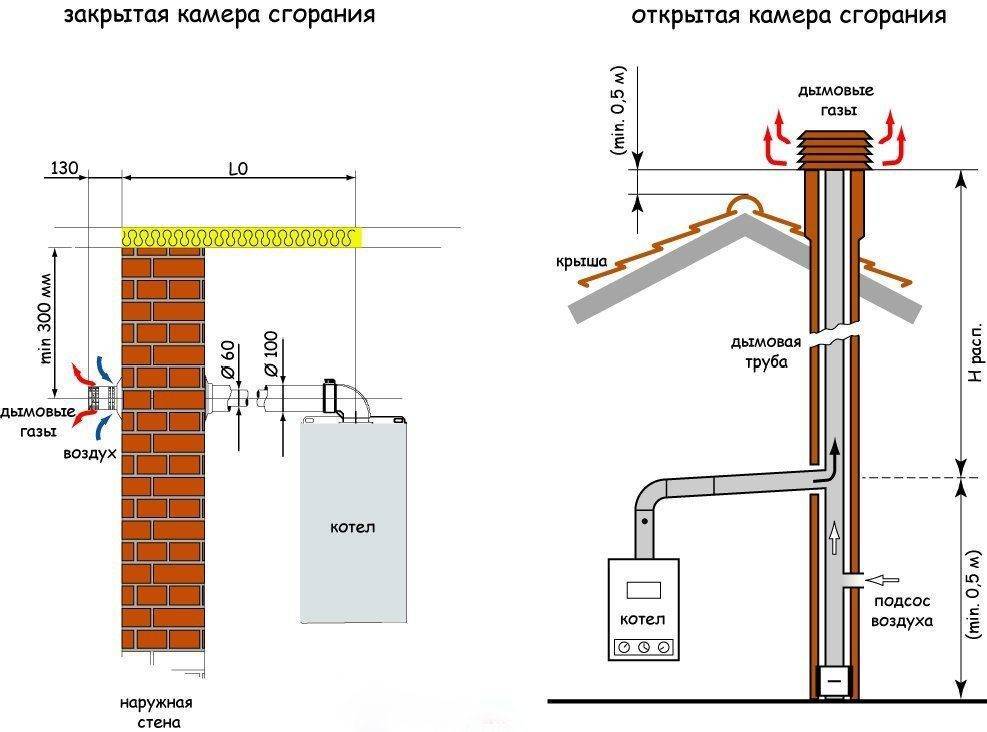
- With closed combustion chamber. This is a safer variety, because the burner is closed from external influences.Smoke is removed by a fan. The connected coaxial chimney contains two tubes through which air enters and fumes are removed. Requires a network connection.
- With an open chamber. An open burner requires air to be drawn from the room to maintain the flame. Good ventilation and connection to a chimney are required.
Installation of new boiler equipment
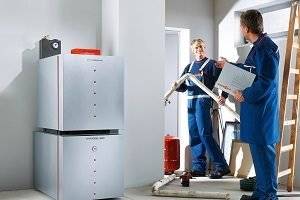
condensing equipment
Sometimes, under the phrase to replace (change) the boiler, a whole range of works is hidden: the transfer of gas pipes, the supply of power cables, and even the arrangement of a drain for the disposal of acid condensate.
The use of a new boiler with old heating requires the installation of filter devices on the return pipe. It is desirable that they include flushing the screen without disconnecting from the system or a quick-change filter cartridge. The transfer of gravity heating to a closed mode causes the installation of an automatic air valve (AVK) and an expansion tank of a membrane type.


The specialized organizations complete the procedure for replacing the boiler by handing over the object to the gas supervision authorities. In addition, an obligatory stage is the implementation of commissioning activities. The system is filled with coolant, the functionality of the unit is tested, the draft in the chimney is checked. The power of the equipment is adapted to the heated area.
It is better to entrust the replacement of gas equipment to professional teams. High-quality installation is the key to a long period of time between failures for a new unit.
What documents are needed for work
Paradoxical as it sounds, the lion's share of the time required to replace a heating boiler is spent on obtaining permits for new equipment.
In the process of installing the boiler itself, the requirements of SNiP 42-01-2002 "Gas distribution systems" must be taken as a basis. It contains all the technical conditions for the installation of a new gas heating boiler. In the same SNiP, in the article “Gas supply”, the exact procedure for replacing equipment is indicated. Although this document is no longer valid, it contains useful information that is definitely worth using.
Procedure for replacing an obsolete boiler
Gas equipment is considered a device of increased danger.
Therefore, all work on the installation and maintenance of gas appliances is also classified as work with increased danger. The existing rules unequivocally answer the question - how to replace a gas boiler in a private house - it is forbidden to install or replace boiler equipment on your own. Installation of boilers can only be carried out by special authorities (gorgaz, rygaz, oblgaz) through enterprises that have a license for such work.
To start replacing the boiler, you need to do the following:
- Write an application to the gas service for permission to replace the boiler. You need to know that when replacing an old boiler with a similar one, you do not need to create a new project, but if changes have occurred - a boiler of a different type, the location or gas supply scheme changes, then a new project is created.
- After receiving a response, you need to hand over a construction passport to the gas service. Collect and submit DVK inspection certificates, and if an imported boiler is installed, a certificate of conformity.
What documents are needed when replacing a gas boiler
Before replacing a gas boiler, it is necessary to collect a lot of documents and obtain permits for such work.
You will need the following documents:
- If the equipment is from foreign manufacturers, then you need to provide a certificate in accordance with our safety standards;
- If the boiler is double-circuit, then it is necessary to have a sanitary and hygienic certificate for supplying hot water for domestic needs. Usually such a document is provided immediately with the warranty card;
- Document on checking ventilation and smoke ducts;
- Warranty contract for at least 1 year, which is concluded with a service company;
- A document with the results of connecting equipment to engineering networks.
- Act on hidden work when installing a coaxial chimney through the wall;
- Project with changes. The main condition: the new boiler must be legalized.
You must collect all the documents yourself. If you do not have such an opportunity, then you can contact a special installation company. But in this case, additional costs must be calculated.
Do I need a new project when replacing a gas boiler
The project specifies the model, type and power of the heating unit. In addition, each boiler has its own serial number, indicated in the data sheet and included in the project documentation. Therefore, when replacing, you will need to make a new project with new data.
You need to go through the following steps again:
- Obtain specifications for the replacement of a gas boiler. At this stage, the gas distribution company can change the capacity of the unit based on the actual living area of the house.
- Make a new project.
- Obtain approval by submitting a gas distribution project, specifications, and the results of checking the chimney channel.
- Replace the old unit with a new one.
When replacing an old gas boiler for a new onethe following documents are required:
- The passport.
- Documents of the owner of the dwelling.
- Technical passport for gas equipment.
- Specifications.
Standard prices for the replacement of already installed gas equipment are 1000-1500 rubles, depending on the region.
Features of replacing a boiler of the same power
If the gas consumption per hour of the new boiler is similar to the gas consumption of the old one, then this greatly simplifies the task. Since all that is needed from the owner is to submit a notification of the replacement to Gorgaz.


And to it should be attached:
- Boiler connection certificate.
- The act of inspection of ventilation, chimney.
- Contract for at least one year maintenance of gas equipment.
After consideration, the application is granted permission. After that, the equipment is replaced, tested and its operation begins. Thus, the RF GD No. 1203 p. 61(1) allows to operate.
Is it possible to replace a gas boiler with an electric one
Replacement is quite possible, but for this you will have to obtain permission from another organization involved in power supply. Documents are needed only if the electric boiler has a power of more than 8 kW. Up to this performance limit, the unit belongs to ordinary household water heaters by the type of boiler, therefore, it is installed without permits and approvals.
For productive electric boilers, a separate power supply line will be required. You will need to make a project and obtain permission to increase the amount of electricity generated.Separately, it is necessary to write a statement about disconnecting the gas boiler from the main.
Replacing a gas boiler in 2019: rules, documents, fine
Need to replace your gas boiler? This decision is made for various reasons, but if you are thinking of doing the work yourself, then our article will help you. We will tell you what standards to comply with, what documents to collect for the effective replacement of old heating equipment.
What you need to replace in 2018
If you plan to install a new boiler in another room, consider the following requirements:
- Installation is allowed only in non-residential premises with a door.
- For installation of equipment with an open combustion chamber, it is necessary to have a window with a window and an area of the room from 8 m². For closed devices, the requirements are only in terms of volume - from 9 m².
How to arrange the installation and collect documents:
- Write an application to the gas service for a permit.
- Get a list of specifications. If it turns out that only the equipment changes, then the project remains the same. If the installation site changes, the communications scheme changes, then a new project is being developed. To do this, you need to contact a company with a license.
- Take a construction passport from the replacement company. With it, an act on the condition of the chimney channels, an act on the conformity of equipment with standards, contact the gas inspection.
- Dismantling, installation, commissioning.
You can do the collection of documentation yourself or give an order to a special service.
Is unauthorized installation of equipment in a private house or apartment allowed?
Do-it-yourself installation is not prohibited by documents. Only unauthorized connection to the gas main is not allowed.The rest of the work the user can perform with the skills.
When connecting gas without approval, you face a fine of 10,000 to 15,000 rubles (under Article 7.19 of the Code of Administrative Offenses of the Russian Federation). This does not frighten many consumers: they carry out installation without authorization, and then pay a fine. But you should understand that you are endangering not only yourself, but also your neighbors.
What steps should be taken when replacing:
- For the organization of condensing boilers, a connection to the network is required, the connection of a system for removing condensate according to the rules.
- Before switching on, you will need to agree on the condition of the chimney. The inspection is carried out by a gas service specialist. After that, such an audit will be carried out once a year.
- You won't get a warranty if you do it yourself.
Dismantling and installation of wall and floor equipment
Before dismantling the device, flush the heating system so that accumulated dirt does not block the operation of the new device.
Then:
- Drain the water from the boiler.
- Disconnect the appliance from gas, heating and water.
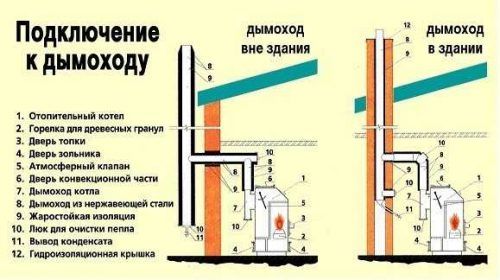
- Disconnect the flue pipe from the shaft outlet or ventilation.
- Remove the case from the wall or dismantle it from the floor and put it away.
How to replace the device with a more powerful one:
- With wall-mounted equipment ("Bosch", "Ariston"), make markings on the wall. Attach the plank. Then hang the structure on the brackets or anchors. Check the location with a level - the case must be located strictly horizontally. A solid foundation is being prepared for the Baksi outdoor unit.
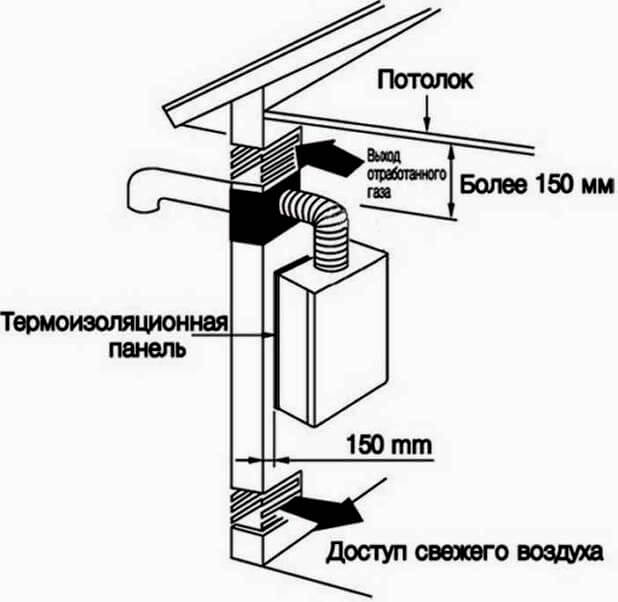
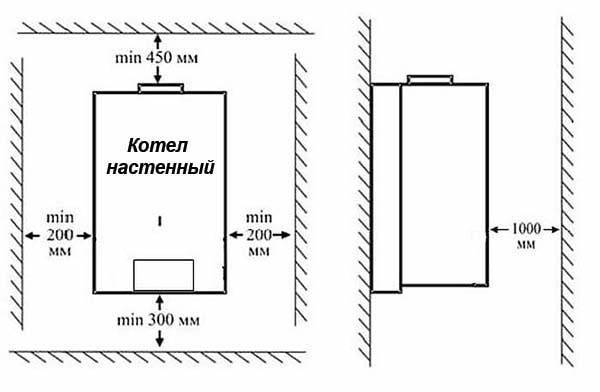
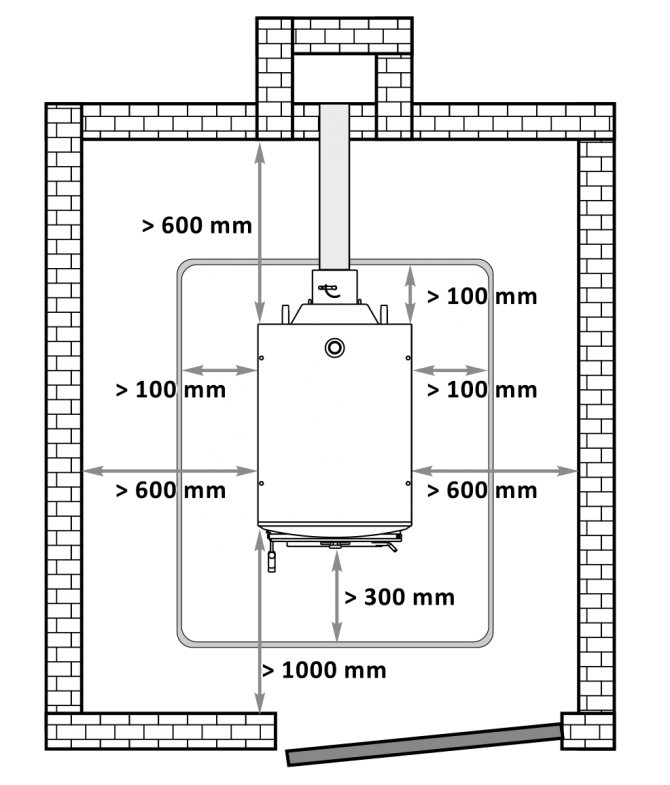
- Keep a distance of 30–50 cm from the wall. If the wall is made of combustible material, insulate it with asbestos sheet.
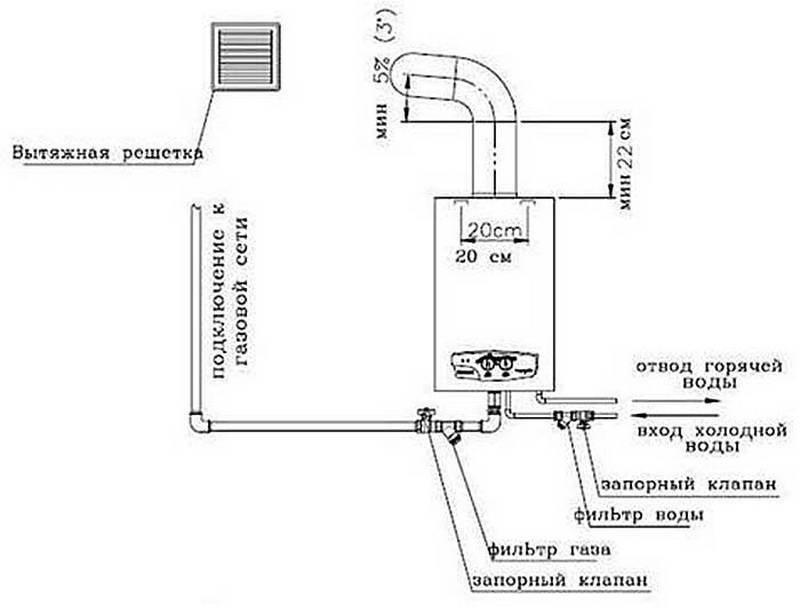
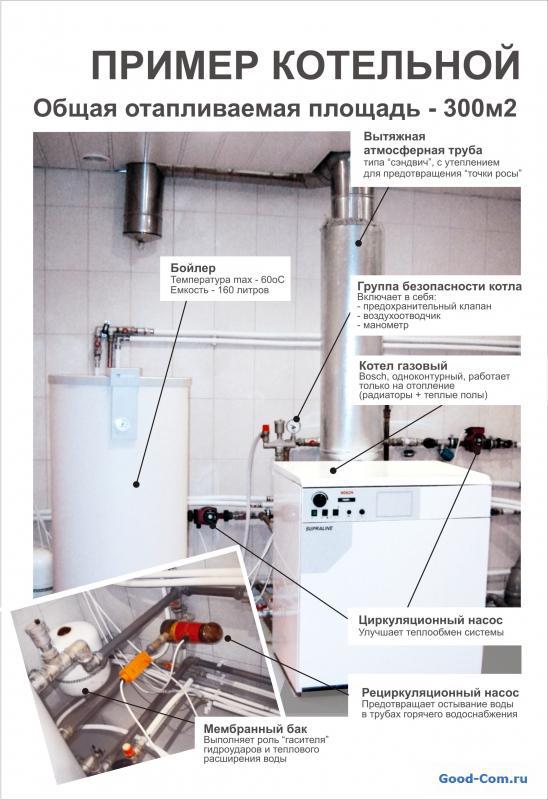
- Water communications are connected through a mesh filter that traps small particles of debris from the water supply.Additionally, you can install a water purification filter from impurities, so you reduce the likelihood of scale deposits. Taps are mounted on both sides of the filter. So you can clean the part without draining the water.
- The connection to the gas pipeline is in progress. At the same time, there must be free access to the shut-off valves.
- If this is a turbocharged device, then connect it to a 220 volt network with grounding. Watch out for polarity. It is recommended to install a voltage stabilizer.
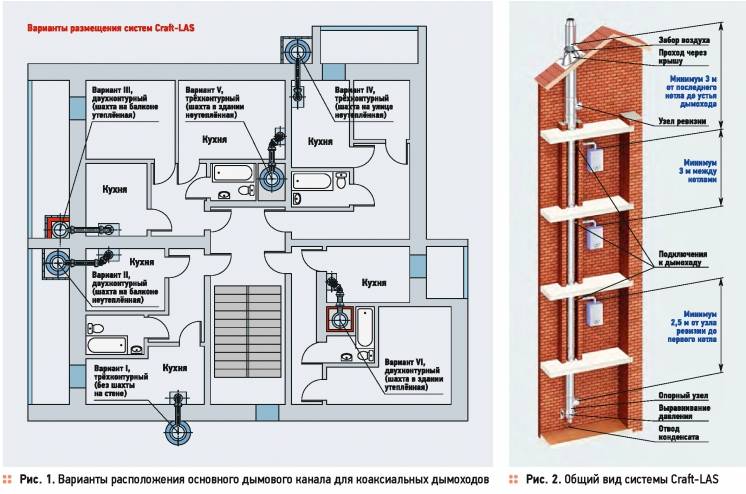
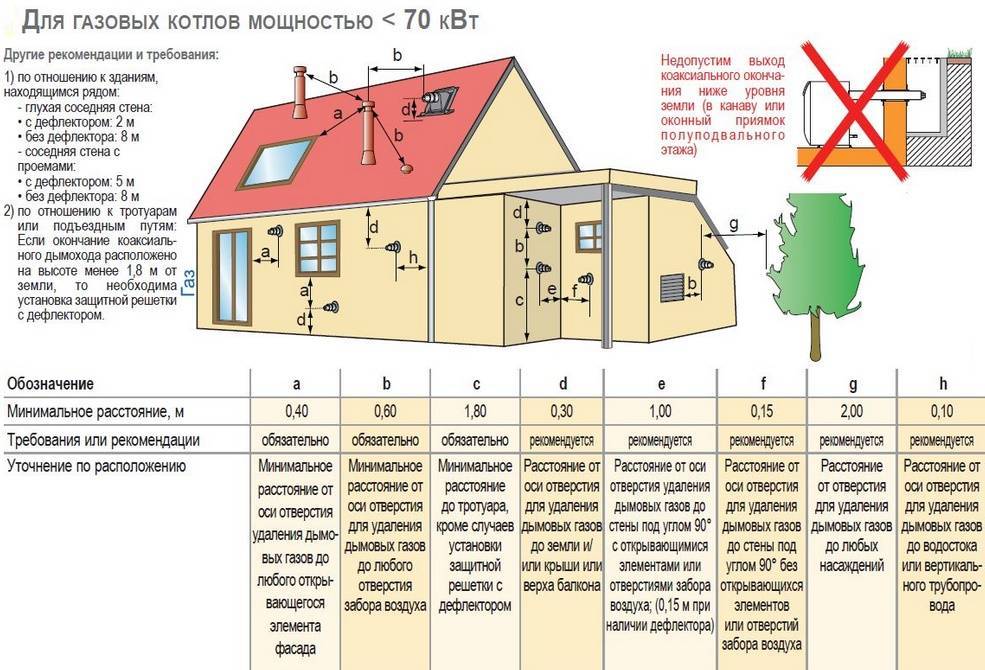
- For a closed type, the procedure for creating a chimney is as follows: a coaxial chimney is connected to the new branch pipe of the product, the other end is led out into a hole in the wall, a ventilation duct. This is the same principle of organizing a conventional chimney. In this case, steel pipes are used.
- Fill the system with water. First, turn on the current through the heating circuit, and then open the valve of the boiler itself. Watch the pressure, the norm is from 0.8 to 1.8 bar.
- Check connections for tightness.
- The launch must be carried out by an employee of the company. After that, the equipment is put into operation.
Carry out the work on your own or turn to specialists - it's up to you. Even with unauthorized installation, you will have to commission and test the device.



Watch a helpful video on the topic:
Did the article help you?
Not really
Reasons for replacement
The reduction of these parameters, as well as a number of other points, require the renewal of boiler equipment.
The reasons for installing new boilers to replace old units are the following circumstances:
- Insufficient performance.An increase in the heated area due to extensions to the house or connecting new appliances to the water circuit that heat the attic, covered terrace or basement.
- The need for additional functionality. The comfort and coziness of a private household is determined largely by the presence of a hot water circuit. The ability to combine a water-heating device and a heating boiler in one device is provided by double-circuit gas models.
- Issues of rational use of blue fuel. Atmospheric boilers and units with forced flue gas extraction (with a closed combustion chamber) are being replaced by condensing heating technology. When calculating the productivity of new generation equipment using old templates, the efficiency exceeds 110%.
- Removal of the old boiler. The cost of maintenance and repair of an installation operated for years is unreasonably high, timely replacement will save money.
Requirements for a room for installing a gas boiler in a private house
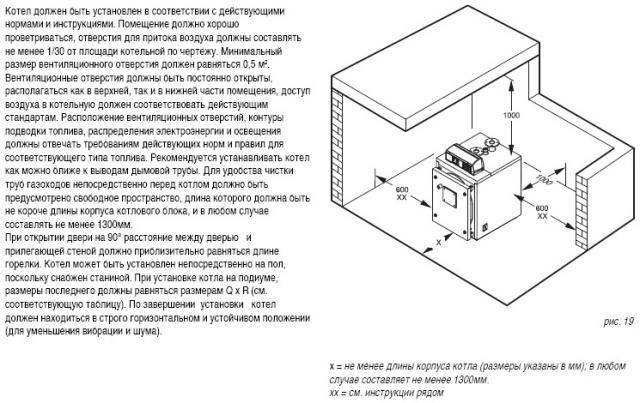
In accordance with the norms of SNiP 42-01 and MDS 41.2-2000, the room in which the gas boiler is installed must comply with the following minimum parameters:
- the area of the premises is more than 4 square meters;
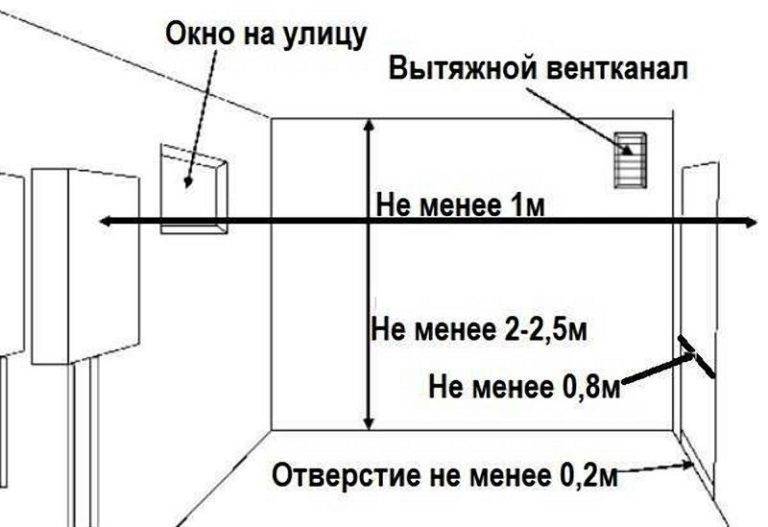
- ceiling height - at least 2.5 m;
- room volume - at least 15 m3 (when placed in the kitchen, there are differences described below);
- the presence of a door with a doorway width of at least 800 mm, according to fire safety, the door must open outward;
- the presence of a gap of at least 20 mm under the door;
- the presence of natural light (through a window) at the rate of 0.03 m2 of glazing area for every 1 m3 of room volume (for example, for a room with a volume of 15 m3, the glazing area is 0.03 * 15 = 0.45 m2);
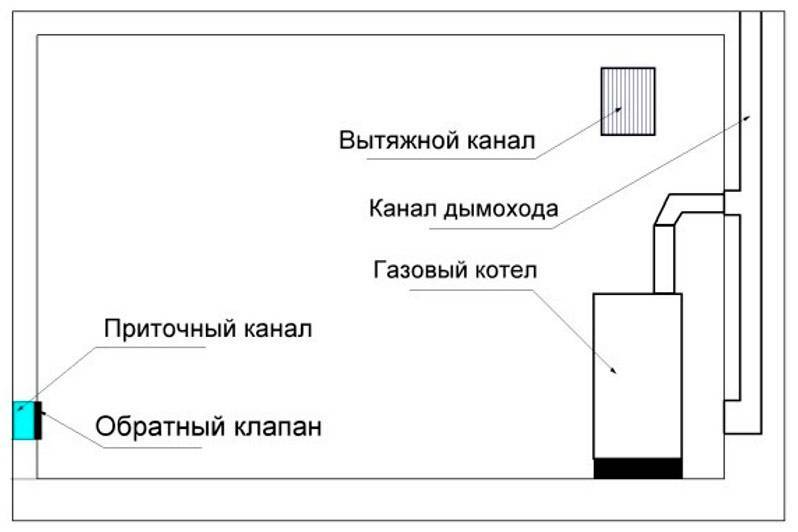
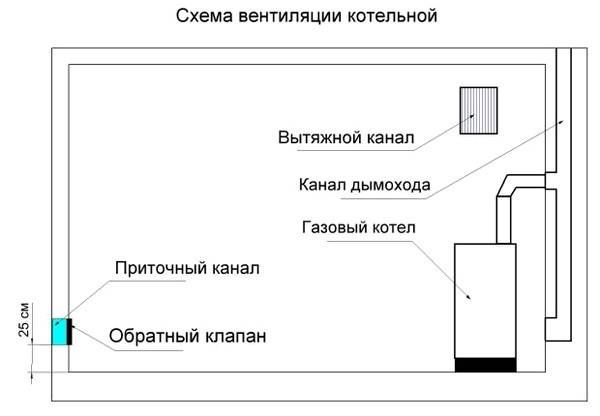
- the presence of ventilation in the boiler room based on the calculation - exhaust in the amount of 3 air exchanges per hour, air inflow - exhaust volume + air required for gas combustion (if the boiler has an open combustion chamber. If there is a closed combustion chamber, combustion air is not taken from the room, and through a coaxial chimney);
- walls separating the room from neighboring ones must have a fire resistance rating of at least 0.75 hours (REI 45) or be covered with a structure with the same fire resistance rating, the fire spread limit must be equal to zero (non-combustible materials);
- the floor in the room is horizontally flat, made of non-combustible material.
Current standards for installing a boiler in the kitchen
According to MDS 41.2-2000, it is allowed to install boilers with a power of up to 60 kW in the kitchen. Gas service workers can often refer to other regulations that indicate a maximum allowable power of 35 kW, therefore, before installing a boiler with a capacity of 35÷60 kW, consult with the local gas service. Only the power of heating equipment is taken into account, other gas appliances are not taken into account.
Otherwise, in addition to the above requirements for a separate room, there are some differences when placed in the kitchen:
- the minimum volume of the room is at least 15 m3 + 0.2 m3 for each 1 kW of boiler power (for example, when installing a boiler with a capacity of 24 kW, the volume of the room is 15 + 0.2 * 24 = 19.8 m3);
- the window must be openable or equipped with a window;
- the presence of a gap necessary for air flow in the lower part of the door with a cross section of at least 0.025 m2 (Section = Width * Height).
Proper organization of an extension for a boiler room
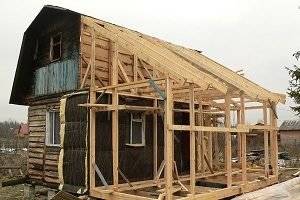
If it is impossible to allocate a separate room for the boiler room, and you don’t want to install the boiler in the kitchen, the boiler room is simply attached to the outer wall of the house. Also, extensions are relevant in wooden houses, when, after providing the walls with a refractory structure, the dimensions of the room will not meet the minimum standards. The same requirements apply to the extension as for standard boiler rooms, but with some additions:
- the extension must be officially registered; without registration, the gas service simply will not allow connection;
- the boiler room is attached to a blank wall, at a distance of at least 1 meter to the nearest windows and doors;
- extension walls should not be connected with the wall of the house;
- the walls of the extension and the wall of the house itself must comply with a fire resistance limit of at least 0.75 hours (REI 45).