How to properly make ventilation in a private house with your own hands, a detailed installation diagram will tell you.
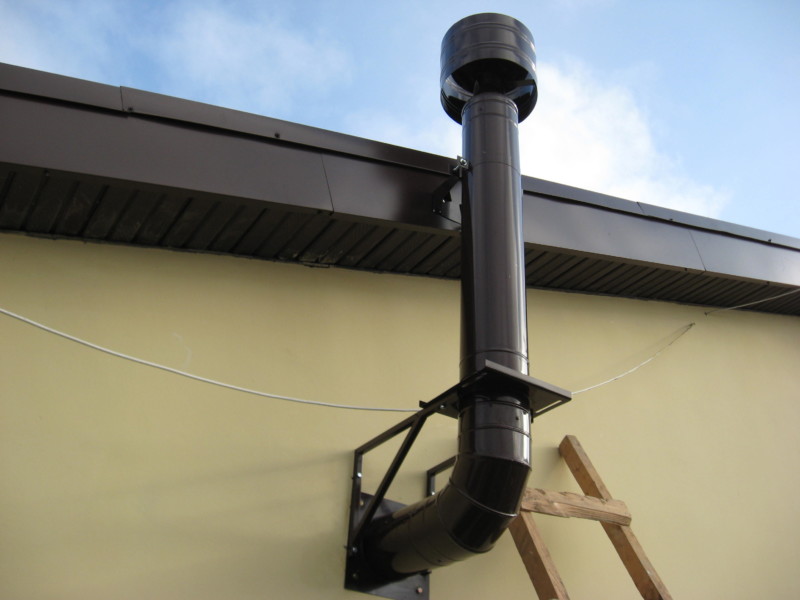
Ventilation device through the wall to the street
In order for the air in the house to circulate freely, a system for its outflow and inflow must be thought out. In multi-apartment buildings there is a vertical ventilation duct. It remains to check whether it is clogged with debris. But in a private home, it may not be available at all. Then, in addition to ventilation, to create an influx of fresh air, you will have to think over and organize its exhaust.
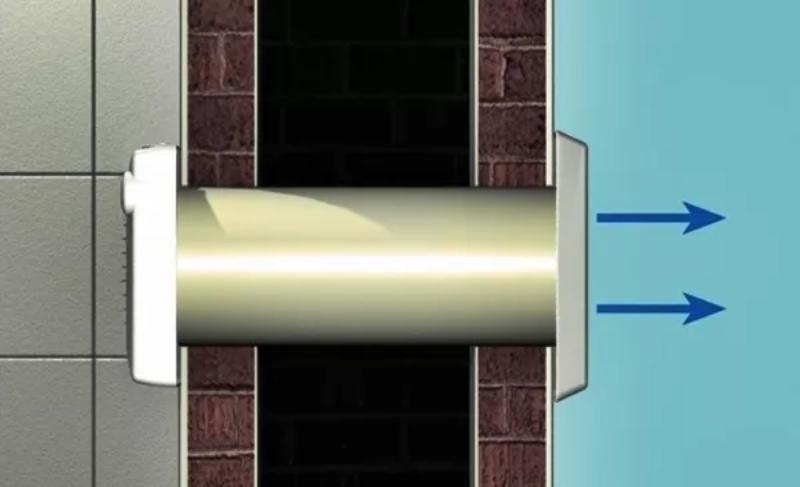
How to make ventilation in a private house:
- The most common way is to make a special hole in the wall and provide it with a valve.
- You can place it in different places. But for the supply system, it is recommended to choose the area between the window sill and the heating radiator, so that in the cold season the incoming air first warms up and only then penetrates into the building.
- Ventilation schemes are different, when choosing, it is required to take into account the area of \u200b\u200bthe room, the presence of a central ventilation duct, and other factors.
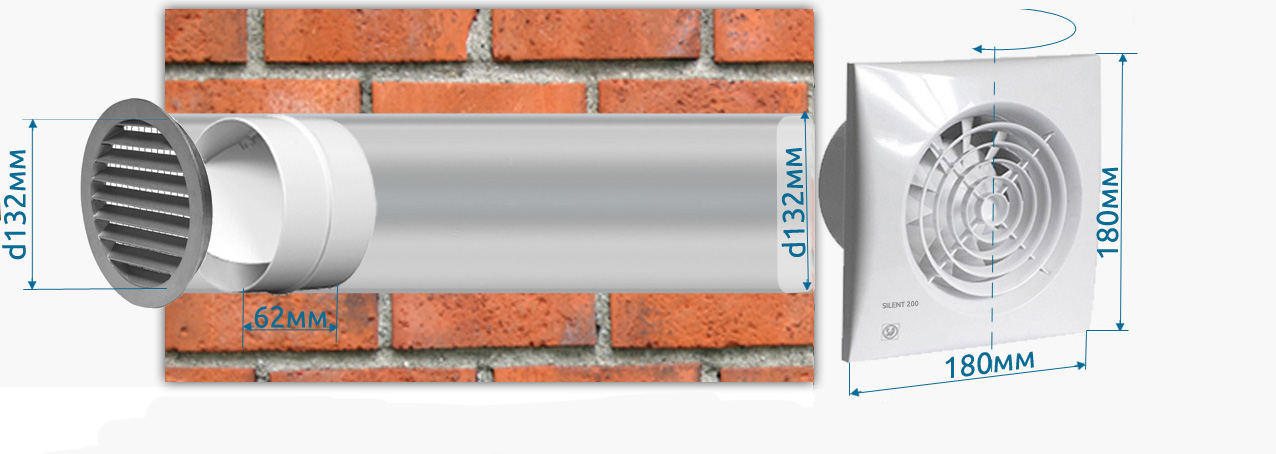
Ventilation schemes through the wall
Ensure constant air exchange is required in all living quarters. A ventilation system is especially needed in rooms with plastic windows. It will also be needed in the kitchen, in the bathroom. The ventilation scheme in a private house can be with natural or mechanical air outflow. A combination option is also possible.
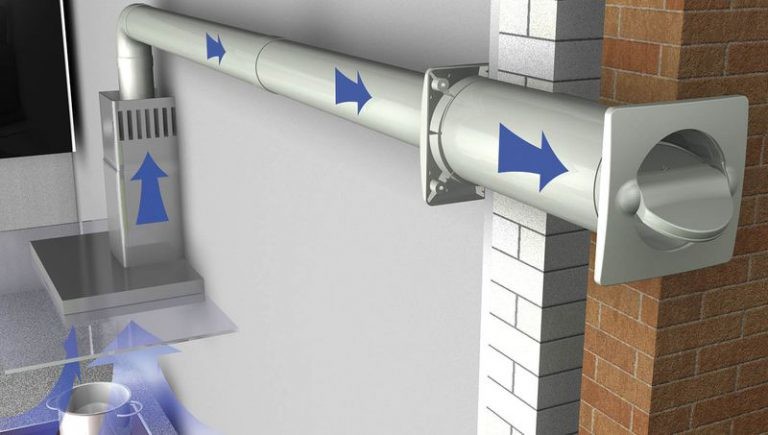
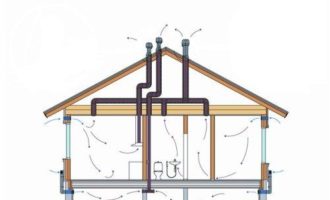
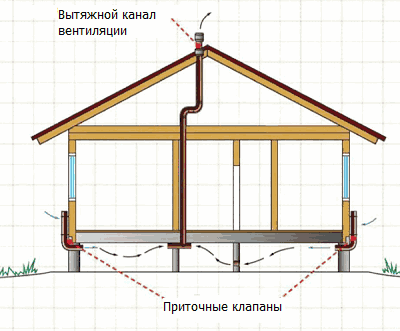
The organization of natural exhaust in a private house involves the installation of a pair of holes on opposite walls: one hole needs to be made closer to the ceiling, the other next to the floor.
Equip them with special valves. With this scheme, the circulation of air masses occurs according to physical laws. Warm air rises to the ceiling and exits through a nearby opening. Cool masses, on the contrary, are drawn into the room through the lower hole.
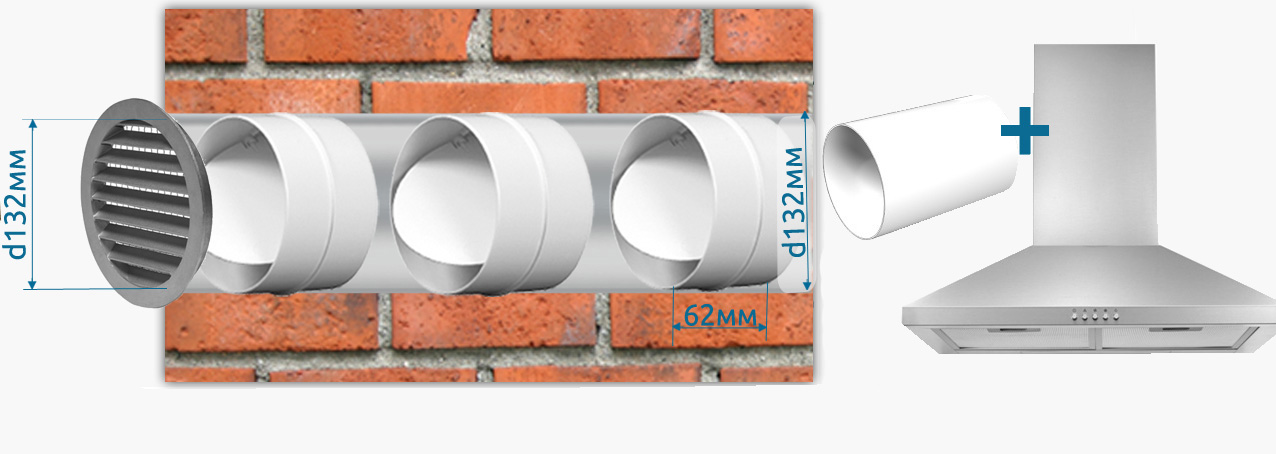
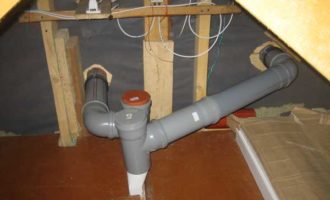
Sometimes the hood is made on the ceiling itself, by installing a metal or plastic tube with access to the roof.
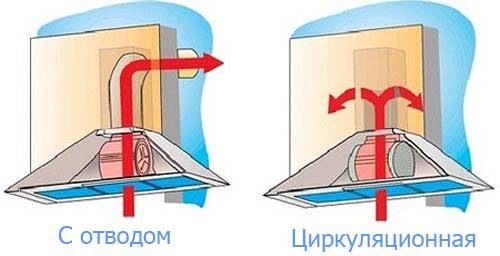
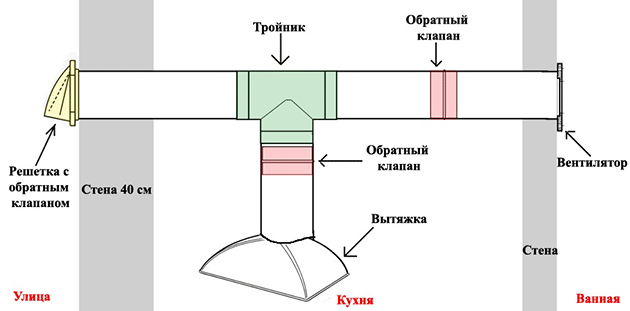
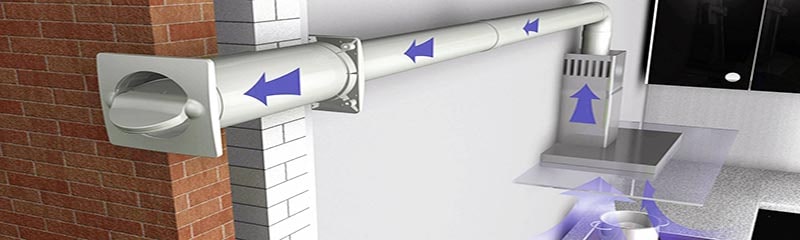
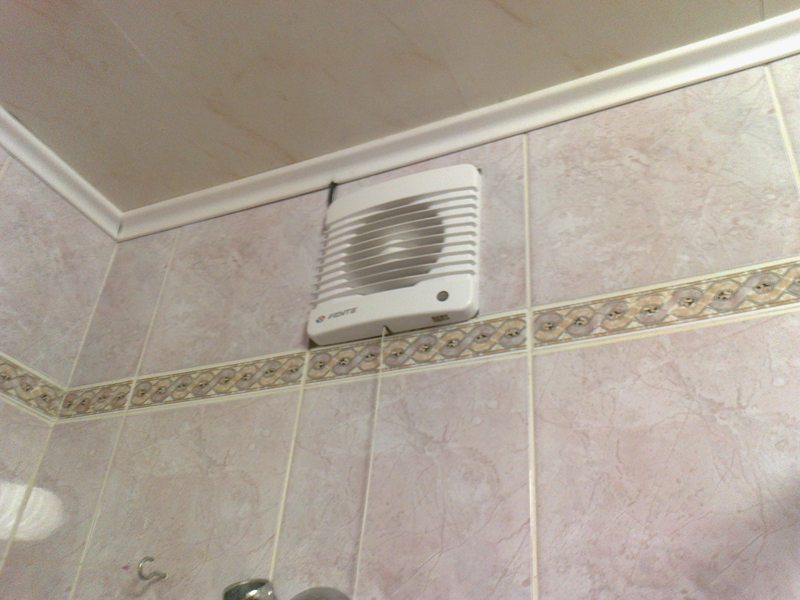
Similarly, mechanical exhaust ventilation is organized in a private house with an exit in the wall. Instead of valves, in this case, wall or duct fans are mounted. The first ones are a small box, an intra-wall tube and a protective grill on the street side.
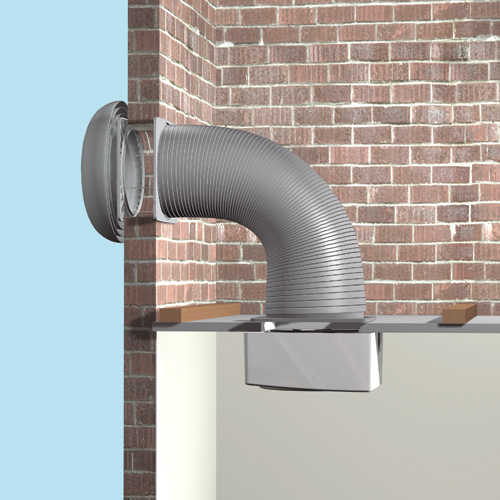
In the channel version, the fan is installed inside the tube, and both of its outlets are blocked by gratings. A mechanical fan can only be installed on one opening: supply or exhaust. But in spacious rooms it is recommended to equip both holes in the walls with it.
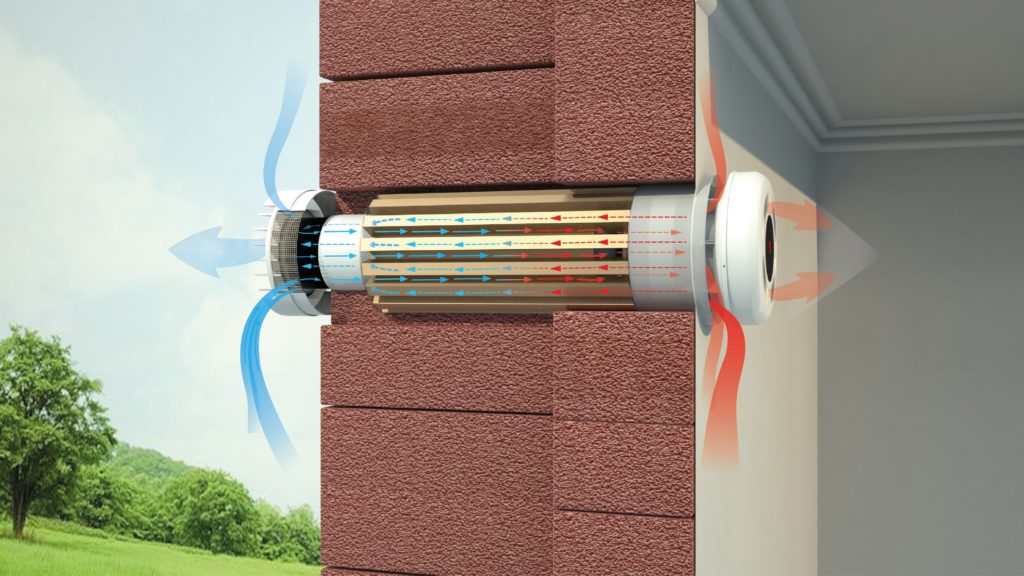
Mechanical or natural?
Installation of ventilation in a private house begins with the calculation of whether it is required to equip the system with a special device or the natural movement of air masses will be sufficient. The final decision depends on the size and purpose of the room. It is also necessary to take into account that it is not possible to make a wide hole for natural ventilation everywhere. Then it is better to install a fan than to suffer from a lack of oxygen and an excess of carbon dioxide.
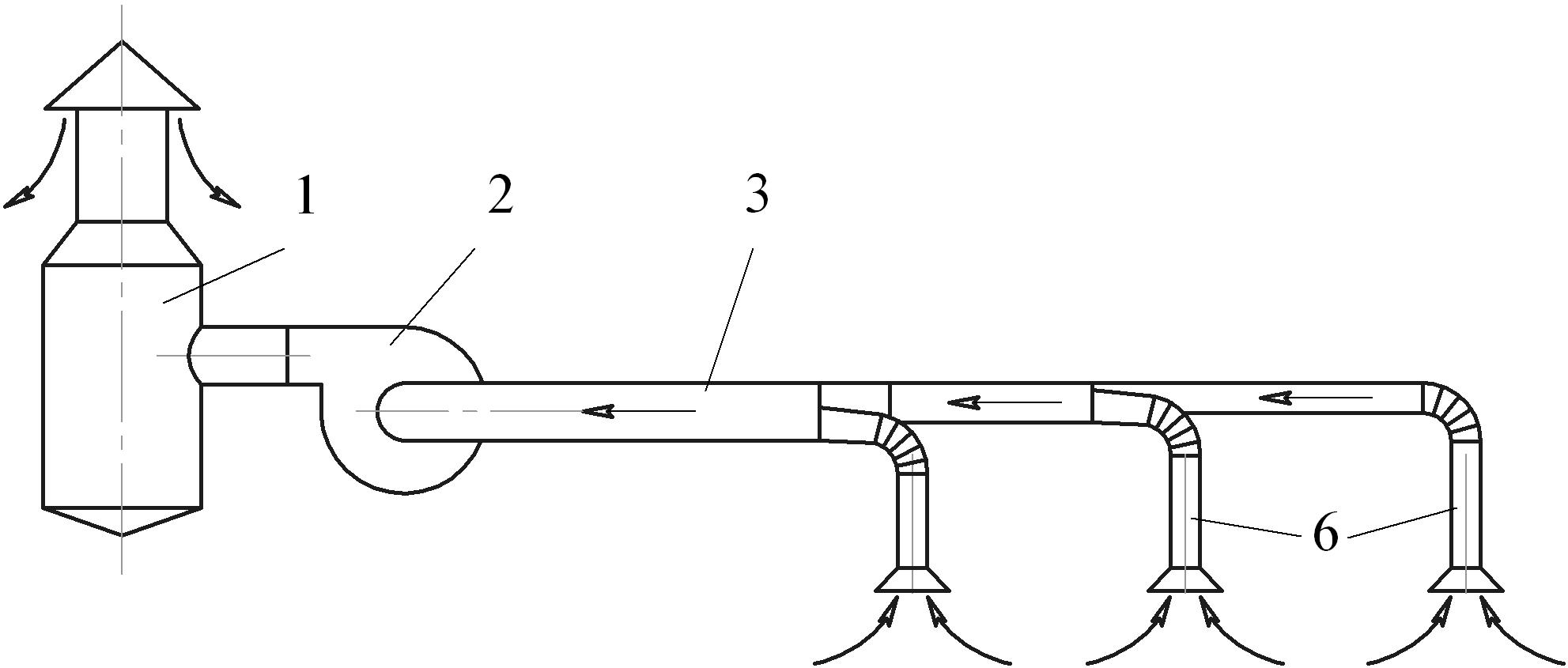
The room will not be comfortable if the speed of movement of air masses is high. In natural circuits, this figure is 1 m³ / h, and in mechanical circuits it is already 5 m³ / h. Therefore, it is better to equip rest rooms (bedroom, living room) in a private house with ordinary ventilation ducts, but in a spacious kitchen without a fan it can be uncomfortable.
The choice may also be influenced by the costs of installing and operating the ventilation scheme. Natural and combined options are the most available. For a private house of 1-2 floors, they are usually enough. In addition, the mechanical system takes up more space and may require periodic maintenance, adding to the cost of maintaining the home.
Supply ventilation devices in the walls
The ventilation device in a private house with plastic windows will not do without a forced supply circuit. Through a special valve from the street, fresh purified air enters the room. This device protects against noise, and installed next to the radiator, in winter it does not affect the temperature in the room.
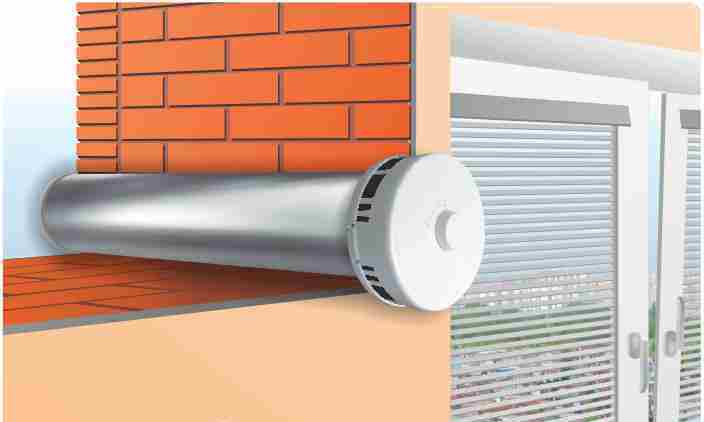
Forced ventilation in the house using a supply valve has the following advantages:
- the light transmission of the window is preserved;
- can be installed on any wall;
- no street noise and dust;
- does not lose efficiency at low temperatures;
- works independently of other systems;
- provides sufficient air exchange;
- no condensation.
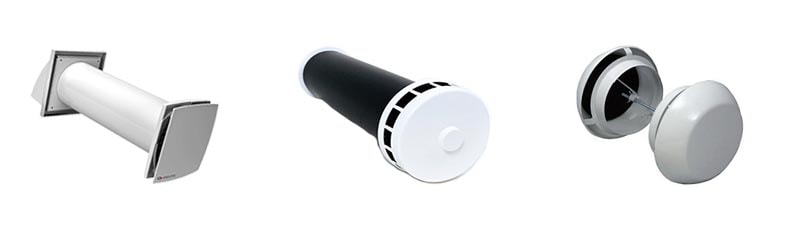
Models of supply valves do not have significant differences. The difference lies in the parameters and material of the tube. Each device has an air flow adjustment, the maximum value of which can reach 40 m³ / h. Outdoor air enters through the grille on the outer wall, passes through the sound insulation and the coarse filter.
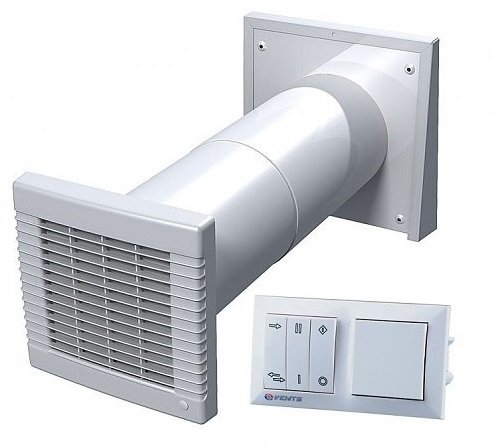
Supply valve installation
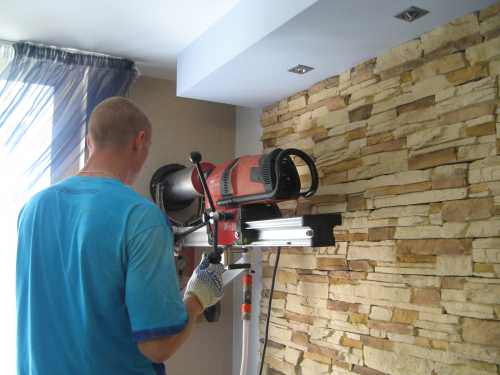
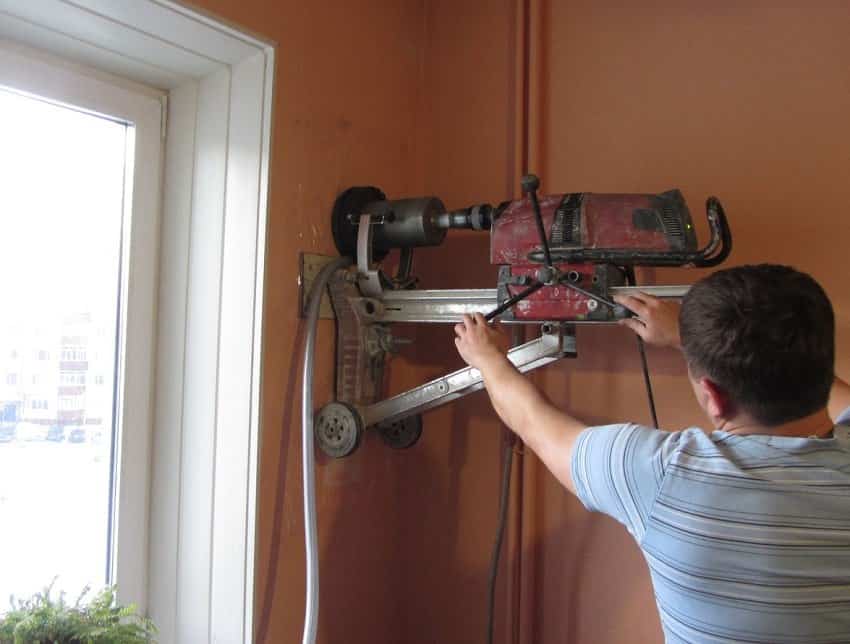
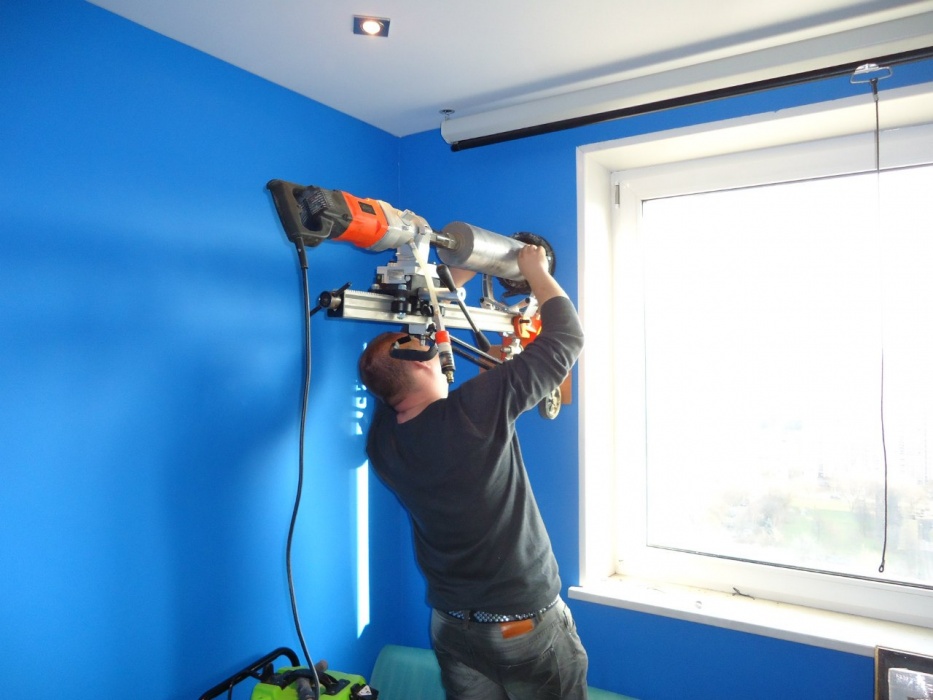
No special skills are required to install this device. Mounting and adjusting the valve is simple. To work, you will need a puncher and a diamond crown, experts use a diamond drilling rig.
Sequencing:
- Mark the spot on the wall with a pencil.
- Make a through hole with a puncher.
- Remove all dust with a vacuum cleaner.
- Insert a thermal insulation layer, such as mineral wool or polyurethane.
- Insert the valve cylinder inside the prepared hole.
- On the street side, attach a decorative grille with plastic dowels.
- Inside, install a head with filter material.
In some models of valves, a heat-insulating layer is laid inside the pipe. In this case, a hole in the wall must be drilled strictly according to the diameter of the cylinder.
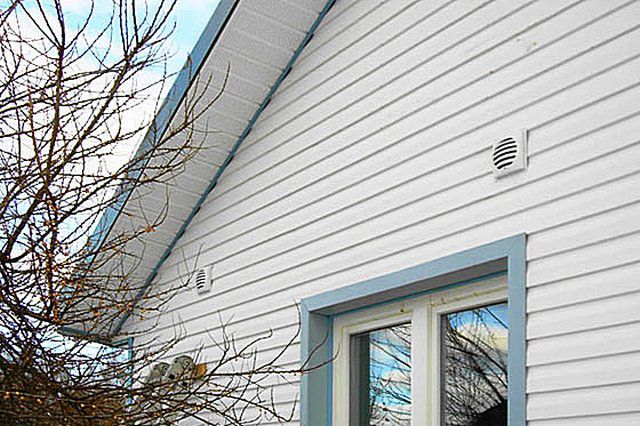
Exhaust devices in the walls of houses
For a private house, it is recommended to install the hood next to the ceiling on the side opposite the window. First you need to drill a hole with a diamond drill. If it should be square or oval, then use a drill and spatula.
All gaps between the mount and the wall are filled with mounting foam. For exhaust, the fan is installed on the street side, and the valve is inside the house. Also, a decorative grille is mounted on the outer wall, which reduces the reverse draft and the penetration of cold air.
In a private house, you can install ventilation with access to the wall with your own hands. The main thing is to choose the right type of system and find the basic equipment for work.