- Air duct selection
- Connecting the hood to electricity
- Installation steps
- Key characteristics and advantages of inclined hoods
- Scheme
- Required machine power
- What to look for when choosing?
- Where is the best place to install an outlet?
- Types and features of exhaust devices
- Sanitary norms and requirements
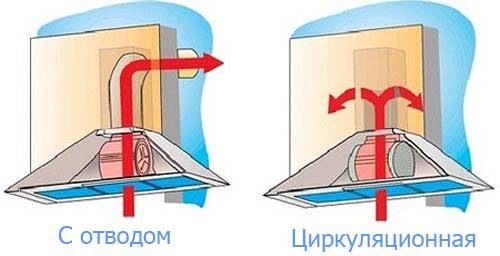
- Extractor hood with ventilation
- Varieties of hoods with a branch
- How to choose?
- Scheme of a kitchen hood
- Video - installation of a kitchen hood
- Conclusions and useful video on the topic
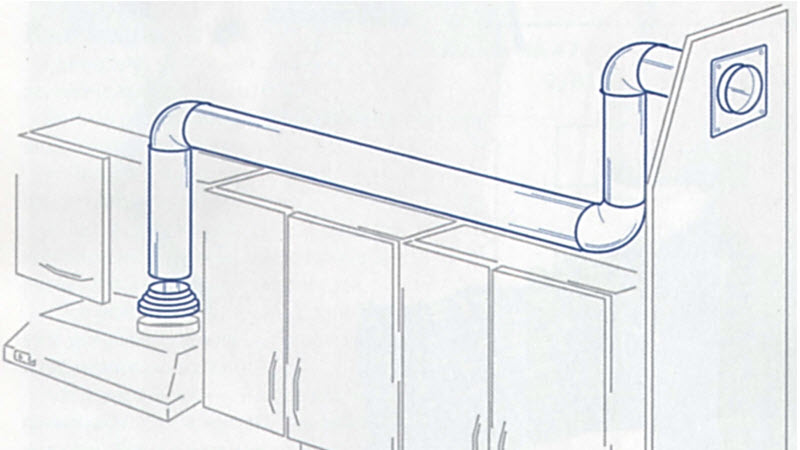
Air duct selection
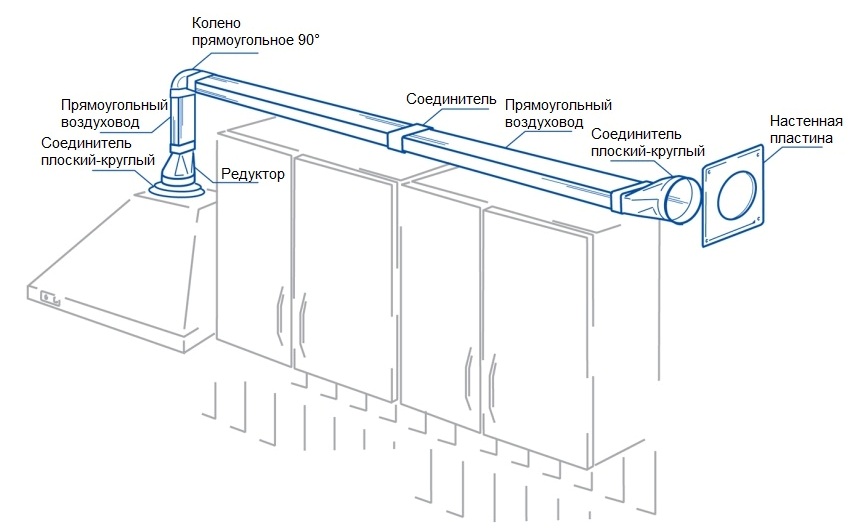
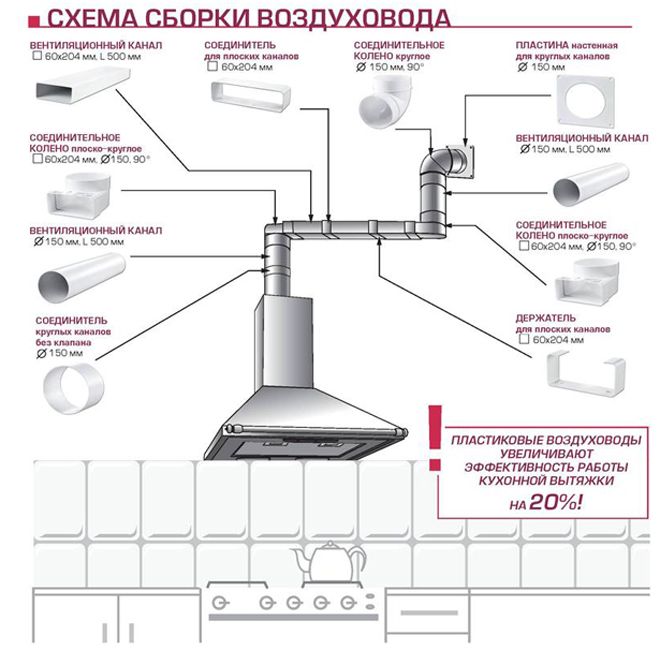
To connect the hood to the air duct, it is necessary to install a connecting duct. Two types are commonly used:
-
Flexible metal corrugated pipeline. It is easy to install, does not require the use of components, does not load the supporting structures. The appearance of such pipelines is unattractive, so it is customary to hide them in a box of drywall, plywood or other sheet materials with subsequent finishing.
-
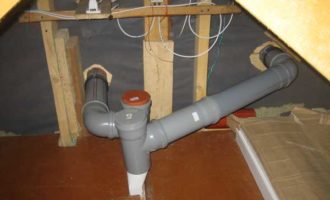
Plastic air ducts. Smooth pipelines of round or rectangular section, have an attractive appearance, do not create noise during operation. They need to use additional elements - corners, turns, adapters, which complicates installation.
Connecting the hood to electricity
Since kitchen hoods are classified as household electrical appliances, there are no problems with their connection, especially since their power consumption rarely exceeds 1000 watts. It is desirable that every electrical appliance has an earth connection, although this cannot always be foreseen.
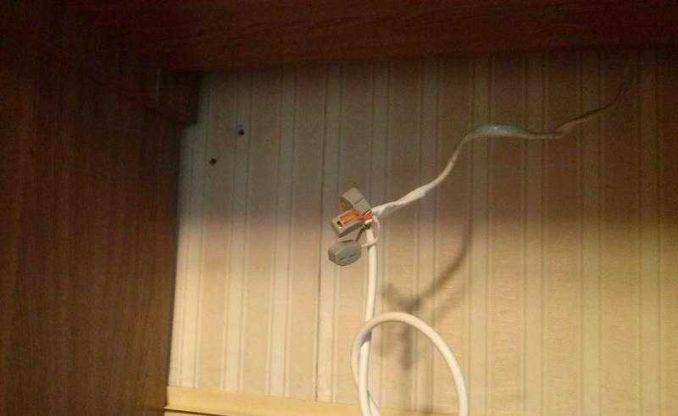 Connect the hood through the Vago terminal blocks
Grounding or grounding can be done if the apartment or house is undergoing major repairs. In this case, the task of connecting the hood in the kitchen is greatly simplified. To do this, you should find a point in the lighting panel, in the form of a welded bolt, which is connected to the body of the electrical switchboard. As a rule, this point is connected to the electrical substation ground. As a ground conductor, it is permissible to use solid or stranded wire, with a cross section of at least 2.5 mm square. It is better to use wire in heat-resistant insulation.
As a rule, in our time, when buying electrical household appliances, some of them are not equipped with a wire with a plug, while there are models with a wire and a plug, and there are models that have a wire but no plug. Such hoods can be connected without a plug, but this is not a very good option. If the hood has to be removed to clean it, then this is not very convenient, since it will take a lot of time to turn off such a hood, and to connect it too. Therefore, it is better to go to the store, buy a plug and connect it to the wires. In this case, to disconnect or connect this device, just pull out or insert the plug into the socket.If there is grounding, then you need to buy a plug with grounding pins, and if there is no grounding, then the most ordinary plug will do, but better for euro sockets, since former Soviet sockets are no longer in demand. The fact is that they are unreliable, and they are intended for domestic plugs, in which the contacts are thinner.
Installation steps
Anyone can hang a hood with their own hands using simple tools. It is much more difficult to cope with the outlet for the hood in the kitchen, properly hang it and connect it.
The sequence of installation of the hood with a vent to the ventilation:
- Check the completeness of the purchase. In the box, in addition to the hood itself, there must be a passport, fasteners, instructions on how to install and connect the hood to the ventilation. A template is usually drawn on the wall of the package, it must be cut out.
- Measure the distance from the hob to the hood with a tape measure and draw a horizontal line along the level.
- The second marking line - vertical - runs exactly in the center of the plate. A plumb line must be used.
- Fix the template on the wall according to the markup, you can use adhesive tape or insulating tape.
- Make 4 holes in the wall. The drill must be complete with self-tapping screws.
- Tighten the screws, leaving the heads protruding by 5 mm above the wall.
- Remove the cover, pull out the grate and hang the body on the screws.
- Tighten the screws until they are snug against the inside of the case.
- Replace cover and grill.
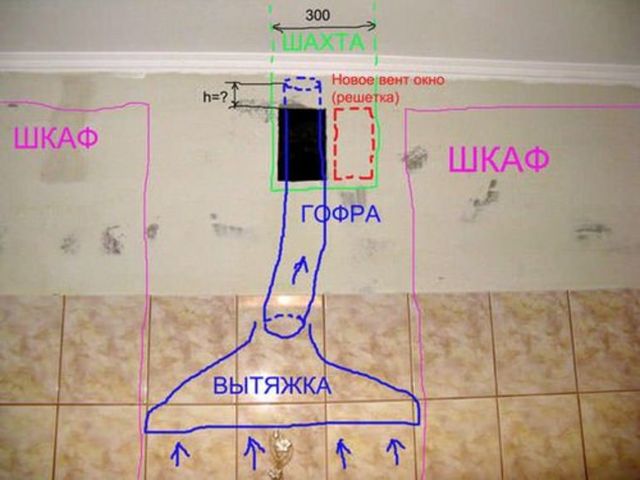
The exhaust channel is easier to make from corrugations. It is malleable, easy to fit and fasten to the cabinet. Experts recommend plastic pipes. Their smooth surface will not trap dirt particles, and the hood can be left uncleaned for a long time.
Installing ventilation pipes has many nuances. It is better to entrust this work to specialists.
Key characteristics and advantages of inclined hoods
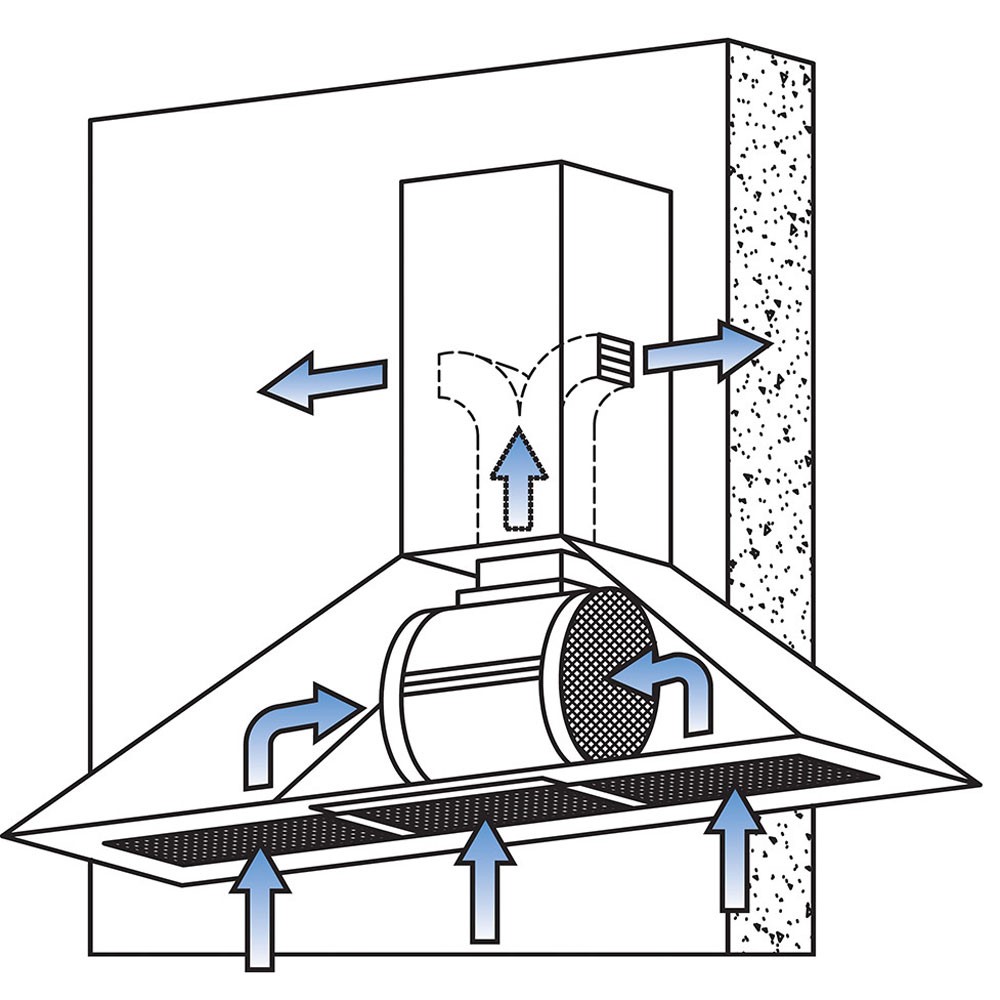
The fence panel is located at an angle to the horizontal - this is the main difference between the technique in question. By analogy with competing models, such hoods are flow-through and circulating. Series with combined functionality consist of the following parts:
- electric motor equipped with a fan;
- elements of multi-stage air filtration;
- components that provide additional options, such as automated control.
Inclined hoods are characterized by high performance and enhanced power. Such characteristics are due to the specifics of the device: air flows are naturally directed upwards, without requiring additional energy consumption. More efficient motors, rational filters in combination with the angular installation of the air intake contribute to a number of advantages:
- ease of installation surrounded by wall cabinets;
- saving electricity;
- full and efficient air purification;
- the ability to install with your own hands without specialized skills;
- high ergonomics and practicality.
 A rich range of models and modern design - the advantages of an inclined hood
A rich range of models and modern design are a guarantee of equipment compatibility with any stylistic trend.
Plastic, glass, metal and ceramics can be used as base materials. Modern modifications are controlled using LCD touch panels. They and remote variations proved to be the most convenient and easy to use.Premium segment products are equipped with the ability to adjust the placement angle in relation to the stove or hob
It is important that the operation of such equipment is accompanied by a low noise level.
Models can have 3-5 modes of operation. In addition to the backlight, there are such convenient additional options as an automatic shutdown command, an indicator of dirty filters, a timer, and a delayed start.
Scheme
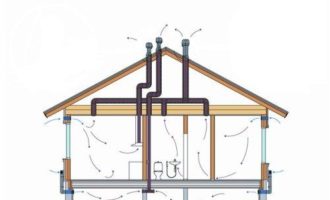
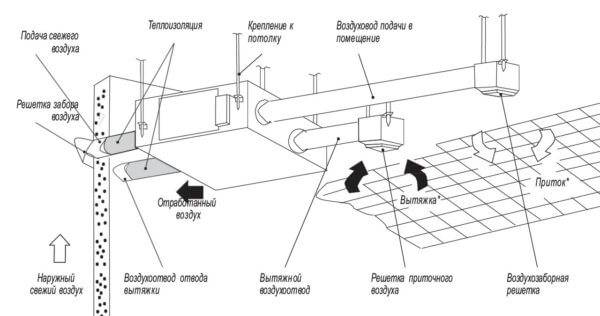
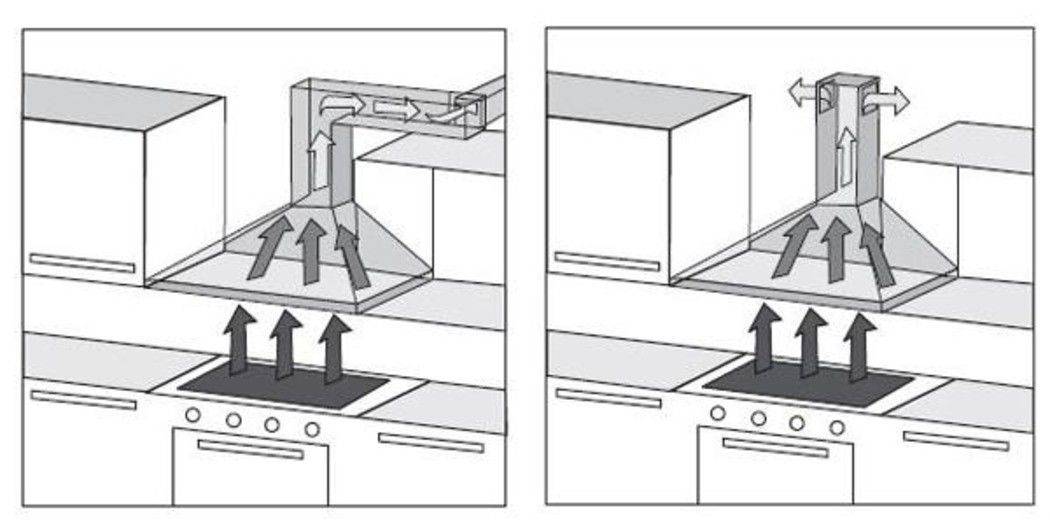
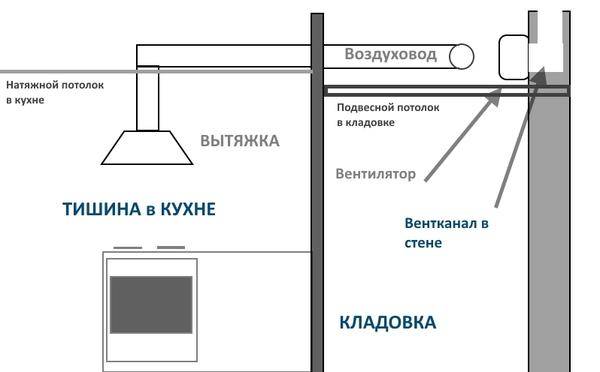
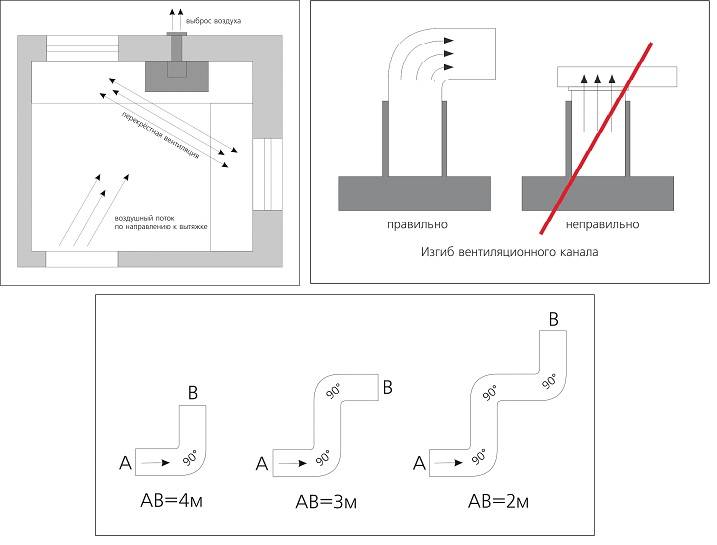
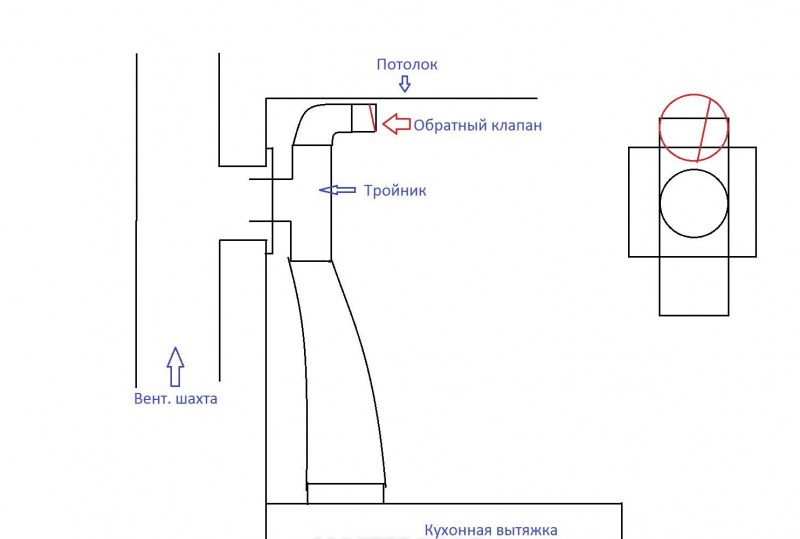
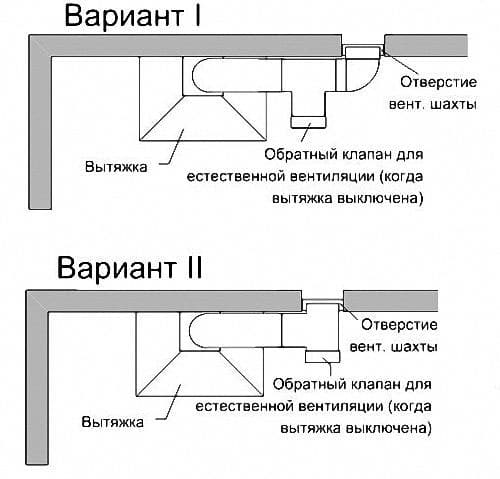
When designing a ventilation duct, you need to immediately determine where the polluted air will go:
- In the general ventilation shaft of an apartment building or in the main ventilation duct of a private house (how to equip ventilation in a private house?).
- To the street through the prepared hole in the wall of the house.
Attention
Output to the street is possible in private housing construction. For damage to the facade of an apartment building, the owner will receive a large fine.
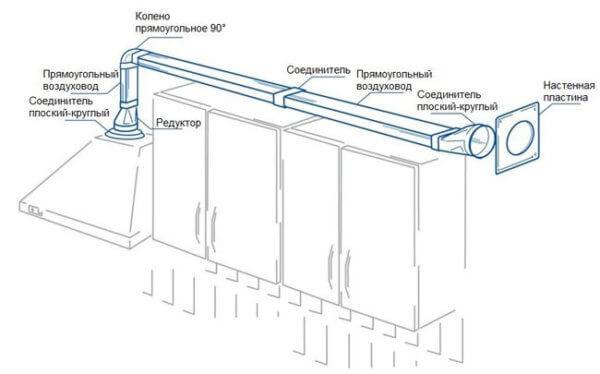
Air duct installation diagram:
- Hidden installation. If the distance between ceilings and cabinets is too small, you can hide the duct inside wall cabinets. You will need square pipes.
- Open installation. The air duct is laid on top of the wall cabinets. You can use pipes of different sections.
separatelyhow to install ventilation in the apartment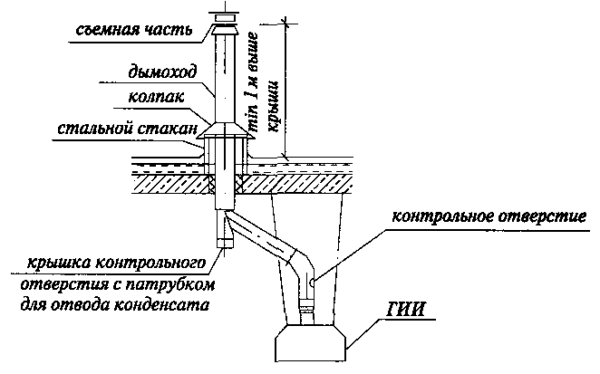
Required machine power
The power of the device is an important parameter. If it is calculated correctly, there will be no problems with the microclimate in the room. The power is calculated according to the formula: Q=S*H*12, where Q is the performance of the device (power), measured in m3/h, S is the area of the room, H is the height of the room, 12 is the coefficient (according to standards, the air in the kitchen should change 12 times in an hour).


Calculation example:
- the area of the room is 12 m2;
- room height - 2.7 m.
So: Q=12*2.7*12=388.8 m3/h. Based on the calculation, the performance of the unit should be at least 388.8 m3 / h. But it is recommended to buy a unit with a power reserve of approximately 30% more.
What to look for when choosing?
The main differences between high-quality equipment are stylish design, a good level of power and performance, and quiet operation.
1) Productivity - an indicator of the volume of filtered air per hour of operation. You can calculate the optimal figure for your kitchen using the formula: room area * height * 10 * 1.3 = desired performance.
The figure depends on the length of the duct, the degree of contamination of the filter, the frequency of use. A combined kitchen or cooking area in a studio apartment increases the required figure.
The optimal performance for a room of 6-10 squares is 200-350 cubic meters. m per hour.
2) Noise level. The noise level is affected by the following indicators: the number of motors, power, design, body material. A more powerful device works louder. Clogged filters and air ducts increase this figure. Specific installation and the use of soundproofing technologies will reduce the noise level. The optimal indicator is up to 60 dB in intensive mode, ideally up to 44.
Absolutely silent models do not exist. The main task of the manufacturer is to reduce noise to a minimum.
Two secrets on how to choose the most quiet device for air in the kitchen:
Do not choose a device with a greatly exaggerated power.
In practice, you rarely have to turn on the maximum power, so the presence of a mode switching panel is not so important.
3) Body material. Today the market offers models made of metal and tempered glass.Polished stainless steel is the most practical, easy-care material.
Tempered glass looks stylish and presentable, but the price is high and gets dirty quickly with frequent use.
Many brands make this technique in a glass-metal format.
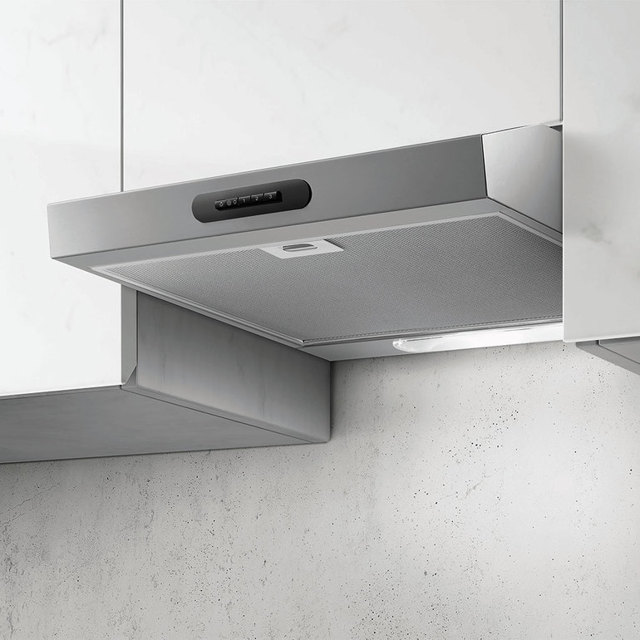
4) Backlight. Lamps built into the kitchen hood are the best option for illuminating the work area.
Built-in incandescent lamps are obsolete. Despite the pleasant soft light, they are short-lived and energy-consuming.
Halogen, LED backlight is installed on medium, premium models. Such lamps emit soft light, are durable, economical.




5) Design and management. Today, the following hood options with an air duct are presented on the market:
- fireplace or domed;
- t-shaped;
- telescopic;
- hood-pipe;
- decorative.
The fireplace imitates a dome with a chimney, mounted on the wall. It will interestingly complement the interior in the style of Provence, country, shabby chic. The shape of the dome allows you to increase the area of \u200b\u200bsteam protection during cooking.
Minus - takes up a lot of space. Popular branded models are Asko CW4924, Elikor Agat, Hansa OKC 6726, Candy CCE 16.
T-shaped and box products are ergonomic and compact.
Manufacturers try to take into account all the interests of users. They produce two-compressor models, equip products with retractable filters, a sound absorption system.
Contamination indicators, power controls and other software settings help in choosing the most optimal mode.
You can buy models with removable reusable filters that are easy to clean in the dishwasher.
6) Design. The hood can become not only a functional element of the kitchen interior.
There are decorative models that have every chance of becoming the center of the kitchen universe.
The mechanical or touch panel must be located on the front side.
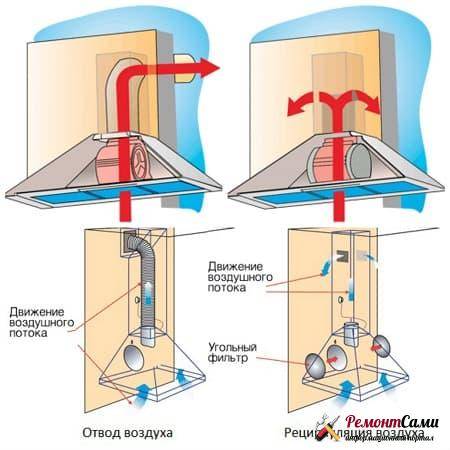
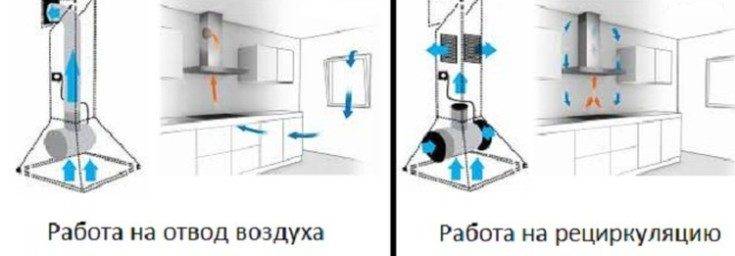
In addition to removing soot, steam, odors outside the premises, there are options with the parameter of purified air circulation.
7) Brand. By tradition, the most reliable brands are German and Scandinavian: Bosch, Siemens, Asko. German manufacturers, in addition to some premium-class items, represent a wide range of models in the middle price segment.
Positive feedback from consumers brought to the leaders such manufacturers as Hansa, Kronasteel, Shindo, Slovenian Gorenje and Russian ELIKOR.
Where is the best place to install an outlet?
Surely, most readers will not have a question - how to connect the hood to electricity? However, even before the installation of the exhaust device, you need to prepare a new outlet for it.
IMPORTANT! Hoods go on sale, for the most part with three-wire wires, so the socket must match.
It is forbidden to install sockets near the stove and near the sink, so the best option would be to install an outlet for the hood above the wall cabinets, at a height of about two meters.
Move the outlet to the right or left of the center of the hood. If you choose another, more open place, then the outlet can be decorated with a special box. Do not hide the outlet behind hanging cabinets or bulky appliances!


For various reasons, power surges are possible in the house, which can damage or burn out the hood motor. To prevent such a breakdown, be sure to ground the outlet under the hood.
Summing up, we note that the hood in the apartment is certainly a useful thing. It will greatly facilitate the life of the hostess. You can install the exhaust device yourself, but if you do not have certain skills, it is better to choose a flat hood.
Any defects during installation: they were not installed strictly horizontally, the joints and holes were not sealed tightly enough, the corrugation material was chosen too thin, and other little things can affect the operation of the hood or even negate the benefit of its installation. Therefore, follow the instructions in the instructions.
We offer you to watch a video on how the kitchen hood is connected to the ventilation:
Types and features of exhaust devices
The variety of hoods offered by manufacturers is sometimes amazing. On the market, you can easily find the optimal model in terms of cost and quality.
But choice for the unprepared buyer and the installation of such kitchen appliances will become a difficult, and sometimes overwhelming task. Therefore, before you go to the store or engage in the installation of the hood, it is imperative to deal with all the subtleties and nuances.
Sanitary norms and requirements
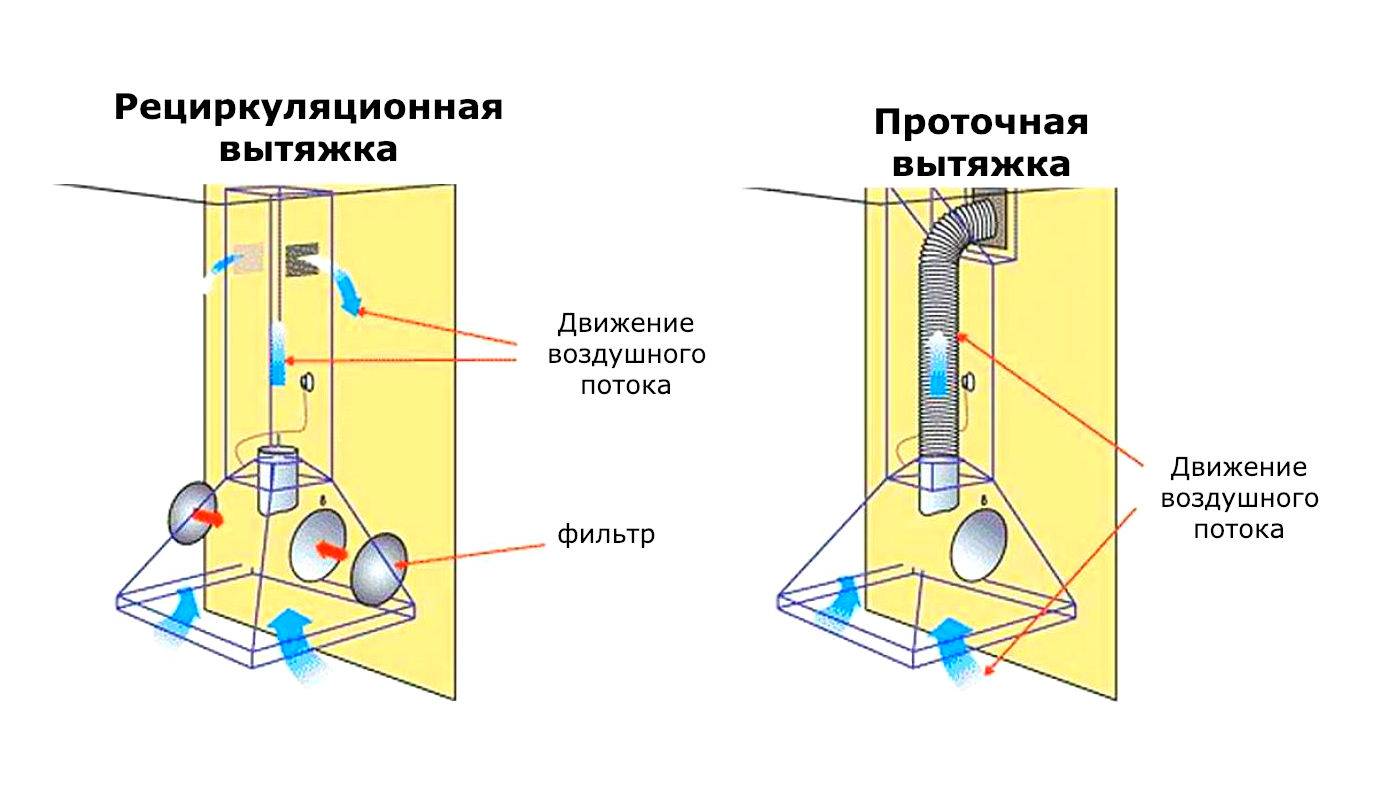
Any type of hood, whether recirculating or a device with a vent to the ventilation, must drive out an air volume equal to 10-12 volumes of the cooking room in one hour.
This is a strict sanitary requirement that must be met. Indeed, in the kitchen, open fire sources and heating appliances are actively used. And the humidity in the room is much higher than in other rooms.
As a result, the concentration of carbon dioxide, harmful impurities and fumes is constantly increasing, which will negatively affect human well-being.
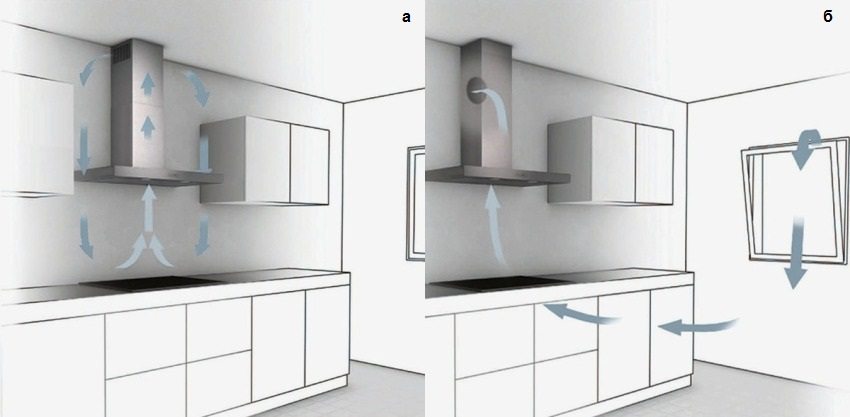
In the case of using a device connected to ventilation, it is necessary to ensure the flow of oxygen from the street. If this factor is not taken into account, then the effect of capsizing will appear. Its essence is that the air will be drawn from the duct back to the kitchen
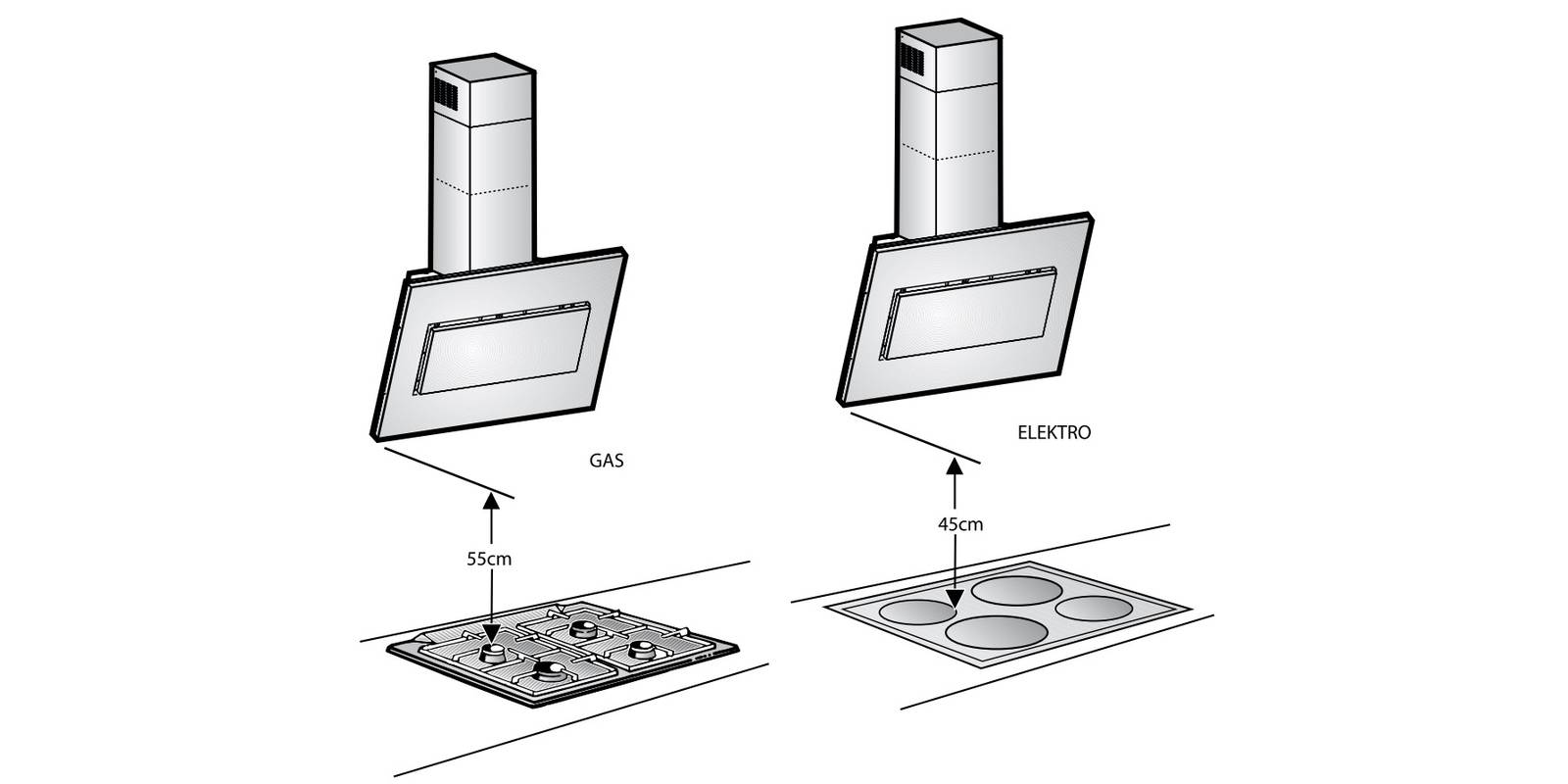
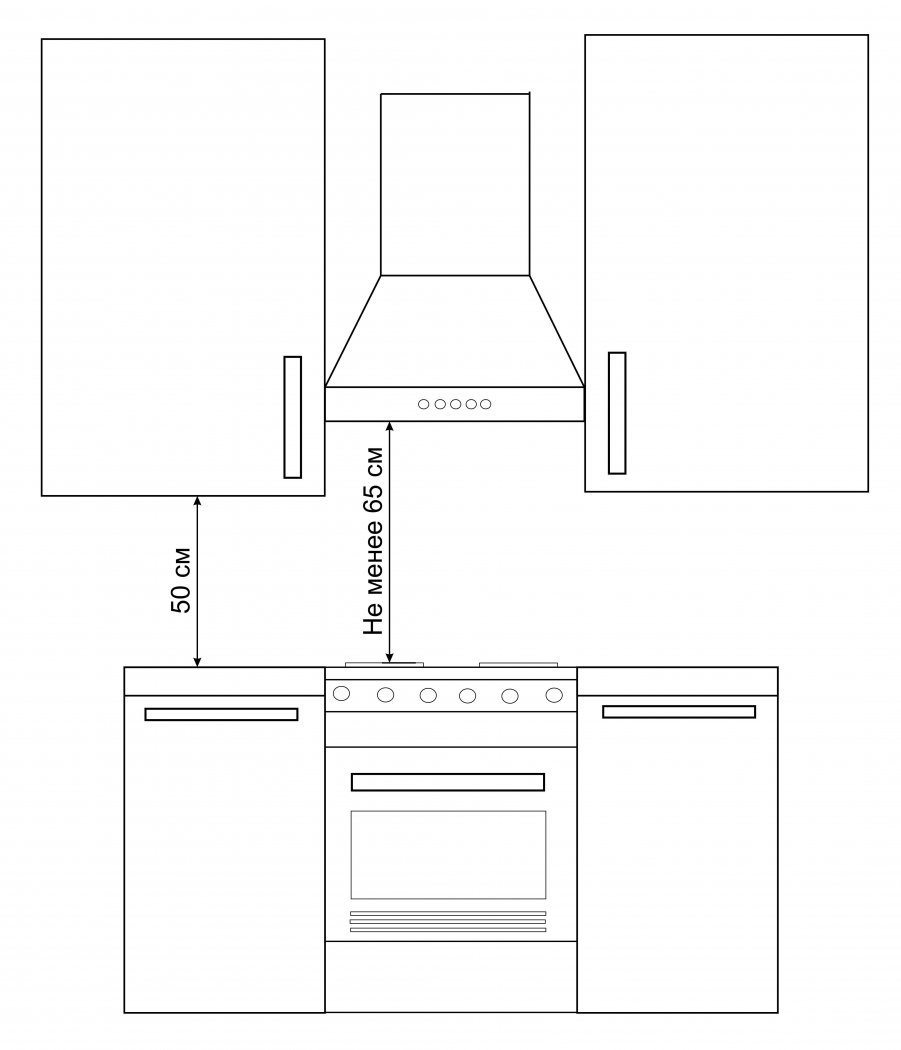
Another requirement is that the hood should be installed as close to the hob as possible. It's at least 65 cm for electric stove and 75 cm for gas.
A prerequisite is the presence of a special grate on the device, where dirt and grease will settle. This prevents waste from entering the ventilation duct.
Extractor hood with ventilation
Hoods that remove exhaust air through the ventilation shaft are the classic and most familiar models for most people. Thanks to the constant influx of fresh air, a person’s mood rises, well-being improves, and his stay in the kitchen will become more comfortable.
Typically, exhaust devices provide forced ventilation, for which a fan is used. This approach allows you to quickly remove excess moisture from the room, which can harm the furniture set, unpleasant odors, various fumes, soot, excess carbon dioxide, etc.
In order not to pollute the atmosphere around the house, the hoods use a special filter that collects most of all the dirt.
The hood sucks in the exhaust air and removes it from the room, for which the ventilation shaft of the house or apartment is used.
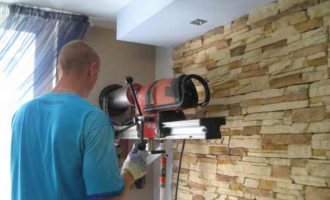
The only drawback of built-in hoods with a vent to the ventilation is the complexity of their installation. After all, the device must be connected to the duct. If the house does not have a ventilation duct, then you will have to drill a hole in the wall.
Varieties of hoods with a branch
There are several types of such kitchen appliances. Hoods with a vent to the ventilation are divided into categories depending on the design of the device, the method of installation and cleaning.
By type of installation, the following devices are distinguished:
- Mounted. They are divided into domed or flat. And on the market there are inclined products, which, if necessary, can be decomposed. The hinged hood will harmoniously fit into both a large kitchen and a small room.
- Embedded. Devices of this type are the ideal solution for small apartments. Their peculiarity lies in the fact that they are built into the locker and act as its bottom. Some devices can be moved apart to increase the amount of air that is taken in.
Owners of large kitchens prefer the island design of the hood. It is used in situations where the stove is located not at one of the walls of the kitchen, but in the center of the room. Island hoods are attached directly to the ceiling and allow you to create an original design of the room.
Among other things, the exhaust air extractor is an important element of the kitchen. It not only absorbs harmful fumes, but also acts as a decorative element. Therefore, choosing one or another type, you need to evaluate whether the desired model will be in harmony with the design of the kitchen.
It is necessary to choose one or another type of hood depending on the location of the stove and the dimensions of the kitchen.
How to choose?
Air ducts should be selected based on several important criteria.
The first thing you should pay attention to when choosing such a model is its manufacturer.It is recommended to give preference to high quality branded models.
Purchase air exhaust systems from trusted retail outlets or branded stores.
Do not trust too low prices for similar products
Indeed, high-quality and reliable air venting will not be too cheap, especially if it is made of good materials.
Documents such as a warranty card and manual should be included with these products. If there are none, then it is better to refuse to buy an air duct in favor of another model.
Choose products with sufficient power levels. If the air exhaust system turns out to be low-power, then the hood simply cannot cope with its main function, and the exhaust air will not leave the room in the proper amount.
Do not forget about the design of such units - they should flow into the interior.


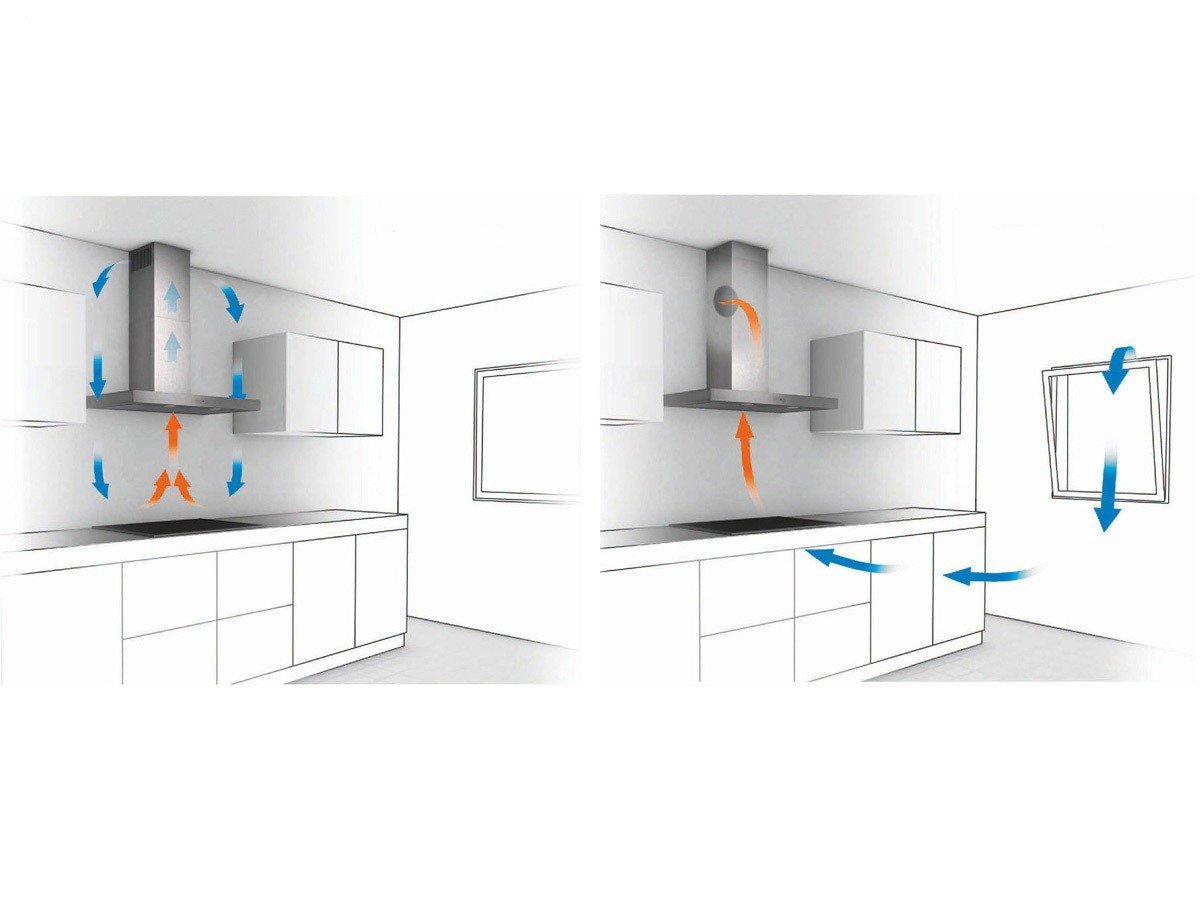
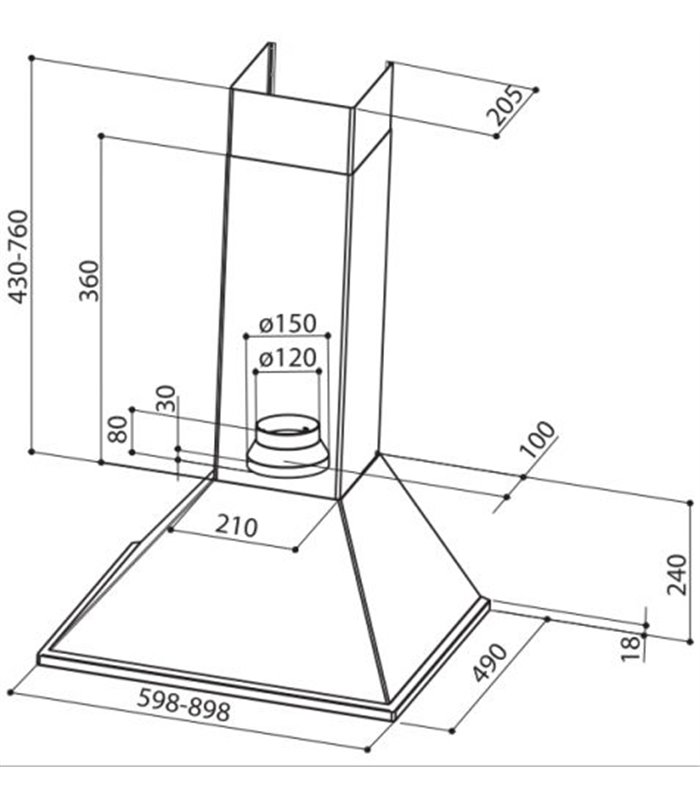
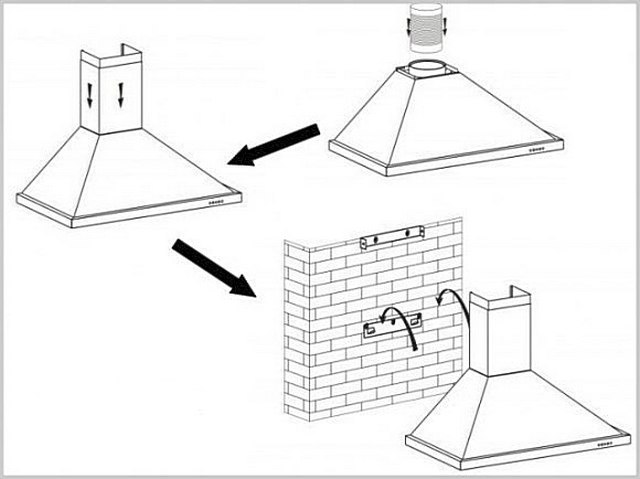
In addition, when choosing the ideal model, you need to remember what basic functions the hood should perform in the kitchen:
- quickly and in the required volume to eliminate excess odors;
- make little noise
- look attractive to fit into the kitchen decor.
Scheme of a kitchen hood
In order to better understand what you are going to do, you first need to know the circuit of the device and the principle of its operation, otherwise nothing can be done normally. This is also necessary so that you can disassemble and then reassemble the hood yourself in the event of a breakdown or cleaning, which is desirable to do at least every six months to avoid possible fire.
An important role in the hood is played by its engine or engines, as in some more powerful models they are installed in two. This is a kind of "heart" of the whole device, the power of the operating device depends on it. Most often, such engines have a power of 50 to 200 watts, their speed is from 1500 to 2000 per minute. The performance of the device depends on this, but do not forget that the more power, the more electricity the hood will consume, be sure to consider this
In addition, more powerful hoods will have a high noise level, this should also be paid attention to.
An important role in the energy consumption of the hood and its structure is played by the lamps installed in it and aimed at illuminating the stove or hob. Most often, LED or halogen lamps are installed. If you want to save on energy consumption in the future, then you should give preference to LED lamps, since halogen lamps consume virtually the same amount of energy as conventional incandescent lamps.
To connect the device to the network, a regular cord is used, most often its length is one and a half to two meters, if this is not enough for you, then you will have to use an extension cord. If you want to hide the cord and extension cord, then think it over in advance.
An important role in the structure of the hood is played by an anti-grease filter, which is literally “at the inlet” of the device and is visible above the hob. This filter is needed in order to trap unpleasant odors, as well as protect the engine and other parts from dirt and large impurities. This is a kind of metal mesh or dense perforated foil with several layers, ideally it should have an anti-corrosion coating.
Some inexpensive models have so-called disposable filters, they are made of synthetic fabric, they will have to be changed very soon. They are inexpensive, but it is not very convenient, so it is better to give preference to the first option. It is necessary to clean the filters periodically, as they are covered with soot and grease, this can cause unpleasant odors and spoil the operation of the device.
Some more expensive models have charcoal filters, which are usually installed behind the hood motor. Such filters help to further purify the air, they contain microgranules of coal, which work on the same principle as filters for water purification. The disadvantage of such filters is that they need to be changed frequently, which is easy to do, but requires some skill. Dirty or old filters interfere with the normal operation of the hood in the kitchen.


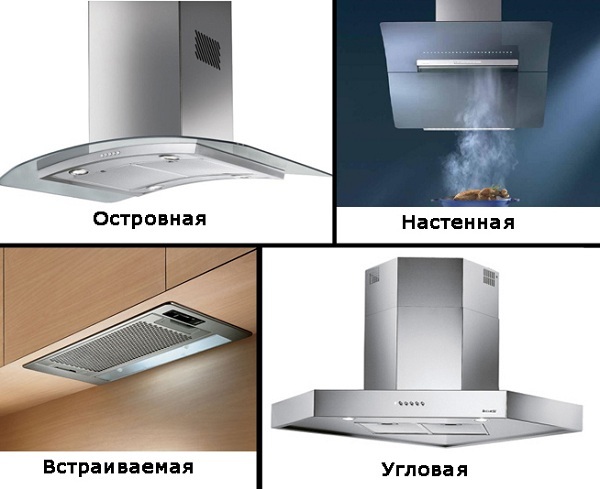


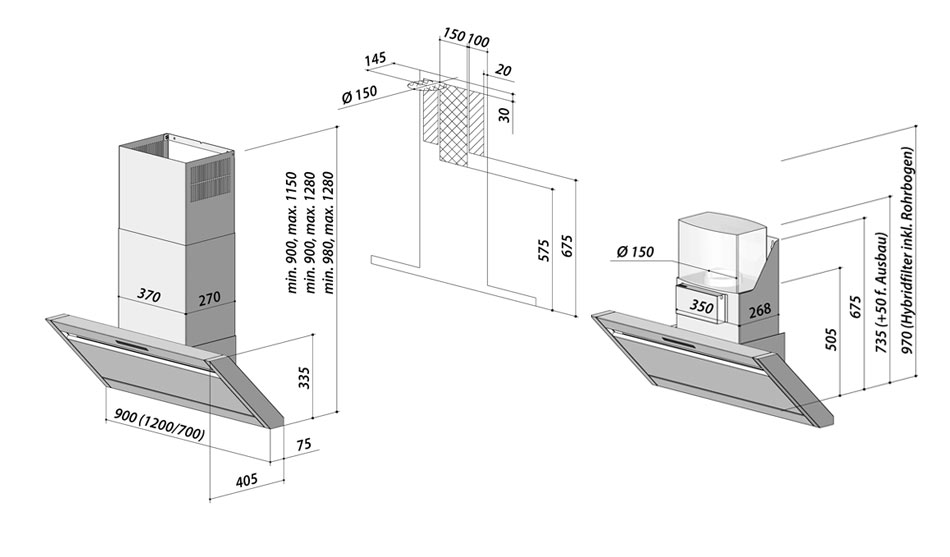

Hoods also have several types of controls that differ from each other, you need to choose the type that seems convenient for you, by and large they do not have any functional differences. Here are the main types of controls:
- Button control. It is the presence of conventional recessed buttons that are familiar to every person. Usually the buttons are located on the front panel of the hood, they are easily accessible. Such control is most often found in the cheapest models of the device, but at the same time it is also the most reliable.
Slider control. Also an inexpensive type of control, which is found in many economical models. It works on the principle of a movable lever, it moves through the divisions, changing the power of the device and sometimes the lighting of the hob
Touch control. This control is the most popular, it is in most modern devices.Firstly, it looks very stylish, does not require special care and does not lose its presentation even after long-term operation. The touch panel is most often located on the front panel of the hood, it works at the slightest touch. In more expensive models, you can even set a specific program for the device. For example, with a sharp appearance of a strong odor, the motor starts to work in an enhanced mode, aimed at quickly eliminating an unpleasant odor, when a person approaches, an indicator light is activated that illuminates the surface.
Video - installation of a kitchen hood
Some of the more “smart” models also work without human intervention, they turn on and off automatically when an odor is detected or the stove is turned on / off.
Conclusions and useful video on the topic
The installation process of such a hood is clearly demonstrated here:
This video provides information on how to choose the right hood:
Here is some useful information about replacing charcoal filters:
The extractor hood, which can be hidden behind a furniture front, is an ideal choice for almost any kitchen. Such a device makes little noise, does not spoil the interior and can be installed by one person in just a couple of hours.
If the hood is correctly selected, and its installation is carried out without errors, it will provide the kitchen with the necessary air exchange for the intensity.
Do you want to tell how you installed a built-in hood in your own kitchen, or provide useful information on the topic of the article? Please write your comments in the box below. Ask questions, share your opinion, post a photo of the device selection or installation process.