- How to choose a circulation hood
- Performance
- Filter types
- Additional functions and types of control
- What characteristics should kitchen hoods meet without connecting to ventilation: a detailed overview of the parameters
- Best performance: how to determine
- The presence of filters and their number
- What can be additionally equipped with coal hoods
- Myths about filters
- Poor filtration efficiency
- Recirculation systems are more expensive
- Hard to find filters
- Filters reduce performance
- Installation and maintenance
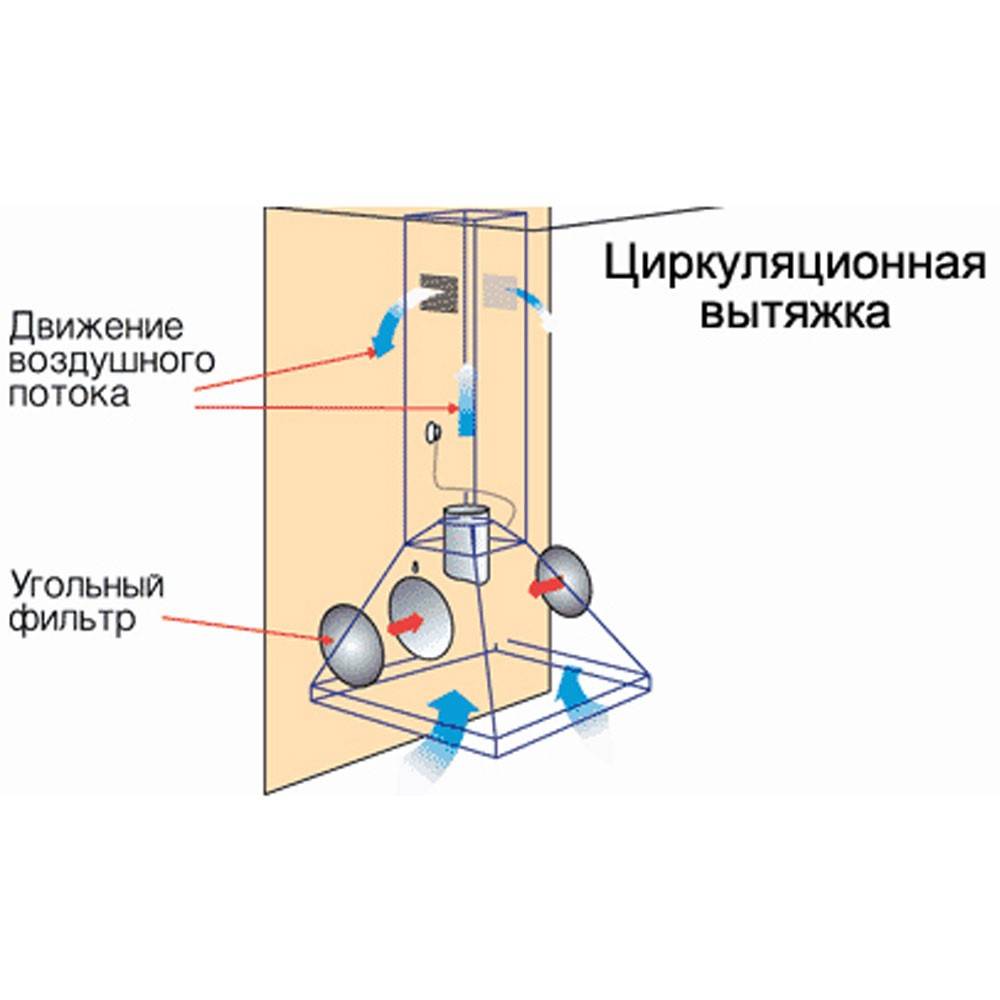
- Scheme
- Features of the kitchen microclimate: why is proper ventilation important?
- How to check the performance of the ventilation shaft?
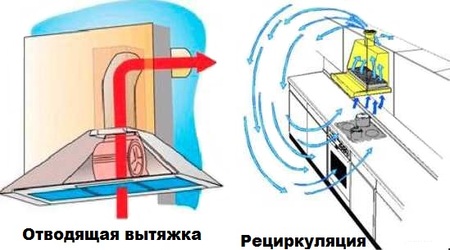
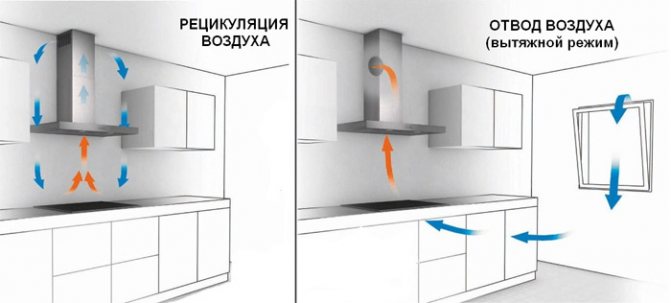
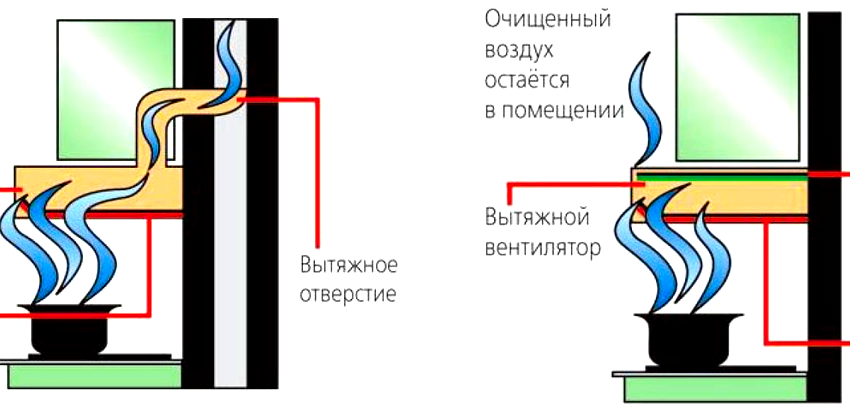
- Varieties of hoods for the kitchen without a vent to the ventilation duct
- Recirculation hood: is it worth it to install
- Positive points
- Explicit disadvantages of hoods without connection to the ventilation duct
- What to do if it is impossible to make a cut into the riser
- Wall valve installation
- Recirculation systems
- Checking and arranging the ventilation shaft
- Prices for the popular antifungal agent Ceresit ct 99
- Selection Tips
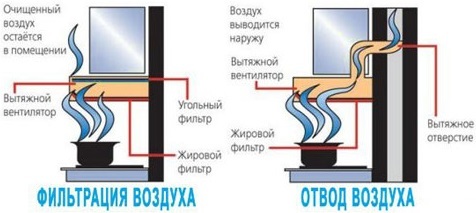
- Extractor systems that clean and recirculate air
How to choose a circulation hood
We think that you yourself will figure out the appearance and design of the hood, suitable for your kitchen.The main thing is that its width is greater than or equal to the width of the hob. And we will talk about other equally important selection parameters.
Performance
Hood power is the most important indicator that you should pay attention to when buying. The price of the device largely depends on it, but it’s not worth saving on this.
The required power is calculated based on the fact that the hood must provide at least six air changes per hour. To do this, you need to calculate the volume of the kitchen and multiply it by 6, or even better - by 10-12.
To determine the power of the hood, you need to know the volume of the room
If the kitchen is combined with a living room or dining room, the total area of \u200b\u200bthe room is taken into account.
Filter types
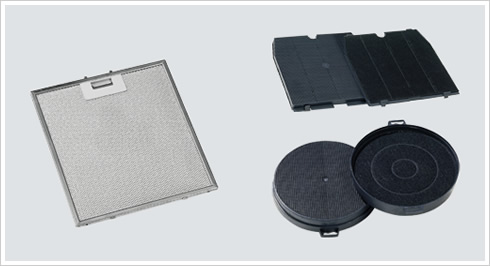
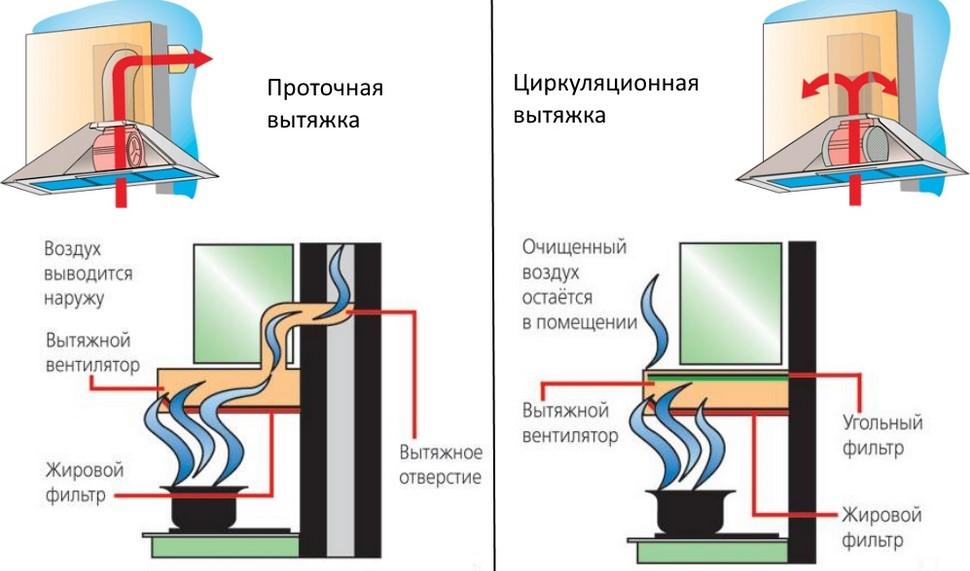
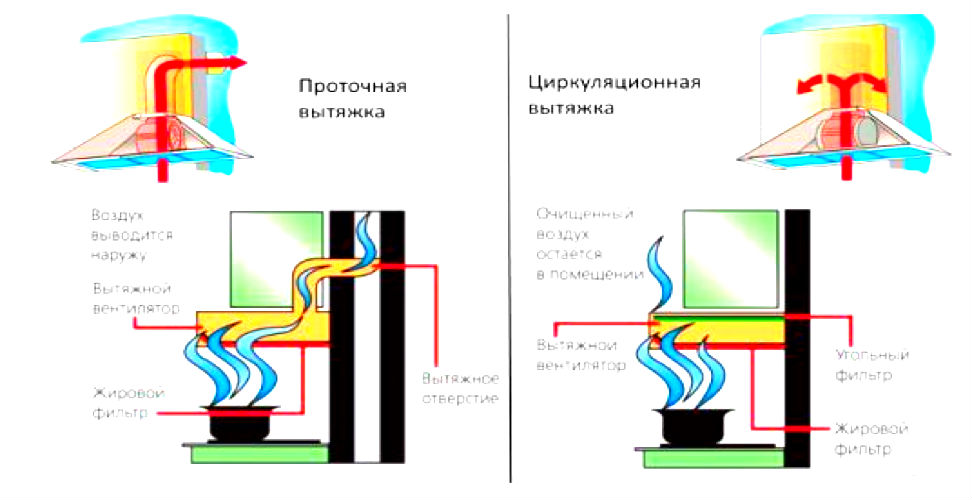
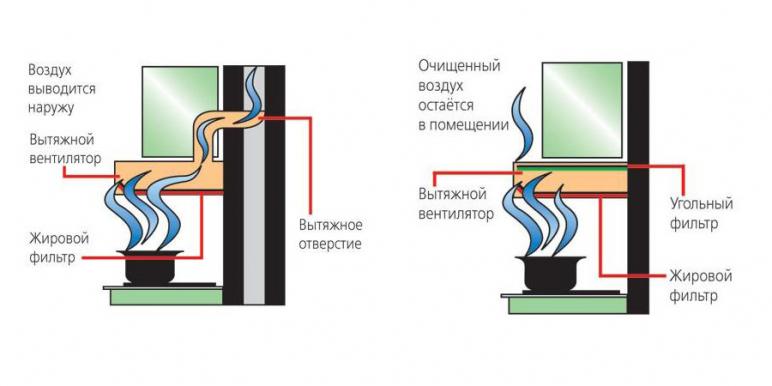
The hood to the kitchen without exhaust air is equipped with two types of filters: fat-absorbing and coal.
The first catches particles of fat and soot, preventing them from penetrating inside the device and settling on the mechanism. If there is no such filter, the hood will fail very quickly./p>
And if it is so clogged that it no longer passes air through itself, then there will be no benefit from the hood. In addition, the fat on the grate can catch fire from the action of high temperature.
Therefore, the grease filter, depending on its type, must be washed or changed regularly. There are several types of such filters:
Metal (aluminum) filters are reusable. They are a module of several layers of thin-sheet perforated aluminum
They should be washed very carefully, using degreasing agents.
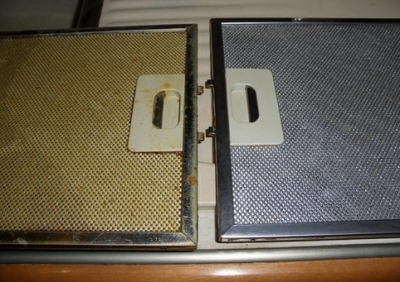
Dirty and clean filters
- Acrylic fiber filters are also considered reusable.They are washed in warm water with soap as they get dirty, while not squeezing hard so as not to damage them.
- Disposable non-woven, paper or padding filters must be replaced after the signs applied to their surface are no longer visible under a layer of fat.
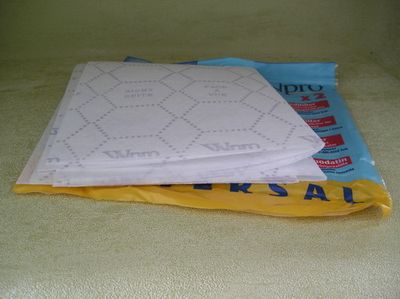
Non-woven disposable filter
Charcoal filters are designed to absorb the smell of cooking food. Inside them are activated carbon granules, the total surface area of which is large enough to allow you to change the filters once every few months.
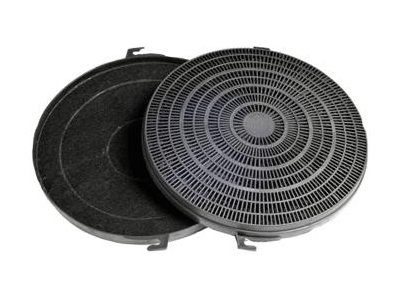
Replaceable charcoal filters
Such filters are included with the hood if it is designed for recirculation or mixed operation. You can find out how they are replaced by watching the video clip.
Additional functions and types of control
The modern market offers consumers a huge variety of kitchen air purifiers that differ in design, dimensions, installation types and the presence of additional functions.
The hood to the kitchen without a pipe in a budget version is usually equipped only with a speed switch, which can be from one to three, and built-in lighting.
Luxury devices can have the following convenient features:
- Display on the control panel that allows you to control the operation mode and performance./li>
- Built-in timer and clock.
- Sensors for automatic switching on and off, independently reacting to the temperature and humidity of the air and choosing the optimal mode of operation.
- Filter contamination indicator.
- Intensive mode.
- Intermittent operation mode, which ensures the normal operation of ventilation in your absence.
- Remote control.
The operation of the hood can be controlled using a mechanical or electronic control panel. The latter are installed only on expensive models and allow you to activate the device's functions by lightly touching the sensor.
Whereas the mechanical panel is equipped with buttons, keys or sliders (sliders).
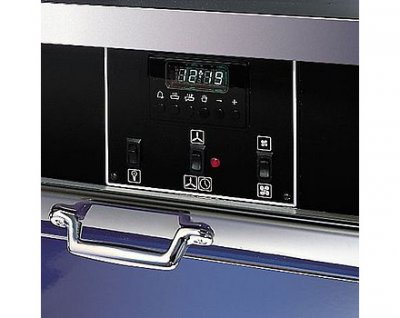
Electronic hood control panel
What characteristics should kitchen hoods meet without connecting to ventilation: a detailed overview of the parameters
Let's check what you pay attention to when choosing such necessary household appliances as a kitchen hood without ventilation, and what parameters should actually be preferred. It depends on how correct in appearance, as well as what options the technique will correspond to, whether the design will bring benefits or become unnecessary kitchen trash.
Best performance: how to determine
The more family members live in the house, the higher the performance of the kitchen unventilated hood should be.
The capacity of the appliance is a number that is the result of the effectiveness of the treatment of polluted air in the kitchen area. To determine it, you need to be guided by a special formula. To do this, the entire volume of the kitchen (this includes the area, ceiling height, the number of optimal processing cycles) is multiplied by an error factor (1.7). As a result, you get a performance value specifically for your kitchen.
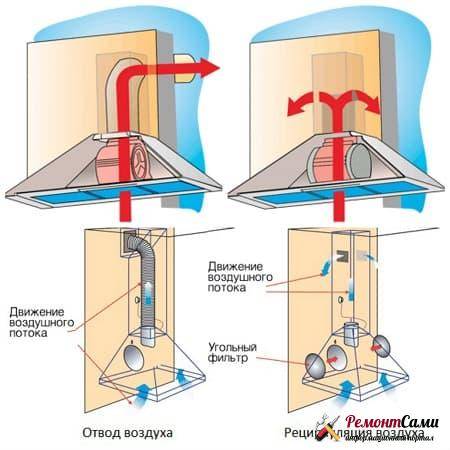
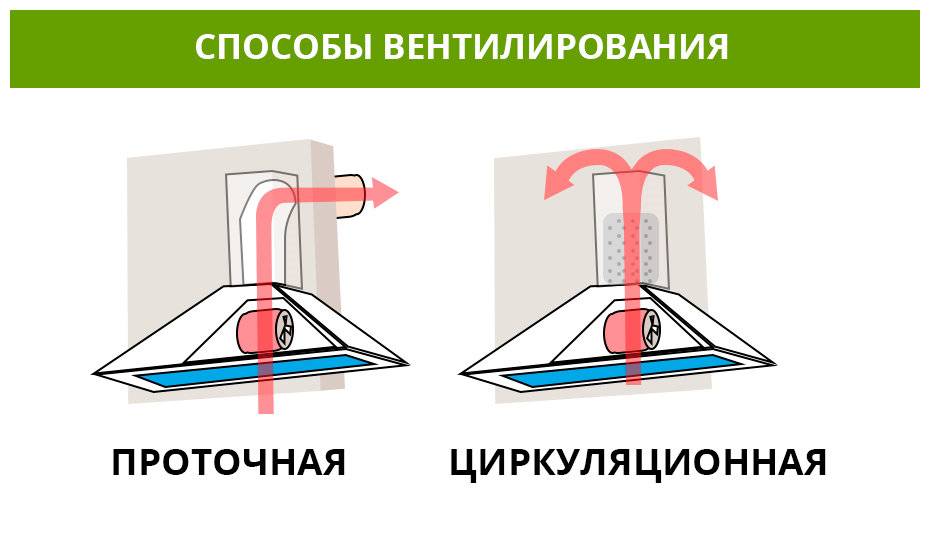
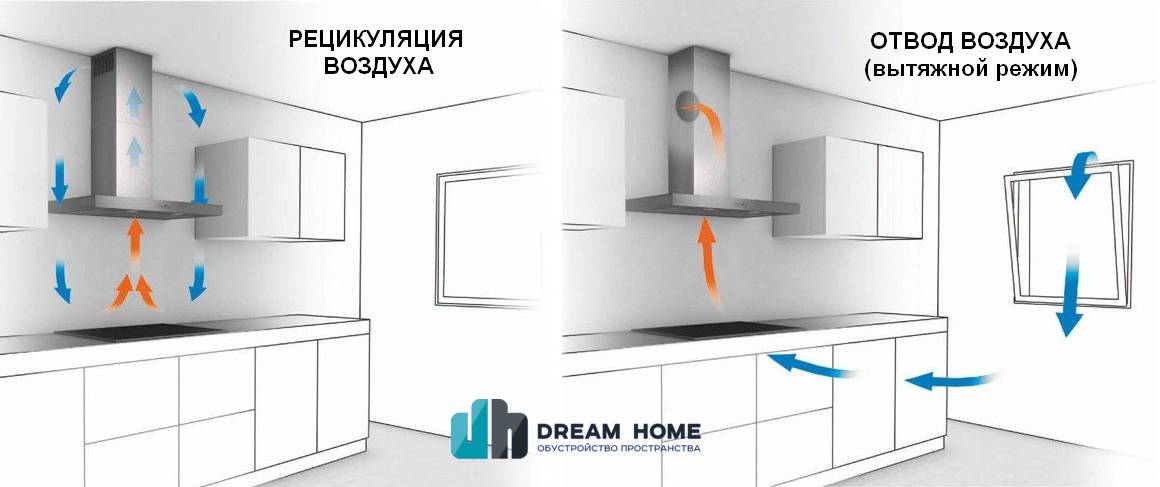
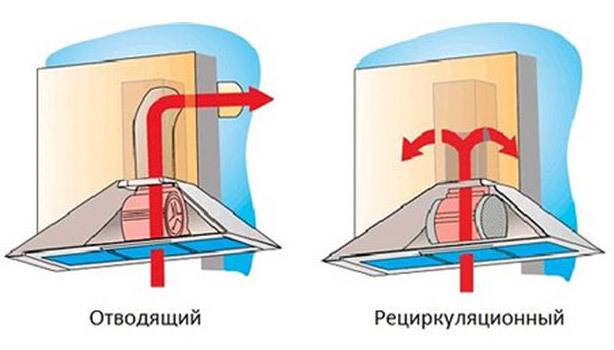
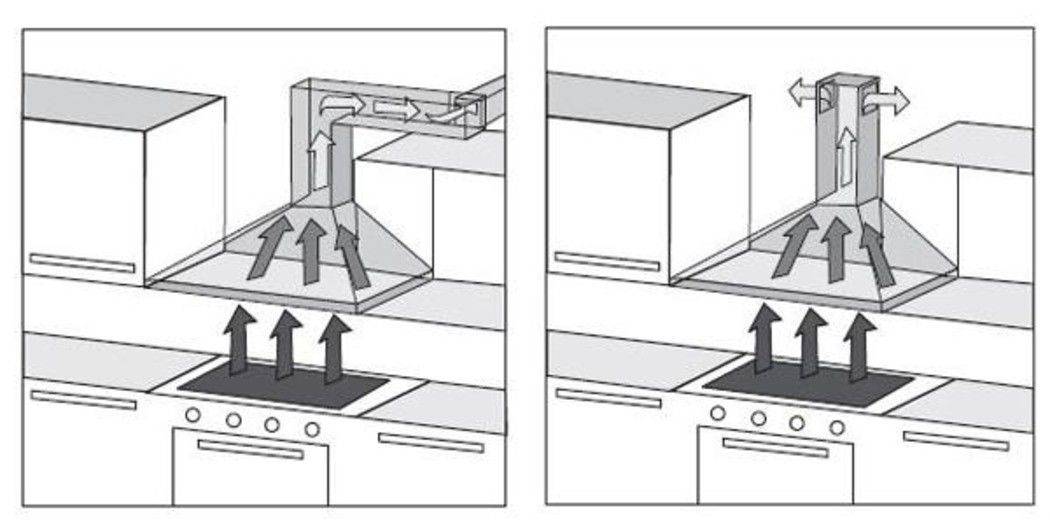
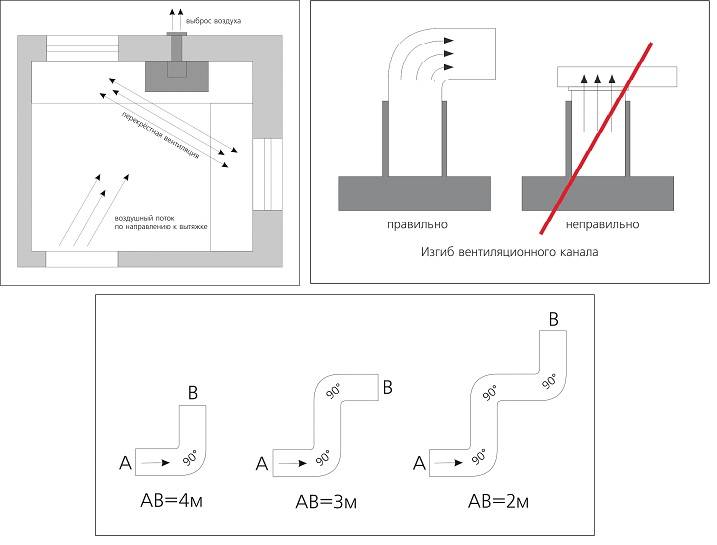
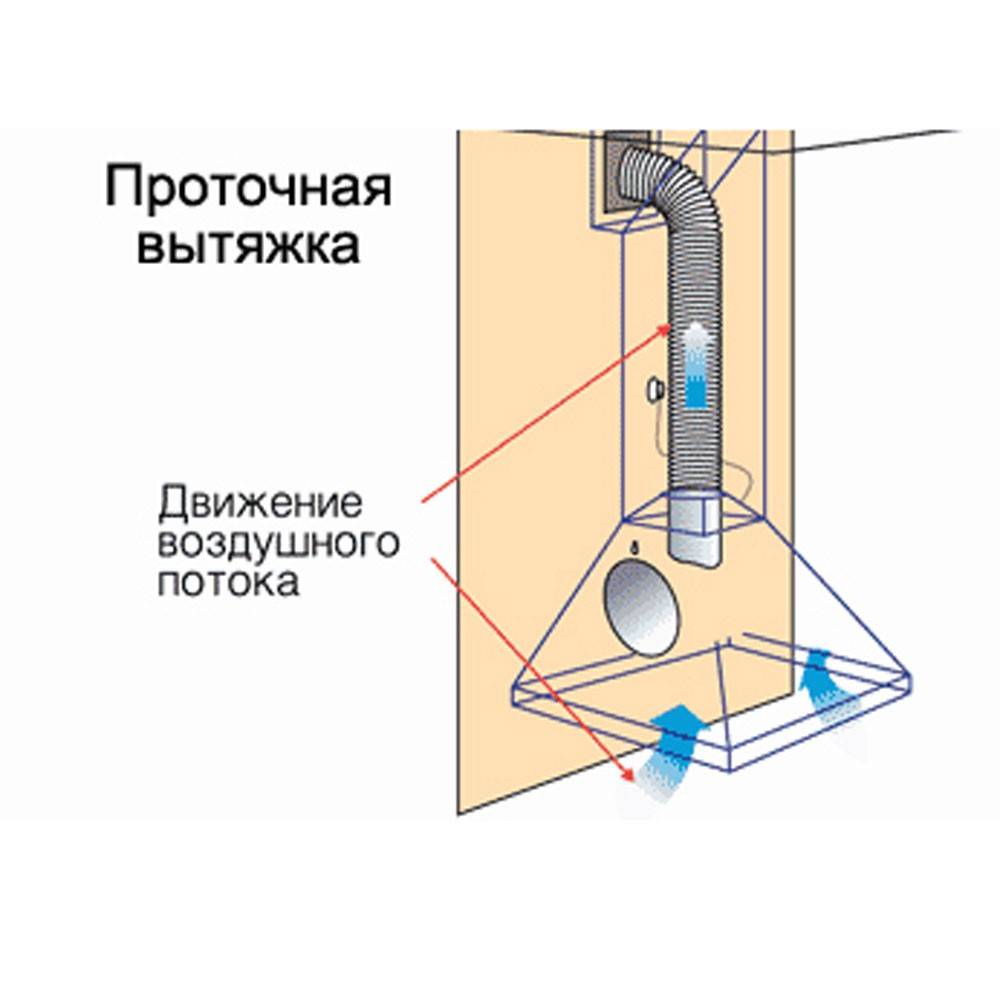
The presence of filters and their number
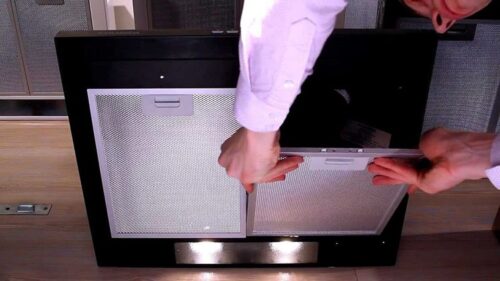
It is much more rational to opt for exhaust systems with metal grease traps. These last longer and wash well.
Traditionally, in hoods without the ability to connect to ventilation shafts, there are two types of filters: these are external (grid) and internal (coal), which directly performs all the work of purifying the air. The grease trap (or external filters) is made of stainless steel or acrylic material. In addition, inexpensive models are made with non-woven or paper gratings, which often have to be changed. More expensive models of kitchen hoods without a drain have several stages of carbon cleaning. Such units are more suitable for rooms with an area of 30-35 m².
What can be additionally equipped with coal hoods
Each device for the kitchen, designed to effectively clean the air after cooking, has a number of additional features that add ease of use. Let's take a closer look at these "gadgets".
- Timer. This is one of the practical secondary functions that will allow you to set up a schedule, that is, it will determine the exact time how long the device should work.
- Electronic display. With the help of such a device, you will always know in what mode the coal extract is working, in addition, the monitor will report an error, in which case.
- Light indicators and graphic designation. With the help of such a signal, you will be able to understand at what level of contamination the filters of the cleaning system are, so you will not forget to change them in a timely manner.
- Built-in sensors. It is good if the device will be able to turn off and on automatically when the air in the kitchen is saturated with steam from dishes and fat.
- Periodic start mode.This additional function is acceptable if it is necessary to regularly maintain clean air in the kitchen.
- Possibility of remote control. With a remote control for a charcoal hood, you will no longer have problems arguing about who goes to start or turn off the system. Now this is done by lightly pressing a button on a nearby remote control (the main thing is that it is at hand).
Myths about filters
Among users, there are judgments about the benefits of various hood models. Basically, the dispute is about the efficiency of filters and the quality of removal of harmful impurities.
Poor filtration efficiency
No exhaust system removes all odors from a kitchen 100%. The polluted air exhaust system is not suitable for all city apartments due to clogging of ventilation ducts and shafts in apartment buildings. We must draw separate conclusions from each apartments - special permission required. The main task of any hood is the removal of combustion products, grease drops and soot, since their deposits on furniture and walls do not add entourage to the interior of the room, and are harmful to health. The filters of the circulation system do an excellent job with this problem.
We conclude: regardless of the model of the hood, the complete removal of unpleasant odors is, in principle, impossible. Both systems adequately cope with the task of removing soot and grease drops.
Recirculation systems are more expensive
Now a little arithmetic: a kit for connecting the flow system to the ventilation of the house will cost no less than 1 thousand rubles, if you need to hide the air ducts, then add another 500 rubles to the PVC pipes.Installation work plus permission - another 4 thousand rubles, a total of at least 1000 + 500 + 4000 = 5.5 thousand rubles. Expenses for additional ventilation will not be taken into account.
Charcoal filters for recirculation hoods cost at least 400 rubles, no more than 2-4 cassettes are needed per year. We get 800-1600 rubles. in year. As a result, we can use the recirculation system for at least 3.5 years, and a maximum of about 7 years, or it will be spent 1 time to connect an evacuation type hood
When calculating, we did not take into account that direct-flow systems also have filters, which also need to be changed
Conclusion: the circulation hood is economically beneficial, the cost of replacing filters is evenly distributed over the years of operation.
Hard to find filters
Fundamentally wrong statement: consumables, to which include carbon filters, are made by other manufacturers, sometimes they are even of better quality than those that come with the hood. There is no markup on the brand, and it is easy to purchase the right filters.
Filters reduce performance
Another misconception, not supported by figures in any way - no one has ever done research on this topic, let alone any measurements or comparisons of characteristics. Modern carbon filters are very thin, they cannot affect the power or performance of the exhaust system.
Losses are present during the installation of direct-flow systems: one turn reduces the efficiency by 10%, and without them a hidden outlet cannot be made - at least two bends will be required. We consider: it was 265 m3 / h according to the instructions, they made a branch with two turns, minus 20%, as a result, we got 265-53 = 212 cubic meters. m/h
Conclusion: do not believe unverified information and false myths.Power and performance are indicated taking into account the installed filters.
Installation and maintenance
The installation procedure for any model of autonomous hoods is described in detail in the user manual. Features of work performance determined by the type and shape of the existing model. Some are hung from the ceiling plate, which is not very difficult, but requires a hidden power supply.
Which installation method do you prefer?
Do it yourselfCall the master
However, if the room has a suspended or suspended ceiling, the installation process becomes much more complicated. In such situations, it is recommended to contact specialists who can quickly and without loss resolve the issue./p>
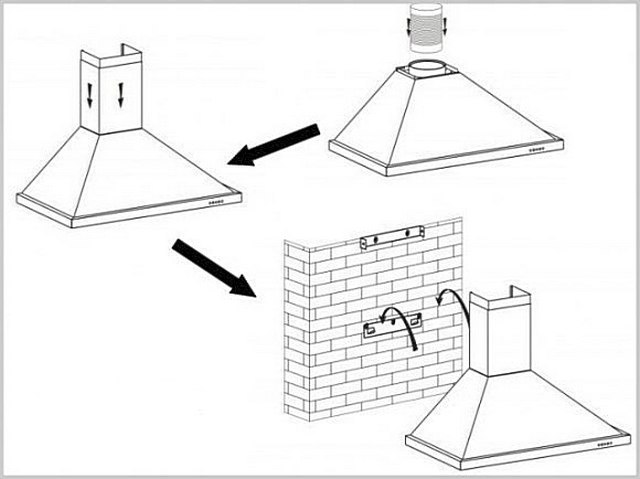
Wall models are much easier to install. Placement points for clamps are marked on the surface, nests are made and fasteners (anchors, self-tapping screws, brackets, etc.) are installed. Then the hood housing is hung, power is supplied. Since the motors of such installations are of low power, large wires or a separate RCD are not required.
Maintenance of autonomous hoods consists in periodic cleaning of the housing from dust and greasy deposits, as well as in the timely replacement of filters. It is necessary to monitor their condition and remember when the previous replacement was made. Usually, one filter is enough for 3-6 months of work (depending on the intensity and load).
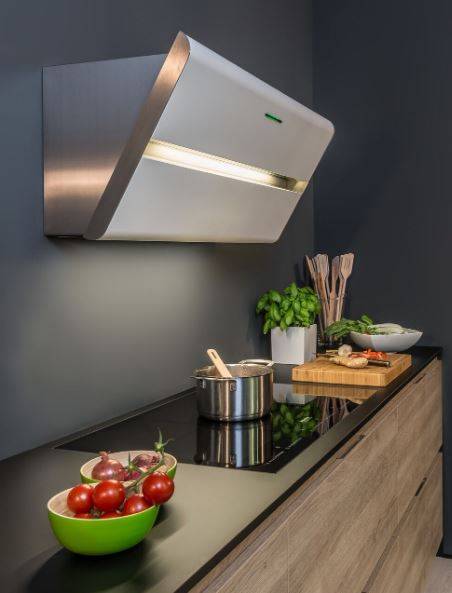 On sale there are different models with their own capabilities. There are filters designed only to work with one or another hood model.
There are also universal types of filters that can work in most designs.When buying, you need to have an accurate idea of \u200b\u200bwhich filter is needed for a given installation, otherwise the money will be wasted.
For the care of plastic cases, mild detergents are used. Do not use active or aggressive liquids, abrasive materials. The cases are wiped with a slightly damp cloth, removing dust and grease deposits.
If the room is small, and the hood is located low above the hob, it will be necessary to wash its body from fat quite often. This should not be neglected, since the layers polymerize and cease to succumb to conventional detergents.
Scheme
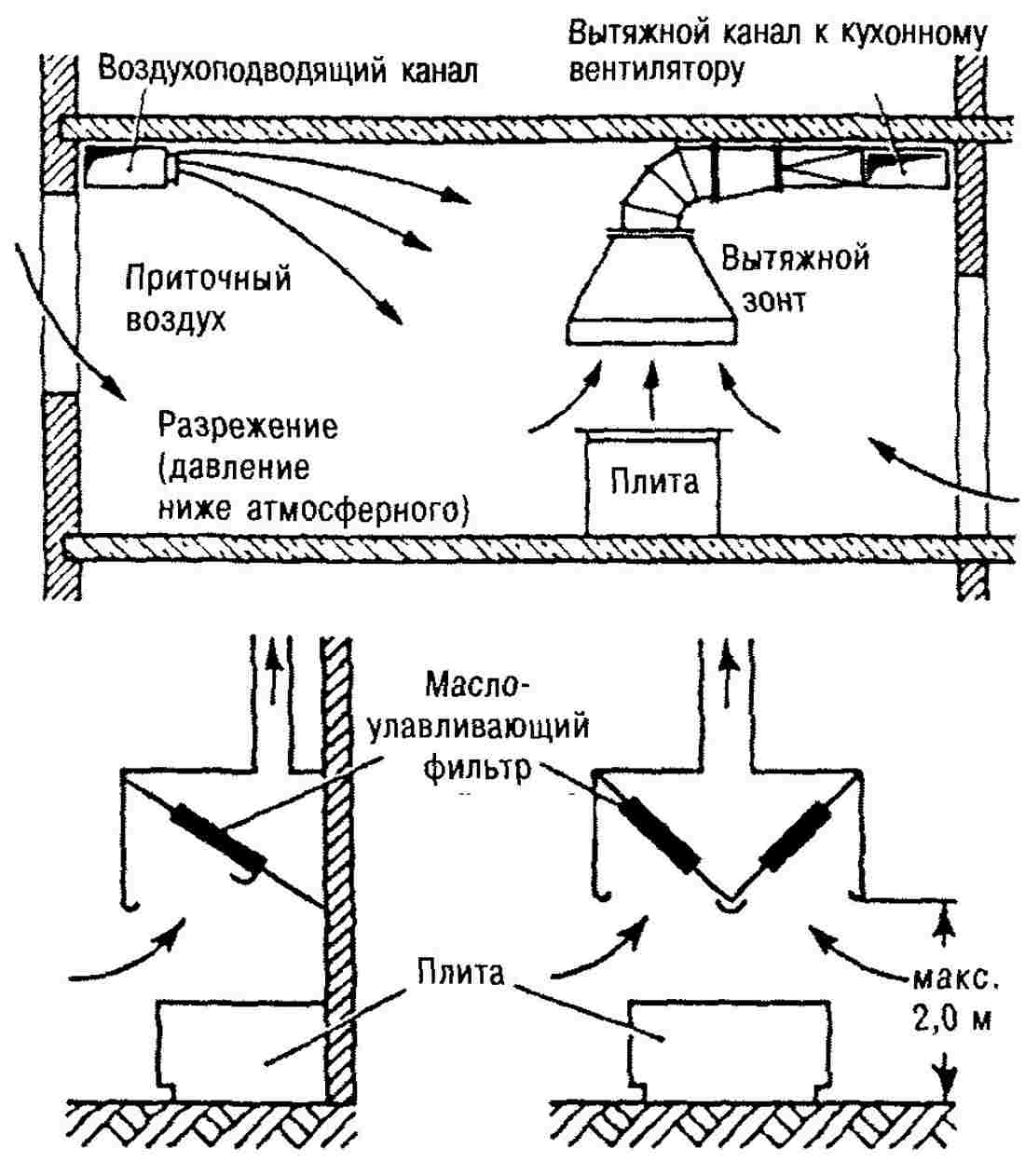
When designing a ventilation duct, you need to immediately determine where the polluted air will go:
- In the general ventilation shaft of an apartment building or in the main ventilation duct of a private house (how to equip ventilation in a private house?).
- To the street through the prepared hole in the wall of the house.
Attention
Output to the street is possible in private housing construction. For damage to the facade of an apartment building, the owner will receive a large fine.
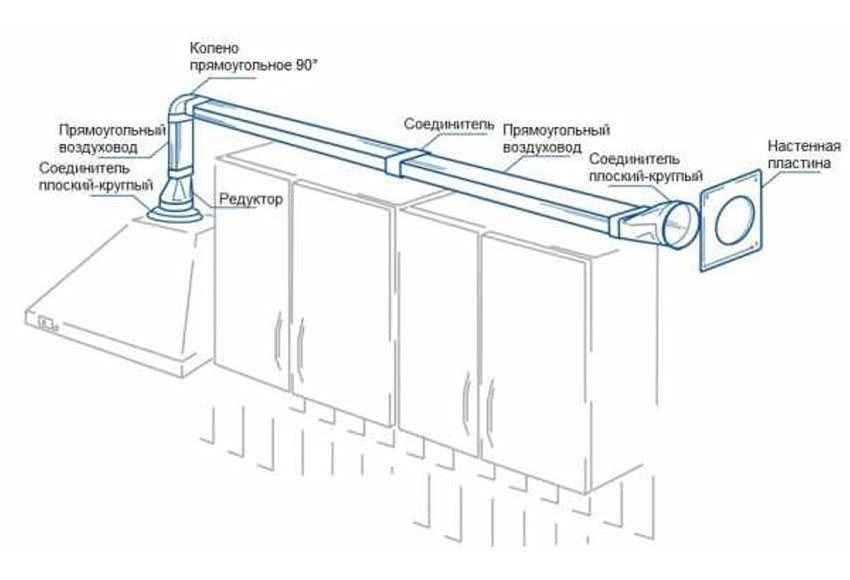
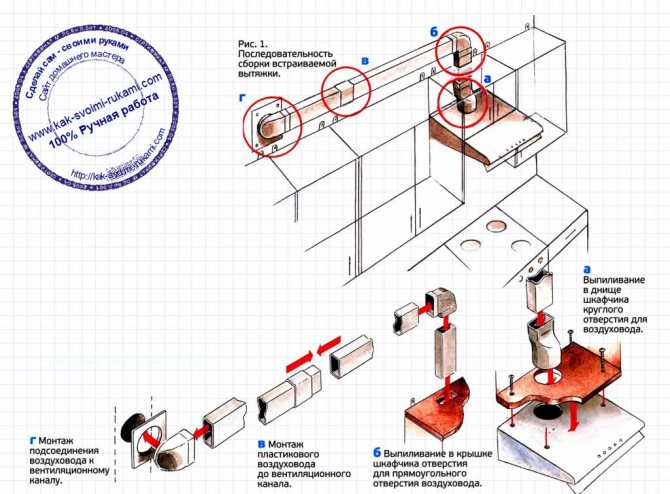
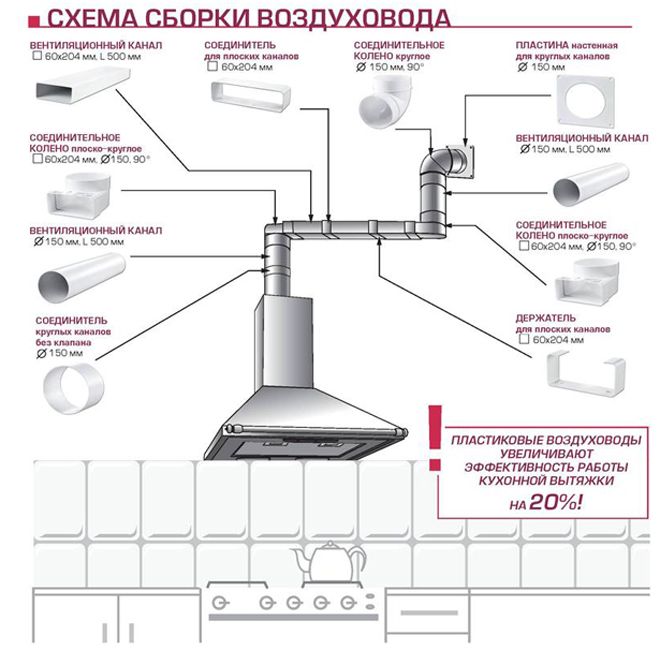
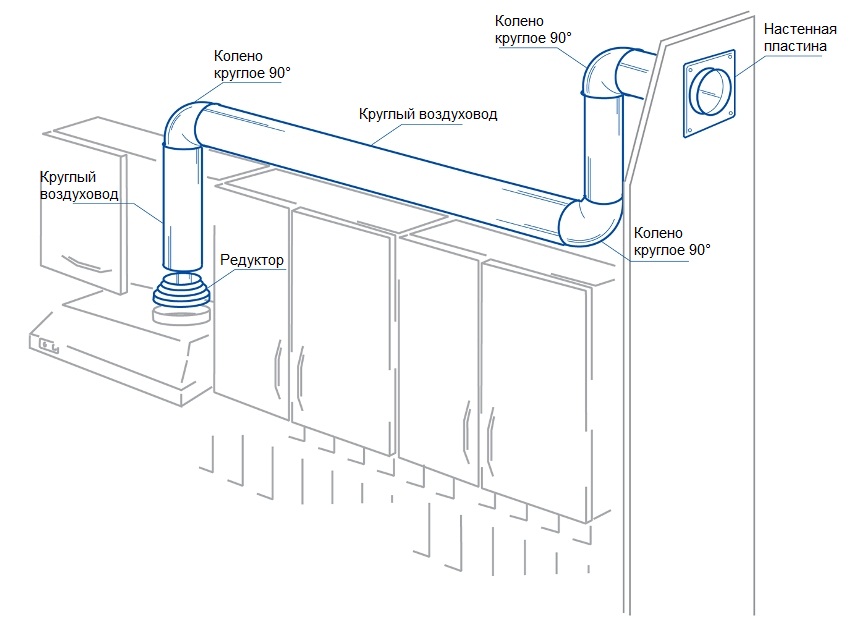
Air duct installation diagram:
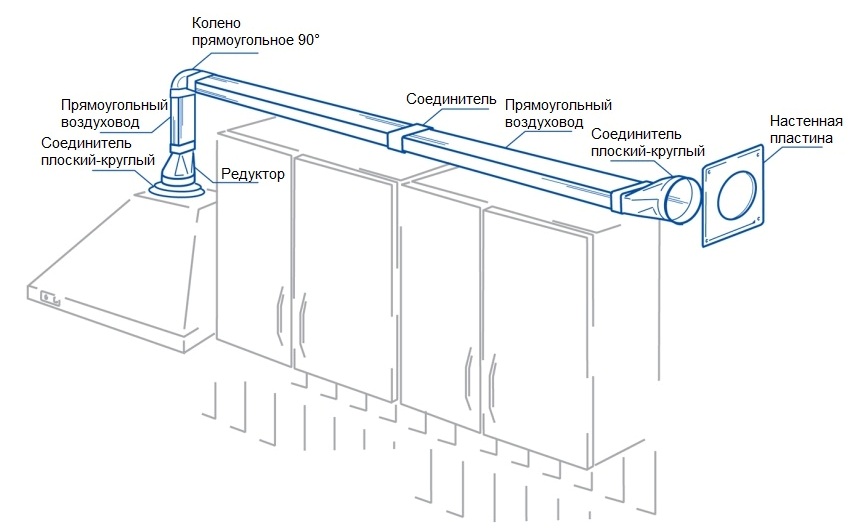
- Hidden installation. If the distance between ceilings and cabinets is too small, you can hide the duct inside wall cabinets. You will need square pipes.
- Open installation. The air duct is laid on top of the wall cabinets. You can use pipes of different sections.
separatelyhow to install ventilation in the apartment
Features of the kitchen microclimate: why is proper ventilation important?
You need to worry about proper ventilation for this room, because:
- food is being prepared here, the smell of which can “eat” into interior items (especially into textiles - curtains, towels) and spread around the apartment if it is not quickly removed;
- the kitchen is often used as a "smoking room", and tobacco smoke must be removed quickly;
- due to increased temperature (during cooking) and humidity, condensation forms on windows faster in winter;/li>
- due to high humidity and heat during stagnant air, mold can appear on windows, at the corners of walls, in cabinets with dishes (if you put them wet), with food.
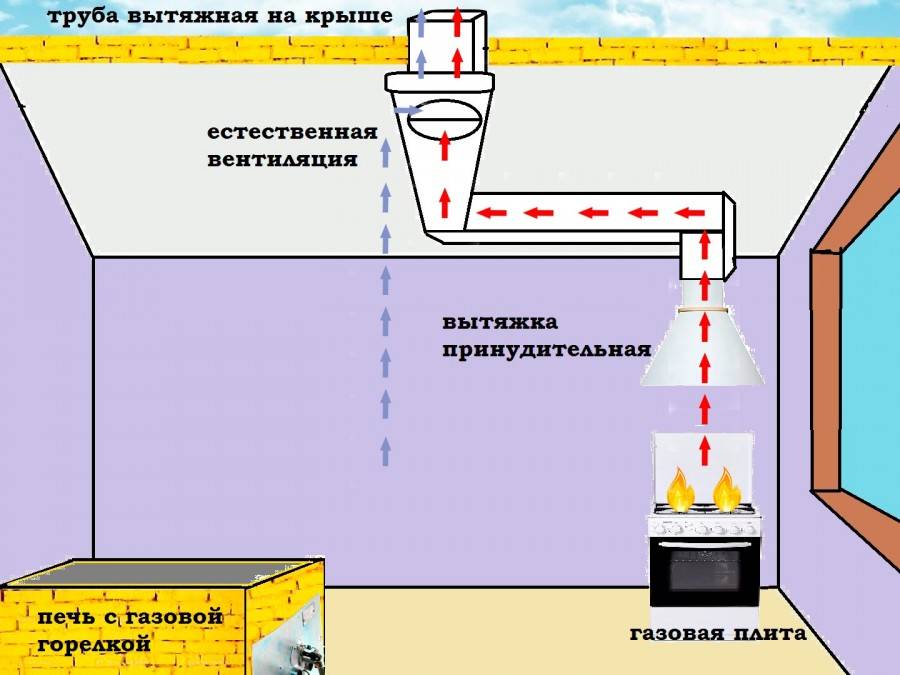
Also, it is in the kitchen that ventilation shafts are almost always located. The ventilation shaft serves to remove the "exhaust" air from the apartment - and therefore its work should not be disturbed.
How to check the performance of the ventilation shaft?
Very often, the ventilation in the entire apartment is seriously disturbed precisely because of the common (for the riser) shaft - in case it is clogged, or if the draft in it is broken for other reasons. In this case, the air removal system will not work normally.
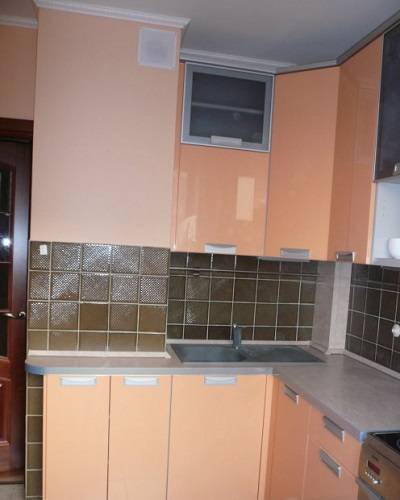
Protrusion of the ventilation shaft with a hole covered with a grate
Therefore, first of all, you need to check that the ventilation duct is working properly.
To check, tear off a thin strip of soft paper (toilet paper will do). Then open a window in any room, open the doors between that room and the kitchen, and hold the paper strip to the vent.
If the strip is noticeably attracted to the ventilation grill, everything is in order: the system is working. If it does not attract at all, or attract weakly, the exhaust shaft either does not work at all (does not create traction), or it works, but poorly. In this case, you need to contact the housing office (or the organization that maintains ventilation in your house), to solve the problem - the channel will need to be cleaned or repaired.
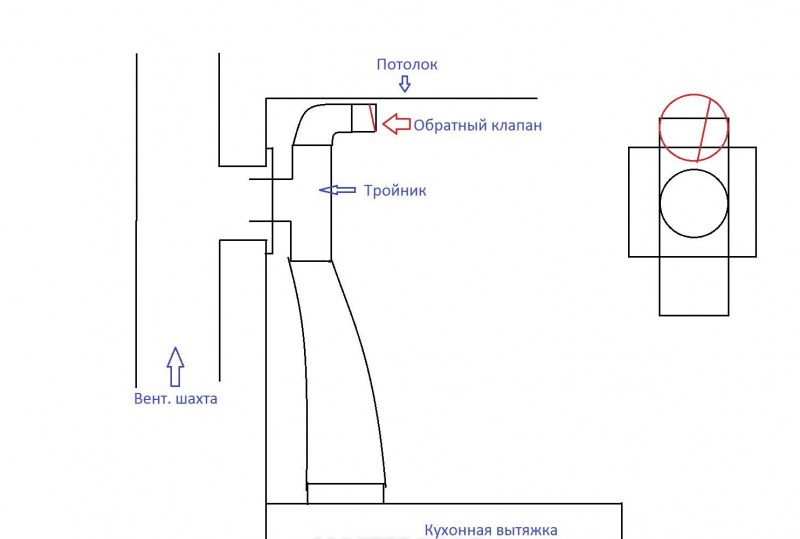
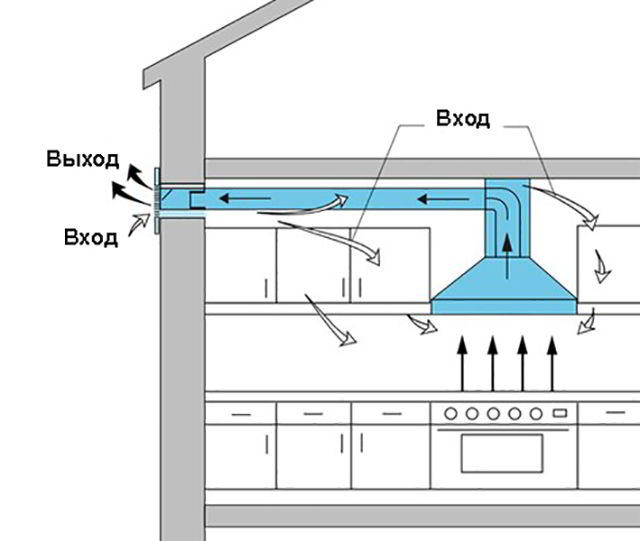
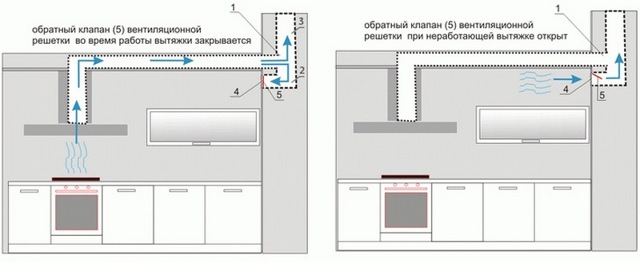
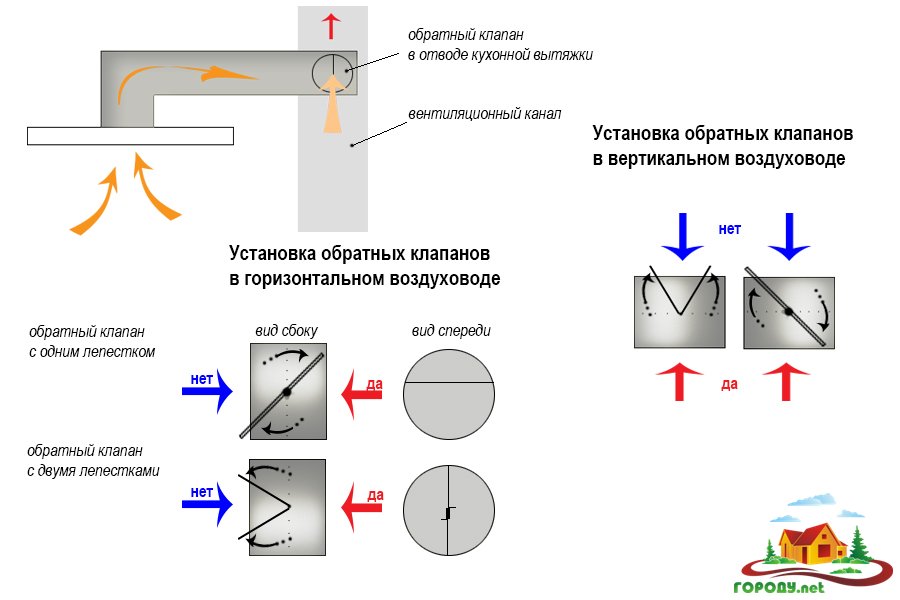
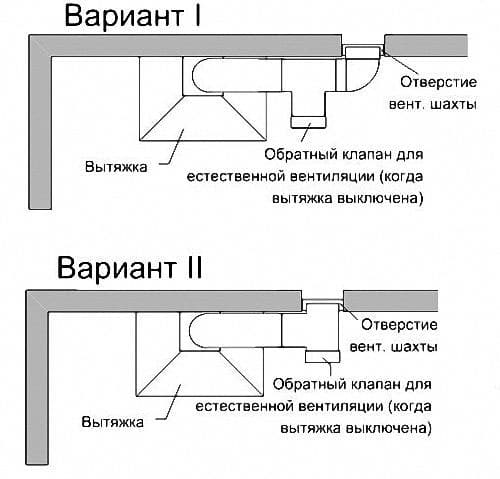
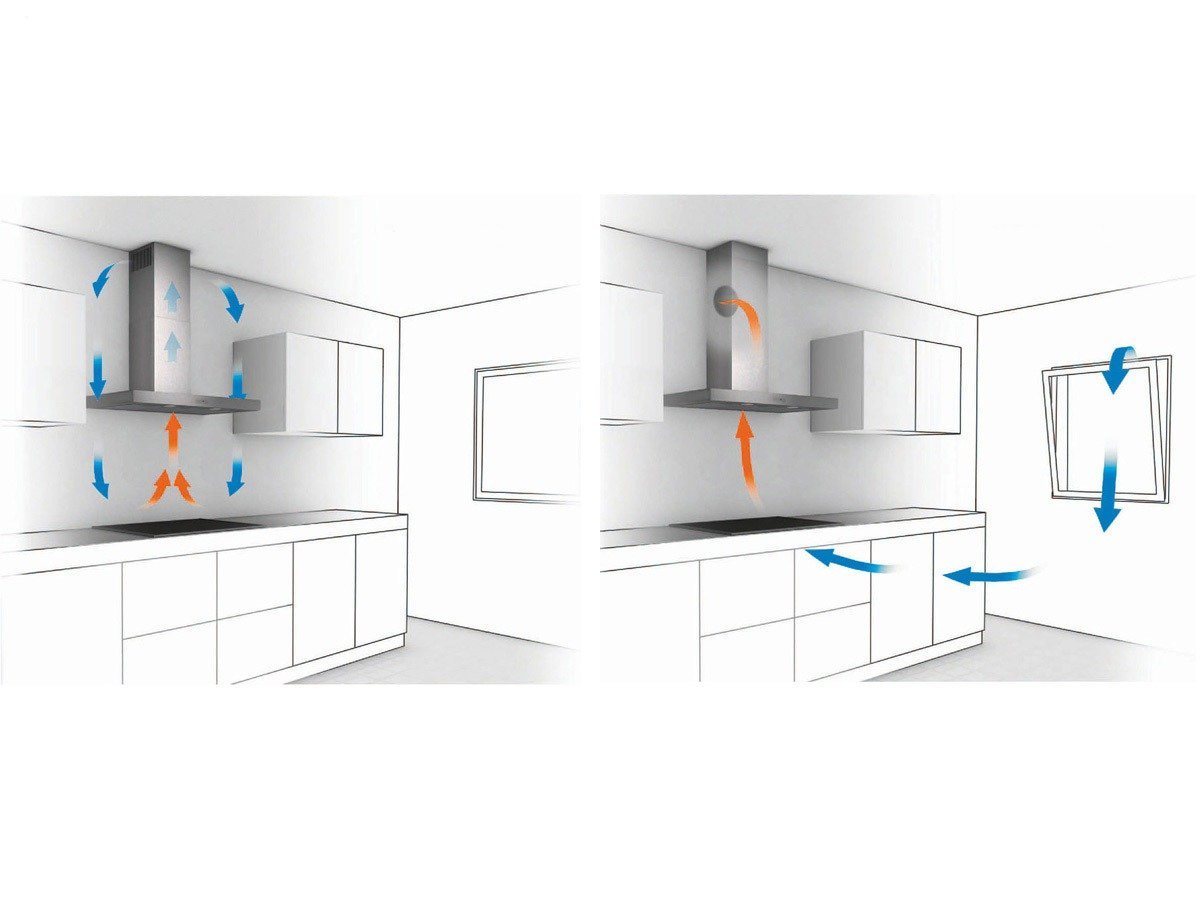
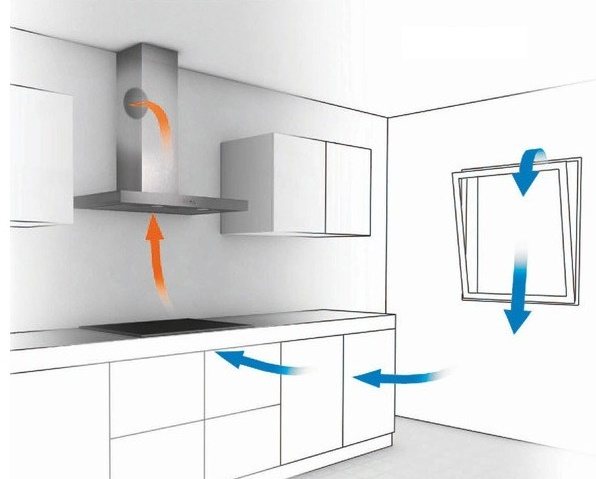
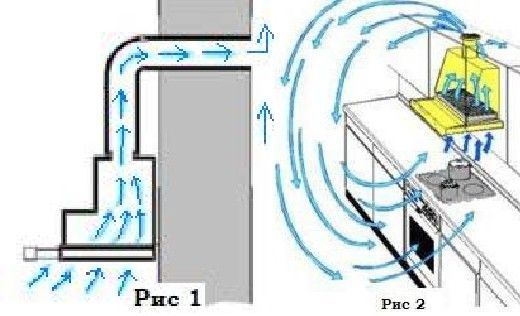
An important nuance: if your kitchen has a hood that is connected directly to the ventilation shaft, and the shaft hole completely blocks its outlet, this is also a problem. In this case, the air will be removed only when the hood is running.
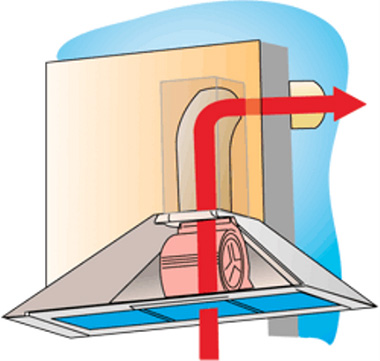
In order not to interfere with the operation of the system, the kitchen hood outlet must be connected through an element that has a grid below the duct opening, with a non-return valve. In this case, the air will escape naturally through this grate when the hood is not working. When the hood is turned on, it removes air from the room, and the non-return valve prevents it from flowing back.
Varieties of hoods for the kitchen without a vent to the ventilation duct
Based on the type of housing, hoods with a filter without a vent to the ventilation duct can be horizontal, vertical, inclined and telescopic. The first option is located parallel to the hob. For vertical devices, the filtration surface will be placed perpendicular to the plate, as a result of which it will take up more free space./p>
The inclined version is located relative to the plate at a certain angle. This hood is characterized by efficient and silent operation. Thanks to its good location, it allows you to save space in the kitchen. The telescopic device is a kind of built-in hood. The working surface of the device extends if necessary, and after the end of work it returns to its place.
According to the installation option, there are the following types of hoods for the kitchen without a vent to the ventilation: suspended, built-in and island. The first type of device is fixed on the wall.The second option is installed inside the kitchen set. Such devices are characterized by lower productivity. Island devices are located at some distance from the wall and are attached to the ceiling.
Based on the design features, hoods are stationary and retractable. The latter option draws steam over a larger area. This improves the efficiency of the device. According to the shape of the body, recirculation hoods can be flat, domed and curved.

Hoods without a drain are: vertical, horizontal, telescopic and inclined
The housing of the recirculating hood is often made of stainless steel or aluminum. Such options look harmonious in kitchens decorated in modern styles and high-tech. The surface of the products can be enamelled. This option has a low cost. These hoods are easy to care for.
The most expensive devices are made in tempered glass. Such devices have a stylish look. However, hoods need careful care, since the material is quite fragile, which brings inconvenience during the operation of such equipment.
Recirculation hood: is it worth it to install
This question can be answered by evaluating all the advantages and disadvantages of an autonomous system.
Positive points
Main advantages:
- minimum costs;
- ease of installation.
Next, it is worth concretizing some of the advantages of the system.
Firstly, you can mount the device in any of the rooms. It is installed not only in the kitchen. In other words, the proximity or remoteness of the ventilation ducts does not play a role here, because it can still be impossible to achieve an intensive supply of fresh air into such a room.
Secondly, the interiors of modern kitchens have their own characteristics. Hood models have such shapes that allow the units to successfully fit into a particularly complex interior. Even if the room is small, the ergonomic shape of the device and its compact size do not allow cluttering up the space./p>
Thirdly, you can mount the device yourself. In this case, the owner of the premises bears the minimum costs.
Fourthly, filters can be replaced with your own hands, since special knowledge is not required to replace them. Normal tool handling skills are sufficient.
Explicit disadvantages of hoods without connection to the ventilation duct
It is necessary to take into account the disadvantages of such systems. After carefully studying them, the homeowner may choose a different hood option.
First drawback. If we compare the stand-alone version of the hood with the traditional system, when the vapors are removed, then you can easily see how much the stand-alone hood loses in the struggle to create a comfortable microclimate.
Second drawback. "Overgrowing" of filters is noted very quickly. Dirty filters are the key to poor air purification efficiency and reduced system performance.
Third drawback. When such a hood works, a lot of noise is created.
What to do if it is impossible to make a cut into the riser
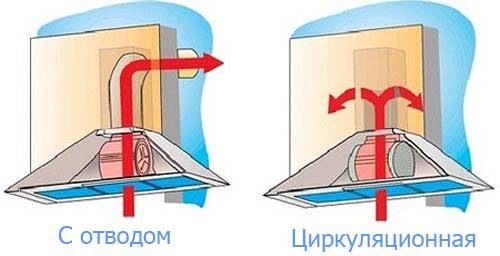
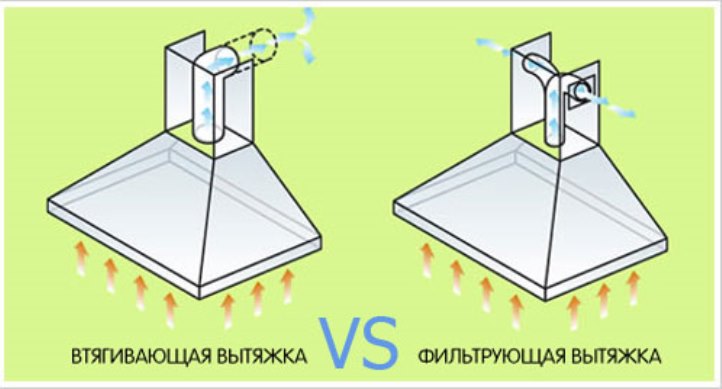
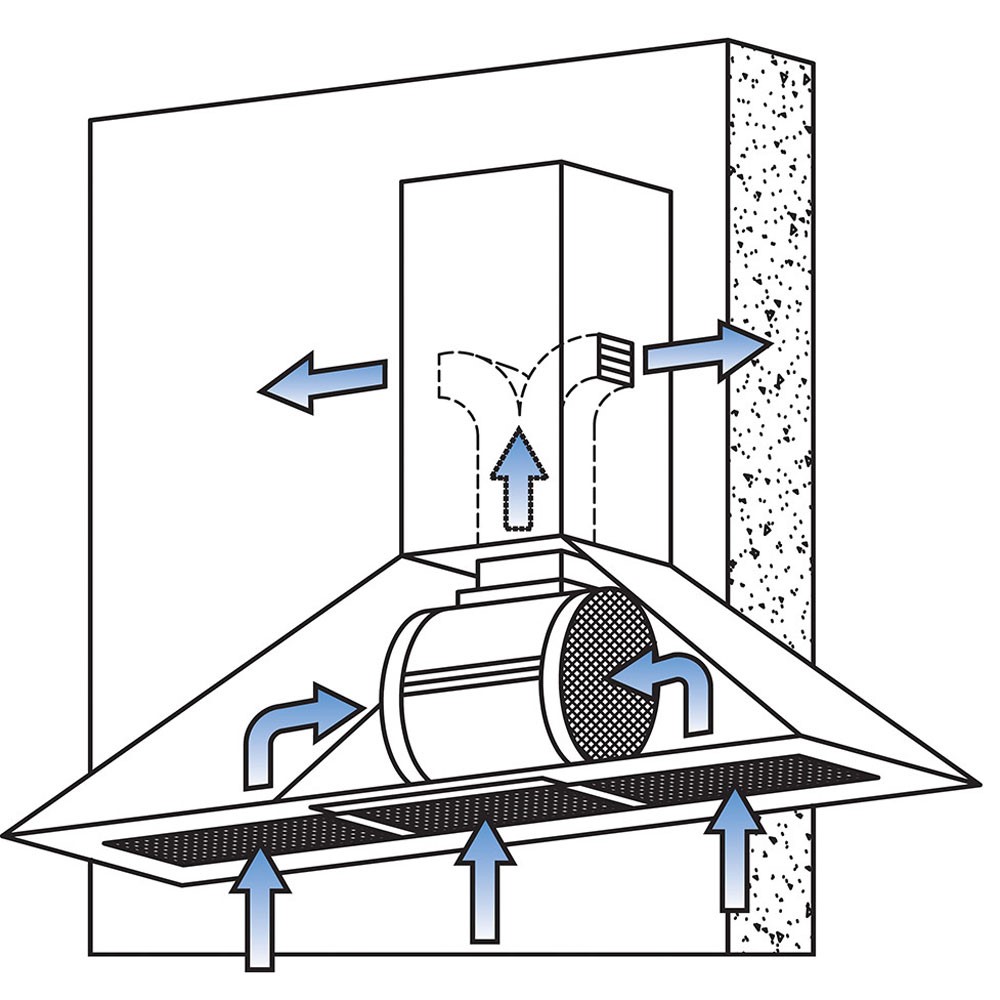
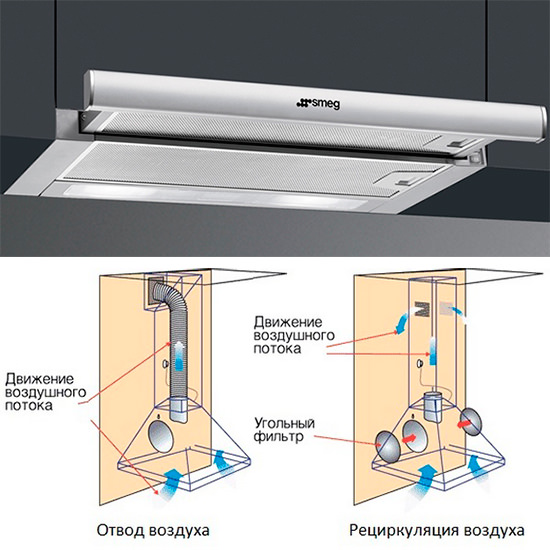
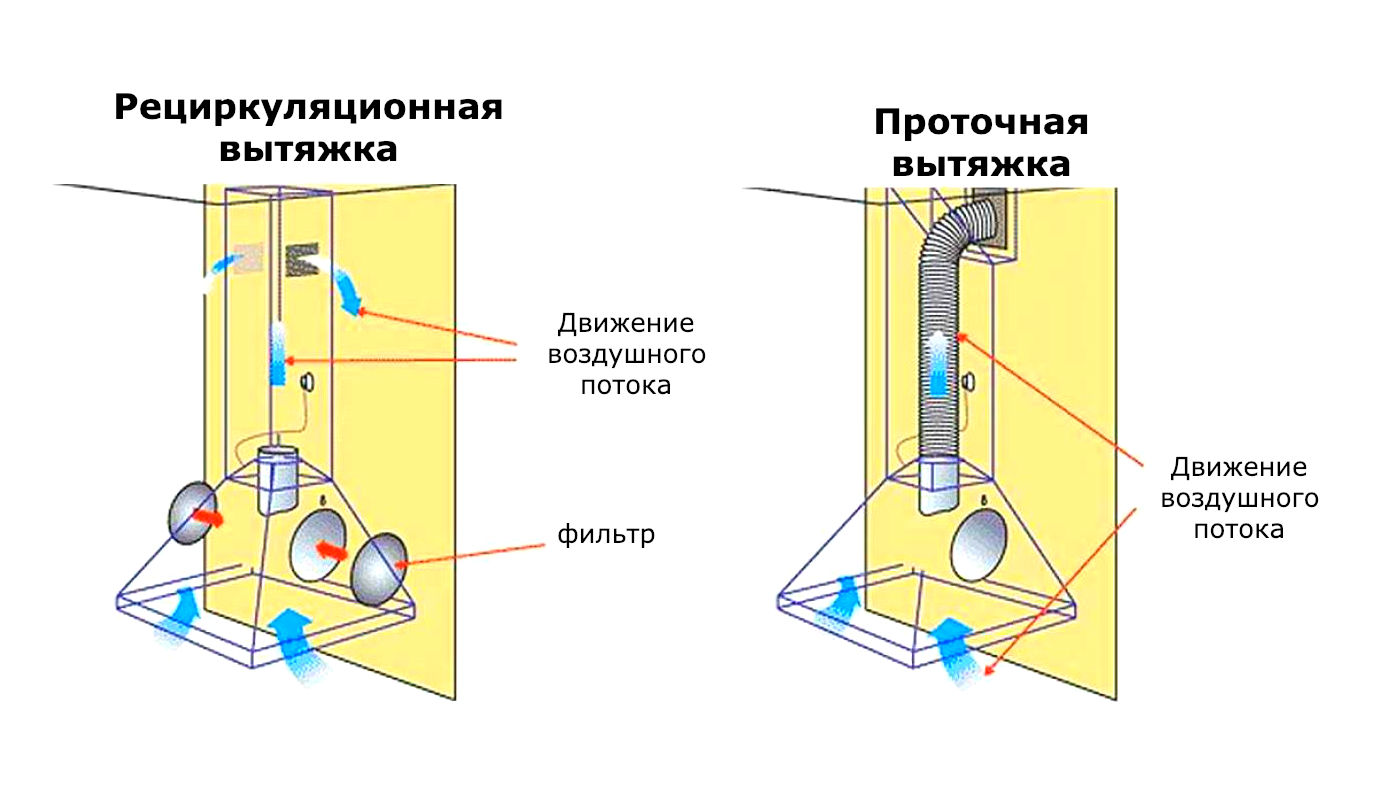
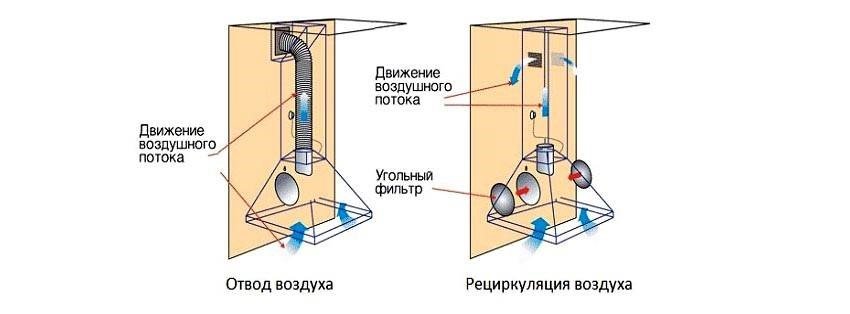
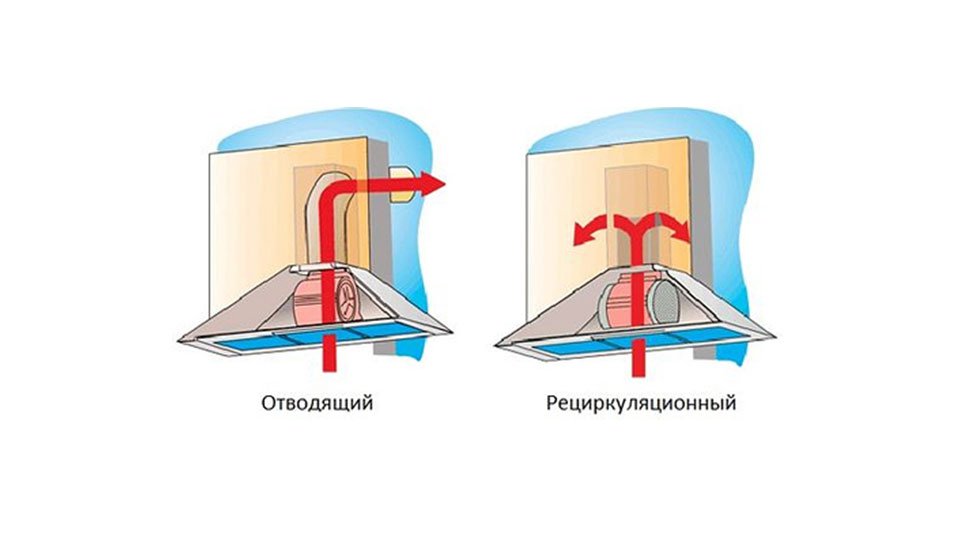
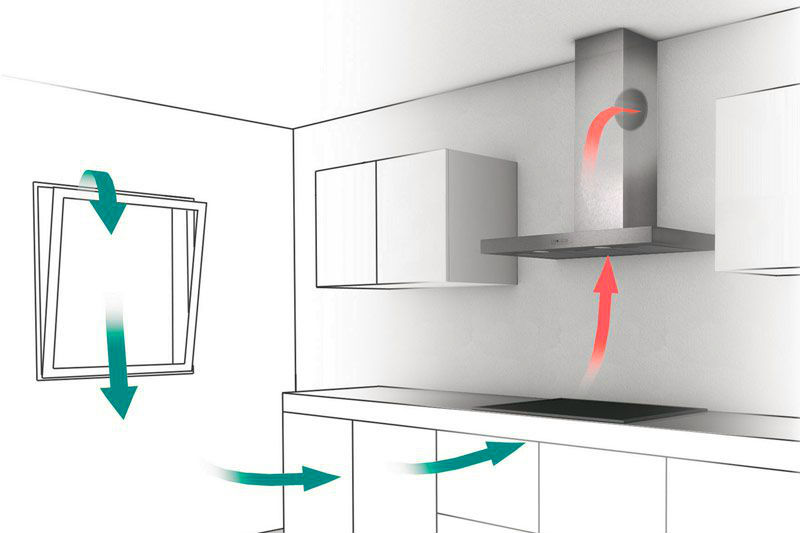
In this case, two options remain - the removal of gases to the street through a hole in the wall and the use of recirculation systems.
Wall valve installation
This method may not always be applicable. Before purchasing equipment, it is necessary to consult with representatives of the engineering company. There are several restrictions that cannot be ignored before bringing the hood to the ventilation in the kitchen./p>
According to SP 54 13330.2011, it is allowed to use wall devices for the forced removal of exhaust air. It also says that the distance from it to the windows of the neighboring apartment should be at least 8 m. In most houses, the kitchen windows are next to the neighboring ones, which makes the use of wall systems impossible. In summer, when airing, odors will penetrate inside into the adjacent window. A layer of fatty deposits will appear on the windows.
To solve the problem, you can install powerful filters that clean the waste stream. However, in this case, it is easier not to punch a hole in the wall, but to direct the air back into your apartment.
The grille is clearly visible from the outside. In houses that are architectural monuments, its installation will be banned, otherwise the facade will lose its appearance.
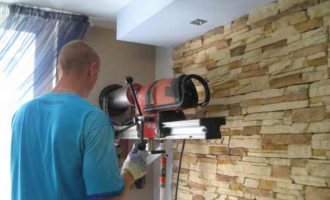
If conditions permit, the valve is connected using plastic pipes and aluminum corrugations. Do not punch the channel with a perforator - after it there are crumbling edges that require sealing with cement mortar. In addition, cracks may appear in the load-bearing structures when impacted by a perforator. It is better to use a diamond crown - it leaves perfectly smooth edges. The diameter can be selected in accordance with the dimensions of the case.
Recirculation systems
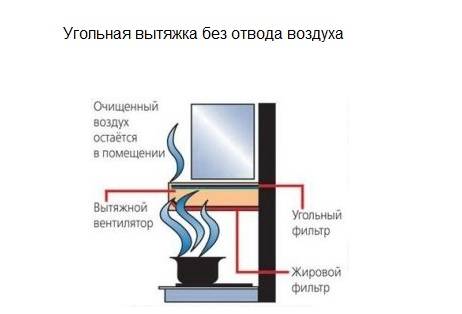
They work just as efficiently as those that remove gas from the room. When installing them, you do not need to decide how to connect the hood to the ventilation in the kitchen. Air ducting is not required, which greatly simplifies installation. There are no restrictions on use. You don't have to approve the project. The installation of the case and its dimensions do not differ from the previous options. The absence of an outlet from above helps to save space behind the furniture facade.
Checking and arranging the ventilation shaft
It is with these works that any installation of the hood in the kitchen should begin. If there is a problem with the mine, then no most modern and powerful systems will improve the air quality in the room. If you install a hood in a new house, then there may be a violation of the functionality of the vertical channel. The reasons are various, but most often these are gross deviations from building codes and regulations. There is no natural ventilation - call the representatives of the construction company to fix the problem. In our case, the ventilation passage was clogged with mortar during masonry work./p>
The ventilation passage was clogged with mortar
It is required not only to clean it, but also to install an exhaust hood with a check valve to ensure continuous natural ventilation. This is a strict safety requirement; if it is violated, the gas workers will not give permission to connect the stove.
Ventilation after cleaning
Step 1. Remove the decorative grille, make an audit of the shaft. Slightly expand and align the edges of the hole.
Step 2. Install an MDF board of the appropriate size into it, secure it with two spacers. The plate is required to prevent clogging of the channel with mortar.
Installed MDF board
Spacers
Step 3. Make a box according to the dimensions of the connected air duct; a check valve will be installed in it. The device works only when the hood is turned on, it is a permanently open type. Due to this, the mandatory requirement of gas workers is fulfilled.
Box
Step 4. Attach two bars of metal reinforcement to the wall. To do this, fix the dowels and install the rods with their help.
Two bars of metal reinforcement
Step 5. Prepare a cement-sand mortar, be sure to add a special liquid to it that inhibits the reproduction of fungi and pathogenic microorganisms. The fact is that the hood captures fat and feeds it into the canal; special additives are used to prevent negative consequences./p>
Mortar mix and anti-fungal liquid
Prices for the popular antifungal agent Ceresit ct 99
Antifungal agent Ceresit ct 99
Step 6. Level the box and fill it with mortar. The next day, the solution will gain sufficient strength, disconnect the box from the mass with a sharp metal object and remove it.
The box is level
The box is fixed with mortar
The box is removed by sawing
Do not rush, the mortar has not yet gained maximum strength and may be damaged. Experienced builders advise wrapping the box in place with several layers of plastic wrap before installing it. After the mass has solidified, the element can be easily removed from the ventilation shaft.
Mine after removing the box
Step 7. Insert a plastic pipe into the hole and also throw it with a mass. It is necessary to form a round hole. Work carefully, do not clog the channel, do not allow solution to enter it.
plastic pipe
Pipe fixing
Forming a round hole
Wall covered with gypsum plaster
Never use gypsum plaster while making holes. This is very poor material in all respects.
For the mine, it is important that it is hygroscopic and absorbs a lot of moisture.Mushrooms and mold will definitely appear on such a surface, over time the affected area increases, brown spots will appear on the front surface of the wall.
Plastic, metal and grout perfectly transmit the noise generated due to the vibration of the fan blades. During the operation of the hood, unpleasant sounds are heard in the room. To reduce them, it is recommended that all pipelines at the points of contact with the vertical ventilation duct be glued with noise-absorbing tapes. It can be ordinary thick tape, the specific material does not matter. The main thing is that it should be plastic and extinguish multidirectional dynamic forces. /p>
The pipe is lined with sound-absorbing material
The pipe is inserted into the previously prepared hole
Silicone sealant applied around the pipe
Duct assembly
Check valve mounted on silicone sealant
Now it remains to well level the wall surfaces near the prepared entrances and then proceed with the installation of the hood.
Selection Tips
We will not tell you how to select a hood in appearance and installation method. These are design characteristics, here each user has his own criteria for beauty. And the technical parameters must be approached carefully, otherwise the effectiveness of the funds spent will not meet the initial expectations.
Such an extract takes up almost no space and does not attract attention.
Suspended models look very original and fit perfectly into the modern interior of the kitchen.
Ceiling hood in a concise design will suit any style of decoration
What performance characteristics should be checked before purchasing the unit?
Power.According to the current regulations for a kitchen with an electric stove, the air exchange rate must be at least 6, if the stove is gas, then the minimum rate increases to 9. In this case, ventilation should only be constant, not periodic. For example, the kitchen has a width of three and a length of four meters with a height of 2.7 m, a gas stove. How to choose the power of the hood? First, you need to calculate the volume of the room 3 × 4 × 2.7 = 32.4 m. The fan must draw at least 32.4 × 9 = 291.6 m3 / hour per hour. As always, it is necessary to provide a power margin of at least 20%. If the motor runs at full power for a long period of time, the stator and rotor windings overheat. br/> High temperatures adversely affect varnish dielectrics, namely, they cover the wires of electric motors. Long-term limiting heating significantly reduces the life of the hoods - the protective coatings of the windings reduce their original properties until a short circuit occurs. In our case, the fan power cannot be less than 291.6×1.2 = 349 m3/h. A very large stock is also not recommended. The reason is that unproductive losses of electrical energy increase, the efficiency of the device decreases.
Dimensions. Length, height and thickness must be taken into account if the hood is built into furniture. Its dimensions should allow the unit to be installed in a hanging bedside table - it is not advisable for it to make a new one. Manufacturers offer a wide selection, you can easily find the right option without much effort.
Types of filters. On all types of hoods, two types of filters are used: for trapping fat and for trapping odor.The former are necessary not only to clean the air, but also to protect the elements of the device from grease deposits. It has a negative impact on the appearance and performance. Fat sticks to the fan blades, disrupts its alignment, and this causes a noticeable increase in noise during operation. Fat filters can be disposable (paper, sintepon, non-woven) or reusable (aluminum, stainless steel or acrylic). Carbon filters purify the air from various chemical compounds and are installed after the grease traps. Activated carbon cleans the air from harmful odors, burning, etc. All carbon filters are disposable only.
Noisiness
Unfortunately, not all consumers pay due attention to this parameter. According to doctors, at present, the majority of citizens are worried about the negative consequences due to constant stay in noisy rooms.
Permissible noise levels in rooms are regulated by several state regulations, many subjects of the Russian Federation additionally introduce their own restrictions. On average, the permissible noise level in an apartment should not exceed 60 dB. Such pressure on the sound membranes appears during an ordinary conversation. Keep in mind that very few range hoods are below this limit. In addition, the noise level largely depends on the correct installation and operating conditions of the device.
Control system. There is no need to buy goods with expensive automation, these are unproductive costs. br/> The vast majority of hoods work only at a few speeds, all other functions are not used.Give preference to traditional push-button options, touch ones are not very reliable. Grease and dirt adhere to the screens and interfere with controllability.
As for the cost, it is better to buy a product of the middle category. There are hoods for 150,000 thousand rubles, you can find goods for 12-15 thousand. Do not go to extremes. Do not purchase products from unknown companies; unlicensed hoods will not bring actual savings. They will have to be thrown away after a few months and quality goods bought, as a result of which such savings turn into additional costs.
The choice of hood requires a responsible approach
Extractor systems that clean and recirculate air
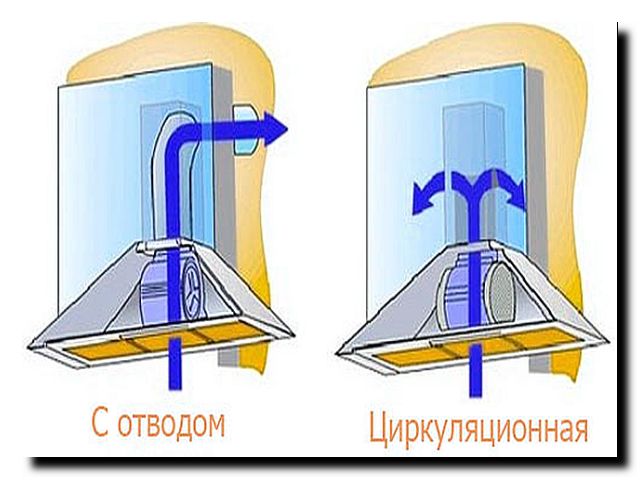
Hoods that provide recirculation of air flows are installed in cases where access to the ventilation duct is either undesirable or impossible. Then the installation of the unit for autonomous operation is carried out.
- The kitchen was designed in the usual way. But the stove was set in the distance:
- from the outer wall;
- from the public ventilation system.
- In the studio apartment, the stove is not installed against the wall. It is necessary to adjust the exhaust device, creating an additional structure, and then pull the ventilation pipe through the entire ceiling.
- In the room where the kitchen is located, there is no ventilation system initially. The room is ventilated by opening the window.
- Common house channels do not cope with their purpose, that is, they are not able to effectively remove fumes and odors from the kitchen. This situation is often observed in old high-rise buildings.
- The owners do not want to bother with the laying of ventilation ducts. In addition, such an “innovation” can spoil the planned or already completed interior design.