- Operating tips
- The nuances of instrument designs and sizes between them
- How is the distance determined for combined hobs
- How is the distance for sloped panels determined?
- Criteria and rules for choosing a hood
- The size
- Power
- Control type
- Additional functions
- What to consider when installing?
- Straight hoods
- Inclined hoods
- Mounting Features
- Standards
- Power calculation
- Optimum heights for different units
- Factors affecting the distance between the stove and the hood
- Operating tips
- Embedded
Operating tips
For recirculating hoods, you need to buy a replaceable carbon filter every six months
In the process of using the hood, it is important to monitor its cleanliness and good technical condition. According to the instruction manual, you must:
- wipe the exhaust device from dust and grease at the end of each working day;
- monitor the condition of the outlet air ducts and check the existing joints for leaks;
- with a certain frequency (at least 2 times a year) replace the filter elements installed in the device.
If a significant amount of dirt has accumulated on the body of the device, you will have to use a soft sponge or cloth with a detergent applied to them to remove them. It is not necessary to water them abundantly with water, and also to use chemical preparations containing abrasive particles dangerous for the body. If you violate this rule, you can scratch it and spoil the appearance of the device.
During cleaning, it is recommended to completely disconnect the power supply line of the household air cleaner. To do this, you can simply remove the plug from the outlet or turn off the circuit breaker responsible for the operation of this branch of the mains. The socket itself should be regularly checked for overheating of the housing and lead wires. If significant heating is detected, contact an electrician and ask them to take appropriate measures.
The nuances of instrument designs and sizes between them
How is the distance determined for combined hobs
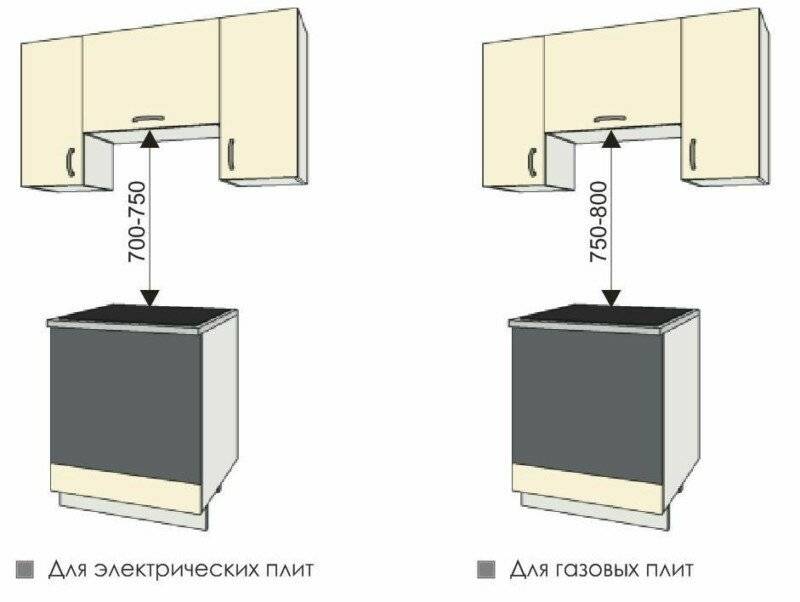
If you are the owner of a combined hob, then when choosing a distance, you must be guided by the most stringent standard for gas stoves.
That is, leave at least 75 cm between the stove and the lower boundary of the hood.
How is the distance for sloped panels determined?
One of the common questions of the inhabitants is this: how is the distance from the surface of the plate to the inclined model of the exhaust hood measured correctly.
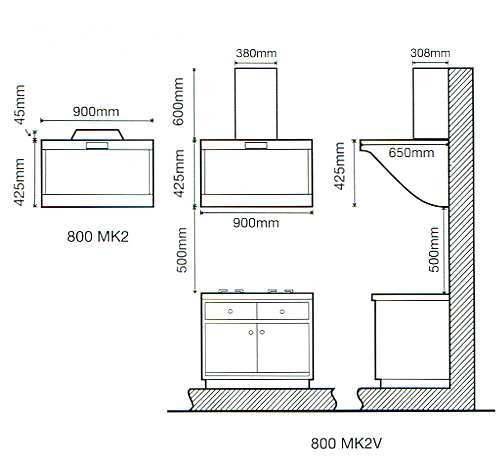
The answer is simple: you need to measure the minimum distance from the lowest point of the hood to the surface of the stove.
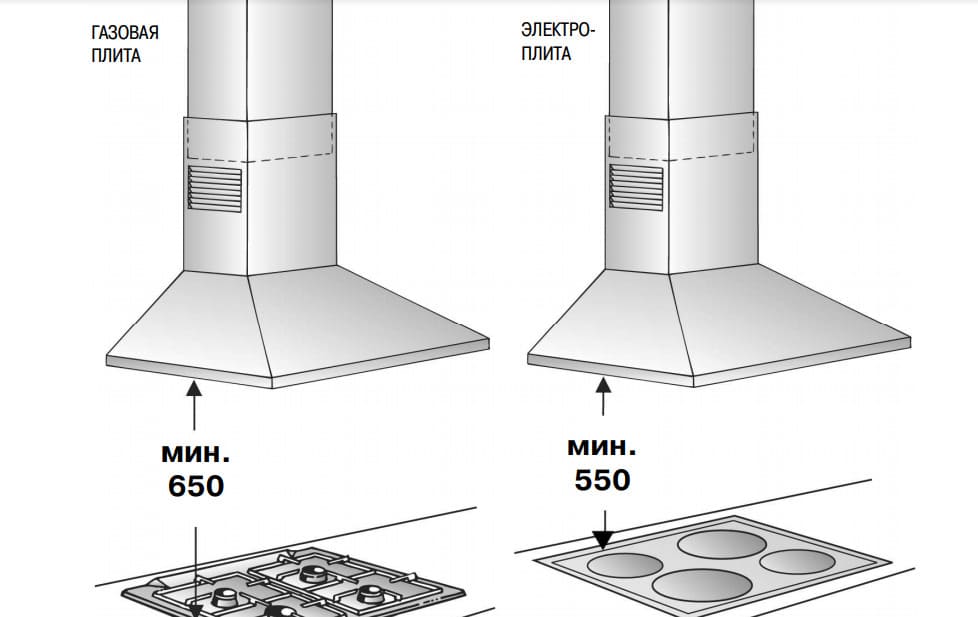
For happy owners of inclined models of exhaust hoods installed above the gas hob, the minimum distance, if necessary, can be reduced to 55-65 cm.
Owners of inclined exhaust hoods that are located above electrical equipment can place the lower edge of the product at a distance of at least 35-45 cm.
We have presented the norms that you need to know for the correct placement of the hood in the kitchen. Now you know at what height you should hang the hood.
We hope that our tips will be useful, you can easily cope with the task. And your hood will delight you with clean air in the kitchen.
Criteria and rules for choosing a hood
When choosing a hood, be sure to pay attention not only to the appearance of the device, but also to such significant characteristics as its size, power, and noise level. The type of control is also important, additional "bonuses" from the manufacturer - added useful functions

The size
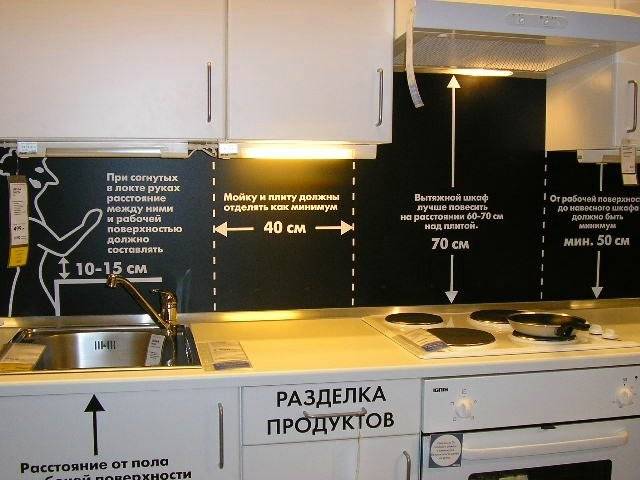
The size of the hood must correspond to the dimensions of the hob and in no case should the device be smaller. The suction plane must cover the entire surface of the hob. Only in this case it is possible to ensure the effective operation of the device. If you hang a 50 cm hood over a stove with a width of 60 cm or more, you should not expect a good result. The device will not cope with the removal of odors and grease, and the money will be wasted.

Power
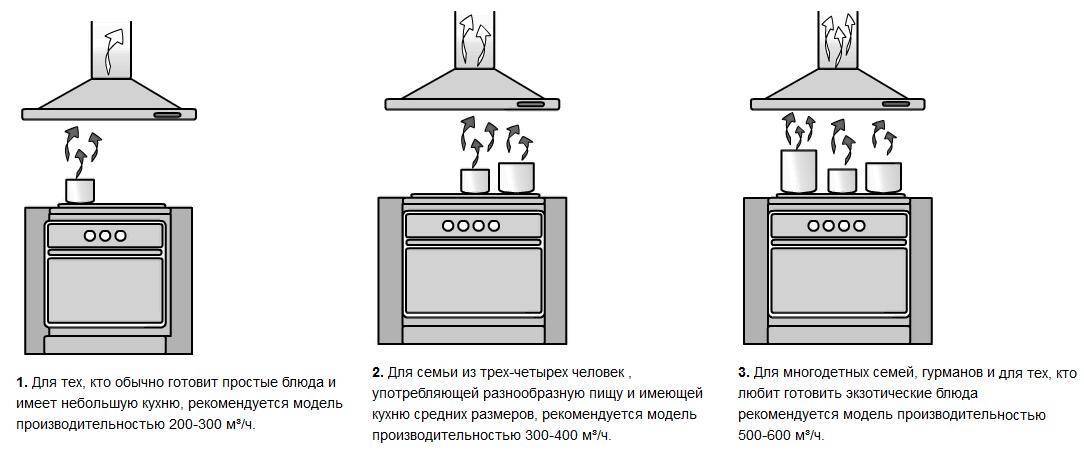
The performance of the hood, its power depends on the power of the fans built into it. More often systems are equipped with one or two devices for air removal. The fans can run at different speeds. Typically, hoods are equipped with two or four modes. Productivity is determined by the amount of purified air per hour. In different models, this figure varies between 200 -700 m3 / h. There are expensive hoods, the power of which reaches 1300 m3 / h.According to GOST 26813-99, the performance of the ventilation unit above the hob should not be less than 200 m3/h.
High power makes it possible to quickly and effectively remove grease and unpleasant odors. In emergency cases - food burned, milk ran away - this ability will be very useful. But forcing the hood to constantly work in this mode is useless. At maximum speed, the device makes a loud noise, which only interferes. Therefore, fans with an average power are quite enough for ordinary cooking or heating food.
You should also focus on the dimensions of the room. The amount of air that needs to be updated from 10 to 12 times per hour depends on them. To calculate this indicator, you need to calculate the volume of the kitchen, subtract the volume of furniture present from it and multiply by 10. The resulting value will correspond to the optimal power level of the hood.

Control type
Manufacturers provide a choice of equipment with three options for control panels.
Exist:
- touch panels - the device is incredibly comfortable to use. It is enough to easily touch the intended area with your finger, and the device will begin to perform the task. The fact that the work has begun is signaled by the LED;
- panels with slider-type controls - in order to turn on the hood and adjust the power level, you need to move the slider;
- panels equipped with buttons - each button is responsible for a particular task.

Additional functions
The functionality of the hood can be expanded. Additional features make it easier to manage the equipment, make it more comfortable for the user.Of course, the expansion of the "arsenal" of possibilities cannot but affect the final price of the device.
There are several types of additional functions:
- Responsible for the convenient use of the device - a remote control, multi-stage power controls, a touch panel, a display showing the operating mode. All these features make the operation of the hood simple and enjoyable.
- Additional "bonuses" not involved in the removal of air - a built-in TV, an integrated recipe book, a computer, Internet access. The built-in timer will allow you not to think about the need to turn off the hood yourself after a certain time. Faber Imago even provides the ability to keep an eye on children who are in another room using video telephony.
- Details for automating the operation of the device - the presence of sensors that detect the presence of smoke and odors, the programming function - to set a delay of shutdown or automatic shutdown after intensive removal of fumes and odors.
- Worktop and hob lighting with built-in halogen or LED lamps. Access to the backlight control makes it possible to use it as a decorative component of the interior.
- The mode of continuous operation according to a given program - allows you to constantly maintain a comfortable microclimate in the room.

What to consider when installing?
If you have a compact cooking room, then by purchasing a volumetric ventilation structure, you risk creating inconvenience for yourself and your family.In this case, it would be advisable to take a built-in hood and install it in a cabinet on the wall, if it is above the hob or in another element of the kitchen interior. The main thing is that it is above the countertop of the stove. The air intake should be sized to match the size of the slab over which it will be installed. If the dimensions are smaller, then the air intake will not occur completely, therefore, the air will not be cleaned. But if the air intake device is slightly larger than the stove, then there is nothing to worry about, it's even better.
The angle of inclination of the ventilation will also affect the height above the stove. If it is equal to zero, then no changes in height should be made. But if an angle appears, then the distance from the lower edge of the exhaust device to the surface of the plate should be about sixty centimeters. The exhaust unit works above the stove, where the temperature reaches high values. Due to the large dimensions and improper installation, greasy spots can accumulate on the hood, then it will become dirty by itself. You should be aware that dirt and stains are highly flammable and, therefore, if the hood is not properly installed and dirty, a fire may occur.
Ventilation, like any electrical appliance, needs power. When installing, you need to consider whether the socket overlaps or not, as well as the distance to it. At the factory, during the production of exhaust devices, they are equipped with a short electric cord. The most rational option is that the socket should be ten to thirty centimeters higher than the unit and offset by twenty centimeters relative to the device's symmetry axis
This is important due to the fact that the air exhaust pipe will go directly along the axis of symmetry.
The air duct of the device has its own design; for the most efficient air intake, it must have a minimum number of right angles, and also must not be pinched anywhere, have distortions. It is necessary to clean the air duct, as it tends to become clogged. With blockage, the area of \u200b\u200bthe flow section decreases, so the air does not enter in full. This reduces the efficiency and performance of the device.
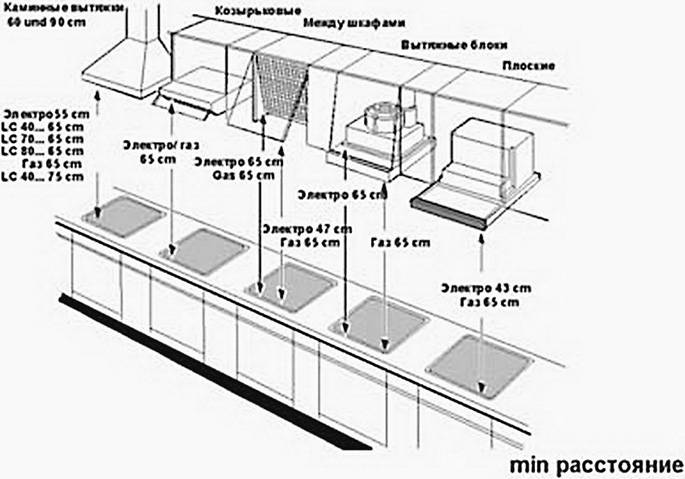
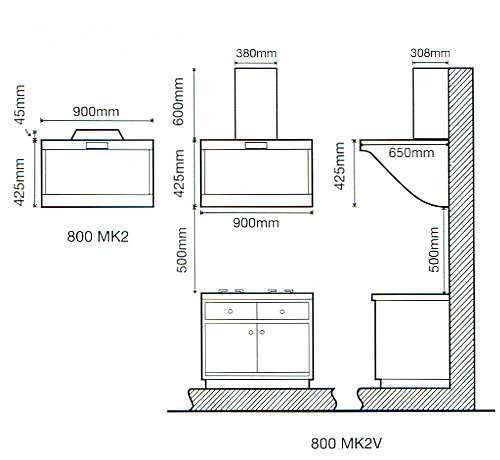
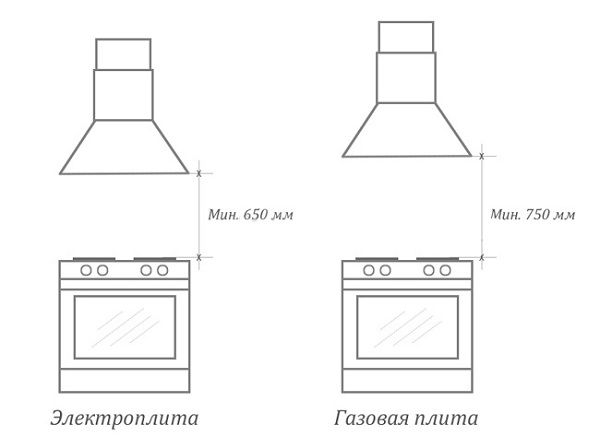
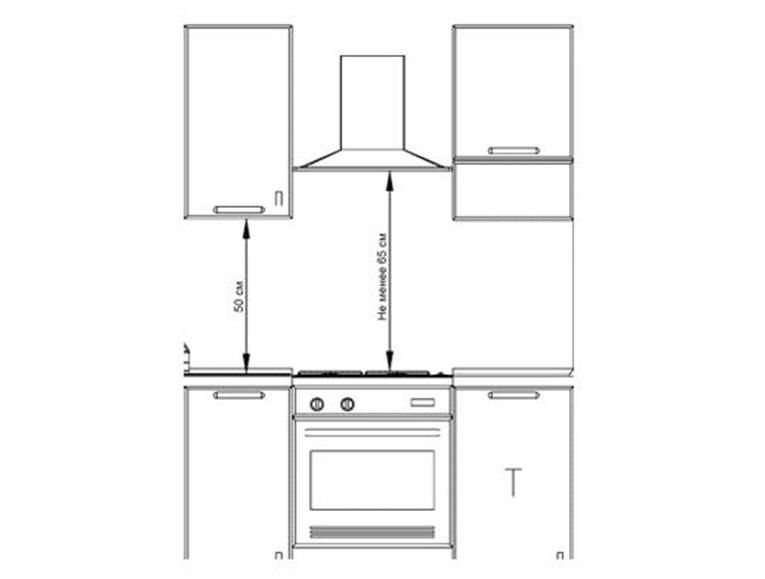
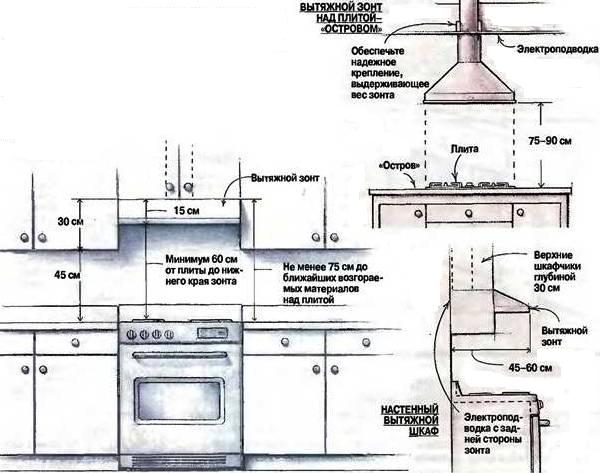
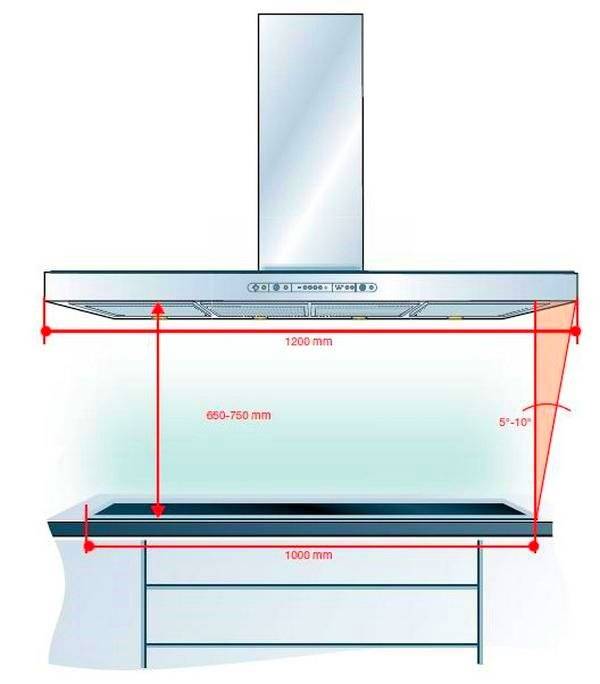

Installing ventilation is a responsible task; how the entire system will work, its efficiency and productivity depends on the correct installation. What should be considered during installation? The first step is to decide what type of ventilation will be: circulation, flow or mixed. After that, you need to determine the type of ventilation: direct (normal), inclined or built-in. Each of them has its own installation method and tricks, and each of them has its pros and cons.
Straight hoods
Conventional hoods are often trapezoid or rectangular in shape. Installed over a gas or electric stove. As a rule, the unit is mounted on the wall, as it is large, so installing it in a cabinet is not an easy task.
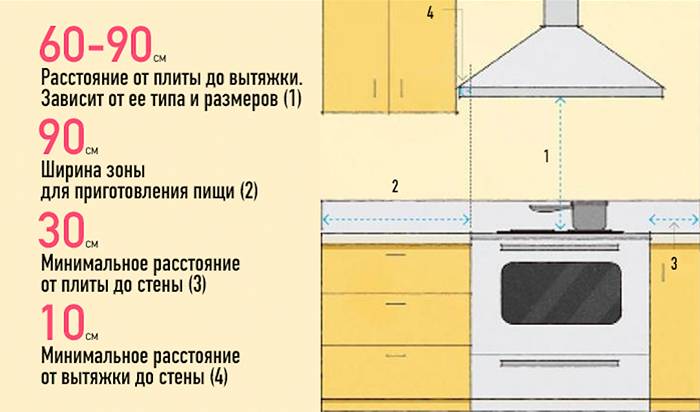
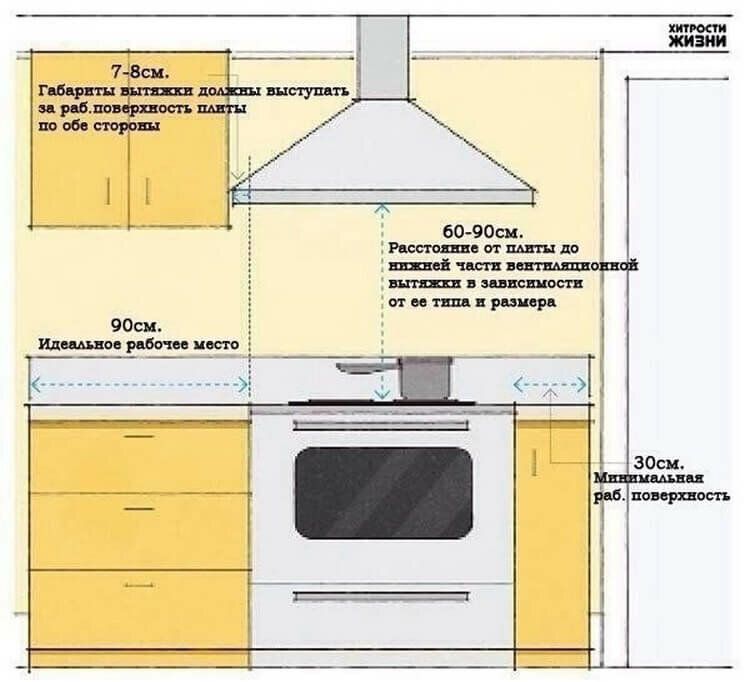
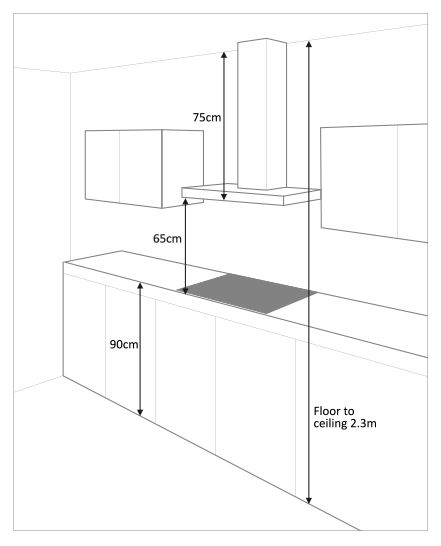
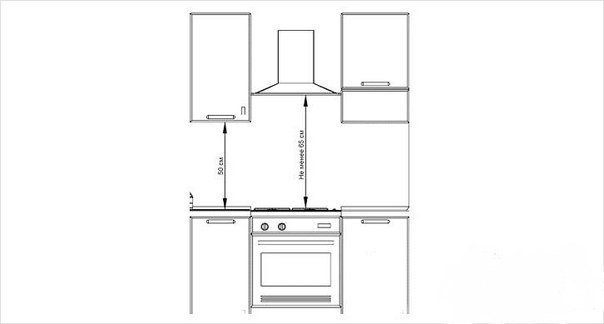
Pay attention to the availability of the outlet. The lower edge of the ventilation must be at least sixty-five centimeters above the stove and below ninety centimeters so that the efficiency of the exhaust device is not lost.
The ventilation hole also deserves attention; not in all houses, designers install holes in a way that is convenient for residents.There is a way out of the situation, this is the use of a flexible corrugated pipe or a rigid plastic pipe for air ducts. To reduce the noise level, it is recommended to stretch the corrugation. The hood must be firmly attached to the wall, you should first prepare the wall by drilling holes in it with a puncher and inserting dowels. After a strong fixation of the unit, the further installation of the duct takes place.
Inclined hoods
The main thing in installing inclined ventilation is to check whether it interferes with the opening of wall cabinets. For small rooms, a fifty-centimeter hood will suffice. If the room is often subject to pollution or is large in area, it is recommended to install air intakes larger than eighty centimeters. If the hood model has an air extraction function, then you need to additionally install a ventilation pipe and seal the seams that appear.
Mounting Features
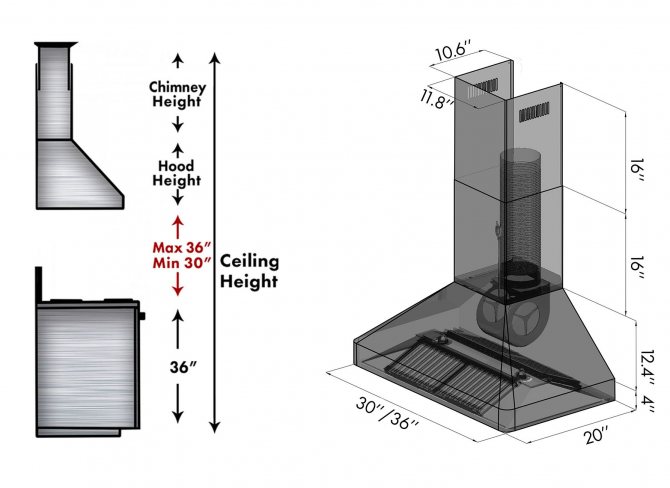
It is necessary to measure the distance between the hood and the hob from the lowest edge of the hood to the burners. It should be fixed strictly according to the level, since there will no longer be an opportunity to adjust the position in the future.
If you are moving into a new apartment or doing a major overhaul, then you need to draw up a plan taking into account the installation of all electrical appliances in the house, including hoods. If we are talking just about replacing some equipment in the kitchen, then you will have to adapt to the circumstances.
Expert opinion
The judgment that the hood should provide 12-fold air exchange in the kitchen can be considered very controversial.I want to remind you that this unit is an element of local ventilation and is in no way intended to serve the entire kitchen room - for this purpose, housing is equipped with a general house ventilation system. Such a delusion often leads to the acquisition of a noisier and more expensive system of increased power, while the removal of smoke and steam from the stove can be handled by a much less productive unit.
Another equally common mistake is to embed the exhaust duct into the ventilation shaft. Firstly, the section and hydraulic resistance of the common house channels of supply and exhaust ventilation will allow removing no more than 250-300 m3 / h, so the lion's share of productivity may remain unclaimed. Secondly, excessive pressure in the riser will create inconvenience in the apartments located above.
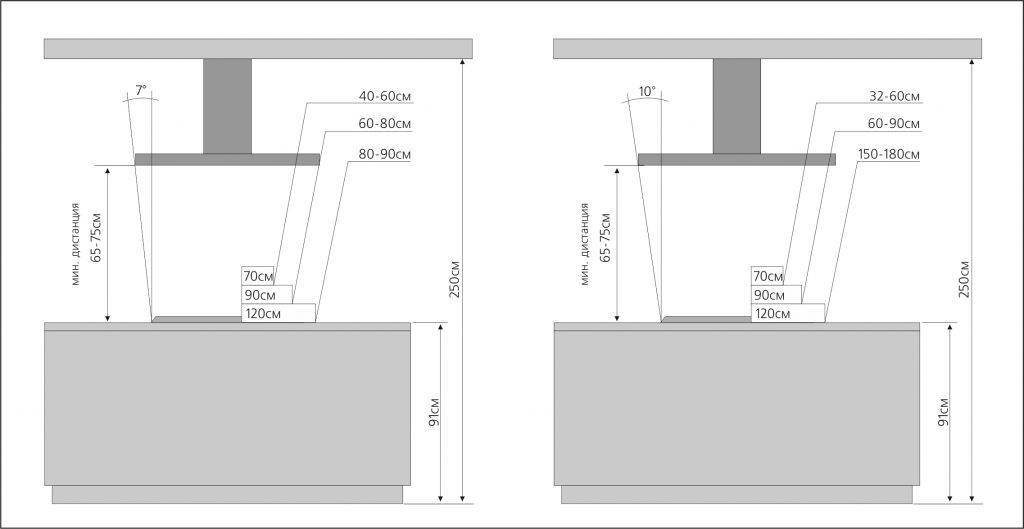
The third fact, which causes a lot of controversy, is the influence of the power of the hood on the height of the installation. It would seem that the lower the performance of the unit, the lower it must be installed (of course, strictly following the recommendations on the lower limit of placement). Of course, these judgments are not devoid of rational grain, however, the effectiveness of a household appliance to a large extent depends on the correct selection of its dimensions, as well as compliance with actual operating conditions. Practice shows that the installation height should be such that the vertical deviation of the external dimensions of the stove and hood is within 5-10 degrees. For the minimum permitted installation height, this corresponds to 10-15 cm horizontally.
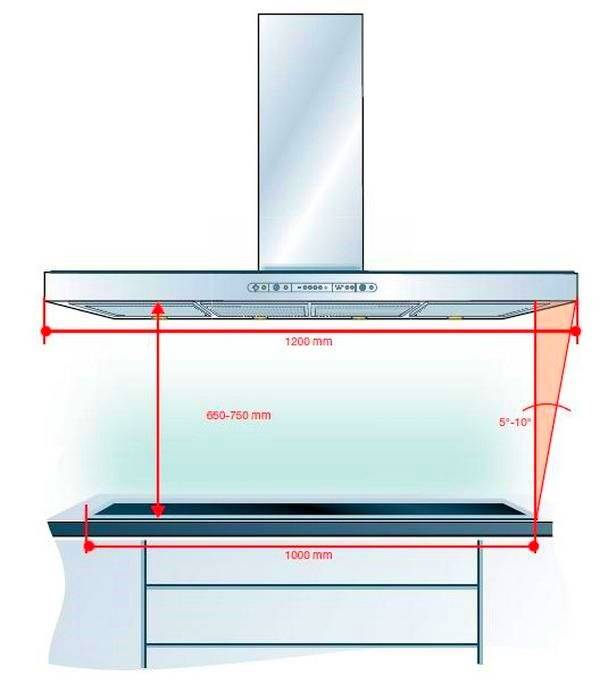 When choosing a hood, it is necessary to take into account both the height at which it will be installed and the dimensions of the stove
Standards
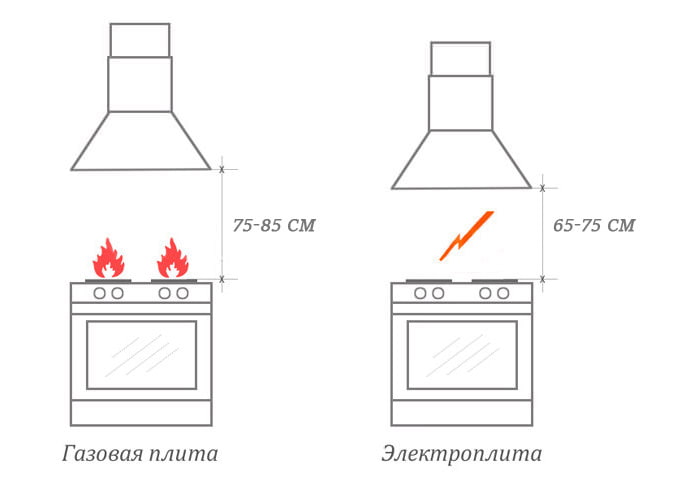
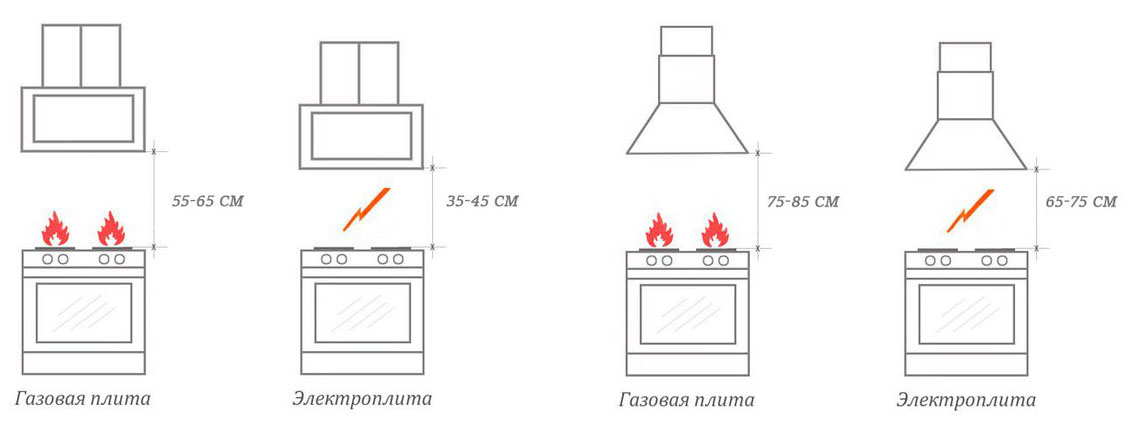
There are some rules and recommendations related to the safety and efficiency of the hood. On the one hand, it should absorb odors as much as possible, and on the other hand, the distance between it and the stove should not interfere with the work of the housewife and create a fire hazard. We suggest you look at the table for installation standards for hoods.
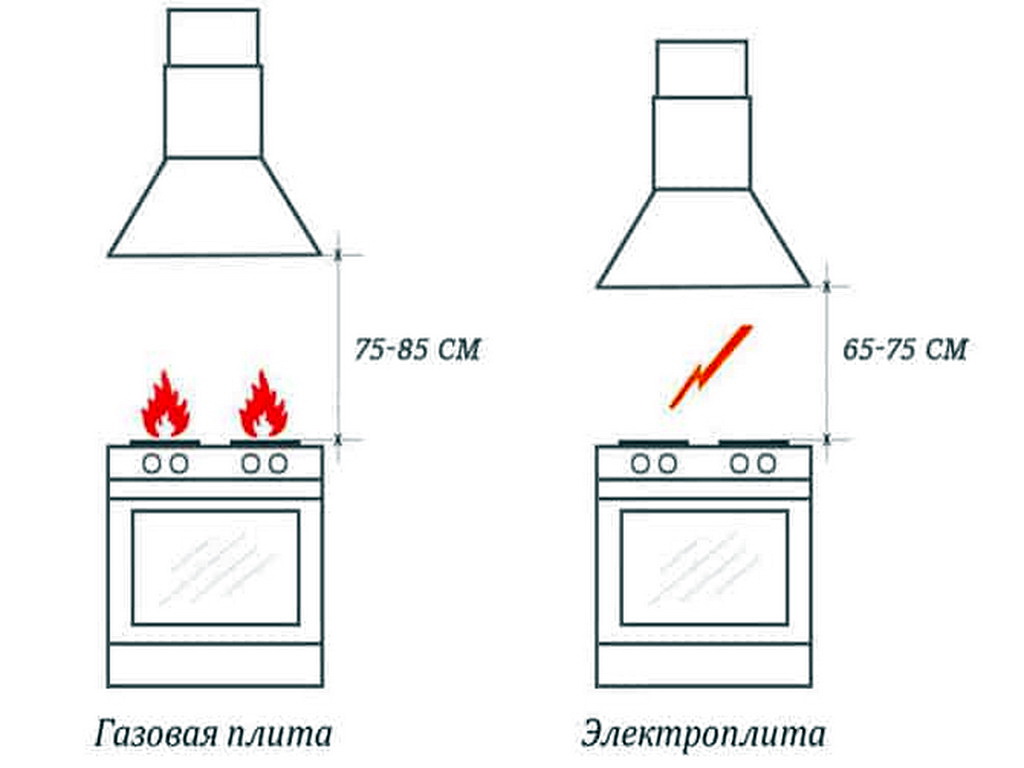
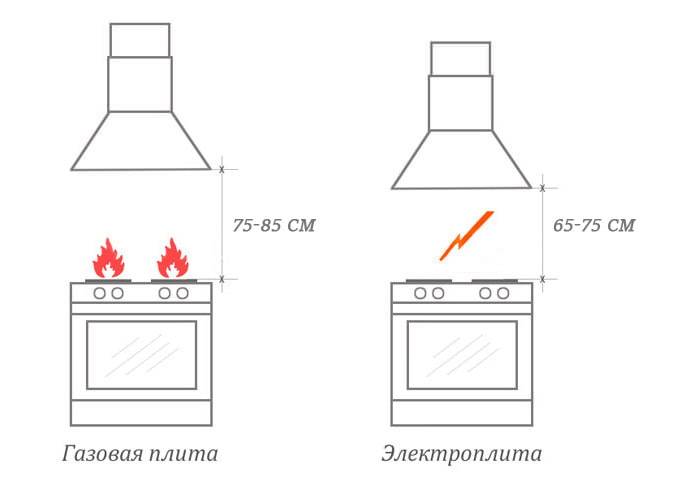
| stove type | Approximate height, cm |
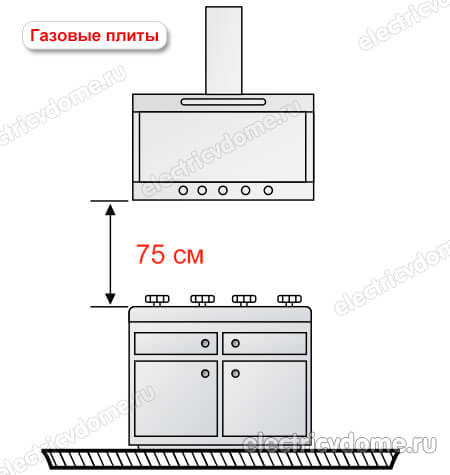
| Gas (direct exhaust) | 75-85 |
| Gas (inclined) | 55-65 (lower part) |
| Electric (direct) | 65-75 |
| Electric (inclined) | 35-45 (lower part) |
The height range is not accidental. Choosing the exact level, you will start from three factors:
- extract power;
- design, room configuration;
- the height of a person who most often stands at the stove.
At your own discretion, you can slightly increase the height of the installation, but you cannot reduce it.
Firstly, this will make it difficult to work at the stove, the cook will constantly hit his head, it will be inconvenient for him to look into the pans. Secondly, the hood can get very hot, and in some cases there is a possibility of ignition of the soot deposited on the filter.
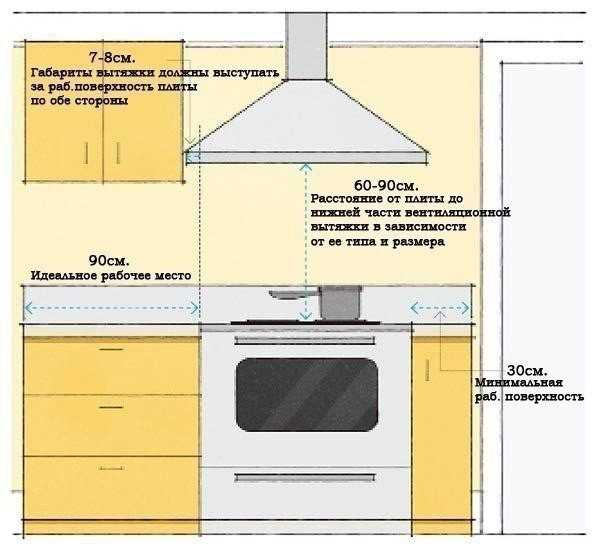
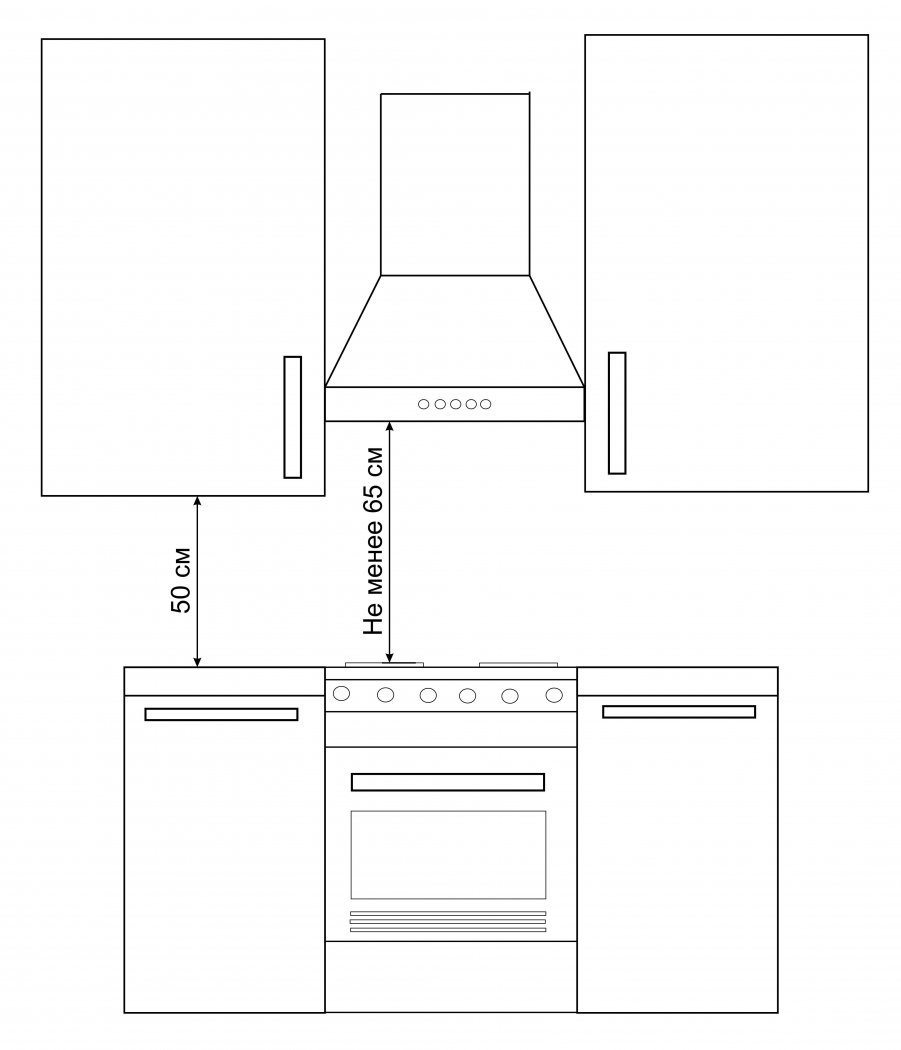
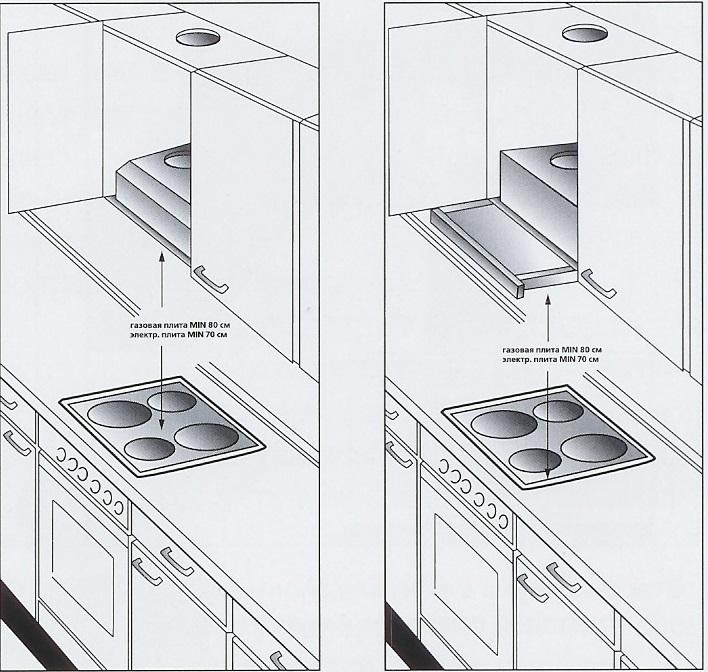
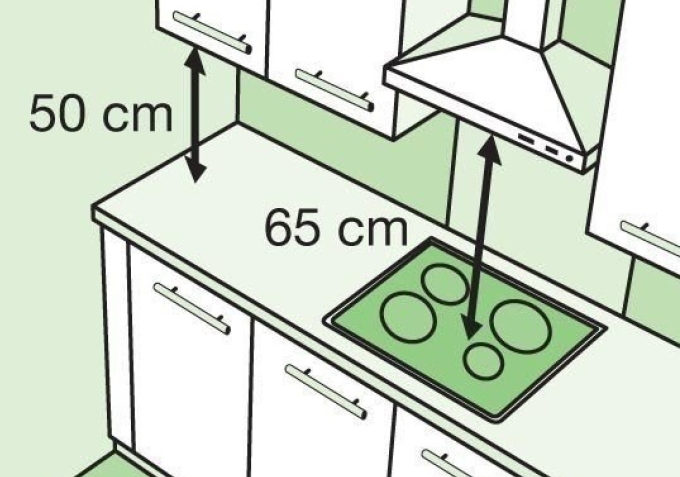
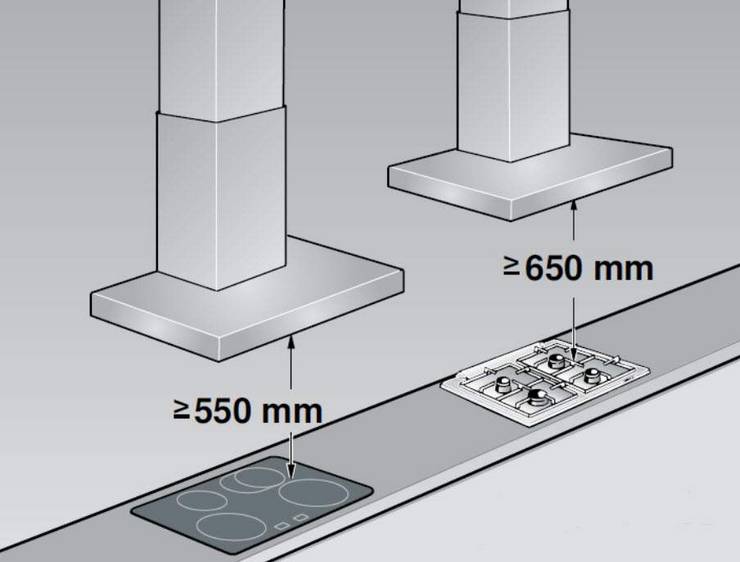
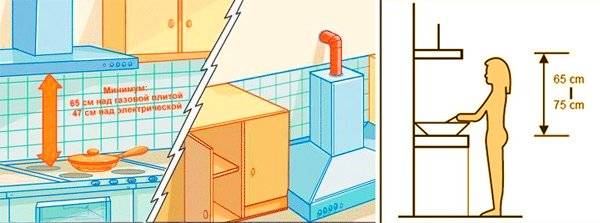
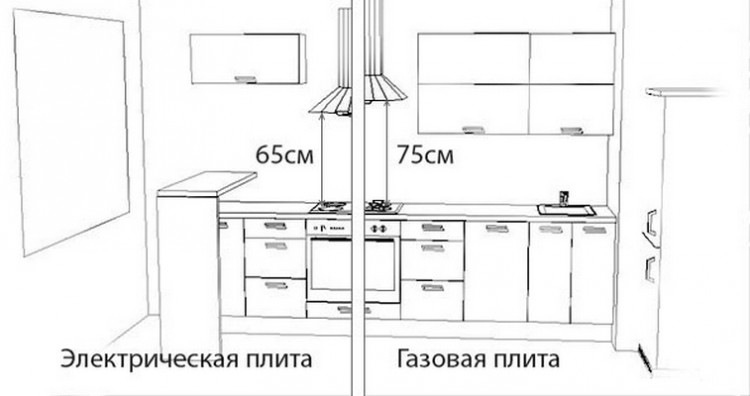
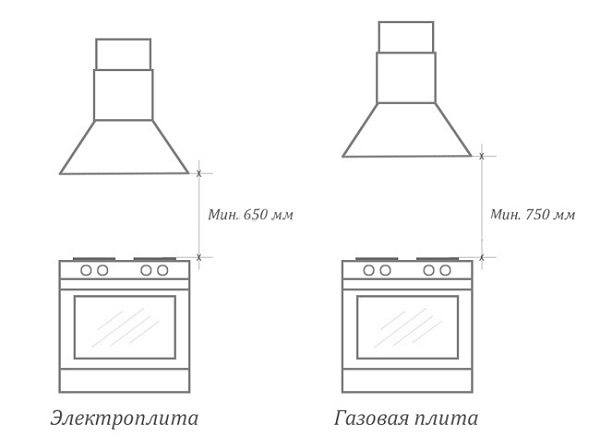
The instructions usually indicate what the distance from the stove to the hood should be, which greatly simplifies the choice. In addition, if a specialist deals with this issue, he will advise you on how best to install the entire system, including the location of the outlet and air duct.
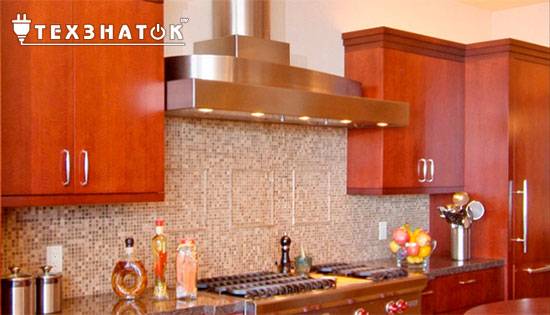
When choosing a hood, it must be taken into account that manufacturers in most cases indicate in the technical data sheet the ideal parameters at which free air flow passes through the blades.In fact, the efficiency of work will be less due to the resistance of the filters (for recirculation units) or the insufficient cross section of the ventilation ducts (in the case of installing exhaust-type systems). In the first case, it will be enough to calculate the performance according to the classical formula P=Qx12, where Q is the volume of the kitchen in cubic meters, and the number 12 corresponds to the recommended air exchange in one hour and increase the resulting value by 30-40%.
If the household appliance will operate in exhaust mode, then it will not be entirely correct to consider its performance in terms of the volume of the room. The fact is that no matter how big the kitchen is, the hood will let only a certain amount of air through itself - it all depends on the pressure created, as well as the section and configuration of the ventilation duct. According to the existing SNiP, exhaust lines have a cross section of no more than 150x150 mm, which means that if you need to remove 500 cubic meters of air, then the exhaust unit must create a pressure of at least 8 Pa. If we take into account the complex configuration of ventilation shafts, as well as obstacles in the form of brick fragments that fell during construction, protruding growths of mortar and thresholds at the junction of reinforced concrete blocks, then the throughput of the channels will decrease by more than 10-20%.
You can calculate the parameters of the hood using special formulas (the technique can be easily found on the Internet), or you can use the graph of the dependence of performance on the pressure of the unit and the cross section of the exhaust duct. One such chart is shown below.
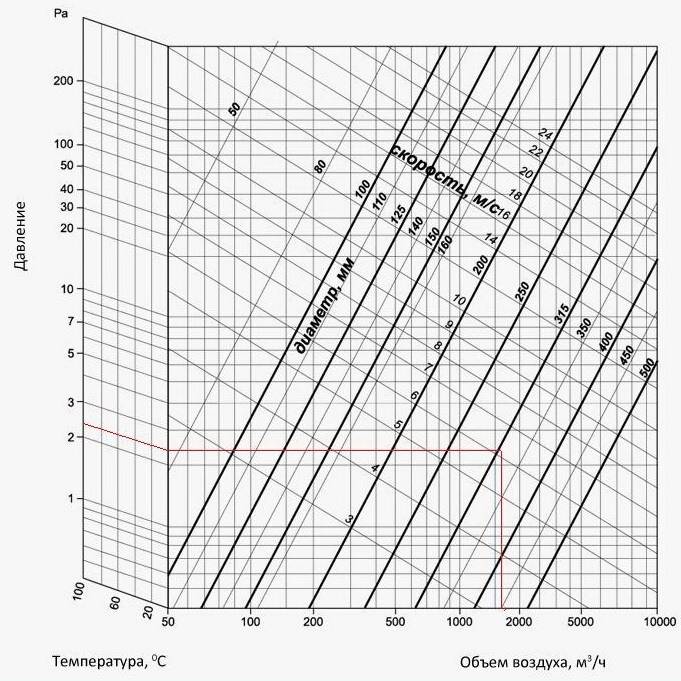 When choosing a hood for performance, you should rely on the indicators of maximum pressure and the cross section of the ventilation duct
Power calculation
Even if the distance from the gas stove to the hood is determined by the standard and rules, the device may not be able to cope with the tasks. The main reason for this is insufficient power.
When choosing a model, it is important to consider the size of the kitchen, frequency of use and load.
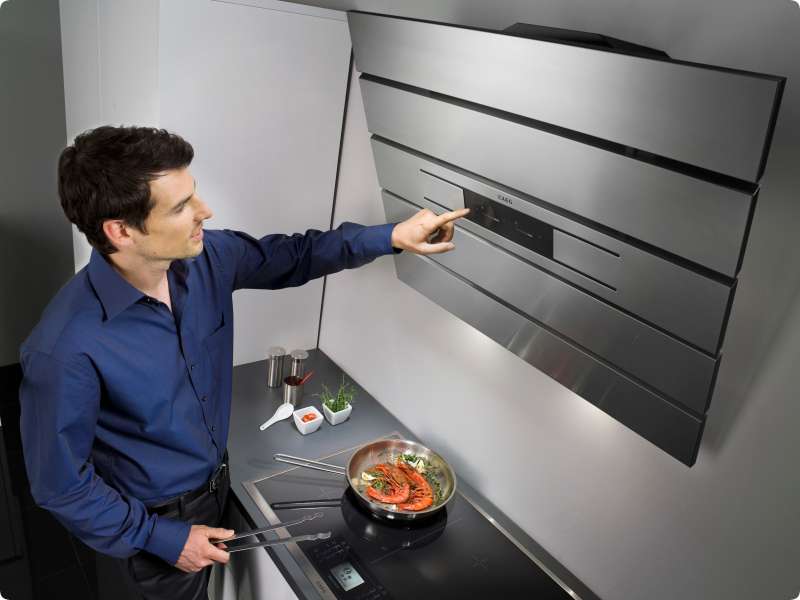
The power of the device is determined by the criteria:
- 200-300 cu. m. per hour - a simple solution for a small kitchen space in the apartment. Suitable for single occupants and families of 2-3 people. Copes with the removal of air when using up to 2 burners at the same time.
- 300-400 cu. m. per hour - the best option for an average apartment kitchen. The performance is enough for a family of 3-4 people. Withstands the load from 3-4 working burners.
- 400-600 cu. m. per hour is a sufficient solution for large families where food is prepared frequently and in large quantities. Due to space savings, large kitchens in apartments are rare. Therefore, powerful hoods are installed in a private house, where the kitchen space can be increased during the construction phase.
To correctly calculate the power of the device, it is recommended to use the hood selection table.
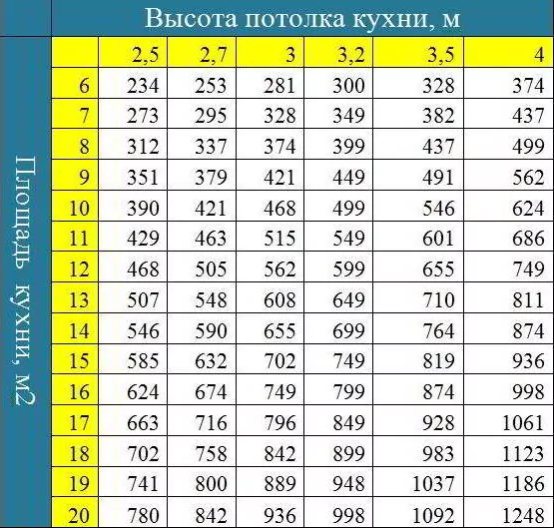
Optimum heights for different units
Height installation of a hood over tiles are determined taking into account 2 components - the type of hob and the design features of the location of the equipment for a particular kitchen. It must be understood that the height is never “tied” to the dimensions of the air intake, the components or the type of device.
Distance between hob and hood
The only exception to the rule is kitchens with low ceilings, where it is not possible to maintain the recommended distance between the hob and the hood.
Choosing a built-in hood for the kitchen: rating of the best latest models
How to install a hood over a gas stove
1.1
Horizontal Solutions
It is possible to determine exactly at what height the hood should be installed only if there is data on the type of stove used. Based on this, the distance between the inflow and exhaust is selected. The specified type of equipment is installed taking into account a number of parameters (type of hob, performance of the intake unit, etc.).
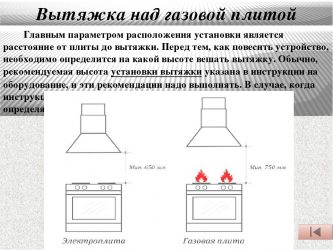
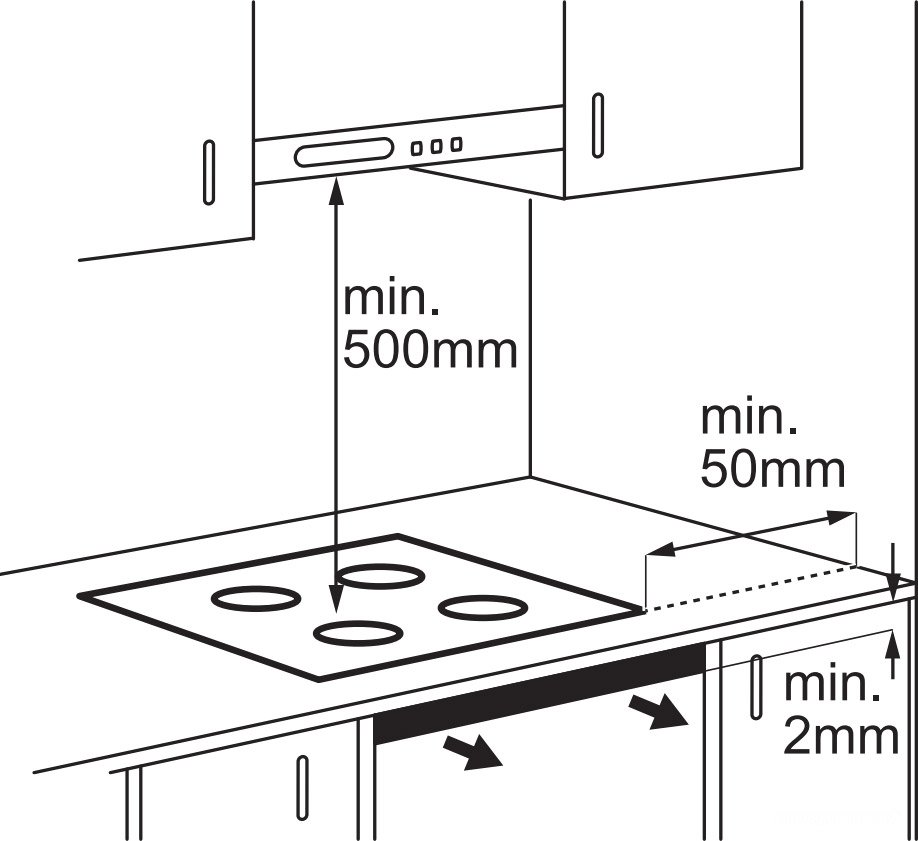

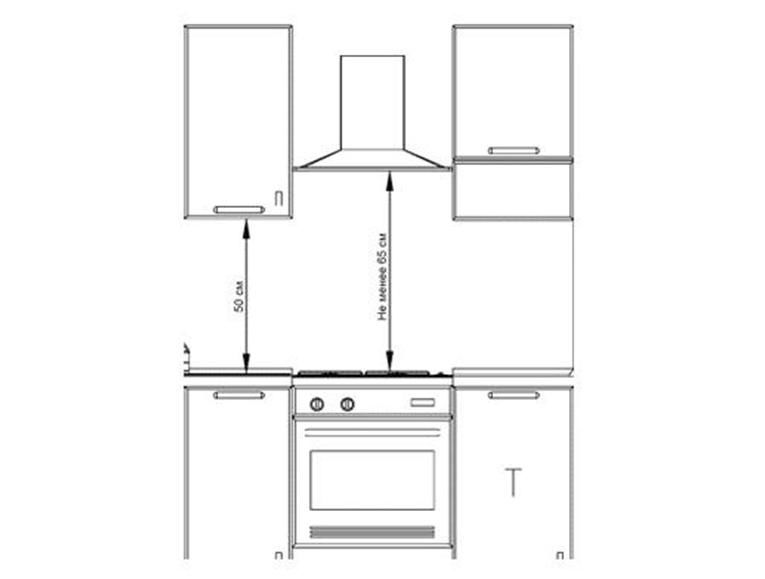
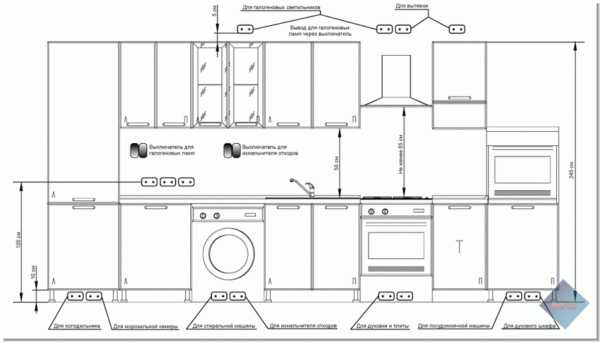
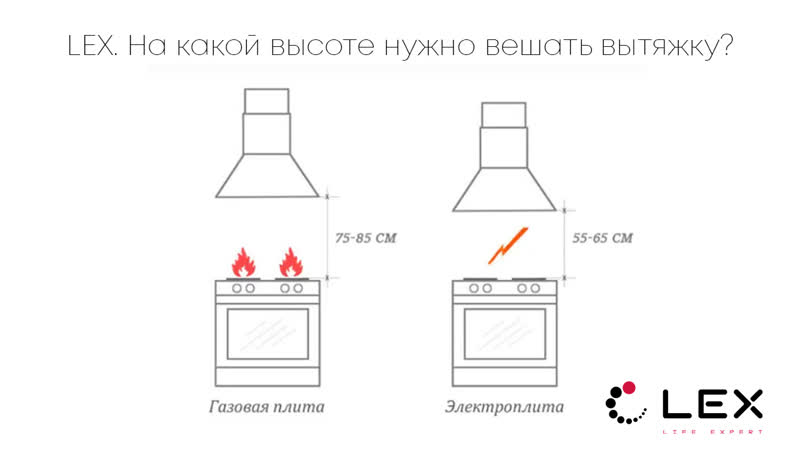
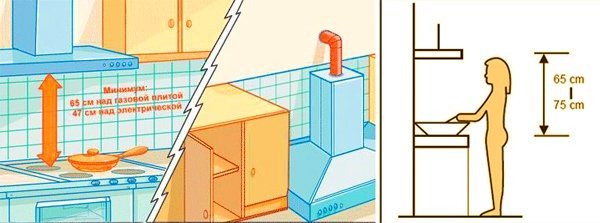
The ratio between the height of a person and the installation height of the device
But what distance is considered optimal in terms of safety and efficiency?
The norm for each device is different, but there are accepted standards that are predominantly advisory in nature:
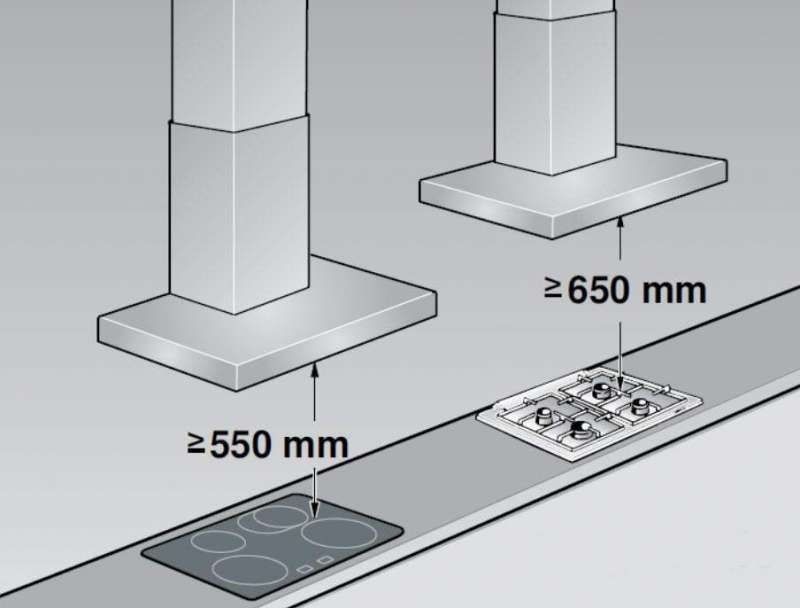
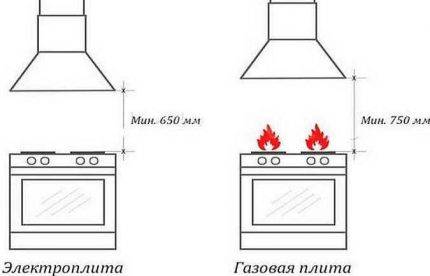
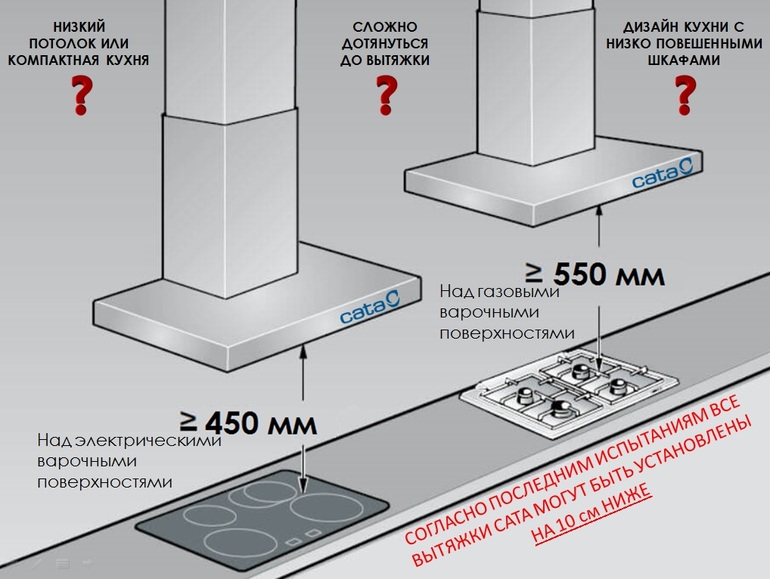
- the distance between the hood and the gas stove burners is from 65 to 85 cm;
- the minimum distance from the electric hob is 60 cm, and the maximum is 80 cm.
Minimum distance from the hood to the gas burners
These data are valid only for devices that are fixed strictly horizontally.
Horizontal unit installation video
How to choose the right hood for the kitchen
1.2
Inclined aggregates
When mounting models of an inclined type, it is extremely important that the distance between the stove and the hood correspond to the following values:
- from 35 to 45 cm when working with an electric stove;
- from 55 to 65 cm - for gas burners.
In a real kitchen, it is customary to install ventilation units where operation will be not only efficient, but also convenient for the hostess. The distances indicated above are experimentally established values, confirmed by years of practice. You can calculate them yourself, but you just have to take into account a number of variables:
- kitchen area;
- planning features of the premises;
- approximate area of the cooking surface;
- performance and type of hood;
- growth of family members, housewives.
If the set distance is not respected and the unit is hung too low, there is a high probability that the device will operate in a constant heat environment. And this is fraught with premature failure of a faithful assistant. In addition, if the hood is installed too low above the electric stove, it will be simply inconvenient to use.
Kitchen air conditioner
Installation video of the inclined type
Choosing a built-in hood for the kitchen: rating of the best latest models
Factors affecting the distance between the stove and the hood
Separately, one should once again dwell on the factors that affect the distance of the installation of the exhaust device from the stove. The height depends on what will be:
- kitchen size;
- features of its layout;
- hob (type and dimensions);
- power and type of exhaust device;
- the growth of the one who will cook more than others on this stove.
At the same time, it is also important to comply with all the installation standards for the ventilation structure specified in the technical passport for it.The implementation of all these recommendations will make it possible to use the device designed for air ventilation in the kitchen, extremely efficiently, and save it from unnecessary odors and fat deposits spoiling the interior.
The implementation of all these recommendations will make it possible to use the device designed to ventilate the air in the kitchen as efficiently as possible, and save it from unnecessary odors and fat deposits spoiling the interior.
Operating tips
In order for the device to work flawlessly for many years, you must follow the instructions from the manufacturer and follow the general recommendations:
- After each cycle of work, the hood is wiped, grease and dust are removed from the surface.
- After the end of cooking, the work does not stop. Moisture particles quickly spread throughout the kitchen, and the device does not have time to remove them into the ventilation. Therefore, the apparatus is left in working condition for several minutes.
- Grids are cleaned monthly. If the contamination is large, then the interval between cleanings is reduced.
- Charcoal filters of recirculating models are changed every six months. If an unpleasant odor appears, the frequency of replacements is increased.
Embedded
Installation of the hood in the kitchen begins with choosing the right location for its location relative to the ventilation shaft. If you want to install a built-in hood, then for this you will have to redo it a little (shorten the cabinet). It is better to contact the furniture makers on this issue so that they carefully (on a format-cut machine) cut the side walls and drill two large holes for the corrugation with a “crown”. Or you can order from them a ready-made cabinet, made to the size of the unit, which will take into account the installation height of the hood.They will also fix the device inside the cabinet, closing it with a facade. At home, you can’t make a cupboard under the hood in the kitchen with your own hands. When the cabinet is ready, you only need to hang it on the wall.