
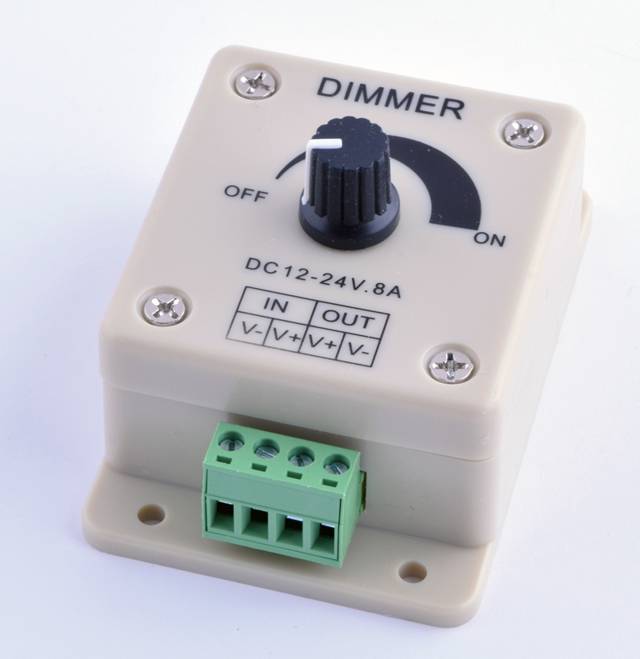
- Connecting a dimmer
- Classification of dimmers
- Additional functions
- Tips for choosing and using
- Dimmer connection diagram
- Dimmer with switch
- The best rotary dimmers
- TDM Electric SQ 18404-0016,2.7A
- IEK QUART EDK10-K01-03-DM
- Schneider Electric Blanca BLNSS040011
- Schneider Electric Senda SND2200521
- Classification of dimmers
- Lamp compatibility with dimmers
- Dimmer operation
- Types of lamps used
- What are the benefits of a regulator?
- purpose
- Which switch is better to buy
- Dimmer with switch
Connecting a dimmer
The installation is carried out, as well as the installation of the switch, by breaking the load phase wire. However, in order to install the device with high quality and check its normal operation, it is recommended to involve a professional electrical engineer for this.
Dimmer - what is it, the principle of operation of the dimmer, advantages and disadvantages, scope, device connection diagram
How to do DIY dimmer
Connecting a dimmer: wiring diagrams and installation instructions

Dimmer for LED lamps
Switch installation: installation diagram, how to connect wires
Classification of dimmers
There are two types of dimmers - monoblock and modular.Monoblock systems are made as a single unit and are designed to be installed in a box as a switch. Monoblock dimmers, due to their small size, are popular for installation in thin partitions. The main scope of monoblock systems is apartments in multi-storey buildings.
There are several types of monoblock devices on the market:
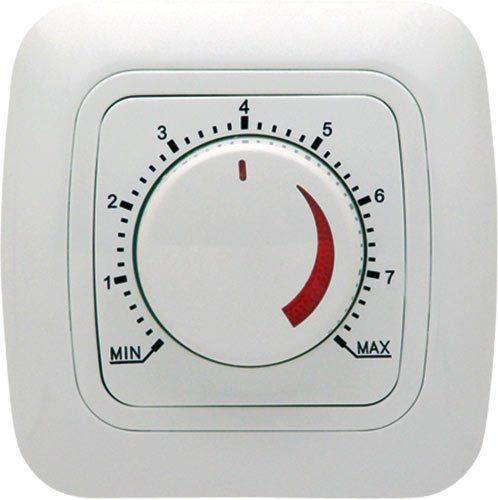
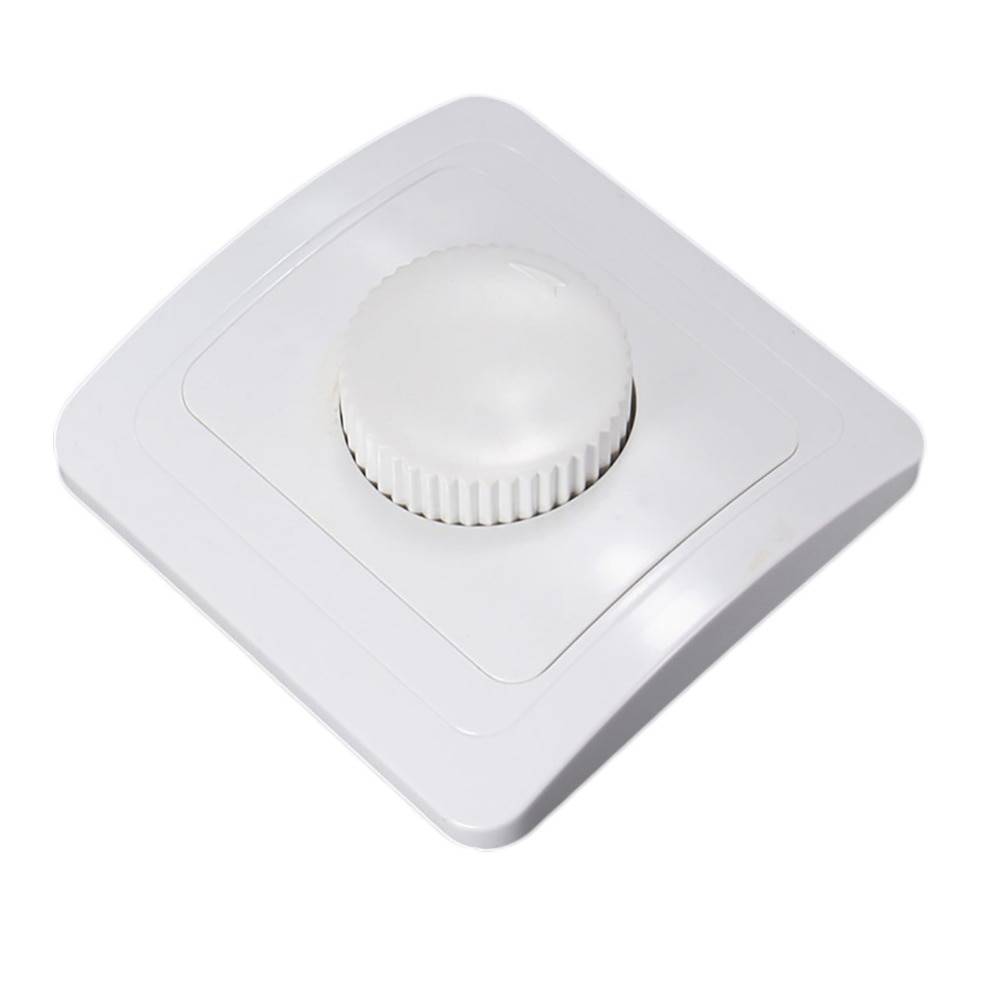
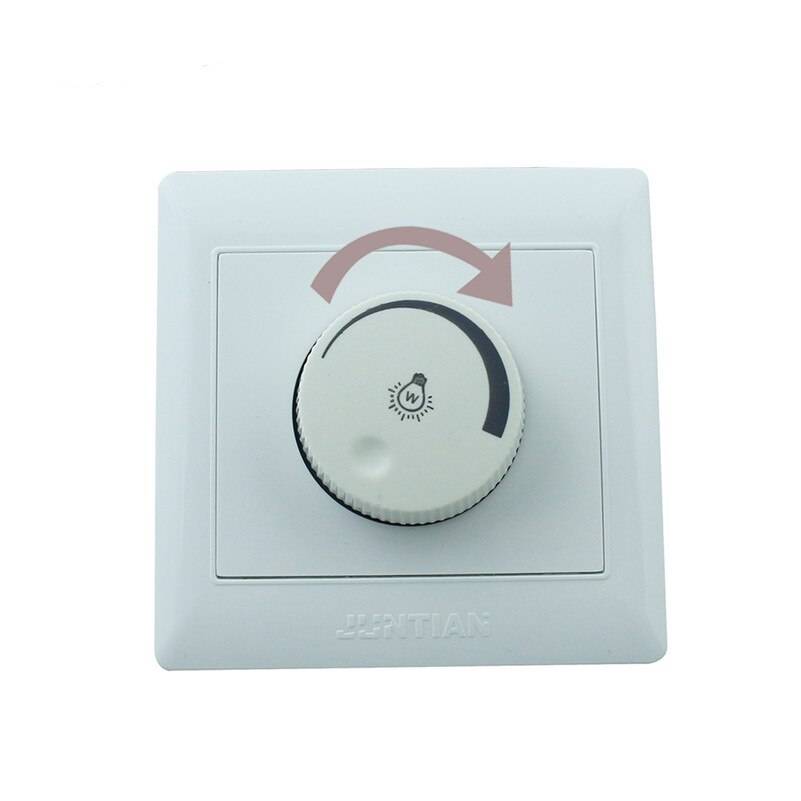
- With mechanical adjustment. The control is performed using a rotary dial. Such dimmers have a simple design and low cost. Instead of a rotary control method, a push version is sometimes used.
- With push button control. These are more technically complex and functional mechanisms. Multifunctionality is achieved by grouping controllers controlled from the remote control.
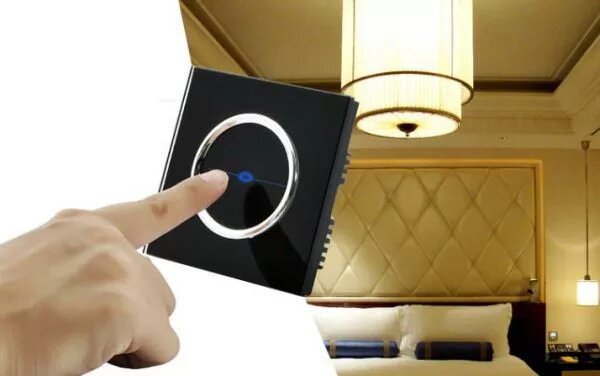
- sensory models. They are the most advanced devices and the most expensive. Such systems fit well into the surrounding interior, especially decorated in a modern style. Commands are transmitted using an infrared signal or radio frequencies.
Modular systems are similar to circuit breakers. They are placed in junction boxes on DIN rails. Modular devices are used to illuminate landings and corridors. Also, modular systems are popular in private homes where it is necessary to illuminate the surrounding areas. Modular dimmers are controlled by a remote button or a key switch.
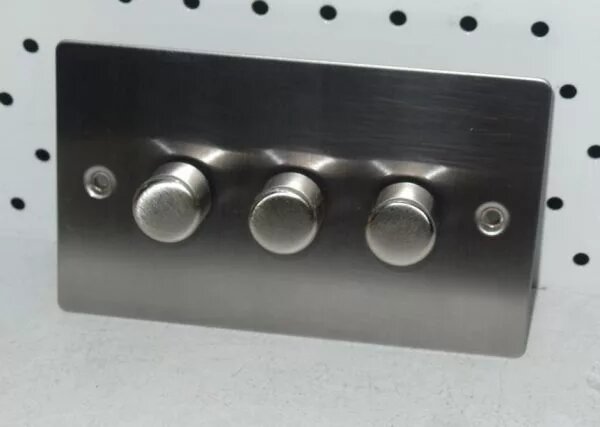
According to the design features, single, double and triple modifications are distinguished. In most cases, consumers choose single dimmers.
Additional functions
Modern models have advanced functionality:
- Timer work.
- The possibility of embedding a dimmer in a larger-scale system - "smart home".
- The dimmer, if necessary, allows you to create the effect of the presence of the owners in the house. The light will turn on and off in different rooms according to a certain algorithm.
- Artistic shimmer function. Similarly, the lights on the Christmas tree garland flash.
- Possibility of voice control of the system.
- As a standard, commands are given from the remote control.
Tips for choosing and using
Often a dimmer is purchased to significantly reduce electricity bills. It should be understood that big savings will not work, but it will still be possible to reduce costs by 15-17%.
When choosing a model, pay attention to design. Manufacturers offer various collections that differ not only in technical characteristics, but also in external design - color, shape, size of the decorative panel. Remember that the mechanisms of the regulators are sensitive to any excess temperature in the apartment, usually it is limited to +27 to -28 ° C
Remember that the mechanisms of the regulators are sensitive to any excess temperature in the apartment, usually it is limited to +27 to -28 ° C.
For the normal functioning of the device, a minimum load of 40 W is required, otherwise the working mechanism will quickly fail.
If you try to connect the dimmer to lighting devices not listed in the manual, it will not work. The power of the device must necessarily correspond to the total power of the lamps.
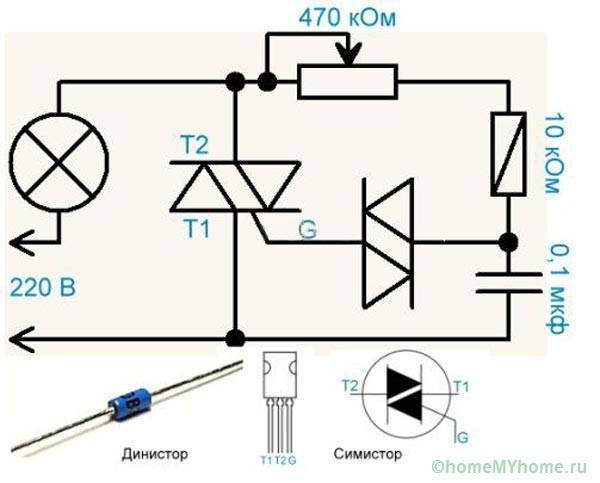





Dimmer connection diagram
Dimmers, also called dimmers, are connected in series to the power supply circuit supplied to the light bulb. These devices may be mechanical or electronic. In the second case, the device, in addition to the main function, performs a number of additional actions.It is able to turn off the lighting after a certain period of time, create the effect of presence, work on command, etc.
All types of switches with a dimmer are designed primarily to work with incandescent lamps. Other light sources, such as energy-saving lamps, fail very quickly when working with a dimmer, and the dimmer itself may break.
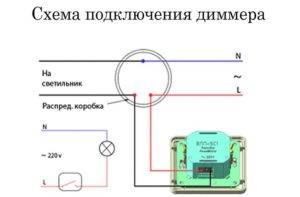
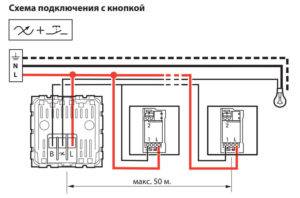
The control device is connected in the same way as a conventional switch. The only thing that must be strictly observed is the polarity of the connection. In this case, the supply wire is connected to the L terminal. The conductor intended for supply to the luminaire is connected to the remaining terminal.
Electronic dimmers can be connected in parallel with each other. Such a scheme, consisting of two devices, makes it possible to obtain, in fact, walk-through switches that have the function of adjusting the light. The scheme for installing and connecting a dimmer is similar to connecting sockets or switches, with the exception of the obligatory observance of polarity.
After connecting the dimmer, the wires located at the back are carefully bent, and the dimmer itself is placed in the socket. It remains only to install the frame and the adjusting handle.
Dimmer with switch
A slightly more complicated circuit is also popular, but, of course, very convenient, especially for use in bedrooms - a switch is installed at the phase break in front of the dimmer. The dimmer is mounted near the bed, and the light switch, as expected, at the entrance to the room. Now, while lying in bed, it is possible to adjust the lamps, and when leaving the room, the light can be completely turned off.When you return to the bedroom and press the switch at the entrance, the bulbs will light up with the same brightness with which they were burning at the moment of switching off.
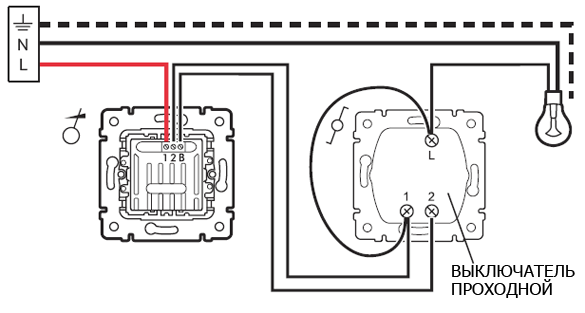
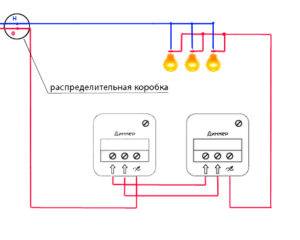
Similarly to pass-through switches, pass-through dimmers are also connected, which makes it possible to control lighting from two points. From each dimmer installation location, three wires should fit into the junction box. A phase from the mains is supplied to the input contact of the first dimmer. The output pin of the second dimmer is connected to the lighting load. And the two pairs of remaining wires are interconnected by jumpers.
The best rotary dimmers
TDM Electric SQ 18404-0016,2.7A
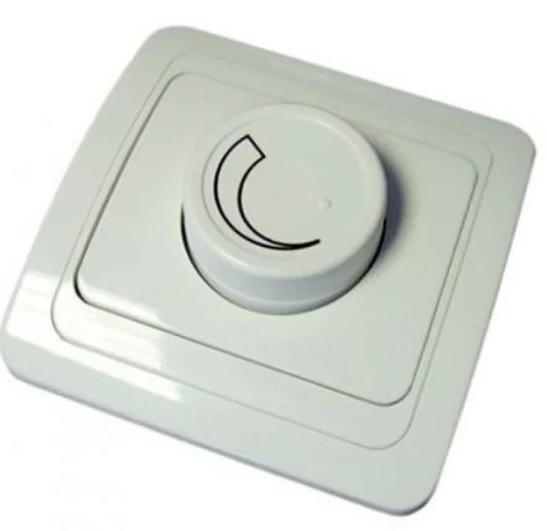
This device is a white rotary control. It is designed to control lighting. This model is made of ABS plastic, so it is highly durable, heat resistant, does not change its appearance from exposure to sunlight. "TDM Electric SQ 18404-0016,2.7A" has ceramic-metal contacts, which were obtained by sintering special mixtures and powders, this makes the product arc-resistant and having good conductivity. It should be noted that the base of this model is made of plastic. This ensures the light weight of the dimmer and its strength. There is a metal caliper, which has mounting feet and is made of galvanized steel. This gives protection against corrosion and additional strength to the product.
"TDM Electric SQ 18404-0016,2.7A" is installed as a flush-mounted installation. It has a degree of protection against moisture and dust IP20, which is optimal for domestic use. The weight of the product is 90 grams.
The average cost is 265 rubles.
TDM Electric SQ 18404-0016,2.7A
Advantages:
- Convenient adjustment;
- Easy installation;
- Price.
Flaws:
No.
IEK QUART EDK10-K01-03-DM
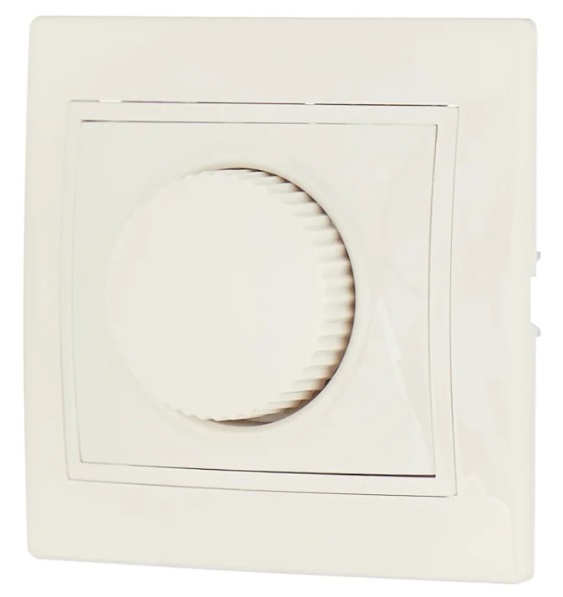
This device for adjusting the brightness of lighting has a convenient rotary knob, with which the optimal indicator is adjusted. This model from the QUARTA series has a classic design that will look good both at home and in the office.
"IEK QUARTA EDK10-K01-03-DM" is suitable for working with light sources, the total power of which does not exceed 400 W. When you turn on the device, the brightness of the lighting will be the same as it was before turning it off. The swivel mechanism of this product is made of metal, which does not lend itself to rusting. This will extend the life of the dimmer, which is rated for over 30,000 turns. The case is made of glossy white plastic. Installation of "IEK QUARTA EDK10-K01-03-DM" can be done with screws or spacers. The socket chassis of this model is made of steel, which in addition has an anti-corrosion coating. "IEK QUARTA EDK10-K01-03-DM" has a degree of protection IP20.
The average cost is 230 rubles.
IEK QUART EDK10-K01-03-DM
Advantages:
- Made of durable and flame retardant plastic;
- Complies with GOST;
- Convenient swivel mechanism.
Flaws:
Inconvenient connection.
Schneider Electric Blanca BLNSS040011

This model of an electronic device from the famous Schneider Electric brand is suitable for dimming not only LED lamps, but also halogen and incandescent lamps. The regulation mechanism of Blanca BLNSS040011 is rotary-push. This model is made of white glossy ABS plastic. That gives additional durability and protection against mechanical influence.The total power of the connected lamps can reach 400 watts. So a feature of this model is a combination with a presence sensor, and the ability to store the brightness of the lighting in memory.
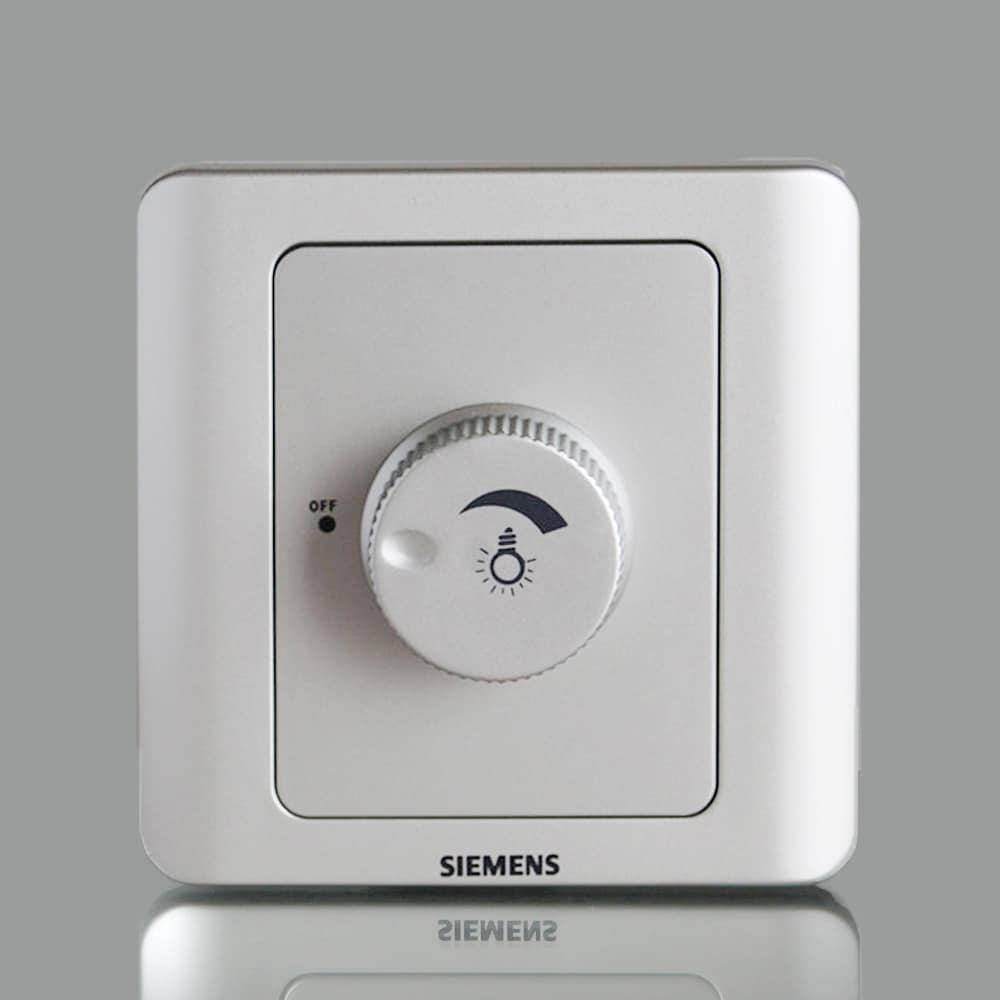




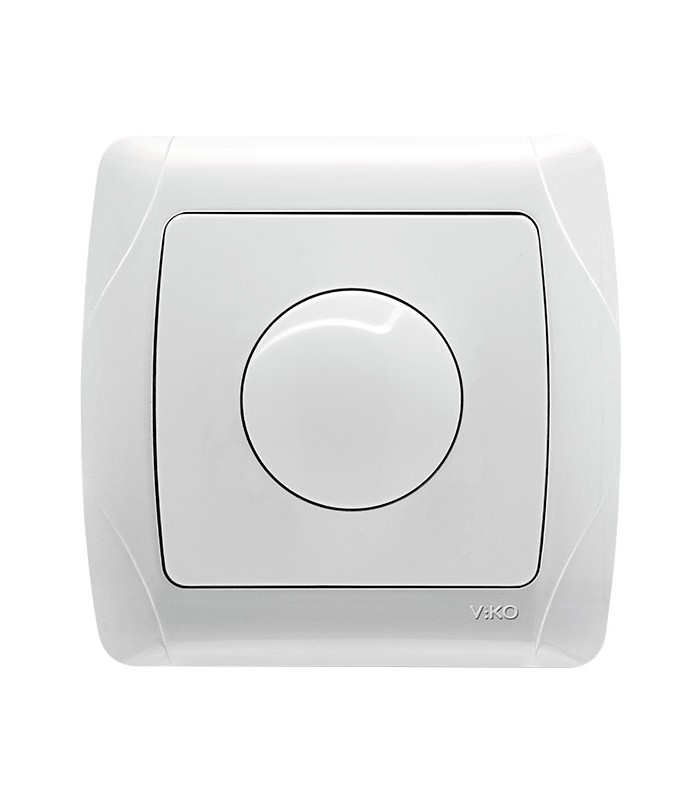
"Blanca BLNSS040011" has a degree of protection IP20. The size of the product is 8.5 * 8.5 * 4.6 cm.
The average cost is 1850 rubles.
Schneider Electric Blanca BLNSS040011
Advantages:
- Reliable manufacturer;
- Works with different types of lamps;
- Stylish design;
- Smooth ignition;
- Has brightness memory.
Flaws:
- High price;
- Some lamps begin to "buzz".
Schneider Electric Senda SND2200521
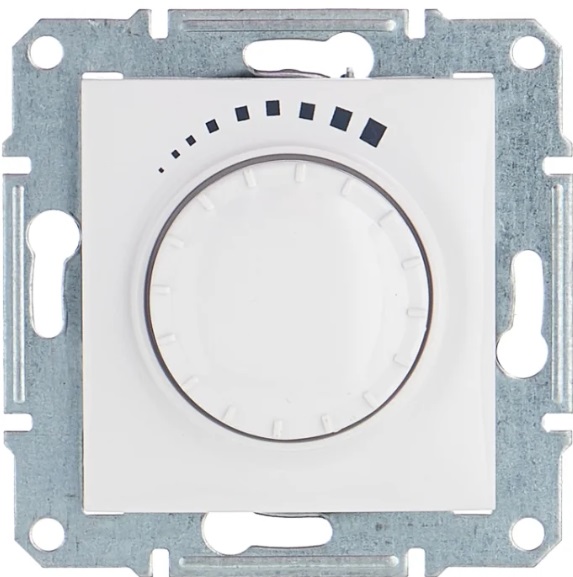
This dimmer from Schneider Electric belongs to the Senda line. This model has a hidden installation. Manufactured by "Senda SND2200521" of white ABS plastic, which is resistant to any mechanical stress and does not change its color from sunlight. To adjust the brightness of the lighting, a rotary-push mechanism is used. The maximum power of the connected lamps is 500 W. This device is easy to install. Since there are quick-clamp terminals with special wire guides. Also, the bare end of the wire is protected in the form of a disconnector, which will prevent a short circuit from occurring. Also, the product has powerful paws that securely attach the dimmer to the wall.
"Senda SND2200521" has a degree of protection IP20, which guarantees the protection of internal elements from moisture, dust or dirt. The size of the product is 7.1 * 7.1 * 4.8 cm.
The average cost is 1300 rubles.
Schneider Electric Senda SND2200521
Advantages:
- Easy installation;
- Quality assembly;
- Durable plastic;
- Reliable manufacturer.
Flaws:
High price.
Classification of dimmers
Currently, there are several varieties of monoblock dimmers on the market:
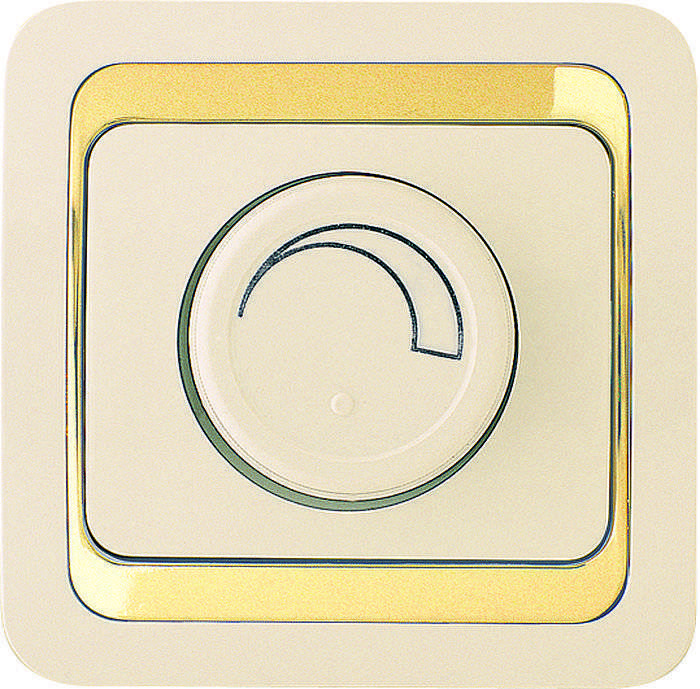
Dimmers with a mechanical regulator, which is made in the form of a rotary disk. The design of such products is relatively simple, which is the reason for their quite reasonable price. There are dimmers with push or turn on. In the first case, to close the electrical circuit, it is necessary to lightly press the regulator knob, devices of the second type always turn on the light, starting from its minimum intensity.
Push button dimmers. They are more complex devices, but their functions are greatly expanded due to the possibility of combining such controllers into groups that can be controlled from the remote control.

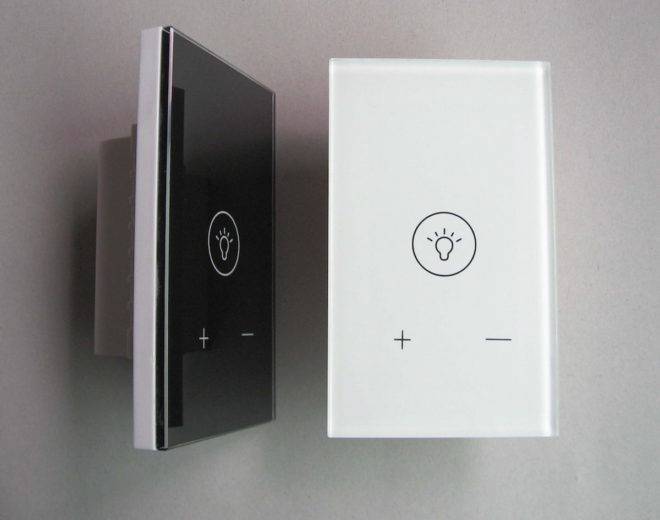
Touch dimmers. They are quite expensive, but also the most prestigious devices that fit perfectly into the interiors of rooms decorated in a modern style. In addition, touch models, like the dimmers of the previous type, are equipped with signal receivers that allow you to change the intensity of lighting using an infrared remote control or via radio.

In addition to monoblock dimmers, there are devices with modular control, which is carried out using a remote button or rocker switch. Such regulators are used to control lighting in public places, as well as to install them in junction boxes.
As already mentioned, most dimmer models are designed for use in circuits with incandescent or LED lamps.
As for the design, there are single, double and triple dimmers on the market.At the same time, the vast majority are single models.
Lamp compatibility with dimmers
Surely you have heard that you cannot install a dimmer in a circuit for 220 V LED and energy-saving lamps. Previously, this opinion was relevant, indeed, only incandescent lamps could be connected through the regulator. But now there are already special LED DIM diode lamps that do not require any separate dimmers. They can be run through an ordinary dimmer for incandescent lamps. Moreover, LED DIM lamps can be installed in the same circuit as incandescent lamps.
If you already have LED lamps installed, then before purchasing a regulator, figure out how compatible they can be in one electrical circuit.
LED lamps can be:
- Unregulated. You can not put them in the same circuit with a dimmer, otherwise it will lead to malfunctions of the lamp and in the future to its combustion.
- Adjustable. They can be combined with dimmers that work on the principle of cutting off the fronts of a sinusoidal voltage wave. The only caveat is that the main work of the dimmer starts with a minimum load of 20 to 45 watts. To achieve such a load, one incandescent lamp is enough, but LED ones will need 3-4 pieces. In the case when there is only one lamp in the lighting fixture, a low voltage regulator with a magnetic transformer can be used.
- with special regulator. Many manufacturers produce LED lamps that need a separate dimmer.
In electrical stores, sales assistants have special tables by which you can find out how compatible LED lamps are with certain types of regulators.
When you purchase such lamps, pay attention to the factory packaging or consult the seller if it is dimmable. Manufacturers display this possibility with special inscriptions or round icons on the packaging.
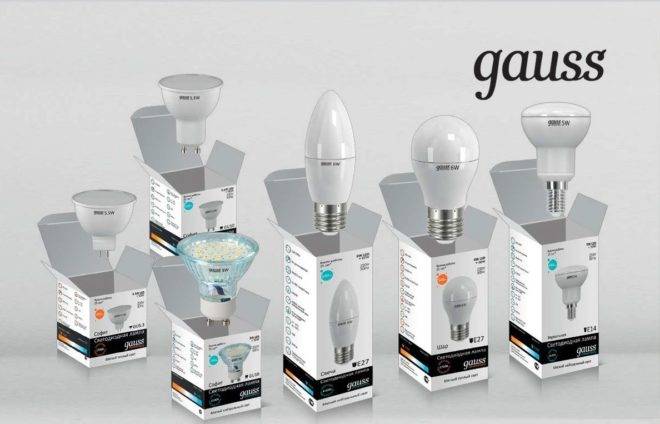
Gauss dimmable LED lamps operating on 220 V have proven themselves well in the electrical goods market.


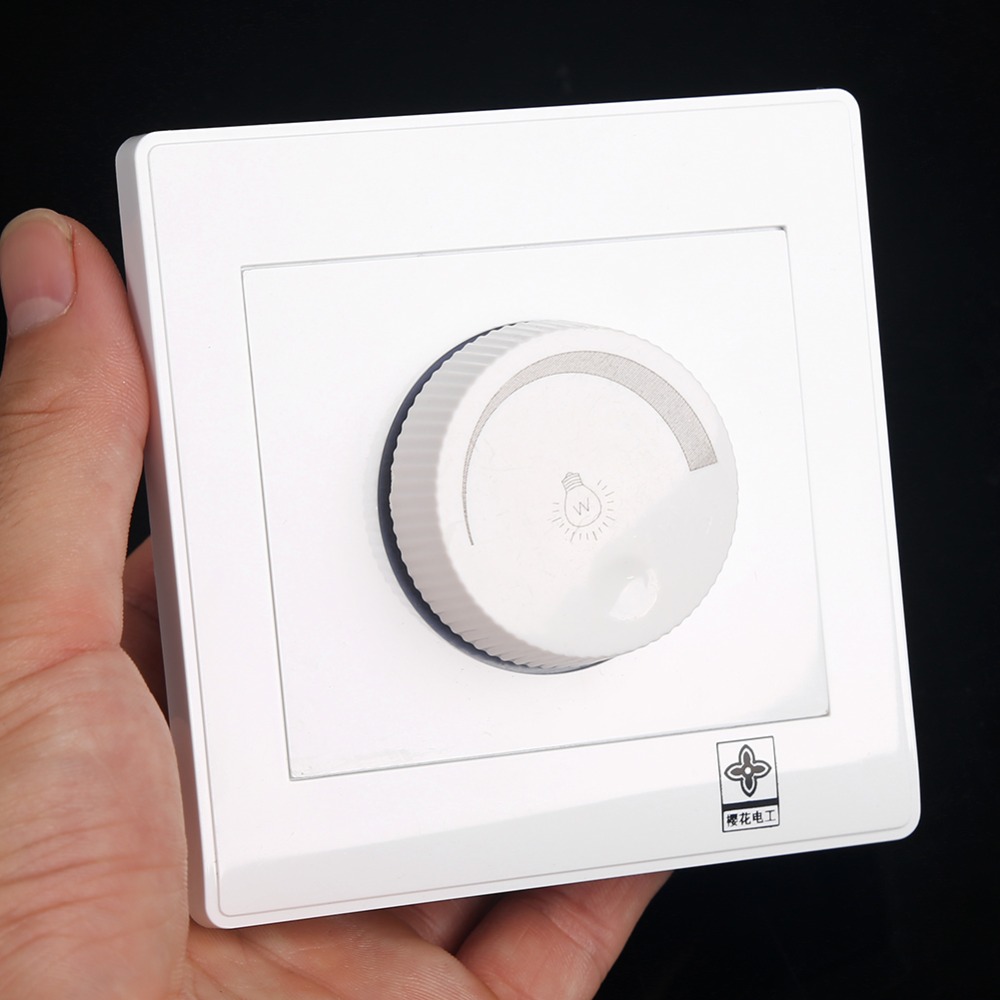

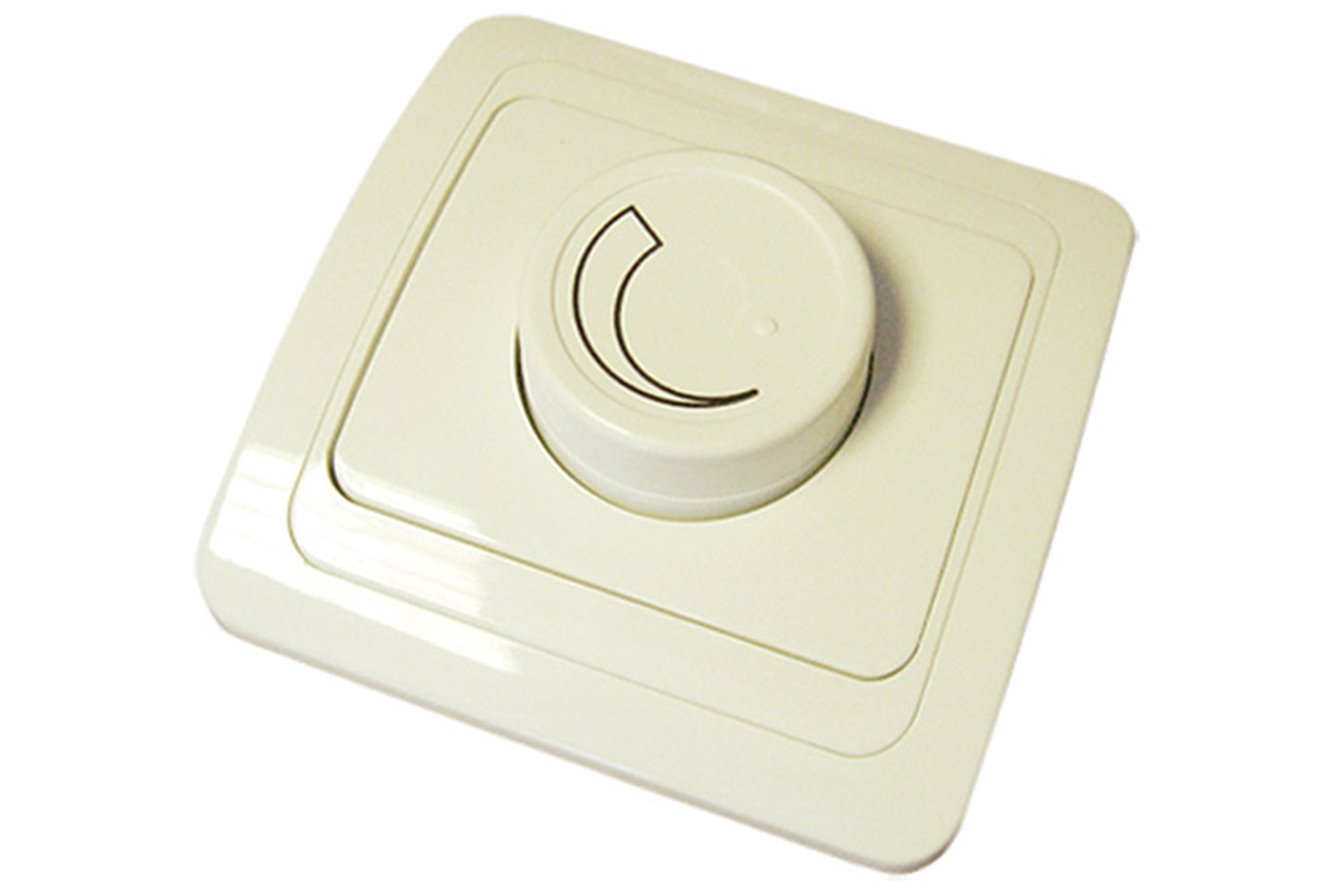
As you can see, the dimmer used in the home electrical network is very convenient for human comfort and is beneficial from an economic point of view. And combining it with 220 V LED lamps enhances these effects several times. We can say that this is exactly the case when "the game is worth the candle."
Dimmer operation
There is an erroneous opinion about significant energy savings. In reality, the real savings are within 15% at minimum brightness. This is due to the fact that part of the energy is spent on dissipation by the dimmer.
Operation of dimmers should be carried out at an ambient temperature of no more than 27C, in order to avoid overheating. The load connected to the appliance must be at least 40 W, otherwise the dimmer switch will work significantly less. The dimmers themselves must be used strictly for the intended purpose specified in the instruction manual.
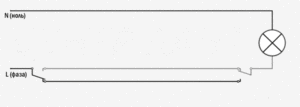
Scheme of connecting the pass-through switch
Dimmer connection diagram
Connecting a dimmer: wiring diagrams and installation instructions
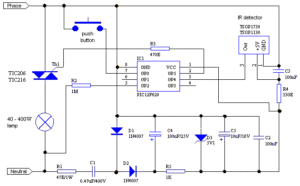
Dimmer - scheme
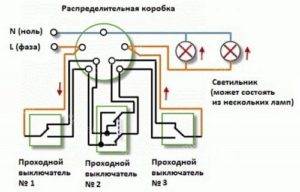
Scheme of connecting a pass-through switch from 3 places
Wiring diagram for a 2-way switch
Types of lamps used
In everyday life, several types of lighting lamps are used:
- Ordinary incandescent lamps;
- Halogen lamps;
- Luminescent (housekeepers);
- LED.
Each type of lamp requires its own approach to adjustment. There is no difference between incandescent and halogen lamps. The main selection criterion is to take into account the possible switching power of the lamps and the connected controller.
The main part of the regulators is designed to control incandescent lamps, since here it is the easiest to manipulate the adjustment. A triac control method is usually used with a cutoff of a part of the AC sine wave.
The disadvantage of incandescent lamps is the fact that when the voltage decreases, the temperature of the spiral decreases, and the emission spectrum shifts to the red region.
Changing the brightness of LED light sources encounters a number of difficulties, in particular the following:
- LED elements have a narrow range of permissible current values and, accordingly, small adjustment limits. When they are exceeded, the LED fails, and with a significant decrease, it simply stops emitting light energy, since it has a certain opening threshold value;
- LED lamps are available in three power options:
- Directly from AC 220V;
- Through a step-down transformer;
- With direct current.
LEDs for inclusion in the 220V network have their own driver, so using a conventional dimmer is not possible. A low-voltage lamp transformer must not be connected to a regulator because the output voltage differs from the sinusoidal voltage for which the transformer is designed.
The only possible control option is the use of pulse-width modulation. Here, it is not the voltage level that is regulated, but the duration of the applied pulses. This became possible due to the fact that LEDs do not have a turn-on delay and can operate when pulses of arbitrarily short duration are applied. To avoid noticeable flicker, the frequency of the power pulses is made high. Dimmers that work this way are specially marked and require LED lamps to control them, which can be used in dimmable lighting systems.
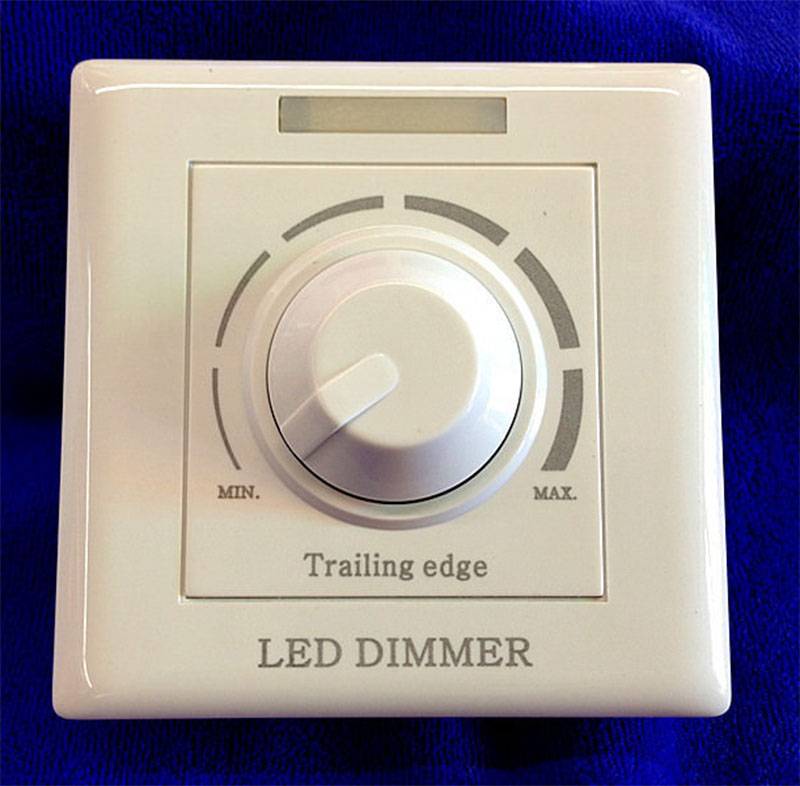 LED dimmer
Important! Special models of LED lamps have special drivers for 220V power supply using classic dimmers. These drivers themselves perform pulse-width modulation, depending on the level of the supply voltage.
There are no controls designed to adjust the brightness of fluorescent lamps. This is due to the features of their work and inclusion:
- To ignite the discharge, a high voltage pulse is required, which is generated by the ballast of the lamp;
- The arc discharge is operable in a narrow range of the power supply mode.
What are the benefits of a regulator?
As mentioned above, dimming reduces power consumption in the first place. This reason is already enough to connect it to LED lamps in the home and any other premises. But there is a whole list of advantages.


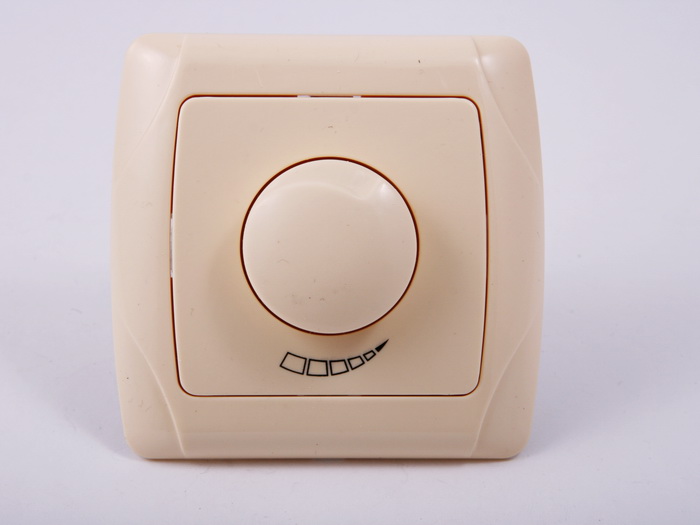
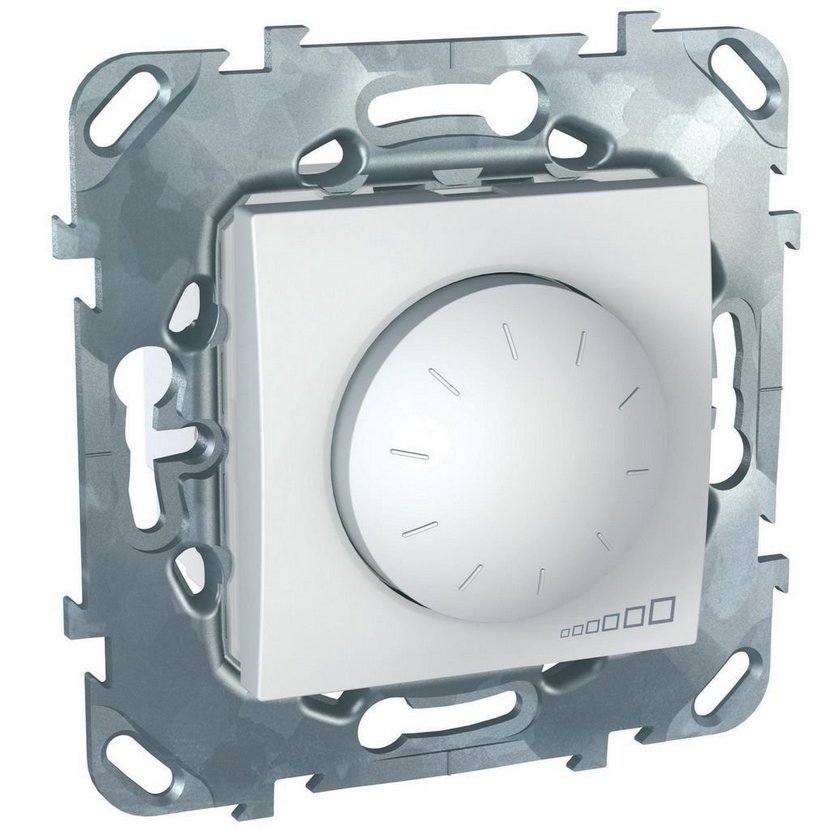

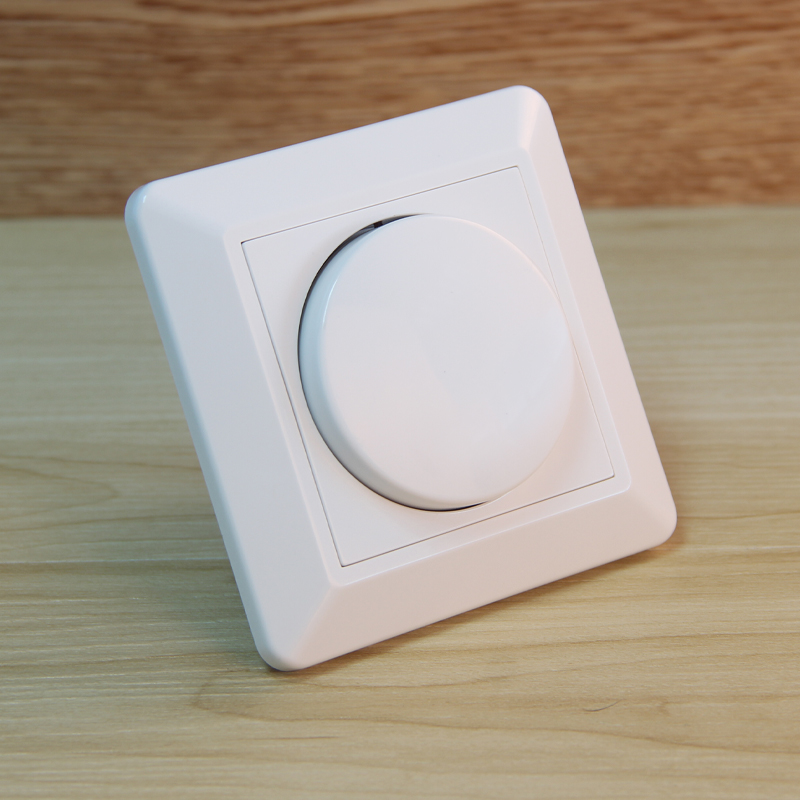
These include:
- The ability to change the intensity of the glow - provides the owners with an increase in the comfort of living, helps to make any interior individual, exclusive. So, for example, the room with the help of lighting can be divided into separate zones.And it will also turn out to change the brightness depending on the time of day, needs.
- Imitation of the presence of the owners in the premises - this option will be indispensable during the holidays, business trips, which will make it easy to mislead burglars.
- Automatic shutdown / shutdown - modern dimmers can be programmed, in addition, they can be controlled by various external devices, for example, tablets, smartphones. There are special signaling devices that give commands to power drivers.
All sorts of preset lighting modes, flashing allow you to choose the best options for any time of the day once and not waste time in the future. In addition, it is not only convenient, but also allows you to save more.
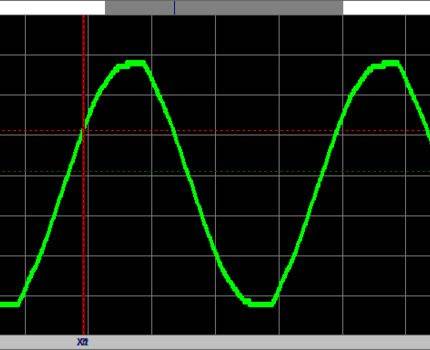
The picture shows an ordinary sinusoid of electric current, it is in this form that it is supplied to LED lamps, but dimming in this case is impossible.
An important advantage is the remote control. With its help, a person can regulate the voltage, and, consequently, the brightness of the glow, in various ways, for example, using the remote control, radio and sound signals (claps, voice).
At the same time, modern regulators themselves are distinguished by durability and unpretentiousness. In addition, they are convenient to use.
You also need to know that they can be used to control LED lamps with the usual standard bases, for example, they can be familiar E27, E14, as well as many other popular and rare ones. This greatly simplifies the creation of the system.
It is also important that dimmers are able to control the glow of one lamp, several and even a whole group.They are resistant to overloads, silent with a properly selected model, have a small weight, are compact
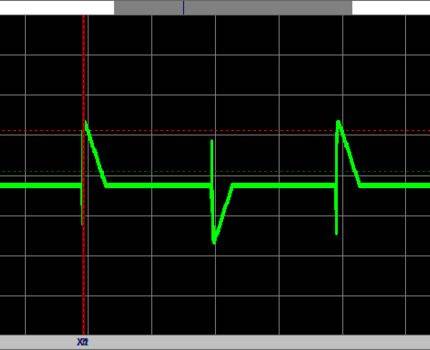
This is again a sinusoid of current, but if compared with the previous picture, it can be seen that it is significantly "cut off" - that is, short pulses with long pauses are the result of dimming
The cost of such equipment varies, so the interested consumer will be able to choose the best solution according to their budget, which will ensure the expected result.
purpose
The word "dimmer" comes from the English "dim", which in literal translation into Russian means "darken". But the Russian dimmer itself is often also called a dimmer, because it is an electronic device with which you can change the electrical power (that is, adjust it up or down).
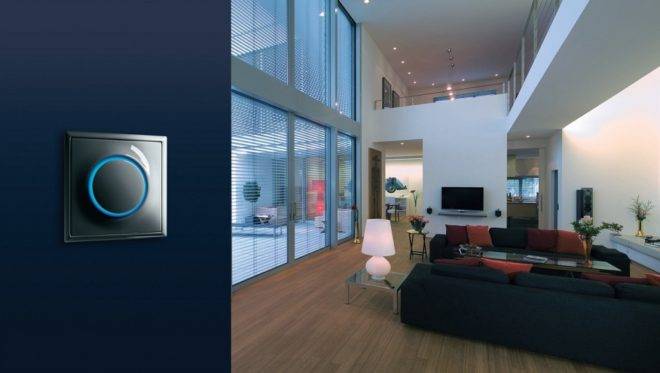
Most often, with the help of such a device, the lighting load is controlled. The dimmer is designed to change the brightness of the light emitted by LED lamps, as well as incandescent and halogen lamps.
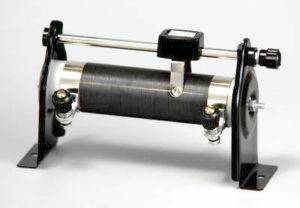 The simplest example of a dimmer is a variable resistor (or rheostat). Back in the 19th century, the German physicist Johann Poggendorf invented this device so that it could be used to regulate the voltage and current in an electrical circuit by increasing or decreasing resistance. A rheostat is a resistance-adjustable device and a conductive element. The resistance can change stepwise and smoothly. To obtain a low brightness of light, it is necessary to reduce the voltage. But the resistance and current strength will be large, which will lead to a strong heating of the device.So such a regulator is completely unprofitable, it will work with low efficiency.
Autotransformers can also be used as a dimmer. Their use is due to the high efficiency, in the entire adjustable range, a practically undistorted voltage with the required frequency of 50 Hz will be issued. But autotransformers are quite large, weigh a lot, and to control them, you need to apply considerable mechanical effort. In addition, such a device will be expensive.
Electronic dimmer - this option is the most profitable from an economic point of view. It is compact and has a slightly different principle of operation. Let's talk about it in more detail.
Which switch is better to buy
The principle of operation of all switches is based on the closing and opening of the circuit. Keyboard models are the most popular, but touch and smart devices are also firmly established. Quite rarely, buyers choose rotary switches.
According to the installation method, the switch can be overhead, that is, suitable for external wiring, or hidden - for internal wiring. Some models are universal and apply in both cases.
Models with a degree of protection up to IP20 can only be used indoors, as they are not protected from water and dirt. For the street, you need to choose products with protection of at least IP44 - these are not afraid of rain and wind.
The presence of a backlight helps you quickly find the switch in a dark room
It is important to consider that not all lamps can work with indicators. For example, when the light is off, LEDs continue to dimly burn or flicker in tandem with such a switch.
When choosing a “smart” model, it is necessary to clarify what is necessary for the correct operation of the device.Often, the control unit is not included in the kit, and it must be purchased separately. In general, touch devices are quite capricious and expensive.


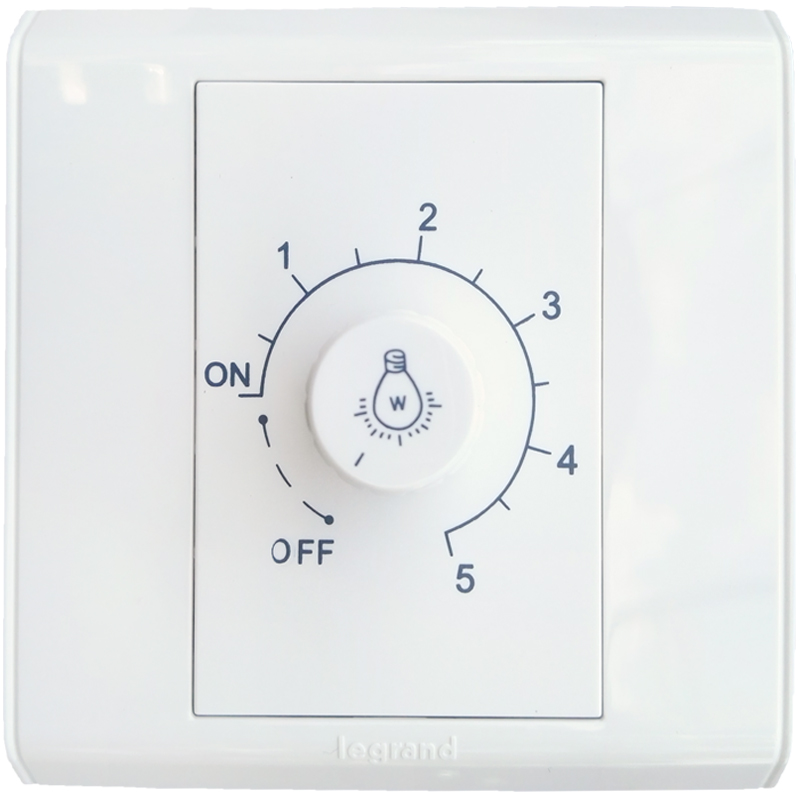
Dimmer with switch
A slightly more complicated circuit is also popular, but, of course, very convenient, especially for use in bedrooms - a switch is installed at the phase break in front of the dimmer. The dimmer is mounted near the bed, and the light switch, as expected, at the entrance to the room. Now, while lying in bed, it is possible to adjust the lamps, and when leaving the room, the light can be completely turned off. When you return to the bedroom and press the switch at the entrance, the bulbs will light up with the same brightness with which they were burning at the moment of switching off.
Similarly to pass-through switches, pass-through dimmers are also connected, which makes it possible to control lighting from two points. From each dimmer installation location, three wires should fit into the junction box. A phase from the mains is supplied to the input contact of the first dimmer. The output pin of the second dimmer is connected to the lighting load. And the two pairs of remaining wires are interconnected by jumpers.



