
Types of cesspool device for a private house
Cesspools are classified according to the material from which they are made, design and principle of operation.
According to the material, the following types can be distinguished:
-
Plastic. Equipped from professional plastic tanks. The volume of the pit is up to 1 cubic meter, then the use of a polypropylene barrel is allowed;
-
Metal. Similar to plastic, they are built from ready-made metal tanks;
-
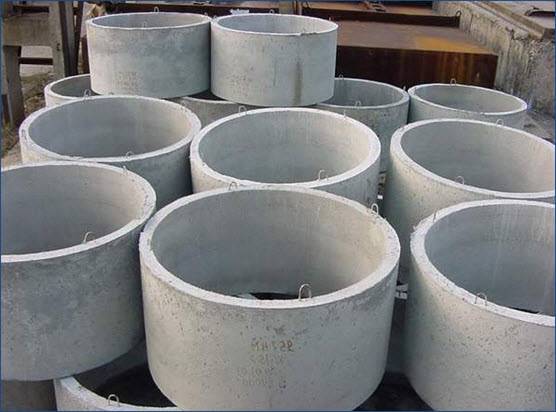
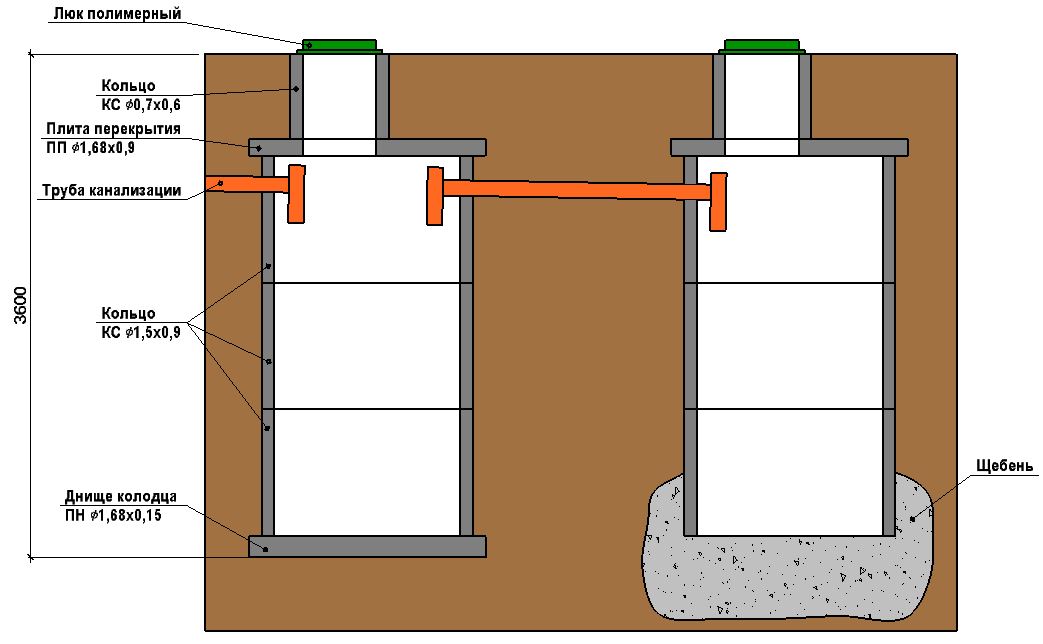
Concrete. it cesspools from concrete rings. This design is durable and low maintenance. Concrete is resistant to feces and aggressive liquids that drain into the drain;
-
From tires. One of the "handicraft" ways of arranging a cesspool. To create a cesspool from car tires, tires from cars and trucks are used. They are interconnected with bolts;
-
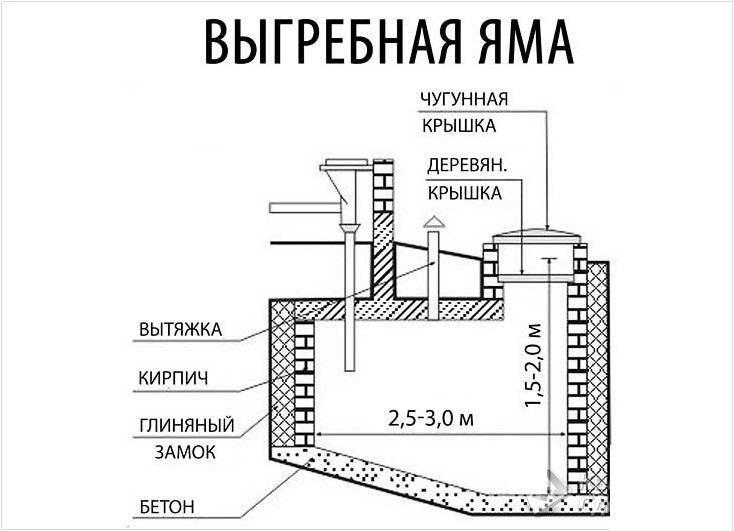
Brick. Great for arranging large cesspools. Completely sealed.Ceramic building materials are well tolerated by prolonged contact with water and do not lend themselves to deformation under the influence of earthen masses.
By design, cesspools are classified as:
- Closed. Fully sealed constructions. They consist of a closed bottom and strong walls. Such containers are environmentally friendly and suitable for installation in small areas;
- Open or leaky. According to the rules of Sanitary Control, such a device is allowed only if the total volume of waste per day does not exceed 1 cubic meter. These pits do not have a bottom and some of the waste goes into the soil and groundwater. This allows you to carry out sewage cleaning less often than with closed tanks, but threatens the environment.
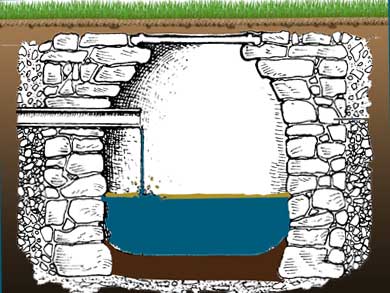 The principle of operation of an open sump
According to the principle of operation, all cesspools are divided into single-chamber, multi-chamber and septic tanks. Single-chamber - standard structures consisting of one compartment. It is both a draft drain and a sump. This is the easiest way to equip a drain, but it requires regular cleaning. In it, effluents are simply stored for a certain time before sewage cleaning.
Multi-chamber - cesspools, consisting of several compartments. The standard scheme is a connection of single-chamber tanks with branch pipes. Waste from the house or other consumer points is dumped into one, and pre-treated waste flows into the second. The effluents are in the sump for several days, after which they are additionally cleaned and drained outside the site.
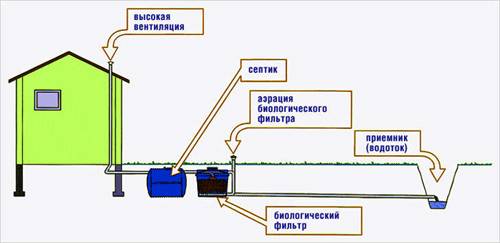
Septic tanks are professional multi-chamber devices.They consist of tanks separated by nozzles and filters, pumps that pump wastewater at a certain rate and treatment facilities (biological filters). The main advantage of using a septic tank for a cesspool is its efficiency. It is not just a liquid accumulator, but also a purifier. Many owners use settled water in the future for technical needs.
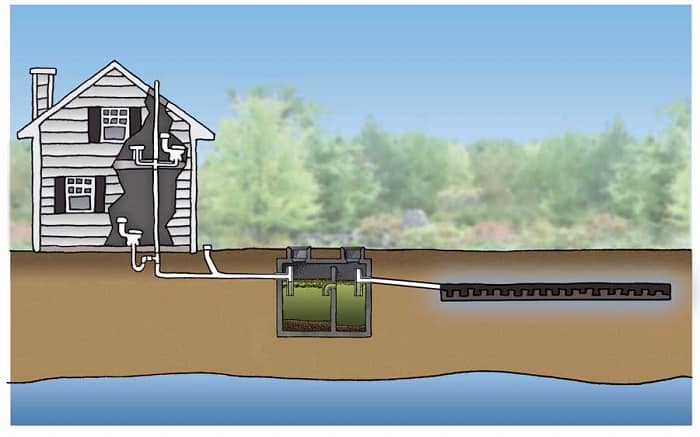 The scheme of the septic tank
Pit cleaning
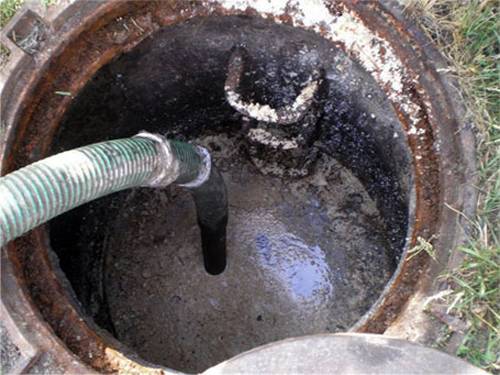
Regardless of which type of pit you choose, there will come a time when it will eventually fill up. Cleaning can be done either independently - with a special pump, or call for vacuum trucks, which is more efficient. However, this does not completely solve the problem. The fact is that in any case, only liquid is pumped out, and solid, insoluble waste settles at the bottom.
The solution to this problem is the use of special preparations for septic tanks or cesspools. These include:
- Bioactive supplements with live bacteria - effective work, elimination of odors, environmentally friendly. However, they work at temperatures from +4 ° C; at sub-zero temperatures, bacteria colonies die.
- Chemicals - it is better to use nitrate oxidizing agents, as they are safe for humans, animals and plants.
Choosing a site for a cesspool
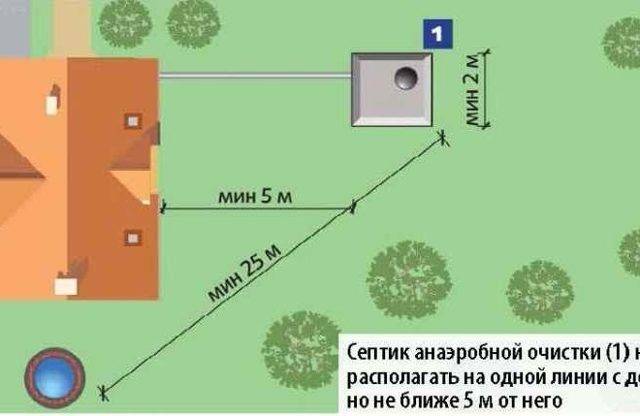
The distance from the cesspool to the well is not the only norm of SanPiN and SNiP, the implementation of which is required by law when constructing a sump. On the territory of a private household, you need to choose such a site for placing the pit, so that the following nuances are taken into account:
- indent from the water line - not shorter than 1 m;
- indent from the well of the mine type - 20 m;
- distance to the well - not shorter than 30 m;
- distance to buildings (including neighbors) - not less than 10 m;
- indent from the fence of the site - not shorter than 1 m;
- the presence of a spacious access road to the pit for a sewage truck.
It is forbidden to make sewage tanks deeper than 3 m. Otherwise, the hose of the sewage truck will not reach the bottom, not all of the waste mass will be pumped out.
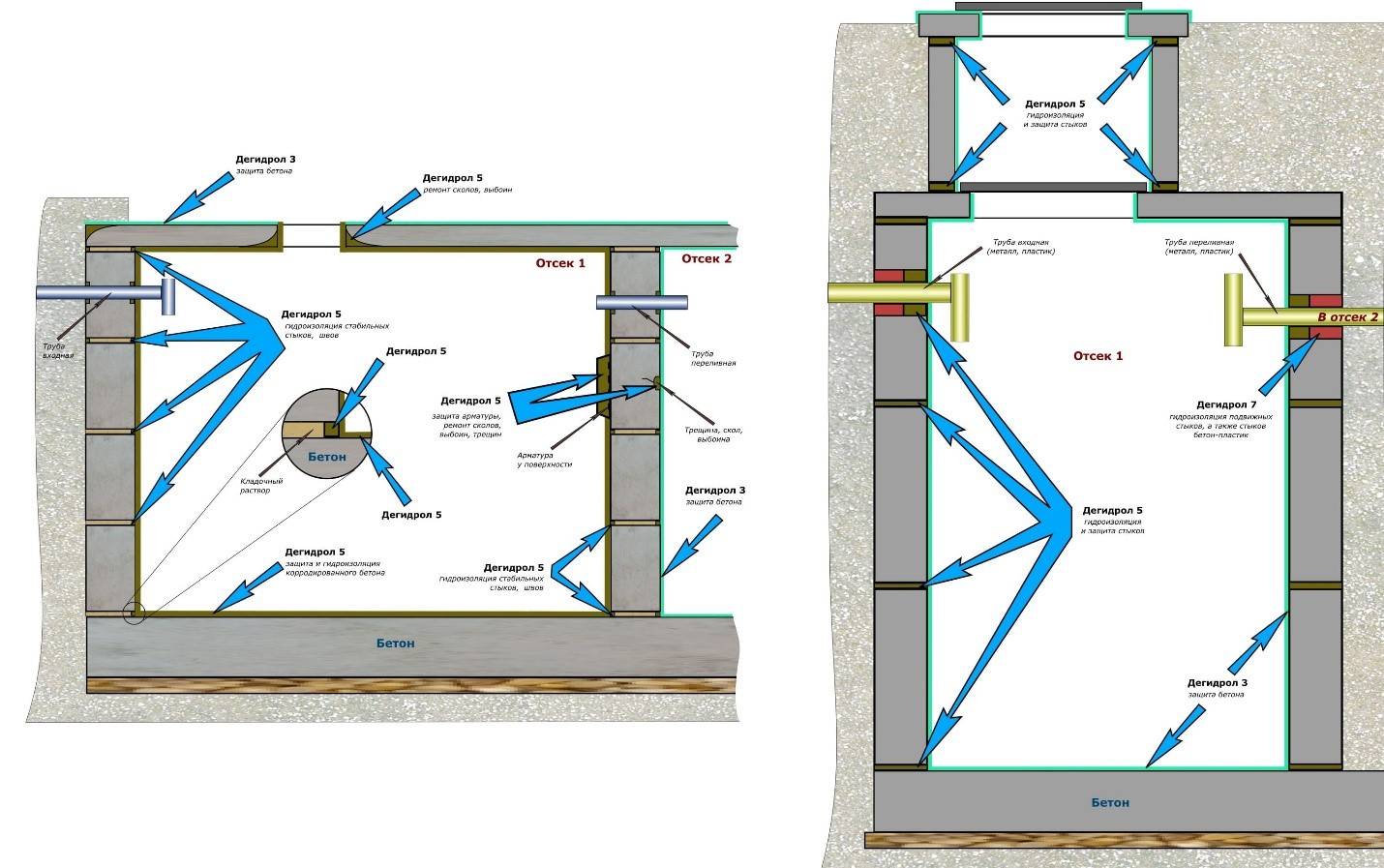

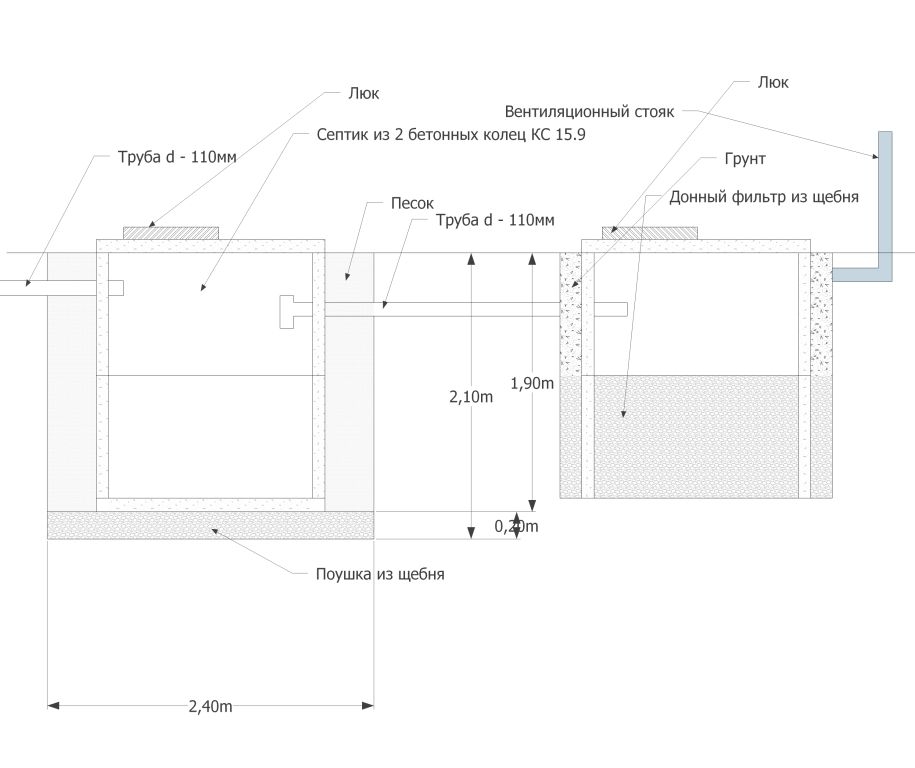

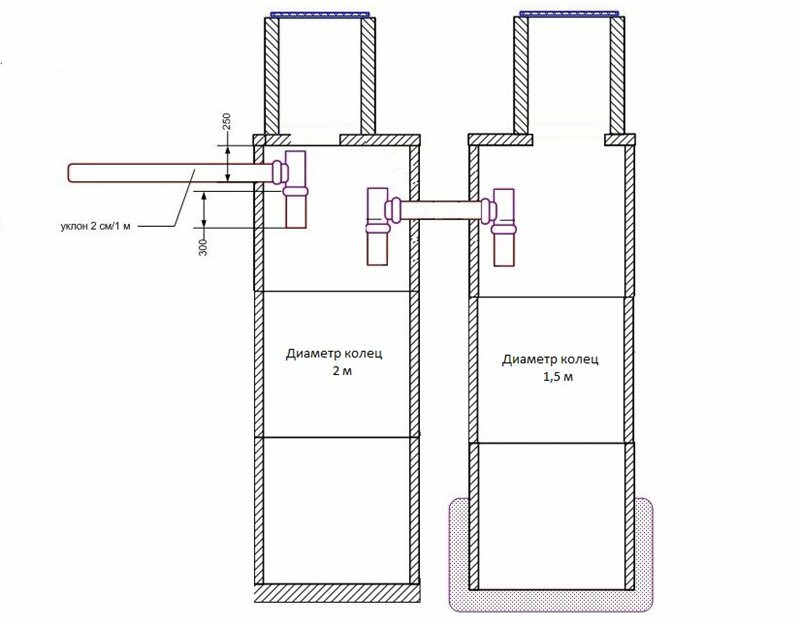

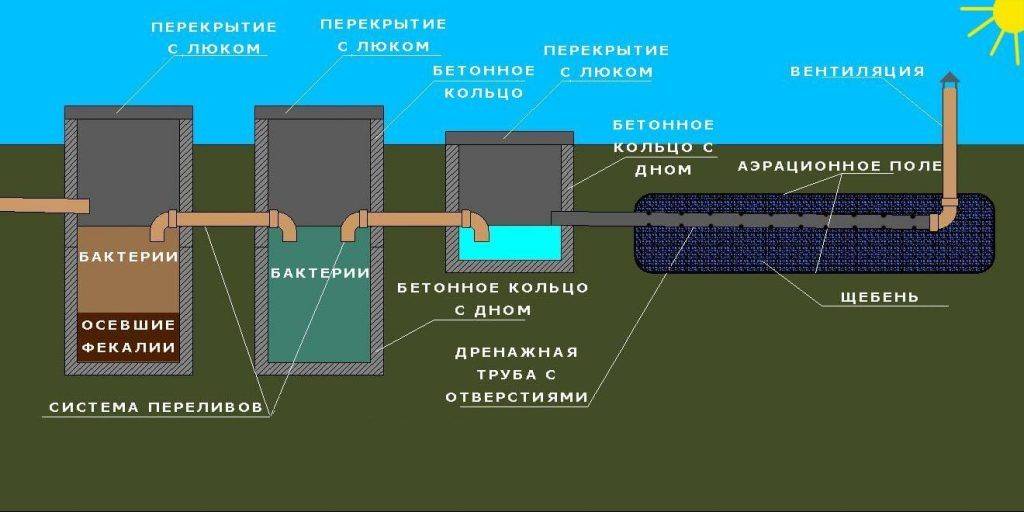
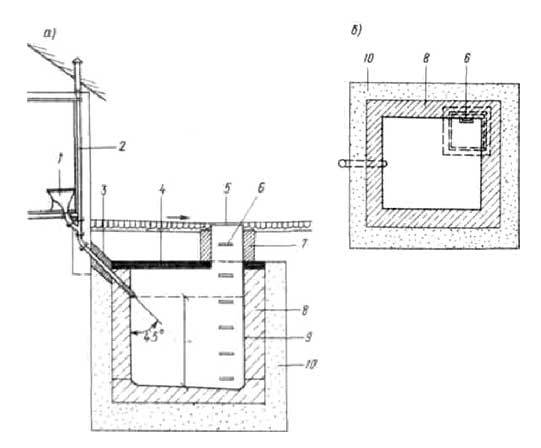
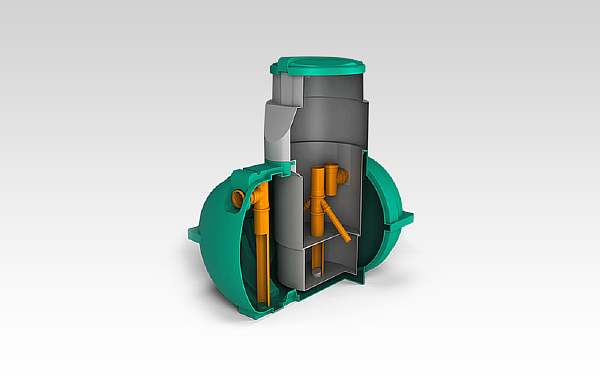 Sectional septic tank
Do-it-yourself cesspool device
At the preparatory stage, the location of the wastewater storage tank is selected, the dimensions and configuration are calculated taking into account the type of cesspool. Its equipment includes:
- Brickwork.
- Construction of reinforced concrete rings.
- Ready-made drive made of metal or plastic.
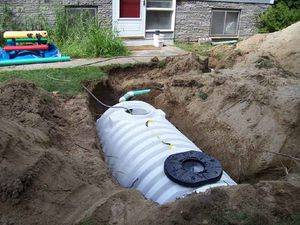
Creating a pit
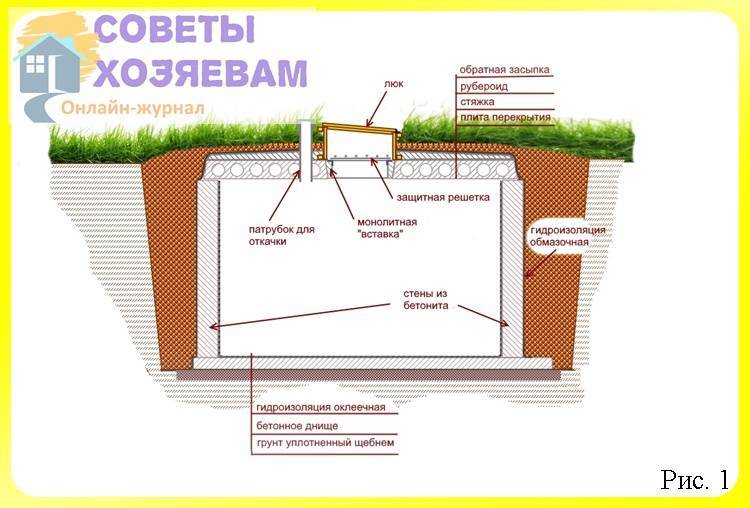
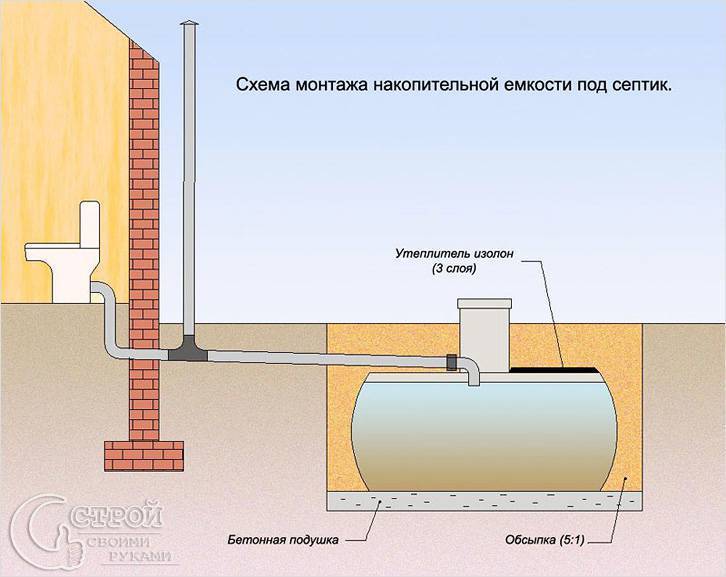
The easiest way to equip a pit is to install a finished drive. The metal structure must have anti-corrosion treatment. Experts do not recommend the use of bitumen. It decomposes too quickly, iron begins to rust under the influence of moisture. Installation of a metal container will require the use of special equipment, since the drive has a large mass. Plastic canisters can be installed manually. But they will require a concrete sarcophagus and fixation with cables, which will prevent the drive from floating up.
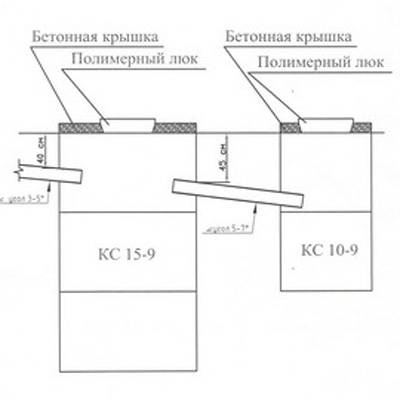
More painstaking work requires the arrangement of cesspools, the walls of which are lined with bricks or made of reinforced concrete rings. When creating brick walls, the elements are smoothed out in a checkerboard pattern to ensure strength and prevent cracking. Reinforced concrete rings are installed with a crane. The structure is being built gradually, with the processing of each ring.
Brick and reinforced concrete walls are required to provide internal and external sealing. The surface that will be in contact with the ground is covered with a uniform layer of liquid clay. The walls of the cesspool can be sealed with bitumen. If natural sewage filtration takes place in the structure, a meter-long layer of crushed stone is poured onto the sandy bottom. If necessary, make a sealed floor, it is poured with concrete.
The cesspool should have a reliable cover that will prevent the possibility of soil, branches, and other debris getting into it. It is also required to ensure the safety of pets, children, and prevent them from falling into the pit. Typically, reinforced concrete slabs are used for storage of this type. To ensure the possibility of pumping water from the cesspool allows the hole, which must be equipped with a securely closing lid. It is necessary to equip the drive with a ventilation pipe to avoid the accumulation of odors. After a corrugated sewer pipe is laid to the cesspool, it can be covered with sand and earth.
A cesspool cannot be called a perfect sewer system. But it allows you to provide comfort in the house with a minimum expenditure of funds. The right choice of its type, high-quality equipment of the storage tank will ensure convenient operation of the sewerage system, allow you not to experience discomfort from unpleasant odors, and eliminate the risk of pollution of drinking water and the environment.
The choice of building material for the construction of the pit
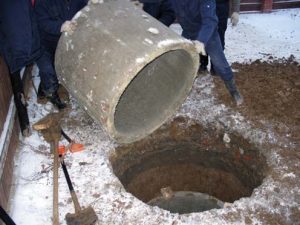 Installation of concrete well rings
As for the shape of the drain pit, a cylindrical tank is considered the best option.
The fact is that in this case it is easier to clean the cesspool.
However, if drain pits are being built, the design often depends on the chosen material for construction.
As a rule, the following materials are used for the construction of this variant of local sewage:
- Ceramic brick;
- Reinforced concrete well rings;
- Finished plastic containers.
These materials are used most often, although home craftsmen sometimes use other improvised materials, for example, old tires from cars or cylindrical cases from old washing machines, when constructing drain pits in summer cottages.
Penalties for violations
For any violation of the construction or operation of a cesspool, the legislation of the Russian Federation provides for a fine.
At the same time, its size will depend on the severity of the violation, as well as on the number of previously recorded cases of ignoring regulatory documents.
Scheme of the daily volume of effluents
For example, the standards provide that a pit with a filter bottom can only be equipped if the daily volume of wastewater does not exceed 1 m3.
Otherwise, the owner of the land plot faces a fine.
Its size will be determined by the court, because exactly how the issue of choosing a measure of punishment will be decided in court.
But, it should be understood that this is a serious violation of environmental standards, so the fine can reach several thousand rubles.
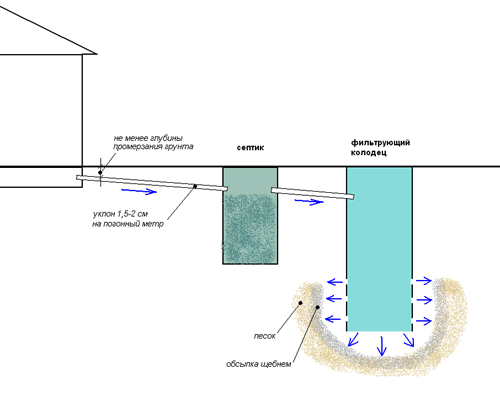
Well with filter bottom
If a complaint was received from neighbors, a single fact of violation of the rules for operating a cesspool was found, then the owner will first be issued a warning with an urgent recommendation to fix the problem.
If the sanitary standards for the operation of the cesspool continue to be violated, there is a risk of getting a fine. The maximum fine for a cesspool without a bottom is 500 rubles. (according to the Code of Administrative Offenses of the Russian Federation, Article 6.3. Violation of legislation in the field of ensuring the sanitary and epidemiological welfare of the population).



At the same time, its size may increase, especially in cases where the owner of a private plot ignores warnings and penalties not for the first time.
It is necessary to monitor the condition of the cesspool
In addition to a fine, which can reach 500 rubles, the court may oblige to redo, move the drain pit or completely eliminate it.
This is relevant in cases where the distance of the cesspool from the neighbors in SNiP is violated.
In view of this, it is better to initially carry out construction taking into account all norms and distances.
Cesspool location, scheme
The choice of the volume of the pit
When a storage sewer is being built, it is important to correctly determine the volume of the tank. To do this, you should take into account the nature of the use of the house (permanent or seasonal residence), the number of household members, the frequency of using the bathhouse, etc.
To do this, one should take into account the nature of the use of the house (permanent or seasonal residence), the number of household members, the frequency of using the bathhouse, etc.
In former times, it was believed that one person should be planned for half a cubic meter of the volume of the pit. However, with the advent of such benefits of civilization as washing machines and other devices, this volume is clearly insufficient.


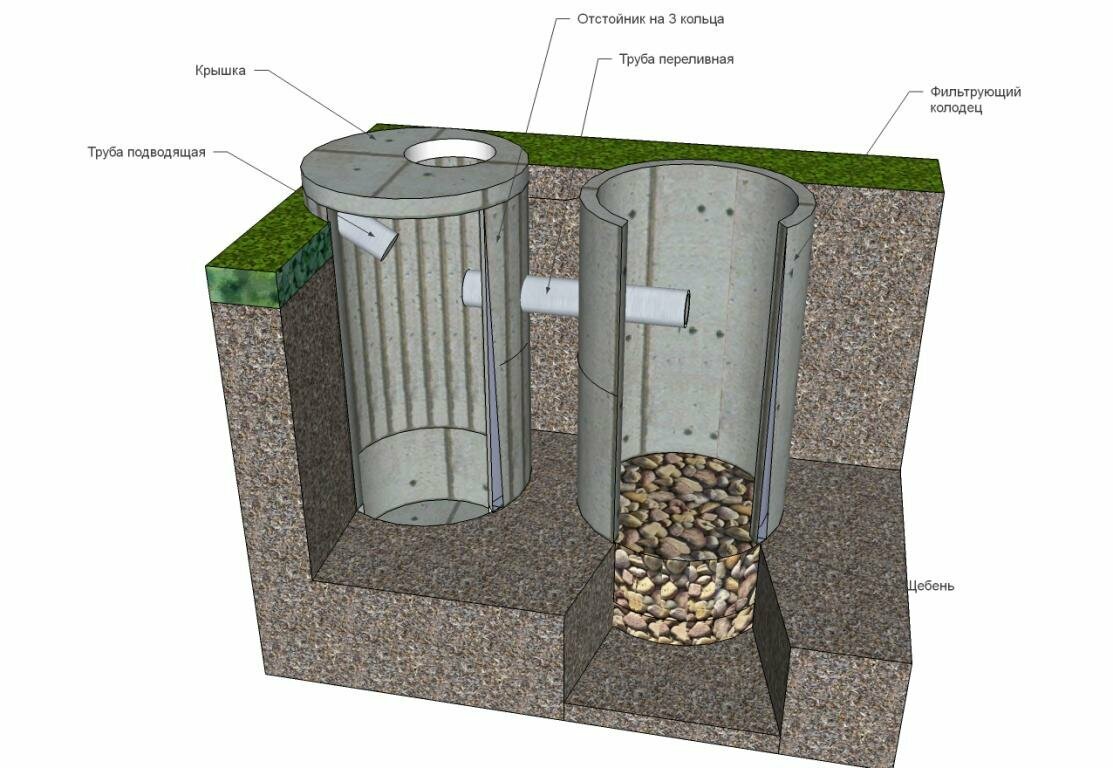


Another question: how deep should the drain hole be?
The answer to it depends, firstly, on the depth of groundwater, and secondly, on the capabilities of sewage trucks.
Since if the tank is too deep, it will not be possible to clean it completely.
What is a septic tank
A septic tank is a special recess in the ground, designed to limit the spread of waste. This is a local facility for wastewater treatment, which is installed in places where there is no centralized sewage system.
In 2019, when installing a septic tank, you must be guided by SP 32.13330.2012. The norms of this act also apply to outdoor toilets in private houses or in the country, cesspools and compost pits.
When equipping a septic tank, special attention must be paid to its location relative to the residential building and outbuildings. And both their own and neighboring
Violations during the installation of a septic tank will lead to contamination of the soil. As a result, it will not be possible to grow plants and vegetables for human consumption.
Also, the object can cause the spread of a specific smell and insects. Therefore, when planning the location of objects on the site, it is necessary first of all to determine where the septic tank, outdoor toilet, compost and cesspool will be located.



