
- Cesspool made of other materials
- Cesspool made of bricks
- Cesspool of tires
- Cesspool made of plastic
- How to clean a cesspool
- Types of autonomous sewage
- How to make a cesspool with overflow with your own hands
- How to install a sewer tank
- Septic without pumping
- Sizing
- Treatment systems
- Installing a septic tank
- Location on the site
- Installation of a sewer tank
- How to make a cesspool with your own hands
- Step by step instructions, diagram
- Correct calculation of the volume of the pit
- Design choice
- Step-by-step instruction
- The main differences between a septic tank and a cesspool
- Plastic container is a good solution
- If close to groundwater?
- Arrangement of a septic tank
- Installation of a septic tank
- What in the end to choose a septic tank or a pit
- Soil types
- Location of groundwater
- Land area
- Family Composition
Cesspool made of other materials
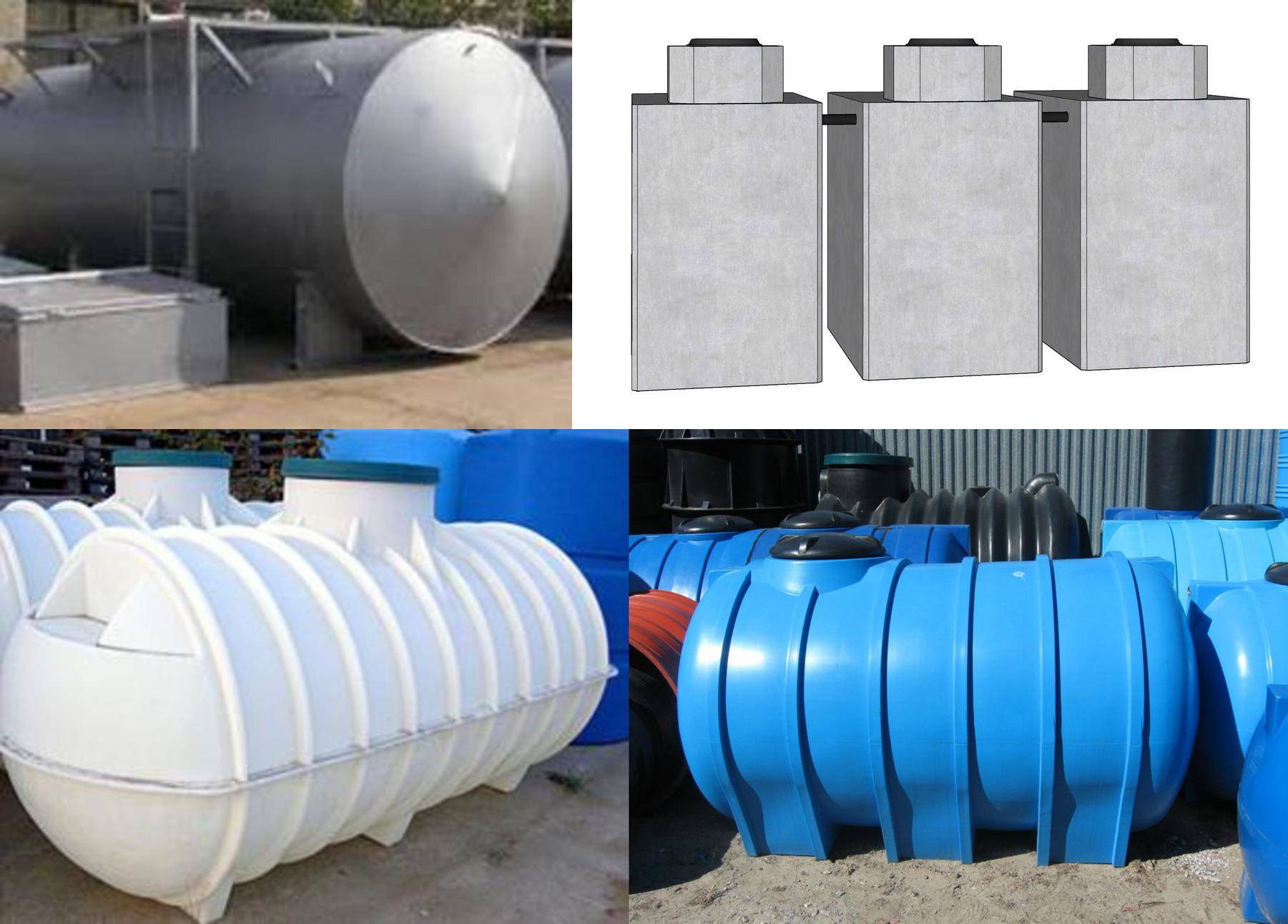
In addition to the most common version of a cesspool made of concrete rings, there are many analogues. Some are cheaper but not suitable for permanent residences, some are more expensive but have restrictions on use in certain types of soil.
Cesspool made of bricks
To lay out the walls of the well with bricks, it is not necessary to be a bricklayer.It is enough to have minimal knowledge and acquire basic bricklaying skills. To complete the work you will need:
- shovel ordinary bayonet - for leveling the soil in the right places;
- shovel shovel - for collecting and removing excess earth;
- stairs - in order to go down and get out of the pit;
- tape measure - to measure the required dimensions;
- buckets - for carrying mortar and various materials;
- trowel - to apply the mortar to the masonry;
- level - allows you to control the strict verticality of the walls.
Of the materials you will need - brick, cement, sand and water.
If you are laying a hole with a sealed bottom, then first you need to prepare a concrete base. To do this, it is necessary to make a compacted sand cushion with a thickness of at least 20 cm. After installing the cushion, you can start pouring concrete. The thickness of the concrete bottom should be at least 5-7 cm, it is also possible to reinforce such a base to make it more rigid.
After the concrete has hardened, you can begin the construction of the masonry. At the same time, there are no special requirements for either the quality of the brick or the quality of the masonry itself, the main thing is to maintain the level and the absence of cracks in the masonry. The pit can be either square or round - it all depends on your imagination.
If you are building a sewer without a bottom, then as a brick sole, you need to make a pillow and pour concrete in the form of a ring so that water can escape into the inside.
Cesspool of tires
Cesspool pit of waste car tires distinguished by its low cost and ease of assembly.To install such a pit, you will need old tires of the desired diameter, tires from a passenger car are suitable for a small volume, and for a large one you can take from a truck or even a tractor.
To add usable area, the side parts of the tires must be cut in a circle. You can easily do this with a jigsaw or a grinder. But if they are not available, an ordinary, only very sharp, knife with a rigid blade will do.
The prepared tires are stacked one on top of the other in a pit dug in advance for the diameter of the blanks and fastened together with plastic ties, bolts with nuts, etc. If necessary, the joints between the tires can be sealed with bitumen or other adhesive.
This type of cesspool is often used to collect wastewater in a bathhouse or summer kitchen.
Cesspool made of plastic
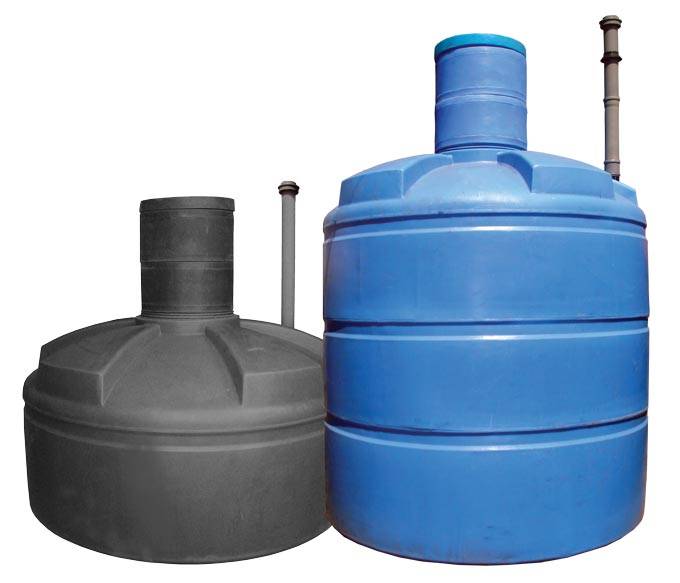
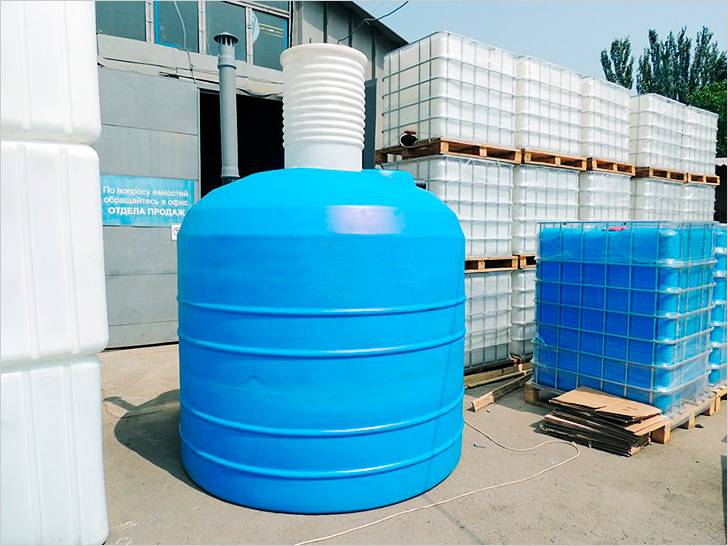
The easiest way to make a drain hole is from a ready-made plastic container that you can buy at the store. You just need to dig a pit and install the container itself there.
The indisputable advantages of this method is that you will deprive yourself of an unpleasant smell and be one hundred percent sure that the drains will not fall into the soil and will not mix with groundwater. But as it fills up, you will have to call the sewage equipment for pumping out, which will undoubtedly entail spending money.
Also, restrictions for such containers are imposed by the level of groundwater, since at their high level, the container can be squeezed out of the ground.
How to clean a cesspool
You can pump out the contents of the cesspool by inviting specialists with equipment that should not be less than the volume of your cesspool in volume.The hose of such a sewage machine should be enough to completely lower into the pit, and the entrance to the pit should be convenient.
There are also special products for cleaning cesspools, which are bacteria that are completely safe for nature and process waste products. You can buy such funds at any store for home and garden. Such products remarkably clean even the walls and bottom of the pit, processing solid waste into sludge, gas and water.
Thus, a cesspool in a private house is an economical option for organizing sewage, requiring attention only a few times a year. The indisputable advantage of a cesspool made of concrete rings is its durability, low cost and the possibility of installing such a system with your own hands using minimal equipment.


Types of autonomous sewage
In order to consciously and correctly choose the type of sewage for a summer residence, one must at least in general terms imagine the advantages and disadvantages of each of the possible options. There are not so many of them:
- Cesspool pit. The most primitive and far from the best way to dispose of wastewater. To begin with, it is very difficult to ensure complete tightness. Even with high-quality processing, some part of the effluent enters the ground. If the source of water is a well or a well, then sooner or later bacteria that live in sewage pits will be found in them. Another drawback is the corresponding smell, which is problematic to deal with due to leaks, and the need for regular pumping. Therefore, such sewerage in the country is being built less and less.
-
storage capacity. The essence of this type of sewerage is the same: drains are collected in containers, periodically pumped out.Only these containers are completely sealed, as they are usually made of plastic. The disadvantage is the relatively high price.
- Septic tanks. A system of several interconnected containers (two - three, rarely more). Wastewater enters the first place, where it settles and is processed by bacteria. Insoluble residues settle to the bottom, the water rises to the top. With the next flow of effluents, the level rises, the settled water is poured into the next container. Other bacteria “live” here, which complete the cleaning (up to 98%). From the second compartment of the septic tank, the liquid can be removed for further filtration into the ground. She's almost clean. The design is simple, there is nothing to break. The disadvantage is that the device itself is voluminous, plus a filtration field is needed (where water will be discharged), once a year or two cleaning the septic tank from insoluble sediment.
-
VOC or AU - local treatment plants or automatic installations. The principle of operation of a septic tank, but in a more compact size, with electronic filling for control. This type of sewer works only when electricity is available. The maximum battery life is up to 4 hours. The small size of VOCs impose restrictions on a one-time discharge of effluents: if you flush a bath, you should not flush in the toilet. And the biggest downside is the price.
The first two options are just places for collecting sewage, no purification takes place in them. But there is a difference between them, and quite significant. A cesspool is usually made only for an outdoor toilet, but all drains are already taken into the storage tank. That is, this is the most primitive sewage system, albeit without cleaning.
The second two options are already treatment facilities, just with varying degrees of automation. As you can see, there is no perfect way.We have to choose between environmental friendliness and cheapness. And no one can decide but you.
How to make a cesspool with overflow with your own hands
To equip the pit, a place is selected on the site, 20 meters away from the nearest reservoir and at least 10 from the facade of the house
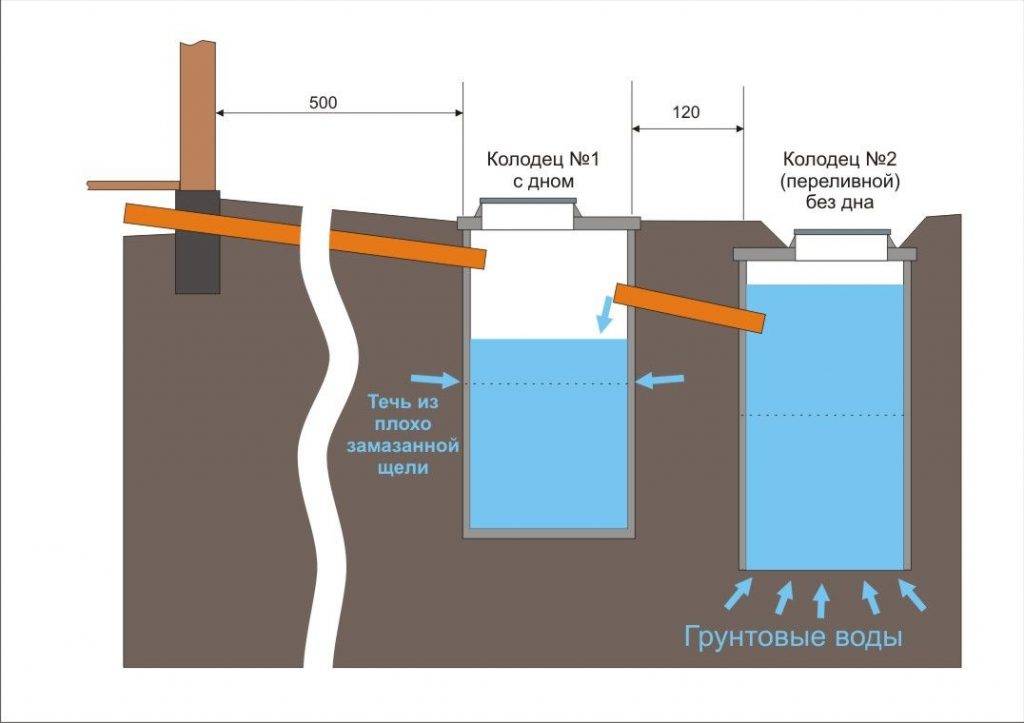
It is important to take into account that part of the treated effluents will freely go into the ground, so you will also need to place the container at some distance from the garden and garden
- The pit is dug by hand or using construction equipment. The dimensions of the earthen hole are 10 centimeters larger than the diameter of the selected building materials to strengthen the walls of the draft runoff. This is necessary for further sealing the sides of the tank;
-
A distance of up to 1 meter is maintained between the roughing and finishing tanks. They can be located at a slight slope relative to each other (roughing capacity on a slight elevation) or on the same line. In the second case, the difference for passing drains is equipped by correcting the location of the T-shaped pipes;
- A sand and gravel cushion is laid at the bottom of the rough pit. The first layer is sifted river sand, the second is fine gravel, the third is larger stones. A waterproofing film is laid on top of them. Depending on the level of soil freezing, it may be necessary to additionally insulate the drain. To do this, you can use geotextiles, clay or foam insulation;
- The finishing tank is similarly equipped, but there is no need to cover the bottom with waterproofing. Instead, it is covered with a thicker rubble cushion;
- After that, a concrete slab is installed at the bottom of the first tank. The first ring is mounted on top of it. It must be fixed in level, because.the geometric correctness of the container depends on the position of this part;
- Outside, each ring is necessarily coated with a thick layer of resin. This will extend the life of the tank and increase the tightness of the drain. The rings are connected to each other with a concrete mortar, the seams are also covered with resin;
- To connect the sewer pipes from the house, a hole of the required diameter is made in the upper ring using a perforator. In the future, it will also need to be strengthened with a flexible coupling and sealed with resin or a special sealant. On the opposite side of the tank, a T-shaped branch pipe is installed to connect the finishing and roughing pits to each other;
- Many experts recommend installing metal mesh filters on the connecting pipes to increase the efficiency of wastewater treatment. But this obliges you to regularly clean them. It would be much more expedient to use biologically active agents for the processing of solid masses;
-
Note that covers must be installed on both pits. This is necessary to control the operation of drains and the necessary repairs.
It is convenient that for the operation of such a cesspool there is no need to equip a ventilation outlet. Gas formation is minimized due to the absence of a large accumulation of feces. At the same time, a certain part of the effluents and gases goes into the ground all the time. This feature solves two problems at once: a decrease in the volume of flow due to gas and the presence of an unpleasant odor in the area.
Video: finished cesspool with overflow
Caring for a cesspool with overflows is also not difficult. Cleaning with vacuum cleaners is carried out as needed. On average, no more than 1 time in six months.Every month you need to check the filters for contamination and silting. If you use bacterial cleaning, then it is recommended to update the biological filters every 2 weeks.
How to install a sewer tank
Sewage tanks are used immediately after installation, for which special devices and tools are not needed, except for a pair of male, working hands, and shovels to dig a hole under the tank.
- The shape of the recess for the barrel should be slightly larger than the container and of the same shape, the gap between the walls and the pit should be at least 10–20 cm.
- The depth of the excavation should reach the non-freezing layer of the earth so that the waste does not freeze.
- If the depth is too great, then special pipes are used - necks, they are closed with lids.
- The bottom of the excavation is tamped and sand is poured on top of 15–20 cm.
- Water is poured into the sand and compacted.
- The barrel is lowered into the pit, making sure that the inlet is directed towards the entrance to the sewer pipe.
- Work is underway to strengthen the walls - for this, they simultaneously fill the tank with water and fill the gap between the walls and the excavation with sand.
- The storage tank is first covered with sand, and then with soil.
- The container with the sewer pipe is fixed with a two-way coupling.
- Only a sewer hatch is left on the surface for pumping out sewage and flowers can be planted.
When choosing one or another container for sewage, decide for yourself an important question: what is more important for you - to save money or to ensure full disinfection of the site. After all, the best option is also possible, for a small area it is possible to more fully clean the waste, but for a large area it becomes less important
It is important to decide what is better - to buy a system inexpensively or to maintain it in the future. If you use the cottage only in the summer, the best option for you would be to purchase a plastic storage tank of the appropriate volume.
Septic without pumping
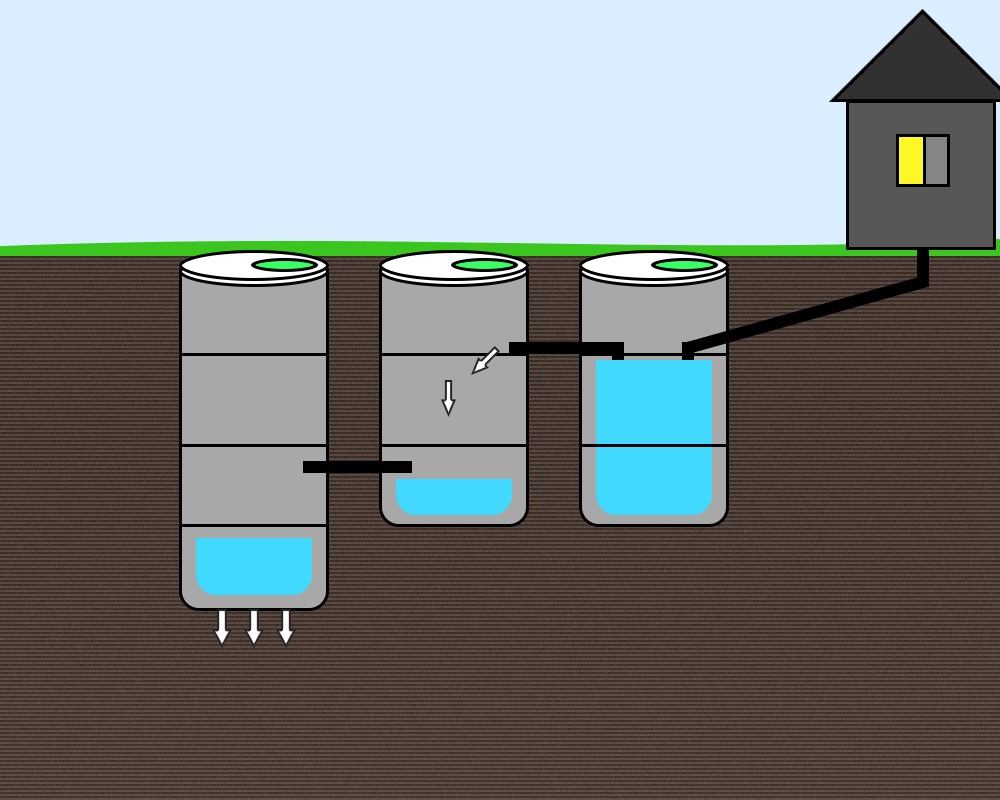
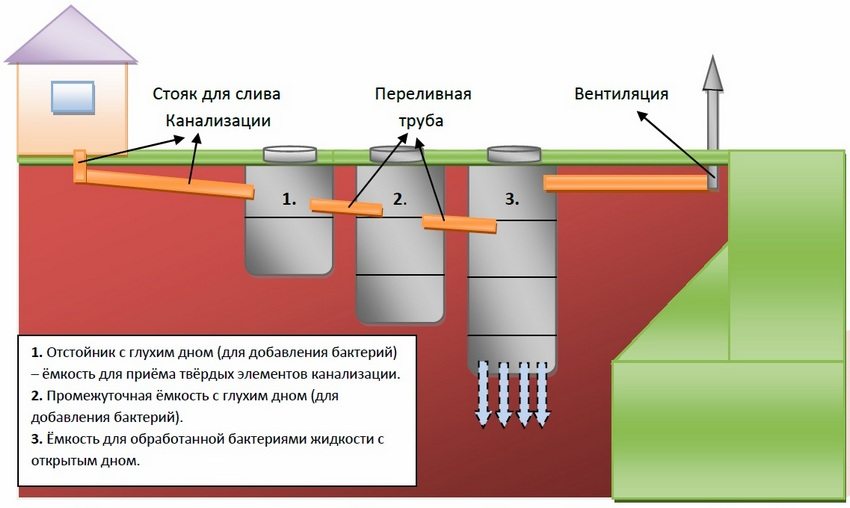
This is a simple version of the sewer system, it consists of several sumps. The first tank is made the largest, the next ones are smaller.
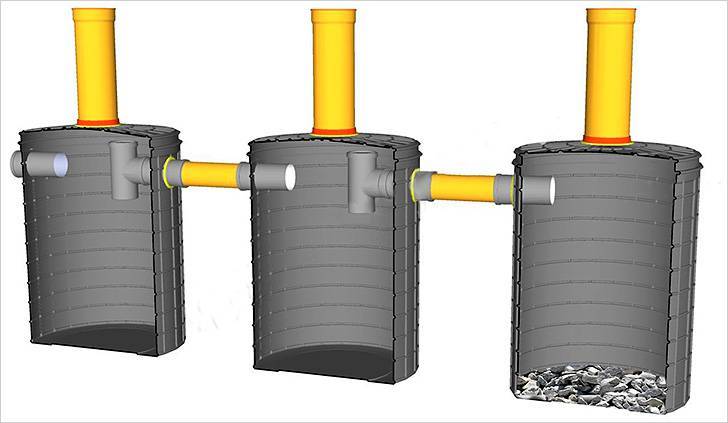
If the septic tank is three-chamber, then the first 2 compartments must be airtight. In the last chamber, holes are made in the walls or filter materials are poured onto the bottom. Through them, purified water goes into the ground.

A septic tank without pumping out in the country consists of 2 or 3 tanks connected to each other.
Sizing
The size of a septic tank can be determined by the formula: V = n * Q * 3/1000, where the number of residents is determined by the letter n, V is the total volume of the tank, Q is how much water 1 person spends per day. The number 3 is taken from SNiP. It shows how many days it takes to treat wastewater.

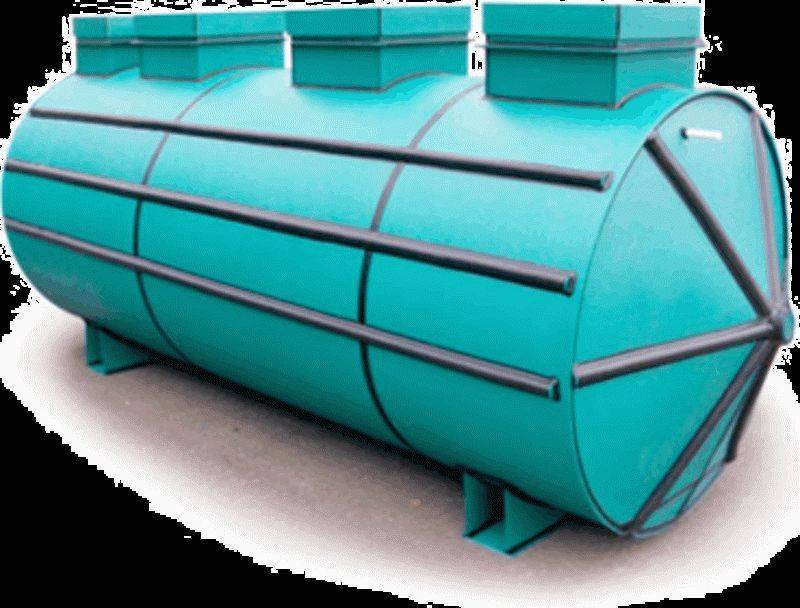

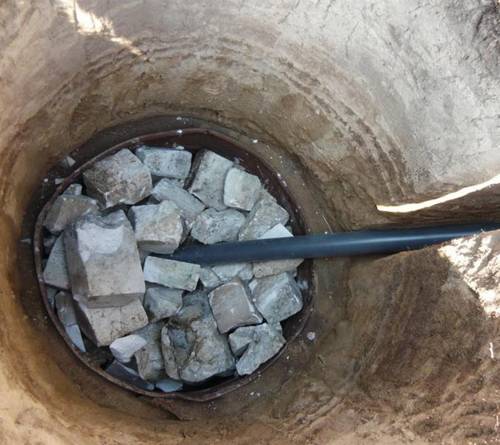


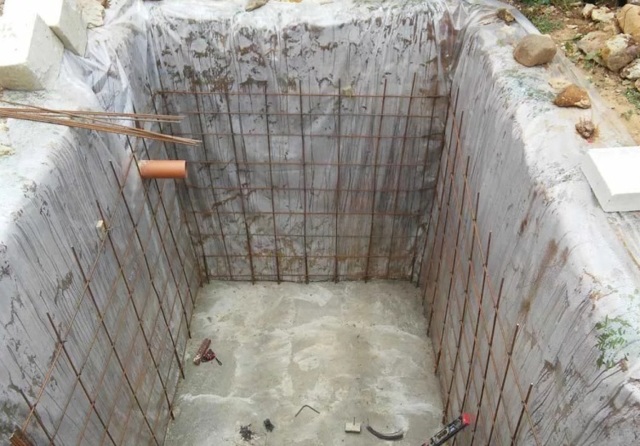


Most often, a collector is made 3 m deep and 2 m wide. From the bottom to the pipe through which the drain is carried out, there must be at least 0.8 m.
Treatment systems
The advantages of such sewage include the fact that anaerobic bacteria are involved in the processing of waste. To speed up the process, they can be fed with oxygen.
Silt accumulates at the bottom of the tank. Over time, its compaction occurs, as a result, it rises up to the overflow point. In this case, the septic tank must be cleaned. If the sewer is equipped with a waste pump that is powered by electricity, the process is carried out automatically.

Scheme of a septic tank with a drainage well for a summer residence and a house.
Installing a septic tank
There are ready-made septic tanks for sale.Their installation begins with the fact that they dig a pit. It should be 20-30 cm wider than the container purchased in the store. If the soil is not heaving, the bottom of the pit can not be reinforced, but you still need to fill in a pillow of sand.
The electric cable from the cleaning system powered by electricity is forwarded to a separate machine from the shield. A corrugation is put on the wire, and then placed in a trench next to the sewer pipe. The cable is connected to the septic tank through the terminals.
Location on the site
A closed-type cesspool is more often used in a residential private house, because it can be placed much closer to the living space than an open one. All requirements for choosing a place are described in detail in “Urban planning. Planning and development of urban and rural settlements”, decree 360-92 (Ukraine) and SanPiN 42-128-4690-88 (Russia).
Primary requirements:
- The distance from the residential building is at least 20 meters. A distance of 15 meters from the non-residential premises is allowed. Separately, it is indicated that if the basement exceeds the area of \u200b\u200bthe house, then the countdown starts from the wall of the underground building;
- From a reservoir or well, you should retreat from 30 meters (closed pit) to 50 (open tank);
- A distance of 2–4 meters is maintained from the road and the fence;
- According to the rules of good neighborliness, a cesspool should be separated from the neighboring area by at least 10 meters.
In some cases, it is also indicated that the waste tank must be at least 5 meters away from the garden or garden. It must be remembered that failure to comply with these requirements entails administrative liability.
Installation of a sewer tank
Step one - determination of the volume of the sewer tank and the material from which it should be made.
The dimensions of the container depend on the following factors:
- on the number of permanent residents and those who regularly visit;
- on the volume of sewage and sewage (it is generally accepted that during the day one tenant consumes about 200 liters);
- from the planned period of work.
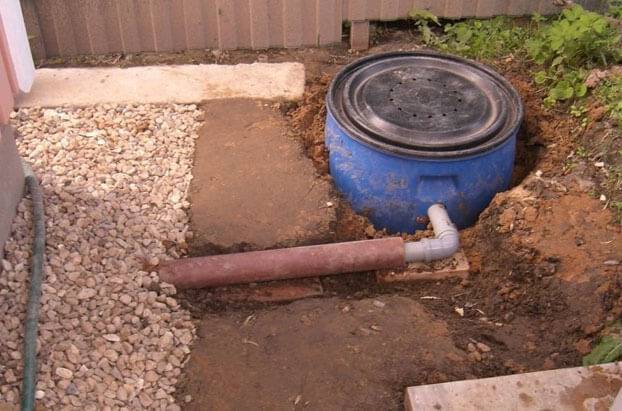
There is a universal formula that experts use when calculating the volume of sewer tanks:
V=n*x*Vday, where
N is the time period between cleaning activities, in days;
x is the number of people permanently living in the house;
Vday - the estimated daily volume of fluid consumed per person, in liters.
If 3 people permanently live in a country house, and it is planned to clean it every 30 days, then V = 30x3x200 = 18,000 liters. Thus, the container must have a volume of at least 18 cubic meters.
As can be seen from the above calculation, it is not difficult to perform the calculation, but without it, you can make a serious mistake that can lead to significant trouble. For example, a lack of volume can end up with nowhere to drain sewage.
step two – selection of the optimal location of the tank. At this stage, the place where it is planned to install the elements of the treatment system is determined.
When choosing the location of containers for sewage, you must adhere to the following rules:
- so that drains flow by gravity into the tank, it is located at the lowest point of the suburban area;
- for convenient access of specialized equipment, it is necessary to provide access;
- the pipeline supplying the waste liquid to the accumulator should be as straight as possible. Otherwise, the arrangement of rotary wells and the purchase of additional equipment will be required;
- it is not recommended to place containers for sewage in the immediate vicinity of a residential building due to the possible occurrence of unpleasant odors. At the same time, the location of the tank at a great distance from the house will require the laying of a long sewer network. The best solution is to install a sump 6 meters from the house.
Step Three
To independently mount underground containers for sewage, you must perform the following steps:
- Dig a ditch under the tank, the size of which should be approximately 50 centimeters larger than the dimensions of the product on all sides.
- Place a layer of sand at the bottom of the pit, thereby creating the basis for the container. If clay soils lie on the site and water layers are located close to the surface, it is desirable to equip a concrete foundation under the tank, as a result of which the tank will stand stably on a solid foundation.
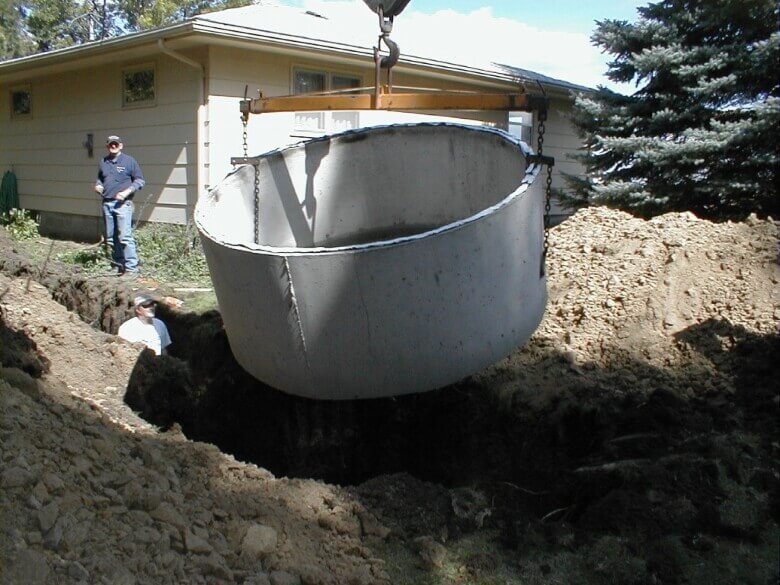
- Install strictly horizontally fiberglass containers for sewage. If necessary, use lifting equipment.
- Connect the sewer line.
- Make sure all joints are sealed. For this purpose, a large amount of water is injected into the system under pressure.
- Fill the installed container with sand from all sides.
- Cover the tank with a lid.
- Fill the tank with earth, leaving only a hole for cleaning the drive with a sewage machine.
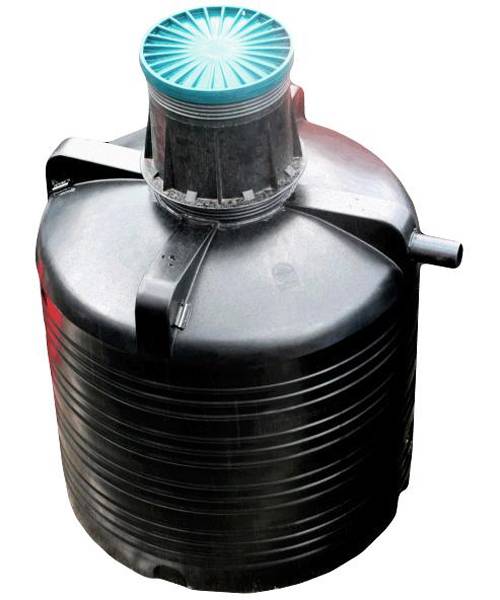
For each summer resident or owner of a private house, it becomes necessary to install a storage tank for drains.
The product is a waterproof tank, for the accumulation and storage of liquid. Wastewater does not seep into the soil, which means it does not pollute the environment. Therefore, the tank is ideal for places where there is no centralized sewerage.


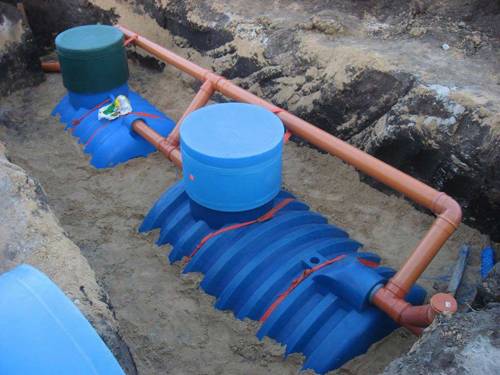
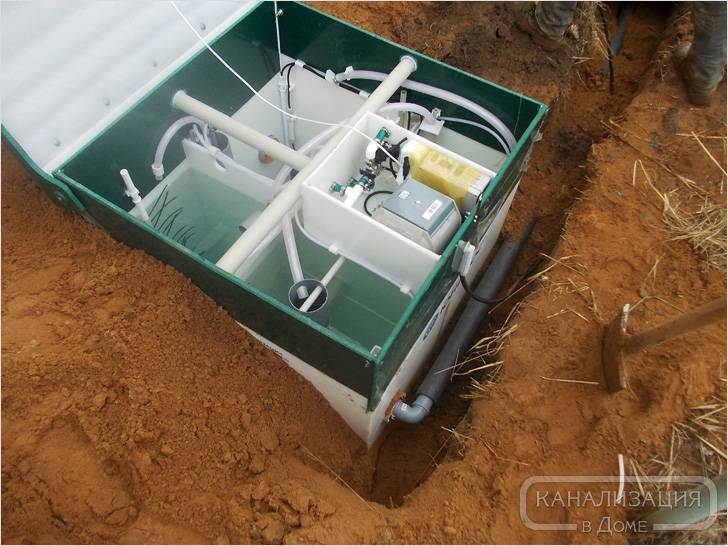

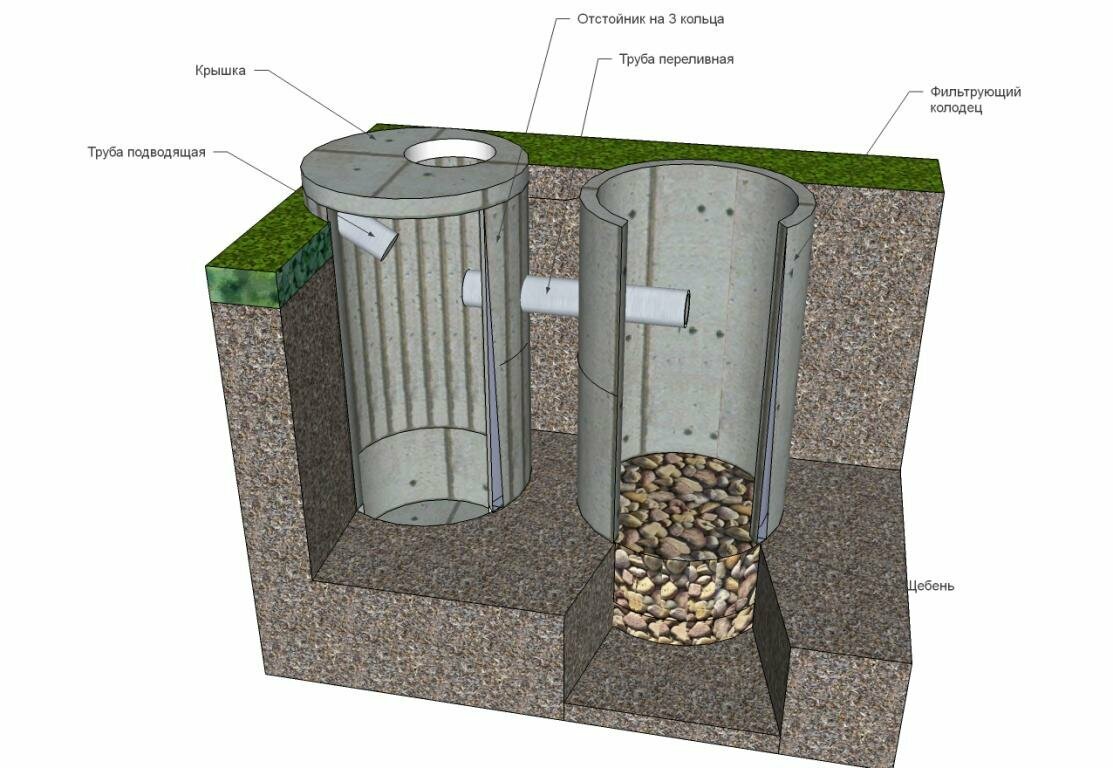

How to make a cesspool with your own hands
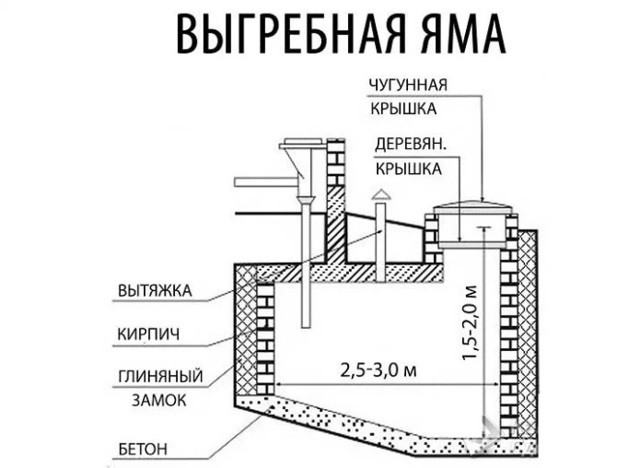
A bottomless drain pit in a private house with your own hands is an option that is convenient for summer cottages. It features a lightweight design. To strengthen the walls of the excavation dug under the pit, you can use gas silicate blocks, brick or concrete. The use of ready-made reinforced concrete rings speeds up the installation of the structure.
Step by step instructions, diagram
Work order:
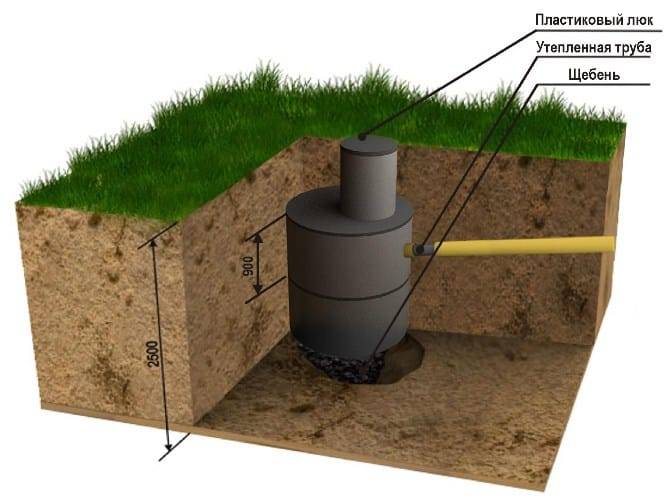
- Preparation of the pit shaft. The optimal depth is 2-3 m, the width is equal to the diameter of the concrete ring + 80 cm.
- Installation and preliminary insulation of the pipeline.
- Pouring concrete screed along the perimeter of the pit. The central part of the mine is left free.
- With the help of a concrete crown, a series of holes with a diameter of 50 mm in increments of 10 cm is made in the lower reinforced concrete ring. This will allow the liquid fraction of wastewater to flow beyond the shaft.
- The lower perforated ring is installed on the pre-tamped bottom. The level is set. Then one or two whole ones are placed on top (depending on the height of the shaft).
- Backfilling of gravel, broken bricks and sand inside concrete rings to a height of 100 cm. This stage of work allows you to make a coarse filter.
- Waterproofing is lined around the perimeter of the pit, which will prevent groundwater from entering the pit.
- The pit is backfilled with the same materials that were used as a filter in the rings.
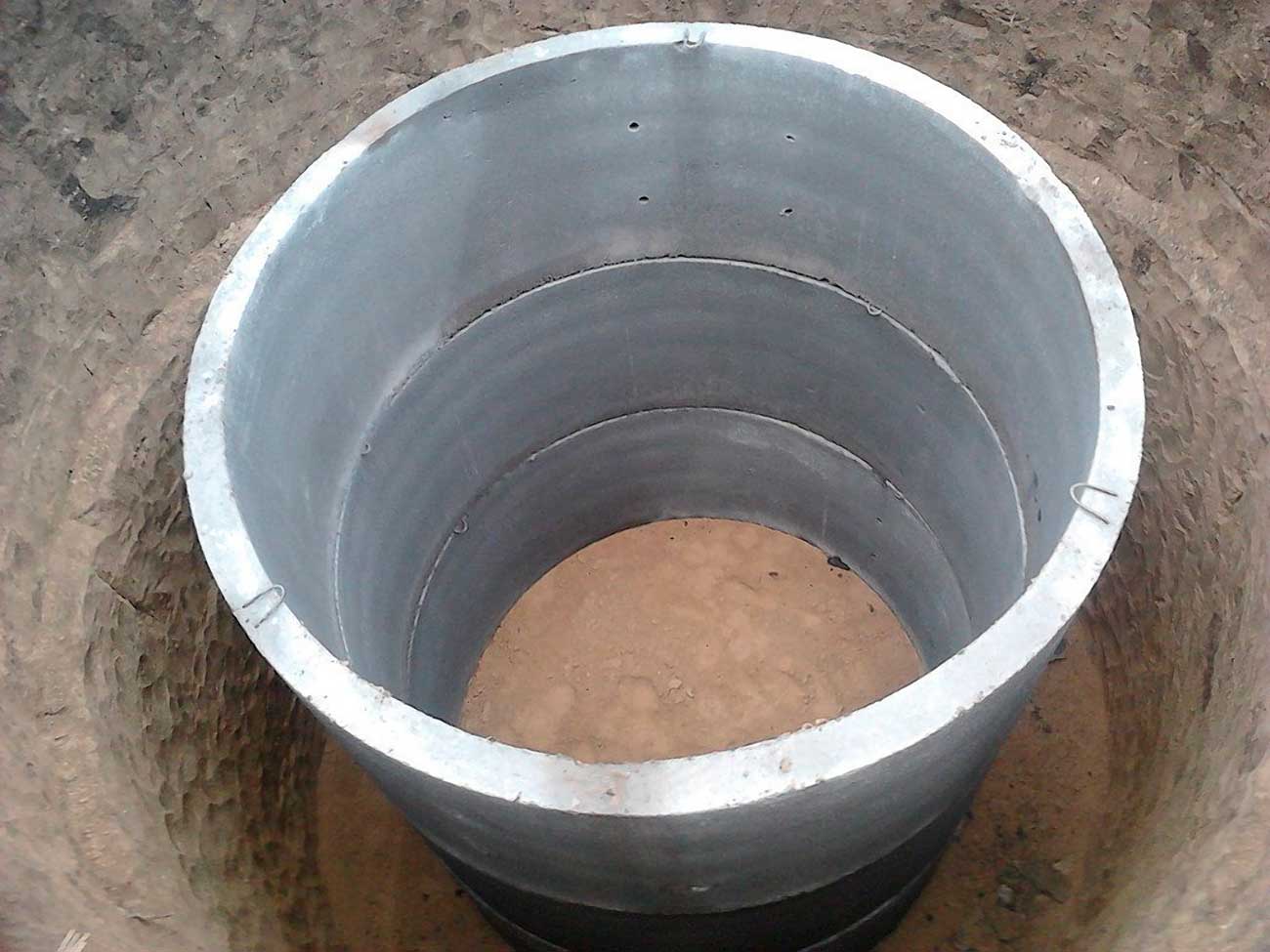
An example of a cesspool made of reinforced concrete rings
Correct calculation of the volume of the pit
The volume of the cesspool is determined by the number of adults and children living in the house.The following formula is used for the calculation: V = K x D x N, where:
V is the volume of the tank.
K is the number of adults living in the house. Per child - 0.5k.
D - Time interval between pit cleanings (usually 15-30 days).
N - The rate of water consumption per person (approximately 200 l / day)
Design choice

The options differ in the material of manufacture and the principle of operation, the duration of operation. According to the principle of operation, there are two main types. The hermetic design consists of a closed bottom and strong walls. It can be single-chamber or consist of several compartments. The tanks are interconnected by branch pipes, supplied with biological filters, pumps. Such drain containers do not harm the environment, but they quickly become dirty and require regular cleaning.
Pits without a bottom absorb accumulations with all layers of soil. One of the simplest tanks is a cesspool made from car tires. This is a budget option. It has a small volume, is not cleaned and quickly silted up.
The service life of a barrel tank depends on the quality of the metal. If you choose expensive material with an anti-corrosion coating, the device will last for many years.
There are special plastic containers. If the pit is up to 1m3, polypropylene barrels can be used.
A brick structure becomes unusable due to the decomposition of the material under the influence of moisture. Walls can be repaired with concrete inserts, extending the service life.
The best option in terms of quality and cost is concrete rings. They do not rot and are resistant to soil movement. The service life of such a device can be up to 100 years.
Step-by-step instruction
Initially, you need to choose the right place on the site.From the well and the reservoir, the cesspool of reinforced concrete rings should be located no closer than 20 meters. From the facade of a residential building - 15 meters, from non-residential premises 10 meters are allowed. From a fence or a roadway - at least 1 meter. It is better to retreat 4 meters from the neighbors.
Related video:
The optimal depth of any pit for sewerage is up to 3 meters. This requirement is due to the maximum length of the sewer machine hose. Even if you do not plan to perform regular cleanings, it is better to take this parameter into account.
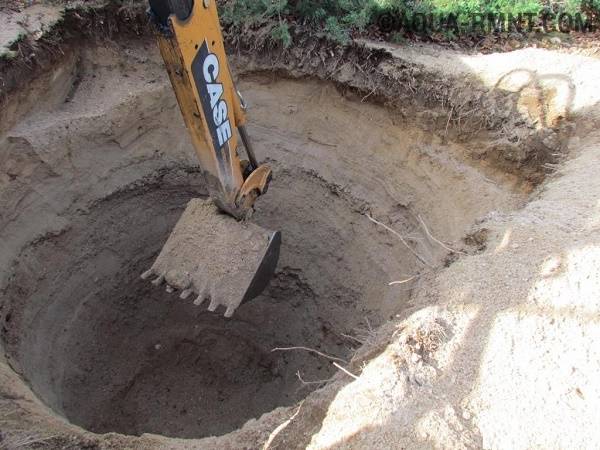 Pit preparation
Step-by-step instructions on how to equip a sealed cesspool of concrete rings:
The size of the pit by 10 centimeters should exceed the outer diameter of the reinforced concrete rings. This is necessary for further compaction or insulation of the structure;
Sifted river sand is poured at the bottom of the pit. The sand cushion must be at least 10 centimeters


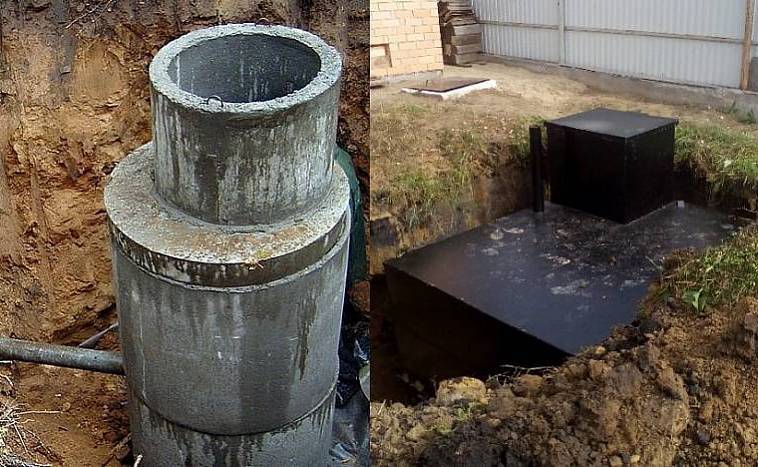
It is important to seal it well;
Concrete bends are considered insufficiently tight due to the joints between the rings. Therefore, the pit is covered with a special waterproofing fiber
Some homeowners address the issue of sealing by treating concrete rings and joints with resin;
A layer of fine gravel is poured on the bottom of the tank, and after large gravel. The crushed stone layer, as well as the sandy one, should be well compacted;
The first concrete ring is installed on top of the rubble. It is leveled to a given level. This is an extremely important point - the position of this part determines the alignment of the structure;
After the reinforced concrete bottom is installed. The place of joints is treated with concrete mortar and must be carefully coated with resin;
There are two options for mounting subsequent rings: using rubber gaskets or sealant, mortar and resin. Bicycle tires are often used as gaskets. Such joints are treated with resin on both sides. If you chose the second option (using a concrete solution), then a thick layer of the mixture is applied to the junction;
A hole is drilled in the rings at the connection points of the sewer pipes. For this, a puncher or a jackhammer is most often used. The sewer pipe is pulled into the resulting gap. The joint is also sealed. Experts recommend using liquid glass for this compound;
In this way, all subsequent concrete elements are installed. After completing their installation, a cover is attached to the upper part of the cesspool. It can be made of plastic, metal or reinforced concrete. The latter are considered the most practical. Their inner diameter is selected slightly smaller than the size of the upper ring;
The cover is fixed with bolted connections, the seams between it and the rings are also coated with resin. It is important that the hatch is equipped with a vent. This will help organize the removal of gases without additional ventilation and ensure regular inspection of the tank.
This completes the installation. After that, with the help of soil from the pit, the walls of the pit are compacted. In regions with severe frosts, the protruding part of the pit is placed under a clay or earth casing.
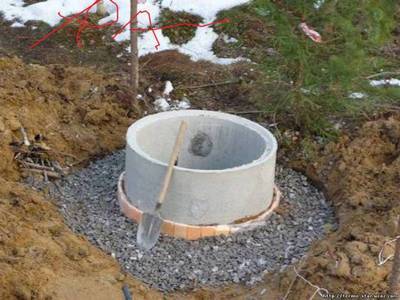 Seal rings with crushed stone
The waste tank is cleaned every two weeks of use. This will avoid siltation of the bottom and the formation of persistent solid masses on the walls.To do this, you can use biological activators of the desired type (for household, chemical or other waste) or chemical compounds. As a preventive maintenance, once a season, you need to inspect the pit for cracks or depressurization.
The main differences between a septic tank and a cesspool
Before choosing where sewer waste will merge, you need to understand the features of a septic tank and a cesspool.
- The price of a septic tank will be much higher, since it is not only a container, but also a complex ecosystem.
- When arranging a pit, it will be necessary to dig in one container when arranging a septic tank, at least two, or even three.
- In the septic tank, wastewater will be cleaned, after which it is poured into a second tank, and from there it goes into the ground. From the cesspool, the contents are pumped out and taken to the nearest well of the central sewer.
- The owner of the cesspool will periodically have to pay for the services of a sewage truck, and there is no need to take water out of the septic tank.
- The cesspool has a larger volume compared to the septic tank, otherwise it will have to be pumped out too often.
In principle, both options for removing wastewater from the house have their advantages and disadvantages, which are worth writing about in more detail.
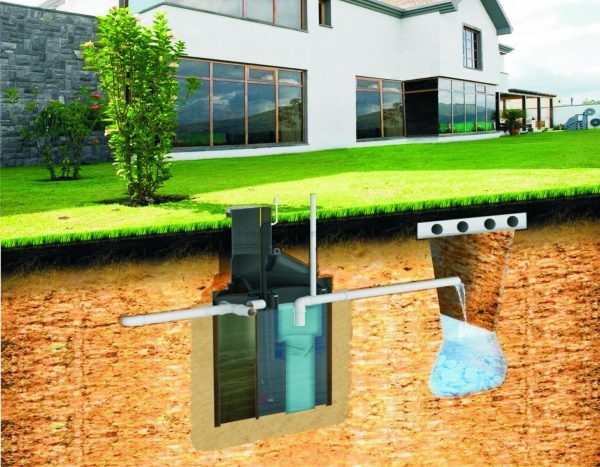
Plastic container is a good solution
When using a plastic container, there are two options for sewerage, both of which are environmentally friendly, odorless. In the first case, only a storage tank is used, in the second - a septic tank. This solution allows you to carry out a good organization of sewerage in a summer cottage, thereby avoiding the presence of an unpleasant odor.
If close to groundwater?
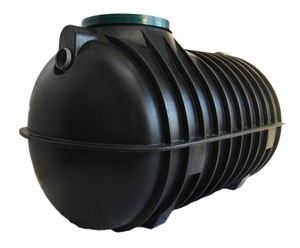 If the cottage is located near the river or the area is low, where the level of groundwater is high, then no one will allow you to arrange a storage pit or a septic tank. And this action will not bring the desired effect anyway. Indeed, during the heat season, unpleasant odors will come from your site and you will become the culprit of environmental pollution. Since groundwater does not allow seepage, therefore, the pit remains filled. Moreover, during the rainy season, there is a high probability of sewage overflowing the banks, then the site is in danger of pollution. Therefore, a plastic container for sewage will be a real salvation.
A plastic container is buried to a certain depth near the house, all drains are collected there. Install it in such a place on the site that there is free access for a special machine, which, if it is filled, simply arrives and pumps out all the contents. Providing enough space for the arrival of the car is the main condition for buying a plastic sewer tank.
To know when the tank is full, you need to install a special warning sensor on it. Its mark will show that it is time to call the waste removal and removal machine.
What is the price of such a sewer organization on the site? Plastic containers for sewerage are inexpensive. All you need is to buy it, bury it in the ground or just produce it. site installation. Among the disadvantages of this arrangement are the fixed costs for creating the conditions for using the system, that is, you have to pay for each removal of sewage. However, in lowland areas, this option for organizing high-quality environmentally friendly sewage is the only one.
Arrangement of a septic tank
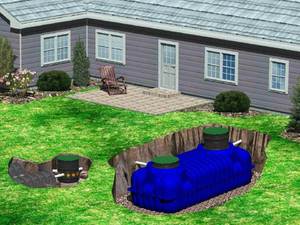 In fact, a septic tank is a sewage pit, only slightly modified. It does not emit unpleasant odors, as the water seeps into the soil, where it is filtered. As a result, only clean water enters the environment. But not everything is so cloudless, because dirt remains in the pit itself. Over time, a desert zone forms near it, as the chemicals we use in modern life are concentrated in the earth.
The principle of operation of a septic tank is similar. Sewage is first collected in a plastic container, then they are gradually filtered through special built-in filters, only after that the water goes into the natural soil. The price of a plastic barrel will become almost the only cost item. It will only be necessary to purchase pipes and carry out earthworks.
Installation of a septic tank
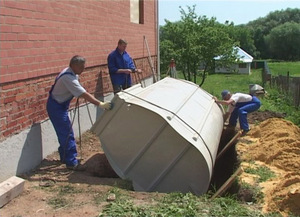 Installing a septic tank becomes a rather difficult task. To be as effective as possible, it must occupy a rather large area. However, after installing a plastic container, various herbs and even fruit trees can grow above it. You can even forget that there is a sewer under your feet.
Installing a plastic sewer tank is labor-intensive, but worth it, as it is the most practical option for ensuring uninterrupted sewer drainage. Such a septic tank will not emit unpleasant odors. In addition, it does not need any maintenance, except that every few years it will be necessary to clean the plastic walls of the tank to remove accumulated dirt. However, in addition to these works, no more costs will be needed, you will get an excellent environmentally friendly sewer.
The advantage of a plastic septic tank is its safety in relation to environmental pollution - it does not adversely affect groundwater. In addition, even wells or other structures may be located next to it, while the water in them will be clean.






What in the end to choose a septic tank or a pit

Soil types
On sandy and sandy loamy soil, if the volume of effluents does not exceed 1 cubic meter. m / day, it is better to equip the simplest filtration well (partially sealed cesspool). The length and width of the pit should be at least 2 m, and the depth should exceed the freezing line of the soil by 0.5-0.8 m. The walls should be strengthened and concreted, and a crushed stone bedding should be arranged below, which will play the role of a bottom filter. Instead of concrete, you can use brick or rubble stone. On this type of soil, septic tanks of any kind can be installed without problems.
When installing sewage on clay soil, you need to remember that in winter the sewer elements will experience a serious load. Therefore, the septic tank and cesspool must have strong walls. On rocky soils, it is necessary to dig a pit until clay or sand is reached - soft soil through which excess moisture will be removed.
Location of groundwater
If the aquifer is too close to the surface of the earth, then it will be quite difficult to equip a septic tank, especially if the soil itself on the site is poorly permeable. In this case, it is recommended to make a sand and gravel embankment so that the difference between the level of the drainage pipe and the groundwater horizon is at least one and a half meters.
High groundwater is also dangerous because the septic tank can emerge in the very first spring, when heavy snowmelt begins.To avoid this, the septic tank chamber must be filled with about 1/3 of the total volume with ordinary water, and the installation should be carried out on a concrete slab, connecting it to the device using steel cables or chains.
Closely located waters can heat a septic tank or a pit, so they must be properly waterproofed. This is also necessary in order to avoid getting sewage into the soil. In general, in such a site it is better to use fully sealed septic tanks equipped with a pump for emergency water discharge.
Land area
A septic tank requires 2-5 times more space than a pit, since two-chamber and three-chamber devices take up quite a lot of space. However, a rather large area is also required for the pit, since in accordance with sanitary requirements, such devices (and septic tanks too) should be located no closer than 2 m from the fence, 5 m from the residential building, 3 m from other buildings , 25 m - from a well or well. For the device of a full-fledged treatment plant, for example, a two-chamber septic tank with a filtration field, at least 25 sq. m. of land.
Family Composition
A lot depends on the number of people who constantly use the toilet. Perhaps, for one person, if he does not plan to start a family in the near future, a partially sealed cesspool with dimensions of 2x2x2 m will be sufficient. -5 years. But if finances allow, you can equip a septic tank. Accordingly, for 2 people, the frequency of access to the services of sewers is reduced by 2 times.
There are three types of septic tanks, each of which is designed to process a certain amount of wastewater:
- single-chamber - up to 1 cu. m/day;
- two-chamber - up to 10 cubic meters. m/day;
- three-chamber - over 10 cubic meters. m./day.
It is clear that the larger the family, the more cameras should be in the septic tank. A three-chamber septic tank will also be needed if, in addition to the toilet, drains from the kitchen and bathroom will be processed in it.



