
- Combustion chamber type and fuel consumption
- What is the principle of convection
- Overview of popular thermal convectors for the home
- Heating convector, what is it and how does a detailed review work
- How does it work
- 7 Advantages of the equipment
- Flaws
- Location of the convector
- Electric air convectors
- Pros and cons of convector heating
- Types of thermostats
- Recommendations for selection and installation
- Frame
- What is an inverter
- Additional options
- Lattice
- How to choose a gas type convector
Combustion chamber type and fuel consumption
In gas-operated convectors, open (chimney type) and closed (parapet type) combustion chambers are used. They differ in the chimney system. For devices of the first type, air is taken in and the waste products of combustion are removed through a stationary vertical chimney, like in a conventional furnace, the installation of which requires additional material costs.
Reference! The cost of convectors operating on natural and liquefied gas is almost the same.
This type is characterized by economical fuel consumption. To calculate its consumption, there are basic parameters:
- natural gas - 0.11 cubic meters. m per 1 kW of heating power;
- liquefied gas - 0.09 kg per 1 kW of heating power.
Using these parameters, it is easy to calculate, for example, that a 7 kW convector, which can heat a room up to 70 square meters. m, will consume 0.77 cubic meters for 1 hour of work. m of natural gas or 0.63 kg of liquefied gas.
Important! For efficient space heating, it is necessary to choose convectors with a power reserve in order to minimize heat losses. Gas consumption will remain almost the same
What is the principle of convection
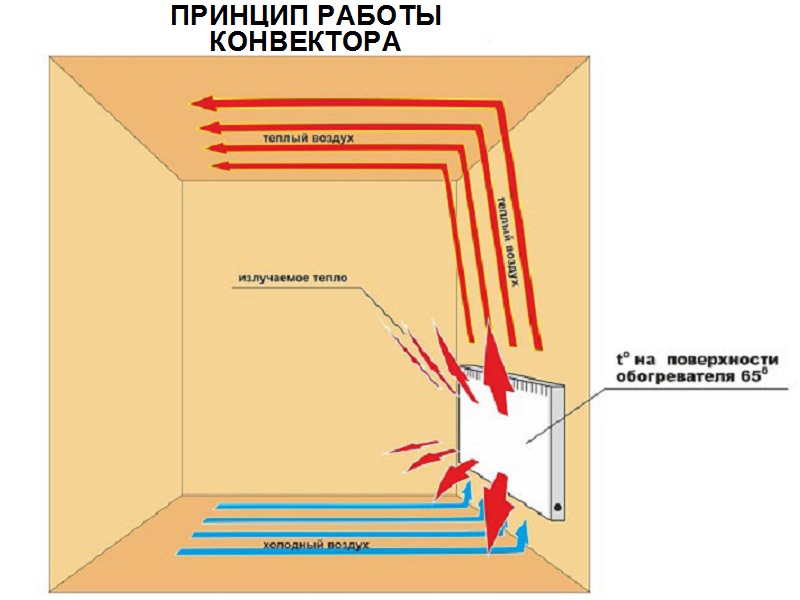
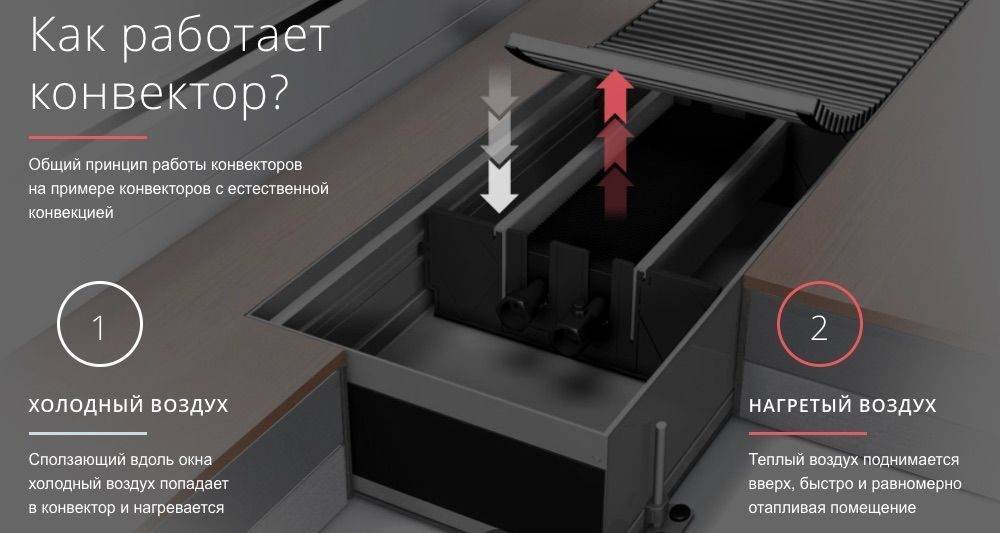
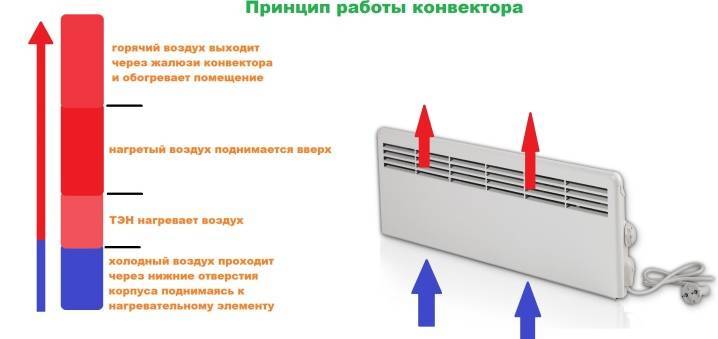
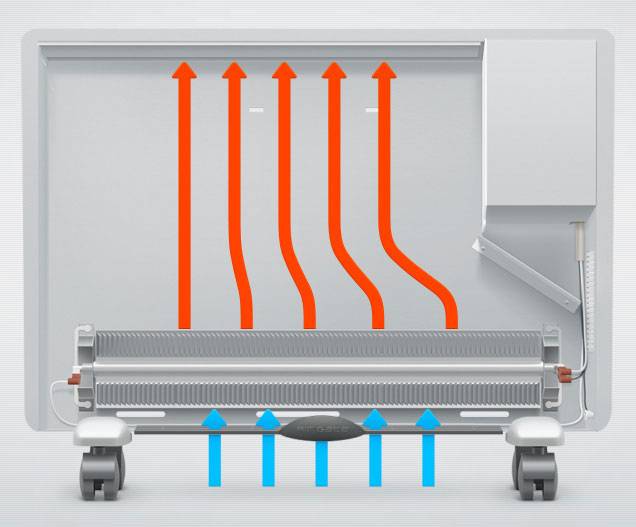
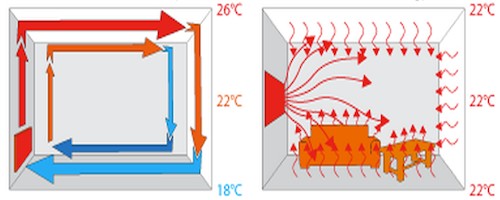
Convection heating is based on the application of the simplest physical laws - according to them, warm air becomes lighter and for this reason it begins to rise. In accordance with this principle, each convector battery operates, regardless of its power source.
As practice has shown, this heating scheme is characterized by efficiency and it becomes comfortable in the rooms relatively quickly. Convector heat supply provides heating for various premises, including covered loggias and balconies. Heating is carried out due to heated air, which quickly saturates the housing with heat.
The heating process is as follows:
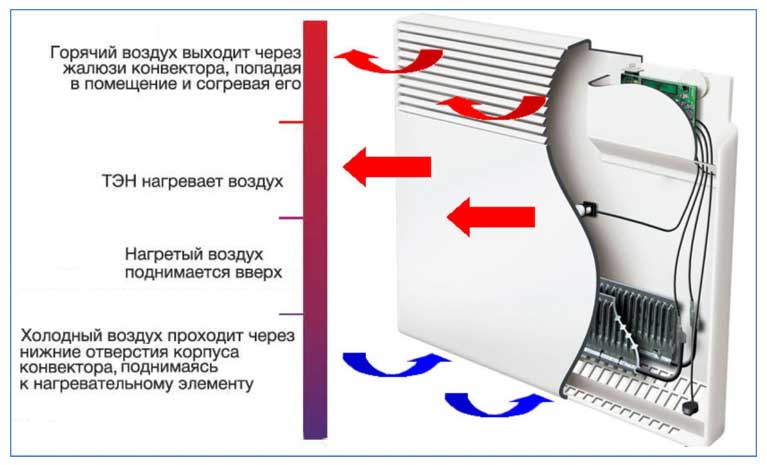
- The heating element of the convector-type battery has a large working surface area and is able to make the surrounding air warm.
- After that, the air masses leave the equipment and rush up.
- Their place is taken by cold air currents.
- This sequence continues until the heating system has completely warmed up the room.
Overview of popular thermal convectors for the home
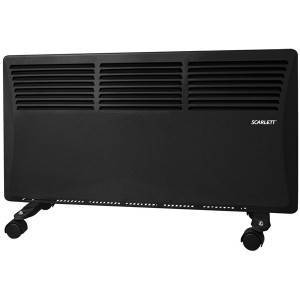
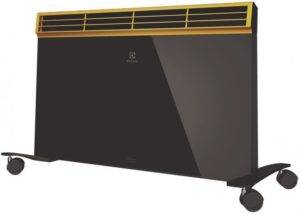
They often buy a Scarlett SC CH830 2000 convector from a Chinese manufacturer. The device has a power of 2000 watts. It can operate at three power levels: 800, 1200, 2000 watts.Suitable for heating a room with an area of 25 sq.m. The unit is equipped with temperature control and thermostat. There is also such an option as auto-off in case of overheating. Device control type – mechanical. It should be noted and light indication of operating modes. The convector can be installed on the floor or mounted on the wall.
Among the heaters of domestic production, convectors of the Termiya brand can be called. Installation can be done on the wall and floor.
According to the degree of protective shell, there are options for both ordinary dry rooms and bathrooms.
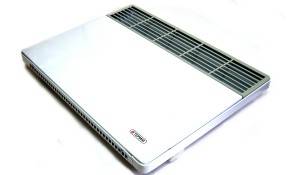
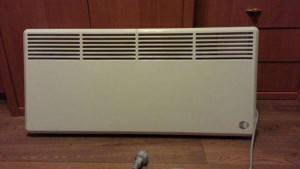
Also, a fairly economical solution is the convector Etalon of domestic production. Ideal for heating household and office space. The device is quite economical. Convenient to use. The unit can be attached to any surface: ceramic tiles, concrete, wooden base. There is protection against overheating. As well as an electronic temperature controller. The device has a low cost.



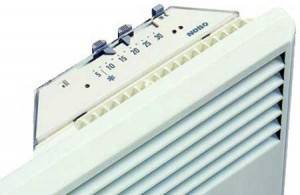
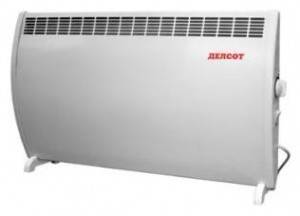
Heating convector, what is it and how does a detailed review work
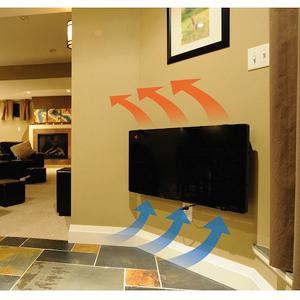
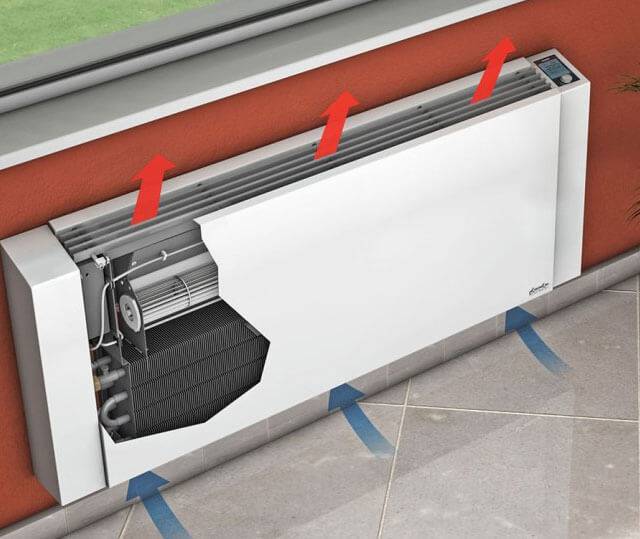
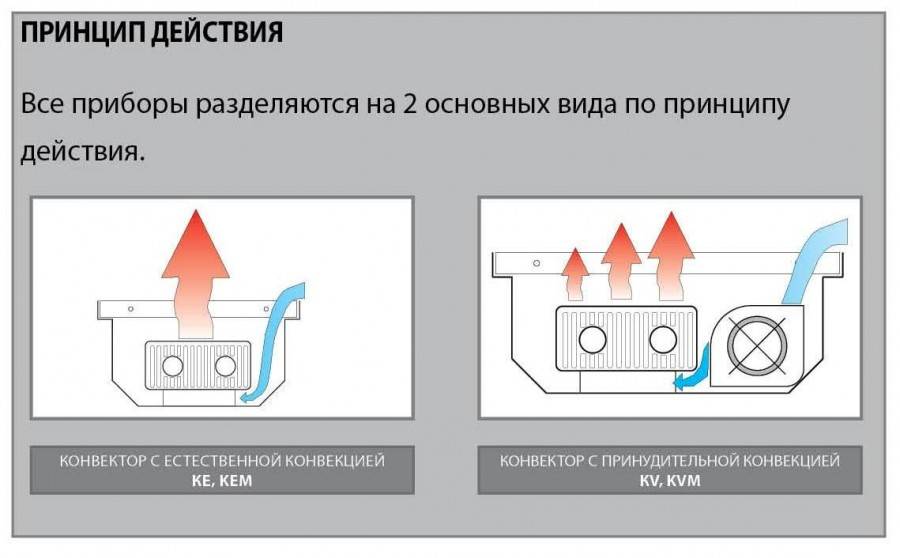
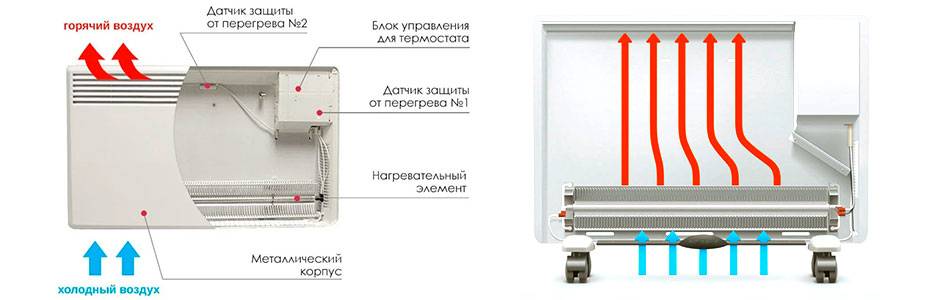
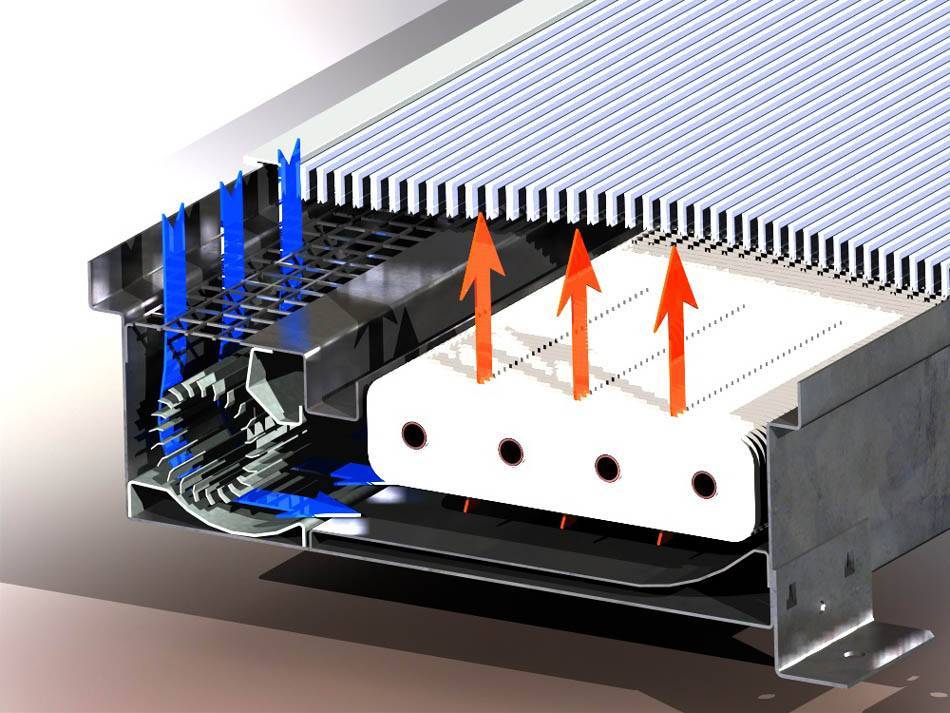
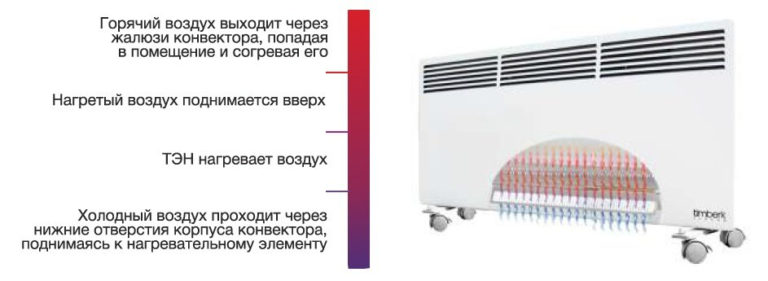
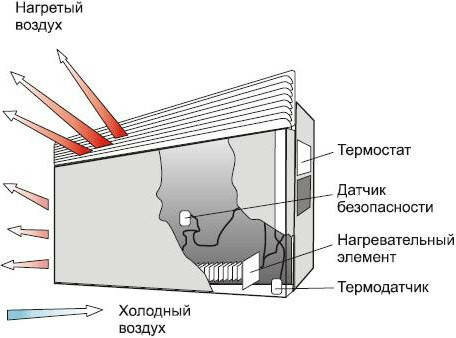
A little has already been said about the principle of operation, now let's look in more detail. Any electric convector is based on the principle of movement of air masses in the room. We all know that cold masses sink down, while warm masses are slightly higher. The developers of heaters took advantage of this by placing holes for cold air in the lower part of the device. The air-type heating element heats up quickly, which is its main feature. The most important thing is that the heated air is lighter and does not have any harmful inclusions. Warm masses exit through the central and upper openings in the housing.This solution allows you to increase the temperature in the room in the shortest possible time. Often, only a few minutes are enough to heat a small room with a medium-power convector.
How does it work
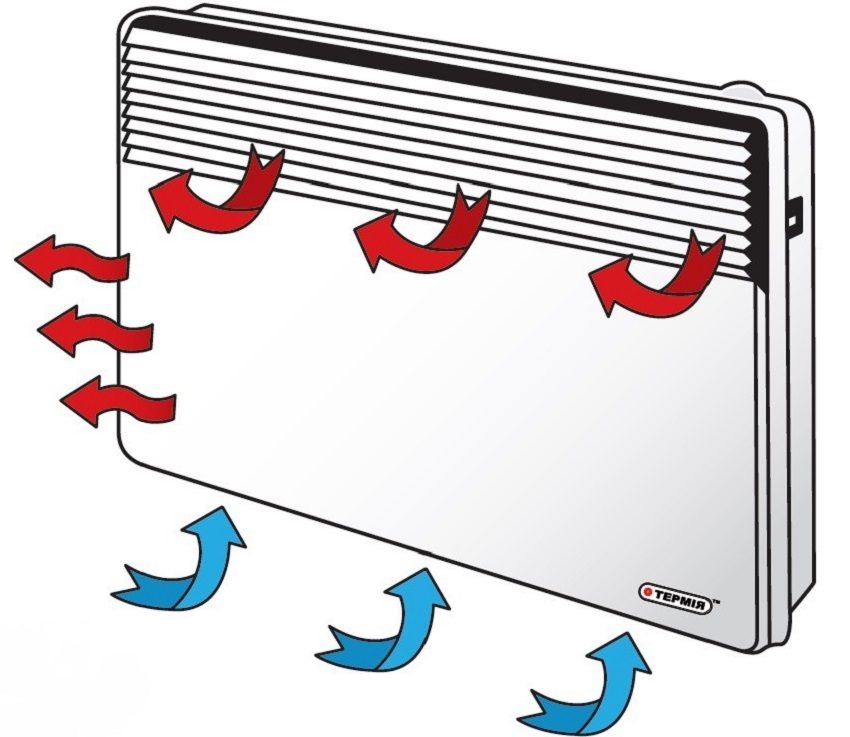
The principle of operation of the described device is based on the phenomenon of convection. From the course of physics, we know that cold air is heavier than warm air, it is located in the lower part of the room, heated air masses gradually rise up
Due to such movements, the entire air space in the room is heated.
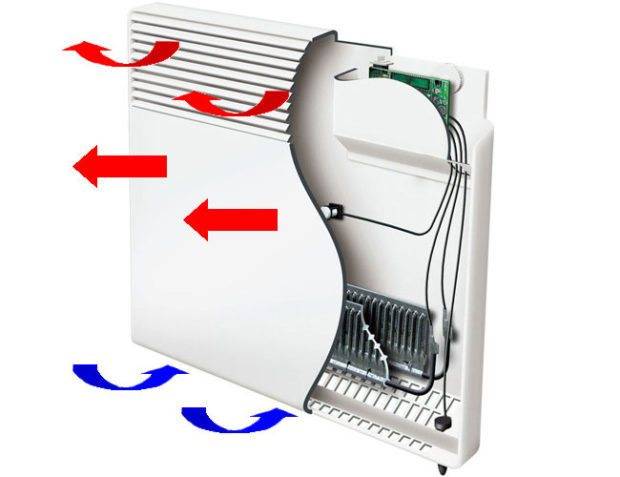
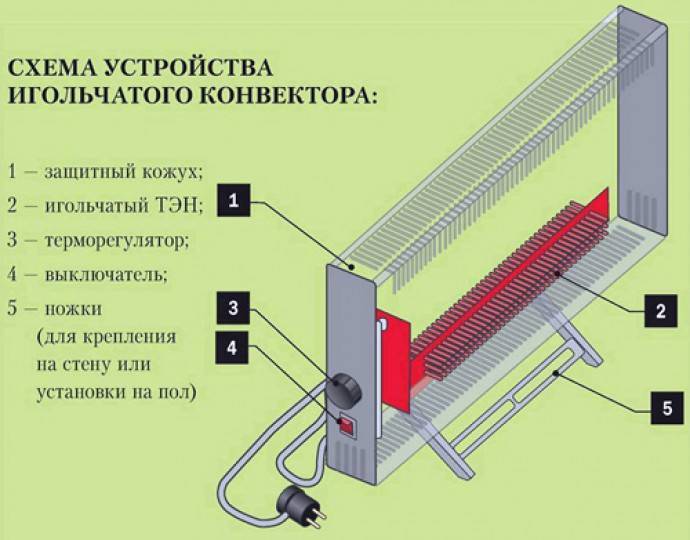
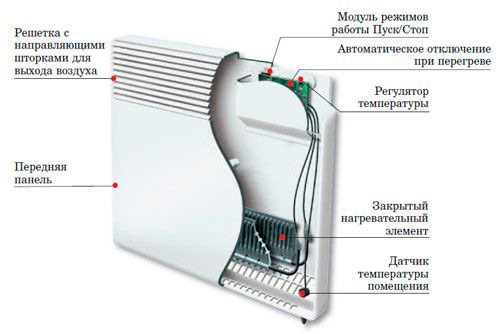
The convector works according to a simple algorithm. At the bottom of this device is a heating element (it is also called a heat exchanger). To increase the volume of air passing through, this part is made in the form of a radiator with several flat fins. The angle of their inclination regulates the direction of heated air flows. The heat exchanger closes a protective metal casing.
According to the energy carrier used, all convectors can be divided into the following types:
- Electrical appliances;
- Gas convectors;
- Water.
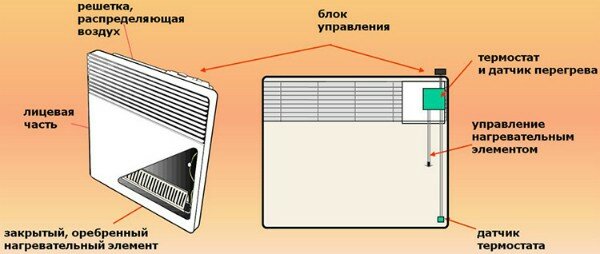
Convector heater device
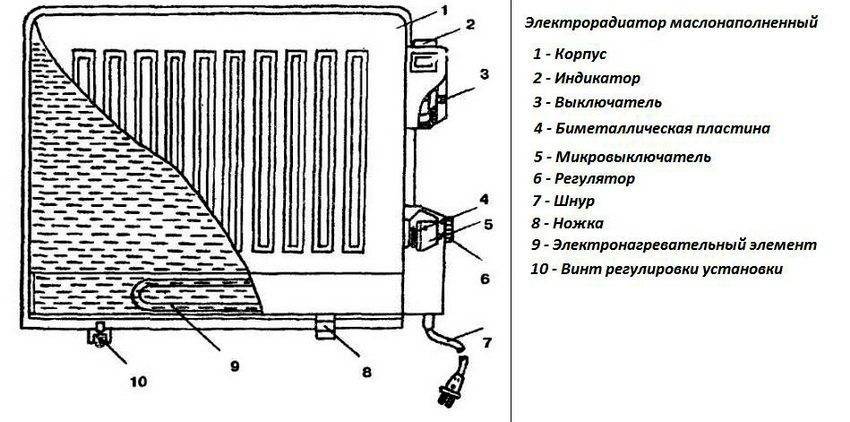
At the top, as well as at the bottom of the convector body, there are several holes for sucking in cold air and transporting heated air. Structurally, it is done in such a way that the body of our device does not have direct contact with the heat sink, so the casing does not heat up and does not transfer heat. A similar transfer of heat resources occurs in water and oil radiators.
In everyday life, the electric type of convectors is mainly used.Water devices have lower efficiency indicators, they differ from analogues in significant overall dimensions, therefore they are installed in the places of installation of traditional water radiators in niches under windows. Gas equipment, despite the possibility of saving energy resources, for some reason is not popular among consumers.
All models of the considered heaters, regardless of the type, can have different overall dimensions. Some of them are equipped with built-in sensors and many additional features. The main advantages of convectors are:
- Silent operation. This characteristic is associated with the absence of a fan in the device, which is buzzing;
- The ability to install the device on various surfaces (on the floor or wall, there are models that can even be installed on the windowsill);
- Beautiful design that will allow you to "fit" the installation into any interior;
- Low heating temperature of the case, on average 60 degrees, maximum parameters - 90 degrees;
- In overall models there are wheels for easy movement around the room, light appliances can be mounted on the wall;
- When heating the room with a convector, oxygen is not burned;
- Devices can be left unattended;
- Continuous operation. Many manufacturers give a 10-year product warranty.
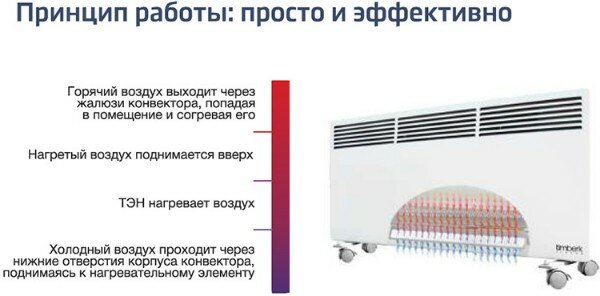
The principle of operation of the convector
Despite the huge number of advantages, convectors also have negative qualities.
The disadvantages of such devices include:
- Low noise level during heating;
- The impossibility of replacing the heating element at home;
- The absence of a fan affects the speed of heating the room.
7 Advantages of the equipment
Electric convectors are modern heating devices capable of providing extremely comfortable temperature parameters. With the correct calculation of power and proper installation, the advantages are quite obvious:
- 1. Easy and safe to install and operate. It is enough to attach it anywhere to the wall or put it on special legs, connect it to the mains, and the device is ready for use. The low body temperature prevents burns.
- 2. Large manufacturers of convectors provide a guarantee of trouble-free operation up to 42 months, and a service life of up to 20 years. The devices do not require specific maintenance, except for periodic removal of dust inside with a vacuum cleaner and wiping the surface with a damp cloth.
- 3. Relatively low cost of the device and a wide range of models and functional features. Each buyer will easily pick up a convector to his taste and wallet.
- 4. Constant human intervention is not required to maintain a stable temperature. Automation and electronics operate offline, withstand power surges and completely eliminate temperature fluctuations.
- 5. Silent operation. Only for convectors with mechanical control, turning the thermostat on and off is accompanied by a soft click, and all electronics are absolutely silent.
- 6. Profitability, healthy microclimate, high heating rates and efficiency.
Flaws
The Achilles' heel of convector heaters is the high consumption of electricity. There are economical models, but utility costs will still increase in winter.




Here are some more cons that should not be ignored:
Convectors dry the air
It does not matter what kind of device you have - electric, gas, water - the very principle of operation is based on pulling moisture from the atmosphere.
Poor efficiency in large rooms with high ceilings. This applies to water appliances and electric fireplaces.
In the absence of interior doors and poor thermal insulation, do not expect a convector heating system to replace central heating. The exception is gas radiators, but they also have their drawbacks.
For example, their installation will take time, require the intervention of professionals and local authorities. Yes, and blue fuel is not cheap now, so you can’t count on special savings.
In the absence of a built-in fan, the air masses are mixed unevenly. As a result, drafts may occur.
Water convectors work effectively only as additional heating. For example, if you need to balance the temperature in your home. When the problem is in the draft from the window, hang the unit nearby - it will create a thermal barrier. If you want to drain a corner room, use the built-in water convector. Also, such devices can be simply outdoor.
As you can see, some minuses can be blocked by pluses. And any technique has disadvantages, even lux-class. The main thing is that the device is safe for health.
Location of the convector
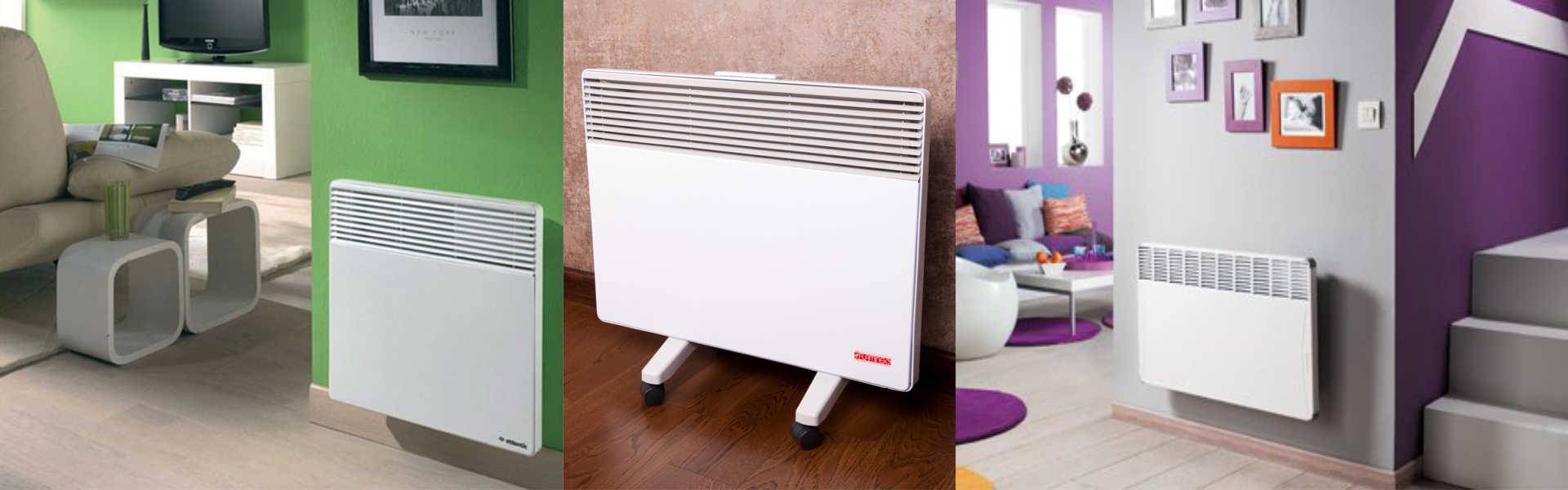
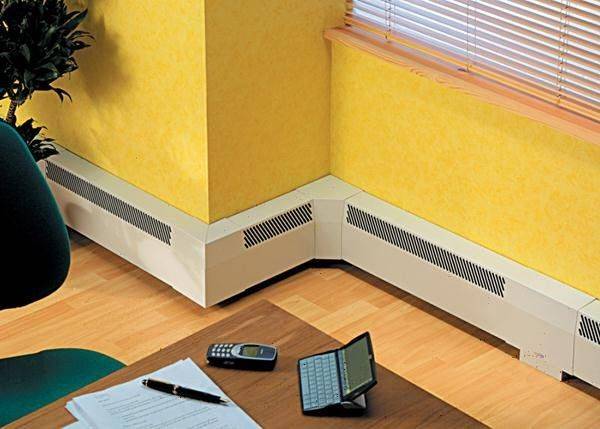
Before buying a convector for electric heating of the air space in the room, you need to decide on its location. This device can be placed on the walls without spoiling the interior of the apartment; for this purpose, there are models with wall mounts. If you want to use the heater mobile, as needed, there are also such model options
In this case, experts draw your attention to the presence of wheels for transporting the device.
When buying a convection heater, its overall dimensions and design are important, you need to choose the one that is more suitable for your interior. "Mini plinth" versions of convectors have a height of no more than 150 millimeters.
Electric air convectors
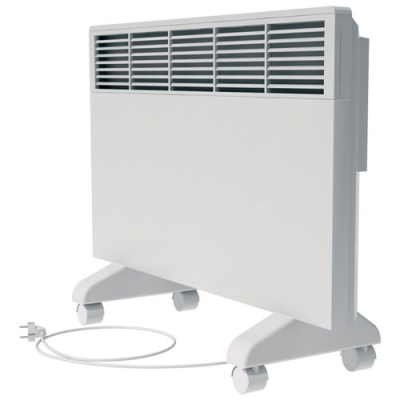
To operate electric convector heaters, only a 220-volt socket is needed.
To heat houses that are not connected to gas mains, electric air convectors are often used. They are simple heating equipment operating on the basis of electric heating elements. The temperature is monitored by electronic or mechanical thermostats. The heaters do not require a coolant supply and are easy to install.
Air convectors powered by electricity are the best suited for heating small country houses, private households and office premises with a ceiling height of up to three meters. They are mounted in a wall or floor version, they can work as a main or auxiliary heating equipment.
Advantages:
- Ease of installation - just hang the air convectors on wall brackets or place them on the floor, but on legs or wheels;
- Safety for others - low body temperature eliminates burns;
- There is no effect on the composition of the air - the humidity remains almost the same, oxygen is not burned.
Flaws:
- High heating costs - like any heating equipment powered by the mains, air convectors consume a lot, a lot;
- The drop in efficiency during long-term operation is associated with the design of the heating element;
- Raise dust into the air - however, this is typical for all convector units.
The biggest drawback is the high cost.
The final consumption depends on many factors - the set temperature, the amount of heat loss, the air temperature outside.
Pros and cons of convector heating
The main advantages of this type of home heating:
- It is possible to heat rooms for various purposes.
- No adverse effect on the state of the air, since convector heating does not burn oxygen.
- Minimal impact on the degree of air humidity.
- Easy installation of heating equipment - this plus applies to electrical units.
- There is no negative impact on the well-being of people.
- A wide range of equipment for the arrangement of heat supply.
In addition to the advantages of convector heating, there are disadvantages:
- The feeling of overheated air, which not all residents like.
- If the room has high ceilings, this type of heating will be ineffective.
- There is a big difference between the temperature in the upper layers of the air and those located below.
As for electric convector heating, it has another big drawback - high cost. But not all houses have a gas main, and if there is a wish that the heat supply system does not require large expenses and is easy to install, then in this case it will not be possible to do without convectors.


Types of thermostats
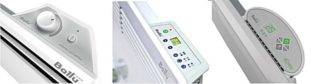
The electric heat convector has 2 control options - mechanical and electronic. Each principle of arrangement has its own characteristics:
- Mechanical control is provided by means of a relay and a toggle switch. The control system of this type is not relevant and is becoming a thing of the past. But climate technology with a mechanical principle of thermoregulation is in demand because of its low cost.
- Electronic thermostats are more accurate and practical. Control allows minimizing energy and heat losses. The cost of devices with an electronic control system is high.
Any option for arranging thermoregulation is resistant to voltage drops, which keeps the device in good working order.
Recommendations for selection and installation
When choosing built-in heating, 2 factors are important: the available heat output and compliance with the interior of the room. Manufacturers must indicate the power value in the technical data sheet for the product, so in this respect it is not difficult to make a choice. It is only necessary to know the need for thermal energy for each heated room
It is only necessary to know the need for thermal energy for each heated room.
In appearance, choosing a built-in convector is also not difficult. The color schemes of the offered gratings are very rich, but even if you did not manage to find the necessary coloring, then for sure there is an opportunity to order it. The size of the product in the plan and its height also play a role, the latter must correspond to the thickness of the screed or raised floor.
The installation of the floor device consists in attaching it to the subfloor and aligning the surface of the product horizontally using the building level.Height adjustment is carried out by mounting brackets and is fixed. Then, the supply pipelines are connected, laid, like underfloor heating, from central heating or an individual boiler room. After the connection and installation of floor convectors is completed, you can pour the screed.
Advice. During the hardening of the laid mortar, it is necessary to put the decorative grille in its place, otherwise the screed can compress the walls of the case and then it will be difficult to insert it. The installation process is clearly shown in the video.
Frame
Most often, steel is used for the manufacture of modern convectors. The design of the case can be the most diverse, so there are usually no problems with choosing a heater for a specific style of the room. There are special fasteners (brackets) on the case of wall modifications: they make it possible from time to time to remove the device for maintenance purposes.
In some cases, the protective steel box of the convector is equipped with adjustable shutters on the sides: by changing their angle, you can adjust the direction of air flow. Such a constructive solution allows volumetric distribution of heat in the room, which makes its heating more uniform. In order to avoid underheating, when choosing a convector, it is recommended to leave some power margin (especially if it is installed in a corner room).
What is an inverter
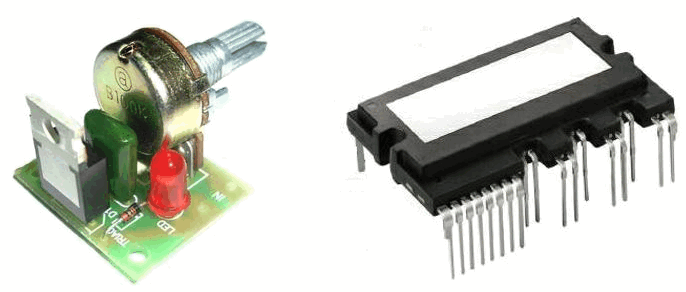
An inverter is a device that converts direct current into alternating current or increases the value of voltage, frequency of alternating current.The need for such a transformation arises when creating instruments and mechanisms with a sensitive system of settings that respond to the slightest change in the parameters of the environment. Inverters are used in many areas: electric welding (in fact, a welding machine is a kind of inverter), control of electric motors and electric drives, production of air conditioners and heaters, etc.

As an integral part of the device, the inverters look different and may not have an individual case.
Additional options
The versatility of some modern models is one of the advantages of convector heaters.
Some features are very useful.
- The presence of a built-in fan. Accelerates the heating of the room, allowing you to save on electricity.
- Ionizer. Creates a useful microclimate in the room.
- Humidifier. To maintain normal humidity.
- Possibility of individual settings. Some models of convector heaters are equipped with electronic control. On the panel, you can set the temperature mode for each day of the week (if required); adjust the frequency of on / off; check the dryness of the air. An interesting feature for those who often leave, but do not want the house to freeze in the cold. In addition, competent settings help save electricity.
- Child lock function.
- Auto power off option when dropped.
- Frost protection. Basically, it happens with electric fireplaces. They simply turn off when the ambient temperature drops to +5 degrees.
As you can see, such convectors have a lot of advantages, which made them a full-fledged heating system.
Lattice
High demands are placed on this heating element of this type. The grill must be aesthetically pleasing as it is the only part that is outside. It is made from materials with high strength so that it can withstand significant loads and protect the system from the influence of the external environment. Most often used:




- aluminum;
- steel of various types - ordinary, stainless, galvanized;
- marble;
- tree and others.
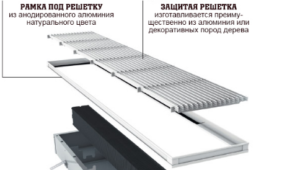
Protective grille for water convector
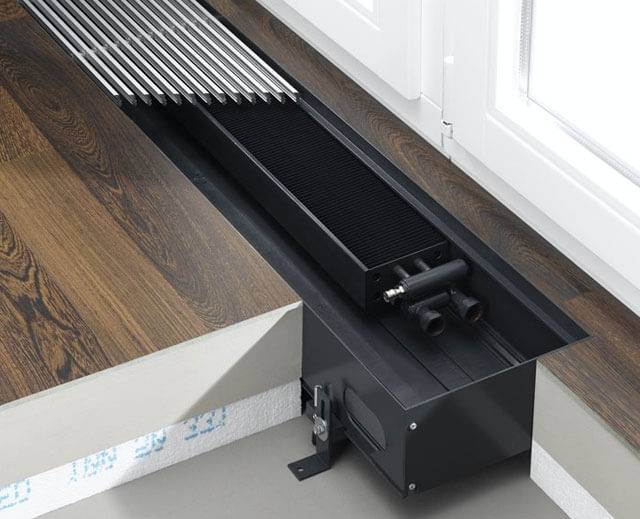
Grilles for convectors that are installed in the floor are of two types - linear and rolled. The first type is cheaper, but less convenient to use. In order to gain access to the internal elements of the appliance, it is necessary to completely remove the entire grill. The roll version is more convenient in this case, since it rolls up to the desired level.
Depending on the type of placement of the slats in the lattice, models with a transverse and longitudinal design are divided. Linear models come in two versions. For the manufacture of roll models, only the method of placing the slats across is used.
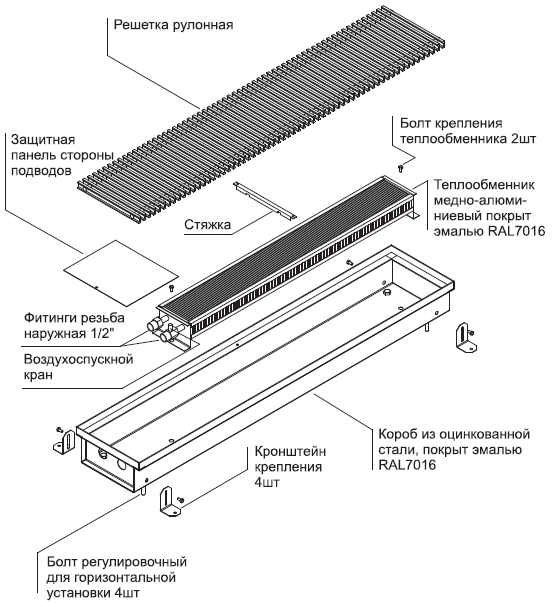
Decorative grilles for floor convectors
If the grate will be walked on, it is necessary to pay special attention to its design. It is necessary to choose models where plastic parts are not used to connect individual elements. It is best to use the option where special lamellas and spring bars are used. They not only allow you to create a solid grating, but also significantly reduce the noise level during its operation.
How to choose a gas type convector
If you choose a gas convector, for example, to give, then analyze the following characteristics:
Useful thermal power is the most important parameter on which it depends whether the device can cope with space heating at all. To roughly calculate the required thermal power of the device, you need to divide the area of \u200b\u200bthe room by 10
Please note that the resulting value will be approximate and relevant only for ceiling heights up to 2.5 meters. For the most accurate calculation of this parameter, it is better to contact a specialist. When calculating, he will take into account the material of the walls, the thermal insulation of windows and other parameters.
In any case, it is better to choose a convector with a small margin of power.
Gas consumption - directly depends on the power of the device, as well as on the type of gas used. If you use convector heating with an LPG heater, be prepared to change cylinders quite often.
The presence of a fan - the fan accelerates the heated air around the room faster, but it is powered by electricity. Therefore, buying a gas convector with a fan to heat a house in which there is no electricity simply does not make sense.
Type of gas - not all models of gas devices for heating a house can be operated from a cylinder, some are adapted for use only with a gas main. Be sure to pay attention to this moment.
When calculating, he will take into account the material of the walls, the thermal insulation of windows and other parameters. In any case, it is better to choose a convector with a small margin of power.
Gas consumption - directly depends on the power of the device, as well as on the type of gas used. If you use convector heating with an LPG heater, be prepared to change cylinders quite often.
The presence of a fan - the fan accelerates the heated air around the room faster, but it is powered by electricity. Therefore, buying a gas convector with a fan to heat a house in which there is no electricity simply does not make sense.
Type of gas - not all models of gas devices for home heating can be operated from a cylinder, some are adapted for use only with a gas main
Be sure to pay attention to this moment.
In principle, this is all you need to know about choosing gas-type heaters. Now back to electric models.



