
- Types of brackets
- Unorganized drainage
- How to install a gutter with your own hands
- Do-it-yourself drainage system
- Roof drain installation
- What are drainage systems made of?
- Popular gutter manufacturers
- Features of a flat roof storm system
- Types of Gutters: How to Choose Them for Your Project
- Let's choose the sizes
- Strengths of a flat roof
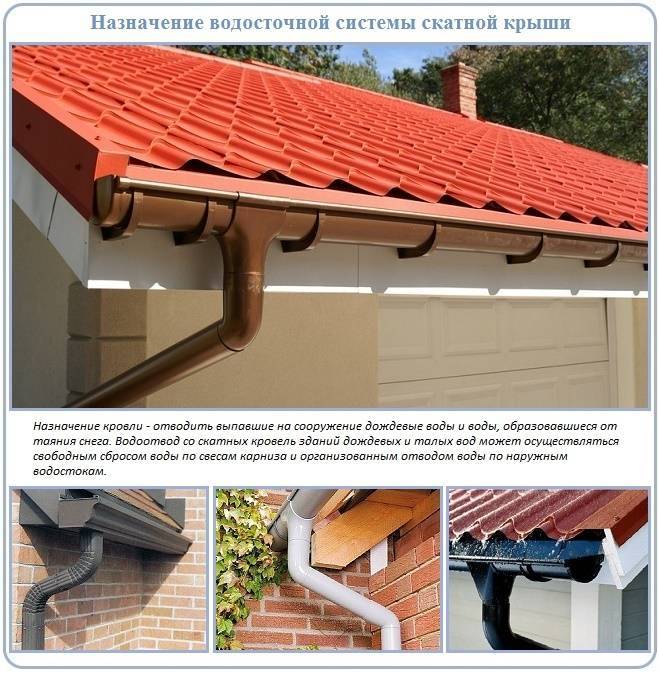
- Why do you need a drain
- Gutter functions
- Types of drains
- Materials for homemade gutters
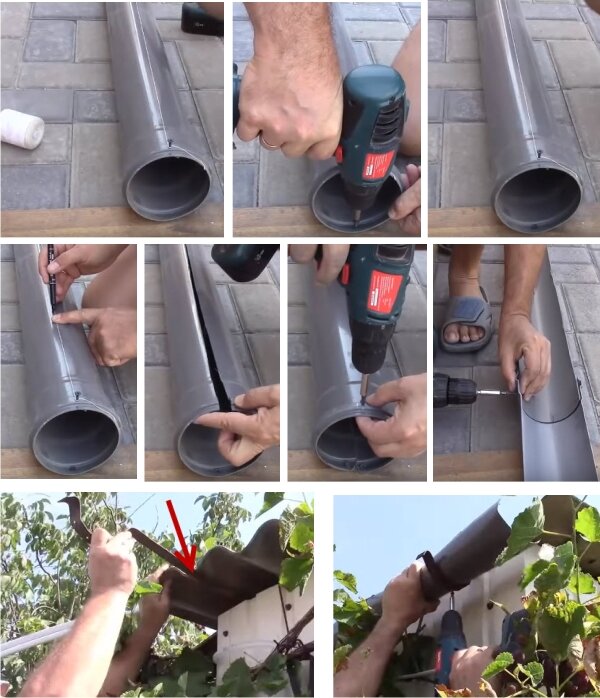
- How to make your own from improvised means
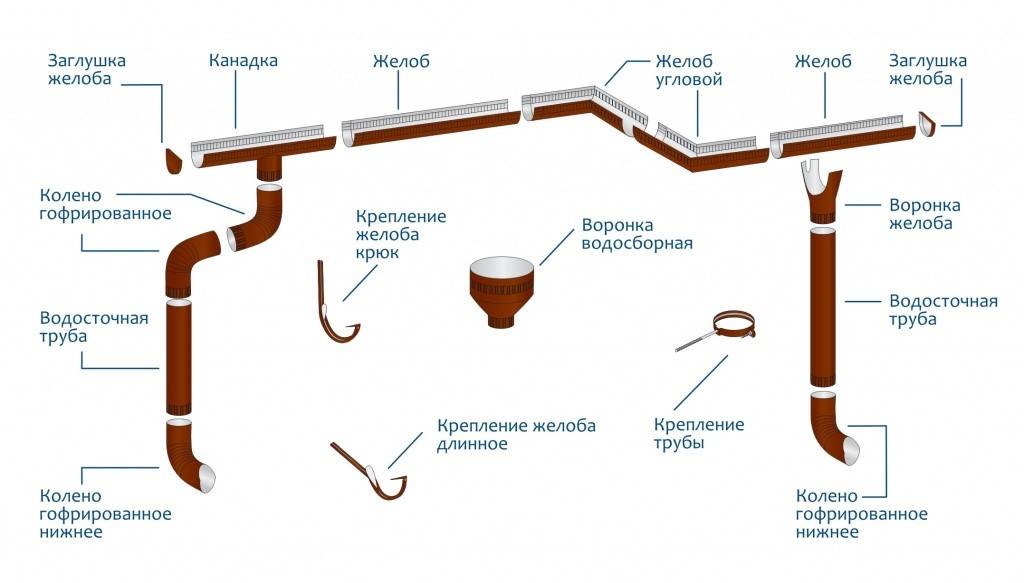
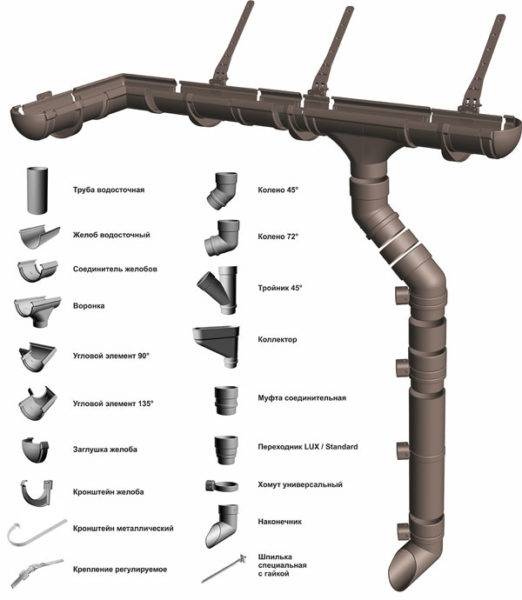
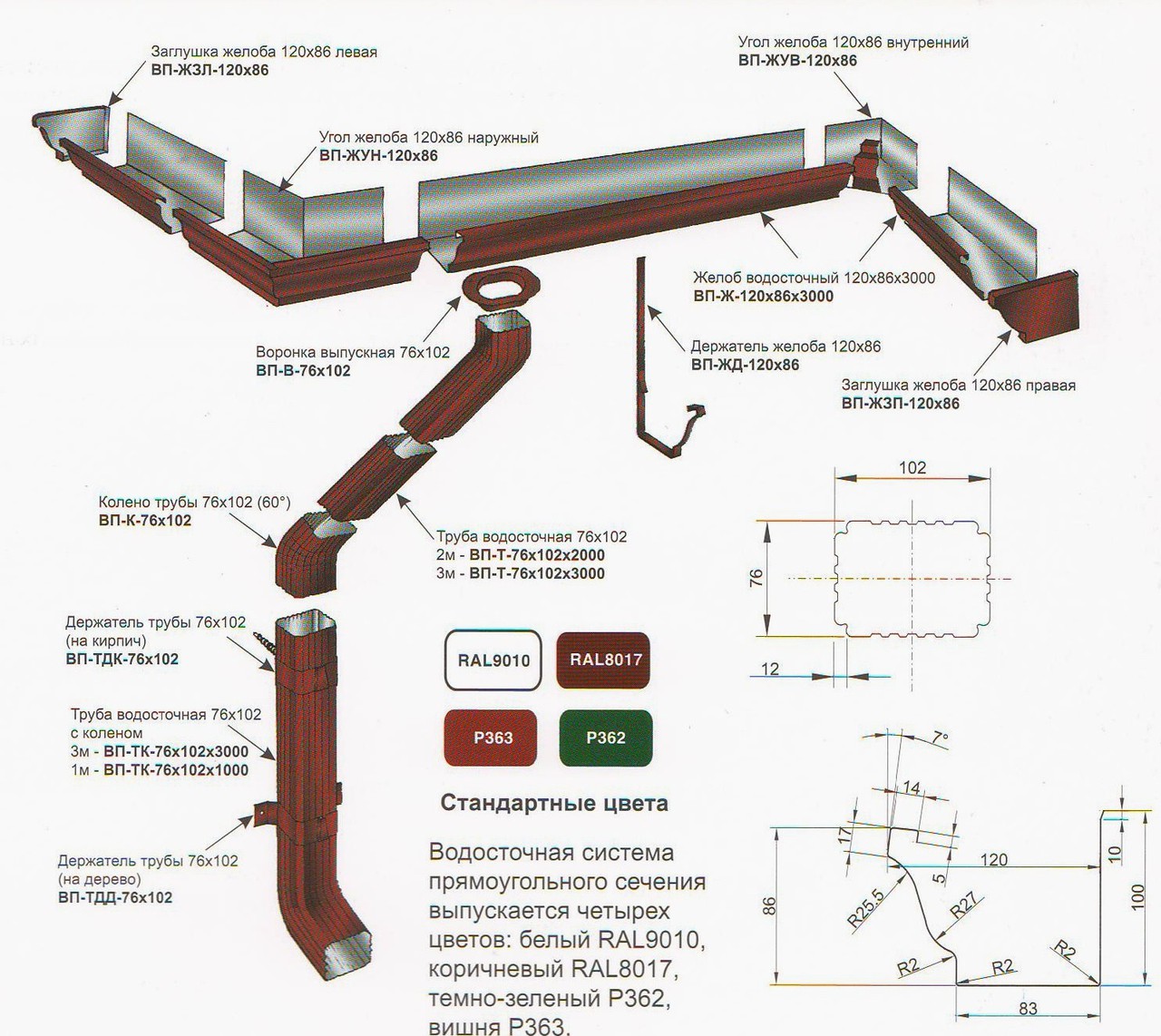
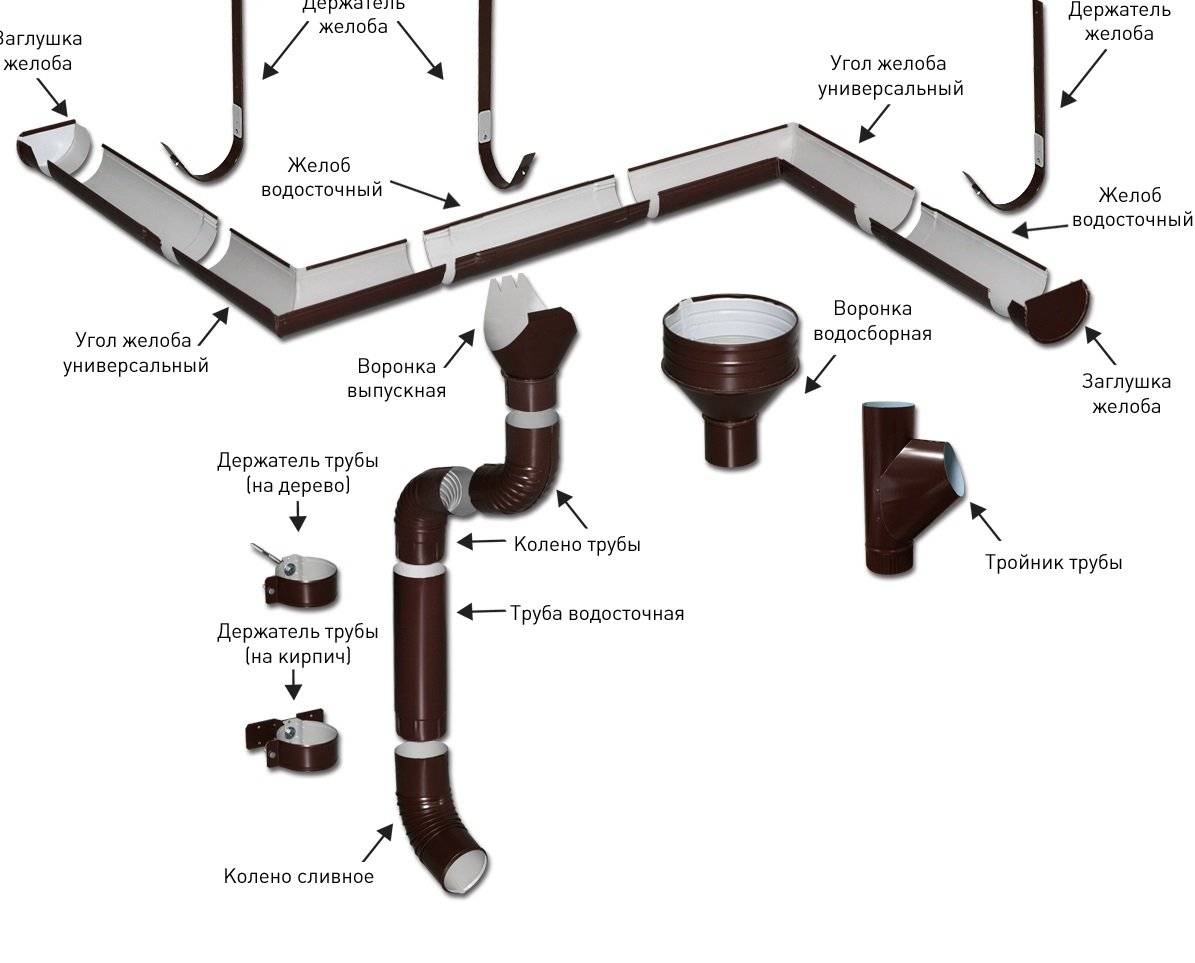
- Main elements of the system
- Conclusions and useful video on the topic
- Conclusions and useful video on the topic
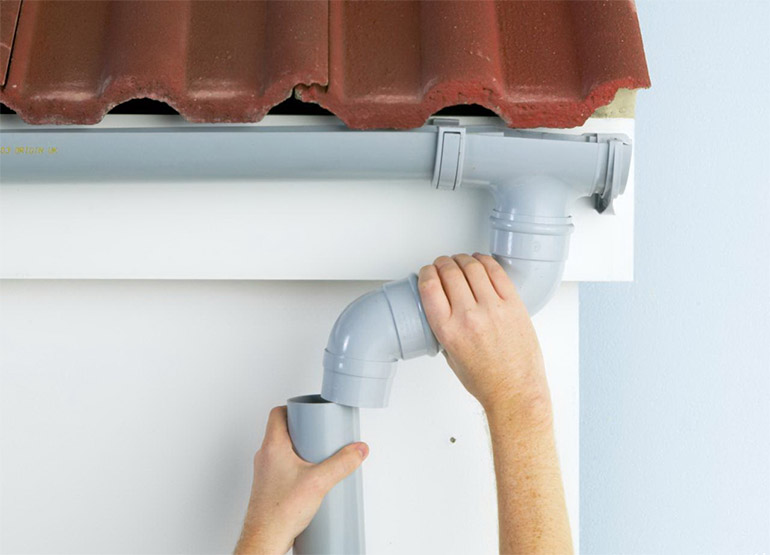
Types of brackets
A bracket is an element designed to fasten a drainage pipe system. The standard option is a long product that is used if there is no batten on the roof. Short products are needed for mounting on a frontal board or wall at home. But this option is not the most convenient, since the screws will not be screwed in securely.
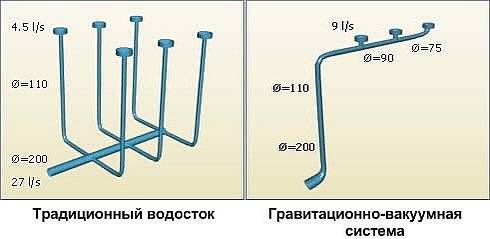 In traditional systems, the flow rate is determined only by the angle of the gutter, in more complex gravity-vacuum systems, a siphon is turned on at a high level of precipitation and significantly increases the intensity of drainage
A roof drip is a bar that is fixed to the pediment or cornice of the building and protects the facade of the house from moisture. The principle of operation of the drip is that water from the roof enters the plate, and then into the gutter. The sludge then passes through the drainage system and into the sewer.
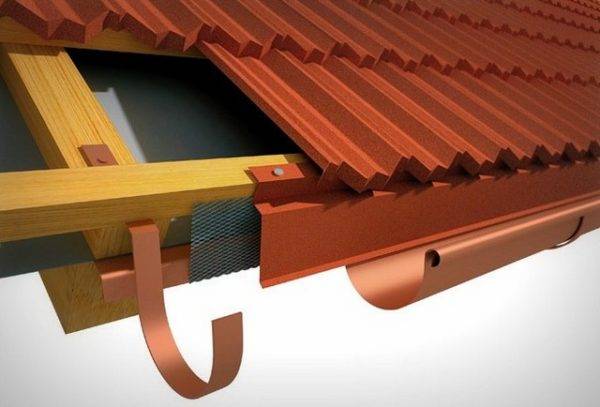 When properly installed, the dripper protects the rafters and the entire roof overhang from getting wet.
Unorganized drainage
An unorganized type of drain is only a roof with the correct slope, which allows moisture to freely flow down without affecting the facade of the building. In this case, water falls in close proximity to the foundation, which increases the risk of rotting the foundation. This drainage option is suitable for shed roofs with a slope towards the courtyard.
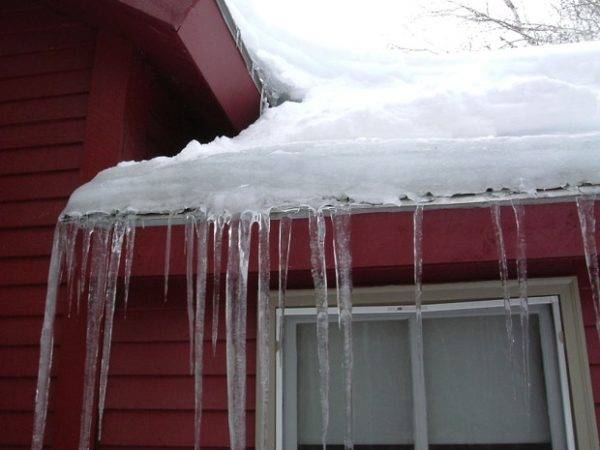 In the absence of a complex of gutters, water can get on the surface of the walls and on the foundation, and in winter form large icicles
An unorganized drain is not suitable for residential buildings, as it does not provide effective water drainage. When creating such an option on other buildings, the features of SNiP should be taken into account:
- unorganized drains are allowed on buildings no higher than 5 floors;
- annual precipitation in the region should not exceed 300 mm/year;
- on the side of the building where the roof slope is facing, there should not be balconies, buildings, a driveway or a pedestrian road;
- the size of the peak of the roofing should not be less than 60 cm.
An unorganized type of drainage is suitable for utility buildings, as it cannot provide good protection for residential buildings.
How to install a gutter with your own hands
After fixing the brackets, the gutters are laid.Depending on the system used, the algorithm of actions on how to make gutters with your own hands may differ. One of the options involves the presence of a special groove on the edges of the products. It serves to thread the ends of the brackets, followed by turning the gutter into place.
For fastening, the brackets are equipped with special tongues. In the second case, the starting point for installation is a gable board with special locks, into which you will need to insert the inner gutter edge. Next, the locks are alternately pressed on the front surface of the brackets.
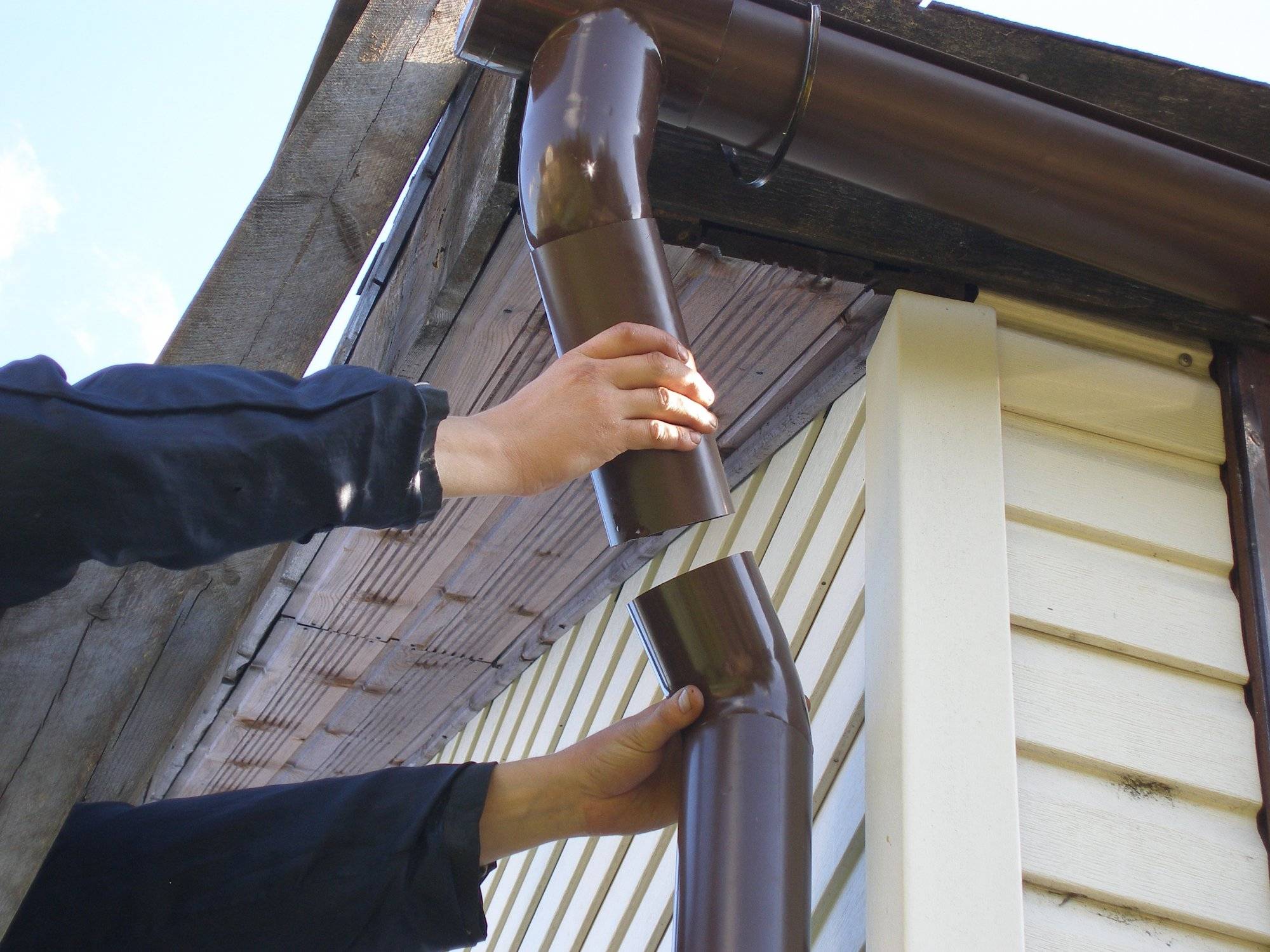



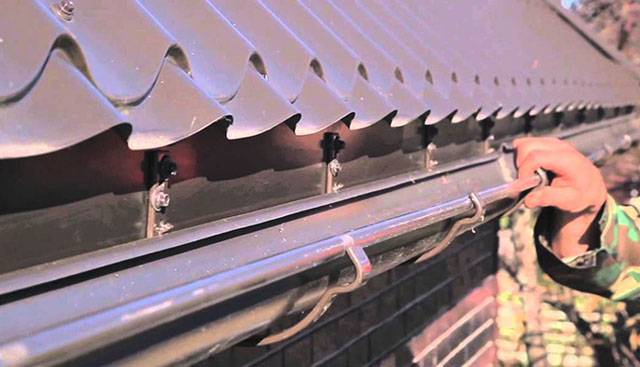
In order to connect both parts of the drain, special connectors equipped with rubber seals are used. They are not cheap, so it is quite often practiced to lay two gutters with an overlap of 30 cm.
In this case, it is important to achieve the location of the joint in the direction of the water flow. To increase the tightness, the junction of the gutters is laid with a rubber strip
For connection, ordinary self-tapping screws are suitable. The fixed gutter is formed with plugs at both ends.
Do-it-yourself drainage system
Of course, most often people purchase and install ready-made structures. Today there are many options for making a gutter with your own hands from various improvised materials. Such a decision is most often based not on the desire to save money, but for the purpose of decorating a private house.
A great idea is to make a gutter out of wood, but subject to the right choice and processing. Such a storm water drainage system will serve you for more than ten years. Wood species such as pine, fir and larch are suitable.
Very rarely, due to the negative impact on human health, but all there is a storm water drainage system made of lead.
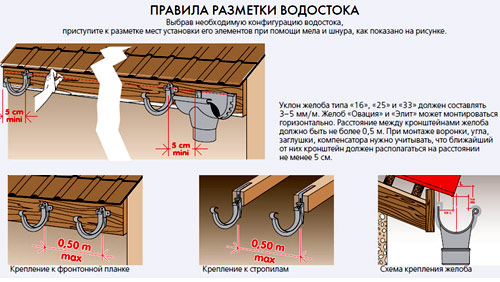 Construction drawing with the dimensions of the gutter for the roof
Although it is quite practical, but its significant drawback reduces its prevalence.
The winner among all is a gutter made of galvanized steel, as it is notable for its low cost and harmlessness. But it is quite difficult to process and its service life does not exceed ten years. As far as durability is concerned, there is no equal for a gutter made of ceramic parts, as its service life reaches centuries.
In order to make a gutter from galvanized steel sheets with your own hands, you will need:
- scissors for metal (if you will make a metal storm water drainage system);
- a hammer;
- marker for marking on a sheet of metal;
- sheets of galvanized steel (approximately 0.5 millimeters thick);
- pliers.
 The layout of the drains around the building
Please note that the width of the workpiece must necessarily exceed the diameter of the pipe by one and a half centimeters, because this difference is necessary to connect the edges of the sheet. First of all, you need to make a pattern on a metal sheet
Draw a straight line on the workpiece, on one side it will be half a centimeter, and on the other - a centimeter.
After that, you need to bend the sheet of metal using pliers, and the side that is smaller - at a slight angle, and the rest - at an angle of ninety degrees.After that, we wrap the higher edge and connect the edges of our workpiece, the smaller side should enter the larger one.
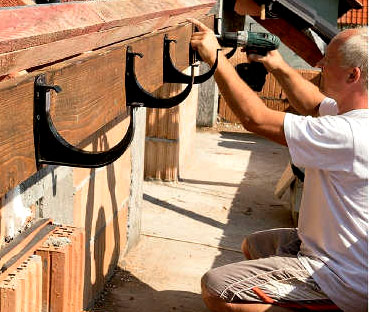 Installation process of gutter brackets
Next, you need to slightly crush the pipe with a hammer so that it can be connected to another pipe.
Now you need to make a gutter for the gutter system, and for this you will need special equipment, but you can try to do it manually, although the effect will not be the same. So, first you will need to cut a blank from a pipe or wood, and then put a metal sheet on it and use a mallet to try to give it the necessary shape.

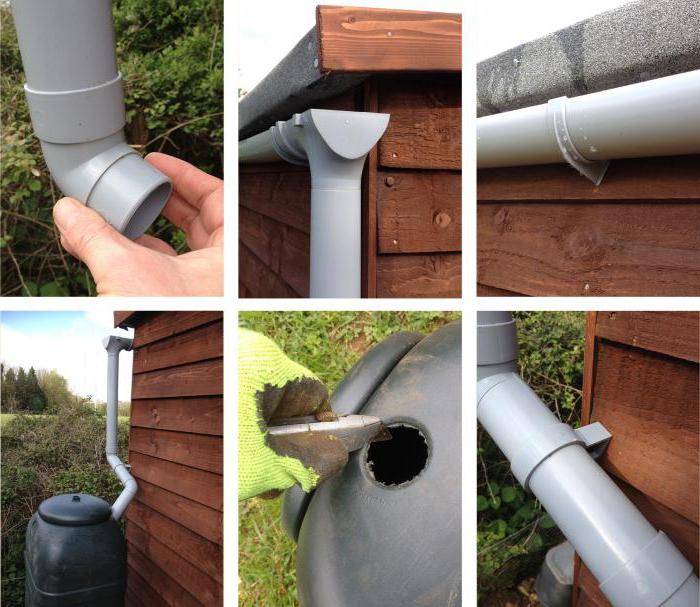
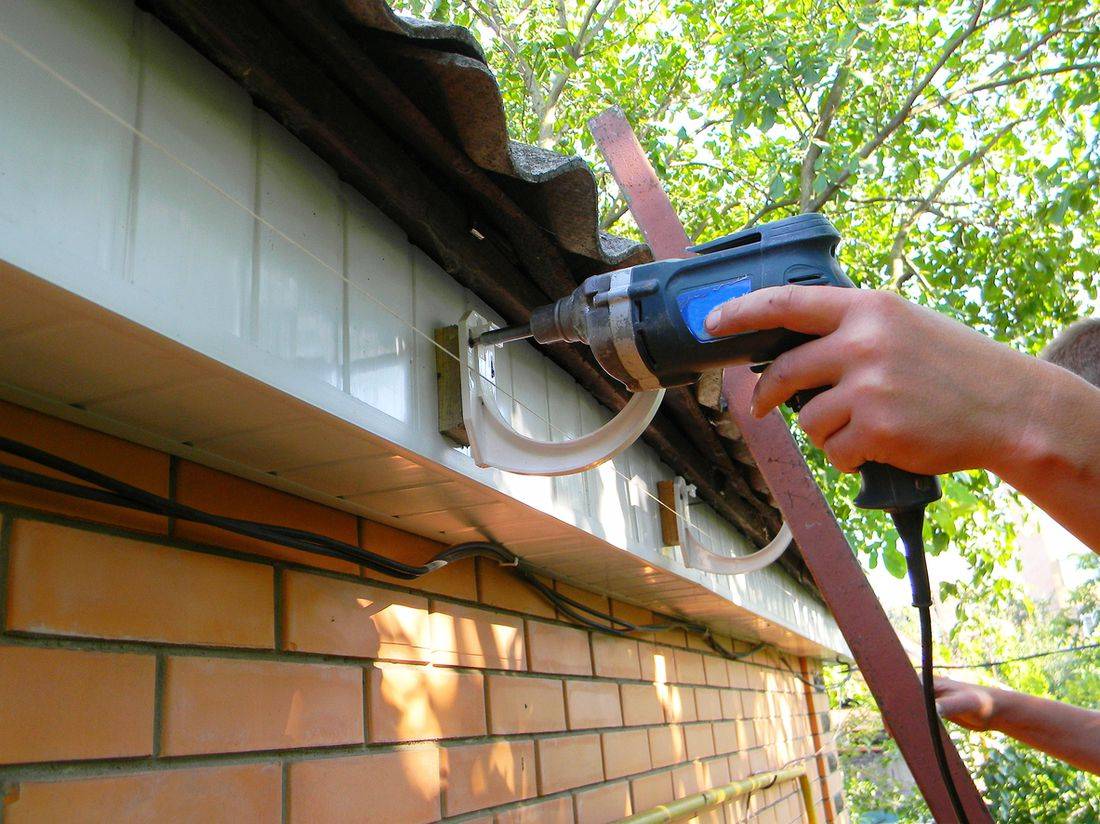
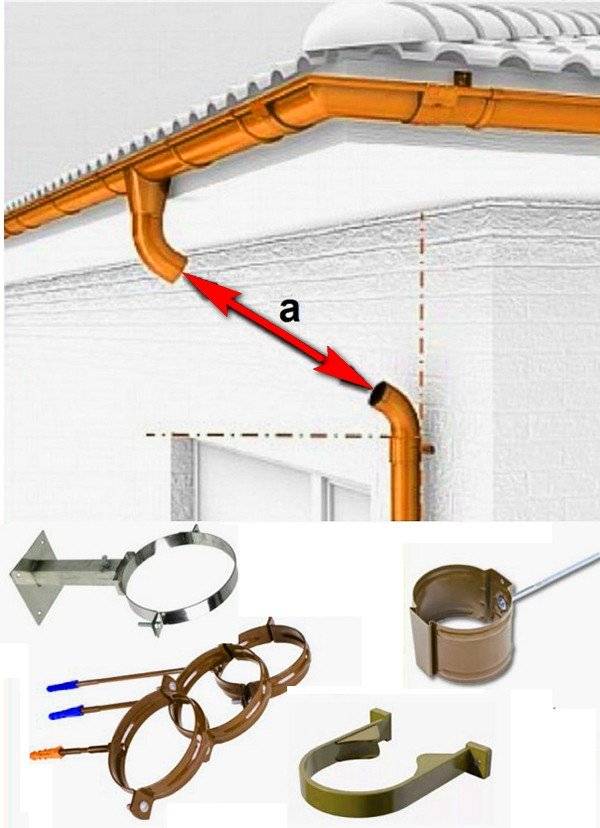


Next, we proceed to the process of installing the drain:
- We determine the starting point, which is located at the maximum height.
- Install the gutter bracket.
- We carry out the fastening of the gutter.
- We install the funnel, which should be located at the lowest point between the brackets.
- We connect the funnel with the pipe (if necessary, we do this with the help of an angled gutter).
- We fix the drain pipe with clamps.
- We fix the drain at the bottom of the pipe.
- We install an anti-icing system for the drain.
Roof drain installation
Before installation, you need to calculate the parameters and select a drain that matches the type of roof. Next, a set of installation works is carried out. To fix the PVC gutter, you need to carry out the following steps:
- Fastening brackets in the form of hooks for fixing gutters and funnels.
- Installation of gutters. The gutters are cut into blanks of the required length, and then installed and connected to the funnel. All joints are made using special connectors, which are coated with a special sealant.
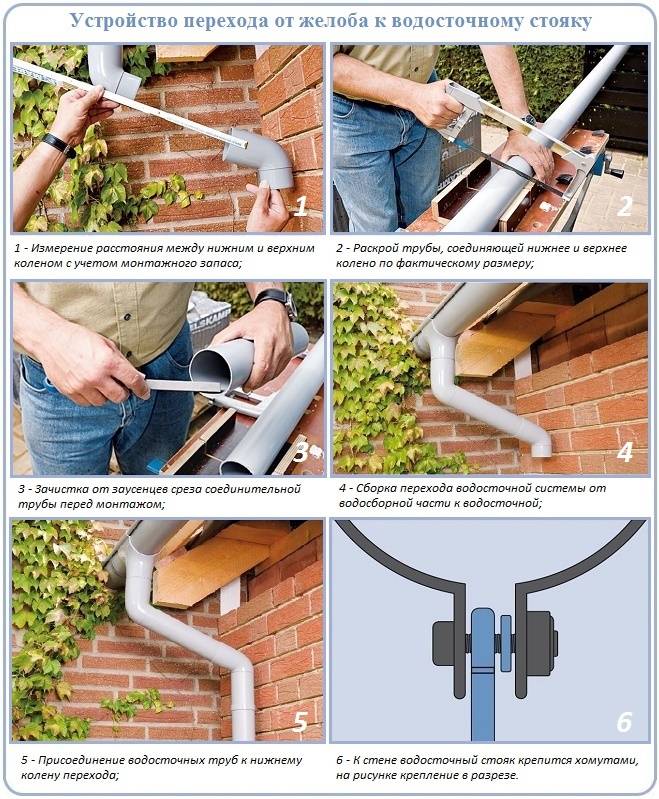
- Installation of drainpipes.First, the first section of the pipe is attached to the outlet head of the funnel. Further, the drain is extended to the required level by connecting pipes through special grooves. From below, a special drain tip is put on the downpipe. Pipes are attached to the surface of the building with clamps.
Roof drains are different, but they are always necessary to ensure the safety of the roof and the supporting elements of the building
The effectiveness of its action depends on the quality, parameters and proper installation of the drain, so it is important to first master the technology of fastening the elements and choose the appropriate material
What are drainage systems made of?
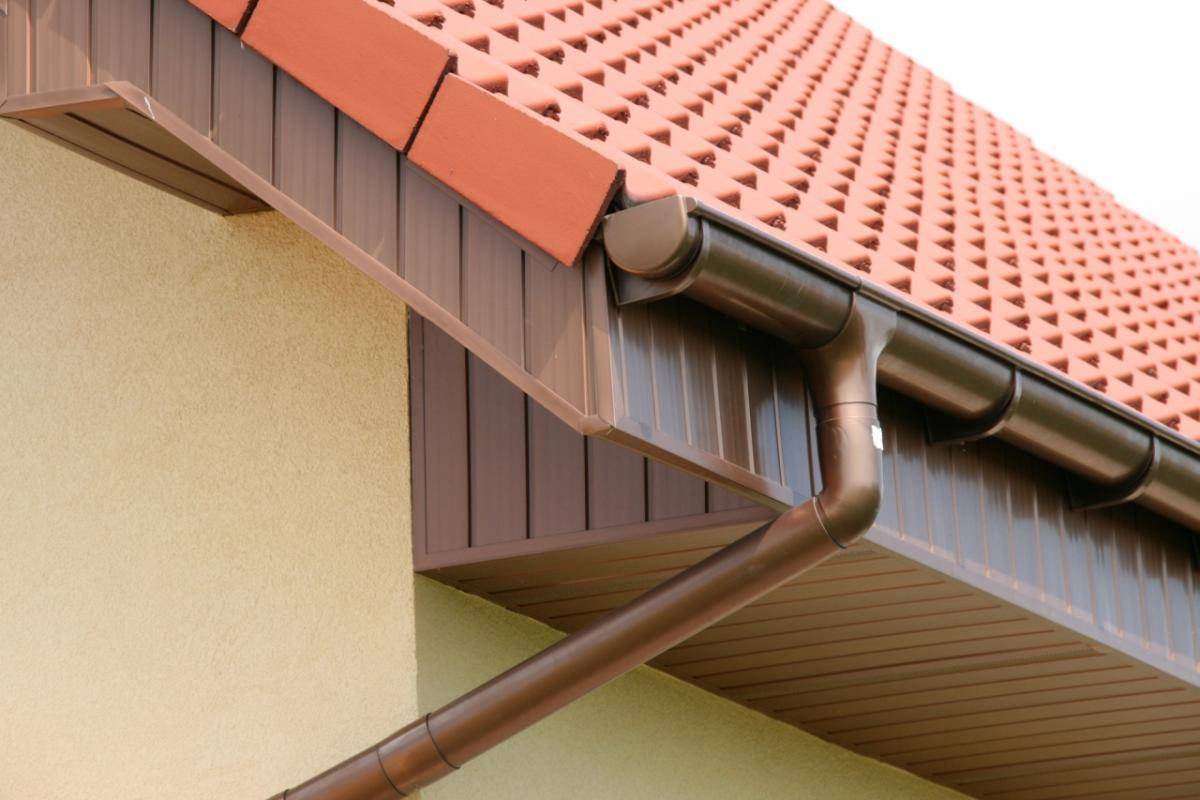
Gutters are fastened with special brackets directly under the roof overhangs. The entire perimeter of the roof is formed with a similar storm drain, which implies the presence of external and internal corners.
When joining such elements, tightness must be achieved, for which special connecting adapters equipped with rubber seals are included in the kit. In their absence, the gutters are laid with an overlap of at least 30 cm. In this case, self-tapping screws are suitable for connection.

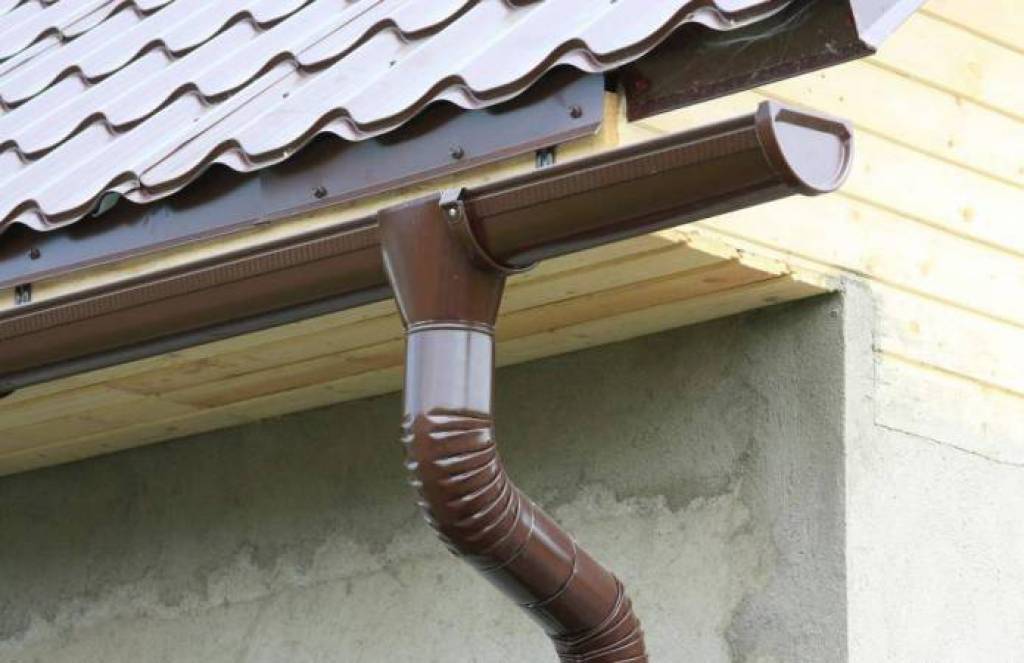
To drain water, the gutters are equipped with holes made out by funnels. Downspouts are fastened directly to the funnels. With a significant weight of the roof, the pipes must be bent. For this, gutters in some cases are equipped with special elbows and universal rings.
To fix the downpipe to the wall of the building, you will need to use special clamps made in the same color as the entire set. All these elements are used to assemble the drainage system of the required parameters and shape.When you go shopping, it is recommended to take a plan of the building with you: this will allow specialists in the store to quickly complete all the necessary elements.
Popular gutter manufacturers
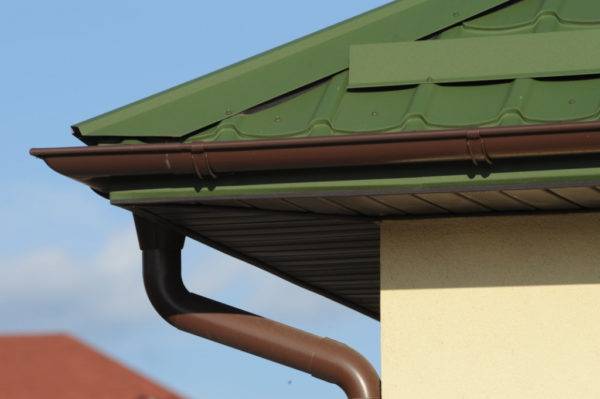
Many manufacturers represent gutter systems for roofs of various types. One of the most popular are Döcke gutters. Products are presented in various colors, resistant to mechanical and climatic influences. Döcke products are divided into several series according to their technical characteristics, which makes it easy to make a choice.
 The system manufacturer Döcke gives a 25-year warranty on its products.
TechnoNikol products are also in demand and are presented in a large assortment. Elements of gutters are easily interconnected, forming a strong and durable system. The company specializes in the manufacture of plastic parts using modern technologies.
 TechnoNIKOL plastic gutters are easy to install and look very attractive.
The Aquasystem company produces various types of drains, but one of the most popular options is a complex of steel and plastic. Appearance, specifications and size range of parts are varied, but all products are durable and easy to install.
 Gutters "Aquasystem" are a kind of hybrid of metal and plastic products
Features of a flat roof storm system
The drain on a flat roof begins at the point of collection of water and is a vertical pipe embedded in the wall with an outlet to the sewer. During the construction of the system, mandatory pipe insulation should be provided.Thermal insulation will not allow moisture to condense on the outside of the storm drain during the cold period, and will prevent possible rotting of the walls of the building. At temperature minimums, thermal insulation will not allow the drain itself to freeze.
Contamination protection on a flat roof is reduced to installing a mesh on the receiving hole. It can be a flat insert or a mesh cap.






Types of Gutters: How to Choose Them for Your Project

It is important to choose the optimal dimensions so that the gutter and the dimensions of its pipe cope with their functions most efficiently. The concept of choice is that too narrow elements will not cope with water flows, and too wide elements will cost much more.
Therefore, the following factors should be taken into account:
- Rainfall for your area.
- The area and magnitude of the slope of the roof.
- Individual features of the architecture of the house.
Let's choose the sizes
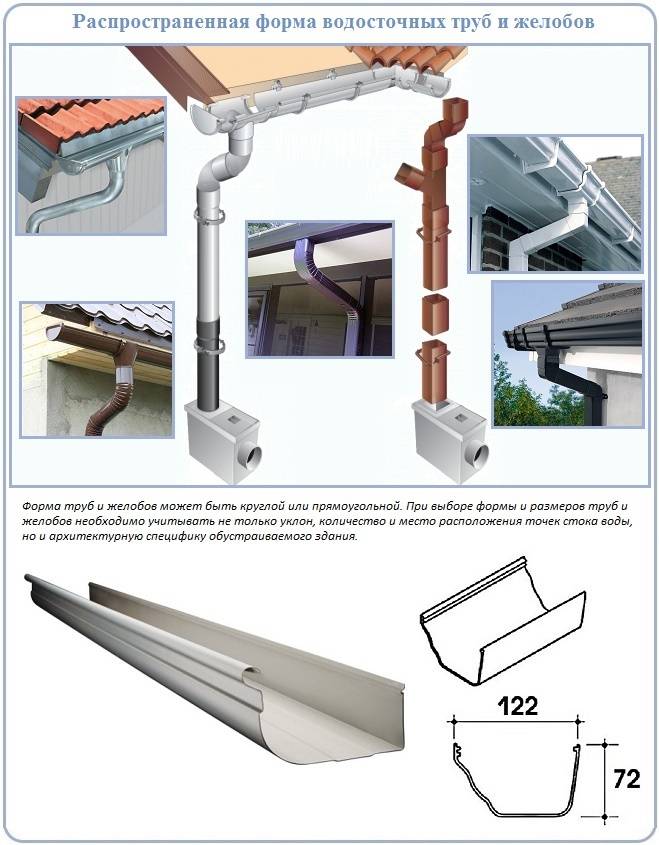
The diameter of modern grooves and pipes ranges from 60 to 216 mm. Most products comply with DIN EN standards, some manufacturers continue to manufacture products in accordance with GOST 7623-84.
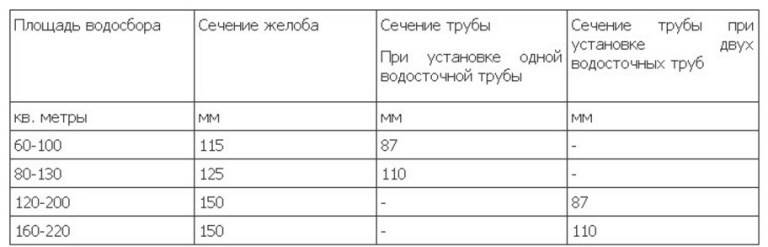
Homeowners who prefer to make their own gutter should take into account that it should be slightly wider than the pipe. The height of the side is made at least 10-12 mm. The most popular ratios of the elements of the groove / pipe system are as follows:
- 100/75 mm.
- 125/87 mm.
- 125/100 mm.
- 150/100 mm.
- 200/150 mm.
For example, consider a practical example with a roof area of 60 m². A 100 mm groove and a pipe with a diameter of 80 mm are suitable here. For an area of 100 m², you will already need a 100 mm pipe and a 150 mm groove.The parameters are averaged, the individual features of the building affect them directly. The length of the grooves is usually 2-3 meters.
Strengths of a flat roof
If you live in a big city, you are probably familiar with flat roofs. They can be found in almost every high-rise building. High-rise buildings, as a rule, are equipped with an internal drain so that water falling from above cannot harm the surrounding buildings. Until recently, such roofs could only be found on industrial and multi-storey buildings, but with the advent of new roofing products, they began to be built in private construction.
What is it that attracts developers so much? Most likely, people are simply tired of the image of a standard pitched system. Of course, there is no doubt about its practicality, but such roofs are found in private buildings absolutely everywhere. Therefore, if you want to stand out from the rest, then you still have a chance to do it.
Residents of Western countries have long used buildings with flat roofs and describe them exclusively from the positive side. And this is not surprising, because for a small price you get additional living space, which you can use at your discretion, the main thing is to create all the conditions for this. A flat surface is reliably protected by modern roofing materials, so you won’t have to think about repairs.
So, let's look at the positive qualities of a flat surface:
- Compared to pitched roofs, flat roofs have a smaller area, so the device will require much less materials. From an economic point of view, this is very beneficial.
- You can also save a certain amount by refusing the services of a roofing team, doing all the work yourself. True, it will be a bit tight without a partner, so invite one of your friends.
- It is much more convenient to carry out installation work on a flat surface than in a suspended state, so it will proceed not only easily, but also quickly.
- By servicing the roof at any time of the year, you can be sure that you will not harm your health in any way.
- The additional area created as a result of installation can be used at your discretion. It can accommodate a recreation area, place a playground, a workshop, grow a garden and much more.
Often, as I list these flat roof properties, many builders are tempted to start building right now, but it's not as easy as it sounds. The whole difficulty lies in the design of such a roof, and if any element is not installed correctly, then soon such a surface will fail.
The drainage system of a flat roof is one of its most important components. As you already know, it can be equipped with both internal and external methods. If we consider the first, then it is a device of a complex system of pipes inside the building, which in a certain way divert precipitation from the surface into the storm sewer. Such a system allows you to improve the appearance of your comfort and make it more attractive and mysterious. As for the second method, these are the usual pipes that are visible from the outside of the building. As a general rule, outdoor drainage from a flat roof is arranged only if your finances are limited or if your area has severe winters.
This is interesting: Wall treatment before wallpapering: the whole point
Why do you need a drain
An external drain is a complex of open gutters that collects moisture from the roof and directs it into vertical outlet pipes. The places where the structure ends are equipped with water collection tanks or storm sewers.
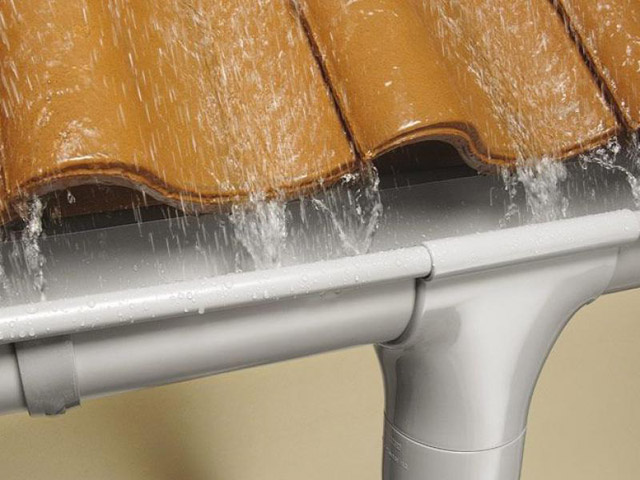
The gutter protects the house from the damaging effects of moisture
Gutter functions
The drain performs the following functions:
- Protective. It consists in diverting wastewater from the walls and basement of the house.
- Decorative. A beautiful homemade gutter will decorate your home or gazebo.
- Cumulative. With the help of such a system, storm water can be filled with a special reservoir for irrigation.
Industrial drains are made of special plastic or galvanized steel and their cost is quite high. And if you add plugs, funnels, corners and knees, then the price will double. Finished parts have their own advantage - they are easy to assemble, like a designer. To save money, the craftsmen found an alternative and began to independently manufacture drainage systems from improvised means, for example, from plastic sewer pipes. Therefore, if there is already a house or cottage, but there is no drain, then you can risk making it yourself.


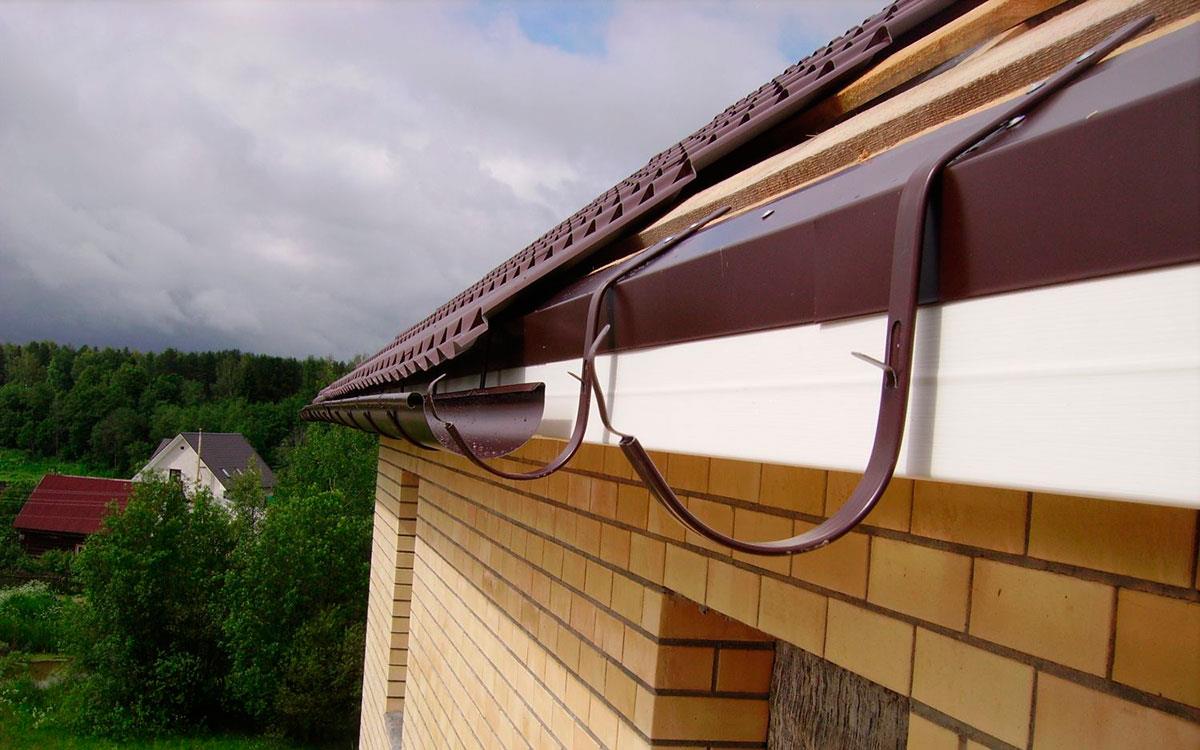
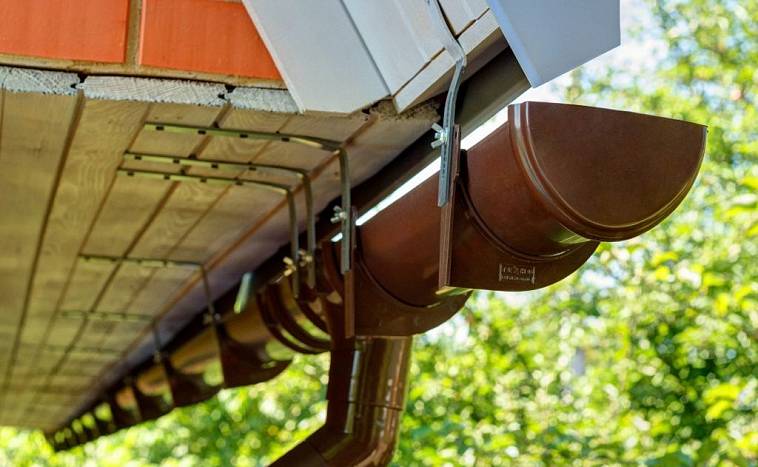
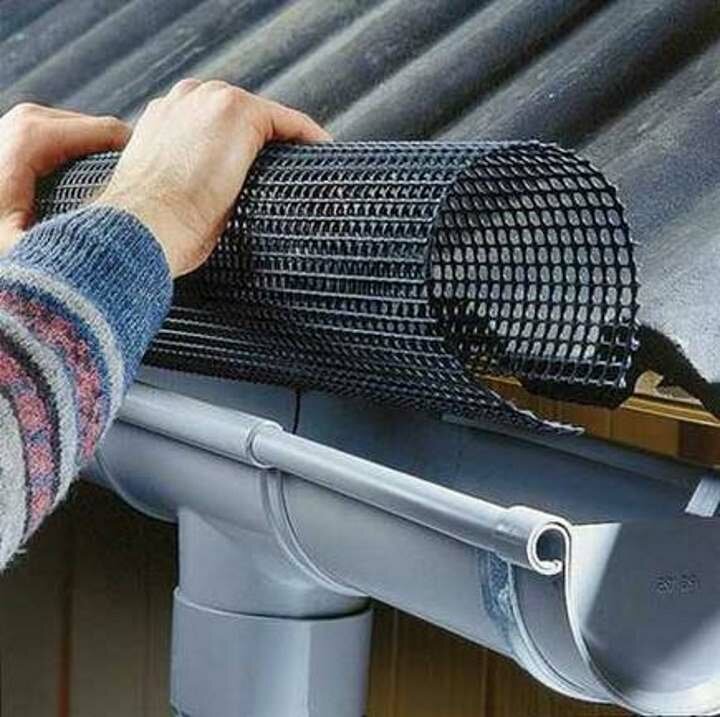


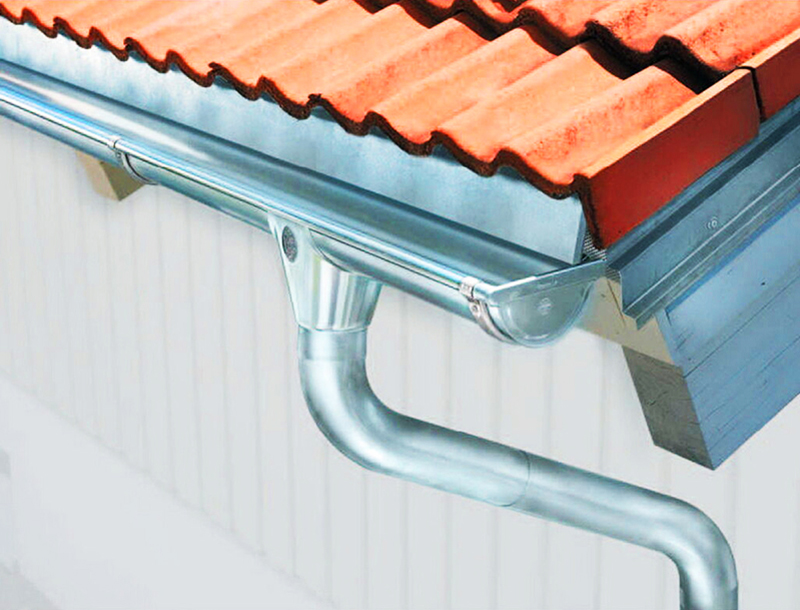

Homemade gutter can last for many years
If you approach the matter wisely and choose the right material, then a home-made drain can be used as the main one.
Types of drains
Drainage is of the following types:
- External or external. This type is suitable for self-assembly.
- Internal, which is also provided for in the project.Most often, this type is installed on flat roofs; pipes made of any material are suitable for it.
Materials for homemade gutters
Previously, only metal was used to assemble ebb systems. More often - galvanized or polymer-coated steel, less often - copper or aluminum. Now the range of suitable materials has increased significantly:
- Gutters made of galvanized steel. They are durable, reliable, resistant to loads and temperature fluctuations. Their disadvantage is noise and susceptibility to corrosion.
Galvanized steel is one of the most popular gutter materials.
- PVC drainage systems. They are lightweight and low noise, easy to assemble and well resist temperature changes.
PVC drain - reliable and silent
- Drainage systems from sewer pipes. Thanks to convenient installation and a wide variety of adapters, such pipes have become an excellent replacement for PVC industrial drains.
Sewer pipes are an excellent material for draining
- Ceramic pipes and gutters. They will need special clay and pottery skill.
Ceramic pipes are very durable
- Ebbs from plastic bottles. They are quick to install, but are suitable as a temporary alternative.
Bottle plastic is the most affordable material for creating drainage
- Wooden gutters. Made by hand, they last a long time only in case of special processing.
The wooden gutter is very decorative.
- Copper drains. Suitable for long-term use, but become covered with patina over time.
Copper gutters look noble and prestigious
This is interesting: Wall treatment before wallpapering: the whole point
How to make your own from improvised means
Drainage can be made independently from various improvised means. This allows you to save a lot of money. When installing a drainage system with your own hands, such material as galvanized steel is very popular. It will last about 10 years - it is quite economical, as well as affordable material. Let's consider this option in more detail.
To work on creating a gutter made of galvanized steel, you will need the following tools and materials:
- scissors for cutting metal;
- a hammer;
- marker for marking;
- sheets of galvanized steel with a thickness of about 0.5 mm;
- pliers.
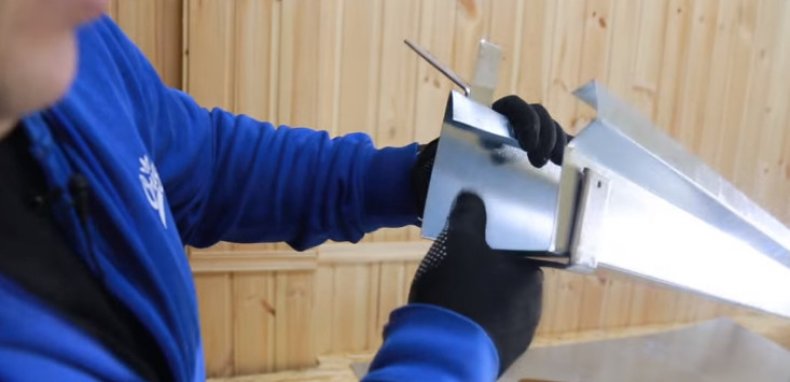

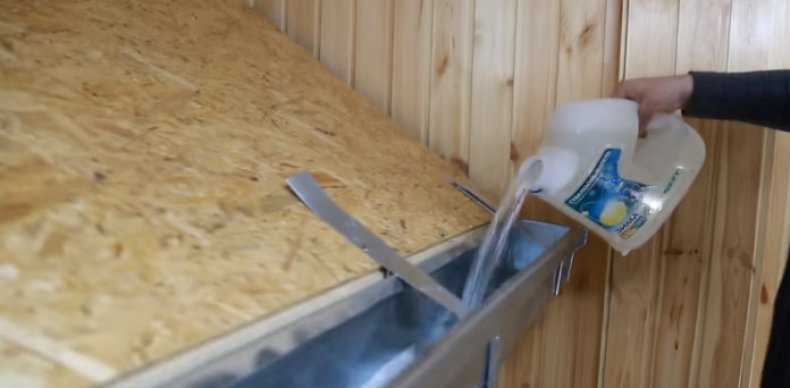
- we outline the starting point for installation, located at the maximum height;
- fasten the gutter bracket;
- we install the funnel, which is located at the lowest point between the brackets;
- combine the funnel with the pipe;
- we fix the drain pipe using clamps for this;
- from below to the pipe we attach and fix the drain;
- We install a system for heating a drain.
Video: gutters for do-it-yourself roofs
Main elements of the system
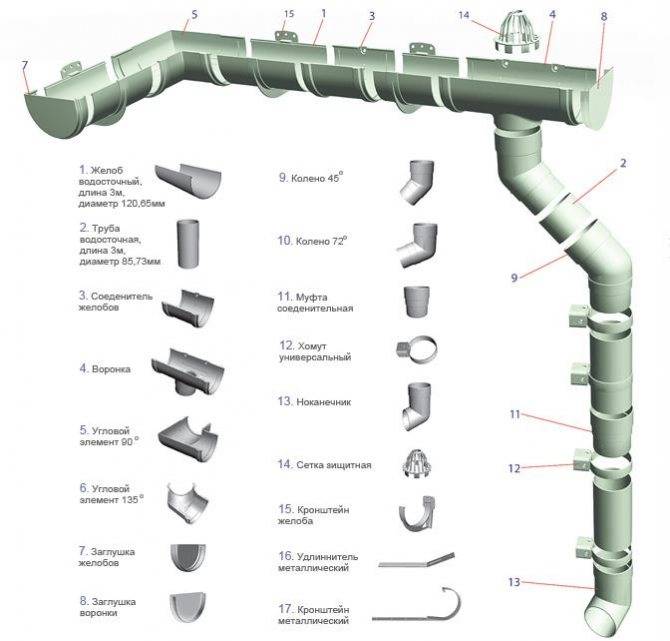
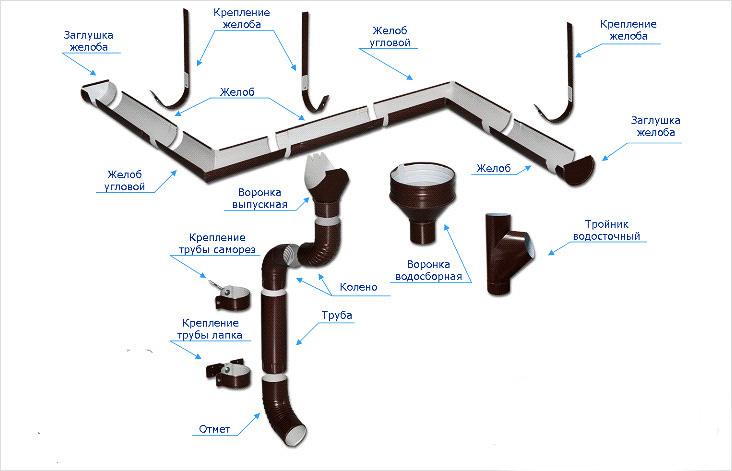
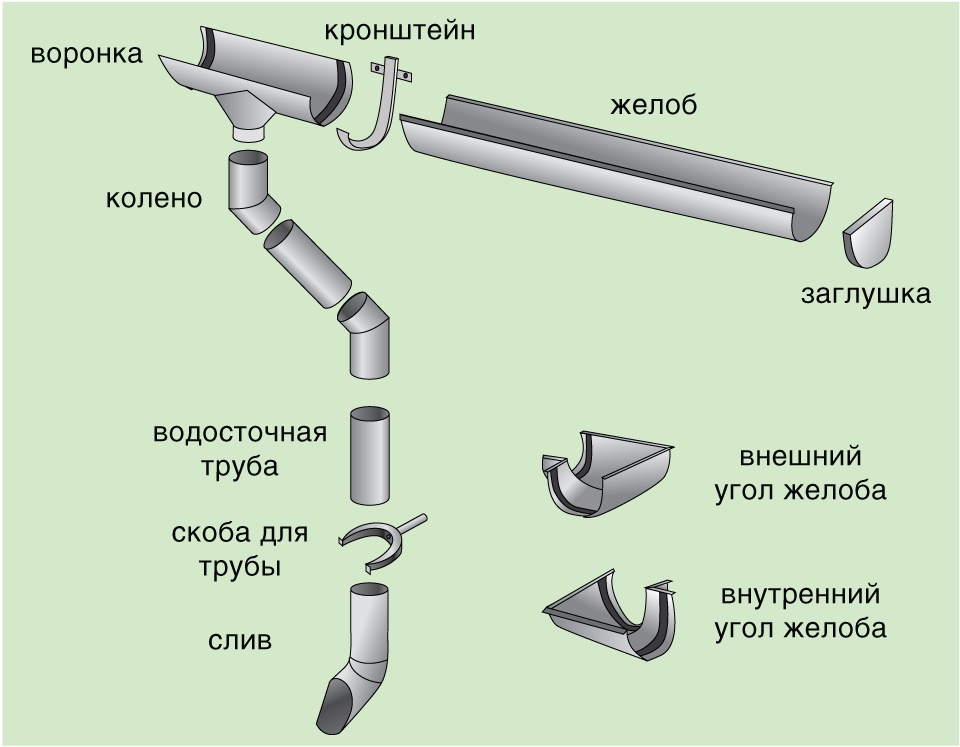
The drainage system of any house consists of the following components:
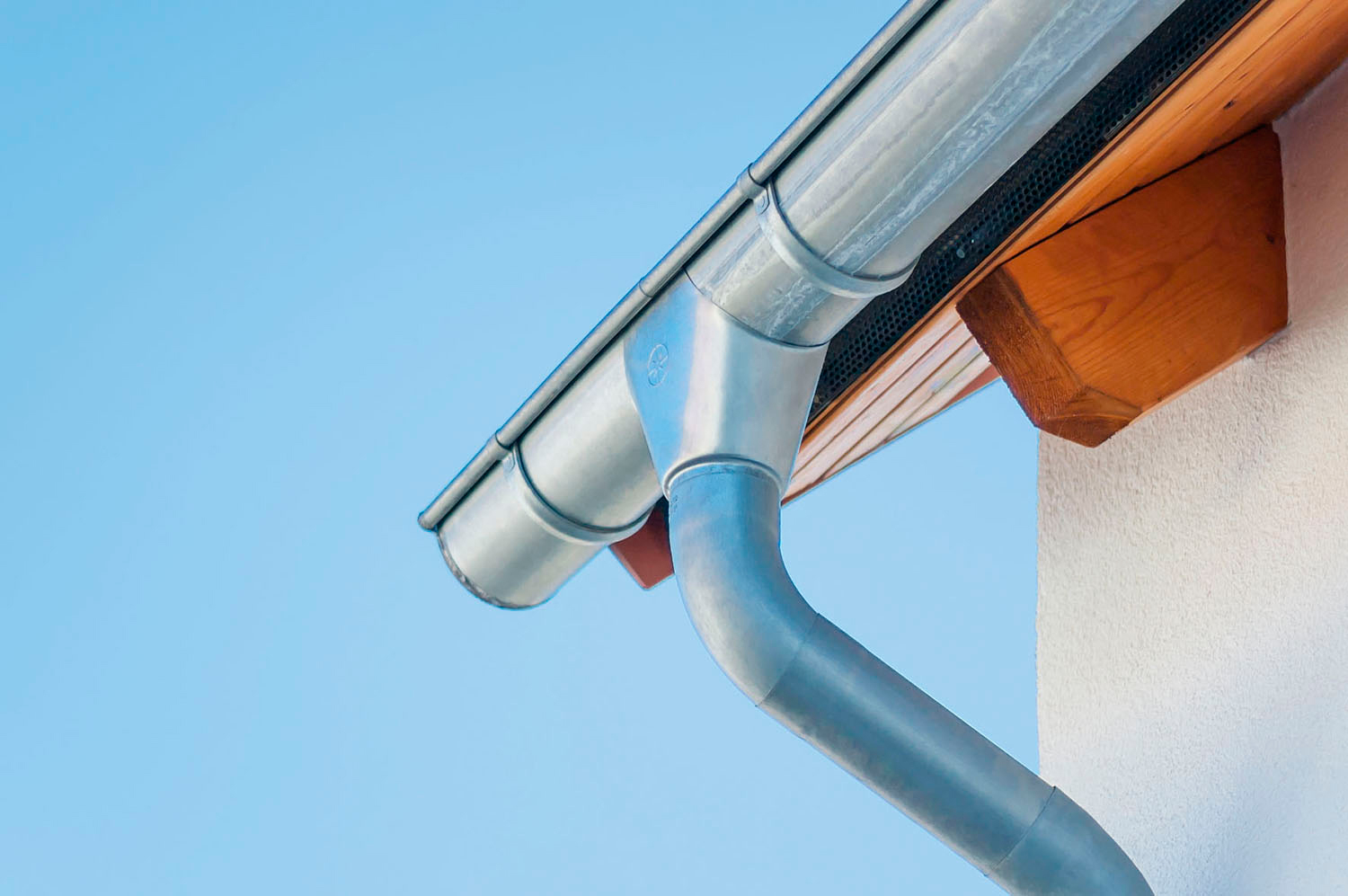
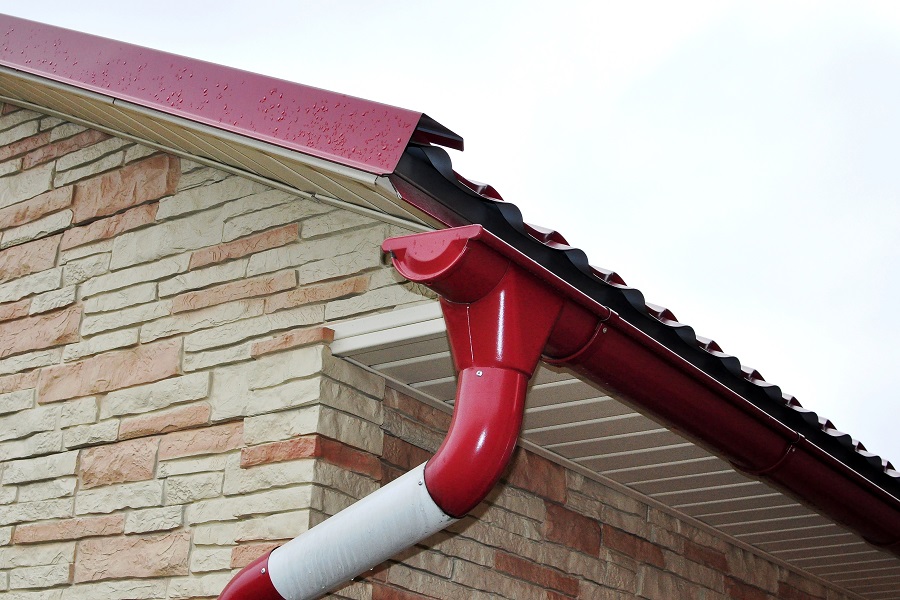
- Gutter. Mounted horizontally with a slight slope on the outer sides of the roof slope. May have, if necessary, swivel corner elements. It is into it that water flows from the roof.
- Pipe. Attaches vertically. Water enters this element from the gutters through a diagonal elbow and a drain funnel and is discharged down.
- Drain knee. Attaches to the bottom of the pipe and diverts water from the walls and foundation of the house;
- Drain funnel. Water enters it from the gutter and goes to the pipe. Usually equipped with a special mesh that protects against debris entering the pipe.
- Mounting elements.With the help of their gutters and pipes are attached to the building. These are brackets (for the gutter) and clamps (for pipes).
- Other auxiliary elements. Various sealants and connecting elements, plugs, tees, bypasses.
Learn how to make a greenhouse with an opening roof, make a roof for a bathhouse, self-cover the roof with metal tiles, ondulin, and also make a mansard roof and insulate it.
Conclusions and useful video on the topic
You can learn how to properly design a drainage system from the following video:
Assembling a drainage system with your own hands is a problem to be solved. It is clear that independence primarily pursues the goal of saving. Meanwhile, if you are going to arrange a drain with your own hands, it is advisable to make calculations based on parameters such as the total roof area and the average intensity of precipitation on the ground.
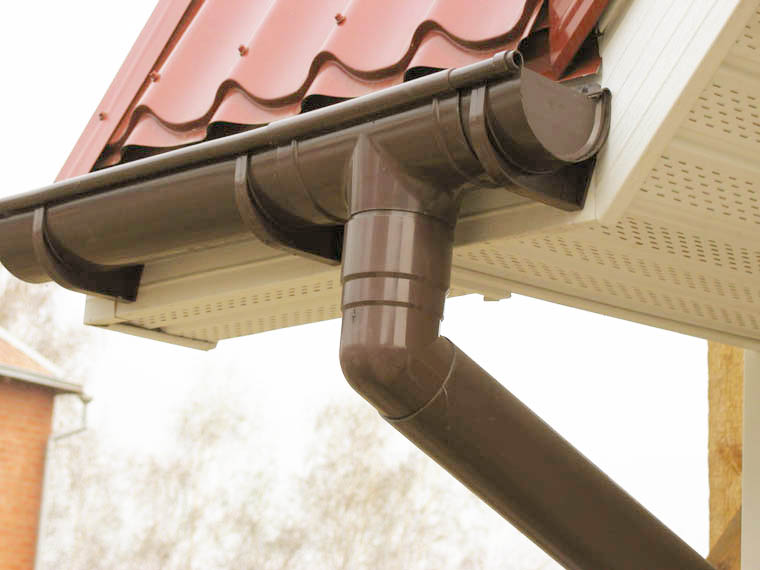



The results of the calculations will contribute to additional savings, since they can accurately determine the need for materials and parts for installation.
Conclusions and useful video on the topic
Determination of roof parameters and calculation of downpipes:
Step-by-step instructions for arranging a roof drainage system for a private house:
In principle, the procedure for calculating and installing the drainage system is quite simple. It is quite possible to cope with the task on your own. Experienced craftsmen equip the drainage from the roof in one day, the work of a novice master will take more time.
Please write comments in the block below, post photos on the topic of the article, ask questions. Tell us about how you calculated the consumption of material for the device of the drainage system and installed its elements.Share useful information and technological subtleties.



