- Single pipe systems
- The most popular types of water heating
- Air system
- Installation and safety requirements
- Step 1: Project
- Step 2: Accessories
- Step 3: Boiler
- Step 4: Mounting the Heatsinks
- Step 5: Wiring
- Do-it-yourself system installation
- 1 Types of heating - the pros and cons of different systems
- The use of gas boilers
- Gravity system calculation
- Water heating
- Advantages and disadvantages of water heating
- The principle of operation of the water heating system
- What are the main components of a water heating system?
- How to start designing heating in your private house?
- What are the options for implementing a water heating system?
- Which home heating system to choose
Single pipe systems
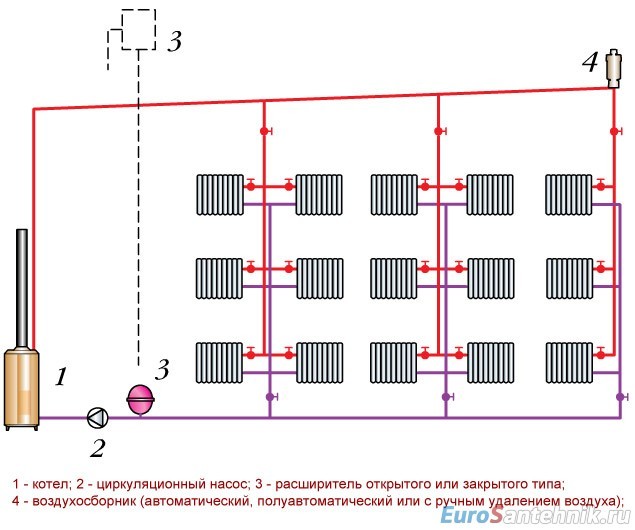
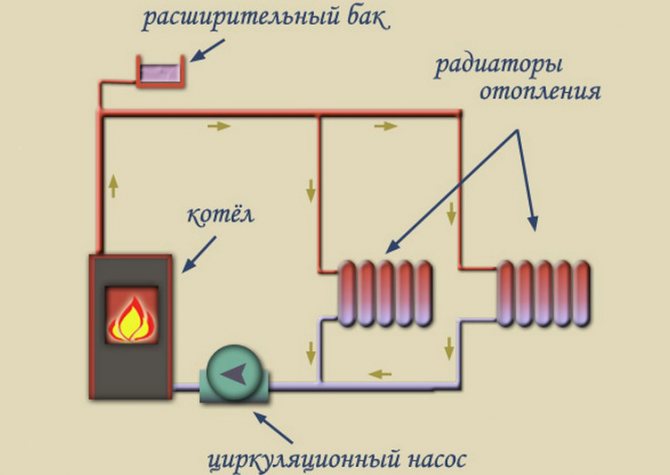
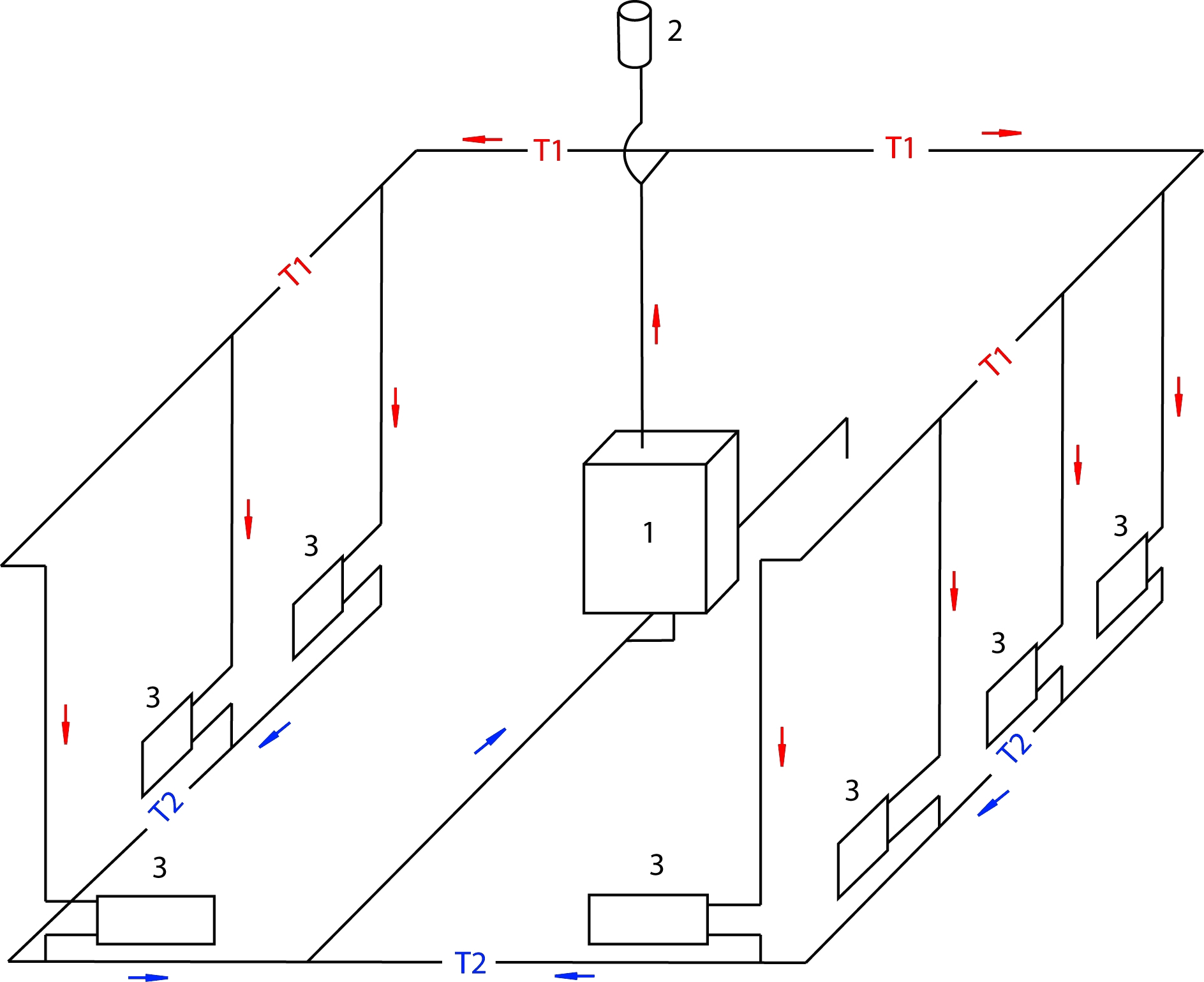
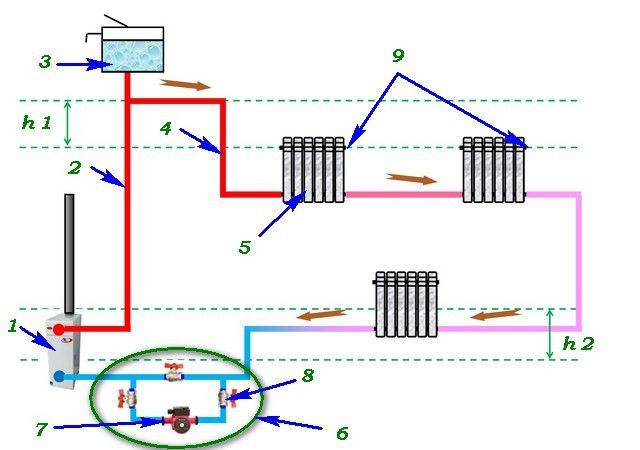
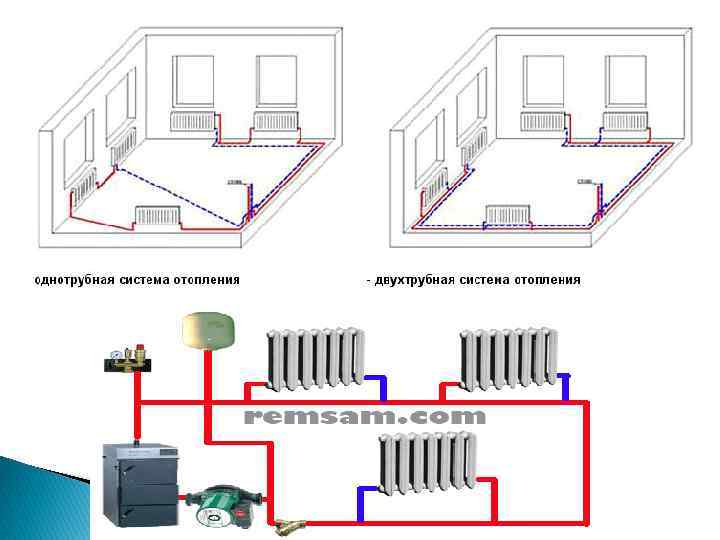
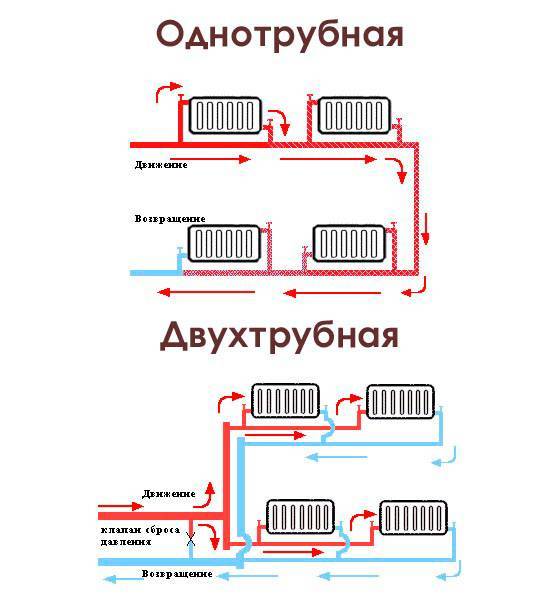
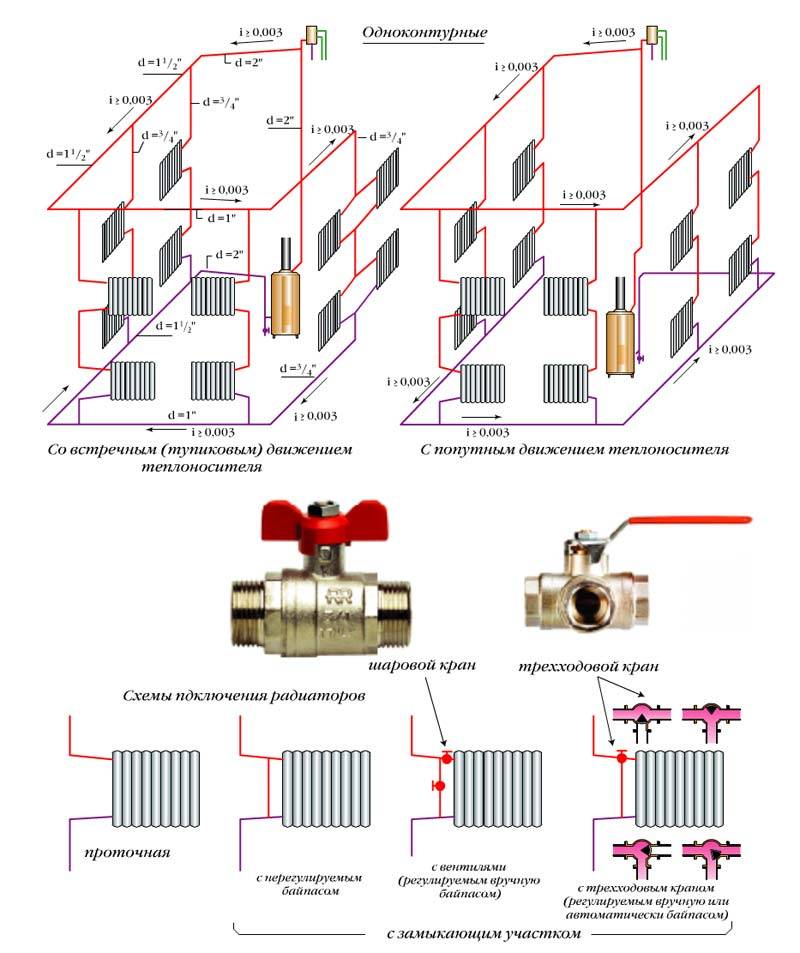
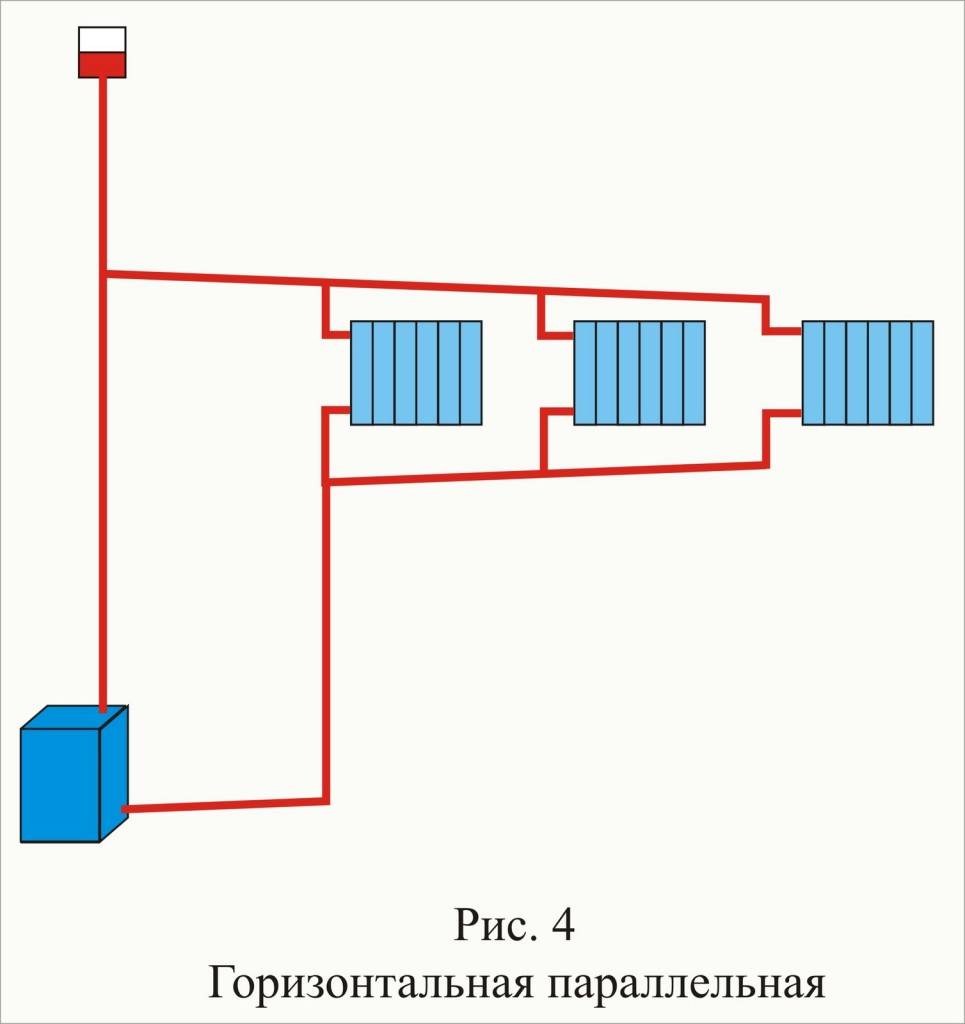
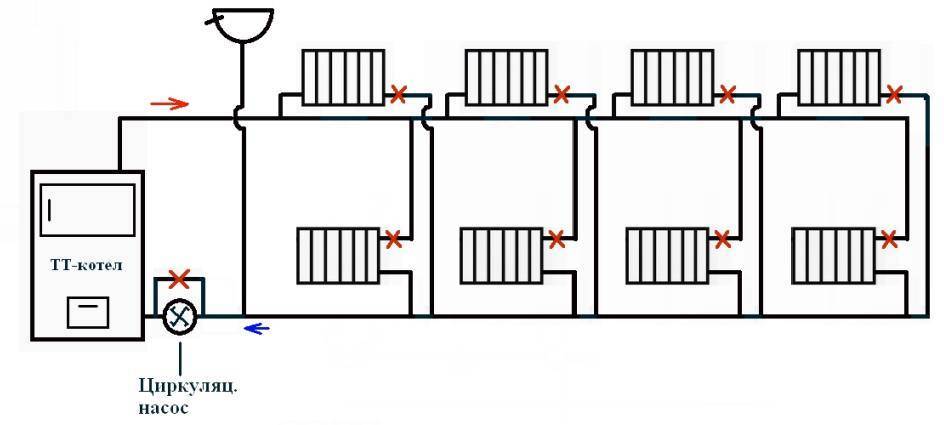
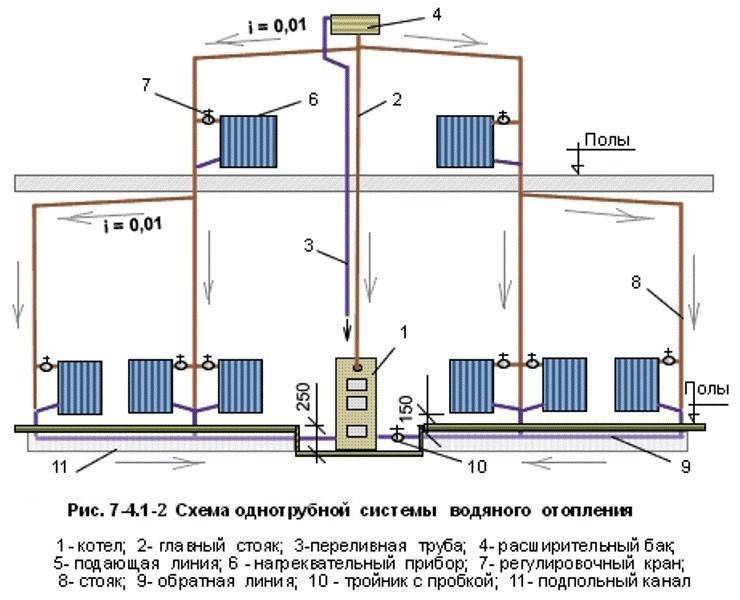
In single-pipe heating systems, the coolant passes through all radiators in series.
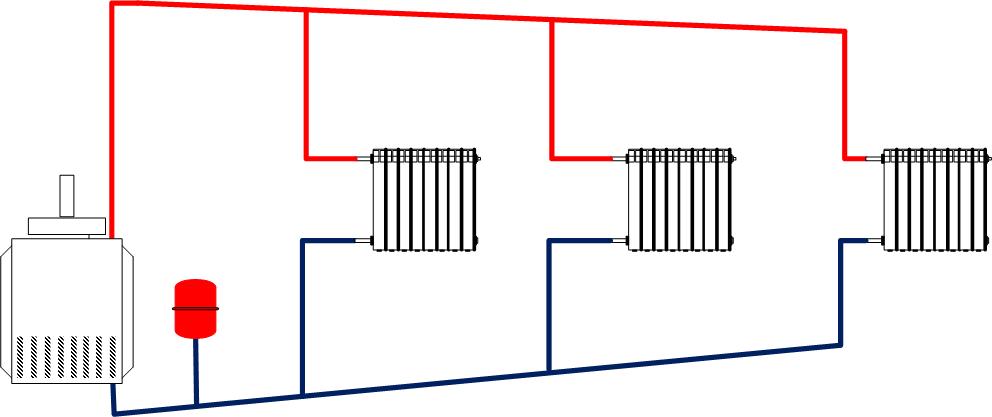
Creating the heating of a private house with your own hands, the easiest way is to equip a single-pipe heating system. It has many advantages, such as the economic use of materials. Here we can save a lot on pipes and achieve heat delivery to each room. A single-pipe heating system provides for the sequential delivery of coolant to each battery. That is, the coolant leaves the boiler, enters one battery, then another, then a third, and so on.
What happens in the last battery? Having reached the end of the heating system, the coolant turns around and goes back to the boiler through a solid pipe. What are the main advantages of such a scheme?
- Ease of installation - you need to sequentially conduct the coolant through the batteries and return it back.
- The minimum consumption of materials is the simplest and cheapest scheme.
- The low location of the heating pipes - they can be mounted on the floor level or even lowered under the floors (this can increase the hydraulic resistance and require the use of a circulation pump).
There are also some disadvantages that you have to put up with:
- limited length of the horizontal section - no more than 30 meters;
- the farther from the boiler, the colder the radiators.
However, there are some technical tricks that allow leveling these shortcomings. For example, the length of horizontal sections can be handled by installing a circulation pump. It will also help make the last radiators warmer. Jumpers-bypasses on each of the radiators will also help to compensate for the temperature drop. Let's now discuss the individual varieties of one-pipe systems.
The most popular types of water heating
Most often, when self-installing a heating system, homeowners are guided by the principles of economy. And here there can be no universal solutions. In each case, you can find the most cost-effective and practically feasible option. But there is one little "secret" that can be useful to everyone. Consider using different heat sources in your home.Combining them depending on the time of year or the required mode of operation will help to save significant funds. So, for example, electric-water heating, even installed with your own hands, is not the cheapest option. However, if you need to heat rooms very quickly or want to automate the process while you are away, then there is no better way. Remember that there are pros and cons to every heating system. Proper and rational use of the specific properties of each of them will help you achieve maximum effect at minimal cost.
A video about installing water heating with your own hands will help you understand the intricacies of this process and give answers to many questions.
Air system
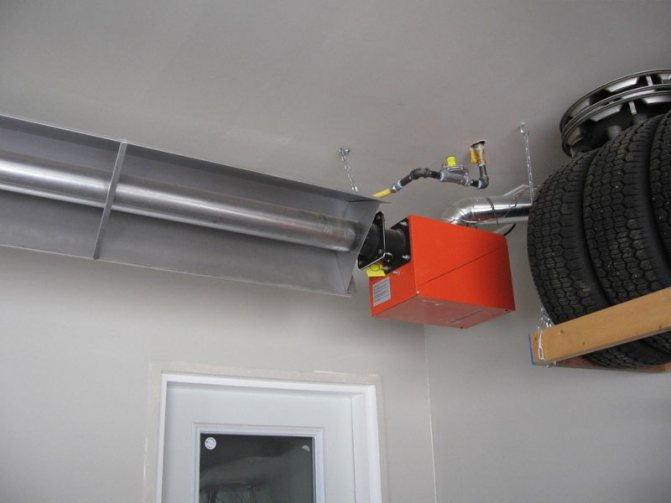
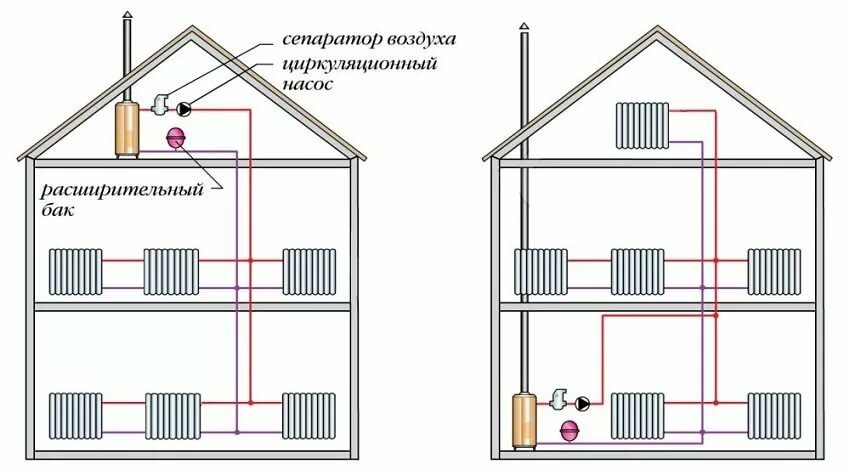
The principle of operation of the air system is to heat the air directly near the unit (usually a stove, boiler or fireplace). Further, hot air flows are forced (with the help of a ventilation system) or under the influence of gravity to spread throughout the house, providing it with heat. The disadvantages of the forced method are the cost of electricity, the gravitational method - the possibility of violating the air movement pattern due to open doors, drafts.
As a heat generator in a private house, a wood, gas or liquid fuel unit can be installed. The advantages of the system include relatively simple maintenance and maximum energy independence (especially in the case of gravitational heat propagation). At the same time, it also has disadvantages:




- the need to properly design and conduct air ducts at the stage of building construction. It is almost impossible to build them into already built housing;
- obligatory thermal insulation of air channels;
- high installation cost, even if you do the work yourself.
Installation and safety requirements
In this paragraph, we will consider how to conduct water heating with our own hands.
Step 1: Project
First, select the appropriate scheme and display it on paper. Consider the areas of the rooms, the position of radiators, pipelines, their dimensions, etc. Such a sketch will help you correctly calculate the amount of consumables. Special programs will greatly simplify all calculations.
Step 2: Accessories
Let's briefly consider what a boiler, batteries and pipes can be. Types of heating units, depending on the fuel used, are gas, electric, solid fuel and combined. The favorite among these options can rightly be called gas devices. Water boilers come with a pump (for a forced heating scheme for a private house) or without it (natural circulation), and both types can be installed with your own hands. The double-circuit unit has proven itself well, providing not only heat in the house, but also hot water.
Steel batteries will please with the price, but at the same time they are subject to corrosion, and if you plan to drain the coolant, then the service life will be significantly reduced. Cast iron, on the contrary, can be said to be an eternal material. It heats up for a long time, but also keeps warm for a long time. But the heavy weight, not too attractive appearance and high cost have significantly reduced the popularity of this material. Cast iron batteries have been replaced by aluminum ones. Their appearance is very attractive, they heat up quickly and are resistant to corrosion. However, aluminum does not tolerate sudden changes in pressure.Bimetallic resistors are famous for their excellent heat dissipation, however, the anti-corrosion properties remain the same as those of aluminum.
The steel pipeline has lost its former glory due to the short operating life. It was replaced by modern polypropylene. Easy installation, the ability to create a "one-piece" design, reasonable cost and reliability - all these are undeniable advantages. Copper pipes also have good characteristics, but not everyone can afford their cost.
Step 3: Boiler
Water heating in a private house is built in such a way that the carrier is heated by a boiler. This scheme is the most optimal in the absence of a centralized supply. Therefore, when choosing a place where to install the boiler, one should take into account the location of the gas pipeline inlet or the presence of electrical wiring. If we are talking about a solid fuel unit, then you need to make an additional installation of the chimney. If you prefer the natural circulation of the coolant, then position the heating unit so that the return line is as low as possible. In this case, the basement is ideal.
Step 4: Mounting the Heatsinks
Batteries are placed under windows or near doorways. The mounting design depends on the material of the resistors and the number of sections. The heavier they are, the more reliable fixation they need. A gap of at least 10 cm should be left between the batteries and window sills, and more than 6 cm should be left to the floor. By installing shut-off valves on each element, you can regulate the amount of coolant in the batteries, and the air valve will help avoid unwanted traffic jams.
Step 5: Wiring
The boiler will be the starting point for the installation of the pipeline. In this case, you should adhere to the scheme chosen and sketched on paper.If the pipes are visible, then we are talking about open wiring. On the one hand, the aesthetic side suffers, and on the other hand, any leak will remain in sight, and in order to replace the damaged element, you do not need to disassemble the box. The pipeline can also be hidden, bricked up in the wall, made of plasterboard, etc. At this stage, batteries, additional equipment (pump, filters, safety unit, expansion tank, etc.) are connected.
Do-it-yourself system installation
Do-it-yourself water heating must be carefully planned, very carefully. And this should be done by professionals. Often this procedure begins with the choice of a place for the boiler, which, by the way, is installed even before the wiring is done. Of course, specialists know very well how to plan correctly, so at the preliminary stage one of them should be next to you.
When you have decided on a place for the boiler, you need to make a special concrete pedestal for it. The boiler is placed on it and connected to the chimney, and all joints and connections are smeared with clay.

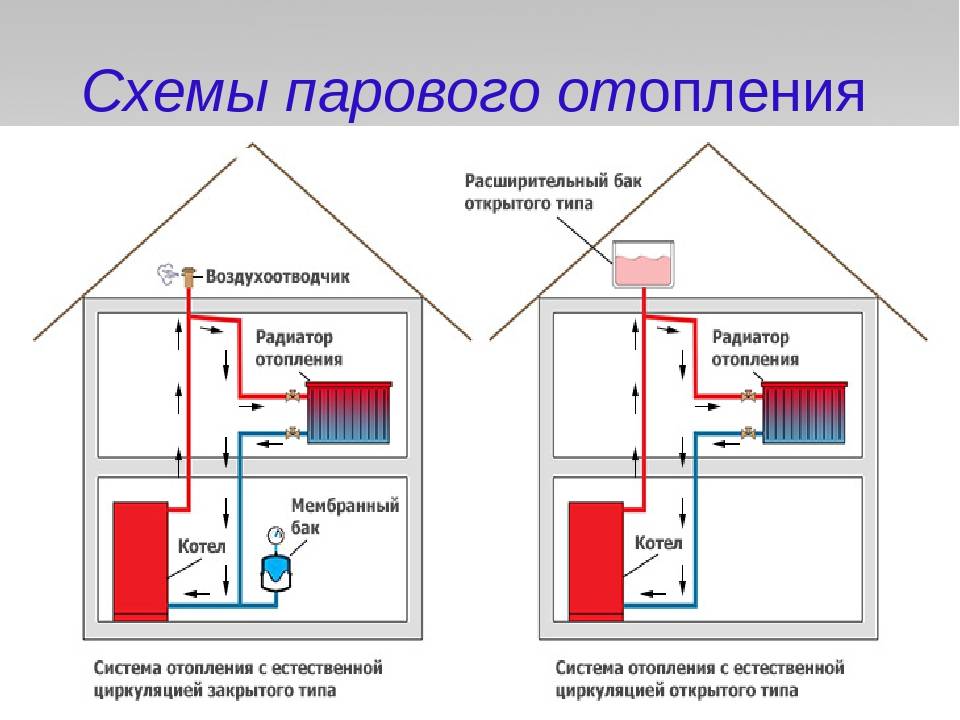


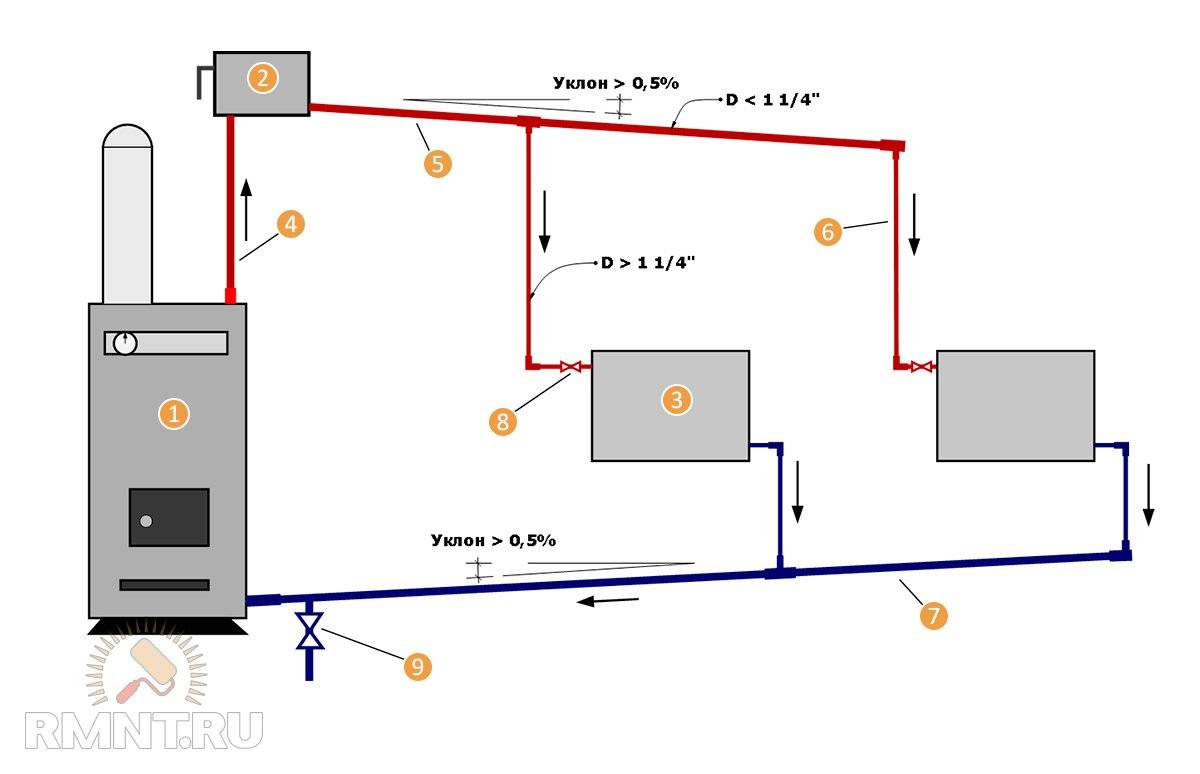
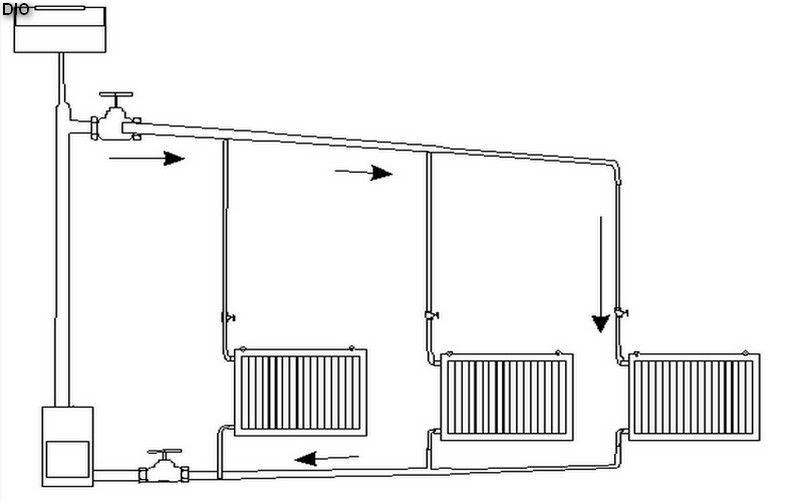
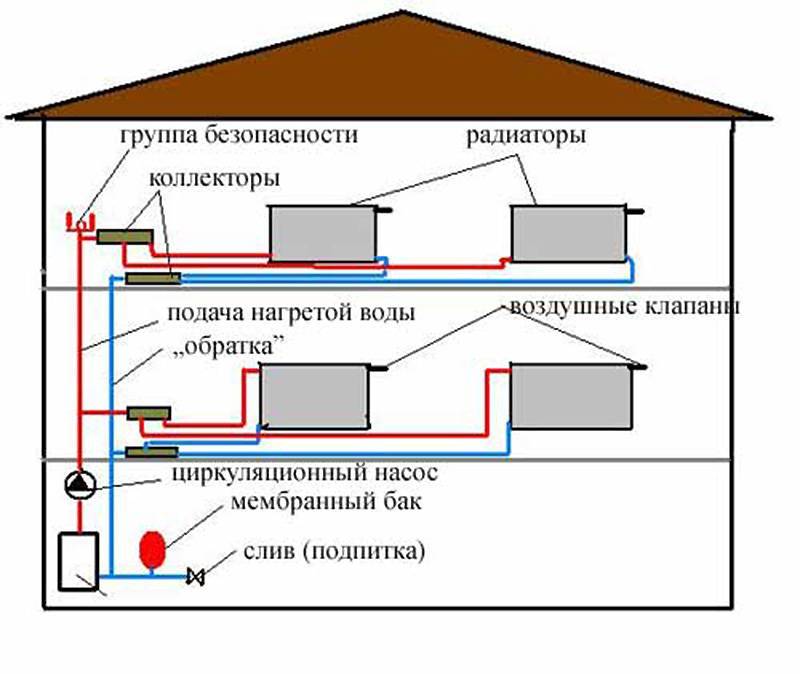
Next, you need to draw what the piping will be in your system. Carefully consider where radiators, risers and other elements will be placed - that is why the participation of a specialist is necessary. As we know, it is desirable to place radiators under windows. This is necessary so that the heat from them warms the inner surface of the windows.
The number of sections and their creation should be determined not only by your financial capabilities, but also by the length of the circuit, the more such sections there are in the system, the easier it will be for the coolant to move along it.
Important! Even before proceeding with the installation of the line, it is necessary to determine the highest point in the system and equip an expansion tank there. By the way, such a tank can be of two types:
- open;
- Closed.
How to calculate the optimal volume of the tank and do the installation correctly, read here
The next step in the installation of the heating system is the laying of pipelines and the installation of radiators. In this case, everything is extremely simple: the pipe is brought to the installation site of the radiator, it is installed, all the necessary inputs and outputs are connected, after which the pipe is connected to the next radiator. It will be just fine if you install a special valve on each of the radiators, with which you can remove air from the system.
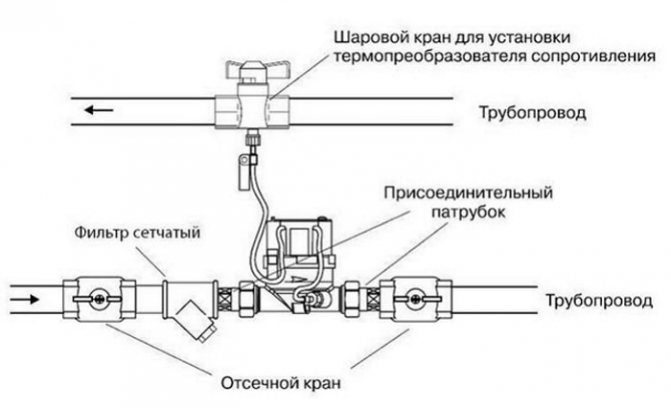
The entire circuit should be closed in the same place where it began - on the boiler. A special filter and (if necessary) a circulation pump are installed at the boiler inlet. The lowest point of the system must be equipped with a fill/drain unit, necessary to drain all water in case of repair work.
As a conclusion
As we found out, today there is no cheaper and at the same time efficient heating system than a water system. Pipelines and radiators are updated almost annually, therefore, the efficiency of such a system increases, while the cost, on the contrary, decreases. Therefore, it is becoming easier to make water heating with your own hands every year.






1 Types of heating - the pros and cons of different systems
Despite periodically appearing new types of heating, such as solar heating, the vast majority of country house owners use classic heating methods that have been proven for decades. The most common of them:
- 1. Heating with solid fuel.
- 2. Gas heating.
- 3. Electric heating.
In addition, at the moment there is a large selection of solutions that use combined fuel, that is, they can heat the building both by electricity and by burning various types of fuel.
Each option has its own advantages and disadvantages. The easiest and cheapest way to heat a country house is to use a gas-fired boiler. Its advantages are obvious - low cost of fuel, heating on the principle of "turn on and forget", the ability to adjust the required temperature in the premises, safety of operation due to modern equipment. There is only one drawback to gas heating - in the absence of a centralized gas main next to a country house, you will have to supply a separate pipe at your own expense. The cost of such work is comparable to the cost of building a house.
Boilers running on solid or liquid fuels will cost less, but their feature is an increased fire hazard. It is also necessary to constantly monitor the availability of the fuel necessary for generating heat, so this option cannot be called autonomous.Such solutions are perfect for those cases when a country house is used periodically, upon arrival the boiler is flooded and during the entire period of stay in a country house fuel is added to maintain the optimum temperature in the premises. The operation of heating systems running on wood, coal or fuel oil will cost more than using gas equipment, but much cheaper than electricity.
Heating systems using electricity are the most convenient and safe to use. The advantages of this solution are its complete autonomy, no need for fuel procurement, the ability to automatically adjust the temperature in the room without outside interference. Modern electric heating systems even have the ability to control remotely from a smartphone, if there is a cellular connection in a suburban area. The disadvantages include the high cost of electricity and equipment when using individual appliances in each room.
Also, for each specific country house, the choice of heating system will depend on the area and duration of operation:
- 1. A small country house up to 30 m², used in the summer. It is most preferable to use solid fuel convection boilers that do not require connection to coolant lines, or gas boilers that operate autonomously from a liquefied gas cylinder.
- 2. One- or two-story house up to 100 m², used for year-round use. In this case, it is advisable to use a centralized heating system with the supply of coolant through pipes to heating radiators.In this case, you can use a gas, electric, solid fuel or combined type of boiler, depending on the availability of energy resources.
- 3. Country house with an area of 100 m². Buildings of this type, as a rule, are built in summer cottages, where there are centralized boiler houses, or a gas main runs throughout the village. It is recommended to use central heating or gas, however, in the absence of such an option, it is also possible to use boilers of any type with the arrangement of a circulating system with a heat carrier.
The use of gas boilers
Boilers used in a water system can use various types of fuel. The most common and convenient to use is gas equipment - although it can only be installed if a central gas supply is connected to the house. In addition, among the disadvantages of gas boilers is the need for their regular monitoring by the relevant utilities.
But such a system has the following advantages over the others:
- Ease of installation and operation.
- High efficiency in the use of energy resources. On average, gas costs are 30-40% lower compared to using liquid fuels or electricity.
- Fast heating of rooms by the heat carrier. Within an hour, the temperature in rooms with a water heating system, the heat source of which is a gas boiler, will noticeably increase.
- Environmental friendliness of gas use.
- Possibility of process automation, including programming of required temperature and hot water heating.
Gravity system calculation
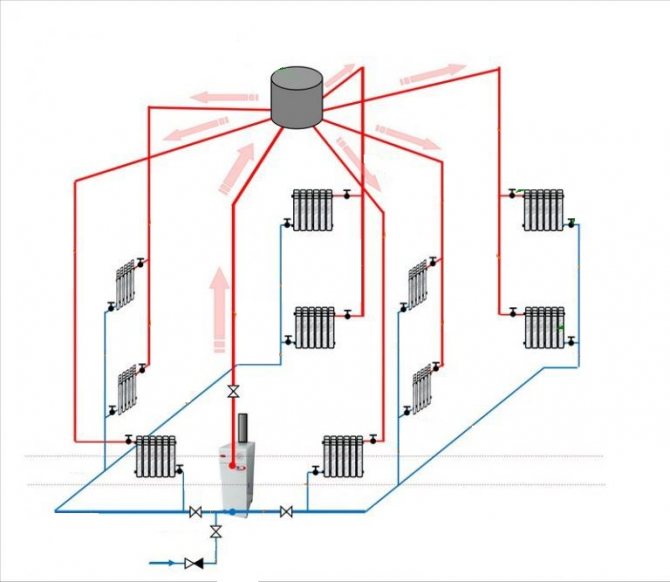
To calculate and design heating with natural circulation, proceed in this order:
- Find out the amount of heat needed to heat each room. Use our instructions for this.
- Choose a non-volatile boiler - gas or solid fuel.
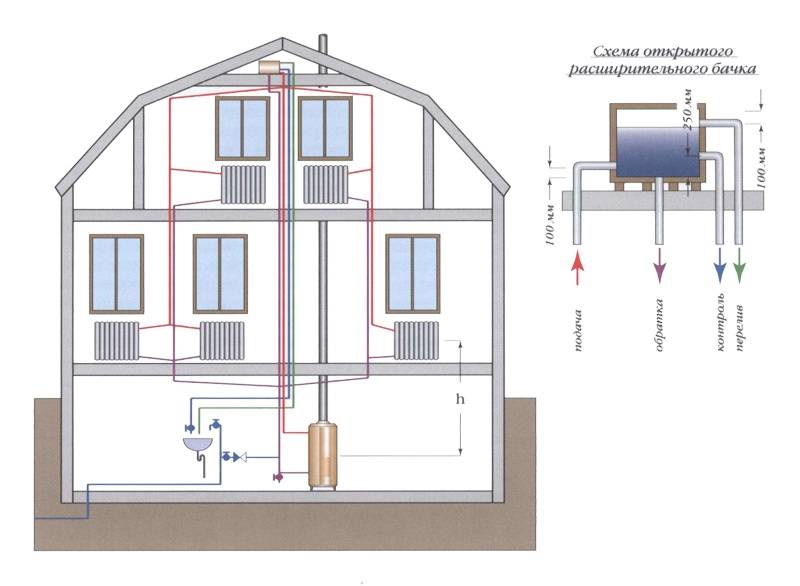
- Develop a scheme based on one of the options suggested here. Divide the wiring into 2 shoulders - then the highways will not cross the front door of the house.
- Determine the coolant flow rate for each room and calculate the pipe diameters.
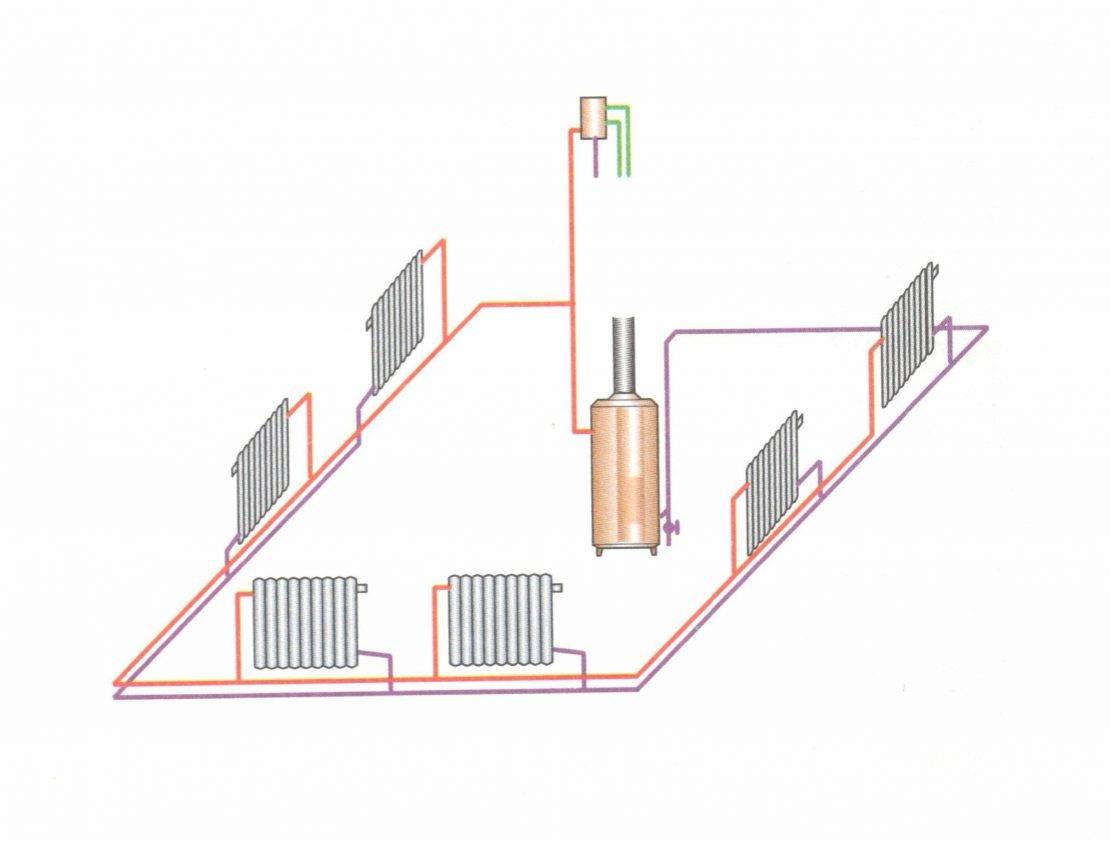
We note right away that it will not be possible to split the "Leningradka" into 2 branches. This means that the annular pipeline will necessarily pass under the threshold of the front door. To withstand all the slopes, the boiler will have to be placed in a pit.
The calculation of the diameter of the pipes in all sections of the gravity two-pipe system is done as follows:
- We take the heat loss of the entire building (Q, W) and determine the mass flow rate of the coolant (G, kg / h) in the main line using the formula below. The temperature difference between supply and "return" Δt is taken equal to 25 °C. Then we convert kg / h to other units - tons per hour.
- Using the following formula, we find the cross-sectional area (F, m²) of the main riser by substituting the value of the natural circulation velocity ʋ = 0.1 m/s. We recalculate the area of the circle in diameter, we get the size of the main pipe suitable for the boiler.
- We consider the heat load on each branch, repeat the calculations and find out the diameters of these highways.
- We pass to the next rooms, again we determine the diameters of the sections according to the heat costs.
- We select standard pipe sizes, rounding the resulting numbers up.
Let's give an example of calculating a gravity system in a one-story house of 100 sq.m. On the layout below, heating radiators are already applied and heat losses are indicated.We start from the main collector of the boiler and move towards the last rooms:




- The value of heat loss at home Q = 10.2 kW = 10200 W. Coolant consumption in the main riser G = 0.86 x 10200 W / 25 °C = 350.88 kg/h or 0.351 t/h.
- Cross-sectional area of the supply pipe F = 0.351 t/h / 3600 x 0.1 m/s = 0.00098 m², diameter d = 35 mm.
- The load on the right and left branches is 5480 and 4730 W, respectively. Heat carrier quantity: G1 = 0.86 x 5480/25 = 188.5 kg/h or 0.189 t/h, G2 = 0.86 x 4730/25 = 162.7 kg/h or 0.163 t/h.
- The cross section of the right branch F1 = 0.189 / 3600 x 0.1 = 0.00053 m², the diameter will be 26 mm. Left branch: F2 = 0.163 / 3600 x 0.1 = 0.00045 m², d2 = 24 mm.
- Lines DN32 and DN25 mm will come to the nursery and kitchen (rounded up). Now we consider the dimensions of the collectors for the bedroom and living room + corridor with heat losses of 2.2 and 2.95 kW, respectively. We get both diameters DN20 mm.
To connect small batteries, you can use DN15 piping (outer d = 20 mm), the plan shows the dimensions DN20
It remains to pick up the pipes. If you cook heating from steel, Ø48 x 3.5 will go to the boiler riser, branches - Ø42 x 3 and 32 x 2.8 mm. The remaining wiring, including battery connections, is done with a 26 x 2.5 mm pipeline. The first digit of the size indicates the outer diameter, the second - the wall thickness (range of water and gas steel pipes).
Water heating
Advantages and disadvantages of water heating
This type of heating has several disadvantages, but there are many more advantages. We list the pros and cons of this option.
The principle of operation of the water heating system
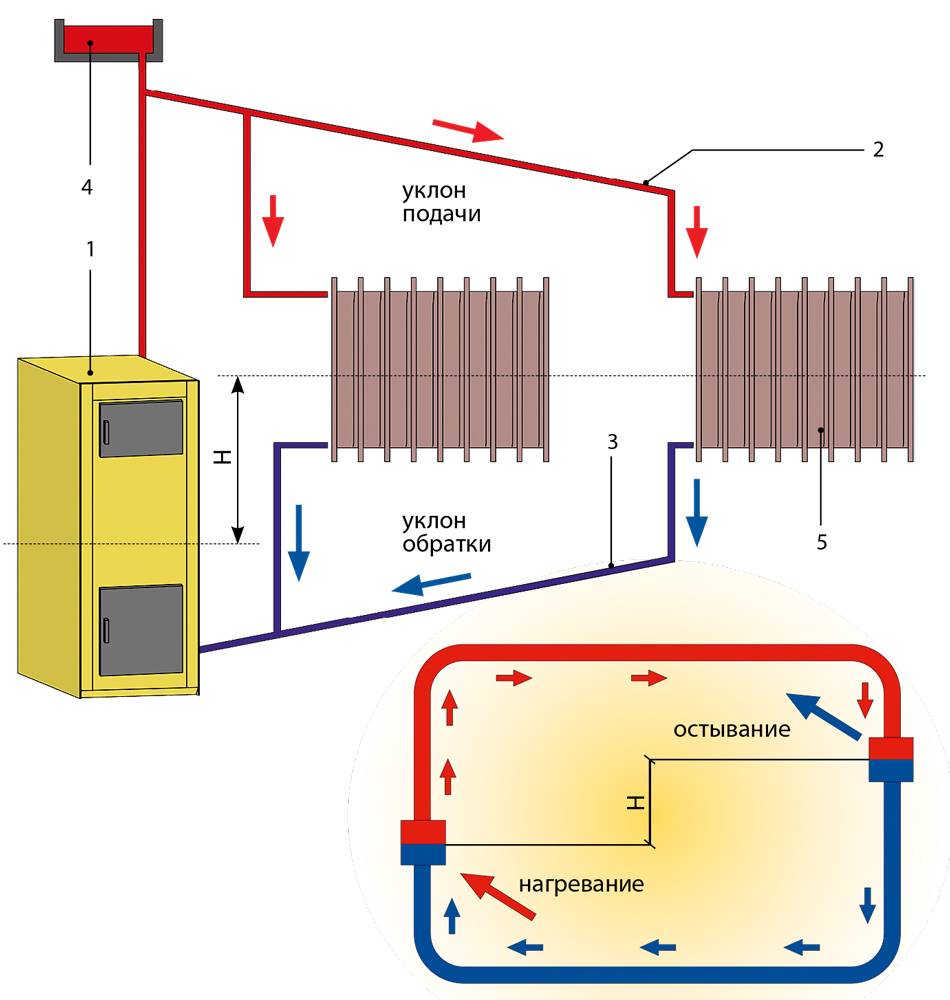
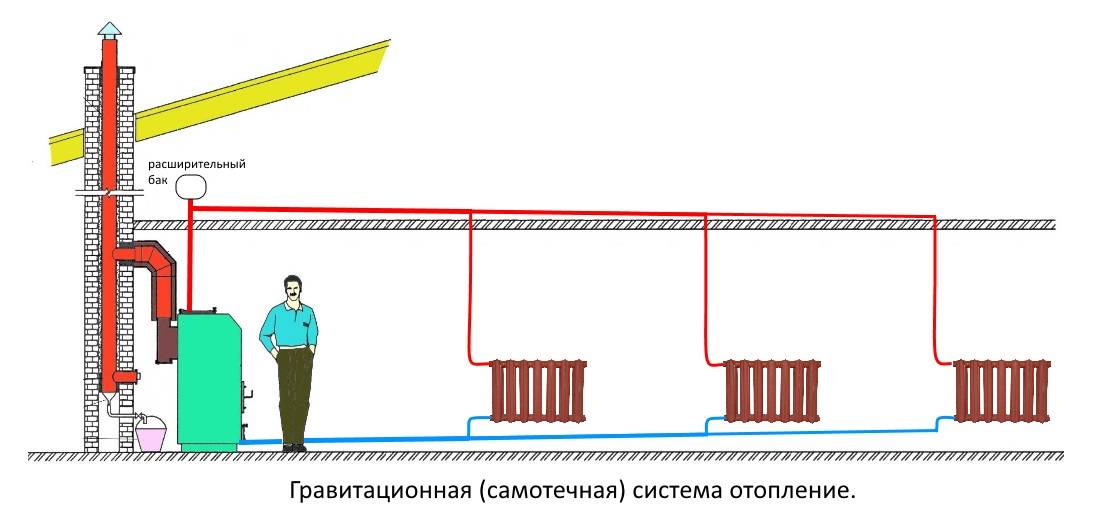
The principle of operation of the system is quite simple: water is heated in the boiler and goes through pipes to the radiators.Through them, she gives off heat and then goes back to the boiler along a different circuit. One of the main tasks of the heating system is to start the water and make it move through the pipes. This is implemented in one of two ways: natural and forced. In the first case, water moves according to the laws of physics, when cold water is displaced by hot water. In the second case, the movement of water is started using a circulation pump.
What are the main components of a water heating system?
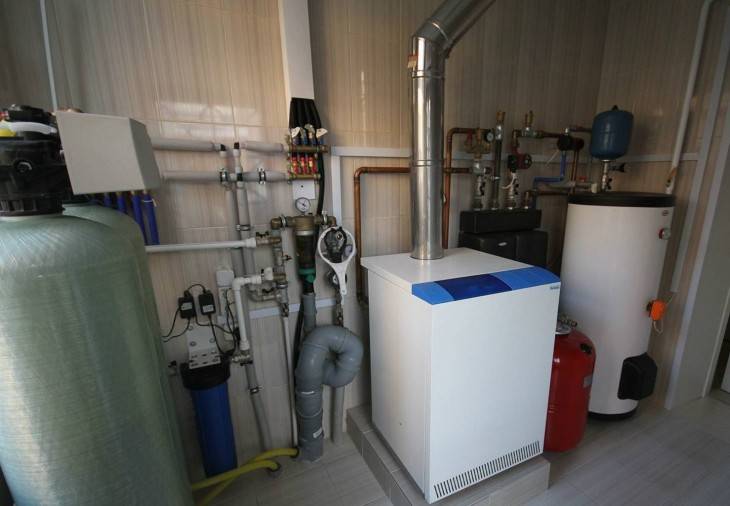
The whole system consists of the following elements:
- A boiler in which water is heated and from which the heated water is directed to the heating circuit.
- Pipes.
- Radiators.
- Circulation pump.
- Expansion tank.
- Automation devices.
How to start designing heating in your private house?
At the initial stage, you need to choose the type of heating and calculate all the materials and work that will need to be purchased and completed. All this must be done and chosen as economically and efficiently as possible. In order for the heating to function with maximum efficiency, the house must be well insulated and have the ability to retain heat for a long time. Heating is designed and installed during the installation of all communications.
What are the options for implementing a water heating system?
The easiest to implement is a single-pipe system. In this case, as the name implies, the coolant moves through one single pipe. That is, the radiators are connected to each other in series and water from the boiler enters the first of them, then to the subsequent ones. After passing through the last radiator, the water goes back to the boiler through a pipe that leads from the last radiator to the boiler.This option is one of the easiest to implement and very economical, because it requires a minimum of equipment and materials.
Which home heating system to choose
There are several types of heating systems. They differ in piping, how radiators are connected, and how the coolant moves in them. Competently choosing the most effective option is possible only if you have knowledge in heat engineering. It is necessary to make complex calculations and prepare a project. For a small cottage, the simplest one-pipe scheme is quite suitable. In other cases, it is better to entrust the design to a professional. But installation work can be done independently.