- Installation and connection instructions
- Installation of water heating convectors
- Installation of electrical
- Floor convector or its analogue - a warm floor, which is better?
- The device and appearance of the floor convector with a fan
- Operating principle
- Selecting the power of a water floor convector
- Types of devices
- Electrical
- Feeding from the circulation circuit
- Fancoils
- How to choose a floor convector
- Installation scheme
- Where are built-in heating systems used?
- How to choose the right water heaters?
- Water heating convectors with forced circulation
- Operation and maintenance
- How to reduce the grid
- Types of convectors
- Outcome
Installation and connection instructions
Floor convector installation justified in the presence of elements in the room that form significant heat losses. Such areas can be represented by floor-to-ceiling glass doors, entrance areas to the loggia and exits to the terrace, as well as panoramic or stained-glass windows.
Installation of water heating convectors
To perform the correct installation and efficient operation of the installed device, you must adhere to several recommendations:
- a niche or channel is made with a depth of 1.0–2.0 cm from the total height of the device, and also approximately 5–10 cm more in width and depth;
- the indent from the window is 5-15 cm, and to the left and right of the wall - about 15-30 cm;
- additional protective insulation and sound absorption increase the efficiency of the device;
- it is optimal to connect using flexible hoses, which helps to easily and quickly align the joints;
- rigid connection with a supply valve in the form of a manual radiator valve, ball valve, thermostatic valve is more reliable;
- on the "return" it is necessary to install reliable shut-off valves.
The most difficult to install is a water underfloor heating system with a forced type of ventilation:
-
Lay the supply lines for the heat carrier and electric cable in accordance with the installation diagram supplied by the manufacturer.
-
Fill the floor in accordance with the dimensions of the channel allocated for the installation of the installed device.
-
Install the equipment in the prepared channel, level it horizontally using the adjusting bolts.
-
Fix the convector inside the channel, insulate and seal the space around the device.
-
Install a clean floor covering.
-
Connect the supply of the thermal carrier and the electrical cable.
-
Fill all gaps with silicone sealant or finishing sealant.
-
Perform a test run of the installed equipment and fix the decorative grille.
In the process of designing a heating system, it is very important to correctly position the pipes for supply and return, provide for the drainage of water and the possibility of pumping if air enters the interior.Underfloor water heating convectors with a forced convection option require a mandatory connection to a 220 W electrical network
Installation of electrical
For self-installation of the device, you should purchase an electrical cable and select the optimal connection scheme.
Standard scheme of installation of floor electric convector:
- 1 - devices with the property of convection;
- 2 - electrical wiring;
- 3 - power supply for 220 V;
- 4 - module;
- 5 - thermostat.
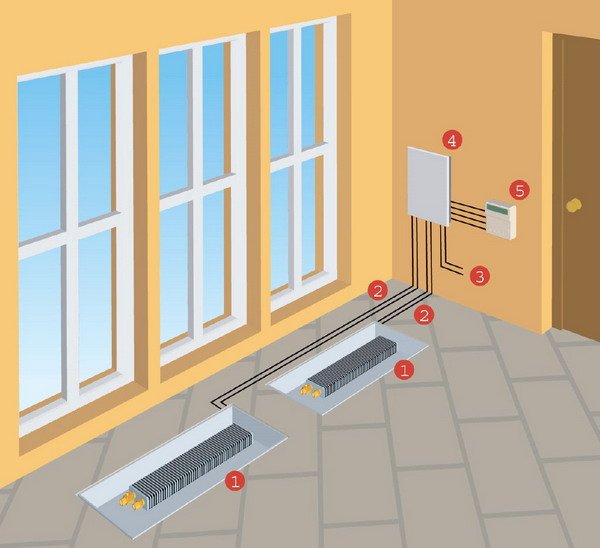
The device is connected to the power supply using electrical wiring.
The main stages of installation of electrical models:
- Mount the convector in the niche of the subfloor.
- Fix the device with corners, screws and dowels provided in the kit.
- Align the device with the help of technological bolts.
- Connect electrical cables to the installed convector.
- Lay heat-insulating materials, which are most often used polystyrene foam sheets.
The last stage is quite difficult and requires effort. Thermal insulation consists of the following parts:
- concreting;
- thermal insulation;
- the floor is seamless;
- fixing pad;
- height adjustment;
- soundproofing;
- coupler;
- finishing flooring;
- eyeliner;
- raised floors;
- seals.

An obligatory stage in the installation of an electric convector is the laying of thermal insulation
At the final stage, the performance of the installed heating system is tested, the floor is poured and the final floor covering is laid, as well as the decorative lattice element is screwed on.
Floor convector or its analogue - a warm floor, which is better?
If we consider the features of heating a room with a convector and a warm floor, we can note:
- Water heated floors can operate in a certain temperature and pressure range, which is difficult to provide in apartments with central heating. In high-rise buildings with a forced heating system, the pressure reaches 15 bar, which is unacceptable for warm floors - cracks in pipes, leaks, and destruction of the flooring may appear. Convectors, in which the coil is made of copper pipe, can withstand such pressure for a long time and without damage.
- To install a warm floor, you must observe the minimum and maximum length of the circuit, they cannot be mounted in a small area or a separate gap, for example, in front of a window or balcony door. Convectors can be mounted anywhere.
- Some types of decorative flooring are extremely susceptible to general temperature differences, for example, natural wood parquet begins to dry out after a couple of years when installing underfloor heating, especially when connected to central heating with a coolant temperature above 40 degrees. Convectors are installed in those places where intensive heating is required, while the flooring in the rest of the room does not heat up.
- If the convector fails, it can be easily repaired or replaced without opening the floors. With a warm floor, such an operation is impossible; you will have to dismantle it over the entire area of \u200b\u200bthe room.
Thanks to all the features described, underfloor heating floor convectors are confidently gaining popularity among urban residents and owners of private houses.They can be installed as independent heating devices or together with conventional radiators.


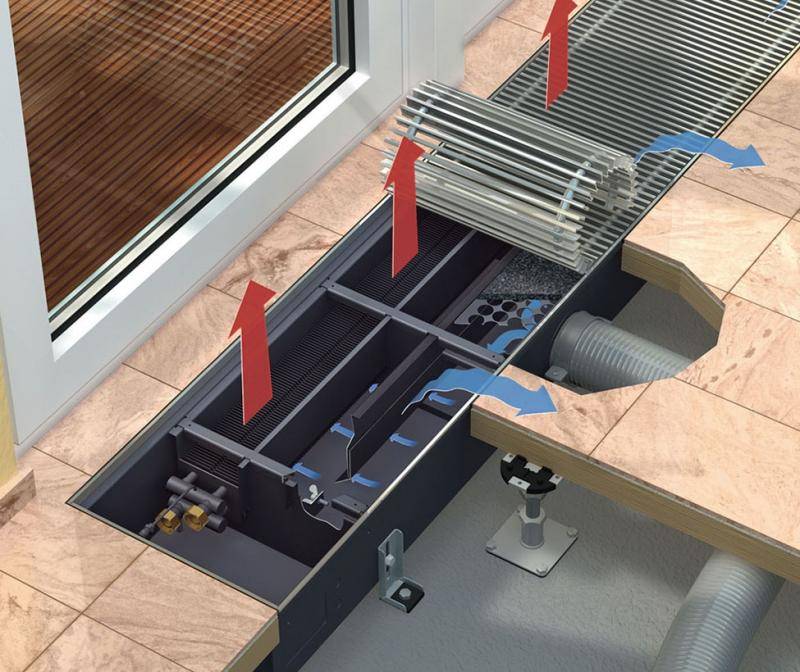
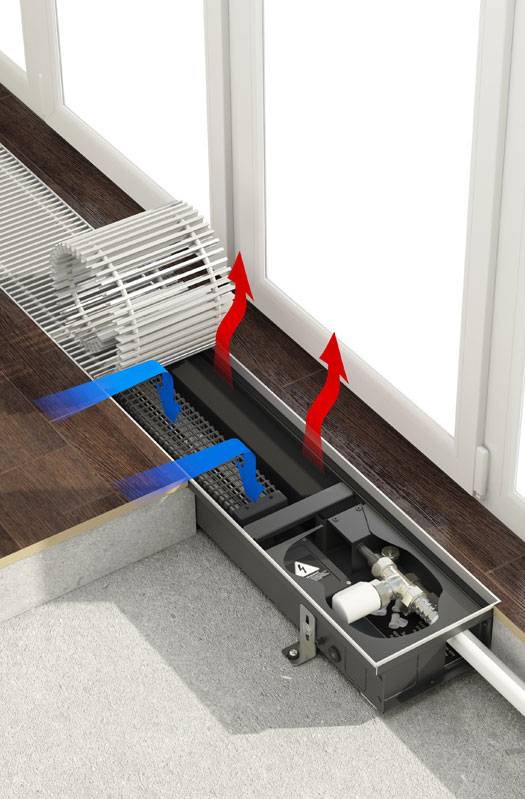
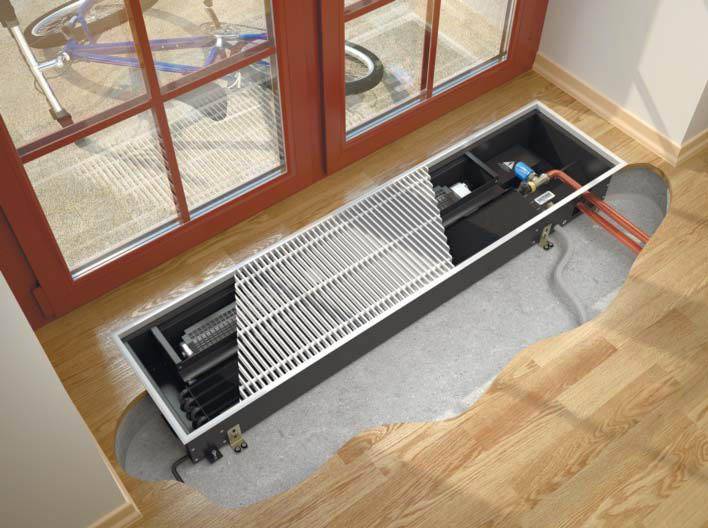


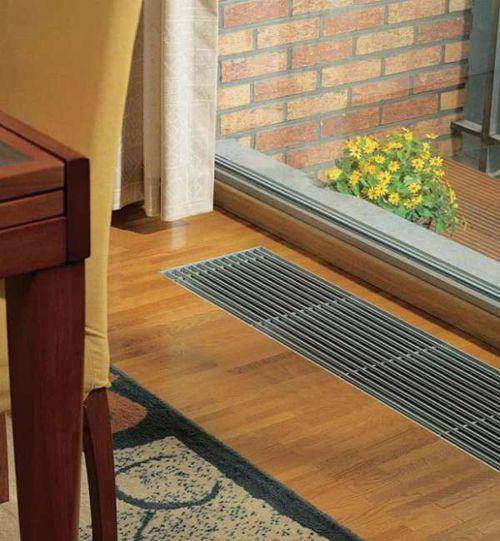
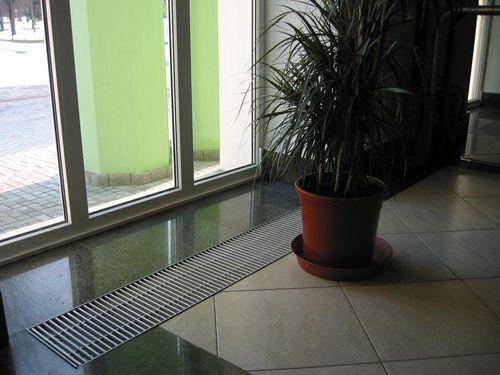
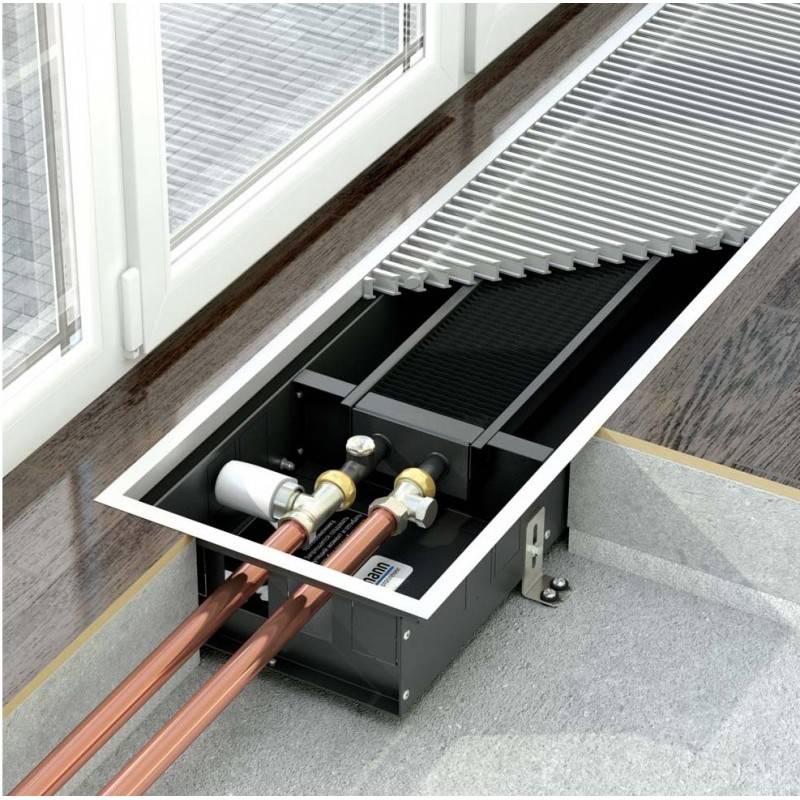
Floor convector in front of French window
The device and appearance of the floor convector with a fan
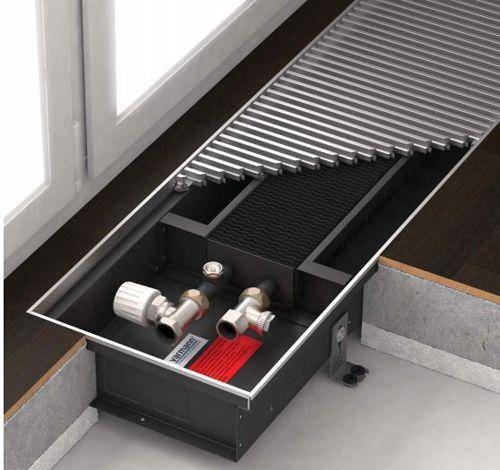
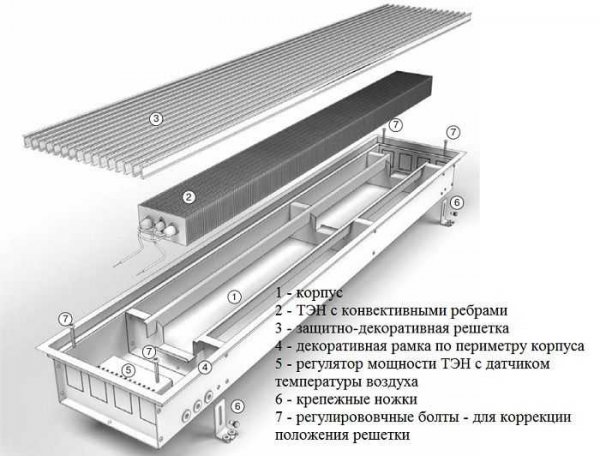
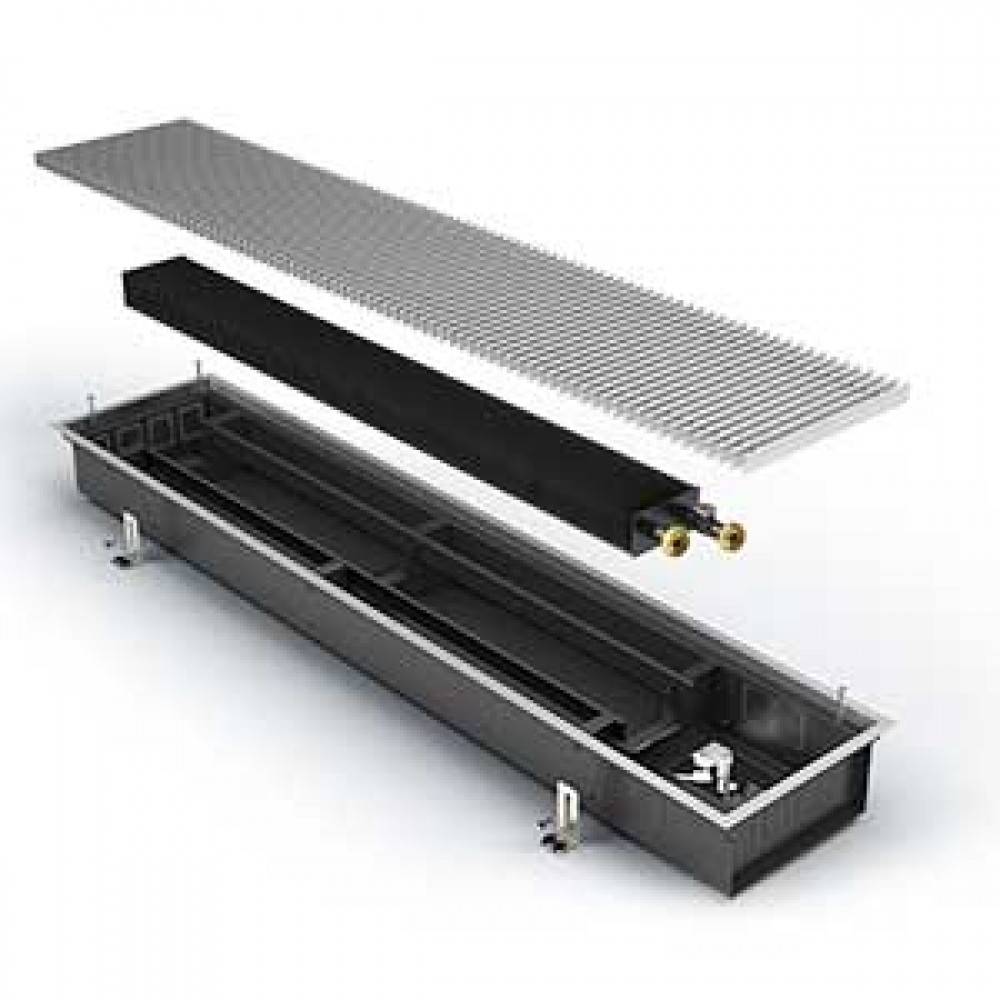
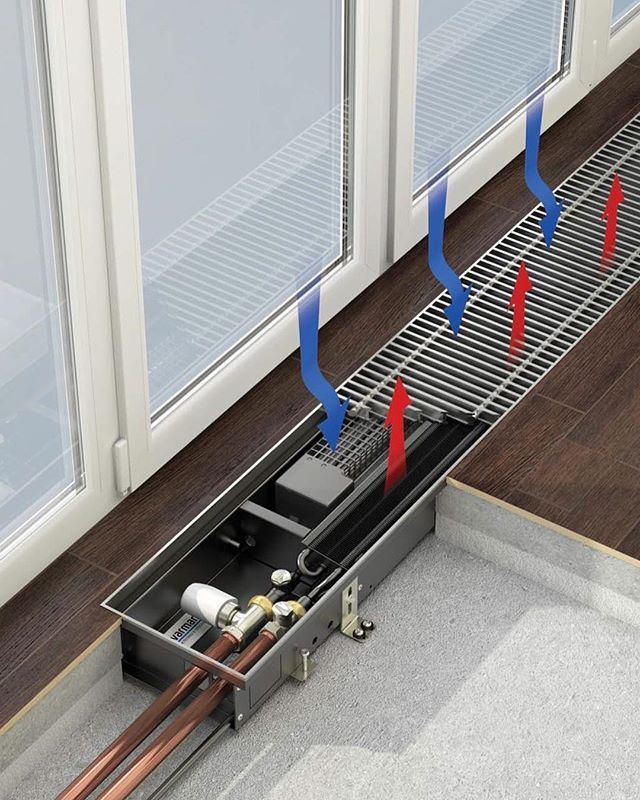
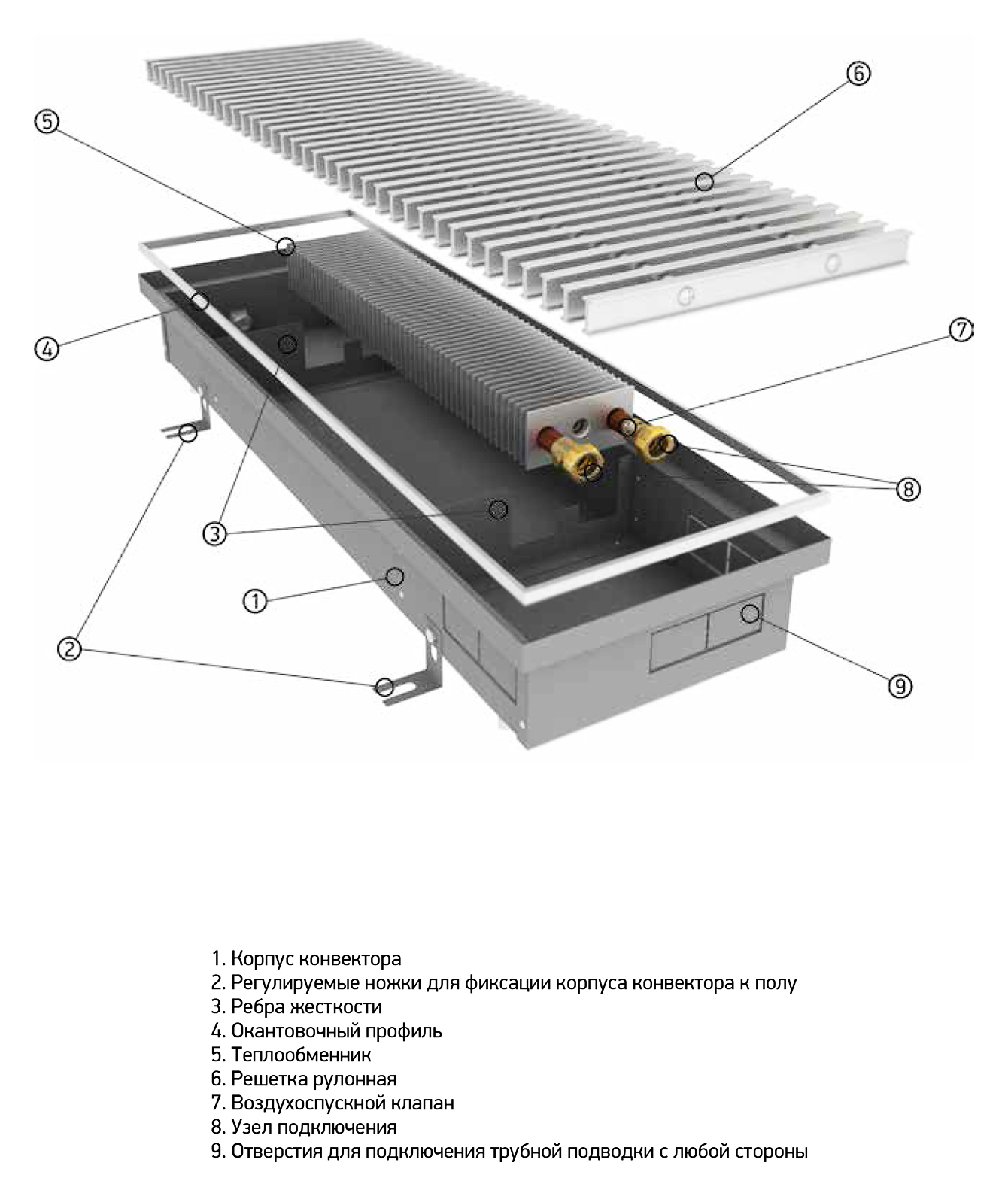
Convectors are a case in the form of a tray or box made of metal with anti-corrosion properties or a coating, inside which a heat exchanger is installed - a copper coil with aluminum fins that increase the heat transfer area. The coil has a fitting for connection to the heating system. The top of the box is closed with a grate that can be made of different materials and in different styles, combined with traditional decorative flooring. The box rests on adjusting bolts designed to level the convector.
Convector device
Operating principle
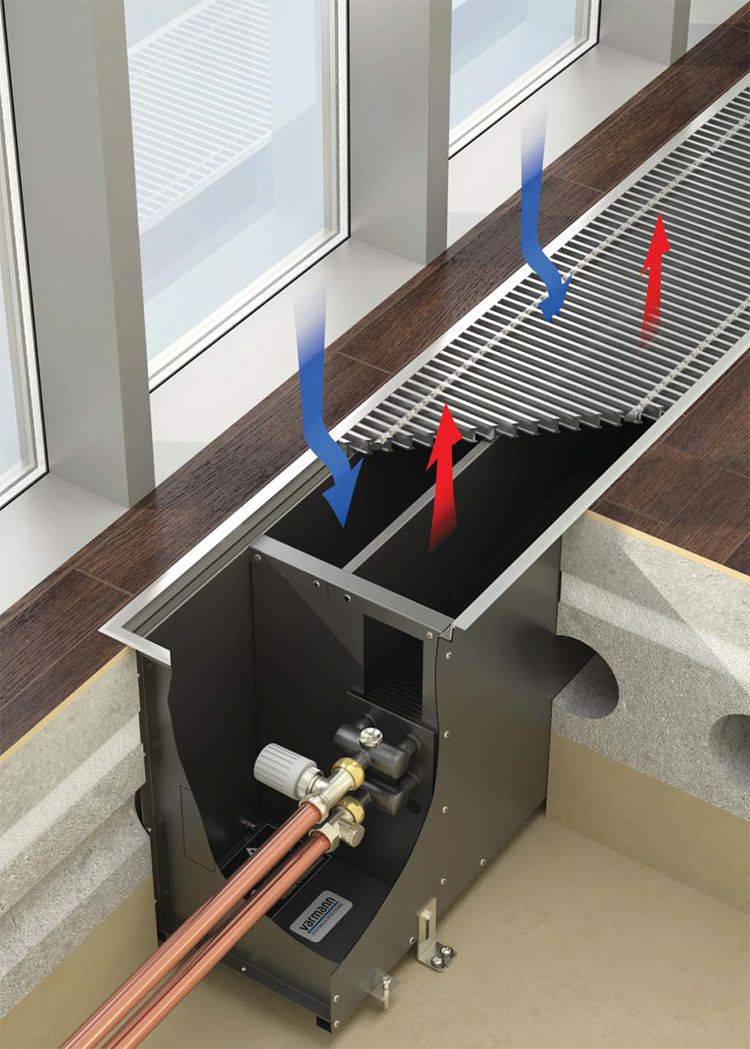
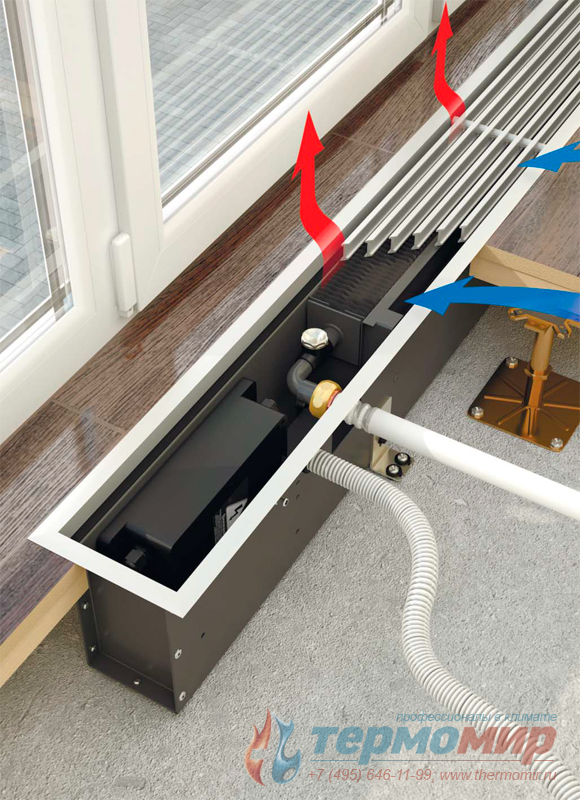
The principle of operation of the convector is extremely simple: cold air from the floor surface enters the duct, where it heats up due to heat transfer from the aluminum coil plates. Lighter heated air rises through the grate, and a new portion of cold air enters in its place. This process takes place continuously, as a result, the air around the convector has the same comfortable temperature. Some powerful models are equipped with a fan that forcibly increases the heat exchange rate.
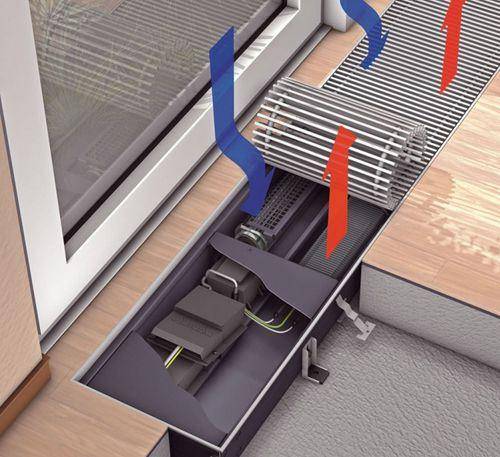
Operating principle of floor convector
Selecting the power of a water floor convector
Any heating devices are selected according to their thermal power, that is, the ability to maintain a given temperature in the room. Convectors are no exception; before installing them, it is necessary to calculate their power.The calculation is not much different from the calculation of conventional radiators. Execute it like this:
- Determine the size of the room and its area - the product of the sides, expressed in meters. For example, a rectangular room with dimensions of 4x6 meters has an area of 24 square meters.
- Multiply the resulting area by 100 and get the heat output necessary for its heating, expressed in watts (W). For the example above, this value is 2400 watts.
- The number of convectors is determined depending on the places of their installation. You can install them only in front of the balcony doors and supplement them with radiators, or you can perform all the heating of the room with convectors. For the room in question, for example, four floor convectors of the MINIB COIL-P80-2500 brand with a power of 650 W each will suffice.
It is better to choose convectors with a small margin of power, since the passport characteristics are designed for the ideal parameters of the heating system, which is not always the case in reality.
Convector power is an important indicator
Types of devices
Devices are divided into electric and water - powered by a circulation circuit.
Electrical
In these devices, the heating element (heater with plates) is powered by the mains. Plugged it in - warm. There is no electricity (accident on the line) - it got colder.
Feeding from the circulation circuit
The principle of operation of this type of floor convectors is the same as that of a classic water heating radiator system: the heat carrier heated from the boiler (gas, diesel, wood) gives off heat to the air masses.
Undoubtedly, the process of heating the room is lengthened. But for sure you will not freeze if the electricity in the house disappears.
Fancoils
On the basis of floor-mounted convectors, another type of heaters is produced, which work not only for heating, but also for cooling. At the place of installation, in addition to the inside, they are also wall, floor and ceiling. The Russian-language name for such a unit is a fan coil unit - from the English fan-coil, which means a fan-heat exchanger in translation.
This definition means a set of two devices working in pairs:
- directly fan coil - a floor-mounted mechanism for influencing air temperature, including one or more heat exchangers;
- chiller - a separately installed unit for cooling the coolant (water) supplied to the fan coil in the summer.
Fancoils are single-circuit (two-pipe) and double-circuit (four-pipe).
In single-circuit units, hot water from the central heating system or antifreeze from the heating boiler is driven through the heat exchanger in winter. In summer, cold water from a chiller passes through the same heat exchanger - a device that does not use freon or another gas with identical characteristics for cooling.




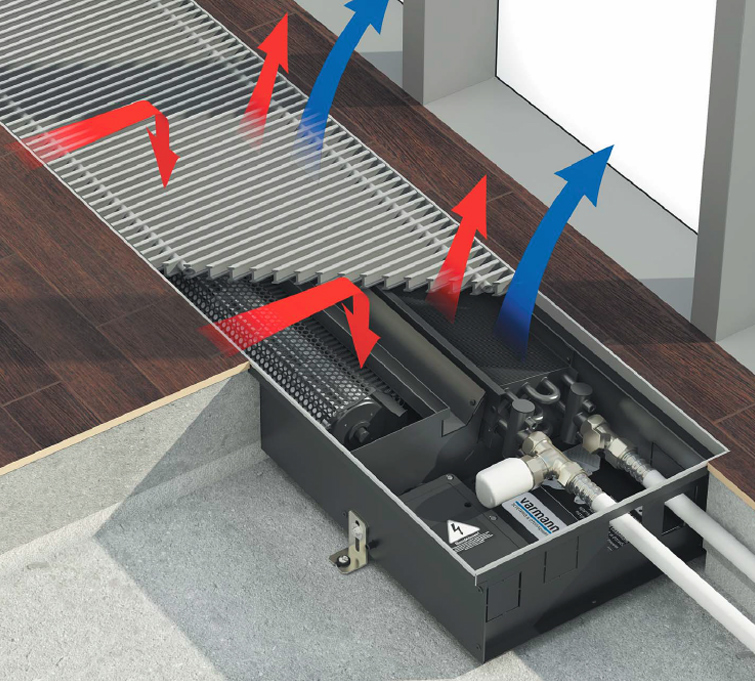
In double-circuit fan coil units, the movement of hot and cold heat carriers is carried out through separate heat exchangers.
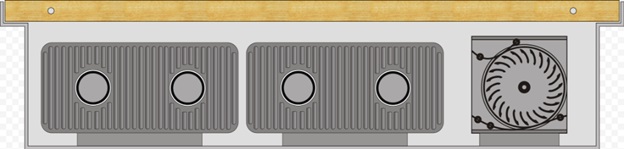
Thus, depending on the set mode, the fan drives the room air through the hot or cold heat exchanger.
There is no universal scheme for installing a chiller-fan coil system pair, its installation is possible in any room, but the installation project will be tied to specific conditions.
One properly sized chiller can be connected to a system of many fan coil units (wall, ceiling, underfloor) serving several rooms and even buildings.
Such a system for providing the necessary temperature conditions in the premises is mainly used in public and industrial buildings, as it is difficult to maintain and expensive.
How to choose a floor convector
Competent selection of the heat output of floor convectors does not differ from the calculation of these indicators for traditional radiators. When calculating, it must be remembered that for each square meter of heated area it is necessary to spend 0.1 kW of thermal energy, and about 40 W of heat per cubic meter, but taking into account a special correction factor:
- without wall insulation - 1.1;
- in the presence of single-layer double-glazed windows - 0.9;
- for a corner room - 1.2;
- with a ceiling height of 280–300 cm - 1.05.
For example, to warm up a room 300 cm long, 250 cm wide and 270 cm high, with a total volume of 20.25 cubic meters, you will need to install a floor convector with a power of 0.81–1.0 kW. When using the equipment as an additional heating system, it is necessary to calculate the power at the rate of 20 W per cubic meter.
It is important to remember that the calculated power of the built-in water convector is determined when the coolant temperature is at +75 ° C. The total number of devices, as well as their dimensions, directly depend on the heat demand and are calculated at the design stage of the heating system, taking into account the estimated heat losses. The total number of devices, as well as their dimensions, directly depend on the heat demand and are calculated at the design stage of the heating system, taking into account the expected heat losses.
The total number of devices, as well as their dimensions, directly depend on the heat demand and are calculated at the design stage of the heating system, taking into account the expected heat losses.
The power of the device can be regulated by means of shut-off and control equipment, represented by ball valves, manual valves and traditional automatic temperature controllers, which are mounted on the convector's inlet. The first option has a simple and fairly reliable design, small size and the ability to save the cross section of the valves, but operation is allowed only in two positions.

The equipment regulates the power of the heater
The use of a manual valve ensures smooth connection to the heating system, guarantees high accuracy in adjusting the heat output of the device, but in this case there may be a natural decrease in the throughput. Among other things, the constant presence of a person is necessary.
The best option is to equip the heating system with a thermostat with a remote type sensor. Such a device will provide stability and reliability of operation, as well as significant savings in energy costs. Rarely used thermostats equipped with a servo drive. The presence in the design of a stably functioning actuating element makes such models incredibly practical, and also has a positive effect on the dimensions of the entire installed heating system.
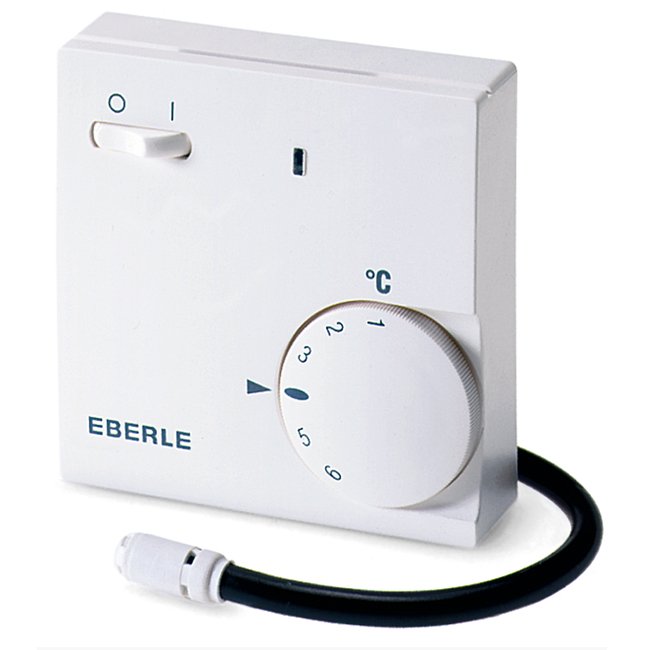
The device allows you to adjust the temperature using the adjusting dial
Recently, quite often, thermostatic valves are installed on convectors, which have a modern integrated temperature sensor, which easily provides remote control of the device.
The most popular and demanded in our country, affordable models with decent technical characteristics:
- Breeze (Russia);
- EVA (Russia;
- Itermic (Russia);
- Techno (Russia);
- Minib (Czech Republic);
- Varmann (Russia).
Installation scheme
Any floor convector is installed in a specially prepared niche or under an equipped raised floor. In this case, the decorative grille must be flush with the floor covering.
Taking into account all the technical nuances, when installing such heating systems, certain rules must be followed. And we are talking about the following important points:
- the niche should be wider than the installed device by 5-10 mm on each side and 10 cm from the side of the pipeline connection;
- the depth of the niche is 10-15 mm higher than the height of the convector, taking into account the thickness of the finishing surface;
- using an adjustable support or special brackets, it is necessary to achieve maximum stability of the device;
- after completion of installation and connection of the convector, the free space in the niche is filled with a special solution for reliable fixation;
- in the process of finishing the floor, the gap between the decorative grille of the convector and the flooring is sealed with silicone;
- often the connection of convectors is carried out using metal-plastic pipes, which are quite easily bent at the desired angle;
- pipes immured in a screed or covered with a raised floor should not have connections;
- despite the fact that with an increase in the thickness of the floor, any pipes can be used, experienced experts recommend giving preference to metal-plastic and polypropylene products;
- the installation of the pipeline is carried out using union nuts, referred to as "American".
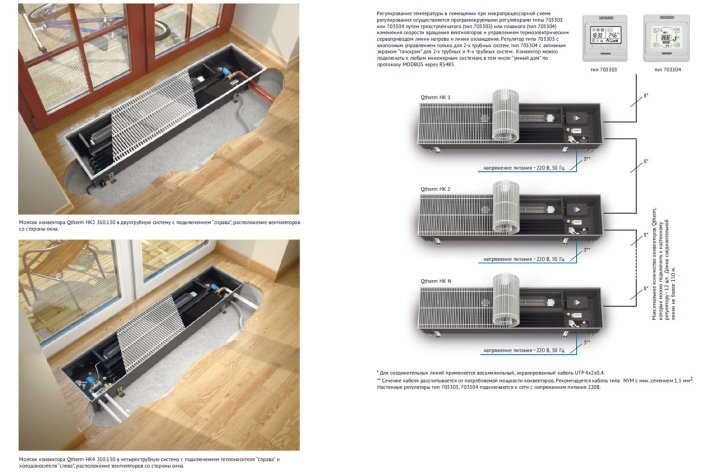
When installing convectors with forced air circulation equipped with fans, it is necessary to take into account the need to connect them to the mains.

Where are built-in heating systems used?
Floor mounted convectors are innovative heating equipment with unique features and stylish appearance.
They are recommended to be installed in the following cases:
- In rooms with large window openings to eliminate the possibility of drafts in the room.
- In small rooms with a lack of free space or in those in which, according to the project design, there should be no unnecessary elements. Devices are built into the floor screed, leaving maximum space free.
- In rooms with a high level of humidity, regardless of their purpose. Here their role is to obtain a kind of veil that prevents the windows from fogging up.
In order not to be disappointed and avoid losing money, it is recommended to study the information about the models you like before buying.
A well-chosen heating device will certainly meet expectations and will significantly save on electricity consumption.
How to choose the right water heaters?
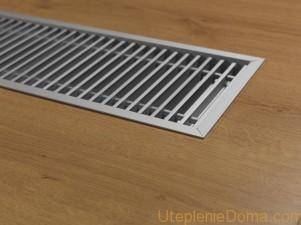
When buying an underfloor heating convector, you should pay attention to the availability of quality certificates. First of all, you need to pay attention to the availability of quality certificates.
Water convectors of any brand and manufacturer must comply with GOST 20849-94. The presence of dents and damage in the form of scratches on the case indicates a low quality product. This product in its design must have non-ferrous metal. It is he who provides a high percentage of heat transfer - the main advantage of equipment built into the floor. Otherwise, the desired effect will not be
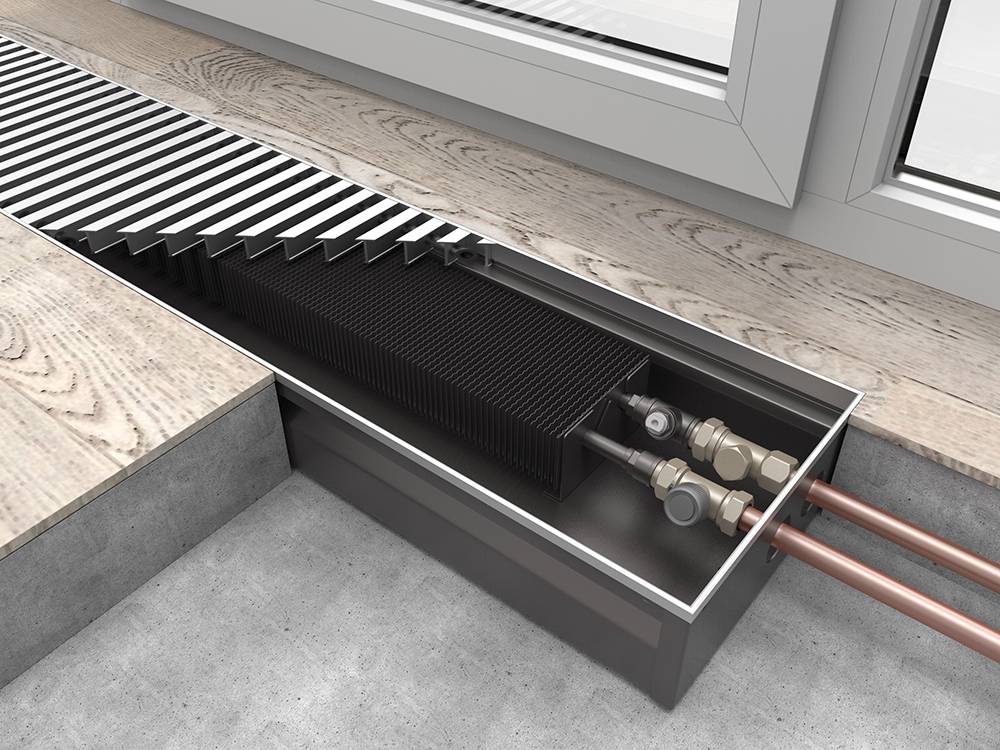


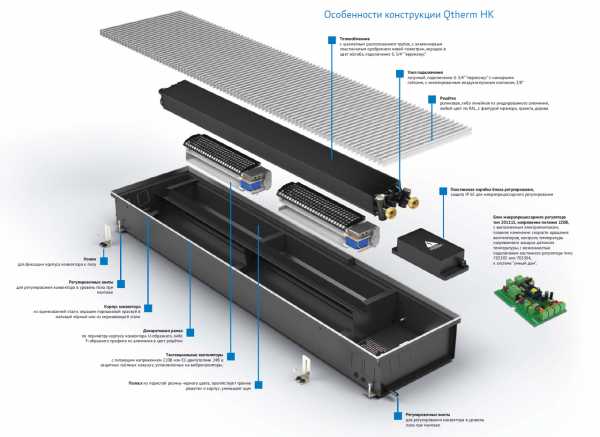


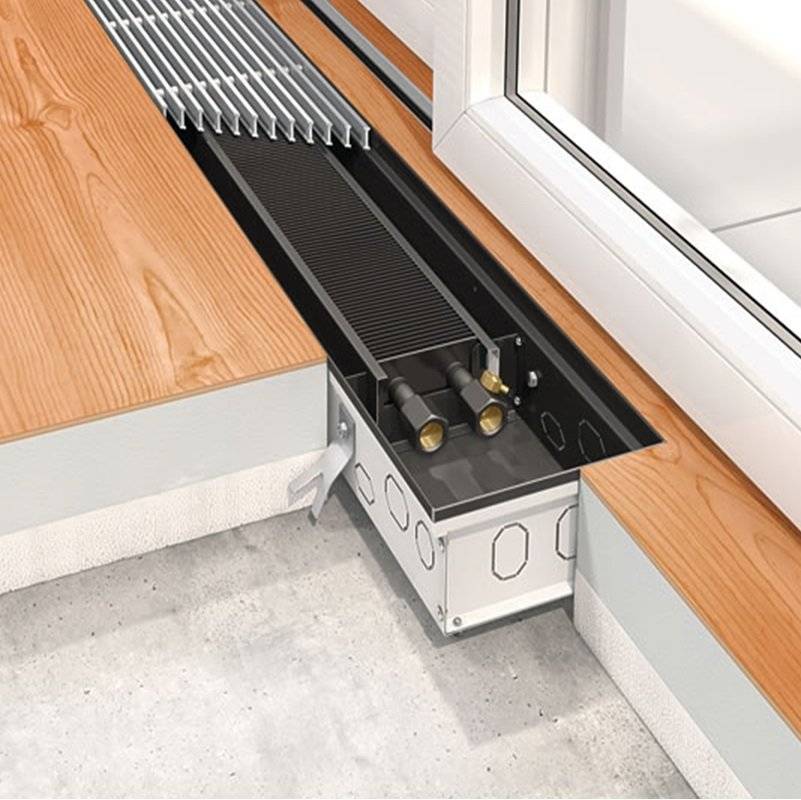

First of all, you need to pay attention to the availability of quality certificates. Water convectors of any brand and manufacturer must comply with GOST 20849-94
The presence of dents and damage in the form of scratches on the case indicates a low quality product. This product in its design must have non-ferrous metal. It is he who provides a high percentage of heat transfer - the main advantage of equipment built into the floor. Otherwise, the desired effect will not be.
Related products must also be marked with a quality certificate.
In a solid heating element there is a valve for regulating the supply of coolant. To supply the coolant to the equipment, it is better to choose a corrugated stainless steel pipe. This will save you from further breakdowns of the entire system and waste of repairs.
Water heating convectors with forced circulation
One of the limitations of floor convectors is that they only work effectively in small spaces with not too high ceilings. This is due to the fact that the convection process itself is quite slow, so in high rooms the air has time to cool before it completes a full revolution.This leads to the fact that either the room warms up slowly, or you have to increase the temperature using a thermostat (which is not always possible).
Where it is required to heat large and spacious rooms, convectors equipped with a forced air circulation system are most often installed. Simply put, an electric fan is installed to help the natural process of movement of the air mass. To power the electric motors of such combined devices, a voltage of 12V is used, which is quite enough to ensure normal operation and complete electrical safety.
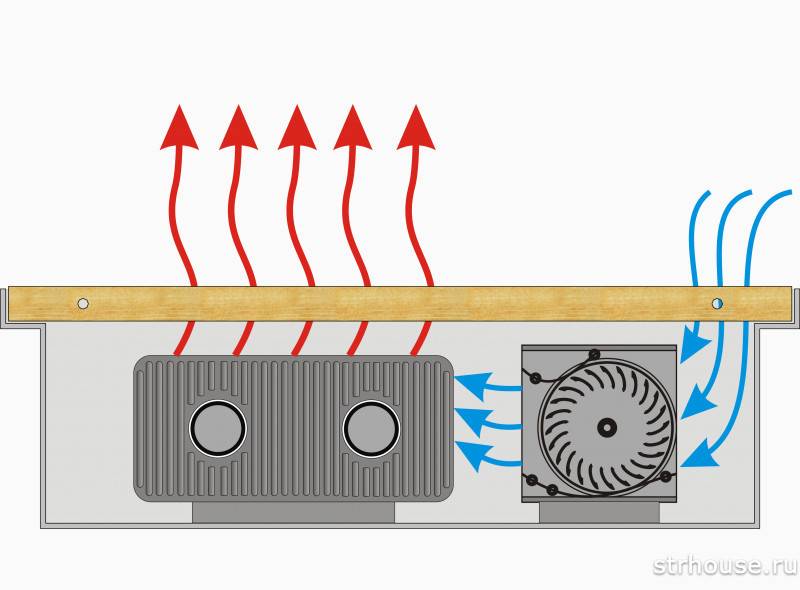
To increase the effect, in some cases two-row heat exchangers are used, but this solution requires more free space than in the standard version, which is not always possible.
When installing combined convectors, even at the design stage, it is necessary to provide a place for installing a step-down transformer with a rectifier that converts the household mains voltage into direct current to power the device. Typically, the fan is installed inside the device case, which facilitates maintenance of the entire system as a whole.
As an alternative solution that accelerates the movement of air masses through the convector, a system of hidden ventilation ducts is sometimes used. In this case, cold air enters the heat exchanger both independently and by forced injection.

In many houses where a large number of windows are installed, built-in heating convectors are also placed in window sill niches, ensuring the movement of air masses along the window glass, forming a kind of thermal curtain.At the same time, the effect of fogging of glasses is almost completely eliminated, improving visibility and preventing the formation of condensate.
Often, such a device becomes a favorite resting place for domestic cats, peacefully watching pigeons freezing in the snow. Convectors are also built into stairs, wall niches and other interior details.
It is also practiced to install skirting water convectors along the perimeter of the outer walls in order to normalize the temperature and humidity in the room. Regardless of the type, the principle of operation of a water heating convector remains the same.
Operation and maintenance
 Remove the decorative grille before cleaning the convector.
Main maintenance activities:
- Dismantling the grille, it is removed from the guides.
- Wet cleaning of channels.
- Dry cleaning with a vacuum cleaner.
How to reduce the grid
During operation, the box may shrink due to heating. In this situation, the decorative grille will be larger than necessary. You can deal with the problem yourself. Of the tools you will need a screwdriver and pliers.
First of all, it is necessary to tighten and fix the string with the help of pliers. Then the end bolt is unscrewed, thanks to which the entire structure is held
All actions must be performed very carefully so that the string does not jump off and the structure does not crumble completely.
A section or sleeve is carefully pulled out, depending on the required dimensions. After that, the end bolt is screwed into place.



Types of convectors
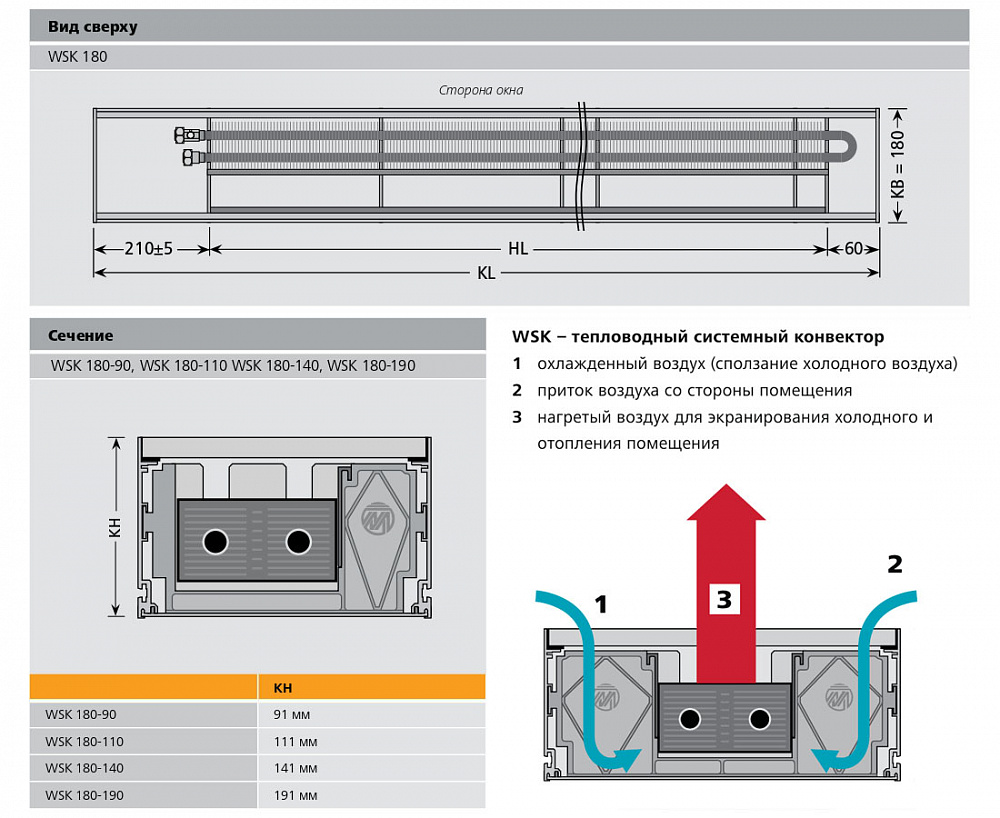
Such systems can be with natural or forced ventilation.In the second case, for more intensive and faster air mixing, fans are installed in the channels - 1 or several, depending on the length of the channel. Since the fans are low power, they will not make much noise.
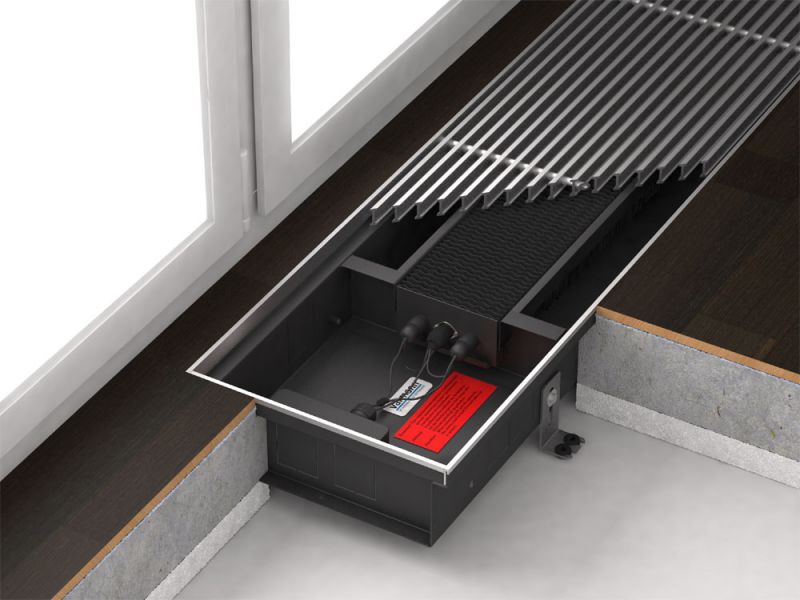
Underfloor heating convector with natural ventilation
Underfloor convectors for water heating are also divided into single and double circuit. Single-circuit ones work to heat the room, and double-circuit ones can also give a lower temperature background. Such convectors do not replace air conditioning systems, but the effect of their work is not bad, besides, they do not create a directed flow of cold air masses (draft).
These heaters can be both standard and designed individually for any room or building. An individual approach provides a finer consideration of the layout features: channels and heat exchangers can be ordered in any configuration, even angular or semicircular, following the contour of the outer wall. You can order different sizes of convectors, as well as power.
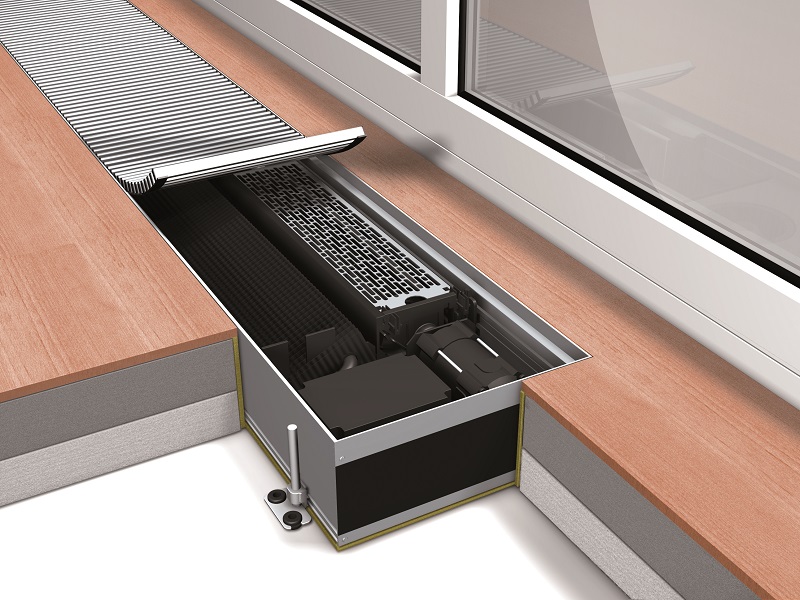
Underfloor heating convector with forced ventilation
to the menu
Outcome
Recently appeared on our market, these floor convectors are widely used, which is justified by convenience and economy. These devices are reliable, do not spoil the view of the premises, they are easy to replace if necessary. The shape and size can be very different, which allows you to install them in a semicircle or angle. Floor convectors are especially good in a humid environment, as well as where you need to create a thermal curtain.
Of course, you can do everything yourself, but in any case there are nuances, and only a specialist knows exactly at what height from the bottom of the channel to place the heat exchanger and in what place, how many fans are required. A convector instead of a battery is an excellent solution for both a private house and an apartment.
to the menu