- Flowing gas appliances for heating water
- How instantaneous water heaters work
- Indirect heating devices
- Indirect heating boiler
- Electric storage, direct heating
- Energy consumption of heaters
- Indirect heating boiler or geyser: what to choose?
- Advantages and disadvantages
- How to choose a device?
- Instructions: how to transfer the water heater in boiler mode
- How to choose an electric water heater
- Description
- Instantaneous water heaters
- Electrical
- Gas
- Safety in the operation of an electric water heater
- Boiler service
- Gas flow heaters
- Types of electric water heaters
- About the types and principle of operation of different heaters
- Summing up
Flowing gas appliances for heating water
A flowing water heater, which works by heating with gas, copes with its tasks better than all other devices. The water heats up very quickly, the temperature uniformity remains stable even with strong pressure, and the amount of time during which you can use the device is not limited by anything.
This type of heater is ideal for city apartments, subject to the presence of gas in them, since its operation is much cheaper and easier than the "flow" powered by electricity.
The main and indisputable advantages of such devices include the following:
- heating up to 80-90 degrees;
- maximum heating when skipping 10-12 liters in one minute;
- the power of the supplied gas is automatic, that is, it is regulated independently, depending on the speed and volume of passing water (not in all models).
All these qualities are unattainable for a device powered by electricity, even for the most modern and powerful
In addition, gas is cheaper than electricity, which is also not unimportant, given that water is planned to be turned off for a couple of weeks, and unscheduled shutdowns can occur at any time of the year and for any period
Instantaneous water heaters are very compact and mobile, in case of moving they can be easily taken with you.
Only one point can be attributed to the disadvantages of these heaters:
obtaining a product of combustion during operation, output either to the general ventilation or to the street.
Models of such devices have differences, the main of which are as follows:
- adjustment and power selection smooth or stepped;
- power varies from 13 to 29 kW for different needs, for example, the most powerful models are designed to simultaneously serve several bathrooms, laundry rooms or showers, and the simplest model can easily cope with the simultaneous use of water in the bathroom, in the kitchen and in the washing machine;
- ignition can be piezoelectric and electric;
- maximum indicators of water heating;
- the presence of the function of an automatically simulated burner, which allows you to "remember" and maintain the selected heating mode;
- the dimensions of the devices themselves.
The most popular heaters of this type are Ariston water heaters, although this manufacturer produces quite expensive models, but their characteristics are very high, as well as practical reliability.
The prices for these heaters range from 9,600 to 21,400 rubles, on average, heaters that will be enough for an ordinary city apartment, for example, the Ariston Fast Evo 14B model, cost from 10,700 to 17,300 rubles.
In general, the cost of such devices starts from 4,000 rubles, for example, good domestic heaters rarely cost more than 6,000. Also, inexpensive devices are offered by a well-known manufacturer - Zanussi.
These heaters cost from 4,000 to 7,000 rubles, they are very reliable, but they are characterized by low power and simple minimal functionality. The most popular model of this type from this manufacturer is the Zanussi GWH 10 Fonte Glass Rialto, which costs an average of about 4870 rubles.
How instantaneous water heaters work
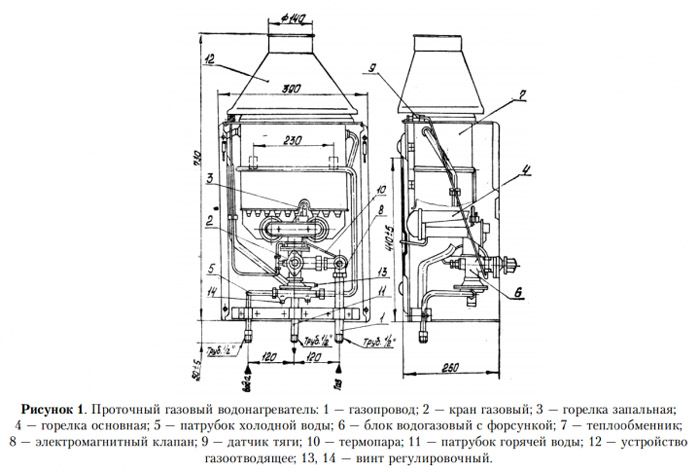
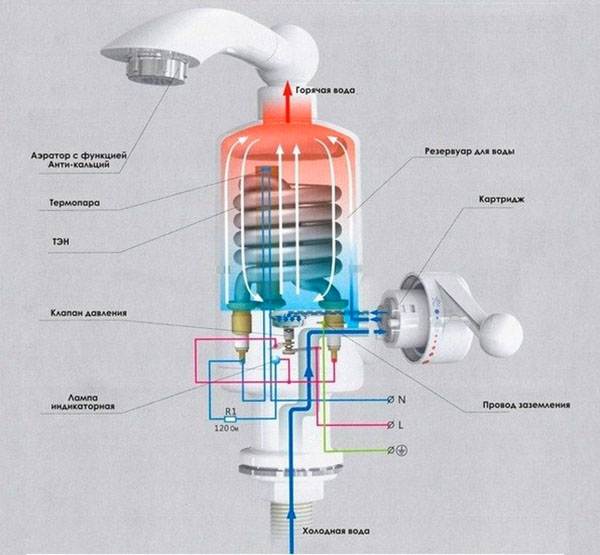
The principle of operation of instantaneous water heaters is quite simple:
- from the water supply system, water enters the heater, then passes through the chamber where the heating element is located;
- in this chamber, it heats up to the temperature you need;
- through a special tap is served already hot.
At the same time, there is no separate water tank, and it does not accumulate, due to which such water heaters are small in size and do not take up much space in the bathroom.
A feature of the instantaneous water heater is the ability to instantly heat water to the required temperature without accumulation.A huge advantage is that you do not need to choose a large water heater if you have a large family, as is usually the case with storage models.
Also, the undoubted advantage of the heater is that it consumes energy only during the passage of water through itself. There is no need to wait for water heating for a long time, the water heater will work when the tap is opened and immediately supply hot water.
The electric model of a flowing water heater can be pressure and non-pressure. Non-pressure units are used for cottages and showers, they do not consume a large amount of electricity and have little power. But pressure water heaters can be used in any conditions.



There are also gas instantaneous water heaters on the market, but they have more specific features in terms of application, but we will return to their description later.
Naturally, flow heaters are very convenient and can fit any type of room. They are easily connected, when using an electric type heater, there is no need to install an additional network at home, it is also possible to set the desired temperature.
Indirect heating devices
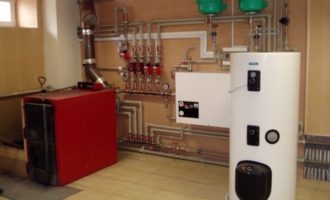
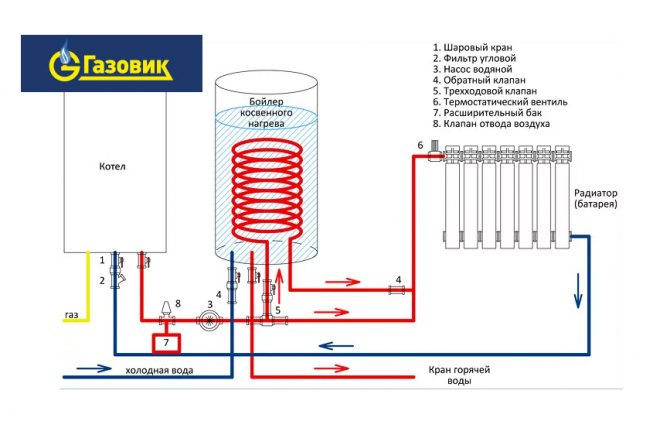
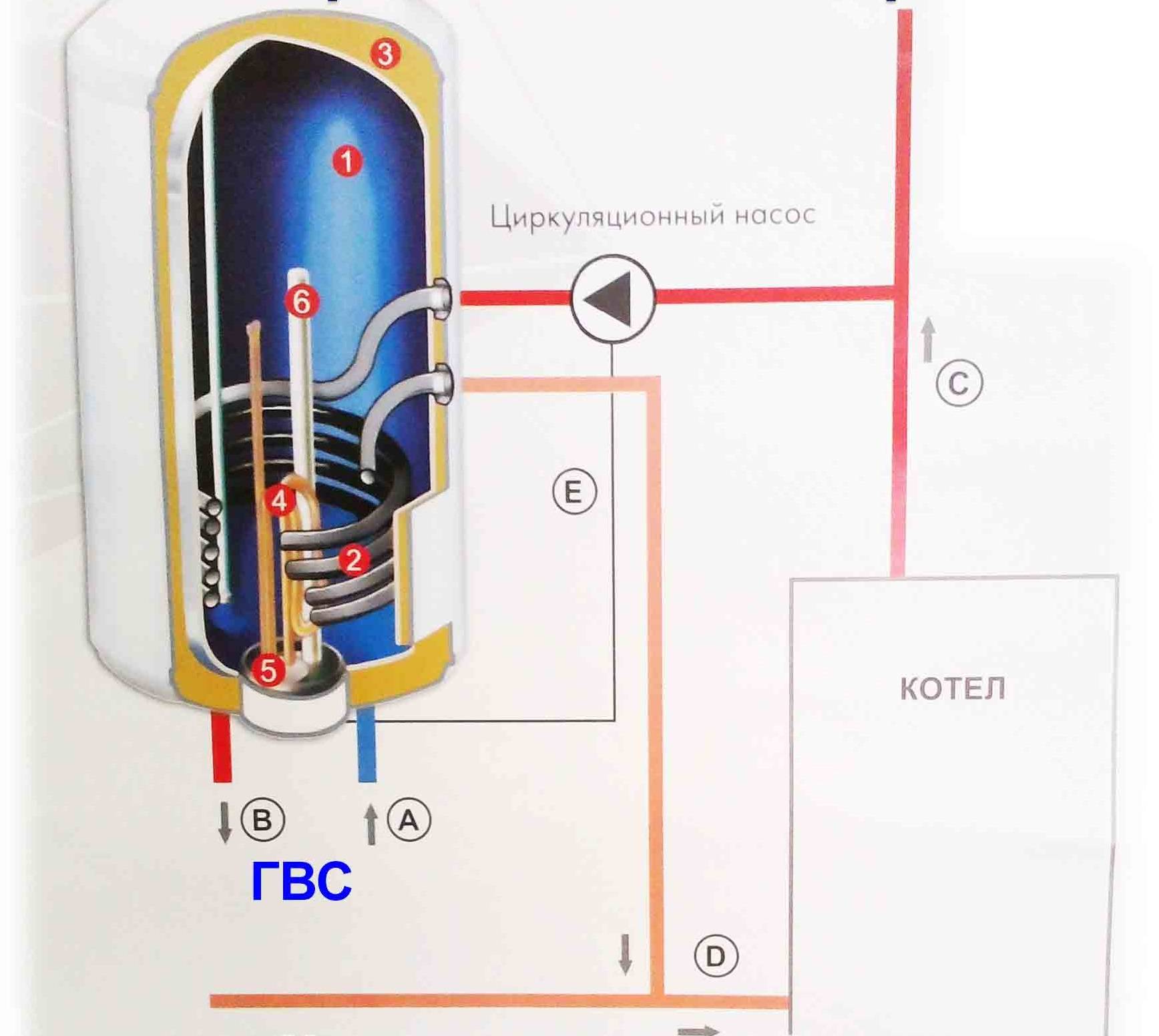
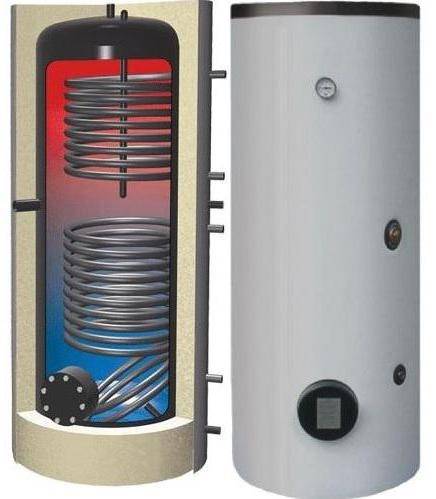
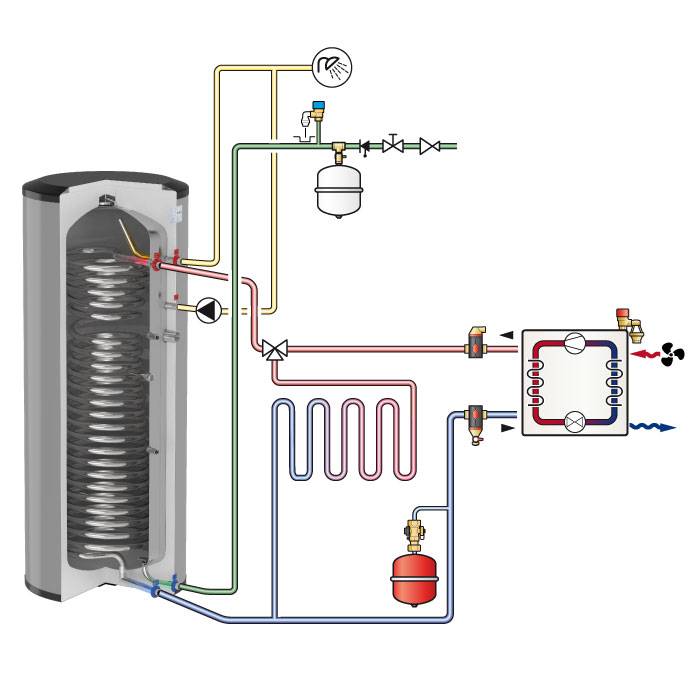
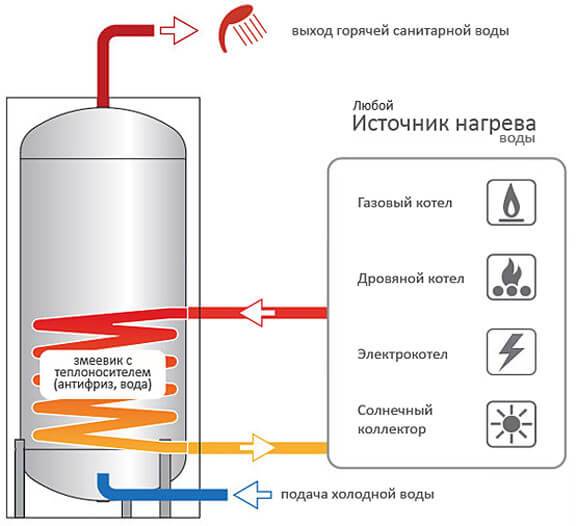
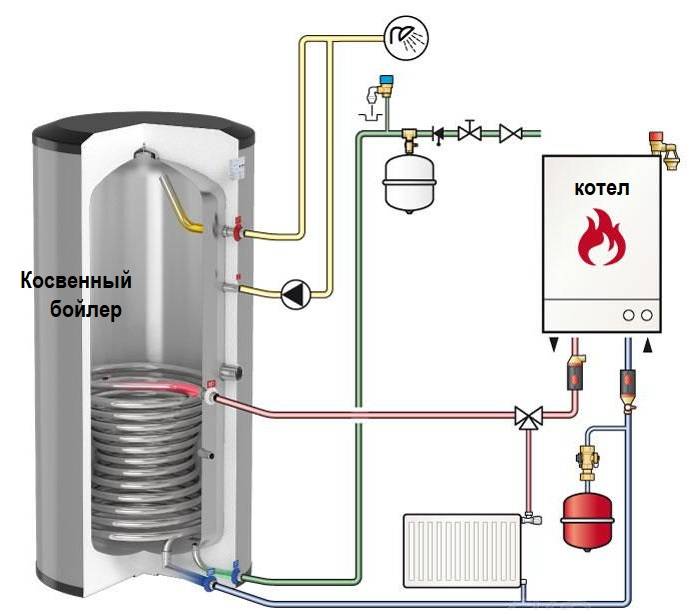
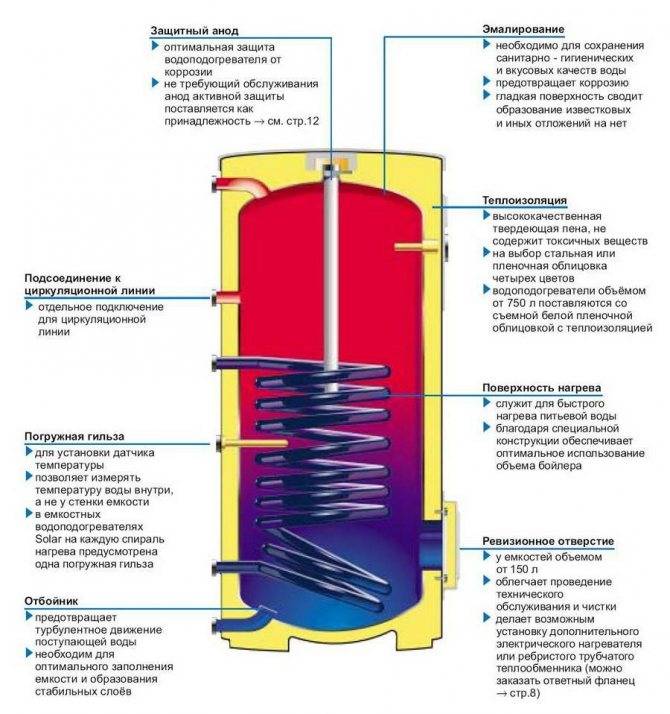
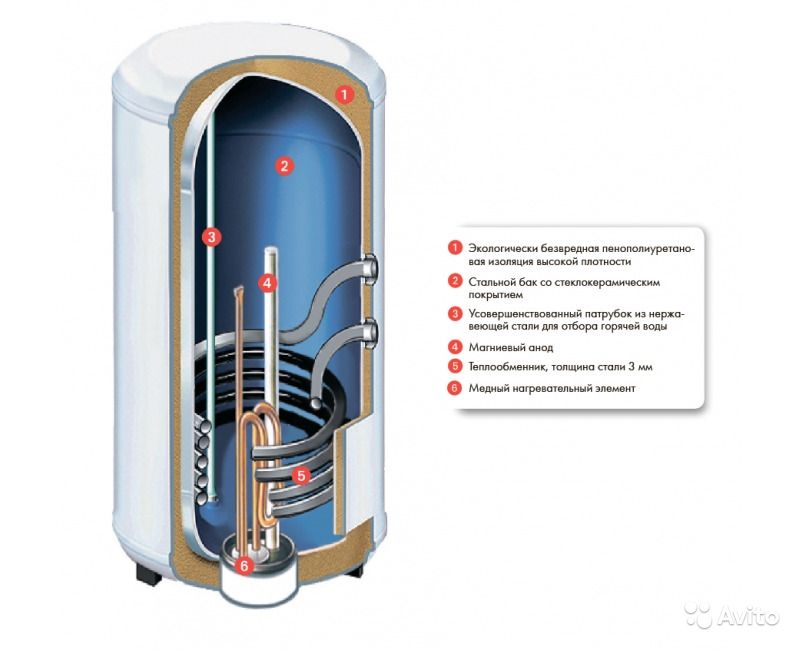
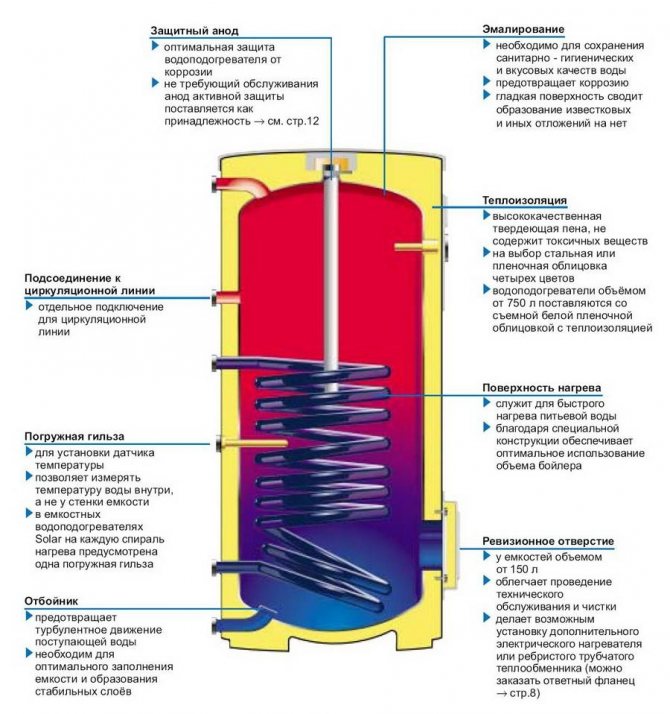
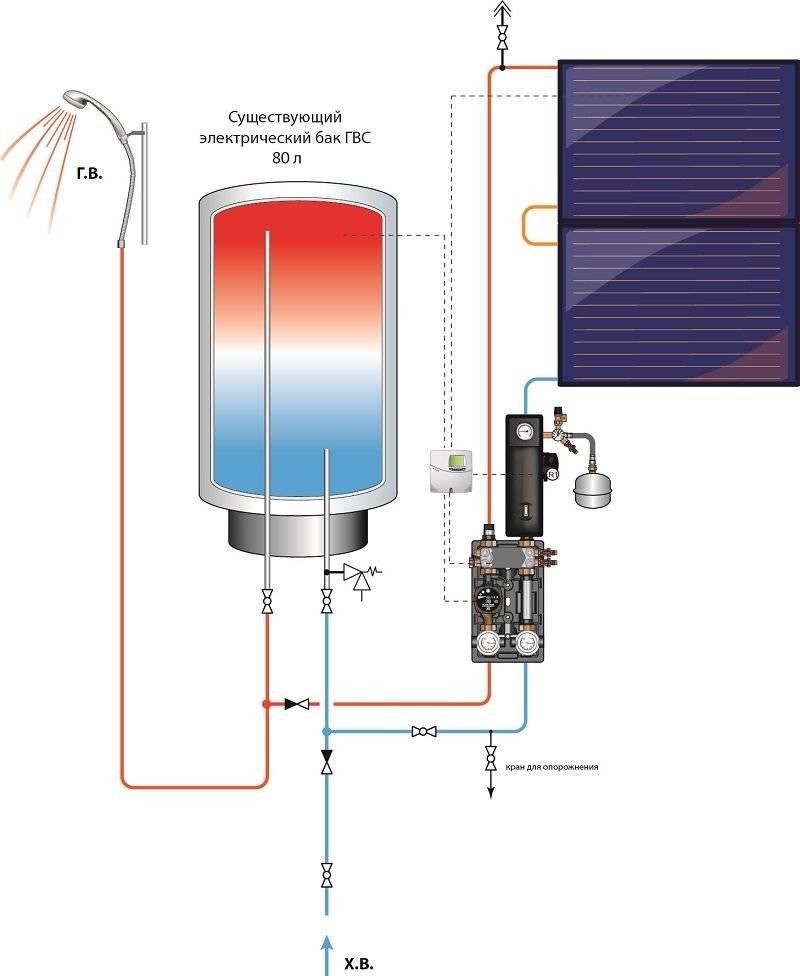
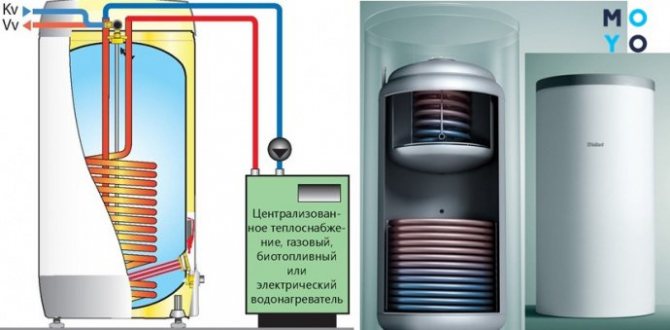
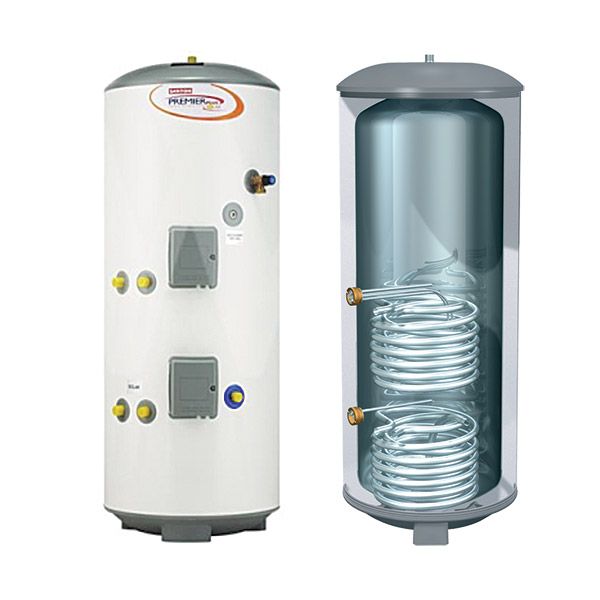
This type of device consists of a tank and a heat exchanger coil. From the coil, water is heated.
Some of these models are equipped with an electric element, which makes them combined and independent of the heat exchange coil.Boilers of this type are used where there is hot water supply in principle, but there is no way to run a stationary pipe with hot water, quite often they stand under bar counters in cafes and other public places, for example, with non-stationary popcorn racks in cinema halls.
The only positive feature of this type is the low cost of operation and high durability. These devices are produced with the expectation of a very large displacement and have corresponding dimensions, and their price ranges from 34,000 to 168,000 rubles. In apartments, heaters of this option are not installed.
Whichever heater is chosen, before buying it is necessary to take into account all the nuances of the living conditions in which the device will be operated and purchase the most appropriate one. In this case, the device will serve for a long time and provide comfort in case of any difficulties with the central water supply or in its absence.
Indirect heating boiler
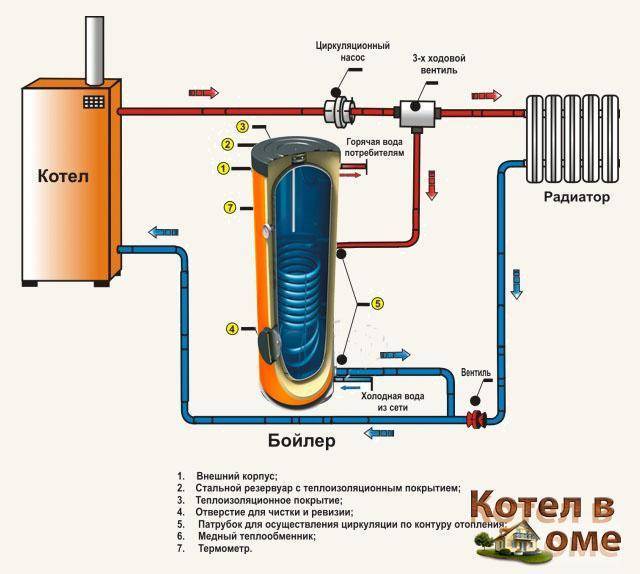
 Many owners of private houses are wondering how to supply the house not only with heat, but also with hot water through the heating system. Why does such a question even arise, because the market is simply teeming with offers of electric and gas storage and instantaneous water heaters? Everything is very banal - electricity is not cheap, and gas water heaters are not able to provide a constant temperature that is comfortable for use. Therefore, indirect heaters are an excellent option for a home with heating from a gas boiler, moreover, economical.
Electric storage, direct heating
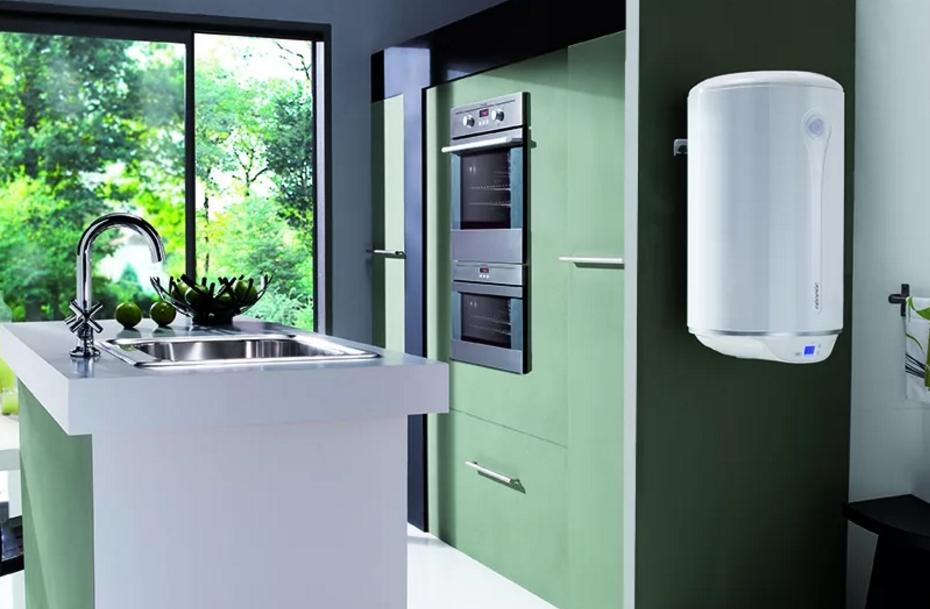
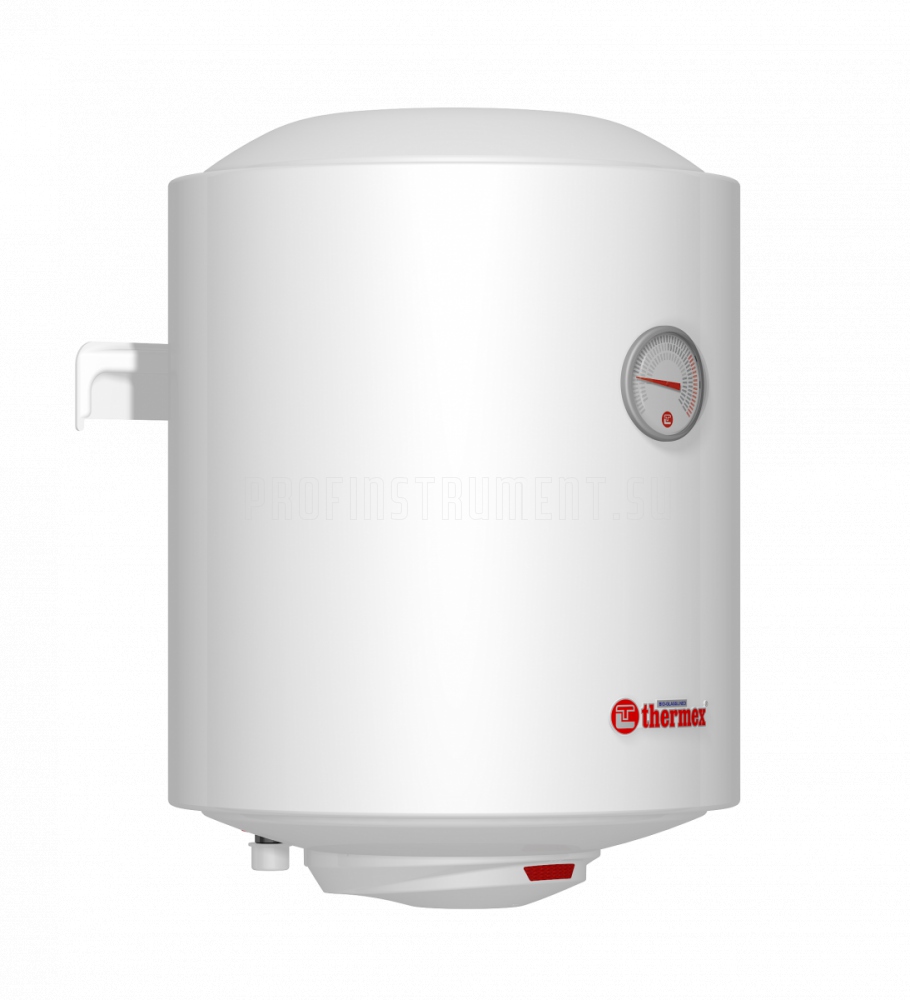
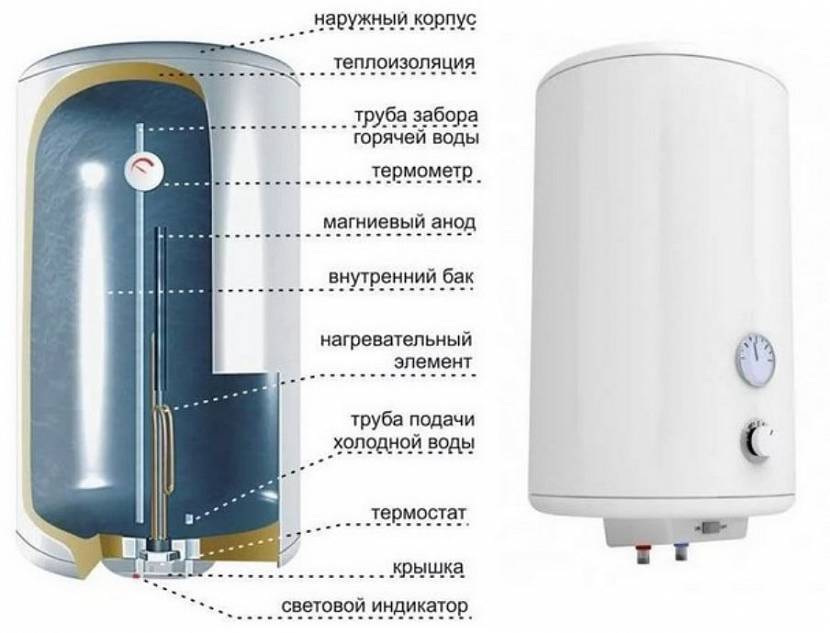
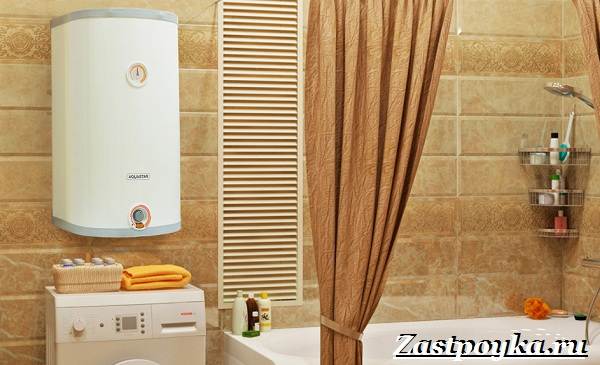
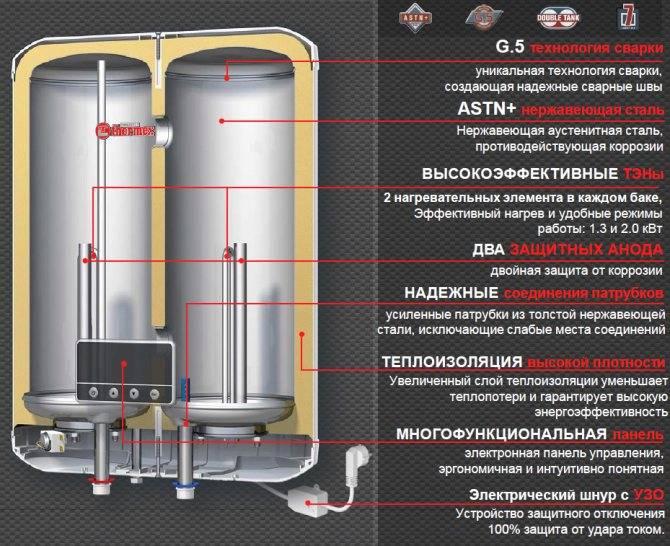
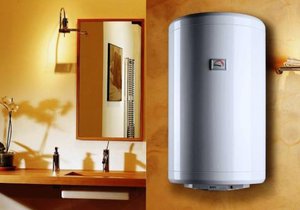
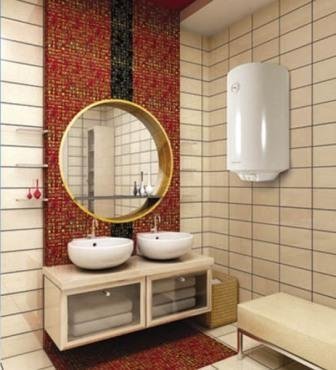
Such a water heater organically fits into the interior of a bathroom or other room. It is intended for connection in apartments or private houses of the small area. The water heater can be installed independently, permits are not required for this. Usually it is a round or rectangular container, powered by the city power supply and decorated with a special casing. The water tank is made of enameled or stainless steel.
Heating elements are installed at the bottom of the structure. Depending on the model, the heater can be equipped with one or two heating elements. Branch pipes are installed for cold water inlet and hot water outlet. The temperature is controlled by a thermostat. The maximum temperature for most models is 75 degrees
Please note that the heater maintains the set temperature in automatic mode.
Energy consumption of heaters
Instantaneous electric water heaters have different capacities - from 2 to 30 kW (sometimes even higher). Low-power models are focused on one parsing point, more powerful ones - on several. Heating occurs quickly, but it will require powerful and durable electrical wiring.
As for storage water heaters, they heat water for a relatively long time, ensuring its long-term storage in a tank with effective thermal insulation. The power of the heaters here is about 10 times lower than in flow models.
If possible, it is more profitable to install a gas instantaneous water heater - its efficiency is approximately equal to the efficiency of a boiler. But we must remember that it is not without certain shortcomings described in our review.
Indirect heating boiler or geyser: what to choose?
Both types of this equipment have a number of features, including both advantages and disadvantages. If you do not know what is better to choose - an indirect heating boiler or a gas water heater, then we hope that our article will help you decide. So, the geyser is considered one of the most common ways of autonomous supply of hot water. It is a instantaneous water heater that heats cold water from the plumbing directly on the fly. Due to this, heating is carried out almost instantly, and the volume of hot water supplied depends on the power of the column.
The gas water heater is compact, provides fast water heating. However, it requires that the house is connected to a centralized gas and, preferably, water supply. In many ways, the efficiency of such equipment depends on the pressure of the supplied cold water. Also, to install a geyser, a chimney is required, at least a coaxial one (for turbocharged models). In some cases, this may cause some inconvenience to the user.
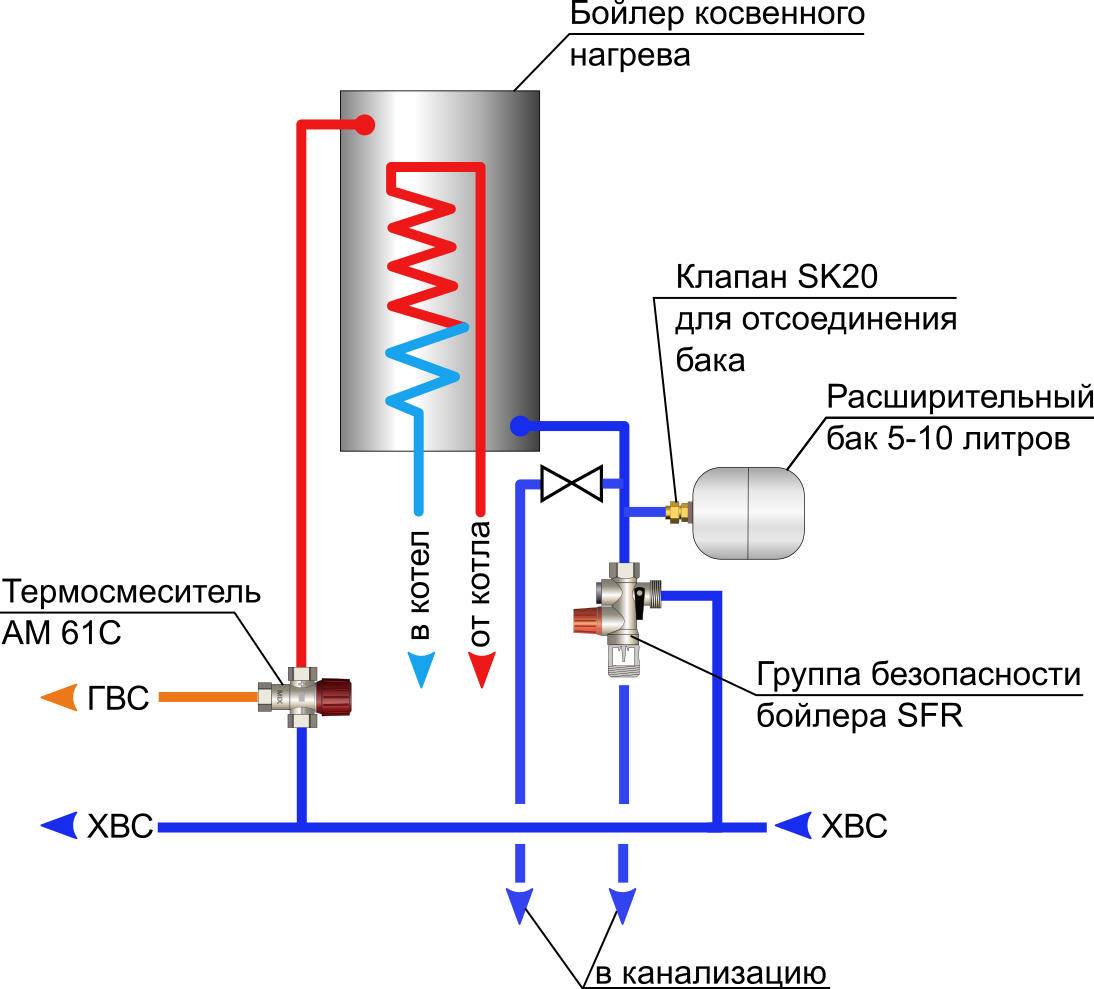
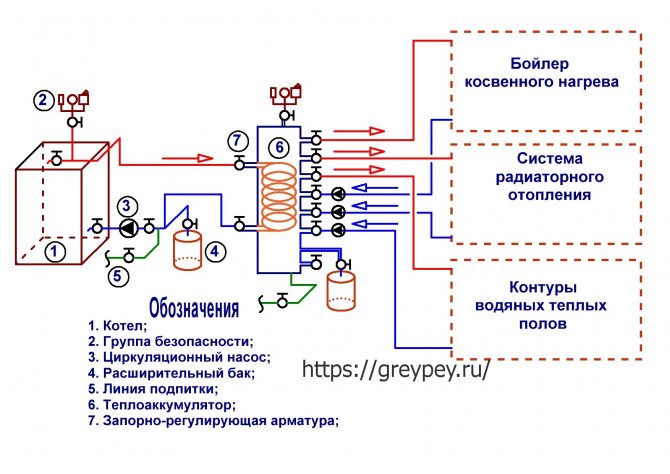
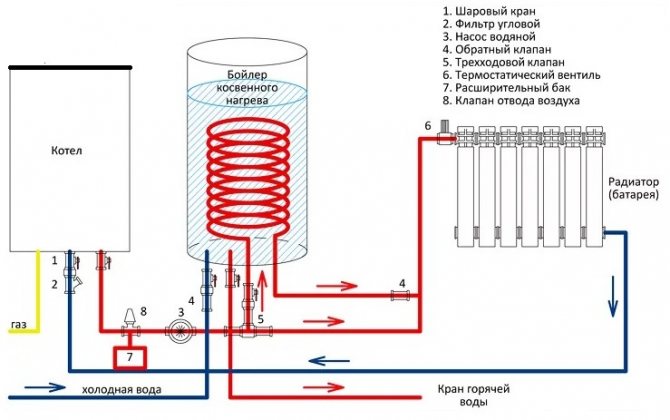
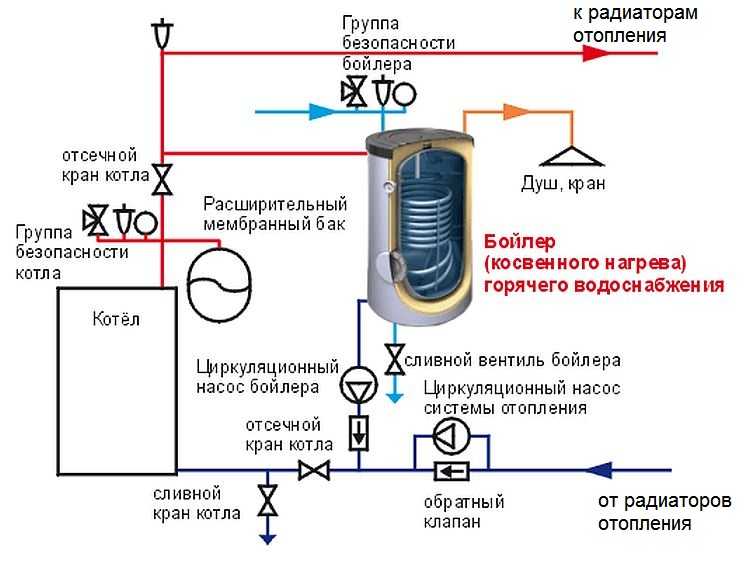
As for the indirect heating boiler, it does not have a flow, but an accumulative principle of operation, accumulating in its container hot water heated by a separate heating boiler. Therefore, it is advisable to use this technique (boiler + boiler) only in combination with each other. Some models of such water heaters have a built-in electric heating element that maintains a high water temperature.The advantage and, at the same time, the disadvantage of this boiler is its bulkiness - it can store a large amount of liquid, but at the same time, it requires a lot of space for its placement.
So, an indirect heating boiler or a geyser - which equipment will be more profitable? The column is intended exclusively for flowing heating of domestic hot water in relatively small domestic volumes. At the same time, the house should have a stable, good pressure of gas and cold water. It does not have a tank, so if the cold water supply is turned off, you will be left without hot water too. A gas water heater is best suited for apartments or houses with central heating, as well as a stable water and gas supply.
In turn, an indirect heating boiler is much more economical than a gas water heater, since it receives water already heated by the boiler and spends a minimum of energy to maintain its temperature. It does not require a gas pipeline to heat water, the boiler can be powered by electricity or completely autonomously (on coal, wood, pellets). In addition, it stores hundreds of liters of liquid in reserve in its capacity, which is ideal for those cases when increased DHW flow is required. Its disadvantages include bulky dimensions, as well as the very high cost of a set of a heating boiler and an indirect heating boiler (which, however, soon pays off).
Advantages and disadvantages
Storage boilers have a number of advantages over instantaneous water heaters:
- availability of access to hot water within the available volume provided by the design;
- round the clock use;
- maintaining the temperature in the selected range for a long time;
- ease of use and temperature control.
Disadvantages of boilers:
- the inability to use water in excess of the tank limit, which is inconvenient in large families;
- the need for periodic maintenance;
- the risk of flooding the premises during a breakdown;
- relatively low cost of service;
- the availability of an electric energy carrier at the installation sites, because gas is not present in every settlement;
- continuous heating of water to the desired temperature.
Advantages of flow heaters in comparison with storage boilers:
- no need to wait for water heating from the carrier;
- no restrictions on the amount of hot water;
- ease of use of any design;
- ease of installation and maintenance.
Flaws:
- the need to carefully monitor the equipment;
- modern designs are significantly more expensive than standard boilers;
- the need to choose a solution to provide the whole house with water, or each point separately.
How to choose a device?
When choosing a water heater, first of all, it is necessary to take into account such important criteria:
water consumption;
number of water points.
As a rule, the device comes with several nozzles for convenient and practical use: washing dishes, taking water procedures, and so on. It is worth considering the size of the device. If you need to choose a model for use in a country house or a small one-room apartment, it is better to stay on a compact heater.
Together with the device, special nozzles are included. Heaters of this type are made in a vertical form and placed on the wall. You should not buy the device in the first available store.
Tips for choosing a water heater - in the next video.
Instructions: how to transfer the water heater in boiler mode
The first installation of a water heater system is usually carried out by specialists. But, during operation, users have to restart the device themselves. In this case, the owner of the device will be required to transfer the water heater to the boiler mode. In order to correctly fulfill all the conditions and maintain the performance of the device, you should follow the following instructions:
- Shut off the water supply from the hot riser with a lock.
- Fill the boiler with water. To do this, you must first open, open the hot water outlet and mixer, then direct the flow of cold water into the tank. The process must be performed in such a sequence as to displace excess air accumulated in the device.
- As soon as the flow of water has become uniform, it must be blocked.
- Connect the unit to the network.
- Set settings.
- Wait for the required heating time.
- Start using.
What is better to choose a water heater or a boiler, a direct or indirect heating system, each user must decide for himself. Each type of device is suitable for certain operating conditions. The premises, the number of users, the quality of communications and even the mode of operation will be essential when buying a particular category of goods. Depending on the cost, you can choose a simpler option or equipped with technical innovations, convenient additions.
How to choose an electric water heater
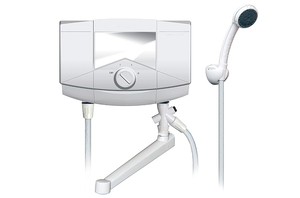 Why are we talking about an electric heater, and not a gas one? Because for a house or apartment in all respects it is the best solution:
- such a device is compact and does not occupy a useful living space;
- high power, which allows using it to completely replace the mixer, since the heater is able to supply water of the required temperature.
When choosing a flow heater, be sure to pay attention to the power of its heating element. Despite its small size, the heater is able to instantly heat water to a high temperature.
For this to happen, the water heater must overtake several liters of water through itself in a record multiple time, so the power of the heating element must be at least 3 kW, but it is better to choose devices with higher power. The best option for a home is a power of about 10 kW.
In addition, when buying an electric flow heater, take a close look at its body and find out what it consists of. The design is installed on the wall and exposed to high temperature and aggressive substances. The best option is an enamelled tank heater, which is best able to resist temperature changes and all kinds of substances that are saturated with running water.
It is also worth paying attention to designs made of copper or polypropylene. The most expensive heaters are equipped with a special protection against scale when heated in the form of an anode, which is able to work for several years in hard water.
It should be replaced with a new one after destruction when the indicator in the form of a lamp is activated.
In case you cannot afford to purchase a tankless water heater, you can pay attention to bulk water heaters. Water in them gets into a special container for heating by pouring
Ten in such designs will not be too powerful, but for domestic purposes this will be enough. However, such a water heater has a drawback: not only hot, but also cold water can get into the spout. Especially such an economical option will please summer residents who will rarely use it.


Description
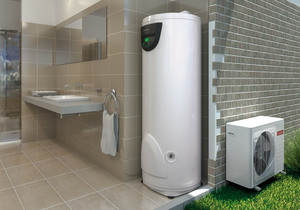
Flow-accumulative type heaters are actively used for residential premises, as well as for cottages and other suburban buildings. Experts assure that the device is a hybrid of a storage boiler and a standard flow heater.
Inside the device there is a tank, the dimensions of which are different (depending on the model), and an effective thermal heating element (TEN). The device heats water to the required temperature in a short period of time and stores it with a sealed tank. For the manufacture of budget models, professionals use a non-pressure scheme, and for more expensive and complex products, a standard pressure one. Currently, the popularity of such devices has just begun to grow.
If you are going to buy such products, you should familiarize yourself with the advantages and disadvantages of the acquisition, as well as pay attention to the tips for choosing
Instantaneous water heaters
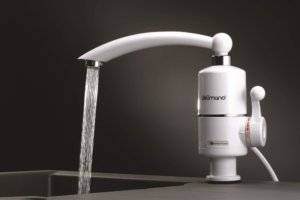
Instantaneous domestic water heater
There is no tank in the design, which is designed to accumulate water.
It will take a short period of time to heat the liquid.
Heating is carried out by TEN, an uninsulated coil or a gas burner.
The operation of instantaneous water heaters is regulated using temperature or flow sensors.
Heating is carried out directly when the tap is opened, which is intended for hot water. After reaching a certain temperature, it turns off automatically. The same principle works when the faucet closes.
Electrical
An instantaneous water heater that runs on electricity is especially suitable for a family of three or more people. After all, using it, you can no longer think that there will be a lack of water, and it will not be enough for someone.
This type of heater has more power (it is 2-20 kW), in contrast to the storage option. If it is installed, for example, only in the kitchen for washing dishes, then four to six kilowatts will be enough.
To connect such a water heater, it is not necessary to call a specialist:
- placement takes place closer to the mixer, to minimize heat loss
- brackets are used for fastening, if there are none, then they can be replaced with fixing screws
- connection to the water supply system occurs according to this principle: at the inlet to the "cold" pipe, and at the outlet to the "hot"
- in the absence of centralized hot water, connection is carried out using flexible hoses directly to the place of consumption
- when a shower head or faucet is already included with the heater, it is connected only to the “cold” pipe
To increase the service life, water filters are additionally installed. With a small power of the device, it is plugged directly into the outlet.
Gas
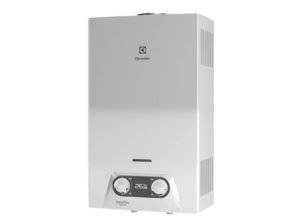
Geyser
According to the principle of operation, they are no different from the electric "brothers".
Only heating occurs with a gas burner.
The use of such a device has a wide scope. This is due not only to the low cost of gas, but also to its compact size and high power.
It is forbidden to connect the gas column on your own. It is done only by specialists of gas services. And also the main factor is the presence of a chimney.


It is worth being prepared for the fact that a gas water heater may be banned from being used in a high-rise building due to a high explosion hazard. This option is often used for AGO, because thanks to their power it will be possible not only to heat water, but also to heat the entire area of the apartment.
Safety in the operation of an electric water heater
 It is worth saying a few words about the safety of using electric water heaters in everyday life.
The issue of safety knowingly continues to excite people long before the purchase
The humid environment of the room and the direct contact of the device with the water that a person will use make it necessary to pay increased attention to the issue of safe operation.
The vast majority of modern models are initially equipped with residual current devices. These devices are not just short circuit protection, they completely cut off the power supply to the water heater in the event of a current leakage to the housing. This provides maximum protection against electric shock during operation.
If the residual current device is not included in the design of the heater, it can be connected separately, but all operations must be performed by a qualified specialist.
Of course, the grounding of an electric water heater is mandatory.
In conclusion, we can say that buying a storage water heater is a good alternative to centralized hot water supply. Compact models make it possible to provide the house with hot water with a minimum amount of space occupied. It is compact models that are the best solution for the period of seasonal preventive shutdown of hot water.
Boiler service
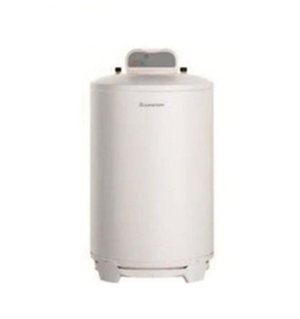 Once or twice a year, an indirect heating boiler needs maintenance - replacing the magnesium anode and removing scale. How can this be done at home?
First of all, you need to check if there is scale on the heat exchanger empirically. Scale significantly reduces heat transfer, so you need to measure the temperature at the inlet to the boiler and at the outlet. In this case, the difference should be approximately 15 degrees, that is, if the coolant enters at 80 degrees and leaves at 65 degrees, then so far everything is in order. But if the coil is “overgrown” with salts, then heat transfer is inefficient and the temperature of the coolant at the inlet and outlet has a difference of only 5-10 degrees, and the water will heat up more and more slowly.
If the temperature at the input-output varies by 12-14 degrees, then things are not so bad so far and you can deal with the thermal shock method. To do this, you need to completely drain the water from the boiler and let the coolant from the boiler run through the coil at good power for about 10 minutes. So, the coil will warm up well, having no where to give off heat, and then you need to fill the boiler with cold water again for 3-5 minutes. Such a sharp jump in temperature should exfoliate the scale from the coil.Now you need to flush the boiler and repeat the procedure.
If the situation with deposits is more complicated, then more effective methods need to be applied. It is necessary to use chemicals that are recommended by manufacturers of a particular model. If you use random means, you can harm the parts of the unit. Special cleaners for indirect heating boilers are diluted in water and poured into the boiler tank to completely cover the coil. You need to wait 4 to 8 hours and the dirty water must be completely removed, and then you need to collect 2 times cold water and drain. Cleanup completed!
Gas flow heaters
For example, flow-through gas-type heaters operate by means of a gas burner. They are small in size, do not require a container to store water, and are easy to install right in the bathroom.
But, along with such advantages, gas models also have a number of disadvantages:
- low power, which does not allow heating water quickly to the desired temperature;
- low performance;
- sufficient user characteristics for an apartment, but not for a country house.
However, if you decide to install a gas water heater in the country, it is better to install several of them at once, as well as pre-install a chimney to ensure safety while working with a gas appliance.
Types of electric water heaters
Electric water heaters come in 2 types:
Flowing
This type of water heater is distinguished by its compactness. They usually only heat water up to 60◦C. It is possible to have a shower head complete with a flowing electric water heater.
Cumulative
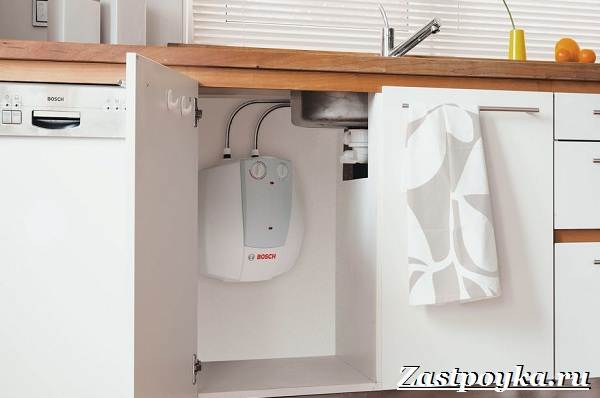
The tank of such a water heater can hold water from 5 to 550 liters. The essence of its work is reduced to the constant heating of the available water (it is possible to periodically add cold water) to a certain temperature. The advantage of this type is that it prevents water from heating above 85 ° C due to the presence of a special built-in limiter. The location of such water heaters can be very diverse: wall-mounted, built-in under the sink, floor. The tanks of such water heaters are made of material with thermal insulation included in the kit, and therefore the water in them does not cool for a long time. It is possible to connect several cranes at once.
About the types and principle of operation of different heaters
Before proceeding with the comparison, we briefly list the varieties and design features of household water heaters. The first group - boilers - are insulated tanks with a capacity of 30 to 500 liters, heated by low-power heat sources:
- electric heating element consuming 1.5 ... 3 kW;
- gas burner with a thermal power of 3 ... 5 kW;
- a spiral coil heat exchanger connected to the heating system (more precisely, to the boiler).
Accordingly, all storage water heaters are divided into 3 types - electric, gas and indirect heating. Accumulation tanks up to 200 liters are offered in wall and floor versions, over 200 liters - in floor versions.

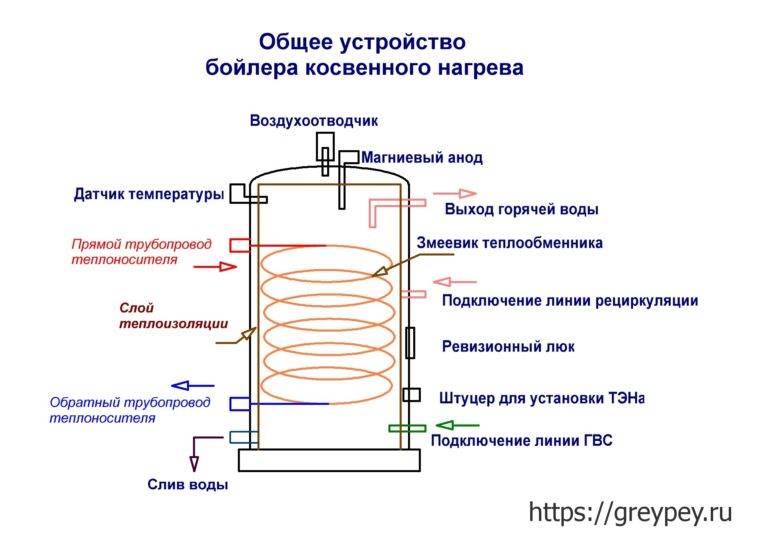

The principle of operation of the boiler is simple: a heating element, burner or coil heats the entire volume of water in the tank until the temperature set by the user is reached. Then the heat source is turned off and started only to maintain this temperature.The heating of the container lasts 1 ... 3 hours, depending on the amount of water and the type of heating element (the burner copes faster than the heating element).
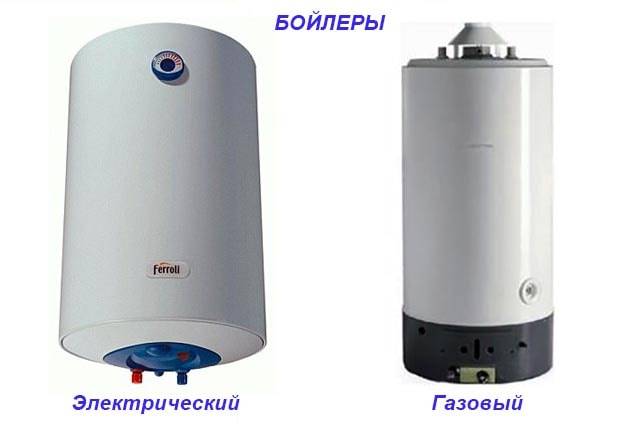
Flowing water heaters differ from boilers in power - it is much higher. After all, the device must have time to instantly warm up the water as soon as the user opens the tap in the bathroom or in the kitchen. The heat source is the same heating elements and high-performance gas burners. The heater is turned on automatically - by a signal from the flow sensor.
In private houses and apartments, 3 types of instantaneous water heaters are installed:
- geysers;
- electric speakers for the shower;
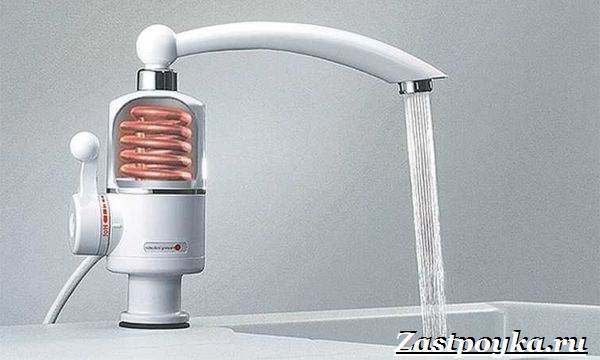
- electric heaters in the form of kitchen taps.
The thermal power of columns running on natural gas starts from 8 kW, electric ones - from 3 kW (faucets for the kitchen). Flowing shower heaters consume more - from 8 kW. All household appliances of this type are designed for wall mounting.
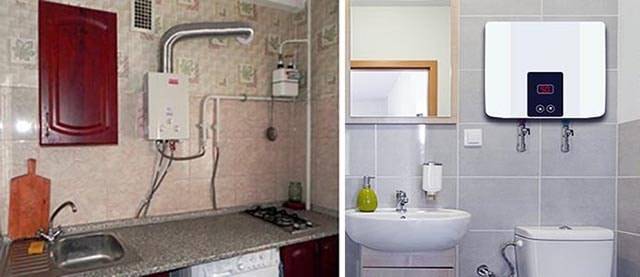
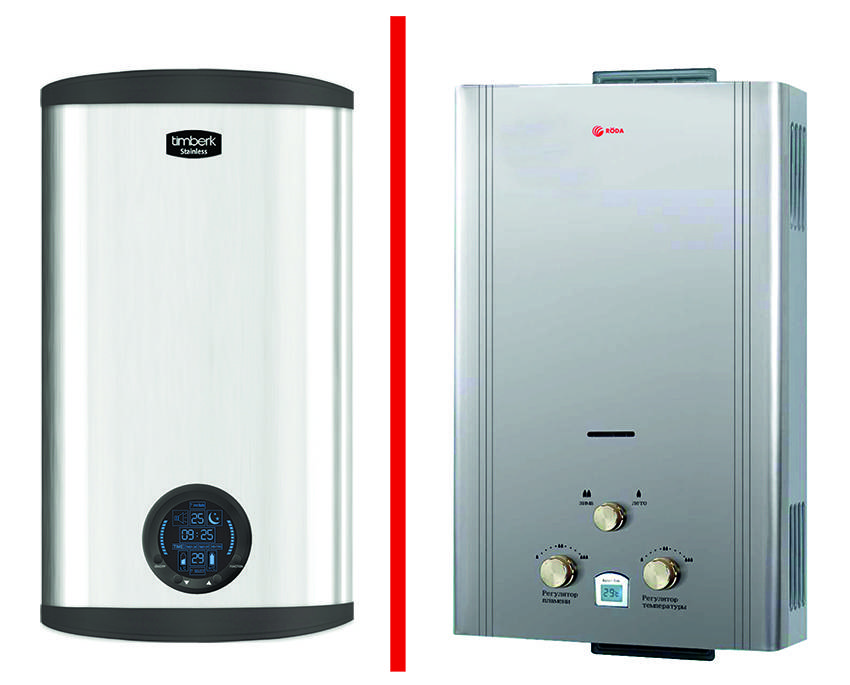
Gas flow heater (photo on the left) and electric column
Summing up
Do-it-yourself installation of such equipment is not too difficult, but responsible. If there is even the slightest doubt in your abilities, it is best to seek help from specialists. Of course, it will be more expensive, but it will be more reliable.
If gas equipment is selected for installation, then it will not be possible to carry out the installation on your own. Even if there are certain skills, as a result, you can get a decent fine from the service company.
But polypropylene lines look neater
We hope that the information presented in the article was useful to our dear reader. If you have any questions, we will be happy to answer them in the discussions.If you have any advice, we will also gratefully accept them.
And finally, we offer you to watch a video on installing boilers:
Previous Engineering send meter readings for electricity: 8 easy ways
Next EngineeringModern cable channels: types and sizes, selection and application