- Principle of operation
- Axial
- Diagonal
- Radial
- diametral
- Bladeless
- Classification of ventilation systems
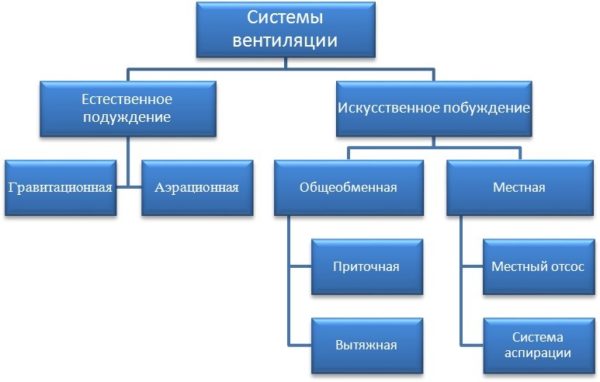
- Types of ventilation system according to the method of supply
- Types of ventilation by purpose
- Ventilation systems according to the method of air exchange
- Separation of systems by design
- natural ventilation
- Advantages and disadvantages
- Types of fans: classification, purpose and principle of their operation
- Components of ventilation
- General classification of ventilation systems
- Types of ventilation according to the method of forming air flows
- Classification of ventilation by purpose
- Types of ventilation systems by area of operation
- Which is better to choose
- By pressure
- Natural ventilation
- Ventilation with mechanical stimulation
- Channel and non-duct ventilation system
- Natural ventilation of premises
- 4 types of fans
Principle of operation
Let us consider in detail each type of device according to the type of their work.
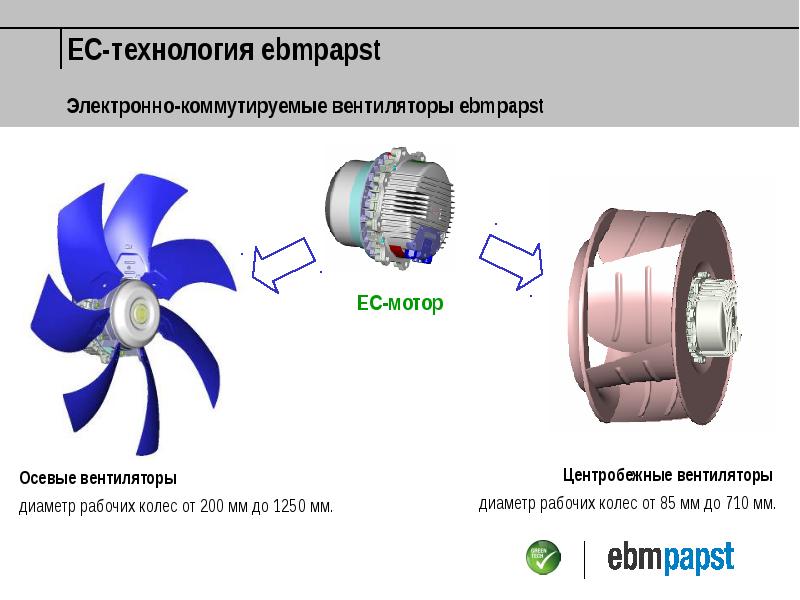
Axial
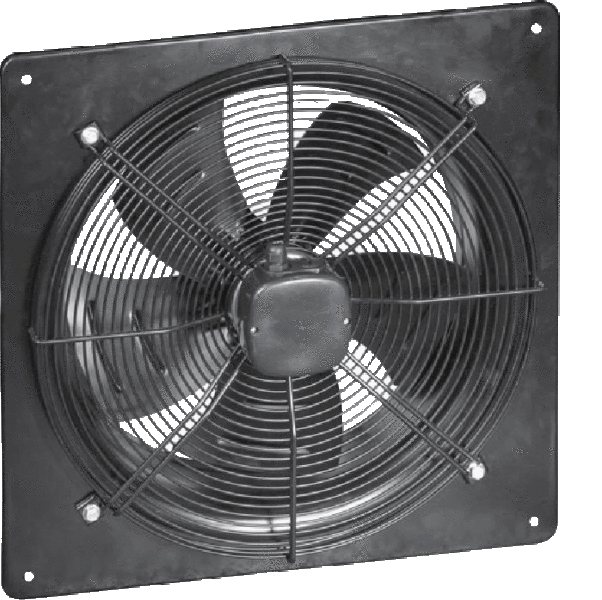
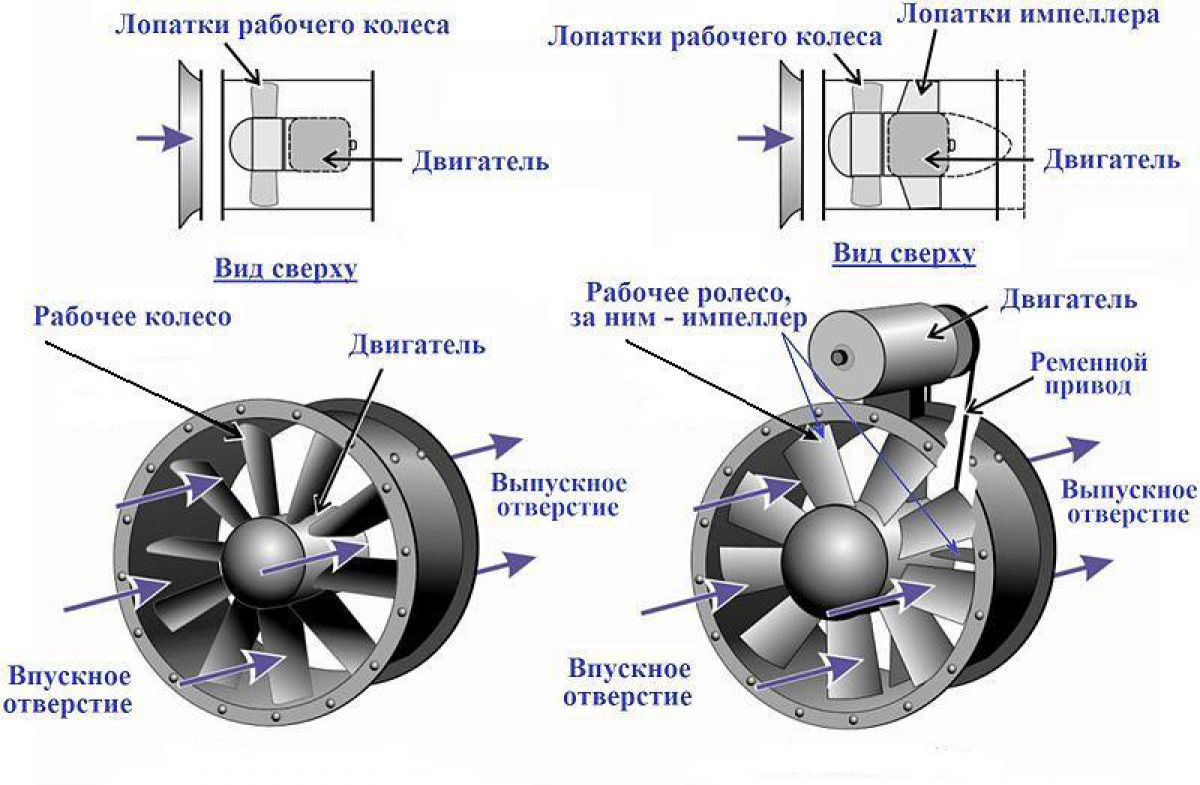
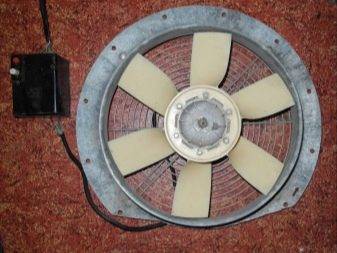
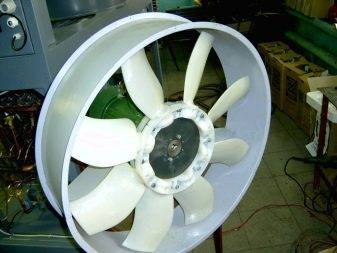
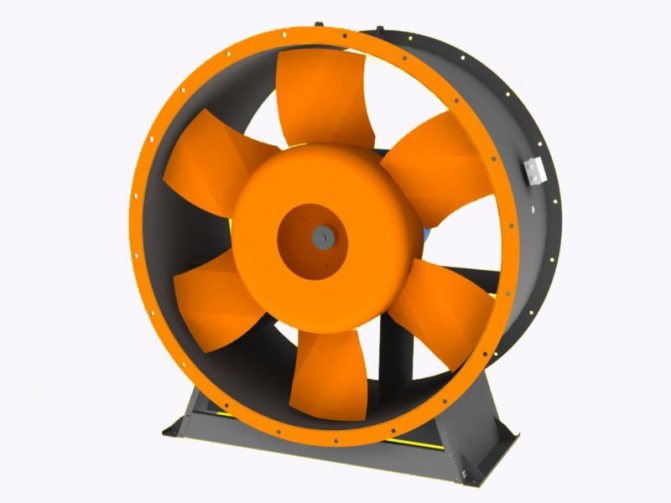
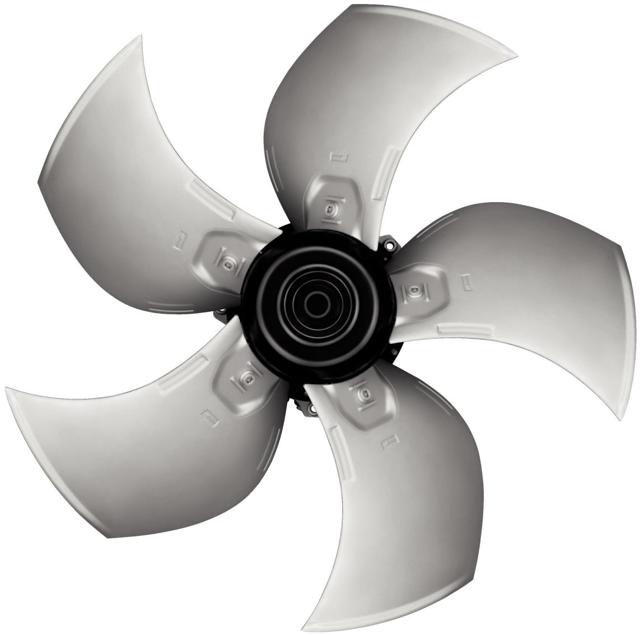
Externally, the device is a casing with a cylindrical base, which houses a wheel with blades. On the casing there are special holes for mounting the device.
The paddle wheel is mounted directly on the axle. The air flow is parallel to the axis.
At the entrance to the mechanism, a collector is provided, designed to improve aerodynamics in the operation of the device. In the absence of a counter flow, the power consumption of this type of mechanism is small.
If air flow is present, then more power is required.
The efficiency of the axle unit is much higher than other types of mechanisms. The pressure and amount of air supplied is regulated by rotary blades. Axial devices are usually used to supply large volumes of air at low resistances.
Diagonal
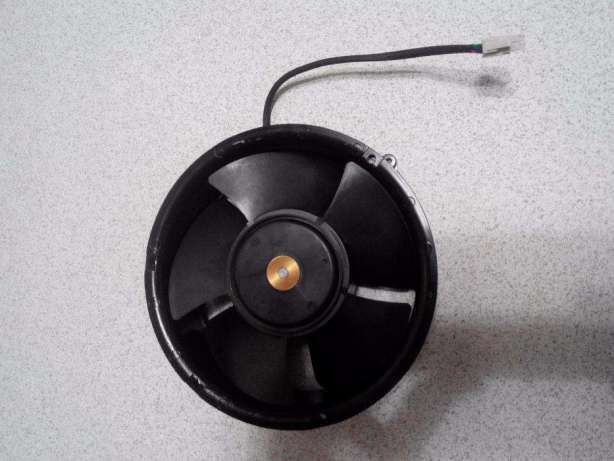
Air in such mechanisms is taken in according to the same principle as in axial models, but the release is already going in a diagonal direction. The shroud is conical so that the flow rate increases as pressure is applied to the fan propeller.
Diagonal mechanisms are distinguished by a high blowing speed and a reduced noise level (compared to axial devices).
Radial
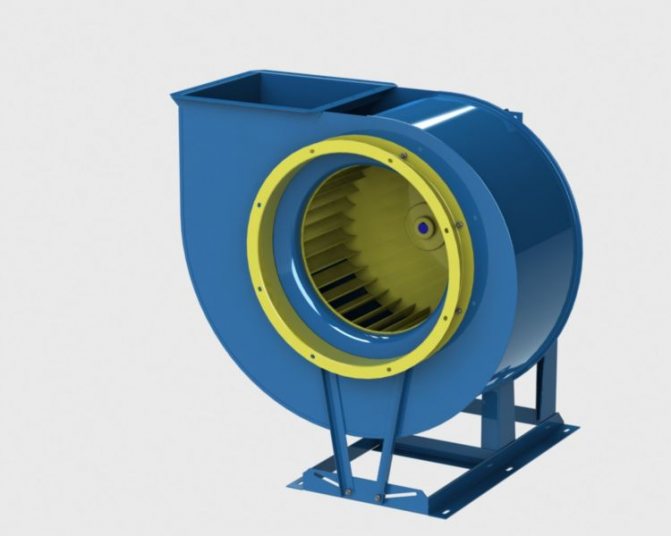
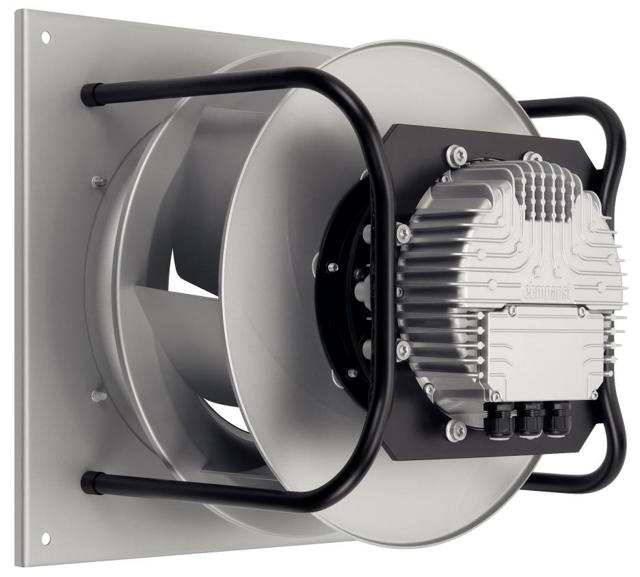
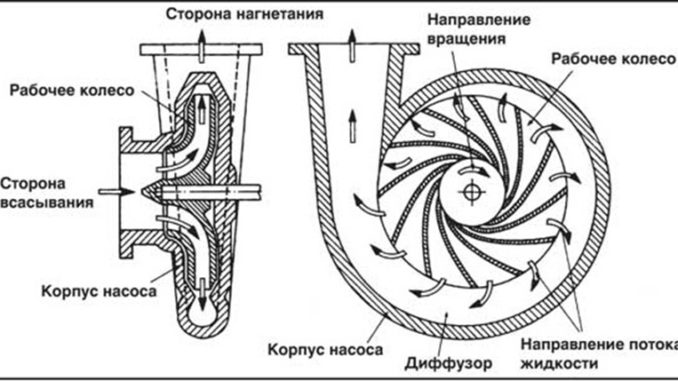
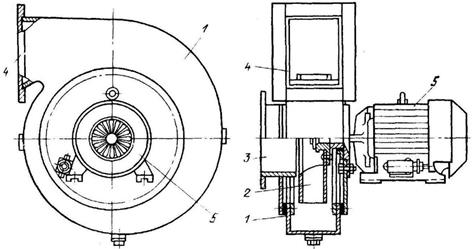
The centrifugal unit consists of an impeller located in a spiral casing. During rotation, the supplied air moves in the radial direction and begins to compress in the region of the impeller.
Then the flow enters the spiral casing under the action of centrifugal force, after which it goes to the heating hole.
Structurally, the radial device is a hollow cylinder, on the surface of which the blades are located parallel to the axis of rotation. Between themselves, they are fastened with special disks.
These structural elements are made with bent ends, their number depends on the direct purpose of the unit. Rotation is carried out in the right or left side.
In climate systems, several types of radial fans are used:
- The suction of air in which occurs in one or both directions.
- In the design of the mechanism, the electric motor is located on one shaft or there is a V-belt transmission.
- The blades in the device have a shape bent forward or backward.
Back-curved blades increase productivity and save energy.
diametral
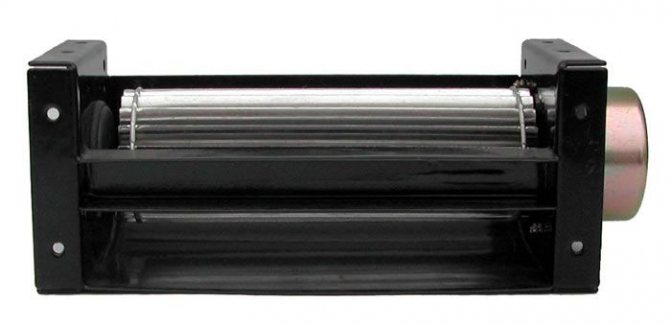
This category consists of a casing with a nozzle and a diffuser, the impeller is equipped with forward-curved blades. The wheel is structurally similar to a drum. The principle of operation of such a mechanism is based on the double passage of air across the impeller.
Diametrical fans are characterized by high aerodynamic performance. They are capable of supplying a uniform airflow over a limited range.


Structurally, the device is designed in such a way that it is easy to turn it to the sides, giving the air masses the desired direction. This type of units is used in indoor units of split systems, air curtains and other air conditioning and ventilation systems.
Bladeless
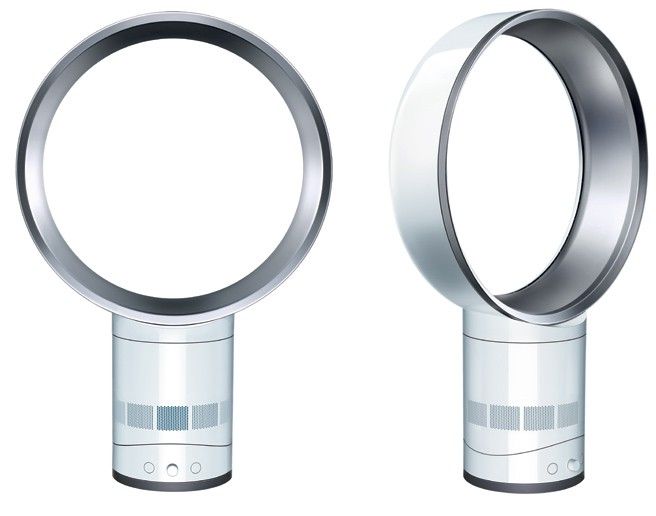
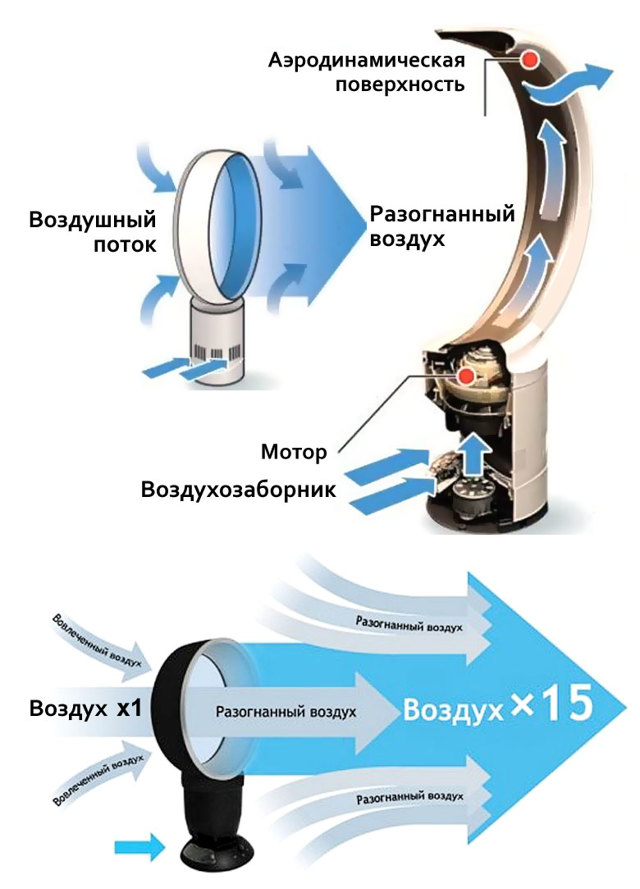
The main element of the device is a turbine, the air flow is formed due to its operation. This element is hidden in the base of the case. The air flow moves through the slots in the frame due to the aerodynamic effect.
The complete set of the frame profile contributes to rarefaction of air, it is additionally sucked in from the rear side of the case.
The total flow volume is increased up to 16 times (compared to the performance of a single turbine). Bladeless fans are quite noisy, but there are no external moving parts, which makes the rotorless device safer.
Classification of ventilation systems
Systems are classified according to different criteria:
- submission method;
- appointment;
- air exchange method;
- constructive performance.
The type of ventilation is determined at the design stage of the building
At the same time, they take into account both the economic and technical aspects, as well as sanitary and hygienic conditions.
Types of ventilation system according to the method of supply
If based on the methods of supplying and removing air from the room, 3 categories of ventilation can be distinguished:
- natural;
- mechanical;
- mixed.
Ventilation design is carried out if such a solution is able to provide air exchange in accordance with established standards.
When natural type ventilation does not meet the requirements of sanitary and hygienic standards, the second option is chosen - a mechanical method of activating the air mass.
If possible, in addition to the second ventilation option, partially use the first one, mixed ventilation is included in the project. In residential buildings, air is supplied through windows, and exhaust equipment is located in the kitchen and in the sanitary room
Therefore, it is important to establish good air exchange between rooms.
Mixed ventilation. It is used when natural ventilation cannot be the only option. For high-quality air exchange in rooms with very polluted air, mechanical ventilation is arranged.
Types of ventilation by purpose
Based on the purpose of ventilation, working and emergency ventilation systems are distinguished. While the former must constantly provide comfortable conditions, the latter come into operation only when the former are turned off and an emergency occurs when standard living conditions are violated.
These are sudden failures when air pollution occurs with toxic fumes‚ gases‚ explosive‚ toxic substances.
Types of ventilation systems for all types of premises are almost the same. Having studied all their types and weighed all the advantages and disadvantages, you can choose the best option for a particular building
Emergency ventilation is not designed to supply fresh air. It only provides a gas outlet and does not allow the air mass with hazardous substances to spread throughout the room.




Ventilation systems according to the method of air exchange
According to this criterion, general and local ventilation systems are distinguished. The first should provide the entire volume of the room with sufficient air exchange while maintaining all the necessary air parameters. Additionally, it must remove excess moisture, heat, pollution. Air exchange can be carried out both through a ducted and non-ducted system.
General exchange supply ventilation reduces the level of concentration of harmful substances remaining after the operation of the local and general exchange exhaust ventilation system
The purpose of local ventilation is to supply clean air to specific places and remove polluted air from the points where it is formed. As a rule, it is arranged in large rooms with a limited number of employees. Air exchange occurs only in workplaces.
Separation of systems by design
Based on this characteristic, ventilation systems are divided into duct and non-duct. Channel-type systems consist of a branched route consisting of air ducts through which air is transported.Installation of such a system is advisable in large rooms.
When there are no channels, the system is called channelless. An example of such a system is a conventional fan. There are 2 types of channelless systems - ceiling and laid under the floor. Channelless systems are simpler to implement and consume less energy.
natural ventilation
The movement of air in natural ventilation systems occurs:
- due to the temperature difference between the outdoor (atmospheric) air and indoor air, the so-called. "aeration";
- due to the pressure difference of the "air column" between the lower
level (served room) and the upper level - exhaust
a device (deflector) installed on the roof; - as a result of the so-called wind pressure.
Aeration is used in workshops with significant heat release, if
the concentration of dust and harmful gases in the supply air does not exceed 30%
maximum permissible in the working area. Aeration is not used if
production technology conditions require pre-treatment
supply air or if the supply of outside air causes
mist or condensation.
In rooms with large excesses of heat, the air is always warmer.
outdoor. Heavier outdoor air entering the building displaces
less dense warm air.
In this case, circulation occurs in the closed space of the room.
air caused by a heat source, similar to that caused by
fan.
In natural ventilation systems in which air movement
created due to the pressure difference of the air column, the minimum
height difference between the level of air intake from the room and its
ejection through the deflector must be at least 3 m.
recommended length of horizontal duct sections should not be
more than 3 m, and the air velocity in the air ducts should not exceed 1 m/s.
The effect of wind pressure is expressed in the fact that on the windward
(facing the wind) sides of the building an increased, and on
leeward sides, and sometimes on the roof, - low pressure
(underpressure).
If there are openings in the building fences, then on the windward side
Atmospheric air enters the room, and with the leeward air - leaves
it, and the speed of air movement in the openings depends on the speed
wind blowing around the building, and also, respectively, on the values
resulting pressure differences.
Natural ventilation systems are relatively simple and do not require
complex expensive equipment and the consumption of electrical energy.
However, the dependence of the effectiveness of these systems on variable factors
(air temperature, wind direction and speed), as well as a small
available pressure do not allow to solve with their help all complex and
diverse tasks in the field of ventilation.
Advantages and disadvantages
Axial fans can boast a wide list of advantages, thanks to which they have become so popular among buyers. However, they are also not without drawbacks, like any other technique. Let's consider the pros.
- Axial fans make almost no noise when blowing air. Due to this, they are most often installed in apartments or offices.
- Simplicity. Devices, both domestic and industrial, are easy to use.Even if we are talking about automatic models that require pre-configuration and programming. This process will not cause you any difficulties.
- Availability - models of this type are distinguished by quite reasonable cost. You can always choose the right fan based on your financial capabilities and preferences.
- Reliability - due to the simplicity of design, axial fans break down very rarely.
- Simple repair - for the same reason, in the event of a breakdown, they are easy to repair with your own hands. At the same time, new parts are inexpensive.
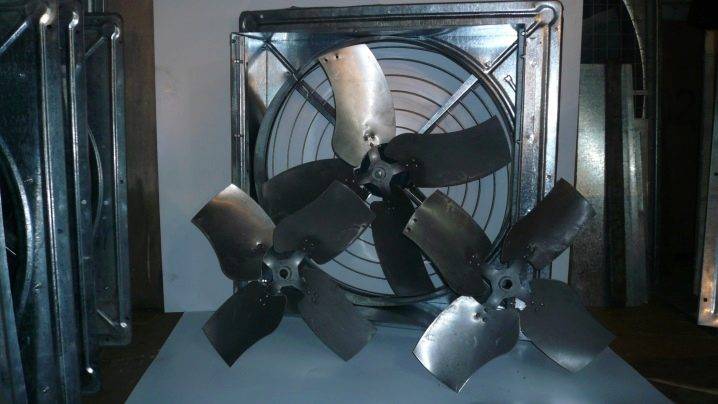
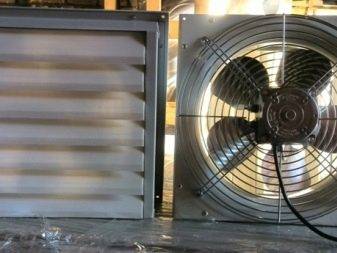
- The presence of a housing that protects the environment from rotating blades. Almost all fans are equipped with protective grilles. Some models have special panels with which the fan can be fixed in window openings or in ventilation.
- Regardless of the location of the ventilation, its efficiency will not change.
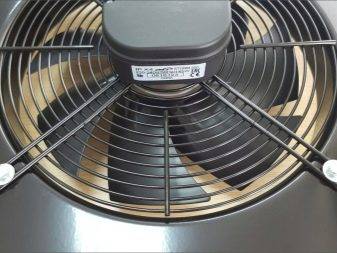
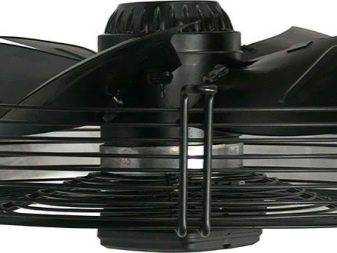
The disadvantages of this variety are much less. First, it is the need for care and maintenance. Contamination may affect fan operation. Therefore, it must be periodically rid of dust. Some models are equipped with protective shutters that protect the mechanism from dust penetration.
Secondly, many consider the inability to provide a room with medium or high air pressure as a disadvantage.
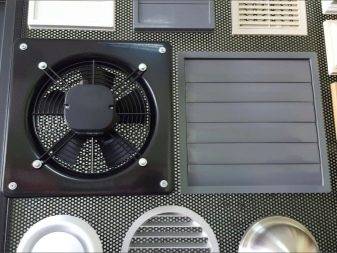
Types of fans: classification, purpose and principle of their operation
The fan is the basis of any artificial ventilation system. The device is widely used in everyday life and is indispensable in many areas of human life. When planning the purchase of ventilation equipment, it is necessary to understand the specifics of its design and operation.




The article presented for review describes in detail the types of fans, their design features, operating principles and the purpose of each unit. We will tell you about the priority areas for choosing the right model. Here you will learn how to select a device depending on the operating conditions.
Components of ventilation
As already noted, any ventilation that brings fresh air into the room is divided into varieties depending on such characteristics:
- by appointment;
- service locations;
- the way the air flow moves;
- constructive features.
Regardless of the type of system used, almost all of them use a standard set of components:
- fans and ventilation units and units - devices that provide air movement in any direction;
- thermal curtains are used to prevent the passage of the air mixture into a certain area or change its direction;
- noise absorbers - for the quiet operation of equipment;
- air flow filters and heaters - devices designed for cleaning and necessary air treatment;
- air ducts through which air flows;
- regulating and locking devices that serve to control the operation of the entire system;
- air flow distributors that control its movement.
Thus, there are many types of air purification systems, thanks to which it is possible to provide high-quality ventilation for any occasion and type of room.
General classification of ventilation systems
Types of ventilation systems can be classified according to 4 criteria:
- Depending on the way of air circulation;
- Depending on its purpose;
- Depending on the structural structure;
- Depending on her working area;
Each of them has advantages and disadvantages.
Types of ventilation according to the method of forming air flows
Natural ventilation - the renewal of air in the room occurs due to the presence of natural draft, the presence of which is determined by one of two factors:
- Temperature difference inside and outside the room;
- Pressure difference between room and exhaust.
Affect the presence of traction and various atmospheric phenomena, for example, the presence of wind. Such ventilation is quite simple to complete, consumes a small amount of electricity and is easy to use.
The ventilation system, functioning due to the mechanical operation of its components, is able to cover much larger premises, however, it is more costly in terms of electricity consumption due to its autonomy.
Classification of ventilation by purpose
Depending on its purpose, the ventilation system is divided into:
- Supply - works by supplying fresh air;
- Exhaust - works on the outflow of air, which has already been exhausted.
In practice, both of these systems are used together.
In addition to this classification, there are also:
- Local ventilation - providing air circulation in a certain area;
- General ventilation - for air circulation in large rooms.
Types of ventilation systems by area of operation
The local ventilation system is classified into supply and exhaust.During its operation, air is supplied to a certain area and only the place where carbon dioxide accumulates - the ceiling of the room - is cleaned. As an example local supply ventilation you can bring an air curtain, which is often used in public spaces.
A local ventilation system is the best option for air purification in places where there is an increased accumulation of pollution. It makes it possible to avoid their spread throughout the premises and significantly reduces the load on the ventilation system of the building as a whole.
Which is better to choose
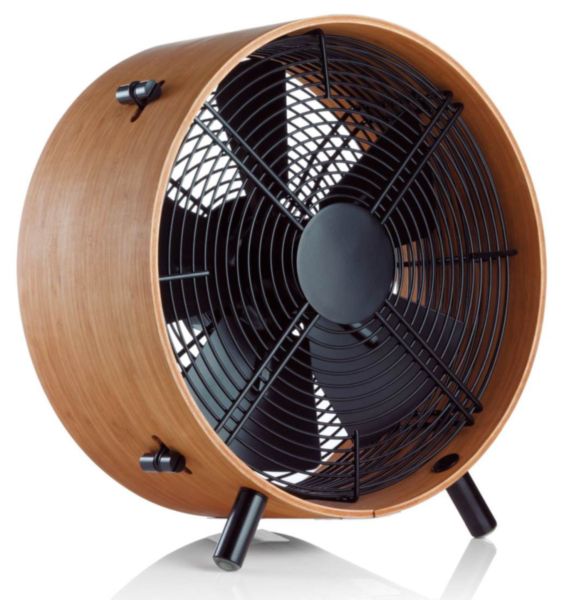
- For an office or a small room, a table fan option is suitable; it is convenient to place it in various parts of the space, on a closet, on a table on shelves. Choose a model with a rotating body so that you can blow more space.
- If you want to feel at sea, feel the coolness of the south wind, choose a model equipped with a breeze simulation mode.
- If you want the fan to run at night and not disturb your sleep, choose a unit with night mode, which operates silently and efficiently.
- For convenience and comfortable control of the ventilation device, purchase models that include a remote control and a timer.
- For large rooms, it is recommended to purchase fans of large dimensions with the ability to rotate the case.
- Column models do not have blades; they are considered the safest compared to other types.
In addition to all standard types, there are stationary ventilation systems that do their job just as well, making the air cleaner.
Ventilation and air conditioning systems are installed in any premises that require constant air renewal.
By pressure
As already noted, such a classification implies the presence of two varieties: natural and mechanical. Let's get acquainted with their features.
Natural ventilation
The effect of natural ventilation
The movement of air flows in the case of using this type of system is carried out:
- due to different levels of air temperatures inside and outside the premises;
- as a result of different air pressure at the lower and upper levels;
- due to the effect of wind pressure.
Aeration is often used in production halls where there is significant heat generation, and the concentration of dust and other contaminants does not exceed 30% of the normal value. Its use will not give any result in cases where, according to conditions, the flow of outside air causes condensation or fog, and also if it is necessary to pre-treat the supply air mixture.




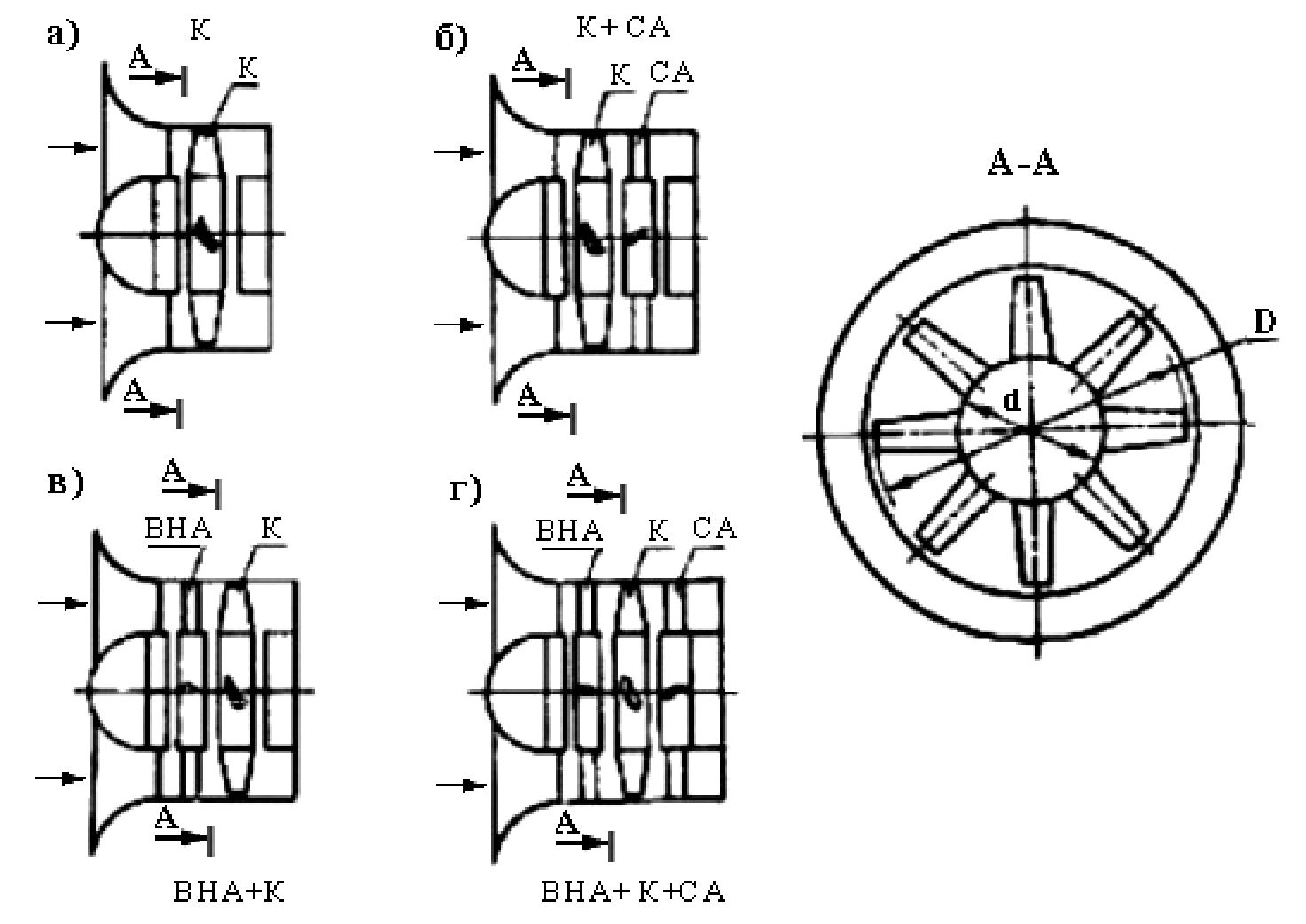
Systems with a natural type, where the movement of air flows is carried out as a result of different pressures of the air column, imply that the height difference between the place of air release and the point of its intake was at least 3 meters. At the same time, it is recommended that air ducts located horizontally should not exceed 3 meters in length, the flow velocity in them should not exceed 1 meters per second.
When exposed to wind pressure, the air mixture moves as a result of the fact that an increased pressure is formed on the side of the room facing the wind, and a reduced pressure is formed on the opposite side or on the roof.If at the same time there are openings in the walls of the building, then on the first side the air flow will enter the room, and on the other side it will leave it. In this case, the flow rate will depend on the magnitude of the pressure difference.
Ventilation with mechanical stimulation
Such types of systems imply the presence of special equipment - fans, heaters, motors, which allows you to move air flows over long distances. This requires the cost of electrical energy, although its functionality does not depend on the environment and its conditions.
The use of such systems allows for additional air processing - its heating, cleaning, humidification, and the like.
Channel and non-duct ventilation system
The next characteristic by which ventilation systems are classified is the design method. They can be channeled or non-channeled.
The duct system consists of many air ducts, the main task of which is to transport air. An important advantage of such systems is their compact size and the possibility of hidden installation. Duct ventilation allows you to use the equipment without allocating a separate space. It can be located in niches, shafts, under a false ceiling. Such a system was founded equipment based with a rectangular or round section. The most popular today are installations with a rectangular cross section.
Air conditioning with climate control function as part of the general ventilation system of the dwelling
The ductless system does not have air ducts.It is based on the use of fans installed, for example, in a wall opening. With such a system, air masses move through gaps, crevices, vents, and thus the created microclimate is maintained.
The design of ventilation systems is also type-setting or monoblock. The type-setting system provides for an individual selection of the components of which it consists. They are a ventilation filter, a silencer, an automation device, various types of fans. Its advantage will always be that it is able to ventilate any room. It can be a small office or a spacious restaurant hall. Most often, such an installation is located in a separate ventilation chamber.
The scheme of placement of ventilation ducts inside the premises
If a monoblock system is being designed, then compactness will be a necessary condition. This is due to the fact that it must be placed within the same insulated housing. The monoblock system is already finished and assembled as a single unit.
Natural ventilation of premises
The movement of air masses during natural ventilation occurs naturally without additional motivation due to:
- temperature difference inside and outside the building;
- pressure difference between the room and the hood placed on the roof of the building;
- under the influence of the wind.
This is the simplest system. There is no need to install complex expensive equipment that consumes a lot of electricity. Such a system cannot be called reliable due to the fact that its effectiveness depends on factors beyond human control.
The system can be organized or unorganized.A regulated or organized system functions due to aeration or the presence of baffles. Aeration is a general exchange process during which air enters and exits through open windows, lanterns, transoms.
Infiltration or unregulated ventilation Natural ventilation is the entry of air into the room through leaks in the structures.
Despite the development of technology, natural ventilation is also used in modern buildings due to its simplicity and lack of operating costs. In addition to its dependence on environmental conditions, one cannot ignore the fact that there is a possibility of a phenomenon occurring, for which the term “thrust overturning” is used. This is a very accurate definition - the air mass suddenly changes direction and begins to move backward.
In industry, aeration is used in the presence of processes where, according to technology, work is accompanied by the release of heat in large quantities. Its use is permissible provided that the supply air contains less than 30% of harmful emissions from the permissible concentration directly in the zone of their formation.
Aeration should not be used if the air entering the room requires pre-treatment, or if condensation or fog may appear as a result of the inflow of air from outside. Through aeration, multiple air exchange occurs with meager energy costs. This is its main advantage.
The principle of operation of the ventilation system with the natural movement of air flows is based on the difference in their temperature and pressure:
In some cases, deflectors are mounted on the mouths of the exhaust channels - special nozzles. They operate by using wind energy.Deflectors do a good job of removing dirty and overheated air masses from small rooms. They are also used for local extraction.
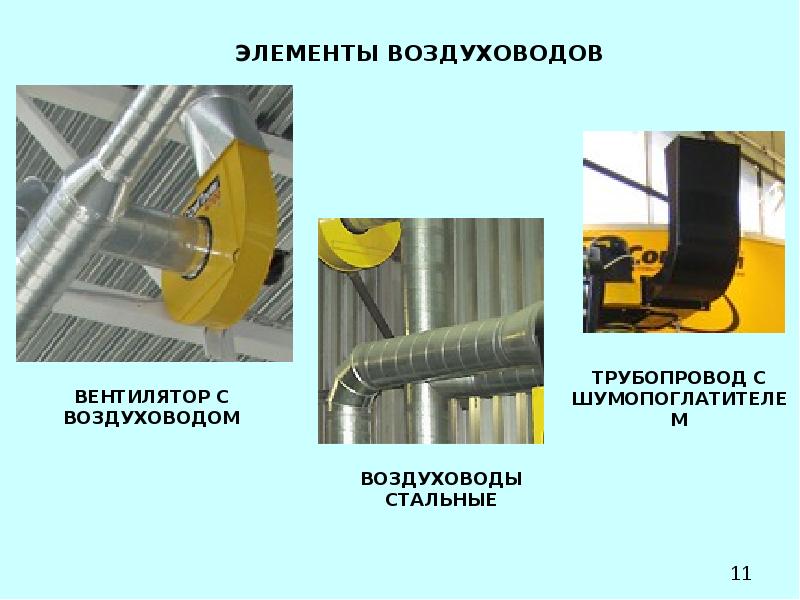



The normal operation of the ventilation driven by the pressure difference is ensured by a minimum difference between the intake point and the exhaust outlet of 3 m.
For the effective functioning of ventilation, experts recommend that when laying air ducts, do not make horizontal sections longer than 3 m. The air in them should move at a speed of no more than 1 m / s
4 types of fans
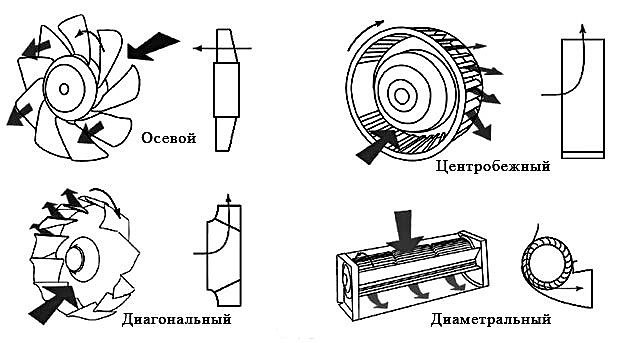
According to the type of design, fans can be divided into 4 groups.
1. Axial fans, also called axial. The blades of these fans move air along their axis of rotation. These are the most common fans. They are used as coolers in computer technology, in household fans. The efficiency of an axial fan is the highest due to the low losses arising from air friction on the blades and the low resistance of the fan itself to moving air.
Axial fan
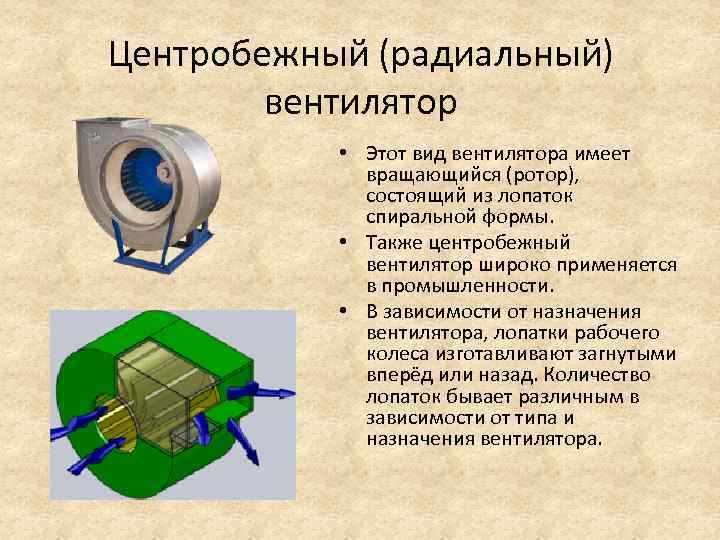
2. Centrifugal fans (radial), in which the direction of the air at the inlet is parallel to the axis of rotation. Then the flow changes direction and diverges from the axis of rotation in the radial direction. Air is moved by a fan using spiral-shaped blades inside a casing that looks like a snail. The advantage of such fans is that they can withstand overloads in terms of air flow. Therefore, they have found their application in industrial systems.
Centrifugal fan
3. Diagonal fans are a symbiosis of the first two types of fans.The air at the inlet moves in the same way as an axial fan, and at the outlet it is deflected by 45 degrees, which gives it additional acceleration, similar to the principle used in centrifugal fans.
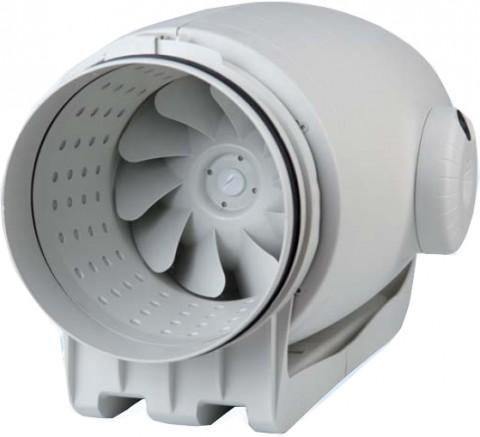 Diagonal fan
4. Bladeless fans use "air multiplier" technology. The air flow in them is given by a turbine located at the base of the fan. This flow is fed into the frame through narrow slots, entraining the surrounding air. As a result, the air flow at the fan outlet is increased by 10-15 times.
 Bladeless fan
The advantages of bladeless fans include high performance and the absence of rotating parts. Their disadvantage is a very high price, several times higher than the price of a conventional blade fan of the same purpose. Another drawback is their high noise level.
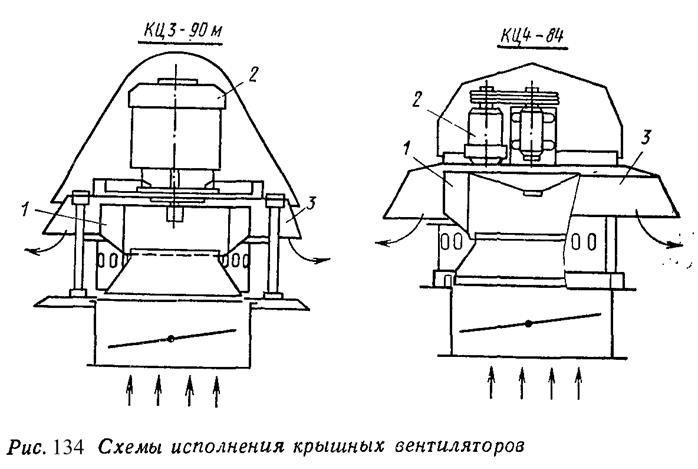
All fans, moreover, differ in size and performance. Depending on the design features and purpose, they can be desktop, ceiling. There are duct fans installed directly in the ventilation duct; roof fans that draw air out of the room through a hole in the roof. There are also multi-zone fans, the housing of which allows air to be sucked in simultaneously through several air ducts.