- Selection according to the shape of the bowl
- flush type
- What to look for when choosing
- materials
- Tank and drain features
- Toilet features
- Description, pros and cons of visor-type toilets
- Types of structures (locations, connections) of the toilet bowl
- What determines the quality of the drain
- bowl shape
- Drain type
- Release type
- Interesting models: photo
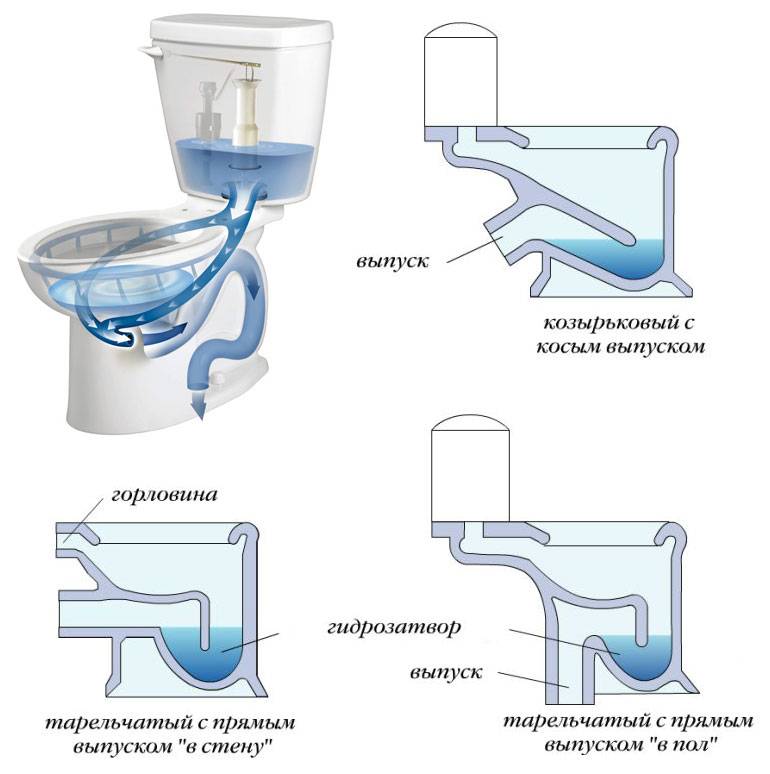
- Sink diagram
- Which toilet flushes best
- Toilet bowls
- flush system
- exhaust system
- The location of the drain tank
- Shape and material
- Mounting Tips
Selection according to the shape of the bowl
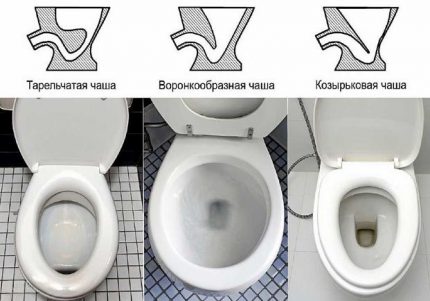
When choosing a toilet bowl for the home, you should pay attention to the type of structure of the bowl. The list of these types includes:
- bowl with a "shelf";
- a bowl with a vertical drain (funnel-shaped);
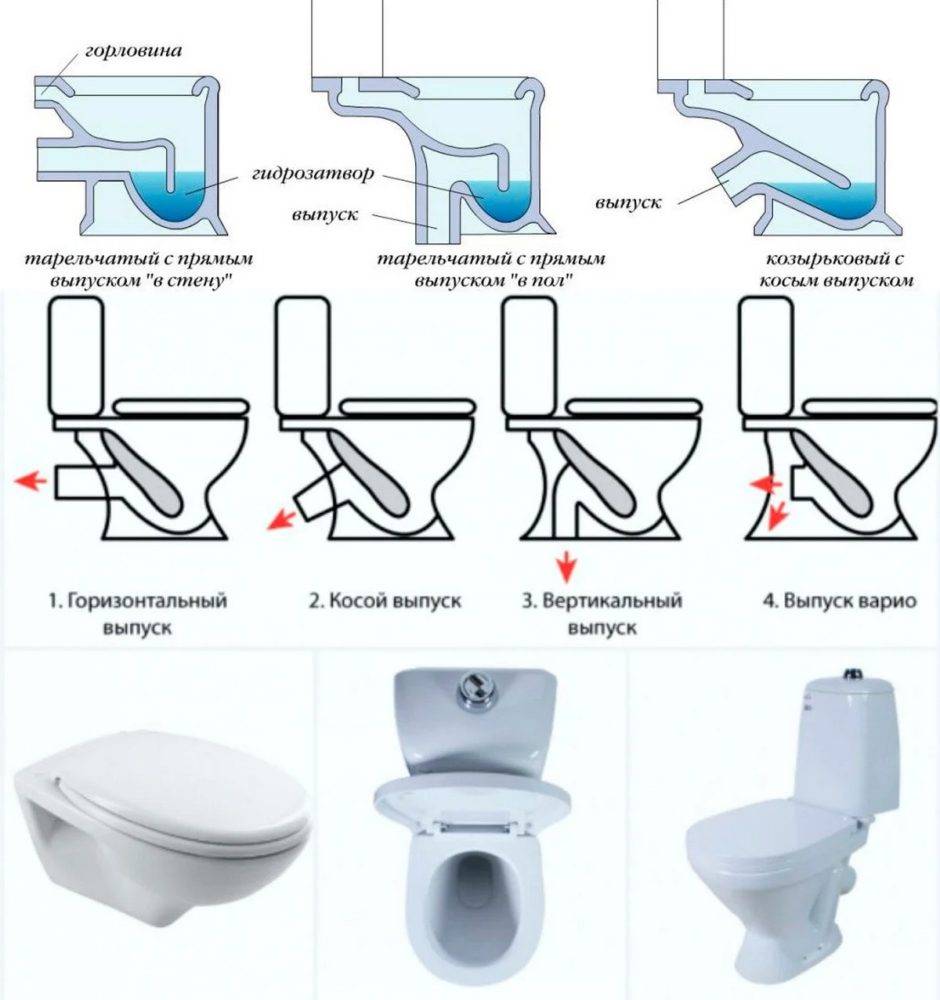
- bowl with offset spout.
A bowl with a “shelf” has come to us since Soviet times, but such plumbing products can still be found in stores. The advantage of such a toilet is that it has practically no splashes at the time of draining.
The funnel-shaped bowl is by far the most sought after. These toilets are very easy to maintain and very effective in terms of hygiene. The funnel-shaped toilet has a centrally positioned drain for easy, powerful flushing.The only drawback of this bowl structure is that a large amount of splash is formed when draining.
Plumbing products that have an offset (oblique) release form are also in demand. It is with this geometry of the bowl that toilet bowls with the anti-splash system are equipped. This system allows you to minimize the formation of splashes - due to the shape of the bowl, and due to a special small protrusion that rationally distributes the flow of water when draining. The lack of splashing is also explained by the fact that the water level in the anti-splash toilets is at a sufficient distance from the body.
flush type
Flushing in modern toilets is also different.
It should also be taken into account when choosing. Flushing can be done:
- in a horizontal way;
- direct vertical way;
- in a circular vertical fashion.
The horizontal flush system is a rather old system, and the water supply in such a system is carried out from one point. This type of flush is not very effective because it does not flush the entire toilet bowl. The shortcomings of such a flush have to be finalized with a brush.
Direct vertical flush is the most modern, and is carried out around the entire perimeter of the bowl. Water washes the entire surface of the bowl with an even pressure, since the drain holes are evenly distributed - under the rim.
The most advanced type of flush is the vertical circular flush. This type is good because when flushing, a water vortex is formed, which more effectively cleans the entire surface of the toilet bowl. This vortex is formed using a clever arrangement of drain holes, which are also located under the rim, around the entire perimeter of the bowl.
Today on sale you can find rimless toilets, which have their pros and cons. This design of sanitary products is good because such toilet bowls are convenient to maintain. Bacteria and dirt simply have nowhere to accumulate on such a toilet, but there is one thing. The rimless toilet has only one point from which water is supplied for draining. Therefore, the quality of the drain is questionable. Also, the rimless toilet bowl has increased splash formation. Such devices require more careful adjustment of the fittings, which will minimize the amount of splashes, and without compromising the quality of the flush itself.
What to look for when choosing
The toilet bowl does not have a very complicated design, but now there are many models on the market with different parameters and even additional functions (seat heating, bidet, etc.). Therefore, you can get confused when choosing and buy something completely different from what you originally wanted.
During the purchase, you need to pay attention to: materials, design, shape of the bowl and other points
materials
Materials from which plumbing is made:
- porcelain;
- faience;
- marble and other valuable materials.
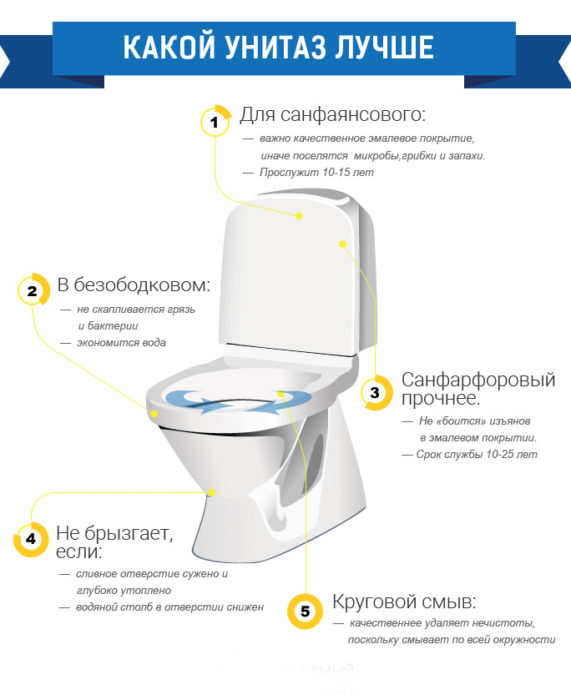
The best option is porcelain. This material is obtained from clay with additives. It is durable, eco-friendly and easy to clean. But only wealthy people can choose such a model, since it is expensive.
Faience sanitary ware is also made from clay, by firing and coating with a layer of enamel. This option has a drawback - a service life that does not exceed 5-7 years. Budget option to choose from.
Marble is the most expensive of the materials. Not everyone can afford it. But the material has one advantage - a long period of use.




Tank and drain features
They are important to choose a model that is not only easy to operate, but also functional. Design options:
- tanks with one button - when it is pressed, all the water from the tank is drained into the toilet;
- tanks with two buttons - this allows you to adjust the amount of drained water. A small button drains up to 3 liters of water, and a large one more than 6;
- additional button with stop mode - allows you to adjust the amount of water supply.
Toilet features
When choosing a suitable model, consider:
- Types of flush - straight or ring. With direct water does not pass through the entire bowl, but along one side. A significant drawback is the noise produced. This is a budget option. The ring flush washes the entire bowl completely and the process is almost silent.
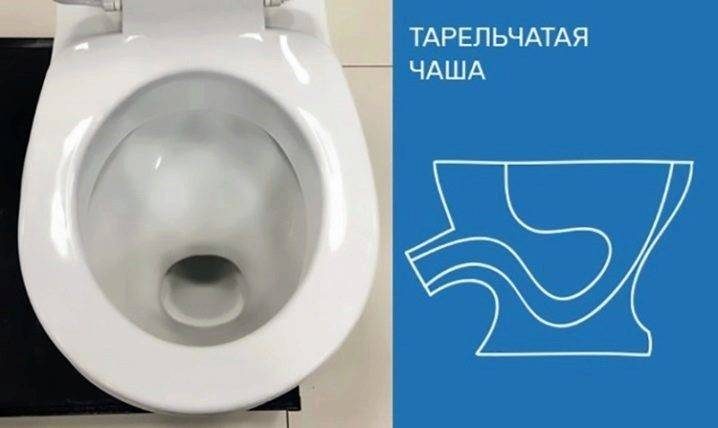
- The shape of the bowl is dish-shaped, funnel-shaped or visor. The poppet has a “ledge” that makes it harder for plumbing to clean. In the funnel-shaped hole is in the center. This design is hygienic. Kozyrkova combines both previous options.
In addition to these features, toilet bowls differ in the installation method: floor or wall. They can have sides and other additional details, be equipped with electronics.
Description, pros and cons of visor-type toilets
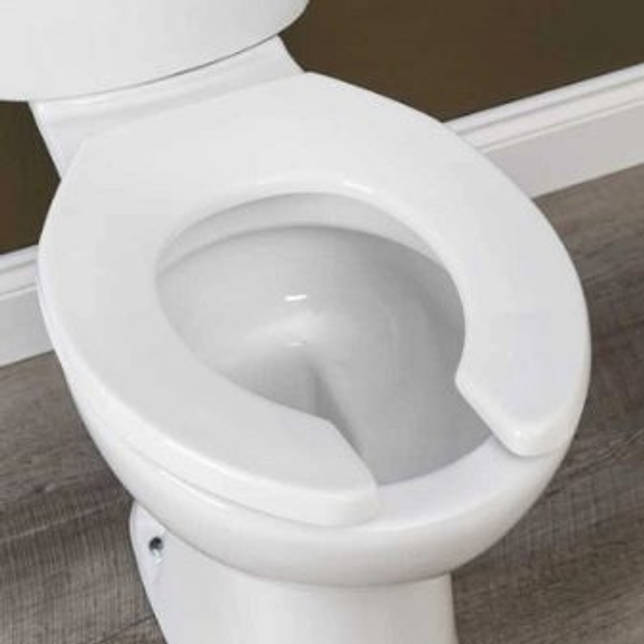
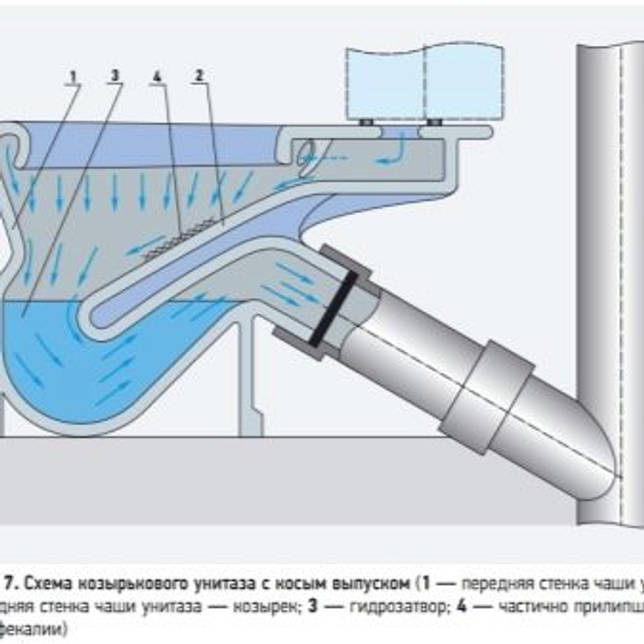
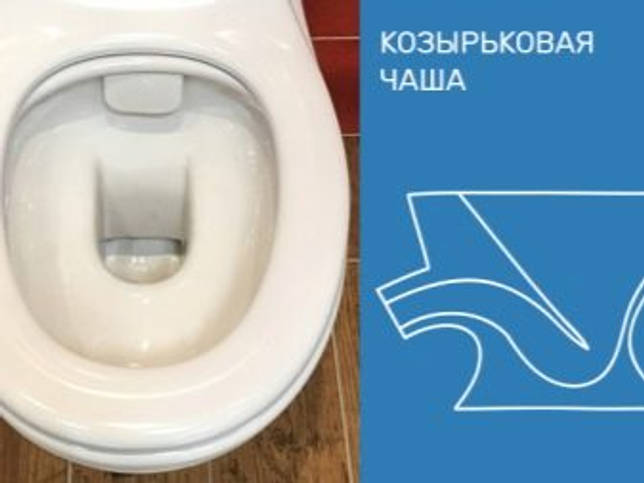
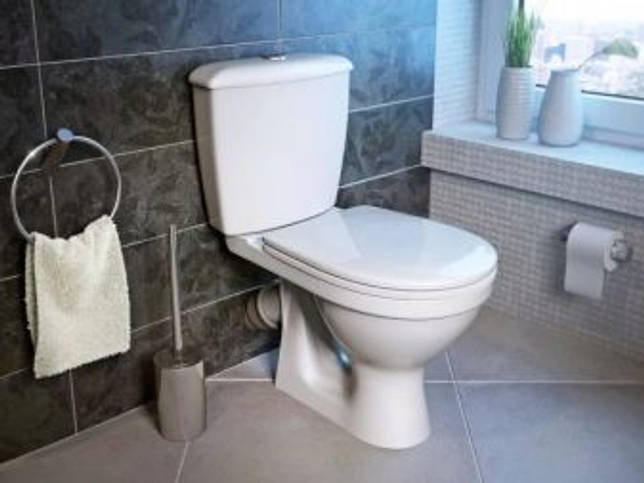
Canopy bowls are perhaps the most common type for modern toilets. Their internal structure is made in two versions.
- The back wall has a gentle slope to the flush hole located in front of the bowl. From the side of the front wall of the bowl, a ledge is poured - also at a slope, but sharper. The slope from the back wall is just a kind of visor that protects against splashing and splashing.The rear gentle slope (visor) takes on the waste and ensures their smooth sliding down into the flush hole with water. That is, the visor of the bowl performs a similar function of a shelf, which we observed in the dish-shaped analogue of the device. Only here the feces do not linger on it.
- The second option, in which, on the contrary, the front wall is flat, and the flush hole is closer to the back sheer wall of the bowl. Such models of visor toilets are less common than the first option.
The advantages of visor bowls are as follows.
- There are no bursts during defecation. The visor does its job well - it ensures the smooth movement of the contents into the flush hole.
- There is practically no splashing of water when flushing in compact models. In modifications with suspended separate tanks, such a nuisance is quite possible due to the powerful water flow.
- Since the feces move into the flush hole under the water level, most of the unpleasant odors are extinguished by it.
- Cleaner flush than disc models - the need to use a brush occurs much less frequently.
Types of structures (locations, connections) of the toilet bowl
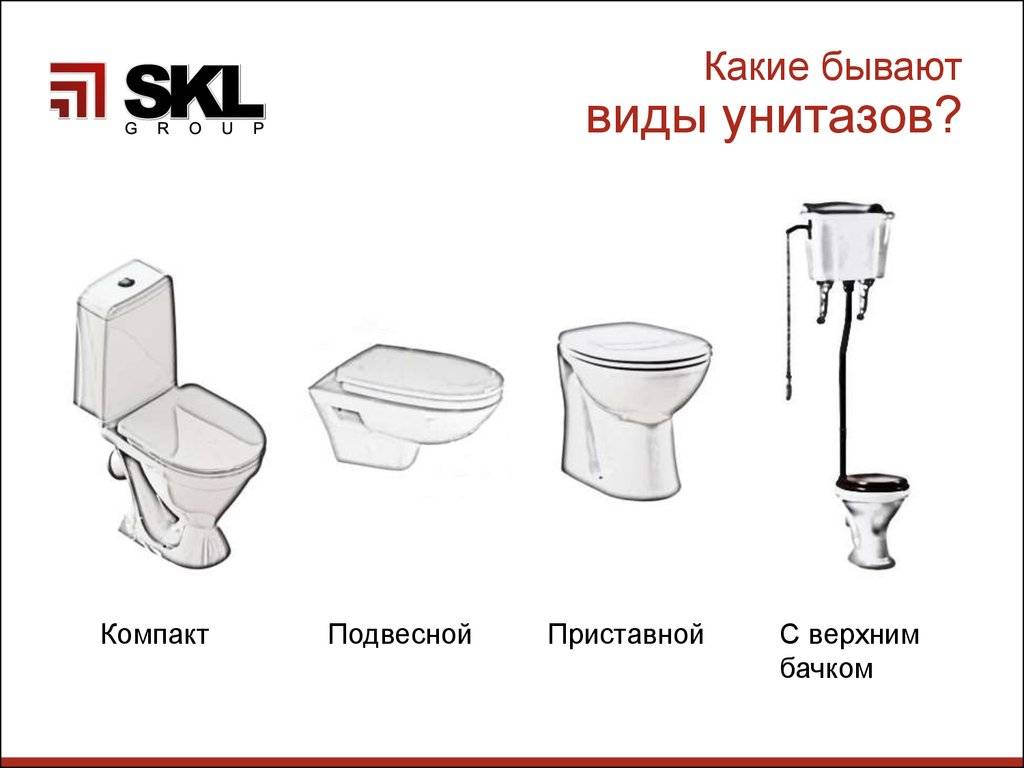
As a rule, toilet bowls are not classified by shape, like toilet bowls. Indeed, in this case, the only function is the storage of water in a tank, referred to as a "tank" and its shape does not play a structural role. In this case, the form only satisfies the aesthetic vision of the device as a whole and harmony with the bowl. And then, there is a hidden variety, in which the tank is not visible - it is hidden behind a false wall.Moreover, there are systems in which there is no tank at all: water is supplied directly from the water supply to the corresponding connection of the toilet bowl. It is precisely by location and by the trigger mechanism that tanks are distinguished.
The top-mounted cistern, which is connected to the drain hole in the bowl by means of a long pipe, is practically no longer used. This design was most common in the USSR, now it is considered obsolete, and I will tell you in vain: due to the fact that water practically falls from a great height (gaining acceleration), a much stronger water hammer occurs in the bowl; water pressure rises. Thanks to this, the flush quality is much higher than other types of toilet bowls of modern and traditional design. I also found one theoretical advantage compared to "compact" type toilets (the cistern is on the shelf of the bowl): there is no "shelf" in the toilet bowl, so it is more moved to the wall, and the bathroom space is saved. One person also found an advantage, I quote: “you can still hide the cheat there .. not everyone will look”
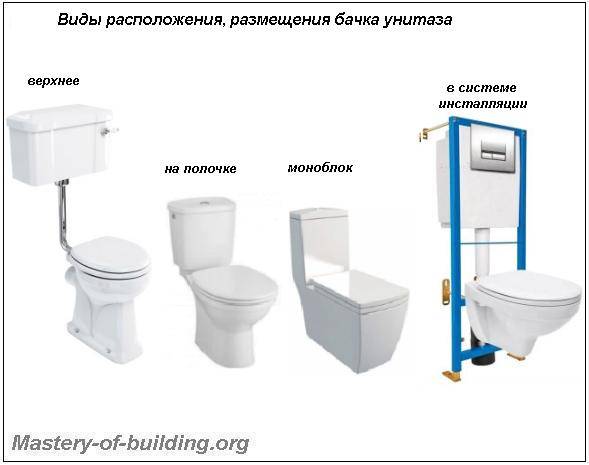
A tank with a location on a shelf ("compact") for today 2016 is considered the most common in the device of a modern toilet bowl. The bowl contains a “shelf” at the same level as the rim, on which the tank is placed and pressed with special fasteners with sealing gaskets. Such a bowl-to-bowl cistern that is removable has the advantage that it can be easily repaired. In addition, the descent of water is less noisy than in an overhead cistern. Due to the lower pressure of the water, there is much less splashing from the bowl.Of course, at the same time, the disadvantage is that a lower pressure does not provide such effective cleaning (especially for the bowl-shaped toilet bowl) as using the top location of the tank.
A one-piece tank with a bowl (“monoblock”) can also be classified as a compact. However, this is a separate type, the essence of which is not just the device of the tank, but its whole product with a bowl, without fastening, as in the previous form, but with the same location, as if on a “shelf”. The disadvantage is the same as in the compact with a removable tank - a lower head compared to the top location. Plus to it - the impossibility of replacement: if the tank or bowl burst, then it will not be possible to change it individually, because everything is whole. Accordingly, the advantages are the same, and plus to them - the highest reliability - the second side of the coin of a one-piece monoblock toilet bowl: there is no possibility of leakage from the sealing gaskets for attaching the tank to the shelf, as can happen with a removable compact.
The tank in the installation system is mainly a plastic container, unlike the previous types, in which the tank and the bowl are almost always made of the same material. Feature - flatter: to save space compared to the above types. The fact is that the installation tank is designed to be hidden behind drywall or a partition made of some other material. It is connected to the bowl not vertically, but horizontally, in the place where it is adjacent to the wall. The advantages of the installation system are space savings, as is the case with the top location. Everything is the same as the "monoblock" and "compact", only hidden from view behind the wall. Accordingly, a special drawback: in the event of a breakdown, it is difficult to carry out repair work.
What determines the quality of the drain
In order to find out which toilet drain is better, you need to familiarize yourself with all the highlights of the design of a plumbing fixture, which include:
- bowl shape;
- drain type;
- Release type.
It goes without saying that in order to make a choice in favor of one or another model of equipment, it is possible to consult with a sales assistant. But, as experience shows, not always sellers will be able to give an exhaustive answer to a client's question. Based on this, below we will take a closer look at the different options for equipment designs and their impact on the drain system.
bowl shape
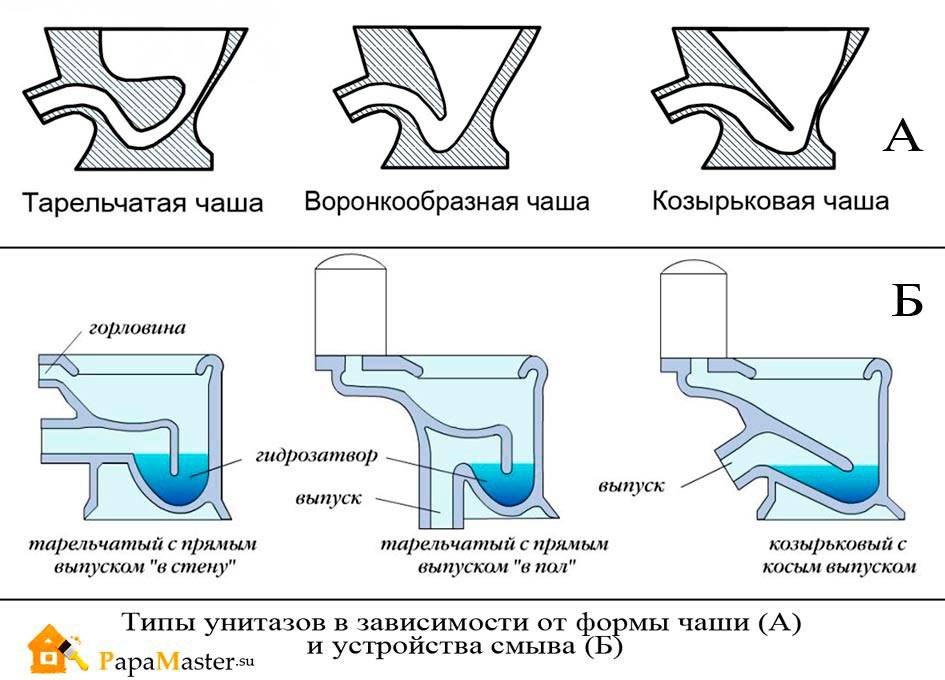
First of all, the level of quality of the drain depends on the shape of the bowl, which can be conditionally divided into three types:
| With a shelf | This form is classical, moreover, in the period of the USSR, toilet bowls were seen only in order to type. Their highlight, as it is not difficult to guess from the name, is the presence of a shelf that prevents a splash of splashes during the use of the device. The disadvantages of this form include the fact that during flushing the shelf is not well cleaned, as a result of which there is a need for additional cleaning with a toilet brush. |
| funnel shaped | In this case, the drain hole is located in the middle. This form provides a high-quality flush, but splashes may occur during application. |
| With sloped back | is a compromise between the bowl and the classic version of the funnel handicap. When using the device, there are no splashes and at the same time the walls of the bowl are well cleaned. From this it follows that a toilet with an oblique drain is the most preferable. |
Drain type
The quality level of the drain also strongly depends on the type of its implementation.
Today, plumbing fixtures with three types of drains are seen on sale:
A toilet with a cascading drain - a water stream flows down with a wonderful pressure along the back wall, which is most polluted, and in this way washes away the contents of the bowl. The disadvantage of this design is that splashes remain on the front wall, which are then cleaned with household chemicals.


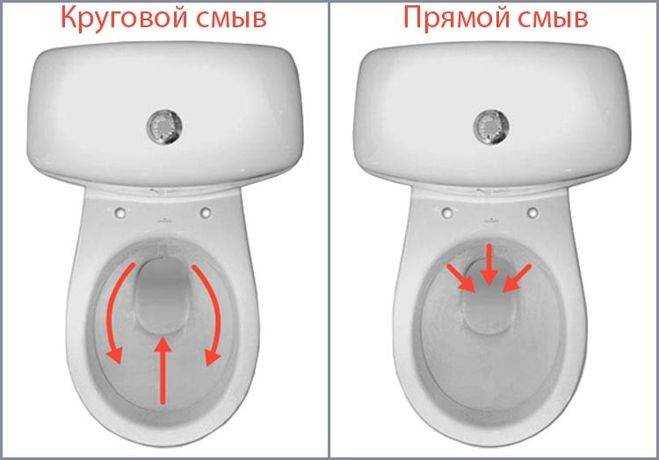



It must be stated that many customers choose toilets to drain around the circumference. But, experts say that they have no advantages, besides without regard to the uniform distribution of the flow, since they clean the back wall worse, which, as mentioned above, gets more dirty.
With a suction drain - this system differs from the two previous ones, since flushing is carried out according to a completely different principle. This plumbing fixture is equipped with a drain valve that opens when you press the pedal. Based on this, the bowl is first filled with water, after which the contents are abruptly drained into the sewer.
A pedal flush toilet is considered the most effective in this regard, since the contents of the bowl do not linger on the walls.
Release type
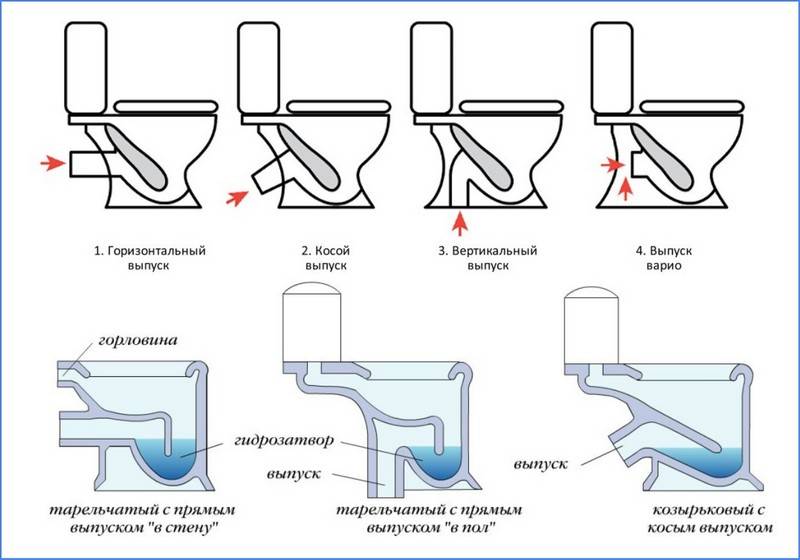
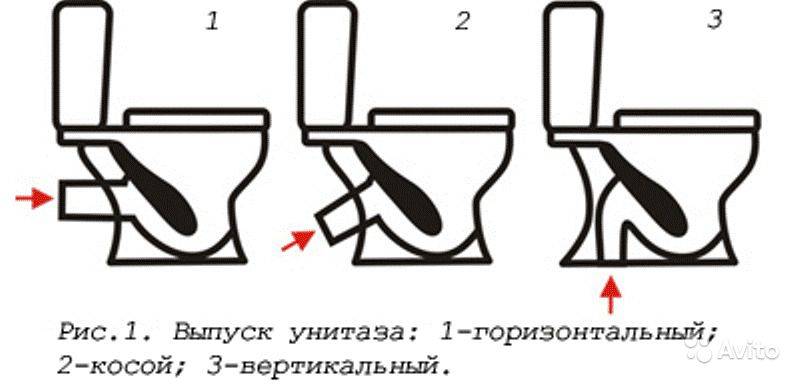
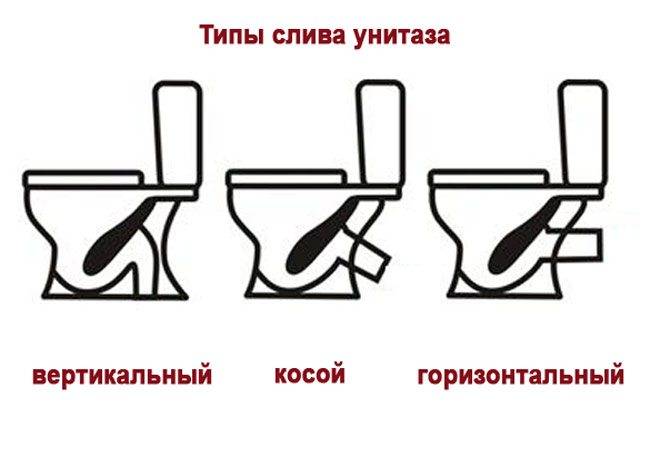
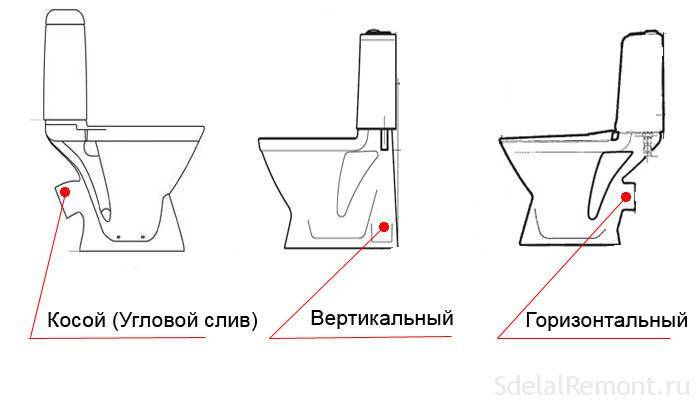
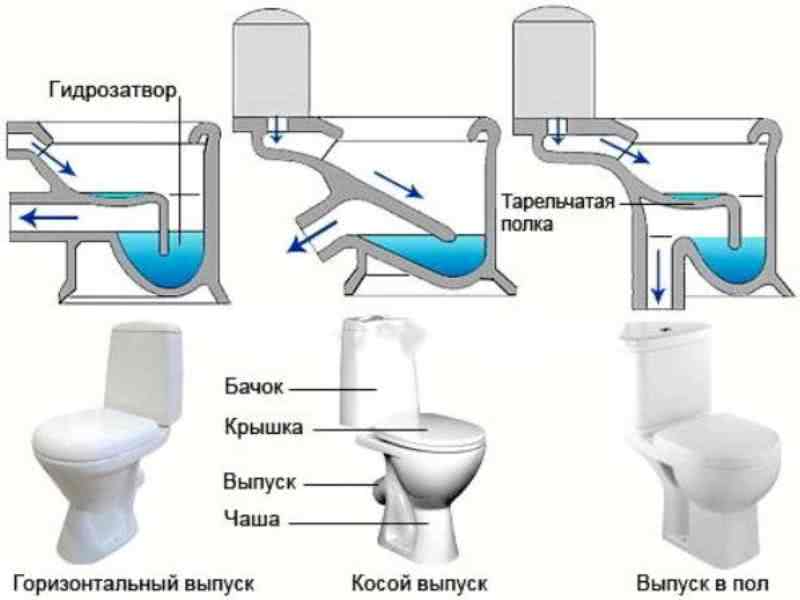
The crucial point when choosing a toilet is the placement of the outlet. Indeed, this parameter affects not so much the drain as the installation of the plumbing fixture. Currently, there are three types of products:
| Horizontal outlet (straight) | In this case, the outlet is parallel to the floor. In the event that a direct drain is performed, the toilet bowl, in most cases, is connected by a hidden method, i.e.all communications are hidden behind a false wall. |
| Oblique | The outlet is inclined to the floor at an angle of 45 degrees. |
| vertical | The exit is right under the toilet. |
In dilapidated Khrushchev-type apartments, in most cases, oblique outlet toilets were installed. In modern buildings, plumbing with direct outlet has recently begun to be installed. As for devices with a lower exit, they are, in most cases, used in private buildings and "Stalinka".
Interesting models: photo
Surely you will not be surprised if you find out that designers take part in the development of toilet bowls - their forms are very unusual. If earlier it was easy to choose a toilet bowl - it’s good if there were five models, today it’s very difficult to choose from hundreds and thousands. But you can find plumbing, decorated in a certain style - from classic to modern or high-tech. Photos of some interesting models from the point of view of design will be posted below.
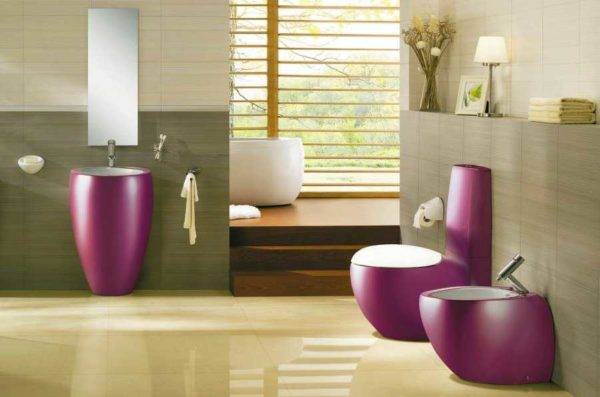
Colored plumbing is not new for a long time
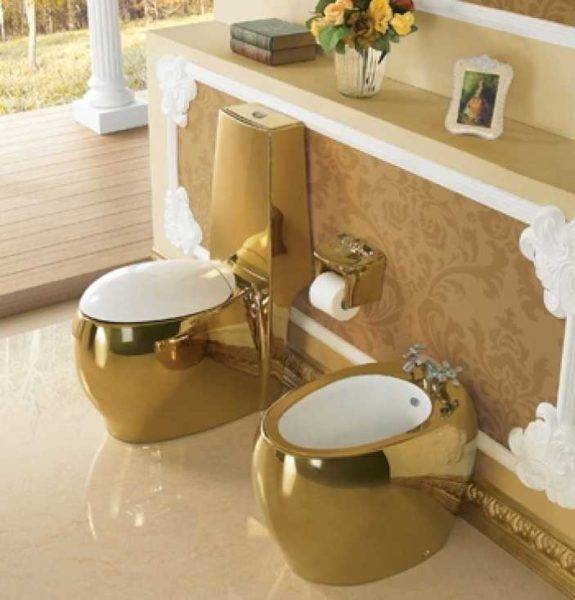
There are even gold-plated models
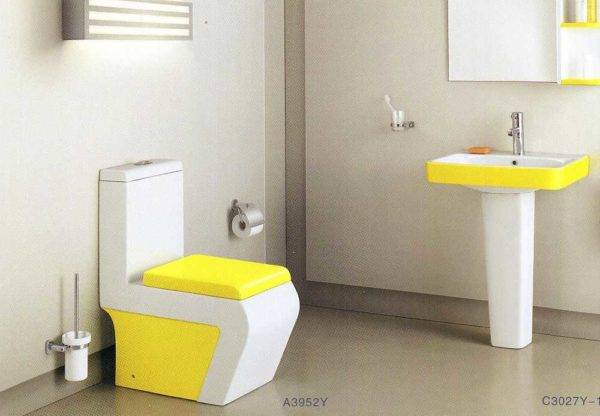
Unusual shape with non-standard color scheme
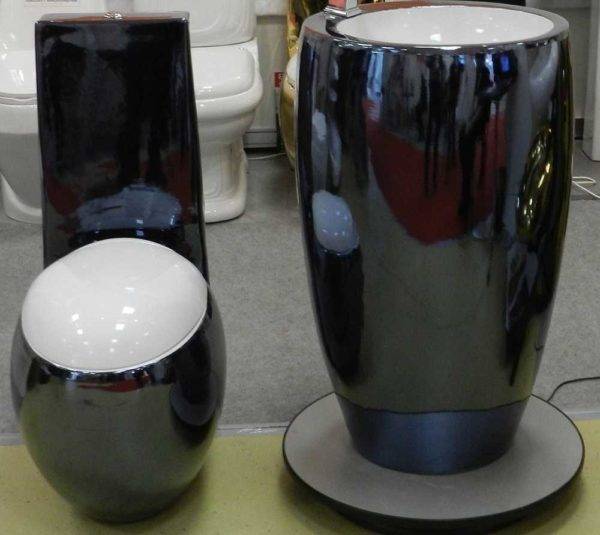
Choosing a toilet is not easy.
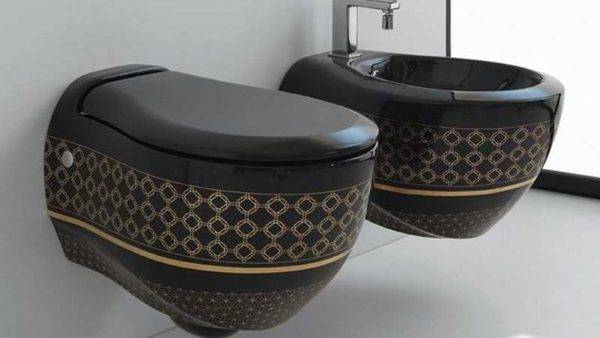
Gold is not black - a stylish combination
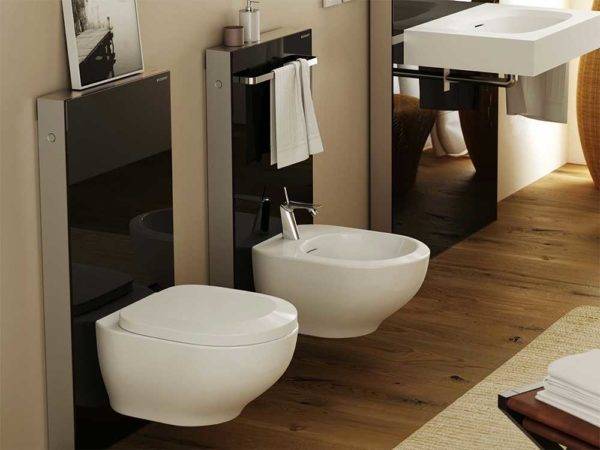
Paired with an unusually designed installation
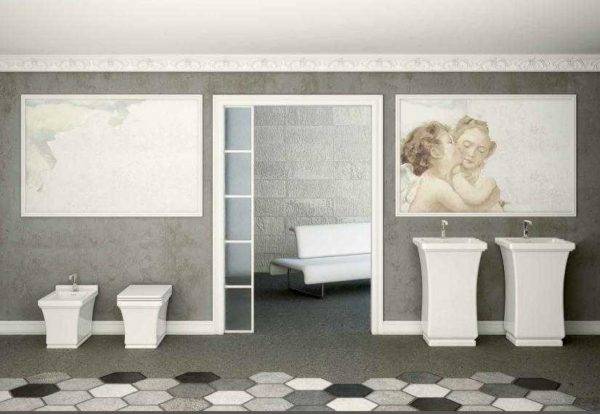
Square toilets also exist, and they look interesting
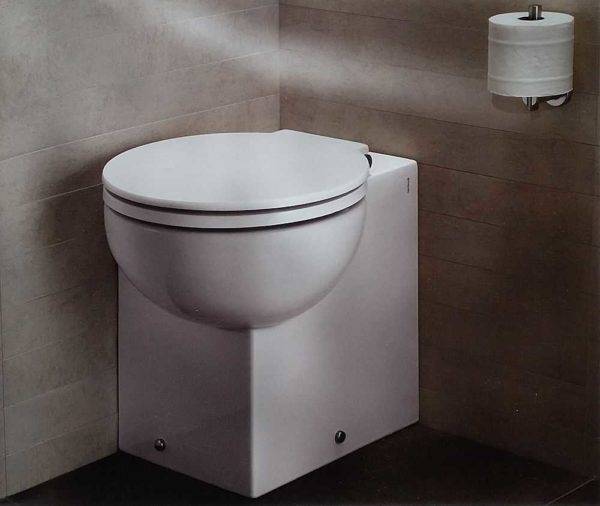
Compact corner options are also interesting
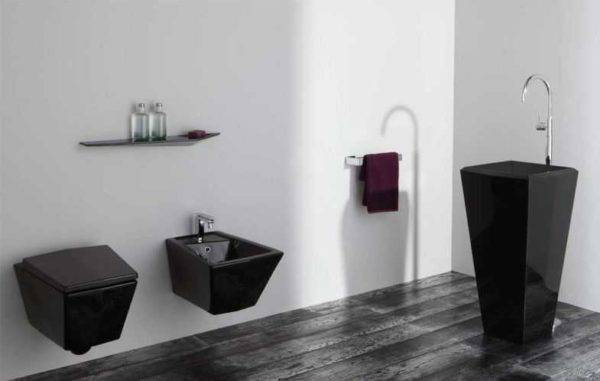
Black square plumbing - very rare
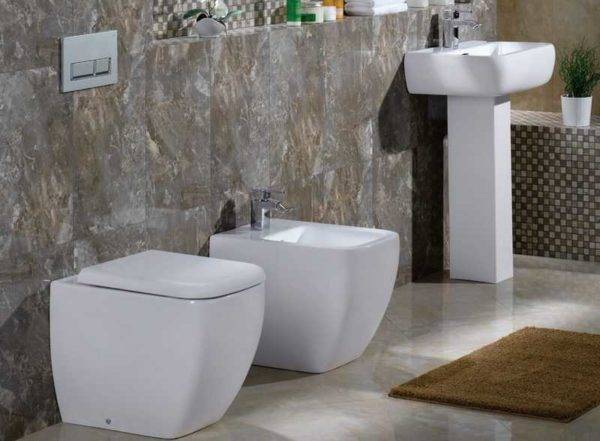
Rounded shapes are still more familiar
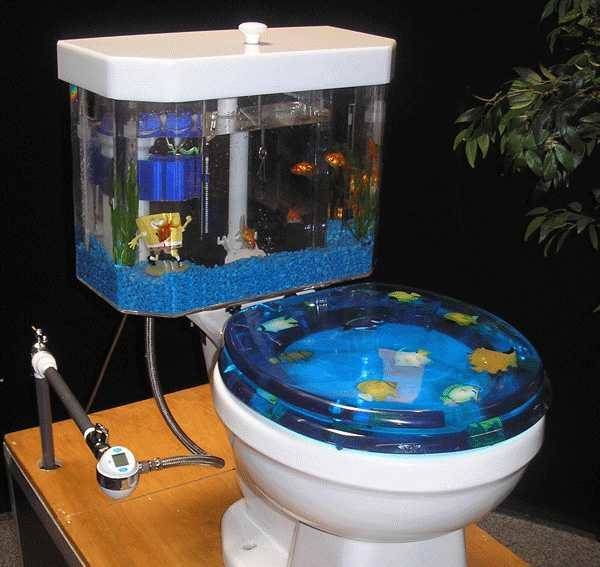
exotic variant
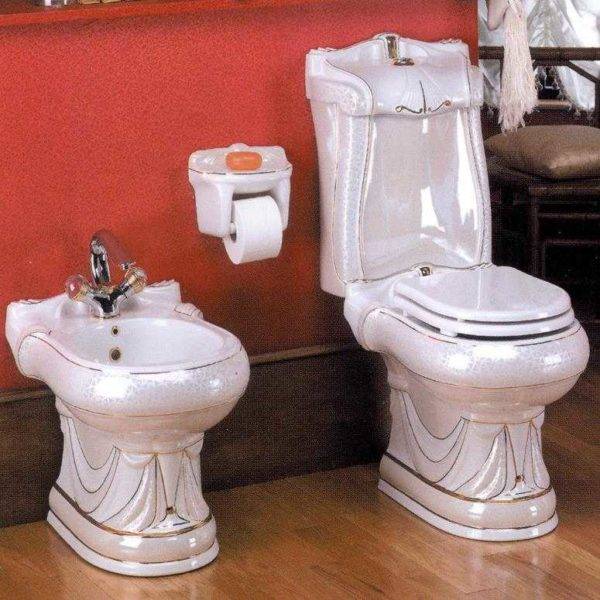
Almost a throne
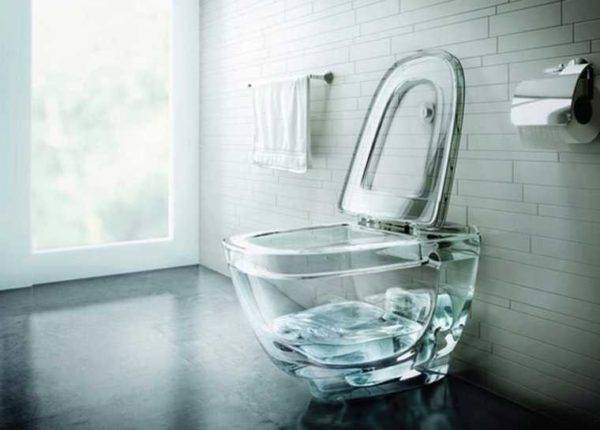
Transparent toilet .... looks like a joke
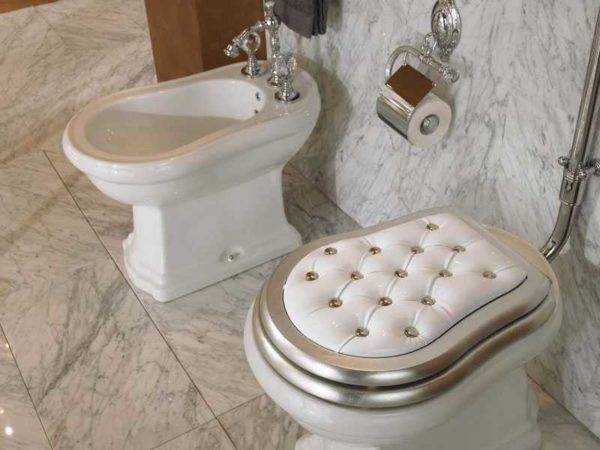
For classic interiors
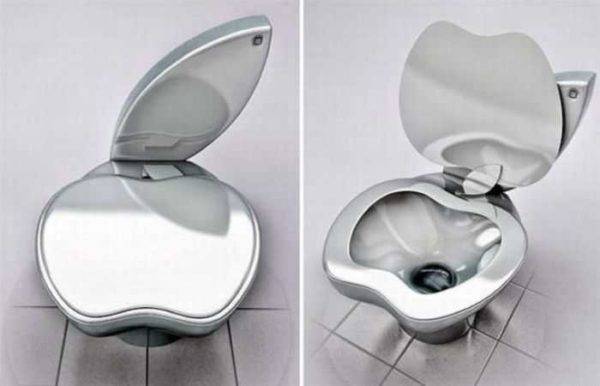
Apple Admirers
Sink diagram
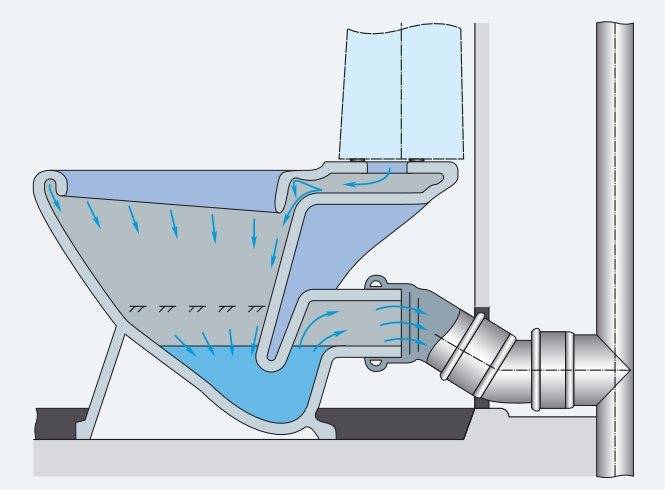
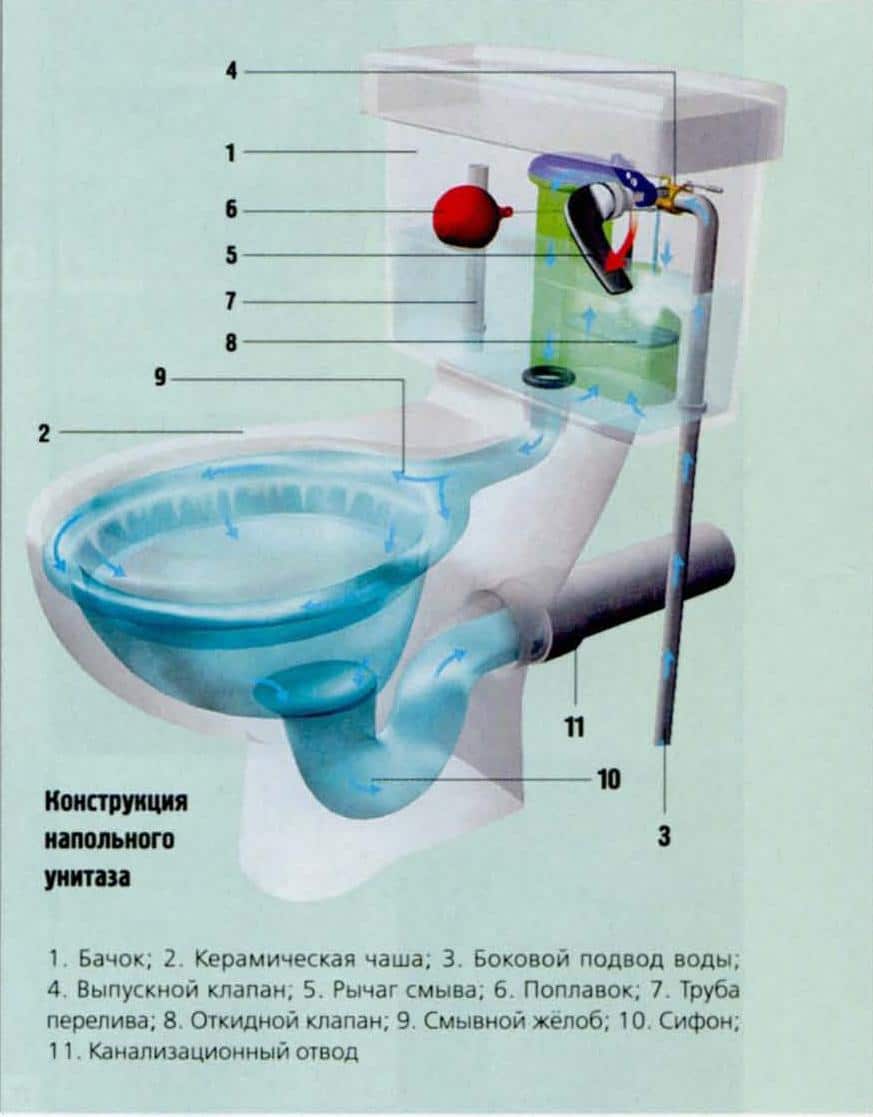
Diagram of a typical toilet bowl.
The device of the tank is quite simple. The scheme resembles a water seal. It has a float, a seal and levers.With a button or lever, you can direct the water from top to bottom to clean and remove the contents. The tank has visible and invisible parts. The visible ones include the lid, tank, button. The invisible part is located inside. The drain tank incorporates a float valve (it is needed in order to fill the tank with water and regulate its amount), a button for flushing water, a plug with a side type of water supply and drain fittings.



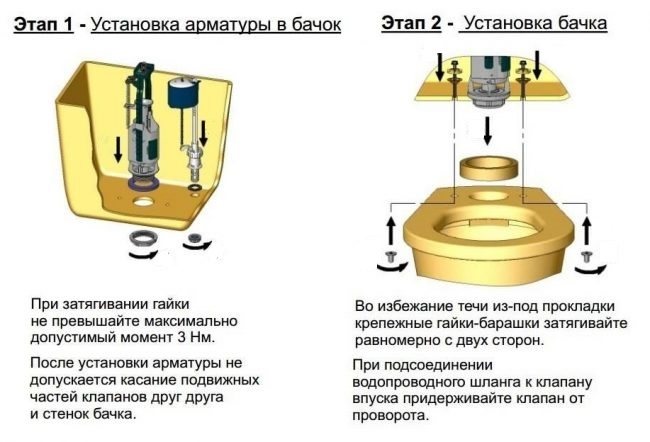
Installation of a hanging tank is carried out according to the following technology. Before installing the tank, it is required to turn off the water. First you need to attach the flush pipe to the tank. Pipe size 32 mm. The drain tank is raised so that the lower end of the pipe is located at the desired level. Before that, a mark is made in the wall for the pipe. Using a marker or pencil, mark the points where the holes for attaching the tank will be drilled. To do this, you can use screws or dowels. The tank is fixed in a horizontal position. Then cold water joins it, and it fills up. At the junction of the pipe and the tank, it is advisable to make gaskets to prevent leaks.
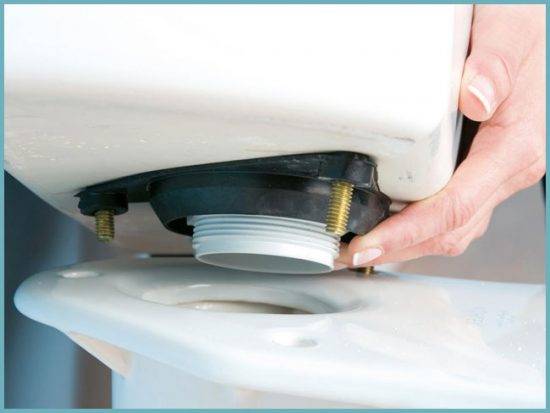
If it is supposed to place the tank low, then it is mounted on the toilet shelf. In this case, the gasket is laid first. After that, the drain tank is attached to the shelf using bolts with gaskets located inside the tank. After that, you need to tighten the nuts and cover the through hole in the tank. Then the tank is installed on the toilet. To do this, the bolts located on the tank are aligned with the holes of the shelf and the nuts are screwed. At the end, you need to connect the water supply through the hose.
Which toilet flushes best
The quality of toilet flush is affected by:
- bowl shape;
- flush system devices;
- type of exhaust system;
- sump location.
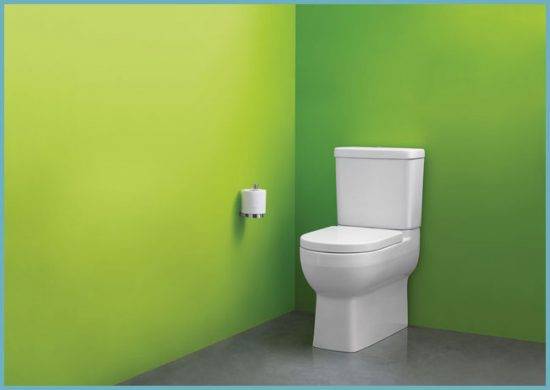 The quality of the flush depends on many factors.
Toilet bowls
The shape of the toilet bowl not only determines its appearance, but also affects the quality of the flush. Toilet bowls are:
Funnel-shaped toilet bowls. The drain hole in toilets with such a bowl is located almost in the center and, therefore, the flush will be good. Such toilets are considered the most hygienic, since sewage does not linger in the bowl. It does not require daily cleaning and is considered economical to use. The only, but very noticeable disadvantage of such bowls is multiple splashes when flushing.
Visor bowls. The back wall of the bowl is convex and inclined. In such a toilet, sewage does not accumulate, but immediately goes into the drain hole. This makes the use of plumbing hygienic and virtually eliminates the problem of unpleasant odors in the bathroom. The absence of stagnant water avoids the formation of rust and stains. The design of the toilet bowl with this shape of the bowl is recognized by experts as the most successful and is made by all well-known world manufacturers.
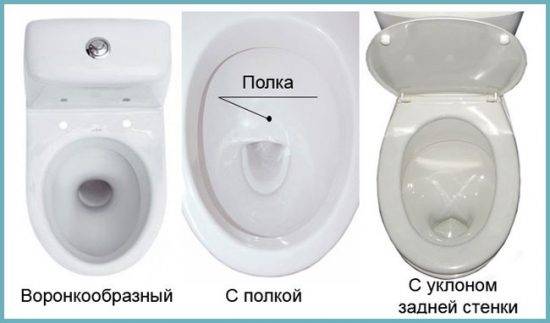 Types of toilet bowls in the form of a bowl
Toilet bowls with a bowl bowl were widespread in the second half of the last century. The drain hole is shifted forward, and the shape of the bowl suggests the presence of a shelf. Of the advantages, only the complete absence of splashes can be distinguished. The only downsides are:
- the need for regular frequent cleaning of the surface;
- unpleasant odors in the toilet;
- stagnation of water in the bowl and the formation of rust.
Currently, bowl-shaped toilets are not relevant and are considered relics of the past.
flush system
The supply of water and its further distribution in the bowl play a fundamental role for a good flush.The device of the flush system is of two types:
- cascade (direct flush);
- shower room (circular flush).
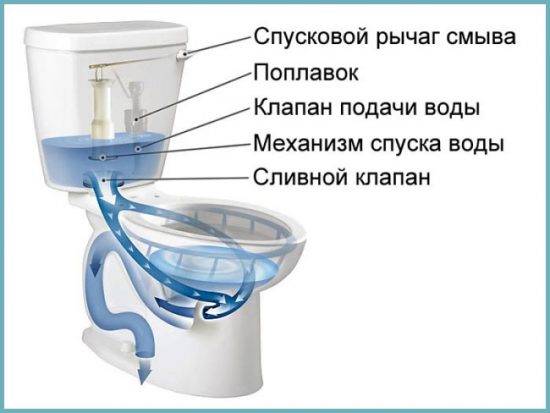 The operation of the toilet flush system
Cascading flush is considered a classic in toilets. From the tank, water is supplied in one continuous stream along a straight path. Of the advantages, one can single out a powerful descending stream of water that can wash away all impurities.
Disadvantages of direct flush:
- uneven washing of the bowl;
- the need for additional cleaning of the front wall of the toilet;
- water consumption is not economical;
- rust formation near the water inlet.
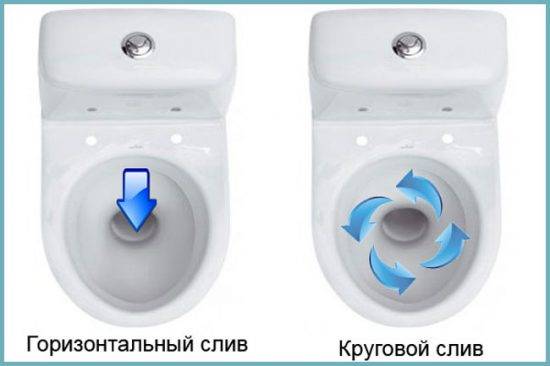 Comparison of flush systems
Shower flush - more modern. The principle of its operation is completely opposite to direct flushing. In the gutter under the rim of the toilet there are holes into which water is supplied from the tank. In the bowl, the water descends in a circle, forming an annular gutter.
Advantages:
- full washing of the bowl;
- easy care for the bowl;
- silent flush;
- saving water used.
Flaws:
- clogging of drain holes;
- high price.
exhaust system
The exhaust system of the toilet bowl determines how it is mounted to the sewer.
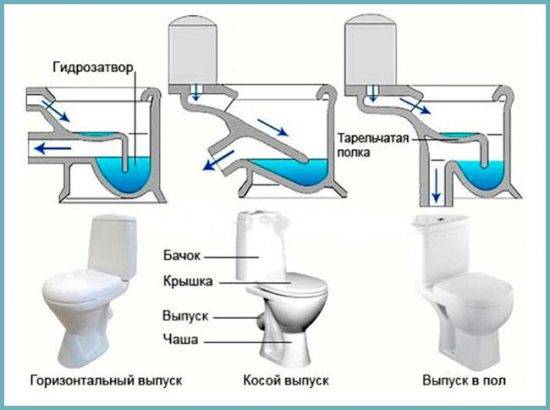 Comparison of toilet bowls with different exhaust systems
She may be:
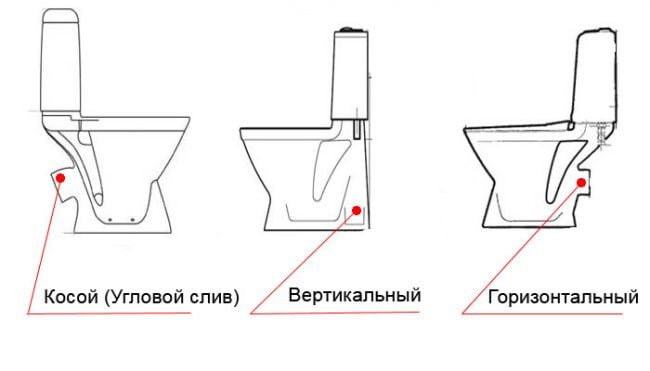
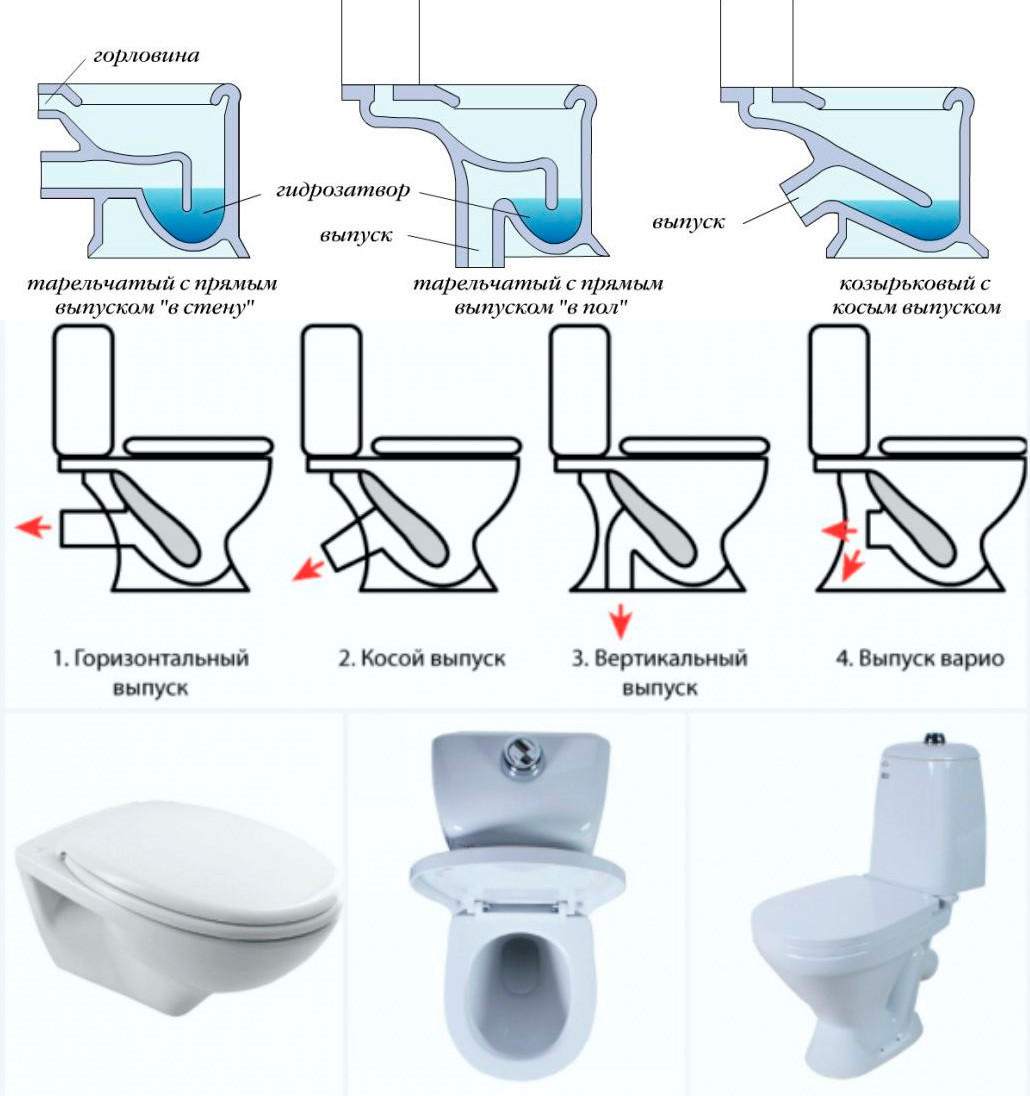
- Vertical. Vertical release is appropriate when the sewer pipe is moved 50-60 cm away from the wall. Also, this release is widely used in private construction.
- Horizontal. The horizontal exhaust system is used when the sewer inlet is located in the riser or rises significantly above the floor.
- oblique. The oblique outlet is located at an angle of 45º. The toilet is connected to a sewer pipe located at floor level.
Each of the exhaust systems has no advantages or disadvantages and does not affect flushing. At the same time, this is a very important parameter for choosing a toilet bowl.





The location of the drain tank
On the plumbing market, both “compact” systems are presented, when the toilet bowl and cistern are one piece, as well as separate sets.
 Installation of a drain tank
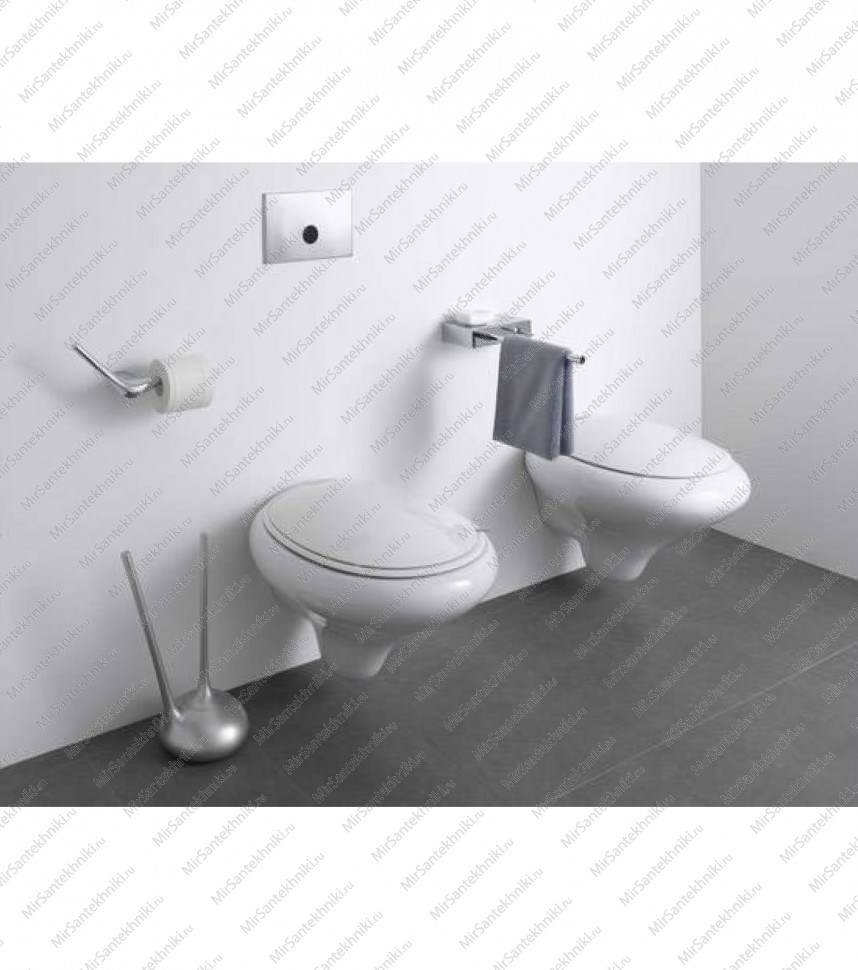
Wall-mounted toilet bowls with a cistern mounted on the wall are gaining more and more popularity. The higher location of the tank creates a powerful pressure of water, thereby providing a reliable and high-quality flush. The choice of such a toilet model will be an excellent solution to the problem of lack of space in the bathroom.
Shape and material
For many buyers, the main criterion when buying a toilet bowl is the quality of the material from which it is made. This is a guarantee of product quality and durability of use.
Models of this plumbing can be divided by material into:
- Faience. These are usually small and fairly budget options. That is why they are very popular with buyers. The entire toilet bowl is covered with a thick layer of faience, which is specially fired, which increases the strength and reduces the porosity of the material.
- Porcelain. These are very easy to install and durable models. With careful use, they will last for many years without causing any problems. The difference between these toilets is a modern exterior. Such models are the most hygienic when compared to faience toilets, as they are less porous and very easy to clean. The only drawback is their considerable cost.
- Steel. These are very durable, wear-resistant structures that will last for decades. They are very easy to keep clean.Many users of such models emphasize that this is the most comfortable option of all others. The good thing about them is that the design is very compact and is perfect for any toilet room.
- Toilets made of natural stone. This is the most expensive option of all types. Its surface is perfectly polished, which makes it very easy to care for the product. The downside is that it tends to be bulky and subject to mechanical stress. This model is not practical.
- Toilets made of artificial stone. These models are made of crushed natural stone and a composition of components that ensure the strength of the product. This is a very stylish and modern option. The covering of a toilet bowl is rather hygienic and hardy to mechanical influences. Such an instance will cost an order of magnitude cheaper than a model made of natural stone, and its design will also be more compact.
- Acrylic or plastic. These are very strong and durable models. The surface of the material is very smooth, which makes it easy to care for the product. This option is considered very hygienic. An important disadvantage of such products is their susceptibility to high temperatures and mechanical damage.
Understand the material of the product. As for the shape and other parameters of the models, there are also several options. The bowl can be of several types:
- Dish-shaped. Such a bowl is a horizontal platform. This design is convenient because there is no splashing of water in such a toilet. However, this is the most unhygienic design of all, because everything that enters the bowl remains on this platform.And besides this, there is always stagnant water in the toilet, which over time leads to salt deposits, as well as the appearance of rust. When choosing such plumbing, you need to think carefully about what is more important - comfort or hygiene.
- Funnel-shaped. Such a bowl contains a funnel right in the center of the bowl and everything that enters it goes straight into this funnel filled with water. This is the most hygienic option and is also easy to install. But such models also have disadvantages. The most important thing is the presence of constant splashes of water.
- Kozyrkovaya. This is something in common between dish modifications and funnel-shaped ones. This is the most convenient version of the bowl design, thanks to which there is no splashing and the toilet bowl itself is very convenient and comfortable to use.
Mounting Tips
When installing a toilet bowl, it is important to follow a certain algorithm of actions
- You can start installation work only after the water is shut off. First of all, the old device is dismantled. Previously, water is completely drained from its tank. If the toilet has been installed for a long time, and its bolts are rusty, you can pour kerosene or turpentine on them, wait 2-3 minutes, and then unscrew it.
- Toilets of the old samples were usually glued to the floor with cement. You will have to beat off the device with a hammer and chisel. Similar actions will have to be repeated to disconnect the outlet from the pipe.
- Immediately after installing the old toilet bowl, it is recommended to clean the sewer pipe and temporarily close it with a plug.
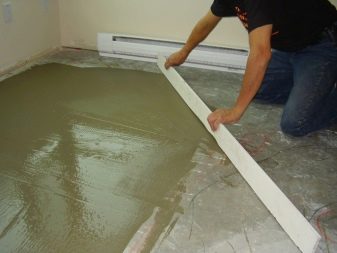
- Installation of a new device can only be carried out on a flat and clean surface. If necessary, repair the flooring.If it is not possible to completely level the floor, use floor-level chopsticks.
- If you purchased the toilet in disassembled form (usually it happens), it must be assembled following the recommendations in the instructions.
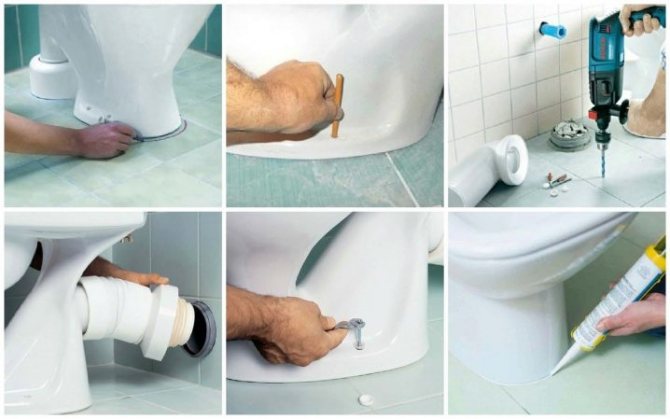
- Further, markings are made on the floor and stegs with the obligatory indication of the location of the fasteners. At these points, holes are punched with a puncher into which dowel plugs are inserted. You should also connect the sewer and the outlet of the toilet. The use of a flexible corrugation greatly facilitates this process: one end is inserted into the pipe, the other is fixed at the outlet. Everything is carefully sealed.
- The toilet itself is attached to the floor - the holes made by the perforator are combined with the perforations on the toilet leg. They connect the floor and the toilet with bolts with rubber gaskets and close them with decorative plugs.
- It remains only to connect the water using a metal-plastic pipe or a flexible hose. The joints are wrapped with rubber bands and tightened.
- At the junction of the bowl and the floor, as well as the bowl and the sewer, it is recommended to apply a layer of sealant using special silicone-based compounds for this. After it dries completely, drain the water several times, carefully inspecting the device. If all joints are securely sealed, it remains to attach the seat, and the toilet will be ready for use.
How to install a toilet, see the following video.