- Pros and cons of biofuels
- Mobility compared to other alternative energy sources
- Cost reduction
- Renewable sources
- Reducing greenhouse gas emissions
- Economic security for countries that do not have large reserves of fuel
- What is biofuel
- Bioethanol
- biodiesel
- Obtaining and using fuel:
- TEAM "GAS"
- Why is it better to use biofuels?
- Green technologies, biofuels
- Biofuel from manure
- Second generation biofuels
- Biofuel from algae
- Gaseous biofuel
- Biogas
- biohydrogen
- Fuel Features
- Trends in the development of the global biofuel market
- Solid biofuel - pellets
- Why and how fuel pellets are produced
- Varieties of biofuels
- liquid
- Solid
- How Biodiesel is Made
Pros and cons of biofuels
The development of biotechnology solves the problem of recycling organic waste, as well as replacing oil and gas with alternative fuels. But their unwise use can cause additional problems with the climate, as well as ecosystems. Consider a few key points in the development of this industry:
- Biofuels are a renewable energy source with cheap raw materials.
- Technologies based on the processing of organic waste are applicable wherever there are people and industrial complexes.
- The production of biofuel reduces the level of carbon dioxide in the atmosphere, and its use instead of traditional fuel reduces the production of carbon dioxide.
- Growing monocultures on a large scale (as a feedstock for biofuels) leads to depletion of soil composition and a decrease in biodiversity, which affects the climate.
A reasonable approach to the production of biofuels is able to solve the most acute environmental problems of the environment.
Mobility compared to other alternative energy sources

Currently, more "radical" alternative energy technologies, such as solar energy and wind energy, have one big problem - mobility. Since the sun and wind are not permanent, relatively heavy batteries have to be used to provide high power in such energy technologies (but with the improvement of technology, this problem is gradually being solved). On the other hand, biofuels are quite easy to transport, they are stable and have a fairly large “energy density”, they can be used with minor modifications to existing technologies and infrastructure.
Cost reduction
Biofuels currently cost as much on the market as gasoline. However, there are more benefits to using biofuels as it is a cleaner fuel and produces fewer emissions when burned. Biofuels can be adapted to existing engine designs to perform well in any environment.However, such a fuel is better for engines, it reduces the overall cost of engine fouling control and, therefore, its use requires less maintenance costs. With increasing demand for biofuels, it is likely that they will become cheaper in the future. Thus, the use of biofuels will be less heavy on the wallet.
Renewable sources

Gasoline is obtained from crude oil, which is not a renewable resource. While today's fossil fuel reserves will last for many more years, they will eventually run out. Biofuels are made from a variety of feedstocks, such as manure, crop residues, and plants grown specifically for fuel. These are renewable resources that probably won't run out anytime soon.
Reducing greenhouse gas emissions

When burned, fossil fuels produce large amounts of carbon dioxide, which is considered a greenhouse gas and the reason for keeping the sun warm on the planet. Burning coal and oil raises temperatures and causes global warming. To reduce the impact of greenhouse gases, biofuels can be used. Studies show that biofuels reduce greenhouse gas emissions by up to 65 percent. In addition, when growing biofuel crops, they partially absorb carbon monoxide, which makes the biofuel system even more sustainable.
Economic security for countries that do not have large reserves of fuel
Not every country has large oil reserves. Oil imports leave a significant gap in the country's economy.If people begin to lean towards the use of biofuels, then the dependence on imports will decrease. Thanks to the growth in biofuel production, more jobs will be created, which should have a positive impact on the country's economy.
What is biofuel
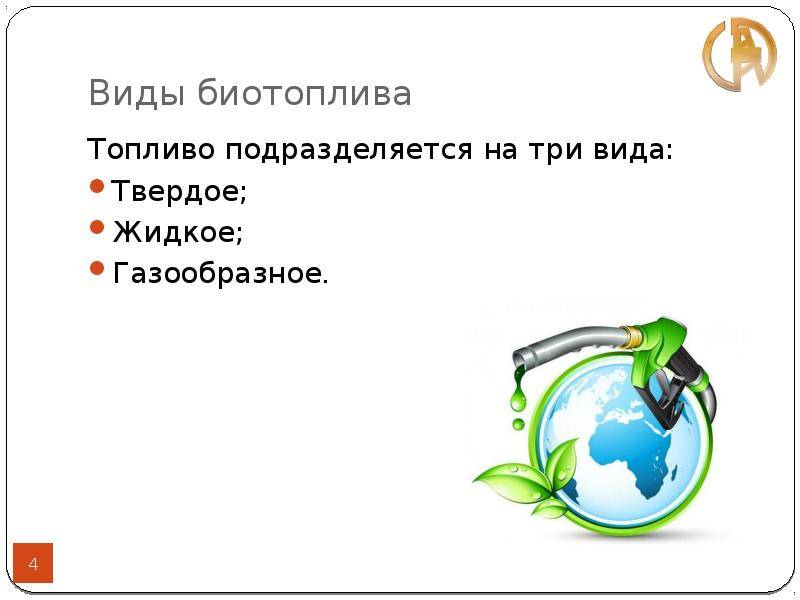
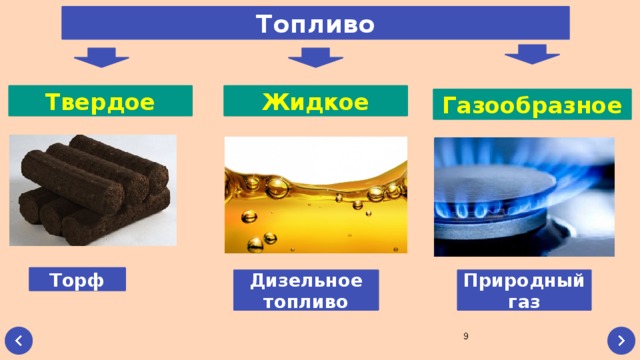
Biofuels are fuels made from living matter. Formation of biofuels takes a short period of time compared to fossil fuels. Biofuels are produced primarily through biological processes. The end product of biofuel production can be solid, liquid or gaseous.
One of the most important tasks of biofuels is that it is a renewable source of energy. Renewable fuel is fuel derived from renewable resources. Because biofuels are made from biomass, and biomass is a renewable resource, biofuels are renewable fuels.


The most common types of biofuels are bioethanol and biodiesel.
Bioethanol
Bioethanol is a fuel produced by biological processes using microorganisms and enzymes. The final product is a flammable liquid. The sources used for biofuel production are sugarcane and wheat. Sugar from these sources is fermented to produce ethanol. Distillation is carried out to separate bioethanol from other components included in the final product. Bioethanol can be used as an additive along with gasoline to reduce carbon monoxide emissions.
biodiesel
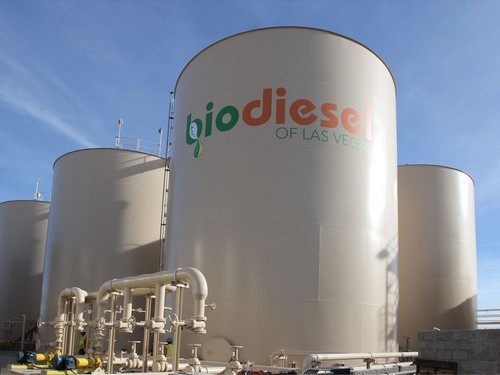
Biodiesel is produced using vegetable oil and fat in a procedure called interesterification. The main resources include soybeans, rapeseed, etc.Biodiesel is one of the best additives used in fuel blends to reduce harmful gas emissions. Biodiesel can reduce these emissions by up to 60%.
However, burning biofuels contributes to air pollution through the formation of carbon particles, carbon monoxide and other adverse gaseous emissions. But in percentage terms, this contribution is less than that of fossil fuels.

Figure 1: Algae can be used to make jet fuel
The benefits of using biofuels include lower emissions, renewability, biodegradability, and safety. Biofuels produce fewer greenhouse gases than fossil fuels. Biofuels can be easily obtained from organic material. Because organic material such as plant biomass can be grown by us, biofuels are considered a renewable energy source. Because these biofuels are made from organic matter, they are biodegradable and thus a fuel spill will not cause significant environmental damage. Since biofuels are simply made from plants growing on the ground, they are safer than methods associated with mining or other complex excavations.
Obtaining and using fuel:
The most demanded solid fuel is coal (stone, brown and anthracite). In second place are wood and peat. Coal is used at large thermal power plants, in metallurgy. Wood is used for construction, furniture production and as fuel for stoves, fireplaces, bath complexes.
More than 80% of liquid fuels used in the world are products of oil distillation.
The main products of oil refining - gasoline and kerosene are in demand as automotive and aviation fuel. CHP plants run on fuel oil. In this case, it is necessary to solve the problem of removing sulfur compounds from combustion products. Depending on the grade of the original oil, fuel oil can contain up to 4.3% of this element. The higher the percentage of sulfur, the greater the cost of equipment maintenance, the higher the wear.
Gas fuel is obtained both directly from gas fields and as a product associated with oil. In the latter case, the gas contains more higher hydrocarbons while reducing the volume of methane. It burns better and gives more heat.
Compost heaps and landfills become a source of biogas. In Japan, special small factories are being built, capable of receiving up to 20 m3 of gas per day from sorted garbage. This is enough to generate 716 kW of thermal energy. In China, according to UNESCO, at least 7 million factories and plants have been opened to produce biogas from rotting organic matter.
Hydrogen is also used as fuel. Its main advantage is that the reserves are not geographically tied to certain regions of the planet, and when burned, clean water is formed.
TEAM "GAS"
Biomass also produces gaseous fuel, which is also excellent for cars. For example, methane is one of the main components of natural and so-called associated gases obtained during the refining of oil. Such a mineral can easily replace an unnecessary mountain of organic garbage - from banal manure to waste from fish, meat, dairy and vegetable industries. This biomass is fed by bacteria that produce biogas.After cleaning it from carbon dioxide gas, the so-called biomethane is obtained. Its main difference from conventional methane, which many production models run on, is that it is not a mineral. Already something, but manure and plants will not run out before the end of life on the planet.
Scheme of biomethane production (all schemes and tables open in full size by mouse click):
Why is it better to use biofuels?

Biofuels are an alternative, renewable source of energy on earth.
Its main advantages are the following:
- Affordability allows the use of this type of fuel in all spheres of human life.
- Renewability. One important advantage over gasoline is the ability of biofuels to be renewable.
- Biofuels contribute to slowing down global change. Its use reduces the greenhouse effect (up to 65%)
- For countries producing biofuels, dependence on imports of this product is decreasing.
- Excellent gas station for the car.
Green technologies, biofuels


Biofuel from manure
For a long time, agricultural and food industry waste was used exclusively for the production of fertilizers, but today these same wastes make it possible to produce biofuels. Livestock and poultry manure, as well as brewer's grains, slaughterhouse waste, post-alcohol stillage, sewage, beet pulp, and so on can be used as raw materials for the production of fuel.
As a result of the processing of such waste, gaseous biofuel is obtained, which is obtained as a result of fermentation. The resulting biogas can be used to generate electricity or in boiler houses, to heat residential buildings.In addition, such fuel is used in cars.
However, it should be noted that in order to obtain gaseous biofuels for cars, the biogas obtained as a result of fermentation must be cleaned of CO2, after which it will be converted into methane.
Second generation biofuels
A second generation biofuel is a type of fuel that is produced from non-food renewable feedstocks, unlike ethanol, methanol, biodiesel and so on. Straw, algae, sawdust and any other biomass can be used as raw materials for the production of second-generation biofuels.
The great advantage of this type of fuel is that it is made from products that are always available and are constantly renewable. According to many scientists, it is the second generation of biofuels that can solve the energy crisis.
Biofuel from algae
To date, scientists have developed a special technology for obtaining second-generation biofuels from algae.
The development of this technology will further revolutionize the world of biofuels, since the main raw material (algae) does not require special care and does not need fertilizers (it requires water and sunlight to grow). Moreover, they grow in any water (dirty, clean, salty and fresh). Also, algae can help in cleaning sewer lines.
Another positive aspect of the production of biofuels from algae is that the latter consist of simple chemical elements that can be easily processed and broken down. Thus, due to all the advantages, algae biofuel technology has the greatest potential.
Gaseous biofuel
There are two main types of gaseous fuels:
- Biogas
- biohydrogen
Biogas
A fermentation product of organic waste, which can be used as fecal residues, sewage, domestic waste, slaughter waste, manure, manure, as well as silage and algae. It is a mixture of methane and carbon dioxide. Another product of the processing of household waste in the production of biogas is organic fertilizers. The production technology is associated with the transformation of complex organic substances under the influence of bacteria that carry out methane fermentation.
At the beginning of the technological process, the mass of waste is homogenized, then the prepared raw material is fed with the help of a loader into a heated and insulated reactor, where the process of methane fermentation takes place directly at a temperature of approximately 35-38 °C. The mass of waste is constantly mixed. The resulting biogas enters the gas holder (used to store gas), and then fed to the power generator.
The resulting biogas replaces conventional natural gas. It can be used as biofuel or generate electricity from it.
biohydrogen
It can be obtained from biomass by thermochemical, biochemical or biotechnological means. The first method of obtaining is associated with heating waste wood to a temperature of 500-800 ° C, as a result of which the release of a mixture of gases begins - hydrogen, carbon monoxide and methane. In the biochemical method, the enzymes of the bacteria Rodobacter speriodes, Enterobacter cloacae are used, which cause the production of hydrogen during the breakdown of plant residues containing cellulose and starch. The process proceeds at normal pressure and low temperature.Biohydrogen is used in the production of hydrogen fuel cells transport and energy. Not yet widely used.
Fuel Features
A remarkable advantage of using such fuel is the negligible amount of soot. When burned in a fireplace, no more soot is produced than from a burnt candle. There is also no carbon monoxide, which is harmful to health.
When bioethanol is used, a small amount of water and a small amount of carbon dioxide are produced in the fireplace. This is the reason for the absence of the usual orange flame.
To achieve maximum naturalness, additives are added to the composition of bioethanol, which give the flames a characteristic orange tint. They also help to achieve maximum naturalness of the flame.



Trends in the development of the global biofuel market
The drivers for the spread of biofuels are threats related to energy security, climate change and economic downturn. The spread of biofuel production around the world is aimed at increasing the share of clean fuel consumption, especially in transport; reducing dependence on imported oil for many countries; reducing greenhouse gas emissions; economic development. Biofuels are an alternative to traditional fuels derived from oil. The world centers of biofuel production in 2014 are the USA, Brazil and the European Union. The most common type of biofuel is bioethanol, its share is 82% of all fuel produced in the world from biological raw materials.Its leading producers are the USA and Brazil. On the 2nd place is biodiesel. 49% of biodiesel production is concentrated in the European Union. In the long term, the ever-growing demand for biofuels from land, air and sea transport can greatly change the current situation in the global energy market. The use of agricultural raw materials for the production of liquid biofuels and the growth in their production have led to demand for agricultural products, which has affected the prices of food crops used in the production of biofuels. Second-generation biofuel production continues to grow, and by 2020 the world production of second-generation biofuels should reach 10 billion liters. World production of biofuels by 2020 should increase by 25% and amount to approx. 140 billion liters. In the European Union, the bulk of biofuel production comes from biodiesel produced from oilseeds (rapeseed). According to forecasts, the EU countries will expand the production of bioethanol from wheat and corn, as well as sugar beets. In Brazil, bioethanol production is expected to continue growing at an accelerated pace, reaching around 41 billion liters by 2017. In general, the production of bioethanol and biodiesel, according to the forecast, by 2020 will increase rapidly and will amount to 125 and 25 billion liters, respectively. Asia's biofuel production has begun to grow rapidly. As of 2014, China is in third place in the production of bioethanol, and this production is expected to grow over the next ten years by more than 4% per year.In India, the production of bioethanol from molasses is projected to increase by more than 7% per year. At the same time, the production of biodiesel from new crops such as jatropha is expanding.
According to the forecasts of the World Energy Agency (IEA), the shortage of oil in 2025 will be estimated at 14%. According to the IEA, even if the total production of biofuels (including bioethanol and biodiesel) by 2021 is 220 billion liters, then its production will cover only 7% of the world's fuel demand. The rate of growth in the production of biofuels is far behind the rate of growth in demand for them. This is due to the availability of cheap raw materials and insufficient funding. The mass commercial use of biofuels will be determined by the achievement of price equilibrium with traditional fuels derived from oil. According to scientists' forecasts, by 2040 the share of renewable energy sources will reach 47.7%, and biomass - 23.8%.
At the current level of technology development, biofuel production will represent a small part of global energy supply, energy prices will influence the cost of agricultural raw materials. Biofuels can have different impacts on food security – rising commodity prices driven by biofuel production can harm food importers, on the other hand stimulate domestic agricultural production by smallholder farmers.
Solid biofuel - pellets
Recently, there have been a lot of various rumors or even peculiar "legends" that one of the most promising and highly profitable types of small business can be the production of fuel pellets - a special type of biological fuel. Let's take a closer look at the advantages of solid granular fuel and the process of obtaining it.
Why and how fuel pellets are produced
Logging, woodworking enterprises, agricultural complexes, and some other production lines necessarily produce, in addition to the main products, a very large amount of wood or other plant waste, which, it would seem, no longer has any practical value. Not yet given, they were simply burned, throwing smoke into the atmosphere, or even mismanaged by huge "heaps". But they have a huge energy potential! If these wastes are brought into a state convenient for use as fuel, then, along with solving the problem of disposal, you can also make a profit! It is on these principles that the production of solid biofuels - pellets - is based.
In fact, these are compressed cylindrical granules with a diameter of 4 ÷ 5 and up to 9 ÷ 10 mm, and a length of approximately 15 ÷ 50 mm. This form of release is very convenient - the pellets are easily packaged in bags, they are easy to transport, they are great for automatic fuel supply to solid fuel boilers, for example, using a screw loader.
Pellets are pressed both from natural wood waste and from bark, branches, needles, dry leaves and other by-products of logging. They are obtained from straw, husks, cake, and in some cases even chicken manure serves as raw material. In the production of pellets, peat is used - it is in this form that it achieves maximum heat transfer during combustion.
Of course, different raw materials give different characteristics of the resulting pellets - in terms of their energy efficiency, ash content (the amount of the remaining non-combustible component), humidity, density, price. The higher the quality, the less hassle with heating devices, the higher the efficiency of the heating system.
In terms of their specific calorific value (in terms of volume), pellets leave behind all types of firewood and coal. Storage of such fuel does not require large areas or the creation of any special conditions. In compressed wood, unlike sawdust, the processes of decay or debate never begin, so there is no risk of self-ignition of such a biofuel.
Now to the issue of pellet production. In fact, the whole cycle is simply and clearly shown in the diagram (agricultural raw materials are shown, but this equally applies to any wood waste):
First of all, the waste goes through the crushing stage (usually to the size of chips up to 50 mm long and 2 ÷ 3 mm thick). Then follows the drying procedure - it is necessary that the residual moisture does not exceed 12%. If necessary, the chips are crushed into an even finer fraction, bringing its state almost to the level of wood flour. It is considered optimal if the size of the particles entering the pellet pressing line is within 4 mm.
Before the raw material enters the granulators, it is lightly steamed or briefly immersed in water. And, finally, on the pellet pressing line, this “wood flour” is pressed through the calibration holes of a special matrix, which have a conical shape.This configuration of the channels contributes to the maximum compression of the chopped wood with, of course, its sharp heating. At the same time, the lignin substance present in any cellulose-containing structure reliably “sticks together” all the smallest particles, creating a very dense and durable granule.
At the exit from the matrix, the resulting "sausages" are cut with a special knife, which gives cylindrical granules of the desired length. They enter the bunker, and from there - to the finished pellet receiver. In fact, it remains only to cool the finished granules and pack them in bags.
Varieties of biofuels
Biofuel energy sources, despite the shortcomings in the composition and production technology listed in the previous sections, are already being used. In some areas of human activity, they replace electricity. There are even entire biofuel boilers that heat residential buildings, commercial and industrial premises.
The most widely used biofuels are:
- liquid;
- hard.
Let's take a closer look at each of them.
liquid

It is also one of the types of biofuels.
One of the most suitable crops for biofuel production is rapeseed.
The energy carrier is produced according to the following scheme:
- harvested rapeseed undergoes fine cleaning, as a result of which debris, soil and other foreign elements are removed from it;
- after that, the vegetable raw materials are crushed and squeezed to obtain cake;
- then esterification of rapeseed oil occurs - with the help of special acids and alcohols, volatile esters are extracted from this substance;
- at the end, the resulting biodiesel fuel is purified from unnecessary oil impurities.
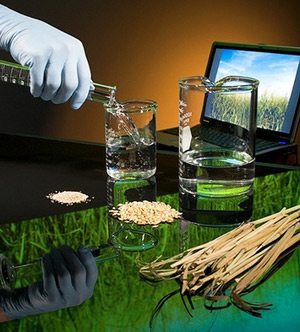
Liquid fuel is made from rapeseed
In addition, E-95 biofuel, which replaces traditional gasoline, is widely used. This type of energy carrier consists of ethyl alcohol with additives that reduce the corrosive effect on metal and rubber parts of internal combustion engines installed in cars.


The advantages of biogasoline are as follows:
- the cost of this type of fuel is lower than traditional;
- when using it, the service life of the oil and filter elements increases;
- the combustion of biofuels does not lead to the formation of plaque on the spark plugs that prevents the passage of a spark;
- an internal combustion engine running on biogasoline does not emit harmful substances into the atmosphere;
- ethanol is less flammable and does not explode during traffic accidents;
- organic gasoline detonates at a lower temperature, so the car engine does not overheat in the warm season.

Organic gasoline will help to cope with environmental problems
Despite the advantages listed above, liquid biofuel has several disadvantages that prevent its widespread introduction into economic activity:
- When using organic gasoline, internal combustion engines and other equipment quickly fail, as the substances that make up the natural energy carrier cause corrosion and damage the rubber gaskets of the units. Effective ways to combat this phenomenon have not yet been found.
- To completely replace fossil fuels with biological ones, it is necessary to significantly expand the area of agricultural land, which is currently impossible. In addition, the area of land suitable for growing plants is limited. The solution to the problem can be third-generation fuel, the development of which has not yet been completed.
Solid
In addition to liquid biofuels, solid organic energy carriers have received well-deserved recognition among consumers around the world.
Their features are as follows:
- They are made from various raw materials of biological origin. It can be both organic waste of human and animal life, and parts of various plants.
- The essence of the technological process for the production of solid biofuels is the efficient use of certain methods of splitting cellulose. A lot of research is currently being carried out, the purpose of which is to replicate the natural processes of splitting that occur in the digestive tract of living organisms.
- For the manufacture of solid fossil fuels, the so-called biological mass is used, which has a certain consistency and proportions. The finished product is obtained by removing moisture from the raw material and subsequent pressing.

Varieties of solid biofuels
Most often, solid energy carrier is supplied in the following forms:
- briquettes;
- pellets;
- granules.
How Biodiesel is Made
The growth in biodiesel consumption contributed to the tightening of requirements for equipment for its production. In general, the biodiesel production technology has the following form. First, methyl alcohol and alkali are added to the vegetable oil purified from impurities.The latter acts as a catalyst during the transesterification reaction. After that, the resulting mixture is heated. As a result of settling and subsequent cooling, the liquid is separated into a light and heavy fraction. The light fraction is, in fact, biodiesel, and the heavy fraction is glycerin. Glycerin in this case is a by-product, which can later be used in the production of detergents, liquid soaps or phosphate fertilizers.
The technologies used earlier were based on the principle of cyclic action and had a number of disadvantages, the main of which was expressed in the long duration of the process and the low productivity of the equipment.
GlobeCore's technologies provide for the implementation of the flow principle of biodiesel production through the use of hydrodynamic ultrasonic cavitation reactors. In this case, a repeated interesterification reaction is not required, so the duration of the biodiesel production process is reduced by several times.
Also, the use of hydrodynamic ultrasonic cavitation reactors makes it possible to solve the problem of adding excess methanol and its subsequent recovery. When using cavitation technologies, the reaction requires only a minimum amount of alcohol, which strictly corresponds to the stoichiometric composition.
GlobeCore produces biodiesel complexes based on hydrodynamic cavitation technology with a capacity of 1 to 16 cubic meters per hour. At the request of the Customer, it is possible to manufacture equipment for greater productivity.