Now the trend is obvious - Russians are massively striving to move to the private sector, buy or build a summer house. And this desire is understandable - tired of the constant bustle of megacities, of urban smog, of quarantine restrictions, people relax in nature with their soul and body, receiving a new charge of mood energy. But the purity of the air outside the city does not exclude the need to properly organize a system that will regulate the microclimate in the home.
- What kind of ventilation is needed in a wooden house
- Design Features
- Natural air exchange
- Forced ventilation
- Types of ventilation: its purpose and scope
- Features of supply channels and supply valves
- The specifics of the organization of ventilation in different rooms of the house
- Condensation: its negative effect and the fight against it
- Roof ventilation
- Roof outlets
- System Function Check
What kind of ventilation is needed in a wooden house
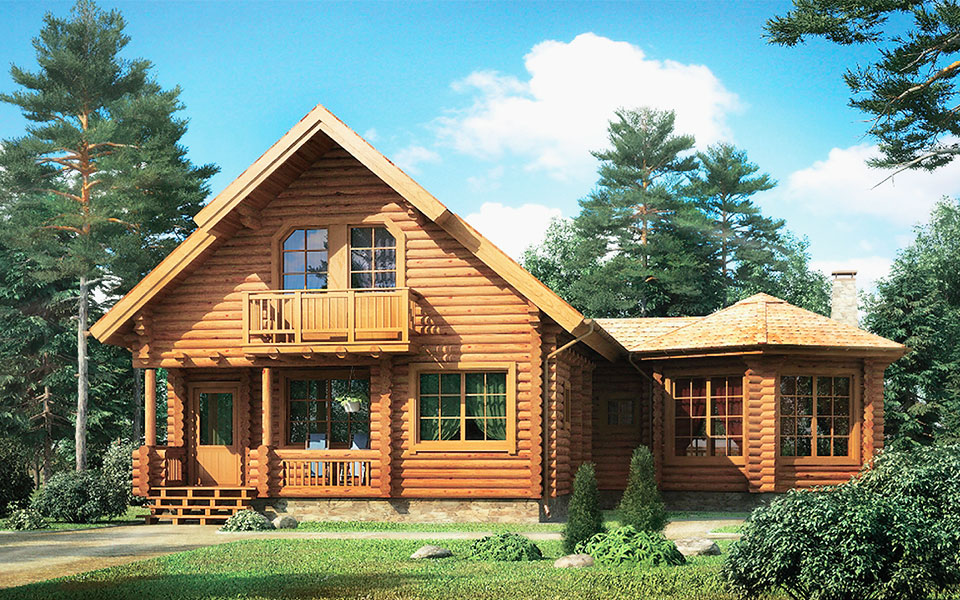
More and more people dream of living in a log house, returning to the origins of their ancestors. Ventilation in a dwelling of this type organizes the outflow of exhaust air and the inflow of oxygen, providing comfortable humidity and temperature. But this process has its own specifics, due to the characteristics of the material that was used to build the house.Therefore, relying only on natural ventilation should not be - it is worth organizing an effective forced system.
Design Features
When starting to design the ventilation of a wooden house, it is important to build on the norms of the current GOSTs and the requirements of the rules and regulations of construction. It is important to accurately determine the power of the air flow, calculate the size of the pipes and correctly select the type of valves. These indicators directly depend on the total area of housing construction, on the number of people who live there permanently and systematically visit.
It is important to take into account the fact of the presence or absence of a stove, boiler and various household appliances. Much depends on the purpose of a particular room or room in the house, its number of storeys. Do not discount the climatic specifics of the area. Do-it-yourself ventilation in a wooden house can be of two main types, which will be discussed later.
Natural air exchange
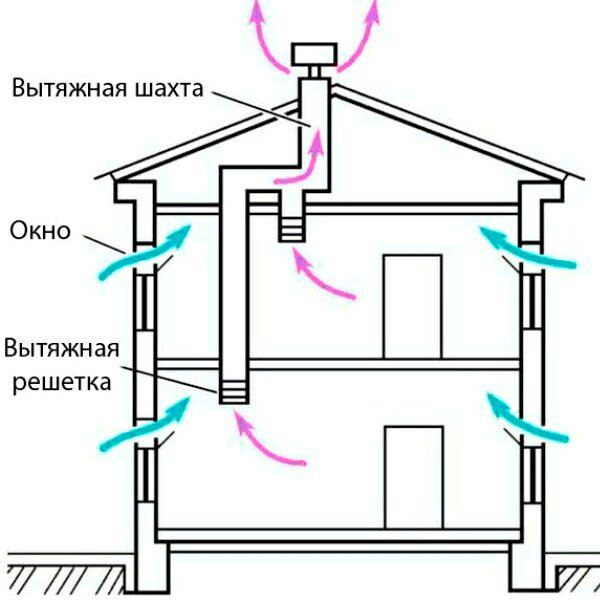
Natural ventilation in a wooden house is understandable - this material breathes. Therefore, earlier in the huts there was no additional ventilation and the air circulated freely. This is because warm air masses rushing upwards create lower pressure when cold currents enter the house from the street.
This happens naturally - when opening windows and doors, through the gaps in them, as well as with the help of a supply unit or due to a valve. A special role in the removal of air masses from the house was assigned to the chimney.The draft in it depends on the temperature difference between the indicators outside and inside the housing construction, on the height of the hood, pipe diameter, atmospheric pressure, wind speed.
Forced ventilation
A ventilation device in a wooden house, which will work forcibly, is necessary due to the fact that:
- there are no gaps in the wall structures;
- many houses are built without stoves, namely the chimney is an effective ventilation channel;
- modern finishing materials - with low air and vapor permeability;
- the way of life of people is different - before, for example, the toilet was outside the house and it was forced to be ventilated by incoming / outgoing several times a day;
- the atmosphere itself was not so polluted.
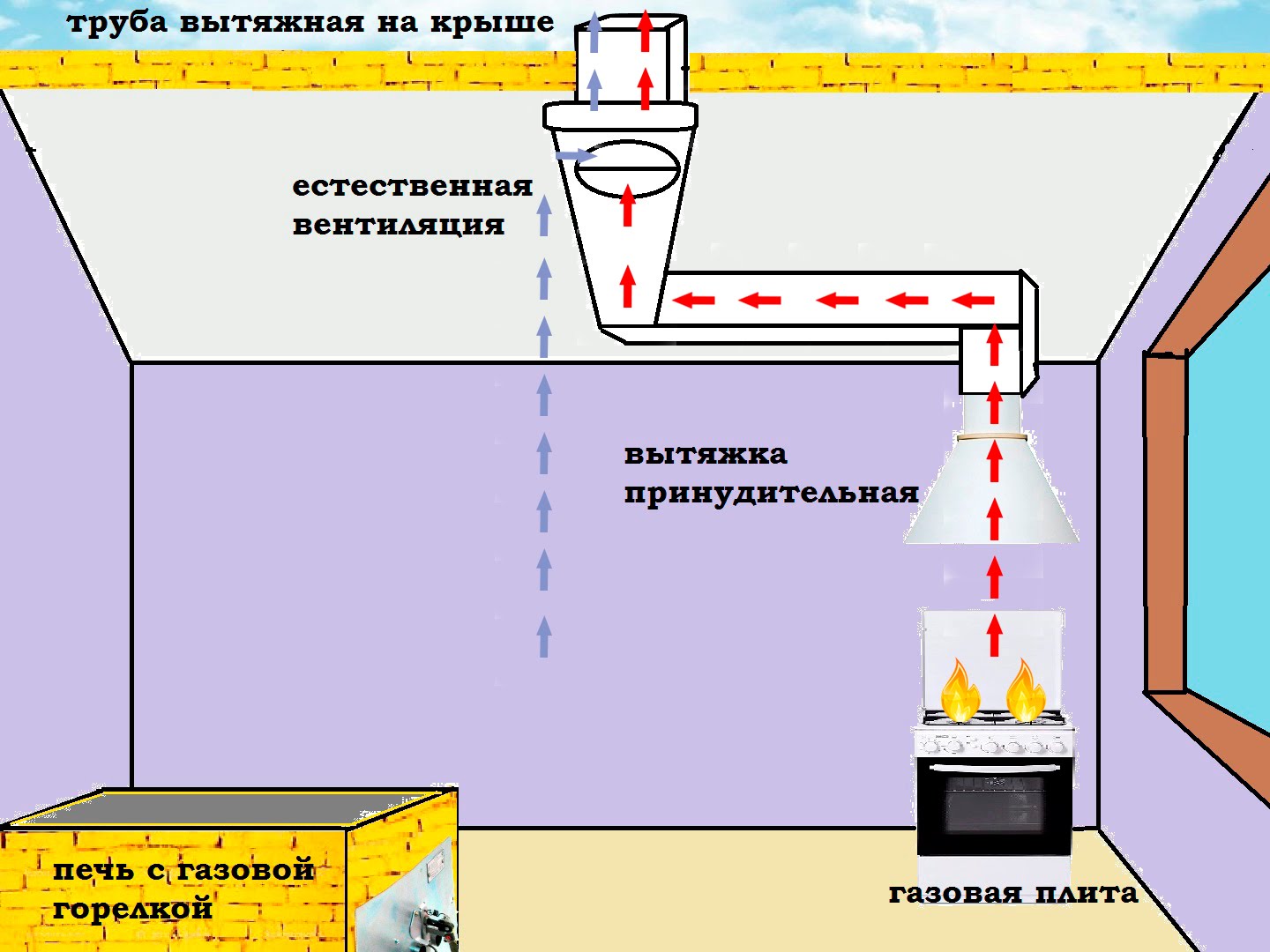
A ventilation device in a wooden house made of glued laminated timber is necessary - infiltration in it is much lower than in a log cabin.
When the ventilation in a log house is disturbed and does not function at full capacity:
- windows fog up;
- various odors accumulate;
- the humidity indicator increases;
- people are uncomfortable
- fungi and mold begin to develop due to the appearance of a beneficial environment.
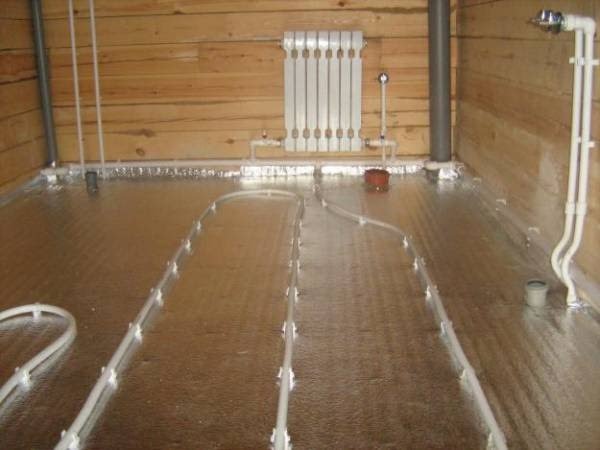
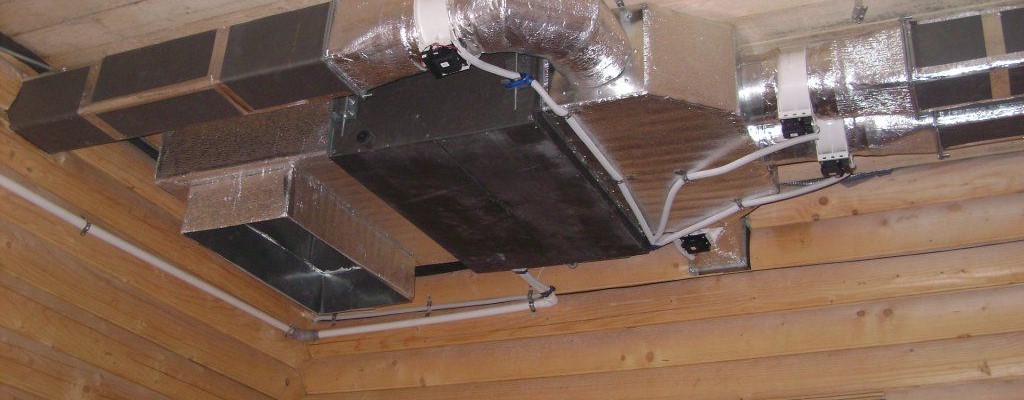
Forced ventilation is more reliable naturally, but needs electricity and constant maintenance. When planning supply ventilation in a private house, they often make a mistake - they mount an exhaust hood with many bends and horizontal parts. Therefore, such a channel does not work well. Installation of ventilation in a wooden house is a simple and inexpensive process.
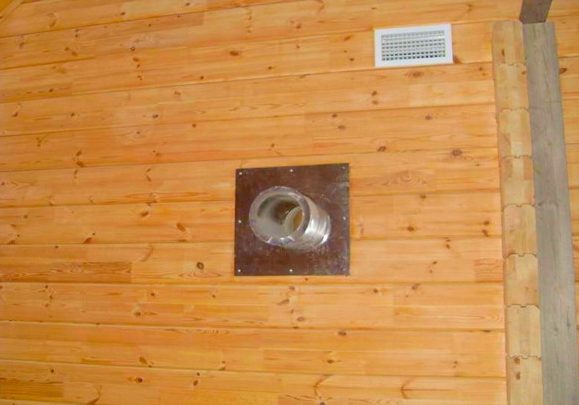
Types of ventilation: its purpose and scope
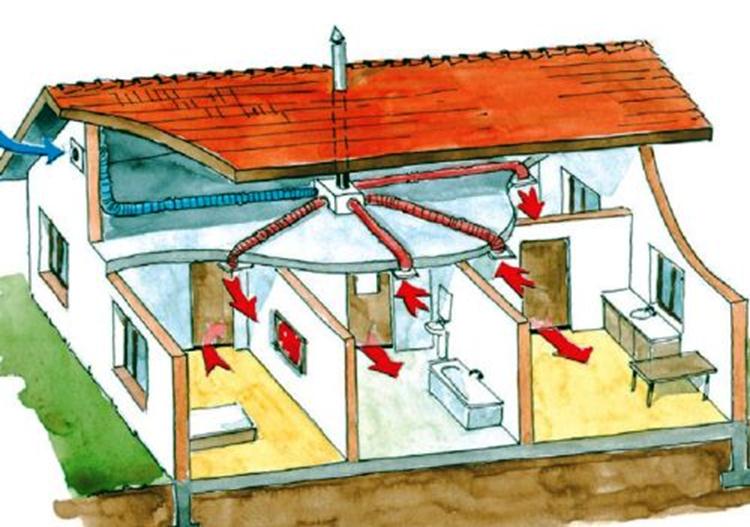
Ventilation in a wooden house with an attic floor, according to the principle of operation, can be exhaust, supply and mixed.It is also important to know how to make ventilation in a wooden house separately for each room, taking into account its purpose. The area of its action can be both general and local.
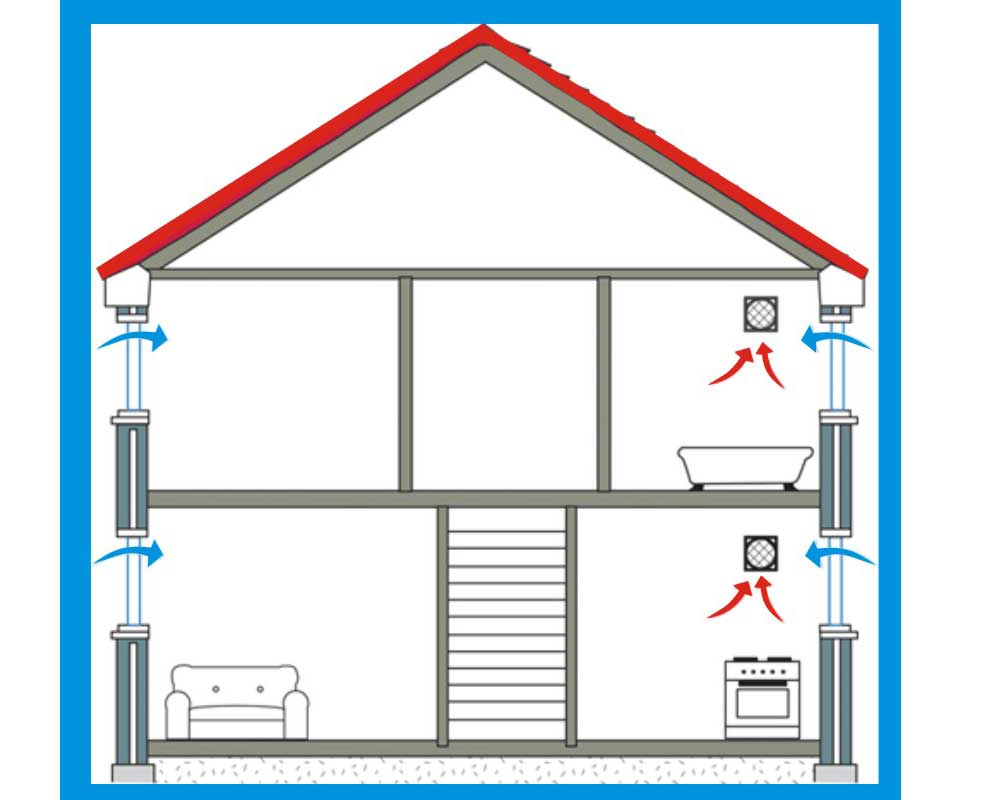
Features of supply channels and supply valves
When building a hood in a wooden house with your own hands, it is important to achieve uniform air exchange. Therefore, it should be evenly distributed over its entire area. Hoods are essential in rooms with high humidity and the presence of unpleasant odors. And a systematic supply of fresh air should be present in all living rooms, even if it is ventilation in a wooden house with an attic floor.
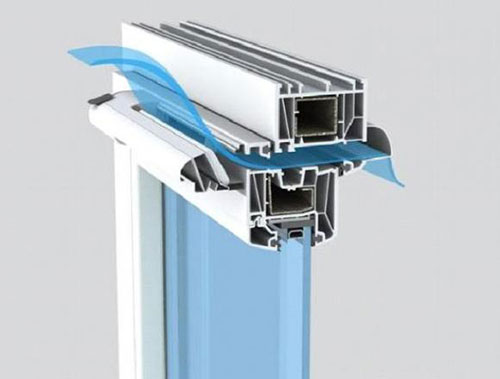
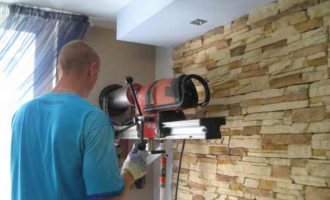
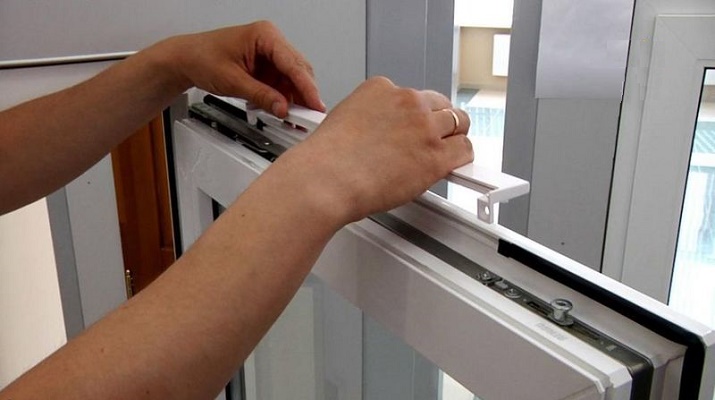
Supply channels are often built into windows. The hood in a wooden house through the wall is considered quite common. In addition, air inflow valves are often provided above the radiators under the heating radiators, under the windowsill - this contributes to air heating. Now more and more popular double-glazed windows are made with micro-ventilation.
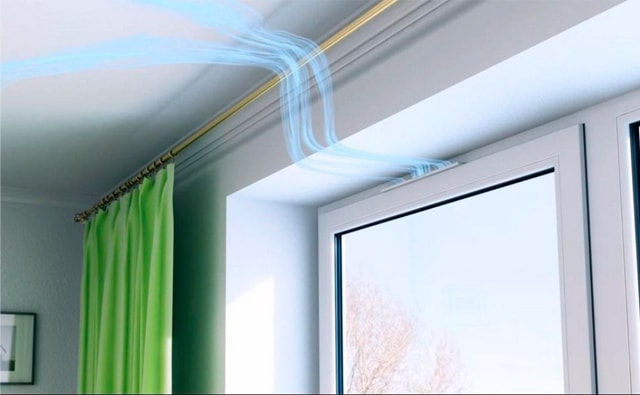
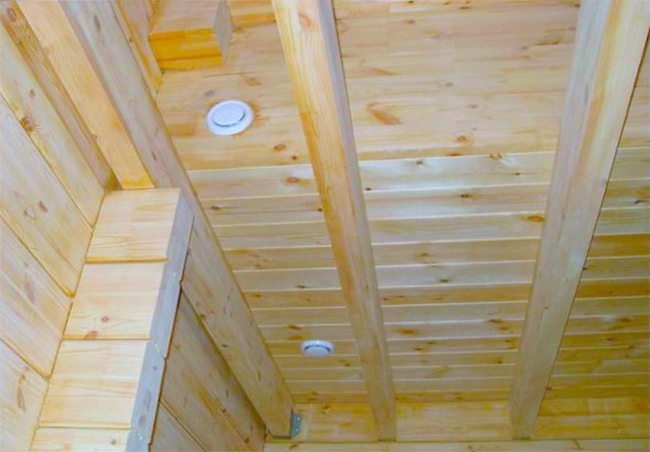
Supply valves are placed in slots that are specially left under the door or make a separate hole in the ceiling.
The specifics of the organization of ventilation in different rooms of the house
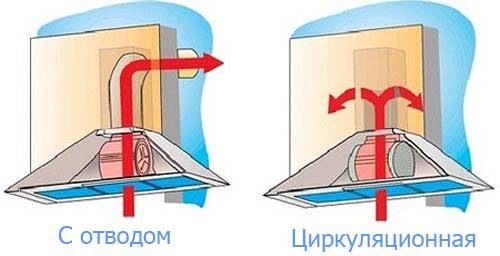
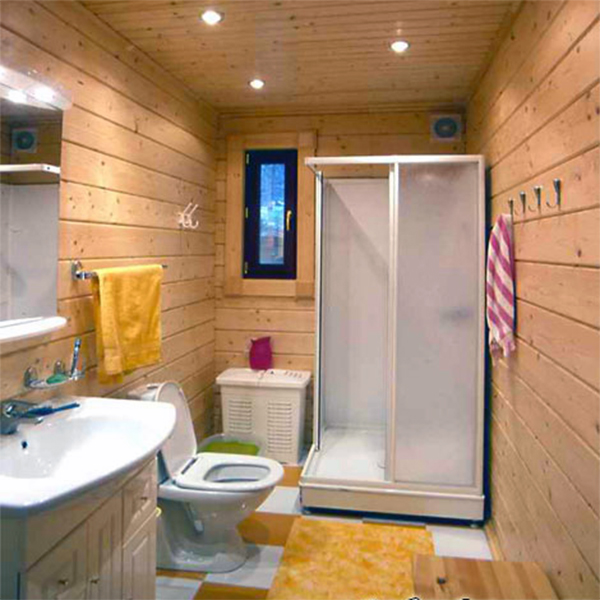
In the kitchen, a local exhaust is mounted above the stove and is usually turned on only when food is being prepared. This saves electricity and does not create additional noise. Ventilation in the bathroom is most often done under the ceiling so that unpleasant odors do not get back into the house.
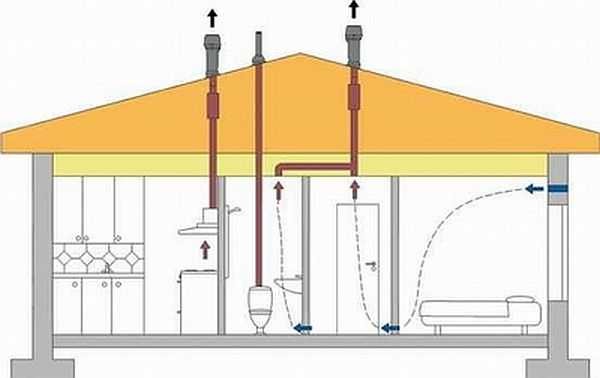
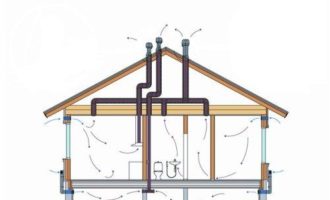
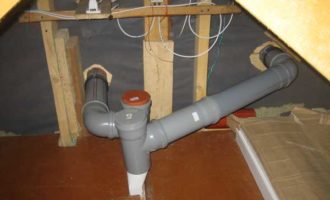
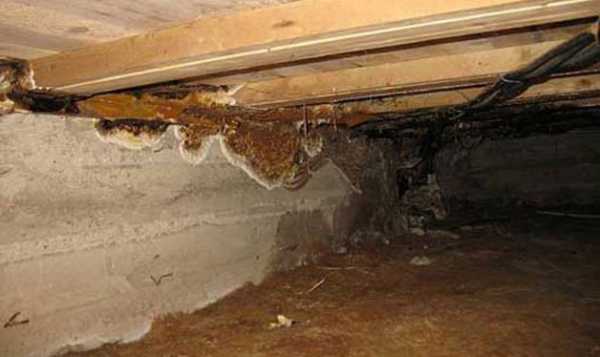
The sewer ventilation riser is connected to the roof hood to provide greater draft and natural air flow.Properly organized ventilation of the bathroom in a wooden house, as well as systematic and sufficient ventilation of the underground, the bathroom, make it possible to exclude the processes of decay of materials, furniture and household items made of natural wood.
Condensation: its negative effect and the fight against it
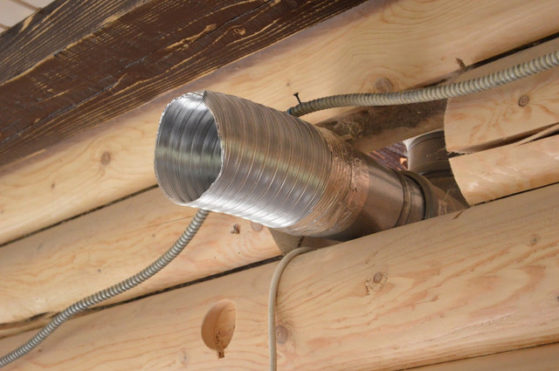
Condensation often accumulates in the bathroom and in the bathroom of wooden housing construction, in the laundry room and in the boiler room due to the temperature difference between the air entering from the outside and what has accumulated inside the room. To minimize its occurrence, the air ducts are thermally insulated - this increases traction. They are placed together with the pipes of the fireplace, stove and boiler in a common decorative box for convenience and aesthetics.
And also pipes can be:
- hide behind stretch / suspended ceilings;
- embed in furniture;
- order a custom design.
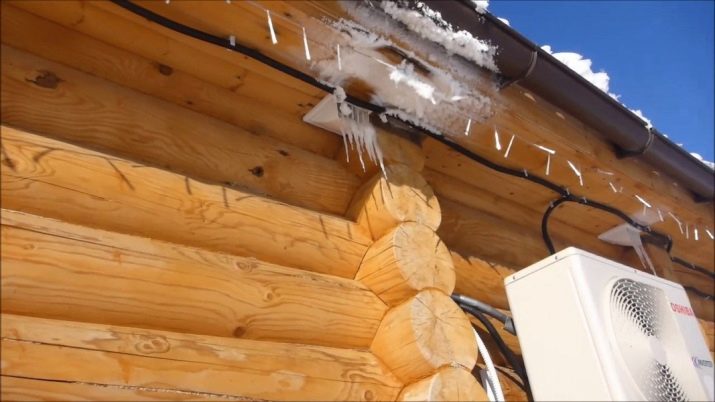
Another option to make effective ventilation in a house made of timber and avoid the appearance of condensate is to provide for the installation of a condensate drain.
Roof ventilation
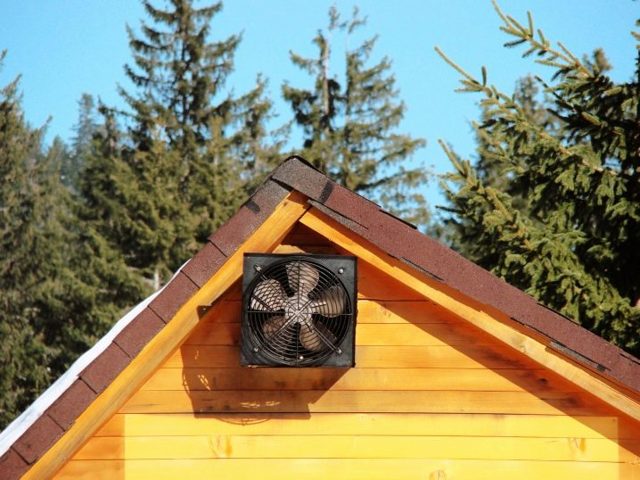
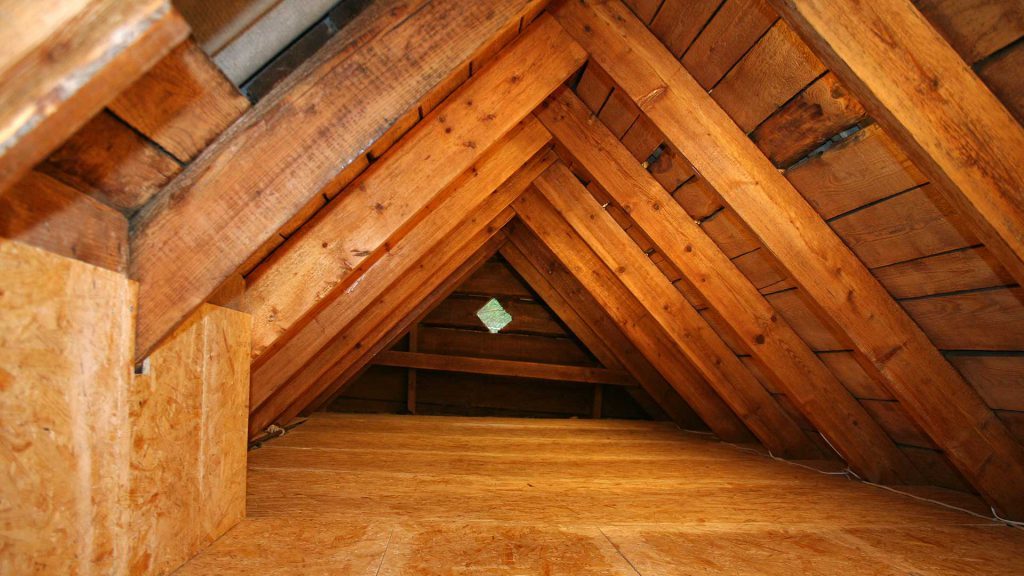
How to make a roof hood competently so that moisture does not collect in the attic? This is all the more important when organizing ventilation in a wooden house with an attic floor. Indeed, in its absence, moisture will accumulate in the rafters, mold will appear over time, the process of decay will develop and this will cause the destruction of wood and the entire structure.
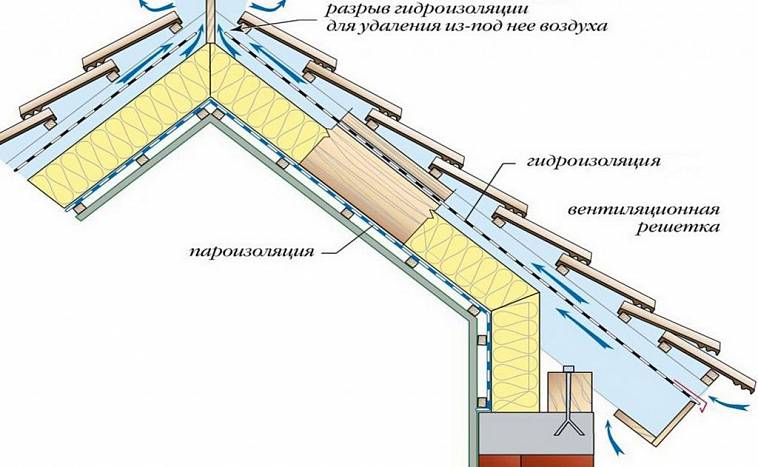
Therefore, when mounting the hood in a wooden house, one should remember about filing overhangs with slots so that fresh air enters through the roof. Additional ventilation elements are provided on the roof plane or on the ridge, which allows you to increase the life of the entire house.
Roof outlets
Ventilation in a house made of glued laminated timber at the exit from the roof is combined into one box. To increase the draft, a deflector is installed above the exhaust pipe. Its tasks are to create air currents, protect the hood from dust and dirt, precipitation, small birds.
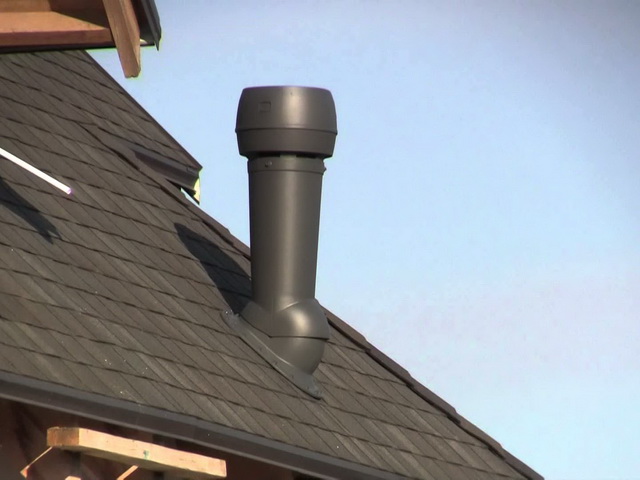
There are special technical requirements for a wooden house regarding the height of the channel in relation to the level of the ridge - they must be strictly observed.
The top of the pipe should be perfectly blown by the wind on each side.
System Function Check
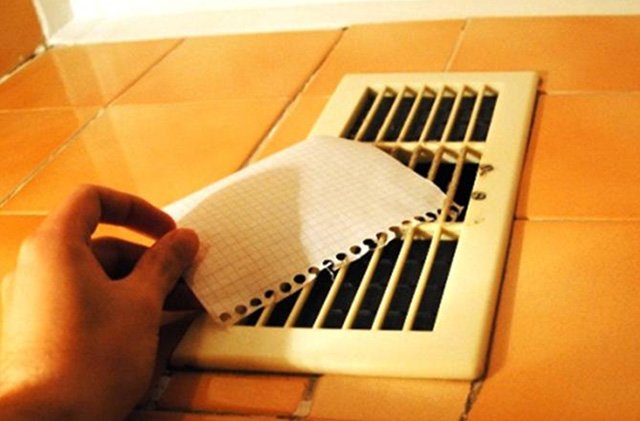
Blockages in the ventilation ducts of a wooden house worsen ventilation by an order of magnitude. It is easy to check the strength of the hood - for example, a paper sheet is applied to the ventilation in the bathroom in a wooden house. If it sticks to the grid, the system is functioning normally. When it falls, the channel is clogged and needs to be cleaned.
The suitability of ventilation in the bathroom and kitchen is checked using an anemometer. Any mistakes made during design or construction may require rework later. Therefore, accurate calculations and strict adherence to all building ventilation standards in a private wooden house are the key to long-term operation of the building and the creation of comfortable living conditions.