- Ventilation in the chicken coop. Experience and mistakes
- Some features of the ventilation device in the chicken coop
- How is the ventilation in my sheds
- Scheme of the ventilation device in the barn
- What is ventilation and what is it?
- What tools and materials will be required
- What material is best to build a barn
- What is the best way to insulate
- Ways to organize ventilation inside the house without losing heat
- Natural exhaust ventilation of the chicken coop
- Forced ventilation system
- Recommendations of poultry farmers
- Types of chicken coop ventilation systems and their installation
- Natural
- Supply and exhaust
- Mechanical
- Manual option
- Auto
- Ventilation in the winter coop
- Features of the construction of a warm chicken coop
- We equip the hood
- Tools and materials
- Step-by-step instruction
- Are there ventilation requirements in the coop?
- How to make a hood in a chicken coop
- Construction rules
- Peculiarities
- Natural ventilation for the chicken coop
- Types of ventilation systems for the chicken coop
- Natural ventilation system
- Supply and exhaust ventilation system
- Forced (electromechanical) ventilation system
Ventilation in the chicken coop. Experience and mistakes
The atmosphere in any barn with animals is always full of smells and moisture. In warm or cool, humid climates, bacteria develop very quickly.Therefore, outbreaks of diseases in poultry are possible in winter in chicken coops with poor ventilation. Aside from this, ammonia and carbon dioxide do not add health to your pets. The chicken coop must be ventilated.
Some features of the ventilation device in the chicken coop
We built a nice warm barn with euro windows and doors. Naturally, for the winter in the battle for heat, everyone was insulated and tried to close all the cracks in the roof as much as possible. For ventilation, a 110 sewer pipe was chosen, since the stores have all the parts necessary for ventilation.
Everything was fine until the strong January frosts broke out, having come to the chicken coop in the morning, I found half-dead birds on the floor. She almost died with them: during the night they breathed out all the oxygen and simply died of suffocation, as the ice tightly caulked the ventilation pipe. Of course, I immediately uncorked all the windows and doors, dragged the half-corpses of birds out into the street and departed with them.
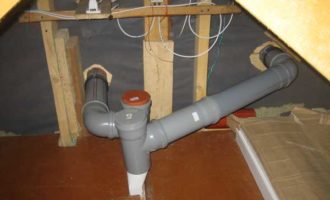
The pipe that let us down. passive extraction.
In an emergency, we removed the pipe, leaving the hole in the chicken coop completely open. And they began to study the question - how to make ventilation in the chicken coop efficient without heat loss. Indeed, in addition to poor air circulation, our hood practically did not cope with humidity.
Before we succeeded, we burned several domestic duct and outdoor fans.
How is the ventilation in my sheds
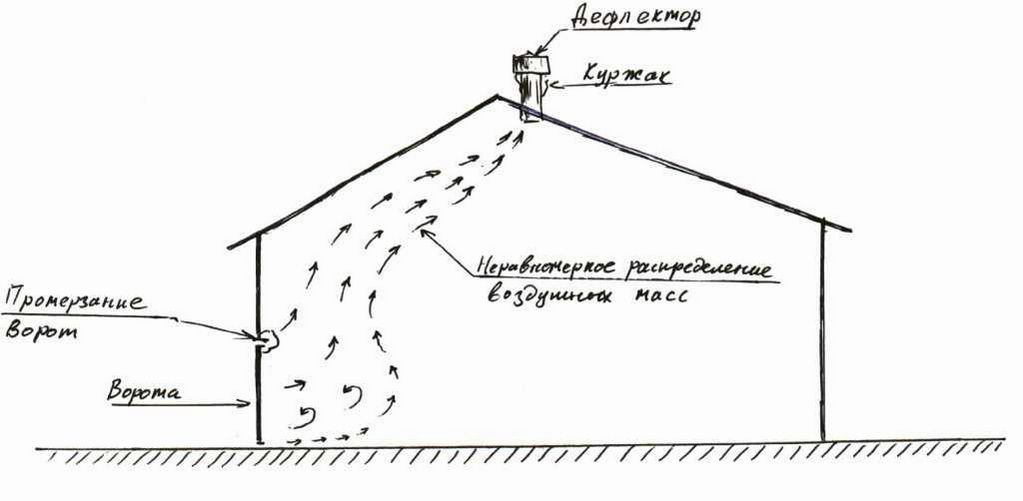
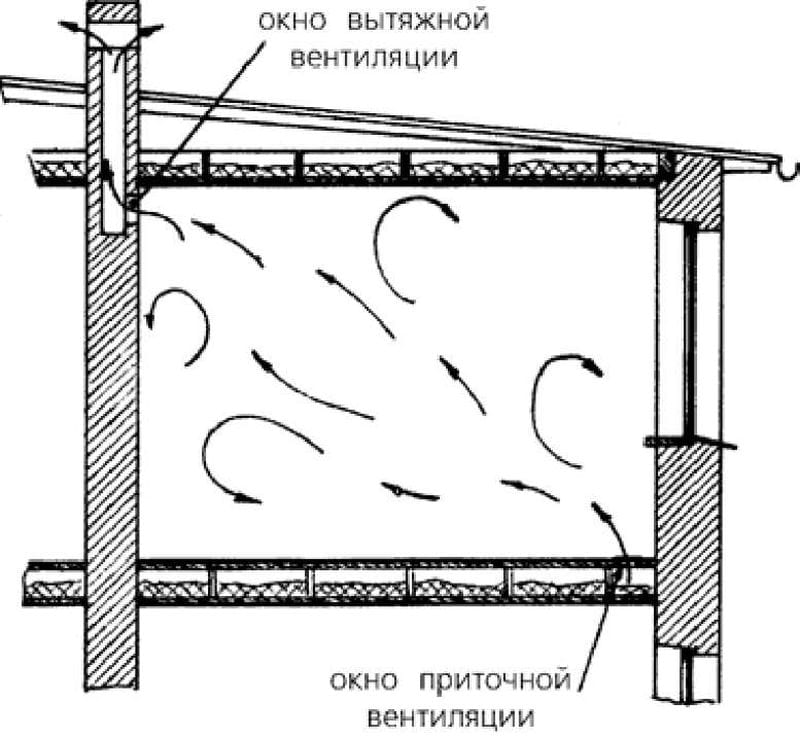
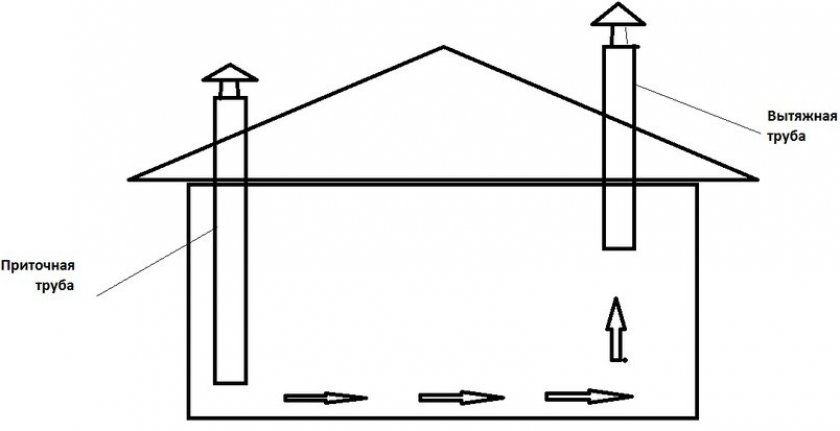
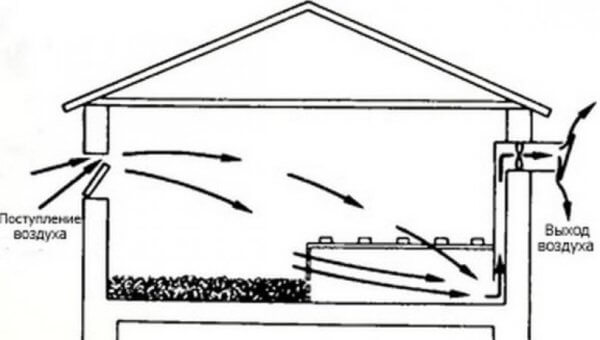
With a passive ventilation device, the supply is made from below, and the hood at the top of the room. In addition, they try to arrange ventilation holes diagonally to each other or opposite.
Everything is done in the chicken coop in the same way, except for one thing: the heavy ammonia-saturated air is at the bottom, and the cold air coming down precipitates the ammonia with a fog.
This phenomenon is clearly visible as soon as you open the chicken coop in winter - the clouds of fog below are "clouds" of ammonia.
Therefore, when designing ventilation, it is necessary to extract “dirty” air from below the chicken coop. Naturally, in order for there to be draft, the inlet must be located diagonally to the exhaust opening (at the top?). And this is exactly the antiphase of natural ventilation. A fan or any other forced flow device solves the problem.
This is what we do in our sheds:
Exhaust outlet from the duct fan. below, a column of ice is constantly growing from the moisture removed from the barn. The hood is inside the barn.
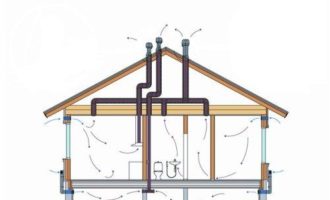
Scheme of the ventilation device in the barn
The fan power is selected according to the formula Volume of the room * by 4. (It is written on the fan in cubic meters). Be sure to clean the pipes, or put a filter, but it must also be cleaned at least once every two weeks.
Poor ventilation in the barn is not only moist smelling air, it is primarily a pleasant atmosphere for the reproduction of various pathogens. For example, snot, foam from the eyes is one of the signs of mycoplasmosis (contagious rhinitis of turkeys). Remove excess moisture and the risk of infection will decrease. And you can also put a channel ultraviolet disinfectant. But more on that in another article.
Subscribe to the KrestyanochkaRF channel and you will learn a lot of interesting things about the device of your personal subsidiary plot.
What is ventilation and what is it?
Ventilation of the room is designed to provide the necessary air exchange, that is, stagnant air should be replaced by clean, fresh oxygen.
Reasons why ventilation is necessary in a chicken coop:
- As already mentioned, bird droppings are capable of releasing ammonia. An unpleasant smell in the room is only half the trouble. Vapors of this gas can harm the body of a chicken, causing severe poisoning. Yes, and the owner of the poultry house may have health problems after a long stay in an unventilated room. Most ammonia accumulates in winter, when the owners close up all the cracks, keeping warm.
- Ventilation of the chicken coop allows you to adjust the level of humidity. Excessively dry air is harmful to the bird, as well as too humid. The highest concentration of humidity is observed in the cold, when there is an intensive release of moisture from the litter, as well as the evaporation of water from the drinkers. Dryness in the room occurs during the summer heat. The ventilation system is able to adjust the optimal climate balance in the chicken coop, which has a very beneficial effect on the well-being of the bird.
To achieve the best results in the operation of the ventilation system, you need to remember a few important rules.
- The amount of oxygen must be sufficient for each bird. The larger the number of chickens, the more clean air will be needed. You can get an excellent result only by competent selection of equipment for mounting the hood.
- The ventilation process must be necessarily regulated so that there is no danger of freezing of the bird. To do this, it is enough to provide all air ducts with dampers, which allow air to flow in small portions.
- The hood should not only change the quality of the air in the chicken coop, but at the same time save heat. In cold weather, the supply air ducts are usually covered with a fine mesh. Well, during severe frosts, the air supply is completely blocked.
What tools and materials will be required
To build a frame chicken coop for the winter with your own hands, you will need the following materials and tools:
- cement;
- sand;
- gravel;
- water;
- wooden boards and beams;
- insulation (often use lining made of wood);
- tow;
- roof slate;
- glass;
- Rabitz;
- ruberoid;
- door hinges, door lock;
- glass for windows;
- plastic pipes for the ventilation system;
- hammer, nails;
- bolts, nuts;
- self-tapping screws;
- anchors;
- saw;
- level;
- screwdriver;
- pliers.
What material is best to build a barn
Along with traditional wood, which holds heat well, is environmentally friendly and durable, other materials are also used to build a winter chicken coop:
- foam concrete;
- brick;
- cinder block;
- shell rock.
What is the best way to insulate
The winter chicken coop must be made warm, especially in the climatic conditions of the North-West, the Urals and Siberia. For this, the following materials are used:
- mineral wool;
- polyurethane foam;
- Styrofoam;
- sawdust, hay, manure (as flooring).
Ways to organize ventilation inside the house without losing heat
To ensure stable ventilation without heat loss, it is necessary to determine the method of "distillation" of air in the house. The hood in the chicken coop is built according to one of three principles:
- natural;
- mechanical;
- combined.
Each of the possible options has certain advantages and disadvantages, as well as restrictions on the technique of use (by the number of birds, the size of the room, and other parameters).
Natural exhaust ventilation of the chicken coop
The natural way of ventilation means the absence of artificially created systems for the passage of air. The maximum that is usually used in this case is pipes, plugs (especially for the winter). You can use such a scheme only at home (part-time farms, summer cottages).
natural ventilation
Important! The use of the natural method is possible with a small number of birds, a spacious room. Otherwise, timely replacement of the exhaust air with “fresh” will not work.
Often in the chicken coop they put a do-it-yourself hood made of plastic pipes
The location of the holes is especially important - the presence of drafts that occur if the diameter of the installed pipes is incorrectly calculated
Forced ventilation system
Forced or mechanical ventilation means the installation of a system of additional devices, mechanisms for artificial air pumping in the room. Varieties of schemes:
- supply;
- exhaust;
- combined.
Ventilation in an industrial chicken coop
It is especially important to consider the scheme for ventilation in the chicken coop in winter. The forced method is used in industrial production or on large farms where the number of birds exceeds a hundred.
Otherwise, the construction of a poultry house with additional equipment is impractical.
The combined system implies a combination of the principles of natural and forced ventilation. Usually, the first method is used for exhaust air mass (through holes in the roof, upper parts of the walls). The second is for supplying fresh air using pumping circuits of the supply or exhaust principle. Rarely do the opposite.

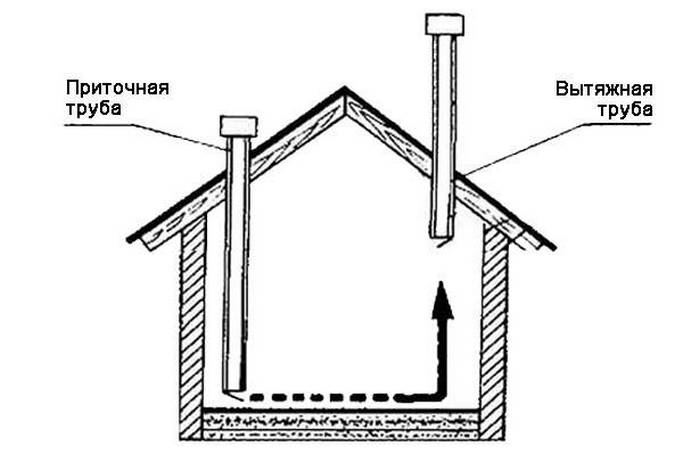
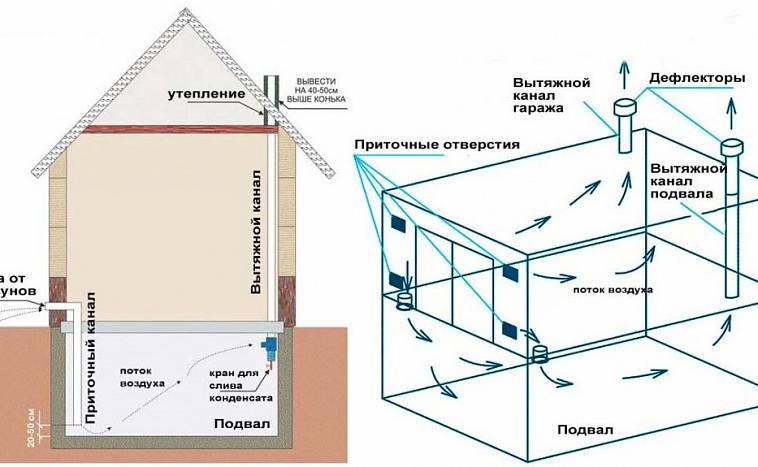
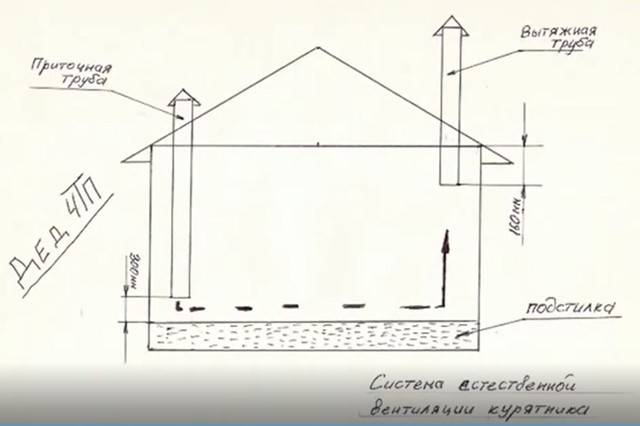
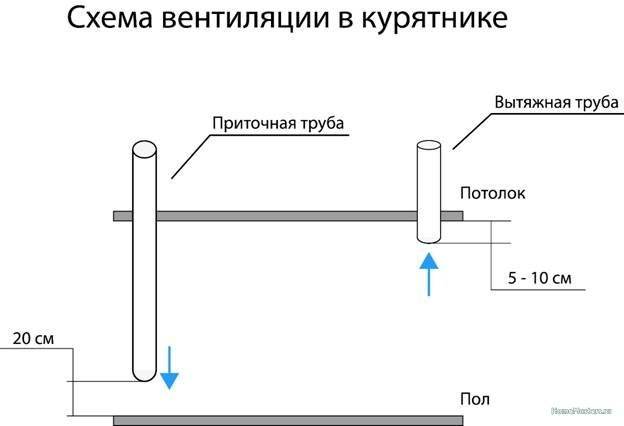


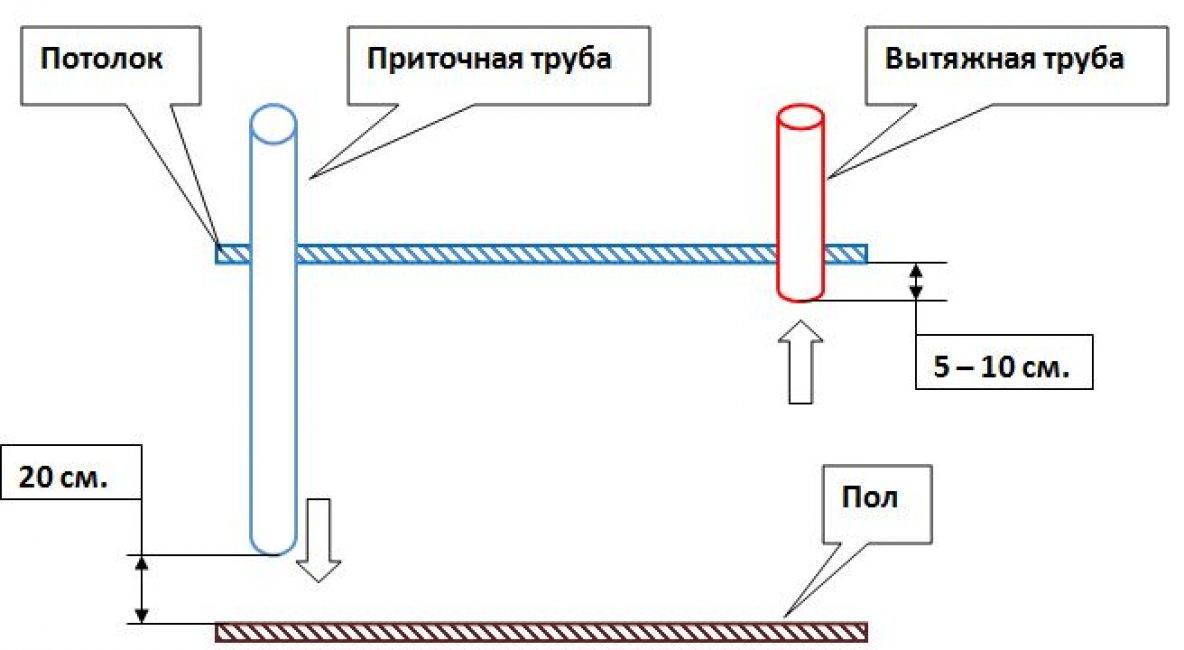
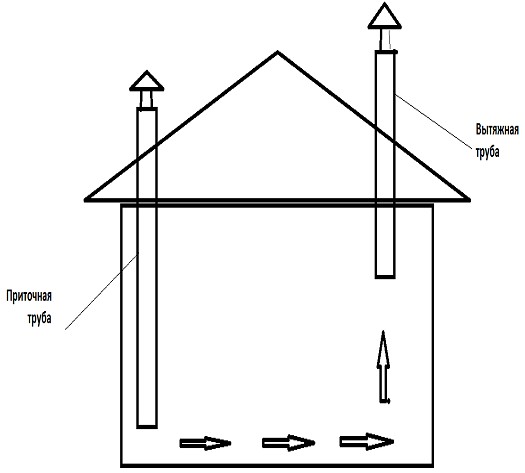
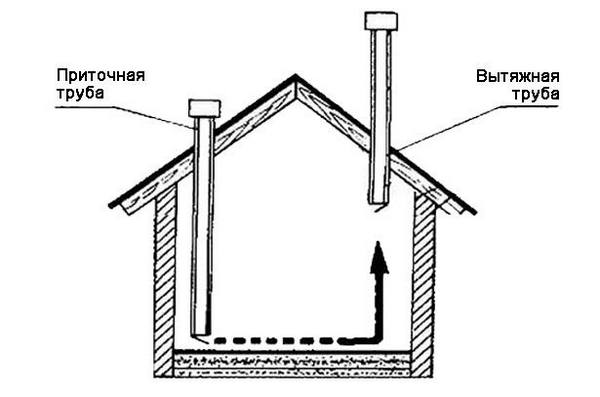
Note! Special standards, sizes and layouts of the device are designed to meet the needs of birds depending on age. To avoid drafts, insufficient ventilation or other problems, it is recommended to be guided by the developed drawings
In large industries, new schemes are used - an electromechanical ventilation system. Install software that independently determines the operating mode of plugs and pumps at the outlets - just specify the necessary parameters (temperature, humidity, others). It is necessary to ensure a stable flow of electricity, install uninterruptible power supplies.
Recommendations of poultry farmers
As an inexperienced poultry farmer, there is always the possibility of making a mistake when installing ventilation equipment. If the chicken coop cools too quickly, or vice versa, there is no ventilation, then the system was not thought out and installed correctly.
At the planning stage, it is necessary to correctly position the pipes so that there is an exchange of air inside the room.
You can evaluate the efficiency of the ventilation system as follows: go into the house and stay in it for a while. If during this period the state of health is normal, then the ventilation system works well. If this is not the case, then it will be necessary to make improvements to the design.
When equipping the ventilation system with fans, it is recommended to use sensors that will save energy. This option would also be more appropriate in poultry houses using fermentation litter, as bacteria generate a significant amount of heat: elevated temperatures can adversely affect the health of the bird.
Based on personal experience and mistakes of poultry farmers, problems in the installation of the ventilation system are evidenced by:
- ventilation holes are located on adjacent walls. With this arrangement, there is no air exchange in the opposite part of the room, since the air is not able to circulate at a right angle. In a rectangular chicken coop, it will be correct to install ventilation holes on sides with a shorter length opposite each other;
- noise during fan operation. The functioning of the devices must be checked before installation, because due to increased noise in chickens, egg production may decrease or even stop;
- low reliability of the design. Equipping a large poultry house with a ventilation system, metal air ducts are fixed to the ceiling. Since chicken coops are often built of wood, the material can rot relatively quickly, causing the ducts to fall. Based on this, it is desirable to carry out the installation of metal structures to the truss system;
- if metal pipes are used for ventilation, they must be thermally insulated in winter. If this is not done, the chicken coop will be very cold even with the valves closed, and the constant formation of condensate can cut off the air supply.
In order for the hood in the chicken coop to work efficiently in winter, you should follow simple recommendations:
- periodically clean the premises from litter, dirty water, leftover food. A clean chicken coop is the key to a healthy bird;
- check the house for the presence of rodents and take measures to exterminate them. Extraneous living creatures can be the cause of not only a decrease in egg production, but also the appearance of diseases in chickens.
Having considered the purpose, possible options, as well as step-by-step instructions on how to properly ventilate a chicken coop in winter with your own hands with diagrams and photo examples, everyone will be able to equip their own poultry house without significant time and financial costs. Only with proper ventilation and maintaining a comfortable microclimate can high egg production and healthy offspring be obtained.
Types of chicken coop ventilation systems and their installation
There are several ways to equip a poultry house with ventilation:
- Natural. This design works due to the movement of air due to the temperature difference between inside and outside the room.
- Forced. In this case, the system operates due to the operation of the fans.
Let us consider in more detail the schemes, the principle of the device and installation of ventilation with our own hands in the chicken coop in winter.
Natural
This ventilation option will be convenient for chicken coops with a small number of chickens due to the ease of installation. The construction of the system does not require any financial costs and additional devices, such as a fan, filter, etc. For the manufacture of the system in the wall, you need to provide a small ventilation window. It is best to place it above the perches. Thus, when the door is open, the air will go out the window.
To be able to regulate the air flow, the ventilation window is made in the form of a window.
However, this method has a significant drawback: in winter, a heater will have to be installed in the chicken coop, and in summer there will be no ventilation as such due to the lack of temperature difference between the street and the house.
Supply and exhaust
If you listen to the opinion of experienced poultry farmers, ventilation of the supply and exhaust type is the most effective in operation. Such a system can be used in winter. In order for such a ventilation scheme to work without electricity and drafts, it is recommended to watch a video on this topic.
In contrast to the option discussed above, the supply and exhaust ventilation is structurally provided with two pipes: for the inflow and exhaust of air.
This method has several significant advantages:
- work does not require human participation;
- no electricity costs;
- The system is quiet and does its job perfectly.
To make this version of the hood you will need:
- plastic pipes with a diameter of 150 mm and a length of at least 2 m;
- jigsaw;
- pipe plugs;
- 2 through nodes;
- caps for pipes.
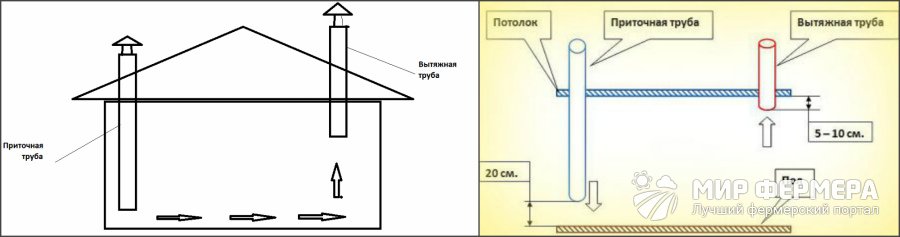
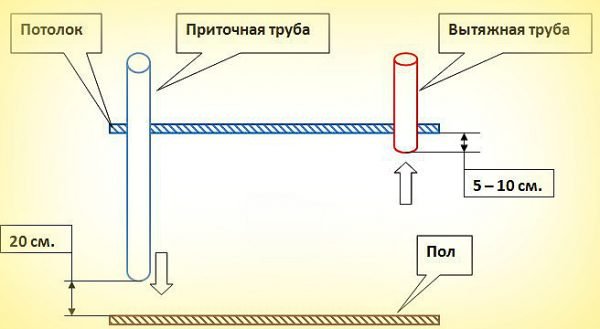
To establish ventilation, measure the height of the house. Then 2 holes are made in the ceiling according to the diameter of the air ducts. The exhaust pipe is mounted near perches for better removal of ammonia vapors. The installation is carried out under the ceiling and taken out into the street so that the pipe protrudes 1.5 m in height.



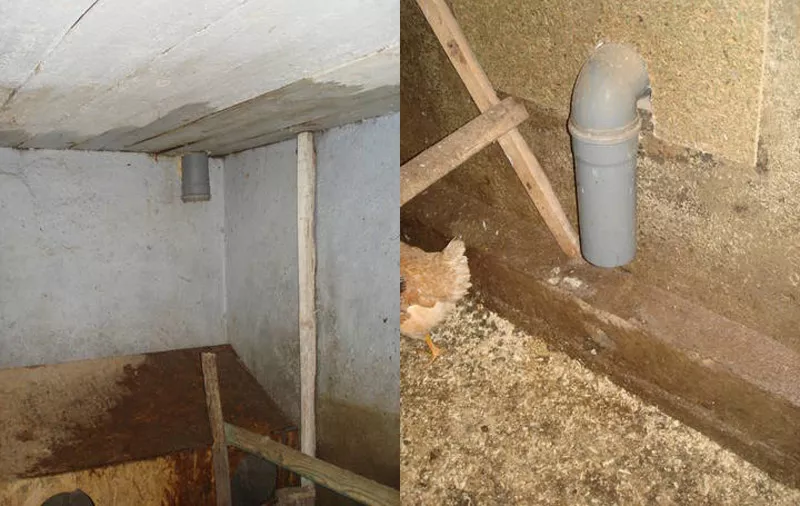
The air supply pipe is installed at a height of 40 cm above the roof and lowered almost to the floor. The distance between the floor and the pipe should be about 40 cm.
In order for the structure to be airtight, passage nodes are used, and the pipes themselves are fixed to the roof with stretch marks. Air ducts protect from precipitation, and the plugs are adapted as dampers.
Mechanical
In most cases, such a system is equipped with large poultry houses, in which the supply and exhaust system will simply be inefficient. Ventilation works by analogy with the previous version, with the only difference being that fans are used. The use of fans will incur energy costs, which must be taken into account in advance. If there is a power outage, there will be no ventilation and air stagnation will occur.
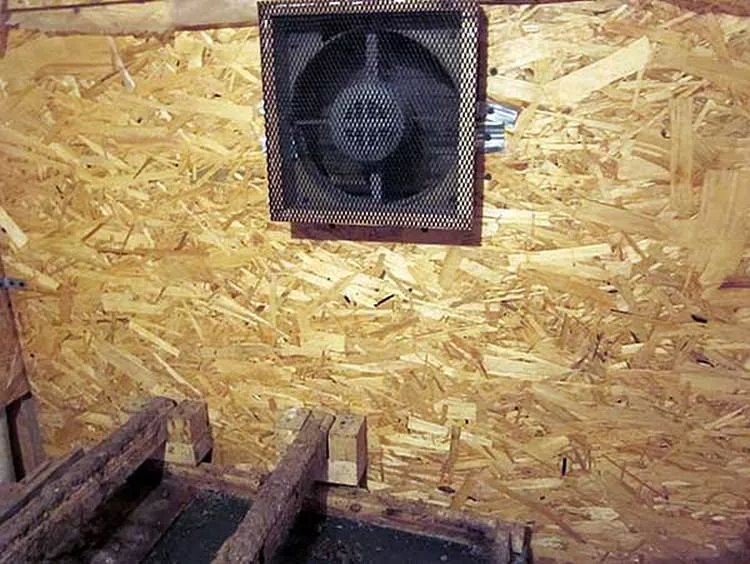
The principle of operation of mechanical ventilation is quite simple and comes down to installing a fan in a window, wall or exhaust pipe. This air exchange option has the following advantages:
- a large chicken coop can be provided with fresh air;
- the operation of the system is not affected by the weather;
- when installing climate control, human participation in the operation of the system is not required.
Manual option
For installation, a fan is used, which is installed in the exhaust pipe. Then lay the wiring and fix the switch near the door.
Wiring must be carefully insulated, as the humidity in the house is always slightly high.
The peculiarity of this version of the hood is that its work is controlled by a person. Depending on the microclimate in the room, the device is turned on for 2-3 hours a day.
Auto
This ventilation option does not require human intervention. Despite the fact that the system is of a mechanical type, manual control is completely excluded.
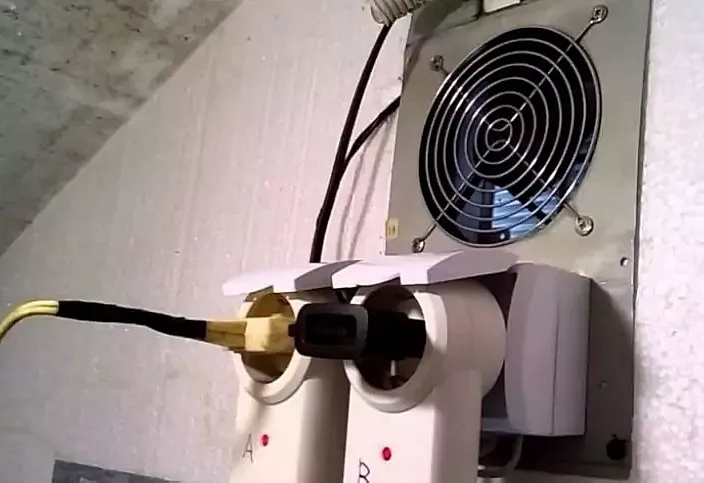
Installation consists of the following steps:
- Air supply and exhaust are made from two plastic pipes with different diameters and lengths according to the area of the poultry house.
- Lay the wiring to the fan.If a supply air device is installed, then the fan is installed in the supply pipe.
- Attach the switch to the wall.
- Sensors are used to control the system. When the desired value of humidity and temperature is reached, the automation is activated and the system turns off.
Ventilation in the winter coop
To maintain a normal microclimate in the chicken coop, ventilation is necessary. This is usually a plastic pipe that is located under the ceiling, passes through the roof and sticks out above it at a height of about a meter. With such a difference, natural traction may suffice. The inflow usually occurs through the cracks, but if you have sealed everything up, you can mount a piece of plastic pipe into the wall just above the floor level. From the side of the room, the pipe is closed with a metal mesh, and dampers are made that regulate the intensity of air movement.
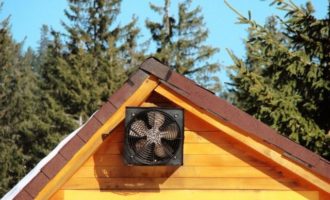
Another option without a chimney on the roof is to embed a small exhaust fan directly into the wall. But such a system works forcibly and in the presence of electricity. The pipe is non-volatile))
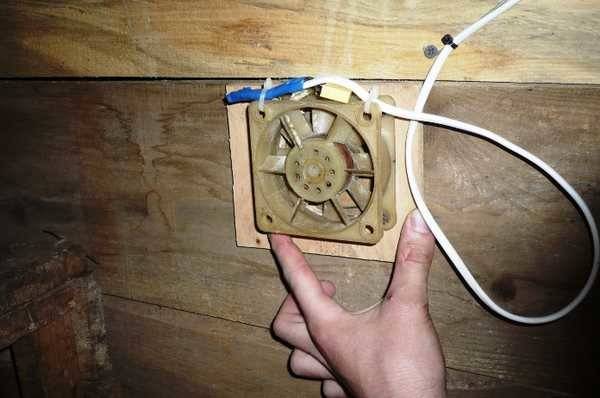
Fan in the chicken coop
The optimal humidity in the chicken coop is about 60-70%. Deviations in either direction are undesirable. Increasing the humidity is not very difficult - put more water, but with a decrease, problems can arise. The IR lamp dries the condensate very well: it dries drops on the walls and ceiling in a couple of hours. So at least one is needed to regulate humidity.
Features of the construction of a warm chicken coop
If a summer chicken coop can be made in a simple dugout or barn, then a winter one is a capital building with a ventilation, heating and lighting system. When designing, several requirements are taken into account:
The area should not be too large.In winter, chickens huddle together and lose activity, so 1 m2 is enough for 3-4 individuals. The place should be on a hill to avoid excess moisture
Inside, the optimum temperature of +12–18 ° C should be maintained even in cold weather, so it is important to choose the right construction material and insulate the walls, floor and roof. Windows must be oriented to the south (the walking area is also located there), and doors to the north
We equip the hood
If the installation of pipes does not cause difficulties, then sometimes questions arise with the equipment of a mechanical hood. Let's see how to install it correctly.
Tools and materials
To make mechanical ventilation with your own hands, you will need the following tools:
- household exhaust fan;
- cable 2x2.5;
- switch;
- insulating tape;
- pliers.
Step-by-step instruction
- First you need to decide on the place where you want to make the hood. With equal efficiency, it can be placed in a window, wall or ceiling of a barn. The easiest way is the window. We take out the glass from the opening and try on the fan. You can see another version of the do-it-yourself hood equipment in the video at the end of the article.
-
By the size of the glass, we cut out a suitable piece of plywood or OSB. We mark a hole in it for the fan, cut it out and install it in the window frame. Fasten with screws.
- We insert the fan into the hole and fix it with our own hands in an accessible way (depending on its design). Using a cable and pliers, we connect the fan to the mains and to the switch. We bring the switch outside the barn and place it in a place convenient for you. We carefully isolate the places of crimping the wires.
The ventilation installed in this way is turned on for a couple of hours a day.This mode of operation will be quite enough.
Are there ventilation requirements in the coop?
For an efficient device ventilation system in the poultry house it is important to know some nuances:
The volumes of injected fresh air are calculated according to the number of birds. The more birds in the chicken coop, the more air masses need to be provided.
To do this, it is important to correctly select the cross section of the air-conducting channels and determine their optimal number.
Set up an adjustable system so that the birds do not freeze during the cold season. For this purpose, dampers are installed on the air ducts, which provide portioned air supply in winter.
With effective air exchange of the room, it is important to reduce its heat loss.
To do this, fine-mesh nets are mounted on the supply channels in the cold season. During severe cold weather, the supply air ducts are completely closed.

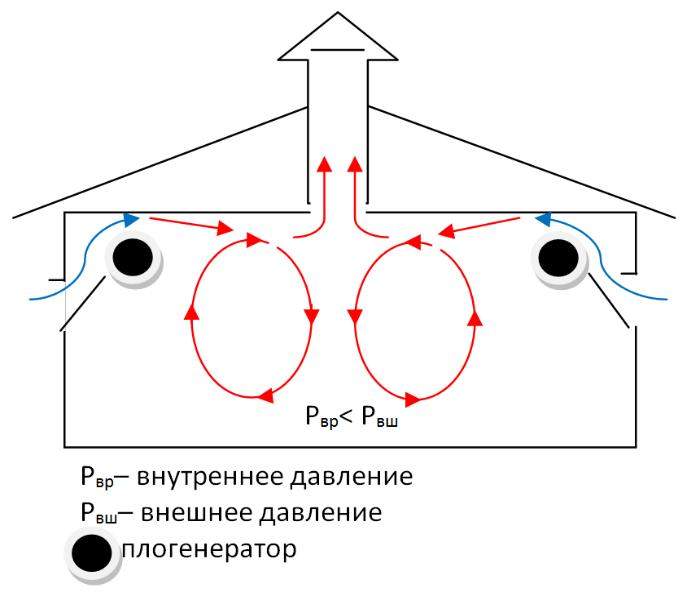


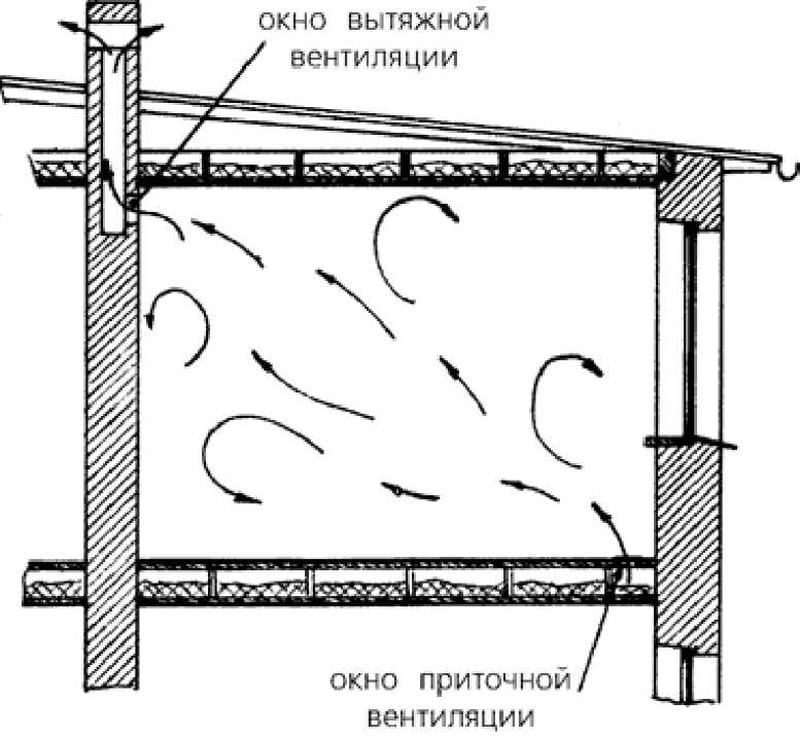
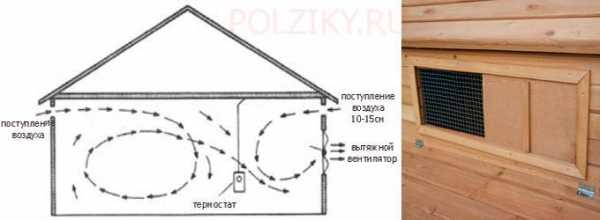

It is also important to protect the house from drafts, because birds are very sensitive to them. It is equally important to periodically control rodents, which are a source of infection and frighten birds.
To check the health and effectiveness of the ventilation system in the chicken coop, it is enough for a person to enter the room for a few minutes. If after this time his head does not start to hurt, there is no feeling of lack of fresh air, then the ventilation works effectively.
For the inhabitants of the chicken coop, you need to create the following comfortable conditions:
- In winter, the air temperature in the zone with adult birds should not fall below 16°C. For young animals, the optimum temperature is 28 ° C.
- Humidity in the range of 60-80%.
- In summer, the speed of circulation of air masses cannot be less than 0.8 m/s, and in winter - 0.5 m/s.If the indicators are higher, drafts will appear.
How to make a hood in a chicken coop
Chickens are very sensitive to the microclimate of the room in which they are kept.
Therefore, it is important to ensure not only a stable temperature, but also a constant supply of oxygen.
The temperature regime should be paid attention to for several reasons:
- If it is lowered, the birds use the food they eat not for the formation of eggs, but for increasing body weight, and egg production decreases;
- At an elevated level, the weight of chickens decreases, their egg productivity decreases and the quality of the shell deteriorates.
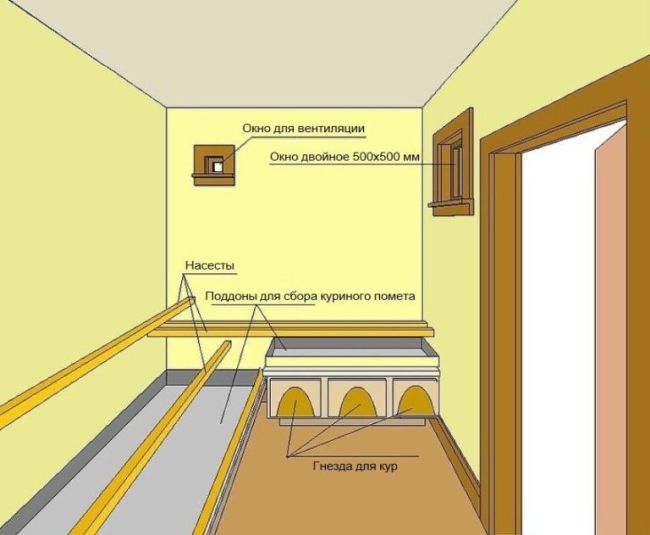
Providing an optimal microclimate plays an important role. To do this, it is necessary to conveniently place perches and nests. Examples of poultry house interior equipment are shown in Figure 1.
The behavior of birds will help determine the optimal temperature regime:
- If it is normal, the hens are mobile, evenly placed in the house, eat and drink well;
- With a reduced indicator, chickens begin to crowd and spread their feathers, as a result of which weak individuals may die;
- If the room is hot, the birds refuse to feed, drink a lot, open their beaks, fluff their feathers and mostly lie down.
The easiest way to ensure the flow of fresh air is through conventional vents. However, it should be borne in mind that in winter, cold can penetrate through them, so the windows must be additionally insulated.
Construction rules
If you want to ensure a constant supply of oxygen to your house during the winter, you need to know what requirements the system must meet.
Figure 1. Ensuring the optimal microclimate of the poultry house: equipping perches, nests and feeders
In general, the ventilation of the room is carried out according to the following rules:
- Sufficient supply of fresh air: the more birds are kept in the house, the more powerful the system should be.
- Maintaining heat indoors also plays an important role, especially during the cold season. Therefore, it is recommended to install grilles on exhaust pipes that will let oxygen through, but prevent heat loss.
The finished system must be positioned so that birds cannot contaminate the pipes with food residues or droppings, and the pipes themselves must be freely accessible to humans for periodic cleaning and disinfection.
Peculiarities
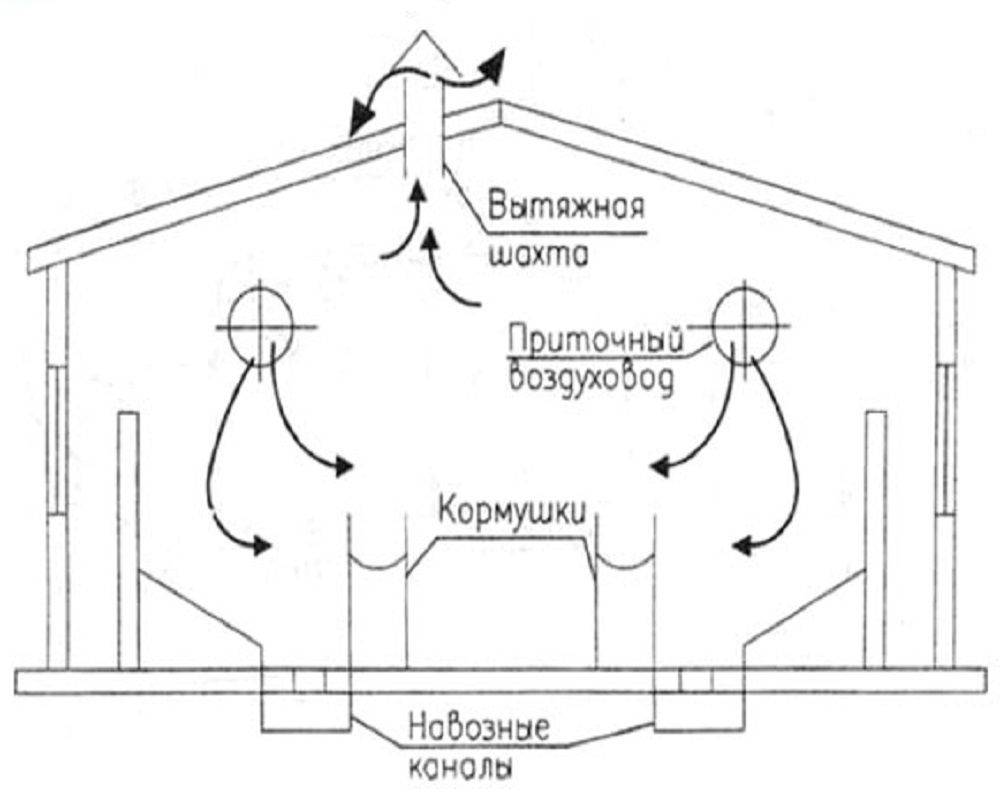
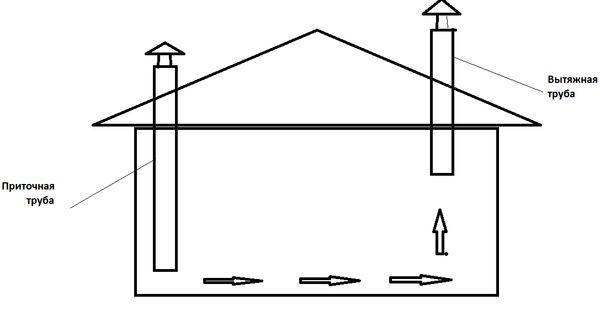
A more practical option for ventilation is the installation of supply and exhaust pipes. Any material is suitable for their manufacture, but it is better to use wood. In addition, it is necessary to install several plugs on each pipe, with the help of which it will be possible to regulate the flow of oxygen in the future (Figure 2).
Figure 2. Arrangement options for natural and supply and exhaust ventilation
The supply and exhaust system also provides optimal room humidity (at the level of 60-70 percent)
However, it is important that this system does not create drafts that adversely affect the health of the hens. Recommendations for the manufacture of supply and exhaust hoods are given in the video
Natural ventilation for the chicken coop
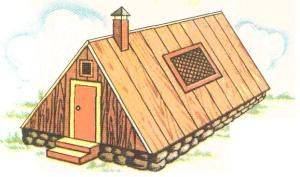 big chicken coop
The natural ventilation device in the chicken coop is optimal for a small room with a small number of livestock. This is a cheap and simple design that you can do yourself.
Chicken coop ventilation scheme No. 1.How to make natural draft ventilation in a chicken coop? It is provided with the help of a window located above the bird door or in the roof. The second option simultaneously improves the illumination, this type of ventilation of the chicken coop is shown in the photo.
But in winter it is not suitable for the reasons described above. In addition, the owner must independently open and close doors and windows, which is not always convenient.



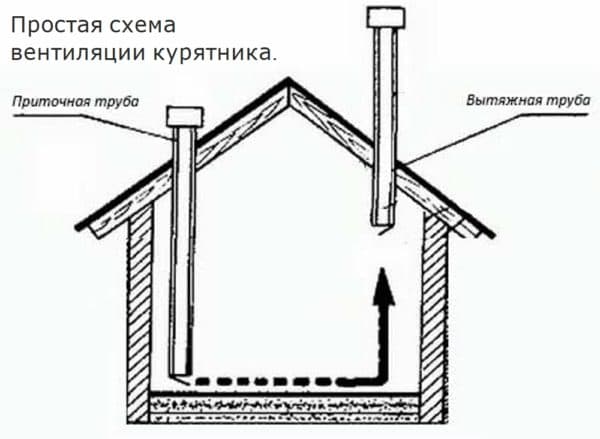


Chicken coop ventilation scheme No. 2. If you plan to keep about 100 birds, then there is a poultry house area of approximately 20 square meters. meters, you need to take 2 pieces of pipe 200 mm in diameter, 2 meters long. One is for air intake, the other is for removal.
Pipes are installed in opposite corners of the room so that the air flow covers as large an area as possible.
We install an exhaust pipe near the perches of birds, the lower end is 0.2 m from the ceiling. The upper end should extend 1.5 m above the roof level.
Schematic device of a chicken coop
We place the supply pipe in the corner farthest from the perches (in winter, cold air will not blow on the birds). The lower end does not reach the floor by 0.2 m, and the upper one goes beyond the roof level by 0.3 m. Umbrellas are put on the upper ends of the pipes or they are bent so that rain or snow does not fall. Instead of finished pipes, you can make wooden boxes to save money. But their outer parts will have to be puttied and painted so that there are no gaps. More ventilation scheme in the chicken coop in the photo.
If a plastic is chosen for ventilation or a metal pipe, it must be insulated, since in winter the inner walls will be covered with condensate. Gradually freezing moisture will eventually completely block the lumen of the pipe and the home chicken coop room will remain without ventilation.
Chicken coop ventilation scheme No. 3. This original chicken coop ventilation device is based on the use of wind power. It is suitable for a room no larger than 8 square meters. meters area. A vertical channel of square section 20x20 is being constructed see from the boards. Inside the channel along the entire length is divided into two parts. The upper outlet of the channel is closed, its walls are coated with sealant from the outside and painted. Holes are drilled in the sides.
Through one longitudinal compartment on the leeward side, the air enters the room, and through the second, the exhaust air is pulled out.
Types of ventilation systems for the chicken coop
There are three types of ventilation systems:
- natural ventilation system;
- supply and exhaust;
- forced (electromechanical).
To understand which one to choose, it is necessary to consider all aspects of the installation and operation of each of them. Ventilation in the poultry house is designed for:
- odor elimination;
- reducing the level of humidity;
- air temperature stabilization.
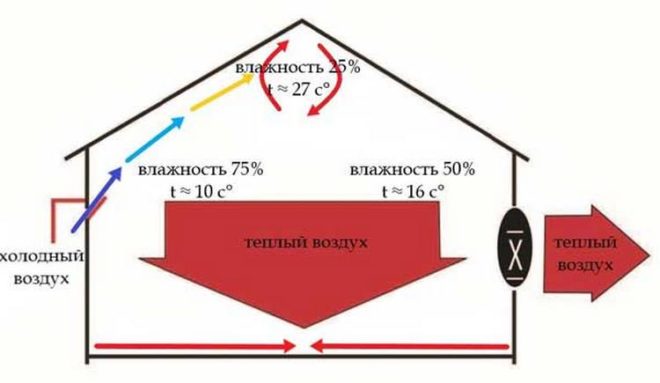
Properly organized ventilation will allow you to cool the chicken coop and dry it in summer, and in winter it will reduce the level of humidity due to the constant running of cold air over the entire area and temperature control.
Natural ventilation system
The cheapest and most elementary way to arrange air exchange in a chicken coop is the usual cross-ventilation.
- open all windows and doors;
- install simple ventilation holes in the walls.
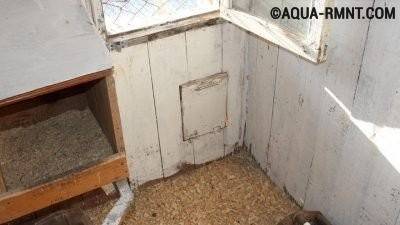
Door with a window for ventilation in the chicken coop: for free natural ventilation
Just try to avoid strong drafts. Small vents above the door are good because they break the air flow into many small swirls, not allowing the overall draft to increase.Air vents at different levels (at the bottom and at the top of the walls) also cope with the task of gentle ventilation.
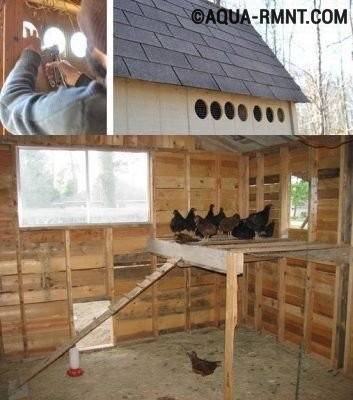
Natural ventilation, arranged with a competent approach to business, protects birds from drafts
In the cold season, such ventilation is unprofitable, as it requires additional energy to be spent on heating the chicken coop, but for the warm season it is ideal.
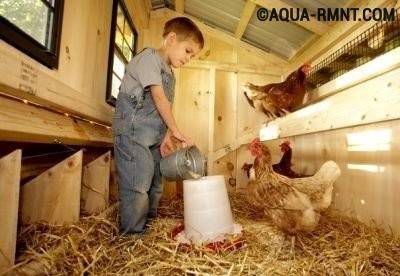
A chicken coop with windows saves money on energy costs for maintaining a chicken coop in the summer: windows are used for both ventilation and lighting
Supply and exhaust ventilation system
In a poultry house with an area of 9-10 m2 and with 20 chickens, such a ventilation device will be the most profitable and correct way. In large rooms, more complex ventilation systems are installed. Making a supply and exhaust system is quite simple:
-
during the installation of the roof, it is necessary to leave two round holes for pipes. The lower pipe is for air inflow into the room (draught), the upper one is for output (exhaust). The lower one is installed far from the bird perches, and the upper one is almost above them;
- we need two plastic or galvanized pipes with a diameter of 20 cm and a length of about 2 meters. Some poultry owners put wooden structures instead of pipes;
- the air intake pipe is installed 40 cm above the roof, its lower end remains hanging 30 cm above the floor;
- the upper part of the exhaust pipe rises one and a half meters above the roof, and only 20 cm is visible inside the room;
-
from above, the pipes are hidden under an umbrella from rain and snow;
-
pipes are installed in opposite parts of the room so that it is ventilated along the entire length.
Forced (electromechanical) ventilation system
Forced ventilation is used in large rooms where the number of chickens is more than 500 pieces. But in domestic chicken coops, you can use such a system. The main thing is to choose a fan for your needs. When choosing a fan, study its technical characteristics. In winter, experts recommend arranging air circulation at the rate of 4–6 cubic meters. per 1 kg of live bird weight. At the same time, the temperature in the room should be maintained within + 18-20 ° C, and the humidity should not exceed 60-70 percent.
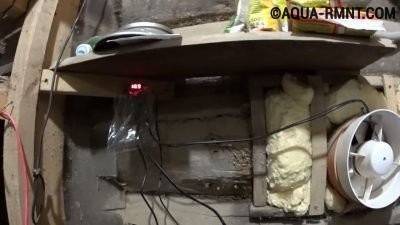
The electric fan in the chicken coop itself monitors the process of air purification, freeing you from unnecessary worries, and shows the results of its work on the scoreboard
Fans crash into the window. A small inexpensive fan is manually started, which is convenient for taking emergency measures to ventilate the chicken coop.




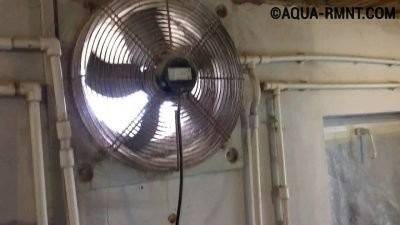
Some exhaust fans make a lot of noise and keep the chickens entertained.
There are also expensive fans - modern models with remote control. Also in specialized stores are offered sensors built into the ceiling or walls, which automatically monitor the level of humidity and turn on ventilation when the norm is exceeded.
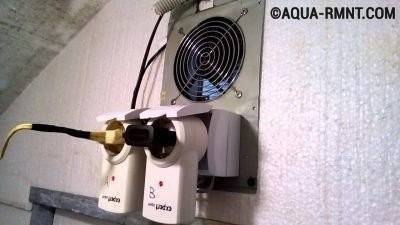
Powerful forced ventilation keeps your birds healthy
It will not be difficult for a person who is familiar with electricity to independently assemble and establish the operation of such ventilation.
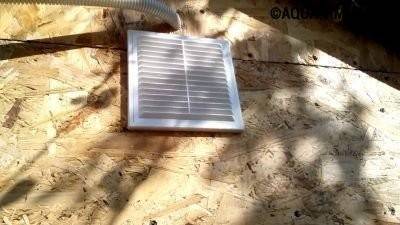
The forced ventilation hole on the facade of the chicken coop is covered with a grate: it protects the mechanism from accidental small objects and makes the appearance
The disadvantage of such a system is a serious consumption of electricity, but even it can be learned to regulate.