- Conditions for a good job
- Overflows, ventilation
- Adjustment
- How to make ventilation of a septic tank with your own hands
- Location features
- Installation of natural ventilation
- Forced ventilation installation
- Advantages and disadvantages of natural air exchange
- Ventilation device for a septic tank built of concrete rings - purpose and arrangement rules
- Septic tank maintenance
- The second stage is the installation of rings and the connection of pipes
- Installation and installation Topas 5
- Bacteria in a septic tank
- Types of ventilation
- Ventilation system device
- Design
- Installation of septic tanks
- Installation of ventilation pipes
- Ventilation riser
- Finishing stage
- Self-arrangement of ventilation
- The design of the ventilation passage
- Types of ventilation in the sewer
- System construction process
- Circuit design or development
- Detailing and assembly of the system
Conditions for a good job
To get an efficiently working septic tank, you need to pay attention to several necessary conditions.
Overflows, ventilation
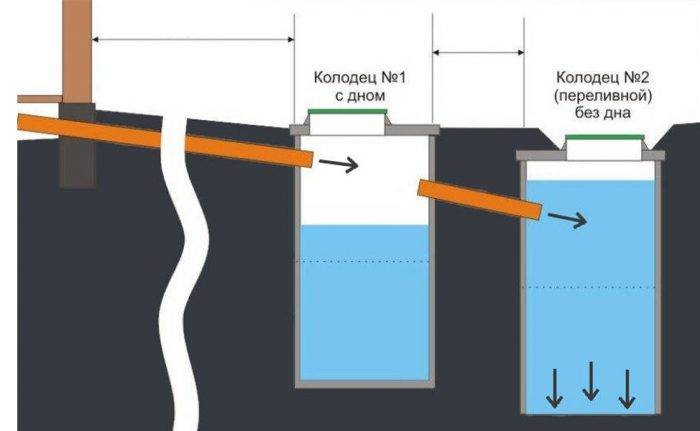
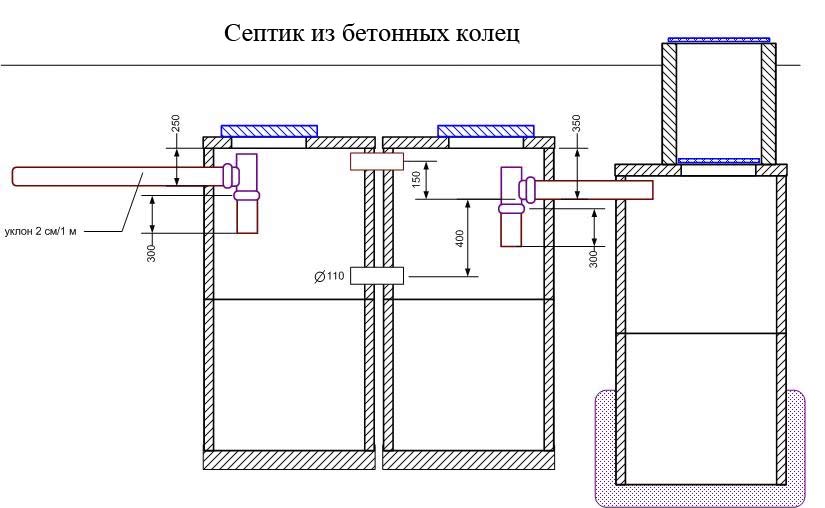
Overflows should be below the sewer pipe through which the effluents enter directly into the receiver. The minimum difference is 100 mm. In order for the liquid to immediately go to the bottom of the tank, tees are mounted at the ends of the overflows.
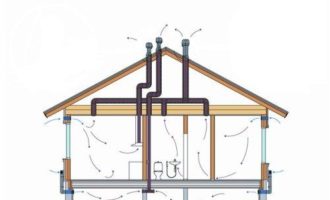
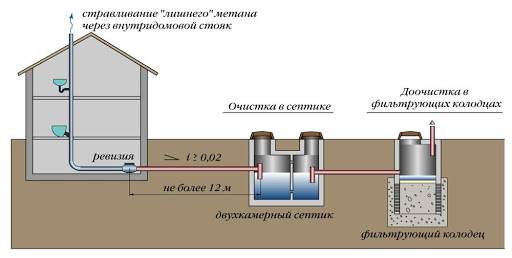
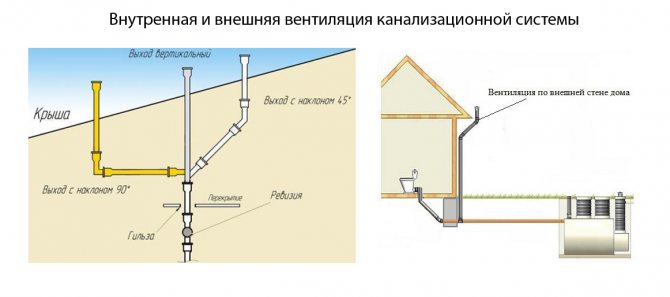
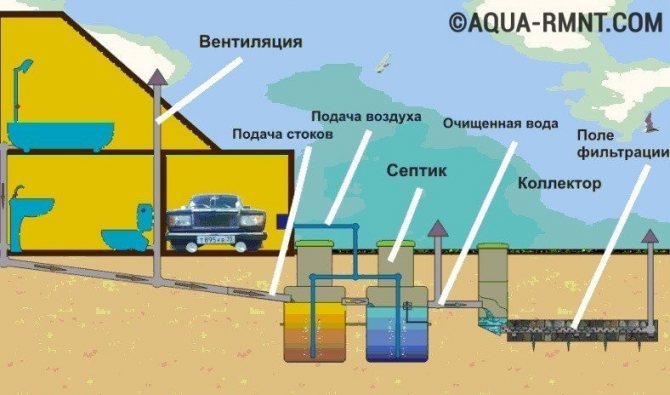
To ensure the flow of fresh air into the septic tank, high-quality ventilation is necessary. If there are several cameras, then it is mounted either in the first or in the last container. The minimum diameter of the ventilation risers is 100 mm. The inflow must be located so that it is always above the surface of the wastewater. Bleeding gases from the receiver occurs through a sewer riser, brought to the roof of the house. It is equipped with deflector caps.
Adjustment
To ensure the most efficient waste processing, it is necessary to provide the septic tank with microflora that will break down organic matter. The first way to find bacteria is to take sediment from an actively operating station. The optimal volume of the substance is 15% of the tank volume.
An alternative is special biological preparations containing aerobic, anaerobic bacteria, or bioactivators (universal, narrowly targeted), which include several types of microorganisms. The former need a good supply of fresh air, the latter can work in a closed environment.

What is the best septic tank? The answer to this question is unequivocal: this is a factory product, durable, sealed, and as efficient as possible. How to install a septic tank in a private house? Carry out all steps correctly. Since the efficiency of the treatment plant directly depends on the quality of installation, it is better to shift such large-scale work onto the shoulders of professionals. Or involve a friend who has already installed similar structures to work together, so he knows everything, or almost everything, about the process.
The following video will tell you how to choose a septic tank for your home:
How to make ventilation of a septic tank with your own hands
In order for a self-made concrete septic tank to work smoothly, several principles must be observed:
- To prevent blockage in the pipeline, the diameter of the pipes must be at least 30 percent larger than the expected volume of effluents.
- The drain should be as straight as possible. Otherwise, the air will encounter resistance.
- Protective visors will not only prevent moisture from entering the pipes. Together with the mesh, they will not allow foreign objects, small birds and insects to penetrate there.
- All joints must be sealed.
- The pipeline must be carefully insulated from the ingress of ground moisture into it. Otherwise, the water from the sewer pipe coming from the soil may clog the passage and interfere with the exchange of oxygen.
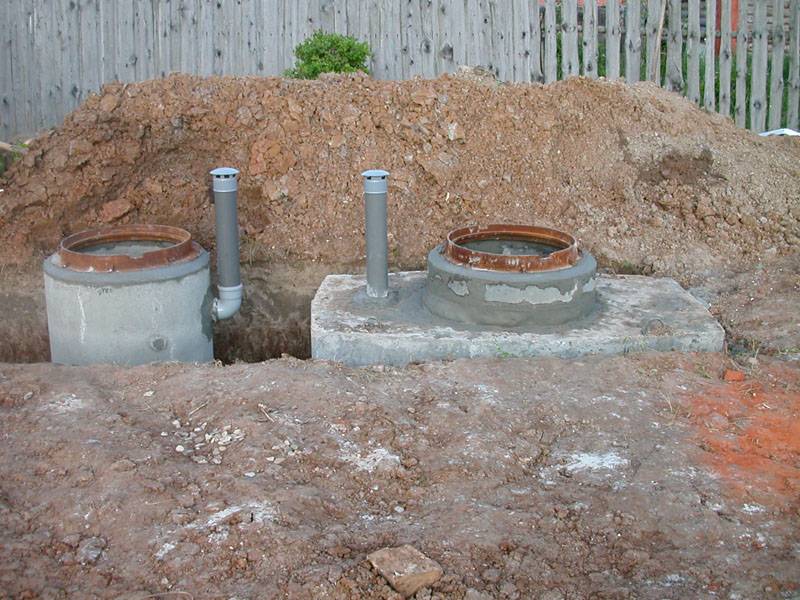
Location features
The pit should not be placed too close to the house
To prevent the unpleasant smell from disturbing the inhabitants of the house, it is necessary to pay attention to the fit of the collection hatch. Outdoor toilet must be attached without gaps
Ventilation in a pit latrine can be arranged by installing a regular PVC sewer pipe, ten centimeters in diameter. It is attached to the wall at the back. A hole is drilled on the floor for the pipe and lowered by about ten centimeters. The upper end extends beyond the roof by more than twenty centimeters. From below, the pipe must be insulated with tow moistened in advance with a bitumen primer. The exit is covered with a tin sheet, treated with foam or cemented.
When ventilation is installed in a cesspool without a toilet, installation is carried out in the same way. A pipe is inserted not far from the hatch, the length of which is calculated depending on the height of the outlet.If you attach an exhaust motor to the upper end, then the stench will not spread to the area, even in the summer heat.
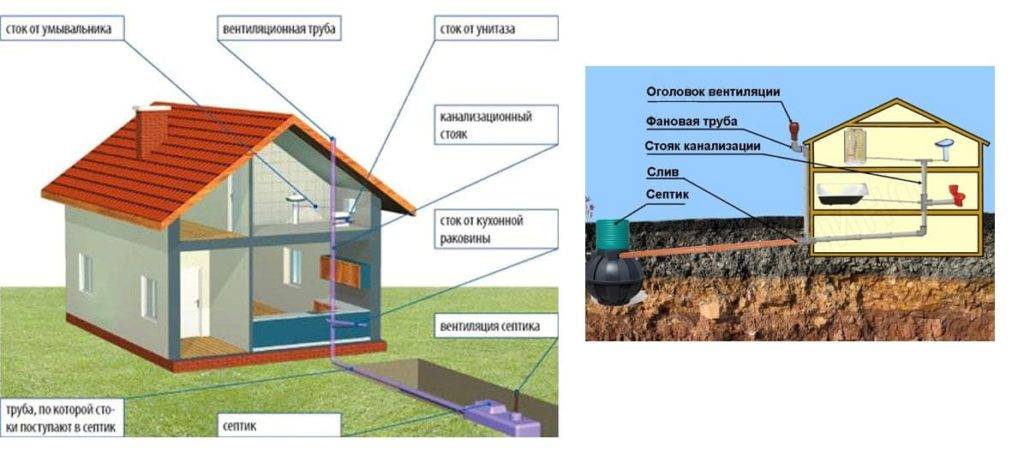

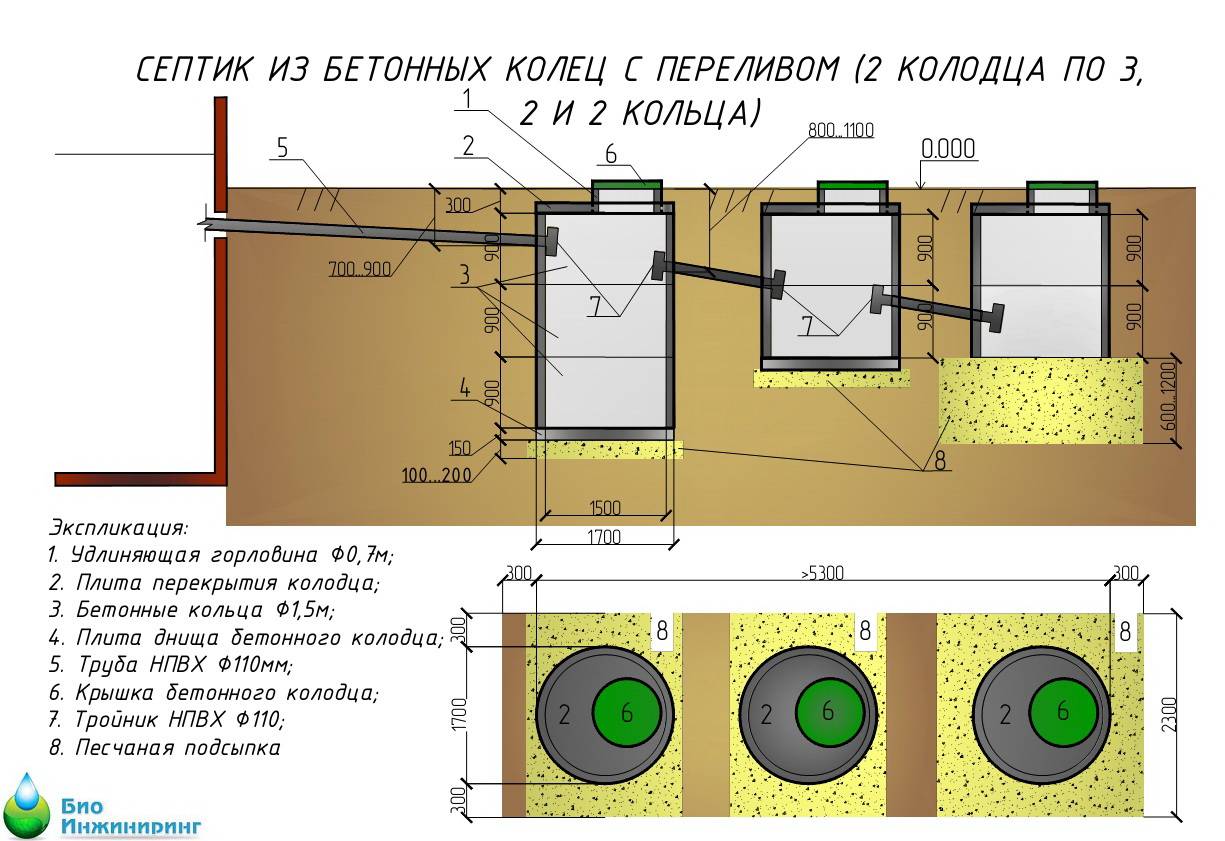

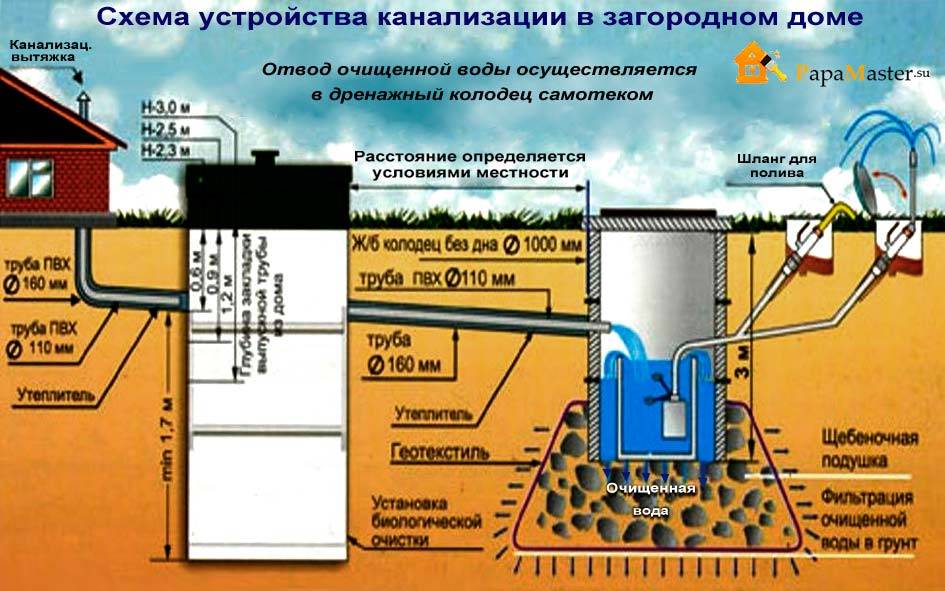



By constructing a ventilation system in this way, it will be possible to avoid the accumulation of harmful gases and, as a result, the occurrence of an unpleasant odor in the toilet itself.
In addition, ventilation of the cesspool will prevent the harmful effects of fumes from feces on the wooden structure. Thanks to this, the term of the country toilet will increase markedly.
When building a pit latrine, it is best to make sure that the pit latrine is separate from the pit latrine. It is not difficult to connect them using a conventional sewer pipe with a large cross section. In this case, a branch for ventilation is connected to the pipe itself through a tee. Then excellent ventilation will be guaranteed, but on condition that a drain system is additionally provided for the toilet.
One way or another, the ventilation system here can be built in two ways:
- natural ventilation involves ventilation through increased pressure in the pit;
- with forced ventilation, air exchange will be carried out through fans that are powered by electricity.
Installation of natural ventilation
Above, we briefly mentioned the installation of natural ventilation of the toilet. Let's consider this process in more detail.
The air from the cesspool will be vented to the atmosphere through a vertical vent pipe installed on the back wall of the toilet. The outlet end at the top must extend beyond the roof.
Air will move due to the difference in pressure in the toilet and the atmosphere. Then the smell will not get into the room itself and the gases will be effectively removed to the outside.
The entrance of the sewer pipe must not be lower than the level of filling with sewage.Then it will never be closed by waste products.
To ensure sufficient air movement, the outlet section is made more than ten centimeters, and the upper end is raised more than seventy centimeters above the roof.
For a tighter fixation of the pipe to the toilet wall at the back, plastic clamps are sometimes used. Then you can be calm for her even during a strong wind.
In addition, the junction of the inlet pipe of the ventilation pipe and the cesspool must be carefully sealed.
Forced ventilation installation
The most effective method of ventilation is forced. It can only be implemented if there is an electrical supply on the site. But when used, you don’t have to worry: all gases from organic decay will be completely removed. The device is mounted as follows:
- Even when the toilet is being built, you need to think about the location of the ventilation system and build a window for ventilation. It will be a source of illumination on the one hand, and an opening for air flow, on the other.
- The toilet is supplied with electricity. A suspended structure for this will be the easiest way. When laying the power line, a cable is used that has special protection against external influences.
- The fan is selected. In order for the air circulation here to occur normally, a model with a power of up to 300 watts will be sufficient.
- It is best to first select a fan, and only then form the necessary hole under it. It only moves air in one direction. Usually this is air distillation to the outside.
- To prevent vacuum from forming in the toilet, holes must be provided for air to enter. Their role may well be played by a gap located between the end of the door from below and the threshold.
Advantages and disadvantages of natural air exchange
Like any engineering and technical system, natural variety is not without drawbacks, but it also has significant advantages. In order to decide for sure whether to arrange it or not, it is worth comparing the list of pluses with the list of minuses.
Positive sides:
- Easy and inexpensive installation. This is the cheapest option for organizing stable air exchange.
- Low maintenance costs. If there are no mechanical devices in the system, then it needs only periodic cleaning.
- Energy independence. Does not consume electricity, except for the installation of additional electrical appliances.
- Extremely quiet operation. Has low noise.
- engineering flexibility. Ventilation can be upgraded, understaffed with various devices. It is possible to adjust the performance of the system.
Negative sides:
- Traction instability. Its dependence on atmospheric pressure and specific weather conditions. The efficiency of natural ventilation in summer may be insufficient.
- Formation of drafts. In winter, strong draft can not only bring discomfort to the residents of the house with drafts, but also significantly increase heat loss. This results in higher heating costs. It should be noted that there are various ways to solve this problem.
Everyone can organize a natural ventilation system in a private house. Its imperfection is compensated by the simplicity of design and minimal maintenance costs.
Ventilation device for a septic tank built of concrete rings - purpose and arrangement rules
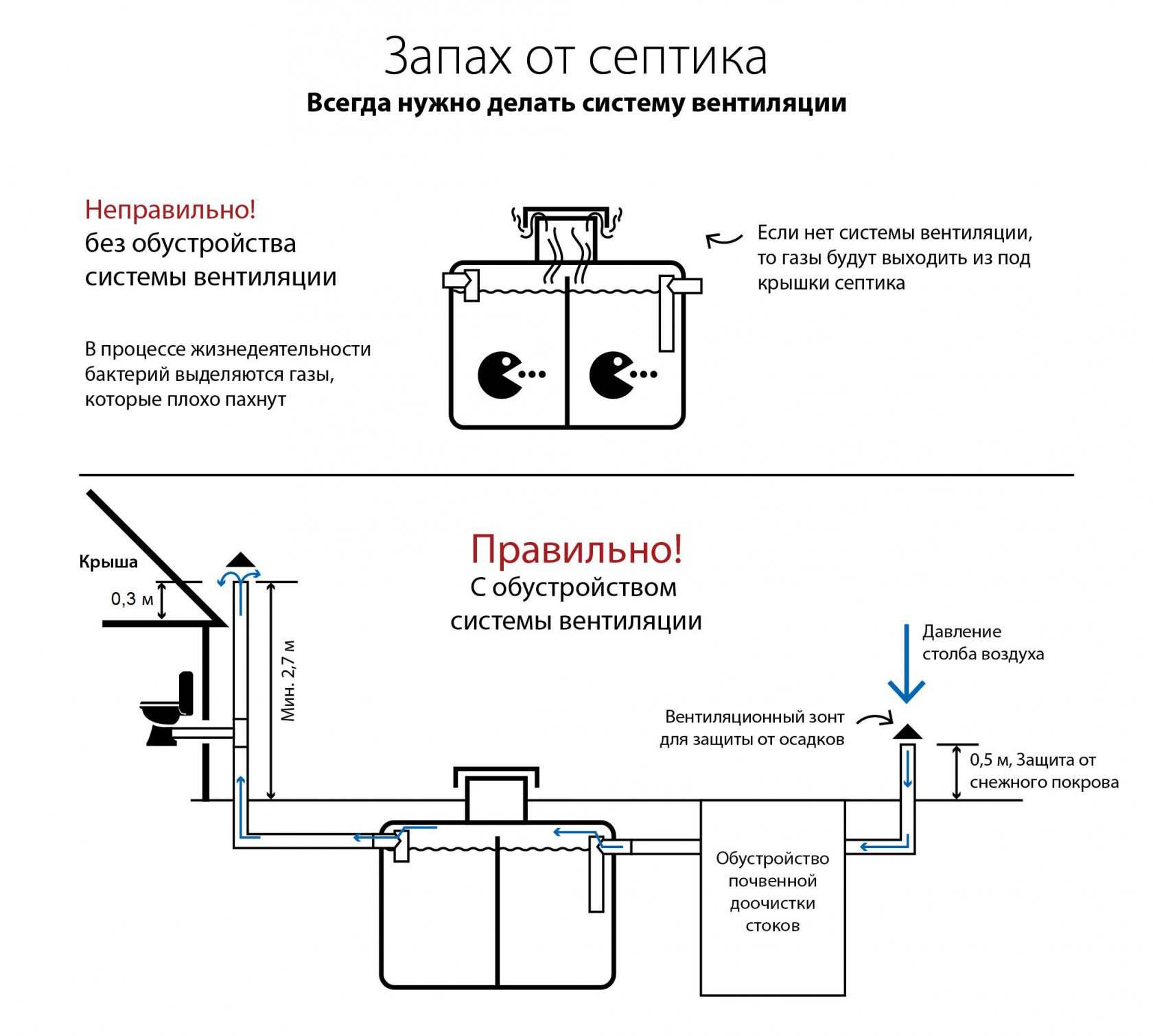
When thinking about whether ventilation is needed in a septic tank made of concrete rings, it is worth, first of all, taking into account the safety requirements for operating the system. Special bacteria live in the septic tank, which "eat" all the waste, giving clean water and sludge at the exit. But they cannot process sewage without producing harmful gases. Therefore, for the normal operation of the system and ensuring the safety of people living on the territory, the arrangement of ventilation is a mandatory step.
The supply and exhaust system consists of an oxygen supply pipe to the wastewater receiving tank so that the bacteria feed and work properly (microorganisms die without air) and a pipeline for the removal of gases that appear during the work of bacteria.
The main stages of the ventilation system in a septic tank:
- The flow of air into the pipe along with the volume of sewage and waste.
- Drainage of waste into an external storage tank for sedimentation of large fraction effluents, oxygen should immediately enter the chamber.
- Delivery of air to other tanks through internal channels.
- Nutrition of bacteria.
- Removal of gases through the hood.
In order for the ventilation for a septic tank made of concrete rings to work correctly, microorganisms live and perform their functions, and the residents of the house do not get poisoned, you need to remember certain principles of system design. In some cases, the septic tank ventilation system is combined with the house ventilation system, but this must be done correctly.


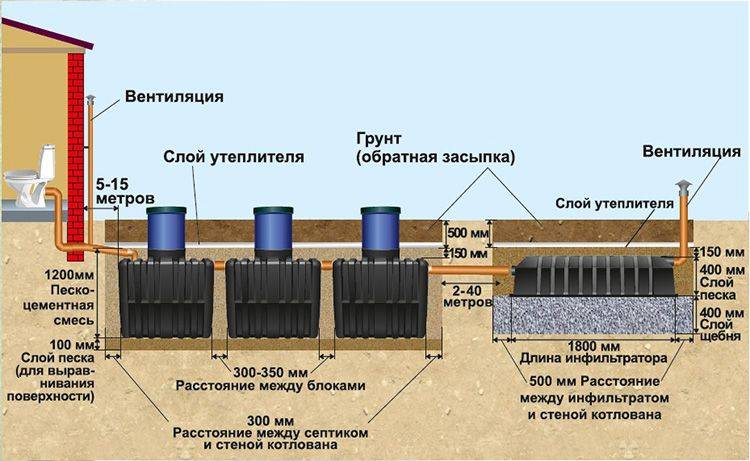


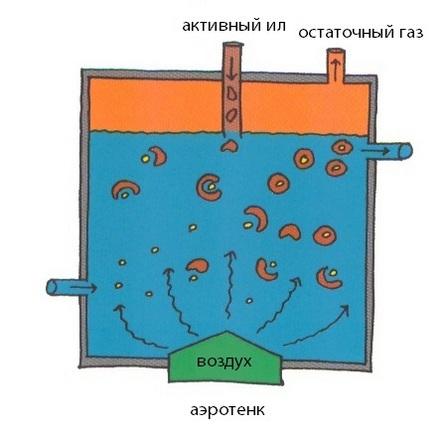
System arrangement rules ventilation in a septic tank:
- The diameter of the pipeline should be 30% larger than the estimated volume of effluents so that a vacuum plug does not appear during flushing and oxygen enters in a normal volume.
- To ensure the flow of air, the end of the pipe is led straight through the roof of the premises so that there is no resistance and the circulation is normal.
- To exclude the possibility of birds, insects, rain entering the pipe, it is covered with an umbrella and a net.
- The joints of the highway are sealed to exclude the possibility of odors entering the house.
- When air circulation is organized inside the concrete rings, the pipes connecting the containers are mounted so that the air channel does not clog and water does not get into them.
- The pipeline for air exchange located inside the tank is treated inside and outside with waterproofing materials, and the joints are sealed.
Septic tank maintenance
Once a week
– visual control of work.
- removal of sediment from the activated sludge stabilizer using the built-in airlift pump or fecal pump;
- cleaning of airlift pumps and coarse fraction filter in the receiving chamber;
- cleaning and washing the entire internal capacity of the Topas 5 septic tank;
- cleaning nozzles 1 and 2 cycles;
- removal of non-recyclable debris using a stainless steel sieve.
Once a year
- cleaning the compressor air filter.
Once every 2 years
– replacement of compressor membranes.
Once every 5 years
– cleaning the bottom part of the receiving tank and aeration tank from mineralized sediment.
Once every 10 years
– replacement of aeration elements on aerators.
The second stage is the installation of rings and the connection of pipes
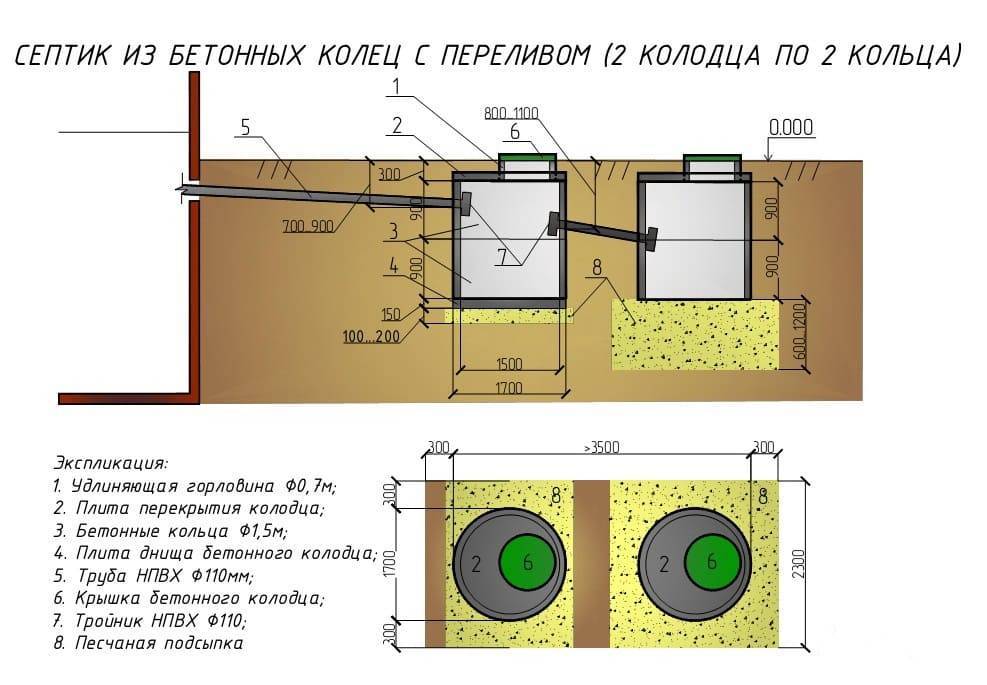
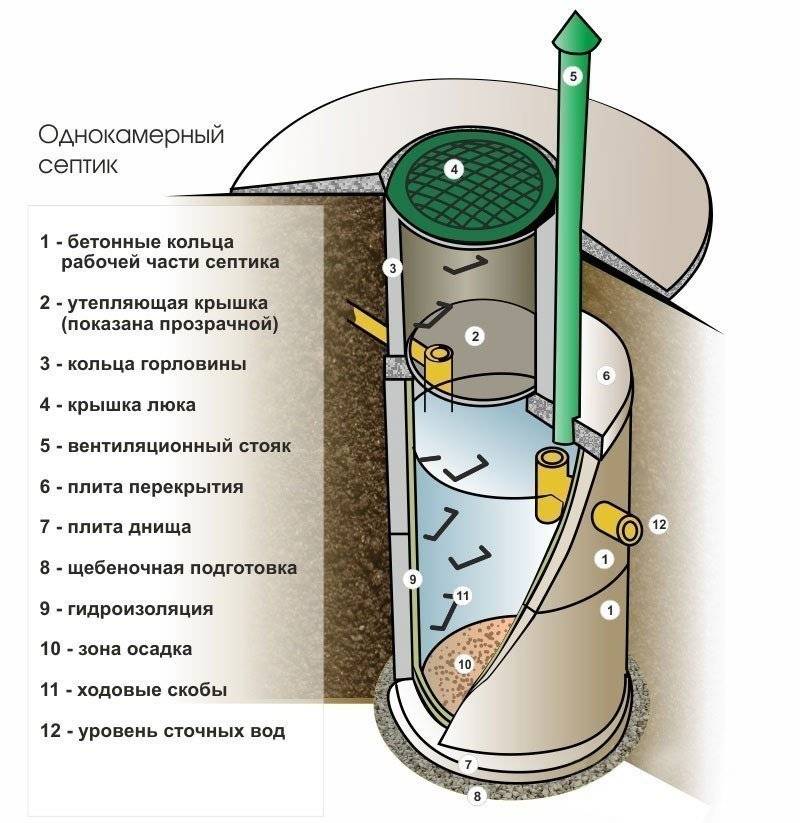
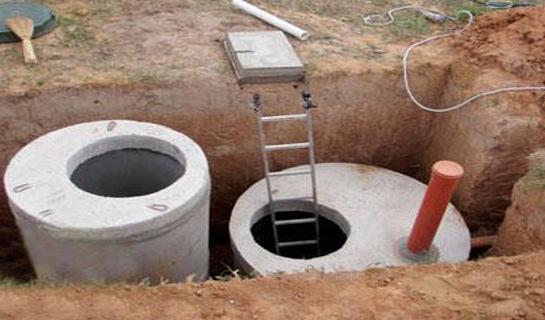
Rings are mounted first over the second, this principle cannot be evaded. Next, the laying of reinforced concrete slabs with hatches made in them is carried out.At this stage, you can let go of the truck crane, it will no longer be needed. Take care of the holes for the pipes. It is also worth noting that the design of the ventilation of the septic tank also implies its own opening, located above the 2nd septic component. As for the first chamber, there is no need to organize the flow of air there.
Next, pipes are inserted, and the main sewage pipeline should be brought into the 1st chamber. As for the slope of the sewer pipe, more than three degrees is necessary. The main thing is nothing less.
Installation and installation Topas 5
The body of TOPAS 5 is a one-piece self-supporting tank made of durable plastic. The strength of the hull is determined by the application. The use of special-purpose polypropylene sheet as a material makes it possible to refuse from concreting the walls of the station and reduce the cost of installation. Stiffening ribs on the outer wall create additional resistance to ascent.
The septic tank is installed in a pre-prepared pit according to the wiring diagram. Under normal conditions, installation on a dense mainland soil with a 100 mm thick sandy underlay is sufficient. It is also possible to install below the groundwater level without pouring concrete.
Before installation, pay attention to the following points:
- The body of the device does not have holes for connecting the sewer supply pipe.
- The supply pipeline must be inserted into the receiving chamber of the septic tank, and the hole in the wall of the chamber must be cut exactly according to the profile of the pipeline.
- The opening for the inlet pipeline is cut out and sealed during installation.
- The best method of sealing the supply pipeline, recommended by the manufacturer, is soldering with a heat gun and a 7 mm PP welding rod.
- The cover of the station, including the hinges, should be 150–180 mm above the ground. This should be taken into account for possible landscape work in the future on your site.
- The exhaust gases of the Topas 5 septic tank are ventilated through the inlet sewer pipe, then through the fan riser.
- The fan sewer riser must be brought directly to the roof of the building or to the highest point of the sewer network. It is not allowed to combine the shafts of the sewer and ventilation risers.
The following steps must be taken during the installation process:
Bacteria in a septic tank
Ventilation in a septic tank made of concrete rings is the best option. Despite the fact that the arrangement of the system will entail additional costs, it is impossible to refuse ventilation, as this is fraught with serious consequences.

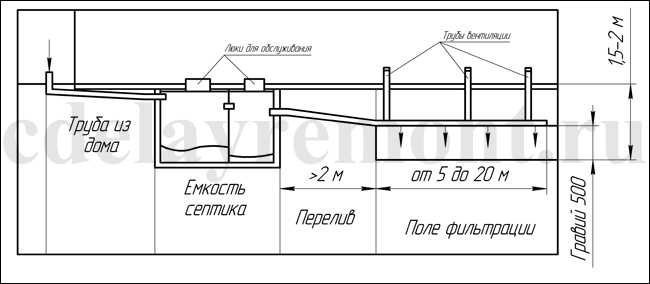
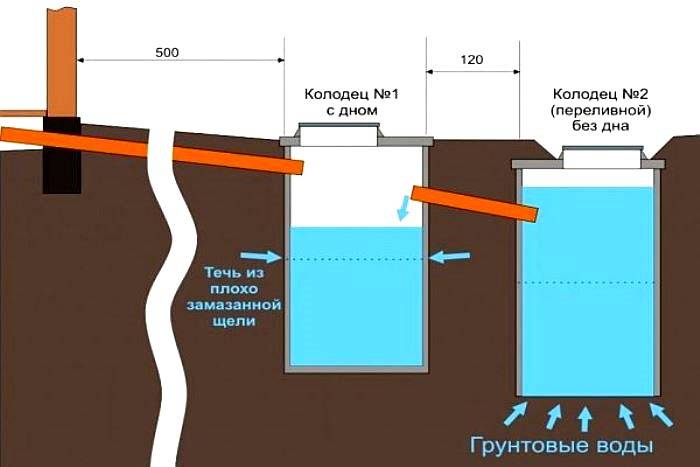



The following bacteria live in a septic tank:
- Anaerobic - located in the first chamber of the system, in the water column, they process all household waste (different types of detergents, organics, etc.), emit explosive methane that is not noticeable to the bike.
- Aerobic - live in a film directly on the surface of the water and are engaged in the processing of waste that the first bacteria did not eat. They emit hydrogen sulfide, which is poisonous and smells bad.
In addition to hydrogen sulfide and methane, septic tanks also emit volatile arsenic salts, carcinogens, and various types of phosphorus compounds.If ventilation for the septic tank is not provided or performed incorrectly, all the products of the "work" of bacteria go back to the house through the sewerage system, at best providing a stench, at worst - severe poisoning and an explosion.
Types of ventilation
Depending on the location of the fan riser, there are types of sewer ventilation:
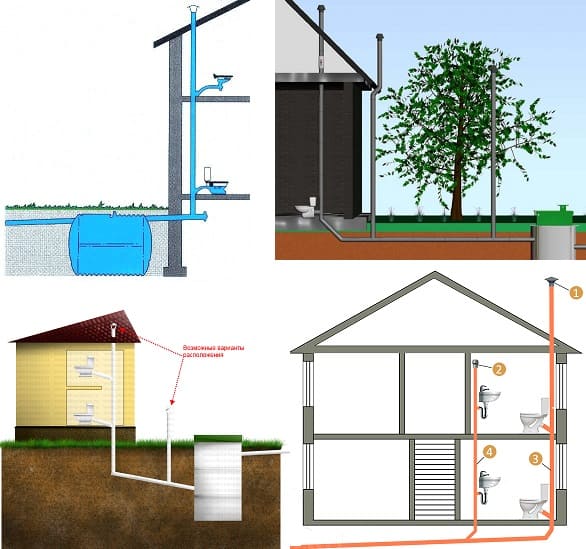
- Internal ventilation. The fan pipe is located inside the house, it is a ventilation riser to which plumbing fixtures are connected. Water is discharged in one direction, a mixture of gases moves in the opposite direction and is discharged outside the house. The diameter must be at least 100 mm so that the waste masses occupy approximately 1/3 of the total volume, the rest of the space is intended for air.
It cannot be combined with a general house ventilation system so that the exhaust air does not mix with other flows and does not enter the premises of the house.
- External ventilation. The fan pipe is located outside the house, often mounted to the wall of the house away from the windows, or to another building on the territory of the house, depending on how the sewer system is located. The pipe is not connected to the plumbing riser, but is included in the drain pipe in the section from the house to the septic tank.
Ventilation system device
Before starting work, everything must be carefully planned and thought out. The arrangement of the ventilation system is inseparable from the construction process of the entire septic tank, so all stages of work must be performed in the correct order and in accordance with the standards.
Design
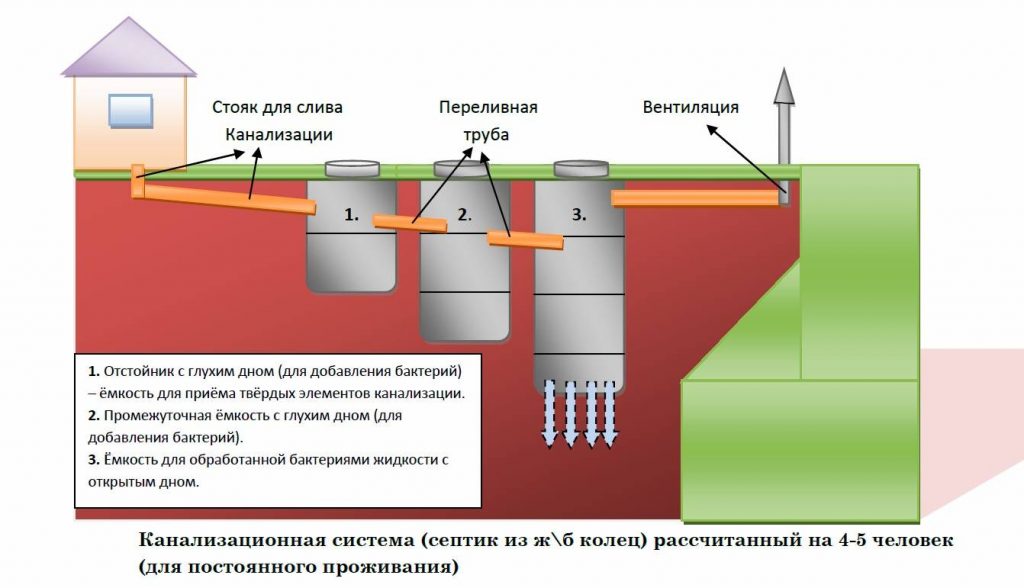
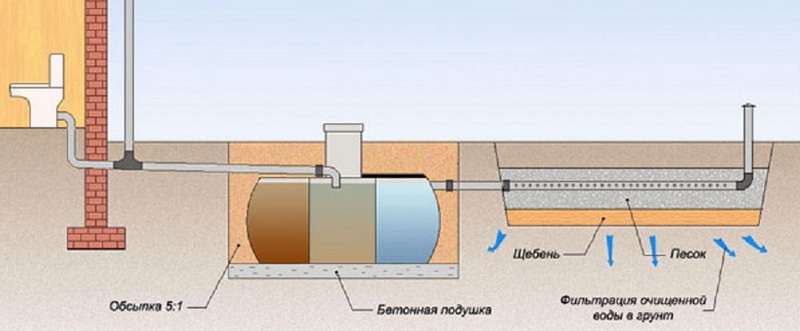
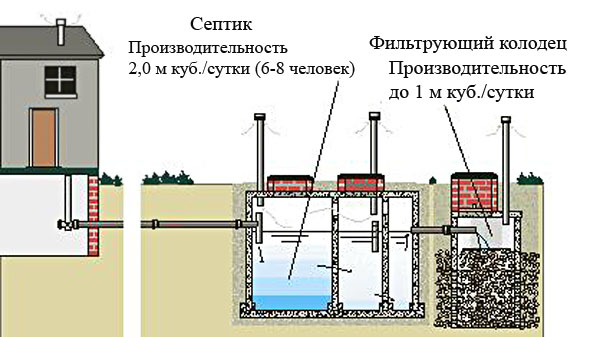
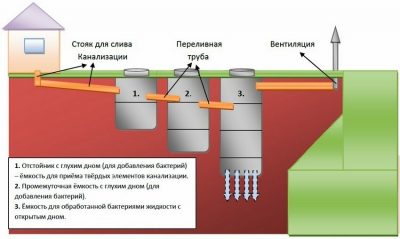
Any septic tank for a private house consists of three chambers: drains come into the first tank of the septic tank and settle, the second chamber is installed as a secondary sump, and filtration takes place in the third. The volume of the chamber is calculated in accordance with the estimated volumes of wastewater and waste.
According to the regulations, on average, a person consumes about 200 liters of water per day, so for each family member you need to “book” 600 liters in the cells. But usually septic tanks are built with a margin, adding 15-20% to the total value.
Installation of septic tanks
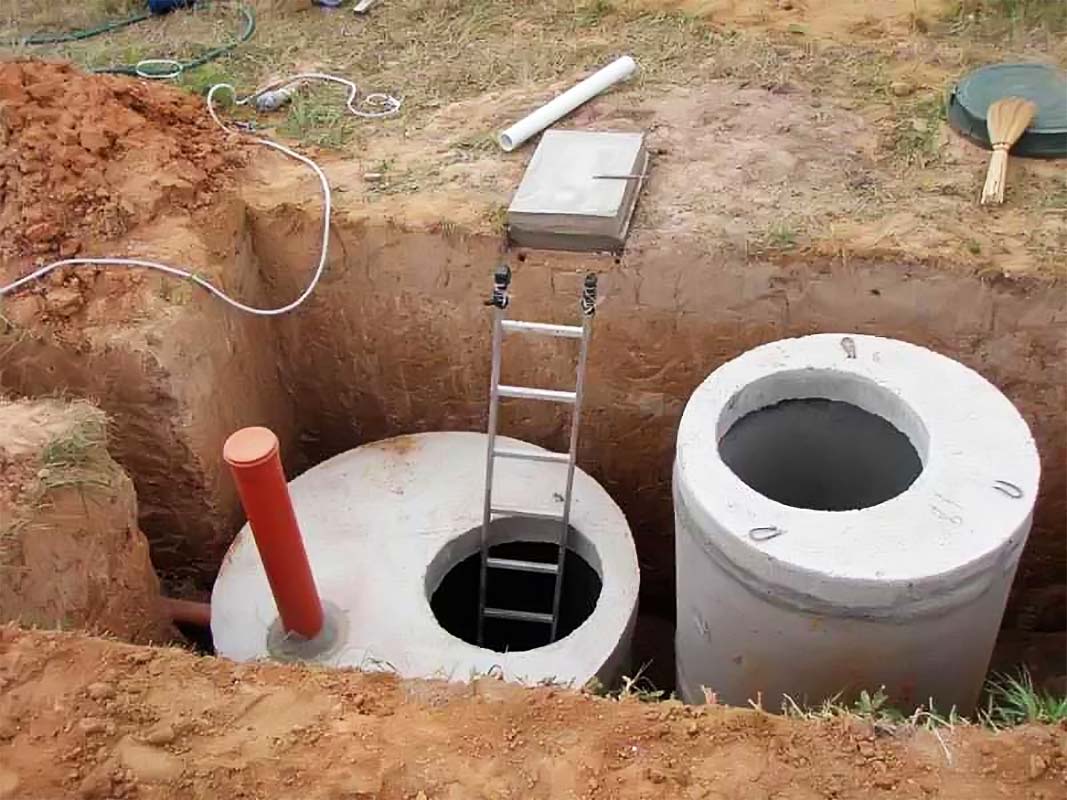
First you need to dig a pit - they dig it before installing concrete rings. The depth corresponds to the total height of the three rings plus 40 centimeters for the sand cushion and screed under the structure. Crushed stone is covered under the drainage well with a layer of at least 70 centimeters thick. You can dig drainage channels, lay drainage pipes in them in a star shape. The bottom of the ditch is made with a slope towards the house in order to place subsequent chambers 20 centimeters lower than the previous ones.
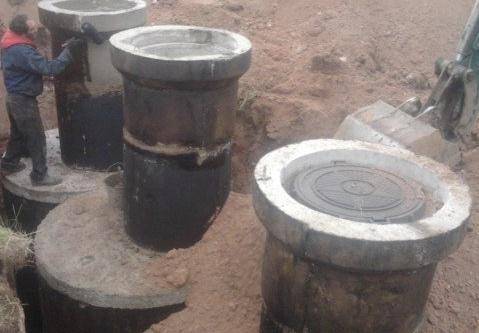
The installation of the septic tank chambers is simple - the rings are simply installed vertically, evenly or using ready-made grooves. On top there are plates with holes (inspection hatches). Holes for pipes designed to move drains are made in advance. Ventilation holes are made above the second tank of the septic tank, connecting pipes are inserted, sewage is brought to the first tank.
Pipes should stand with a slope of about 3 degrees. The pipes must be sealed, as is the bottom of the chambers. The bottom is sealed several times with geofabric or bitumen, reinforced with concrete mortar. Pipe entrances are protected with liquid rubber. For the purpose of insulation, various materials are used.
Installation of ventilation pipes
When the ventilation of a septic tank from concrete rings is installed, special attention should be paid to the installation of pipes. Ventilation risers are plastic sewer pipes with a cross section of 100 millimeters, which are designed for installation outside
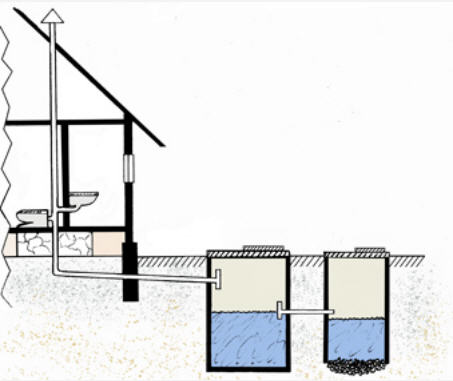
In a two-chamber design, a drain pipe is installed in the first chamber, and a riser is made in the second chamber for air exchange and ensuring pressure balance. The second chamber of the septic tank goes into the filtration fields or the third chamber. It must have a pipe in it to ensure ventilation and fill the filter field or the third chamber with purified water.

Ventilation riser
Hydraulic locks of plumbing fixtures, which cut off the unpleasant odors that accompany wastewater treatment, work correctly provided that there is a constant supply of water that comes regularly at the time of draining. If there is no water in the shutter, the smell disperses throughout the room.
The riser is connected to the septic tank and provides a constant movement of air, the removal of carbon dioxide and methane, and allows bacteria to live and work.
Finishing stage
The final stage in the creation of a septic tank and a ventilation system is accurate backfilling of the soil. Fall asleep in small portions, you can take sand instead of soil. Especially carefully it is necessary to fill up the passage of ventilation pipes, the connection of plastic elements with concrete, so that there are no gaps in the joints.

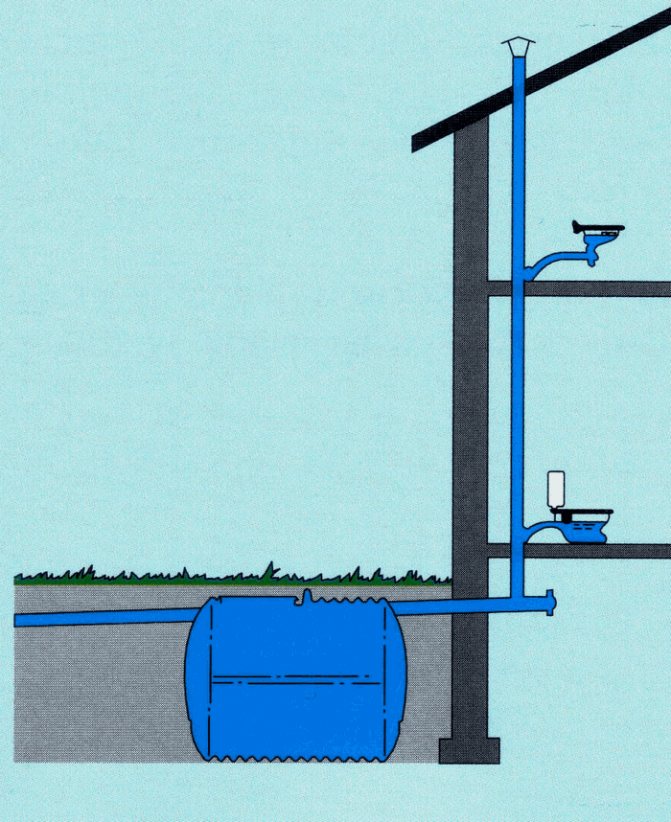

Backfilling is carried out in layers of 10 centimeters, followed by tamping of each layer so that the sand or soil becomes more dense. You can ram with a hand tool or any other suitable device, but very carefully and consistently.
Arranging a ventilation system in a septic tank made of concrete rings is not at all as difficult a task as it might seem at first glance.
It is quite possible to do all the work yourself, paying due attention to the design stage, the technology for compiling the system and the choice of high-quality materials
Self-arrangement of ventilation
Cabin ventilation. The exhaust channel is located as close as possible to the hole directed to the cesspool. The installation height should be maximum, but the distance from the ceiling to the upper end of the pipe cannot be less than 150 millimeters. The channel, which provides the supply of fresh air, is located in the wall, in its lower part. From the floor level, it must be mounted at a minimum height. It is necessary that the distance between the two holes be maximum, so they are placed on opposite walls of the bathroom.
Installation of a cesspool pipe. Initially, the required length of the ventilation pipe is calculated, and if it is necessary to cut off an extra piece of the product, use a hacksaw. Dig a small hole with a shovel before starting the cesspool.
If you strictly adhere to the technology during the work, then you will get an effective system, and the smell from the ventilation in the toilet will not bother summer residents vacationing outside the city. In addition, the building will be protected from the negative effects of gases resulting from the presence of human waste in the pit.
The absence of a fan pipe and other devices will sooner or later lead to the fact that the ventilation of the sewer will be disturbed and the unpleasant smell will quickly spread throughout all the premises of the house.Regardless of the presence of a centralized or autonomous system, ventilation problems need to be solved as quickly as possible. But if an incoming master successfully copes with this in an apartment, the care of a private house falls on the shoulders of the owner. And it is about how to arrange the ventilation of a private house or fix problems with your own hands, it is worth talking in more detail.
The presence in the house of risers with a cross section of more than 50 mm, two or more floors and a large number of plumbing fixtures dictates the need to install a ventilation system. A sharp volley discharge of a large volume of water forms a vacuum in the pipes, as a result of which the siphons are emptied. And it is the absence of a water seal that allows odors to freely enter the room.
Even if the house is equipped with large pipes and there is a minimal threat of blocking the section with a drain flow, air from the sewer can still appear in the room. The reason is the small size of the siphons. If the sewerage is not used for 3-5 days, the water dries up and a void forms, the water seal valve does not work again and the aromas spread into the house. Troubles can be avoided if there is sewer ventilation in a private house, which is quite easy to do with your own hands. The system may consist of a conventional downpipe or use a vacuum valve. Both options are good, they are used not only in private houses, but also in apartments, and the most effective is the scheme where there is both a fan pipe and a valve that plays the role of the desired addition.
The design of the ventilation passage
Consider the features of forced ventilation.When it is arranged, the usual cover is replaced by an inspection hatch. In such a hatch it is possible to equip an air window. This hole not only acts as a vent for the exhaust gas, but also provides a constant circulation of fresh air.
This is extremely important for the normal course of fermentation processes.
An additional hole for the ventilation pipe is equipped to the top of the cesspool. Experts recommend choosing communications made of plastic - they are more resistant to constant exposure to aggressive environments and have a long service life.
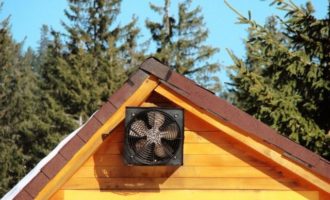
A fan is connected to the base of the pipe in the pit. You can use a conventional deflector with protective caps or buy a special device for a cesspool. To connect to the network, an additional electrical wire is inserted into the waste tank, which is directly connected to the fan contacts.
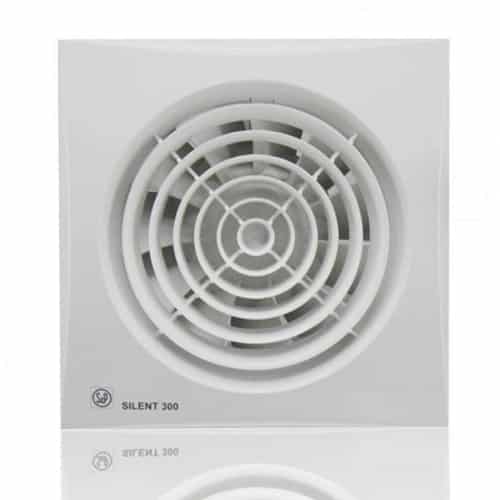 Cesspool fan
With natural ventilation, pipes are used that are installed directly on the lid of the cesspool. The length of such a pipe can be different - it depends on the desired efficiency of the system. But the depth is strictly normalized - the pipe is installed in the drain 20 cm above the maximum level of the tank.
Types of ventilation in the sewer
There are two ways to ensure full access to air. The simplest and most common option is the natural system. The draft created in the outgoing pipe carries away the air masses with the undesirable impurities contained in them. The return flow occurs through the second hole. In some cases, do-it-yourself sewage of a septic tank is done with forced supply, when air does not enter in sufficient quantity.This is due to the design features of the septic tank, when ventilation is not possible in a natural way or this is provided for by the type of treatment plant. The forced system is equipped with additional devices for sufficient air flow.
System construction process
The exhaust ventilation device in the kitchen or in the bathroom begins with the layout of the entire system. After that, materials are selected and calculated. Never rush into calculations. Everything must be done in a measured and calm manner.
When designing, keep in mind that what matters in ventilation is its functionality, with the ability to make the most of all the conditions in each room. If you make a mistake, you will have to use mechanical air blowers, which will significantly increase the cost of the system.

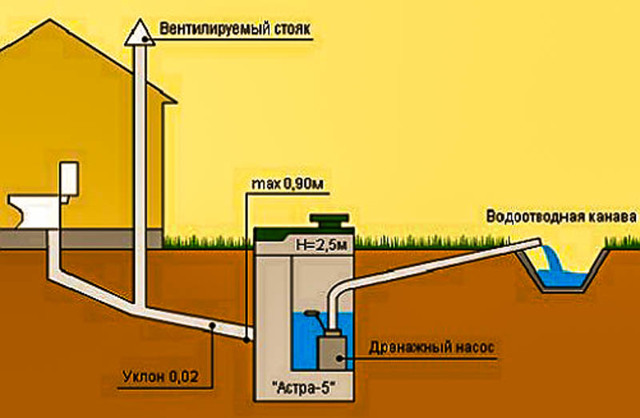

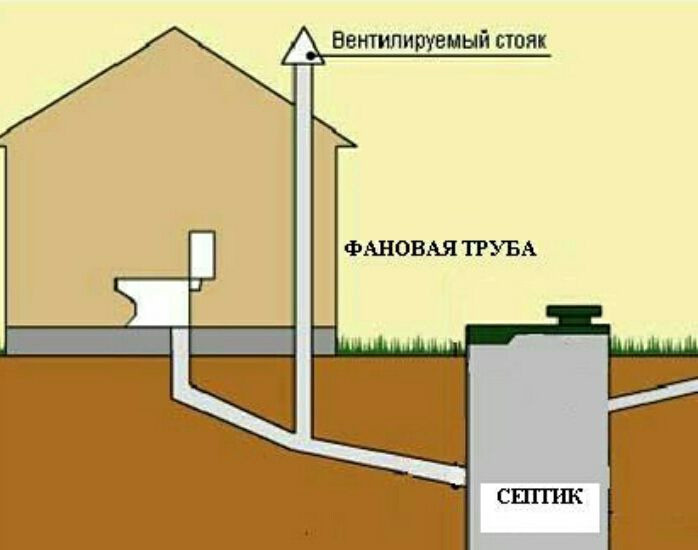
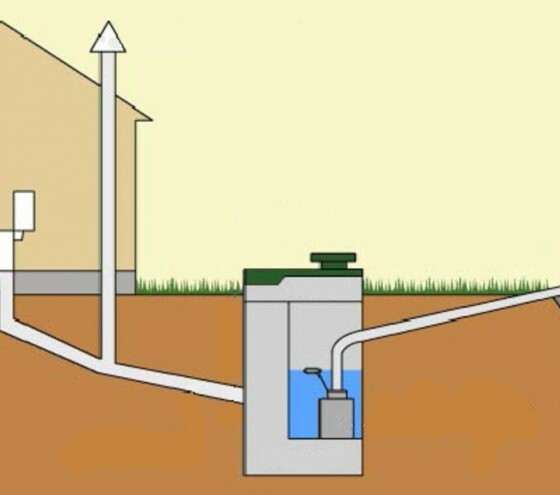

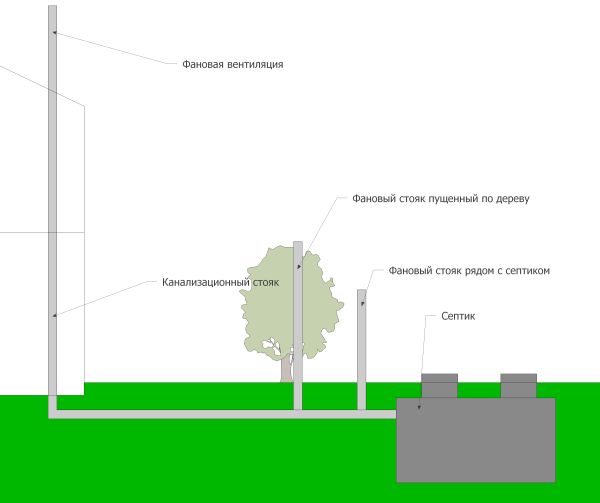
For normal operation of the gravity type system, it is desirable that the ducts have as few turns as possible. It is recommended to install turbine deflectors on chimneys towering above the roof - they will increase the outflow
Installation steps:
- Ventilation design.
- Purchase of equipment: sewer pipes, installation products, fasteners, fittings, mounting metal tapes.
- Installation of brackets and clamps at the places of ventilation communications.
- A ventilation riser is assembled from large pipes.
- Assembly and installation of air ducts.
- Connecting all branches to each other.
- Sealing connections. There is no special need for this, but it does not hurt.
- Installation of fans and valves, if provided.
- Installation of ventilation dampers.
The finish of all types of installation work is testing the system for performance. All actions are to check the traction. To do this, attach a piece of paper or a napkin to the exhaust channels.
Circuit design or development
The creation of a ventilation project begins with elementary calculations and the collection of information, then:
- Calculate the rate of air exchange throughout the house. This indicator depends on the volume of all premises, their purpose and the number of residents. In living rooms, the air must be completely replaced 1 time per 1 hour, and in technical rooms (toilet / bath) - at least 3 times per 1 hour. Adding the resulting numbers, we get a performance indicator, taking into account which the diameter and height of the ventilation equipment will be selected.
- Draw a diagram of the movement of air currents. Immediately estimate the position of the intake and supply channels.
- Draw a duct diagram. For now, ignore the details, stick to the rules and try to fit the system without complicating the design. This is the most difficult stage of the work. Hiding ventilation from bulky plastic pipes is not so easy.
Sketches are ready. Take some time to think about what devices you will have embedded in the system and where they will be located.
Detailing and assembly of the system
Having solved all the questions on the scheme and giving it a final look, it's time to move on to detailing.
First, calculations are also carried out, the components of the system, equipment are selected and the budget is reduced, then:
- The cross section and area of air ducts are calculated. The maximum speed of quiet air movement is taken into account - otherwise there will be a rumble in the house.
- All dimensions are transferred to the diagram.
- Detailing. A list of all the necessary elements is compiled, indicating the sections.
- The total cost of the components of the ventilation system is calculated. Match your desires to your budget.At this stage, you will have to change the components several times, abandoning the desired in favor of the real.
- The final project is drawn. Do not forget about the nodes of the passage of ventilation channels through the roof, ceiling, walls, insulating and consumable materials, ventilation grilles, fasteners and all other little things that will eventually result in a decent amount.
It remains to find, buy and install. Not much has been written, but it will take a lot of nerves, time and effort to implement the plan. Having mounted the entire system, it is still impossible to say that everything is ready.
air ducts from sewer pipes collected in accordance with the draft. PP pipes and fittings are connected by butt soldering, PVC by cold welding
The ventilation system made of plastic sewer pipes still needs to be tested and refined during operation. It is also not so easy to achieve coordinated work of each element of the system. If the natural ventilation option is not effective enough, it is worth upgrading by installing exhaust valves or their supply counterparts.