- 1 General house ventilation - device, performance test
- Selection and installation of ventilation ducts
- Additional features of hoods
- Natural ventilation of the kitchen in a private house
- Hoods for the kitchen, toilet, outbuilding, bath: installation
- Rules of operation and rules of care
- Safe use of the device
- Do-it-yourself equipment maintenance
- Where is the best place to install an outlet?
- Pre-launch tests
- Choosing the optimal ventilation system
- How should the corrugation be installed?
- Installation of a built-in hood in a cabinet
- Types and features of exhaust devices
- Sanitary norms and requirements
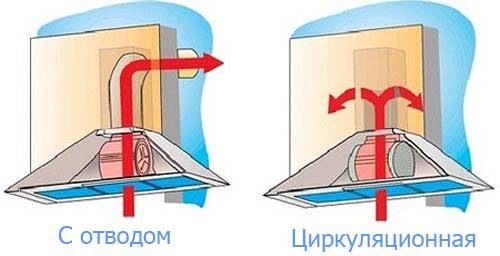
- Extractor hood with ventilation
- Varieties of hoods with a branch
- Ventilation options in a private house
- Conclusions and useful video on the topic
1 General house ventilation - device, performance test
Stagnant air in the kitchen, constant smells indicate poorly functioning ventilation or its absence. The odors themselves are harmless, but they come from substances released during the operation of kitchen equipment, cooking. Grease, soot, steam settle on the ceiling, walls, furniture, damage the decorative coating. Without an influx of fresh air, mold and fungus begin to form. And this is already fraught with constant repairs. Obviously, we cannot do without good ventilation.

Before installing high-quality ventilation, it is important to understand its work. In any kitchen you can see ventilation grilles
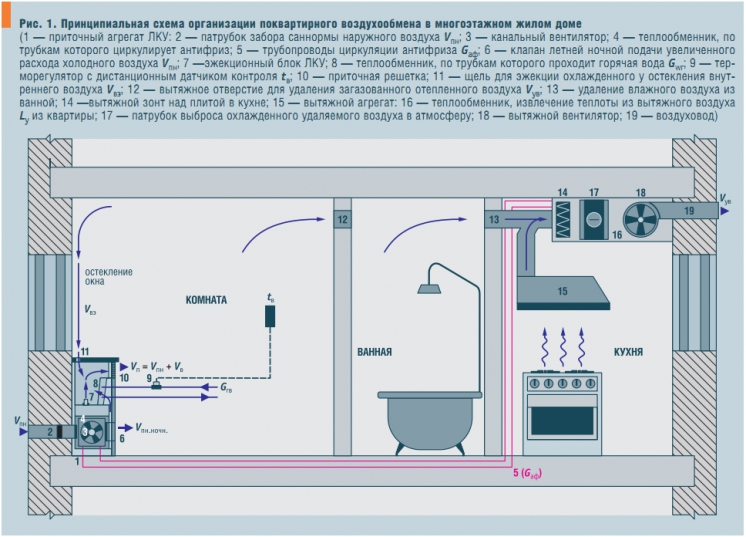
The air from the apartments is collected in a common shaft and removed outside. The design prevents the penetration of air masses back into the room, their exchange between neighboring apartments. All ducts are interconnected. Air is removed through them with a capacity of 60–90 m3 per hour.
However, in order for the air to leave, it must be replaced by new incoming air. But in a modern apartment, plastic windows often create such an airtight space that the paths for clean air flow are blocked. The owners believe that frequent airing is enough to ensure a fresh supply. However, this opinion is erroneous, since a normal microclimate is provided only by constant regulated air exchange.
Proceed to the ventilation device after checking the general exhaust system. Checking is very simple: we apply a piece of paper to the vent. If it is held, ventilation is all right. Sometimes, to restore working capacity, it is enough to remove and wash the grate, clean the inside of the channel as far as possible. Residents are not allowed to clean the mine on their own; there is a special service for this.
Selection and installation of ventilation ducts
There are two types of ventilation pipes for the hood - these are plastic products and corrugated pipes. The latter variety is in great demand, as it has many advantages.
The advantages of corrugated pipes include:
- Ease of installation. The product is made of thin aluminum, so that the corrugation can be bent and rotated as required.
- The ability to quickly change the length. If the pipe turned out to be too long, then the excess can be cut off with ordinary scissors. And when the calculations were carried out incorrectly, then the corrugation can be increased without any problems - the elements are quickly and well connected to each other.
- Light weight. The material is very light, thanks to which you can save on additional fasteners and reduce the time required for ventilation installation.
- Cheapness. A buyer with any income level can afford to buy corrugation.
But when installing this material, you need to be extremely careful. After all, the corrugation is very pliable and strong pressure can leave an ugly dent on the product.
In general, it is recommended to use plastic ventilation pipes. This kind of product has a smooth inner surface, so that the flow will not slow down against the walls and lose its speed. In addition, the material is characterized by low cost, the absence of elements subject to oxidation, as well as safety for human life and health.
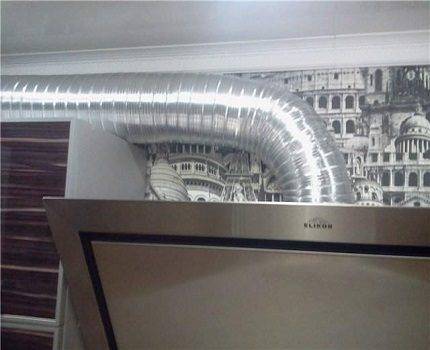
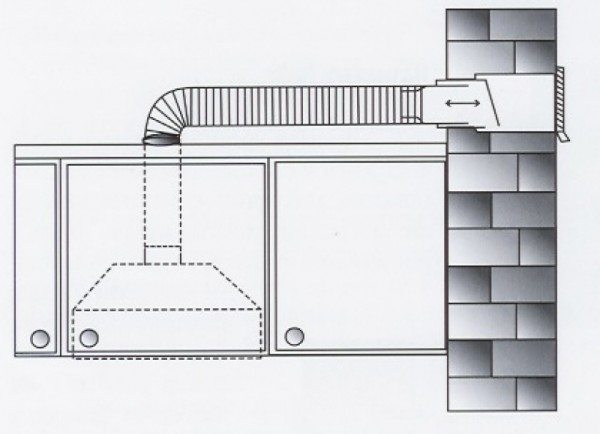
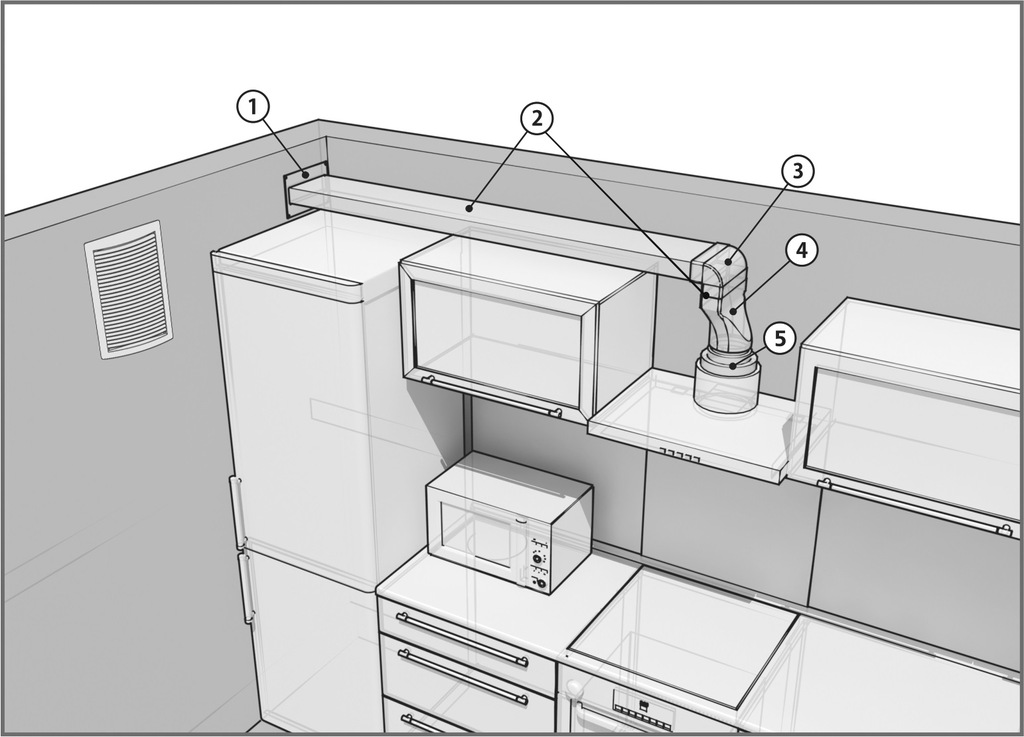
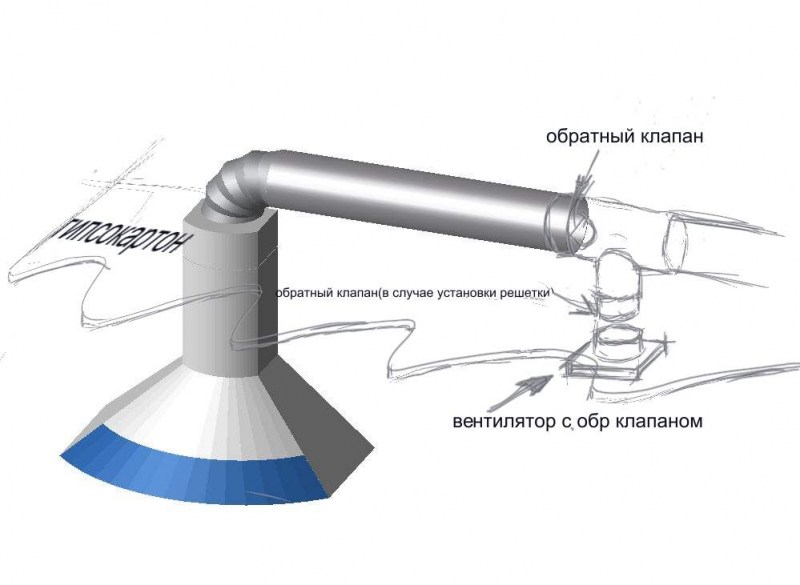
In order to connect the air duct to the ventilation with your own hands, you need to connect the plastic flange of the hood with a corrugation or a plastic pipe, insert the same element into the ventilation grill and fasten the entire structure with construction clamps
Additional features of hoods
To improve the convenience of users, manufacturers have equipped the equipment with additional useful features.
- Intelligent equipment control system. It provides an automatic increase in productivity in the event of an increase in the intensity of the plate.
- Backlight. Provides additional illumination of the slab space.For illumination, halogen or fluorescent lamps are used, less often ordinary incandescent lamps.
- Filter contamination level indicators. The cleanliness of the filter is of key importance for the operation of circulation type models. It is not always convenient to monitor this on your own, so such indicators are very useful.
- Interval inclusion. It provides round-the-clock air circulation. Special sensors once every hour independently turn on the equipment at low power.
To clean the atmosphere of the kitchen from pollution and maintain the health of the inhabitants of the apartment, you need a hood. The market offers a large selection of hoods for every taste and budget.
The most important thing is to understand exactly what such equipment is for, how it works in the kitchen, and what parameters will help you make the right choice of equipment.
Natural ventilation of the kitchen in a private house
To build a private house on your own, you need to carry out a huge list of works, while various problems arise that prevent the creation of comfort and coziness. To organize the installation of ventilation is one of the main things in the construction and repair, it is one of the first places and needs close attention. As mentioned above, a supply and exhaust fan will be an excellent solution. And so, what does he represent?
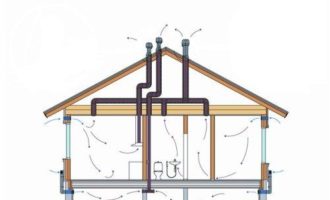
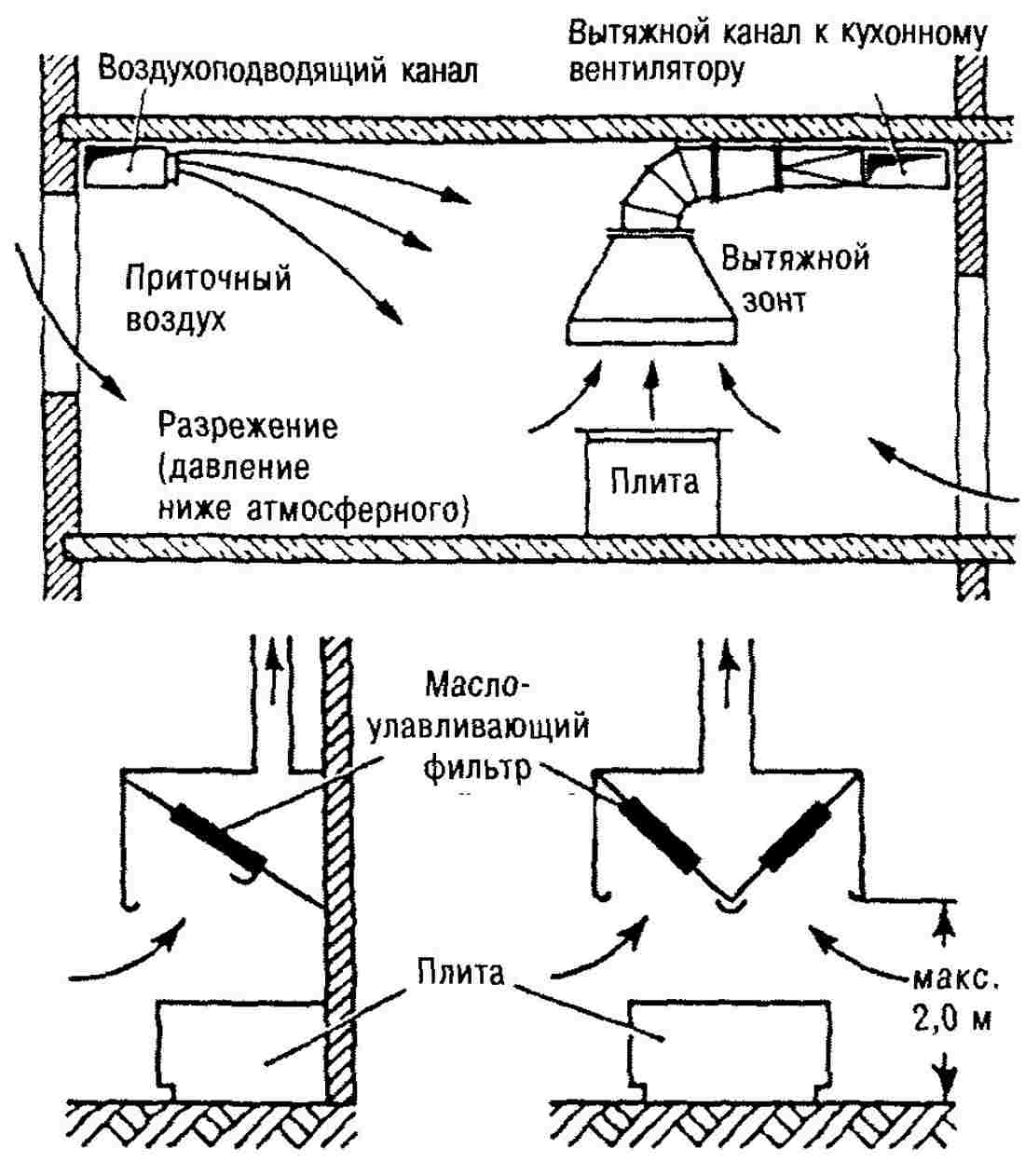
Scheme of exhaust ventilation with flow channels
Look at the photo. This is an exhaust ventilation scheme with flow channels, on which you can see how air enters from the outside and exits from the inside of the room.He himself cannot get inside the building and leave it, so you should take care of special equipment with which the air masses will move in a circular mode and ventilate the building.
Such a system can be called volatile. It has its drawbacks, since it requires additional energy and money costs, the price of such a unit is high.
But such forced ventilation justifies itself by the fact that with its help living in the house is incredibly comfortable, and the owner does not think about how to ventilate the room and where to put the unpleasant smell from the bathroom and kitchen. We also note the presence of special filters that are able to purify the air coming from the street, and heaters that heat it up during the cold period of time.
An important point is that the axial exhaust fan directs the cleaned and heated air flows to any room in the living space, but before installing the air recuperator, you need to make a diagram of the entire system, and after that, the installation and connecting work of pipes and shafts into one .
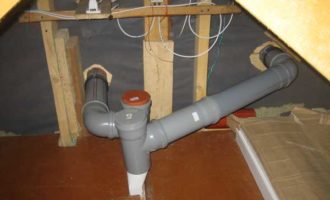
Such installations, as a rule, are placed in the attic of the house, this is good news, because this does not require the allocation of free space inside the building, which is always worth its weight in gold. In addition, by placing the system in the attic, you will not need to make additional outbuildings.
Natural ventilation does not eliminate unpleasant odors, so it is imperative to install an extractor hood in the kitchen. The supply and exhaust ventilation in the kitchen is silent, does not vibrate, and is serviced no more than once a year, and then for prevention.
Such equipment is automatic, they have parameters for setting the required air temperature in the room, as well as humidity in all rooms. With small deviations, the work within the system immediately switches to the one that was installed and programmed.





Supply and exhaust fans for exhaust are:
- With special heater. This includes a water heater or electric heater.
- With recovery system. The air that enters the building is immediately warmed up by what comes out. Such a system is considered ideal because it does not require additional devices, heat carriers and energy carriers.
Hoods for the kitchen, toilet, outbuilding, bath: installation
To eliminate unpleasant odors from cooking, install a kitchen hood fan.
First, consider the options for the execution of these devices:
- Suspended or flat. The most common and frequently purchased option. Installation is carried out between wall cabinets and gas stoves;
- Island. This is an option for a kitchen where there is a free-standing island. Hang from the ceiling and the job is done;
- Wall. Such a device is installed on the wall next to the gas stove. The design option is different, custom order is possible;
- Embedded. Such ventilation equipment is non-standard and is fastened with special fasteners and tools, installed in a countertop or hanging cabinet. Perfect for any interior and does not take up extra space.
We must not forget that it is required to additionally install an exhaust fan in the kitchen. Ventilation anemostats are also installed.Such devices remove air and are perfect for the interior of the room. To blend in with the color scheme, choose one that matches the wallpaper or ceiling. Fortunately, manufacturers offer a wide range of accessories and fixtures that run up the eyes.
The kitchen hood fan is worth buying, having previously measured it.
WATCH VIDEO
In conclusion, we add that ventilation works if the shaft is not clogged and air exchanges are installed in the room. If these conditions are met, then the guarantee that the ventilation is functioning is 100% and you do not need the services of a qualified craftsman.
Rules of operation and rules of care
Terms of use and timely service are the key to the durability of kitchen appliances. It is not surprising that devices with a warranty period of 1-3 years, subject to certain rules, will work quietly for 8-10 years without requiring expensive repairs.
Safe use of the device
To extract functioned in the kitchen without problems, should initially correct it install and connect to communications – power supply and ventilation. There shouldn't be any distortion.
When the test is turned on, the device will work quietly, emitting an acceptable noise level. Creaking, crackling and other extraneous sounds are witnesses to errors made during installation.
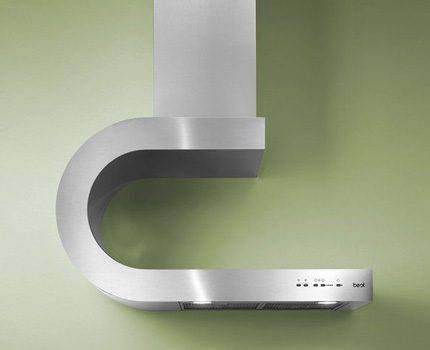
Immediately after installation, the equipment should be checked for performance and noise. You can use a real noise meter if you have one, or an app of the same name by downloading it to your smartphone
It is strictly forbidden to use a household exhaust device in production - only for its intended purpose.Otherwise, the owner loses the warranty.
In addition, the following activities are prohibited:
- close or clog openings on the body of the product;
- limit or completely block the free flow of air during operation of the device;
- connect an air duct to a duct to remove smoke and other hot emissions;
- carry out manipulations for repair or maintenance without disconnecting the hood from the electrical network.
Such prohibitions are related to the safety of users and the equipment itself - violation of the rules will lead to the failure of the fan, without which the device will not be able to function.
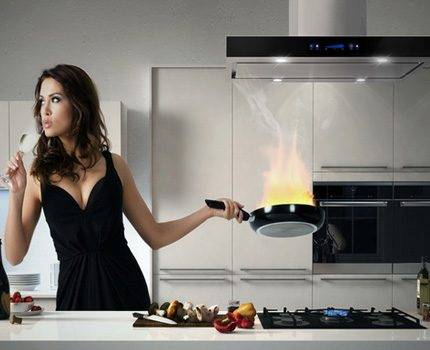
When the final stage of cooking is flambé, for example, a delicious steak has to convey subtle notes of aged cognac, you should follow the process very carefully to avoid igniting the grease filters.
Do-it-yourself equipment maintenance
Carrying out service work depends on the frequency of use of the hood, the nature of the dishes being built and the mode selected for its operation.
It is important to remember that maintenance is carried out when the device is completely disconnected from the mains.
Caring for the product consists in washing the grease filters monthly - you need to remove them and remove traces of soot and dust with soapy water and a soft sponge. Leave to dry at room temperature.
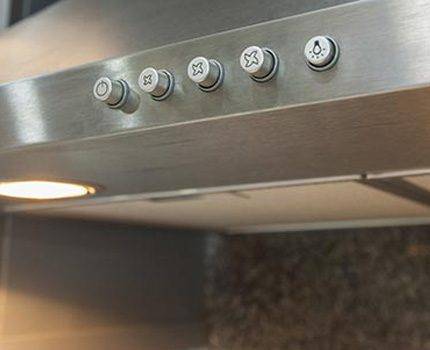
Ignoring the rules for cleaning grease traps can lead to accidental ignition of the latter and damage to the exhaust equipment. Moreover, dirty filters can cause poor performance.
In the presence and use of the recirculation mode, it is necessary to change the carbon filters. This is done on average every 4-6 months.The frequency depends entirely on the model of the device and the recommendations of its manufacturer.
If the installed equipment is only able to evacuate the exhaust air from the room, then there will be no need for additional expenses for the purchase of filtering devices.
In addition, the device needs regular removal of contaminants from the surface of the case - with a soft cloth dipped in soapy water, it is necessary to wipe the stains formed during operation.
The same procedure should be repeated on all parts of the device that are inside the device and that can be reached
Particular attention should be paid to cleaning the fan blades - an excessive amount of waste accumulated on them leads to a decrease in the power of the hood
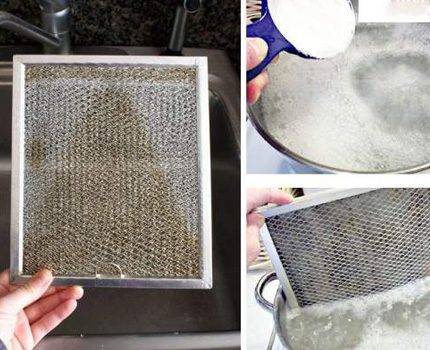
You can remove dirt with any means used for washing dishes. The main thing is that it does not contain coarse inclusions that can scratch the surface of the filter or the housing of kitchen appliances.
When the light bulbs burn out, they will have to be replaced with new ones, choosing the same power and size. If some mechanism breaks, it is better to seek help from a service center without trying to fix the problem on your own.


Where is the best place to install an outlet?
Surely, most readers will not have a question - how to connect the hood to electricity? However, even before the installation of the exhaust device, you need to prepare a new outlet for it.
IMPORTANT! Hoods go on sale, for the most part with three-wire wires, so the socket must match.
It is forbidden to install sockets near the stove and near the sink, so the best option would be to install an outlet for the hood above the wall cabinets, at a height of about two meters.
Move the outlet to the right or left of the center of the hood. If you choose another, more open place, then the outlet can be decorated with a special box. Do not hide the outlet behind hanging cabinets or bulky appliances!
For various reasons, power surges are possible in the house, which can damage or burn out the hood motor. To prevent such a breakdown, be sure to ground the outlet under the hood.
Summing up, we note that the hood in the apartment is certainly a useful thing. It will greatly facilitate the life of the hostess. You can install the exhaust device yourself, but if you do not have certain skills, it is better to choose a flat hood.
Any defects during installation: they were not installed strictly horizontally, the joints and holes were not sealed tightly enough, the corrugation material was chosen too thin, and other little things can affect the operation of the hood or even negate the benefit of its installation. Therefore, follow the instructions in the instructions.
We offer you to watch a video on how the kitchen hood is connected to the ventilation:
Pre-launch tests
After assembling the entire ventilation complex, connecting all the elements, check its performance.
Pre-start tests at maximum power are required to ensure the following:
- all systems work correctly;
- design performance achieved;
- air exchange is carried out according to planned design norms, that is, the conditions for air distribution in individual rooms are met;
- smoke removal is effective;
- no vibration;
- fastening to the wall and ceiling did not reveal any flaws;
- electrical circuits do not spark, do not heat up, do not close.
- The heating elements change the temperature evenly.
In accordance with the rules of SNiP, test run and adjustment of equipment are carried out to confirm the design performance of the system. Typically, pre-start tests of the ventilation system are carried out before its industrial operation. Sometimes such launches are carried out after the completion of the installation work of individual blocks or cycles. The results of intermediate checks must be recorded in the acts, which, upon completion, will be included in the package of documents for the ventilation system.
Before the trial run, the technicians should check the technical documentation to ensure that the following criteria are met:
- the equipment actually installed coincides with the one declared in the project;
- installation work was carried out in accordance with technical specifications and standards;
- the degree of readiness of the installations corresponds to the operating instructions from the manufacturer;
- all deviations from the project are documented in the author's supervision book or by another act, agreed and meet the requirements of SNiP;
- all identified defects were eliminated by the time of launch, as evidenced by the attached acceptance certificates.
If the pre-launch tests revealed a discrepancy between the actual data and the design data, then after the reasons are found, the devices must be adjusted. Elimination is carried out by a contractor who installs ventilation.
The following inconsistencies are allowed.
- Deviation by 10%, both in plus and minus, indicators of the volume of air that passes through the head general exchange sections of the ventilation unit.
- The deviation of the volume of air flow passing through the distributing or receiving units, in the range from -20% to +20%.
- Deviation of air volume indicators ±10% entering special purpose buildings. These include medical institutions, in particular, operating rooms, museums, control rooms and other premises that require precise air conditions.
In the next video you will find the installation of ventilation in the kitchen.
Choosing the optimal ventilation system
Each house is unique. And the ventilation system suitable in a particular case will be different. Of great importance when choosing a system is the area of \u200b\u200bthe house, the number of floors, materials of walls and roofs.
You should also take into account the amount allocated for this
The larger the area of the house and the more airtight materials used in its construction, the more complex the system will be required. Another point is the additional possibilities of climate control. The cost of ventilation directly depends on this parameter.
The arrangement of the ventilation ducts themselves is inexpensive - you can pick up inexpensive pipes, valves, grilles, additional parts that are needed for installation
The more functions a ventilation system can perform, the more expensive it will cost. But with a modest budget, you can do without additional features - the flow of fresh air into the house does not depend on this.


To organize the flow of air use:
- windows with micro-ventilation;
- wooden windows. They have natural micro-ventilation, which provides an influx of fresh air from the outside;
- supply valve.
Inlet valves can be of various shapes and sizes. The materials from which they are made are metal and plastic. As for micro-ventilation in windows, this option is the most convenient - you do not have to additionally make holes in the walls and buy valves.
To remove air from the premises of a private house, ventilation shafts are used in the wall or separate air ducts are laid in the kitchen, pantry, boiler room and bathroom. It is convenient to install a fan in such channels, which will forcibly rid the room of polluted air.
Mechanical ventilation systems use filters that need to be changed periodically. Their service life is indicated in the manufacturer's instructions.
If the area of \u200b\u200bthe house is small, then it is enough to install windows with micro-ventilation, an extractor hood in the kitchen and ventilation ducts from the boiler room and bath. Such a seemingly modest system will completely cope with the ventilation of all the premises of a country house.
How should the corrugation be installed?
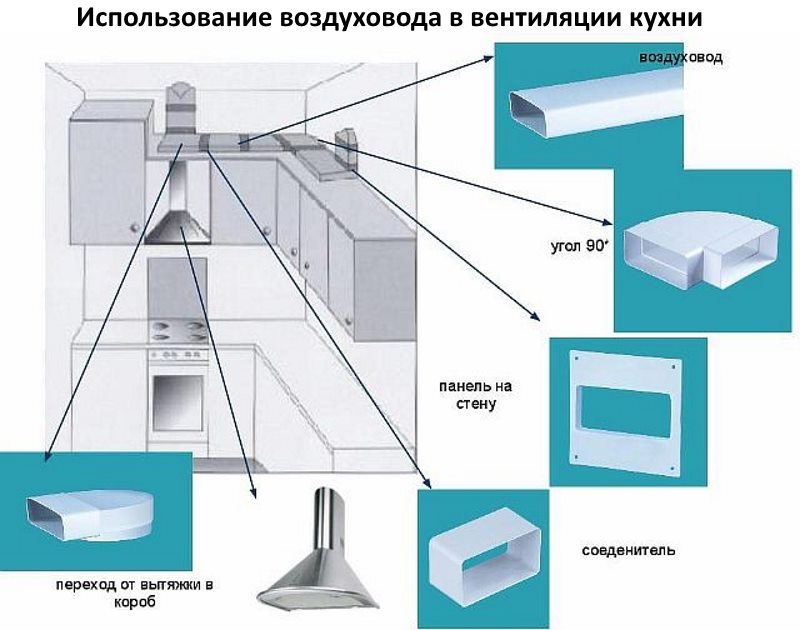
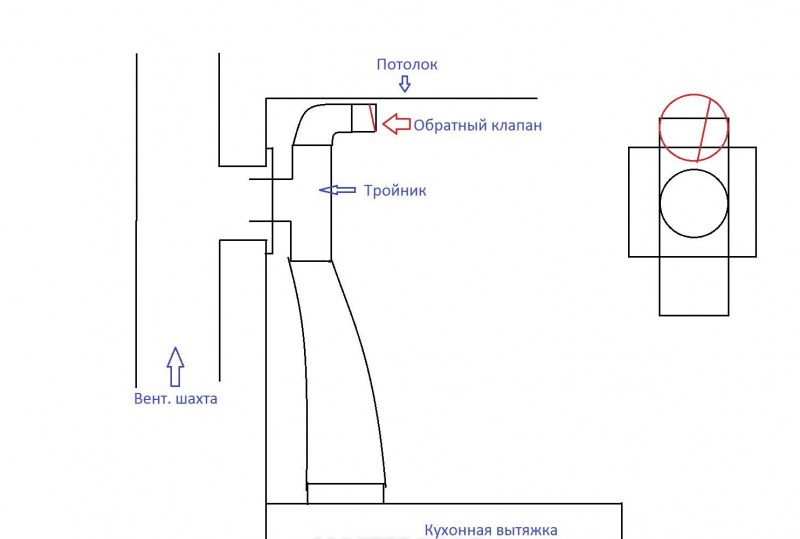
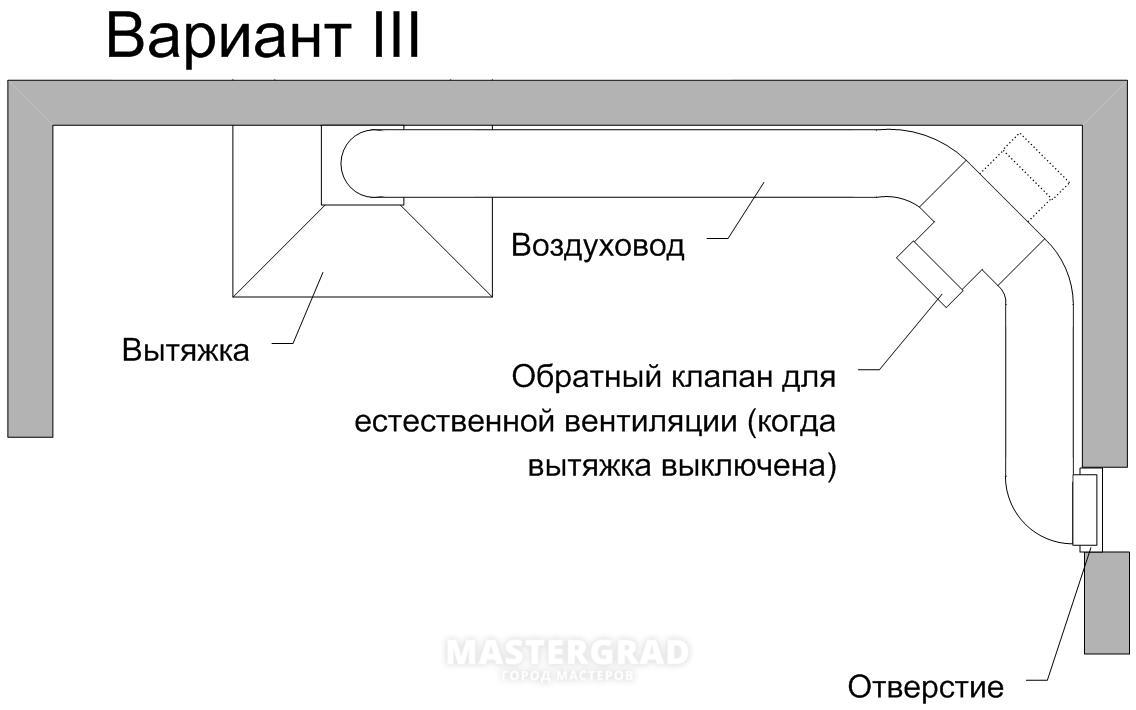
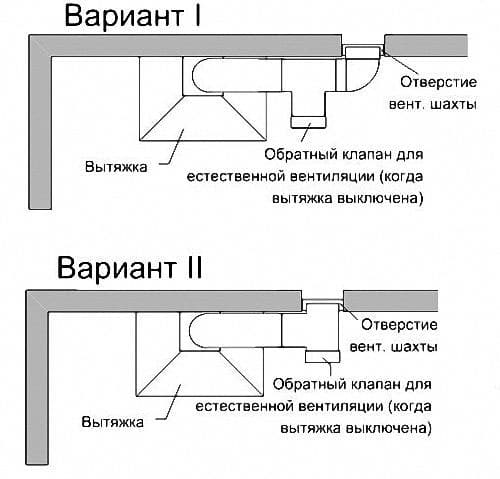
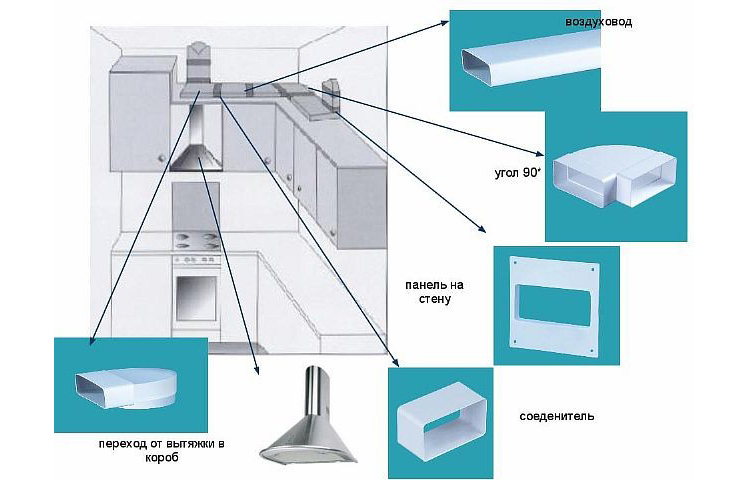
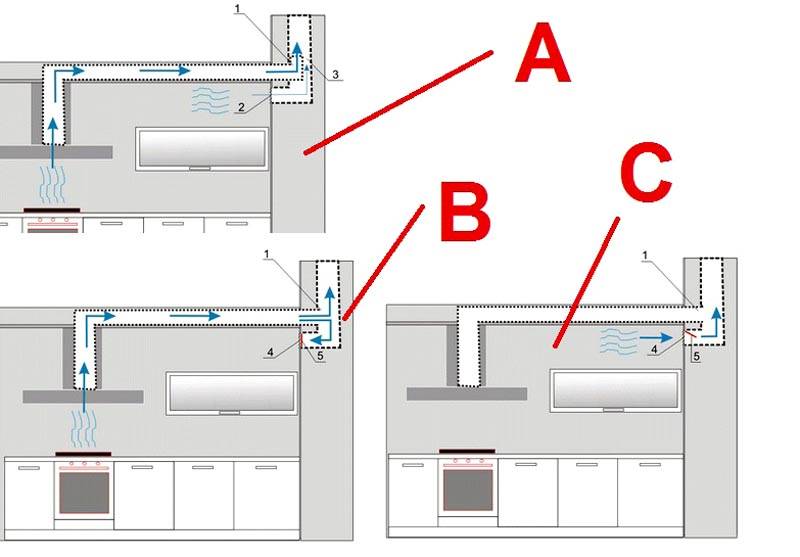
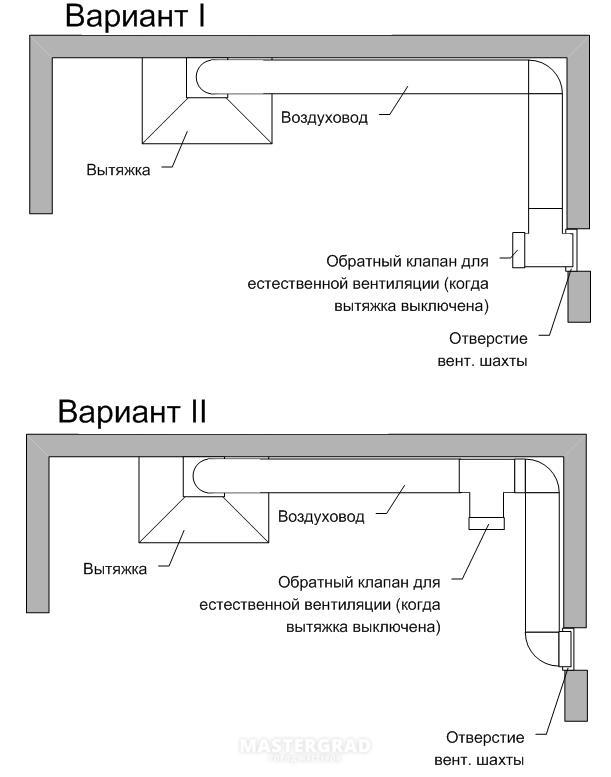
If the vent is located above the stove, you can connect it to the hood with a small adapter. But often they are separated by a much greater distance. Then you should install a special duct for the hood. It is either a smooth plastic pipe or corrugated plastic or aluminum.
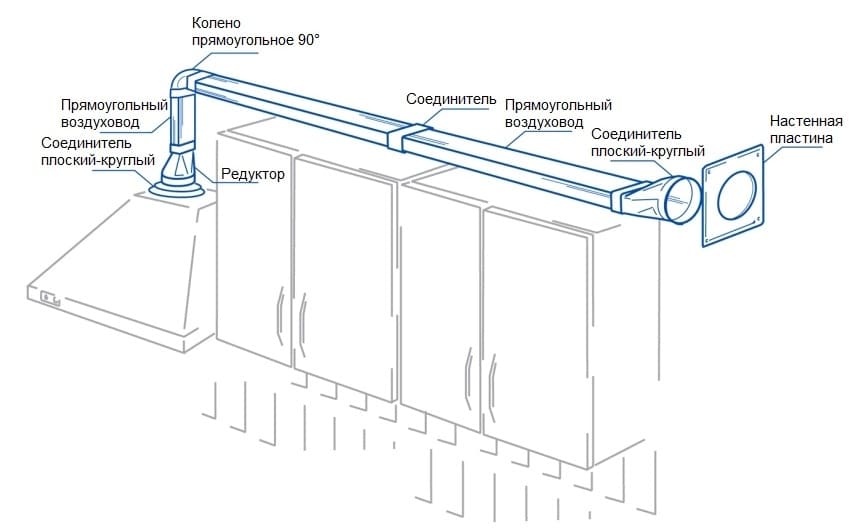
When choosing a smooth pipe (round or square), you need to additionally purchase connecting elbows that will help you get around the corners. In addition, an adapter for mounting on the hood and another one for the vent will come in handy.
All joints and connections are reliably coated with sealant. It looks quite aesthetically pleasing, so you can put it under the ceiling without additional decoration.
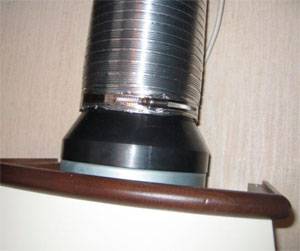 If it is possible to hide the air duct in a closet, then you can use the corrugation, it is cheaper and easier to install.
Adapters are not required, as the corrugation goes around corners well.
Before installation, stretch the corrugation as much as possible to reduce noise during operation of the hood.When choosing the diameter of the corrugated pipe, be guided by the size of the outlet of the hood itself. The corrugation is fixed on the exhaust pipe with a clamp, and on the vent with a special grill.
IMPORTANT! About twice a year, the air duct needs to be cleaned, or simply replaced with a new one, as cinder accumulates, which can interfere with air movement and there will be a risk of ignition.
Installation of a built-in hood in a cabinet
The built-in hood is almost completely hidden in a cabinet made for it. It is fastened in the same way as described above - on screws, only they are screwed into the walls. Only previously in the shelves located above it is necessary to make holes for the air duct. This is done after the hood is purchased, since the location of the air outlet depends on the company and model.
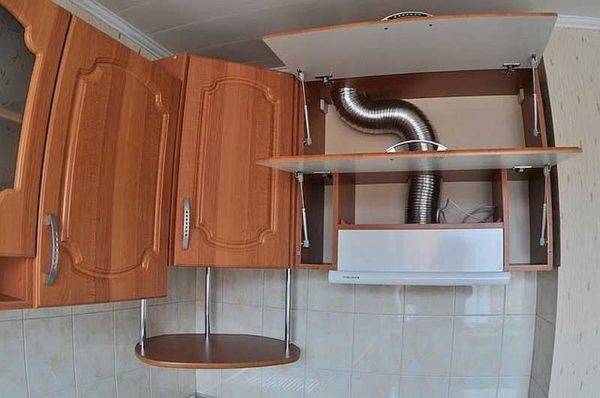
An example of installing a built-in hood
If the locker is hanging, it is better to remove it. In the removed cabinet, install the hood in place, mark the location of the air outlet on the lower shelf, cut it out. To do this, it is easier to use an electric jigsaw and a file with fine teeth. The saw blade for laminate leaves almost no chips. If desired, the cut point can be sealed with a plastic C-shaped furniture profile. They are rigid and flexible. It is easy to use flexible - it bends at any angle, rigid ones will have to be heated with a building hair dryer before installation. These profiles are “sit down” on glue, most often they use “liquid nails”. After installation in place, remove the remnants of glue (with a damp clean cloth), fix with masking tape to the shelf. We cut off the excess profile with a file with a fine tooth, clean the cut with fine-grained sandpaper.
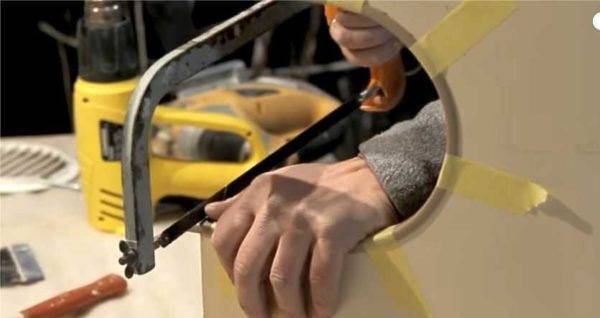
The process of preparing the cabinet for installation of the hood
In the same way, we make holes in other shelves. By the way, they may no longer be round, but rectangular - it depends on the section of the air duct you have chosen.
After that, all the shelves are installed in place, the cabinet is hung and fixed. A built-in hood is attached to it with screws through the holes in the case. Next is the process of connecting the duct.
Types and features of exhaust devices
The variety of hoods offered by manufacturers is sometimes amazing. On the market, you can easily find the optimal model in terms of cost and quality.
But for an unprepared buyer, the choice and installation of such kitchen appliances will become a difficult and sometimes overwhelming task. Therefore, before you go to the store or engage in the installation of the hood, it is imperative to deal with all the subtleties and nuances.





Sanitary norms and requirements
Any type of hood, whether recirculating or a device with a vent to the ventilation, must drive out an air volume equal to 10-12 volumes of the cooking room in one hour.
This is a strict sanitary requirement that must be met. Indeed, in the kitchen, open fire sources and heating appliances are actively used. And the humidity in the room is much higher than in other rooms.
As a result, the concentration of carbon dioxide, harmful impurities and fumes is constantly increasing, which will negatively affect human well-being.
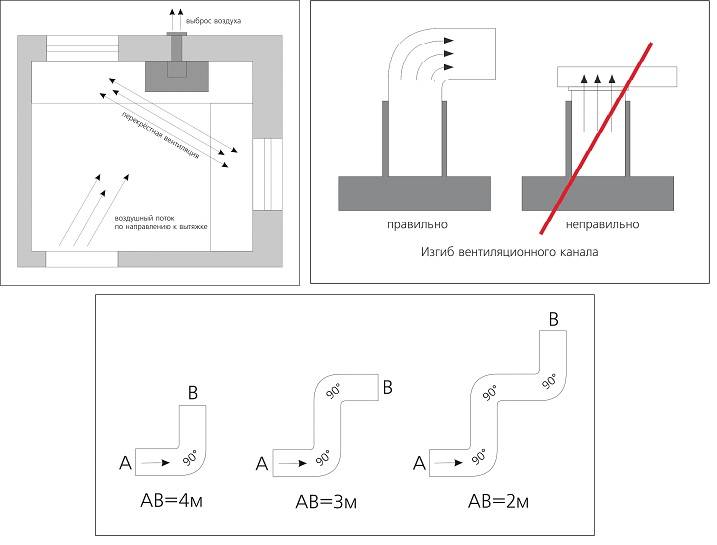
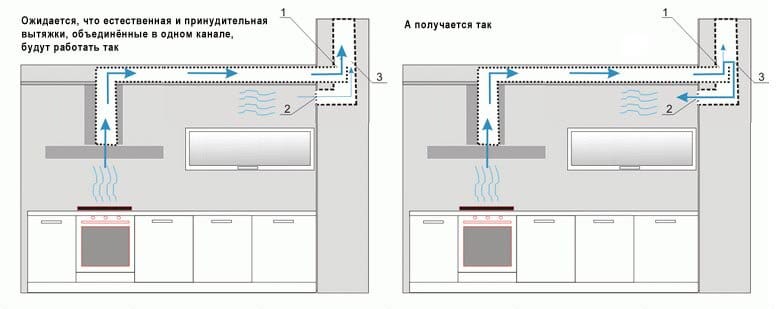
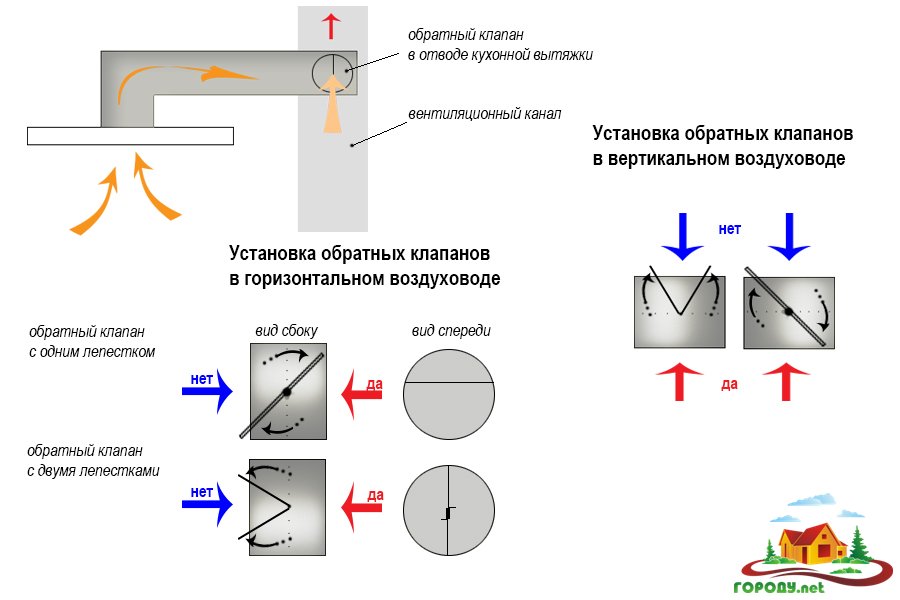
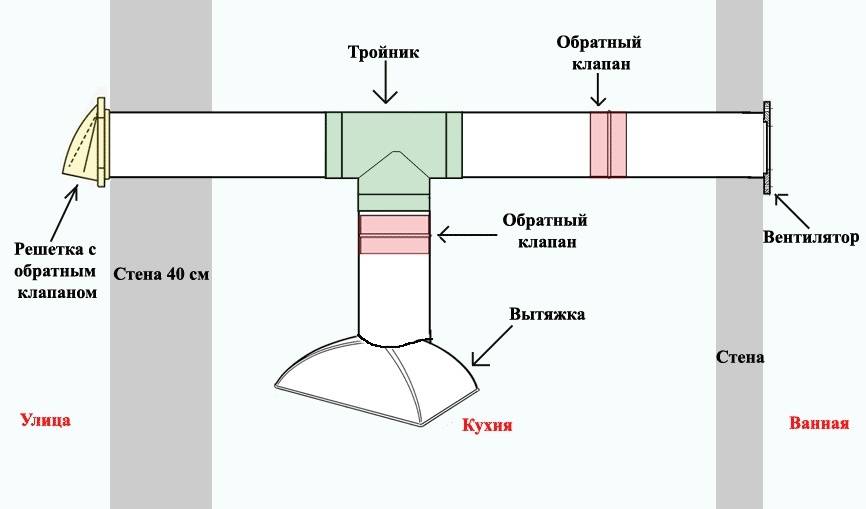
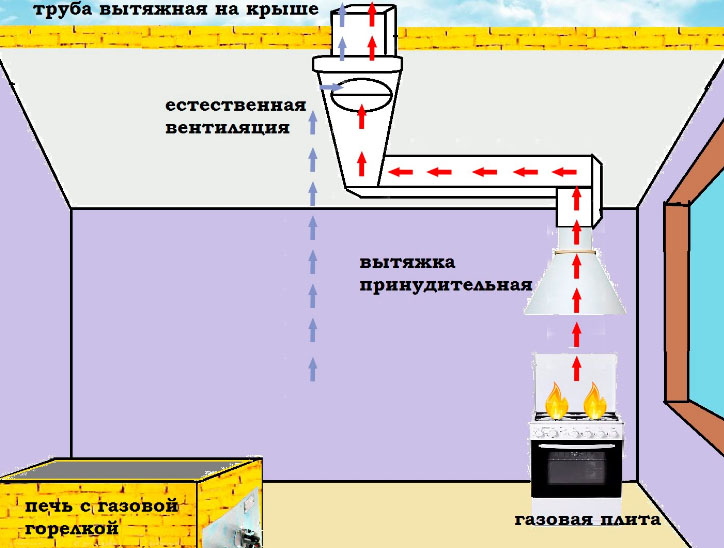
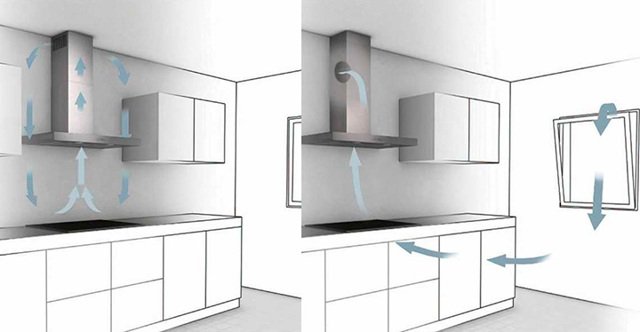
In the case of using a device connected to ventilation, it is necessary to ensure the flow of oxygen from the street. If this factor is not taken into account, then the effect of capsizing will appear. Its essence is that the air will be drawn from the duct back to the kitchen
Another requirement is that the hood should be installed as close to the hob as possible. This is a minimum of 65 cm for an electric stove and 75 cm for a gas stove.
A prerequisite is the presence of a special grate on the device, where dirt and grease will settle. This prevents waste from entering the ventilation duct.
Extractor hood with ventilation
Hoods that remove exhaust air through the ventilation shaft are the classic and most familiar models for most people. Thanks to the constant influx of fresh air, a person’s mood rises, well-being improves, and his stay in the kitchen will become more comfortable.
Typically, exhaust devices provide forced ventilation, for which a fan is used. This approach allows you to quickly remove excess moisture from the room, which can harm the furniture set, unpleasant odors, various fumes, soot, excess carbon dioxide, etc.
In order not to pollute the atmosphere around the house, the hoods use a special filter that collects most of all the dirt.
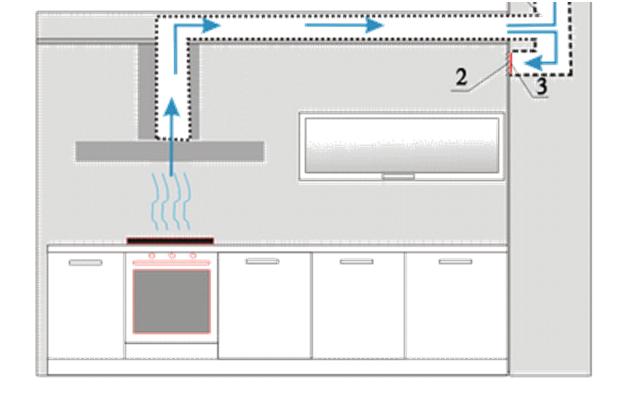
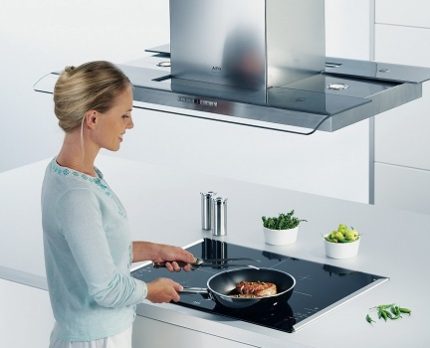 The hood sucks in the exhaust air and removes it from the room, for which the ventilation shaft of the house or apartment is used.
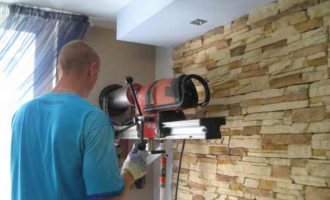
The only drawback of built-in hoods with a vent to the ventilation is the complexity of their installation. After all, the device must be connected to the duct. If the house does not have a ventilation duct, then you will have to drill a hole in the wall.
Varieties of hoods with a branch
There are several types of such kitchen appliances.Hoods with a vent to the ventilation are divided into categories depending on the design of the device, the method of installation and cleaning.
By type of installation, the following devices are distinguished:
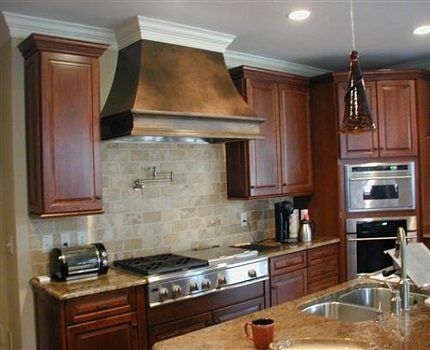
- Mounted. They are divided into domed or flat. And on the market there are inclined products, which, if necessary, can be decomposed. The hinged hood will harmoniously fit into both a large kitchen and a small room.
- Embedded. Devices of this type are the ideal solution for small apartments. Their peculiarity lies in the fact that they are built into the locker and act as its bottom. Some devices can be moved apart to increase the amount of air that is taken in.
Owners of large kitchens prefer the island design of the hood. It is used in situations where the stove is located not at one of the walls of the kitchen, but in the center of the room. Island hoods are attached directly to the ceiling and allow you to create an original design of the room.
Among other things, the exhaust air extractor is an important element of the kitchen. It not only absorbs harmful fumes, but also acts as a decorative element. Therefore, choosing one or another type, you need to evaluate whether the desired model will be in harmony with the design of the kitchen.
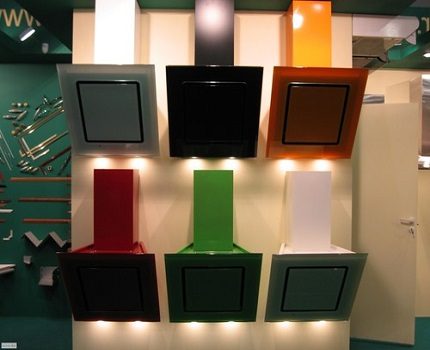
It is necessary to choose one or another type of hood depending on the location of the stove and the dimensions of the kitchen.
Ventilation options in a private house
Ventilation of the room is necessary in order to create optimal conditions for the life of people and the existence of furniture and appliances in the house.
If in apartment buildings everything has already been done by the specialists who erected the building, then in the construction of private real estate this issue is often overlooked.
Sometimes the arrangement of ventilation ducts is considered a waste of time and money. However, they are an obligatory part of the project implementation, providing favorable conditions for life and long service life of building structures.
This is a fundamentally erroneous opinion. Musty air, sweating windows, unpleasant odors from bathrooms and aromas of fried food, along with fumes, will enter all rooms and even the bedroom. Without a properly designed and assembled ventilation system, the comfortable life of the inhabitants of the house will be at risk.
Ventilation in a private house can be:
- natural;
- mechanical;
- mixed.
The first type is based on the natural process of circulation of air masses. No mechanisms are used to force air into the house. It enters from the street, penetrating through windows with micro-ventilation or supply valves, organized in the most suitable places for this.
In the rooms of the house in which valves are not installed, the air circulates through the doorways and through the gaps between the door and the floor.
Exhaust air also leaves the house in a natural way through ventilation shafts arranged in one of the walls of the house (+)
With a mechanical type of ventilation device, fans and special supply equipment are used. The required volume of clean air is supplied to each room of the building, and the exhaust air is discharged outside. This is a more complex system used for large country houses and cottages.


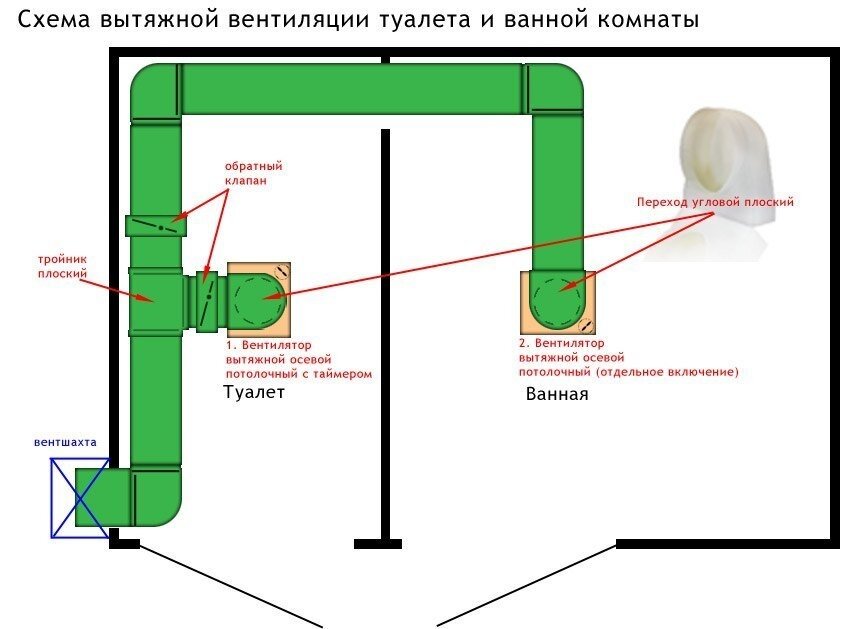


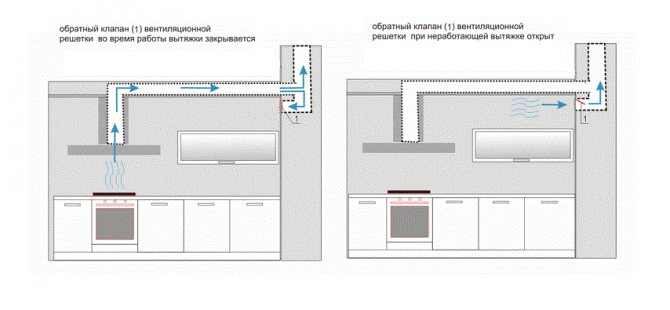
A mixed ventilation option involves the use of the first and second types.This can be the installation of mechanical supply valves in the company with a natural exhaust system for removing air through ventilation shafts in the bathroom and in the kitchen. Or vice versa - the inflow is natural, and mechanical equipment is used for removal.
A mechanical forced air ventilation system consists of equipment that requires periodic repair or replacement. Most often you need to change filters (+)
The main advantages of the natural type:
- energy independence;
- the cheapest cost;
- does not require repair;
- minimal maintenance;
- can be organized by hand.
In addition to the positive aspects, this type of ventilation has significant disadvantages. If everything was perfect, then other arrangement options simply would not be used. The main disadvantages are dependence on air temperature and weather conditions, limited service area.
In other words, with natural ventilation in the hot season, you can forget about the existence of a ventilation system in the house.
The mechanical system is convenient to use, because it can serve any area of the house / cottage and is completely independent of the weather. Moreover, it can be controlled at your discretion, maintaining a comfortable temperature regime in the premises.
Many forced ventilation systems that have sensors to monitor the state of the microclimate in the room are controlled using a remote control
Additional opportunities for heating the incoming air, for ionizing and humidifying the air masses of the room, etc. can be arranged by installing the appropriate equipment in the ventilation system.
The main disadvantages of the mechanical ventilation method:
- higher cost of equipment;
- the need for repair and periodic replacement of individual elements of the system;
- dependence on electricity supply;
- may require professional installation and configuration of equipment.
Given the positive and negative qualities of ventilation types, a mixed type is most often used for country houses and cottages. This is justified from an economic point of view and is quite doable with your own hands.
Conclusions and useful video on the topic
Video #1: Tips for choosing a kitchen hood:
Video # 2: Detailed analysis of the installation of the hood with air exhaust into the ventilation shaft:
Video #3: Installing a kitchen hood duct:
A kitchen hood with air outlet to the ventilation is an indispensable technique, the purchase of which you need to think about in the first place. After all, once you have spent money and sorted out in detail the types of exhaust devices, you can ensure that the brand new wallpaper and stretch ceiling do not absorb various unpleasant odors, and the cooking process itself brings only pleasure.
Please write comments and ask questions in the block below. Tell us how you chose the exhaust equipment for arranging your own kitchen. Leave posts with your opinion on the issue, post a photo on the topic of the article.