- Garage ventilation schemes
- Ventilation system in basement garage. Cellar air exchange scheme
- Ventilation device in the garage attached to the house
- Garage ventilation integrated with the house or separate
- Additional garage ventilation conditions
- In an underground room
- Nuances of ventilation of the inspection hole
- The need for ventilation in the garage
- Ways to improve the operation of the natural hood of the garage
- Why do you need garage ventilation?
- What is the ventilation in the garage for?
- Conversion of a natural exhaust system into a forced one
- Nuances of ventilation of the inspection hole
- Tools and materials
- Conclusion
Garage ventilation schemes
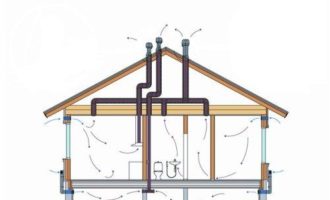
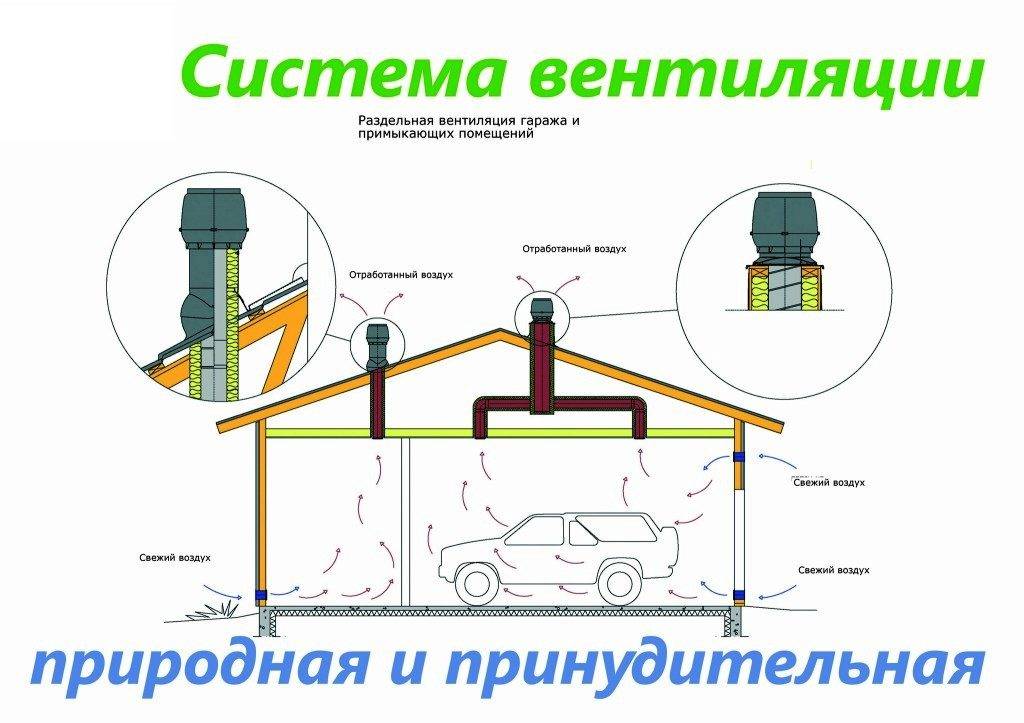
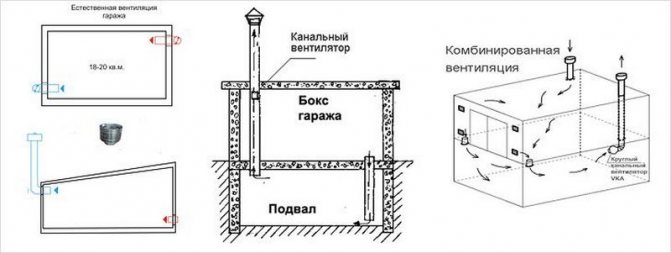
People who plan to install ventilation in garages for storing cars or trucks should familiarize themselves with the basic ventilation schemes. There are three main schemes that are used most often. These include:
- Natural. It is considered the most common scheme used by most motorists. With natural ventilation, you do not have to spend money on the purchase of mechanical fans. It is enough to make holes in the room for the inflow and outflow of air masses. However, before creating such holes, you will have to determine the best place for their location.
- Forced.It is recommended to use it if the garage has a special basement. Forced ventilation is considered more efficient, as the air circulates with the help of additional fans. The air entering the system is sufficient to provide ventilation in the garage and cellar. The only drawback of such a scheme is the considerable financial costs for the acquisition of the necessary technical equipment.
- Mixed. Suitable for car garage without additional cellar. With a mixed scheme, air enters the room in a natural way, and is removed outside by an exhaust system.
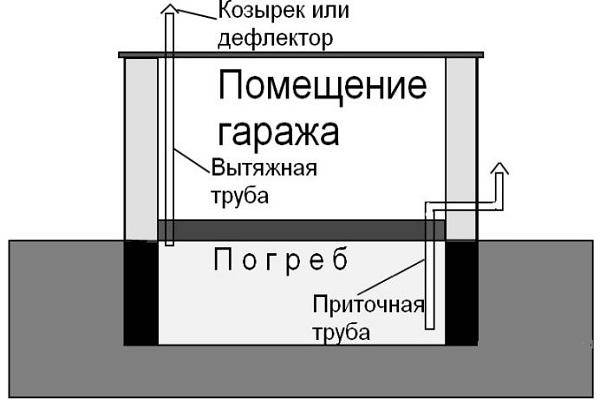
Ventilation system in basement garage. Cellar air exchange scheme
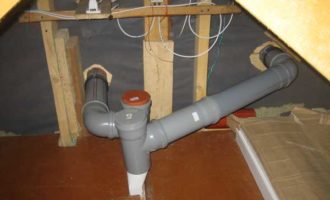
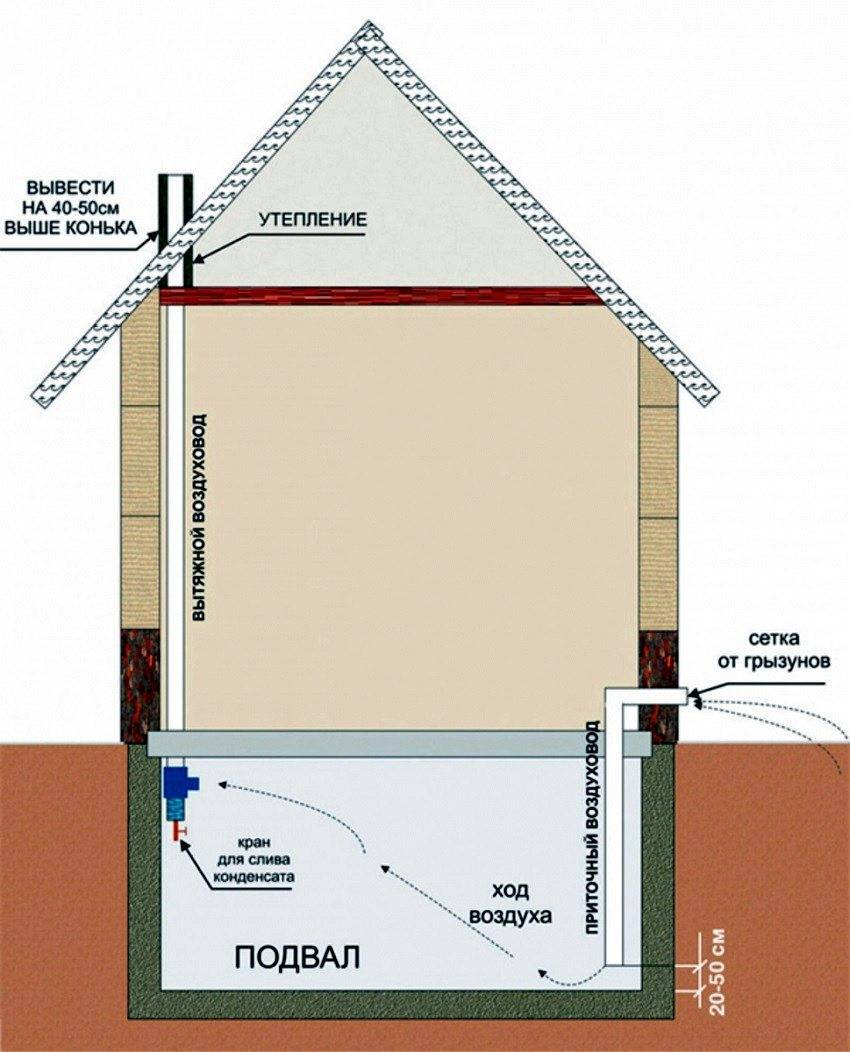
Effective use of the basement and cellar of the garage for storing vegetables and conservation is possible only if there is proper ventilation. Ventilation in a garage with a basement can be natural, mechanical or combined. Usually, for ventilation in the cellar of the garage, a natural ventilation system is sufficient. You can mount such a system with your own hands using plastic sewer pipes. During installation, you must adhere to the following recommendations:
- the cellar ventilation scheme in the garage should provide for a minimum number of pipe turns and bends;
- the exhaust pipe should be insulated to avoid condensation;

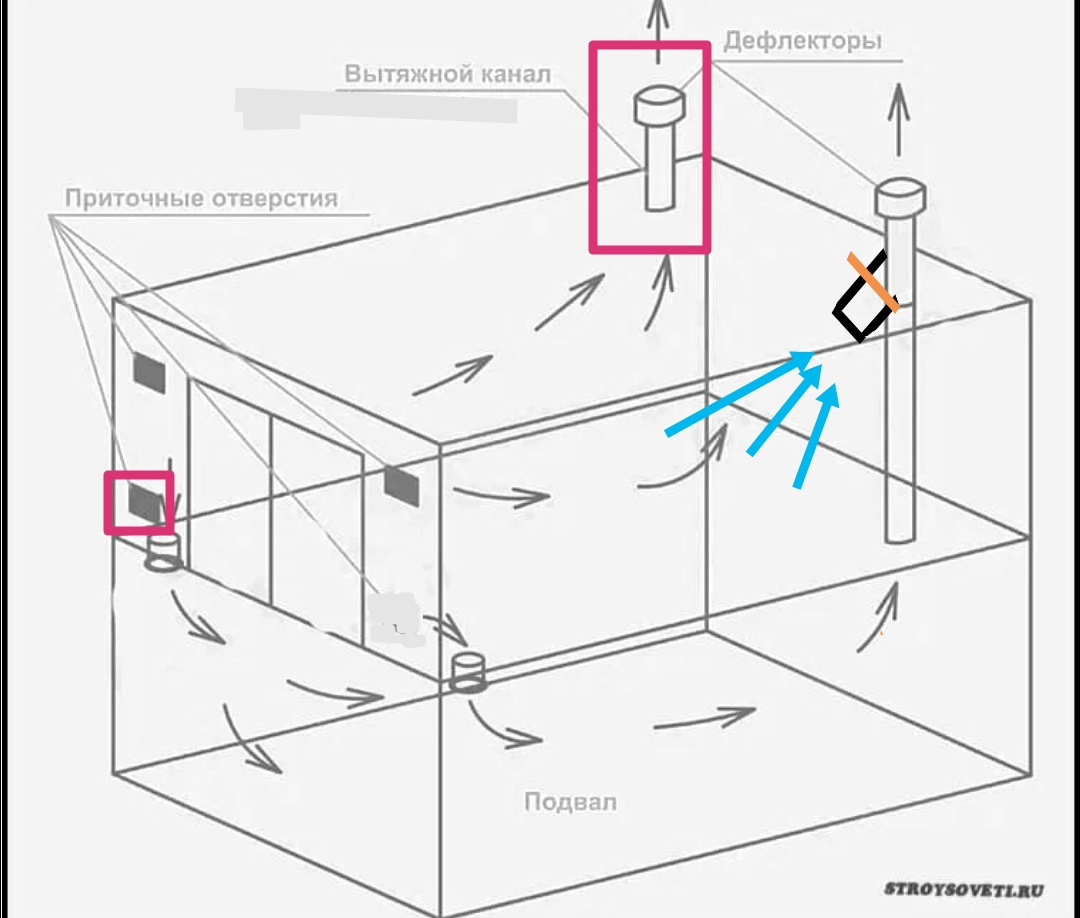
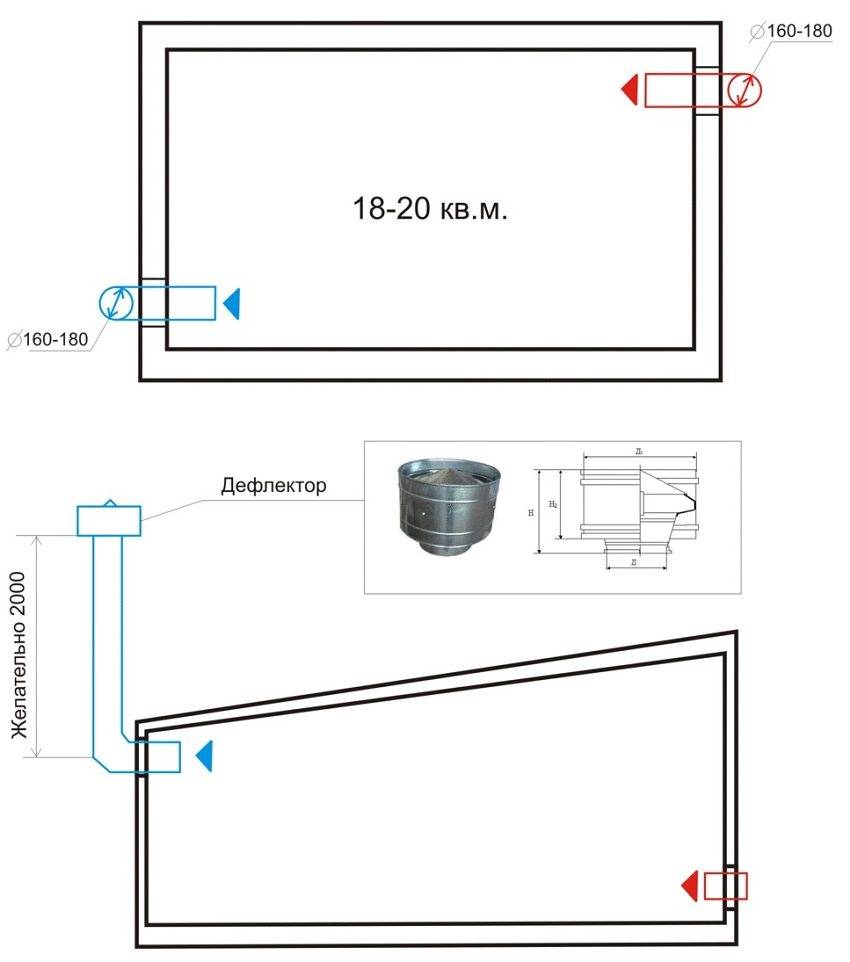
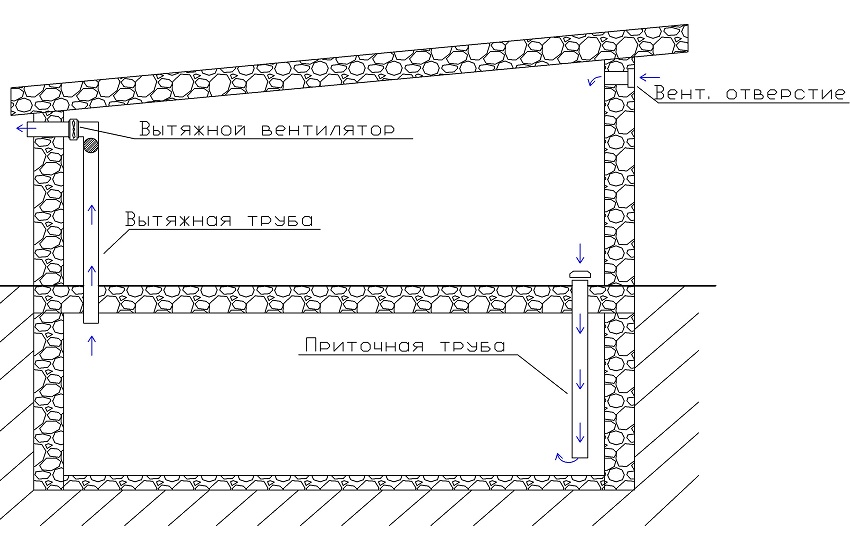
For good air exchange, the supply and exhaust ventilation pipes should be located in opposite corners of the cellar
- the diameter must be the same along the entire length of the pipes;
- external pipe inlets must be covered with protective caps to prevent precipitation from entering them.
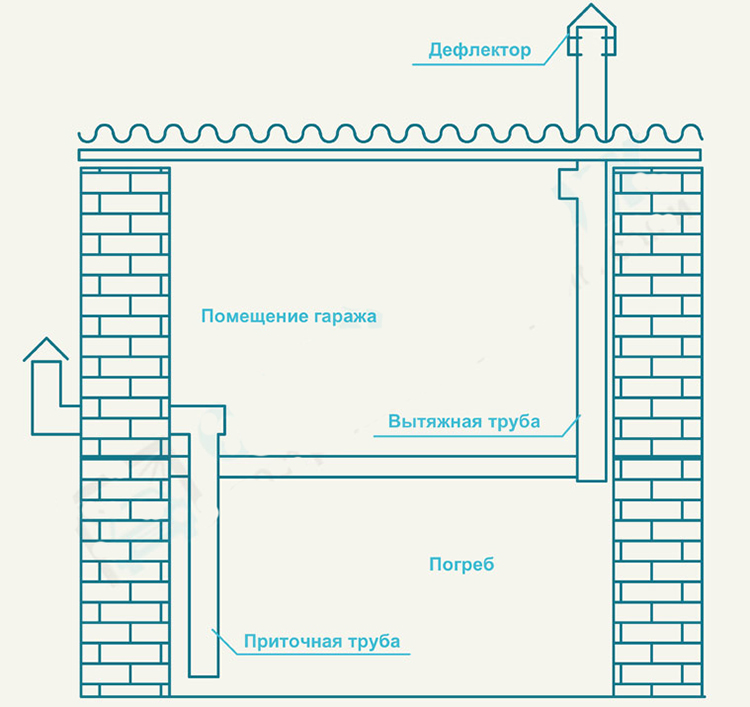
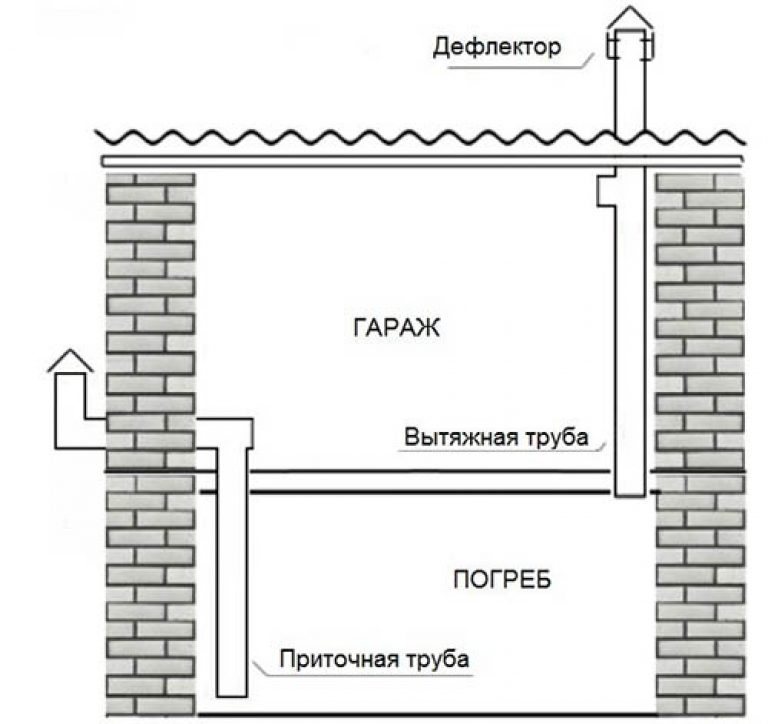
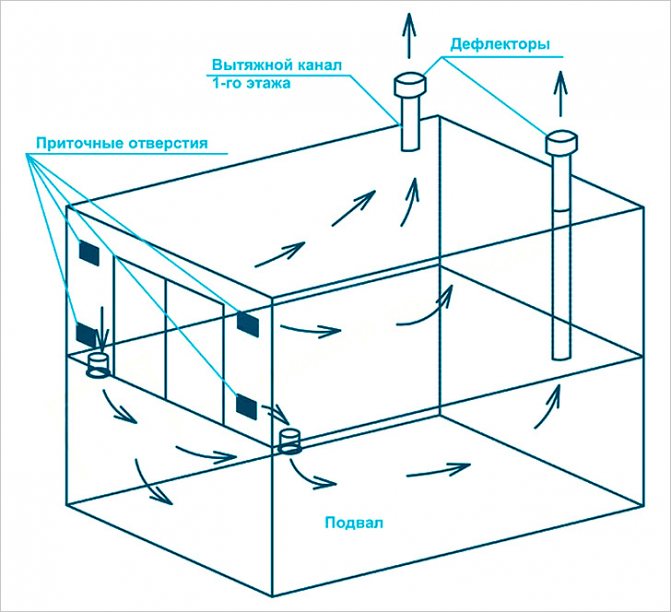
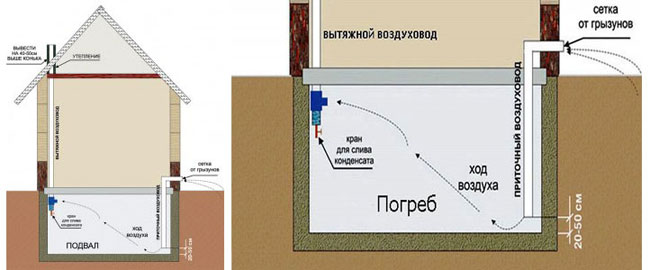
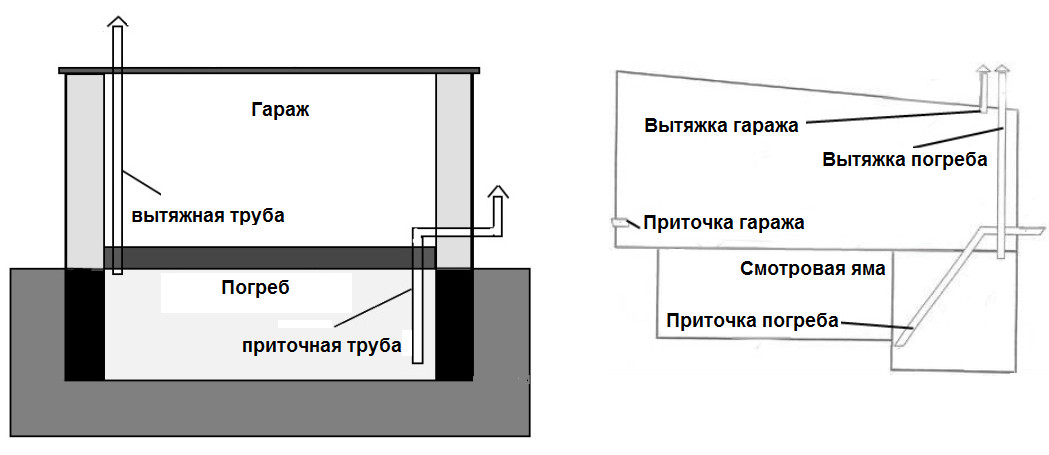
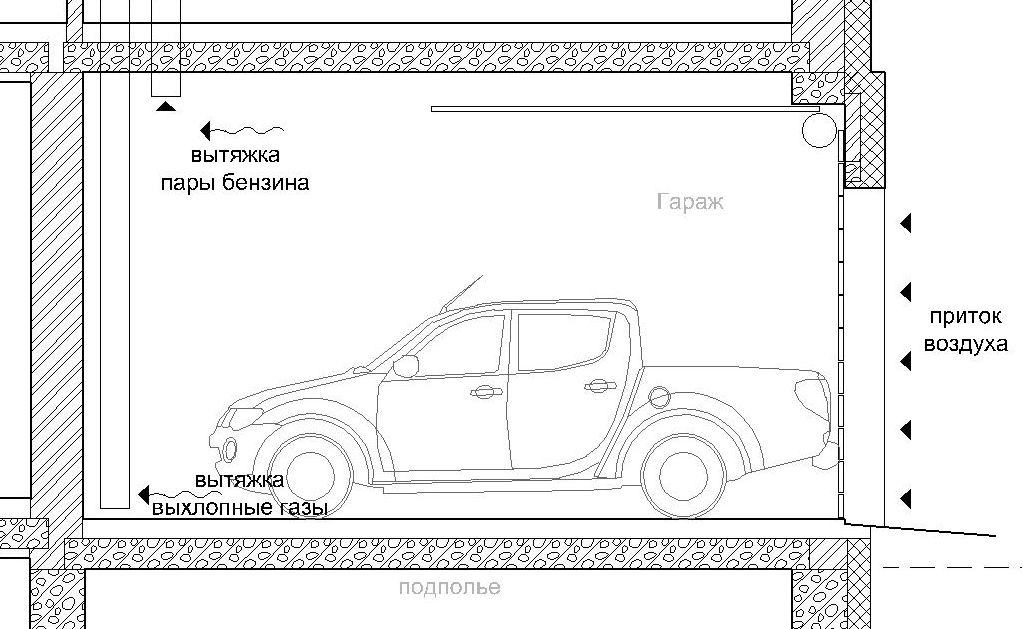
Before arranging natural ventilation with your own hands, the area of \u200b\u200bholes is calculated.The supply pipe originates half a meter above the cellar floor and is brought out. The exhaust pipe is installed under the ceiling of the cellar or basement and extends over the roof of the garage. The location of the pipes should be in opposite corners of the cellar.

In a cellar with the right microclimate, the harvested crop will remain intact.
The most correct choice of ventilation of the cellar and basement in the winter season is to use the forced method. There is almost no air exchange in these rooms and they need effective ventilation with a mechanical ventilation installation. Such ventilation will contribute to normal air exchange and the creation of a microclimate necessary for the preservation of products.
You can figure out how ventilation is done in a garage with a basement by watching the video instruction of the ventilation device.
Ventilation device in the garage attached to the house
Many people, building their cottages, attach a garage to them. It is very comfortable. Arriving from work in his car, a person can immediately go home. But a frequent occurrence with this arrangement of premises is the complete absence of a garage room hood, or, even worse, the garage hood is combined with a common house hood.
Garage ventilation integrated with the house or separate
The second option is assessed by all experts as unsuitable for residential buildings. In no case should joint ventilation be done, since at very different temperatures in winter, exhaust gases can enter the rooms of the house.
This is possible in cases where there is no heating in the garage, due to the fact that cold air cannot rise up through the ventilation duct.There is a stagnation of exhaust gases and the possibility of their entry into the living quarters.
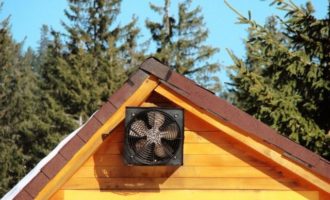
This explains why the ventilation in the garage must be individual and additionally equipped with axial exhaust fans.
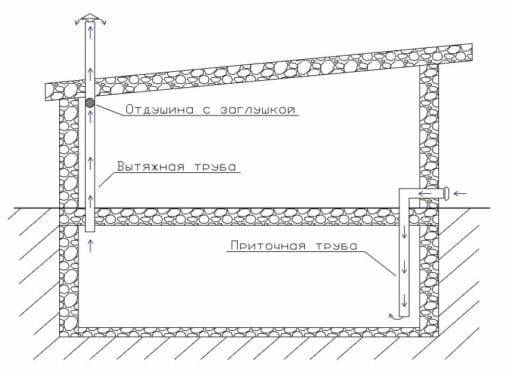
Additional garage ventilation conditions
When placing sources of additional air pollution in the garage (woodworking machines, sharpening tools), an exhaust device for the garage is required, such as exhaust hoods, slots or panels. Such a system will provide the necessary suction power for wood or metal chips. And also, in addition to removing polluting grains of sand, the cleanliness of the garage. Technically, the device of such an exhaust system differs from the usual one. This is due to the need to accumulate particles removed from the room. To increase the functionality of the system, it is required to equip it with a container for collecting chips and dust.


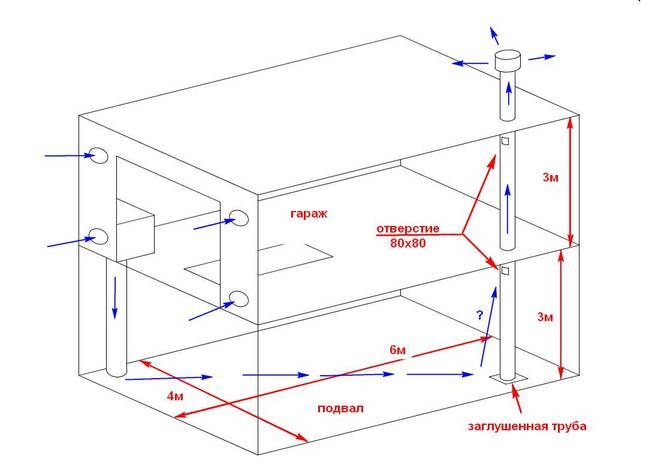

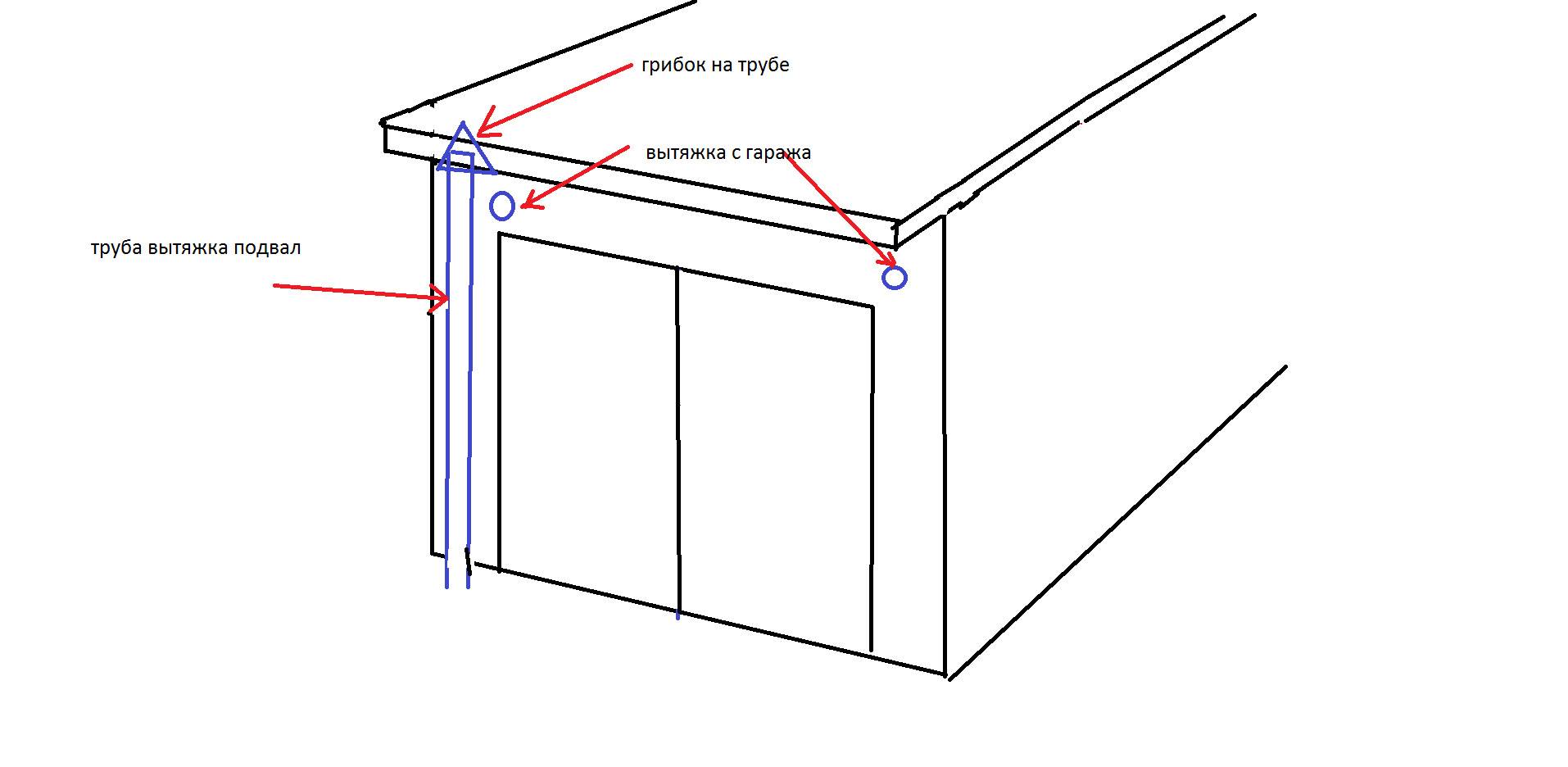

Usually, simple window openings and a garage door are enough to ensure proper ventilation of the garage in the warm season. In winter, additional exhaust ducts will have to be made to prevent cooling of the room.
In an underground room
Underground rooms always require special attention, as they are more susceptible to moisture. High humidity not only spoils the stored things, but also destroys the structure itself. Therefore, the creation of a ventilation system in the basement / cellar / viewing hole is a must. There are two types of ventilation for the basement - forced and natural.
Consider how exactly you should install ventilation in the garage with your own hands:
- Natural:
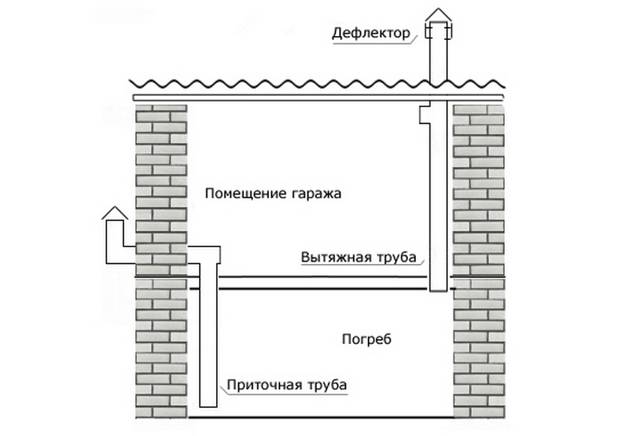
Installing a natural system will be the easiest. Its basis is the ventilation duct.
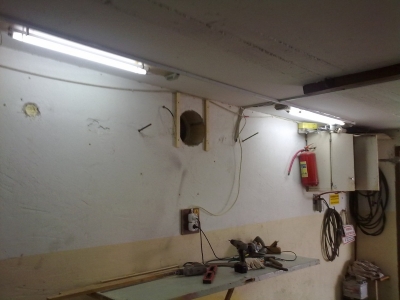 The width of the channel is one brick or concrete block laid on the sidewall.
As mentioned above, natural ventilation consists of supply and exhaust pipes.
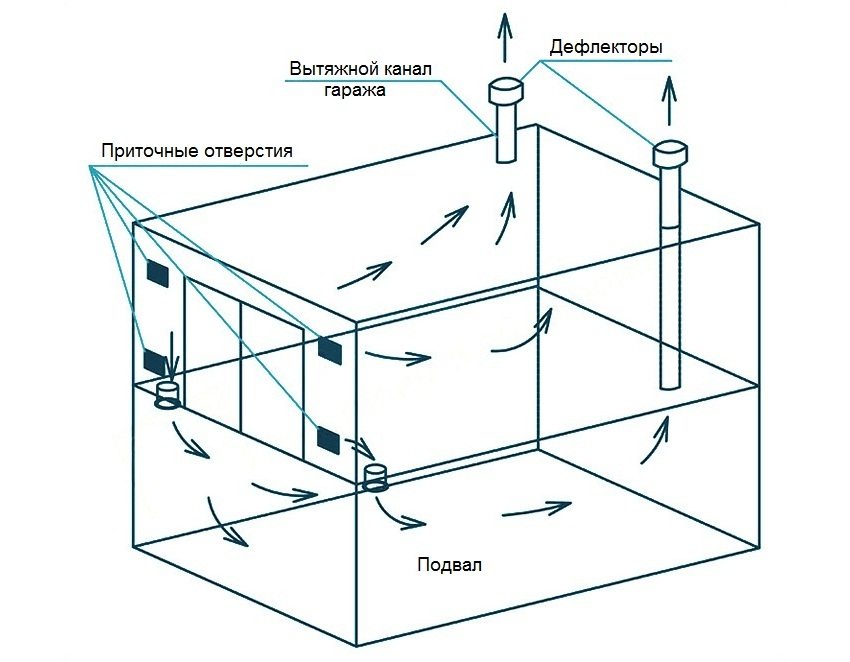
This is true for basement ventilation as well. The only difference is that the underground ventilation ducts are included in the overall garage ventilation system.
That is, the air outlet is carried out through a pipe common to the entire garage.
The supply channel also provides a connection between the underground room, the garage and the external environment. From the basement inflow, air will flow into the entire garage. Installation of two supply channels is not required.
The pipe system creates a pressure drop, and the air begins to circulate by itself. In order for the air flow to be strong, pipes should be placed at opposite ends of the basement.
The supply pipe is located at a level of 30-50 centimeters from the floor (basement), the exhaust pipe is 20 centimeters from the ceiling (garage). A suitable pipe section is 100-250 cm². But the exact calculations should be done by yourself. The result will depend on the size of the room and the climate.
Having made the calculations, you can proceed with the installation. First of all, the exhaust channel is fixed. The end of the pipe should be located 50 centimeters above the roof level. Then they install an inflow, it goes out into the street. At the ends of the pipe, it is necessary to install a mesh that will protect against large and small litter. A cheaper analogue of pipes is a gate.
Forced:
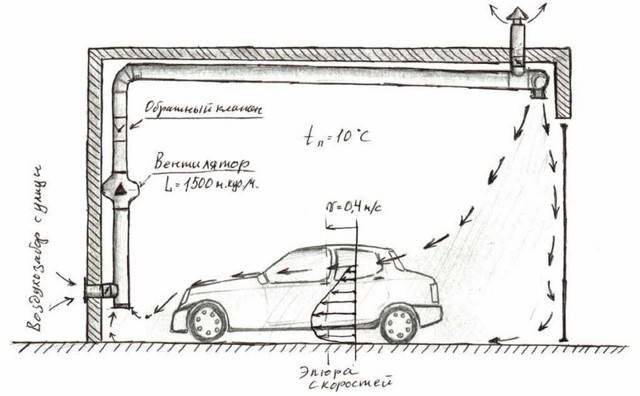
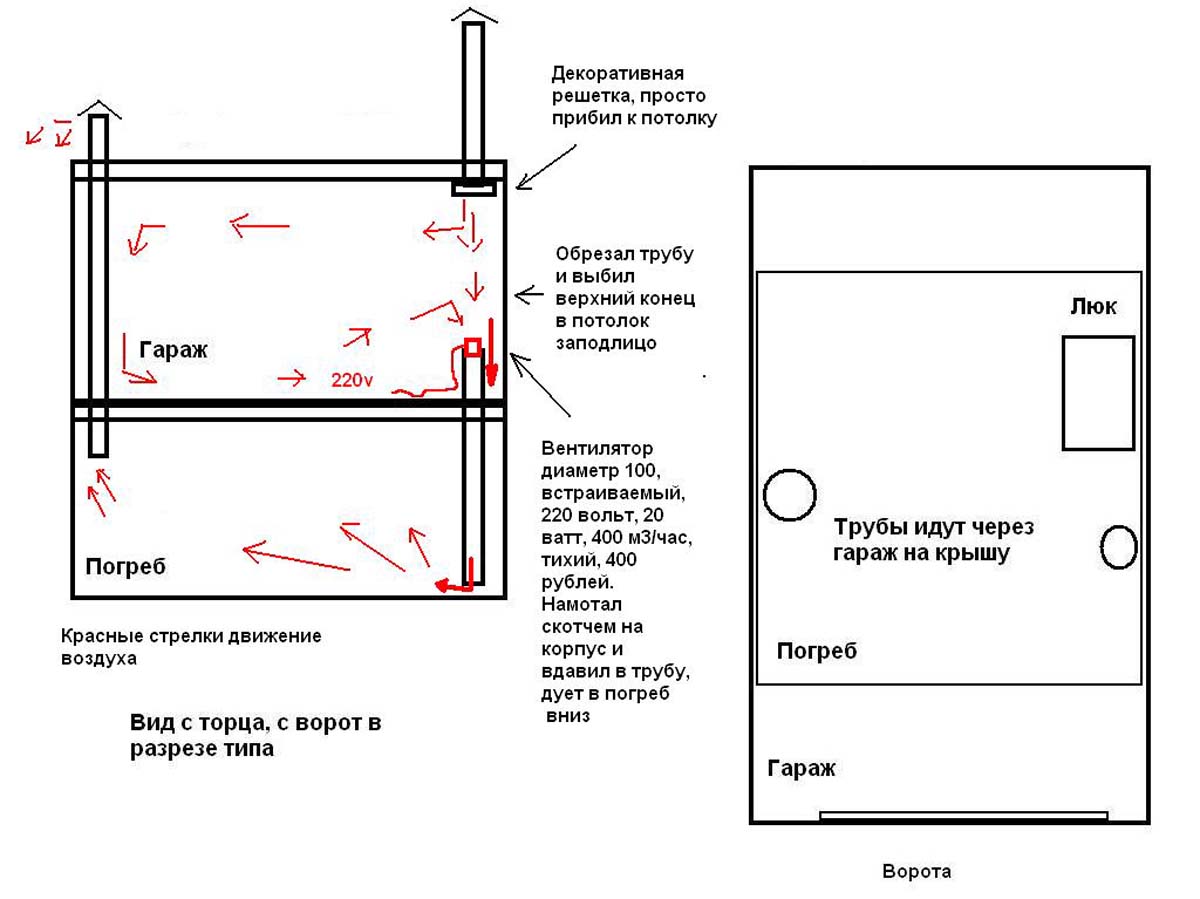
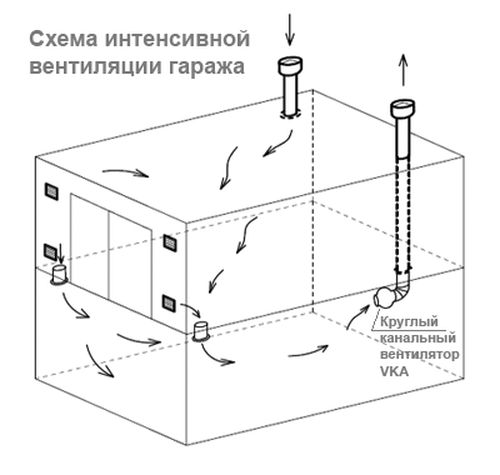
The forced system for underground premises is somewhat more complicated than the natural one, but the principle of pipe arrangement remains the same. The main difference is the use of mechanical devices.Two fans must be inserted into the cavity of the two ventilation ducts. Instead of fans, you can use a diffuser-weather vane or a deflector.
REFERENCE: Diffuser-weather vane is installed at the top of the supply channel. The deflector creates a mass of rarefied air, thereby artificially changing the pressure.
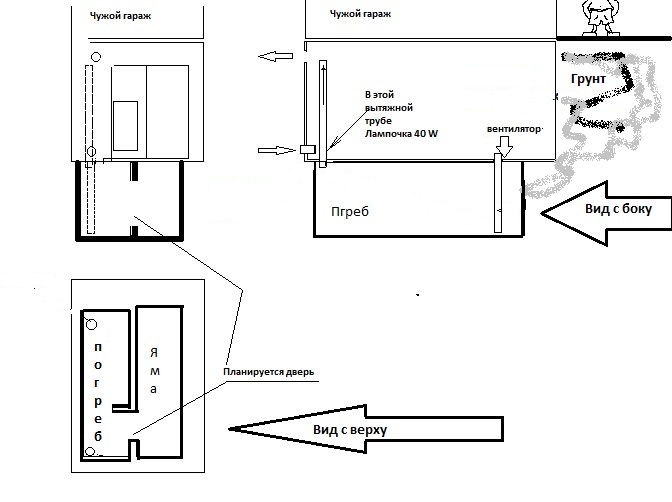
The device is mounted at the very top of the hood. Another way is to use a light bulb. A light bulb is mounted in the cavity of the pipe. When switched on, it radiates heat and thus creates a pressure drop.





The most expensive and high-quality version of forced ventilation is modular. The air flow is controlled by a special controller. But the installation process is quite complicated and such a system is expensive. Best of all, the modular version is suitable for large basements.
Read about how to make racks, shelves, a workbench and a car lift in the garage.
Nuances of ventilation of the inspection hole
To ensure comfortable working conditions, the inspection pit can be equipped with high-quality lighting, various shelves for storing equipment, and, of course, ventilation. Briefly find out how it all should look like.
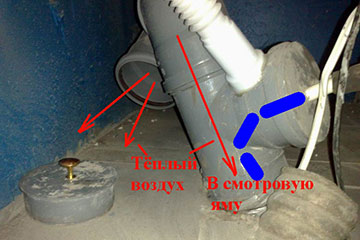
If there is already an exhaust hood in the room, then you can simply stretch the corresponding pipes into the inspection hole. As for the diameter of the air ducts, in this case it can be about 10 centimeters. The air supply pipe should end almost at the very bottom of the pit, fix the second one on the opposite side, stepping back from the top edge also by 10 centimeters.
The need for ventilation in the garage
Garage ventilation in winter is very important.Due to the temperature difference on a frosty street and in a warm hermetically sealed garage, condensation forms on the surfaces of walls and furniture. Prolonged exposure to moisture adversely affects the structure and all objects located in it.
Wooden shelves and tool cabinets begin to rot, concrete surfaces crack and mold, and the body of the machine and its parts suffer from corrosion. Part of the moisture evaporates, but due to the tightness of the structure, moisture does not leave its limits. That is why when opening the garage in winter, many car owners feel damp. In summer, there is a noticeable damp coolness.
And under the condition of winter bad weather with ice and snow, a person himself can harm the building, the car and himself. After trips, very often snow remains on the wheels, hood, and roof of the vehicle, in this case it is better to use tubular snow retainers on the roof. Once in a warm garage, the snow begins to melt.
Therefore, it is more expedient to create high-quality air exchange, spending a little money on it, than to carry out a major overhaul of the car in a few years. The difference in the cost of these works differs several times.




Ways to improve the operation of the natural hood of the garage
When organizing natural ventilation with your own hands, you can achieve optimal renewal of the atmosphere in the garage without the help of mechanical tools, for example, by heating the exhaust pipe and installing a deflector. Warm air is lighter than cold air, and, rising up, it will quickly exit through the exhaust duct, being replaced by fresh outside air.
To improve air heating in an unheated garage, it is enough to paint the exhaust duct with black paint.So the walls of the duct will absorb more solar energy, heating the air in the duct and pushing it up. When planning natural ventilation with further painting of the duct, there is no need for additional thermal insulation of the ventilation duct, so such simple and affordable measures will also help reduce the cost of purchasing and installing the main components of the system.
The cold weather that comes in the fall does not in itself create any particular problems for a car in storage, however, they are ways to seriously disrupt the operation of the entire supply and exhaust ventilation system. A warm engine will give off additional heat for an hour after the car enters the garage, but in the future, in an unheated garage, the temperature will drop to almost street values, which will stop natural ventilation.
To maintain air exchange in the room and prevent icing of the exhaust duct, in which condensate will inevitably accumulate, it is enough to purchase an ordinary 40-watt incandescent lamp. It should be installed under the opening of the vertical exhaust duct and left switched on. The lamp will generate heat, allowing air to move at speeds up to 0.4 m/s. In addition, the air duct channel must be covered with heat-insulating material, making sure that no moisture enters it. The disadvantage of this method of improving heat transfer is the increase in the level of fire hazard in the room, and therefore the most reliable and safe incandescent lamps should be purchased.
Why do you need garage ventilation?
The confidence, or rather, even the delusion of many car owners that this room does not need airing, easily refutes the consequences of not having such a system.
- A toxic environment is formed in the room that can adversely affect the health of the owner. If there is no ventilation system, then an atmosphere will form in the garage that provokes a lethargic state, migraines, or even intoxication. Even if you do not feel the fumes from burning fuel, that is, their concentration will be insignificant, in the future the toxins will accumulate and will definitely make themselves felt.
- Dampness has a destructive effect on the metal elements of the vehicle, as well as on electronic equipment. Moreover, excess moisture can harm not only the car, but also walls, wooden supports and other structural elements (fungus will appear on their surfaces).

If you equip even the simplest ventilation system, you will be able to prevent all these negative consequences. Moreover, in accordance with SNiP 21-02-99, all household buildings must be equipped with such communication systems along with residential premises.
If you familiarize yourself with the European requirements, then in accordance with them, the frequency of complete air exchange in the garage should be at least 6-10 times a day. Also note that ventilation capable of blowing through the car and providing air exchange must be installed in both traditional one-story and two-story garage extensions. In the second case, we are talking about objects with a workshop located on top. This also includes garages with inspection pits.In a word, all rooms in the garage should be equally well ventilated.
In addition, autonomous ventilation of the cellar (if any) must be present without fail, because if the cellar is isolated, then the circulation of air masses in it will not be sufficient to eliminate excess moisture and accompanying aromas.
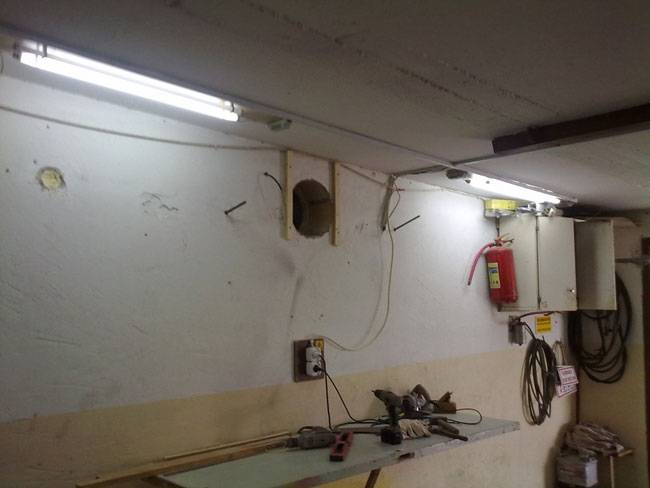
What is the ventilation in the garage for?
Many people think that if the room is non-residential, then ventilation is not needed at all. After all, a person is quite rarely there, so it is enough to open the door upon arrival and let in fresh air. However, it is not. Every room needs ventilation. And here are a few reasons:
- The first reason is the influx of fresh air. In fact, a person happens to be in the garage quite often. In addition, some practically live in them, making workshops in the garage. Therefore, it is much more pleasant to breathe fresh and clean air, and not to suffocate from the stench and dullness. And in the garage there are a lot of parts and materials that emit toxic substances. Therefore, it is even dangerous to health.
- The presence of dampness is bad for the car itself. Namely, it can slowly destroy the metal parts of the body, electronic devices and electrics of the car. The second point is that dampness harms the stocks and parts that are stored inside. Moreover, the walls are covered with fungus, mold is formed. Wood structures can begin to rot, and metal can rust. It is clear that this directly affects the operational life.
- If there is no ventilation in the garage, this will negatively affect the owner. The environment inside is toxic, so staying in it will lead to headaches and poisoning.
This alone is enough to immediately start creating ventilation inside the garage. Even the simplest ventilation will get rid of all the negative consequences. The main argument is that SNIP 02/21/99 states that there is ventilation, just like in a residential building.
It's important to know! Regardless of what kind of garage it is, whether it is heated or not, it must have a ventilation system. The normative regulation states that in 1 hour the influx of fresh air should be equal to 180 m3
There are also European standards, according to which a complete air exchange should occur from 6 to 10 times in 24 hours. The following are the functions that ventilation in the garage performs:
- moisture is removed. It appears when rain, snow and dirt get inside the car;
- all harmful toxic and gas accumulations are removed, the air will be clean, fresh and pleasant;
- condensation will not form on surfaces (walls, ceiling, inspection hole, car, parts);
- all metal surfaces will be protected from corrosion, the car will dry faster;
- a wonderful microclimate is created inside the garage. It has a beneficial effect on the car, on the person and on the vegetables that can be stored inside.
All these factors indicate that garage ventilation is a must.
But, it is important to know what types of ventilation exist.
Conversion of a natural exhaust system into a forced one
Not always the simplest exhaust system can cope with its duties. Increasing the efficiency of natural ventilation is necessary in the following cases:
- The appearance of excess condensate in the cellar.
- The appearance of fungus, mold.
- Stale air in the room.
The efficiency of an exhaust system can be improved in several ways:
- Increasing the diameter of the ventilation pipes. With cellar sizes not exceeding 10–12 square meters, the exhaust pipe can have a cross section of 120 * 120 mm, and 150 mm if it is the only one.
- Increasing the height of the exhaust pipe. This will increase traction.
- Make additional exhaust and supply channels.
- Put a fan in the pipe that provides forced air circulation.
The first three options require a serious revision of the ventilation system. The fourth option is to create forced ventilation based on the existing natural exhaust. The conversion process takes place in several steps:



- Connecting power cables to the power supply installation site.
- Dismantling the decorative grille.
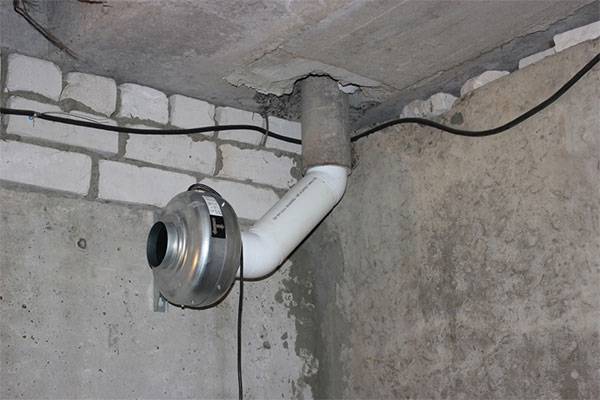
- Fan installation.
- Installation of a decorative grille.
- Connecting the fan to the power supply.
In most cases, it is enough to install one fan on the exhaust pipe. To enhance the effect, the second can be built into the input channel. For maximum thrust gain, a centrifugal fan is installed. It has increased power and noise level. This design is installed outside, during installation it will be necessary to partially disassemble the channel.
After completing the installation or re-equipment of the ventilation system, it is necessary to check the draft. To do this, a lit candle or match is brought to the ventilation duct. In the presence of good traction, the flame leans slightly towards the duct.
With good traction, the candle flame leans towards the air duct
Nuances of ventilation of the inspection hole
The inspection pit, like the basement, is also a source of condensation, which, as mentioned earlier, can lead to a number of problems that adversely affect the safety of the car. Despite the fact that it is located indoors, it is impossible to organize high-quality ventilation in it by means of natural ventilation.
It would seem that it would be advisable to deal with the ventilation device in the garage itself, because the car is in it, and not in the inspection hole. But in fact, the pit is a source of moisture, because it is below the level of the room and, as a result, condensate can accumulate in it, which will subsequently spread throughout the garage.
The pit itself must be kept in good condition. From it it is necessary to eliminate the evaporation of chemical compounds, the smells of synthetic products used to service the car. The air there must be fresh, since many motorists can stay in the inspection hole for a long time.
In the case of a viewing hole, the hood can only be realized near the floor of this section of the garage building. In the case of using a fan, you can get rid of the problem of moisture accumulation in the pit and, as a result, on the bottom of the machine.
Equipping the floor surface with a “warm floor” heating system, you will not only prevent the formation of condensate, but also help create a suitable microclimate in the garage that provides all the rules for storing the vehicle.
Tools and materials
To get the job done quickly, prepare the necessary materials and tools in advance:
- Powerful perforator;
- Angle grinder;
- Heat insulating material and sealant;
- Grilles to protect the channel outlets from dirt;
- Pipes made of plastic or metal of the required diameter.
In addition, depending on the design, fans may be required:
- Exhaust duct devices are easy to use and affordable. Built-in regulators allow you to change the intensity of air replacement. The optimal diameter is about 160 mm. But it is cheaper and easier to use products with a diameter of 120 mm.
- Centrifugal - work best on the hood, but they are more difficult to mount. Used mainly in garages where cars are painted.
- Vortex - the most suitable units for removing smoke from welding.
For an ordinary garage, the most practical option is an exhaust duct fan. This device is inexpensive and does its job well.
Conclusion
The installation of ventilation systems in garage premises is a mandatory measure required by current sanitary standards. Without a competent air exchange scheme, one cannot count on the correct storage conditions for a car and an environment that is safe for human health.
Three methods of organizing the circulation of air masses in garage premises are used - natural, combined and mechanical. Each of them has the advantages and disadvantages described above. The cheapest and least effective method is the natural ventilation method - here you have to rely on the laws of nature and favorable conditions. The mechanical method allows you to take full control of the process and not expect favors from nature, but its cost is much higher. The owner of the premises chooses the appropriate one based on their capabilities and the specifics of the premises.