- Which ventilation scheme to choose?
- The main difficulties of drilling holes in the foundation
- Pro Tips
- Exhaust fan installation
- Strip foundation
- How to create products correctly
- How to do
- Why is ventilation needed?
- The choice of foundation and ways to strengthen it
- Video description
- Foundation calculation principles
- Conclusion
- Advantages and disadvantages of natural air exchange
- Ventilation dampers for windows
- We create the necessary for ventilation with our own efforts
- When you don't need to do blowouts
- Technical points in the development of ventilation
- Additional moisture reduction
- Organization rules
- Quantity
- Location
- Hole shape and area
- Why ventilate the underground
Which ventilation scheme to choose?
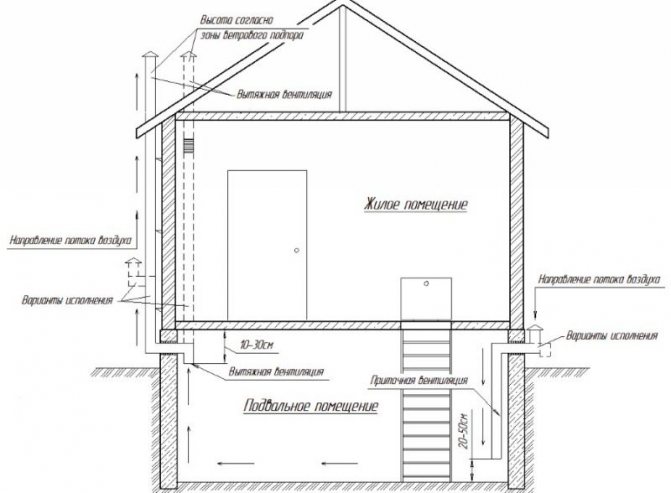
So, we figured out whether an underfloor ventilation system is needed, and now it remains to decide which scheme to choose for specific conditions. There are several important points to consider when choosing a system. The operation of ventilation largely depends on the type of climate in a particular area, the average street temperature, etc.
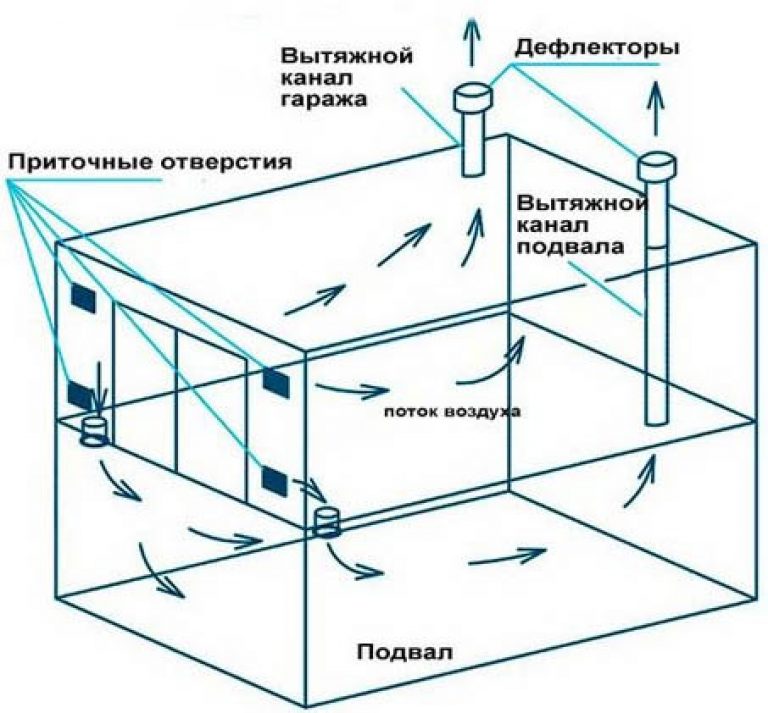
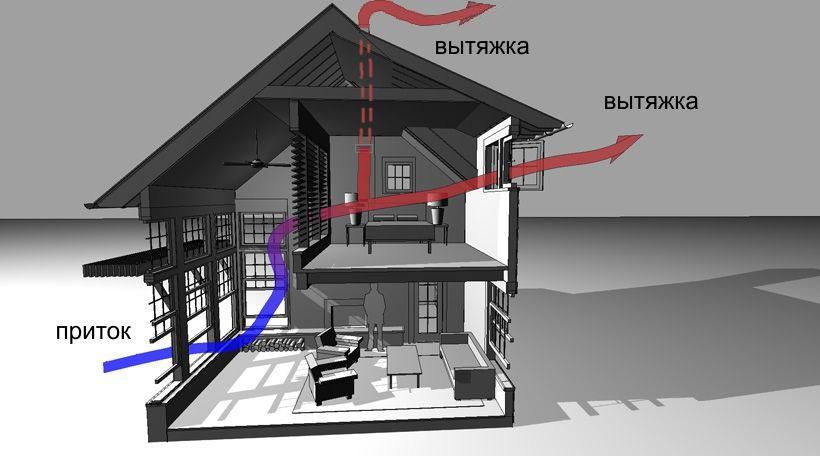
In the device of natural ventilation, it is imperative to observe the main rule: the inlet openings are located below the exhaust ones. The greater the height distance between them, the more efficient the system operates.
Natural ventilation is more efficient in winter, since it is at this time that a large difference is recorded between the temperature inside the underground and outside, which ensures good circulation of air masses.
However, with an even greater decrease in temperature, there is a possibility of an excessive increase in air exchange, which is also not particularly good, as it can lead to freezing of structures. Therefore, with a significant decrease in temperature, the vents must be closed.
In summer, the temperature difference inside the underground and outside is minimized, so air circulation may stop. Therefore, natural ventilation, even with a supply and exhaust system, is not the best option for hot regions. Here you should install a combined ventilation system with pipes.
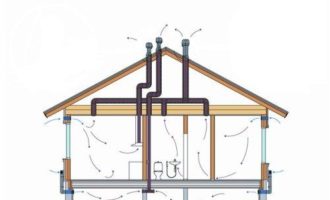
If the house has supply and exhaust ventilation, it makes sense to connect the extract from the basement to the general scheme. So the outflow of air will be stimulated in any weather.
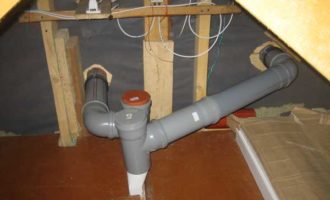
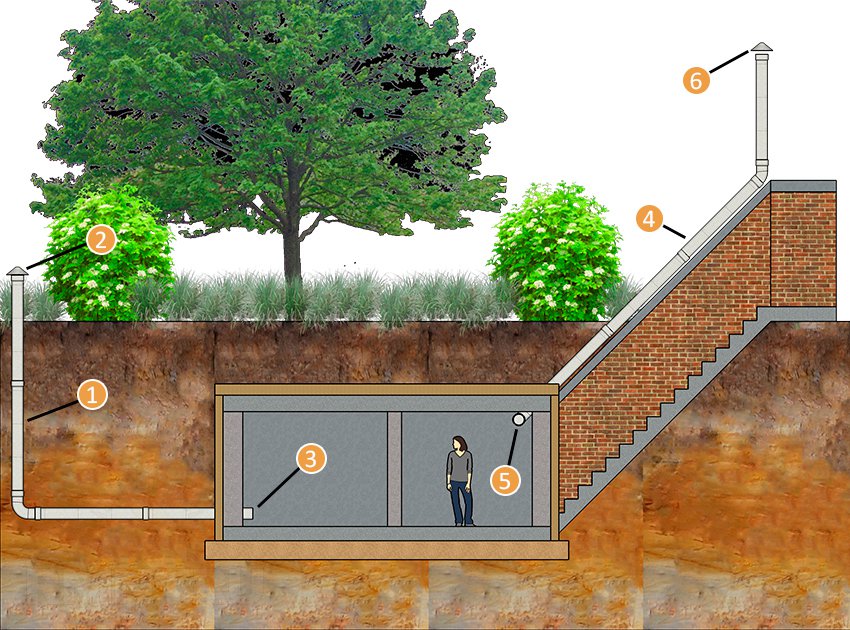
To equip a combined ventilation system for a small subfloor, it will be enough to install one pipe. So that it can provide both the output and reception of air masses, it must be divided vertically into 2 channels.
Such ventilation pipes are sold in hardware stores. Each channel has its own valve to adjust the flow rate. The functioning of such ventilation is checked quite simply: you need to attach a sheet of paper to the outlets in turn.
The main difficulties of drilling holes in the foundation
Concrete grades used in the construction of foundations or the manufacture of prefabricated structures have high strength characteristics.The hardness of the material determines significant labor costs when drilling it and requires special equipment - a puncher or a drilling rig. In this regard, ordering such services in construction and repair organizations can be expensive.
The concrete body of the foundation contains granite and hard stone inclusions, as well as steel reinforcement, which greatly complicates drilling holes in the right place. In these cases, you have to bypass the obstacle, making a hole at another point, which is not always acceptable.
The thickness of the foundation wall to a certain extent is also a factor that makes work difficult. To punch a strobe or make a small hole, you need to acquire, in addition to the main tool, also special consumables of the appropriate diameter - drills of non-standard length or diamond crowns for concrete.
Pro Tips
It is not very difficult to arrange ventilation holes in the foundation with your own hands, especially if you know the technology. However, professional builders know a few subtleties that make this process easier:
- The bars will be easier to remove from the concrete if they are lubricated with any oil before laying.
- Ventilation products must be reliably protected from the penetration of small rodents. Lattices should be strong enough, resistant to mouse teeth.
- Regularly, several times a year, inspect the condition of the ventilation outlets and the gratings protecting them. Remove the grate at least once a year and clean the vents with a brush.
- If the grate is clogged with dirt, it is cleaned with a wire.
For washing, it is recommended to use a solution of soda, but it is better not to use soap. Poorly washed soap will create conditions for the rapid clogging of the grate again.
We also recommend watching videos that clearly show all the stages of creating an underground space ventilation system:
Ventilation of the basement will help to avoid problems with the development of mold fungi and the accumulation of radon.
Such a measure will significantly increase the durability of the building. Considering that it is not at all difficult to make vents in the foundation with your own hands, it is necessary to take all measures so that the ventilation of the underground space is sufficient.
Exhaust fan installation
Installation of ventilation in an apartment is indicated primarily for housing with plastic windows, where high tightness of the space is maintained. It is not always possible to correct existing channels by retrofitting them. In such cases, the only right solution is to repair the ventilation in the apartment. Often it is enough to install several exhaust fans near the bathroom and in the kitchen.
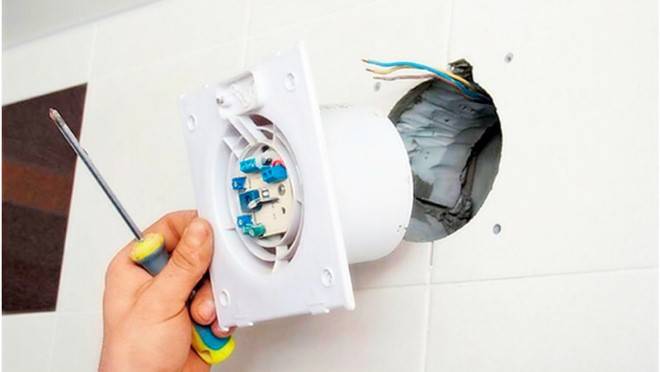
Installing an exhaust fan is a simple task that can be completed in a couple of steps
Many manufacturers offer solutions with integrated hygrometers - these are the best solutions for bathrooms where frequent changes in humidity levels are observed. They turn on when a certain level of humidity is reached. For placement in an apartment with their own hands, this is the most preferable and economical option - the owners do not have to constantly turn the device on and off, interfere with its work.
Step-by-step instruction fan installation:
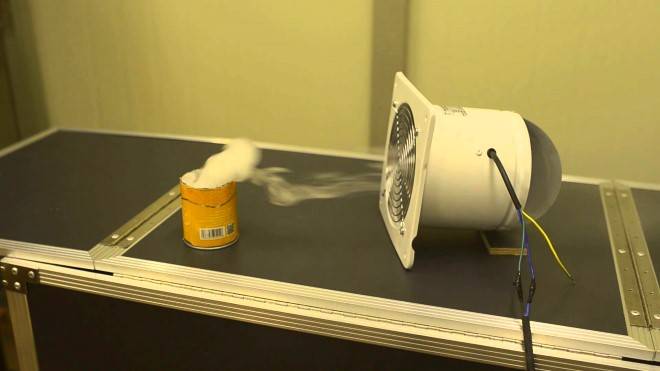
Before installing the fan, it will not be superfluous to check its performance, power
-
Inspect the purchased fan. Determine the part to be installed in the vent. Read the instructions to find out how the product functions correctly, what is necessary for this.
-
-
Connect electrical wires to the corresponding terminals of the device, and then place the device in the corresponding hole.
-
Fix the fan housing with "super" glue or self-tapping screws.
- Fix the decorative skin on the case. The fan is ready for operation!



Do not despair if the ventilation in the apartment does not work, because this drawback is easily eliminated with a small financial investment. For effective air exchange, it is enough to install (replace) supply and exhaust fans.
The air conditioner will be a great addition to an already working system. Believe me, the quality of life in the living space will improve!
Strip foundation
Before starting the arrangement of the strip foundation, it is necessary to decide on the choice of its variety. By the way, there are three types of such a foundation, differing in the method of manufacture:
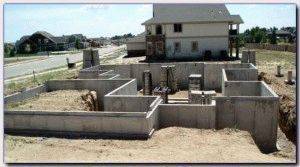
Strip foundation for the house
- Monolithic;
- Made;
- Prefabricated monolithic.
Regardless of which of the options is chosen, each of them involves the construction of a fundamental cushion. What does she represent? A foundation pillow is a structure where the foundation itself is located between two belts - the lower and upper. It goes without saying that in order to lay any foundation, it is necessary to prepare the site in advance.
First of all, it is necessary to remove the top layer of soil containing vegetation at the construction site. After that, you should carefully mark out the plan of the future structure.It is best if the marking will be carried out using a level or theodolite. In the absence of these devices, it is quite possible to cope with the help of a tape measure, a square and a nylon tourniquet. The marking of the site is carried out as follows:
- Using a tape measure, the required distances are measured on the site;
- A rectangular box allows you to define angles;
- Pegs are marked.
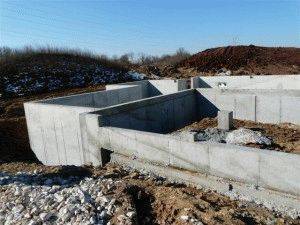
LF base
It is important to remember that first of all, you should mark the corners and install pegs in their places. After that, you can start marking the load-bearing walls. Do not forget about the drainage system, if we are talking about a site with an abundance of groundwater
After the marking is completed, you can proceed to the demolition of the building. Departing from the markup about 1-1.5 meters, it is necessary to install boards of 10 cm height around the perimeter of the building - they will serve as markings for digging a pit. On the cast-off with the help of a hydraulic level, it is required to make a zero mark and stretch a nylon cord at its level. When the preparatory work is completed, you can start digging a pit
Do not forget about the drainage system, if we are talking about a site with an abundance of groundwater. After the marking is completed, you can proceed to the demolition of the building. Departing from the markup about 1-1.5 meters, it is necessary to install boards of 10 cm height around the perimeter of the building - they will serve as markings for digging a pit. On the cast-off with the help of a hydraulic level, it is required to make a zero mark and stretch a nylon cord at its level. When the preparatory work is completed, you can start digging a pit.
The arrangement of the foundation of the house also requires the preparation of the base, which consists in leveling the bottom of the trench and filling it with rubble and sand
It is important to remember that at first it is recommended to compact the soil with crushed stone, the layer of which should not be less than 10-15 centimeters. Only after that should the bottom be covered with sand. Do not forget that the holes in the trenches must also be eliminated with sand, gravel and water.
If the soil is loose, then it should be replaced with coarse sand. The next step in the construction of the foundation will be the arrangement of the strip foundation formwork, the materials of which can be boards, plywood, metal sheets, slate and much more.
Do not forget that the holes in the trenches must also be eliminated with sand, gravel and water. If the soil is loose, then it should be replaced with coarse sand. The next step in the construction of the foundation will be the arrangement of the strip foundation formwork, the materials of which can be boards, plywood, metal sheets, slate and much more.
How to create products correctly
Openings should be placed 20 cm down from the upper plane of the concrete base. If the foundation is low, you will have to dig pits in front of the vents. The maximum height is 15 cm from the edge of the tape.
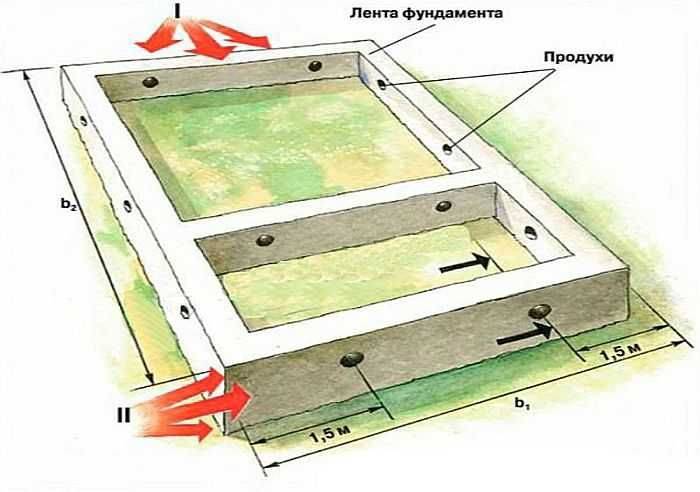
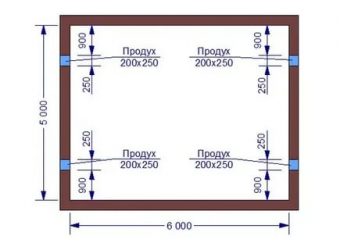
From the corner of the building, the air can be placed no further than 90 cm. If this distance is less, an unventilated zone may form in the underground. The air in it is practically not updated.


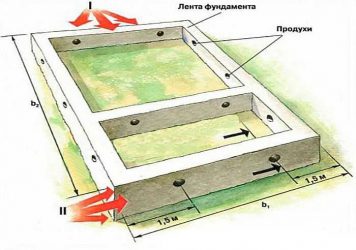


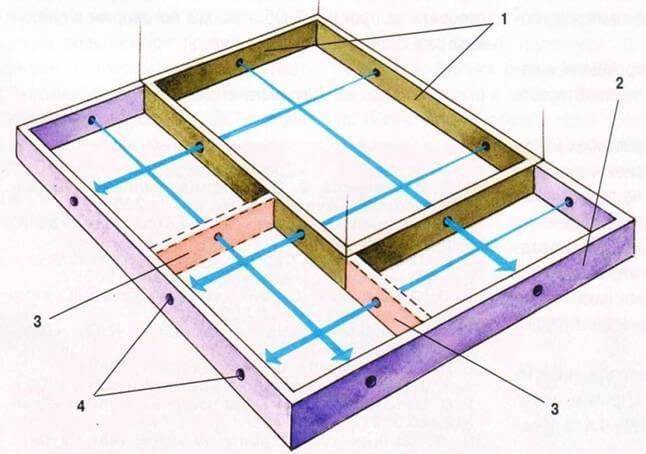
In order for ventilation to work effectively, it is worth considering the wind rose characteristic of the area.For example, if a building is equipped with 6 air vents, it is worth placing 2 holes on the side that is windward most of the time of the year, 2 on the leeward side, and 1 each on the other sides. Obstacles that prevent the spread of air masses are also taken into account.
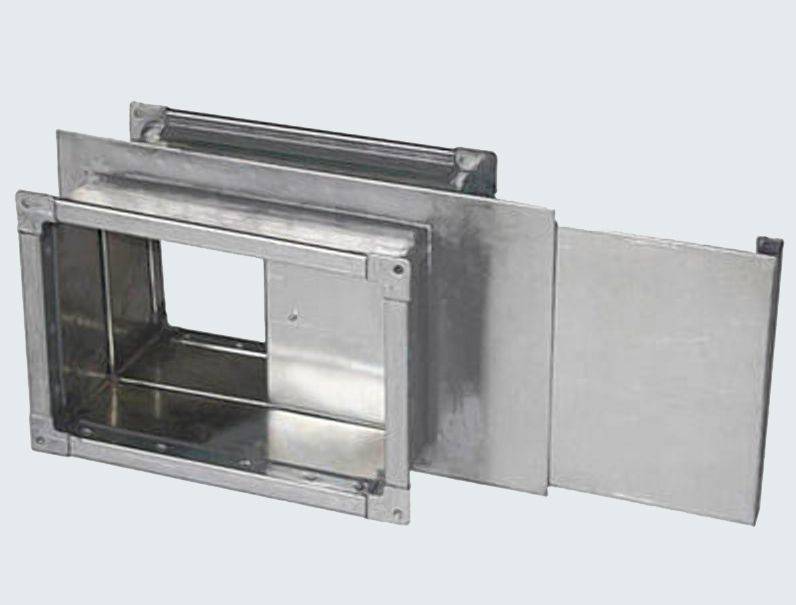
The efficiency of ventilation will be higher if gates are installed instead of a grate - devices with a variable size of holes.
How to do
The best option for creating products is to lay plastic pipes in the formwork during construction. Holes are drilled or cut out in opposite wooden shields, into which the ends of polypropylene pipes from the sewer are inserted.
They are inexpensive, not subject to destruction and absolutely immune to moisture. After pouring concrete and dismantling the formwork, the pipes remain in the holes and protect them from water penetration into the concrete.
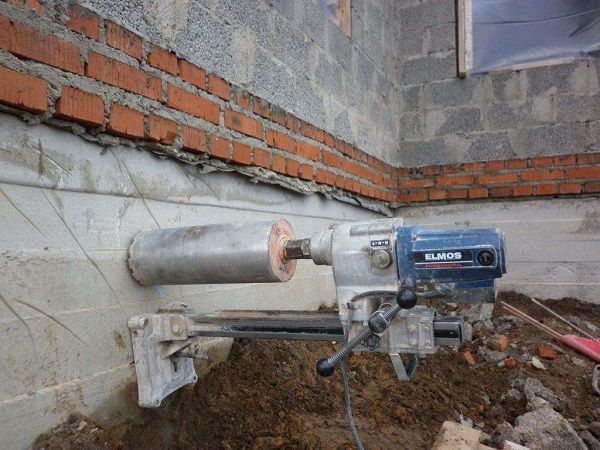
Another way is to drill holes with a diamond drill. This method is suitable when the tape is relatively thin, allowing the procedure to be completed in a short time.
With this method, there is no need to install plastic pipes in the formwork, which is quite difficult and complicates the dismantling of the panels.
The disadvantage is a noticeable waste of time for drilling or the need to waterproof the inner surface of the holes, which become a risk factor.
You can use the old technology for creating products, when a rectangular structure was knocked together from the boards and attached to it inside the formwork like spacers.
The external dimensions of this design corresponded to the desired size of the vents.
After pouring and hardening of the concrete, the boards were removed, and rectangular holes remained in the tape.
The disadvantage of the method is the difficulty of extracting the boards from the hole, the need for waterproofing the inner surface of the formed corridor.
NOTE!
When choosing a method for manufacturing products, one should not forget about the size of the holes and prepare the appropriate templates.
Why is ventilation needed?
Some owners of cottages and country houses doubt the need for ventilation or argue that an open window in the boiler room is sufficient to ensure air exchange.
However, it is impossible to keep the window open all the time. Often, for a full-fledged removal of exhaust air, a mechanized exhaust is necessary, therefore, in addition to natural ventilation, it is also necessary to install forced ventilation.
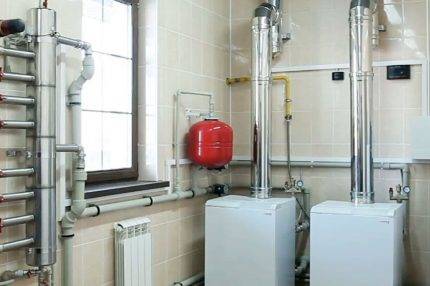
A corridor, an entrance hall, a kitchen are suitable for installing a gas boiler (according to the new rules, it is impossible in the bathroom), but a separate boiler room with an established ventilation system is considered the best and safest place.
The gas exhaust system performs very important functions:
- It supplies oxygen in the amount necessary to ensure the combustion process of the fuel. As you know, oxygen deficiency is fraught with such consequences as a decrease in heat transfer, incomplete combustion or an increase in the amount of fuel required, premature wear of equipment, clogging of the chimney with soot and soot.
- Removes combustion products. Part of carbon monoxide can enter the room even with the correct installation and operation of the chimney, and its critical concentration in the air is a direct threat to the health of people living in the house.
- Removes gas if it is accidentally released into the air. The possibility of leaking gas lines should also not be overlooked - rare, but propane leaks do occur.The result can be either the poisoning of residents, or a powerful explosion.
Only a well-thought-out ventilation system designed in accordance with the requirements of SNiP when installing a gas boiler can protect against negative consequences. Thanks to the supply and exhaust ventilation, you will protect your family from explosion, fire and poisoning, reduce the load on the boiler, reduce fuel consumption and increase the heat output of heating equipment.
The choice of foundation and ways to strengthen it
The foundation of a two-story brick house has special requirements for strength and depth parameters. In most cases, the choice is made as follows:
- If the soil is not problematic, a strip foundation is selected. It is made deep-buried, and a wider, according to calculations, grillage is also laid.
- If the soil at the construction site is heaving (it changes its volume in the process of annual freezing and thawing), preference is given to a pile foundation that can provide a solid margin of safety. For him, reinforced concrete pillars with a large cross section are chosen, and only reinforced concrete grillage is laid. If a strip block (prefabricated) foundation is chosen, it is installed below the freezing layer, or the heaving soil is replaced with sand or gravel.
- If the soil is wet, heaving or crumbling, a deep slab foundation will be the best choice.
Video description
What are the types of foundation? How is the construction of the foundation and how much does it cost? See all this and more in this issue:
Diagram of a deeply buried base




Sometimes it becomes necessary to strengthen the foundation of a brick house. This can be done in a variety of ways, which include:
- Strengthening injections. Soil is removed around the base, a cement solution is applied to the opened base (special equipment is used).
- Reinforcement with piles. Piles are installed along the foundation.
- Reinforcement with reinforced concrete casing. A formwork is arranged along the perimeter, a reinforcing belt is mounted and a concrete mixture is poured.
- Reinforcement with a protective wall. The outer wall is made of concrete, sometimes it rises to a height of up to one meter.
Reinforcement with reinforced concrete slab
Foundation calculation principles
The foundation for any buildings, including brick ones, is described by several parameters:
- Deepening. It is chosen based on the analysis of the soil (density and bearing capacity) and the depth of freezing. There are tables linking the type of soil and the recommended depth.
- Foundation load. It is calculated by the total weight of a brick house. For this, structural (walls, partitions, roofing, ceilings), internal (people and furniture) and external (snow on the roof) loads are summed up.
- Required (minimum) footprint and base width. The total area of the concrete strip is determined by the bearing capacity of the soil and the load on the soil of the building together with the foundation. Knowing the area and perimeter, you can, by dividing the first by the second, calculate the width of the tape base.
A quality foundation will give the house a long life
Conclusion
For each house, the foundation of the most suitable design is selected and designed, and it often turns out to be combined.Based on objective reasons, the designer can use elements of several types: often it becomes expedient to reinforce the traditional strip foundation with piles. Strength is also facilitated by the use of modern materials for insulation and waterproofing.
Advantages and disadvantages of natural air exchange
Like any engineering and technical system, natural variety is not without drawbacks, but it also has significant advantages. In order to decide for sure whether to arrange it or not, it is worth comparing the list of pluses with the list of minuses.
Positive sides:
- Easy and inexpensive installation. This is the cheapest option for organizing stable air exchange.
- Low maintenance costs. If there are no mechanical devices in the system, then it needs only periodic cleaning.
- Energy independence. Does not consume electricity, except for the installation of additional electrical appliances.
- Extremely quiet operation. Has low noise.
- engineering flexibility. Ventilation can be upgraded, understaffed with various devices. It is possible to adjust the performance of the system.
Negative sides:
- Traction instability. Its dependence on atmospheric pressure and specific weather conditions. The efficiency of natural ventilation in summer may be insufficient.
- Formation of drafts. In winter, strong draft can not only bring discomfort to the residents of the house with drafts, but also significantly increase heat loss. This results in higher heating costs. It should be noted that there are various ways to solve this problem.
Everyone can organize a natural ventilation system in a private house.Its imperfection is compensated by the simplicity of design and minimal maintenance costs.
Ventilation dampers for windows
The natural ventilation scheme in the apartment is able to provide housing with oxygen through ventilation through windows, vents, cracks in the floor or doors. But these methods were relevant earlier, while modern windows are characterized by high tightness. Natural holes are replaced with special adjustable holes. These are small ventilation solutions with good functionality.
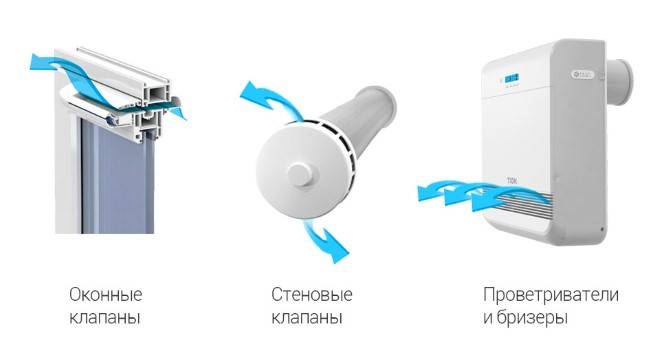
Wall and window valves
How effectively the holes work really feel only with the onset of cold weather. Cold streams, which are taken from the street, are mixed with the warm oxygen of the room inside the structure, and only after that it enters the housing.
We create the necessary for ventilation with our own efforts
In order to make an vent, it is worth stocking up on some items. First of all, a round pipe is needed, some use a wooden beam.
Now it is important to dwell in more detail on the main stages of laying holes:
- Pre-prepared pipes should be cut into separate pieces. Here it is necessary to take into account strict compliance (the length of the cut pieces corresponds to the size of the formwork and the direct width of the base of the building).
- Sand must be poured into absolutely every pipe, the ends are tightly closed with rags to increase the level of safety.
- Pipes are placed in the places provided for vents.
- Concrete is poured firmly and securely installed pipes.
It often happens that for some reason the necessary vents are not found in the object. In this case, you need to fix this problem.The construction of a basement on the foundation is a way out of this situation
Then it is here that unaccounted for in advance holes are created for the vital ventilation system.
Vent in a brick foundation
If the base is brick, then the work process is quite easy and fast (insert the brick with an edge).
Vents in the foundation of a wooden house is a rather capacious issue that requires some effort. To begin with, it is worth dwelling on the basic requirements for this type of foundation in wooden buildings.
The distance between the vents must be very strict (at least 1.5 meters apart). There are at least two important ventilation holes on each side of the base. The area of \u200b\u200bthe products must also be taken into account, approximately 10 square meters. cm.

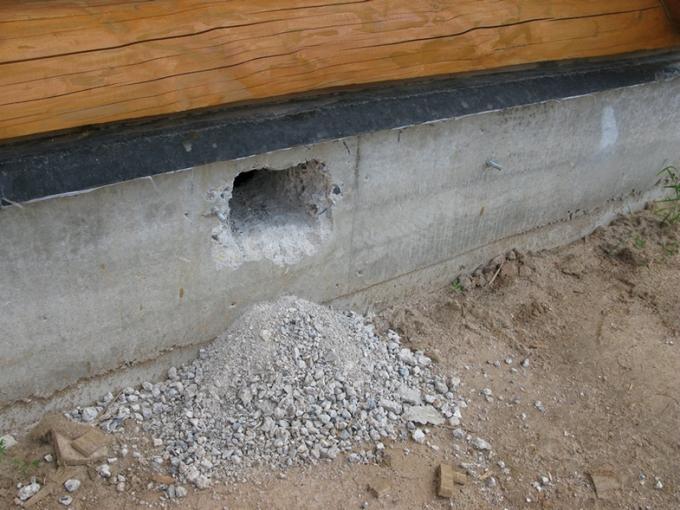


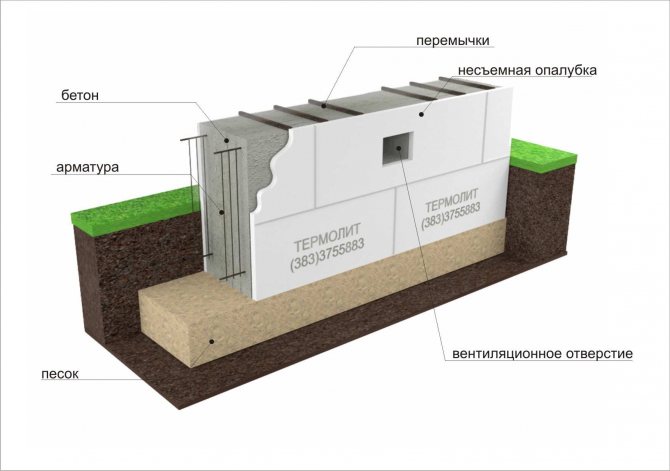


30 cm is the correct height for making vents from the surface itself. This is necessary so that no excess water gets inside.
If there are jumpers at the base of the room, then it is important to make holes on them. First you need to decide on the size of the vents - this is the most important step on which the comfort and atmosphere inside the building under construction depend
First you need to decide on the size of the vents - this is the most important step on which the comfort and atmosphere inside the building under construction depend.
Let us turn to the official requirements that have existed in construction for a long period of time. 0.0025 of the entire space of a solid, solid base must be accounted for by all the created holes in the desired object. Following the instructions, you can make your own vents in the foundation.
When you don't need to do blowouts
The conditions, the presence of which makes it possible to do without products, are determined:
- the inside of the foundation is filled with sand, while a concrete slab is installed on the walls of the foundation;
- the soil under the house is covered with a vapor barrier film, which does not allow moisture to penetrate inside;
- the subfield is equipped with an independent, high-performance ventilation system, the foundation and basement are well insulated;
- the subfloor is directly connected to the heated room (an additional space is formed for storing items).
The question often arises: do you need ventilation in the foundation without a basement? If at least one of the first three points is fulfilled, the need for products disappears. In other situations, vents are required.
Technical points in the development of ventilation
When choosing equipment for the ventilation system, it is necessary to use several basic design indicators in the work. For example, by multiplying the values of the volume of the room and the frequency of air exchange, you can get the value of the production capacity of the fan required for the full maintenance of the cottage.
Those who are thinking about how to competently make ventilation in a cottage, of course, should take into account possible losses and choose a fan with a margin. One important point should be taken into account - the equipment of the exhaust system should be 10-15% more powerful than the supply one, so that used air does not accumulate in the room.
For the competent organization of ventilation in the cottage, a number of important factors must be taken into account:
- The location of the route of the exhaust channels. Pipes should be placed predominantly vertically and in a straight line, preferably without turns (because each turn reduces thrust by 10%) and of the same diameter throughout the length of the route.
- Exhaust pipe height.The mouth of the exhaust pipe should rise above the roof of the cottage by at least half a meter (the air should be removed above the roof). The installation of a deflector also significantly enhances the circulation of the air flow (up to 20%).
- Cross-section and dimensions of ventilation ducts. The round section is considered the most cost-effective, and in practice rigid round ventilation ducts are more often used, due to ease of installation, the lowest resistance and, as a result, a high intensity of air flow.
The following article will acquaint you with the rules for calculating the area of \u200b\u200bair ducts, which all owners of suburban property should read.
Also, to enhance traction, the maximum diameter and length of the pipe to be laid should be used whenever possible.
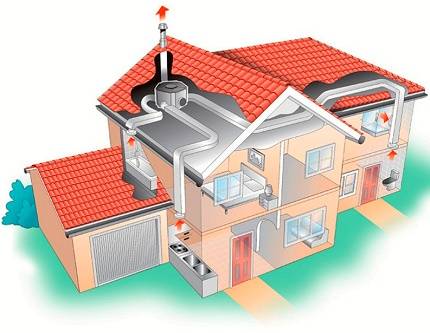
To form a normal draft in the exhaust pipe, one should adhere to the standards for its height. If there is less than 1.5 m between it and the ridge, it should rise 0.5 m above the ridge ridge
When developing a supply and exhaust system, it is necessary to remember some technical points:
- the amount of incoming and outgoing air must be balanced;
- clean air is delivered to all rooms, and the outflow of dirty air is made from areas with unstable humidity and temperature conditions;
- ventilation from the bathroom and the kitchen hood cannot be combined into one channel;
- the speed of the circulating flows in the exhaust pipes and air ducts should not be more than 6, and at the outlet 3 meters per second.
The mechanical ventilation system is certainly more productive than the natural “sister”.Weather data has absolutely no effect on its operation, its activation and deactivation can be automated. However, it is much more complicated and expensive in the device.
Additional moisture reduction
So that the ventilation system does not have to be strengthened by increasing the total cross section or installing fans, the following work must be carried out:
- The device of an effective drainage system is the diversion of water from the foundation.
- Waterproofing the base of the house and basement. There are many types of waterproofing: it can be rolled, welded, coated, etc.
- Implementation of insulation. The best material in terms of economy and efficiency is XPS. It is a good thermal insulator that does not let water through. It does not interest rodents and does not rot. EPPS can also be insulated with a blind area.
The listed measures do not cancel, but only supplement ventilation. Only in a complex it is possible to achieve ideal drainage of space in the basement compartments.
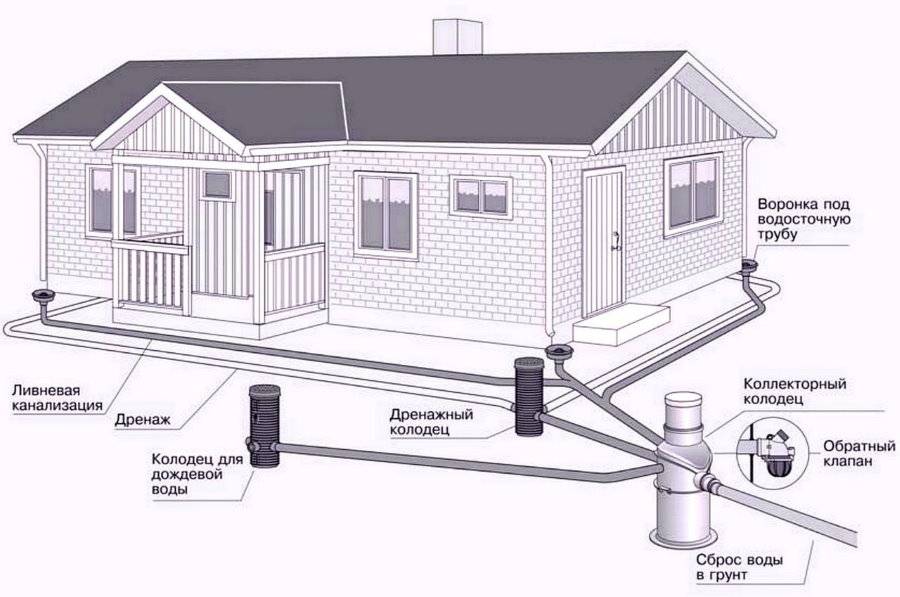
If the house is built on a soil base that does not drain water well, in addition to the ventilation system, drainage and storm water are required. The drainage system will collect water from the soil and the upper layers of the soil, the storm drain will collect and remove precipitation
When a system is arranged according to a forced scheme, the costs for installation, maintenance and service will be greater than when organizing a natural type. It should be borne in mind that in winter, condensation can form on the walls of the ventilation pipes themselves, and in cold weather, the cross section can completely clog the jacket.
To avoid this, the pipes can be thermally insulated with penofol. At the lower turn of the pipe, you can come up with a condensate trap - for example, drill a hole or put a tee instead of a corner.
Organization rules
A sufficient amount of ventilation of a certain area, especially in combination with an exhaust riser, guarantees optimal air movement, which prevents premature destruction of wooden structures, in this case, the floor.
First of all, you need to correctly perform the calculations.
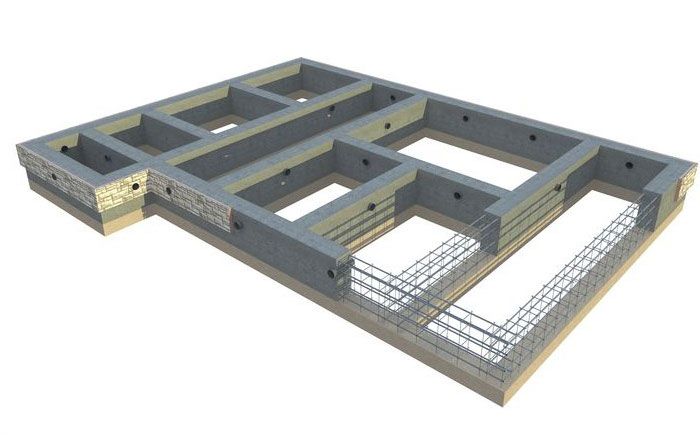
Airflow diagram
Quantity
The number of vents is determined per unit volume of the basement according to SNiP 31-01-2003. According to this document, in the basement of 400 m3, it is necessary to form at least one opening for ventilation. In areas characterized by a climate with high humidity, a blow is formed in the amount of 1 pc. for every 100-150 m3.


In the piers of the foundation, vents are also made, in one inner pier there should be one large through hole, or several, as in the outer walls.
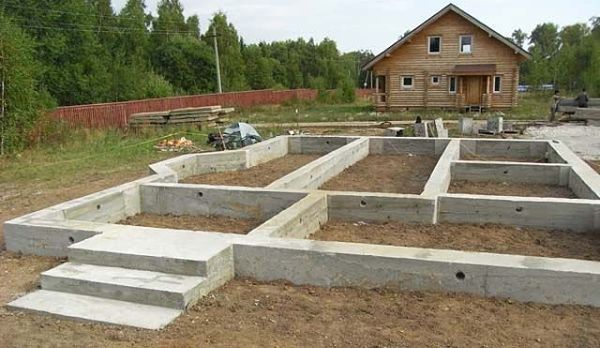
Products are located both in the outer walls of the foundation and in the walls
For better ventilation, vents with access to the street are made not only in the walls, but also in the floor. They must ensure the free movement of air, a draft.
Location
When designing products, they are especially responsible for their location. The calculation of airflow in the foundation is made on the basis of the following rules:
- Through openings are placed over the entire surface of the walls of the basement, evenly. The distance between two adjacent holes is in the range of 2-3 m.
- To eliminate places of accumulation of moisture and stagnation of air, air vents are provided in close proximity to the corners of the building. Experts recommend maintaining a distance from the corner of at least 0.9 m, measuring along the inside of the room.
- Depending on the height of the floor of the first floor of the house, a place for ventilation is calculated. A distance of 20-30 cm above ground level is the minimum recommended. Holes located lower will allow sewage to flow into the basement. Experts recommend making products as high as possible.
Good ventilation, ensuring optimal air movement under the floor, creates an even number of symmetrically located air holes.
Hole shape and area
The shape of the ventilation openings can be round, triangular, square and any other at the request of the owner.
Rectangular or round holes are the most common, when forming them, sizes are often chosen:
- rectangular - 25x20 or 50x10 cm;
- round - diameter 25 cm.
The normative document recommends organizing the area of the air opening within 0.05-0.85 m2. The opening of a larger area, according to the rules, must be reinforced.

The total diameter of the ducts must comply with the standards
Private traders prefer to make more holes with the minimum allowable size, small vents look more beautiful. The main thing is that the total area of \u200b\u200ball vents is in line with the norm.
Why ventilate the underground
If ventilation is not provided in the non-insulated foundation, humidity quickly increases in the subfield, which sooner or later turns into condensate. Moisture in the form of steam enters through the ceilings from the house, as well as from the ground. Since there is no foundation ventilation, there is no way to remove it, it accumulates in the soil under the house, in the walls of the basement, settles on the floor beams, on the subfloor boards and / or filing materials.In the same place, where there is a positive temperature and high humidity (under a heated house, even in severe frosts, the temperature is always above zero), bacteria, fungi always multiply very actively, and materials rot. As a result, very unpleasant odors penetrate the house, the materials are destroyed.
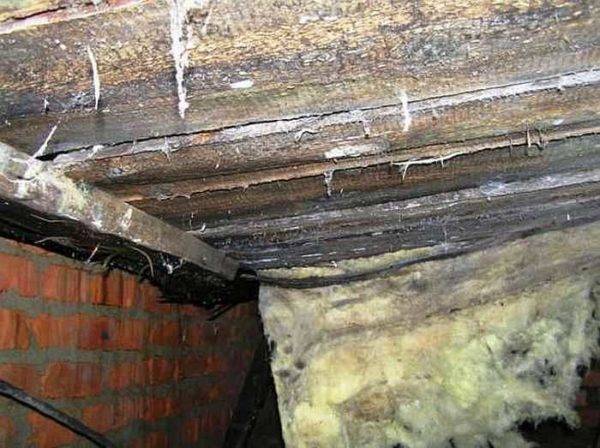
This is how a basement without ventilation looks like after a few months
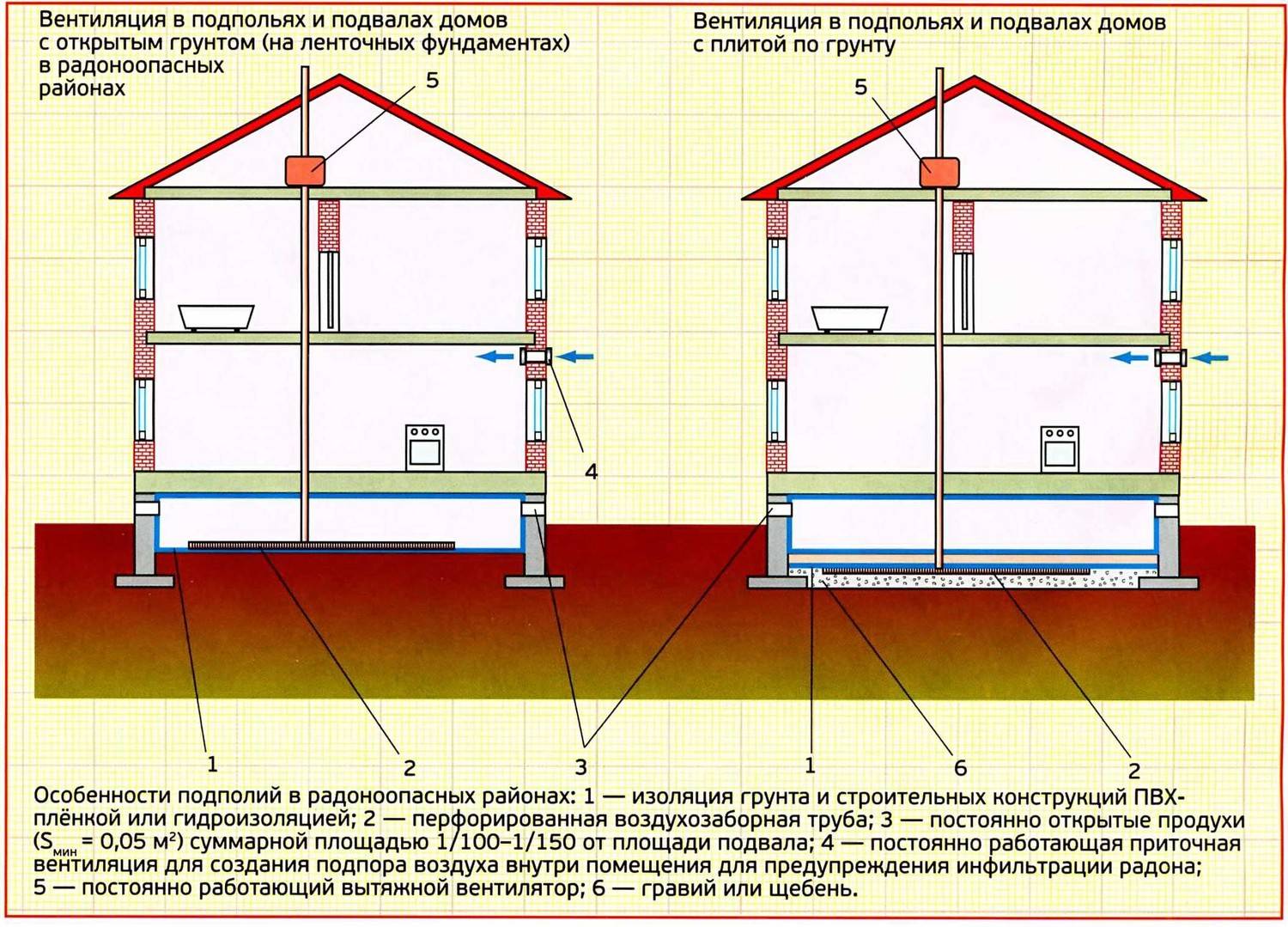
The second reason why underground ventilation is necessary is radon gas, which is released from the soil, and, sometimes, in considerable quantities. It is a natural radioactive gas. Without ventilation, radon accumulates in the upper part of the underground space, gradually seeps into the house. It is probably not necessary to tell what the presence of radioactive gas in residential premises can lead to. So this is another good reason why you need to ventilate the subfloor.
There are two ways to ventilate the underground space:
- Make vents in the foundation (also called vents). In this case, moisture is removed due to a draft - ventilation holes are located in opposite walls.
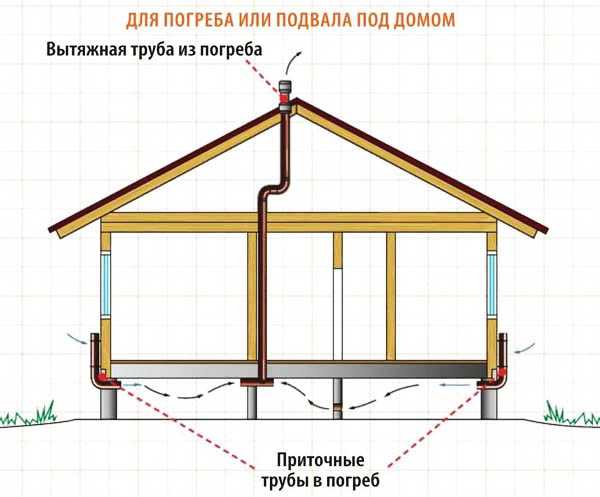
- Arrange for air extraction from the underground - bring the ventilation pipe to the roof, and air intake - through the grilles in the rooms. In this case, they do not make ventilation in the foundation, but it is necessary to make a thorough insulation of the outer foundation + basement + blind area. Then cover the soil inside the subfloor with waterproofing.
The second solution makes it possible to improve the aesthetics and not to dry out the subfloor due to drafts, but it requires significant material investments. This option is suitable if you are going to build an energy-efficient, well-insulated house. In all other cases, it is more appropriate to make foundations.