- Why do swimming pools need to reduce the level of humidity
- Features of the ventilation device in the premises of pools
- Why are dehumidifiers stupid equipment?
- Principle of operation, structural differences
- Wall dryers
- Floor models
- Duct dryers
- Types of dehumidifiers
- About air exchange systems
- Forced ventilation
- Exhaust ventilation
- Features of the microclimate of indoor pools
- Why not immediately contact the installation company?
- Pool ventilation device technology: an overview
- Ventilation system with dehumidifiers: a simple solution to a complex problem
- Ventilation systems without air dehumidification in the pool
- Multifunctional pool ventilation units: fresh and dry air
- DIY air dryer
Why do swimming pools need to reduce the level of humidity
In the room where the pool is located, there is always an excess of moisture. Water molecules are constantly evaporating, this physical process cannot be stopped. Particles fall on walls, ceilings, windows, decorative elements, condense on surfaces with a lower temperature.
High humidity creates certain problems for residents.
- Discomfort. Being in a room becomes uncomfortable: people may experience a lack of oxygen, it becomes difficult to breathe.In this case, being and swimming in the pool will not bring relaxation and pleasant emotions. Windows will fog up, outerwear will become damp.
- Damage to interior items and equipment. Moisture will settle on various things, including electrical equipment, causing it to fail.
- Corrosion. All metal structures in the room are quickly covered with rust and destroyed.
- Rapid wear of room decoration materials. Due to condensation, the paint gradually fades, stains appear. The plaster begins to swell and collapse.
- Reproduction of pathogenic bacteria and fungus. Heat, together with high humidity, leads to the active spread of molds, the appearance of microorganisms that are harmful to health.
The ventilation of the pool in the cottage solves all these problems in a natural way. Removing excess moisture increases the life of the entire structure of the house, interior decoration and helps maintain the health of residents.
Features of the ventilation device in the premises of pools
- The temperature of air and water should differ by a maximum of 2 degrees. So, for pools located in private homes, the water temperature is set at 28 ° C. The air temperature should be 29-30°C. If there is an inverse ratio of temperatures, then intensive evaporation occurs. Therefore, in the ventilation system, heating of the supply air is provided. For the swimming pool, the water temperature is between 26-31°C, for the pool in the bath with hot water 35°C, with cold 15°C.
- The most important parameter that determines the microclimate of the pool is humidity. As mentioned above, high humidity adversely affects people's health, as well as structural elements, interior decoration.Moisture exceeding the permissible threshold leads to the formation of condensate, which over time contributes to the development of fungi, mold, rust. Humidity is directly dependent on air temperature, so its decrease by 1 degree, increases humidity by 3.5%.
- Limit values of relative humidity for indoor swimming pools in winter - 45%. For summer, a higher rate is allowed - 55%.
- Strict requirements are placed on the movement of air. Ventilation for the pool in the cottage must have continuous air exchange. It must not be turned off day or night, or at any time of the year, otherwise condensation cannot be avoided. The system must maintain a speed of air masses of about 20 cm per second.
- The presence of chlorine in the air should be maintained at a level of 0.1 ml per 1 cubic meter. m of air.
In addition, the pool ventilation system must be autonomous, independent of the ventilation of the house itself. And connecting the system to an uninterruptible power supply will ensure its continuous operation, independent of the presence of voltage in the network.
Why are dehumidifiers stupid equipment?
1. Dehumidifiers are not designed for swimming pools
Let's look at the tables. How much moisture does the pool emit (Table 1):
| Swimming pool in the Moscow region with a countercurrent device and underwater jets. Water surface area: | |||||||
| 15 m2 | 18 m2 | 21 m2 | 24 m2 | 27 m2 | 30 m2 | 33 m2 | 36 m2 |
| 4.3 kg/h | 7.5 kg/h | 8.7 kg/h | 10 kg/h | 11.3 kg/h | 12.5 kg/h | 13.8 kg/h | 15.0 kg/h |
How much moisture does a Dantherm dryer actually take in and how much does it cost (Table 2):
| household series | Industrial series | |||||
| brand | CDP 35 | CDP 45 | CDP 65 | CDP 70 | CDP 125 | CDP 165 |
| moisture removal | 0.9 kg/h | 1.4 kg/h | 2.2 kg/h | 2.8 kg/h | 5.2 kg/h | 6.2 kg/h |
| price, rub. | 221 940 | 257 400 | 361 170 | 464 940 | 608 000 | 848 000 |
What happens: for a pool with a counterflow and water jets of 18 m2 (7.5 kg / h according to 1 table), we need 2 dehumidifiers CDP 70 with a total cost of 928 thousand rubles. and even that won't be enough. The ventilation system for complete air drying will cost up to 400 thousand rubles.
Maybe there is an error in the calculation? - No error. Dehumidifiers are made either for small spas or large commercial pools.
2. The manufacturer artificially overestimates the power
If you carefully look at the characteristics of dehumidifiers, you will see that the declared capacity (l / day) is designed for 80% humidity, while the required 55%.
According to SP 310.1325800.2017 clause 11.3, the pool must maintain a humidity of 50-60%.
The manufacturer indicates the power of the dehumidifier based not on 50-60%, but on all 80%, which leads to a fictitiously overestimated power of the equipment by 1.5 times.
The actual capacity of the dehumidifier is 40% lower than stated.
For example, on the graph in the CDP 65T dehumidifier data sheet, we see that at a temperature of 30 °C and humidity of 55%, the real productivity is 2.3 l / h, and the seller on the site indicates 3.4 l / h at 80%.
 Oversized pool dehumidifier
3. The manufacturer underestimates the actual amount of moisture in the pool
Until 2012, the volume of moisture in the basin was calculated using 3 different methods, and the result varied greatly. With the release of the ABOK standard ”7.5-2012, the methodology became one, but sellers release selection tables according to old calculations in order to profitably sell equipment.
The new calculations take into account additional equipment: fountains, geysers and slides, so the results are more accurate:
Real volumes of moisture in the pool area are underestimated
Consider the manufacturer's table:
The seller tells us that a pool with a water surface of 20 m2 emits 57.6 l / day of moisture into the room. But he chooses the wrong air humidity and water temperature. Real release of moisture 123 l/day.

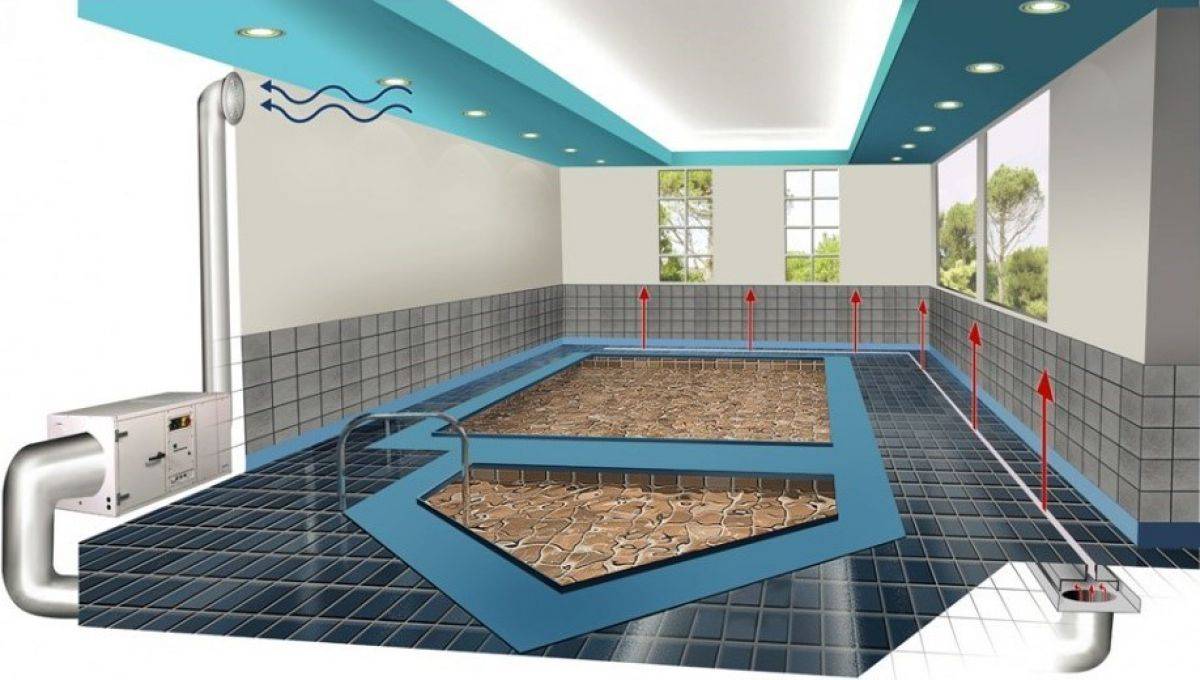
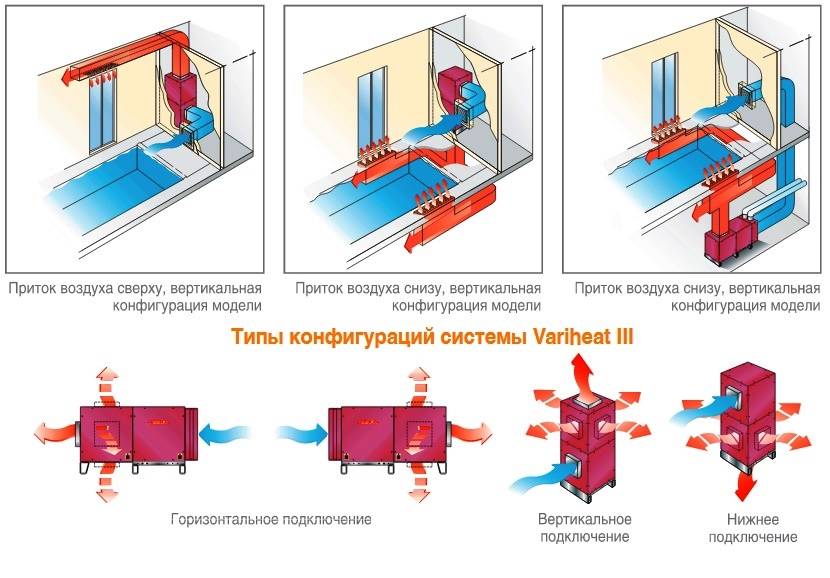


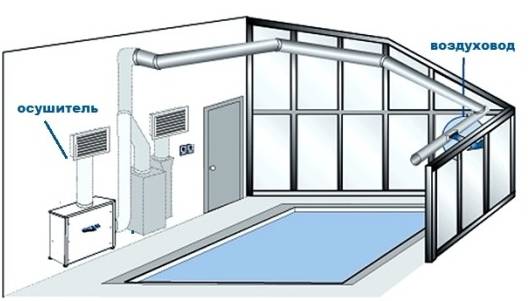

As a result, the dehumidifier is chosen incorrectly and does not remove moisture.
4. The pool needs ventilation Even if you install a dehumidifier, the pool will still need ventilation. Smells of reagents must be removed and the room ventilated.
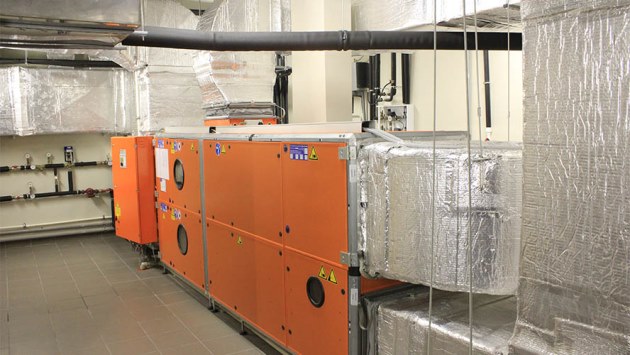 Air handling unit Menerga for basin
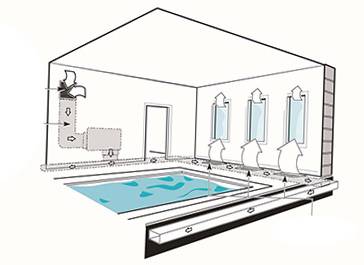
5. You can remove 100% of moisture by ventilation without a dehumidifier!
We have installed such a scheme in 20 pools. It is justified by the current standards: SP 310.1325800.2017, ABOK 7.5-2012.
Conclusion: The range of dehumidifiers is not designed for swimming pools. It is not economically justified to use dehumidifiers in the pools of private houses. The pool owner will never recoup the investment. An air dryer is a necessary piece of equipment for other purposes.
Principle of operation, structural differences
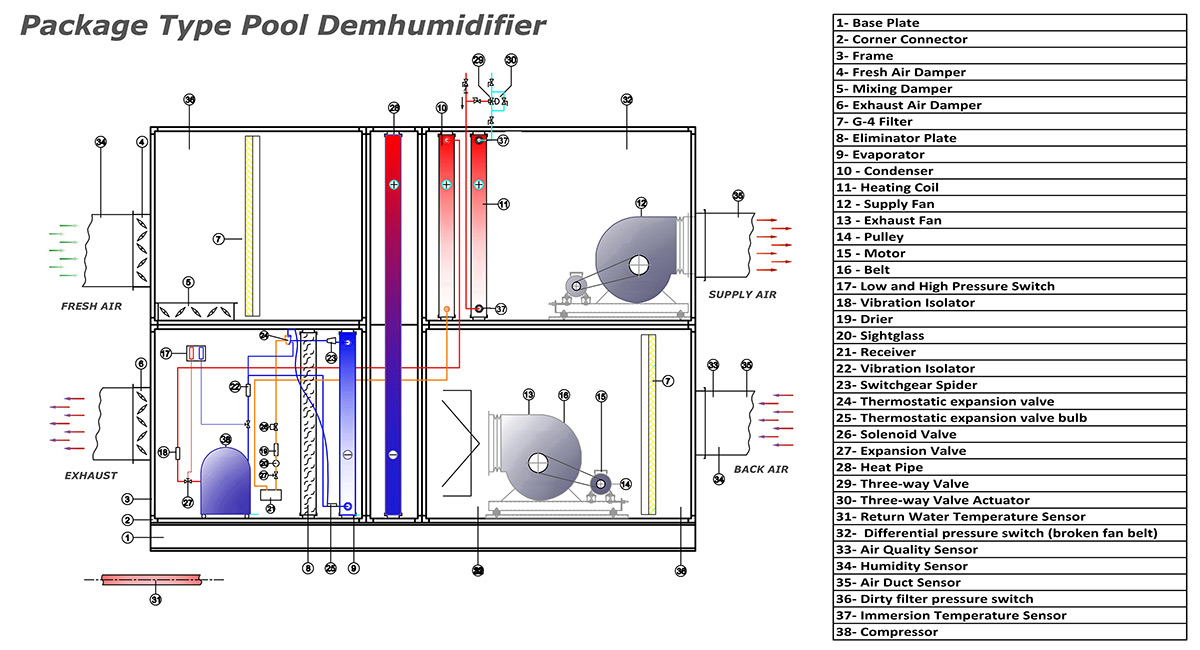
Despite the wide variety of models, the principle of operation for all pool dehumidifiers is the same. It consists in the following: this device contains a powerful fan and a special cooling radiator inside. The air injected into the device is freed from steam by its instantaneous condensation on the icy surface of the ice radiator. Further, this condensate flows into a special container. At the outlet of the device, the air is heated to normal temperature and supplied to the room.Depending on the power, dehumidifiers are domestic and industrial.
Correctly, such dehumidifiers are called freon-type installations or evaporative-condensing units. Each of these devices has two heat exchangers. One cold - condenser and one hot - evaporator. They are arranged in series in the air stream. The air after drying warms up slightly, its temperature rises by 5-6 degrees.
There are also absorption dehumidifiers, which absorb steam with a special fiberglass absorbent disk. But such installations in swimming pools are rare, these dehumidifiers are more intended for food and pharmaceutical enterprises. There are also household dehumidifiers, but they are too small for pools. They are intended for bathrooms and basements. Industrial models have a capacity of up to 360 liters per day, household ones - no more than 20. Industrial units provide 24-hour non-stop operation and the ability to operate at sub-zero temperatures. They regulate the time, mode and intensity of dehumidification.
Also, the selection of the dehumidifier is carried out according to the form and method of installation, and they are divided into three main varieties:
- Wall mounted;
- floor;
- Channel.
We give their brief characteristics.
Wall dryers
Designed specifically for small pools. Their productivity does not exceed 3 liters per hour. They are hung on the wall on special brackets. So that the dehumidifier itself does not rust in a wet room, it is made of galvanized steel, which is additionally coated with thick enamel. This reliably protects against corrosion and ensures long-term operation. As a rule, repairing dehumidifiers for small pools is inexpensive and uncomplicated.
High-quality dehumidifiers are equipped with an additional dust filter, and most modern models are fully automatic, have built-in humidity and temperature sensors. These dehumidifiers are designed for pools up to 40 square meters. The low price and easy installation have made the wall-mounted dehumidifier the best option for private ponds.
Floor models
The floor-mounted dehumidifier does not require any installation effort, they are simply placed on the floor in close proximity to the pool. They are also designed for small spaces. Even if the ventilation of the pool in the cottage is not good enough, such a dehumidifier will do its job perfectly.
Duct dryers
Powerful indoor air duct dehumidifiers for swimming pools contain a whole system of air ducts. They are equipped in a separate room, which can be located under the pool or above the ceiling. Thus, the equipment is out of the recreation area and visibility for visitors. People do not hear the noise, and the equipment does not spoil the design of the room. This type of equipment has many advantages for large pools. We list these advantages:
- High performance;
- Intelligent automatic control system;
- Air is distributed evenly;
- The ability to set the most optimal and stable microclimate due to the wide functionality and many settings.
However, this is complex equipment, any duct dehumidifier requires specialists to install and configure.Proper installation is impossible without preliminary calculations and necessarily includes the design of pool ventilation, respectively, the cost of installing such equipment is much higher, therefore, for private pools, the issue price is often unattainable. This equipment is for water parks and large commercial pools, where a powerful air exchange is planned.
Types of dehumidifiers
The described devices can be divided into 2 types depending on the degree of mobility:
- Portable products. Such units can be moved on mobile equipment and are often used when different degrees of air humidity are observed in different parts of the room.
- Stationary dryers. Such devices are very powerful and are used only in pools. Often they are mounted into the wall, so that all communications are hidden behind the building materials.
Dehumidifiers can be located on the wall and on the floor. In the second case, it is placed as close to the water as possible. Channel dehumidifiers are installed in the adjacent room and are characterized by increased power. Their location in a separate room is explained by the high noise level during operation.
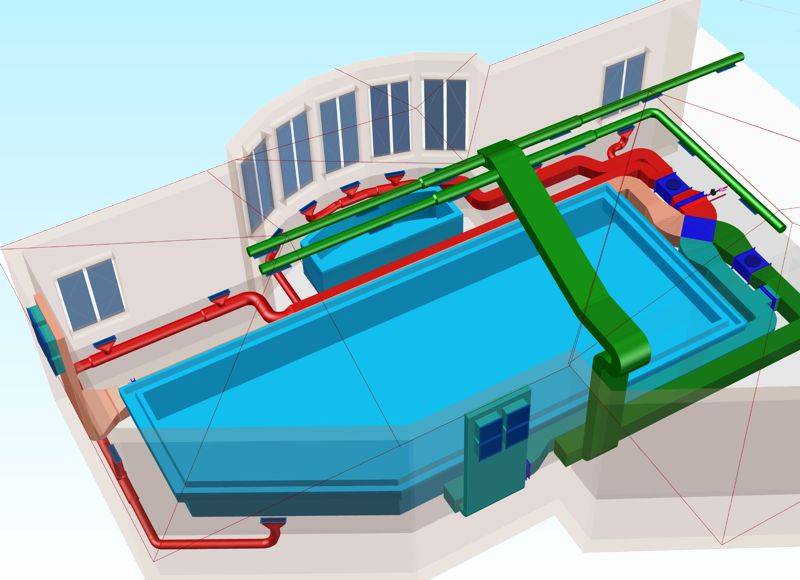



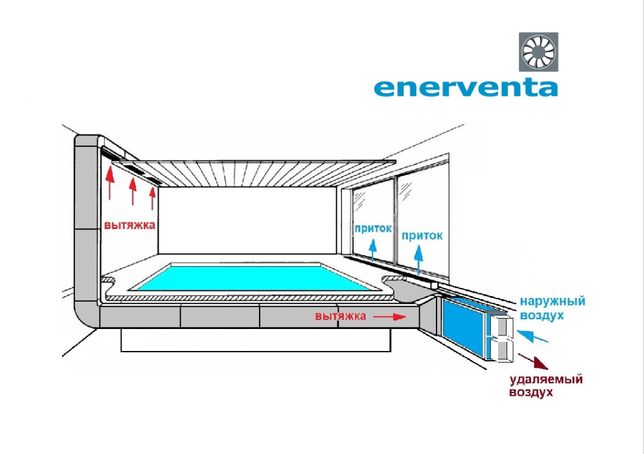
Portable and stationary dehumidifiers, which are located in the pool room, are usually used in children's pools.
In addition, the described devices can be divided into:
- Adsorption. Such dehumidifiers absorb moisture with the help of a special adsorbent. This substance is placed in a chamber that creates 2 air flows. A hot stream dries the air, and the second one gives it back to the room.
- Assimilation dryers.The air in such devices heats up, absorbing moisture, due to which dehumidification occurs. It should be remembered that such devices consume a large amount of energy and at the same time do not differ in high performance.
It is important to remember that pool ventilation also plays an important role, so do not rely on dehumidifiers alone. Smaller dehumidifiers can be installed indoors and independently, following the instructions provided.
If the equipment should be built into a wall or located in an adjacent room, you should contact professionals involved in such work.
About air exchange systems
The supply of clean air and the removal of exhaust air in the pools is carried out using specially equipped ventilation. At present, there are two options for organizing this process:
- autonomously operating separate supply and exhaust systems;
- a single supply and exhaust unit.
Forced ventilation
The device for this method of air aeration is installed mainly during general construction work on the equipment of the reservoir.
Its main element is a fan built into the exhaust ducts. Air intake is carried out using the following devices:
- an air inlet device equipped with a valve that prevents the flow of cold air into the room during the winter period when it is not working;
- air cleaning filter;
- air heater;
- intake fan;
- block to maintain the temperature level and volume of intake air.
PECULIARITY! Supply ventilation brings fresh air into the room.Moreover, this is done separately from the disposal of already humidified air, which is carried out in parallel.
Exhaust ventilation
It provides for the operation of an exhaust fan, which is built into channels specially prepared for this. This also includes an air (check) valve, as well as an automation system. Air is distributed through special air ducts, which are made of galvanized steel. It is supplied and removed through the ventilation grilles.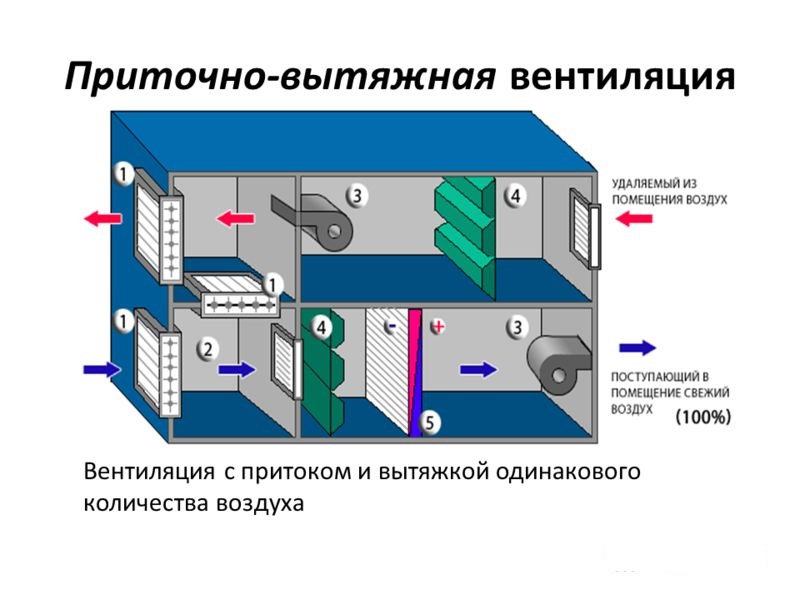 The distribution of air from the pool through neighboring rooms and corridors is prevented by a special setting of the ventilation system, which provides for an increase in the amount of exhaust air above the supply air.
The installation of separately operating supply and exhaust systems is distinguished by simple installation and relatively low cost. The main disadvantage of such equipment is high power consumption. However, not in all cases, it can solve the problem of full ventilation of a room with a high level of humidity.
If you combine this equipment with a dehumidifier, the effect can be much stronger. It is this scheme that is most suitable for private sector pools.
But as for the single air handling unit, then it, although expensive, but solves all the ventilation problems of artificial reservoirs in the complex.
Features of the microclimate of indoor pools
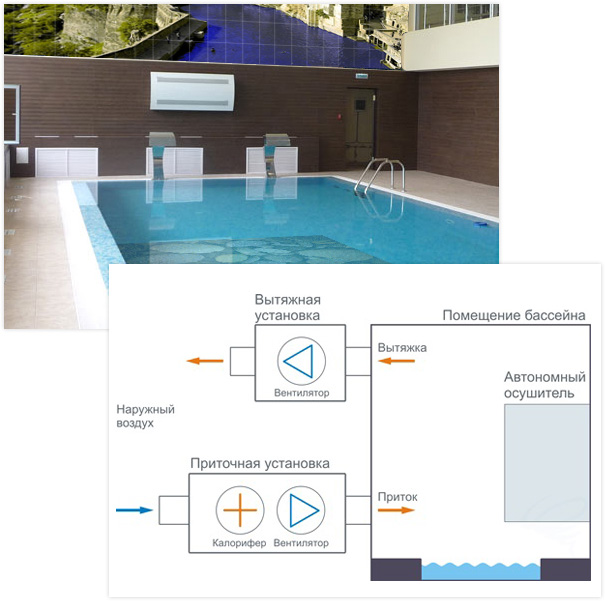
The requirements for the microclimate of indoor pools are very strict, but failure to comply with these requirements can lead to unpleasant consequences both for those who visit it, and for the pool itself and the equipment that is installed in it.The main feature of any pool is the presence of a large amount of water, which has a significant plane of the mirror, from which moisture constantly evaporates.
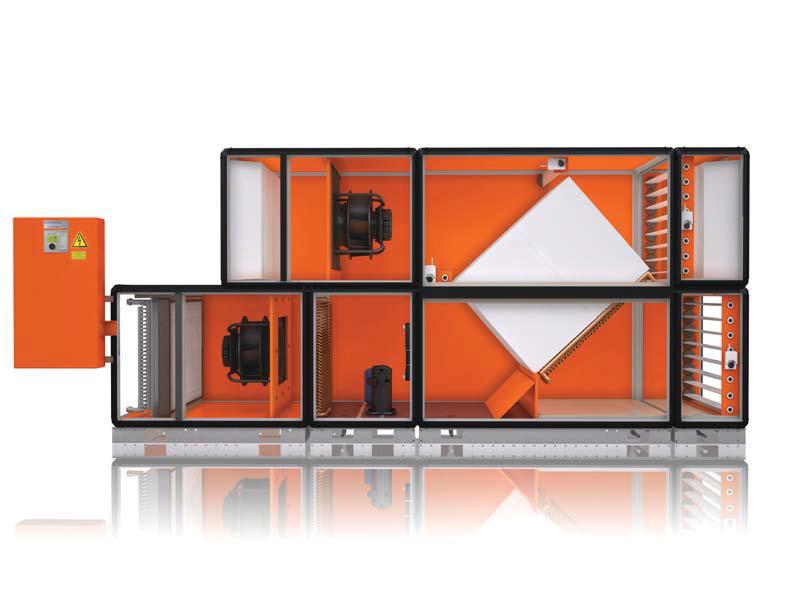
Menerga ThermoCond 39 air conditioning unit with asymmetric high-performance heat exchanger and integrated heat pump
The evaporation process occurs even in stagnant water, and with intense wave formation, the appearance of splashes, when someone splashes in the pool, it increases by 10-60%, depending on the number of swimmers. Water vapor is also formed from other sources: from the surface of the floor flooded with water, and from the surface of the human body in the room.
No matter how hard you use your pool, the high rate of water evaporation requires the pool ventilation system to be on 24 hours a day. Of course, this mode of operation leads to high costs, so efficiency is one of the mandatory requirements for pool ventilation equipment.
There are certain environmental requirements for an indoor pool.
| Parameter | Value range |
|---|---|
| Air temperature | 27°C-34°C |
| Water temperature | 23°C-28°C |
| Relative humidity | 50%-65% |
| Air flow rate | no more than 0.2 m/s |
| Air exchange rate | 4-5 times in 1 hour |
| The concentration of chlorine in the air | no more than 0.1 mg / cu. m |
We emphasize once again that these parameters must be observed all 24 hours, regardless of whether you use your pool or not.Some, in order to save money, purchase a special flooring that covers the water mirror during the non-working period, but in this way it will not be possible to completely solve the problem of humidity, in any case, it is necessary to additionally dry the air mechanically. Although it is better to purchase a protective film that covers the surface of the water in the absence of people. By the way, opening the vents is also not effective.




Why not immediately contact the installation company?
Ventilation in the pool is a technological system. It does NOT count according to standard methods of air exchange rate and thus fundamentally different from the ventilation in a cottage, office or restaurant. Therefore, those decisions that will be included in your estimate by installation companies in 90% of cases will be incorrect.
If you already have an estimate for installation, you can send it to me and I will tell you all their mistakes.
Firstly, in most private pools, specialized installations with recuperators and a dehumidifier are not needed. They are expensive and are used for very different purposes. Secondly, Automation, which is built into most installations, requires clarification at the factory. You cannot buy any installation and hang it. Such equipment will not work properly. The settings must be programmed according to the humidity curve. Thirdly, Installation firms select installations at random. And this is not a slander on my part. To make the right selection, they should ask you what additional equipment you plan to put in the pool, as well as the mode of inclusion of this equipment. Most of the time, no one asks. For example: For a pool with counterflow, equipment for 1500m3/h is required for 230,000 rubles, and for a pool without counterflow - for 900m3/h for 145,000 rubles.One question saves the Customer from 85,000 rubles.
Pool ventilation device technology: an overview
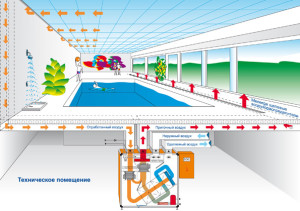
Ventilation, first of all, is necessary to eliminate excess humidity in the pool room. After all, constantly wet walls lose their natural heat resistance and turn into a very convenient platform, literally created for the development of colonies of various representatives of microflora.
Therefore, the basis of all ventilation technologies is either forced condensation of moisture from the air, or the replacement of the entire volume with a new, not yet humid environment.
Pool ventilation
Moreover, the following room parameters affect the technologies and methods for arranging pool ventilation:
- Dimensions of the "evaporator" - the water surface of the pool (its area).
- Room volumes (total area per height).
- The frequency of use of the pool for its intended purpose (in hours per week / month).
And if the room is small, and the pool itself is small, and you use it infrequently, then there is simply no better trivial “drying” technology. Well, if the pool is very large, and the room is far from small and very popular (with a large number of visitors), then you will probably need a high-performance air conditioning unit. And as an intermediate option, you can consider a conventional supply and exhaust ventilation system with and without air dehumidification.
In a word, you already know the recipe, and now let's take a closer look at the composition of these "drugs".
Ventilation system with dehumidifiers: a simple solution to a complex problem
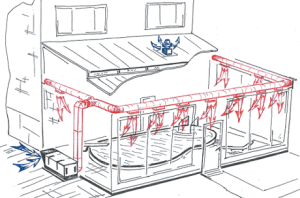
A dehumidifier is a device that condenses excess moisture in the air.Moreover, for effective operation through such a device, it is necessary to pump three times the volume of the air mass of the room in just one hour.
Ventilation system with dehumidifiers
Therefore, solving the problem of waterlogging with the help of dehumidifiers leads to high energy costs, the appearance of noticeable noise pollution and the lack of an influx of really fresh air.
Although such systems have a couple of really strong qualities - this is the compactness of the “dryer” itself and the ability to solve the problem literally “out of the box”. That is, dehumidifiers are supplied for open sale in the form of floor or wall systems, which you only need to buy and turn on, and then wait for the result.
Yes, and the choice of a specific model of the dehumidifier is very simple - it is chosen according to the performance of the device, which implies the already mentioned three-fold "swaying" of the entire volume of the room (floor area per height) in one hour.
Ventilation systems without air dehumidification in the pool
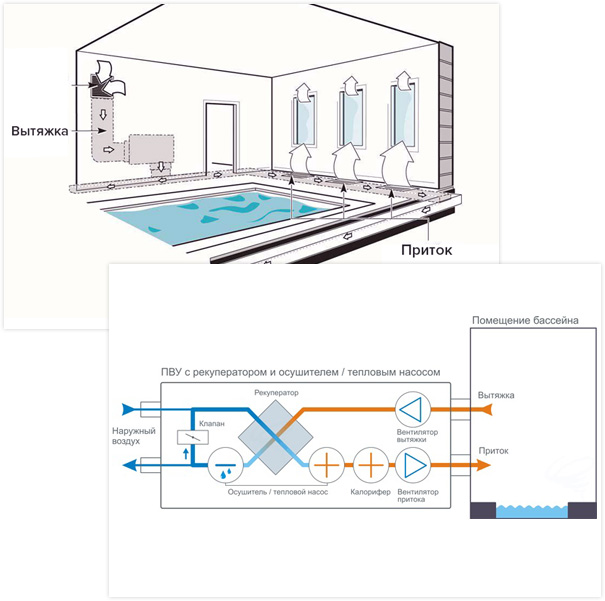
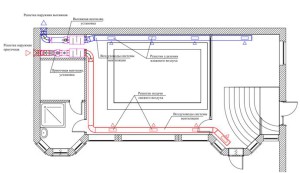
This option involves the elimination of moist air as such and the replacement of the displaced mass with a new medium pumped out from the outside. That is, we have a classic supply and exhaust ventilation.
Supply and exhaust ventilation system without dehumidification
The strengths of this scheme include relatively low energy costs for the process itself and a high result, explained by the actual elimination of the very source of the problem - water vapor contained in the air.
But to implement such a scheme, you will have to build a real ventilation system that transports moist air outside the walls of the building (exhaust duct) and pumps fresh air into the room (supply duct).
Therefore, despite the possibility of arranging a circulation system focused on natural ventilation, implemented due to the difference in the density of cold and warm air, this option will require quite significant energy costs. They will be aimed at heating the supply air and compensating for heat losses caused by the outflow of heated air mass through the exhaust system.



In a word, this is far from the best option.
Multifunctional pool ventilation units: fresh and dry air
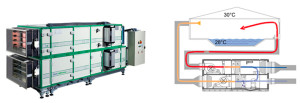
Multifunctional pool ventilation units
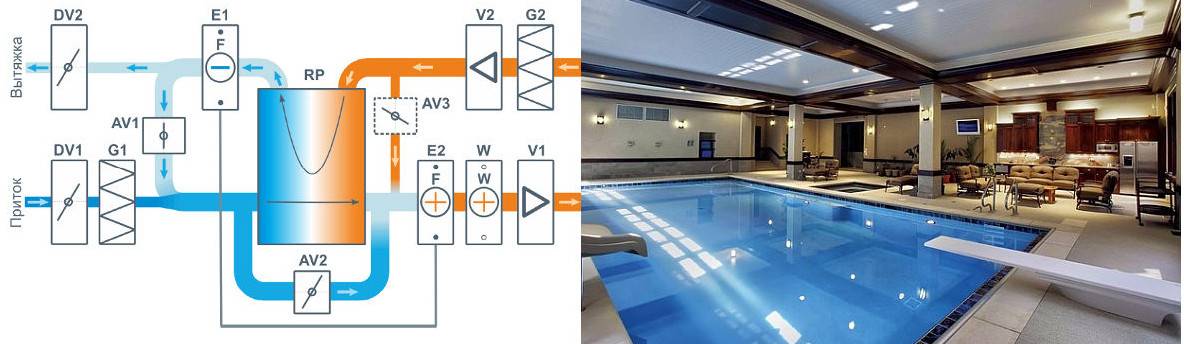
The idea of building such systems arose as a result of the unwillingness to put up with the heat losses of classical ventilation systems. Such systems combine the efficiency of "dryers" with the economy of circulation plants. Moreover, the intake air is heated by the heat of the exhaust flow (recuperation effect).
Yes, such a system is complex - so it is quite expensive. Yes, it is impossible to choose it "with your own mind" - engineers and designers are needed. Yes, it takes a very long time to install, and I mount it by professionals, not plumbers. But the result will be simply amazing - you will solve all your problems due to simply microscopic portions of energy transmitted to the compressor and dryer.
DIY air dryer
If there is an opportunity and desire, then you can make it yourself, using simple materials and mechanisms for this.
You can see detailed instructions in this video.
There is also an option based on the use of an unnecessary freezer. If you have changed the refrigerator to a new one, do not rush to throw out the old one.Based on it, you can make a good dehumidifier. To do this, in addition to a properly working camera, you will need:
- two fans;
- fixing nuts and screws;
- electric heating device;
- rubber tube;
- organic glass with dimensions corresponding to the freezer.
The sequence of actions will be as follows:
First you need to thoroughly rinse the old refrigerator and try to get rid of the musty smell as much as possible (you can rinse the internal surfaces with a strong solution of vinegar or ammonia - it can be purchased at any pharmacy).
Next, carefully disconnect all the doors from the refrigerator (for this, the hinges are removed with the help of tools, and then the doors themselves are removed).
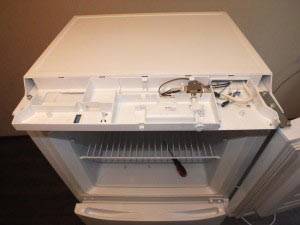
Next, plexiglass is taken and cut to the dimensions of the refrigerator door - in fact, it will replace the dismantled door.
One of the fans is attached to the bottom of the glass in such a position that it directs air into the chamber itself. It is mounted using self-tapping screws, which are attached to pre-made holes.
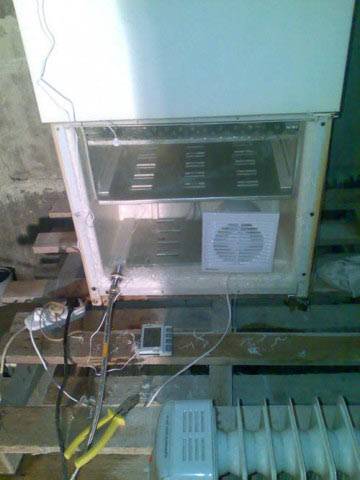
The remaining fan is attached on the opposite side of the maximum distance from the first (at the top of the glass) - it should blow, on the contrary, into the room.
The rubber tube will ensure the removal of liquefied water from the device. It is attached through a pre-prepared hole, while sealant is used for reliability. A vessel can be attached under the tube, where the resulting water will flow.
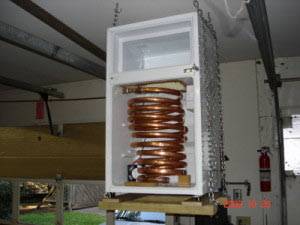
Finally, when everything is ready, the glass with fans is fixed to the refrigerator.
Making the device does not take much time. However, if this is not possible and you want to use a reliable device, then it is best to purchase a dehumidifier in a store.