- Types of solar lamps
- About the appointment of "solar" lamps
- Decorative lamps
- Lights for paths
- Searchlights
- Pros and cons
- Purpose
- Advantages
- Flaws
- Accommodation Recommendations
- Recommendations for creating a lighting system
- Garden and park solar-powered lamps: varieties
- Bollards
- Built-in lights
- Luminaires for water structures
- Decorative lamps
- Large lamps
- Wall lamps
- Recommendations for choosing garden lamps
- Criteria for selecting parts and prices
- Dynamic multicolor light
- Where are they installed
- TDM ELECTRIC SQ0330-0008
- Brilliant Chorus 43684/82
- Fumagalli E26.156.000.AXF1R RUT
- Northern Light Garden-4 9023
- How to choose the right model?
- Power
- Protection class
- Model type, mounting method
Types of solar lamps
It's not hard to see why solar-powered appliances are so popular these days. Of course, it's great that such lighting allows you not to pay for electricity, but for many, the main advantage is still the ability to mount fixtures without wiring. All that is needed is to take the device out of the box and place it, for example, near the track.Most models have darkness sensors, so you don't even have to think about turning on the light - everything happens automatically.
This technology is developing very quickly. Solar-powered lamps are looking more and more attractive, their glow is getting brighter, and the uptime is increasing. To understand which device is right for you, you need to familiarize yourself with the range and main types.
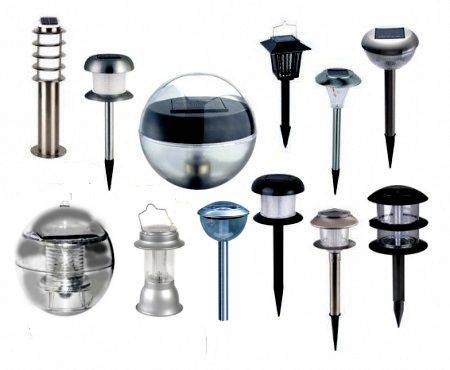
- Lamps on short stands are characterized by low price and ease of installation. You simply press the leg into the ground and installation is complete.
- Hanging lanterns are attached to the ceiling of the gazebo, on tree branches or on the fence. They can be used as a decorative item.
- To illuminate the fence, LED spotlights are often used, the power of which is equivalent to a 100-watt incandescent lamp.
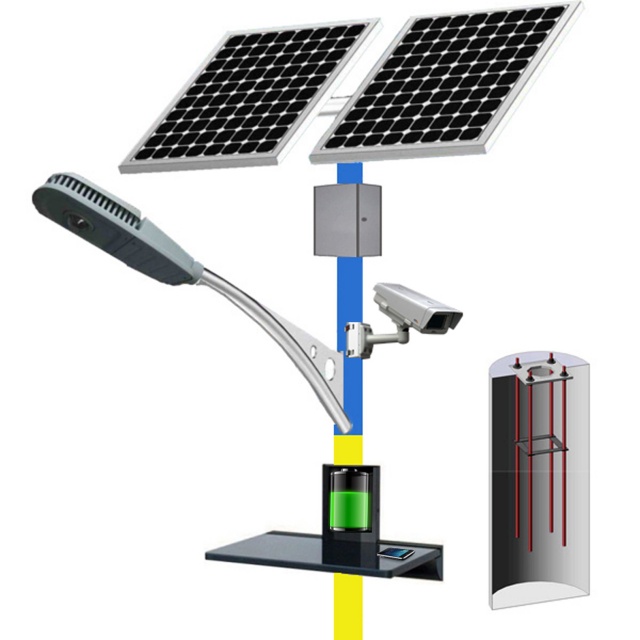
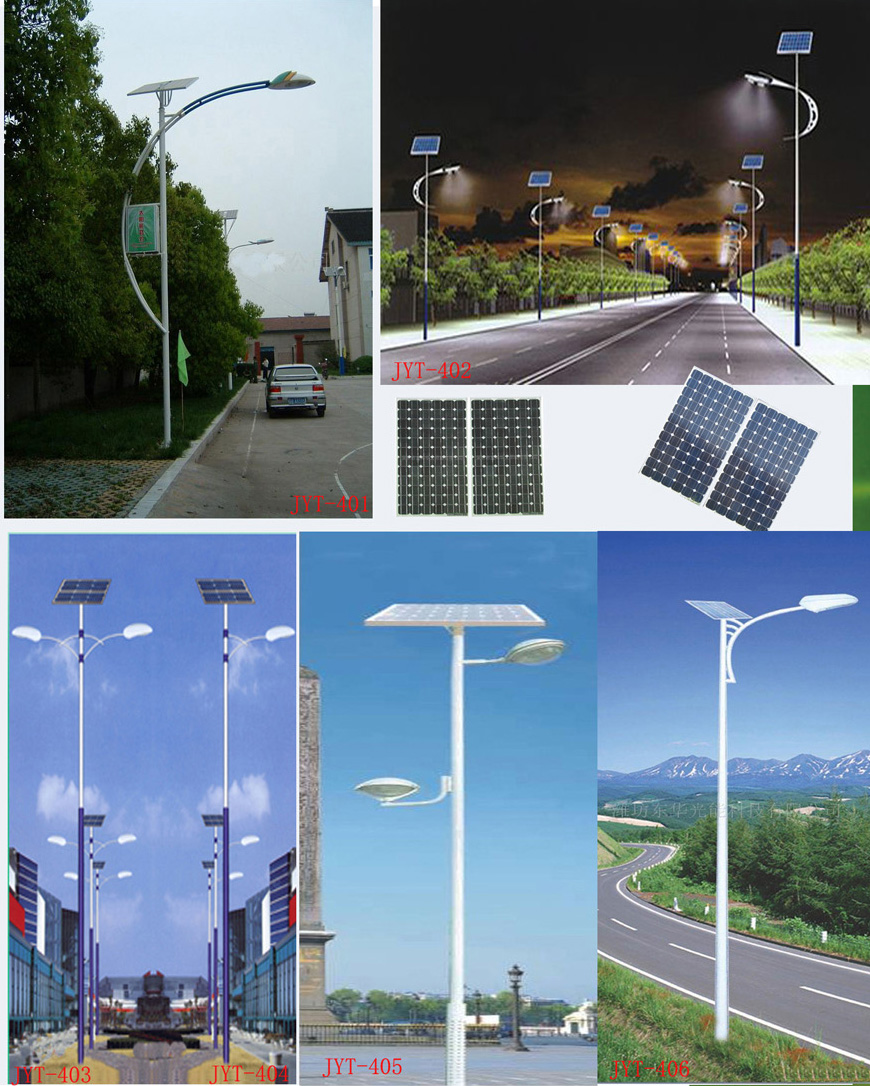
- Street lights mounted on a leg or pole. Used in parking lots, large yards or gardens. Also used for road lighting.
- Wall-mounted solar lamps are used to illuminate the facade of the building.
About the appointment of "solar" lamps
When buying lighting fixtures for the garden, it is important to consider what function they will perform. In total, there are three groups of lighting: decorative, for paths and spotlights
Decorative lamps
Decorative lamps add pleasant lighting to your yard. They mark a specific place, their purpose is not at all related to the maximum illumination of the territory. Due to the weak light emission, the service life of decorative lighting significantly exceeds that of solar-powered counterparts. It is a fairly common occurrence when decorative lighting works for several nights in a row, being charged in one bright sunny day.
Charging of devices occurs fully even in cloudy weather. Usually these lamps emit not white, but yellow light, some models are even capable of flickering and creating a flame effect. Due to the yellow color, the electricity consumption of such lamps is reduced. In addition to the aesthetic function, decorative autonomous lamps are also used to illuminate potentially dangerous places. This is a tool storage area, an area with decorative landscape elements, and so on. Lamps-decorations are the most affordable, have a relatively low cost.
Lights for paths
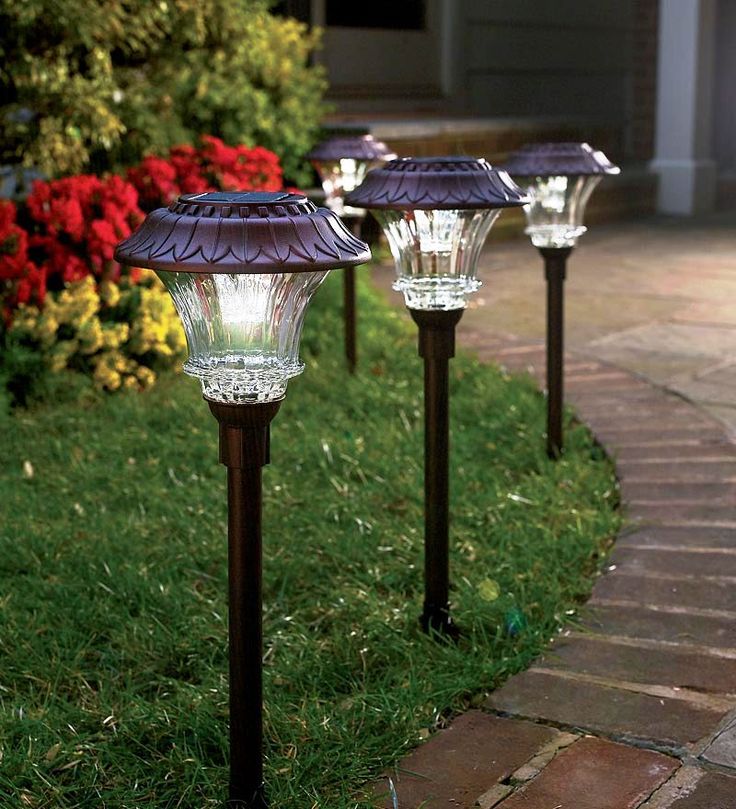
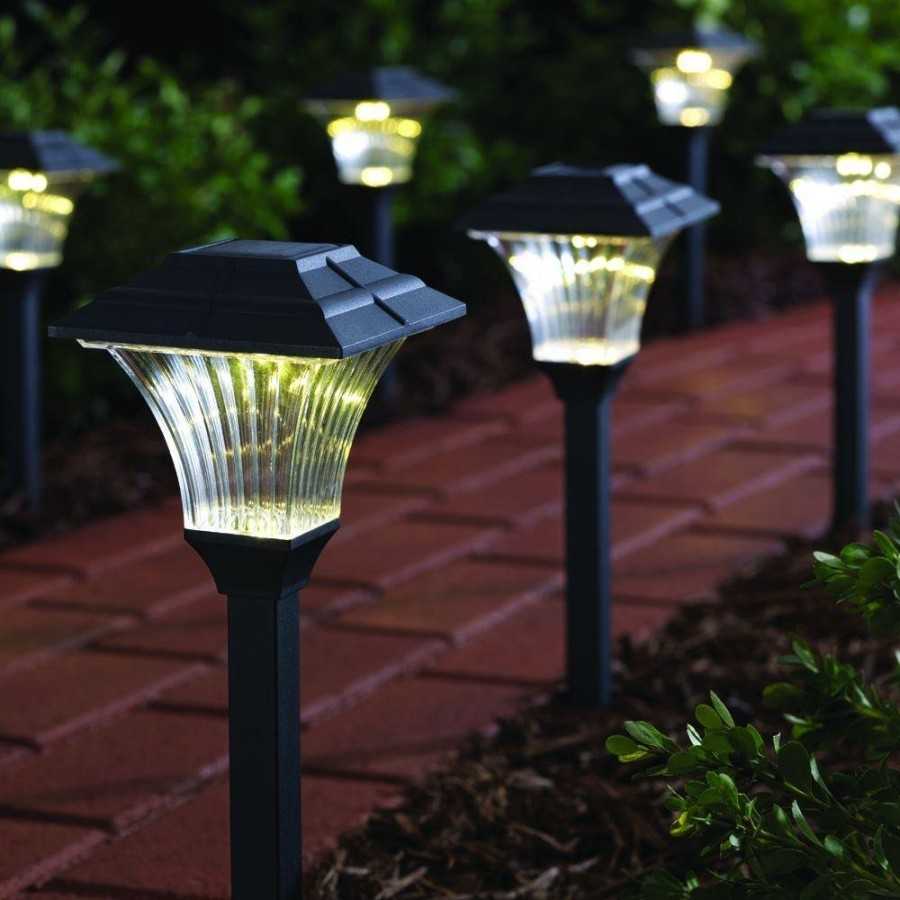
These lamps illuminate the roads and trails on the site. Such devices, as a rule, require several along the entire track. This approach allows you to secure the path as much as possible. There are several ways to mount them: they can be hung, stuck into the ground, or simply put on the surface. Light in such devices is always directed downwards.
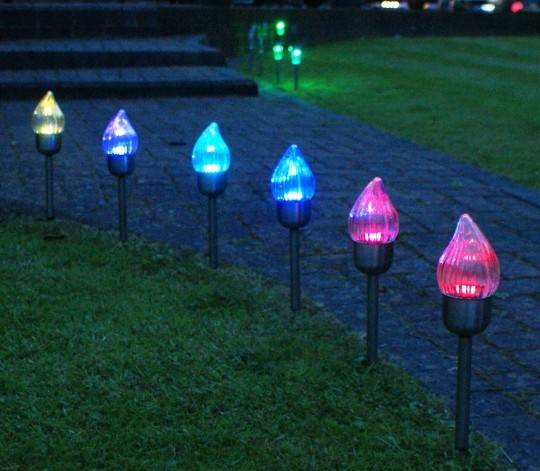
Most walkway lights are equipped with manual switches. In this way, the charge is saved, and the devices are used only when necessary. The most convenient fixtures are equipped with motion sensors that turn on automatically when an object approaches the track. This type of flashlight provides medium power lighting and belongs to the middle price category.
Searchlights
This type of autonomous lamps is itself powerful, so such devices are expensive.
It is important to understand that high power does not imply light output similar to the characteristics of a 100-watt spotlight. The maximum power of a stand-alone floodlight resembles a 40-watt incandescent lamp, and this is quite enough
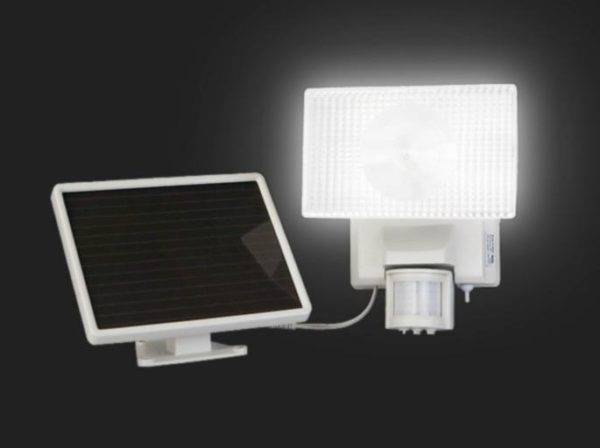
Most appliances are designed in such a way that they can be mounted in a variety of ways. You can illuminate the entrance to the house, the plot or the parking lot with spotlights. As a rule, these solar-powered lamps are characterized by increased durability. Undoubtedly, all such lamps are protected from weather conditions and direct sunlight, but in this case the level of protection is much higher. Design features allow you to get more light at low temperatures.
Pros and cons
The idea to create an outdoor lighting system independent of network sources, which will provide itself with electricity, is attractive and very tempting. There is a complex of lighting devices created on completely different principles and creating new possibilities.
Since the luminaires do not have a connection to the power line, there is no need to be tied to one place. Lanterns can be moved as needed, temporarily installing in one place or another. The laying of lighting lines is greatly simplified, the need for excavation is eliminated, and the need for a large amount of expensive cable is eliminated.
However, considering an autonomous lighting system, one cannot see only the positive aspects of its use. It should be noted that each lamp must have its own set of solar panels and a storage capacity that allows the lamp to work throughout the entire dark time of the day. The longer it is, the more powerful the batteries should be and the larger the area of \u200b\u200bthe photocells, which complicates the design and makes it much more expensive.As a result, a situation may arise when the creation of an autonomous system will be much more expensive than the installation of a fixed line.


Purpose
Autonomous solar-powered lighting is designed to ensure normal visibility on city streets or in areas of private houses at night. Unlike stationary lamps, solar-powered street lamps for street lighting require a certain time to charge the batteries, which is done during daylight hours. As a rule, lighting is not required during such hours, so the equipment has the ability to restore the energy supply spent during the night.
Such lighting can be done using conventional lamps and a cable stretched between them, or by installing solar-powered lamps.
Advantages
Why partially? Because the most “important” areas (gates, parking, entrance doors) will have to be illuminated permanently - it’s more reliable that way. But in the rest of the area you can put lamps on solar batteries. They have a range of benefits.
- Solar-powered lamps are usually autonomous, they do not need to be connected anywhere. They are installed / hung in the right places, the installation is completed, they are ready for work.
- They turn on / off themselves, from the built-in sensors.
Ease of installation and safety are two big pluses - They require minimal maintenance - it is necessary to periodically wipe the photocells and the ceiling of the lamp from dust and dirt.
- They have a long service life - from 10 years or more (with proper quality).
- They do not harm the environment and are absolutely safe, as they operate from low voltage, which is not dangerous for humans.
- If solar-powered street lighting is made in the country, its conservation for the winter and installation takes very little time. You just need to collect the lamps before leaving and arrange them upon arrival.
Flaws
As you can see, there are many advantages, the main of which is energy savings and very simple installation / dismantling. But there are also disadvantages:
- Garden and outdoor solar-powered lamps usually do not give very bright light. You can't use them as security lights. Rather, there are powerful models that are even used to illuminate highways, but their cost is completely inhumane, which is why their use in private courtyards is very limited.
Solar-powered street lighting is usually not very bright. - The number of hours of operation at night depends on the weather: in cloudy rainy weather, the lamps “store” too little energy. Sometimes it lasts only a few hours, and not all night.
- Reliable solar-powered lamps are expensive, but they work more reliably and last longer.
- Solar panels have a limited operating temperature range. They do not tolerate severe frosts and extreme heat. Therefore, they can be optimally used in areas with a temperate climate.
As you can see, the option is not ideal, but it really helps to save on electricity, because regular lighting of critical areas is far from half the cost of general lighting of the yard and garden.
Accommodation Recommendations
Some advice may be useful for those owners of country estates who are tired of overpaying for traditional electricity.
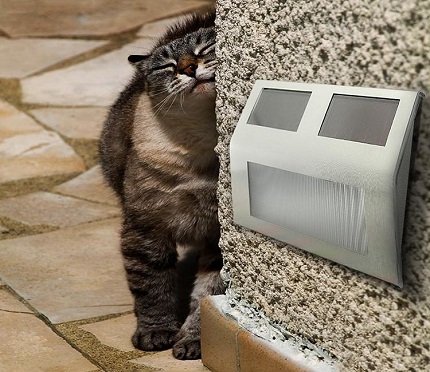
- To ensure the most efficient operation of the device (first of all, charging), the photocell is directed strictly to the south, making sure that the plane has a minimum angle of inclination. It is ideal to point it at the sun at noon.
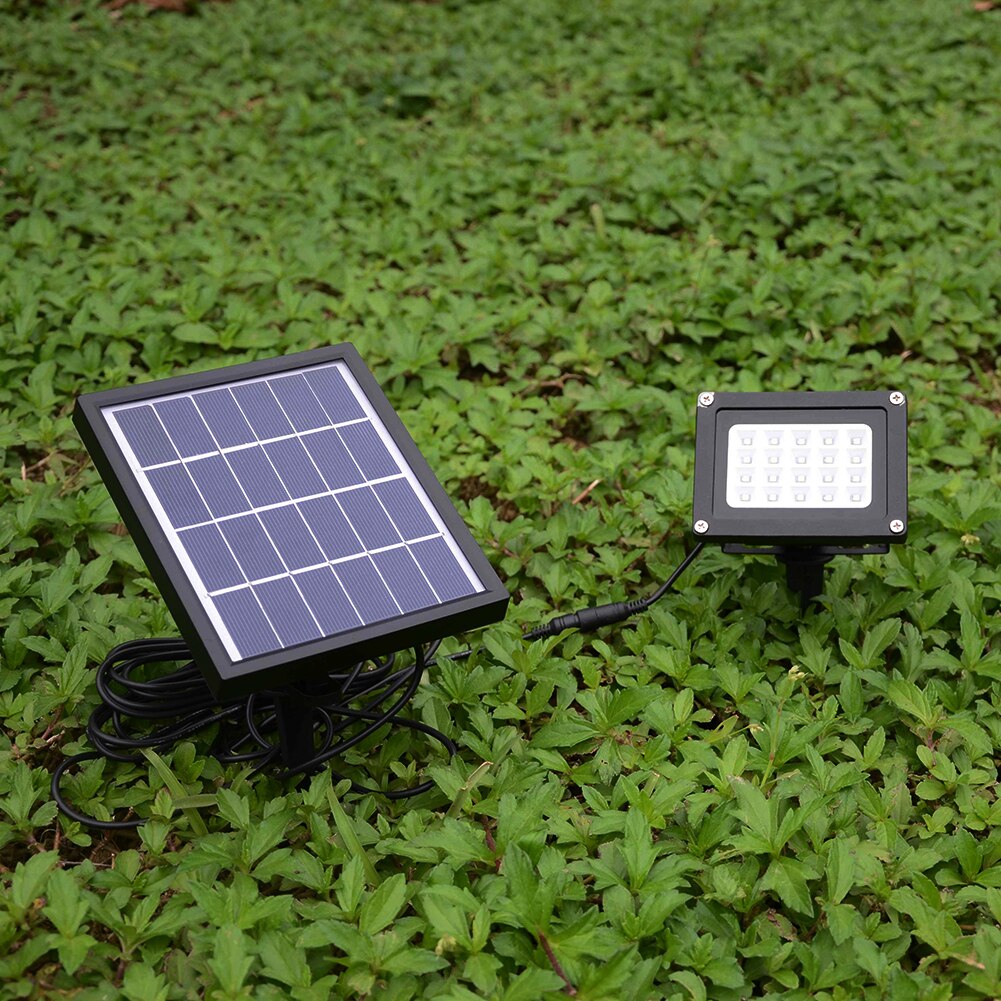
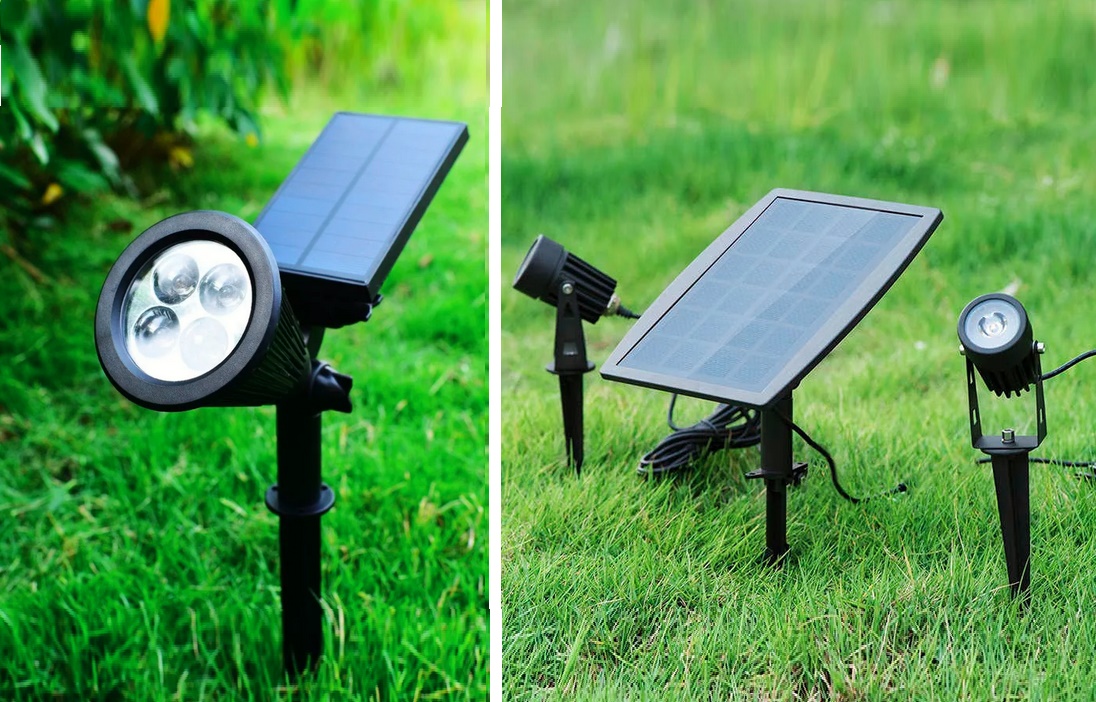
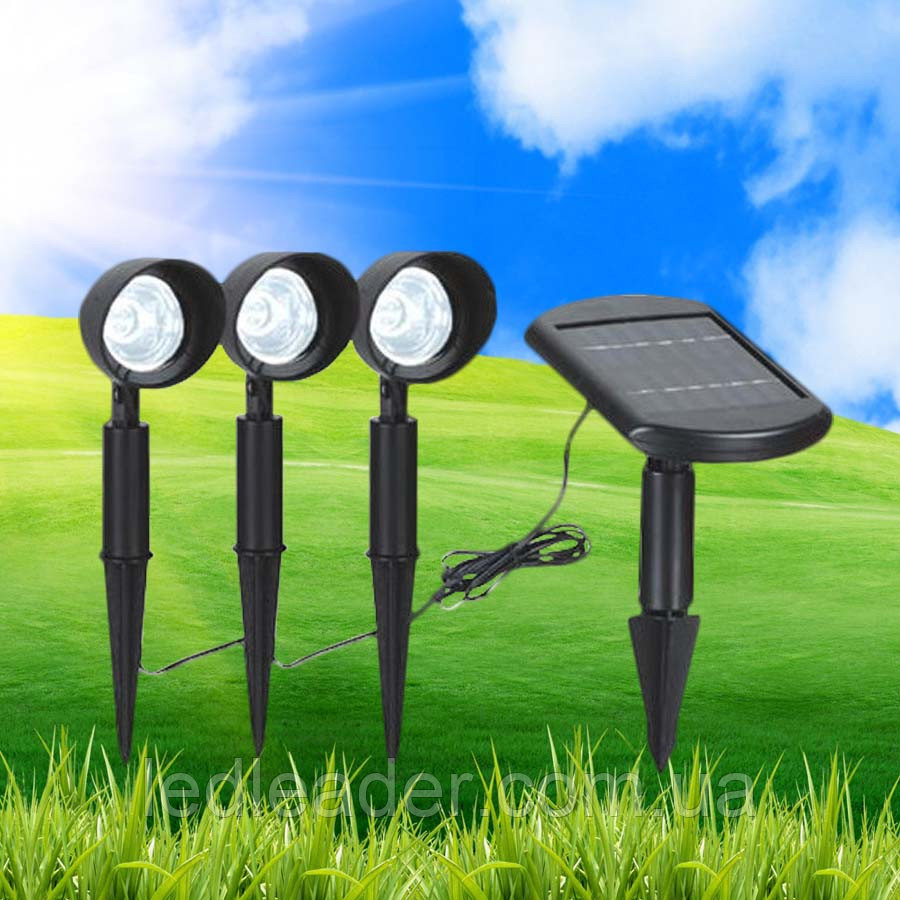
- For greater ease of placement, it is better to purchase those models in which the photocell is located separately. In this case, you can find the ideal place for the flashlight, and the sunniest place for the battery.
- During daylight hours, the device should not be exposed to the slightest shadow from trees, buildings, etc. Otherwise, charging will be difficult.
- Spotlights must be installed near the entrance to the building, at the gate and garage (parking lot).
If you purchase devices equipped with a motion sensor, they will significantly save solar energy, which means extending the life of the equipment.
What autonomous street lighting is best suited for decorating a suburban or summer cottage? If the goal of the owners is to arrange decorative lighting, then low-power lamps “scattered” around the garden or located near paths and recreation areas are ideal for this. To enter the house, only powerful devices that can guarantee maximum visibility will be optimal at the gate.
If the master is accustomed to independent "accomplishments", then you can even do without buying equipment. Happy owners of "crazy hands" will be able to assemble the device if they follow the prompts of the author of this video:
Recommendations for creating a lighting system
In the absence of knowledge, it will be difficult for many to organize high-quality lighting. But if you know a few basic rules, even an inexperienced person can carry out such work.
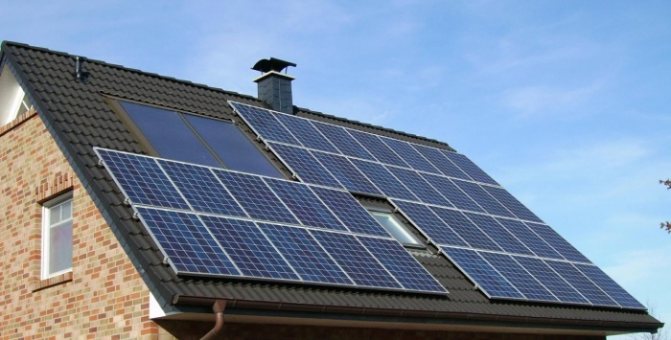
First you need to draw up a project that will display the location of all the fixtures
At the preparation stage, it is also important to decide on the type of solar panels. Thanks to the plan, you can choose the most suitable place for the location of the lanterns
This will evenly distribute the fixtures.
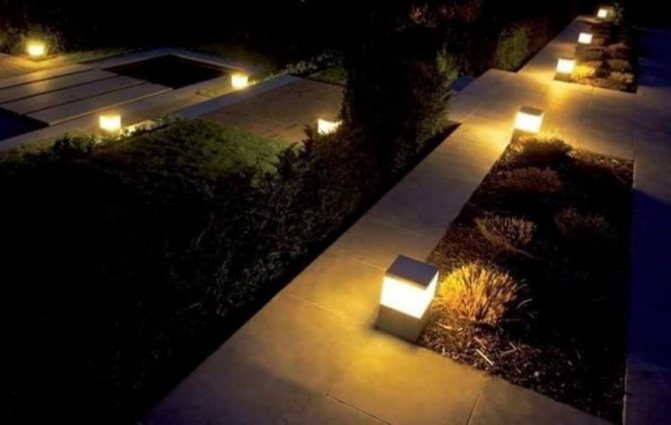
If lawn lights are being installed, it is best to do so along a sidewalk or driveway. Such lamps not only illuminate the space, but also contribute to the creation of a certain style of the site. But at the same time, one should not forget about
If you want to create a lighting system in the garden, it is best to use special garden devices that work autonomously without connecting with wires.
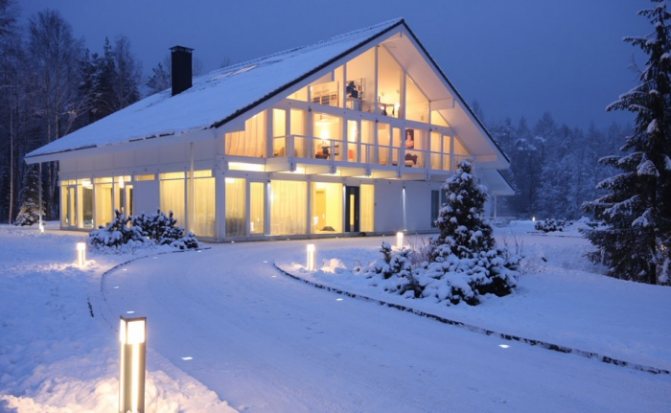
Garden and park solar-powered lamps: varieties
Depending on the size and type of the site, landscaping and overall design style, luminaires can be used in various shapes, types of light dispersion and other characteristics. Consider the types of solar garden lighting and their features.
Bollards
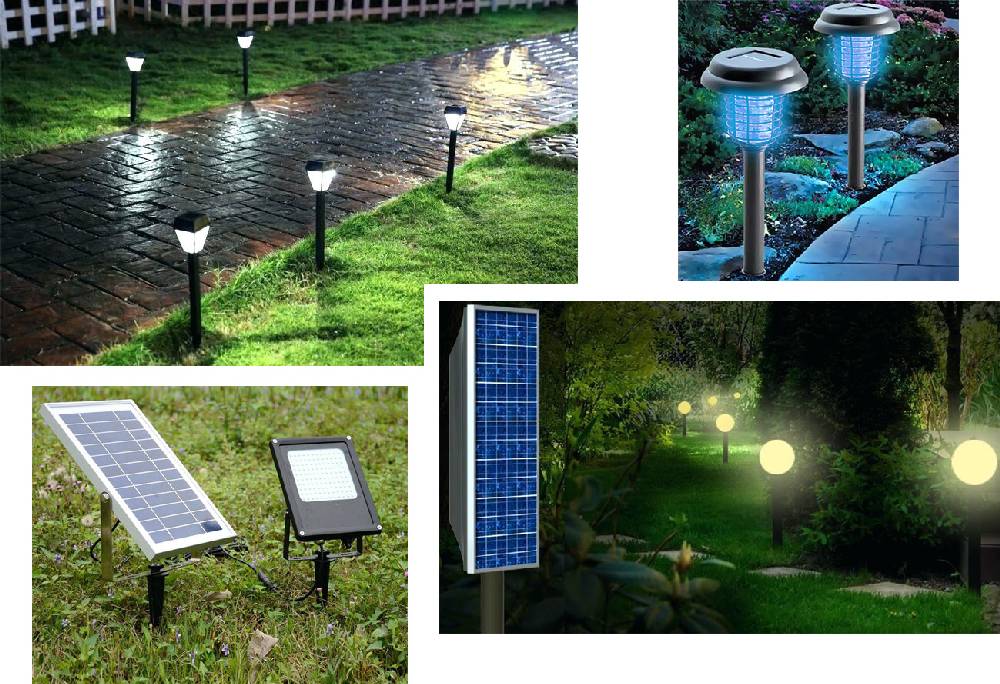
- Lamps in the form of poles or bollards are the most common type of spot lighting for a garden plot.
- This type is mainly intended for lighting paths, paths, flower beds, garden figurines and other garden decor elements where there is no need for bright and strong lighting.
- The height of the lamps can reach from 50 to 150 cm.
- The design of the light source can be the most diverse, it all depends on the manufacturer's imagination, starting from the standard classics - a spherical shape and a cone, ending with various silhouettes of figurines, bells, etc.
- Such lamps are easy to move, they can be removed from the ground and stuck more tightly in the place where it will fully perform its functions.
- Most often, bollards are used precisely in the design of areas in the style of high-tech and minimalism. These are columns retracting from the ground with a luminous flux directed downwards.
Built-in lights
Such light sources are mainly needed in order to indicate the contour of the object.
Usually they are installed along the perimeter of the path, in the ground, in the steps of the stairs, and are also used as illumination of various objects from below, for example, the facade of a building, sculptures, art objects, shrubs, etc.
Such lighting should not be too bright and powerful, it only highlights and illuminates an object or structure so as not to go astray in the dark or draw attention to a specific object.
Basically, recessed lights use LEDs, but if you need to illuminate the facade of a building, you need a certain angle of inclination and a powerful beam of light so that the light falls as high as possible and can illuminate the entire building in length.
Luminaires for water structures
If you are the owner of a reservoir, pool or fountain, the illumination of such an object will look very beautiful.
In addition, the use of such a design for a home pond is important from a safety point of view, because in the dark you can stumble and end up in the water, even if you know your area very well. Orientation by touch in the twilight still does not insure you and your children from a possible fall.
The backlight can be made both monochrome and multi-colored, and this is especially true for fountains.
Luminaires can be installed along the perimeter of a water structure or even under water.However, you should not place them so that the light falls directly on the water, so the beam of light will not penetrate into the depths of the water, and you will not get the expected charm from the dispersion of lighting in the pond.
However, you should not place them so that the light falls directly on the water, so the beam of light will not penetrate into the depths of the water, and you will not get the expected charm from the dispersion of lighting in the pond.
Decorative lamps
- Such lighting sources for a personal plot often serve simply as its decoration.
- The shape and color of lamps of this type can be very different. You can stop at the form of fairy-tale characters, garlands of birds located on trees or backlit flowers.
- Solar-powered ball lamps look very restrained and elegant, when the garden can acquire the style of a galaxy with the help of forms of lamps of various diameters, placed at different heights.
Large lamps
- This type of lighting is mostly mounted on a sturdy pole, as they are tall enough to function as large street lights powered by electricity.
- Their batteries are well protected from dust and moisture. Such flashlights are an expensive pleasure, since powerful LEDs are located inside, which, when fully charged, can work from 3 to 4 days without interruption.
- The height of such a column can vary up to several meters. They work year-round, regardless of the season.
Wall lamps
- These light sources perform the same function as recessed fixtures, but they also have their own characteristics.They should be installed in such a way that the sun's rays hit the surface for as long as possible during the day, otherwise they will not have time to charge properly.
- When fully charged, the wall lamp can work up to 10 hours, and if it is a cloudy day, then such a light source will not be able to fully fulfill its function. The sunnier and brighter the day, the better the battery will charge.
- Such lamps are used to illuminate the walls of houses, garages, fences and other structures.
Recommendations for choosing garden lamps
Types of garden lamps. In landscape design, two types of lamps are most often used.
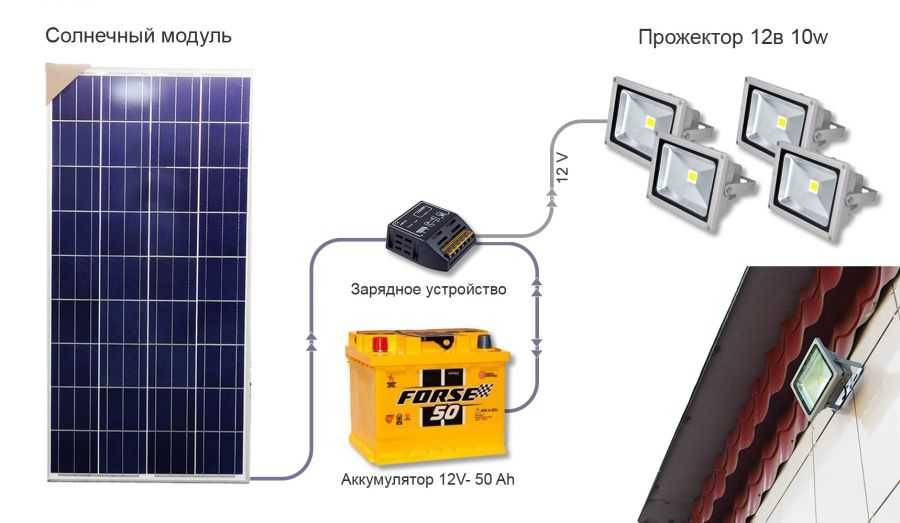
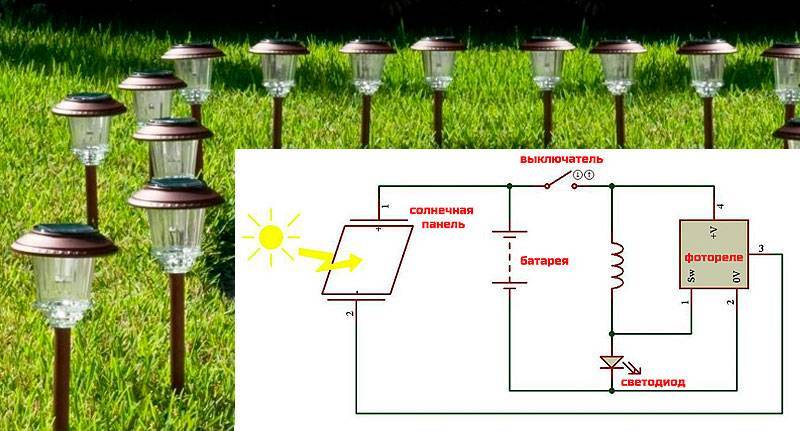




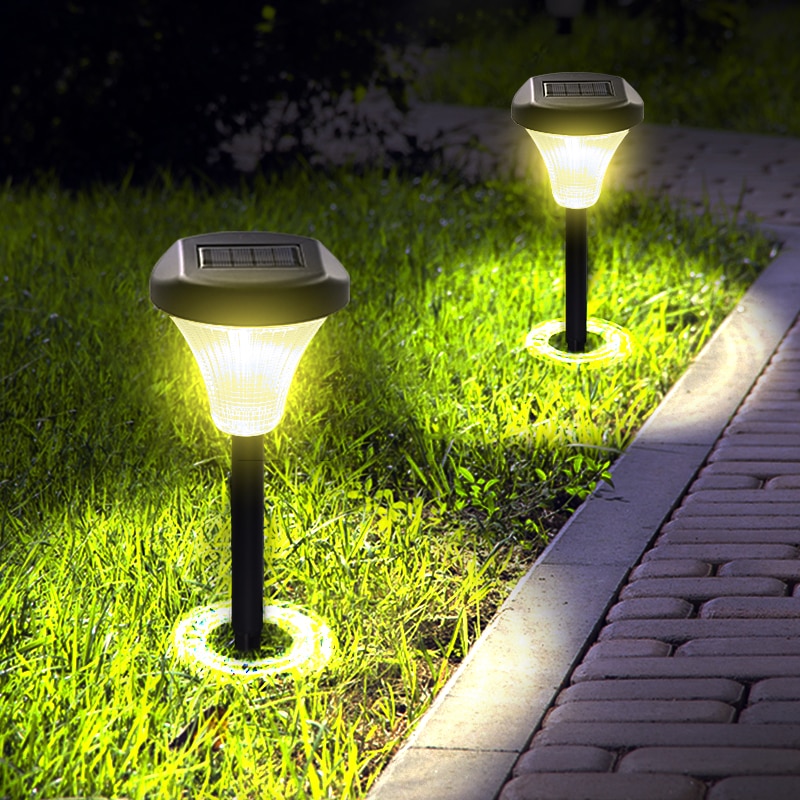
- Floodlights have a directional luminous flux. They are used to illuminate distant objects or facades.
- Scattering lamps allow not only to organize the lighting of the entrance group and garden paths, but also to decorate alpine slides or gazebos.
Appointment. Depending on the tasks set, the type of garden lamp, the installation method and the brightness of the glow are selected.
- Duty lighting is done on the paths, near the entrance gates, doors, garage doors. It is characterized by low brightness and the need for minimal power consumption. Such lamps are turned on most often when a motion sensor is triggered.
- Facade lighting performs a decorative function. It assumes wall installation, the inclusion automatically occurs after dark.
- Landscape lighting is used for zoning a personal plot. In it, the main violin is played by ground lamps arranged according to a special pattern.
Installation method. Garden lights can be mounted in several ways.
- Mounting to a wall or pole is one of the most popular options. A high-mounted device illuminates a sufficiently large area of \u200b\u200bthe garden or building.
- Ground mount is suitable for lighting gates and gates, flower beds and alpine slides. The height is selected taking into account the characteristics of the infield.
- Ground lamps are installed directly into the ground. For this, the reinforcement has a pointed shape at the bottom. The material used is corrosion-resistant steel.
Current source. In order to have light in the garden, a power source is required to power the light bulbs.
- The most affordable source of energy is a household single-phase network. It can be used when installing fixtures near the house or electrified buildings. But this option is not suitable for organizing lighting of gates, garden paths and remote gazebos, since it is required to stretch hundreds of meters of electrical wiring.
- In this case, it is better to purchase lighting devices equipped with a solar battery. They use the energy of the sun, accumulating it throughout a clear day. But in cloudy weather, such a current source can fail, so it is desirable to have a battery in the kit.
We selected 13 garden lamps for our review. All models are sold in the Russian trade network. When distributing places, the editors of the expertology journal relied on the opinion of the expert community, taking into account the feedback from domestic homeowners.
Criteria for selecting parts and prices
The choice of parts depends on how powerful the lamp you intend to make. We give specific ratings for a home-made lighting device with a power of 1 W and a luminous flux intensity of 110 Lm.
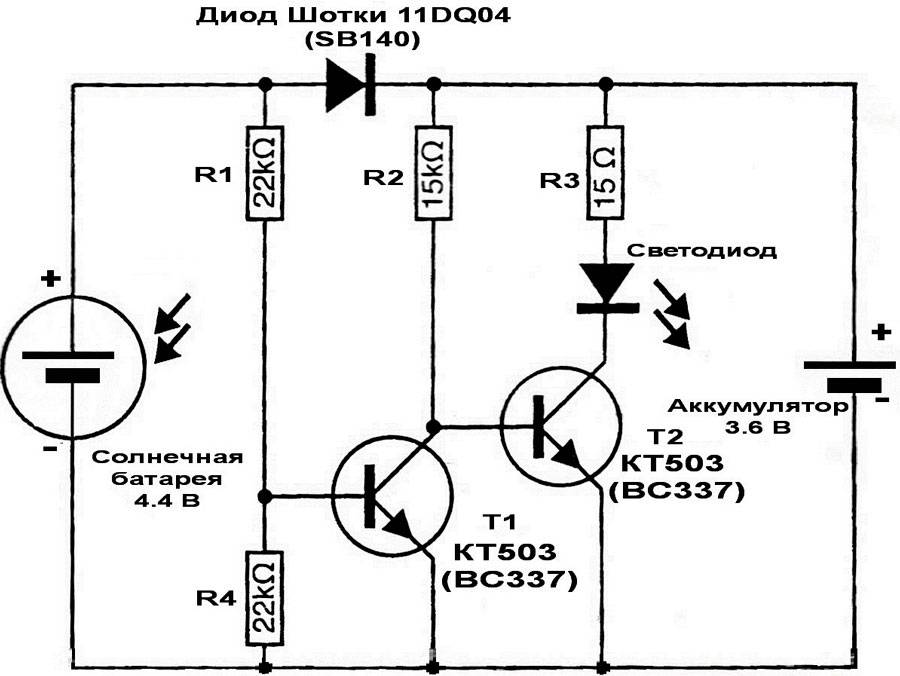
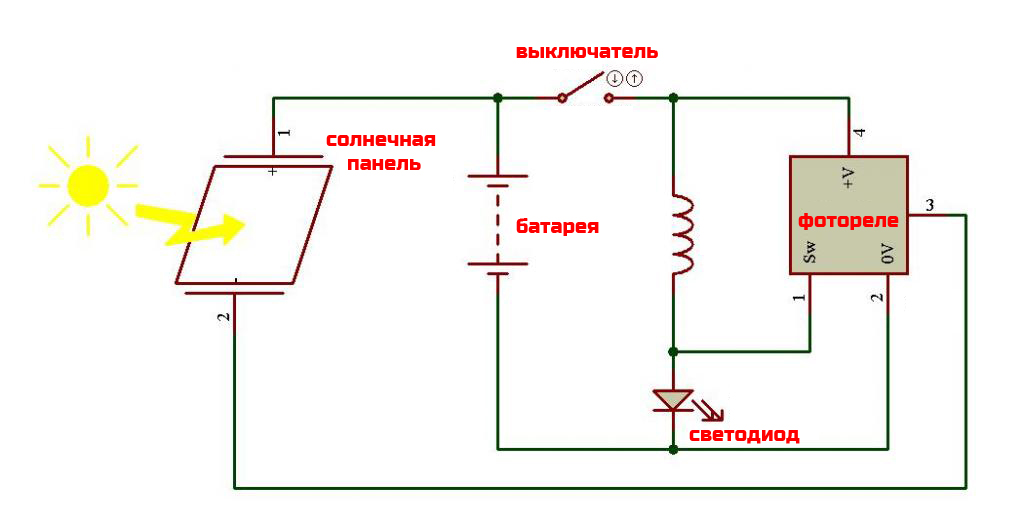
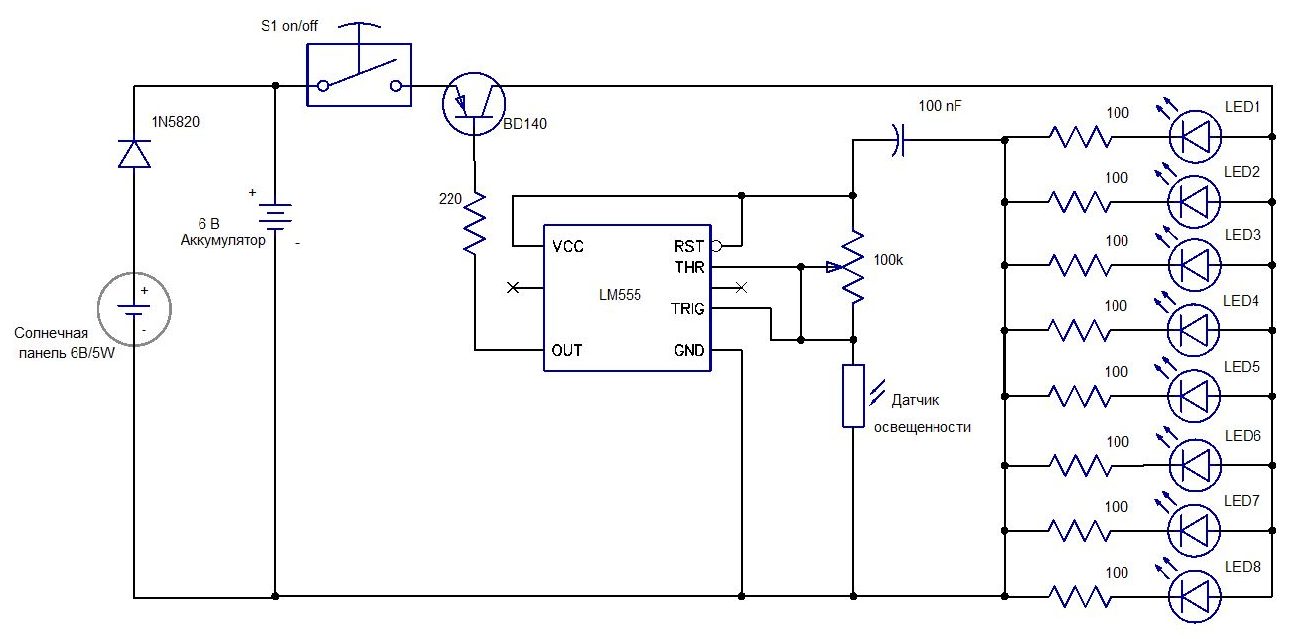
Since in the above scheme there are no elements for controlling the level of charge of the battery, then, first of all, it is necessary to pay attention to the choice of a solar battery. If you choose a panel with too little current, then during daylight hours it simply will not have time to charge the battery to the desired capacity.
Conversely, a light bar that is too powerful can recharge the battery during daylight hours and render it unusable. Conclusion: the current generated by the panel and the battery capacity must match. For a rough calculation, you can use the ratio of 1:10. In our particular product, we use a solar panel with a voltage of 5 V and a generated current of 150 mA (120-150 rubles) and a rechargeable battery of the 18650 form factor (voltage 3.7 V; capacity 1500 mAh; cost 100-120 rubles).
Also for the manufacture we need:
- Schottky diode 1N5818 with a maximum allowable forward current of 1 A - 6-7 rubles. The choice of this particular type of rectifier part is due to the low voltage drop across it (about 0.5 V). This will allow you to use the solar panel most efficiently.
- Transistor 2N2907 with a maximum collector-emitter current up to 600 mA - 4-5 rubles.
- Powerful white LED TDS-P001L4U15 (luminous flux intensity - 110 Lm; power - 1 W; operating voltage - 3.7 V; current consumption - 350 mA) - 70-75 rubles.
Important! The operating current of LED D2 (or the total total current when using multiple emitters) must be less than the maximum allowable collector-emitter current of transistor T1. This condition is met with a margin for the parts used in the circuit: I(D2)=350 mA
Battery compartment KLS5-18650-L (FC1-5216) - 45-50 rubles.If, when installing the device, you carefully solder the wires to the battery terminals, you can refuse to purchase this structural element.
- Resistor R1 with a nominal value of 39-51 kOhm - 2-3 rubles.
- The additional resistor R2 is calculated in accordance with the characteristics of the LED used.
Dynamic multicolor light
Regardless of what color LEDs are chosen for the garden lamp, this color will be static, unchanged over time. A much more interesting effect can be achieved using a three-color LED with a built-in generator. Such LEDs are used in more expensive UFO lamps and ball-shaped pond lamps. Compared to ordinary garden lights, the cost of dynamic lights is 15-20 times higher!
Three-color LEDs with a built-in generator contain a microcircuit on one of the electrodes that controls the operation of an RGB matrix mounted on another electrode (photo 8). An LED has two terminals, a cathode and an anode. The anode lead is usually longer. A three-color dynamic LED is connected to the power supply through a current-limiting resistor. The operating current for such an LED is 20 mA. Dynamic LEDs must not be connected to a power source without a current-limiting resistor or apply reverse polarity voltage to them. The maximum reverse voltage of more than 0.5-0.75 V destroys dynamic LEDs.
Three-color dynamic LEDs come in fast fading and slow fading. The latter are most interesting for use in garden lamps. The color of their glow seems to flow from red to yellow, then to green, blue, white, orange and back.
Depending on the number of LEDs purchased and the place of purchase, the cost of LEDs varies markedly. So, a batch of 100 LEDs purchased on the radio market cost the author 10 rubles. apiece, and through the retail network, these same LEDs are sold at 55 rubles.
It is impossible to connect a tri-color LED with a built-in generator to a garden lamp instead of an installed white LED: it simply will not. work. And the reason is simple - the converter installed in: a garden lamp generates a rectangular pulse voltage with a frequency of 200-250 kHz (photo 9). Each new impulse restarts the generator built into the three-color dynamic LED, and for the normal operation of the generator, the impulse voltage must be converted to DC.
The easiest way for these purposes is to use a rectifier diode and a storage capacitor. The diode cuts off negative voltage surges from the converter, and the capacitor discharges in the pauses between pulses to the LED. Thus, from the alternating we get a constant voltage.






When choosing a diode and capacitor, preference should be given to surface mount components. It is highly desirable to install a Schottky diode, which has a minimum voltage drop of 0.12-0.14 V, and the operating frequency reaches hundreds of kilohertz due to the short charge absorption time. It is preferable to use a tantalum capacitor with a low equivalent resistance (photo 10). Under these conditions, the maximum efficiency of the rectifier is ensured.
The diagram of the lamp module is shown in fig. 4, printed circuit board for the module and three-color LED - in fig. 5, and the assembled module is in photo 11.
Since it is difficult to convey dynamic events within the framework of a magazine article, a series of photographs in photo 12 is shown to illustrate the operation of a garden lamp with a three-color LED.
Modernizing the garden lamp turned out to be a very simple task. You can decorate your garden with fantastic lighting based on commercially available inexpensive garden lamps, modified with your own hands.
Where are they installed
There are many options for installing garden lights. As a rule, several standard design solutions are used that are suitable for most objects. Among them, the installation of wall lights located on the facade of the building is often practiced. The places of fastenings are the outer walls of houses and other vertical surfaces (Fig. 1).
This installation method requires careful selection of placement points, since correct operation will depend on the intensity of the flow of sunlight. On cloudy days, the battery charge may be low and not last all night. Therefore, it is recommended to additionally install traditional backup lamps.
Pendant lamps (Fig. 2) have much in common with wall lamps. However, the use of special fasteners makes it possible to install them in any place. These can be tree branches, fences, etc. You can highlight certain areas and create a festive decor.
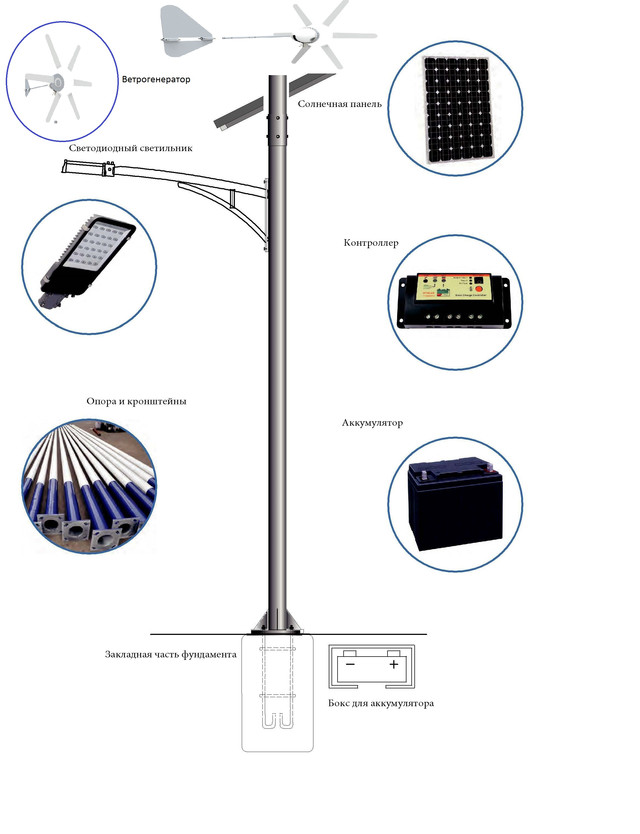
A street garden lamp mounted on a pole is often used (Fig. 3). Initially, they were used to illuminate city streets, and now they are widely used in summer cottages and country houses. Lanterns perform not only lighting, but also a decorative function.
Solar-powered park lamp (Fig.4) installed together with a large and powerful solar panel and high-capacity batteries. Such solar systems provide long-term autonomous operation. The case is made of high quality materials and protected from dust and moisture.
Lawn lamps (Fig. 5) are installed directly on the ground. They are equipped with a small leg stuck into the ground or a special support of sufficient height. Such devices can be easily installed anywhere and can be moved if necessary.
Another type of lighting fixtures is made in the form of decorative elements (Fig. 6). These can be stones, flowers, fairy-tale characters that work on batteries, with the help of which the most spectacular places in the garden stand out.
Best Ground Garden Lights
When developing copyright landscape projects, special attention is paid to lighting. Ground-based garden lamps come to the rescue of designers
Experts have chosen several stylish models.
TDM ELECTRIC SQ0330-0008
Rating: 4.9

At the most attractive price, the TDM ELECTRIC SQ0330-0008 garden lamp is sold on the Russian market. The Chinese-made model has a classic black case in the form of a hexagon. The aluminum structure is complemented by translucent glass windows. It is designed to install a 100 W light bulb with an E27 base. The cartridge is included, it is made of ceramics. With a height of 225 mm, the light fixture weighs 2 kg. Experts highlighted such advantages of the model as a reliable mounting block and ease of connection. The luminaire becomes the winner of our review.
Users have no particular complaints about the build quality and durability of the product. The lamp becomes an excellent option for equipping courtyards and streets.
- affordable price;
- heat resistant paint;
- ease of operation;
- stylish look.
not detected.
Brilliant Chorus 43684/82
Rating: 4.8

In a modern modern style, a German garden lamp Brilliant Chorus 43684/82 is made. It has a cylindrical shape, the metal body is protected from corrosion with a chrome plating. For the manufacture of the ceiling, the manufacturer used white plastic. The model is inferior to the leader in terms of the maximum power of the light bulb (20 W), but the type of base is the same (E27). The lighting device is recommended for an area of 1.1 sq. m
Experts drew attention to the possibility of connecting a dimmer; a good degree of dust and moisture protection (IP44) can also be added to the model's asset.
Homeowners praise the German lamp for its high-quality assembly, modern design, and ease of maintenance. They consider the small area of illumination to be a minus.




- German quality;
- modern appearance;
- democratic price;
- ease of maintenance.
limited lamp power.
Fumagalli E26.156.000.AXF1R RUT
Rating: 4.7

The famous Italian company Fumagalli offers the Gigi/Rut series to connoisseurs of beauty. Model E26.156.000.AXF1R RUT is made in a classic style, which combines the black color of the case and the transparency of the glass elements. For the manufacture of a rack with a height of more than 2 m, the manufacturer used durable metal. Inside the hexagonal luminaire there is a socket with an E27 base, into which light bulbs up to 60 W can be screwed. The maximum illuminated area is 3.3 square meters. m.Experts appreciated the high degree of protection (IP55), thanks to the tightness, the device can be used in shower structures, steam rooms, water parks and street lighting.
The main deterrent when buying is the high price, many times higher than the cost of competitors.
- classic design;
- durable construction;
- large area of illumination;
- high degree of protection.
high price.
Northern Light Garden-4 9023
Rating: 4.6
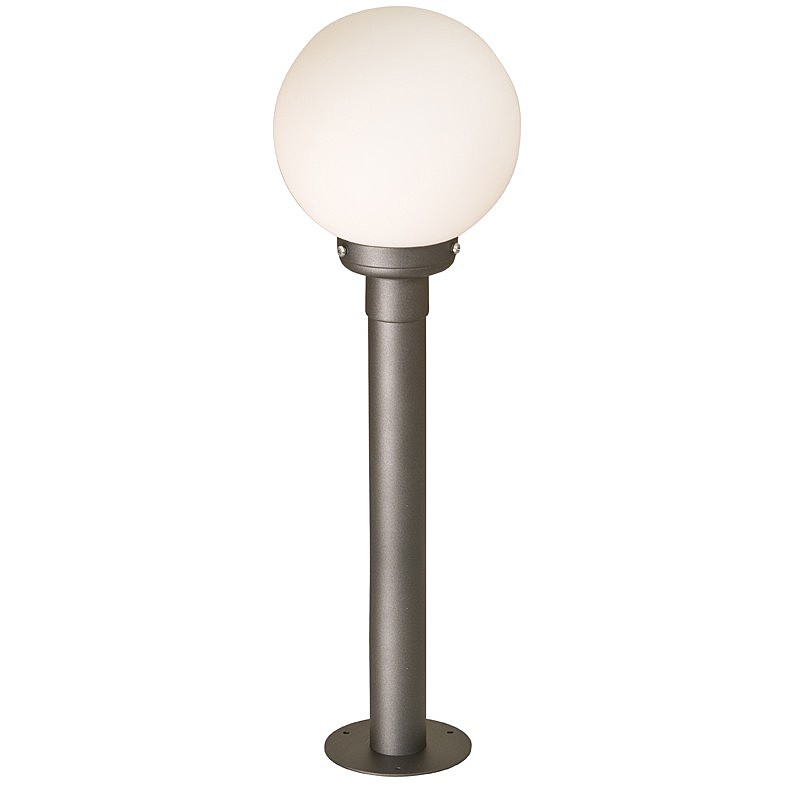
The Russian ground lamp Severny Svet Sad-4 9023 closes our review. The model has a spherical shape of the ceiling, it is made of spectacular frosted glass. The role of the supporting element is played by a stand with a height of 855 mm in graphite color. The lighting device harmoniously looks not only on the street, it is able to decorate the interior of the house. The manufacturer equipped the lamp with an E27 socket, the maximum power of the lamp is 60 watts. The experts liked the model for high-quality assembly and reliability, the warranty period of the lighting device is 2 years.
Domestic homeowners are impressed by the elegant high-tech appearance, solid assembly, and ease of installation. The disadvantages of consumers include insufficient tightness of the ceiling.
How to choose the right model?
Autonomous street lighting for suburban ownership is not so easy to choose. This operation is hindered by a large number of various models on store shelves. Even appliances that look almost the same can be priced differently.
To find the most suitable model, you need to pay attention to the characteristics, consider how and where the device will be installed.
Power
In order for autonomous street lighting to provide the required amount of light, it is necessary to take into account the area of \u200b\u200bthe site, as well as the number of lamps that can ensure the absence of dark areas. Many people understand the more familiar - conventional and fluorescent - lamps without difficulty, but effective LED devices have other indicators.
If the power of energy-saving (luminescent) products is 5 times less than that of ordinary products, then LED devices have this value already 10 times lower. For example, 4W LED models give the same luminous flux as 40W incandescent fixtures.
Protection class
Autonomous street lighting, like traditional lighting, will work reliably and without interruption only if the housing (plafond) is maximally protected from moisture and dust. Therefore, the IP44 protection class is a necessary requirement (more is better, less is impossible).
Separately, it must be said about the material. Strength and resistance to mechanical stress are the conditions that are mandatory for it. The best options are lights made of aluminum or impact-resistant plastic. Ideal glass is its tempered variety.
Model type, mounting method
The first determines the second. When choosing a mounting method, be sure to take into account what area the device will have to illuminate, how easy it is to receive sunlight at the selected point, and whether there is a potential danger to the model. There are several installation options, all lamps are divided into the following designs:
Ground. These devices are used to illuminate the paths, as well as the decoration of the site. Design features - low height, the presence of a bayonet attached to the rack. With its help, the lantern is securely fixed in the ground.
Pillar lamps. These devices are the highest, they can be one and a half meters or higher. A large mass requires reliable installation. For such structures, they dig a hole, after fixing the lamp, it is covered with soil, it is carefully compacted. There are models designed for hard surfaces - asphalt, tiles, etc.
Wall stand-alone lights. They are chosen for lighting the local area, for decorative lighting of walls, fences


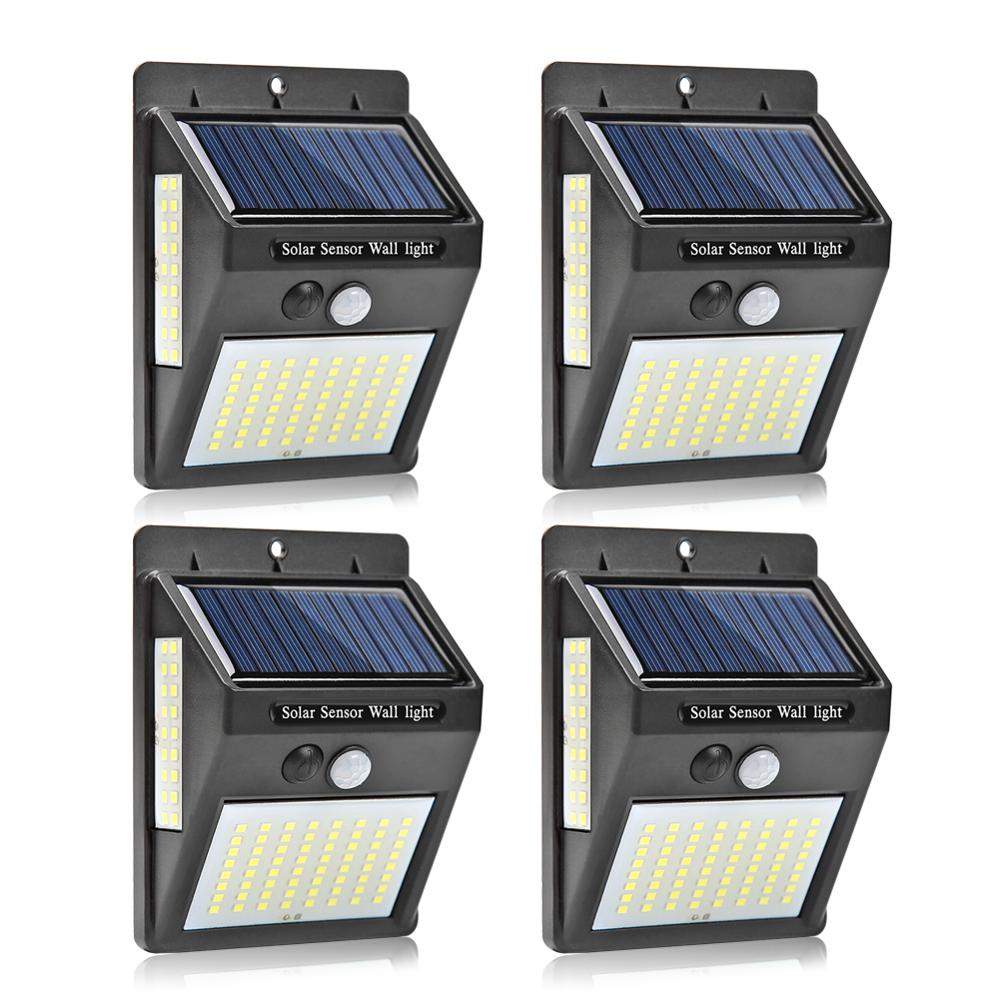



In this case, the installation is already more demanding: for a wall-mounted lighting fixture, correct orientation to the cardinal points is important. The solar battery should be located where there is more of it.
Suspended. These designs can be attached in any convenient place.
Fixation can be either flexible (for example, cables) or rigid (brackets, beams). The main condition for installation is the same as in the previous case: maximum light throughout the day.
Embedded. They are mounted in the same plane with any surface. Places for installation - steps, edges of paths, recreation areas.
Decorative. Their main function is to decorate the landscape. They are simply put in the chosen place.
These designs can be attached in any convenient place. Fixation can be either flexible (for example, cables) or rigid (brackets, beams). The main condition for installation is the same as in the previous case: maximum light throughout the day.
Embedded. They are mounted in the same plane with any surface. Places for installation - steps, edges of paths, recreation areas.
Decorative. Their main function is to decorate the landscape. They are simply put in the chosen place.
An unimaginable number of models gives a chance to choose the autonomous street lighting that will be optimal - not too expensive, but functional and spectacular.
When choosing a model, you need to pay attention to the quality of all elements. For example, the durability of such equipment depends on the battery. A cheap device will not last too long: it may need to be replaced after a year
Nickel-cadmium batteries, on the other hand, will last 10-15 years.
A cheap device will not last too long: it may need to be replaced after a year. Nickel-cadmium batteries, on the contrary, will last 10-15 years.