
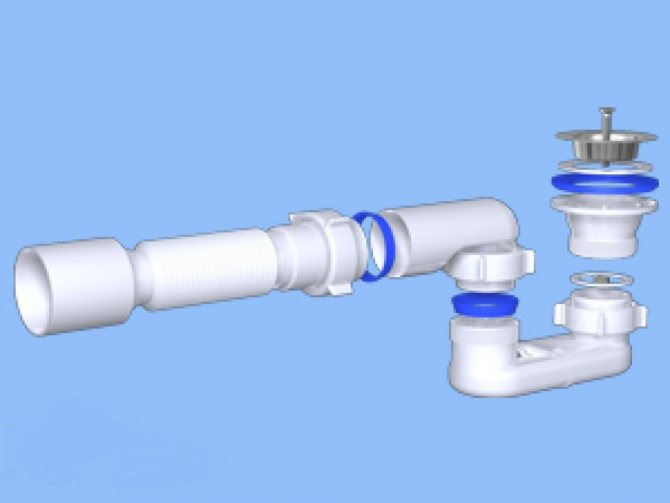
- Trays with built-in siphon
- Some useful installation tips
- Key points of a competent choice
- The design and principle of operation of the device
- Cleaning and replacement
- Varieties of pallets
- Installation of the pallet and installation of the drain
- Siphon installation
- Varieties and device
- Tubular construction
- Bottle
- Corrugated siphon
- Flat (modern variety)
- Dry siphon
- Classification of siphons according to the design of the drain
- Purpose and design of the drain
- Characteristics of different types of siphons
- Bottle drain
- Corrugated drain
- Rigid model
- custom model
- closed type
- Design
Trays with built-in siphon
There are many samples of products called a shower cabin, and there are no less options for their installation. However, this diversity comes down to the following options:
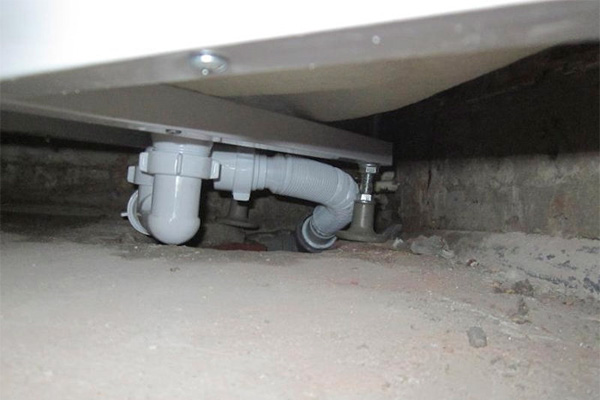
- Tray with a high pedestal, which has an inspection hatch that gives free access to the siphon. In a booth with such a design, in order to remove the siphon, you do not have to disassemble the pallet.
- The same option, but without the hatch. If it is necessary to replace the siphon, you will have to remove the decorative panel (it is also an apron, screen) or tile trim.
To facilitate this procedure, even before buying, ask the seller for details regarding the replacement of the siphon in a shower cabin of this type. You will also need to deal with the types of replaceable siphons.
Some useful installation tips
Before assembling and installing a drain fixture, you need to check the level of the bathroom, diameter and position of the drain pipe. Then you should read the instructions to take into account all the possible nuances.
When installing the device on an old metal or modern acrylic bath, check the drain holes. If roughness is found on them, they are eliminated with an emery cloth.
With a rough drain, it is impossible to ensure the tightness of the siphon to them. Before the final tightening of the device, the correct assembly should be checked, gaskets require special attention. Often they move, so it is better to apply a special sealant to them.
The normal operation of the drain is also ensured by the correct slope of the pipe. The drain piping must be routed directly to the manifold. If the siphon is equipped with several inlets for branching the drain into the manifold, but they are not supposed to be used, they should be plugged with a special nut.
When buying a siphon, its important characteristic is the quality of the material, and if it is plastic, then the main thing here is the wall thickness and processing technology. The denser the walls of the drain fixture, the better it will resist loads.
Cracks, even disguised ones, are unacceptable on a cast-iron drain. If such defects are found, it must be replaced. The surface of the brass siphon must be absolutely smooth, otherwise it will have to be cleaned frequently.
To avoid leaks, drain seals are changed on average once every six months, and those installed between the pipes - every 3 months.To prevent scale deposits on the walls, it is advisable to rinse the device every few months with hot water with an additive in the form of citric acid.
If chemical cleaners are not contraindicated for the material, then you can use Mr. Muscle, Ruff, Phlox and the like.
Key points of a competent choice
The market for shower cabins and, consequently, the shower trays for them is more than diverse. They can have different heights, shapes and volumes. And the drain holes in these structures can be located in different places. Therefore, siphons for their connection must have certain design features.
Siphons for connecting to the sewer often come with a shower cabin. If the type of device offered by the manufacturer completely triples you, feel free to use it.
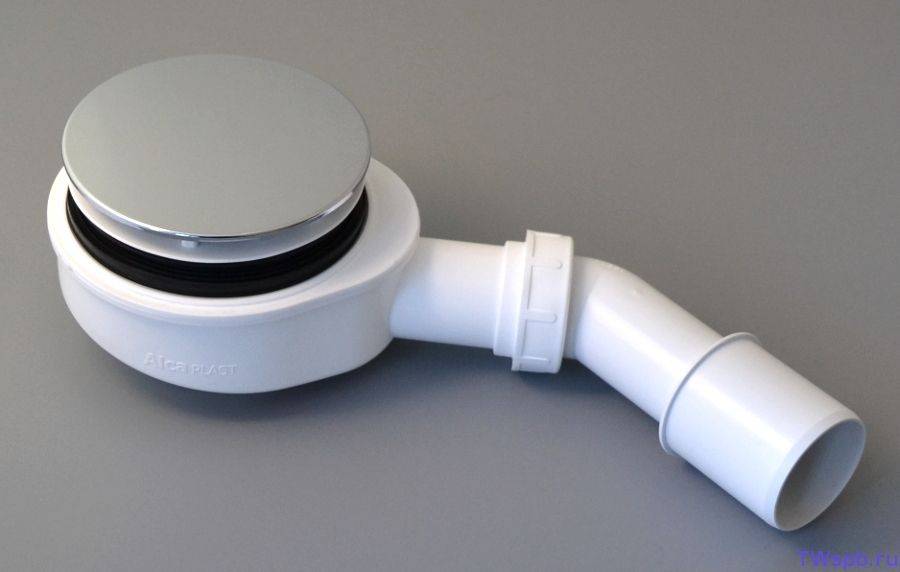
If you purchase a new model, keep in mind that you should choose a shower siphon based on the depth of the drain, since the structure is mounted directly under the bottom. Usually the height of the siphons varies between 15-20 cm. To simplify the installation process, preference should be given to low models.
Shower cabin designers are developing new models of siphons, trying to reduce the height of the devices. Thanks to this, it is possible to lower the height of the bottom of the pallet relative to the floor level, thereby making it easier for people to enter the cab.
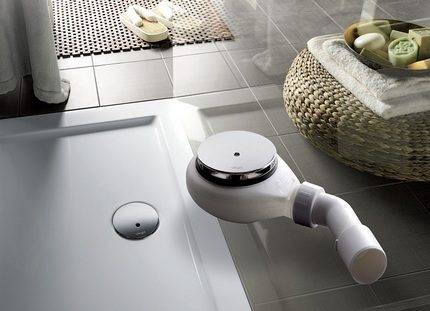 By choosing compact low siphon models, you can shower tray be placed at a minimum height from the floor
When choosing a siphon, a number of nuances should be considered:
- Drain hole diameter. According to European standards, the diameter of the drain holes for pallets can be 52 mm, 62 mm or 90 mm.The size of the structural elements of the siphon must correspond to these parameters.
- The angle of the drain pipe. On average, it varies between 130-140°. But on sale there are models where the angle of rotation is 360 °.
- siphon capacity. This indicator is determined from the calculation of the water layer collected above the drain hole. For holes with a diameter of 52 mm and 62 mm, the thickness of the water layer should not exceed 12 cm, and for draining D90 mm - up to 15 cm. The drain rate should be at least 20 l / min. There are devices with a high drain rate, reaching 30 l / min. They are marked "turbo drain".
- The function of self-cleaning of the system or the ability to clean the elements without completely disassembling the drain structure.
When purchasing a siphon, try to choose high-quality systems. Otherwise, you will be faced with the need to frequently clean the drain structure and even replace a system that has quickly failed.
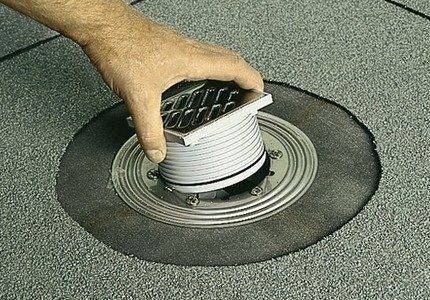 Despite the presence of built-in grates and self-cleaning elements in the drain systems, we recommend using overhead nets to prevent debris from entering the drain.
For pallets with a small drain hole, it is necessary to provide access to sewer outlets. It will be required in order to conduct an audit and clean the system in case of contamination.
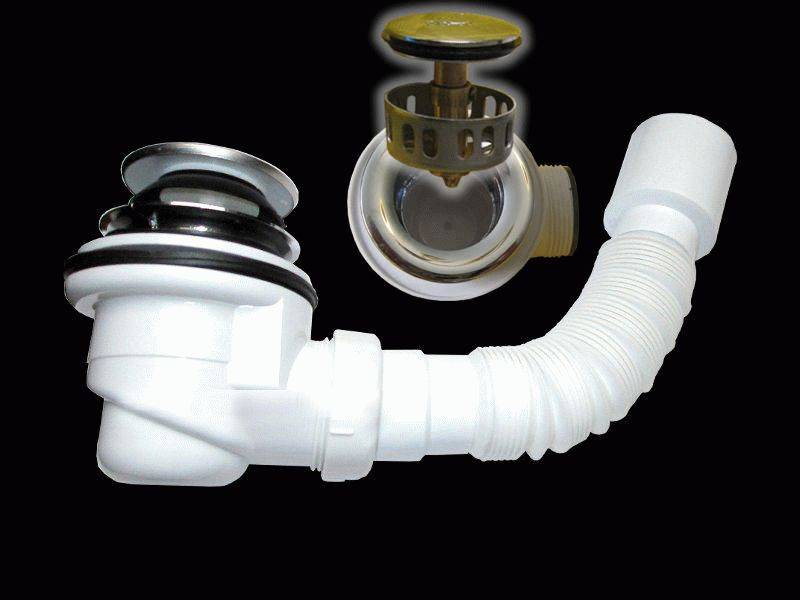


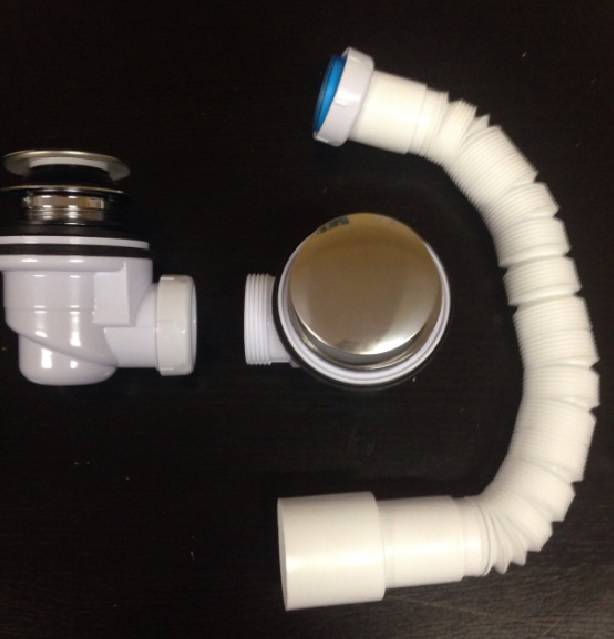


Regardless of the type of design chosen, it is unacceptable to use compressed air when cleaning the drain system. The consequences of such actions can be depressurization of the connections and the occurrence of leaks.
The design and principle of operation of the device
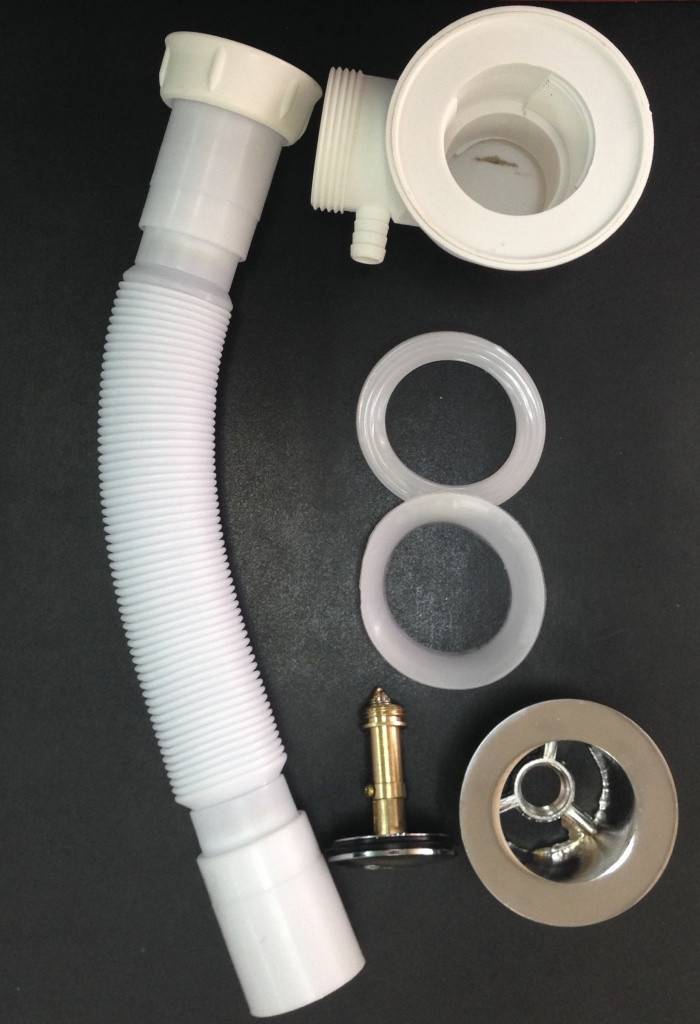
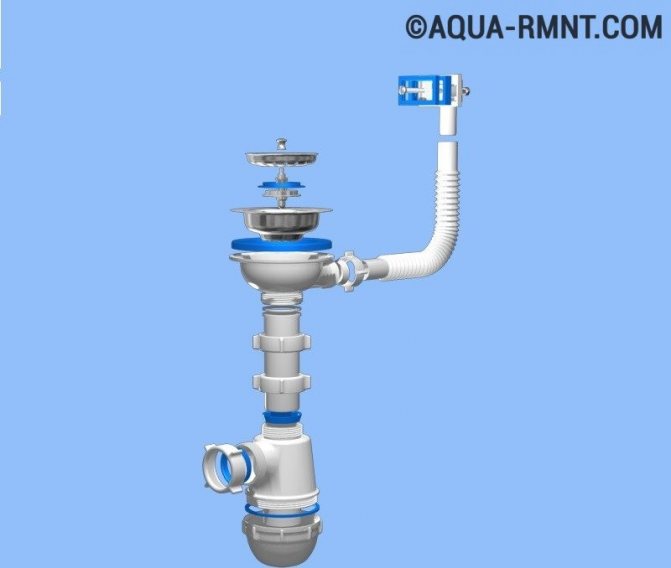
Each plastic siphon, regardless of the type and location of installation, contains the following components in its device:
- protective grid;
- thick rubber gasket;
- liquid outlet pipe;
- fasteners and connecting elements;
- frame;
- drainage to the sewer;
- plastic adapter;
- small and large flat rubber, as well as conical gaskets;
- decorative plastic overlay or screen.
They do not look as aesthetically pleasing as the white ones that are used in expensive siphon models. In addition, if you decide to install this device at your place, then you should stop at the choice of fasteners (nuts and bolts) made of stainless steel. Thanks to this solution, your device will last longer.
The principle of operation of a flat siphon is no different from other similar devices. It can be described as follows:
- first of all, water from plumbing or a washing machine enters the sewer;
- after that it passes through the settling pipe;
- eventually the water is discharged through the outlet pipe.
This is possible only if its installation was done correctly, and it was possible to create a water seal that does not let in unpleasant odors. The smell from the sewer can enter the room only if the owners of the apartment or private house have been absent for some time. The water that accumulates in the unit gradually evaporates, which leads to the transmission of odors. To eliminate this, you need to drain the water upon arrival home through the siphon, which is connected to plumbing fixtures, and then after a certain period of time the smell will disappear.
Cleaning and replacement
No equipment lasts forever, including siphons, no matter how high-quality they are. Therefore, you need to know how to change them.First of all, we remove the decorative panel at the bottom of the shower tray, which is most often attached using snap-on clips. We press on the periphery of the panel with a little effort, and they will open.
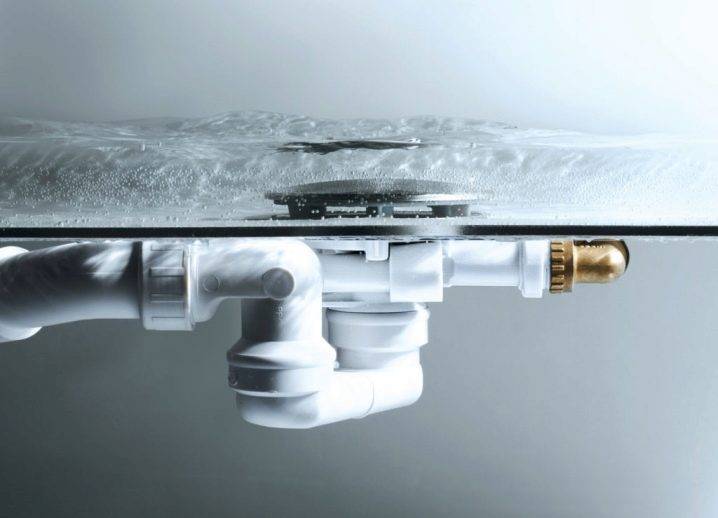
Now we disassemble the old siphon in the reverse order of installation:
- we unfasten the knee from the external sewer pipe;
- unscrew the knee from the pallet with an adjustable wrench or washer;
- if an overflow is provided, then disconnect it;
- and at the end you need to disassemble the drain in the reverse order of its collection.
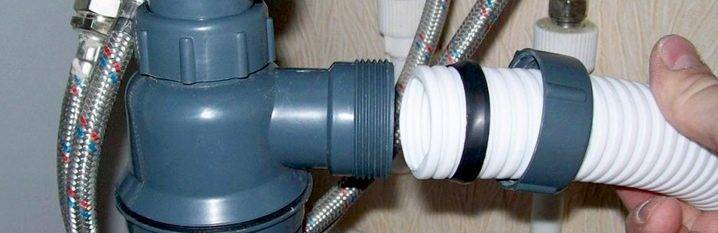
For all drains, except for 9 cm, you need to leave the so-called revision hole, thanks to which it will be possible to remove debris. At 90 mm, the garbage is disposed of through the drain. Once every six months, it is necessary to carry out preventive cleaning, they can be cleaned using special chemicals designed for pipes.
How to replace the siphon in the shower, see the following video.
Varieties of pallets
The main element of the drain system is the shower tray. It is he who collects all the waste water and directs it through his drain hole into the sewer. The comfort of the entire washing procedure largely depends on the choice of this element.
Shower trays can be made of steel, stainless steel, cast iron, plastic, ceramics and artificial stone. Finished products have the required design and provide the desired slope towards the drain hole.
Currently, the most popular are acrylic pallets - practical and durable enough. The disadvantage is the high risk of scratches. To increase reliability, plastic is reinforced with fiberglass or metal reinforcement.
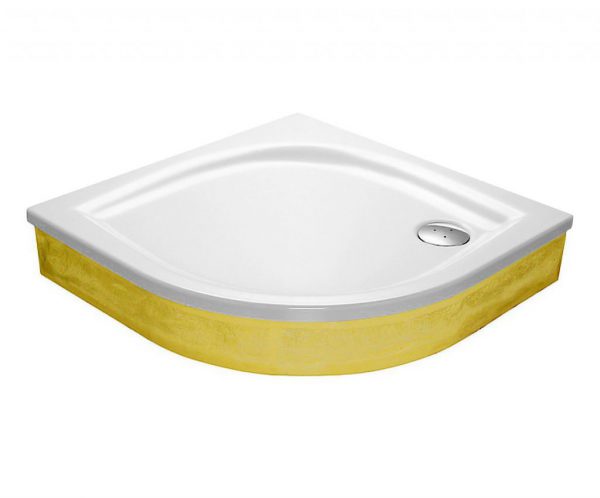 acrylic pallet
Installation of the pallet and installation of the drain
To perform the installation of the pallet, you need the following tools:
- perforator;
- chisel;
- a hammer;
- building level;
Materials:
- siphon;
- sewer PVC pipe;
- cement mortar (if necessary).
Installation sequence:
- Under the pallet you need to fix the legs, with pieces of cardboard attached to them.
- The recess under the pallet is carefully polished so that it is smooth and does not have sharp edges.
- This is followed by a check for the presence or absence of distortions.
- The pipe must be installed exactly under the drain hole of the pan.
- Using the adjustable feet, put the pallet in a horizontal position.
The drain is installed after the pallet is installed in its place.
Sequencing:
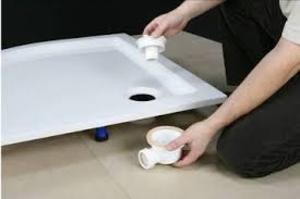
drain angle
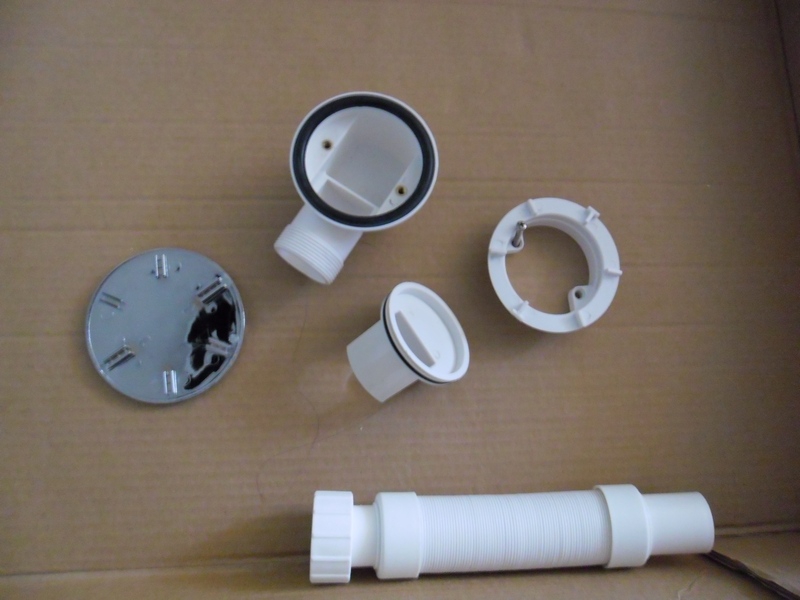
You need to connect the drain to the cab. You need to insert a mesh into the drain hole, you can before inserting it for greater protection, smear it with sealant, then lay the gasket and attach it to the tee. A drain should be inserted into the hole in the sewer pipe and sealed with a sleeve and sealant. At the end, you need to attach the siphon to the tee.

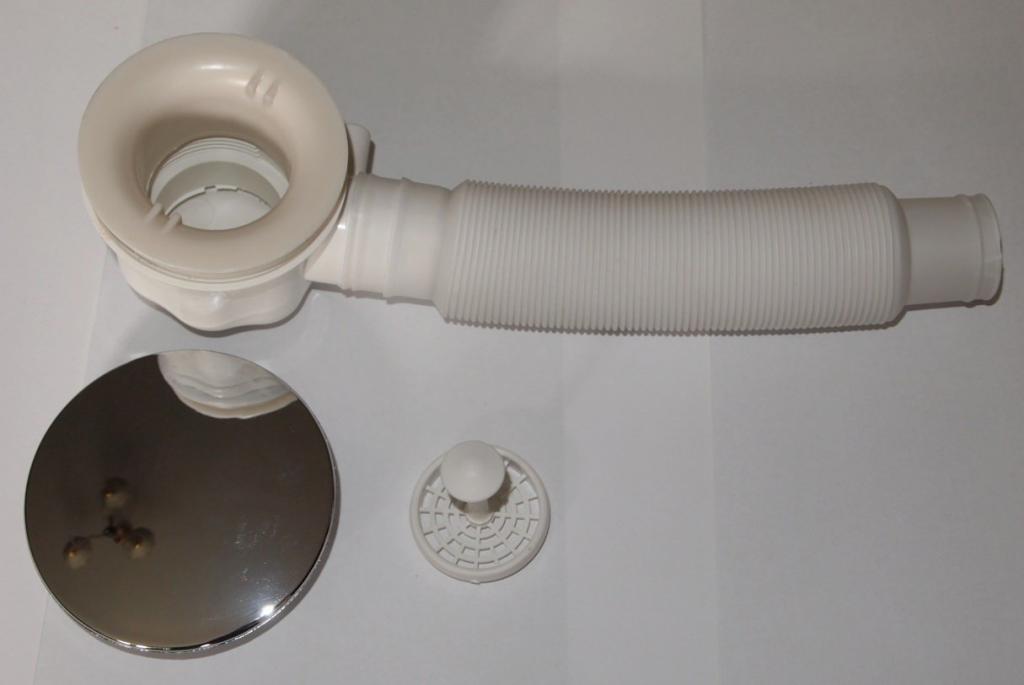
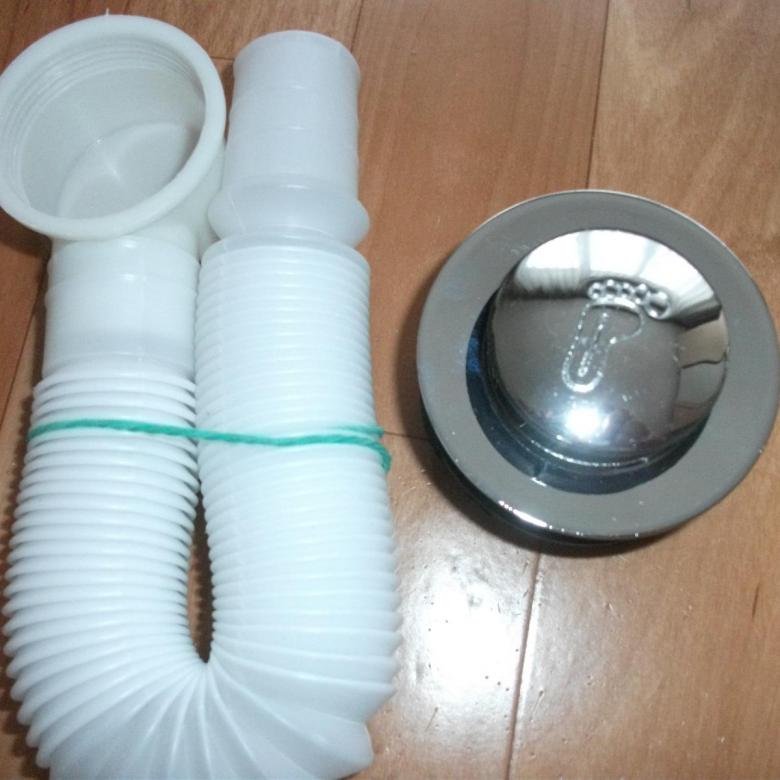
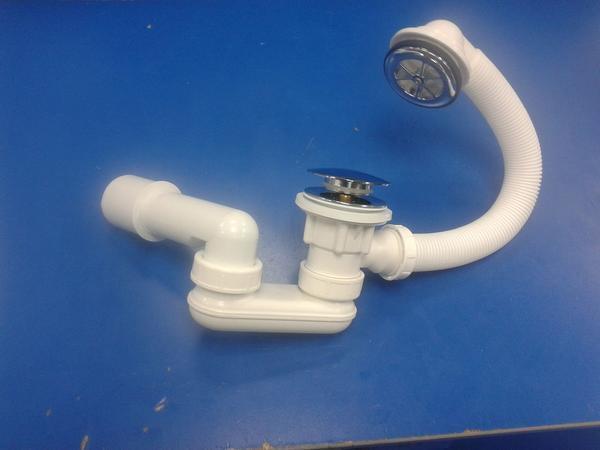
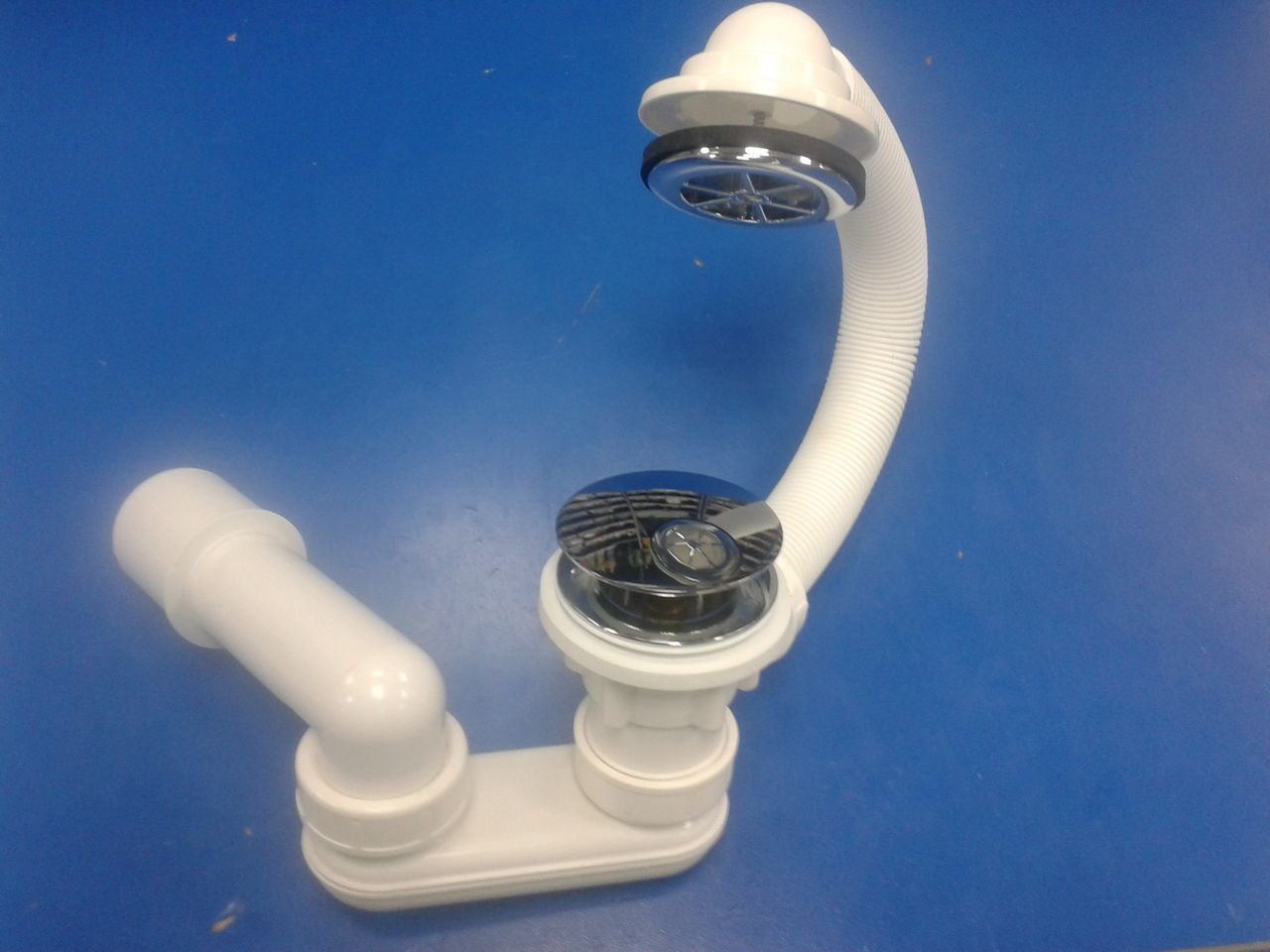

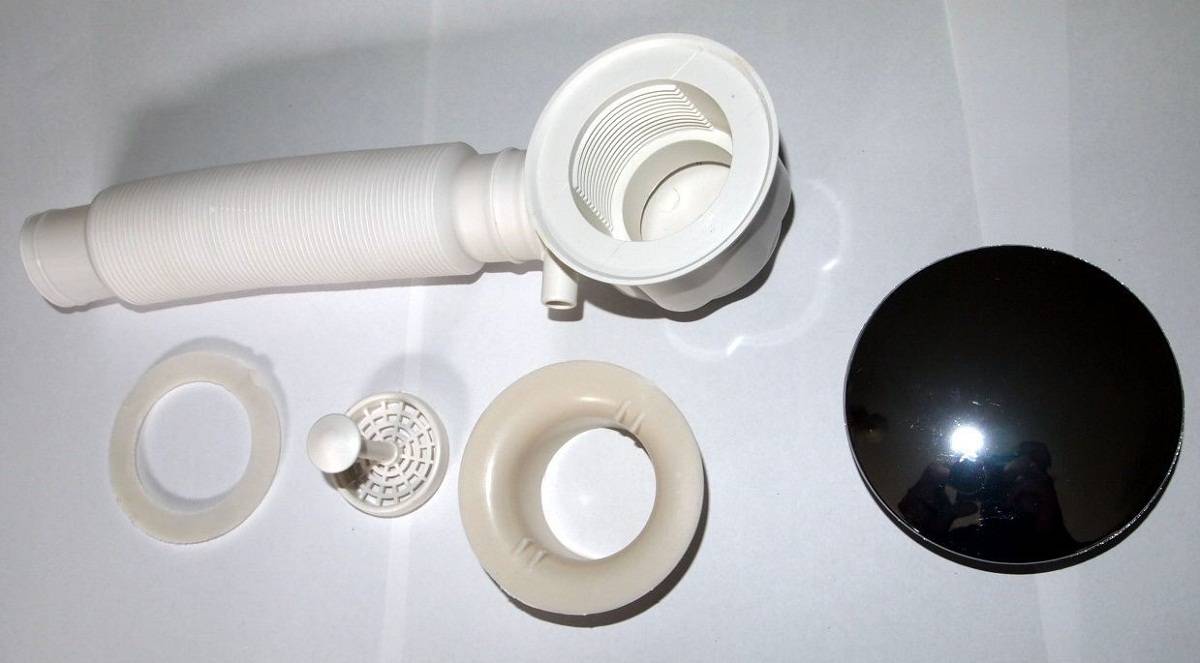


Video instruction for assembly and connection cabin drain Erlit.
studied the installation and types of pallets
Siphon installation
If you know how to assemble a sink siphon, you can get the job done quickly. Before installing a new siphon, it is necessary to dismantle the old device.
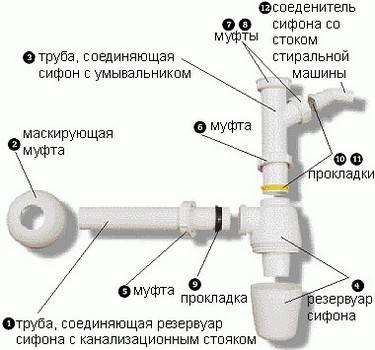 Siphon complete set
The dismantling process is carried out in the following sequence:
- Water is shut off in the room.
- A bowl is placed under the sink to collect the flowing water.
- The screw located in the center of the sink inlet is unscrewed.
- The siphon is removed, and the sewer pipe is plugged with something to prevent the passage of foreign odors into the room.
- The inside of the sink, to which the siphon was attached, is cleaned.
How to assemble a standard bottle siphon for a plastic sink is shown in the video.
Now let's figure out how to install a siphon for a sink with an overflow:
- Install the protective grill in the drain hole on the gasket or sealant.
- From below, a docking pipe is attached to the sink along with a gasket, which is screwed to the grate with a long screw.
- A union nut is put on the branch pipe, and after it - a conical gasket.
- The body of the siphon is put on the pipe, after which it is joined to it with a union nut. At this stage, the height of the siphon is adjusted.
- The outlet pipeline is inserted into the sewer hole, and then fastened with a union nut to the housing outlet through a cone gasket. Siphon connection to the sewer
- The overflow pipe is installed. One end of the tube goes into the sink, where it is fastened in its special hole with a screw. The other end of the tube is connected to the docking pipe.
- The tightness of all connections is checked by running water into the sink.
If a washing machine will be connected to the siphon, then you first need to prepare a hose that goes from the washer to the siphon body. It should be long enough, because you need to place it not on the aisle, but somewhere under the bathroom or along the wall. Accordingly, the hose is connected to the fitting on the siphon body.
Varieties and device
There are several types of siphons. Each has its own advantages and disadvantages.
Tubular construction
The product is made in the form of a smooth-walled pipe with a U-shaped bend.
Disadvantage: when negative pressure occurs in the sewer, the so-called. siphon failure - the water plug is sucked into the pipe. A vacuum is observed during a volley drain (bath, toilet tank), if the vent pipe is partially clogged or replaced with a valve.
The mass of water plays the role of a piston. This effect is most pronounced in plastic pipes with smooth walls.
Pipe type construction.
Bottle
This device consists of 2 components:
- A glass with a drain hole.
- A tube lowered into it, connected to a washbasin. Its edge is located below the drain hole.
In this case, the glass plays the role of a U-shaped knee: water remains in it. At the same time, the tube is immersed in it, so the smell does not penetrate into the room.
This implementation provides 2 advantages:
- The siphon cannot be broken. When rarefied, the air from the room is drawn into the sewer through the water “plug” in the glass. Similarly, the air moves in the process of smoking a hookah.
- The flow does not carry heavy debris and fallen small objects, they remain at the bottom of the glass. They are easy to get by unscrewing the bottom of the device.
The disadvantage of the bottle siphon is its large size.
Bottle siphon.
Corrugated siphon
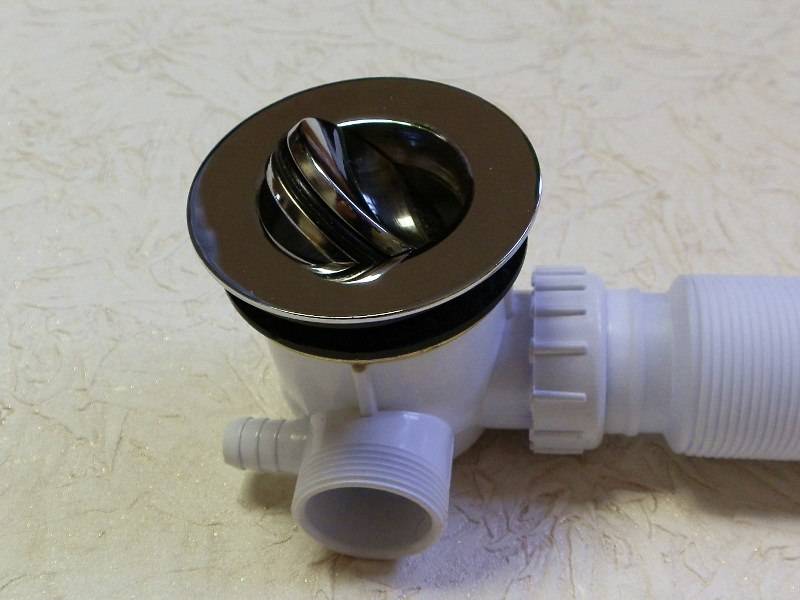
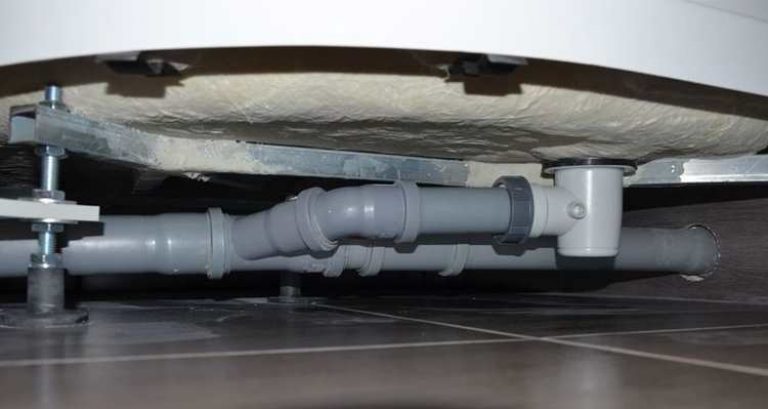
It is a corrugated tube with connecting elements. The advantage is that the user can make a U-shaped elbow of any size convenient for him, fixing it with a plastic clamp or a special frame.
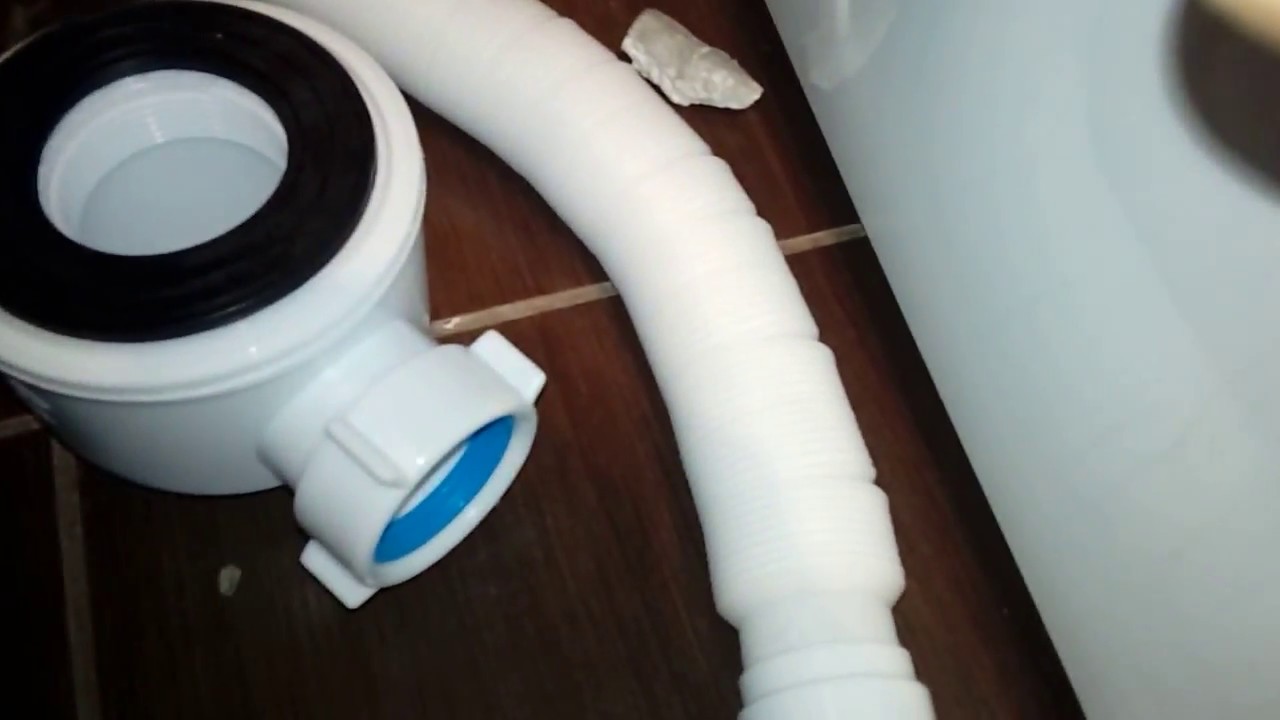
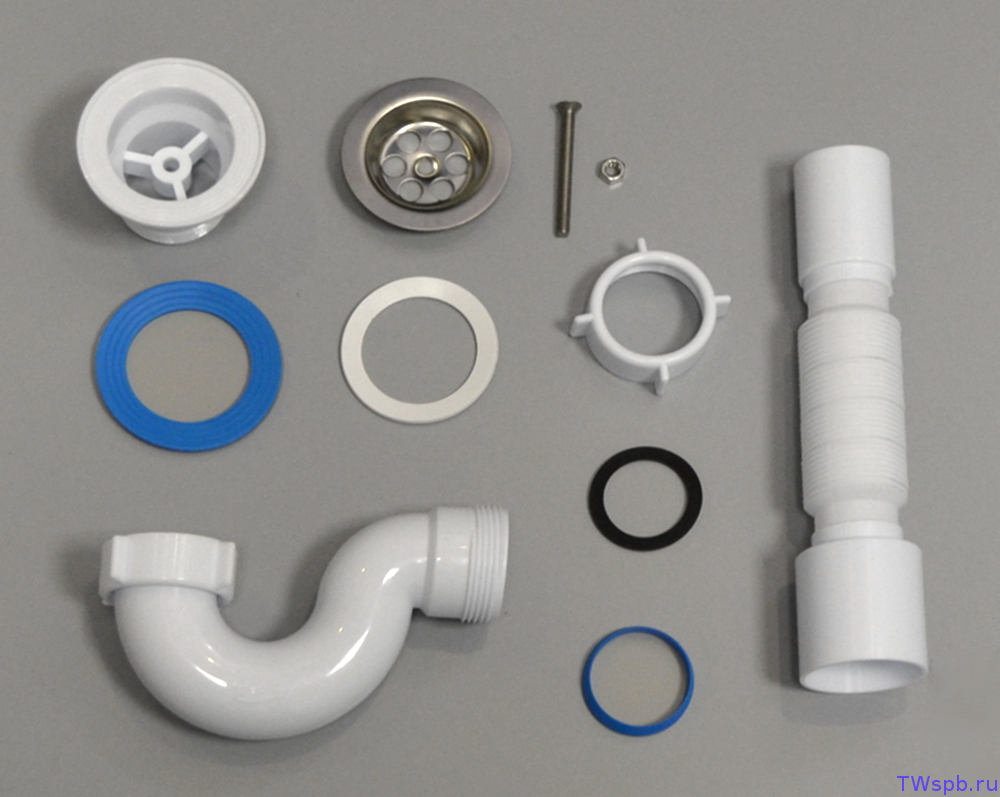
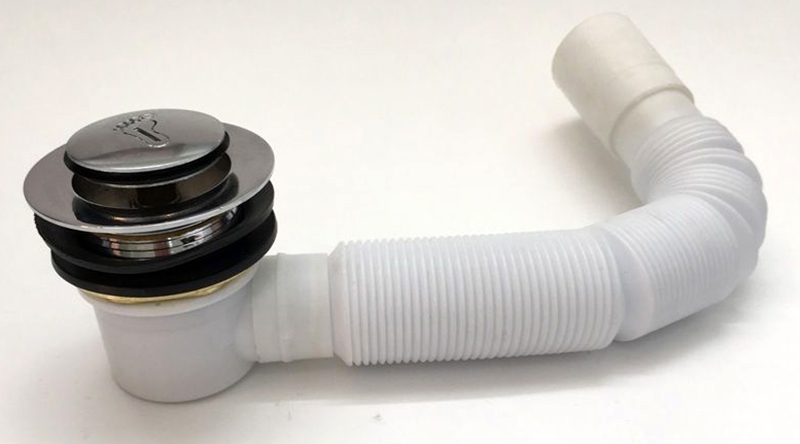



Flaws:
- accumulation of dirt in the "accordion";
- sensitivity to high temperatures and aggressive cleaning agents.
For a kitchen sink, it is better to choose another option.
Corrugation in a siphon.
Flat (modern variety)
Reduced height version.It is a flat oval box with inlet and outlet pipes directed in one direction. In profile, the product resembles an inverted letter "P".
A flat siphon is used if the space under the plumbing is limited. But due to the narrowness of the passage in the “box”, it is easily clogged, so it is not recommended to put such products in the kitchen.
Flat type siphon.
Dry siphon
The disadvantage of water seals is drying out during prolonged downtime of plumbing. This is observed, for example, in private baths visited once a week.
In the process of using plumbing, the locking element pops up, opening the drain hole. As soon as the user turns off the water, the valve under its own weight will fall on the saddle and cut off the sewer from the room.
The disadvantage of the design is the large size.
Dry type siphon.
Classification of siphons according to the design of the drain
By design, all siphons can be divided into the following types:
- Mechanical. They have a plastic or rubber stopper for the possibility of blocking the drain channel. Here, all manipulations are performed without the use of any levers and automation - manually. The device is very simple, so it has a long service life.
- Semi-automatic. This is a complex structure that has a shut-off valve, which is controlled by means of cable or lever mechanisms. Place such an adjustment, as a rule, on the overflow hole above the water level. The reliability of this type of strapping is somewhat lower due to the presence of a number of moving parts and assemblies.
- Automatic. In this case, the siphon is included in the same system as the filling device. Manages everything built-in microprocessor.An easy-to-operate click-clack valve is included in the system.
Automation allows you to fill the bath with water at a given temperature and maintain it. When the temperature decreases, the water is drained and the bathroom is replenished with warm water to the set volume.
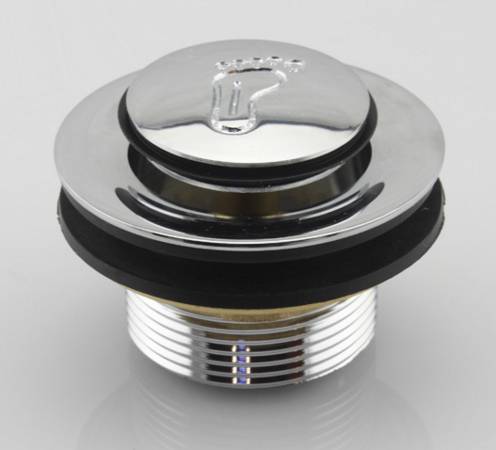
This is how the bottom valve looks like for installation on any bath. Opening and closing occurs by pressing. The model is made of brass and has a galvanized finish.
The click-clack design includes a locking cap fixed to a pin. It rises when a certain water column presses on it and forms a gap through which excess water flows out. Automatic siphons are made from non-ferrous alloys.
Semi-automatic siphons are available in 3 versions. In the first overflow opening is opened by pressing drain plug. To remove used water, simply press the cover to activate the overflow plug.
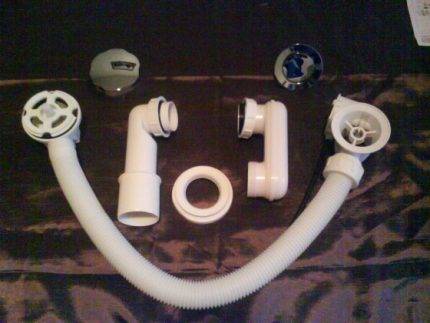
This type has a direct-flow siphon without automation. When buying a device, you should find out what metal parts such as grates for overflow and drain holes, a coupling screw are made of. The best option is stainless steel. To make sure this is the case, use a magnet - regular coated steel is magnetized, but stainless steel is not.
The design of the semi-automatic siphon includes a special handle with the function of a stopper for the overflow hole. To open or close it, change the position of the handle. The plug is equipped with a special mechanism, by clicking on which you can both open and close the drain. Over time, the quality of work decreases due to the formation of a lime layer.
If a washing machine is installed in the bathroom, then the siphon must be metal to connect it, because.plastic may not withstand high temperatures. We also recommend reading the nuances of installing a siphon for a washing machine.
When choosing a siphon, you should not proceed from the design of the product. The first thing that the siphon should provide is uninterrupted operation aimed at high-quality draining of wastewater into the collector.
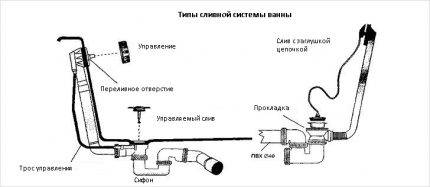 Structurally, an automatic siphon differs from a semi-automatic one in a device for driving a drain plug and a system for supplying water to the bath
Purpose and design of the drain
The sink drain is a curved design, the main elements of which are the siphon and the drain pipe.
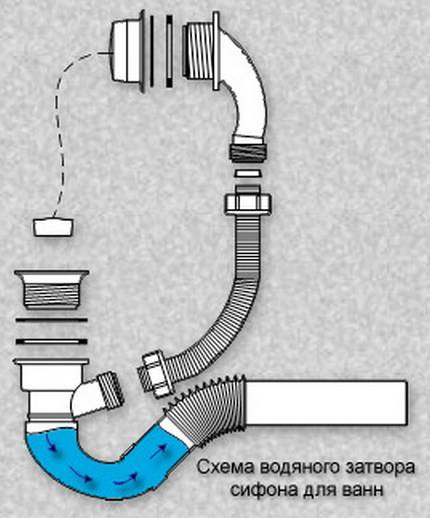
When flushing, water through the drain hole first enters the siphon and, moving along the curved “knee”, descends into the common drain
The outer element of the drain hole is a metal grill that protects the pipe from hair and small debris.
Located just below the drain hole, the siphon performs two key functions:
- Protects the drain pipe from clogging with waste penetrating through the hole in the sink.
- Interferes with distribution of the unpleasant smell coming from a sewer pipe.
The main secret of the siphon is in its bend.
Thanks to this constructive solution, the water does not completely leave the pipe, forming a kind of water seal, which prevents the spread of sewer "aromas" in the room.
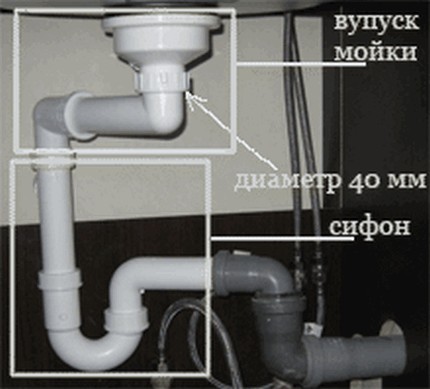
Plastic model with one drain hole with a pipe diameter of 32 mm - the simplest version of the sink siphon
The device package includes the following items:
- frame;
- exhaust pipe;
- rubber and plastic cuffs;
- decorative overlay on the hole;
- rubber stoppers;
- nuts and screws.
In case of clogging of the system, this siphon can be easily removed and cleaned mechanically, chemically or by means of the pressure of a directed jet stream. To prevent such situations, manufacturers recommend purchasing sink drains equipped with overflow.
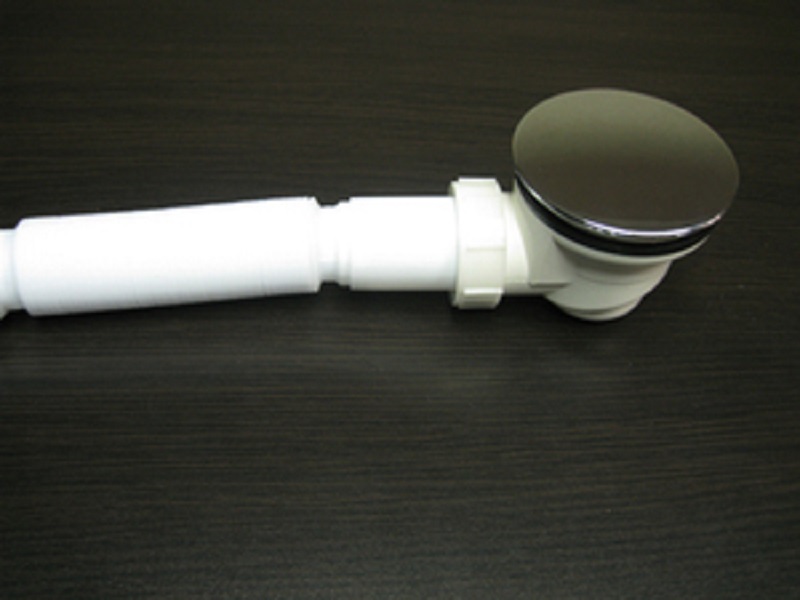


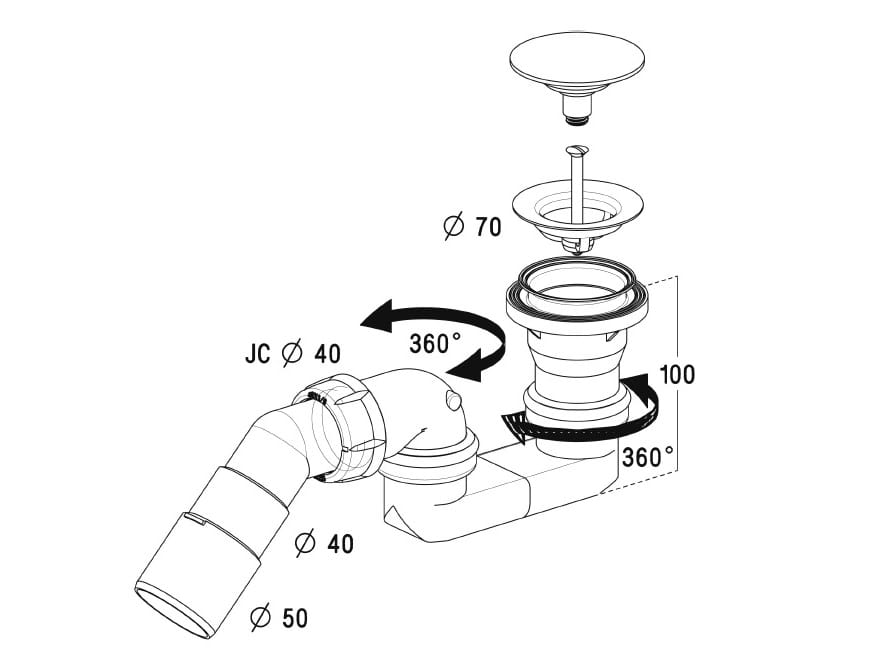

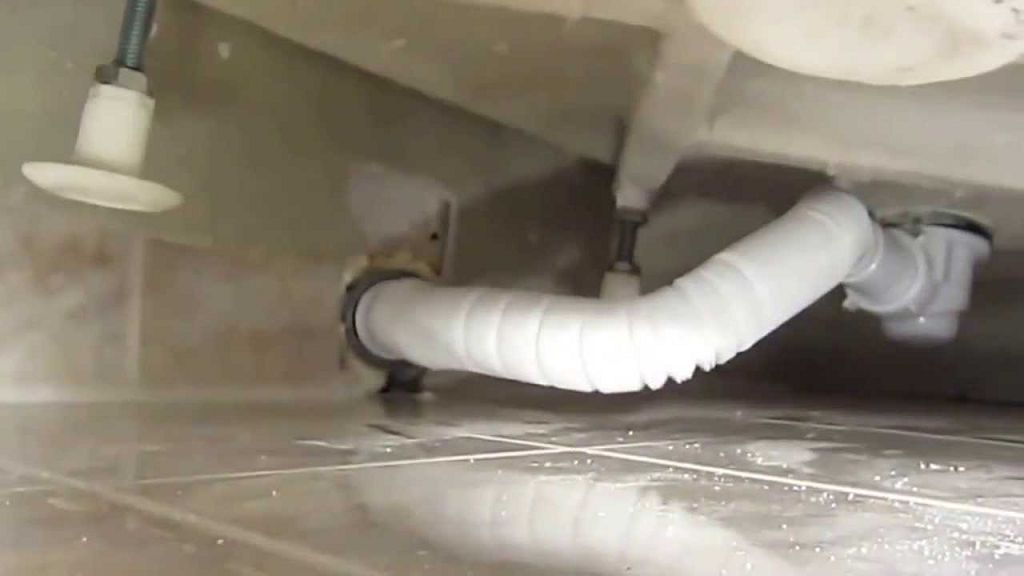
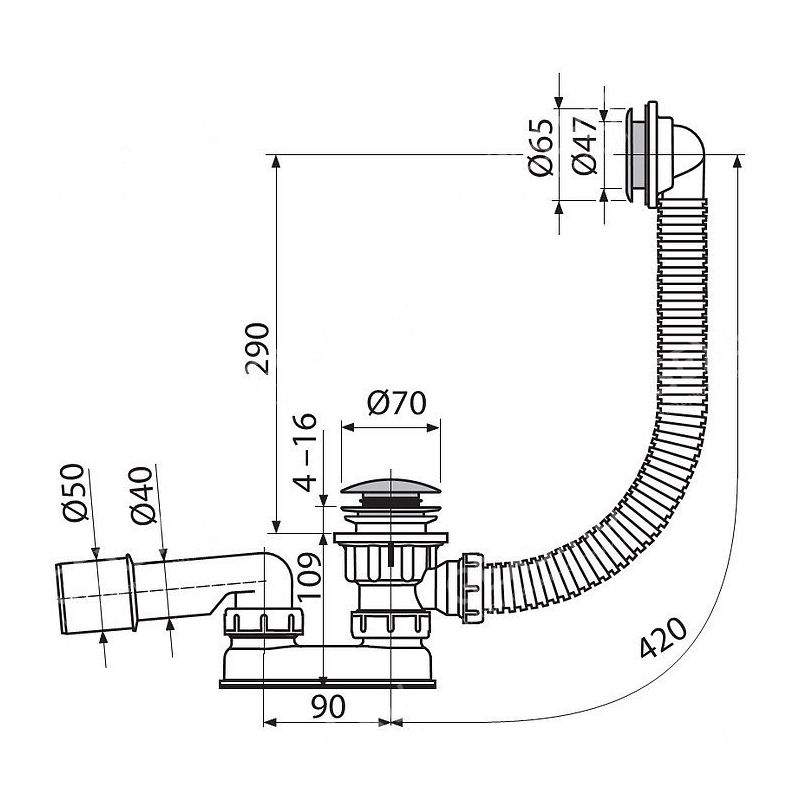

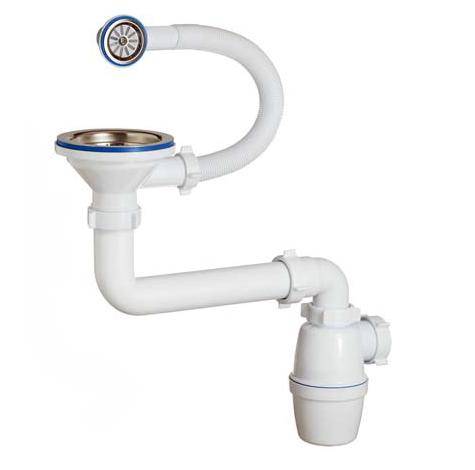
The design of the system differs in that it is equipped with an additional tube made of flexible corrugation or hard plastic. It connects the hole in the top side of the sink rim to the part of the drain system that is located in front of the trap.
Such a zigzag tube is fixed in the desired position with a plastic clamp.
Characteristics of different types of siphons
Manufacturers offer three types of siphons for installation under the washbasin and sink:
- pipe drain;
- bottle design;
- corrugated model.
Bottle drain
The appearance of the siphon sump resembles a flask. There are two tubes. The first goes to the additional drain hole on the side of the sink, the second goes to the sewer pipes. For the bathroom and kitchen, a siphon for a sink with a bottle-type overflow is suitable for installation. The advantage of this type is proved by the factors:
- there is no need to remove the entire siphon to clean the hydraulic valve;
- it is possible to install an additional pipe. Additional sewer consumers will be connected through it;
- if a valuable thing accidentally fell into the drain hole, then there is a chance to find it in the sump. It is enough to unwind the flask;
But we must not forget the negative aspects of mounting a bottle product:
high probability of leakage, since the design with a large number of connecting points.
Corrugated drain
A siphon with an overflow for a corrugated sink is the easiest option. The corrugated plastic pipe is bent into the desired shape, the position is fixed with clamps. Be sure to create a bend to create a water plug. The advantages of the model are obvious:
- the number of connections is minimized, which significantly reduces the likelihood of leaks;
- connection and installation work is easy to do on your own;
- the siphon does not require a lot of space.
Installing a corrugated model will entail some difficulties during its operation:
- an uneven surface quickly becomes clogged;
- corrugation walls are cleaned carefully so as not to break through;
- the whole structure is disassembled for cleaning.
There is a siphon for a sink with an overflow of a combined type: with a corrugated pipe leading to a sewer, a bottle design.
Rigid model
This rigid pipe construction is sometimes used for a regular sink or overhead washbasin, but is more often installed under bathtubs. This model is not suitable for a small washbasin. It is large and needs a lot of space.
custom model
A special siphon is mounted for a non-standard shape of a washbasin or sink. When buying such plumbing, it is recommended to immediately purchase a suitable drain model with the right number of nozzles.
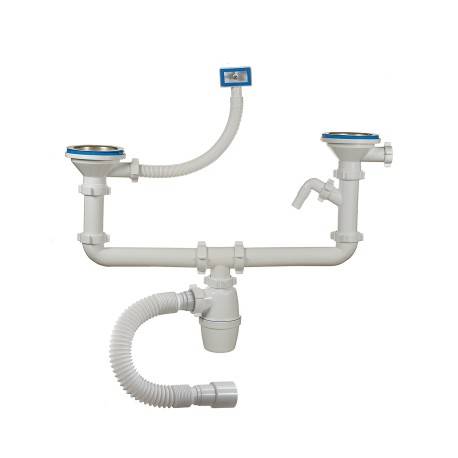
Most often, the outlet for the sink looks like a double siphon. It is suitable for washing with two bowls.
To non-standard, one can indirectly include the drain of a hidden installation. This design is expensive, it has a non-standard installation site. It comes with sinks installed on open shelves.The drain system itself is mounted in special niches and hidden behind a decorative screen.
closed type
They have four walls or a rounded wall along the entire contour. From above the closed shower cabin is closed by a ceiling. Such cabins can be placed not only in the corner of the bathroom, but anywhere, even in the middle of the living room. You just need to take care of the sewerage and water supply.
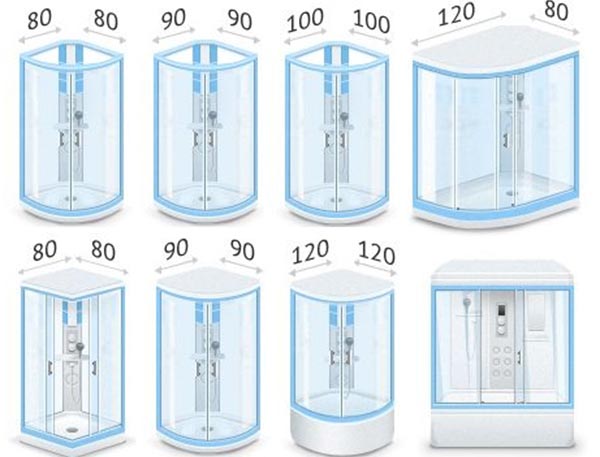
Shapes and dimensions of standard shower enclosures
Shower enclosure sizes start from compact 70/70 cm, to fairly large boxes with a wall of more than 2 meters.
Shower boxes often have all kinds of additions, such as a sauna or a hammam, a tropical shower, aromatherapy devices, and multimedia functions.
Now let's take a closer look at how to install a shower cabin?
Design
Before you wonder how to remove the siphon from the shower cabin, let's get acquainted with its features. This element is also called a "ladder". Through this product, various plumbing fixtures are connected. It is not used for structures with a built-in water lock and those that are connected directly to the sewer system.
The following items are suitable for shower trays:

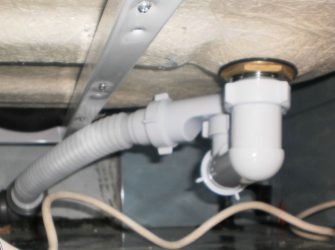


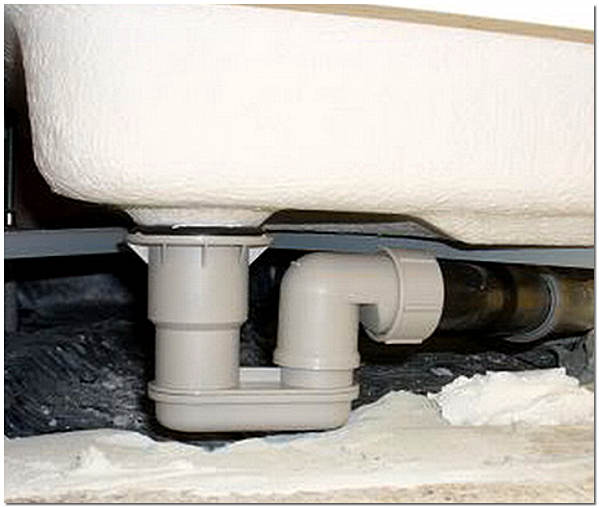

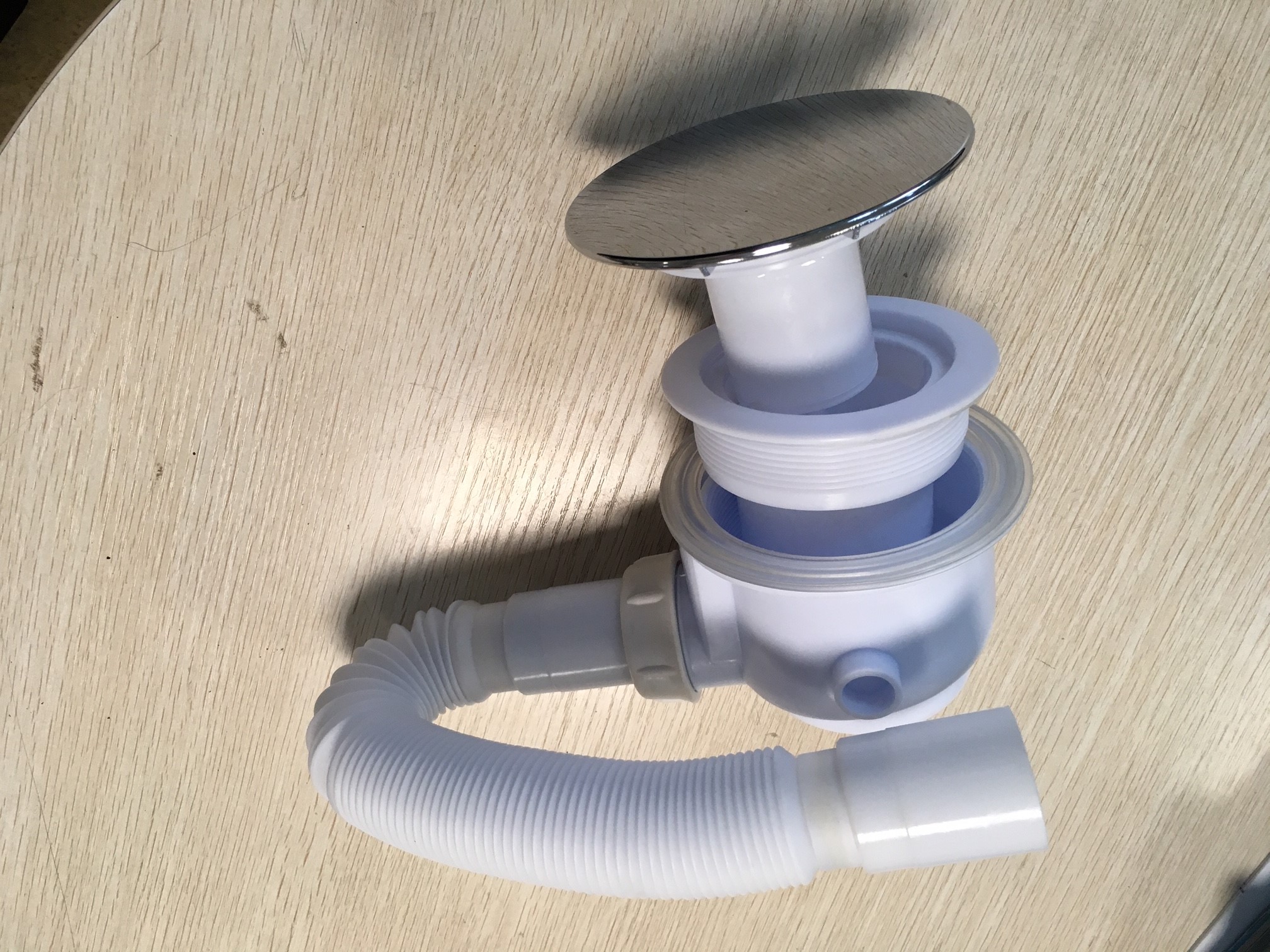


- Bottled (flask). The functional element here is a special compartment with a bottle shape. Install such siphons for high shower trays.
- Pipe. They are assembled from several pipes of different lengths, which are connected by adapters. They are characterized by compact dimensions, therefore they are in demand for almost all shower cabins.
- Corrugated. These are also tubular devices, only soft pipes are used instead of hard ones, which are easily bent. They have a rough inner surface, which is why they clog faster, therefore they are less popular.The best option for a shower cabin is a pipe siphon, which has suitable characteristics and small dimensions.

Drain design
How to choose the right siphon for a shower cabin?



