- Types of heat guns
- How to choose?
- No. 1. The principle of operation of the heat gun
- Distinctive characteristics and parameters of the gun on diesel fuel
- Application
- for garage
- For residential heating
- For stretch ceilings
- How to calculate the power of a heat gun - formula
- What is a heat gun
- Electric heat guns
- Selection criteria
- Types of gas guns
- direct heating
- indirect heating
Types of heat guns
Manufacturers of heating appliances produce several types of heat guns:
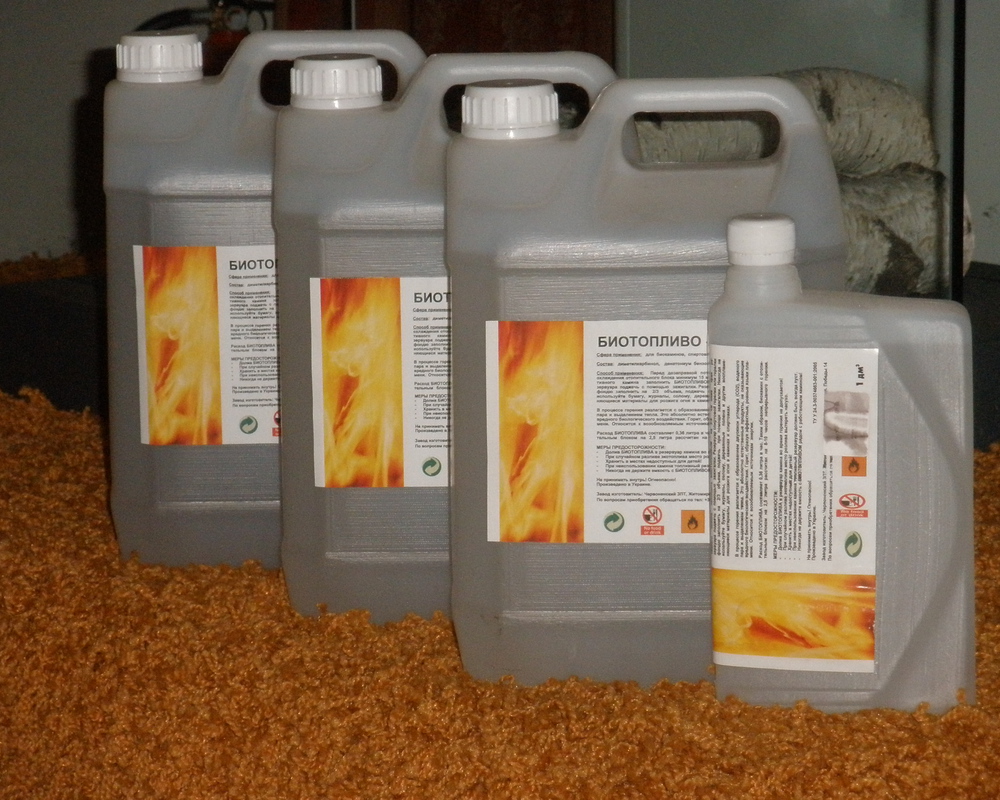
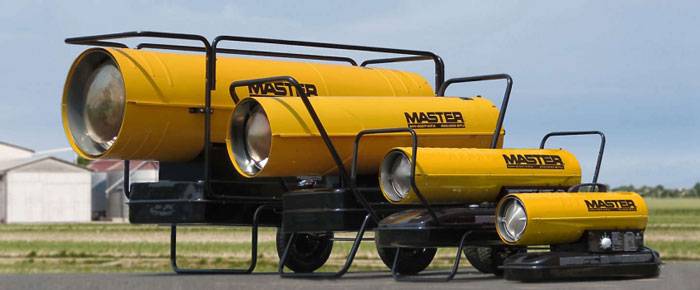
- Multi-fuel, including those operating on liquid fuel. The device is ideal for automotive services: the owner saves on space heating by using drained engine oil. Such units work for more than ten hours without interruption.
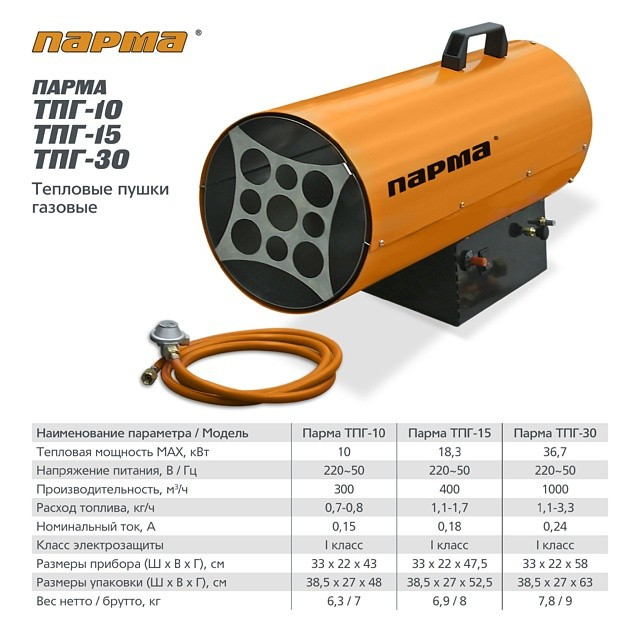
- Gas heat guns. They are stand-alone and stationary. Such equipment is widely used in the agricultural industry. A gas burner located inside the device contributes to an even distribution of heat. A natural gas-powered appliance consumes a small amount of electricity, which allows significant savings.
- Electric heat guns are widely used both in everyday life and in production. Modern models are equipped with a spiral or tubular electric heater. The latter has a long service life.All such devices are equipped with an electric fan heater and a thermostat that maintains a constant temperature and prevents overheating.
- Infrared heat guns. They don't have a fan. The radiated heat raises the temperature of the surrounding objects. The air is warmed up due to heat transfer. Such devices are used during repair work for uniform drying of walls and ceilings.
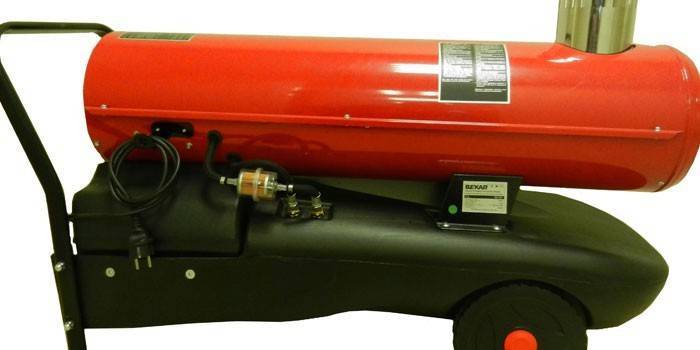
- Diesel heat guns. They quickly heat up the room and are used during construction work in the winter. There are models of direct and indirect heating. The power of diesel heat guns is greater than that of multi-fuel units.
How to choose?
When choosing a model of a heat gas gun, you need to immediately decide on its purpose, that is, what it will be used for. These can be 10 kW and 30 kW devices
While in the store, you will need to pay attention to performance characteristics such as power, performance, fuel consumption and others. By power, you can understand what area of \u200b\u200bthe room can be heated using the specified unit
You should not choose a low-power model for a warehouse or store, it will not cope with the tasks.
By the level of performance, you can determine the level of maximum air exchange. It determines the amount of air that is pumped per minute. The more performance, the more power. Another equally important characteristic is the allowable pressure. If we talk about liquefied gas, then the packaging should indicate from 0.1 to 0.3 atm
This is important to consider when setting up the gearbox.
It must be understood that the greater the performance, the greater the fuel consumption.On average, this figure for thermal gas guns is 0.74-3.3 l / h.
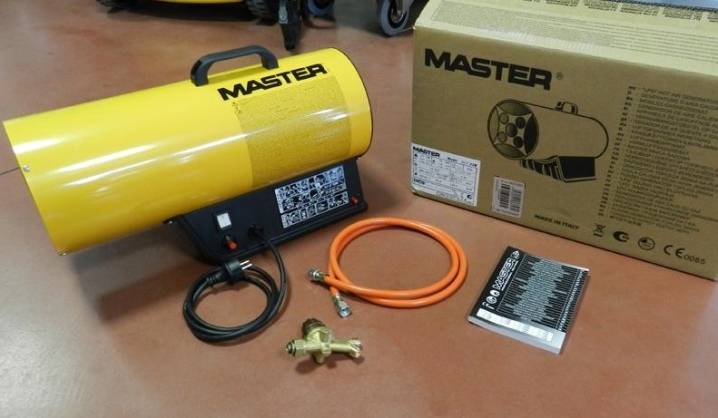
The buyer needs to pay attention to the built-in ignition system. She may be:
- electronic;
- manual;
- piezoelectric.
Manual because it is called that when you set fire to the fuel, you will have to use a torch. In comparison, the piezoelectric ignition system involves the production of a spark when a button is pressed. Electrical systems are considered the most convenient to use. They themselves give a spark, provide gas supply and ignition.
In non-residential premises, including a garage, you need to take into account the level of humidity. A heat gun helps to dry the walls with high quality, but it is better to purchase a model with increased electrical insulation. In order not to be disappointed in the purchase, you need to take into account the area of \u200b\u200bthe garage and how often it is used, since the operational load will depend on this. Run such equipment only in an empty room. The absence of people is a prerequisite.
A heat gun is also used to heat the suspended ceiling. With its help, the film can be heated up to 65 degrees. It is this temperature that is sufficient to achieve the necessary plasticity from the material. The power of the equipment can be average, it is enough to perform the work.
No. 1. The principle of operation of the heat gun
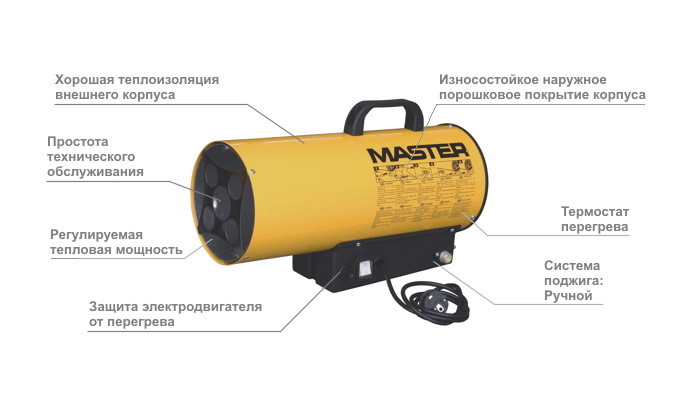
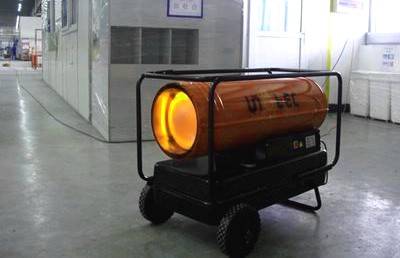
A heat gun can be considered a large and powerful heat fan, and each of us is probably familiar with the latter. The structure and principle of operation of the gun are quite simple. The body of the device is made of metal, which can withstand both mechanical and thermal loads. There are devices in which the case has the shape of a parallelepiped, but often these are cylindrical devices.Actually, due to their appearance, the devices began to be called guns - they are very much like an artillery gun.
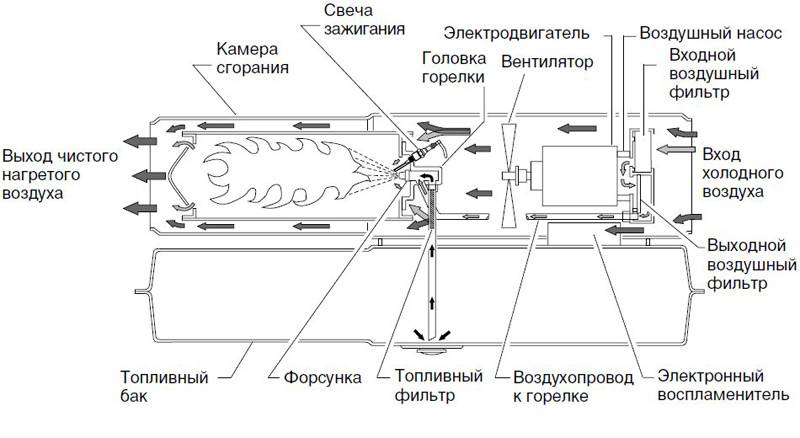
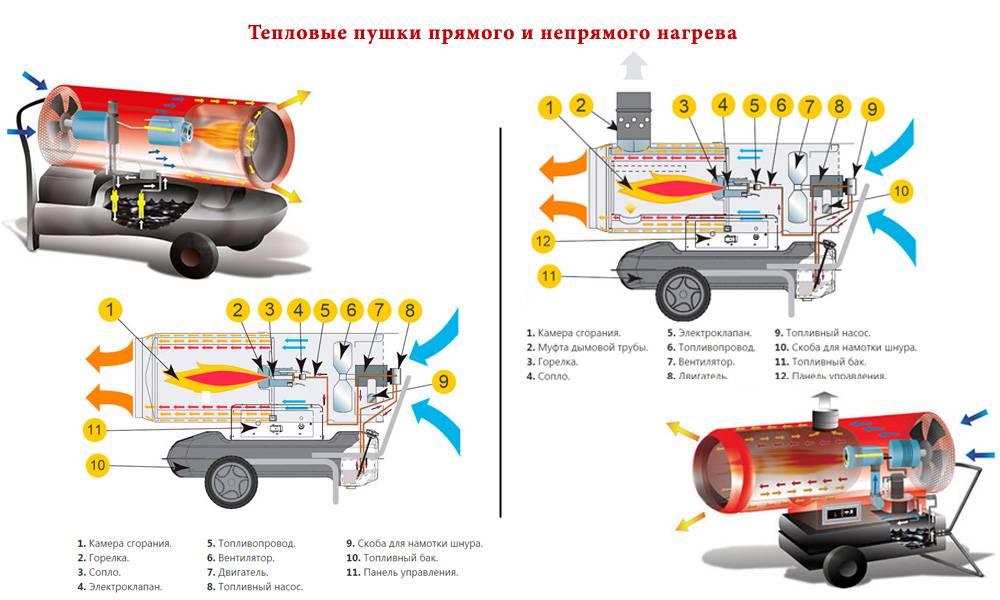


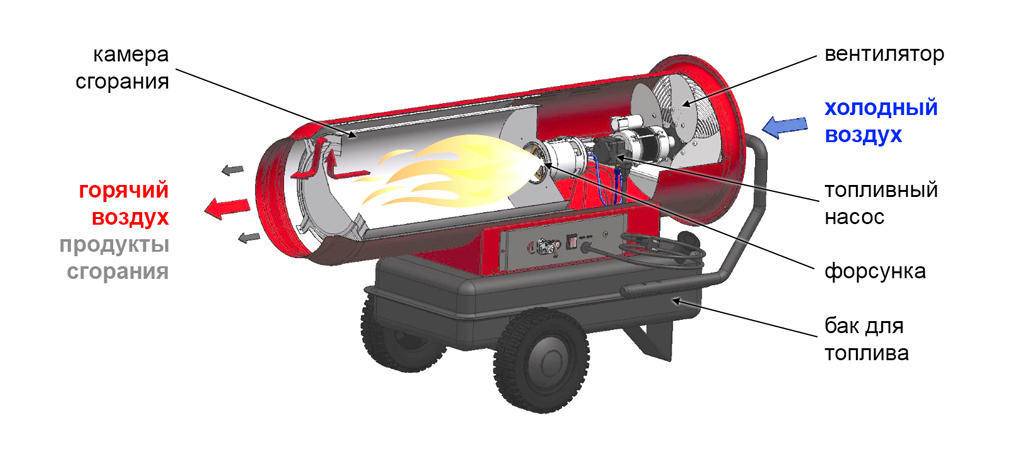

The heart of the heat gun is the heating element. It can be a heating element, a spiral, a combustion chamber of liquid or gaseous fuel. A powerful fan is located next to the heating element, which draws cold air through the holes in the case and contributes to the rapid spread of already heated air. Here is such a simple mechanism. There are fanless models that heat the surrounding objects according to the infrared principle.
Additionally, the device is equipped with a temperature controller and a thermostat, which help maintain the desired temperature in the room and prevent the device from overheating.
Heat guns can be classified according to several criteria, but the most important difference is the type of fuel used. On this basis, heat guns are:
- electrical;
- gas;
- diesel;
- multi-fuel;
- infrared.
Of course, guns also differ in size, power and other parameters, but the very first criterion when choosing is the type of fuel, so let's start with it.
Distinctive characteristics and parameters of the gun on diesel fuel
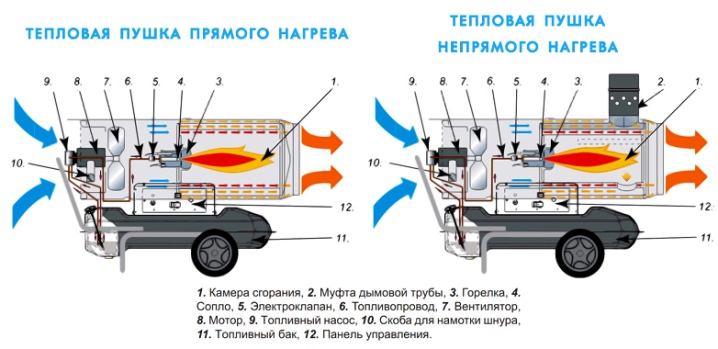
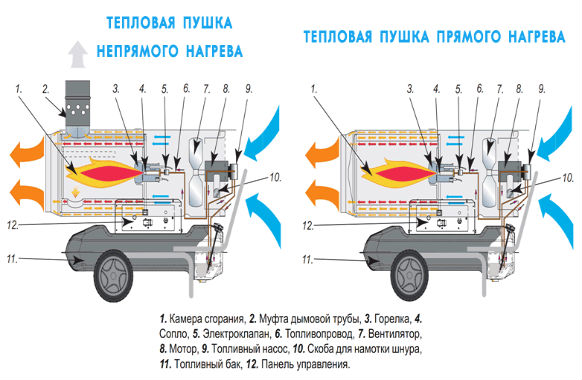
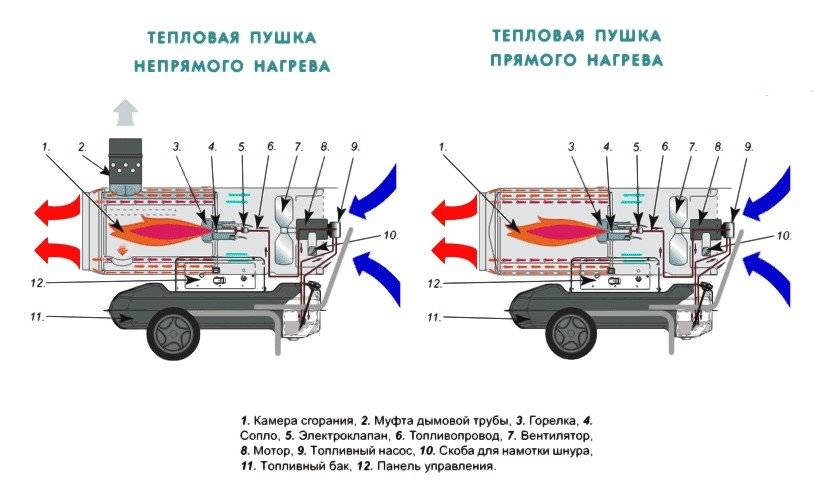
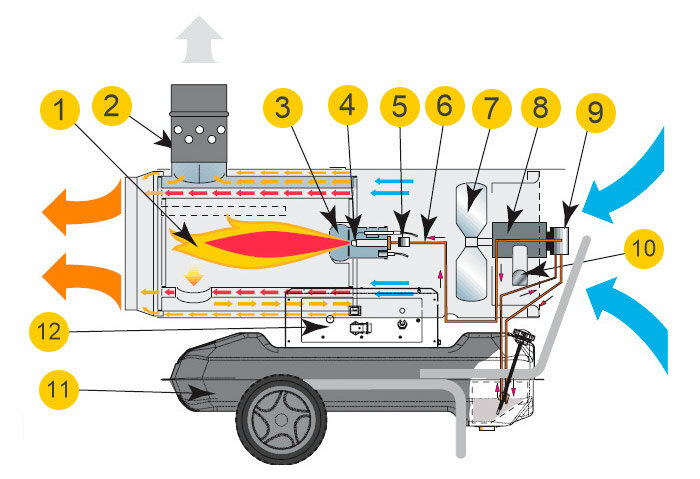
Diesel heat guns have great advantages, but their scope is more limited. Fuel in these units is supplied by a pump or compressor, the heat air flow is set by an electric fan. For the possibility of autonomous operation, a thermostat, a timer and a flame control system are installed. According to the principle of operation, they are divided into two types:
- The direct heating device may only be used in well-ventilated rooms, as the products of combustion are emitted directly into the surrounding air. Not safe for use in areas where people are constantly present or working.
- The indirect heating unit allows you to heat the air with high quality, while the exhaust gases go outside with the help of specialized chimneys.
The technical characteristics of a heat gun of a direct type of heating do not allow it to be used for heating residential premises. Combustion products should not accumulate in the room, so it is necessary to ensure regular ventilation in order to fill the space with oxygen. Such units are most in demand and are optimally suited for heating utility rooms. They are widely used in agriculture.
Diesel guns of indirect type of heating, subject to all the rules and regulations of operation, can be used in workshops, garages, and in production. Thanks to the special outlets of the exhaust connections provided for outside the premises, they can be used in crowded areas, in places where the work process is carried out directly.
Diesel guns of any type are effective for defrosting or drying materials. They allow you to speed up the drying process of wood, and therefore are widely used in the woodworking industry, as well as in furniture factories. They are an indispensable source of heat that allows you to quickly adjust the stages of repair work, quickly drying the treated surfaces of walls and ceilings.
For heating large areas, these are the most economical units, since consumption of kerosene or diesel fuel is about 1 liter per hour, while the space can be heated up to 250 m3.
Application
Such gas-powered equipment is in demand in everyday life and in production, and has found wide application among the masses. This is not only the rapid heating of residential and non-residential premises, but also the drying of individual items for automotive and industrial purposes. In addition, the use of a gas gun is appropriate for large areas - from 25 sq. meters, in the process of repair work, for example, when installing stretch ceilings.
for garage
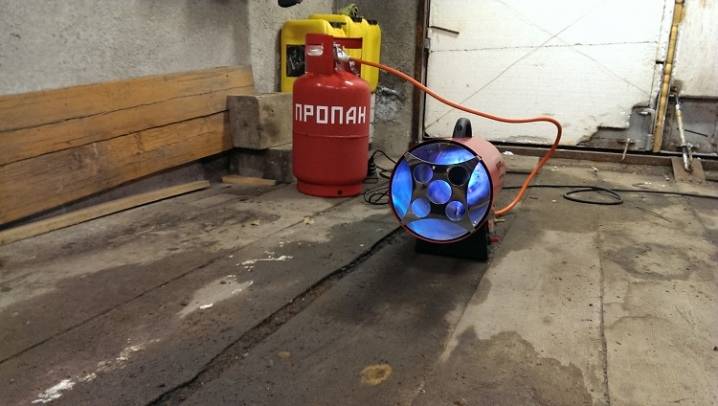
These non-residential premises are characterized by dampness, which only prevents the storage and safety of a personal vehicle. To dry the walls and remove the fungus from the far corners, it is recommended to use gas guns for the garage. The purchase is not cheap, but the unit can additionally be used at home and in the country
It is important to take into account such parameters as the garage footage, the quality of thermal insulation, the mode of presence of people in such non-residential premises. There are two options for choosing guns:
- The gas gun can be used when there are no people in the room. The unit provides high power, fast heating of the garage, minimal energy costs.
- A diesel gun is appropriate if people are or live in the garage. Due to the presence of an exhaust pipe, combustion products are efficiently removed and do not settle on the walls.

For residential heating
Considering the comparative characteristic described above, it becomes obvious that stationary direct blowing structures are not suitable for heating this space. A gas heat gun for residential premises must be equipped with an exhaust pipe so that combustion products do not linger in the living room
In addition, it is important to obtain high efficiency with minimal energy consumption.
For stretch ceilings
When carrying out repair work, this unit is also needed. A gas heat gun for the installation of stretch ceilings is an indispensable "tool", since when the PVC film is heated to 65 degrees over the entire surface, it makes it elastic and pliable. The material easily falls on the ceiling, firmly attached to pre-prepared gaps. If the gas gun is turned on when performing this type of work, condensate does not accumulate on the carrier plate during the fixing of the PVC film. This is one of the important advantages of the participation of the mechanism in the course of repair work.



How to calculate the power of a heat gun - formula
From this "stove" and it is worth dancing further. And then buy "by eye", and then you will write such reviews on YouTube.
To visually estimate and understand what thermal power a gun will need, you can use the following table:
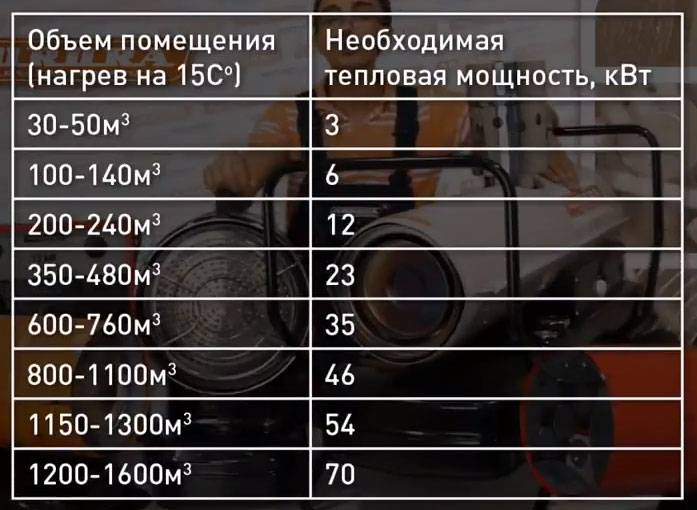
When choosing just such a power, in just 1 hour the thermal unit will be able to raise the temperature immediately by 15 degrees. Of course, if everything is fine with thermal insulation.
You can calculate this whole thing more accurately using the following formula:

V
room volume in m3
T
the difference between the air temperature outside and the temperature that needs to be created inside, degrees C
K
coefficient building heat loss
860
number to convert kilocalories/hour to kW/hour
Coeff. heat loss, choose based on the design of your building.
K=3.0-4.0 - for buildings without thermal insulation
K \u003d 2.0-2.9 - there is little thermal insulation (walls in one brick, a simple roof and a regular double-glazed window)
K \u003d 1.0-1.9 - a building of medium thermal insulation (walls in 2 bricks, a roof with a standard roof)
K = 0.6-0.9 - high thermal insulation (walls and roof with double thermal insulation, double glazing)
For example, let's take a metal garage with a volume of 90m3 without any thermal insulation. The temperature difference is 30 degrees. That is, when it's -10C outside, you want it to be +20C inside.




Substituting the data into the formula, we get that to heat such a garage, you will need a gun with a power of at least 12 kW. If you have 3 phases, then you can think in the direction of the electric option.

If only phase-zero comes to the garage or there is no constant light at all, then you have a direct road for a diesel or gas model.
Only after these calculations do not buy guns with a large margin, even if funds allow.
According to the instructions, each such unit has a minimum volume of a heated room. If you have clearly less, there will be problems with noise, rapid burning of oxygen, dizziness, etc.
gas
diesel-kerosene or multi-fuel
electrical
What is a heat gun
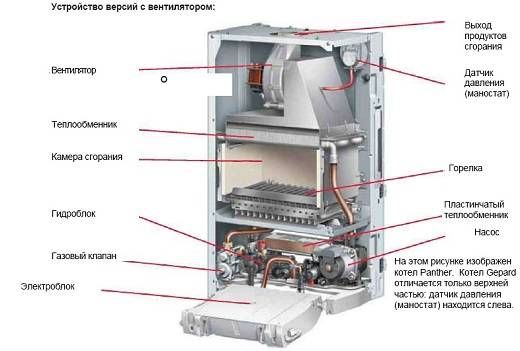
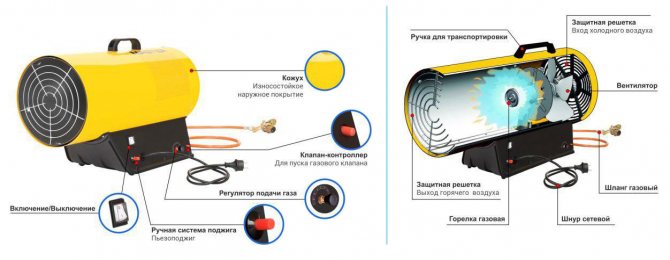
The demand for such a modern unit increases several times during the heating season, provided there is no central heating or its poor quality supply. Gas heaters for heating emit warm air, which is formed by burning gas. Outwardly, this is a streamlined metal case with a hole for the exit of a hot stream, and inside the design is somewhat complicated and is represented by the following elements:
- burner;
- fan;
- heat exchanger;
- ignition device;
- control device;
- thermostat;
- additional devices depending on the design features.
Electric heat guns
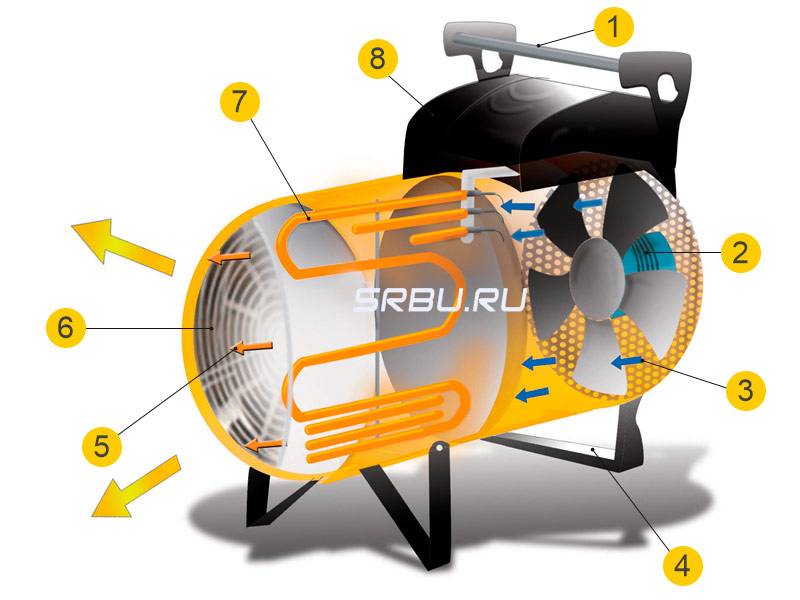
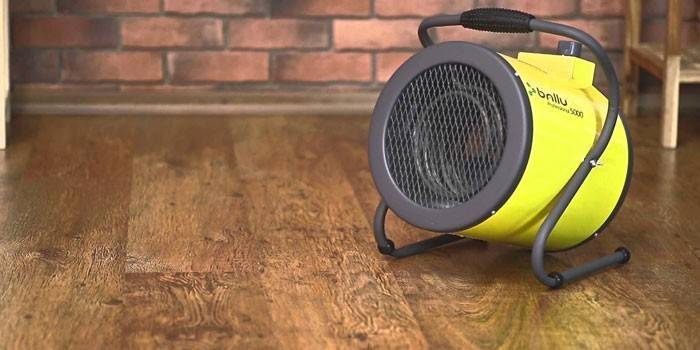
These heating units are the simplest and most inexpensive, besides, they do not emit any harmful substances. As a heating element, they use an air heater of a special shape, repeating the roundness of the body.
In fact, the “barrel” of such a gun is empty from the inside, at one end there is an axial fan, and on the other side, where the air comes out, there is an electric heating element. In more powerful models, several heaters are installed. The device can be used in any enclosed space, the main thing is that they have a source of electricity.
Electrical appliances are much easier to operate than gas appliances. Therefore, the electric heat gun is equipped with a step-by-step power regulator and overheating protection, and can also be powered by 220 and 380 V networks. Due to this simple design, an electric fan heater is most suitable for both self-production and for use in the household.
If you carefully study the device of diesel and gas fan heaters, it will become clear that it is not easy to make them at home. And even then, it will be possible to assemble a direct heating gun, but it will be difficult to make an effective heat exchanger for separating flows. True, some home craftsmen solve this issue with the help of 2 pipes placed one inside the other, but such a design is ineffective and will throw a lot of heat into the chimney.
But almost anyone can make a heat gun with their own hands if it runs on electricity. For this you will need:
- thin sheet metal for the manufacture of the case;
- nichrome heating coil;
- a small electric motor or a ready-made axial fan of a suitable size;
- insulating pads for fastening the spiral.Can be independently cut from asbestos;
- terminals, wires, switches.
The power of the unit will depend on the spiral, so it should be selected according to the resistance. For example, if we need 3 kW of heat, then the current flowing through the coil will be 3000 W / 220 V = 13.6 A. Then, according to Ohm's law, the resistance of the coil should be 220 V / 13.6 A = 16.2 Ohm. After selection, it is attached inside the case using insulating blocks. The metal case can be made from two pre-bent halves, fastening them together with self-tapping screws. An axial fan is placed at the end of the resulting pipe.




The heating element and the fan are connected to the network through switches, after which the heater is ready for operation. But such a home-made heat gun is too primitive and cannot be adjusted, in addition, the spiral actively burns oxygen. Advanced users with knowledge in electrical engineering can use air heating elements of the required power with thermostats instead of nichrome. You can also add step control to the unit if you turn on the heating elements in turn.
Selection criteria
You can understand which heat guns are best for your home if you study their capabilities in more detail. The optimal solution for a dwelling, cottage or apartment is an electric model with a wall mount. The choice of heat guns for technical needs depends on the tasks assigned to them. For heating concrete, performing other construction work, gas or electric models are used. Infrared guns are used in the installation of stretch ceilings.
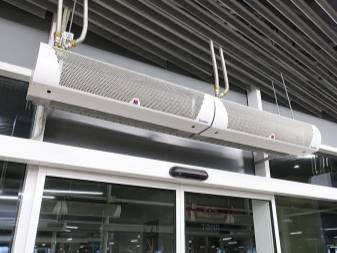
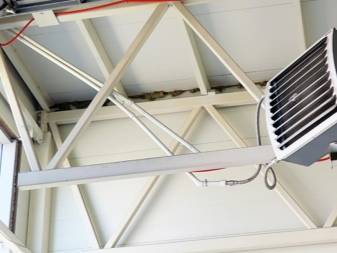
In this category, you can find mainly electric models. Gas options are the most economical, but they require a separate chimney or forced ventilation of the room, there are restrictions on the minimum area.
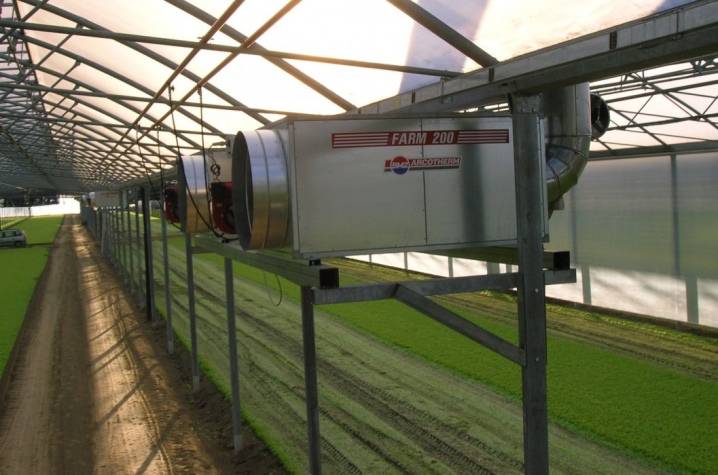
The main criterion for choosing a heat gun is its power. To heat a room with a volume of 30-50 m3 by 15 degrees, about 3 kW is needed. Twice as much will be needed for an object of 100 m3. Further proportions are preserved. In addition, on average, 1 kW of energy is required per 10 m2 of a house area - the higher the heat loss coefficient, the greater its consumption. It all depends on the thermal insulation of the object, its area and purpose. When choosing a heat gun for a home among diesel models, it is worth making a test run in order to better assess the quality of the equipment
It is important to pay attention to such moments
- The presence of leaks, leaks in the area of \u200b\u200bthe fuel tank. A leaky design poses a serious hazard.
- Metal quality. If, after a few hours, soot appears at the attachment points, we can talk about too thin, low-grade raw materials. The heat capacity of the equipment will be extremely low.
- The intensity of the flame exit from the nozzle. If the compressor responsible for its supply fails, the fire will be supplied too intensively, not allowing sufficient fire safety to be ensured. It is better to entrust the adjustment to specialists in the store. The absence of such a function is a reason for refusing to purchase.
- After turning off the fan of the heat gun, it should work for some time for cooling. If it stops immediately, this can lead to the melting of components, sensors, and deformation of the case.
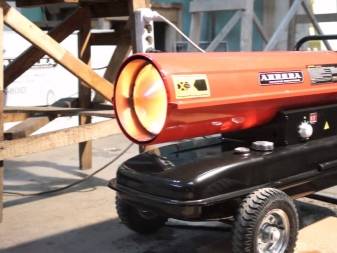
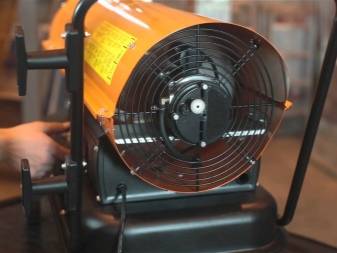
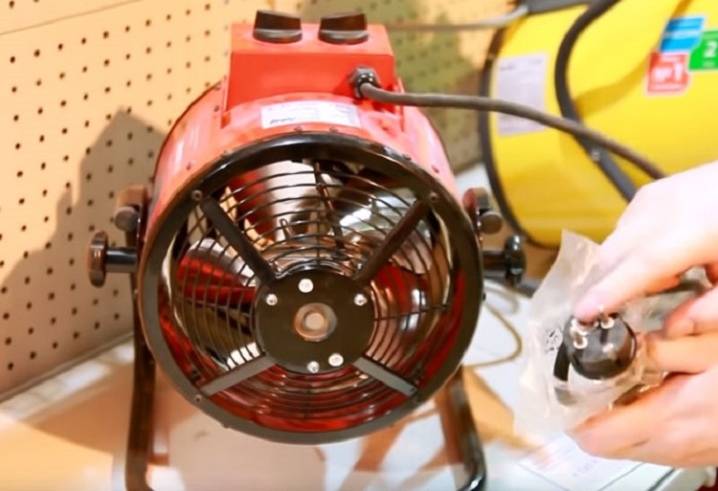
In cheap models, this function is not available, which often leads to device failure.
Types of gas guns
Before making the final choice, it is important to find out what types of structures exist, which option in a particular case is optimal. The gas heat gun enjoys considerable popularity, it is necessary for heating and ventilation of residential premises, drying of overall objects
The range is wide, but the classification provides for only two design features - direct and indirect heating. Both options are suitable for domestic needs, but have a different appearance, principle of operation.




direct heating
In this design, air flows are not cleaned from burning, so they all gather in a living room, poison oxygen. Directly heated gas guns are needed where there is sufficient natural or artificial ventilation. This is the main drawback of the gun, but 100% efficiency, minimal energy and fuel consumption remain significant advantages.
indirect heating
The annular heat exchanger acts as the main heating element, which operates according to the following principle: gas is burned first, then toxic products that are released during the formation of fuel. The gas heat gun of indirect heating is an environmentally friendly device, so its installation in the room is possible even with limited ventilation. The disadvantage of the mechanism is the presence of a chimney, which complicates the mobility and transportation of a gas-type gun.