- Verification of metering devices
- Why is it necessary to install a meter for heating in a residential area
- The main advantages of installing a heat meter in an apartment
- The principle of operation of the thermal device
- General house heating meter device features
- Meters and savings
- What are the types of devices
- Special cases
- How to calculate indicators if payments come only during the heating season
- The house does not have a common house heat meter
- There is a common heat meter, apartment heating meters are not installed in all apartments
- All apartments are equipped with individual heat meters
- Heat payment in an apartment building where more than 50% of the apartments are equipped with distributors
- Difficulties in the control procedure
- Payments are made throughout the year
- The house has no common house or individual heat meters.
- There is a general building heat meter, apartment heat meters are not installed everywhere
- Legal installation procedure
- Mounting
- Which heat meter to choose in an apartment
- Mechanical
- Ultrasonic
- Calculator (Distributor)
- Results
Verification of metering devices
An employee of the company seals the device after all installation steps are completed. Thereafter, the devices are checked at most once every four years. This is a paid service, which is also provided by the management company.Maintenance costs may increase because of this, but further savings make it possible to recover everything.
The owner of the equipment has several options to choose from when the next time to check is:
- Cooperation with a company that installs heat meters. Most often, during installation, agreements for further maintenance are immediately drawn up.
- Appeal to one of the local branches of the state institution that conducts certification, verification of measuring types of equipment.
- Assistance of representatives of the service center of the meter manufacturer.
Why is it necessary to install a meter for heating in a residential area
The lack of high-quality heating due to improper operation of the heating network often forces apartment residents to look for alternative sources of heat. At the same time, it is not always the cause of poor heating that lies precisely in a breakdown in the heating network. Often, housing and communal services workers, in an effort to save money, screw on the valve, which reduces the flow of hot water, which is especially felt by residents of the upper floors of high-rise buildings.
Quite often, due to the poor performance of the heating network, it is necessary to look for alternative sources of heat.
The result is insufficiently warm batteries and the need to use electric heaters, which, in turn, entails an increase in electricity costs. Heating in the apartment does not become cheaper. As a result, it turns out that users have to overpay on all fronts.
Another reason for high payments is often the difference in the temperature of the water that leaves the boiler room and the one that enters the apartment directly.Often the temperature of the water in the radiator is much lower than normal, which occurs due to heat loss on the line due to poor insulation or damage to the pipes. Even in this situation, all costs are borne by the end user.
Sometimes the situation can be quite different when the batteries are so hot that you have to open windows to ventilate the room. In this case, you have to pay, in fact, for heating the street, which is also not considered correct. Regulators, which are often installed together with heat meters for heating, will help to avoid the problem.
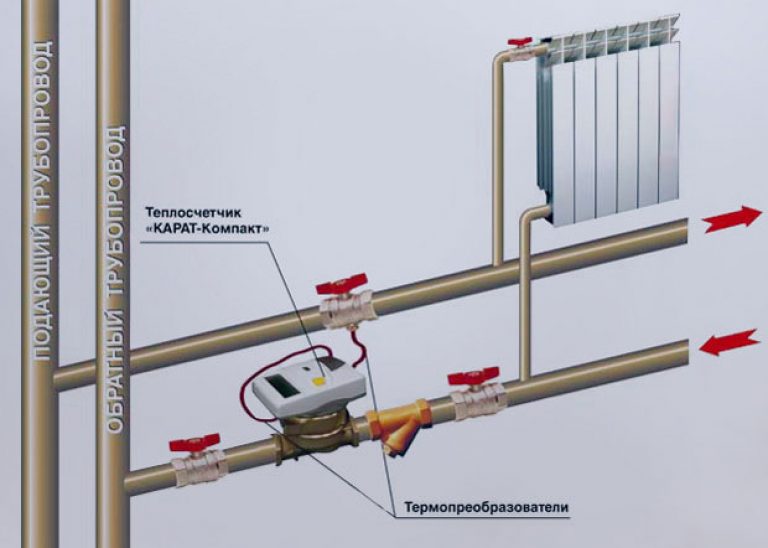
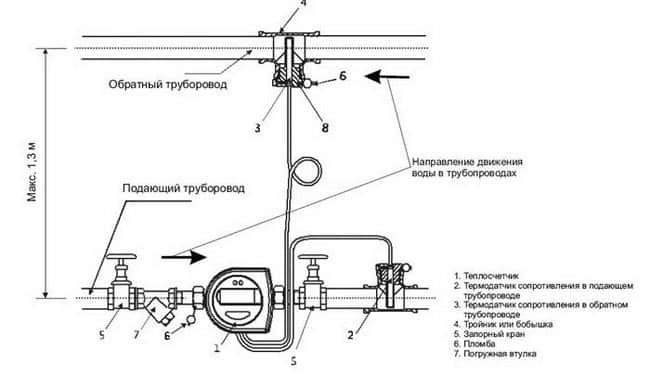
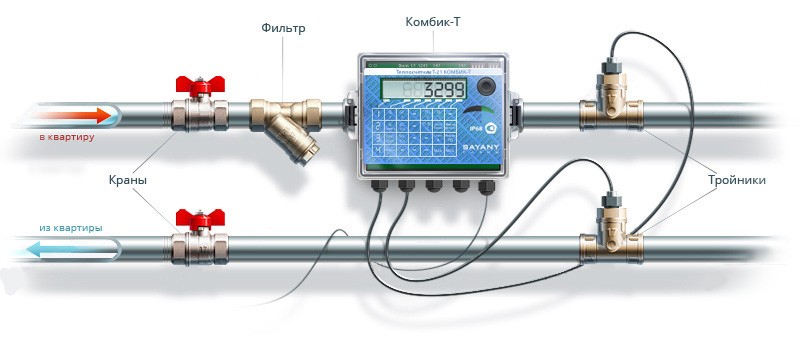
The scheme of the heating meter in the apartment
The main advantages of installing a heat meter in an apartment
The heat energy meter is mounted directly on the pipe through which heating enters the apartment, and calculates only the amount of heat actually used. If you additionally install a thermostat that controls the flow of water to the device, you will also be able to control the flow of hot water, which, if necessary, can be reduced. As a result of the work done, the final consumption figure will be significantly lower than that determined by the standards.
After installing and registering the heat meter in the apartment, you can be sure that only the cost of heating the home will be taken into account in the payment. There is no need to pay for heat losses during transportation or for associated costs incurred as a result of poor-quality provision of services by the heat generating company after installation. Heat metering is carried out on the basis of the following indicators:
- consumption of hot water delivered to the apartment;
- water temperature at the inlet to the heating system and at the outlet of the apartment.
As a result of expenses, the amount of heat consumption per day, month or year, calculated in hectacalories, is determined. Modern apartment heat meters have the ability to store data on monthly heat consumption over a long period, usually up to 10 years. Some devices have an additional option that allows you to connect it to a computer and transfer readings via the Internet.
The main advantage of the counter is the ability to significantly save finances.
If there is any doubt whether the heating meter in the apartment is profitable, you can pay attention to a simple calculation: the price of the device, together with the installation, is from 7 thousand rubles, and the minimum service life is 12 years
During one season, you can save from 4 thousand rubles on heating by the meter, which depends on the area of \u200b\u200bthe apartment. Accordingly, over 12 years of use, at least 48 thousand rubles are saved, and this figure is far from final.

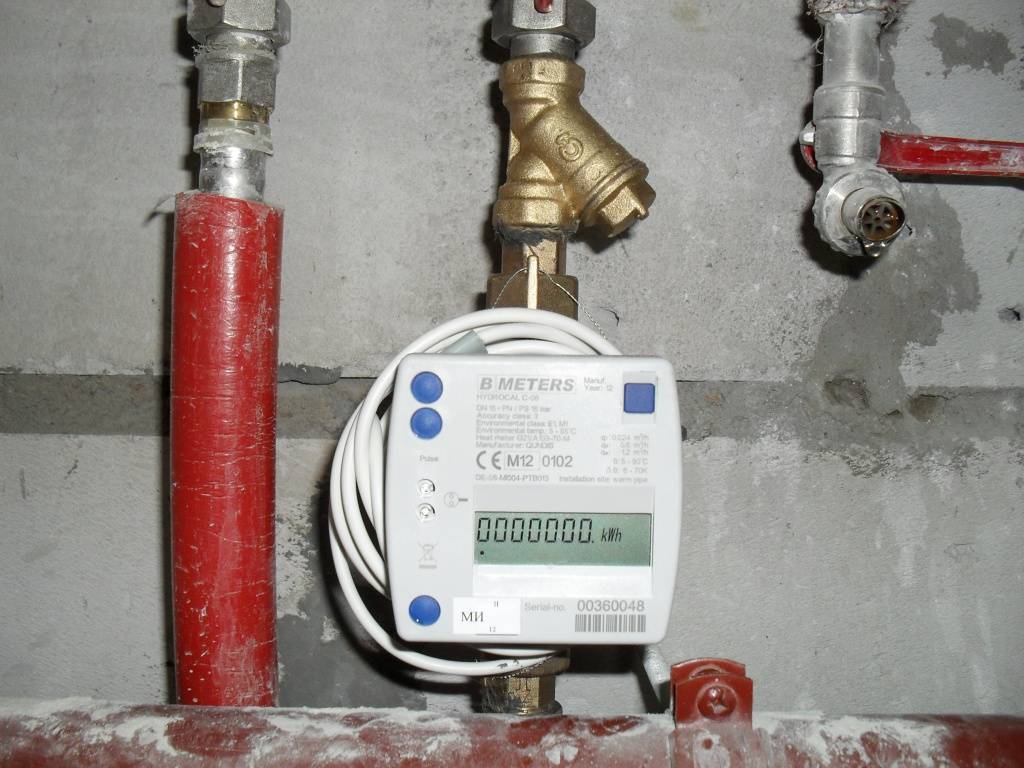
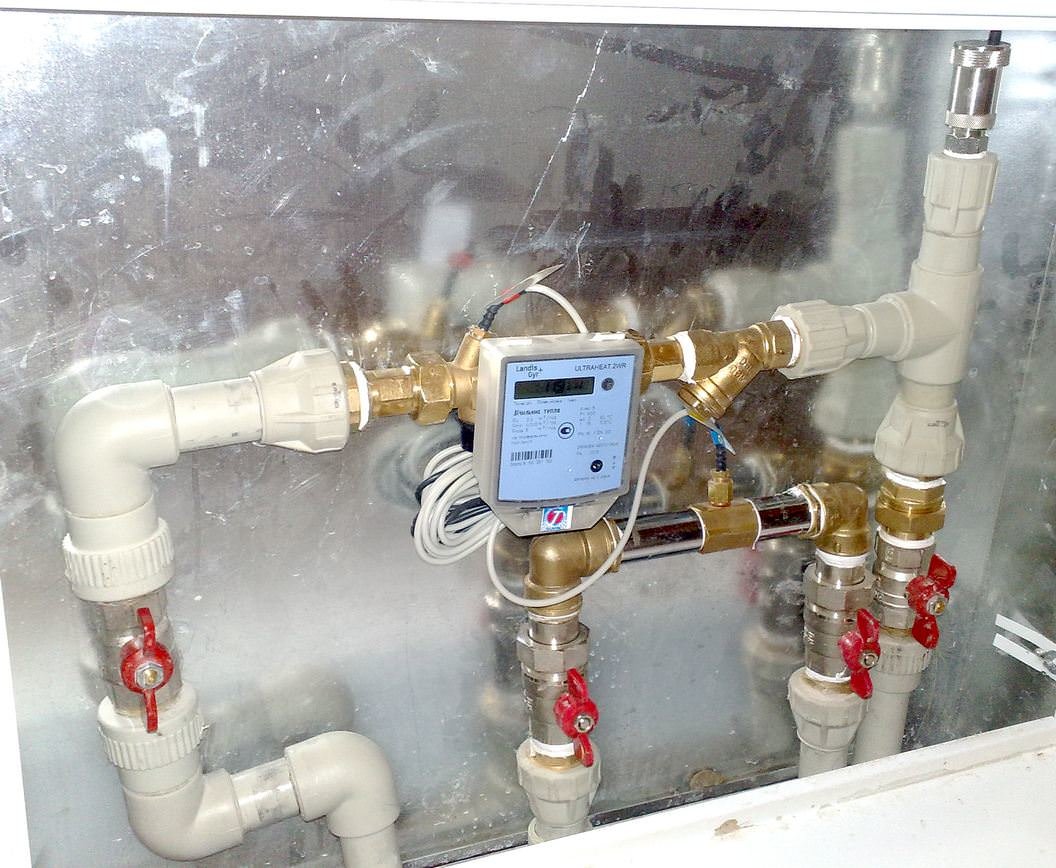


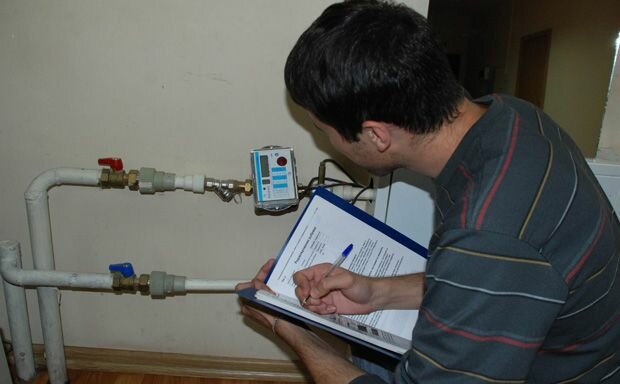

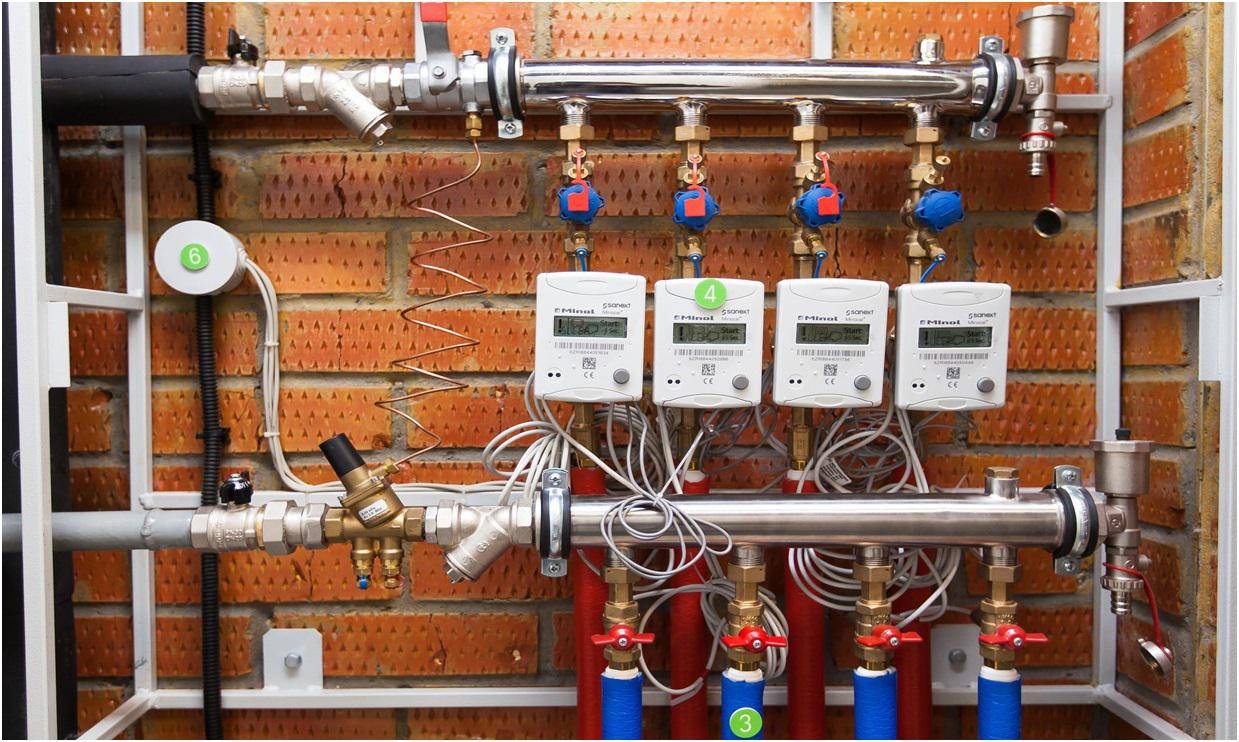

The operating costs of the meter are insignificant, because basically only the call of a specialist to verify the device is paid, which is carried out no more than once every 5 years. It is also required to occasionally replace the batteries, but this also has to be done by those who do not use the meter.
The principle of operation of the thermal device
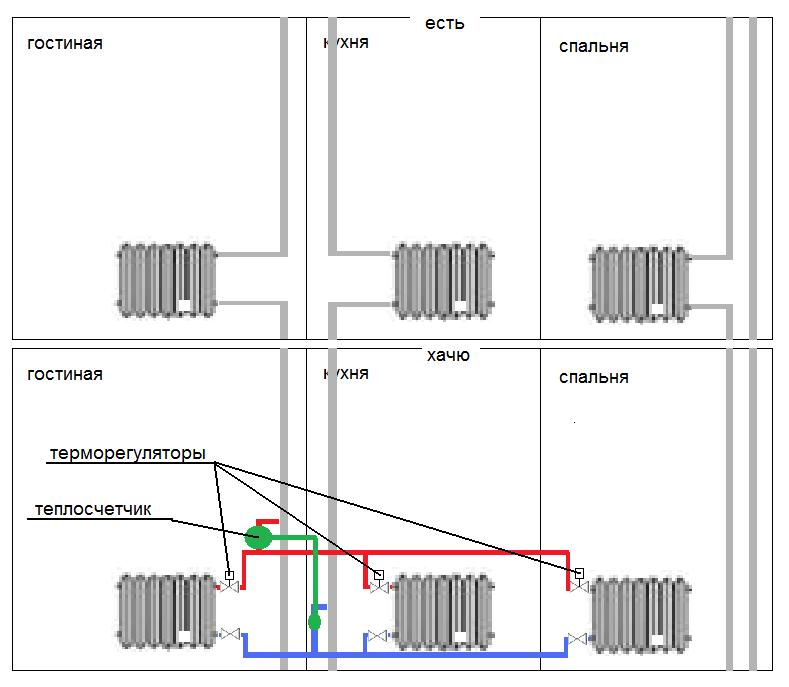
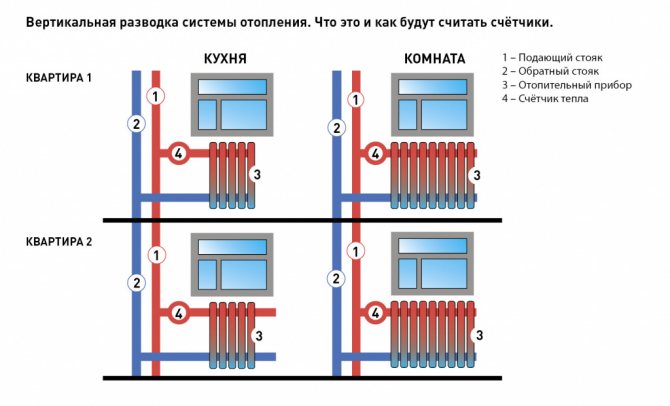
The heat meter is installed in order to determine the amount of water, that is, the coolant, as well as to measure its temperature. As a rule, the heating device is installed on a horizontal pipe. At the same time, only one heating device for the entire apartment will work. But if the piping is vertical (a separate riser for each battery), and such a pipeline is in most old multi-storey buildings.In this situation, a separate device is placed on each battery.
Factors that can affect the error of the heating meter:
- If there is a thermal difference less than +30°;
- If the circulation of the coolant is disturbed, namely, low flow.
- Incorrect installation, i.e. incorrectly installed temperature sensors, incorrect direction of the meter;
- Poor quality of water and pipes, that is, hard water, and various impurities in it (rust, sand, etc.).
General house heating meter device features
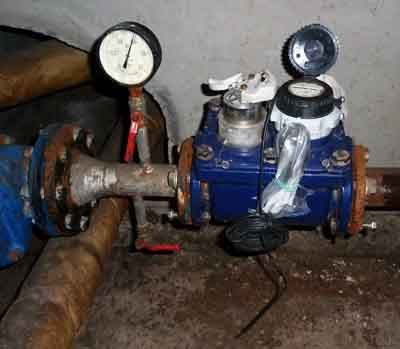
General house heating meter.
Such a device is used in residential buildings. At a meeting of tenants, the issue is resolved installation of a common house meter heating - a common device has a number of advantages over an individual meter. Firstly, a common house meter will be much cheaper. Secondly, the readings of the device will be calculated in accordance with the number of residents, that is, you do not have to pay so much. The responsible person, who is selected at the meeting, pays for this utility service. This person is also responsible for purchasing the meter. A common house meter is much more expensive than an individual type of device, but if divided equally between residents, it will turn out to be profitable.
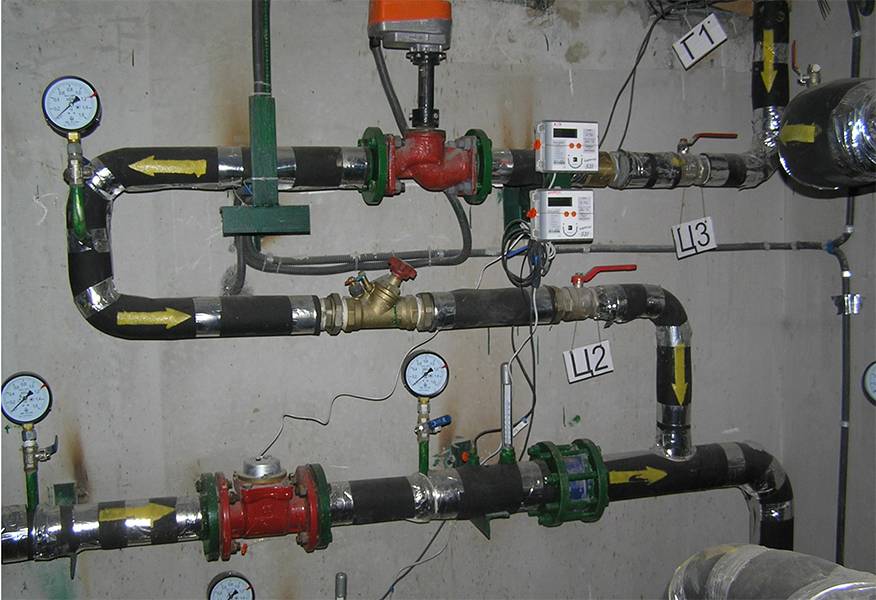
A common house counter can be installed with your own hands. To do this, you need to connect it to the central pipe, which, through the house collector, provides the house with heating. The second installation method is installation in the return line. This pipe removes the waste type coolant from the radiator. Both methods of connecting the device are not characterized by the complexity of the work.
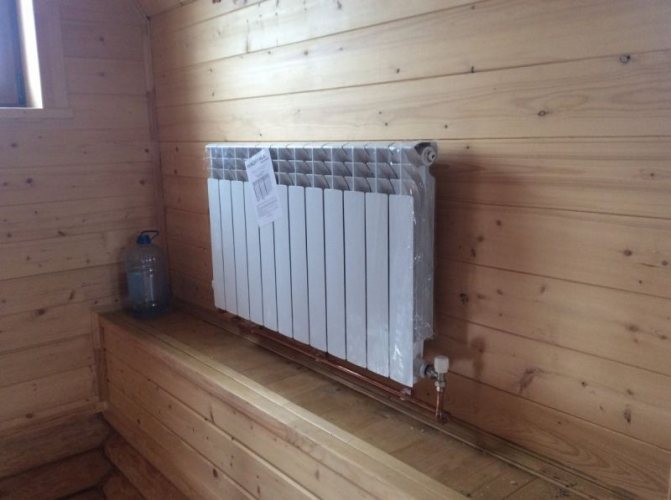
The radiator, inside which the heat exchange process is regulated, is at the same time a device for connecting the meter. To avoid problems during its installation, invite a specialist. However, you will have to pay an additional amount for the services of the master. A common house heating meter is installed in the radiator: this way it will be easier for you to take readings.
The device of the heating common house meter.
An individual type counter is bought and installed in the apartment by the owner. He pays for everything: the device, the services of the master, receipts. That is, the heat meter belongs to him personally, he is fully responsible for it. An ordinary such device is an ideal solution in case of refusal of a common house meter. The presence of this device greatly simplifies your life: so you will be calm for the honesty of paying for heating. Therefore, it is necessary to install a heat meter, even if the neighbors are against the common system.
There are some difficulties in installing an individual meter. For example, if the wiring in your house is vertical, then the work scheme takes place in several stages, since there is no central part of the heat supply. That is, it is necessary to introduce a riser into all rooms of the apartment.
The problem is solved by attaching the heat meter to the radiator. The radiator regulates the process of heat transfer, and the fixed device regulates the amount of heat produced. At the same time, the counter works efficiently and for a long time. The price of a heating meter in an apartment is much more expensive, since it is considered more reliable and has a guarantee from the manufacturer.
Meters and savings
The installation of devices does not yet guarantee a real reduction in the fee for the service.What needs to be done to reduce the amount in payments? Having mounted, apartment metering devices, in conjunction with control valves, you will receive and pay exactly as much as you need.
With this approach, your dependence on the actions of housemates will be lower.
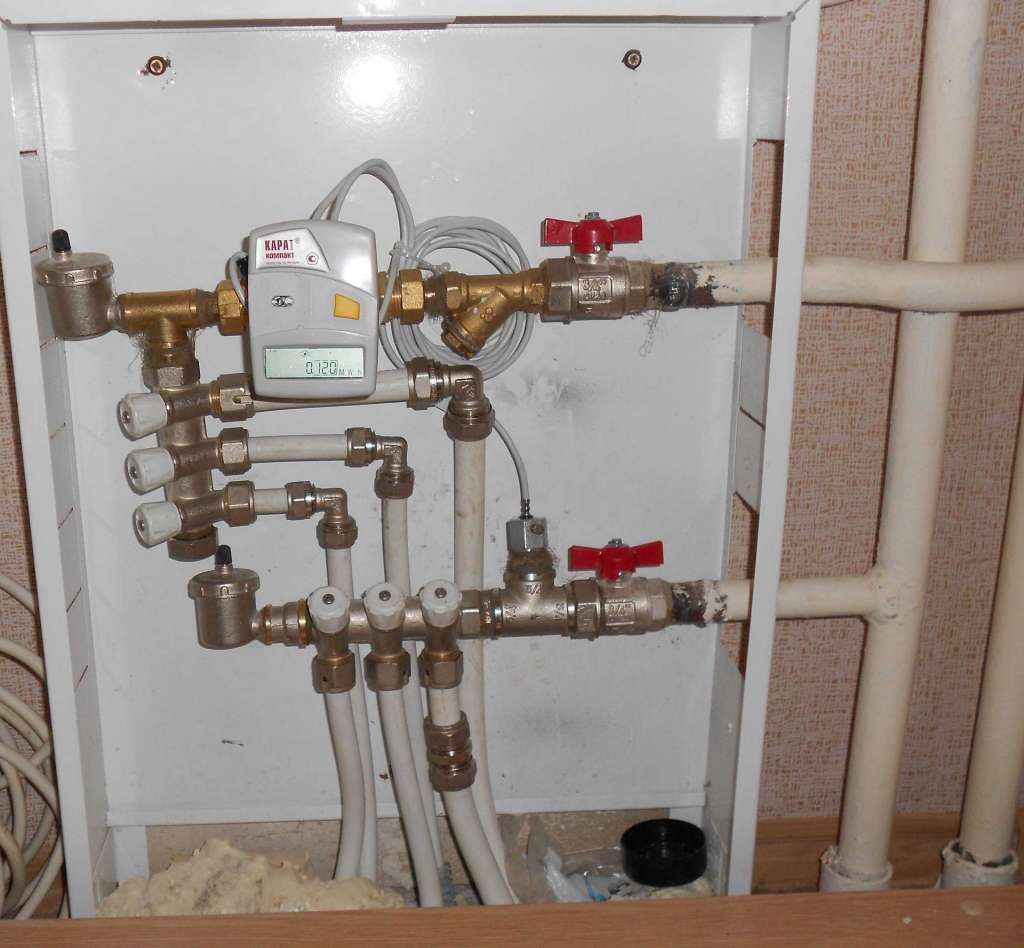
A practical scheme for installing heating meters:
- A metering device is placed at the branch of the common riser. These works should be carried out only by professionals and sealed by specialists from the management company.
- Thermostats are installed at radiators. With the help of them, the supply of coolant is regulated. If there are no funds for such a solution, then a conventional valve can also be installed. Remember that screw versions are not desirable. Because the gasket can close the pipe at an unexpected moment, which will lead to a decrease in the temperature in your apartment.
- Ideally thermostats should be mechanical or electronic. The essence of their work is simple: they have a temperature sensor, which is located outside the zone of air flows ascending from the battery. After proper configuration, they will provide such a system throughput that is necessary to maintain the programmed air temperature in the apartment.
What actions can be taken by the owners of premises equipped with a standing heating system? Installing equipment that regulates the supply of coolant to each battery is very expensive. Such a project is unlikely to pay back the initial investment. Do not forget about the need for regular maintenance of these facilities. The owners can help the installation of electronic thermometers. They are also called heat distributors.It produces a permanent record of the temperature of the air and the surface of the battery.


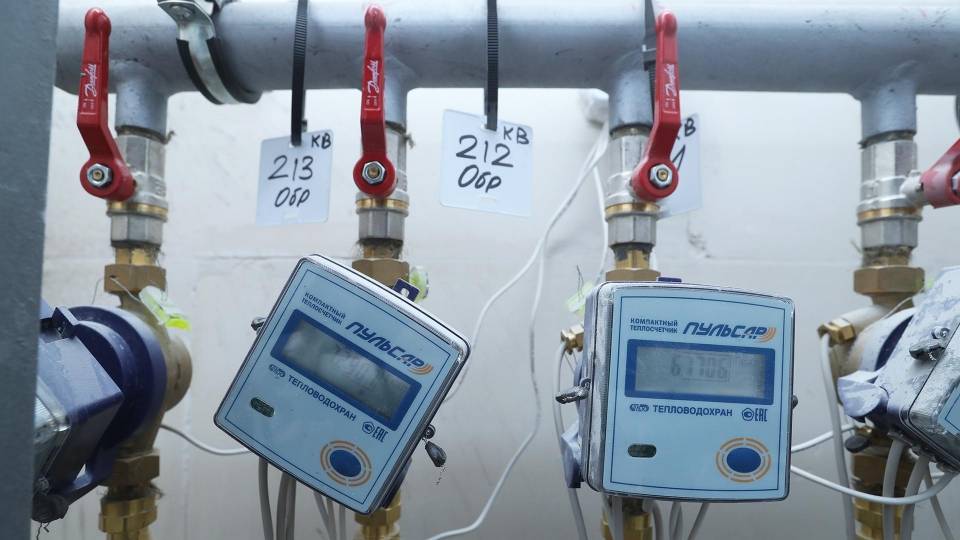
The cost of such a device is low (about 1000 rubles). You need to mount it directly on the radiator. There will be a good incentive to save heat, since payment will be for the resource actually received.
 Heating system in an apartment building Heat meters for an apartment building How to change the management company in an apartment building
What are the types of devices
Each heat meter is a complex of devices, which includes sensors, units responsible for recording the consumed heat, and all kinds of converters that work with pressure, flow and resistance indicators of the heat carrier.
The manufacturer sets the complete set of the counter and they differ depending on the model. The most common are ultrasonic and mechanical devices, while vortex and electromagnetic devices are practically unpopular due to their complexity and high cost.
There are also calculators and distributors of thermal energy that do not need to be built into a thermal circuit; such devices can be used with absolutely any circuits.
| Type of | Peculiarities |
| Mechanical | The simplest of the types of construction, therefore, its price is quite low and is at the level of 9-10 thousand rubles. This is a device with wired temperature sensors, a water meter and an electronic unit. A working element is a part that rotates when the coolant passes through the device, and it is the number of revolutions that sets the volume that has passed through the device. Two thermometers are placed on the supply and return pipes, and this can be done both vertically and horizontally |
| Ultrasonic | The amount of media consumed in this type of device determines the ultrasonic signal due to the emitter and receiver, while they are mounted on a horizontal pipe, but with a certain distance. The emitter signal travels through the water and reaches the receiver, and the time is calculated by the speed of the water in the circuit. Ultrasonic samples can regulate the flow in some variations, but this is the lot of advanced models. |
| Calculators and distributors | These instruments measure relative heat inputs and consist of thermal adapters and two sensors. Once every three minutes, the sensors measure the temperature, being installed on the battery and in the room, while displaying the difference in values. The information received is shown on the display. These devices are programmed in advance for the coefficients and power of the radiator, and as a result, the heat consumption indicator will be displayed in kilowatt-hours |
Special cases
In some cases, the procedure for calculating heat indicators becomes more complicated.
How to calculate indicators if payments come only during the heating season
Most often, payment methods are determined by the supplier company itself (exceptions for HOA are possible). Some companies provide the opportunity to pay part of the amount for heating in the summer. Features of payments for heating in the summer season:
- Unable to authenticate data for heat. The amount is distributed evenly, which means that the amount for spending in summer and winter is the same.
- You can choose an additional payment period yourself (then the amount of the periodic payment will be higher).
- By paying the entire amount at one time, the tenant will protect himself from a price increase, as he bought the body at a low rate.
The house does not have a common house heat meter
If a common metering device is not installed in the house, then the calculations are made according to the old algorithm of 2012, when the readings from all meters are summed up.
Houses without a control device are not uncommon. This is not due to the negligence of tenants or the head of a housing cooperative.
Gas companies do not always meet the needs of residents and reject some of the meter installation projects, as it is beneficial for them to round the amount up and receive payment at an increased rate. Especially if the meter has a non-standard configuration and does not comply with SNiP standards.
There is a common heat meter, apartment heating meters are not installed in all apartments
Difficult situation that may require manual calculation. If the meter shows data for each apartment separately, the problem is settled, and if not, you will have to count manually. It is impossible to simply divide the amount between all apartments, since each will consume a different amount of heat.
The calculation can be done if:
- Heating was paid earlier. Then you need to calculate how much heat has already been supplied, how much is left.
- If the tenant has a standardized tariff, according to which a certain amount of heat energy is allocated to him every month.
- If a heating protocol has been maintained since the beginning of the heating season (heating time, downtime periods).
All apartments are equipped with individual heat meters
From the readings of the total meter, you need to subtract the sum of all residential apartments. Divide the remaining number equally between all apartments (if they match in area).So we get the amount of payment for each apartment. To eliminate the chance of error or simplify the calculation procedure, you need to seal the counter.
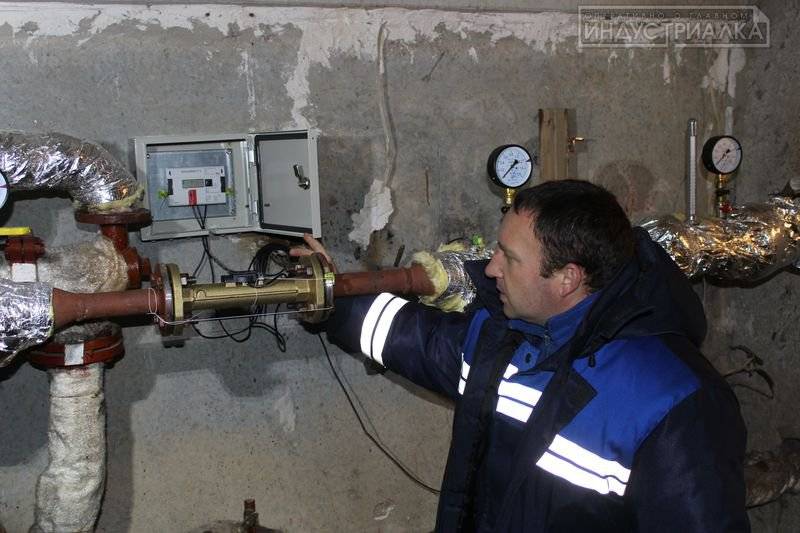
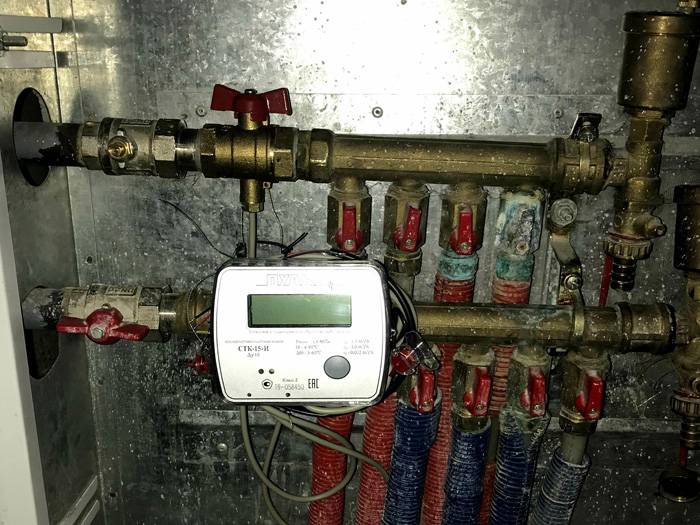
Photo 2. Individual electronic type heating meter. The device is installed on heating pipes.
Heat payment in an apartment building where more than 50% of the apartments are equipped with distributors
A common house meter processes data from all apartments, but those that have individual meters will be calculated faster, and apartments without it will undergo additional verification.
Difficulties in the control procedure
A significant disadvantage is that when installing the meter, it is not possible to accurately calculate the heat, so it will show the same data for both a small battery and a large segment, although several sections will generate more heat. In addition, to calculate using this method, it is necessary that 75% of the residents install thermostats, otherwise the calculation will be incorrect.
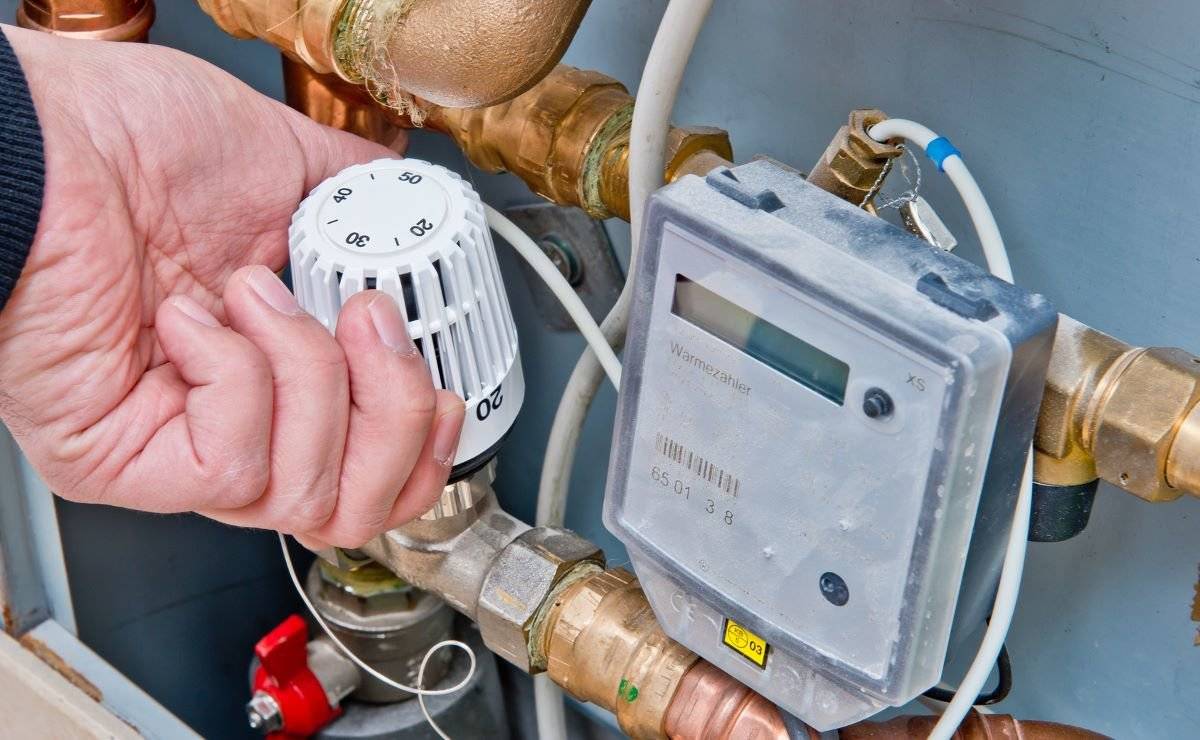


Attention! Thermal insulation will help reduce heat loss, but not the current tariff, since the sensor measures data on pipes, and not on the entire room. However, by installing isolation, the service fee will decrease, because it will be possible to pay a lower tariff
In order not to calculate the cost of services every month, the management organization will present preliminary calculations for heat, based on the performance of appliances and statistics on the supply of resources. The values are recalculated twice a year, and depending on the difference between the estimated figures and the actual ones, adjustments are made.
Payments are made throughout the year
In this case, the calculation of indicators also has its own characteristics.
The house has no common house or individual heat meters.
In this case, payment will be made at the standard rate, regardless of how much energy the tenant has used.
The amount of payment will be distributed in equal parts, which can be paid throughout the year.
There is a general building heat meter, apartment heat meters are not installed everywhere
A monthly fee will be charged, according to the average of the meter and the heating tariff. In other words, without individual metering devices, the tenant will overpay by an average of 20%, since tariffs are calculated with a surcharge and a safety factor of 1.2.
Legal installation procedure
It is possible to install heat meters only after agreement with the management company, and for this there is a certain procedure, after which installation will be possible.
Therefore, the following steps should be followed:
| First you need to write to the house management company | Which can give permission for the installation of the meter, and copies of documents are attached to the application. They must confirm the ownership of the apartment, as well as the technical passport of the apartment |
| Next, the company provides specifications | Which must be observed when installing the meter |
| The next step implies that an individual heat metering project is being developed. | And the technical documents for the installation are being drawn up, this is the task of the organization that officially received the authority to design |
| Made documents | Coordinated with the enterprise supplying heat |
It is not necessary to buy an energy meter before the project is approved, since a refusal may well follow the application.
Having all the documents, you can make a purchase by choosing any heat meters for heating in the apartment that meet the established standards.
Be sure to take from the seller both cash and sales receipts, operating instructions, warranty card and of course a copy of the certificate of the proper quality level.
When choosing a company that will carry out the installation, you should make sure that it has a license for such activities, and you can even make a comparison based on certificates, Unified State Register of Legal Entities and SRO approvals.
In addition, it is also advisable to check the qualifications of installers in advance, taking into account the list of equipment used by them, the list of the work that they perform and whether they have an installation kit. Guarantees for work must be given if the management company does not accept the results or has comments
Guarantees for work must be given if the management company does not accept the results or has comments.
In addition to the meter itself, it is also necessary to ensure the presence of additional devices, for example, a bypass, thermostats and filters for pipes and radiators, tees and all other necessary technical devices.
Also, the equipment must be sealed on a mandatory basis and the initial readings must be recorded, this is done on the call of a representative of the enterprise - the heat supplier.
Video: principle of operation




Mounting
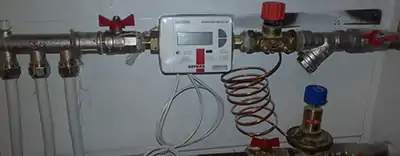
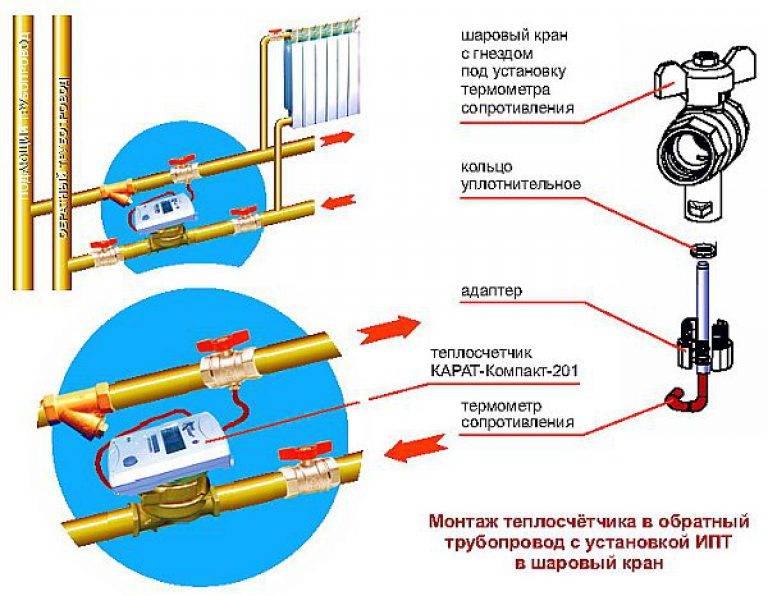
Before installing the meter, a high-quality flushing of the pipeline is required in order to remove blockages. Then the device is fixed on a horizontal or vertical section of the pipe.
If there are difficulties regarding the coincidence of the diameters of the pipe and the meter channel, adapters are used. The supply device is located correctly if the arrow on it coincides with the direction of fluid flow.
New gaskets and seals are required to prevent leaks.
Attention! When installing the equipment, water in the heating system must be completely absent, and the shut-off valves must be closed. Ball valves are fixed before and after the device
Thermal converters are installed according to the principle: one - in the measuring cartridge, and the second - in the sleeve using heat-conducting paste.
Which heat meter to choose in an apartment
There is a wide range of heat meters for a variety of conditions. It also considers individual meters that are suitable in terms of their throughput, size and design for use in an apartment.
Mechanical
Some of the simplest and, accordingly, the cheapest counters are mechanical devices. Still such counters are called tachometric. Outwardly, they resemble ordinary water meters, only with two wires, at the ends of which there are thermal sensors that determine the temperature difference in the supply and return pipes. The meter itself consists of two parts, a mechanical water meter with blades that crashes into a pipe and an electronic calculator unit.
For such a device, it is imperative to use a coarse filter.
An example of inexpensive mechanical devices is the Gefest counter. The price of the cheapest device, suitable for installation in small apartments with a coolant flow rate of not more than 0.6 cubic meters per hour, does not exceed 4,000 rubles.There are also more productive models with a throughput of up to 1.5 cubic meters per hour and a price of 4,500 rubles. There are also modifications with a pulse output and a radio channel for connection to an automatic data collection system.
Ultrasonic
The principle of operation is similar to the counter of the previous type, but instead of mechanical blades, an emitter and a receiver are used here, which are placed from each other at a strictly specified distance, and with the help of an ultrasonic signal, the coolant flow is measured.
An inexpensive representative of ultrasonic meters is the ECO NOM meter. For example, model ECO NOM STU-15.2 QN-1.5 M3/H. The number 15 means the diameter of the pipe, there are other modifications, for example, for 20 pipes. 1.5 is the bandwidth, you can choose another suitable model, for example, with the number 0.6 or 2.5.

Calculator (Distributor)
Calculators and distributors are used in small apartments or in apartments with vertical wiring of the heating system. The difference between them is that the calculator has more options, for example, it can show the heat consumption in kWh on its screen.
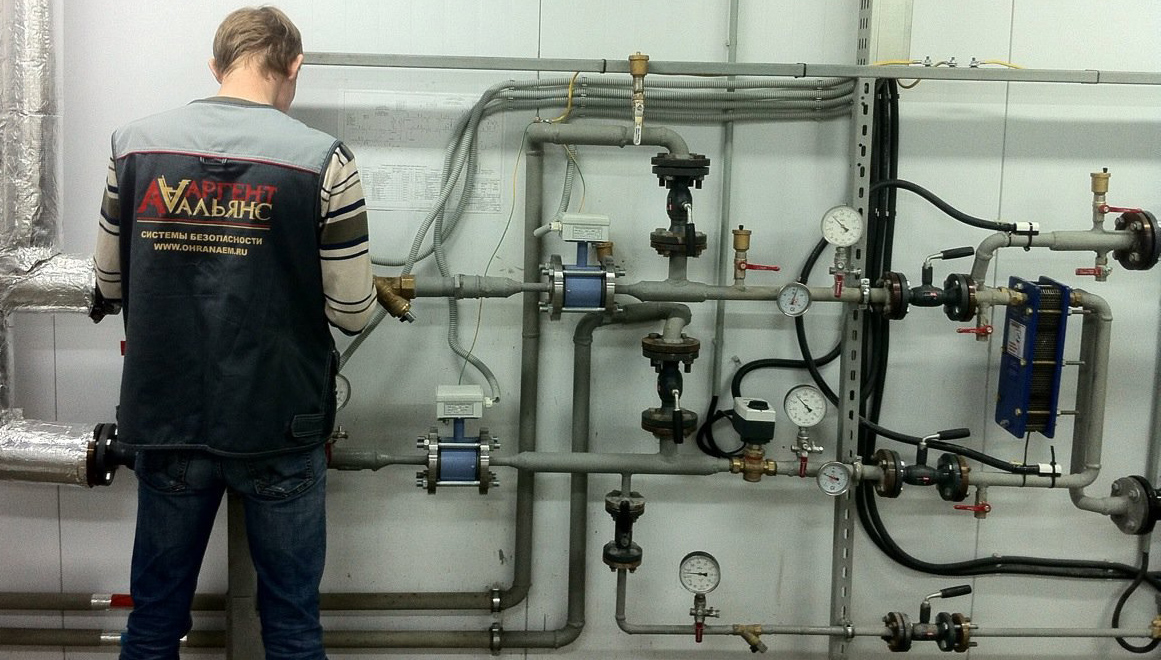
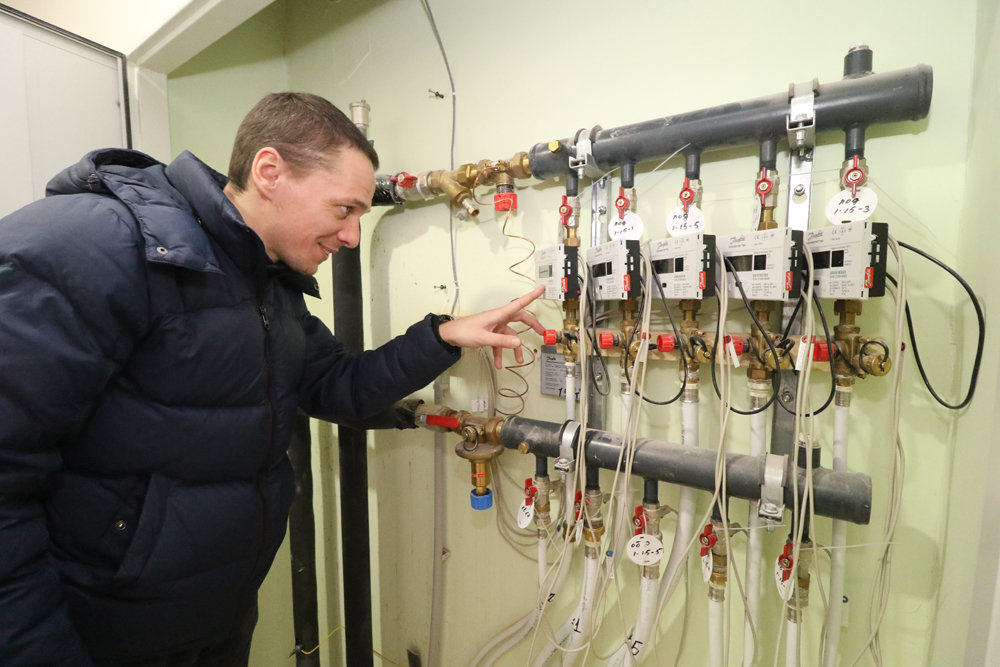


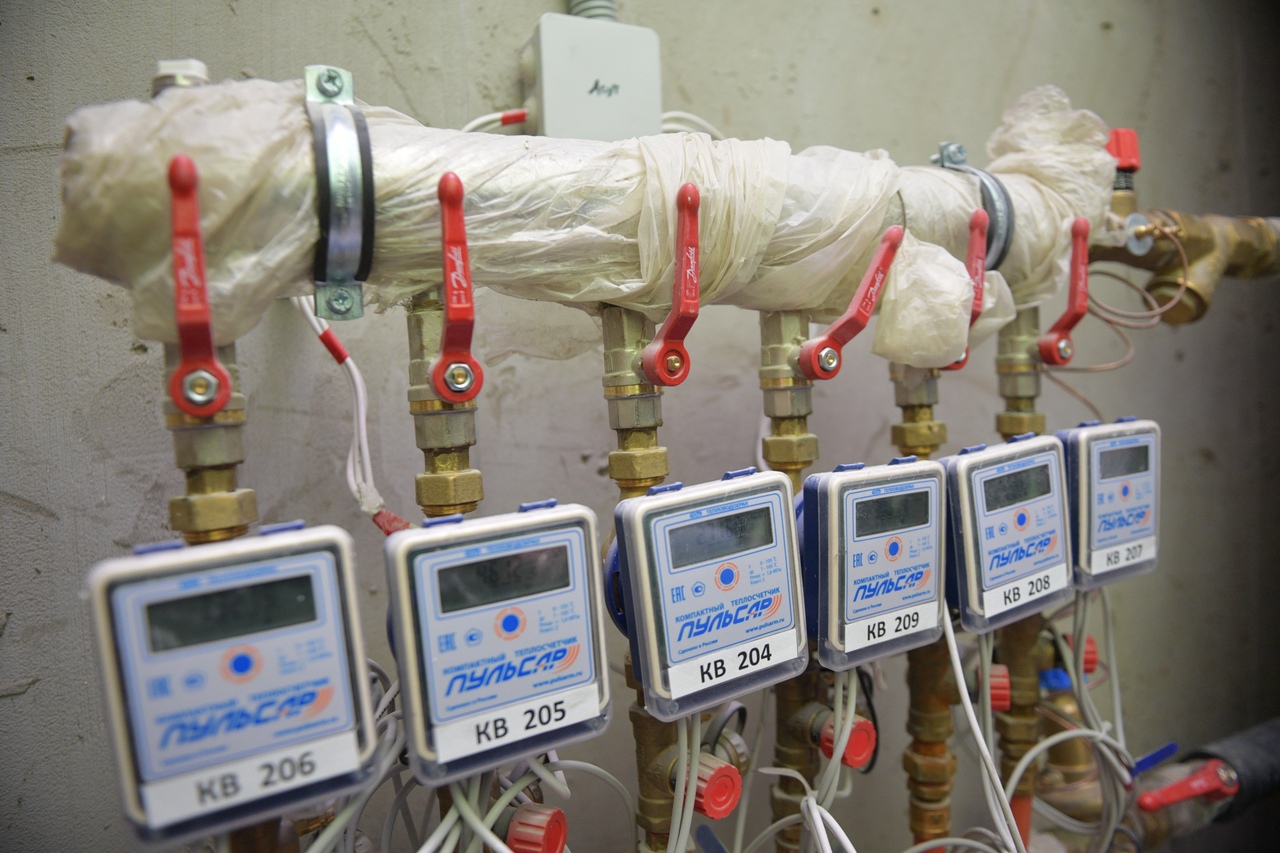

The devices do not require insertion into the heating system, they are simply installed on each radiator and configured accordingly, based on the type of battery. The device consists of two thermal sensors that measure the temperature of the battery and air in the room, and an adapter that performs calculations. In order not to manually combine all readings from all batteries, a controller can be purchased for some models of calculators, which wirelessly sums up the readings of all calculators.
Despite the ease of installation of the calculator, it should be installed by a professional who will correctly configure the device for specific conditions of use.
For example, the PULSE “URT-100” distributor. It costs 1000 rubles and is designed to work with a coolant with a temperature of 35 to 105 degrees Celsius, which means it is suitable for measuring heat in the heating system of an apartment building.
The device is attached between the sections of the radiator using fasteners. On the case there is an LCD display that displays information about the current consumption of electricity. The meter also maintains a data archive. Remote data collection is possible.
Results
The Law on Energy Saving obliges residents of apartment buildings to install common heat meters at their own expense, with the exception of houses that do not meet technical capabilities.
Both the UK and the RSO take part in the installation procedure of the ODPU, the former organizes, and the latter is responsible for the installation of the device. In case of failure to fulfill their obligations, companies will be fined, and residents will receive a receipt for payment for heating with a multiplier. Time will tell how expedient the compulsory installation of collective meters is, but the effect of the use of ODPU is undeniable: heating costs are reduced by up to 30%.