- Adjustment of radiators Heating system
- Adjustment of radiators
- Connection Features
- Ways to connect radiators
- System types
- Choosing a faucet for a heating radiator
- mechanical valve
- ball valve
- Mayevsky crane
- Flush tap
- Throttle valve with thermostat
- How to install a tap on a battery
- Work procedure
- Locking devices
- Mayevsky crane
- What can be the binding of polypropylene pipes
- The need to adjust the heat transfer
- How to install
- wall mount
- Floor fixing
- Heating radiator piping options
- Binding with one-way connection
- Binding with diagonal connection
- Strapping with saddle connection
- Purpose. Characteristic
- Functions
- Requirements
- Types of corner cranes
Adjustment of radiators Heating system
On this tab, we will try to help you choose the right parts of the system for giving.
The heating system includes, wires or pipes, automatic air vents, fittings, radiators, circulation pumps, expansion tank thermostats heating boiler, heat control mechanism, fixing system. Any node is unambiguously important.
Therefore, the correspondence of the listed parts of the structure must be planned correctly.The cottage heating assembly includes various devices.
Adjustment of radiators
Temperature control in batteries used to seem like something out of the realm of fantasy.
In order to reduce the excessive temperature in the apartments, a window was simply opened, and in order to prevent heat from escaping from a cool room, the windows and all the cracks were sealed and tightly hammered.
This continued until spring, and only after the end of the heating season did the appearance of the apartment acquire at least a slightly decent look.
Today, technology has come a long way and we no longer worry about how to regulate heating batteries. New, more efficient and progressive methods of controlling the temperature regime in the room have appeared, and we will talk about them in more detail below.
Ordinary taps that are mounted in batteries, as well as special valves, can help partially solve the problem. By blocking the access of the hot water flow to the system, or reducing it, you can easily change the temperature in your home.
An even simpler and more reliable system is the use of special automatic heads. They are mounted under the valve, and with their help (namely, using a temperature sensor), you can adjust the temperature in the system.
How it works? The head is filled with a composition that is very sensitive to changes in temperature, so the valve itself will be able to react to an excessive temperature increase and will be able to close in time, preventing the batteries from overheating.
Do you want a more modern and innovative solution that will tell you how to regulate the temperature of the heating battery, and even practically not participate in this process? Then pay attention to these two ways:
- The first option involves mounting one radiator in the room, which is closed with a special screen, and the temperature in the system is regulated using devices called a thermostat and a servo drive.
- Next, consider a method for regulating the temperature in a house with several radiators. The features of such a system are that you will have not one, but several zones for temperature control. Also, you will not be able to make the adjustment valves enter the horizontal pipeline, and you will have to equip a special service niche, which will include a special supply pipeline with mounted shut-off valves, as well as a “return” with valves for the servo drive.
Note that there are two main methods of adjustment, the advantages of which are obvious:
- The ability to control the temperature level of the water entering the system by a special automatic unit, which bases its work on the indicators of sensors built into the system;
- Mounting a device in the system that will control and regulate the temperature not in the entire system, but in each individual battery. Most often, factory regulators are used for this, which are mounted on the batteries themselves.
After weighing all the features of your room, choose the method that suits you best.
Connection Features
Ways to connect radiators
When installing heating systems in private homes, the following connection methods are used:
In this case, the supply pipe is connected from above, and the return pipe is connected from below to the same section. This heating battery connection scheme allows the radiator to heat up evenly.However, if the accordion has a large number of sections, then significant heat losses will occur, so it is better to use other connection options.
Saddle and bottom
This method is an excellent option for cases where pipes run through the floor. The connection is made to the nozzles located at the bottom of the structure, in opposite sections. The disadvantage of this method is only low efficiency, since heat losses can reach 15 percent.
It is used when connecting devices with a large number of sections. As you might guess, the inlet pipe in this case is connected from above, and the outlet pipe is connected from below, in the opposite section. This scheme for connecting heating batteries in a private house contributes to the uniform distribution of the coolant and maximum heat transfer from appliances.
Note! Using thermostat for heating parallel to the radiator bypass is required. This will allow you to adjust the degree of heating of the device.

Radiator connection diagram
As we can see, the methods of connecting heating batteries depend on a number of factors, such as the method of laying pipes, the power of the equipment, etc. In particular, the type of system is of great importance. We will talk in more detail about the types of heating systems below.
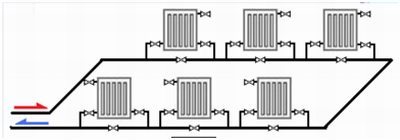
Scheme of a one-pipe system
System types
When installing heating systems, two schemes are used:
- Single-pipe - is the simplest, since the coolant circulates through one pipe, to which heating devices are connected in series. Its disadvantage is that it does not allow you to regulate the heat supply. Therefore, heat transfer corresponds to the design norm laid down in the design.This scheme is used in small systems, since with a large length of the pipeline and a large number of radiators, the devices will heat up unevenly.
- Two-pipe - its meaning lies in the fact that hot water flows through one pipe, and the cooled water returns to the boiler through another. The connection of heating batteries in a private house in this case is carried out, respectively, in parallel. The advantage of such a device is the uniform heating of the sections, as well as the ability to adjust heat transfer. Of the shortcomings, only the need for more pipes can be distinguished, respectively, the cost of the structure increases.
Scheme of a two-pipe system
It should be noted that, regardless of the type of system, connecting heating batteries with your own hands can be done in two ways:
- According to the vertical scheme - the heating device is connected to a vertical riser, from which wiring is carried out to the radiators.
- According to the horizontal scheme - the circulation of the coolant is carried out through horizontal pipelines.
The choice of the scheme for connecting heating batteries depends on the characteristics of the house. For example, if the housing contains several floors, then the connection is implemented according to the vertical scheme.
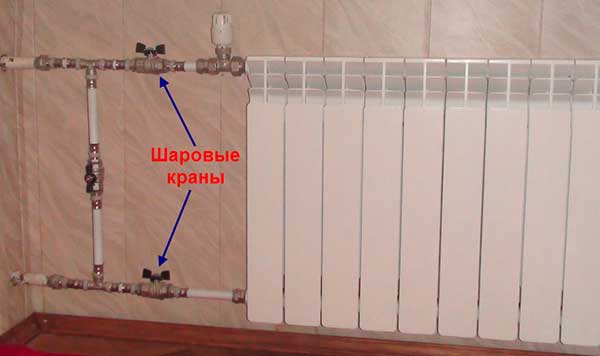
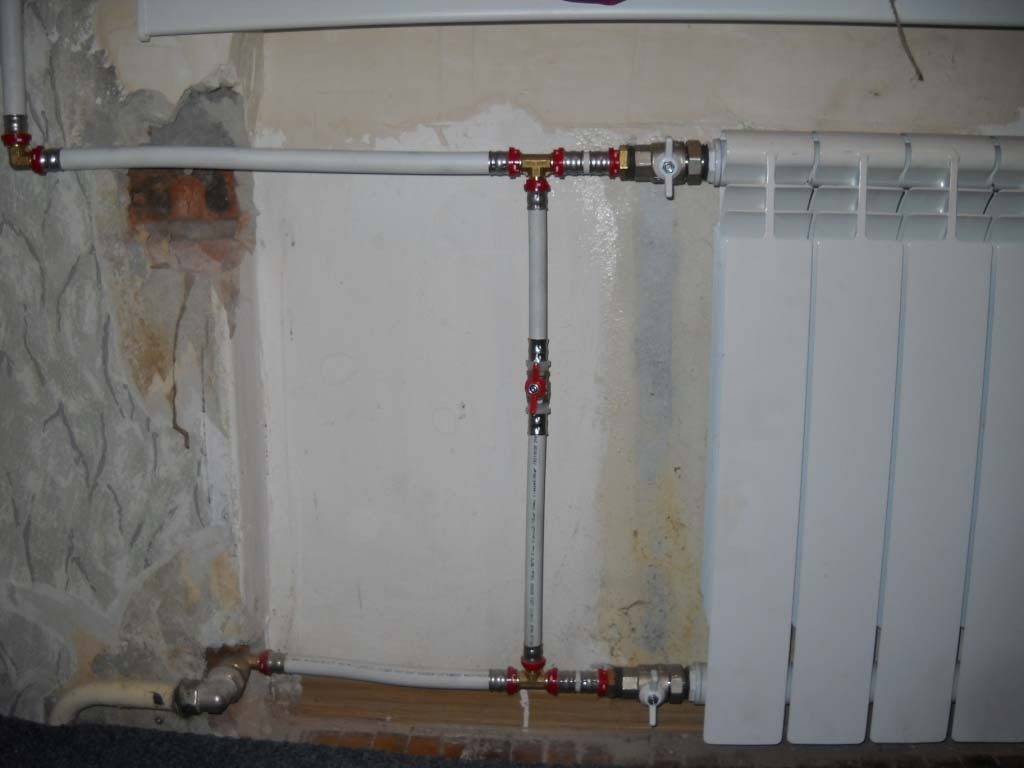
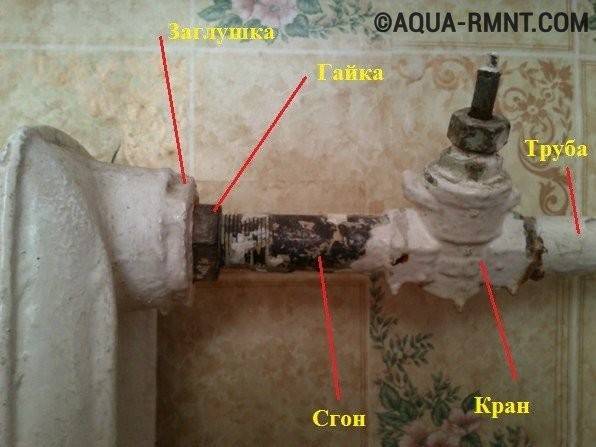
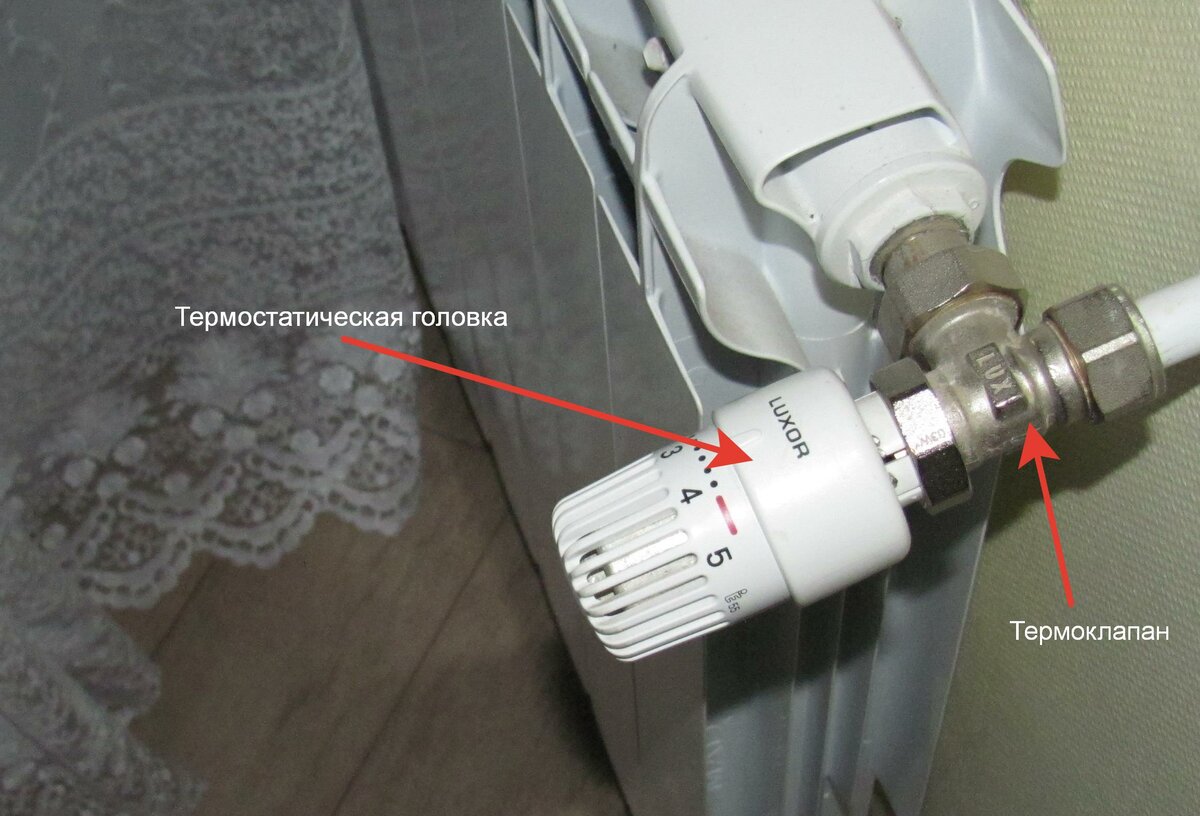
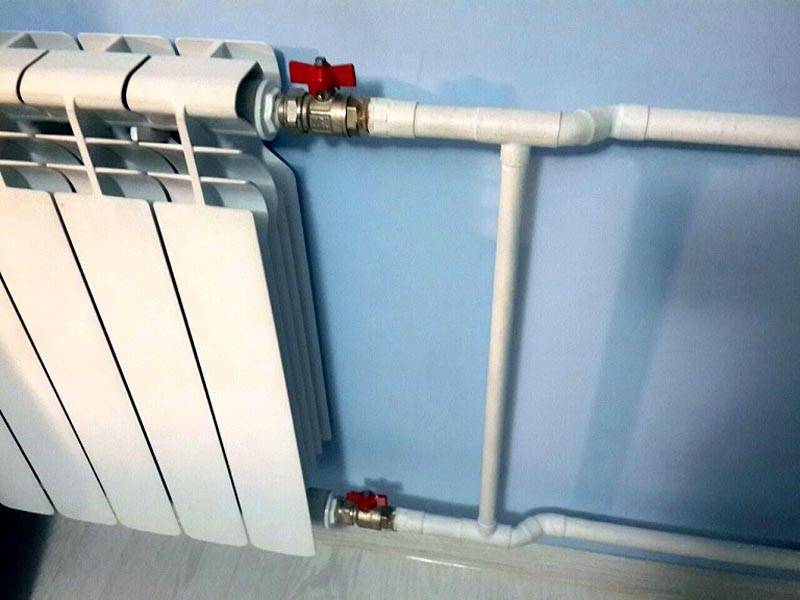
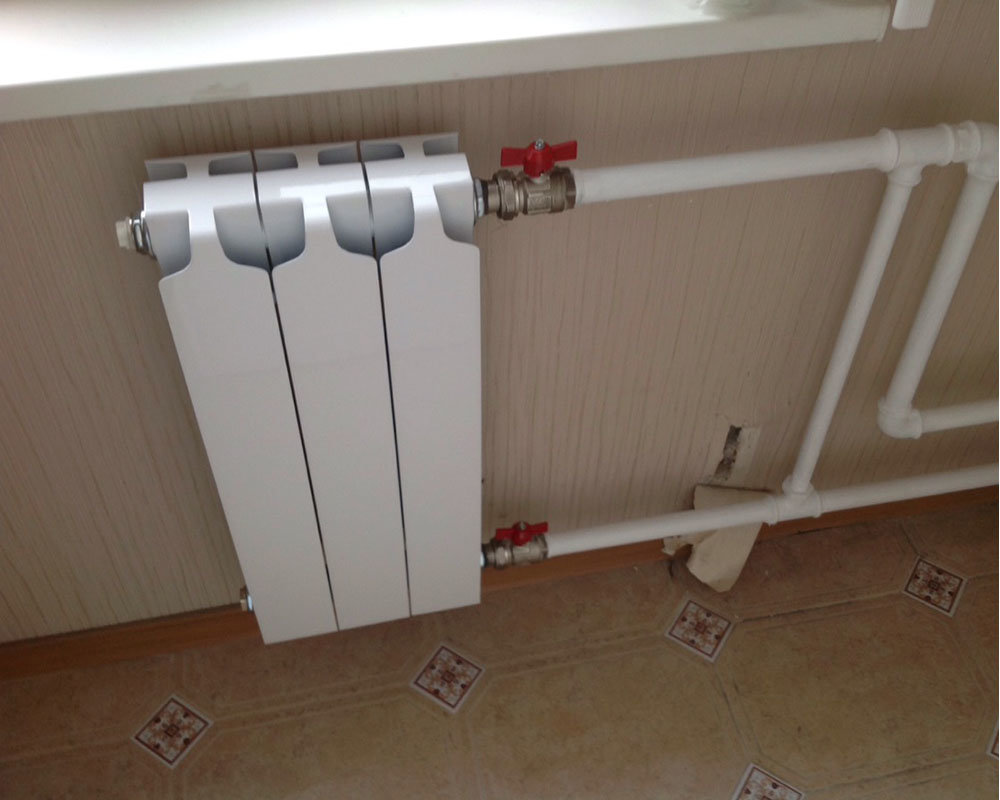
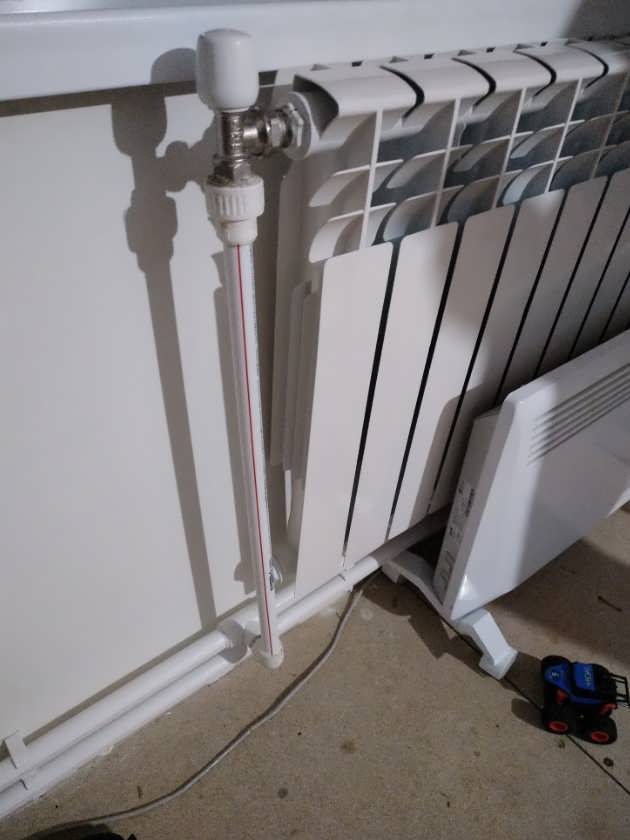
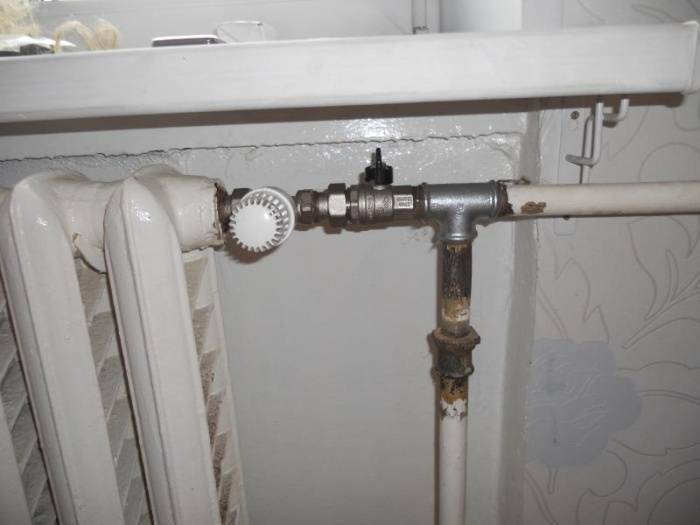
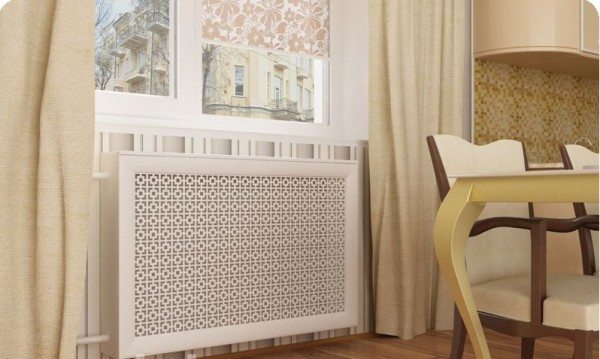
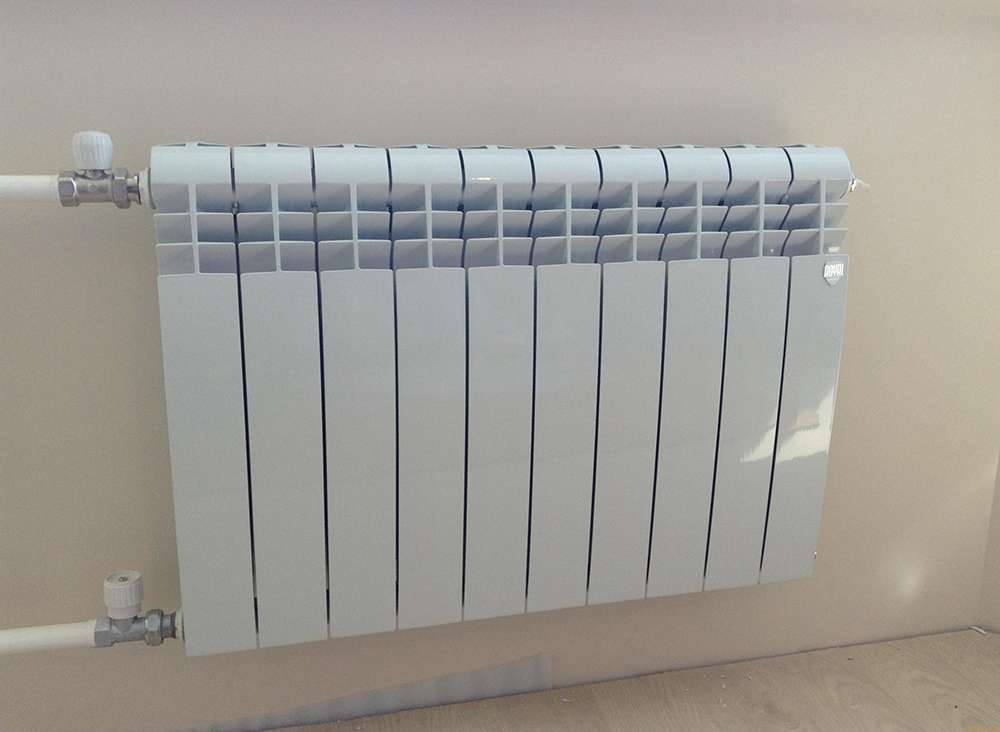
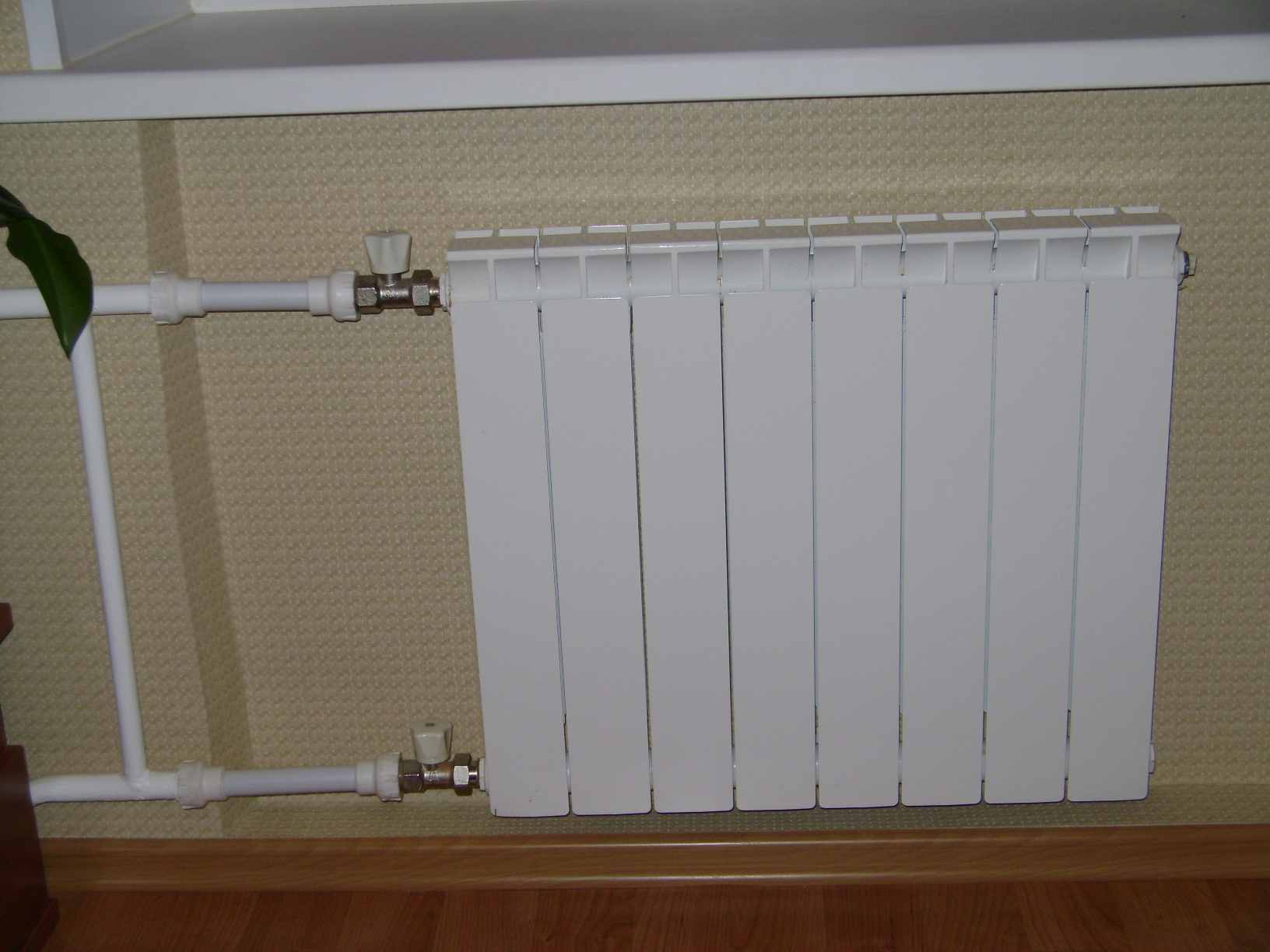
In the photo - a radiator located under the window
Choosing a faucet for a heating radiator
Deciding that the stopcock needs to be replaced, the person goes to the store. The range of these devices is quite wide, and you should not unconditionally trust the words of the seller when choosing a product. It is necessary to have at least minimal knowledge in the field of plumbing in order to choose the best option.
Consider the features of all cranes that are commercially available:
mechanical valve
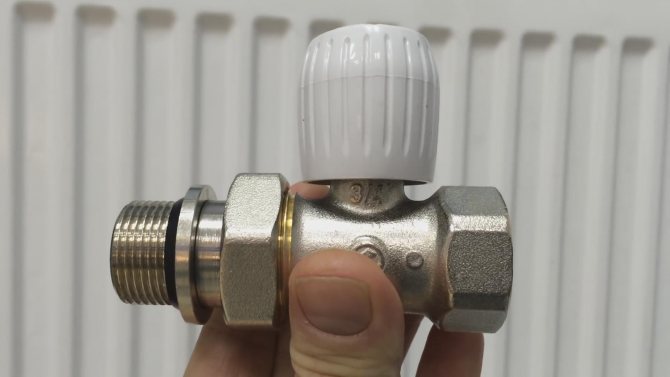
This is a classic locking mechanism, made in the form of a "lamb" on the thread. The principle of operation of this device is quite simple: when the “lamb” rotates, the locking mechanism is lowered. When the rod reaches its lowest position, the water supply to the coolant stops. Of the advantages, one can note the simplicity of design and the low cost of the product. The disadvantages include the rapid wear of the components. Professional plumbers do not recommend installing such taps in residential areas. They often leak, if the valve is not used for a long time, the stem may jam. In addition, during an accident, it will not be possible to quickly turn off the water supply.
ball valve
This is the most common locking mechanism today. It is these products that are installed in most apartments and private houses. Inside the device is a ball mechanism, which is driven by a handle mounted on top. The installed ball has a through hole. When the handle is turned, the hole falls along or across the pipe, blocking or opening the water. The advantages include ease of installation and operation. Among the shortcomings, one can note the fact that being in an intermediate position, the crane often fails.
Mayevsky crane
In fact, this is a threaded plug designed to bleed air from a heating radiator. It is a very robust design that is easy to install. In order to close or open such a valve, a stem is provided that rotates with a special key.
Please note that in some devices the stem does not have a lock, so it turns out completely.Insert it into place under the pressure of hot water is unrealistic
Flush tap
Steel plug, which is installed in radiators. To open this locking mechanism are used ordinary pliers.
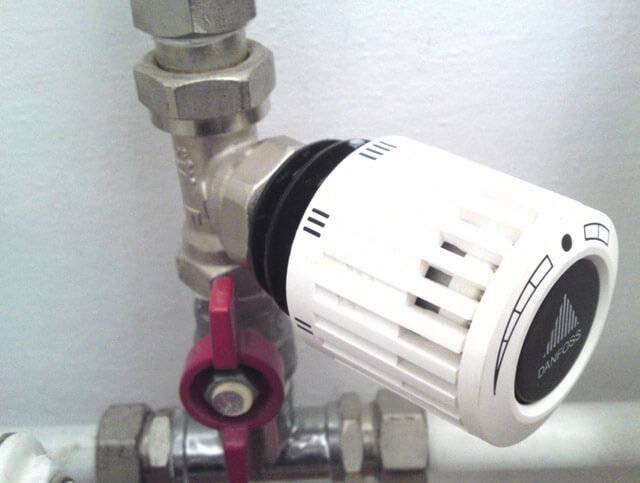
Throttle valve with thermostat
Quite a complex design with automatic adjustment of the water supply. Simple and reliable in operation, but expensive model.
How to install a tap on a battery
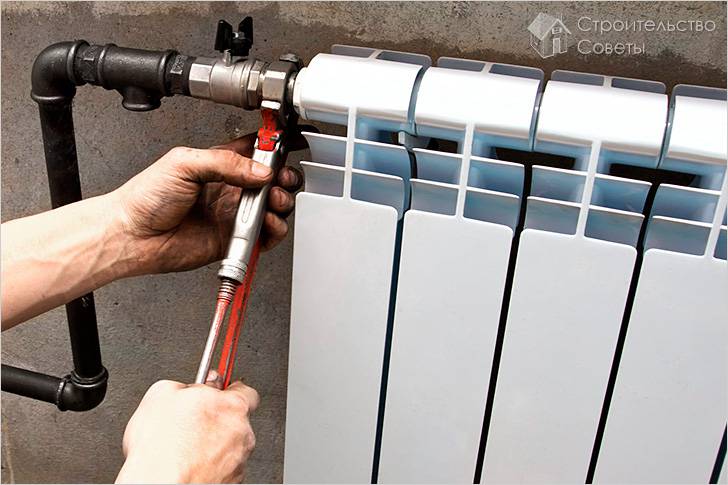
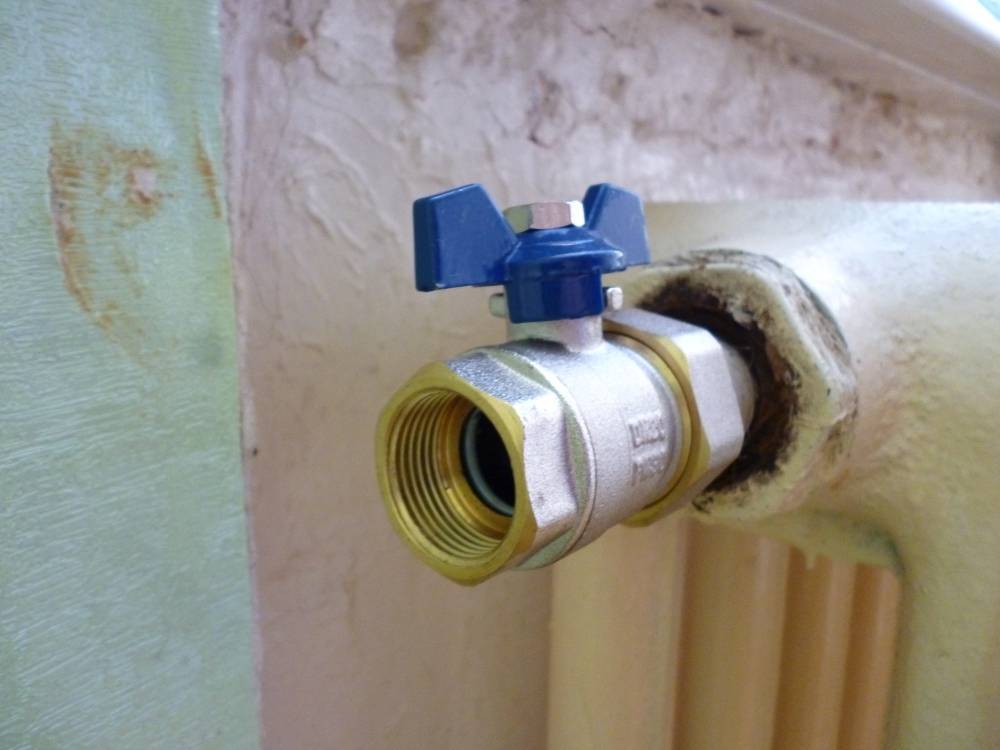
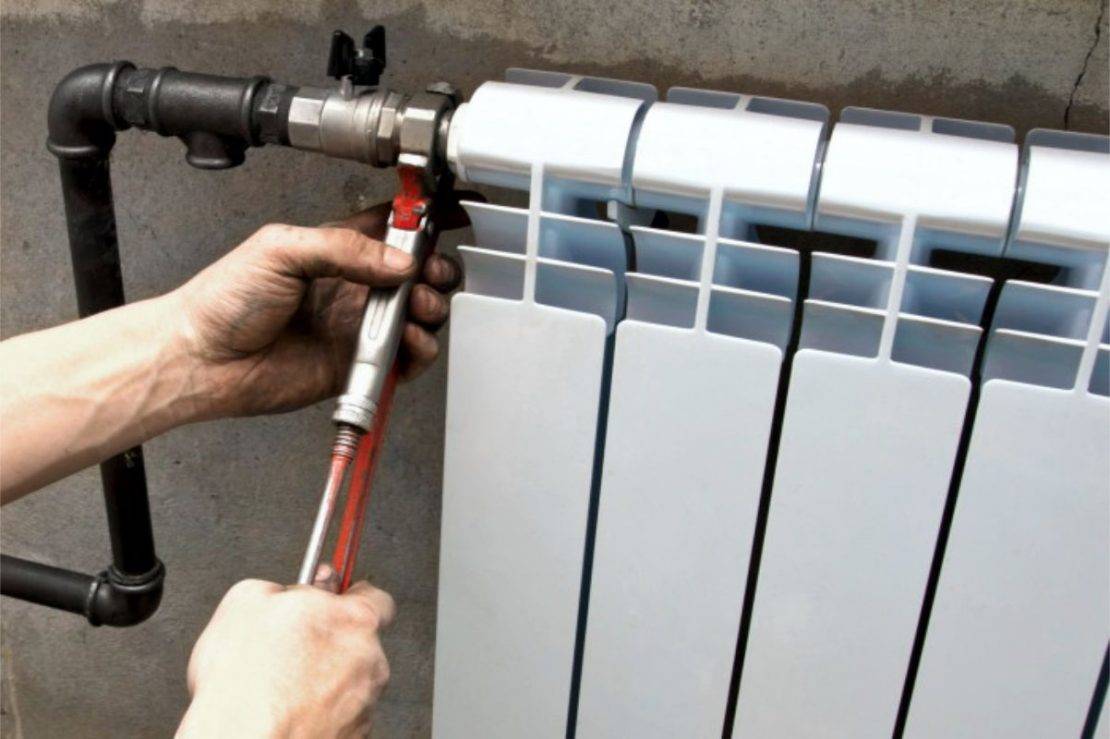
Most often (due to ease of installation), the faucet is installed on the radiator using a threaded connection or (as it is popularly called) "American". Such a device is a design with one or two union nuts. FROM them using a faucet pressed against the pipe.
Do not forget that all valves are installed simultaneously with the installation of the radiator. If this is done on an already existing battery, then the coolant must first be drained, and for this it will be necessary to block the heating riser. This service must be provided by the management company.
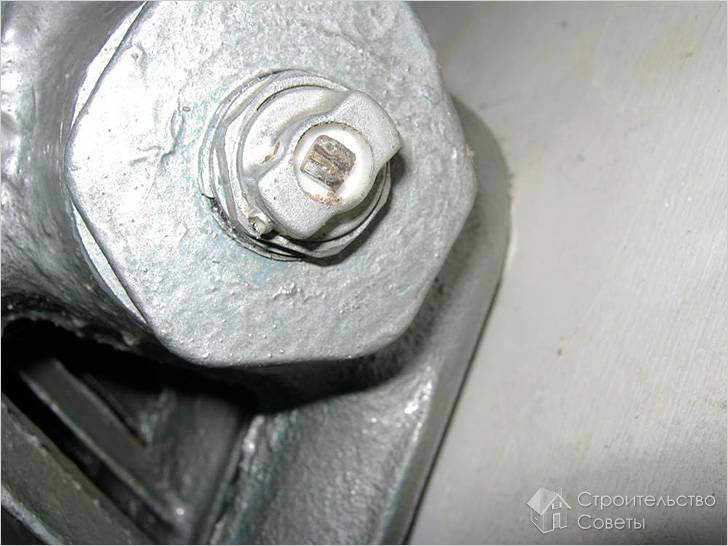
Mayevsky crane installation on a cast-iron battery is also not difficult. Before installation, make sure that the plug has the correct hole for screwing the device. The Mayevsky crane is installed in the end cap in the upper part of the radiator and on the side opposite from the inlet. If the plug does not have the right place for installation, then you need to buy another one or drill an existing one and cut a thread in it.
Before installation, close the heating riser (or close the shut-off valves at the inlet and outlet of the battery). Then you need to drain the water. After that, you can replace the plug and screw in the tap. In this case, it is necessary to ensure that the tap hole looks away from the wall and slightly down.So it will be more convenient to remove the accumulated air.
When installing any faucet, it is important to achieve complete tightness. For this it is better to use windings
When installing stop valves with the help of an "American", you can use the FUM tape, but only if the thread does not have sharp edges. If the thread design is not suitable, then ordinary plumbing tow can be used.
We also want to bring to your attention some articles that you may find useful:
- DIY battery screen.
- How to hide the heating battery.
- How to hide the heating battery.
Work procedure
To do it right replacement of heating radiators in the apartment, you need:
- Coordinate the alteration with the maintenance service.
- Purchase the necessary materials.
- Perform pre-assembly of nodes.
- Prepare tools.
- Arrange with the team (if you do not plan to do the work yourself).
- To issue an alteration in the housing office, to decide on the date of the work.
- Dismantle old radiators.
- Install brackets.
- Hang new batteries.
- Connect to heating pipes.
- Check system operation.
During the preliminary assembly of the units, all the necessary elements are installed: plugs, gaskets, Mayevsky taps, etc. In addition, you can mark up in advance in those places where the pipes will be cut off. In this case, you should use a plumb line and a level so that the new radiator becomes even.
If the supply pipes also require replacement, these elements must also be prepared: cut off pieces of suitable length, attach tees, etc. All this is done in order to quickly complete the installation after draining the water from the heating system.Such a measure will be more than relevant if the need to change old batteries arose during the heating season.
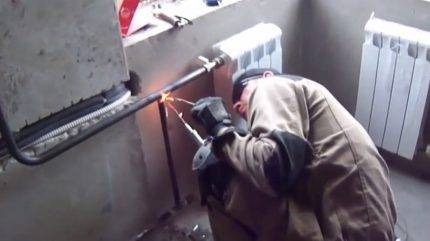 Welding is used to replace metal pipes. At the edges of the structures, threads will need to be cut to securely connect them to the radiator
The procedure for dismantling old batteries depends on whether the pipes also need to be replaced. If you want to save the supply lines, you will have to carefully unscrew the old battery
At the same time, it is important to keep the squeegee - a sufficiently long thread on the edge of the pipe. The radiator is fixed with a nut and a coupling that will have to be unscrewed
The procedure can be quite complicated. If the parts do not move, you can try to loosen the connection with anti-corrosion compounds. In the most extreme case, the radiator is simply cut off with a grinder. There should be at least 10mm of thread left. Burrs should be removed from it.
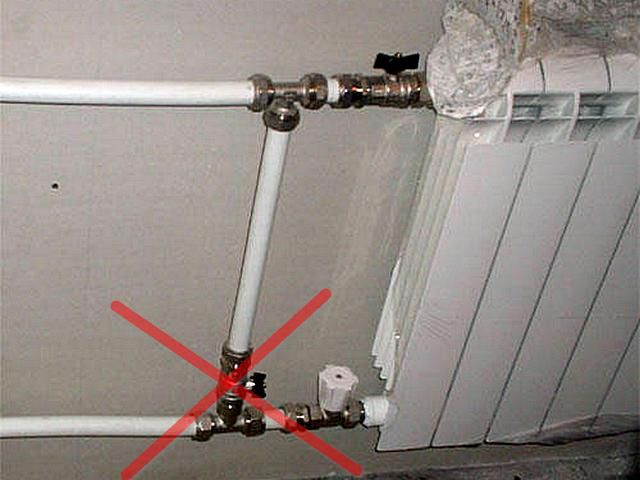
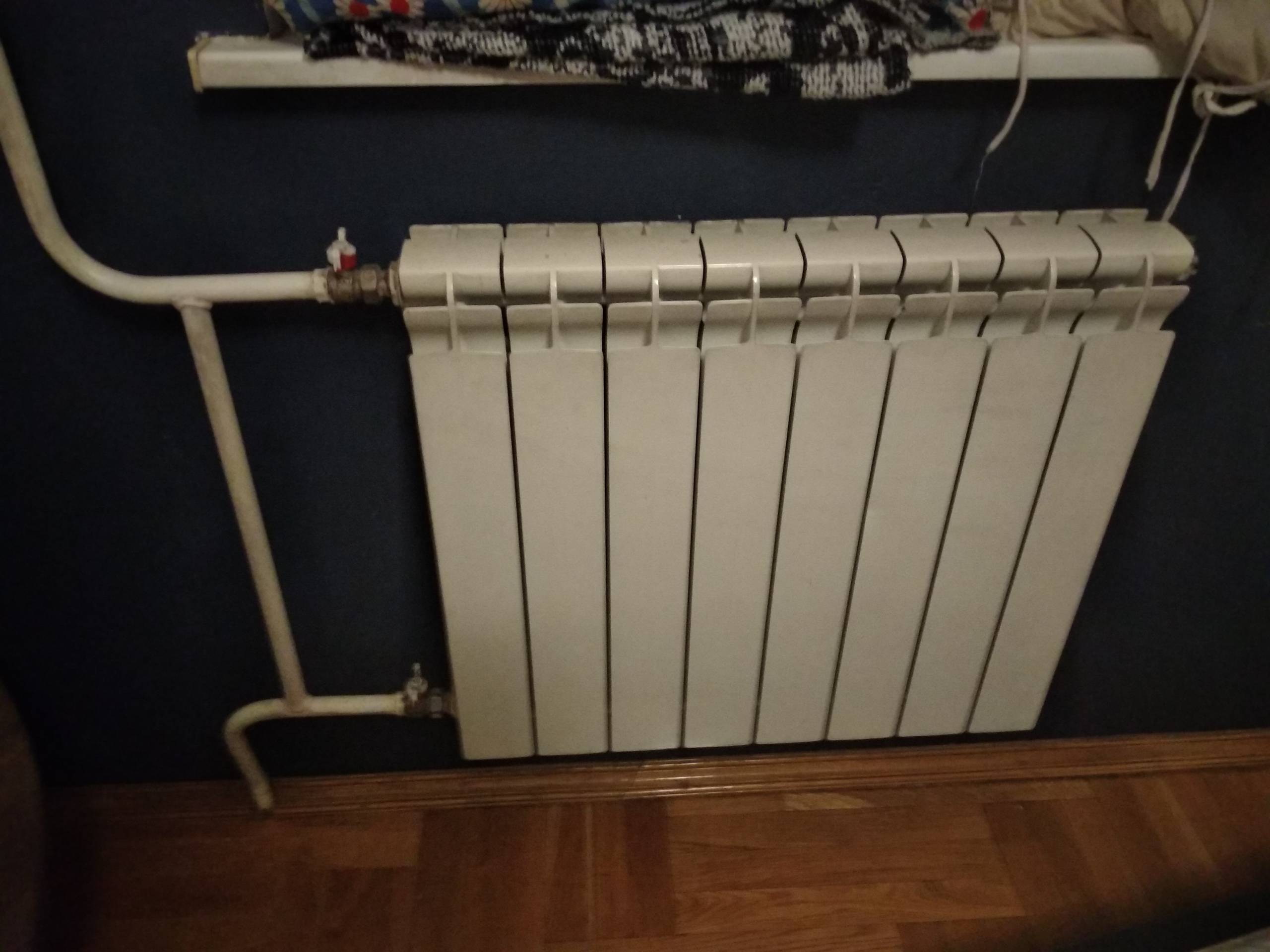
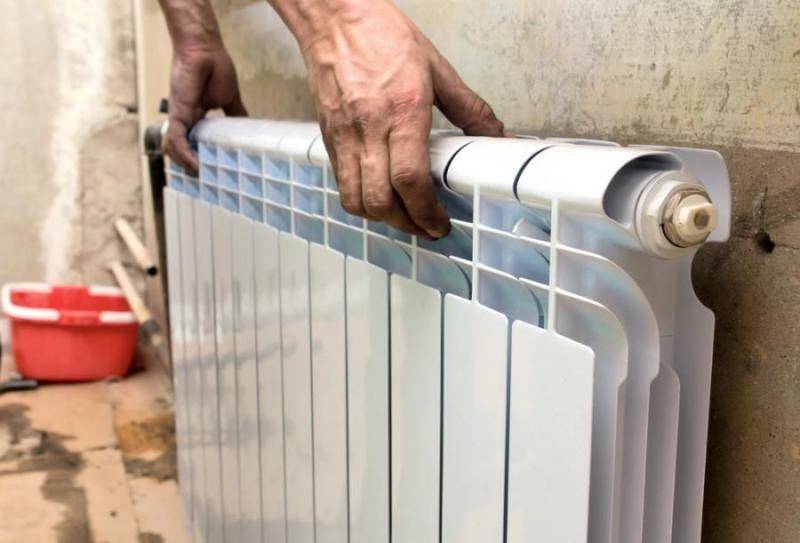
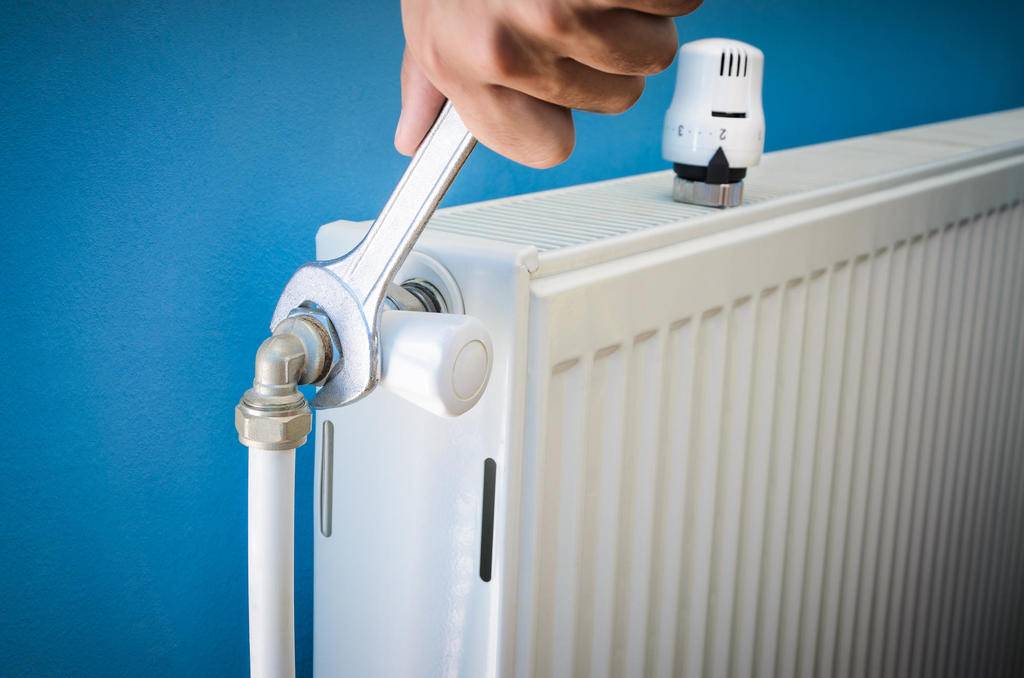
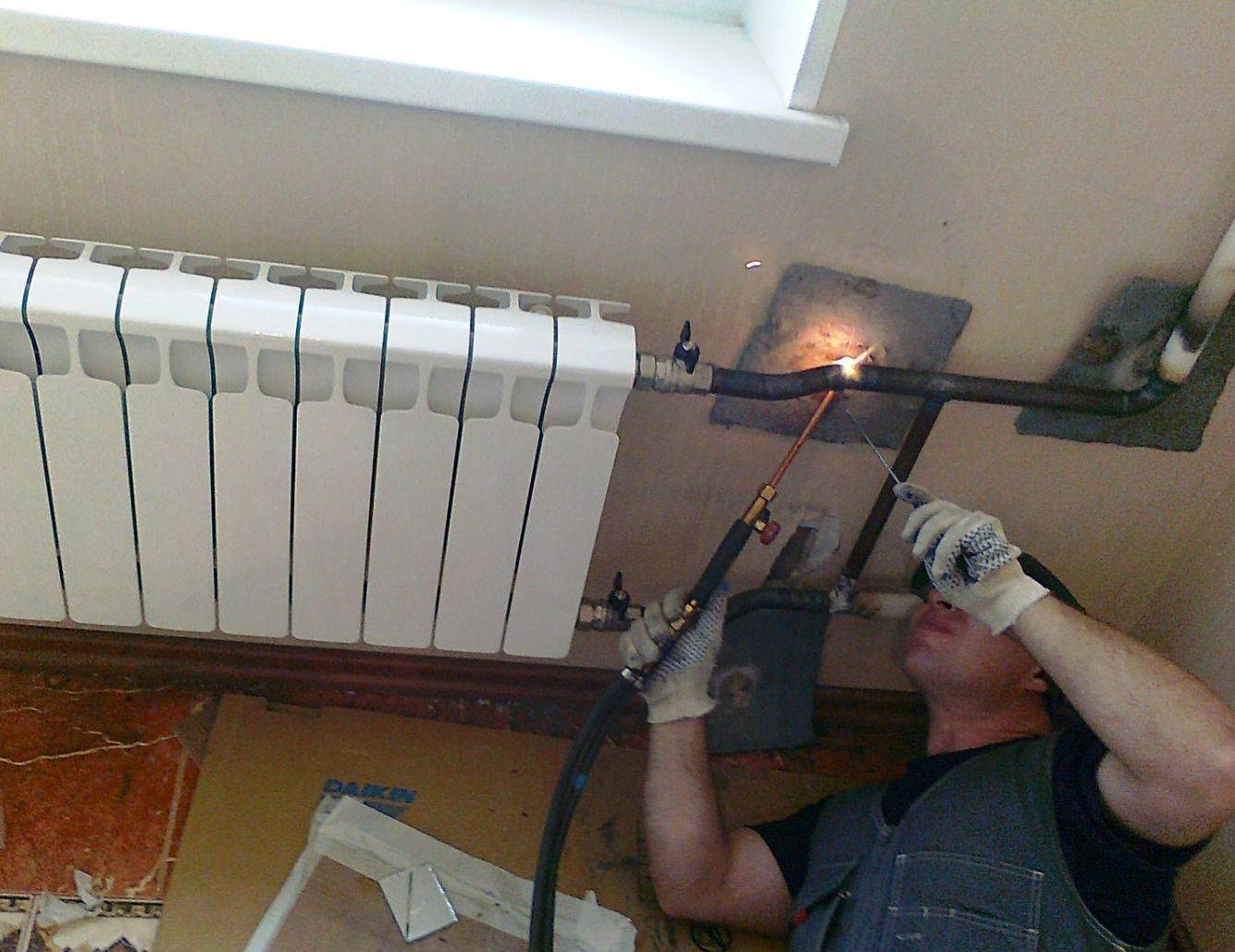
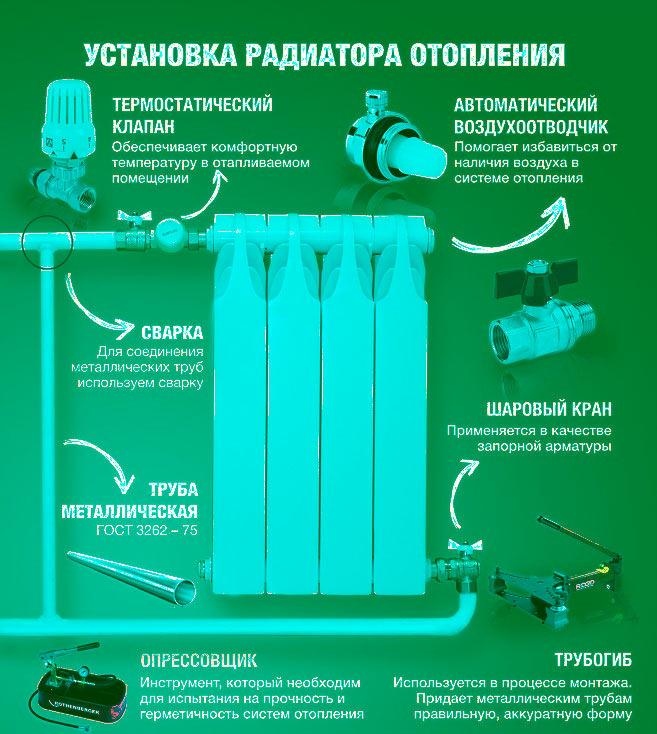
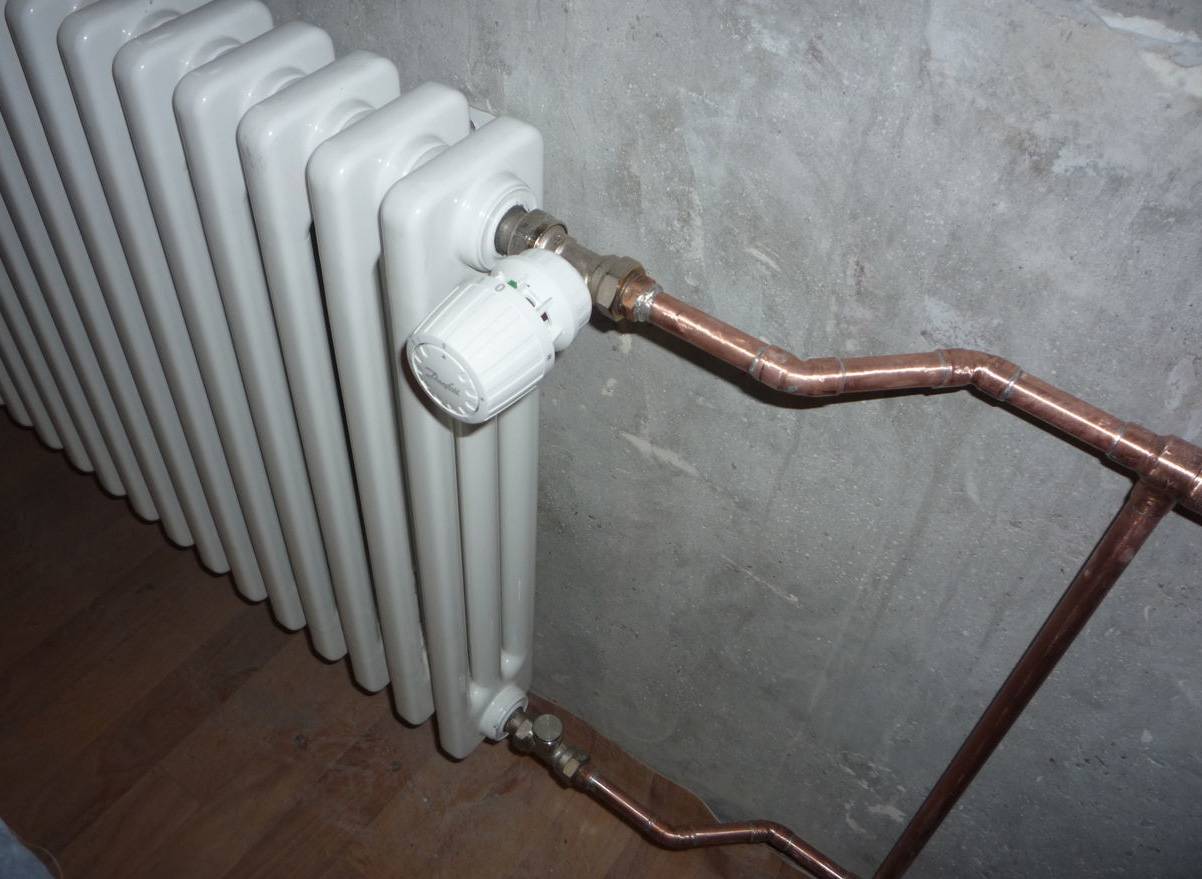
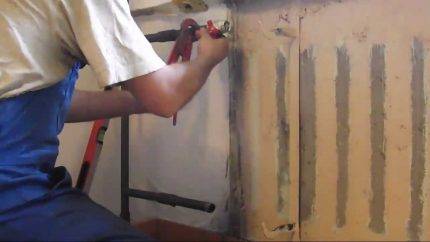 If it is decided to leave the old steel pipes, then the dismantling of the radiator must be carried out carefully so that the threads on the spurs remain intact
If it was not possible to save the drive, you will have to increase the pipes, as well as cut a new thread. The removed locknuts can later be reused when installing a new radiator. Dismantling the radiator is much easier if the pipes are also replaced. In this case, they are simply cut off in a suitable place. This is usually where the system turns towards neighbors above and below.
Now you need to install the brackets, and then hang a new radiator on them. At this stage, sometimes it is necessary to adjust the length of the supply pipe. It remains to restore the threaded connection
It is very important to seal properly. For this, linen or plumbing thread is usually used.
Some masters do not recommend using FUM tape on such connections. The sealant is wound clockwise so that it forms a cone growing from the edge of the thread. Then the connecting nut is screwed on. If part of the seal remains outside, this is normal. But its layer should not be too thick.
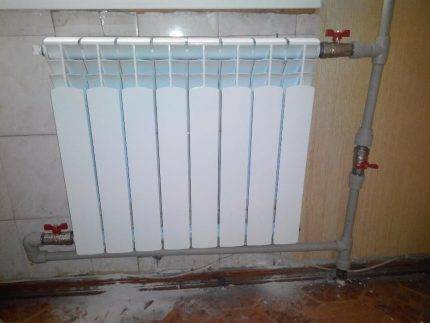 This kind of work generates a lot of waste. They are best done during major repairs, after the windows are installed.
To achieve maximum tightness, sometimes the seal is impregnated with paint, after which the lock nut is screwed on. Then the protruding insulation is also impregnated with paint. A water-based composition is not suitable for these purposes. After the paint has dried, it is very difficult to unscrew the connection.
At the end of the connection, the protective film is removed from the radiator. You should also check the position of the air vent. Its hole should be directed upwards. To check the quality of work, you need to ask plumbers to pump water into the heating circuit under pressure.
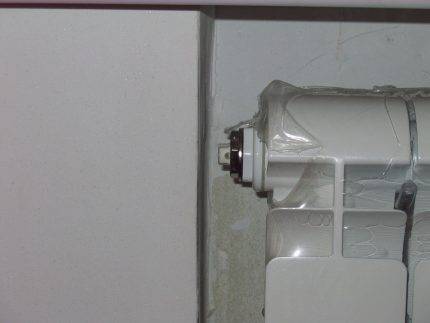 It is better to remove the film in which the new radiator is packed after it is installed so as not to accidentally damage the coating.
This will allow you to identify and immediately eliminate leaks. During operation, it does not hurt to observe the radiator for the first time, as well as check the condition of the connections to make sure that they do not leak.
Locking devices
Valves used for installation in a room heating system should be divided into two groups - shut-off and control. This division is largely arbitrary, since the shut-off valves also allow you to regulate the movement of the coolant.Naturally, in this case, the adjustment accuracy is quite low, but you can cut off the battery from the water source.
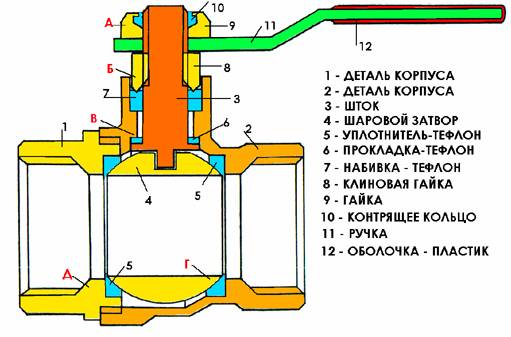
Scheme of a spherical structure
The simplest and most commonly used type of valves are ball valves:
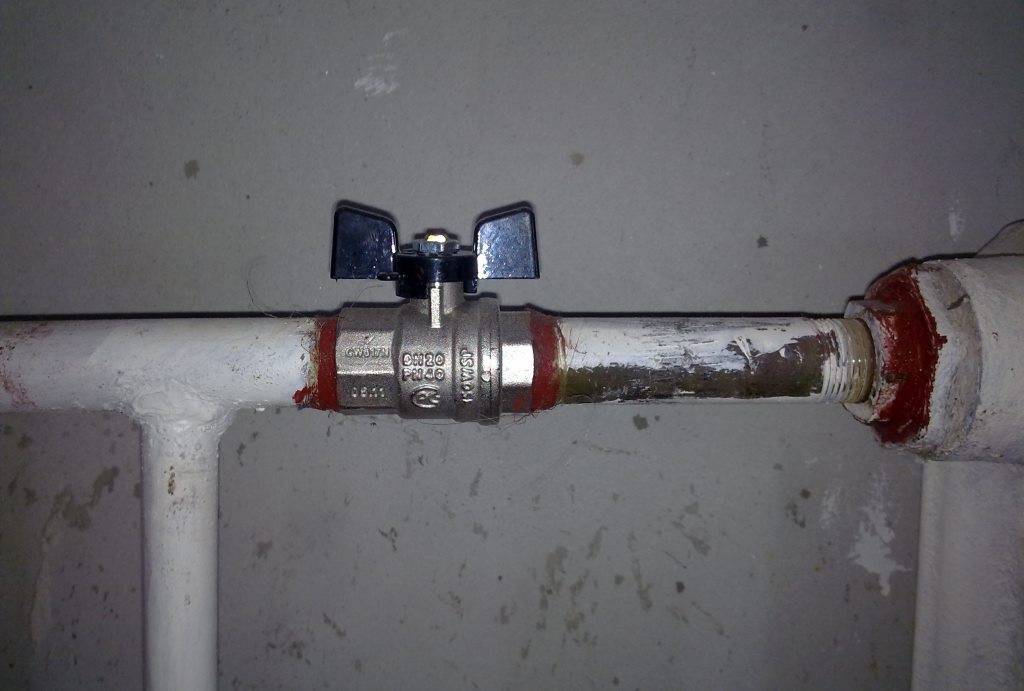
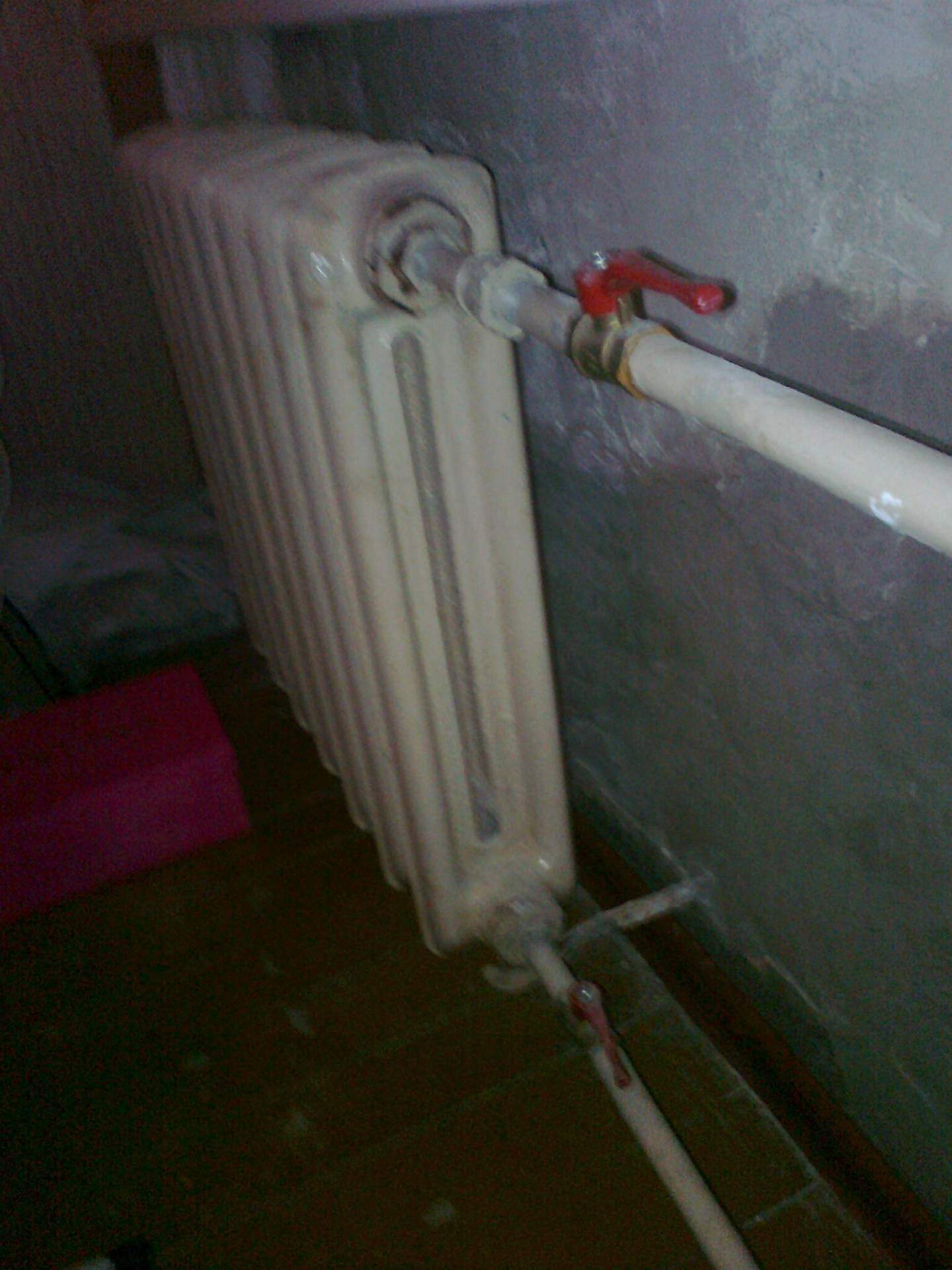
The ball valve is designed to turn off the radiator. Its design allows the device to be set either in the open or in the closed position, so that the adjustment is carried out quite according to the principle of "there is heat - there is no heat."
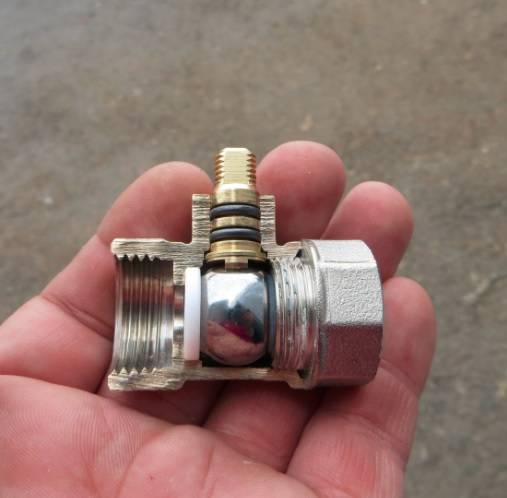
Ball valves for heating radiators provide two-position adjustment
Please note! In principle, it is possible to fix the valve in an intermediate position, but then its wear rate will increase many times due to the friction of particles suspended in water against the locking element. So it is better not to do this unless absolutely necessary
- Blocking of the coolant flow is carried out due to the movement of a metal ball with a hole coaxial to the tube lumen. When the valve handle is turned, the rod comes into action, which rotates the sphere inside the body, aligning the hole in it with the lumen of the pipe.
- As a rule, faucet parts are made of steel, bronze or brass. Fluoroplastic gaskets are responsible for sealing the joints and the obturator, which, if necessary, can be replaced with your own hands.
- Connection to the radiator is carried out either with the help of a conventional nut, or with the help of an "American".
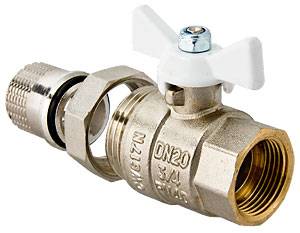
Ball design with an American
Unlike ball valves, cone valves make it possible to regulate the flow of coolant more smoothly. This is ensured by the features of their design:
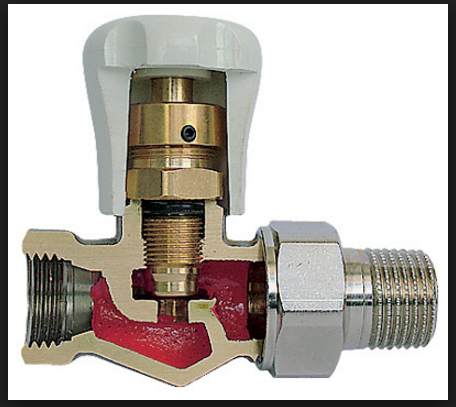
Sectional device
- The locking element is a conical rod, on the surface of which a thread is applied.
- When we rotate the flywheel, the rod moves along the thread, moving in a vertical plane.
- In the extreme lower position, the lumen of the pipe is completely blocked. The tightness of the overlap is provided by elastic gaskets that are put on the annular grooves of the stem.
- Raising the shut-off part, we slightly open the gap, and the coolant begins to flow into the radiator.
Please note! It is possible to regulate the microclimate in the room only approximately by reducing or increasing the amount of hot water in each battery
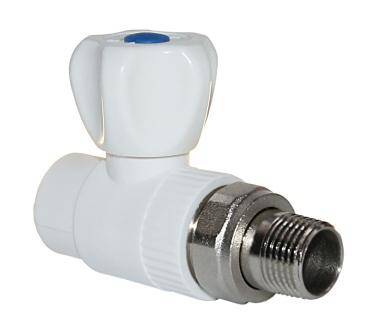
Model in polypropylene case
In practice, bronze or brass cone valves for heating radiators are most often used: only systems are equipped with polypropylene, some of the pipes in which are also made of plastic. This is due to the relatively low strength and wear resistance of polymers compared to sanitary alloys.
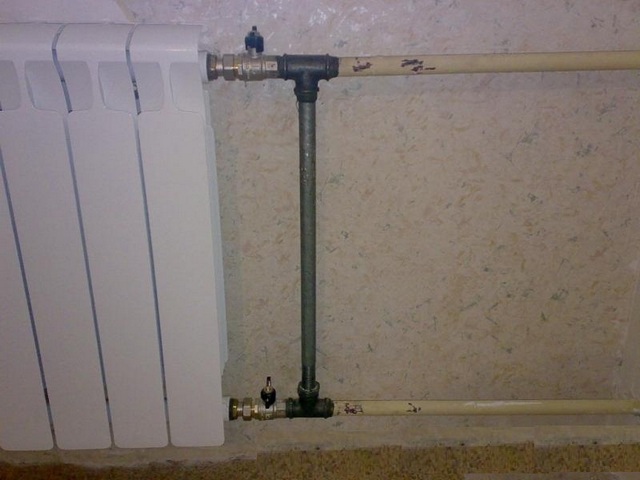
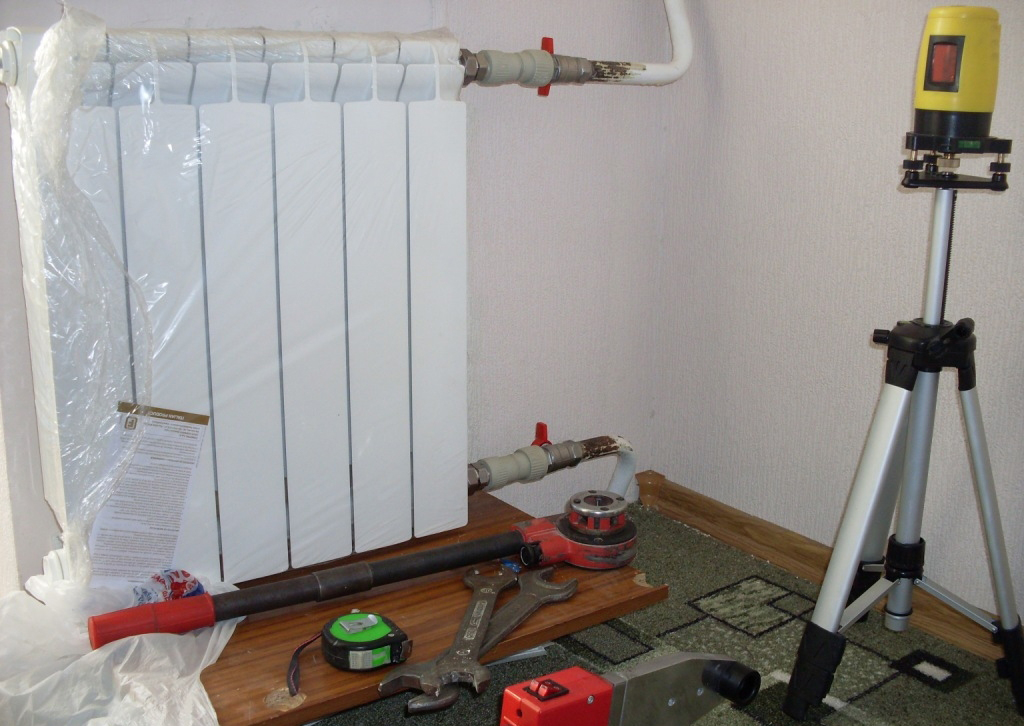
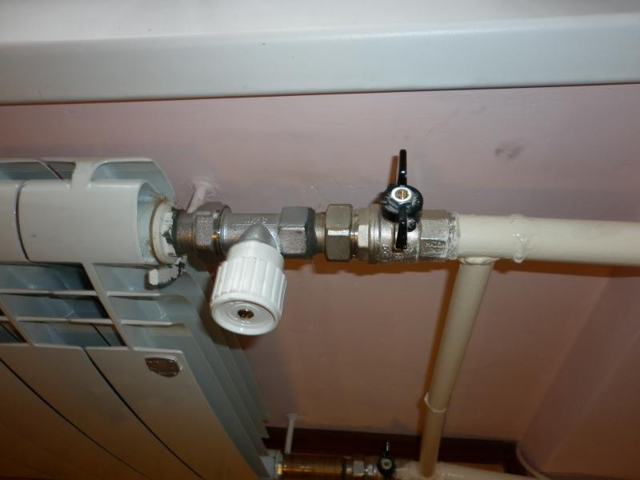
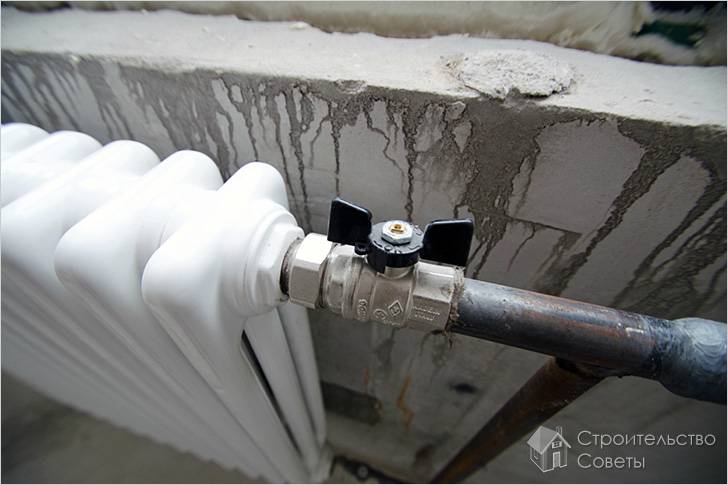



On the other hand, polypropylene taps for heating radiators are somewhat cheaper, therefore, in conditions of a budget deficit, they can be used.
Mayevsky crane
When the coolant is poured into the heating system, air enters along with water or antifreeze.
To remove it, special devices are used - the so-called Mayevsky cranes:
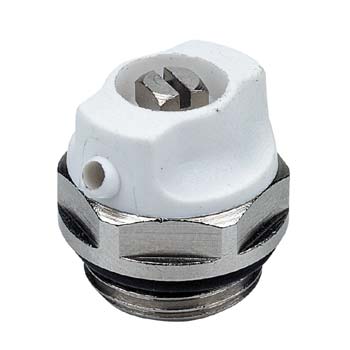
Air release device
- The design of such a product is quite simple: it is based on a shut-off rod installed in a housing with a thread for a radiator plug.
- The stem is driven either by a screwdriver or a special key, opening the pipe clearance in the saddle.
Note!If possible, buy valves for a screwdriver, since you will regularly lose the key, which is not surprising - you will have to use it once or twice a year. It must be borne in mind that the throughput of such a tap is small, so, for example, you should not put it on an expansion tank: it will take about an hour to bleed excess air. In such a situation, a conventional valve or a tap installed with a spout up is more suitable.
In such a situation, a conventional valve or a tap installed with a spout up is more suitable.
It must be borne in mind that the throughput of such a tap is small, so, for example, you should not put it on an expansion tank: it will take about an hour to bleed excess air. In such a situation, a conventional valve or a tap installed with a spout up is more suitable.
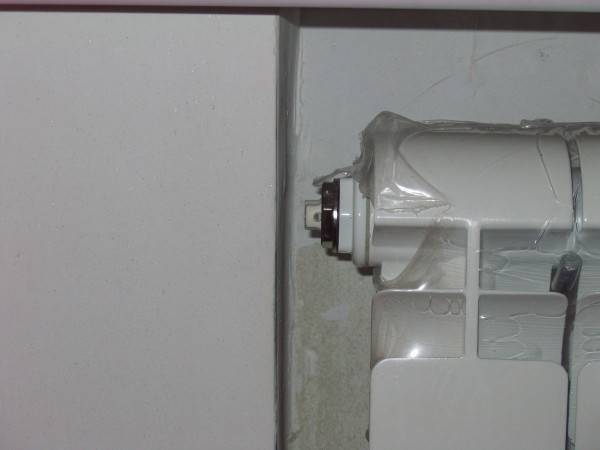
Photo of installed valve
What can be the binding of polypropylene pipes
The piping for a home heating system can be very different. The thing is that the consumer is always trying to reduce the amount of consumables, while trying to equip radiators in all heated rooms.
It should be said right away that these are relics of the past. Unlike expensive metal pipes, polypropylene consumables are much cheaper and easier to install. therefore, saving on the length of the pipeline is not worth it. Choose the type of strapping that will bring the most benefit in your case. The only factors that may affect the choice of type of strapping are the following factors:
- what heating scheme is used (one-pipe system or two-pipe);
- what type of radiator connection you have chosen (diagonal, side or bottom).
As a rule, when using any heating scheme: one-pipe or two-pipe, any type of connection for heating radiators can be used.
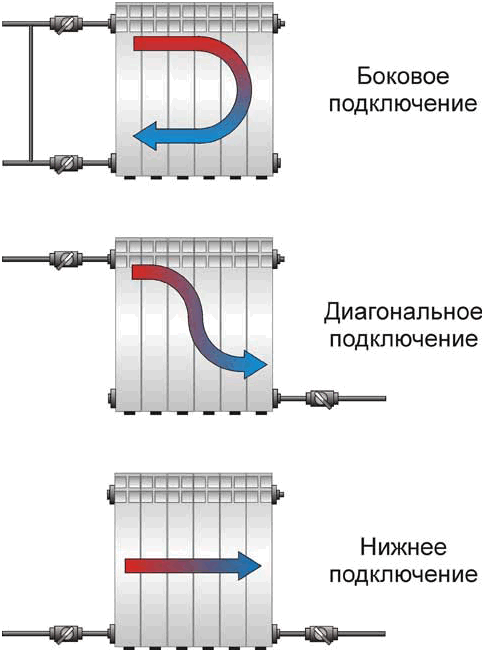
according to experts, laying the pipeline must minimize the number of bends. A smooth highway remains resistant to hydrodynamic loads. The pipeline will reduce the number of zones in which air can accumulate.
For tying a single-circuit and double-circuit heating system using polypropylene pipes, there are some peculiarities.
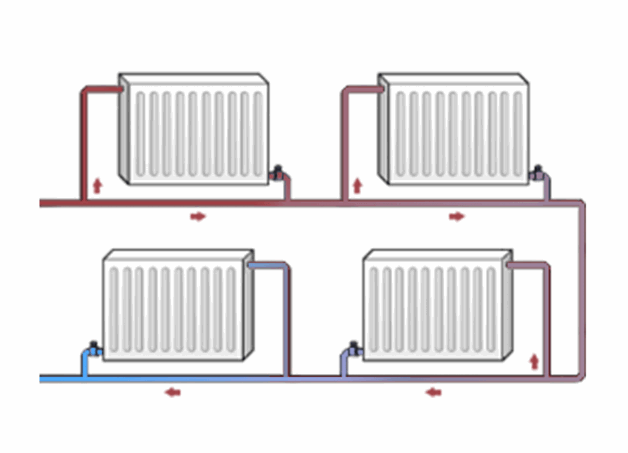
- usually in such a system a serial connection of radiators is used;
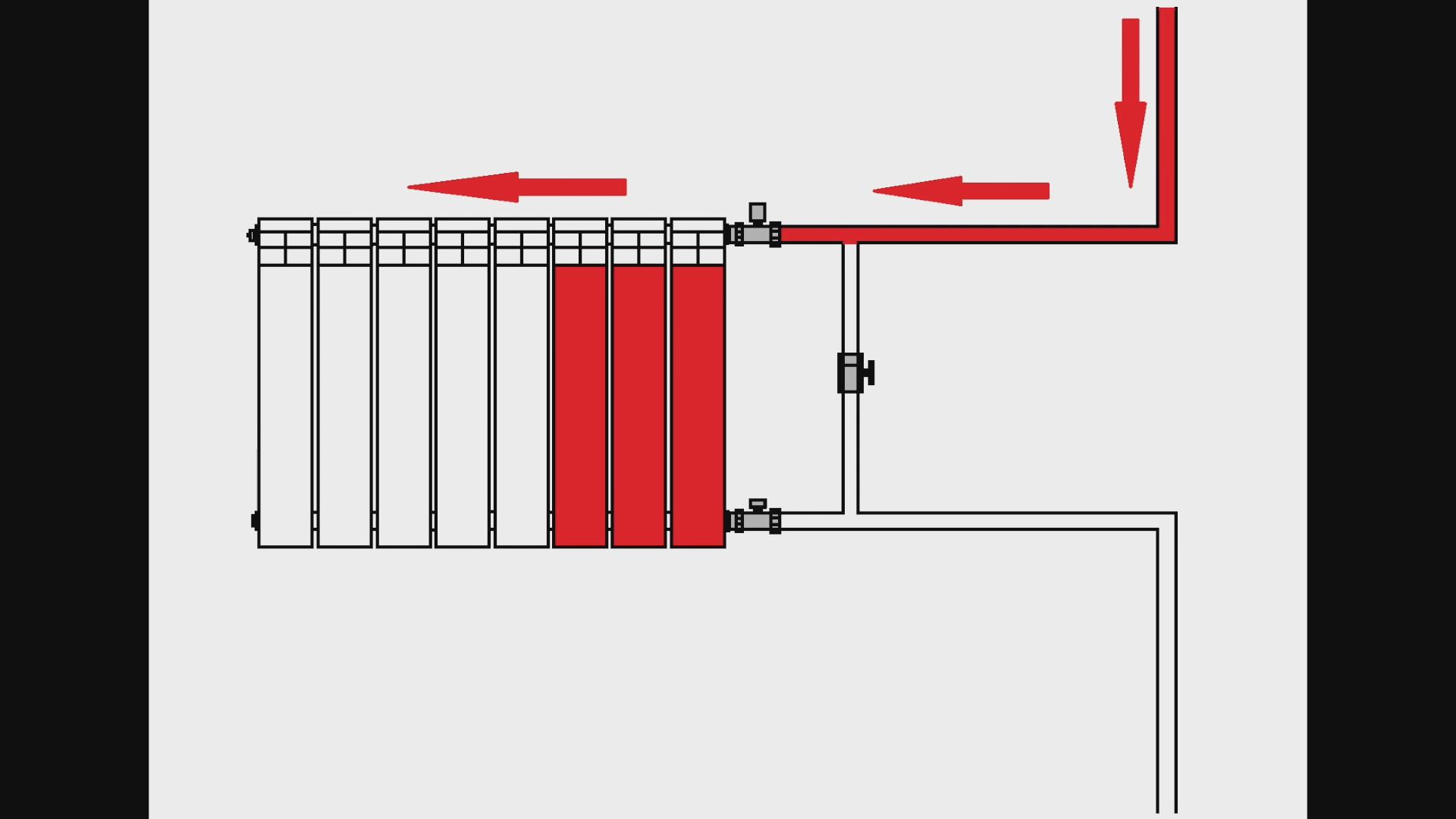
- a bypass is always mounted in front of the battery, connecting the supply pipe and the return pipe. During normal operation of the heating system, the bypass is not activated. During preventive maintenance or in case of an emergency, the water supply to the radiator is stopped. The coolant circulates freely through the bypass.
- both parallel and series connection of batteries is used;
- both radiator pipes are connected to different pipes. The upper one is connected to the supply pipe, the lower branch pipe is connected to the return. Usually in two pipe systems, radiators are connected in parallel, so the installation of bypasses is not required.
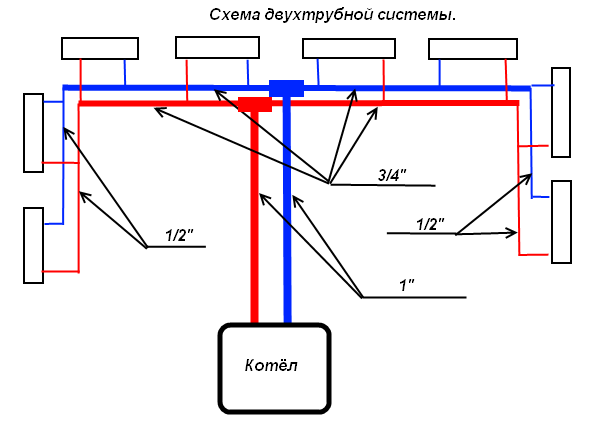
Tying polypropylene pipes with radiators is carried out in two ways: by soldering and using fittings. Installation of radiators and their connection is carried out using a soldering iron and plumbing keys for an American.
The need to adjust the heat transfer
There are two reasons why heating radiators need to be adjusted:
- Reduced home heating costs.True, in an apartment located in a multi-storey building, it is possible to reduce the amount of payments only if there is a common building heat meter. In a private household, in the case of installing an automated boiler, the installation of regulators is unlikely to be required. The savings will be significant.
- The need to maintain the desired temperature in the premises. For example, in one room it can be 17 degrees Celsius, and in another - 25 degrees. To do this, you need to set the appropriate numbers on the thermal head or close the valve.
How to install
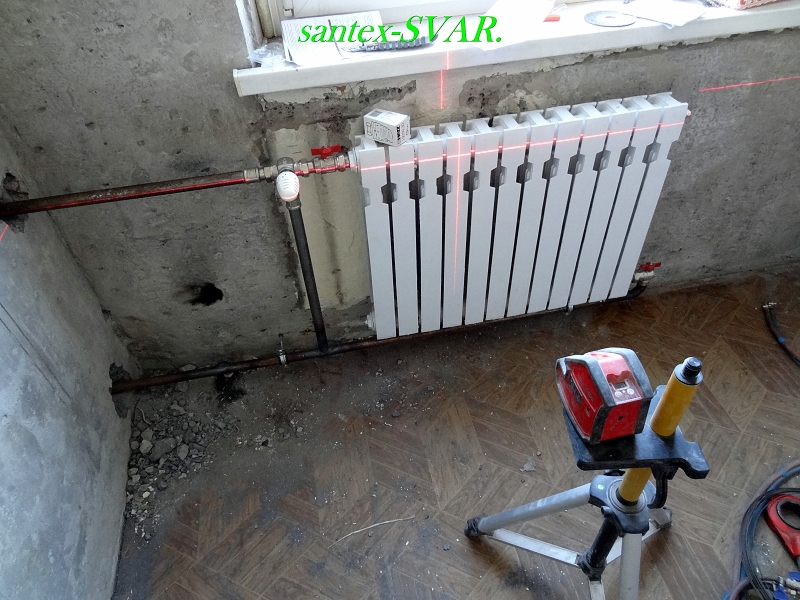
Now about how to hang the radiator. It is highly desirable that the wall behind the radiator be flat - it is easier to work this way. The middle of the opening is marked on the wall, a horizontal line is drawn 10-12 cm below the window sill line. This is the line along which the upper edge of the heater is leveled. The brackets must be installed so that the upper edge coincides with the drawn line, that is, it is horizontal. This arrangement is suitable for heating systems with forced circulation (with a pump) or for apartments. For systems with natural circulation, a slight slope is made - 1-1.5% - along the course of the coolant. You can’t do more - there will be stagnation.
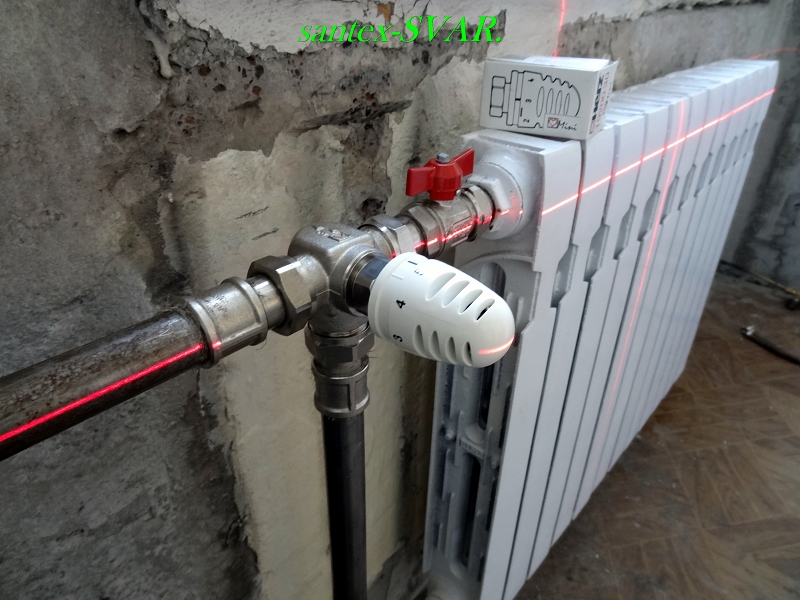
Proper installation of heating radiators
wall mount
This must be taken into account when mounting hooks or brackets for heating radiators. Hooks are installed like dowels - a hole of a suitable diameter is drilled in the wall, a plastic dowel is installed in it, and the hook is screwed into it. The distance from the wall to the heater is easily adjusted by screwing and unscrewing the hook body.
Hooks for cast iron batteries are thicker. This is fasteners for aluminum and bimetallic
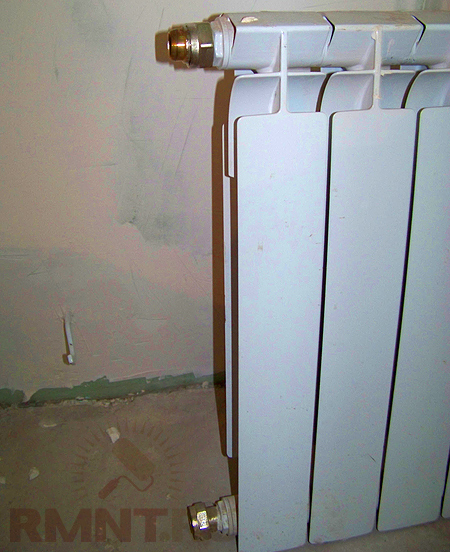
When installing hooks for heating radiators, please note that the main load falls on the top fasteners. The lower one serves only for fixing in a given position relative to the wall and it is installed 1-1.5 cm lower than the lower collector. Otherwise, you simply will not be able to hang the radiator.
One of the brackets
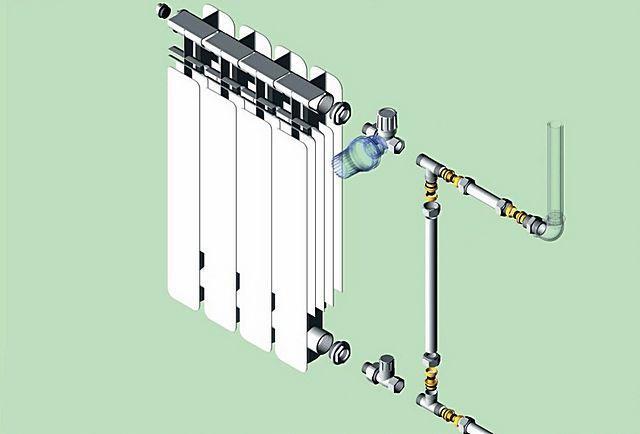
When installing the brackets, they are applied to the wall in the place where they will be mounted. To do this, first attach the battery to the installation site, look where the bracket will “fit”, mark the place on the wall. After putting the battery, you can attach the bracket to the wall and mark the location of the fasteners on it. In these places, holes are drilled, dowels are inserted, the bracket is screwed onto the screws. Having installed all the fasteners, the heater is hung on them.
Floor fixing
Not all walls can hold even light aluminum batteries. If the walls are made of lightweight concrete or sheathed with drywall, floor installation is required. Some types of cast iron and steel radiators come with legs right away, but they do not suit everyone in terms of appearance or characteristics.
Legs for installing aluminum and bimetal radiators on the floor
Floor standing possible installation of radiators from aluminum and bimetallic. There are special brackets for them. They are attached to the floor, then a heater is installed, the lower collector is fixed with an arc on the installed legs. Similar legs are available with adjustable height, there are fixed ones. The method of fastening to the floor is standard - on nails or dowels, depending on the material.
Heating radiator piping options
Installation of heating radiators involves their connection to pipelines. There are three main connection methods:
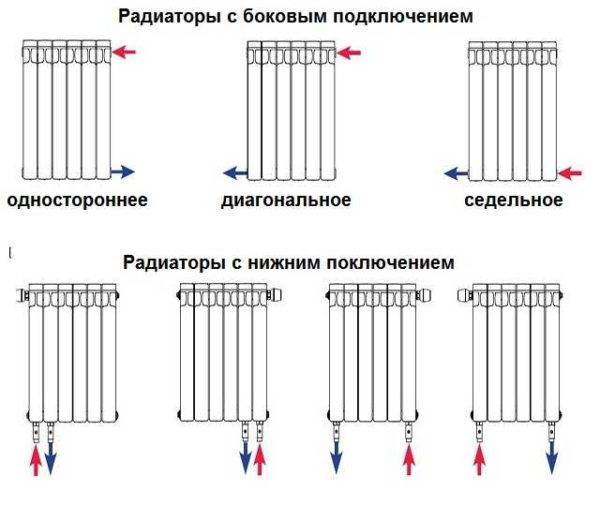
If you install radiators with a bottom connection, you have no choice. Each manufacturer strictly ties the supply and return, and its recommendations must be strictly followed, because otherwise you simply won’t get heat. There are more options with lateral connection (read more about them here).
Binding with one-way connection
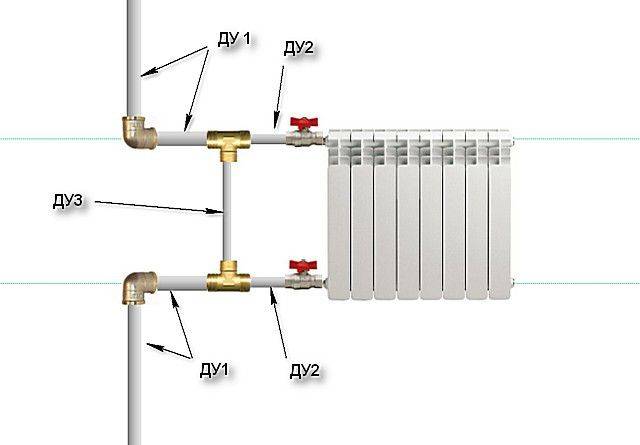
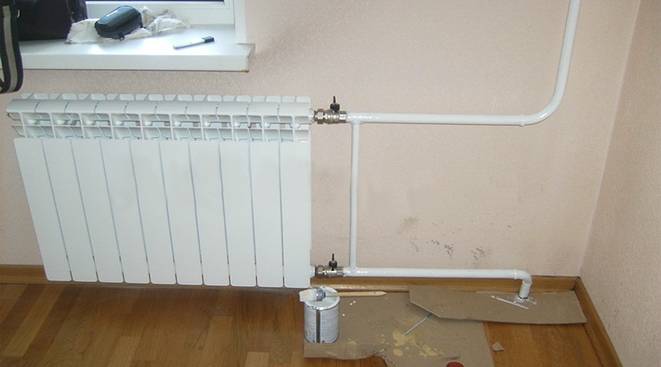
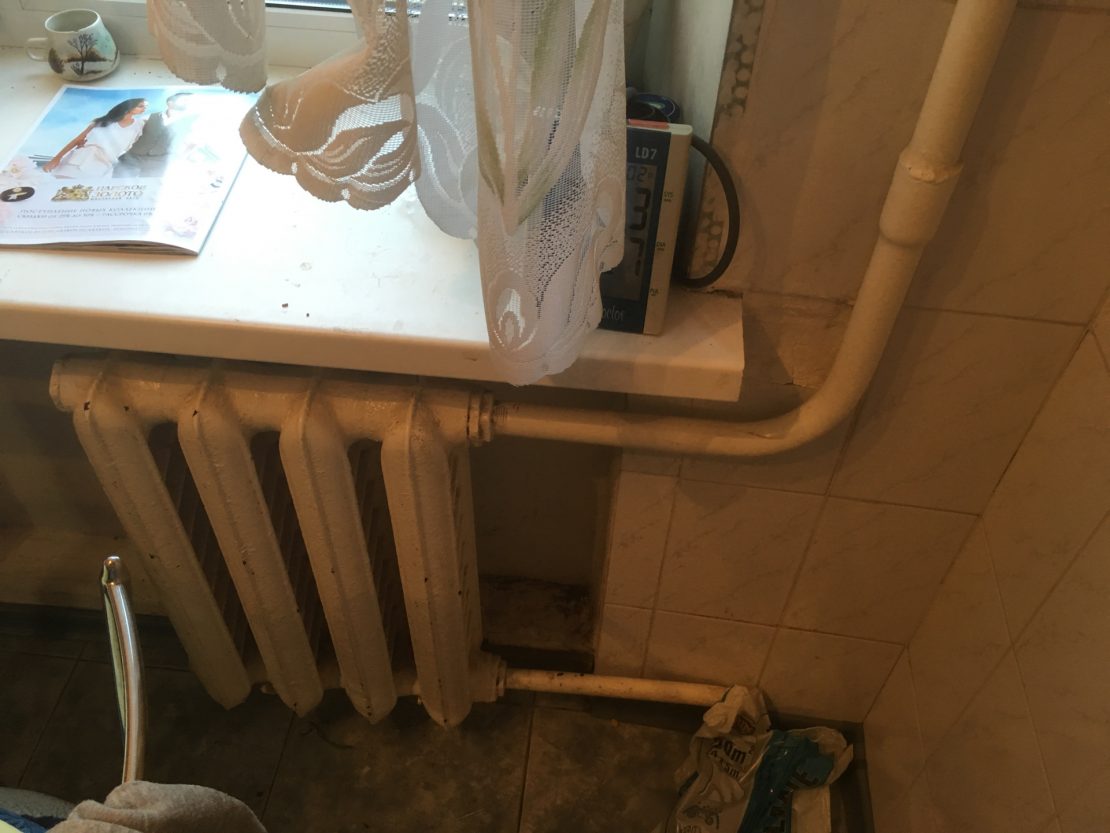
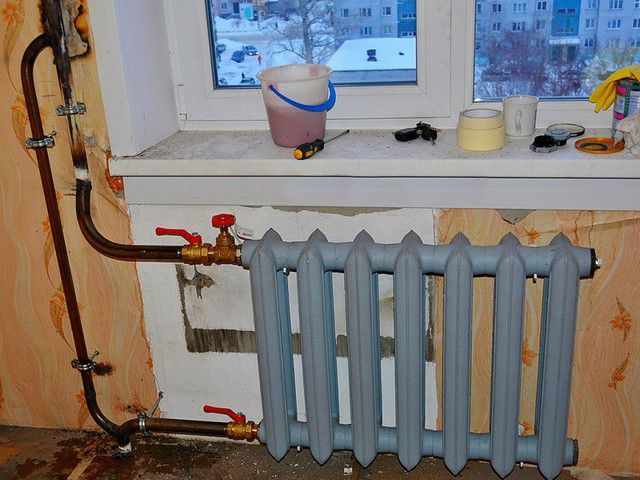
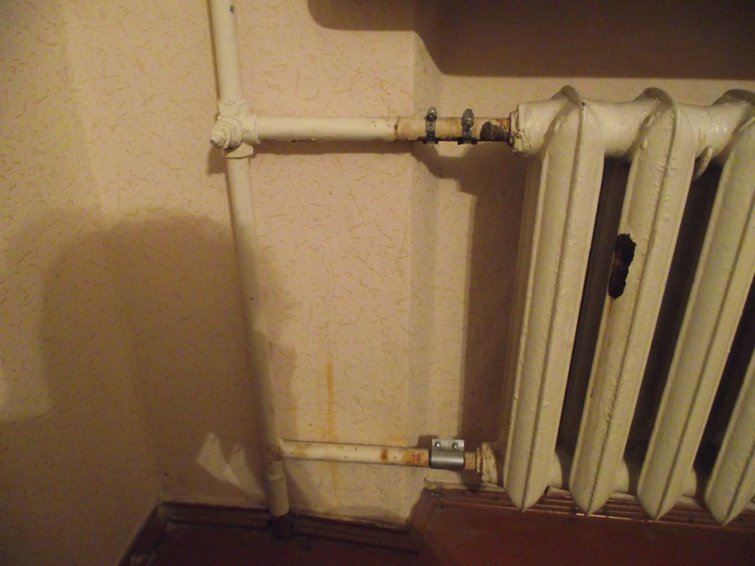
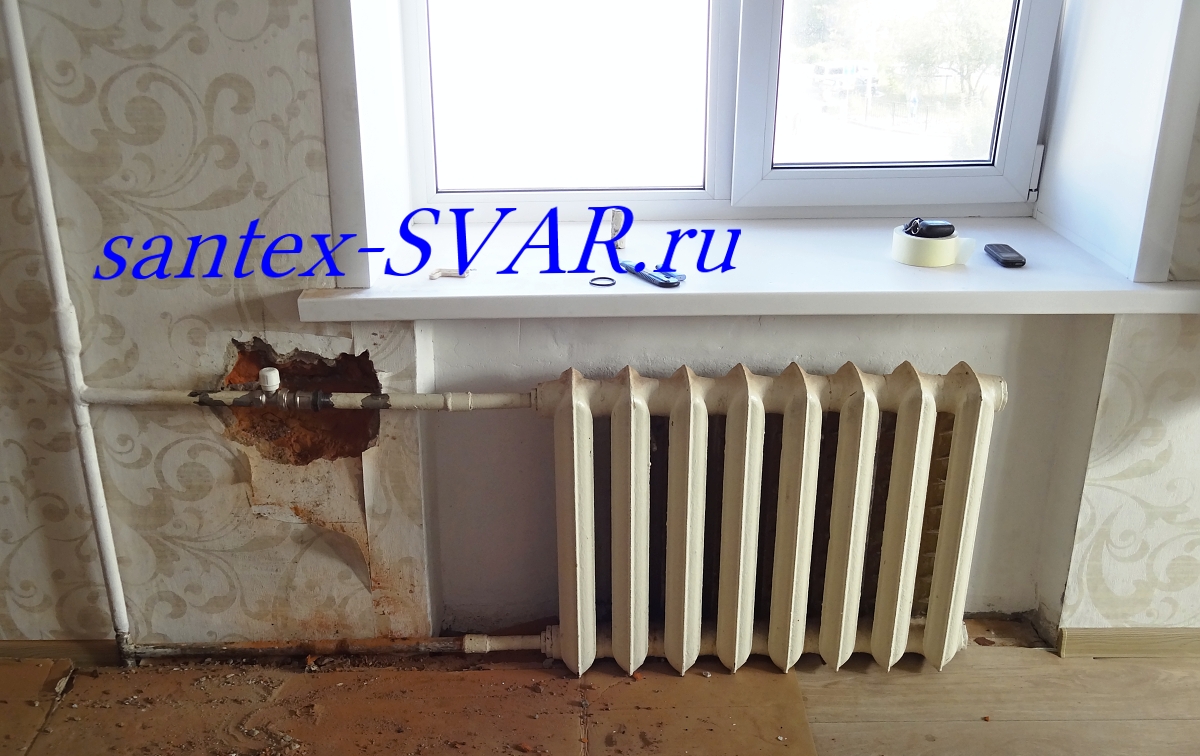
One-way connection is most often used in apartments. It can be two-pipe or one-pipe (the most common option). Metal pipes are still used in apartments, so we will consider the option of tying the radiator with steel pipes on the spurs. In addition to pipes of a suitable diameter, two ball valves, two tees and two spurs are needed - parts with external threads at both ends.
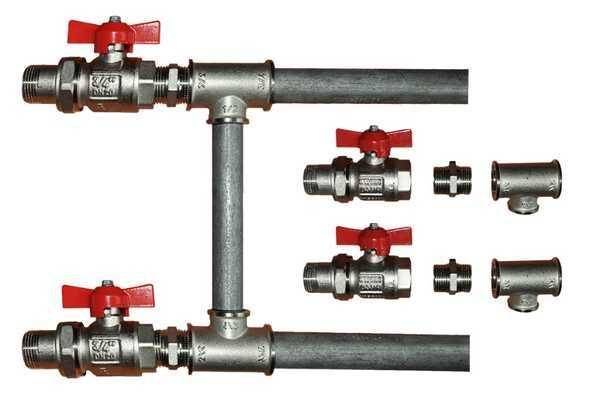
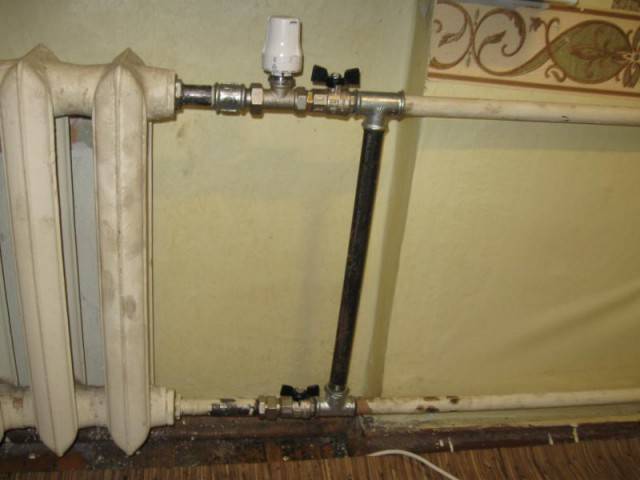
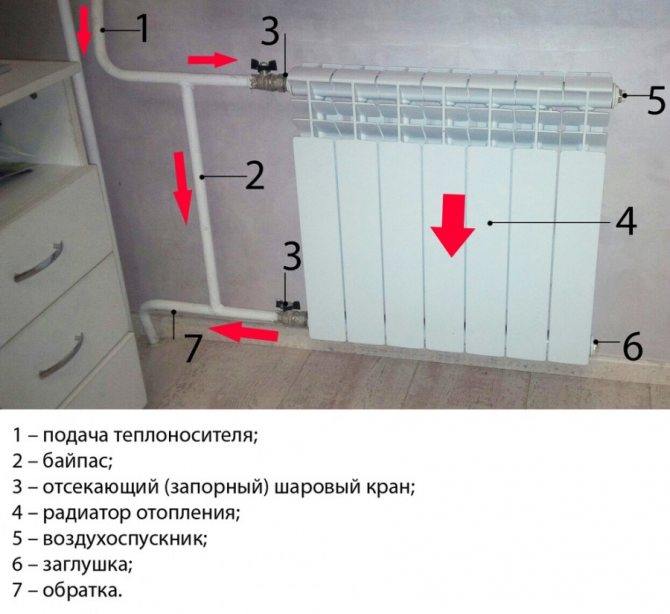
Side connection with bypass (one-pipe system)
All this is connected as shown in the photo. At single pipe system bypass mandatory - it allows you to turn off the radiator without stopping or lowering the system. You can’t put a tap on the bypass - you will block the movement of the coolant along the riser with it, which is unlikely to please the neighbors and, most likely, you will fall under a fine.
All threaded connections are sealed with fum-tape or linen winding, on top of which packing paste is applied. When screwing the tap into the radiator manifold, a lot of winding is not required. Too much of it can lead to the appearance of microcracks and subsequent destruction. This is true for almost all types of heating appliances, except for cast iron. When installing all the rest, please, without fanaticism.
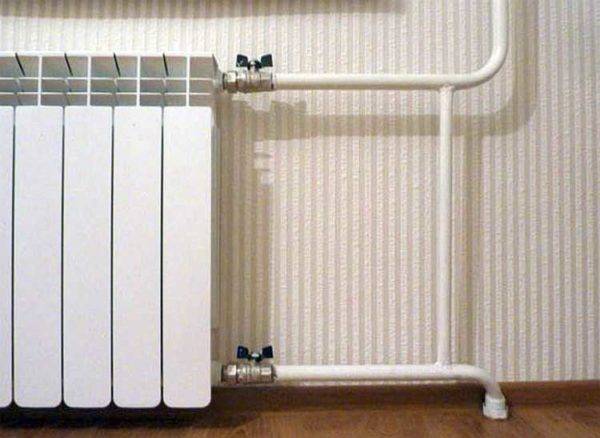
Option with welding
If you have the skills / ability to use welding, you can weld the bypass. This is what the piping of radiators in apartments usually looks like.
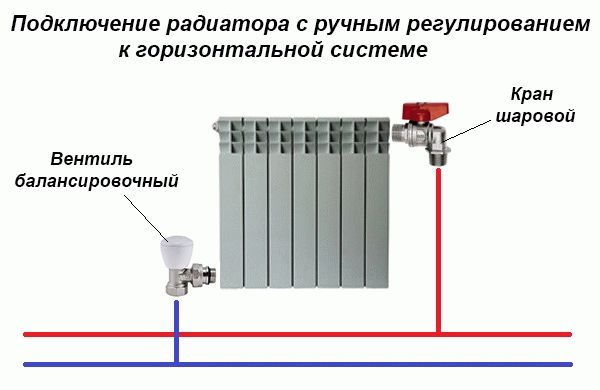
With a two-pipe system, a bypass is not needed. The supply is connected to the upper entrance, the return is connected to the lower one, taps, of course, are needed.
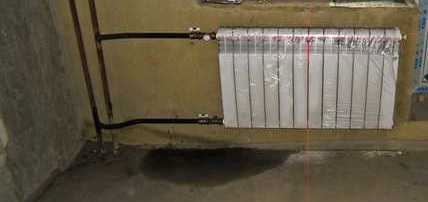
One-way piping with a two-pipe system
With lower wiring (pipes are laid along the floor), this type of connection is made very rarely - it turns out inconvenient and ugly, it is much better to use a diagonal connection in this case.
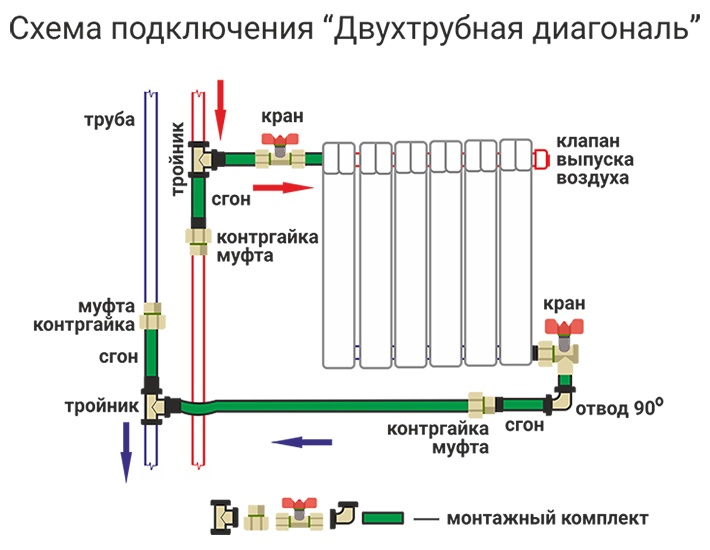
Binding with diagonal connection
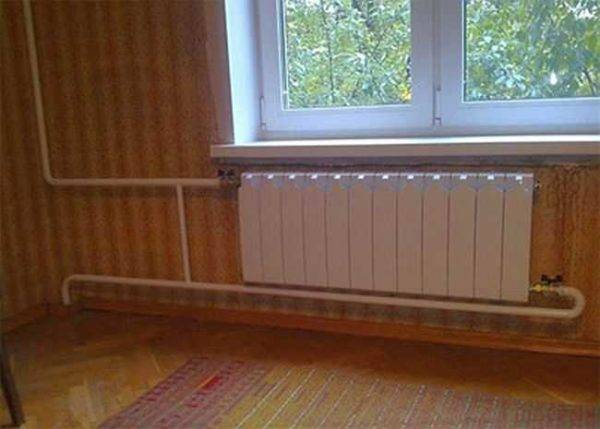
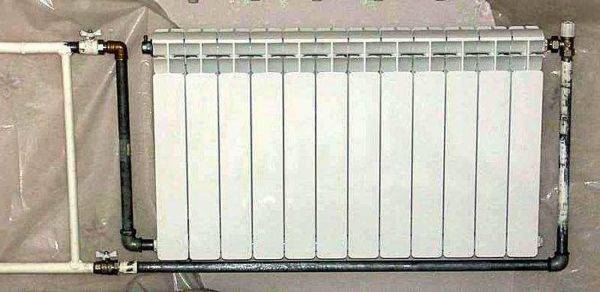
Installation of heating radiators with a diagonal connection is the best option. in terms of heat transfer. She is the highest in this case. With a lower wiring, this type of connection is implemented easily (example in the photo) - supply from one side at the top, return from the other at the bottom.
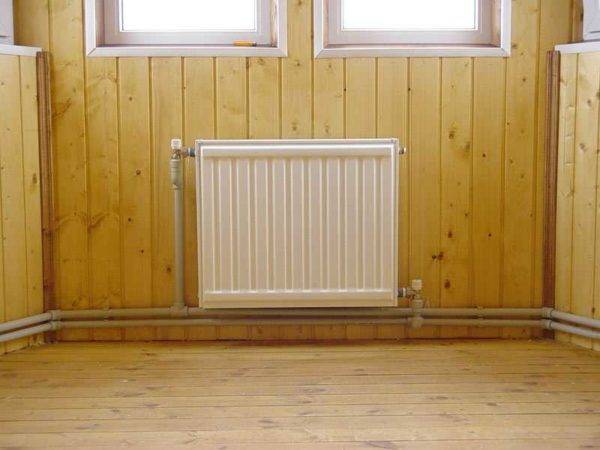
With two-pipe bottom wiring
With a single-pipe system with vertical risers (in apartments), everything does not look so good, but people put up with it because of the higher efficiency.
Coolant supply from above
Please note, with a one-pipe system, a bypass is again required.
Strapping with saddle connection
With lower wiring or hidden pipes, installing heating radiators in this way is the most convenient and most inconspicuous.
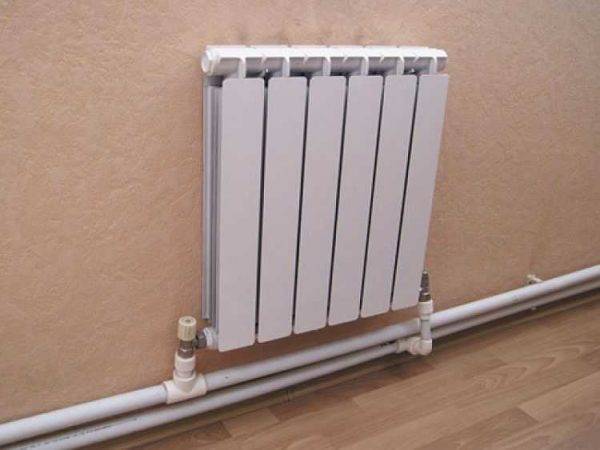
With a two-pipe system
With saddle connection and bottom single-pipe wiring, there are two options - with and without bypass. Without a bypass, the taps are still installed, if necessary, you can remove the radiator, and install a temporary jumper between the taps - a drive (a piece of pipe of the desired length with threads at the ends).
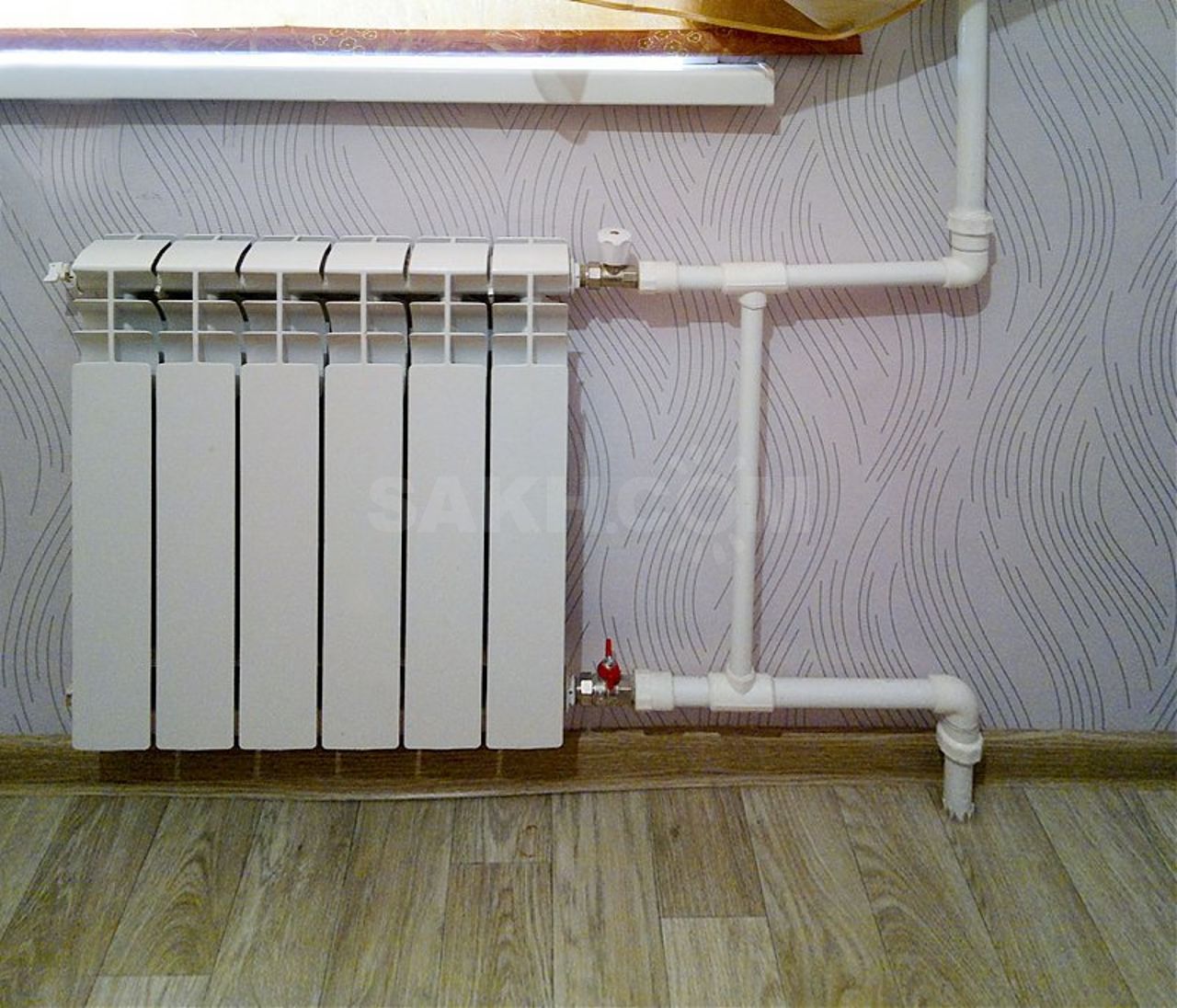
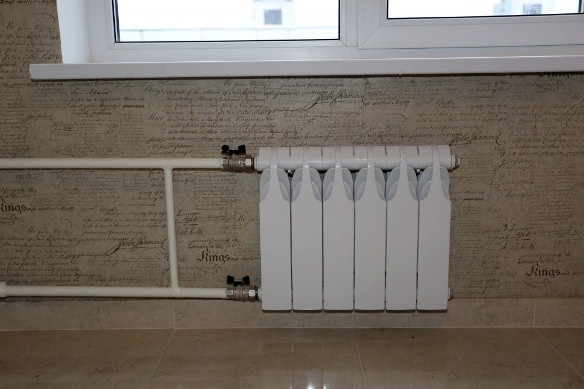
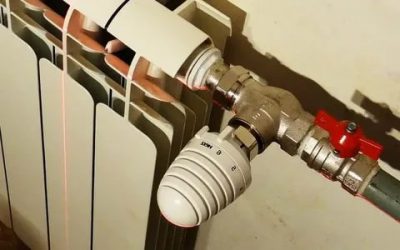
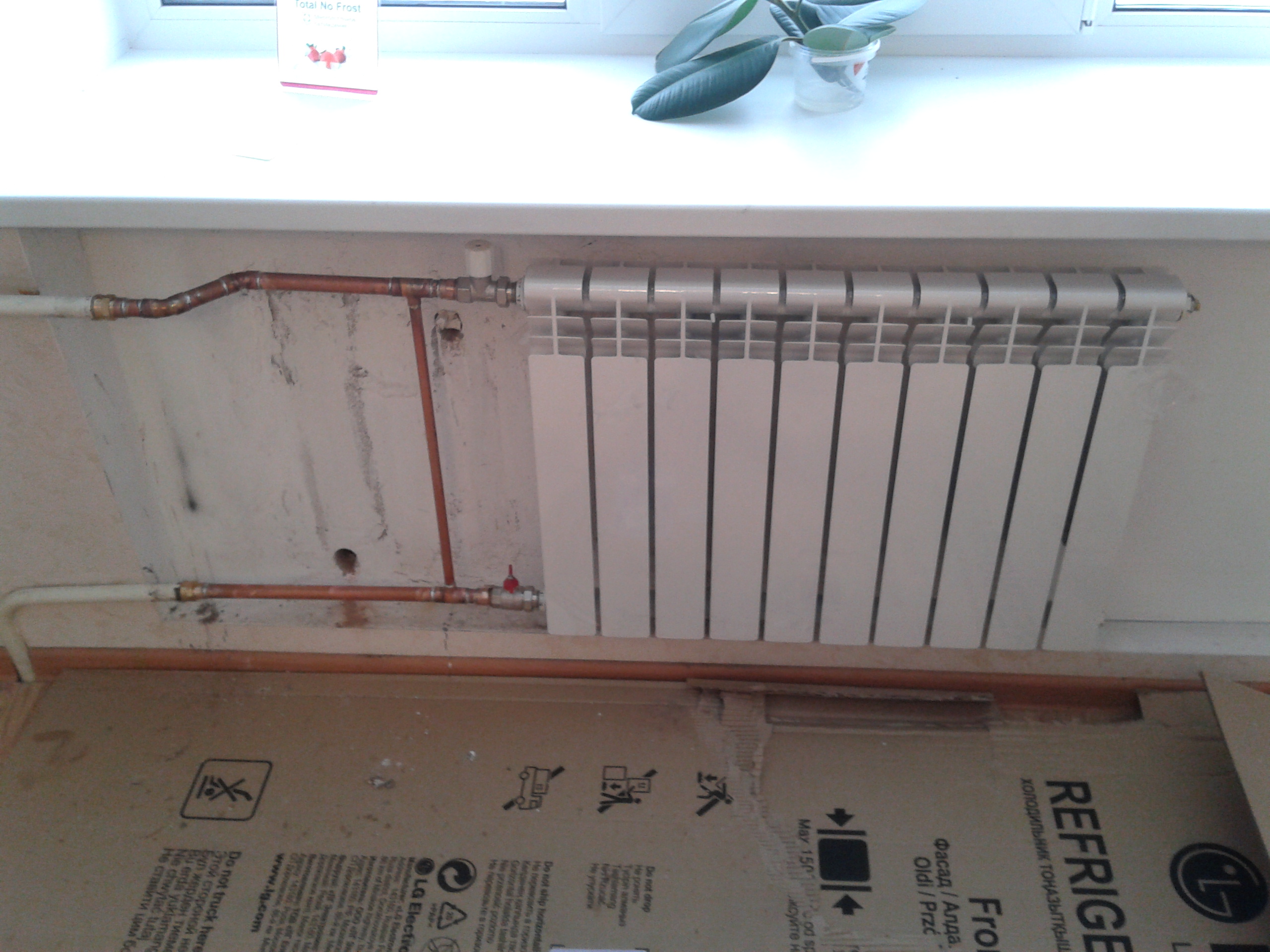
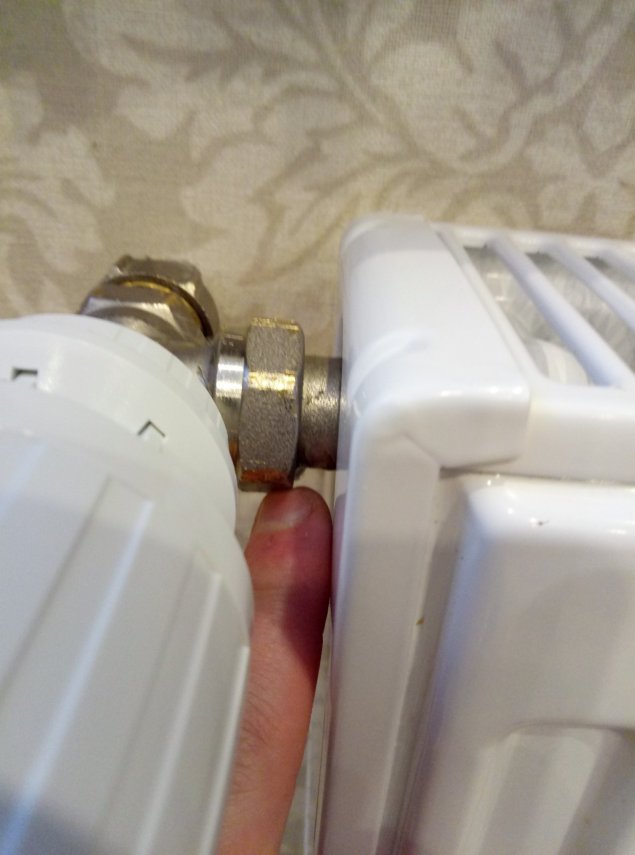
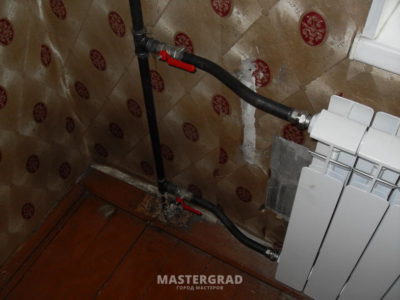
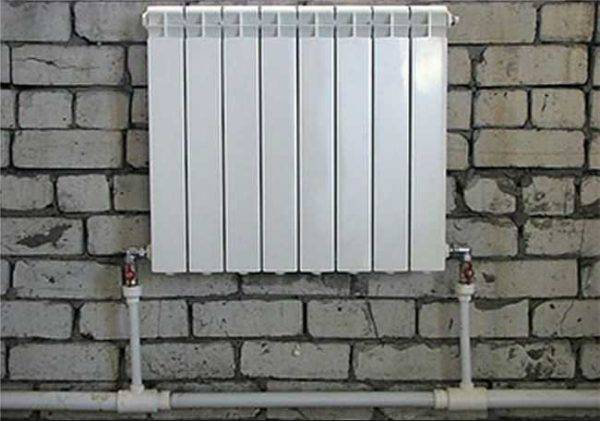
Saddle connection with one-pipe system
With vertical wiring (risers in high-rise buildings), this type of connection can be seen infrequently - too large heat losses (12-15%).
Purpose. Characteristic
With the help of taps, the efficient operation of water pipes is ensured. The heating system cannot work without these devices, and in some situations its use without them becomes simply dangerous.
Functions
When the riser leaks, it is the shutoff valves that shut off the water, which makes it possible to make repairs without stopping the entire system.
An important function will also be the management of battery heat dissipation.
The minimum set for the normal functioning of a conventional heating system consists of several types of shut-off and control valves. When connected to the radiator, shut-off ball valves are mounted on the supply pipes, on the outlet and on the bypass. A mechanism is installed on the supply to adjust the pressure of the coolant. The radiator itself must be equipped with a Mayevsky crane to bleed air. As you can see, the number of such products is significant and this is by no means an excessive option.
All together, this system allows:
- turn off the radiator without shutting off the entire circuit for repair, replacement, maintenance;
- direct the entire heat carrier through the heater when the bypass is off;
- control the power of the pressure through the radiator to reduce or increase the temperature;
- drain water, bleed air;
- to protect the system from hydraulic shocks, breakdowns;
- regulate the efficiency and level of heat supply, which saves heating costs.
Requirements
The criteria for the species diversity of taps placed on heating radiators are: design, principle of operation and material
It is important to know that mechanisms of this type are divided into shut-off and control valves. What are the best faucets? It should be borne in mind that they have a rather complex device and must meet a number of requirements in order to function in difficult conditions.
Standard requirements:
- coolant temperature up to 200°С;
- must withstand a pressure of 16–40 bar;
- high corrosion resistance;
- resistance to mechanical stress.
Types of corner cranes
There are only two types of corner taps on the market that allow you to adjust the water supply to the radiator:
- Standard control valves;
- Cranes with a thermal head.
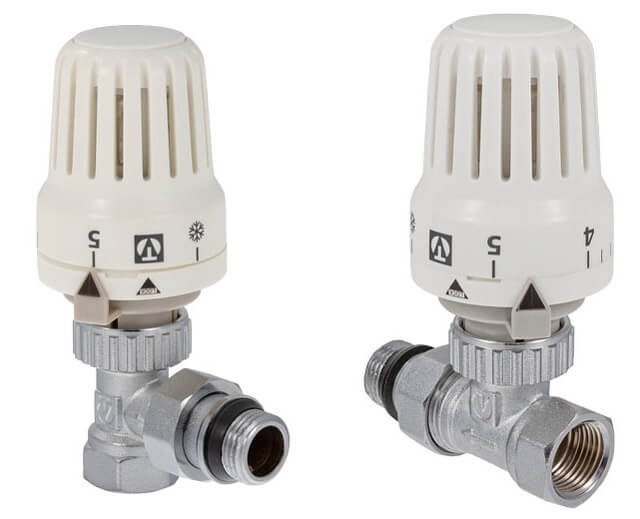
When choosing a corner valve for a radiator, you need to take into account the requirements for specific operating conditions, as well as the purpose of the elements and the individual wishes of users. For example, for autonomous heating systems, control valves are usually used, while in centralized systems, ball valves are the most appropriate choice. In any case, before choosing, you need to consider in detail each possible type of crane.