- Tips
- What is a fan pipe
- Purpose and functions
- Device and principle of operation
- Ventilation schemes
- Check valve for internal and external sewerage
- Installation instructions
- Fan pipe repair
- natural and artificial type
- What is used for
- Installation
- Fan pipe installation rules
- Construction and maintenance
- Main purpose
- SNiP rules
- We solve the problem
- How to do without sewer ventilation
- Ventilation outlet through the roof
- Purpose of ventilation
- Do-it-yourself ventilation of a septic tank from concrete rings
Tips
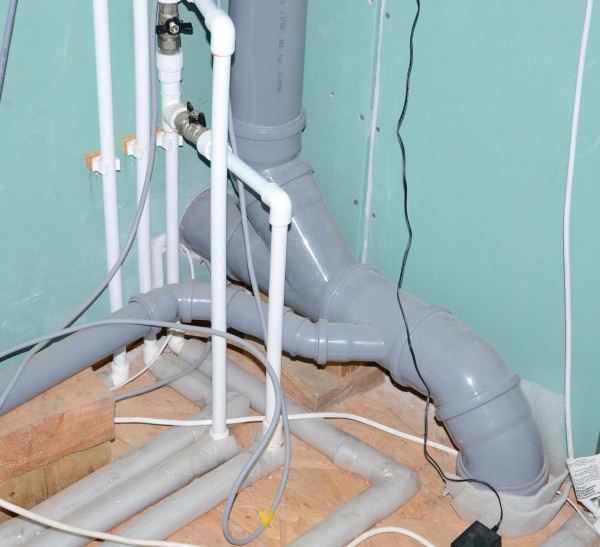
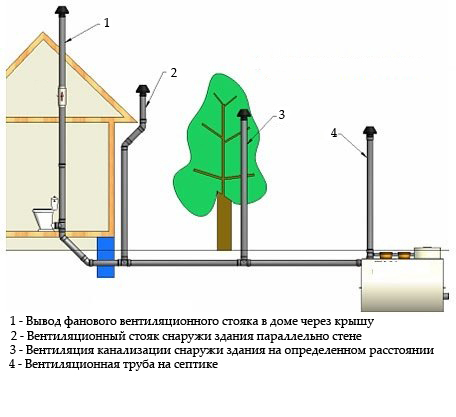
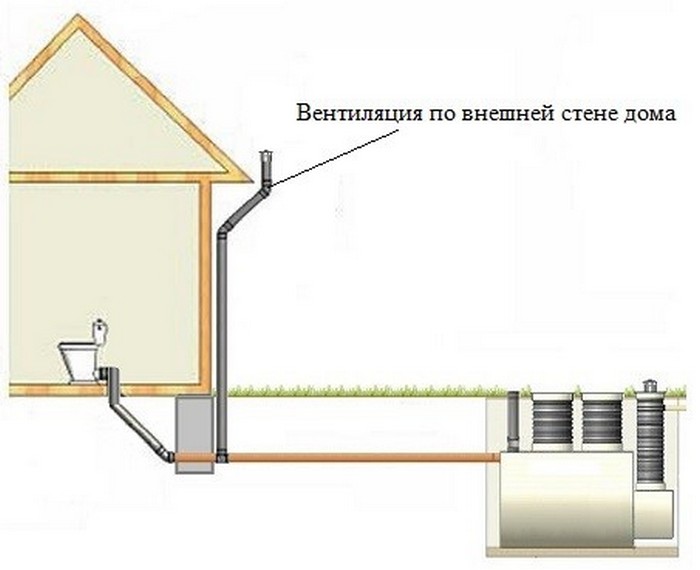
Conclusion of fan pipes is directed in such a way that accumulations of sewer gases are removed by the wind. It is unacceptable to place the output in those places where they will concentrate and stagnate, even if no one visits these places. If for some reason it is not possible to bring the sewer pipe to the ventilation system, then withdrawal from fan the contour is allowed to be output through the wall.
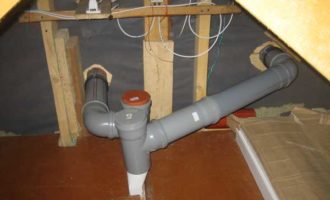
Decorative rosettes perfectly help to cope with the negative aesthetic effects of such a solution. To bundle several fan pipes, tees are used, designed for angles of 45 or 135 degrees.
In the case when the attic of the house is used, it is necessary to increase the height of the outlet to 3 m.All fan risers going through unheated rooms must have a thermal protection layer.
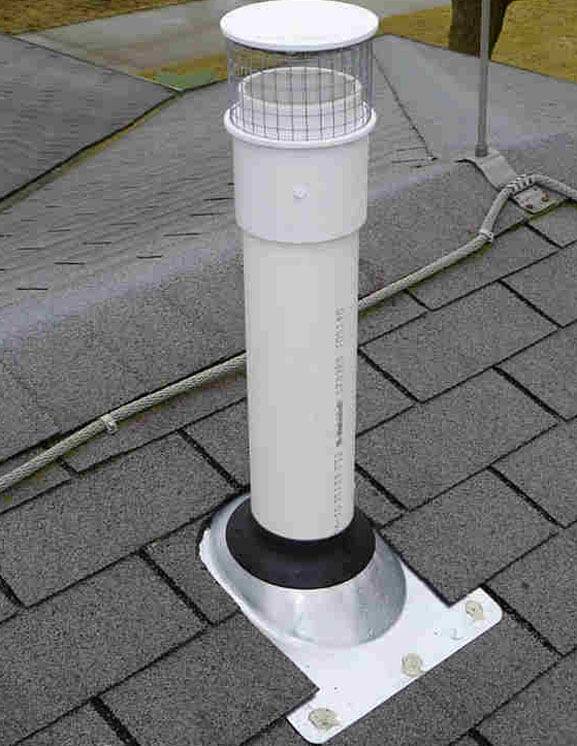
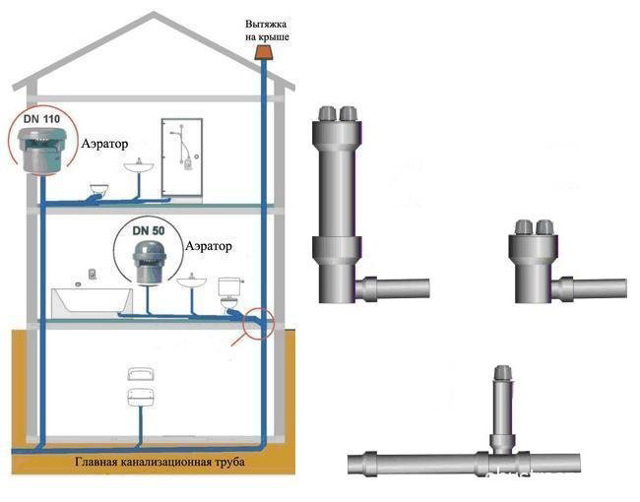
Plastic pipes should be led out through ceilings with metal sleeves. From above it is worth mounting a cover and a grid - they will protect small insects from penetrating into the fan system. Instead of a fan pipe, an air valve can sometimes be used, installed above the revision part of the riser. But such a solution is applicable only in houses where there is no more than one sanitary unit. Vacuum valves, regardless of their quality, quickly become clogged and cease to perform their main functions.
The problem with valves also arises when the siphon (hydraulic seal) is deprived of water. In this situation, the whole system becomes useless. In addition, a hydraulic seal, even in ideal mode, is not able to 100% protect against unpleasant odors - it is necessary to supplement it supply and exhaust ventilation ducts. Only a complete fan system can provide good air in homes with toilets, bathrooms, washing machines and dishwashers.
Fan pipes are mainly produced from PVC. But it is much better to choose multilayer structures based on polypropylene, as they have an increased level of sound insulation due to the presence of special additives. Increased wall thickness and optimal design at the corners also help them to dampen extraneous sounds. In order not to be mistaken with the selected dimensions of the fan pipes, it is recommended to carry out careful engineering calculations of the entire system.
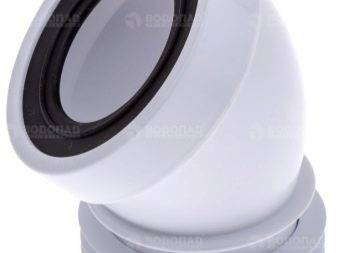
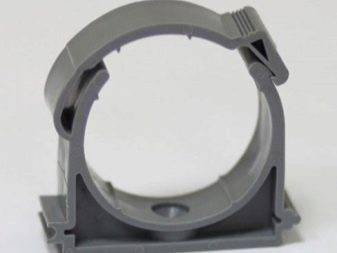
It is advisable to make a minimum of turns, and if you resort to them, then only at an angle of 45 degrees. The connection is made mechanically: socket.Any docking station must be equipped with a rubber seal that makes the riser airtight. It is advisable to choose clamps with gaskets that suppress vibration and install them in 700 mm increments. In houses made of natural or artificial stone, as well as when using reinforced concrete floors, pipes must be passed through them using fireproof cases.
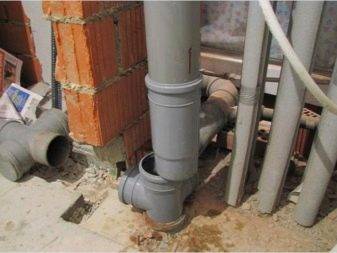
Sufficient protection against fire and mechanical damage is guaranteed by cutting steel pipes. In most cases, such cases are mounted directly during the arrangement of the ceiling. The key cut-off factors are the settlement of the house and the thermal deformation of the pipe from the inside. The sleeve should exceed the diameter of the fan pipe by about 10 mm.
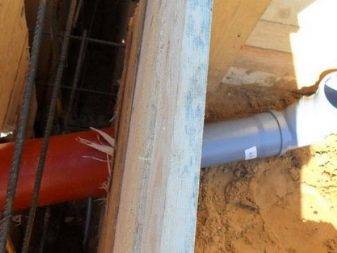
Most often, these materials are:
- mounting foam;
- oiled rope;
- rope impregnated in bitumen;
- silicone sealant.
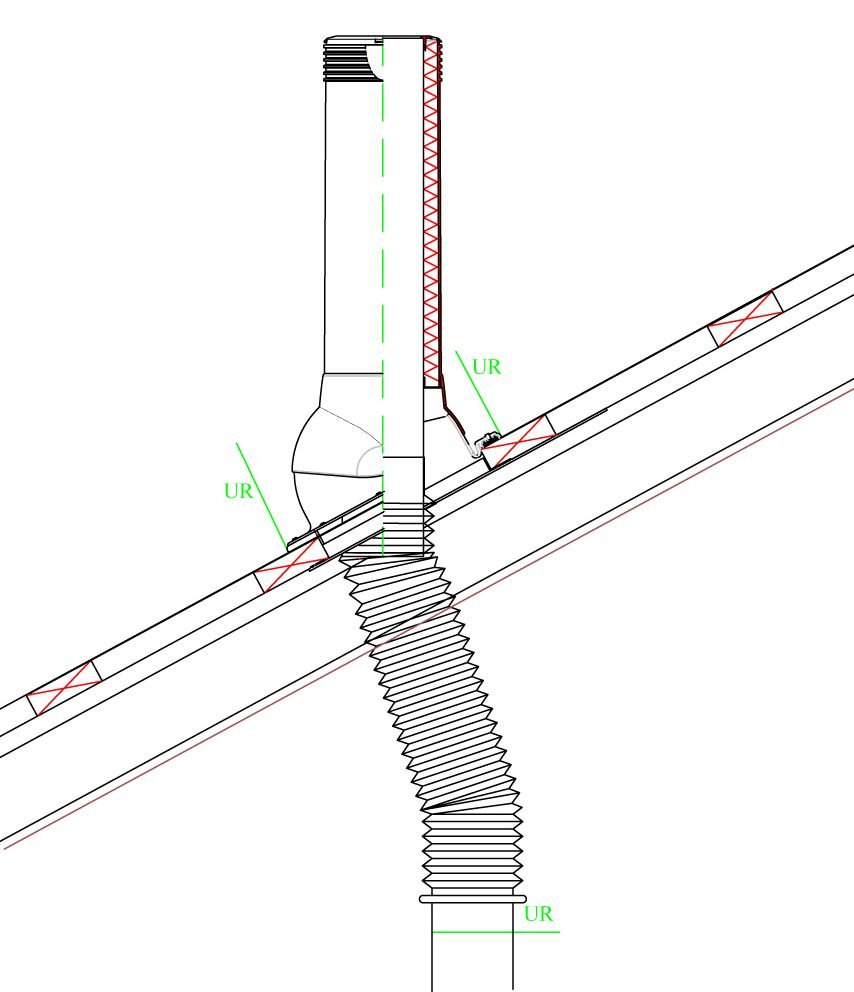
To bring the fan system through the roof, it is allowed to use a special passage device. It is made both universal and adapted to a specific roofing material. Sometimes the fan pipe is pulled inside the chimney with a corresponding increase in its cross section.
It is forbidden to stretch the forced ventilation in the same place.
It should also be borne in mind that if there is a septic tank in the house, then ventilation will need to be openly removed. It is unacceptable to install valves in unheated rooms, where the accumulation of condensate can completely block their operation.
It is very important to buy components exclusively from well-known manufacturers - the products of anonymous and little-known companies are rarely of high quality, and shortcomings are discovered only in a critical situation.It will not be possible to find differences in appearance - even consulting a specialist when buying does not always help
See the next video for more details.
What is a fan pipe
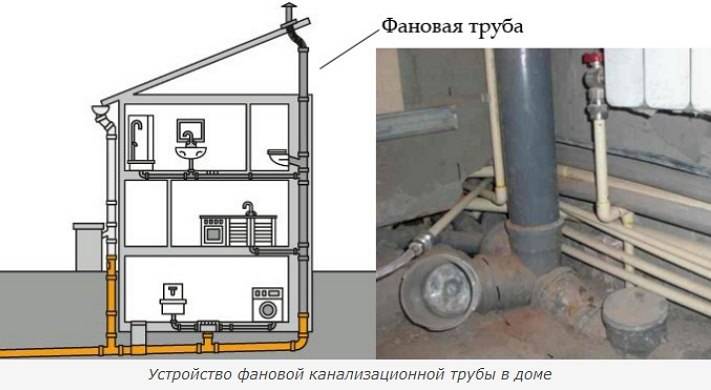
This is a special branch of pipes for sewerage. It begins at the highest point of the sewer system riser and is led to the roof of the building for direct discharge of the sewer network cavity into the atmosphere.
Purpose and functions
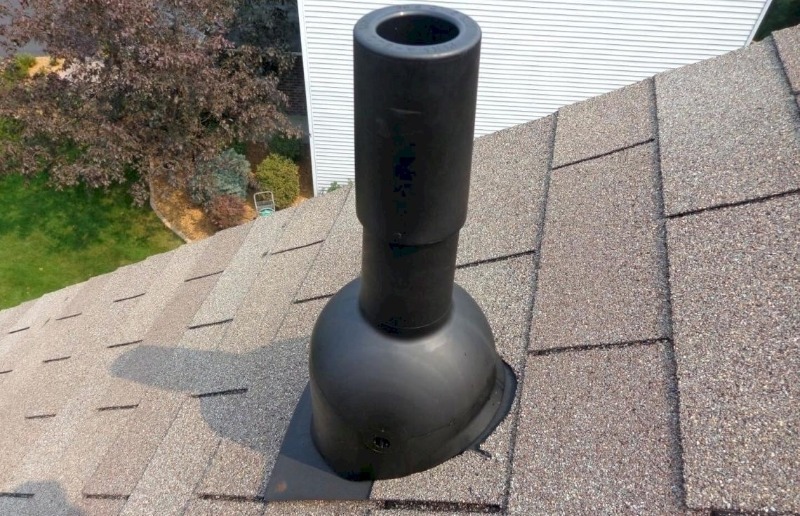
Simultaneous draining from several plumbing devices leads to the blocking of the sewer section by a volume of water moving at high speed. As a result, the water seals are sucked out by rarefied air, and the stench from the sewer penetrates into the living quarters. The purpose of the fan pipe is to prevent this.
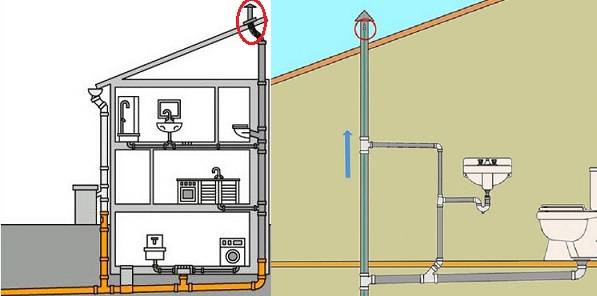


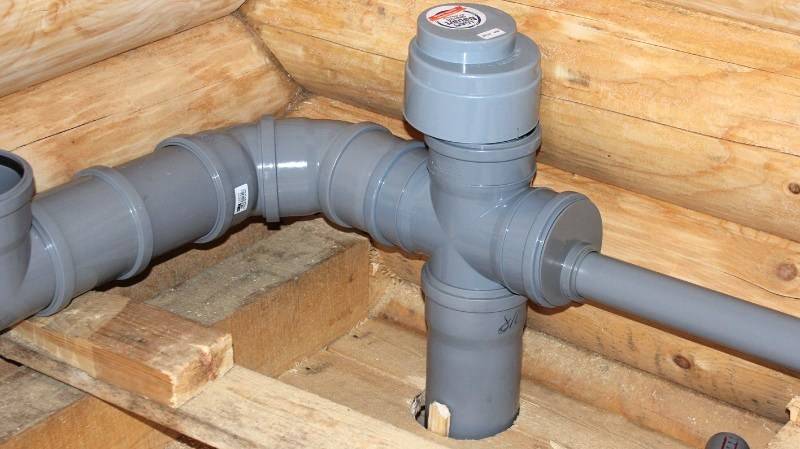

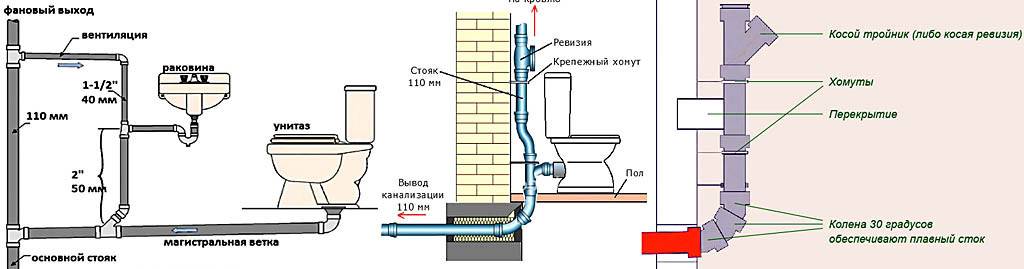
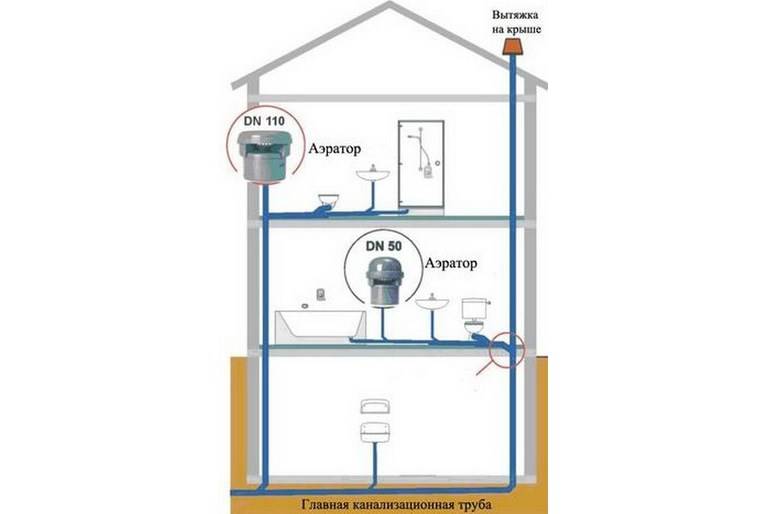

Biogas released from sewage is released into the atmosphere. Ventilation and the prevention of the failure of the gates make the fan pipe indispensable in the sewer network in any residential building.
The use of sewer pipes for the toilet is allowed. The reason is the coincidence of the dimensions and design of these parts with the corrugation connecting the drain to the sewer. Parameter matches allow you to connect pipes for toilet bowls waste systems.
Device and principle of operation
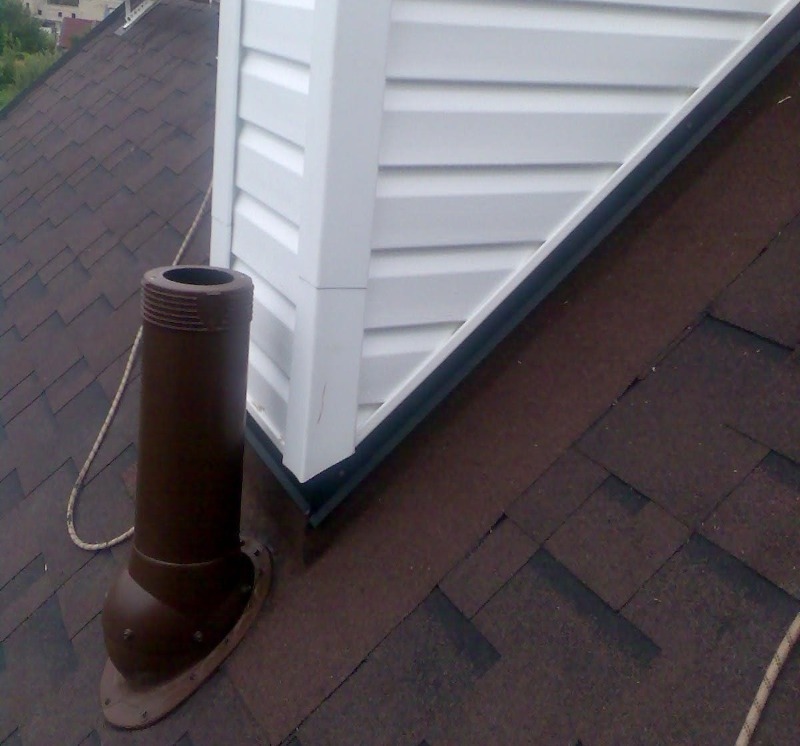
The gases released from the drains create a pressure that exceeds atmospheric pressure, but is not able to overcome the water seal in the siphon. This difference lies at the heart of the device of the fan pipe - biogases cannot pass through the water plug and freely go through the riser into the atmosphere.
For this reason, fan bends most often have a straight vertical design without fixtures. for forced ventilation. For private buildings, device diagrams can differ in a large number of deviations from the rules than similar sewer risers in a multi-storey building, have bends and a form that is more convenient for installation.
The end of the circuit is equipped with a deflector, which should be 30 cm above the ridge. It is inappropriate to display this device from the side of the facade of the house, in the attic or near the windows. Different materials are suitable for fan ventilation:
- plastic;
- cast iron;
- steel.
The main condition is resistance to corrosion, since the biogases passing through them create an aggressive environment.
Ventilation schemes
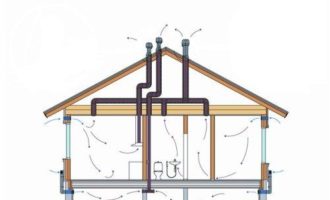
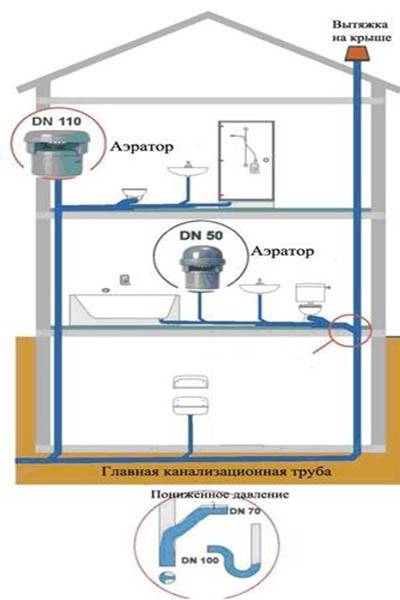
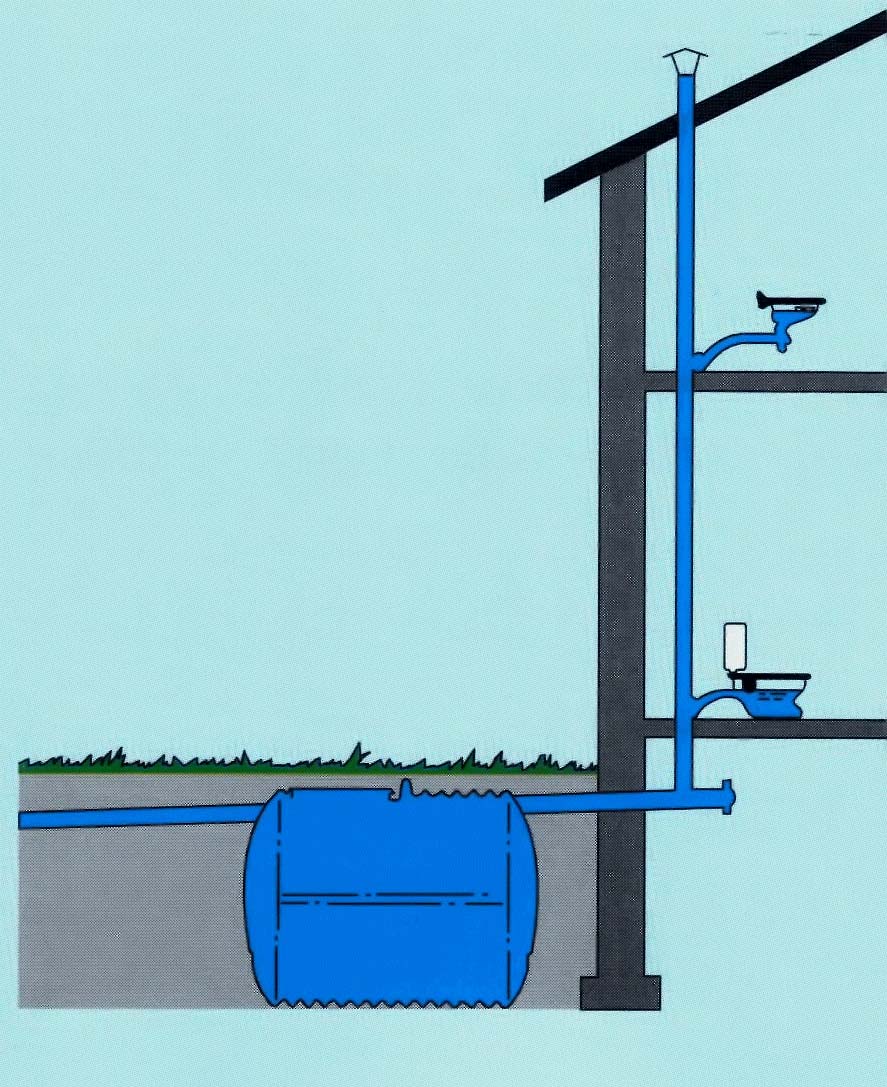
When sewer ventilation is planned during design at home, it is most often done intrahouse. In this case, the riser is brought to the roof in the form of a fan pipe. It is, as it were, a natural extension of it. The diameter of both pipes must match (if the riser is 110 mm, then the fan pipe is 110 mm). The ventilation duct is thought out in such a way that the fan pipe is located at a distance from the windows (at least 4 meters) in order to timely naturally eliminate unpleasant odors.
The height of the fan pipe above the roof depends on the type of roof and varies from 0.2 to 3 meters. Its height is regulated set of rules 30.13330.2012. For example, for a flat roof of a country house, at least 300 mm of elevation is required, and for a pitched roof, about 500 mm. From above, ventilation is equipped with a deflector, which acts as a sewer protection against the penetration of precipitation and to enhance air draft. In general, the deflector increases the efficiency of the ventilation system in the house.
Experts do not recommend connecting the ventilation riser to the pipes of the chimney or the common house exhaust system.
But it can combine approaches from several sewer risers. When the vent pipe is led out sideways (into the wall), it is not placed under the roof overhang, since there is a great danger in winter that the outlet will be disrupted by an array of snow or ice. It is also recommended to hide the outlet opening behind a decorative rosette.
Check valve for internal and external sewerage
check valve for fan pipes
In the event of a sewer blockage, while the owner is thinking about how to clear the blockage, the accumulated feces can return to the house.
To avoid such a situation, a check valve must be installed on the fan pipe:
- The non-return cylindrical valve with a cover is inserted into the outlet pipe immediately after the toilet is installed;
- When draining the water, the lid opens and then closes with a stainless steel spring. Thanks to this design, the lid cannot be opened from the outside by faecal masses trying to get back;
- The tightness of the connection between the valve and the pipes is achieved by using rubber rings;
- The service life of the check valve reaches several decades.
Installation instructions
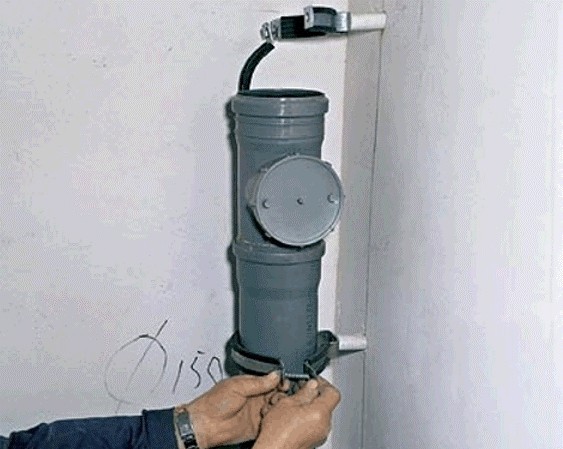
Installation of a fan pipe
Having figured out why you need a fan pipe, you should take a closer look at the main stages of its installation:
First of all, when replacing pipes in an apartment or a private house, the old sewer system is dismantled
Today, cast iron products are already obsolete, so they should be replaced with plastic funnel pipes, while being careful.
Dismantling is carried out by turning off the riser and sequentially disconnecting the structural elements.
-
A new fan pipe begins to be installed from the lower stiffness point located in the main riser. In the case of a country house, installation begins from the place where its foundation begins.
Holes are drilled in the supporting structures and a fan pipe is installed, securing it with clamps. After the plumbing is installed, a fan outlet is brought to the toilet. -
- In some cases, a flexible sewer sewer pipe creates difficulties when connecting to other pipes. In this case, the O-rings are pre-lubricated with liquid soap or silicone, facilitating their entry.


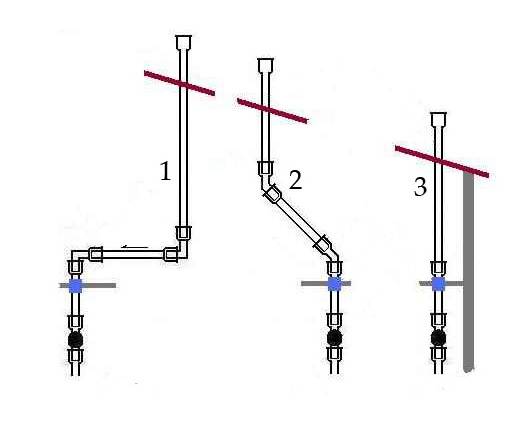

-
When installing a fan pipe, only metal clamps should be used, which ensure the reliability and strength of the structure, as well as allow you to select deviations from the marking lines that may occur during pipe assembly. The stud on a standard metal clamp has a convenient screw structure that allows you to precisely adjust the elements to be connected.
- Noise insulation of the fan pipe is carried out using mounting foam or mineral slabs.
Fan pipe repair
Replacement of fan pipes
When repairing a fan pipe, the following nuances should be considered:
- The diameter of the pipe must be greater than or equal to the diameter of the riser on which the installation is made;
- The end of the pipe is positioned so as to ensure the removal of an unpleasant odor by the wind;
- The pipe is laid in warm rooms, and finished in a cold zone (except for the attic), since the temperature difference creates the necessary pressure drops in different parts of the pipe, and the pipe leading to the attic will lead to an accumulation of an unpleasant odor there, which will then penetrate into the living quarters;
- The design of the house is directly related to the vent pipes, especially if there are several risers and, accordingly, several vent pipes, which is especially noticeable on the roof and on the attic floor.
Vacuum valves
The fan pipe is repaired by direct connection to one sewer riser, while vacuum valves are installed on the remaining risers, which are rubber seals equipped with springs. A working sewer creates a vacuum in such a valve, as a result of which it opens, sucking air from the room into itself. After equalizing the pressure in the riser, the spring closes the valve, preventing the unpleasant odor from escaping.
After reading this article, it should become clear to you what a fan pipe is, which prevents the penetration of unpleasant odors into the bathroom, and from there to other rooms.
Moreover, it is important not only to install a fan pipe, but it is desirable to replace the existing cast-iron pipe with a plastic one, which has greater smoothness from the inside, which does not allow deposits to stick to the pipe cavity from the inside, clogging it. In addition, the use of plastic pipes greatly simplifies the repair process in the bathroom when replacing pipes in the bathroom and toilet.
natural and artificial type
According to the type of inducement of the movement of air masses, ventilation systems are divided into natural and artificial:
- Natural, they are gravitational. They act due to the difference in density and temperature of the air mass outside the window and inside the premises. The exhausted warm air with a lower density rushes up and is drawn into the vents, replaced by a denser cold stream from behind the window.
- Artificial, they are mechanical.They work by continuously stimulating the movement of air flow by fans. They are installed on the exhaust or on the inflow, it happens that they are mounted in both supply and exhaust components, but only one direction is always involved.
The gravitational type of ventilation directly depends on weather conditions. In the summer heat, his work spontaneously stops, because. the pressure between the air inside and outside is equalized. It happens that the flow of air in the heat occurs in the opposite direction: from the house / apartment to the street.
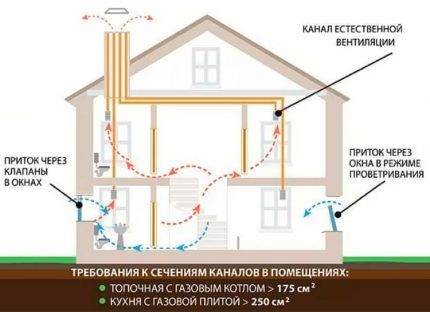 Natural ventilation is non-volatile. There are no expensive devices in her scheme. It is cheaper to assemble and maintain, but inferior to forced in terms of capabilities and efficiency.
The intake of fresh air according to a natural pattern occurs through leaks in window and door openings with boxes, through open vents and periodically opened doors. Outflow - through barred vents arranged in kitchens and bathrooms.
The apartments of the old housing stock were ventilated according to the natural scheme. Nobody was going to mechanize it. Now in these apartments, designed for natural inflow, plastic sealed windows are installed. Because of them, the normal movement of air is disrupted, therefore, together with a plastic window in a high-rise building, a supply wall valve should be installed.
Supply or exhaust valves into the wall should be used in private houses in which the construction of mechanical supply and exhaust ventilation is not planned.
With the help of a valve, the inflow or outflow will be provided in the cheapest but most effective way. In this case, the entire system will receive the status of a combined system - i.e. partially mechanized.
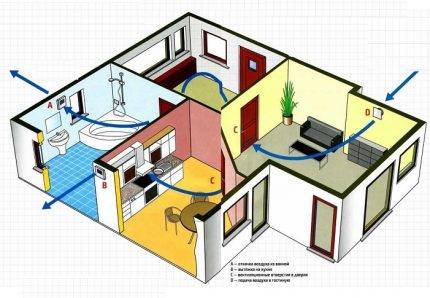 The simplest options for combined ventilation systems, partially mechanized by local fans, include systems with supply or exhaust valves, as well as kitchen hoods without recirculation with an air duct connected to the ventilation shaft
Mechanical ventilation is the most expensive and difficult to implement type of system that requires the inclusion of a heat exchanger or air heater, an air handling unit. Its air ducts are laid behind false walls, suspended or stretch ceilings, laid out in building structures during the construction of the house.
Naturally, if the owner decides on a supply and exhaust ventilation device, he will not save on material for ventilation ducts. It is unlikely that he will buy sewer pipes. It is better to purchase plastic air ducts that are connected to ventilation equipment without problems and unnecessary tricks.
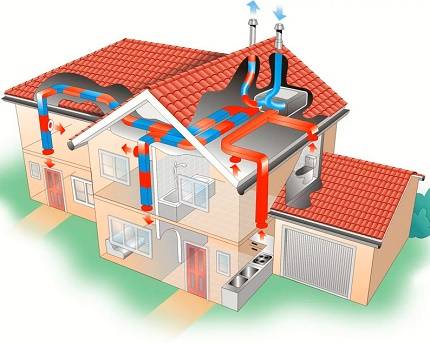
The installation located in the attic of the house is responsible for the operation of the supply and exhaust ventilation. It pumps in fresh air and removes the spent mass, regardless of weather conditions.
In private houses, exhaust ducts from bathrooms and kitchens hoods are displayed or separately on attic or reduced to a common shaft located in the middle of the building. In this way, the loss of usable area is reduced and the shaft reaches the roof at the highest point, which ensures excellent traction.
The sewer plastic pipe passing through the attic must be sheathed with insulation. Otherwise, the pipe will collapse from temperature changes. Hotter air will always come out of the kitchen than in the environment, which means that due to unstable expansion, deformation or leakage of the channel is possible.

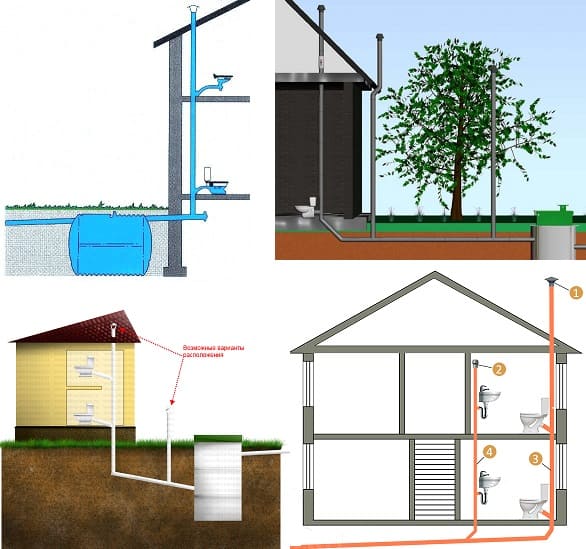

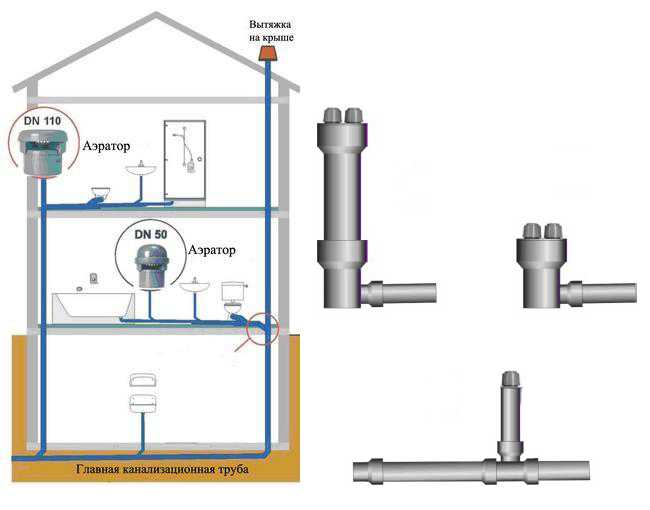

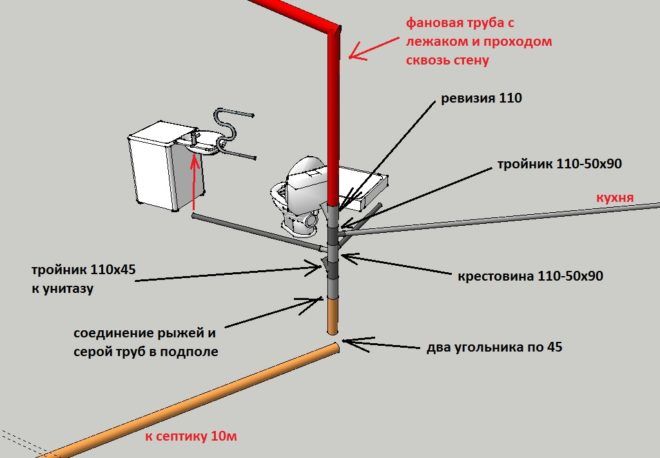
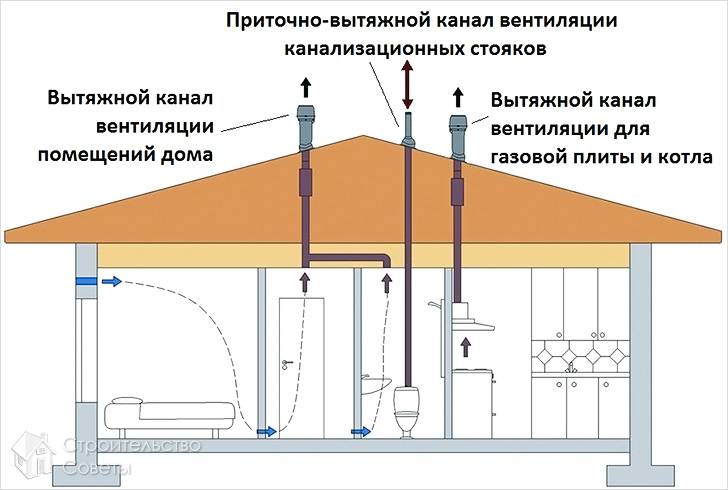


A cap is necessarily installed on top of the pipe - a ventilation deflector that protects against precipitation.
What is used for
At the point of connection to the sewer riser of the toilet bowl and pipelines for draining waste water, there are water plugs or a water seal. Such a device prevents the flow of odor from the sewer into the room. When water is drained into the riser, it moves sharply downwards, a vacuum occurs in the system, which causes the water plug to detach.
The drain pipe for sewerage contributes to the rapid flow of air into the pressure reduction zone, which eliminates the possibility of water suction from hydraulic seals. The installation of such an element maintains a constant pressure inside the system, prevents breakage of valves, blockages in pipes, stagnation of liquid effluents and the possibility of their reverse penetration into the sewer.
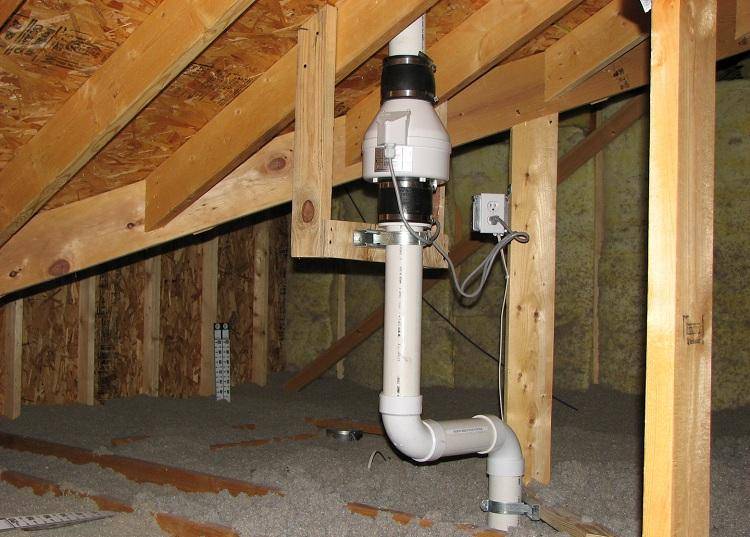
Installation
Before you install a fan pipe, you need to calculate its dimensions. To install a corrugated pipe and a waste pipe, a branch with a diameter of 110 mm is used. This indicator depends on what diameter the drain pipe has. Most often, the drain from the toilet is made with a cross section of 75 mm, but with a strong pressure of water, it can overlap, which will create some inconvenience. Therefore, for its additional protection, a larger diameter fan pipe is used.
Scheme: fan ventilation
Another major point of the installation is that the outlet pipe must be located in a place where sewer odors will be ventilated with fresh air. It is advisable to place it in an open space or directly combine it with ventilation ducts.
Video: preparation and installation of cottage sewer pipes
Basic rules for installing a flexible fan ventilation pipe:
- The section of the fan connection is always larger than the size of the main pipe, otherwise the connection will not be airtight and may be broken with a high pressure of sewage;
- The reinforced sewer sewer pipe should be led out under a cold room that is not heated, but start in a warm one, this will help organize proper ventilation. At the same time, according to SNiP, attics (because the fan must go down) and outdoor premises are not suitable for installation, since it is necessary to provide excellent thermal insulation of the pipe;
- Most often, one such ventilation is installed for the whole house. To ensure branching, a special cross is used. Sometimes a tee is used. In some cases, with the wrong layout of the building, you can make several ventilation for each bathroom, but then for each scheme is developed individually.
After you have decided what fan ventilation and sound insulation are for, you need to proceed with the installation of the pipe. To do this, you first need to prepare the work process. The water in the riser is turned off, and the pipe is cut in the intended place. Depending on the type of ventilation arrangement, you can install the pipeline horizontally or vertically. Horizontal placement will not disturb the beauty of the interior, but is considered a more complex design than vertical.
Scheme: installation of a fan pipe
After communication with the socket is introduced into the prepared main pipeline to a certain depth. Some masters use a detachable fan pipe for ease of installation.The sliding design is allowed, if necessary, to clean the sewer system.
Regardless of which diameter of the external or internal fan pipe has been chosen, it is not necessary to install a vacuum check valve in it.
What it is? The vacuum valve or gasket is used for the following purposes:
- Protection of sewage from rodents and other animals;
- To prevent the return of drains. There are quite frequent cases when a return pipe was not installed at all in the sewer riser, then in case of an accident, feces can go back to housing;
- If there is a problem with mixing, the valve prevents artificial impurities from returning to the sewer;
- With its help, complete sealing of drains is ensured.
Installing a check valve is a simple but very important process for installing a sewer system. To begin with, the water in the riser is blocked, the pipe is completely wiped from the inside and degreased with special compounds
It is very important not to lubricate it with silicone sealants or adhesives - they can adversely affect the integrity of the valve
After that, a special insert is inserted into the pipe, which will later serve as the basis for the fan. Then, the vacuum valve is mounted. It must be snapped into the pipe, but make sure that the petals of the device are open, bent to the base.
If the knee size is within 110 mm, then you must also use a special adapter. This is a box with additional taps, which will help to make a tighter connection between the valve and the line. Another option for installing the valve is directly into the pipe, then the connection is a cut pipe into which the valve is inserted along with the fan.
check valve
You can buy communication at any plumbing store, a white fan pipe of 75 brands such as Mcalpine, Jimten, Plastimex, Sanmix, Viega is very popular (price depends on size, reinforcement and other characteristics).
Fan pipe installation rules
When arranging a system with a vent pipe connection, the following rules must be observed:
- When choosing material for a fan pipe, you need to ensure that the diameter of the selected pipes matches the diameter of the riser;
- The upper edge of the vent pipe should be at a point where the released air will most quickly mix with the atmosphere (for example, an attic space is not suitable for this);
- The first segments of the sewer system must be located in the heated part of the room;
- The last section of the pipeline is installed where there is no heating - the movement of polluted air masses is provided due to temperature changes and pressure changes.
There is one more point that should be considered separately, since it is not directly related to the fan pipes, but is directly related to the work of the sewer. When installing various plumbing fixtures, the following situation arises - the volume of siphons does not correspond to the characteristics of plumbing.


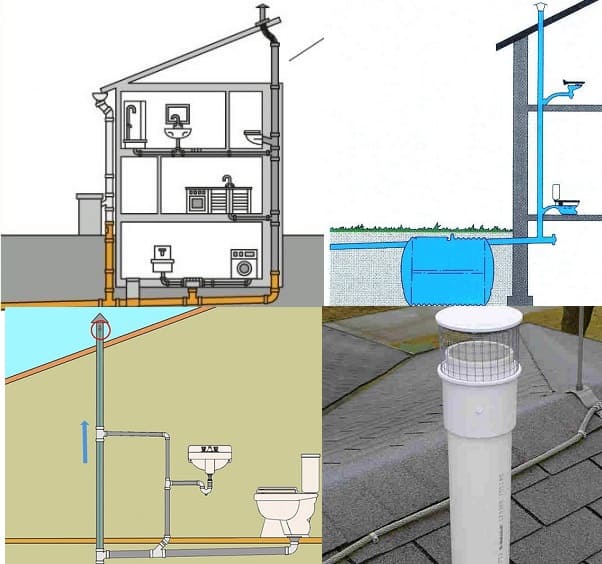


All this leads to a simple result: in small siphons, the water dries out too quickly, and nothing prevents the smell from getting into the room, and draining from large siphons is impractical, and the fan pipes will most likely simply not be able to compensate for it.
Construction and maintenance
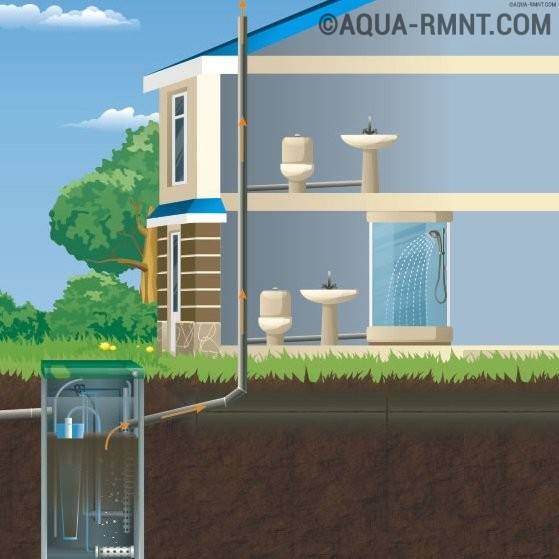
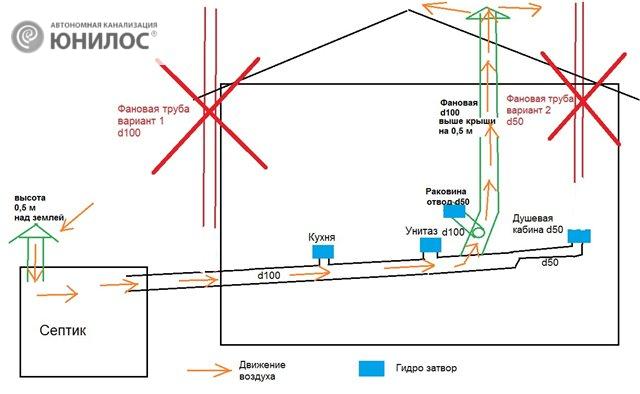
The ventilation ducts are carried out at the final septic tank installation. Regarding what and how to make the latter, there are many descriptions. Ventilation of a septic tank made of concrete rings (this is one of the typical construction methods, distinguished by reliability and availability) will become possible, on the one hand, due to the presence of a pipe diverted from its second (last) chamber (but not from the first), and on the other hand, behind account of the risers provided at the starting point of the sewer system, providing compensation for the vacuum.
In the presence of filtration fields, drains should also be equipped with ventilation pipes. The latter will be able to additionally serve as viewing windows and places for flushing. The pipe diameter is generally ~100 mm. As for air circulation, it goes according to the scheme:
- inflow through the second (if there are more of them - the last) chamber;
- passing through the connecting pipes and the riser upwards (the appearance of gases is accompanied by an abundant release of heat, and it contributes to just such a direction of flow);
- exit through a riser located at some elevation above the roof of the building (fan).
What can block the free flow of air? In order for gases to pass through the system unhindered, it is necessary to fill the pipes from 1/3 to 2/3 of the inner diameter, no more. To improve traction, as well as to prevent precipitation from getting inside, it is required to equip the upper ends of the risers with protective caps.

Scheme of treatment facilities
At the same time, a number of precautionary measures relating to safety must be observed. Here they are:
- there must be at least two attendants;
- it is necessary to use personal protective equipment against falls;
- Smoking is not allowed in work areas.
If you do not want the products sent from the toilet through the toilet bowl and cistern to poison your life, returning already in gaseous form, be sure to provide and ensure optimal operation of the ventilation system for your septic tank. This will not only save your nerves, getting rid of the stench, but maybe even save your life.
Main purpose
In accordance with SNiP, sewer ventilation must perform 2 main functions:
- remove waste odors from the system;
- give warning of rarefaction of air in the waste system.
At a time when, when draining the water, the lumen of the fan pipe is completely blocked, the drains will be able to “pull” water from the siphons due to a failure. In an empty state, they will not be able to prevent the penetration of unpleasant sewage odors.
SNiP rules
- The diameter of the ventilation system in the sewer network must be the same as the diameter of the riser.
- It is necessary to bring the ventilation pipe to the roof and attach it to the top of the pipeline.
- The instruction allows connection together in one exhaust part of 4 or more risers. Then the diameter of the combined ventilation and hood should correspond to the diameter of the largest outlet in the combined group.
- When laying the prefabricated ventilation, it is necessary to make a slope for condensate drainage.
- In unheated attics, the ventilation duct is to be insulated, its price, along with this, will only increase slightly.
Lead the sewer ventilation duct through the ventilation shaft of the house or the roof.
Along with this height from:
- flat unused roof - 200 mm;
- pitched roof - 200 mm;
- edge of the prefabricated shaft - 100 mm;
- drop-down balconies and windows - from four meters;
- operated roof, if 4 pipes were combined - 3 m.
In addition, it is allowed to make non-ventilated waste risers in country buildings. But the condition must be observed - it is necessary to provide ventilation to the external sewage networks (for example, a septic tank).
We solve the problem
| If it is possible to combine sewer ventilation with bends into one network plumbing fixtures |
|
| In the event that the ventilation of the sewer network is removed from the taps of plumbing fixtures |
|
Problems:
- if the sewer ventilation does not function or does not work well, then the system does not have an appropriate slope.
- an unpleasant odor still enters the room - the diameter of the taps of plumbing fixtures is not correctly selected.
How to do without sewer ventilation
Before answering this question, go to find out what is the main element of the sewer ventilation system. This is a fan pipe used to connect the riser to the ventilation duct.If it is absent, you will soon need to deal with the removal of unpleasant odors from the house.
Existing building codes for buildings and private houses no higher than 2 floors allow the use of sewer systems without pipe installation. This is explained by the small volume of one-time wastewater discharges.
In the event that the plumbing devices installed in the house do not work at one moment, the sewer does not overlap. At the same time, the situation can change radically, at a time when they all work at the same time.
To determine the possible large one-time discharge of wastewater into the sewer, it is necessary to take into account their quantity from each plumbing fixture located in the building.
There are certain standards for this value, presented below:
- toilet bowl and bidet - 10 l each;
- sink - 20 l;
- washing machine and dishwasher - 50 l each;
- shower cabin - 100 l;
- simple bath - 220 l;
- corner bath and jacuzzi - 450 liters each.
In this case, the peak value will be 1360 liters.
Ventilation must be installed without fail, regardless of a one-time discharge of sewage, at a time when:
- home sewer risers have O 50 mm or less;
- in a house of 2 or more floors, with water supply and sewerage systems installed on each;
- on the site adjacent to the house or in it itself there is a swimming pool, font or bath of enormous size.
Ventilation outlet through the roof
It is not recommended to leave the outlet of the sewer exhaust pipe in the attic, as it is not properly ventilated, and the smell can penetrate into the house. The pipe must be pulled through the roof. The work is performed in the following sequence:





- the laying of the exhaust pipe is completed in the attic;
- the end section of the pipe is fixed on the roof surface;
- using a corrugated adapter, two pipe sections are connected.
The end section of the pipe is fixed on the roof surface using a flexible and elastic adapter made of polymer material. Its cuff is sealed and securely fastened with screws or other fasteners. It is easiest and most reliable to use a factory-made ventilation outlet for installation on a roof, designed for a specific type of roof.
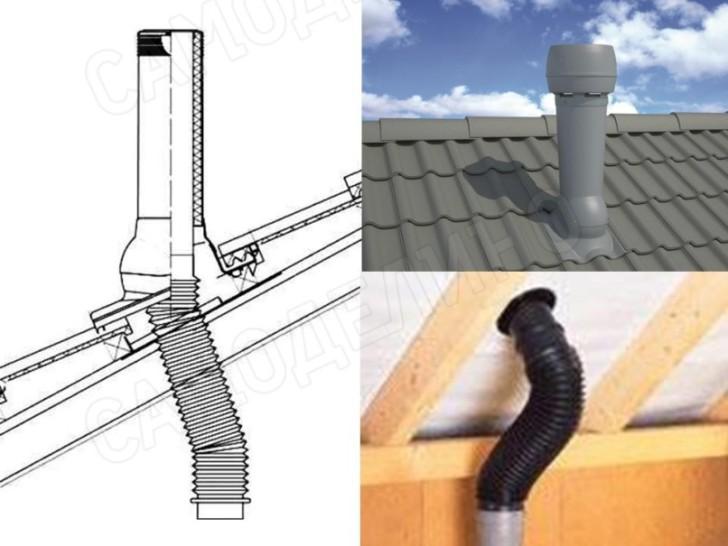
Under normal conditions, the warm air that exits the ventilation duct does not allow freezing of the sewer ventilation outlet. Note that in regions where the temperature in winter can drop below thirty degrees, ice freezes and clogs the ventilation outlet. In this case, it is necessary to insulate both the section of the ventilation duct in the attic of the building and its exit on the roof.
Purpose of ventilation
Ventilation of the sewer system is intended to solve the following problems:
- elimination of unpleasant odors from plumbing fixtures;
- elimination of gases (hydrogen sulfide and methane) generated during the decomposition of waste in a septic tank (cesspool). Gases can harm people's health (severe poisoning) and lead to an explosive situation;
- balance the pressure inside the sewer pipes. When draining water simultaneously in several plumbing fixtures, it leads to insufficient air in the sewer system and, as a result, the formation of a pressure difference. Timely air supply will help eliminate this problem and keep the installed water seals intact.
Do-it-yourself ventilation of a septic tank from concrete rings
A popular model of a homemade septic tank among summer residents is a tank made of concrete rings. The structure resembles a cesspool, only, unlike it, it has access to a filter chamber or a drainage field. A more efficient design consists of two chambers, if desired, both containers can be equipped with separate hoods. The more actively air enters the treatment plant, the faster the biological treatment process will take place.
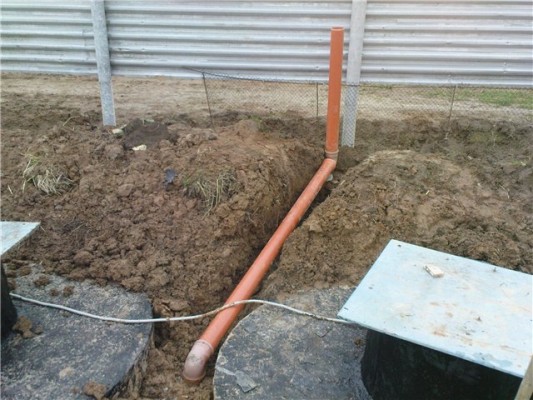
Common side outlet for ventilation
Consider, how to arrange ventilation in a concrete septic tank, or rather, in the most successful design, consisting of two chambers and a filter well. Either two chambers or all tanks are equipped with air inlets and outlets. The process proceeds as follows:
- we prepare segments of the desired length with a cross section of 110 mm;
- in concrete covers with which the chambers are closed from above, we drill holes of the same diameter;
- we insert the elements into the holes intended for them (the lower part should not touch the drains, we raise the upper part to the maximum possible height);
- we fix each part with sealant, mastic or cement mortar;
- We equip the upper ends with a protective cap.
End caps prevent debris, water and snow from entering the tank and enhance air draft. Of course, any cleaning equipment requires maintenance from time to time. In this case, the removal of solid waste and elimination of blockages. At the same time, they also clean the pipe for ventilation. Considering that gases are dangerous (they are a necessary result of biodegradation), be sure to use a safety harness and a respirator.It is best to carry out all work under the supervision of an assistant.
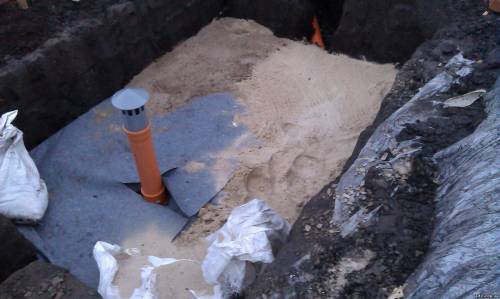
Outer pipe in a concrete septic tank cover
If a drainage field is provided at the summer cottage, external outlets are placed along it - they give air access to the drains and remove the formed gases to the outside. More often, drains (perforated pipes, from which drain water goes into the ground), are simply bent, brought to the surface and equipped with caps. Such devices play the role of technical holes, with their help you can check how the system is functioning. If water has accumulated in the lower part, the drains do not have time to soak into the ground, a clean bottom indicates the proper operation of the sewer.
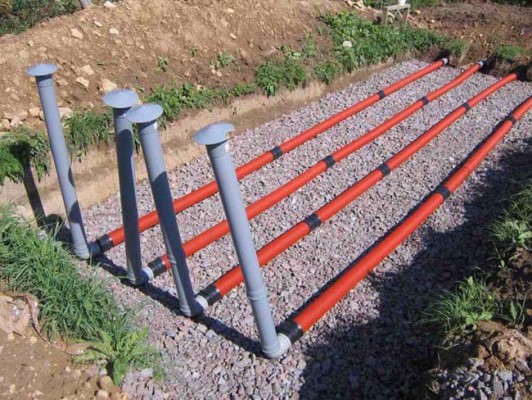
Ventilation device on the drainage field
As you can see, the correct septic tank ventilation device brings noticeable benefits: it activates the treatment of waste masses and prevents the appearance of an unpleasant odor. By doing all the work yourself, you can save on installation, but if you are not confident in your abilities, contact a specialized company.