
- Folk remedies for cleaning
- Advantages of modern material
- Folk ways
- Toothpaste
- Vinegar
- Soda
- Lemon acid
- Hydrogen peroxide + vinegar
- Mustard + soda
- Lemon juice
- Laundry soap
- Hydrogen peroxide + ammonia
- How to clean a bath with traditional methods
- Removing limescale (water stone)
- Getting rid of rust
- We disinfect the surface
- Removing scratches
- Conclusion
- How to prevent damage to the surface of the bath
- Acrylic bathtub can always be as good as new - take care of it properly
- 1 Household chemicals for acrylic bathtubs
- We recommend to read
- Tips for the effective use of special tools
- Removing deep and small scratches
- Regular disinfection
- Getting rid of limescale
- Best Bath Cleaning Sprays
- Meine Liebe - for daily cleaning of acrylic bathtubs
- Bugs "Acrilan" - rust spray on enamel
- B&B Unicum Bami - instant bath cleansing
- How can you not clean an acrylic bath?
Folk remedies for cleaning
Unlike enamel, acrylic perfectly tolerates the effects of acids. Therefore, the easiest way to clean the bath is to buy a solution of citric acid and dilute it with water. The ratio should be as low as possible. For example, 1500 ml of 7% acid is taken for 50 liters of water.
It is important to note that only a solution of citric acid is allowed to be used (powder will not work)
Another option to whiten an acrylic bathtub is to rub it with pure lemon juice. Of course, this method is not cheap, but its effectiveness has already been tested by many housewives. A fresh lemon is cut in half, after which the gray areas are rubbed with the juicy side. The juice must be left on the plastic for at least 8 hours. After just rinse with water. This is the only safest way to rinse the tub before bathing your baby.
Vinegar copes well with limescale and yellowness. It is best to use either acetic acid or an apple 9% solution. The proportions are similar to citric acid - for a full bath you need to take 1500 ml of acid and dissolve it in water. The liquid must be left for 10 hours, then rinsed off, wiped the walls with a fleecy cloth and spilled again with water.
Even ordinary bleach will help restore the shine to the bathroom.
It is important to remember that it is strictly forbidden to use products that contain chlorine. Therefore, it is better to take a product for colored fabrics or wool.
The stain remover is evenly distributed over the bottom and walls of the bath, after which it is left for several hours. The minimum is 4 hours, the maximum is 8, but no longer recommended. At the end of time, the bath is washed with a large amount of water and wiped with a sponge.
The hardest thing to clean at home is an acrylic whirlpool tub. The main problem faced by its owners is that the nozzles become contaminated with soap and salt deposits. To get rid of this, you need to pour a weak solution of chlorine into the hydromassage system.In order to completely clean the system, 20 liters will be enough. The fluid must go through several cycles through all nozzles, after which it must be drained.
What can not be used to wash a dirty acrylic bath:
- Acetone. This is strictly prohibited, because it corrodes plastic. The consequences of such cleaning can be not just stains without paint, but real holes in the liner;
- Petrol. Also, like acetone, this substance has a very negative effect on acrylic and the paints with which it is coated. After such washing, ugly gray spots and stains remain;
- Soda and other powders. By itself, baking soda is a great bleach, but it's too abrasive. Due to active washing with powders, scratches appear on the glossy surface of acrylic, which after a while can become cracks.
In addition to the choice of means, the method by which the bath is cleaned plays an important role.
How not to wash an acrylic bath:
- Never use hard, non-natural bristle brushes or metal brushes. They mercilessly scratch acrylic, which causes small scratches on its surface. It is best to use a special sponge. It differs from the usual household washcloth in pore size and material;
- Do not mix several detergents during washing and rinsing. Some of them contain hazardous components that, when reacting with substances from other products, form toxic gases. In particular, Domestos is known for such an action, which, when mixed with other cleaning gels, produces chlorine gas;
- Do not wash off chemical detergent with hot water. Also due to the possibility of formation of toxic fumes.
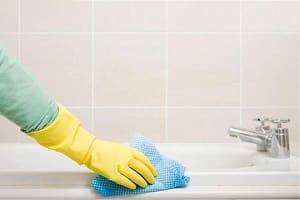 Cleaning the bath is carried out only with gloves
Advantages of modern material
Often disadvantages of acrylic bathtubs are compensated by its pluses, therefore it is impossible to unambiguously write off this option
Pay attention to new items, as a rule they do not have the shortcomings of previous samples.
- Preservation of water temperature. Hot water poured into an acrylic bath retains heat for a longer time than steel or cast iron. For those who like to soak in warm water, this will be the best solution.
- Easy to wash. Simply rinse the surface with warm water and wipe with a dry cloth. Thanks to the features of the material, caring for it becomes many times easier.
- Design. An undeniable advantage over competitors. The variety of types and shapes is much greater than that of cast iron or steel options. There is a suitable option even for the most demanding customer.
From the analysis of the pros and cons of acrylic bathtubs, it is impossible to draw an unambiguous conclusion. Here it is necessary first of all to decide what you expect from the new plumbing. Will it be an elegant solution to a non-standard bathroom, or a reliable, durable and practical bathtub, designed in its classic way. It's up to you to decide here.
Folk ways
Toothpaste
When answering the question of how to wash an acrylic bathtub, it is worth first noting the possibility of using toothpaste for this purpose. Initially, acrylic was actively used in dentistry. With its help, crowns were made, and dentures were also lined. That is why toothpaste is ideal for cleaning the bathtub.
toothpaste without abrasive
To clean your bath, apply the paste to a sponge and rub the stained areas thoroughly, then rinse the surface with water and rub it to a shine.
Helped Didn't help
Vinegar
Vinegar is often used when cleaning acrylic surfaces, as it helps fight rust and limescale. The bath should be filled with water, after which 700 ml of 9% vinegar should be added there. The solution in the bowl can be left overnight, after which the liquid should be drained, and the surface of the bath should be washed with water and wiped dry.
Helped Didn't help
Soda
do not rub the powder!
Soda is a substance that perfectly copes with stubborn stains on various surfaces, helps fight limescale, and whitens perfectly. Many people are concerned about the question: is it possible to wash an acrylic bathtub with soda. There are 2 safe ways to clean an acrylic bathtub with baking soda:




- A pack of soda is poured into the bath, warm water is added and left for 1 hour. Then the solution is drained, and the bath is wiped dry. The method is effective only if the problem is minor.
- Hard-to-remove plaque must be removed with soda, which is diluted with water to a mushy state. This paste is applied to problem areas and left for half an hour, after which it is washed off with water and wiped dry.
Helped Didn't help
Lemon acid
lemon acid
Helps to get rid of limescale. To use this method, 200 g of citric acid is dissolved in warm water.The bath is filled with water and 1 liter of the prepared solution is added, left for a while (no more than 12 hours), after which the liquid must be drained and the surface of the bath wiped dry.
Helped Didn't help
Hydrogen peroxide + vinegar
This method helps to fight the yellow plaque that has formed over time. You need to take 3 parts of 9% vinegar and 1 part of hydrogen peroxide, mix. Using a sprayer, the prepared liquid should be applied to the yellowed areas. After 10-20 minutes, the coating should be washed with water and wiped with a dry cloth.
Helped Didn't help
Mustard + soda
If there were no suitable household cleaning products at home, then this method can help out. It is necessary to take mustard powder and soda in equal proportions, mix, and then dilute with warm water to a mushy state. The prepared paste is applied to the yellowed areas for half an hour, after which it is washed off.
Helped Didn't help
Lemon juice
If rusty smudges or stains appear, then you can use lemon juice to remove them, which is applied to problem areas of the coating for no more than 1 hour. To enhance the effect, you can add salt to freshly squeezed juice. You should get a thick gruel, which is applied to rusty spots.
lemon juice
Helped Didn't help
Laundry soap
grated laundry soap
This is a versatile tool that copes with a large number of different stains and dirt. Soap should be grated and diluted in warm water. As a result, a homogeneous gel should be obtained, to which 50-75 fine salt should be added. Cooked pasta should be kept on contaminated areas for about 1 hour.
Helped Didn't help
Hydrogen peroxide + ammonia
To eliminate rust spots, peroxide and ammonia should be mixed in equal proportions and sprayed onto problem areas of the acrylic coating.
Helped Didn't help
Rating of folk remedies for cleaning an acrylic bath
Toothpaste
Vinegar
Soda
Lemon acid
Hydrogen peroxide + vinegar
Soda + mustard
Lemon juice
Laundry soap
Hydrogen peroxide + ammonia
How to clean a bath with traditional methods
If during the cleaning process there were not enough detergents at home, the tips in this article will help to perfectly clean the surface of the acrylic bathtub.
The first remedy is wine vinegar, which perfectly washes stains and rust. To do this, moisten a cloth in vinegar and apply well to the contaminated area, after which it can be washed off with water. You can get the same effect using diluted citric acid or lemon juice.





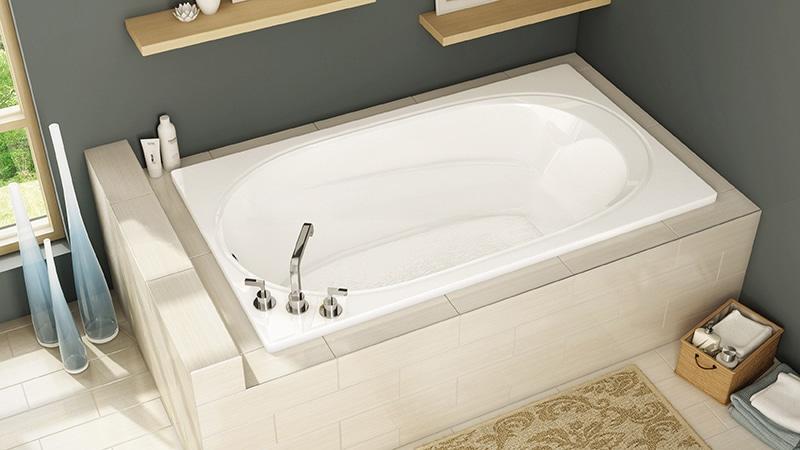 Maintaining the Whiteness of Acrylic Bathtubs
Detergents such as shower gel, soap or liquid dish detergent have also proven themselves well. Either apply to a soft cloth, spread over the entire surface and leave for a few minutes, or take warm water into the bath, which can be diluted with gel or soap and let stand for a while. Then rinse well with water and wipe dry.
Removing limescale (water stone)
Cleaning a water stone is not such a simple process. To achieve a positive result, and there was no damage to the surface, you need to know how to clean the acrylic bath from limescale at home. For this, one proven method is used, but only no more than once a year.
Pour warm water into the bath.Pour a bottle of vinegar into it and stir. We leave the water with vinegar for the whole day. After that, drain the water and wipe the bath with a sponge. Finishing work is rinsing the tub with water and wiping it dry.
Vinegar also perfectly cleans the surface if soda is added to it.
If there is no time to wait until the bath is cleaned, you can use special cleansers or dilute citric acid in a container in a ratio of 1: 2. After that, with a soft sponge dipped in this solution, apply to the water stone / plaque, wait 10 minutes. Then the procedure is repeated, after which the smeared place is wiped. Next, rinse with water.
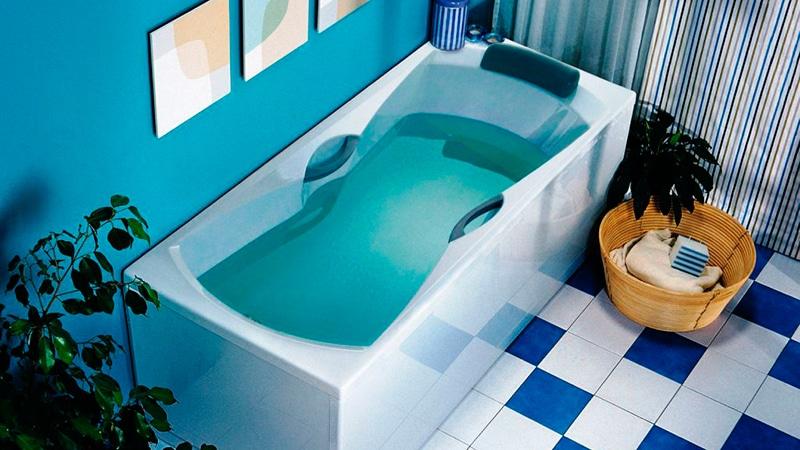 Cleaning an Acrylic Bathtub Using Wine Vinegar
Getting rid of rust
While acrylic bathtubs are not susceptible to corrosion, running or dripping tap water can still cause nasty yellow stains. How and how to clean an acrylic bathtub from yellowness in this case? To do this, you can resort to the use of citric acid. By resorting to cleaning with citric acid, your bath will remain white for a week.
If this method does not get rid of rust on the surface, then you will have to use the cleaning products intended for this.
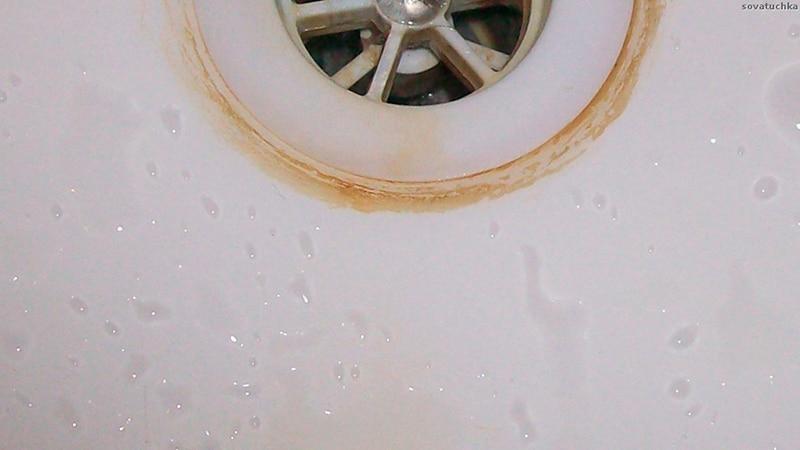 Bathtub cleaning from water stone
We disinfect the surface
As mentioned earlier, acrylic surfaces are not subject to fungal and moldy deposits. Nevertheless, by disinfecting, you can prevent not only the formation of various kinds of raids, but also keep your health from bacteria.
Disinfect baths in this way: fill the bath with water and dilute the disinfectant in it, which is compatible with acrylic, and leave for 10 minutes.After that, the surface should be washed with water. Now you can not worry about your health.
Removing scratches
You should be aware that acrylic surfaces are amenable to restoration. If scratches appear on the surface, they can be removed with sandpaper. And to restore the usual shine, you can rub the bath with polishing paste.
If there are enough scratches, in this case, the use of felt would be an excellent solution. With it, you rub the damaged areas of the surface, and your bath regains its original shine.
Conclusion
Knowing about all these simple and uncomplicated methods for the care of acrylic bathrooms, you can easily extend their life for many years. Remember what substances you can use, how often you need to clean the surfaces, and then your bath will retain its original shine and whiteness.
How to prevent damage to the surface of the bath
Many housewives know that toothpaste is a reliable assistant in the fight for cleanliness. The main thing is to choose a product without the content of small granules and other whitening particles. Despite their softness, they can cause significant damage to the surface of the bathroom. By the way, in addition to soft sponges and napkins, it is also allowed to clean acrylic with toothbrushes. Their thin bristles perfectly remove even stubborn dirt without causing any harm.
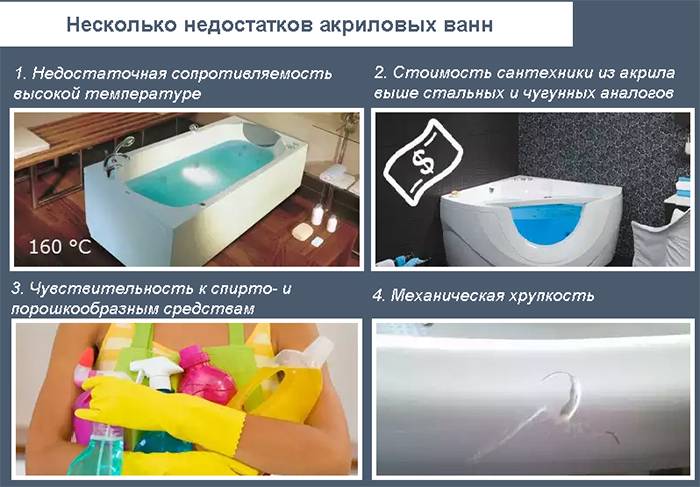
Incorrect mechanical impact on the surface is not the only enemy of acrylic. The material does not tolerate high temperatures, so it is highly recommended not to smoke in the bathroom or lean hot styling tongs on it.A spark from a cigarette is a must will leave a burnt spot on the surface, and forceps heated to maximum temperature can even deform the surface, after which it can no longer be corrected.
Acrylic bathtub does not tolerate mechanical stress
Acrylic bathtub can always be as good as new - take care of it properly
In fact, the care of an acrylic bathtub is quite simple. The only limitation is that you cannot use powder products to clean it. Despite the fact that acrylic has the highest surface strength among thermoplastics, it is still a household plastic, and it is glossy, and exposure to any substance that has an abrasive effect will negatively affect its appearance.
Use liquid or gel cleaners. Ideal for products specifically for acrylic products. There is no shortage in them. Such cleaning products are produced by any self-respecting manufacturer of household chemicals. Acrylic tubs are resistant to soiling, however, periodic thorough cleaning is advisable.
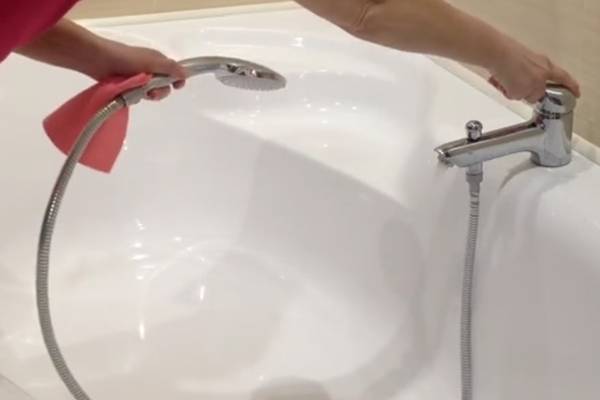
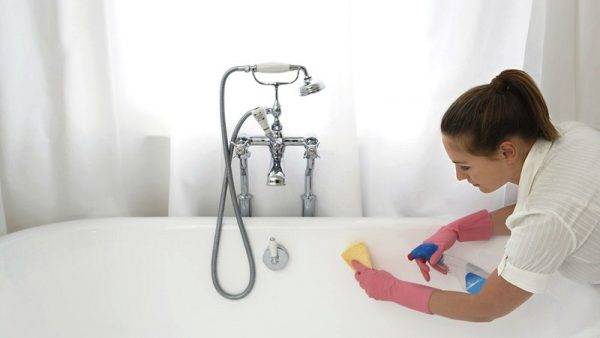
Apply the cleaner to the walls of the bathroom and leave for 5-10 minutes, then rinse. It is recommended to use a soft sponge or cloth. Another reason why you should use products designed specifically for acrylic is the polishing effect that manufacturers put into them.
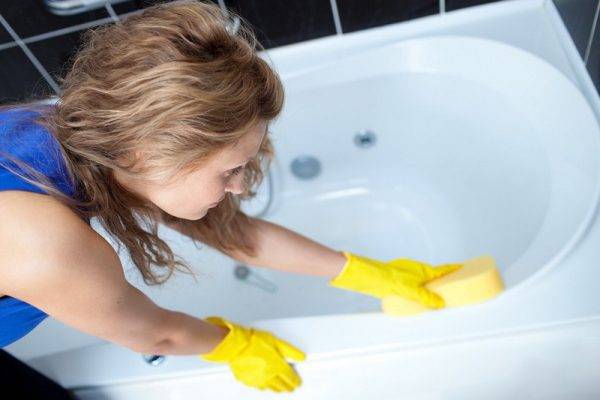
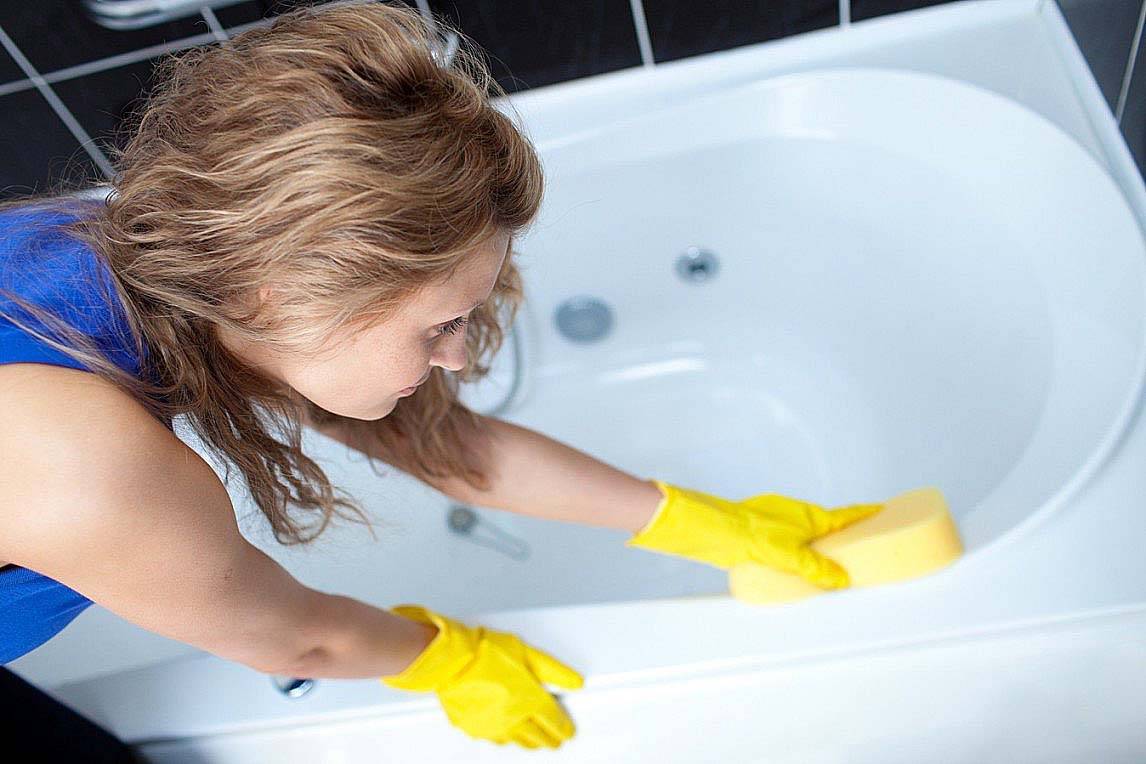
Bathtub cleaning with a sponge
If you didn’t follow up and yellow water stains appeared on the bath, you still can’t resort to powdered cleaners. Moreover, no chlorine, acetone, ammonia, formaldehyde and other aggressive substances. You don't have to invent anything. There are special products for rust control on acrylic surfaces.For the same reason, laundry should not be soaked in an acrylic bath, since washing powders contain chlorine or other bleach, contact with acrylic is undesirable.
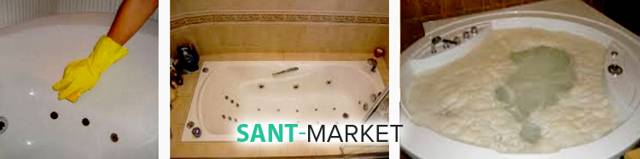



Cleaning the bathtub with a special cleaning agent
Acrylic is indifferent to household acids, so purely domestic conditions are not an obstacle to the fight against limescale (water stone). You can use acetic or citric acid. Pour water into the bath, dilute the acid and leave for several hours. Then drain the water and wipe the tub dry. If you carry out prophylaxis against rust and limescale regularly, this will save the original appearance of an acrylic bathtub for ten years.
It is advisable not to use metal objects (buckets or basins). Metal containers can scratch the surface. If there is a need to use large containers - give preference to plastic ones.
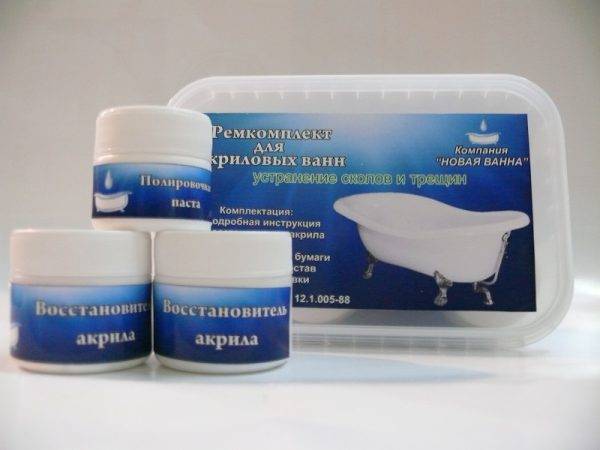
Acrylic Repair Tool
If necessary, the acrylic bath can be easily sanded or polished. Maintainability of acrylic products at a very high level
But such measures, with care, you may need no earlier than 10 years (manufacturer's warranty)
1 Household chemicals for acrylic bathtubs
Despite the unsurpassed properties, it is necessary to periodically clean the bath from limescale, remove water stone and dried soap suds residues.
It is important to remember that it is impossible to use abrasives for acrylic plumbing, as the surface can be severely scratched.
Based on the characteristics of acrylic bathtubs, the following types of contaminants most often require thorough cleaning:
- ordinary dirt, foam residues that can be easily removed with a damp sponge and a liquid chemical cleanser (only soft sponges can be taken);
- dried mud requires pre-soaking, after which it is quickly washed off with warm water;
- stubborn dirt is removed with liquid detergents;
- lime, bitumen, wood resins are not subject to cleaning, therefore it is necessary to avoid getting such substances on the acrylic surface.
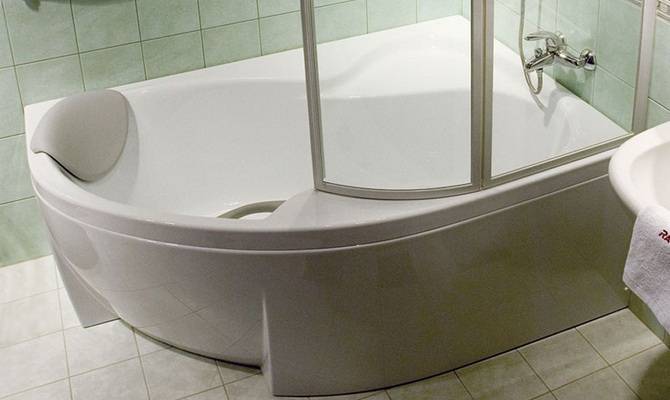 Pure Acrylic Bathtub
We recommend to read
- Cold towel warmer: causes and solutions
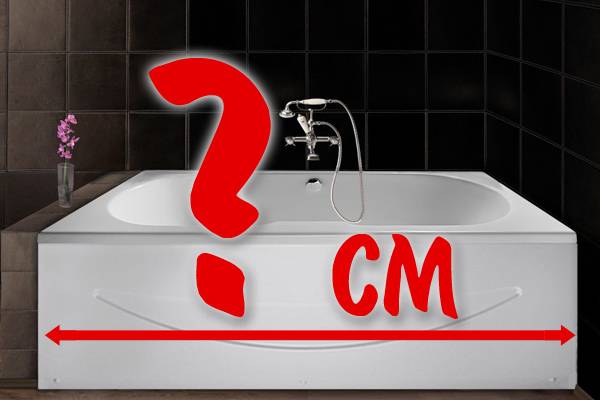
- Typical bath sizes: how to choose and measure?
- Arrangement of ventilation in the bathroom + Video
Periodic cleaning requires:
- rags, soft clean sponges;
- non-abrasive cleaner;
- cool water;
- you can use folk remedies.
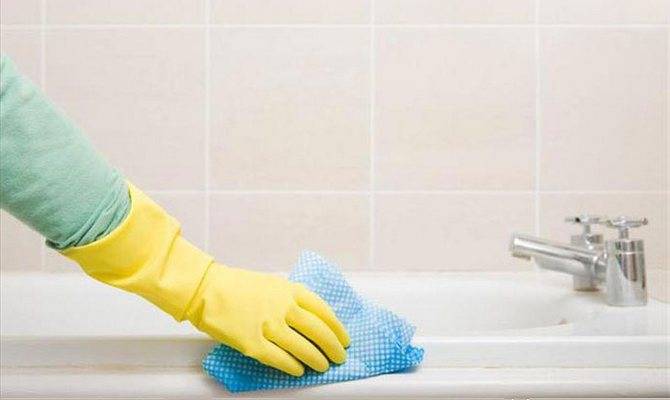 Soft cloth for cleaning acrylic bath
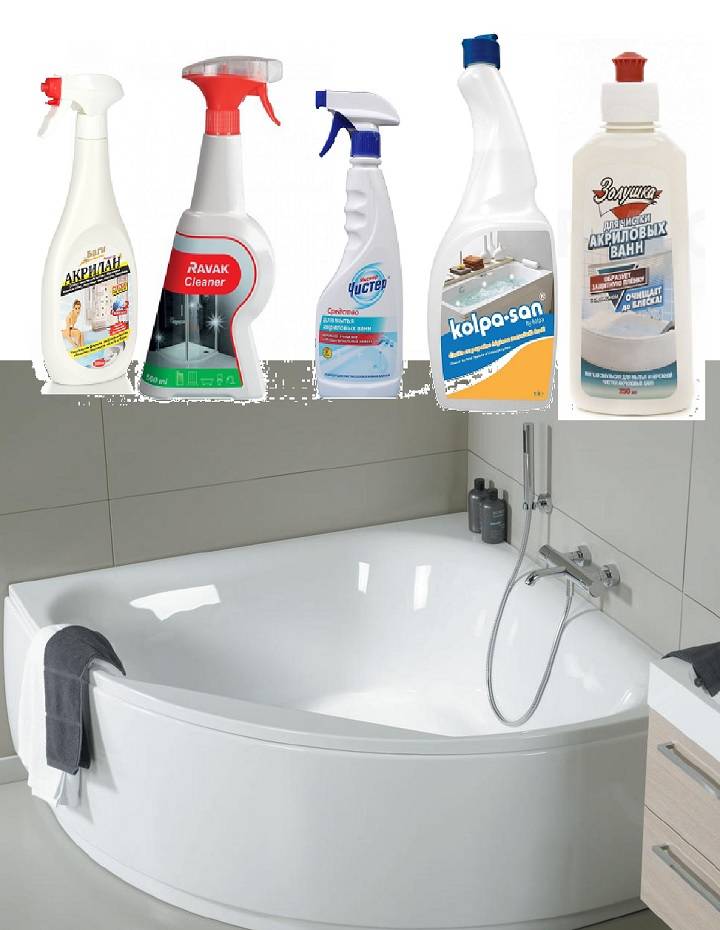
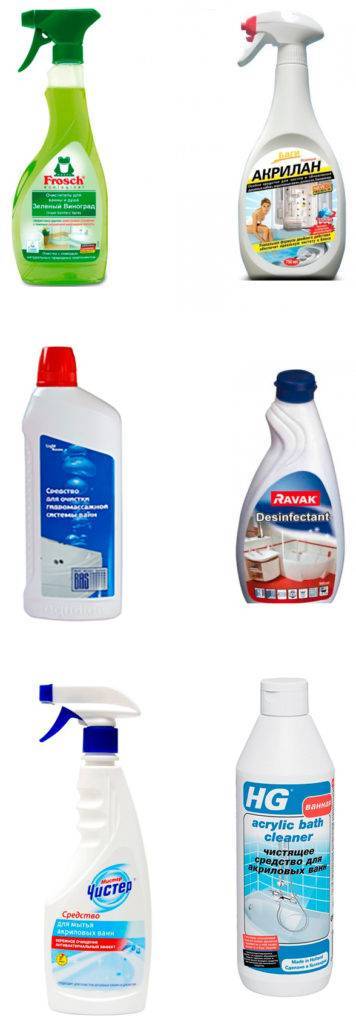
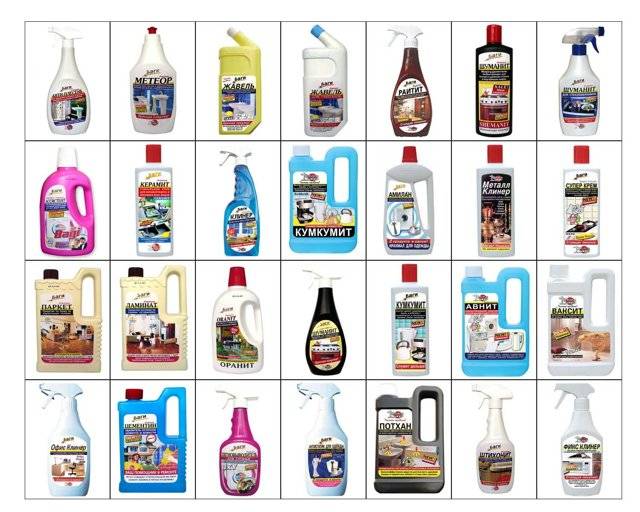
How to wash an acrylic bath? Today on sale there are a variety of solutions, gels and pastes that are designed specifically for acrylic. They do not damage its surface, do not leave scratches and do not corrode the walls. Among these funds should be noted:
- "Tim-profi" is a high-quality liquid product that can be used for permanent cleaning of stains, eliminating various unpleasant odors. When used, such chemistry creates a protective shell on the surface, i.e. protects the bath from limescale.
- "Acrilan" quickly and easily cleans the surface. When asked how to wash an acrylic bath, many advise just such household chemicals. The foam is soft and easy to apply on the surface. It allows you to remove old stains, traces of rust, plaque, including soap."Acrilan" perfectly fights fungus, disinfects the surface, creates a strong protective film that prevents dirt from accumulating in the future.
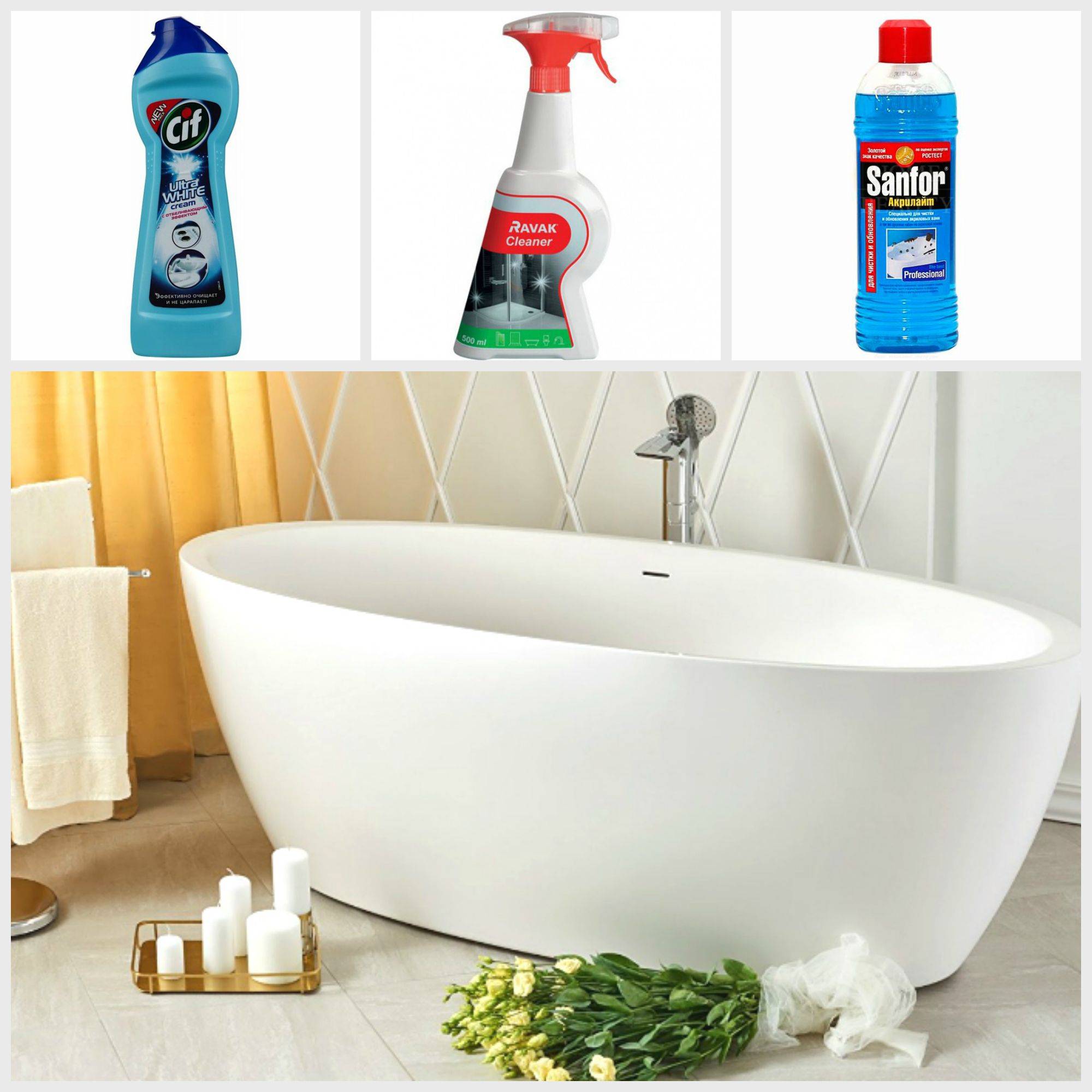
- "Sif" is a universal tool suitable for any plumbing. If the question arises of how to wash an acrylic bathtub or a regular toilet bowl, then Sif can be recommended. It helps to cope with even the most difficult dirt. Such chemistry is inexpensive, but of high quality, allowing for quick and safe cleaning in the bathroom.
- "Bass" is designed for acrylic surfaces, it allows you to get rid of difficult dirt, does not damage the surface of the bath and does not remove its glossy sheen. When adding a polish, it allows you to restore a beautiful and new look to plumbing, its whiteness. Using this chemistry is simple, you just need to apply a small amount to the stain, leave for 15 minutes. Then the area is washed, wiped with a dry cloth.
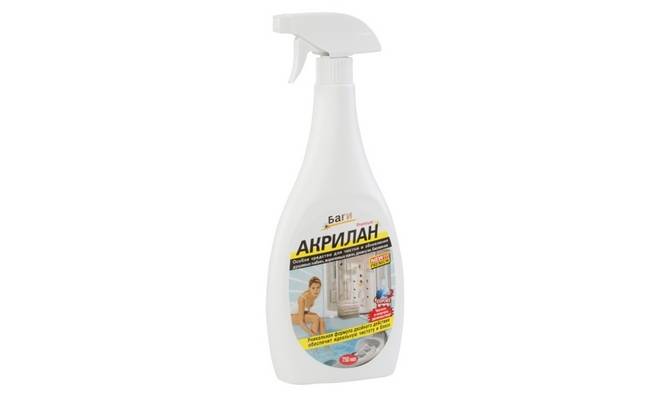 Acrylan - acrylic bath cleaner
Tips for the effective use of special tools
Liquids for the care of acrylic surfaces can be both purchased and prepared independently from available household products. Fresh soap streaks and splashes that remain daily on the walls of the bath can be easily removed with a sponge and laundry soap, but more serious solutions will be required for contaminants that have eaten into the material. Let's try to figure out what to do in different situations.
Removing deep and small scratches
Suppose that a plastic basin for washing was placed on the bottom of the bathtub, which spoiled the presentable appearance of the acrylic surface - it was covered with small scratches and lost its original luster. Separately taken abrasions are perfectly polished with a small piece of felt.If you need to renovate the entire bath, you will need a special polishing agent, such as Acrylic Polish.
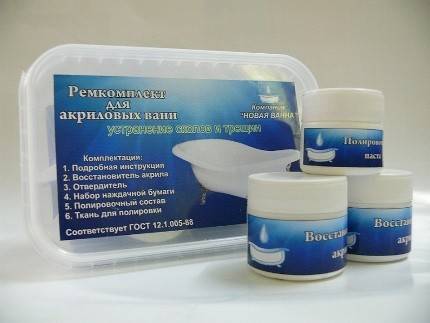 The kit worth 1500 rubles includes the following items: acrylic restorer, hardener, sandpaper, paste and polishing cloths, instructions
Deep scratches cannot be removed with felt alone. You will need the so-called liquid acrylic, which you can apply yourself. The restoration kit includes a tube of repair acrylic and a small plastic spatula to distribute it evenly. The agent is carefully applied and, after drying, polished with the same felt.
Regular disinfection
Boiling water is often used for disinfection - in our case it is inappropriate. Plumbing is treated with a special solution, for example, RAVAK Desinfectant is used. They operate as follows:
- fill the bath to the top with warm water;
- dilute RAVAK Desinfectant in it (the dosage is indicated on the vial);
- mix water;
- leave for 10-15 minutes;
- discard the used solution and rinse the bath.
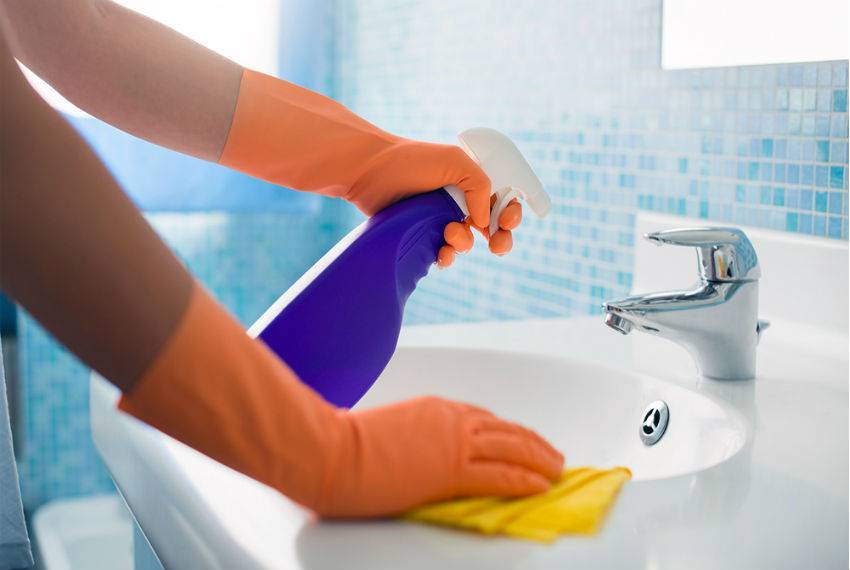
Disinfection should be carried out once every 6-8 months. Rubber or latex gloves must be used to protect hands.


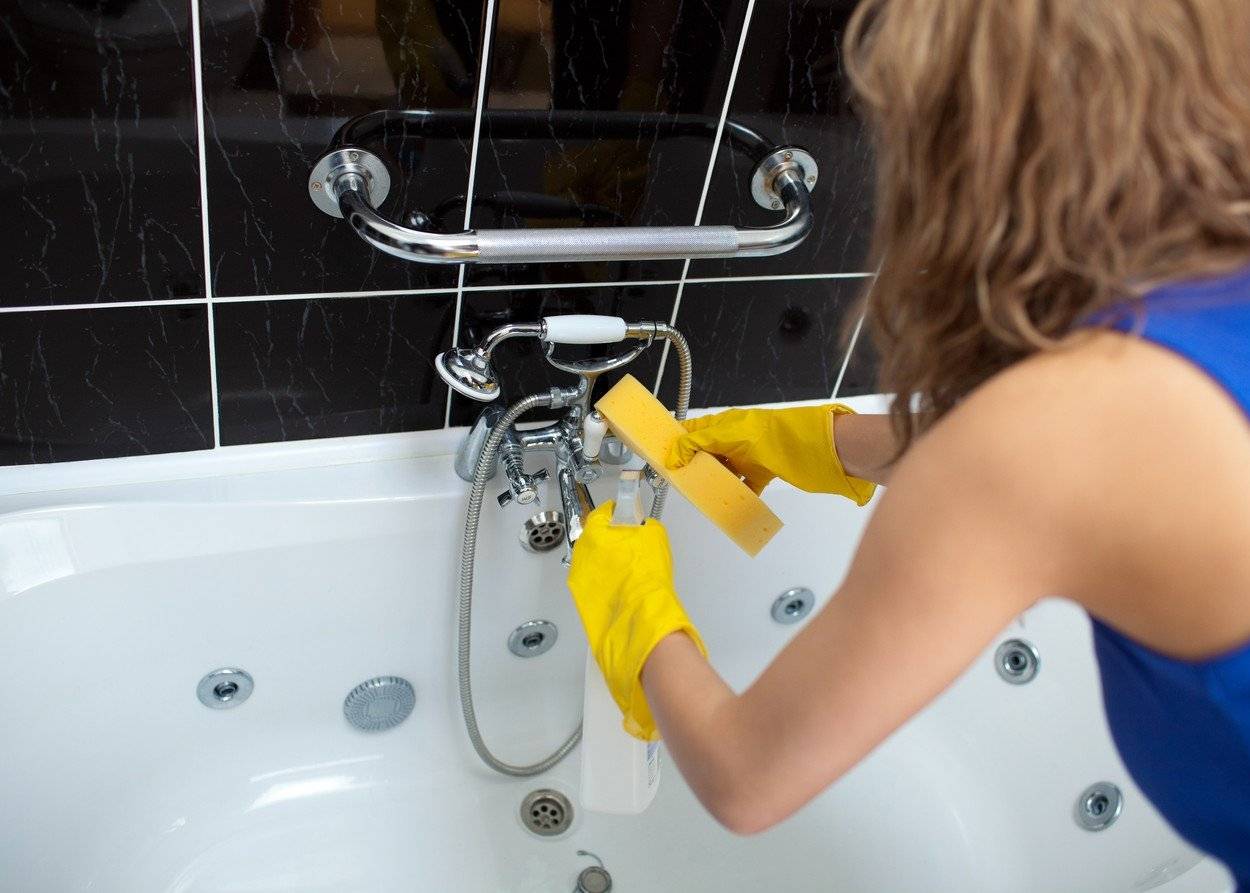



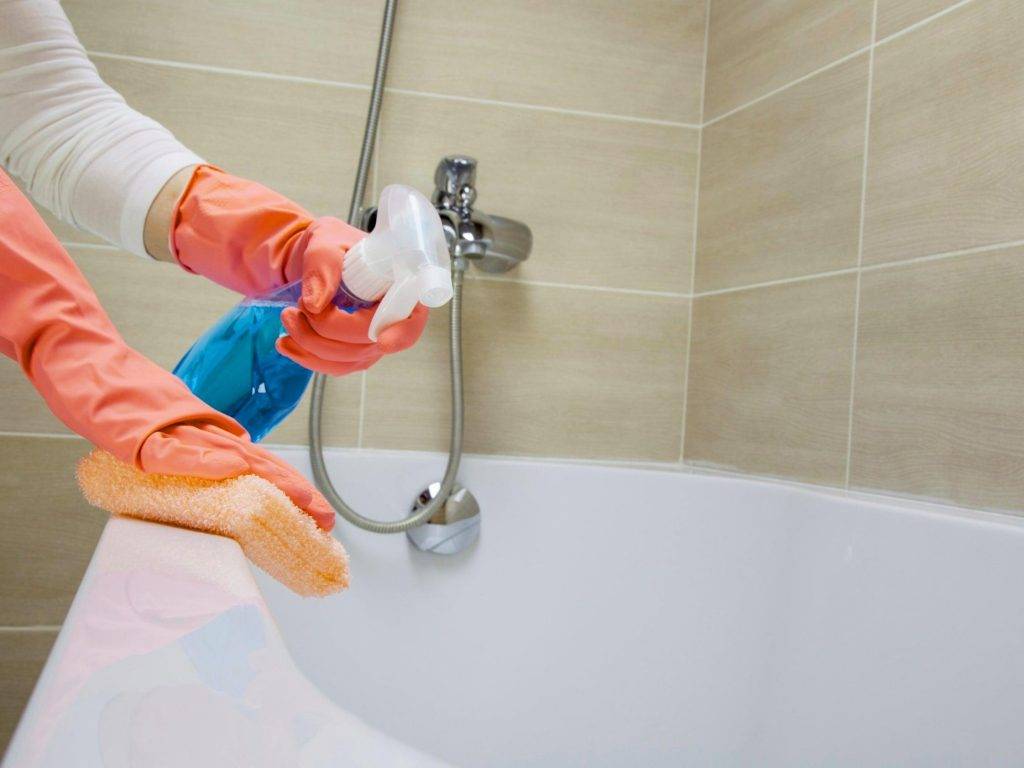
 Disinfection measures are also preventive in nature: they exclude the appearance of foci of mold and fungus, kill all kinds of bacteria, refresh the acrylic surface
Getting rid of limescale
If you do not clean the bath for a long time, limestone will form at the drain points. You can’t cut it with a knife, as you can destroy the acrylic. The best way to remove limescale stains is to dissolve them with vinegar and citric acid.
The bath is filled with warm water, 1 liter of vinegar and a package of citric acid are diluted in it, stirred until completely dissolved, left for several hours (maximum - 10-12 hours). during this time, the lime should completely dissolve.
Then release the cleaning solution, rinse the acrylic surface with clean water and wipe dry. If, along with lime stains, there are stains of unknown origin, traces of rust or severe pollution on the surface, one of the powerful cleaning agents, such as Acrylan, is added to the water.
 If you regularly take care of the acrylic coating - daily remove the remnants of soap suds and clean at least once a week with the help of special products - the bath will delight you with whiteness and brilliance for many years
Best Bath Cleaning Sprays
Many housewives choose bath cleaners in the form of sprays. They are economical and easy to apply on any surface - especially on a surface as large as the walls of a bathtub.
Meine Liebe - for daily cleaning of acrylic bathtubs
5.0
★★★★★
editorial score
98%
buyers recommend this product
Meine Liebe provides gentle care for acrylic surfaces. The eco-friendly formula based on fruit acids effectively cleans lime and soap deposits, fungus, mold and other household stains.
For the action of the composition, 3-5 minutes are enough, then you just need to wash it off. It contains no abrasives or aggressive surfactants, so it does not scratch or corrode acrylic or enamel. The formula washes out easily and biodegrades.
Fine-dispersion sprayer evenly distributes the liquid over the entire surface. The sprayer is equipped with a lock that prevents accidental pressing.
The transparent bottle has a good shape and fits comfortably in the hand.The cleaner itself has a fresh fruity aroma, which makes it suitable for use in unventilated areas.
Pros:
- antibacterial effect;
- pleasant aroma;
- fast action;
- convenient bottle;
- can be bought in most stores;
- eco-friendly formula.
Minuses:
- high consumption;
- does not cope with difficult pollution.
Meine Liebe is intended for regular preventive acrylic bath cleaning. However, there are no aggressive components in its composition, due to which the spray cannot cope with stubborn stains, rust or a thick layer of plaque.
Bugs "Acrilan" - rust spray on enamel
5.0
★★★★★
editorial score
94%
buyers recommend this product
See review
Acrylan is a thorough cleaner for enameled and ceramic bathtubs. It contains special surfactants with a low content of citric acid, which allow you to remove old rust, a thick layer of lime and soap deposits, mold, dirt, fungus.
After cleaning, a pronounced shine and a protective film remain, which prevents further limescale formation. So the bath stays clean longer.
Housewives note that they use the spray not only for plumbing, but also clean window sills, plastic panels, slopes and window frames with it.
The sprayer allows you to spend the product very economically. The smell of the composition is specific, but not caustic.
To remove even old dirt, it is enough to leave the liquid for a few minutes. It is not necessary to rub the surface with a brush.
Pros:
- does not require additional efforts;
- copes with ingrained pollution;
- suitable for chrome parts;
- economical;
- sold in almost every store.
Minuses:
- high price (from 350 rubles per bottle);
- does not disinfect.
Despite the gentle composition, users recommend not to overexpose the product on the surface of the bath - indelible marks may remain.
B&B Unicum Bami - instant bath cleansing
4.9
★★★★★
editorial score
92%
buyers recommend this product
B&B Unicum Bami is a detergent for cleaning acrylic and plastic bathtubs, showers, pools.
The spray disinfects and gently removes rust, soap deposits, salt or lime deposits, mold and fungus from any polymer coatings. After cleaning, a pronounced shine and a protective nanolayer remain on the plumbing, which prevents the sedimentation of contaminants.


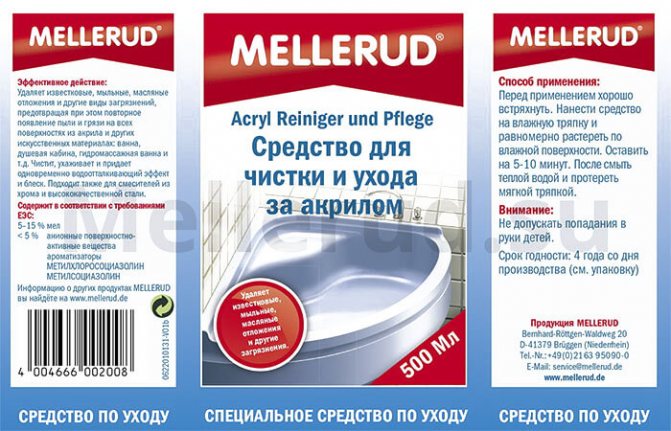


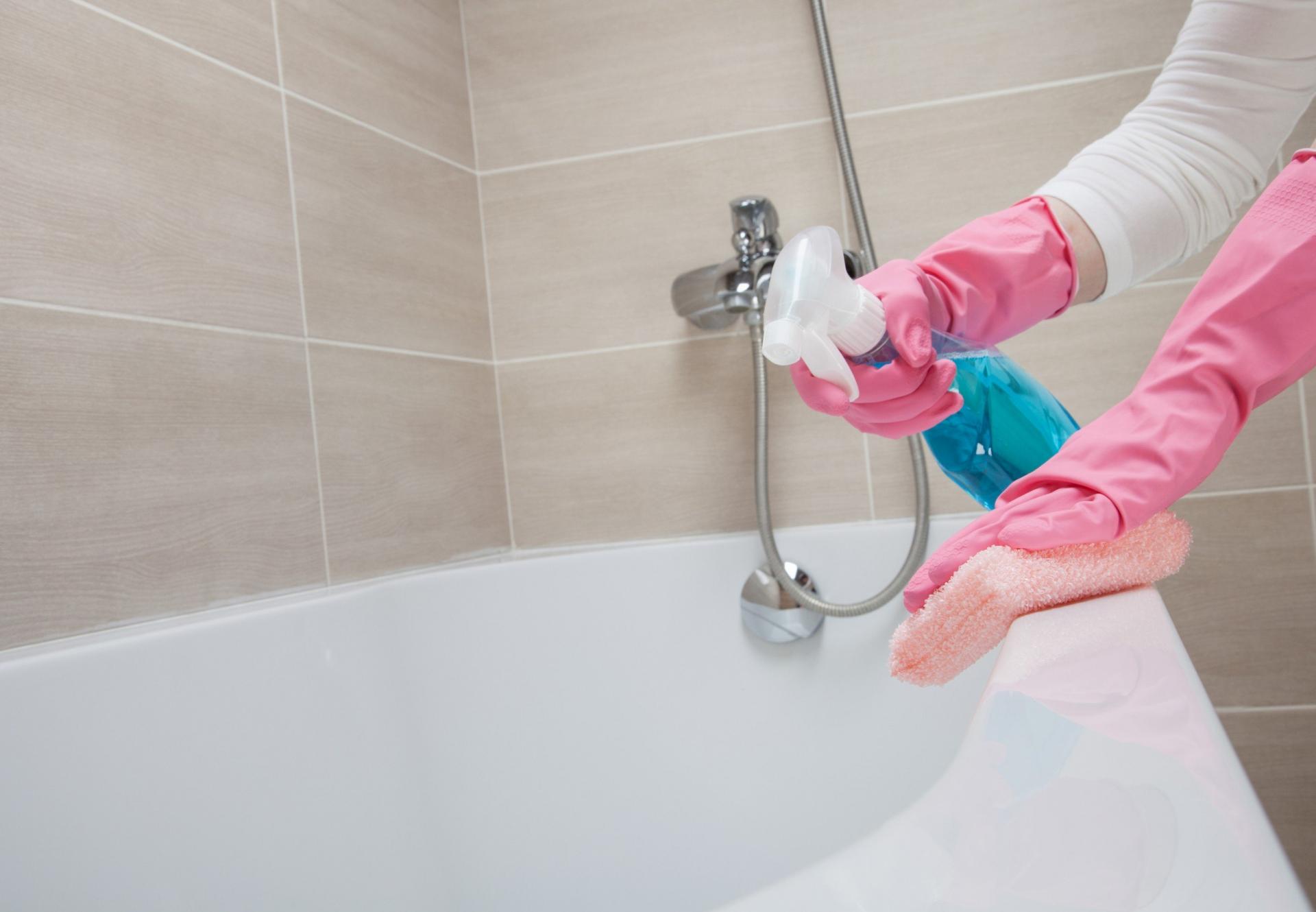
It is enough to leave the composition for 15-20 seconds, then rub the surface with a sponge or brush and rinse. For stubborn dirt, the manufacturer recommends increasing the duration of the product to 1 minute.
Pros:
- disinfectant effect;
- suitable for acrylic and chrome;
- removes most contaminants;
- instant action;
- small expense.
Minuses:
- Strong smell;
- the cost is above average (about 250 rubles per 750 ml).
There are often promotions for Unicum brand products. Experienced housewives recommend tracking them and buying a spray at a better price.
How can you not clean an acrylic bath?
It is important to consider which products absolutely cannot be used to care for the acrylic surface.
- When choosing how to wash an acrylic bathroom, you need to take into account that the composition of the product should not include abrasive particles, for example, granules, powders, and so on. This is due to the fact that they can damage the surface and spoil the product.
- Not suitable for acrylic mixtures that contain chlorine, acetone, formaldehyde, ammonia, acids and alkalis.Due to their influence, the material will lose its attractive appearance, and defects may also appear. With this in mind, before using any new product, study the composition.
- Acrylic baths cannot be maintained with gasoline or acetone.



