- Why are air pockets dangerous?
- How does an automatic air vent work?
- Device
- Specifications
- Types of air vents and their design features
- Automatic
- Manual
- Radiator
- Lower heating supply in a high-rise building
- Option number 1 to solve the problem - start the elevator to reset
- Option number 2 to fix the problem - installing the air vent
- Option number 3 to fix the problem - bypassing the heating riser to discharge
- Where does air come from
- Scenario 4: closed heating system of a single-family house
- A special case
- How to remove a plug from a circuit
- Causes and consequences
- Signs by which you can determine if there are air pockets in pipes and radiators
- Removing the airlock with bleeders
Why are air pockets dangerous?
The ingress of air into the water heating system is a very common phenomenon. And you need to respond to it immediately. Although some air in the system may not seem dangerous, it often causes more serious problems. And sometimes the airiness of the radiator or pipes allows you to identify breakdowns or flaws in the installation of the heating system.
The presence of air pockets usually manifests itself in the form of uneven heating of individual elements of the system, for example, radiators.If the device is only partially filled with coolant, its operation can hardly be called effective, since the room does not receive part of the thermal energy, i.e. does not warm up.
If the upper part of the heating radiator remains cold and only its bottom warms up, most likely the device is air-filled, you need to bleed the air
If air has accumulated in the pipes, it prevents the normal movement of the coolant. As a result, the operation of the heating system can be accompanied by a rather strong and unpleasant noise. Sometimes part of the system starts to vibrate. The presence of air in the circuit causes the activation of various chemical processes, for example, it can cause the decomposition of calcium and magnesium hydrocarbonate compounds.
This leads to the formation of carbon dioxide, which violates the acid-base balance of the coolant. Increased acidity enhances the corrosive effect on the elements of the heating system, which can lead to a noticeable reduction in their service life.
In addition, chemical processes occurring under the influence of high temperature cause the deposition of limestone deposits on the walls of pipes and radiators, creating a dense coating. As a result, the pipe clearance decreases, the characteristics of the heating system change, it works with less efficiency. A large amount of limescale can completely clog the pipes, they will have to be cleaned or even completely replaced.
The presence of air in an autonomous heating system may indicate processes that contribute to the appearance of sediment and clogging of the pipes of the heating circuit
If a circulation pump is included in the heating circuit, the presence of air in the system can adversely affect its operation.The bearings of this device are designed for permanent residence in the aquatic environment. If air enters the pump, the bearing will run dry, causing it to overheat and fail.
How does an automatic air vent work?
The filled cold coolant in the heating main tends to release air when heated, to bleed it, automatic air venting from the heating system is used.
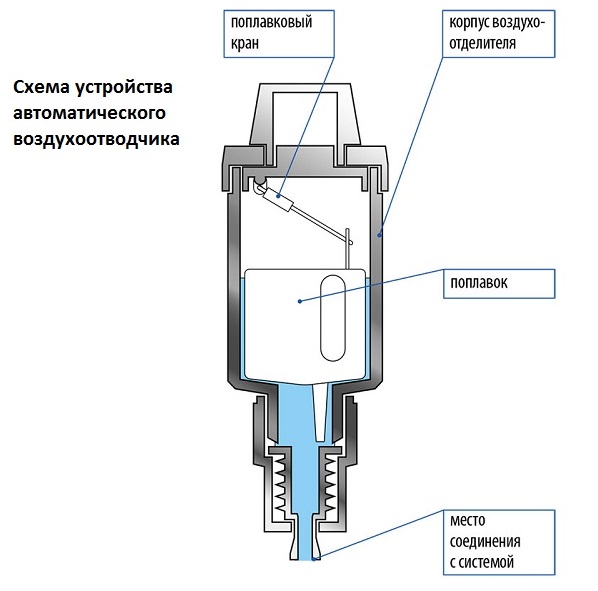
The principle of operation of all automatic devices is to open the bleed hole when air appears in the inner area of the air vent housing. The element that reacts to the presence of air is a float immersed in the inlet pipe of the device, which is connected to a valve that closes the air outlet. The automatic device works according to the following principle (Fig. 3):
- When the heating is functioning normally, the float located in the space of the cylindrical working chamber is in the upper position and the cone-shaped rod connected with it closes the outlet channel.
- If air accumulates in the upper part of the tank, the float goes down along with the locking rod and the air valve is unlocked, the air is bled from the device.
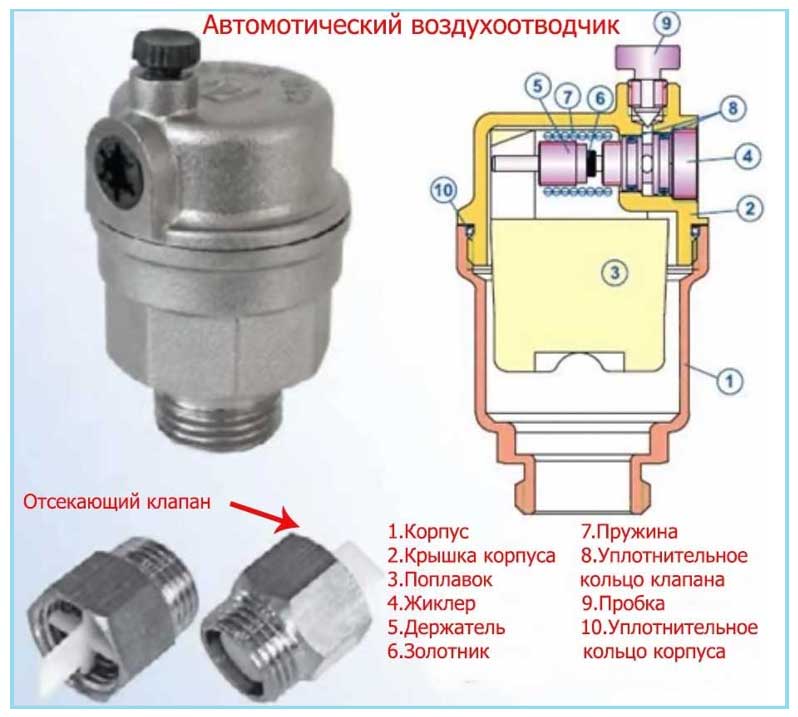
Rice. 4 Automatic air release valve from the heating system
Device
There are various designs of automatic air bleed valves on the market, consider the design and operation of one of the common types.
This model (Fig. 4.) has a composite body structure made of brass, including the main part 1, which is screwed into the pipeline, and its cover 2 with a locking mechanism, connected to the base through the sealing ring 10.




In the non-working state, the liquid entering through the inlet pipe from below raises the plastic float 3, it presses through the flag on the spring-loaded (spring 7) holder 5 with the spool 6, which locks the through passage in the jet 4.
The jet 4 is located in the side part of the air vent and is connected to the body through the sealing ring 8, in the upper part of the device there is a plug 9, which regulates the passage channel of the outlet for air release or closes it completely if necessary.
When air appears in the float chamber, it displaces the water in which the float 3 floats, the element lowers along with the flag, and the spring 7 pushes the spool holder away from the outlet channel - air is bled. With a decrease in the volume of discharged air, water enters the working chamber again, the float emerges and closes the channel using a locking mechanism.
Usually, when connecting an air vent, adapters are used from a shut-off check valve, which is a spring-loaded locking mechanism and a flag associated with it. When the air vent is screwed in, it presses on the flag of the shut-off valve, the latter goes down and opens the way for water to the vent body.
When dismantling the trap for replacement, maintenance or repair work, the released spring-loaded flag, together with the shut-off valve, rises and closes the coolant inlet channel.
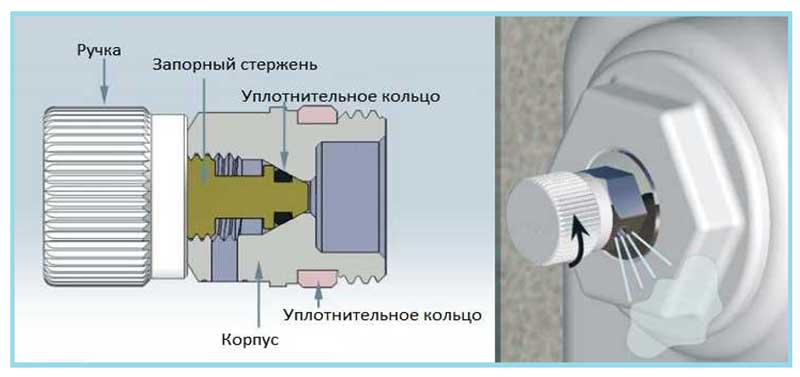
Fig.5 Manual air valve of the heating system in the battery
Specifications
The main material for the manufacture of cases of manual and automatic air valves nickel-plated brass is used to bleed air from heating systems (bronze is used much less often), vents have the following characteristics:
- Installation - at the highest points of the heating circuits in a straight section.
- Permissible temperature of the working environment - from 100 to 120º C.
- Maximum pressure 10 bar (atmospheres).
- The connecting diameter of the outlet pipes is 1/2″, 3/4″ (the most common sizes are indicated in the metric layout Dy 15 and Dy 20, which corresponds to 15 and 20 mm), 3/8″, 1″ inch.
- Type of connection - direct and angular.
- The location of the outlet fitting is on the top, on the side.
- Scope of supply - sometimes supplied with shut-off valve
- Working medium - water, non-freezing heat transfer fluids with glycol content up to 50%.
- The float material is polypropylene, teflon.
- The service life of brass appliances can reach 30 years.
Types of air vents and their design features
There are automatic and manual air vent valves, the former are mainly installed at the upper points of collectors and pipelines, manual modifications (Maevsky taps) are placed on radiator heat exchangers.
Automatic devices are distinguished by a wide variety of options for locking mechanisms, their cost is in the range of 3 - 6 USD, a wide range of models from domestic and foreign manufacturers is presented on the market. The cost of standard Mayevsky cranes is about 1 USD, there are products at a higher price, designed to operate in non-standard radiator heaters.
Rice.6 An example of the construction of an air vent with a rocker mechanism
Automatic
Automatic taps have a different design depending on the manufacturer, the main differences between the devices:
- The presence of a reflective plate inside the case. It is placed at the entrance to the working chamber, protecting internal parts from hydraulic shocks.
- Many modifications are supplied complete with a spring-loaded shut-off valve, into which the air vent is screwed, when it is removed, the spring is compressed and the sealing ring closes the outlet channel.
- Some models of automatic taps are designed for operation in conjunction with radiator heat exchangers; instead of straight lines, they have side threaded pipes of the appropriate size for screwing into the radiator inlet. If necessary, angular automatic air vents of any type can be used, for example, at the points of connection of underfloor heating circuits, hydraulic switches, if their threaded diameters of the inlet and outlet fittings are the same.
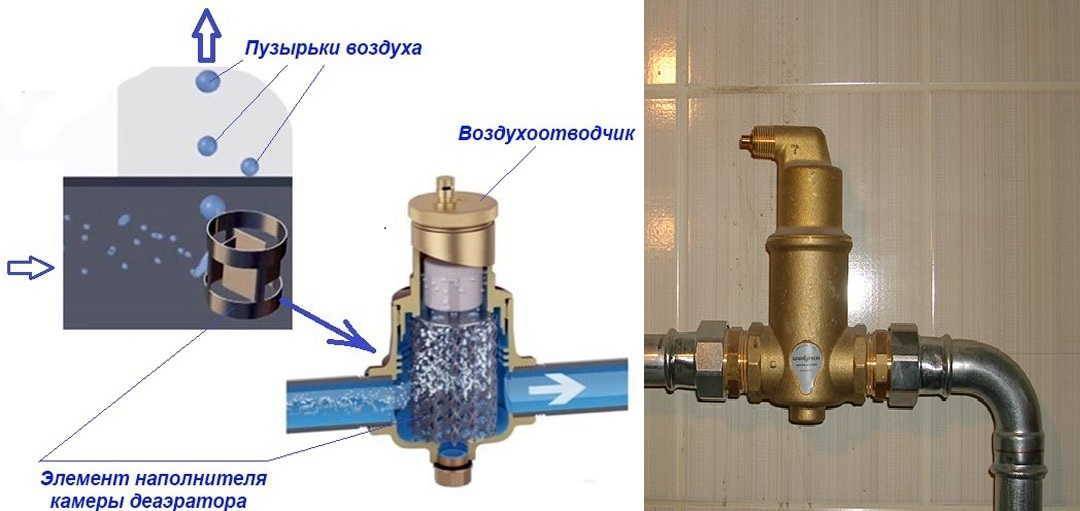
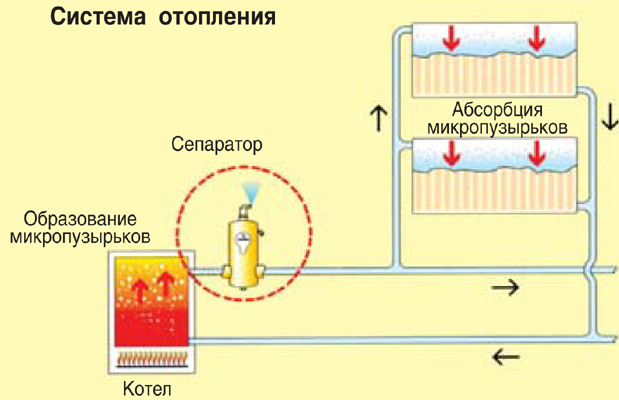
- There are analogues of air vents on the market - microbubble separators, they are mounted in series in the pipeline on two inlet pipes corresponding to the diameter of the pipes. When the liquid passes through the body tube with a soldered copper mesh, a vortex water flow is created, which slows down the dissolved air - this contributes to the rise of the smallest air bubbles, which are bled through the automatic air release valve of the chamber.
- Another common design (an example of the first was given above) is the rocker model. In the chamber of the device there is a float made of plastic, it is connected with a nipple shut-off needle (like a car).When the float is lowered in an air-laden environment, the nipple needle opens the drain hole and air is released, when water arrives and the float rises, the needle closes the outlet.
Rice. 7 Principle of operation of separator-type air vents for bleeding microbubbles
Manual
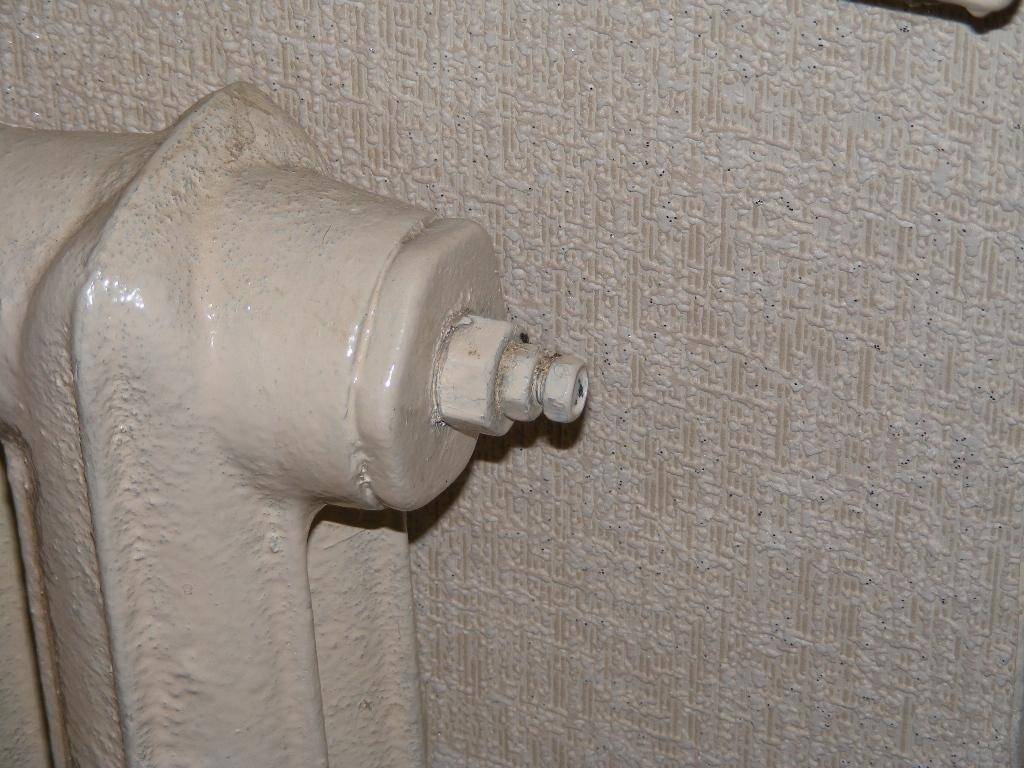
Manual devices for removing air from the system are called Mayevsky taps, due to the simplicity of the design, mechanical air vents are everywhere installed on radiators. On the market, you can find manual taps in the traditional design for installation in various places, and some modifications of shut-off valves are equipped with Mayevsky taps.

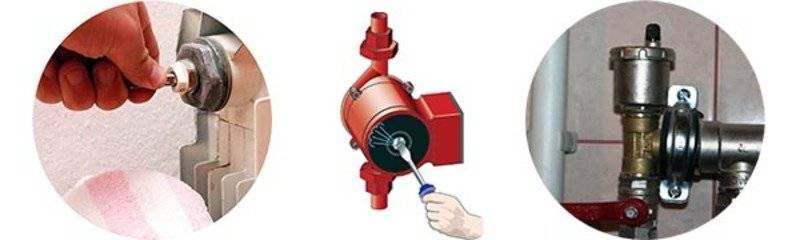
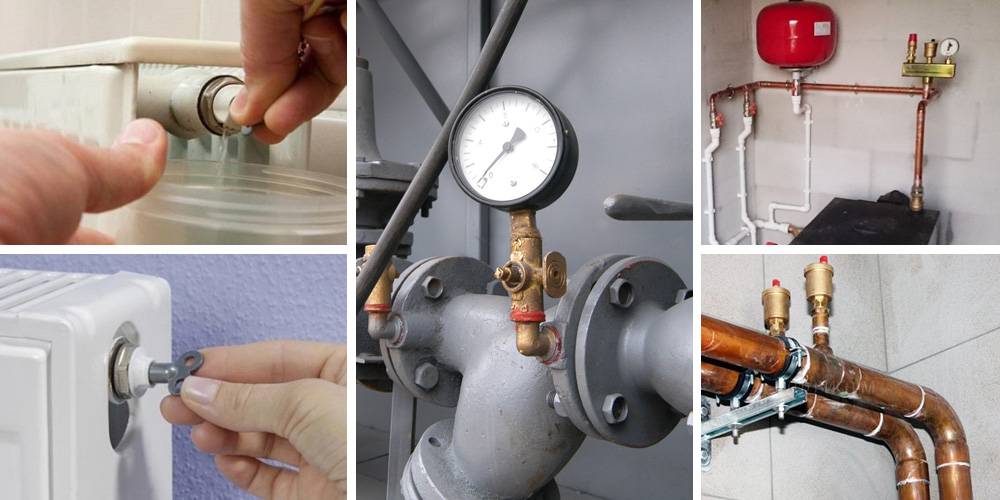


A mechanical air vent for removing air from the heating system works as follows:
- In operation, the cone screw is turned in and securely seals the housing outlet.
- When it is necessary to remove excess air from the battery, one or two turns of the screw are made - as a result, the air flow under the pressure of the coolant will exit the side hole.
- After the air is released, the water begins to bleed, as soon as the water jet acquires integrity, the screw is screwed in again and the de-airing operation is considered completed.
Rice. 8 Air vents from airing radiators
Radiator
Cheaper manual mechanical air vents are most often installed in radiators, if the body consists of two parts, the element with the outlet pipe can be turned around its axis to direct the drain hole in the right direction. The radiator device for bleeding air from the heating system has the following options for unscrewing the bleed screw:
- Swivel handle made of plastic or metal.
- Special plumbing tetrahedral key.
- Screw with a slot for a flat screwdriver.
If desired, an automatic-type angular air vent can be installed in the radiator - this will entail additional costs, but will simplify the airing of the batteries.
Lower heating supply in a high-rise building
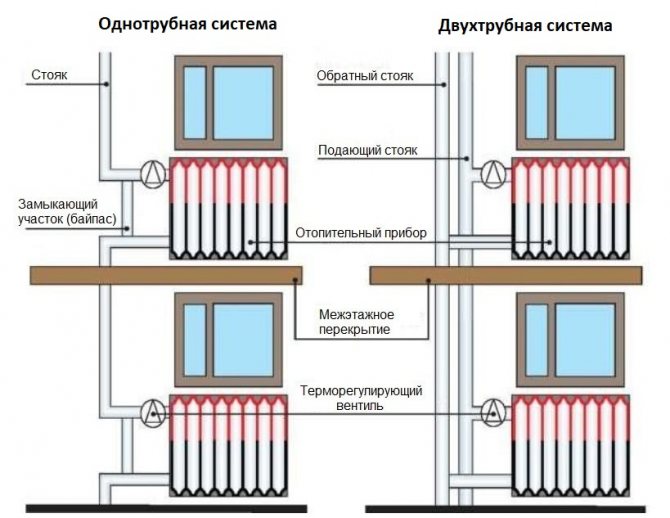
For modern buildings, the standard solution is the bottom pouring scheme. In this case, both pipes - both supply and return - are laid in the basement. The risers connected to the bottlings are combined in pairs using a jumper in the attic or upper floor.
Option number 1 to solve the problem - start the elevator to reset
Bleeding air from the heating system is performed by housing and communal services specialists at the stage of starting the circuit, which is partially or completely discharged. To this end, it is passed to the discharge: one valve is opened, and the second is left closed.
From the side of the heating circuit to the closed valve, a vent is opened, which is connected to the sewer. The fact that the main part of the air has escaped can be seen from the water flow in the discharge - it moves evenly and without bubbles.
Option number 2 to fix the problem - installing the air vent
Before releasing air from the heating system, an air vent is installed in the upper part of all steam risers in case of bottom filling. It can be not only a special Mayevsky faucet, but also a screw valve, a water-folding or ball valve, mounted with a spout up.
Air is vented from the heating system in a certain sequence:
- Open the tap for more than one turn. As a result, a hiss of moving air should be heard.
- A wide container is substituted under the tap.
- Waiting for water to flow instead of air.
- Close the faucet.After 10 minutes, the riser should warm up. If this does not happen, it is necessary to bleed the plugs again.
Before you get rid of the air in the heating system, you should remember the following important rules:
- It is impossible to completely unscrew the screw in the Mayevsky tap, since at a pressure of 5–6 atmospheres and boiling water pouring from the hole, it is impossible to return it to its place. The result of such actions may be the flooding of your own apartment and located below.
- It is not necessary to unscrew the air vent under pressure, even half a turn, since it is not known what condition its thread is in. When the drain valve is defective, shut off the two twin risers and make sure that their valves hold water before replacing or repairing it.
- If you live on the top floor before the start of the heating season, you need to make sure that there is a tool that works with the air vent. Models of modern Mayevsky cranes can be opened with a screwdriver or hands, and in old buildings a special key is required. It is easy to perform - you should take a bar of the desired diameter and cut it on the end.
Option number 3 to fix the problem - bypassing the heating riser to discharge
With the lower bottling, the main problem of air vents is that they are located on the upper floors in apartments. If their owners are constantly not at home, how to remove the airiness of the heating system?
You can bypass the paired risers from the basement side, for which:
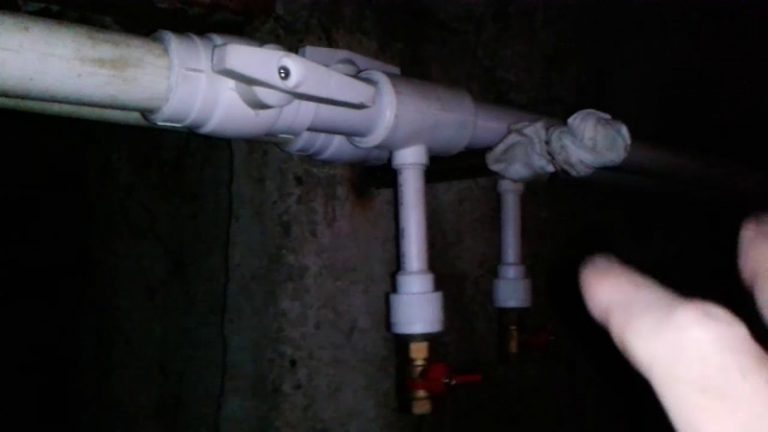
- They are examined for the presence of valves, after which plugs or vents can be installed.In the second case, there will be no costs, and in the first case, you need to buy a ball valve with a thread of the same size as the plugs.
- Shut off the valves on two risers.
- On one of them, the plug is unscrewed for several turns and the pressure of the liquid that hits the thread is expected to decrease. So you can make sure that the valves on the floors are working.
- A ball valve is mounted in place of the plug, first winding the thread.
- The mounted vent is opened completely.
- Now slightly open the valve located on the second riser. When the pressure removes air from the heating system, close the vent and open another riser.
This also has nuances:
- When all the batteries are installed on the supply riser, but they are not on the return riser, the vent must be mounted on the return line and then the problem of how to remove the air plug from the heating system will be solved. In the case of radiators located on paired risers, it is not always possible to etch the air.
- If it was not possible to bypass the risers in one direction, then the vent is moved to the second riser and the coolant is distilled in the opposite direction.
- If there are screw valves on the risers, it is necessary to avoid the movement of water through them in the opposite direction to the arrow on the body. The desire to slightly open the valve with the valve pressed down by pressure may result in its separation from the stem. To eliminate the problem of how to bleed the air from the heating system, it is quite often necessary to reset the heating system of the building.
Where does air come from
- Where do air batteries come from? Shouldn't the circuit be filled all year round?
Must. On this account, there is the strictest instruction of the "Heat Networks" responsible for the operation of the central heating.


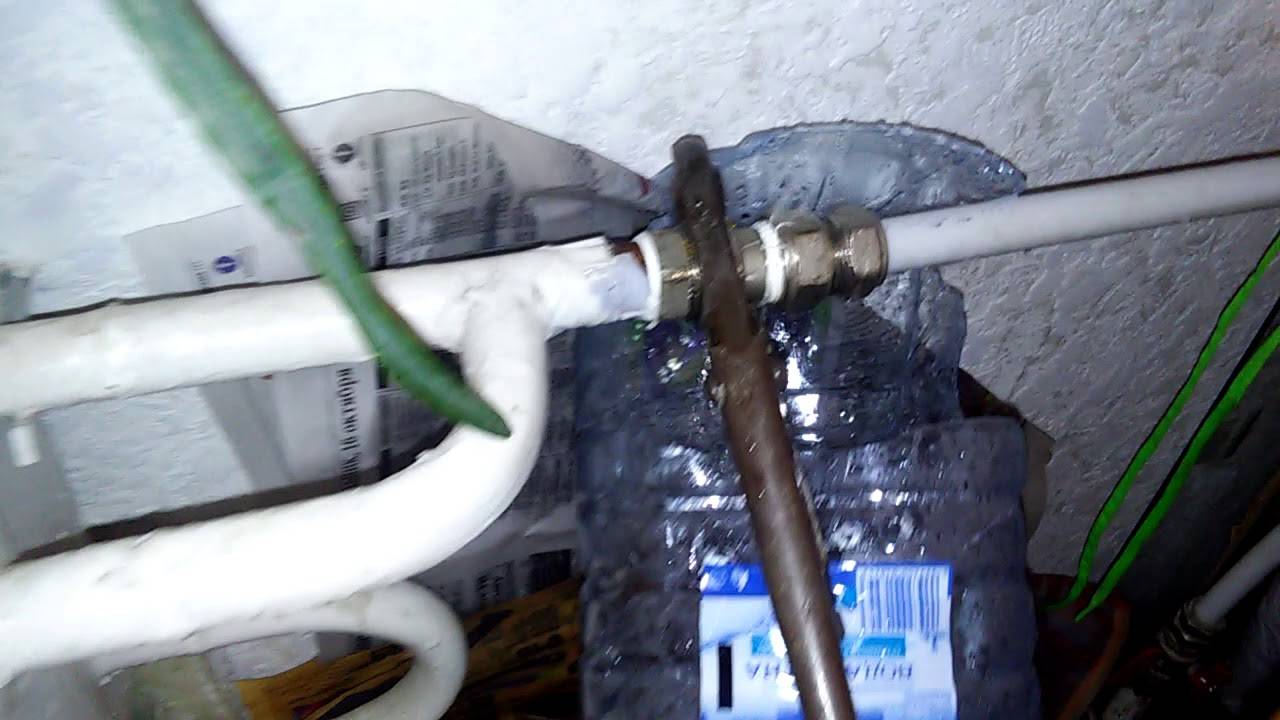
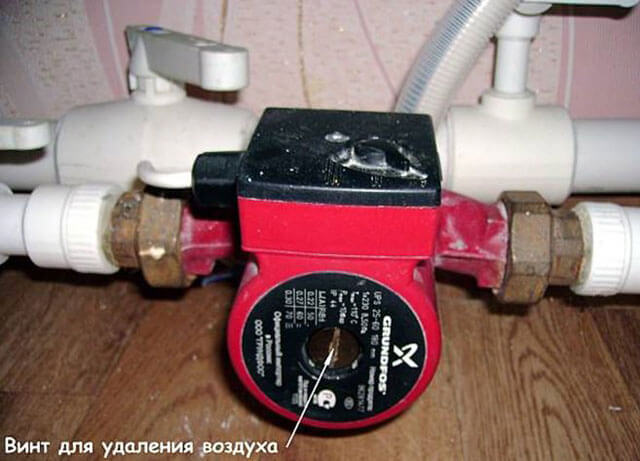


Only - that's the trouble! - in addition to instructions, there is also a harsh reality:
Summer is the time for the revision and repair of shut-off valves on risers and in elevator units. Fill the circuit and bleed air from each riser after replacing each valve and flushing, the housing organization will simply go broke on paying for water consumption if this is done;
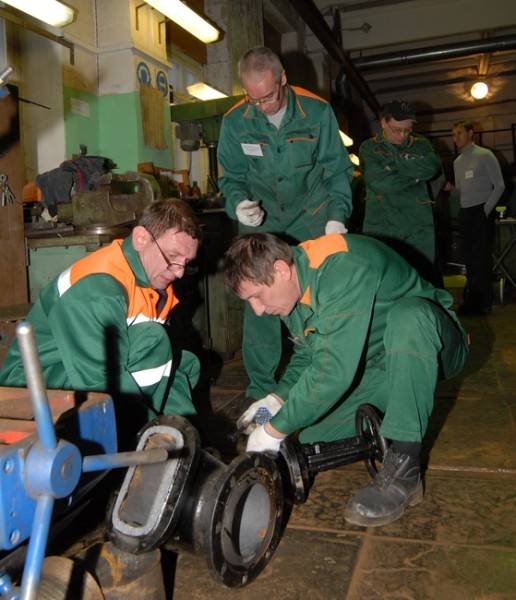
Summer is the time for the revision of shut-off valves for heating.
- Residents of apartments during the holidays are often puzzled by the replacement and transfer of radiators. At the same time, they also drop risers, and even the whole house;
- When the valves are closed and the circuit cools, the volume of the coolant in it drops. Physics, however. It is worth opening any valve - and the riser will suck in air with noise;
- Finally, cooled cast-iron radiators after stopping the heating often begin to flow between sections. The reason is the same thermal expansion. After the tenth - fifteenth leak in one entrance, the locksmith faces a difficult choice: spend the whole summer on sorting the batteries with the replacement of gaskets, or simply reset the circuit for a couple of months remaining until the fall.
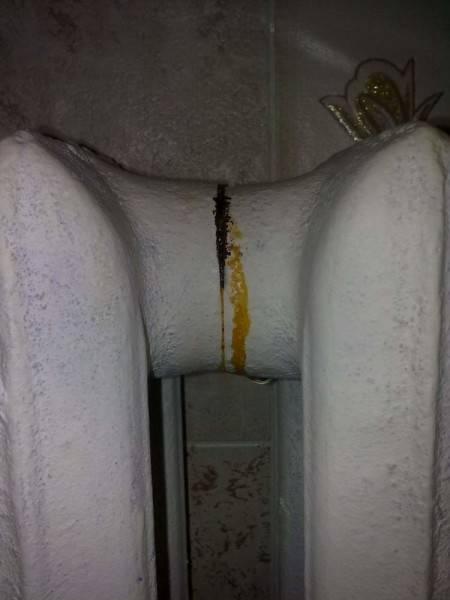
Leakage between cast iron sections. Look in the spring in all the apartments of the country.
Scenario 4: closed heating system of a single-family house
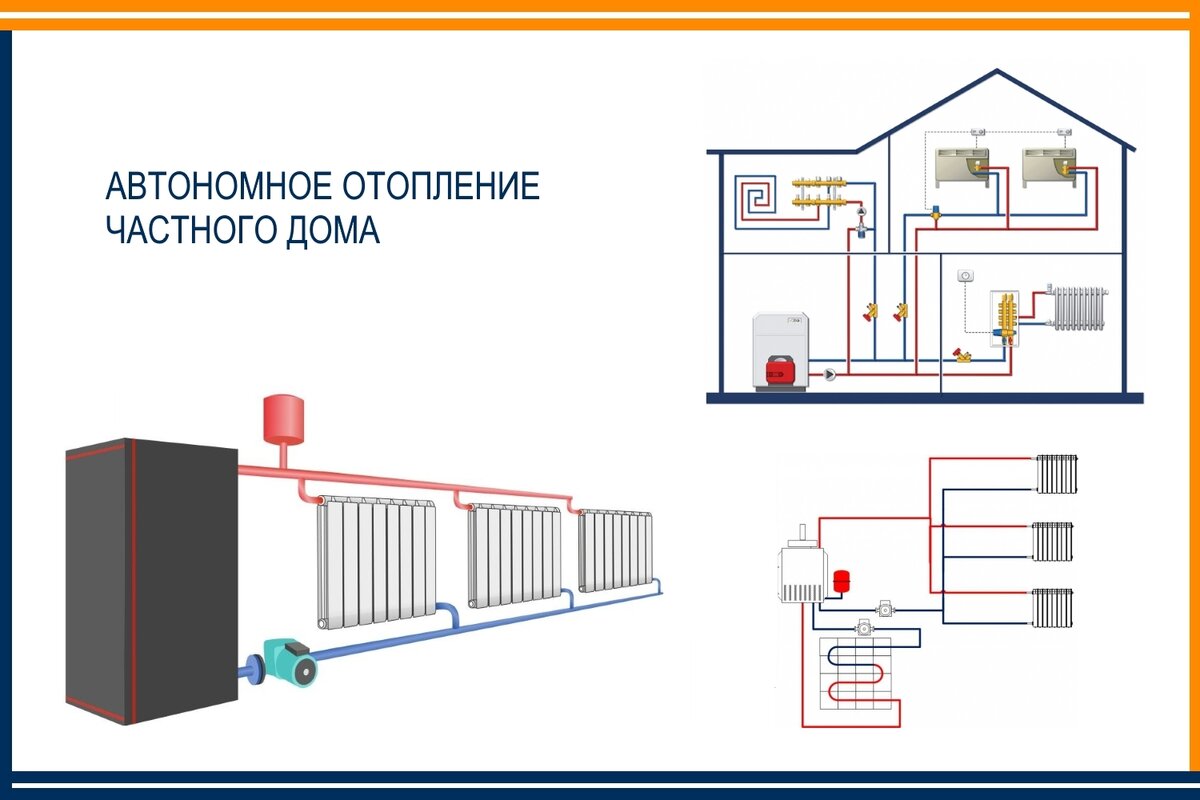
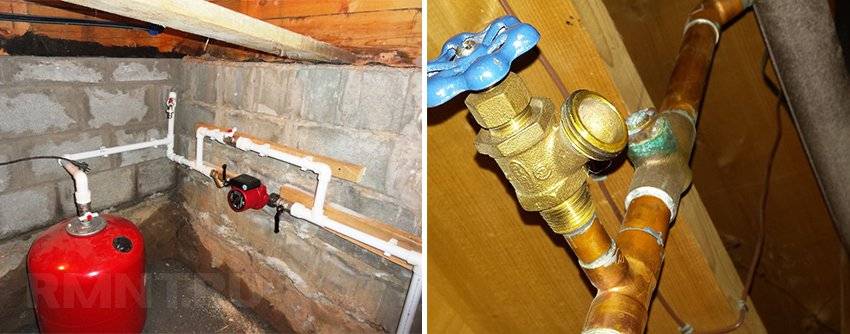
In a circuit with forced circulation, operating at excess pressure, an automatic air vent is usually mounted. It is part of the boiler safety group and is installed at the outlet of its heat exchanger.

In the photo - a boiler, in the body of which a safety group and an expansion tank are mounted.
All heaters located above the fillings are additionally equipped with their own automatic air vents or Mayevsky taps.
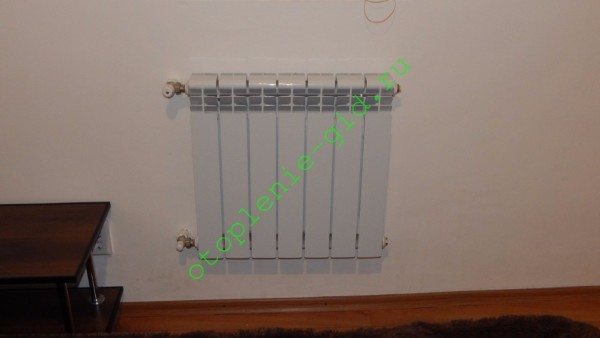
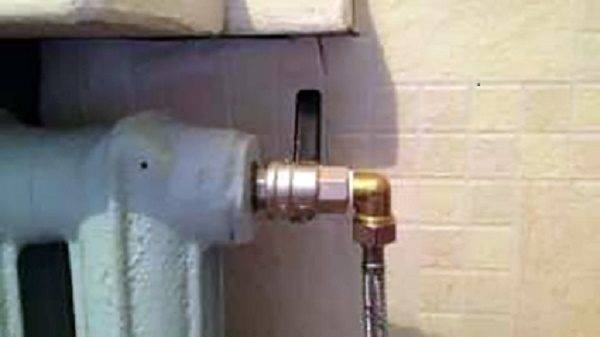
One-way side connection.The radiator is located above the filling. An air vent is required.
A special case
Along with the air vent in closed autonomous systems, another device is used - a separator air for heating. Its function is to remove small air bubbles that saturate the coolant and promote corrosion of steel pipes, erosion of the impeller of the circulation pump and the boiler heat exchanger.
The removal of air from the air chamber of the separator is carried out by our old friend - an automatic air vent.
The following may be responsible for collecting air bubbles:
The so-called PALLs are rings;
The device and principle of operation of PALL-rings.
Grids made of stainless steel or copper.
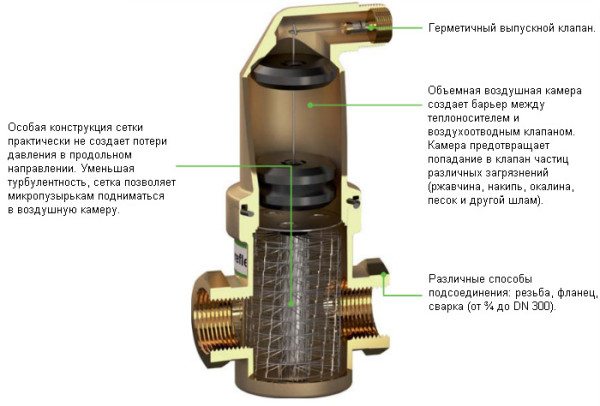
Separator with stainless mesh.
The price of the most affordable separators for the diameter of the connected pipeline of 20 mm starts from about 2000 rubles, and the benefits they bring are rather doubtful. In my opinion, in an autonomous heating system, it is quite possible to do without these devices.





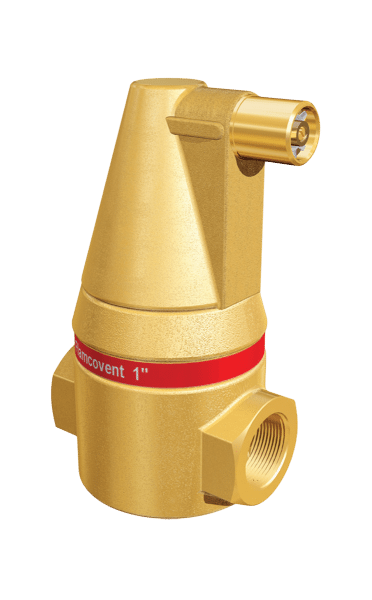
Flamcovent separator for 1" pipeline. Retail price - 5550 rubles.
How to remove a plug from a circuit
Before removing air from the system, it must be detected. Options for action:
- before you release the air from the heating system on your own, can it be better to call the master and get it over with?;
- try to find it yourself by knocking on the pipes. The sound in the area where the cork is located will be different;
- check the uniformity of the heating of the radiators. The top should be warm, there may be a slight difference with the bottom. The main thing is that the temperature is higher at the top. If this is not the case, then the plug is in the battery.
To remove air in the private heating system from the batteries, it is enough to use the Mayevsky crane. In other cases, you must first check the condition of the equipment responsible for this process. If it is in working condition, you can increase the pressure so that the plug comes out by itself, or feed the system. If the circuit is filled from scratch, then it is necessary to fill in water in several stages, slowly. In this case, all taps, except for the drain, must be open. It is necessary to provide oxygen with more options for getting out. Some masters expel the cork by tapping on the contour. The method is working, but this does not mean that you need to take a hammer and charge harder through the pipe. No, you need to know how and where to hit, otherwise there will be no sense, only harm.
Causes and consequences
Air pockets are caused by the following factors:
- During installation, errors were made, including incorrectly made kink points or incorrectly calculated slope and direction of pipes.
- Too fast filling of the system with coolant.
- Incorrect installation of air vent valves or their absence.
- Insufficient amount of coolant in the network.
- Loose connections of pipes with radiators and other parts, due to which air enters from the outside into the system.
- The first start and excessive heating of the coolant, from which, under the influence of high temperature, oxygen is more actively removed.
Air can cause the greatest harm to systems with forced circulation. During normal operation, the bearings of the circulation pump are in the water at all times. When air passes through them, they lose lubrication, which leads to damage to the sliding rings due to friction and heat, or completely disables the shaft.
Water contains oxygen, carbon dioxide, magnesium and calcium in a dissolved state, which, when the temperature rises, begin to decompose and settle on the walls of pipes in the form of limescale. Places of pipes and radiators filled with air are most susceptible to corrosion.
Signs by which you can determine if there are air pockets in pipes and radiators
Due to the air in the heating system, the batteries heat up unevenly. When checked by touch, their upper part, in comparison with the lower one, has a noticeably lower temperature. The voids do not allow them to warm up properly, therefore the room is heated worse. Due to the presence of air in the heating system, when the water is very hot, noise appears in the pipes and radiators, similar to clicks and water flow.
You can determine the place where the air is located by ordinary tapping. Where there is no coolant, the sound will be more sonorous.
Note! Before removing air from the network, you should find the cause of its appearance and eliminate it. Especially carefully check the network for leaks. When heating is started, it is extremely difficult to identify loose connections, since water quickly evaporates on a hot surface.
When heating is started, it is extremely difficult to identify loose connections, since water quickly evaporates on a hot surface.
Especially carefully check the network for leaks. When heating is started, it is extremely difficult to identify loose connections, since water evaporates quickly on a hot surface.

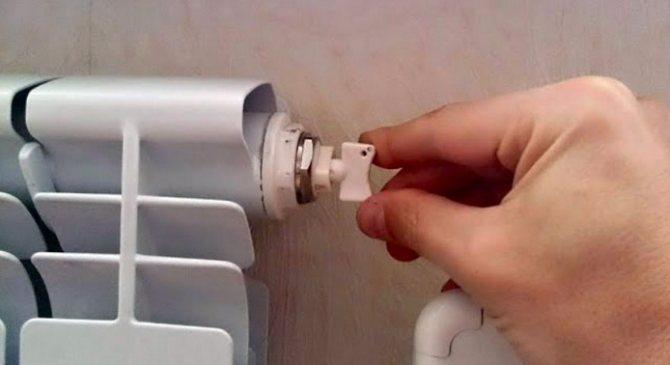
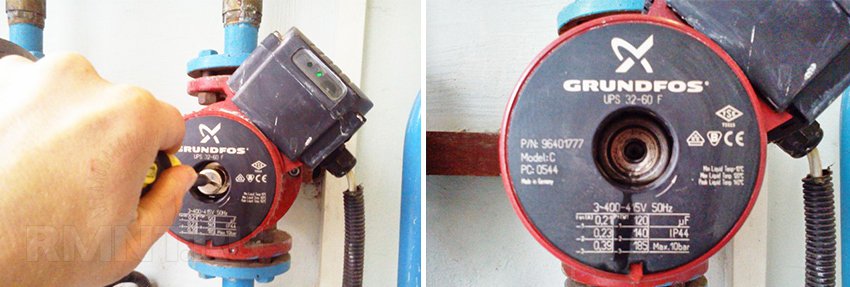

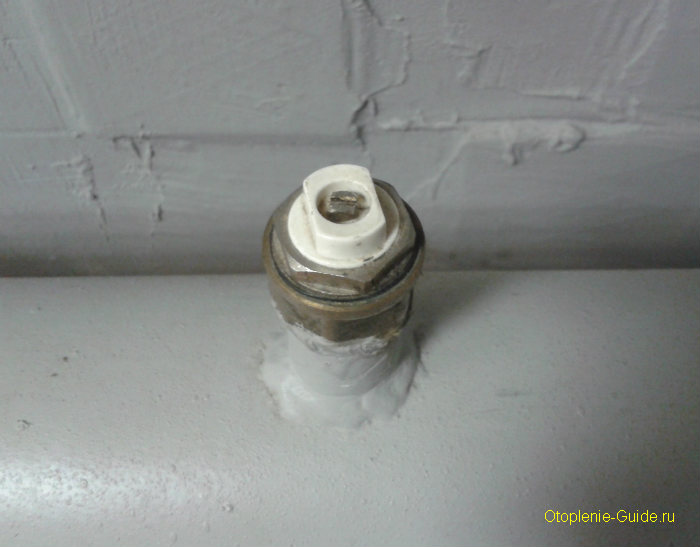


Removing the airlock with bleeders
To bleed air from the radiator, and at the same time from the pipes, automatic or manual vents (Maevsky taps) will help.Today they are mounted on all radiators, since airiness can manifest itself anywhere, even if all the standards and rules for installation work are observed. An air valve for radiators is inexpensive, and there are many benefits from it - it will allow you to drive out the resulting air congestion at any time.
In order to bleed air from the battery using the Mayevsky crane, it is necessary to determine the location of the air lock. This is done by touch, you just need to feel the heaters after starting the boiler. Where you find cold areas, there are plugs that interfere with the operation of heating - it is them that we need to remove using the Mayevsky crane.
After the location of the plug is determined, it is necessary to turn the valve and achieve the exit of the air accumulation found there. Do not forget to substitute a bucket or basin so as not to flood the floors. A signal that the entire air plug has safely exited is a trickle of water oozing from under the valve. While the water is bubbling, it means that air masses are still escaping. We carry out a similar procedure on other batteries where plugs are found.
The easiest way is to install automatic air vents on radiators. Their main advantages:
- Independent work that does not require human intervention;
- Compact design - they will not spoil the interior;
- Reliability - being serviceable, they will not let you down.
Automatic vents allow even the smallest amounts of air to be released. That is, they do not allow its accumulation. But the accumulated air masses not only interfere with the operation of heating, but also lead to the formation of corrosion.