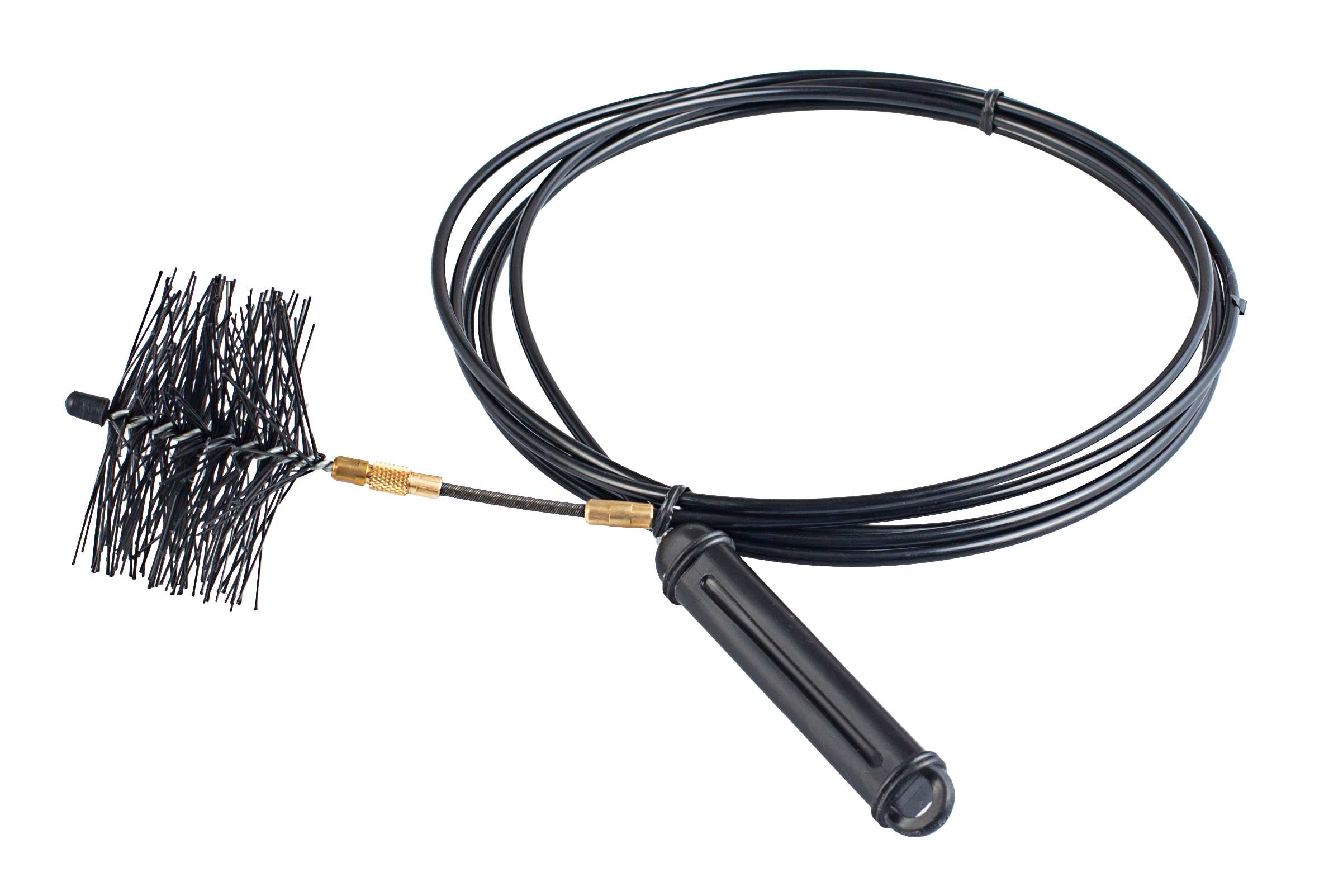
- Types of plumbing cables
- Types of nozzles
- Types of handles
- Self-made sewer cleaning device
- Varieties of cables
- The best professional plumbing cables
- Crocodile 50310-13-30
- Spex STU-SN-16-15
- Vibromash VGS-20
- Santechkrep 437678
- Wicavo 10/15
- Types of sewer cables
- Rope rope
- Spring wound rope
- Spring wire with core
- How to choose the right drain cleaning cable
- Types of blockages and their causes
- Varieties of plumbing cables
- Blockages in sewage disposal systems are conditionally divided into several varieties:
- Pipe cleaning wire
- Clearing the blockage
Types of plumbing cables
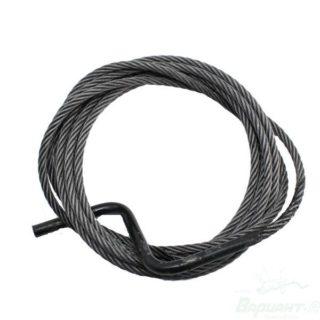 Rope rope
Existing types of cables differ in technical characteristics and features of use.
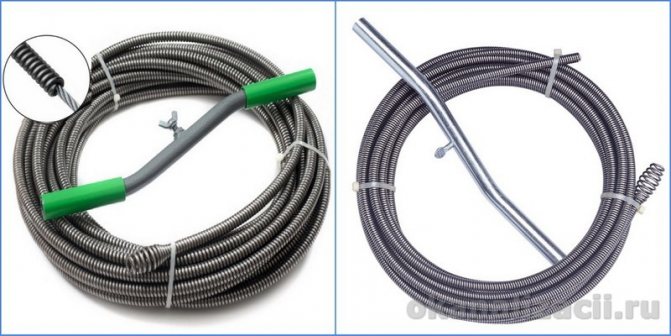
Rope (rigging) - an affordable device with a diameter of up to 6 mm and a length of 2.5 to 5 m. It looks like a rope tightly twisted from small wires, the ends of which are crimped so that it does not unfold. But if one of its ends is developed, then the product will be even more effective in clearing pipes from simple blockages, the so-called operational ones. The design is elastic and flexible, so it perfectly passes the bends of the sewer network.
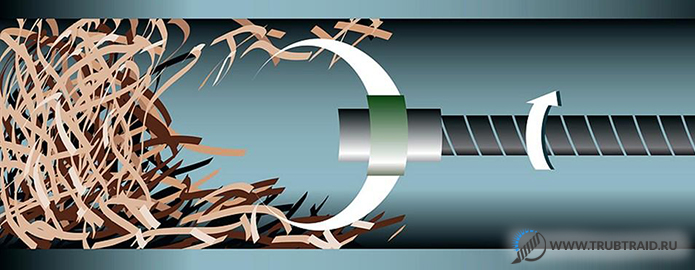
A flexible plumbing cable (also called a flexible shaft) - its basis is a metal rod, on which a metal spiral is wound, sometimes in several layers. A handle is attached to one of the ends, which, when removing the blockage, is rotated in one direction. Thus, the clog is broken down and pushed further down the pipe to a wider area. Length - up to 60 m, diameter - up to 28 mm.
The metal tape is a flexible structure designed to break through blockages in sewers. large diameter pipes. It is distinguished by the presence of a quadrangular peak at the end. Length - up to 30 m, width - up to 25 mm. When folded, it takes up less space, but is not very convenient, as it bends in only one plane.
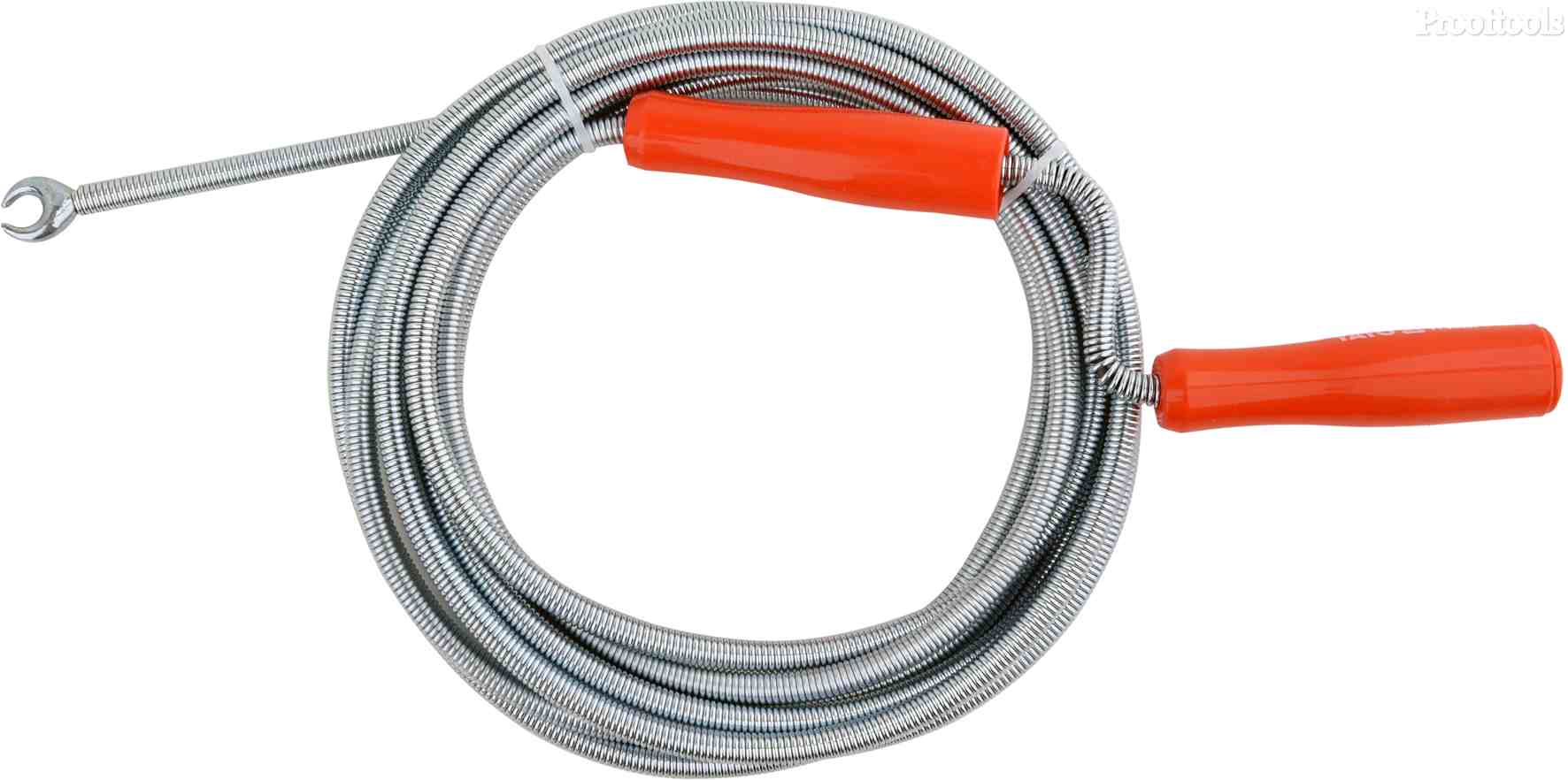
Spring is similar to a flexible shaft, consists of a twisted spring. Length - up to 25 m, diameter - up to 13.5 mm. Spring products in a plastic braid are used to clean plastic pipes so as not to damage the pipes themselves from the inside, as well as the plumbing cavities.
Tension refers to professional equipment. It should be used to clear difficult blockages when other methods have failed. Products are characterized by increased rigidity, braided metal or vinyl. The handle acts as a tensioner, making the cable as rigid as possible. You can optimize the device using different attachments.
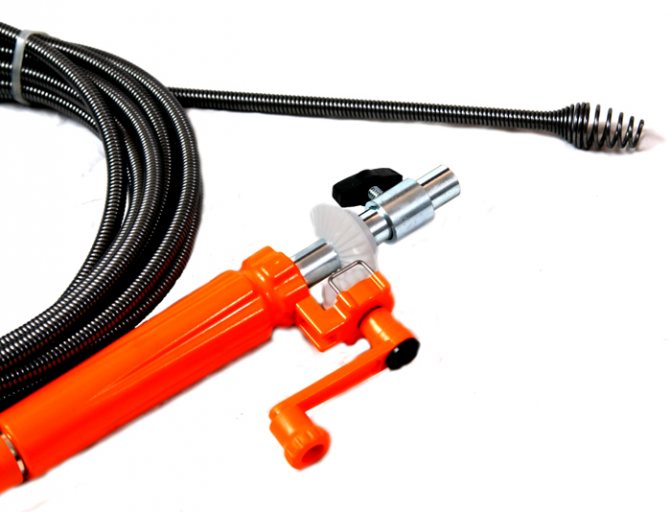
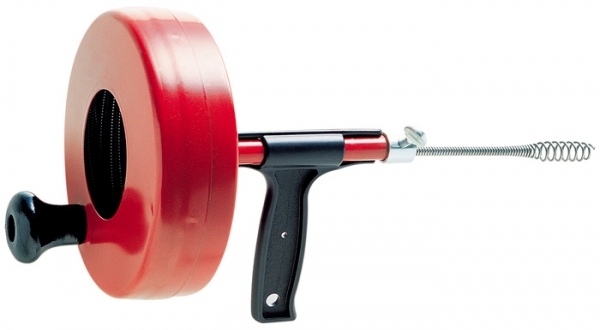
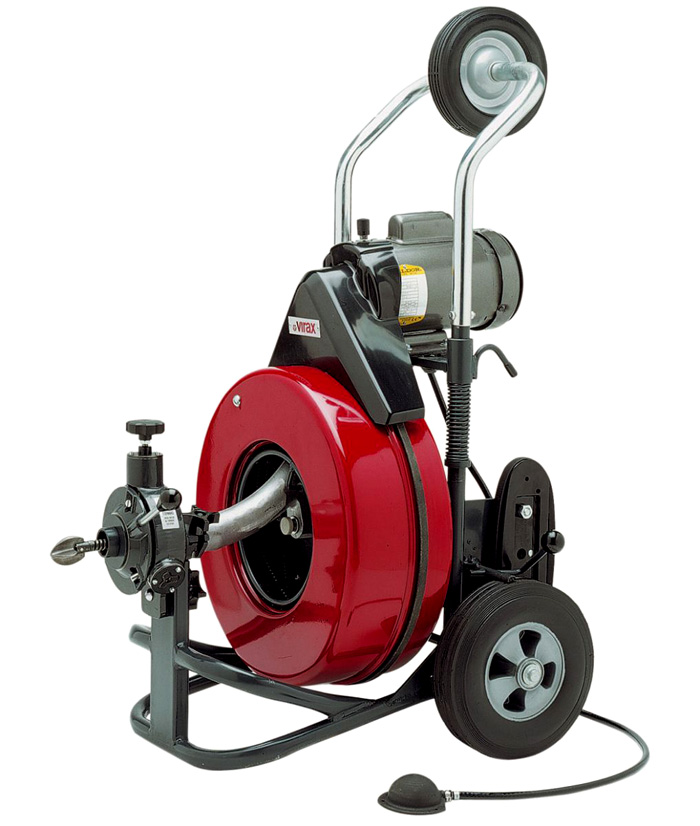
Electric is a professional plumbing tool. Such a cable is used where other equipment has failed or is inconvenient to use. They have a handle, like a pistol, a drill, a cable wound on a drum, a set of tips. You do not need to twist, the rotation is carried out automatically.
Types of nozzles
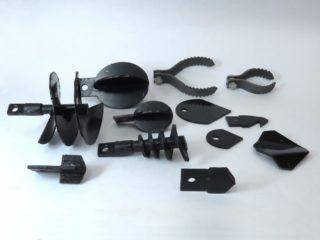 Variety of interchangeable nozzles
Nozzles differ depending on the purpose. Replaceable are installed on a threaded connection and are replaced if necessary:
- ruff - used to remove organic deposits;
- auger - is a screw nozzle resembling a drill, removes soft growths inside the pipe;
- punch or pike - for old and complex blockages that completely close the pipe lumen;
- bottom nozzle - designed to remove construction debris;
- hook - will help to get objects that have fallen into the sewer;
- harpoon - a nozzle that combines the properties of a punch and a hook, simultaneously pierces and picks up a blockage to remove it;
- scraper - designed to remove deposits from the walls of pipes, it consists of two curved plates with notches.
Less popular tips:
- in the form of a sphere - to remove sand and lime;
- tetrahedral knife - to remove the roots;
- blade - for gypsum and silt deposits.
Any nozzle is selected taking into account the diameter of the pipe: the larger the diameter of the sewer, the larger the diameter of the nozzle should be.
Types of handles
Most plumbing cables for cleaning domestic sewers have a brace as a handle. Professional devices are equipped with a plastic or wooden handle, reminiscent of similar elements in a pistol or drill. They are equipped with an electric drive or a gearbox that reduces resistance, a stand. All improvements facilitate the process of cleaning the sewer, since the work of removing complex blockages with a long tool of large diameter is laborious.
The cost of professional devices is much higher than the price of household appliances, so they are used by plumbers who clean blockages daily.In other cases, the purchase of expensive equipment is not cost-effective.
Self-made sewer cleaning device
Plumbing cable has a low cost and is sold at any hardware store. If you want to make it yourself, you must follow the following tips:
- Take a strong but flexible material for the base.
The use of steel can damage the piping, so it is better to give preference to a softer material.
Fluff the tip of the metal core.
Attach a handle from improvised materials so that the device is convenient to use.
In the middle, the plumbing cable must be wrapped with a rigid material or a piece of plastic pipe should be used. This place will be used for fixing with your hands while cleaning the drain system.
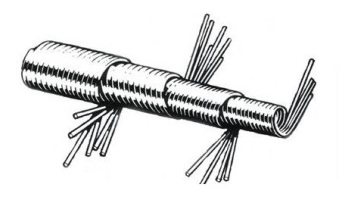
Fluffing the tip of the metal core
There are also quite original ways of manufacturing a mechanical device. for cleaning pipes with your own hands. For example, a household sewer cable can be made quite quickly from an ordinary plastic bottle. The technology is as follows:
- It is necessary to choose a convenient plastic bottle and clean it of unnecessary elements (stickers, labels).
- Draw a spiral pattern with a permanent marker.
- Cut a homemade pipe cleaning mechanism in a circle.
- Leave a loop at one end to act as a handle.
A hand-made cleaning device looks something like this:
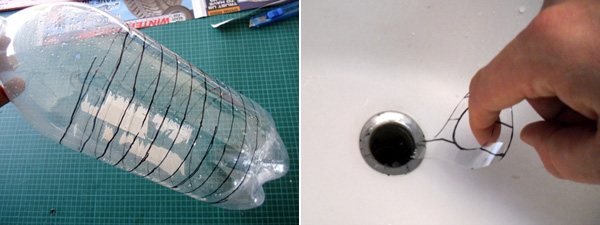
Self-cleaning device
It should be remembered that such a home-made design is not reliable enough and is only suitable for small blockages that are located near the drain hole.
If you try to push the tool deeper inward, a break may occur, and then the clogging will become even larger.
Varieties of cables
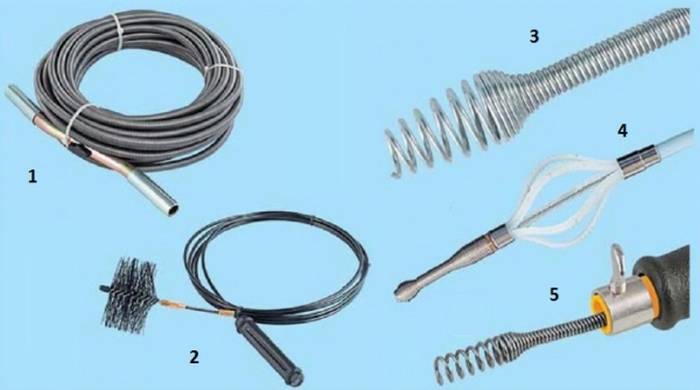
There are several types of wire devices for clearing blockage
There are several types of wire devices for cleaning blockages. Each of them performs certain functions:
- Rope rope is often used for domestic purposes. Such devices are made of galvanized steel. This is a tightly twisted rope with a crimped end that can be used to clean sewers in a private house, apartment or office. The length of the product can be in the range of 2.5-5 m. Typically, the diameter of such a cable does not exceed 0.6 cm. Such cleaning devices have good resilience and flexibility, so all turns and junctions of pipes easily pass, which allows them to effectively cope with assigned tasks.
Tip: in order for the device to better cope with blockages, it is better to loosen its crimped end with hammer blows. Then the fluffy end, no worse than any nozzle, will cope with hair, grease and other types of blockages stuck in the sewer.
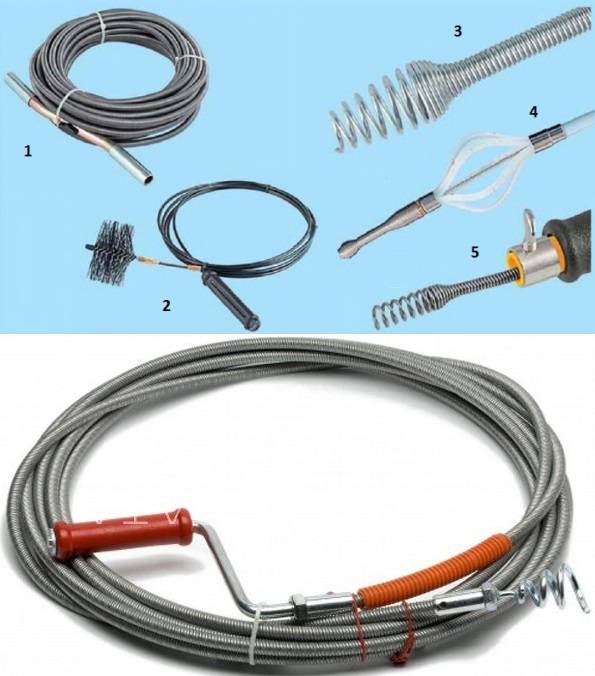
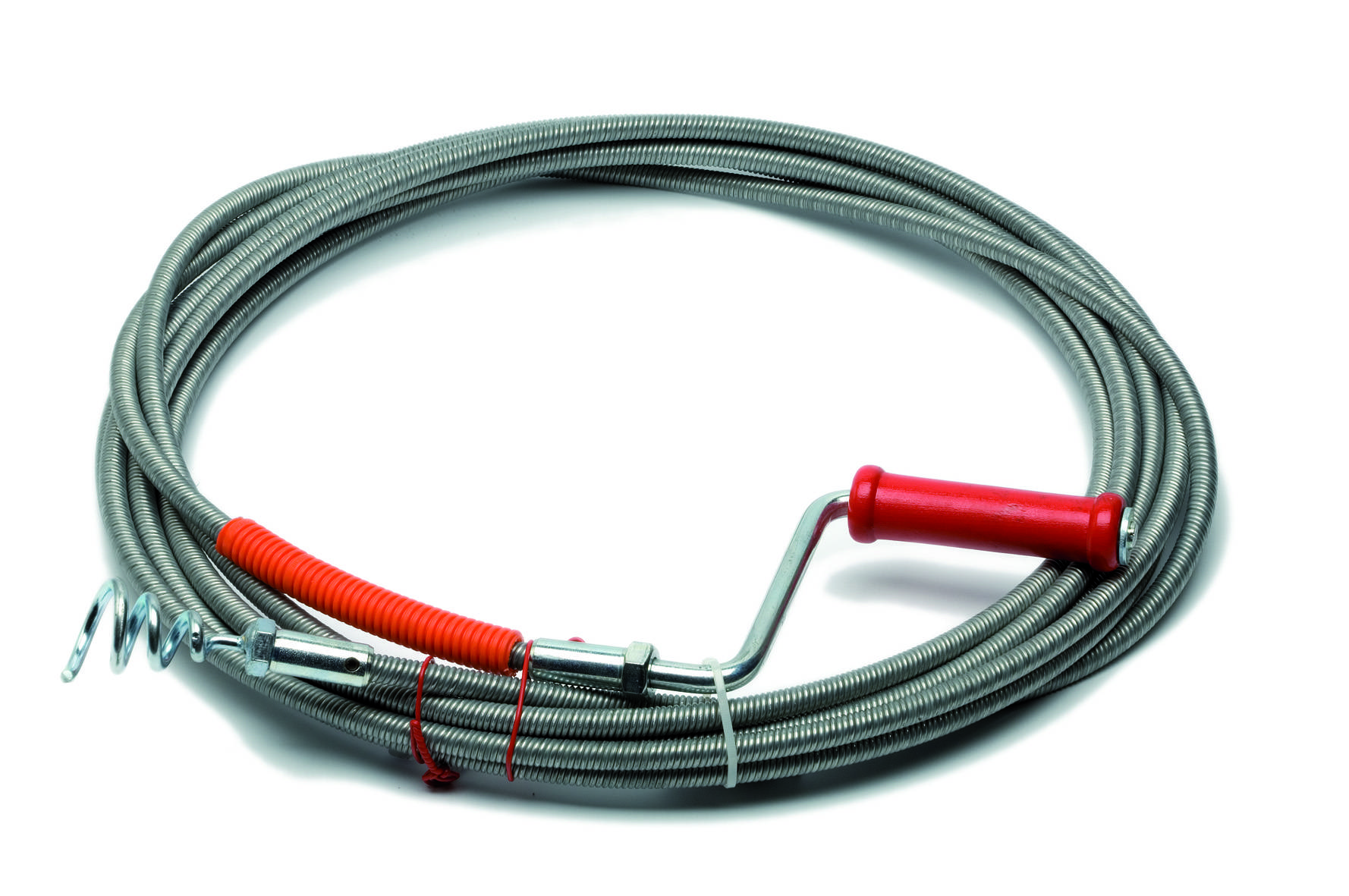
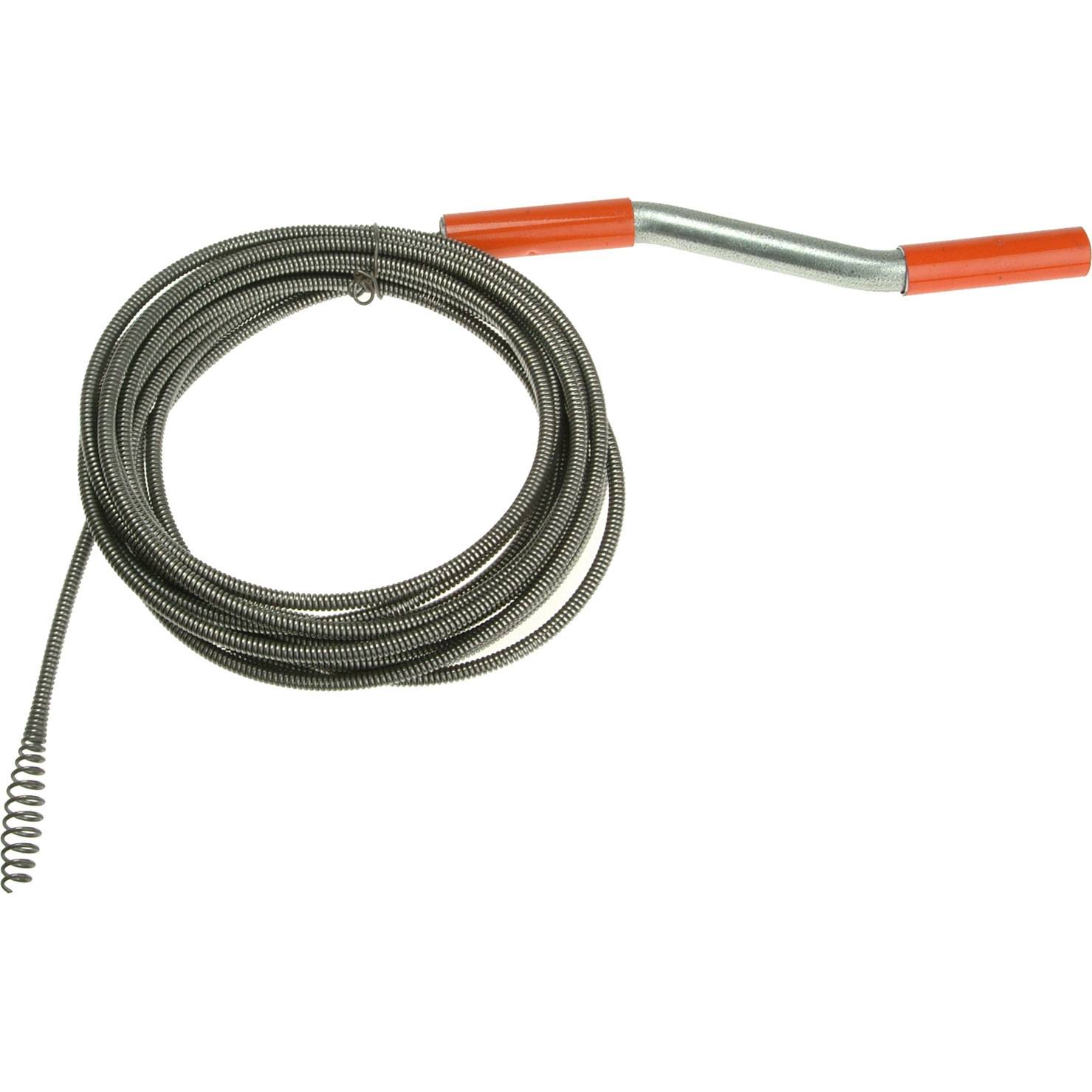
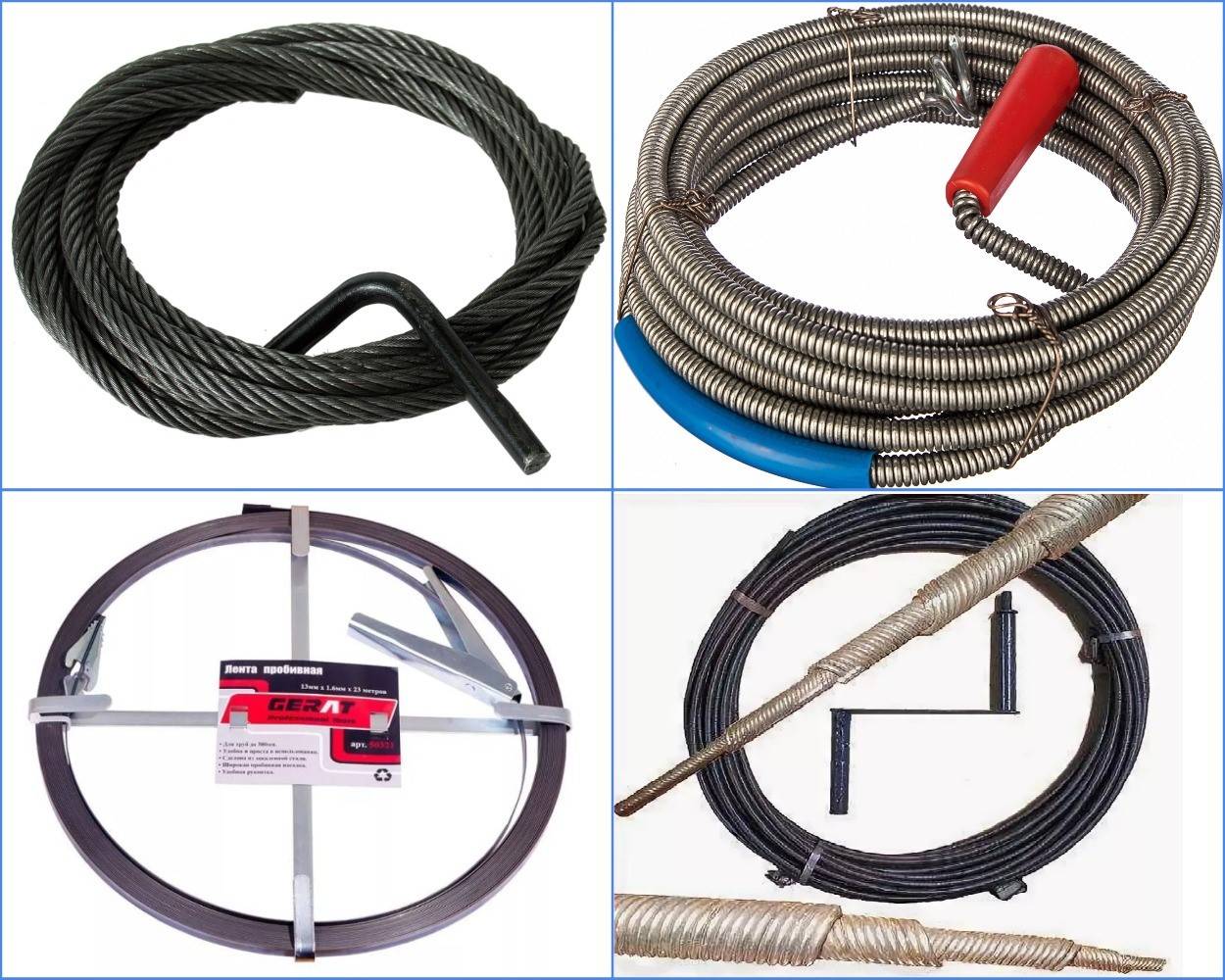

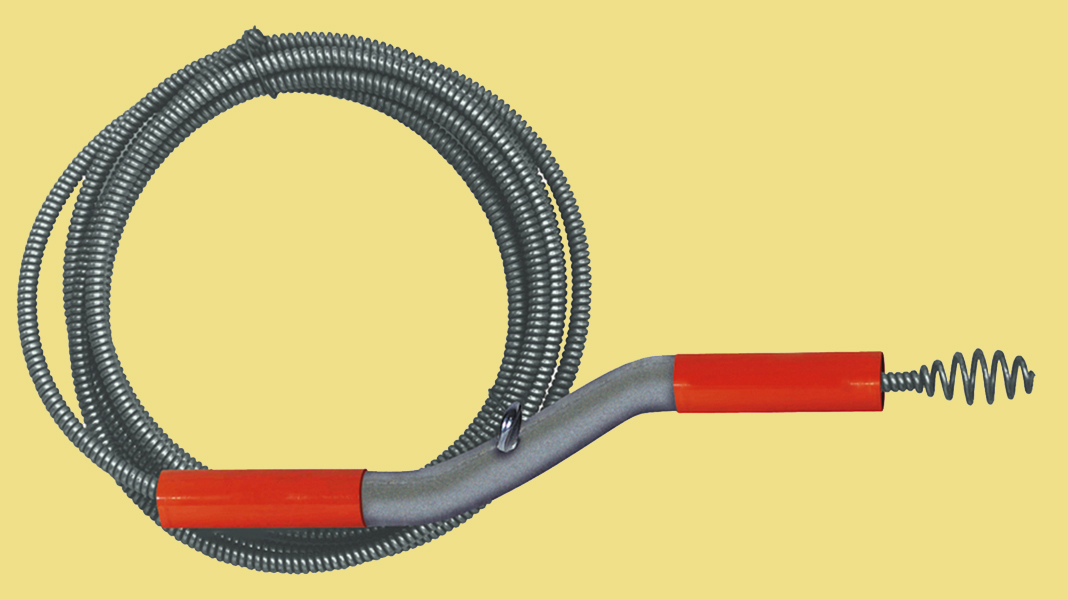
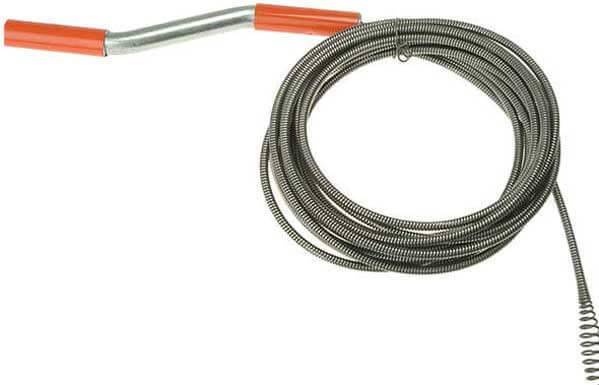

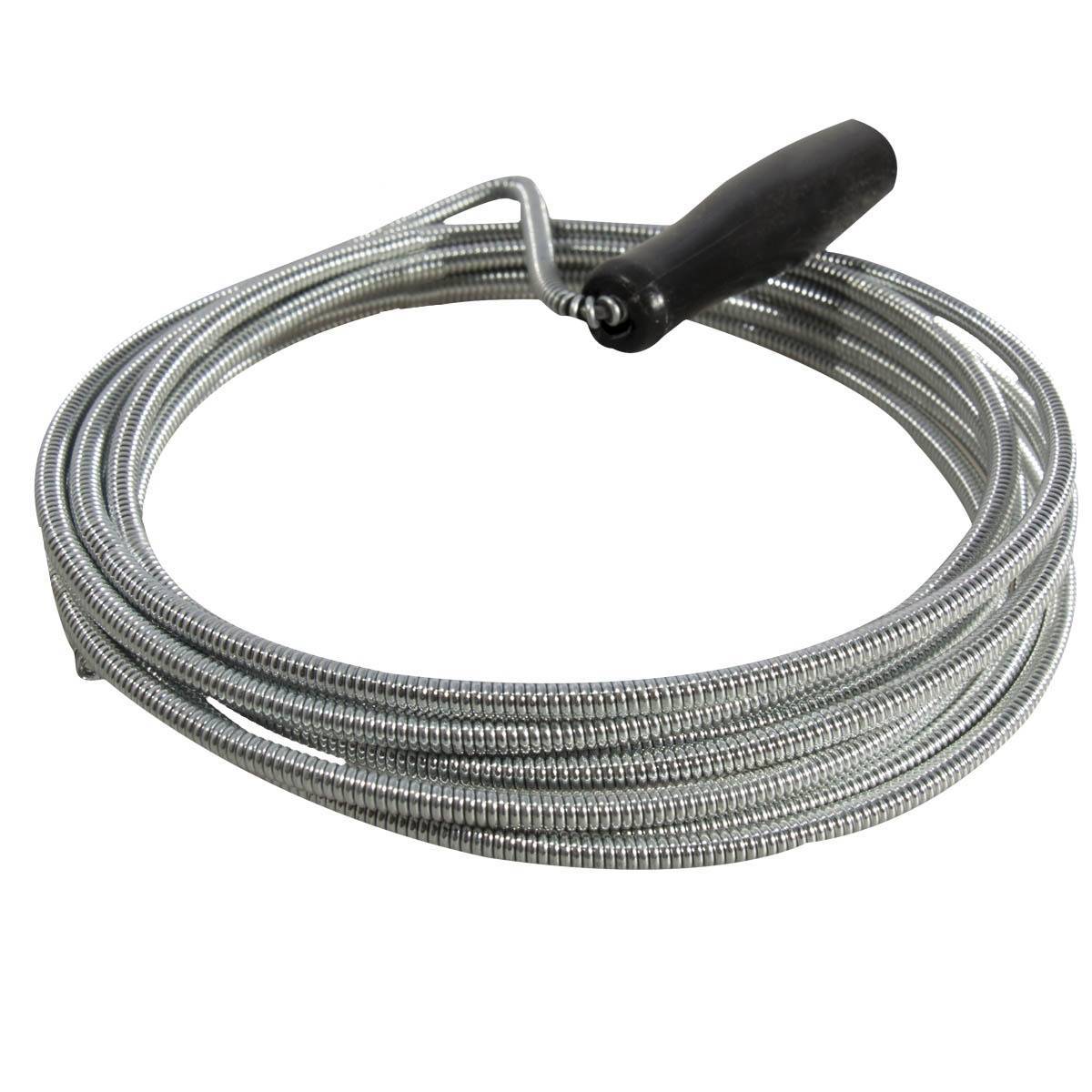
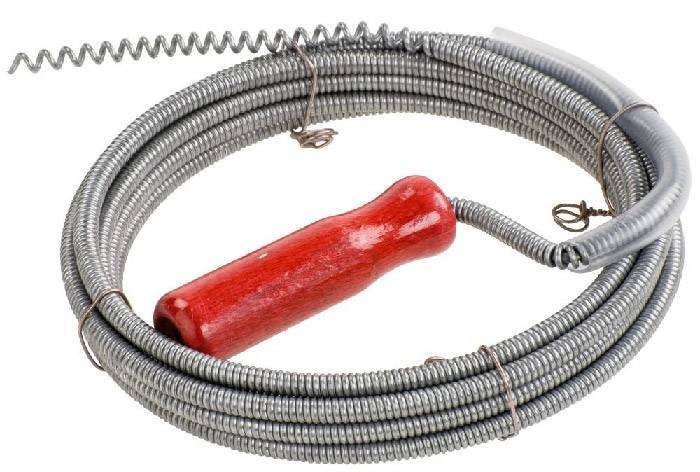
- Flexible cleaning products. This professional cable is more efficient and easier to use than cable type products. This device for cleaning pipes is made in the form of a metal spiral tightly wound around a steel core. The professional flexible cable is completed with the convenient handle for its rotation. The diameter of the device can reach up to 2.8 cm, and its length sometimes reaches 60 m.
- Metal tape also belongs to the category of sanitary devices for cleaning sewers.Usually this professional device is equipped with a tip in the form of a four-sided peak. The product also has a handle for easy rotation. The diameter of such a cable reaches 2.5 cm, and its length can reach 30 m.
- A professional spring pipe cleaner is also called a spring-wound sewer cable. It is very similar to the flexible product described in the second paragraph, but has a simpler design. The spring cable is made of a dense twisted hollow steel spring inside. The length of the pipe cleaning structure can reach 25 m, and the cross section can be up to 1.35 cm.
- A professional tension cable is used to remove the most difficult blockages in the sewer system that other types of pipe cleaners cannot handle. These are rather rigid structures, which come with special nozzles to increase the efficiency of use. These cables come with a vinyl sheath.
- Electric tools are one-piece units that are used to clear blockages in the sewer system of considerable diameter, as well as in the most difficult conditions. Electrical devices consist of a cable wound on a drum, a tip, a pistol-type handle with a drill connected to it. The product is placed in the pipe, by adjusting the speed of the drill, you can clear any blockage.
Attention: rope and spring rope have low torsional strength, so you need to be careful when using them. This is due to the fact that the rope device has a braided structure, and in a spring product, the turns can be displaced relative to the axis
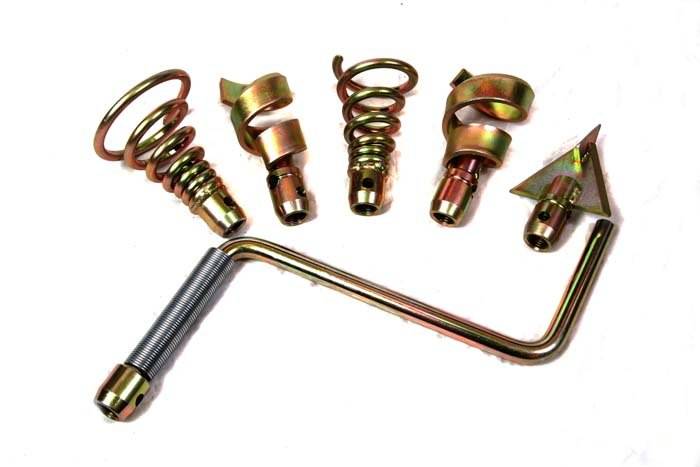
To increase the efficiency of using the cleaning device, special nozzles have been invented.
Since the sewer system can become clogged with various objects, grease, rags, sand, hair, wool or construction debris, it can sometimes be very difficult to clear the pipes. To increase the efficiency of using the cleaning device, special nozzles have been invented. They differ in purpose and appearance:
- the “ruff” tip is used to clean the pipeline from plaque collected on the walls;
- punching nozzles are suitable for removing dense compressed clogging;
- bottom devices are used to remove plugs from construction debris and stone chips;
- if hair, wool or rags have accumulated in the sewer, they can be removed using hook-shaped nozzles;
- loop-shaped nozzles were invented to combat the water seal.
Important: in addition to the configuration, the nozzles may differ in size. So, the same nozzle can be of different diameters, which allows you to choose a product for pipes of a certain section.
The best professional plumbing cables
Such models are characterized by a large diameter and high strength. They are designed for regular use, are not afraid of constant contact with aggressive media and are compatible with various types of nozzles.
Crocodile 50310-13-30
5
★★★★★
editorial score
100%
buyers recommend this product
The model is equipped with a universal nozzle with an anodized coating, which eliminates the possibility of corrosive media damaging the metal and causing corrosion. With its help, the owner can eliminate up to 80% of blockages. The main material of manufacture is high carbon steel.
The length of the cable is 30 m, the diameter is 13 millimeters.The kit includes a "floating" handle, providing comfortable operation regardless of the depth of immersion. The cable does not twist in the pipe, does not fold into a knot and retains its quality characteristics for a long time.
Advantages:
- high strength;
- protective covering;
- universal nozzle;
- comfortable grip.
Flaws:
high price.
The Crocodile cable is suitable for working on various sections of the pipe. The right solution for clearing blockages and removing foreign objects.
Spex STU-SN-16-15
4.9
★★★★★
editorial score
95%
buyers recommend this product
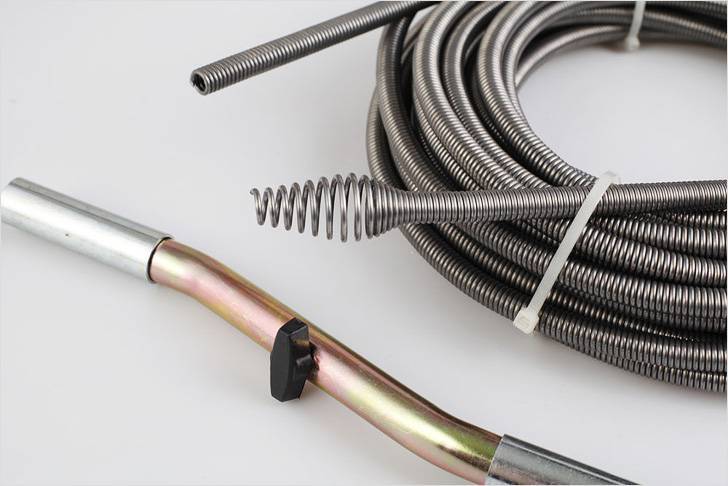
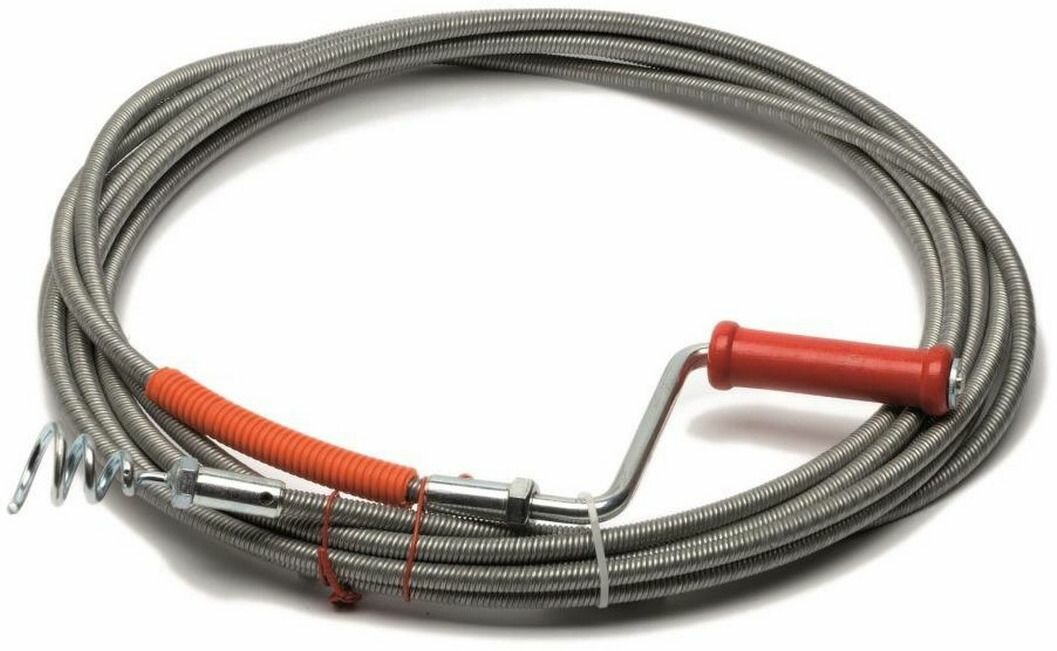
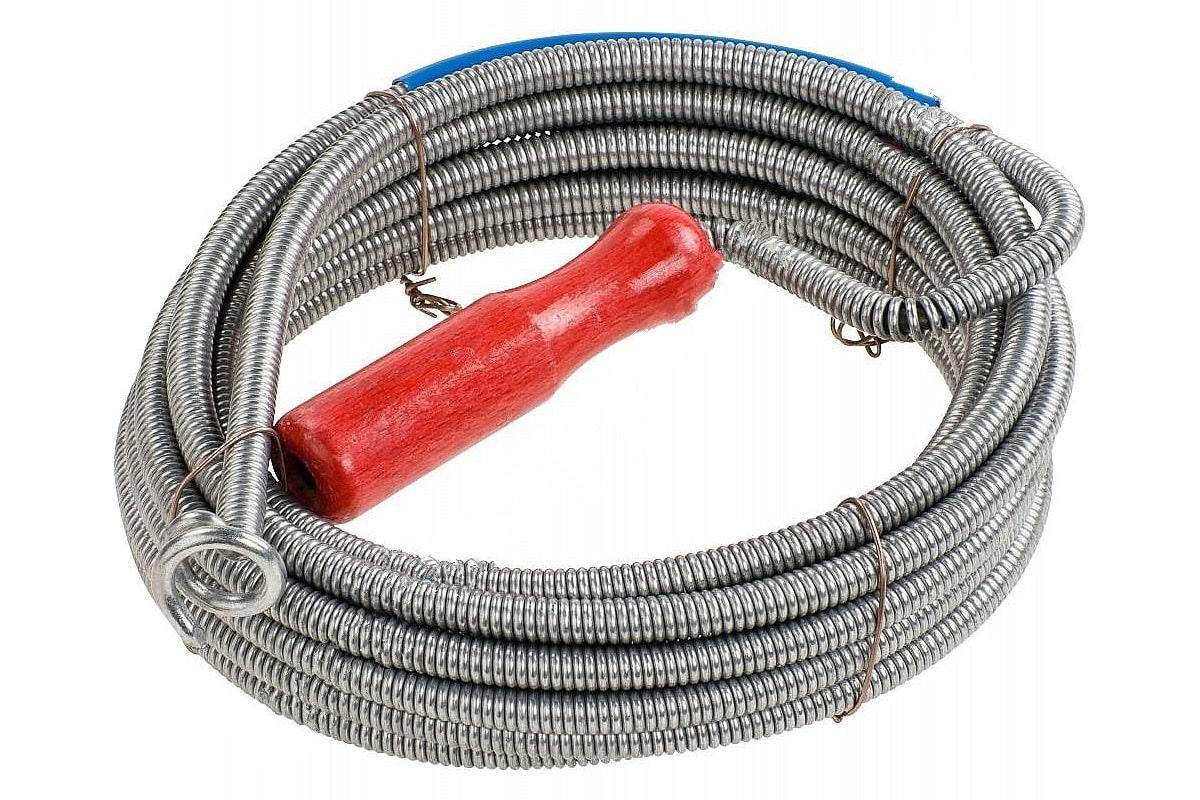
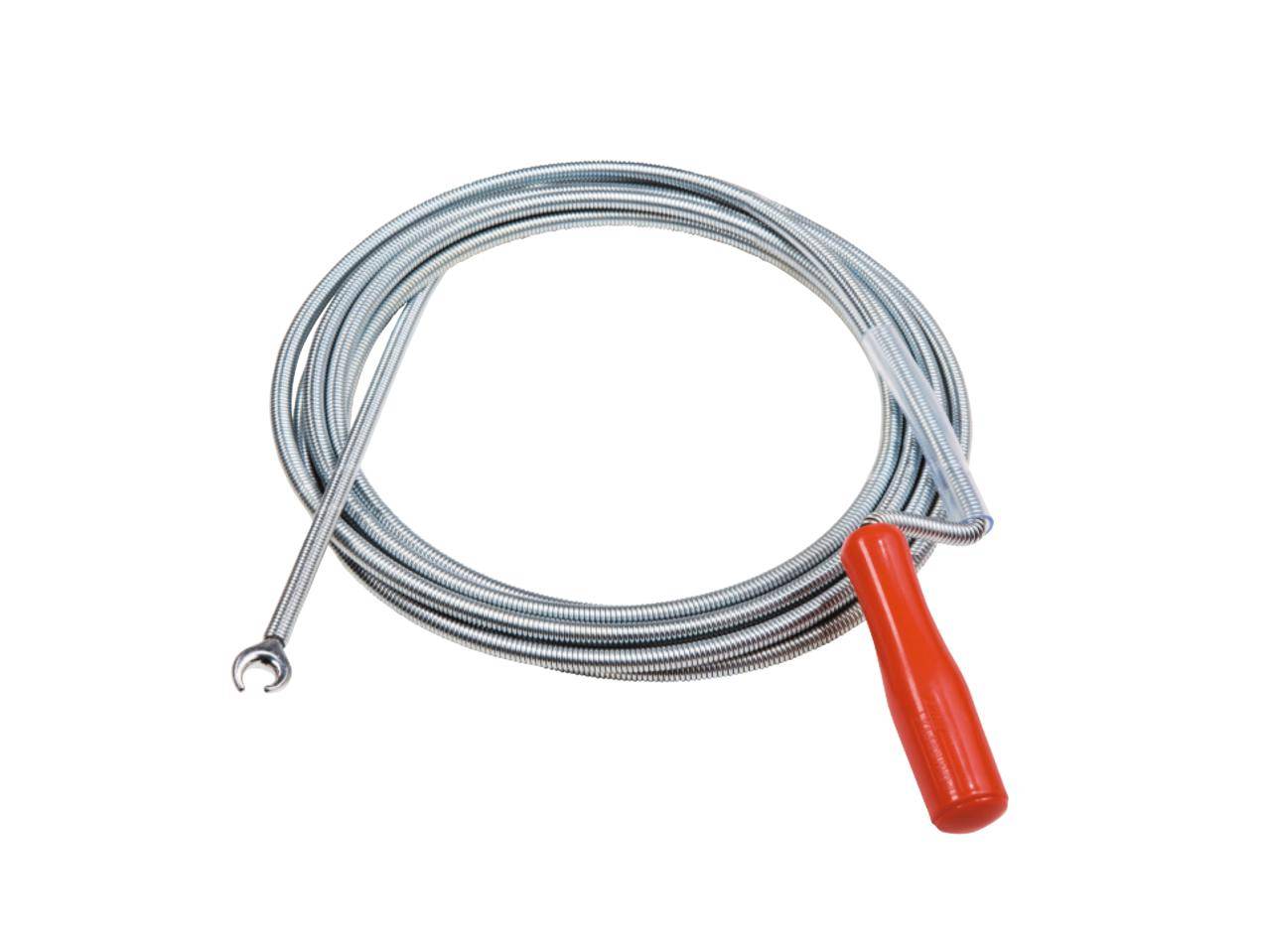
The model has a steel core, which provides resistance to twisting and breaking. It is not afraid of a large mechanical load and is equipped with a universal mount. One of 19 nozzles can be fixed on the cable, which greatly expands the range of its application.
Rope diameter - 16 mm, length 15 meters. The device has a Spex-Handle, which, if necessary, can be moved along its entire length for more convenient work.





Advantages:
- high strength;
- many nozzles;
- comfortable grip;
- long length;
- steel core.
Flaws:
heavy.
Spex STU-SN-16-15 is designed to clear difficult blockages. The reliable choice for heavy duty applications.
Vibromash VGS-20
4.9
★★★★★
editorial score
93%
buyers recommend this product
The model has a dense layer-wound structure, due to which it is characterized by high strength and resistance to high tensile loads. The Z-handle allows you to properly hold the attachment and reduces fatigue during intensive use.
With a diameter of 20 millimeters, the length of the cable is 40 m. A special punch-type tip facilitates the removal of blockages.The cable retains its original appearance and properties for a long time, does not twist or unravel.
Advantages:
- high strength and durability;
- long length;
- drill tip;
- comfortable to hold.
Flaws:
very large weight - 80 kilograms.
Vibromash cable is designed pipe cleaner industrial use and the fight against old deposits.
Santechkrep 437678
4.8
★★★★★
editorial score
88%
buyers recommend this product
The design of Santechkrep is a rigid spiral, mounted on a strong rod. The diameter of the spring wire is 3 mm. It is not afraid of high breaking load and mechanical damage. To improve the penetrating ability, a metal knob is provided.
The total diameter of the cable is 16 millimeters, but the length is only 2 m. A special handle allows you to increase the tension to the optimum. Adjustment is carried out using wrenches of two types.
Advantages:
- high strength and durability;
- protective covering;
- the presence of a tensioner;
- comfortable grip.
Flaws:
- small length;
- requires the use of additional tools.
Santechkrep is used to remove the most difficult blockages in short pipe sections. A good choice for regular professional use.
Wicavo 10/15
4.8
★★★★★
editorial score
87%
buyers recommend this product
The simple and robust design makes the Wicavo cable resistant to high mechanical loads and has a long service life. The extended handle makes it easy to grip, guaranteeing comfort during intensive use of the device.


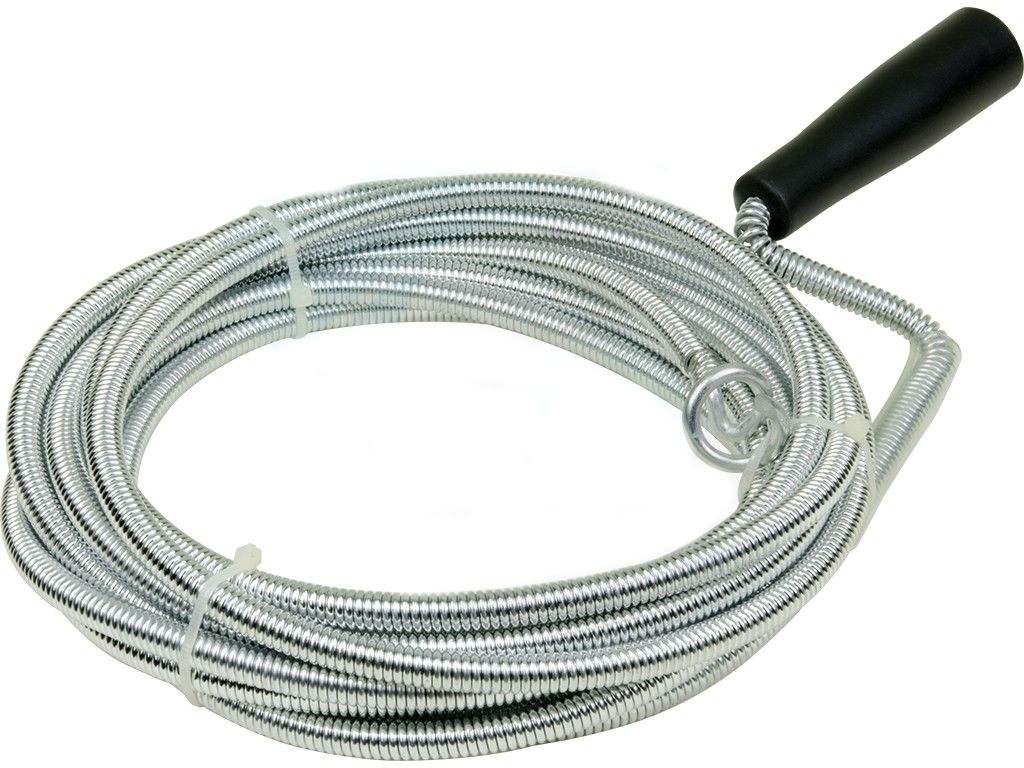
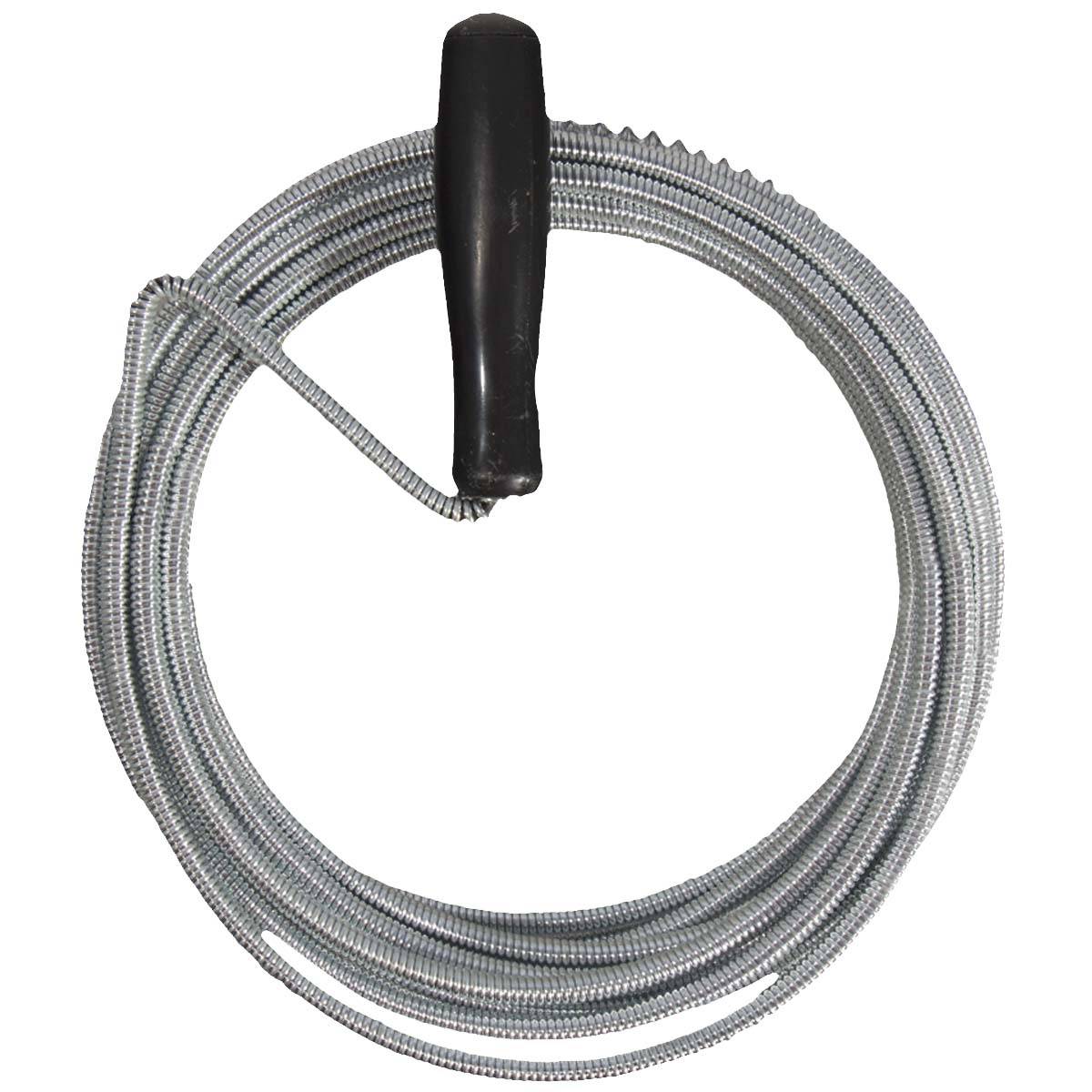

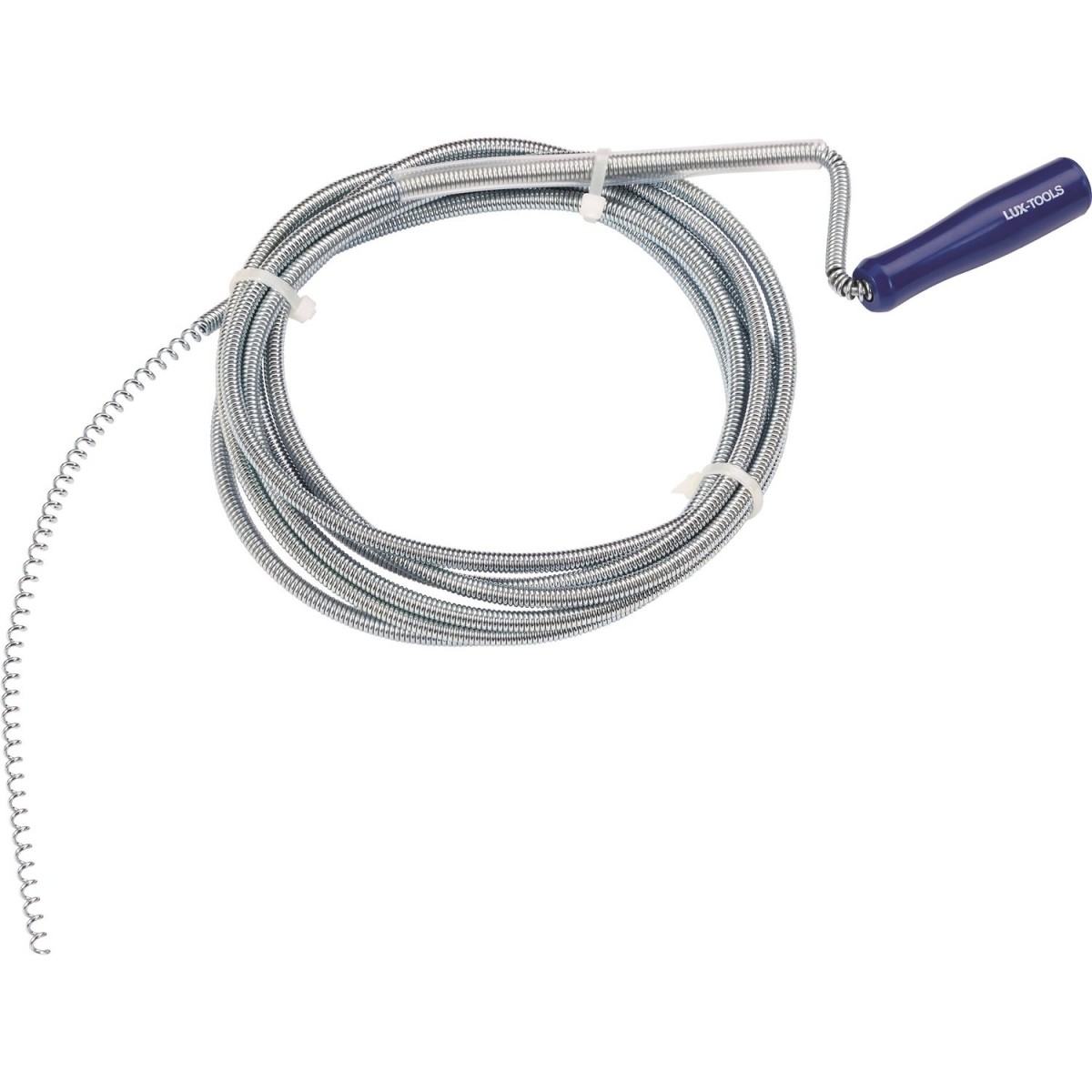

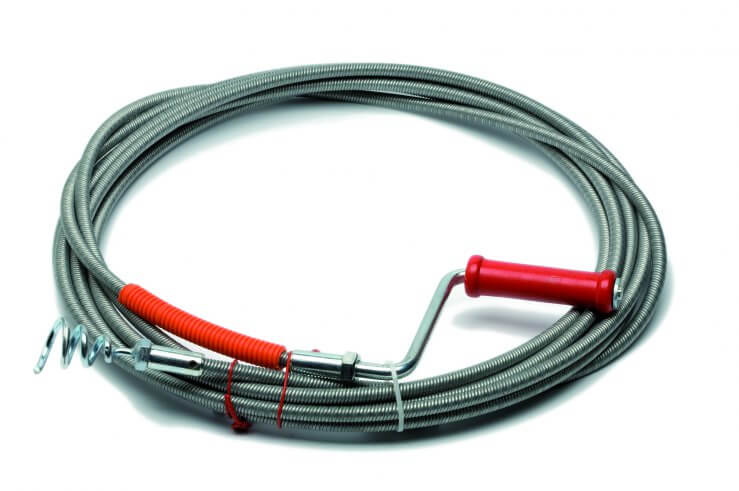


The cable is 15 meters long and 10 mm in diameter. Reinforced tip easily removes foreign objects from the pipe. If necessary, you can quickly change the nozzle.
Advantages:
- good margin of safety;
- comfortable grip;
- reinforced tip;
- quick nozzle change.
Flaws:
thin handle.
Wicavo 10/15 is suitable for regular cleaning of pipes with a diameter of 50-75 millimeters.
Types of sewer cables

Externally, all cables look about the same. Long cord on handle. But they are subdivided according to technical properties, design, method of application and place of use.
Rope rope
The most common type for home use. Cord made of spirally twisted wires. Diameter: from 6 mm, length 1.5-5 m, suitable for cleaning the apartment sewerage and partly the pipes of the interfloor riser.
Advantages:
- can be bought at any hardware and plumbing store;
- wear resistance;
- provides good cleaning of apartment pipes;
- long, one might say eternal life.
Flaws:
- there is not always enough penetration power to remove the blockage;
- often heavy weight;
- there is no fixing tip, which leads to the unwinding of the cable.
Spring wound rope
Also applies to apartments. It has a hollow structure, the wire is twisted in the form of a tube. Diameter 5-10 mm, length 5-25 meters.
Advantages:
- flexible, will pass all bends and complex connections;
- you can twist and twist in the pipe for a long time;
- the structure of the walls of the cable allows you to clear the space, works well on operational blockages;
- price, tools of this type are always cheap.
Flaws:
- difficult to care for, due to the hollow middle makes it difficult to sanitize after the process;
- when stuck in the pipe, it can deform or stretch in places;
- not effective with complex blockages.
Spring wire with core

Powerful equipment for professional use. Steel core made of twisted wire wrapped in a spring helix. The industry is produced in two versions:
- firmly fixed middle;
- shell and core rotate.
The handle is firmly attached to the core. At the end of the core there is a mount for nozzles.
Advantages:
- high penetrating ability of complex blockages;
- you can wind additional nozzles for various types of pollution.
- does not damage the inner surface of the pipes.
Flaws:
- difficult to pass corners;
- poor flexibility;
- heavy;
- often high cost.
How to choose the right drain cleaning cable
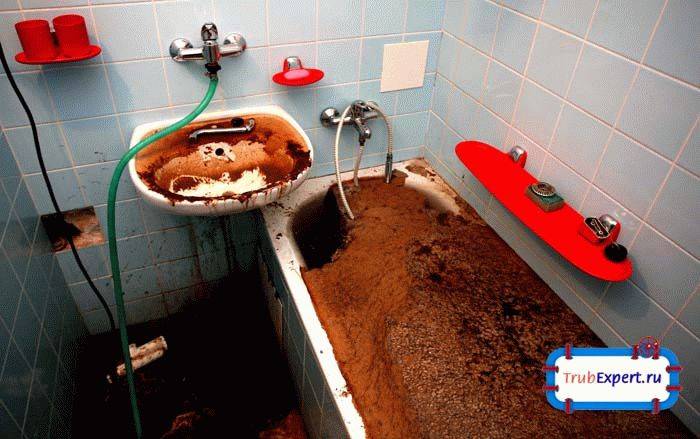
No one is immune from blockages in the sewer system. In this case, the water from the bath, washbasin or toilet goes very slowly or does not drain at all. This situation needs to be corrected very quickly, otherwise it will be necessary to abandon the use of the usual benefits of civilization.
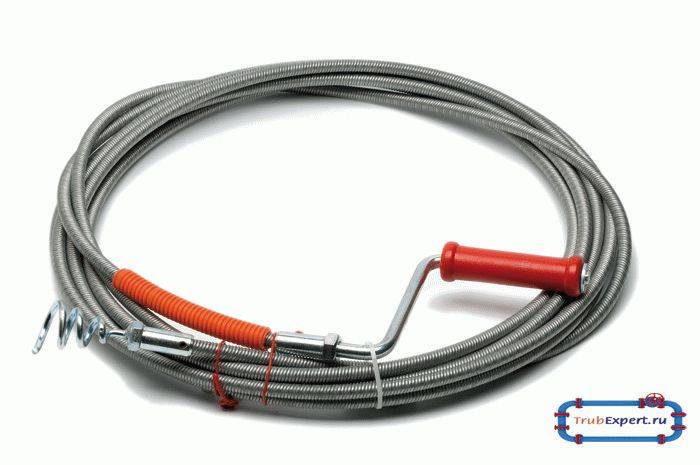
Even before the advent of modern chemicals for pipes, every owner of the house had a plumbing cable for cleaning the sewer. Such a device can clean the sewers even where modern chemicals such as "Tiret" or "Mole" are powerless.


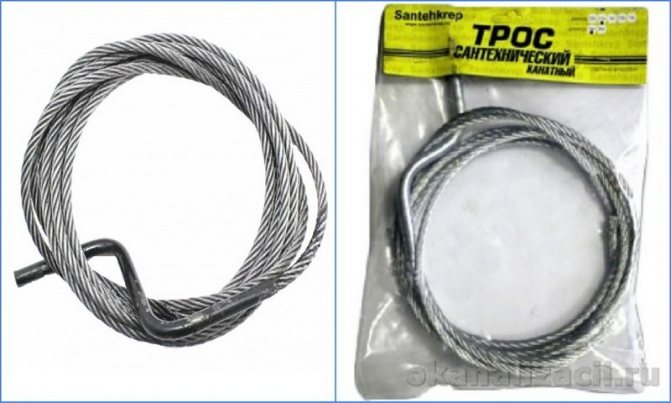



Types of blockages and their causes
For what reasons does the sewer become clogged and why does someone rarely have blockages, and someone is persecuted with enviable regularity. 3 types of blockages contribute to disruption of the sewer system:
Mechanical blockage occurs when solid objects enter the drain pipes and the toilet bowl, interfering with the normal flow of sewage waste. In this case, the plumbing cable will not help cleaning the pipes, since it will be necessary to disassemble the sewer system to remove a foreign object stuck in the pipe.
Operational blockage occurs during the daily use of the system. Fat deposits appear on the walls of the pipes, on which food particles that fall into the sink when washing dishes, pet hair, sand deposits and other small debris can stick. In this case, a cable for cleaning sewer pipes will help to quickly solve the problem.
Technological clogging occurs due to worn out pipes, and in a relatively new system, due to an incorrect connection scheme for pipeline sections. In both cases, cleaning will only eliminate the problem for a short time, and soon blockages will reappear. The only way out is to replace the old equipment or lay the pipes correctly, correcting the existing errors in the system.
Varieties of plumbing cables
With a small blockage, which is located near the siphon, an ordinary plunger, which every housewife has, will help to cope. However, if dirt has accumulated somewhere in the middle of the pipe, chemicals or a cable are used to clean the sewer.
For domestic use, a rope, flexible, spring or spring-coiled cable is used to clean the sewer with your own hands or a device in the form of a steel tape.
Rigging (rope) device
Rope wire is the most common option used to clean out sewers in a home.It is a tightly twisted rope with crimped edges, made of galvanized steel. The length of the rope ranges from 2.5 to 5 m, and the diameter of the section is usually 6 mm. Due to the flexibility and elasticity of the product, such a device easily overcomes the turns and connections of the sewer system, successfully removing the resulting blockage.
To improve work efficiency, one end of the cable can be released from the tip and fluff the edges a little. In this case, it will better clean the walls of the pipes.
Spring products
Spring-wound cable for sewer cleaning is hollow coiled spring made of steel wire. For ease of use, there is a handle at one end of the device. The spring diameter is at least 9 mm. Such a product is used for cleaning pipes in apartments.
A spring cable is a professional fixture used by plumbers. The length of such a product is from 25 to 60 meters, and the diameter is 13.5 or 16 mm.
metal tape
The device is a steel tape 25 millimeters wide and up to 30 meters long. At one end of the product there is a handle, at the other - a round metal nozzle. Today, tape products for personal use are rarely used.
Blockages in sewage disposal systems are conditionally divided into several varieties:
- Mechanical. It appears due to the fact that residents are careless about the operation of sewage disposal systems. As an example, we can cite cases of throwing any large garbage into the toilet.It can be floor rags, a large amount of waste after repair work, and so on.
In the event of a similar situation, the cable for plumbers will basically be useless. The only optimal way out is to dismantle the corresponding riser.
Technological. It appears from time to time in case of violations in the design and installation of the sewage disposal network.
It is possible to eliminate the formation of this type of clogging of the pipe passage only by eliminating the shortcomings in this network. For example, the wrong angle of inclination of pipes designed to remove sewage will become a regular cause of interference and the formation of impassable sections in the pipes.
In this situation, a plumbing cable can provide some help. However, the most effective will still be the elimination of all the shortcomings of the system.
Operational. It occurs during long-term operation of the sewer network and consists in the fact that various deposits and growths appear on the outer surface of the pipeline.
They consist of elements of oils and fats, animal hair and human hair, slight pollution, which cannot but be in the system when washing cutlery, plates and other utensils; flushing food debris into the toilet, etc. In this case, the sewer cable will come in handy. It will easily remove all obstructions in the pipes.
Pipe cleaning wire
Apart from the elastic metal cable, which is used when pipes are 30 cm in diameter, metal wire is also used to clean the sewer from blockages, the pipe should be no more than 25 cm in diameter.In cases where the diameter of the pipe is more than 35 cm, then water is used for cleaning, which washes away all the contaminants accumulated there.





Usually, do-it-yourself sewer cleaning with a wire is carried out as follows:
- It is necessary to introduce into the well, using an iron wire fixed with a clamp, at the end of which a special tip is installed in the form of a ring or a ball.
- In order to extract what caused the blockage, forks are installed in the lower dry well.
- The wire is clamped and fixed.
- We begin to move the wire in a progressive manner.
This method of cleaning pipes from blockages is quite popular, but is not able to solve all the problems at once, since the wire used here is transformed into a spiral during translational movements, losing elasticity. If the diameter of the pipe is more than 20 cm, then the cable may not even reach the site of clogging, as it will spring. Then other devices are used.
Clearing the blockage
If water does not drain well (or does not drain at all) into the drain hole, it is necessary to clean the sewer pipes
What types of cables are, we figured out, it remains to understand how to use them. If the water does not drain well (or does not drain at all) into the drain hole, it is necessary to clean the sewer pipes.
All sanitary appliances in houses and apartments are connected to the sewerage system using siphons. To clean the pipeline, it is necessary to dismantle the siphon. However, there are cable models for which you can not dismantle the siphon. In addition to it, the sealing plug is removed from the outlet pipe.These parts should be washed, after which you can start cleaning in the following sequence:
- The working end of the device is lowered into the drain hole of the sink or toilet bowl. If required, a special tip can be used.
- The product is gradually pushed deep into the pipeline with gradual unwinding. In this case, it is necessary to rotate the handle of the device in one direction.
- When the product reaches the blockage, you will feel that it has become more difficult to push through. To destroy the cork, perform pushes with the device, periodically pulling it out and cleaning it of dirt.
- The blockage will gradually begin to break down. You will notice that the cable will be able to move further freely. In this case, you should continue to rotate it for some more time in order to completely eliminate all remnants of clogging. So you insure yourself against pushing the plug further into the system and blocking it in a new, deeper location.
- You can check the quality of cleaning by draining a large amount of water into the sewer. If you use hot water for this, then at the same time you can flush the pipes from fatty deposits, which can lead to new blockages.
- If the water drains well, then you can collect the siphon and install it in place. And the wire fixture must be prepared for storage. To do this, it is thoroughly washed, lubricated with an oily substance, carefully folded and packed in thick paper.
Important: do not store the cable in sealed plastic packaging so that it does not deteriorate. Video instructions for using a cable to clear a blockage in the sewer system of an apartment:
Video instructions for using a cable to clear a blockage in the sewer system of an apartment: