
- How to choose thermostats with an air temperature sensor
- Boiler control
- What are temperature controllers with an air temperature sensor
- Main functions
- Principle of operation
- Types of sensors for measuring temperature
- Remote temperature sensors
- Electronic temperature sensors
- Other
- How to choose a room thermostat for a heating boiler
- Wired or wireless
- Temperature setting accuracy
- Possibility to set the hysteresis value
- The presence of a programmer
- Availability of Wi-Fi or GSM module
- Security systems
- 3 Liquid and gas-filled thermostats
- Typical solutions for automation of the heating system.
- Relay on DIN rail
- The device and principle of operation of the thermostat
- thermostat
- Types of thermostats
- The principle of operation of the thermostat
- Popular Models
- BAXI Magictime Plus
- TEPLOCOM TS-2AA/8A
- Buderus Logamatic Delta 41
- Temperature controllers with an air temperature sensor: characteristics and features
- How to make a simple thermostat with your own hands
- Thermocouple
- Operating block
- Actuating mechanism
How to choose thermostats with an air temperature sensor
First, decide between an electronic and a mechanical device. The first option is more optimal and convenient, but if you have periodic problems with electricity at home or in the office, then give preference to a mechanical device.
Next, pay attention to the regulation limits, the installation method (the simpler the better) and the degree of dust and moisture protection.
Especially economical buyers are better off buying a programmable thermostat. This is due to the fact that a specific temperature regime is needed in the house not around the clock. During working hours, the premises are empty, therefore, having spent money once on a programmable device, you will significantly save on utility bills in the future. You can program a decrease in heating, for example, from 10 am to 4 pm.
Boiler control
A gas boiler or an electric boiler can be controlled by a thermostat installed in the living room, as well as a more complex temperature background controller - a programmer. Depending on the design of the boiler, there are three options for connecting such control devices:
- To special connectors on the boiler control board (for wall-mounted volatile models);
- In series to the boiler thermostat with obligatory connection to the gas valve (for non-volatile floor models);
- Instead of a boiler thermostat (for floor standing boilers).
Modern wired programmer for a gas boiler
Important! For the installation of such regulators, the rooms most frequently visited by residents are chosen the most distant from the boiler: a bedroom, a hall
What are temperature controllers with an air temperature sensor
The thermostat (aka thermostat), which has a room temperature sensor, is a special controller, which is the most important control part of the heating device. The main task of the device is to maintain the temperature of the coolant at a specific level for cooling or heating the room.In most cases, the desired temperature is set manually, after which the thermostat automatically regulates the operation of the boiler or convector.
Main functions
Sometimes the thermostat is an integral part of climate technology, for example, an electric boiler, an air conditioner. First of all, it is necessary to increase the level of comfort. Thanks to the temperature controller, there is no need to constantly turn the boiler off and on, measure temperature differences in the room - all the described functions are performed automatically by the device. In addition, it is necessary for:
-
Security. If the boiler for some reason did not turn off after the automatic signal of the regulator or overheating occurred, the thermostat will notify the owner of this with a sound signal.
- Savings. The thermostat will help you save on your heating or cooling system by controlling the air temperature, which will reduce the consumption of gas or electricity.
Principle of operation
A mechanical or electronic air temperature controller using the boiler thermostat collects information about the current temperature indicators directly in the coolant. At the same time, room sensors measure them indoors. Then all the collected information goes to the control unit of the device or to the automatic controller for further storage and use. After checking the readings received from the sensors, the regulator either reduces or increases the temperature of the boiler in accordance with the settings. If necessary, it turns off the heating system.
Types of sensors for measuring temperature
The room air temperature sensor can have a different design, which determines the order of its operation, service life and cost. Before giving preference to a particular option, it is worth familiarizing yourself with the existing ones.
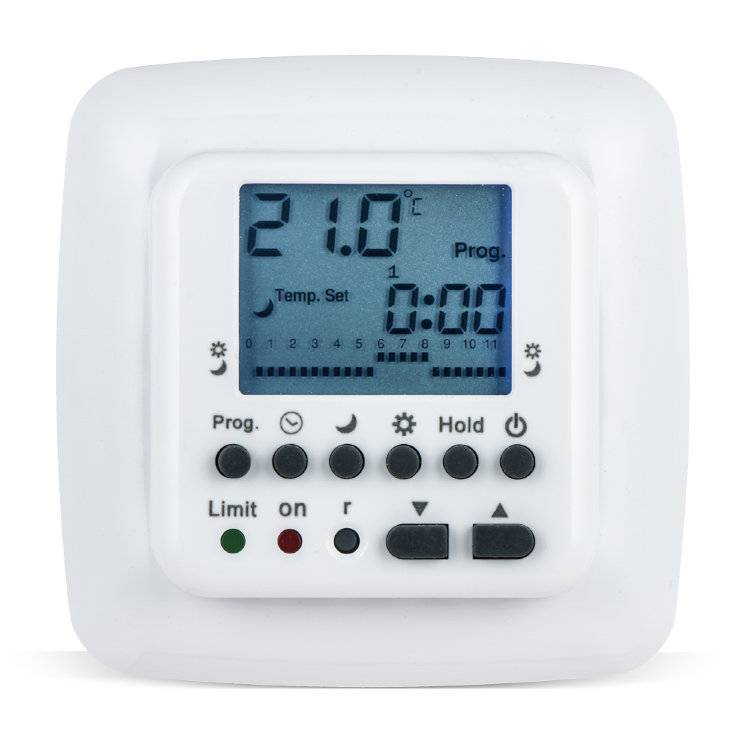
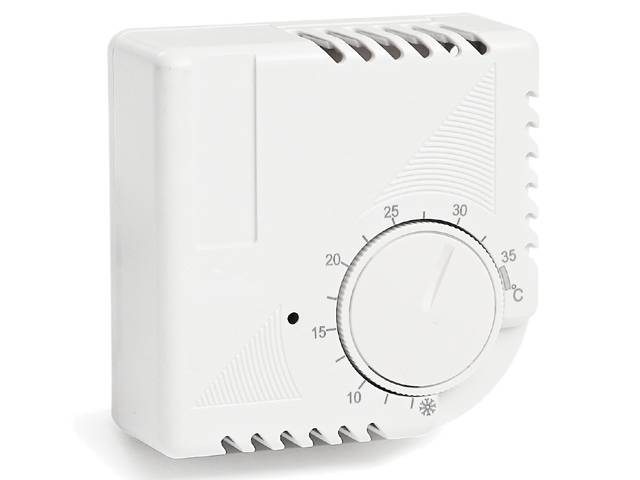

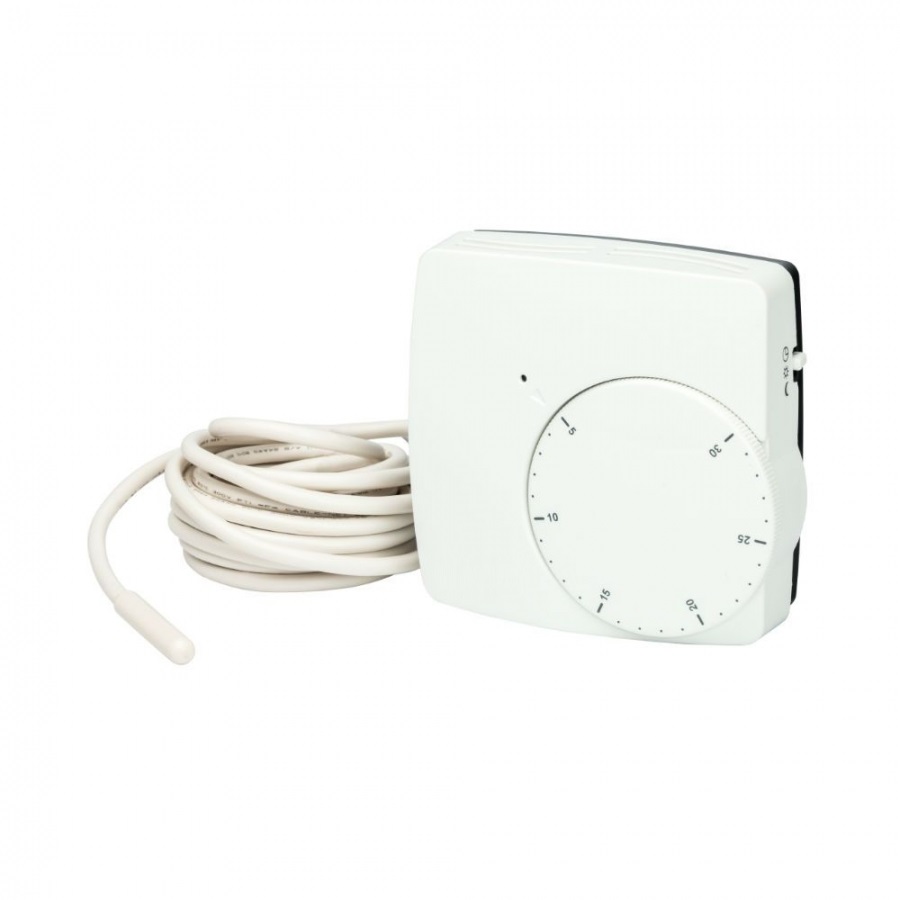

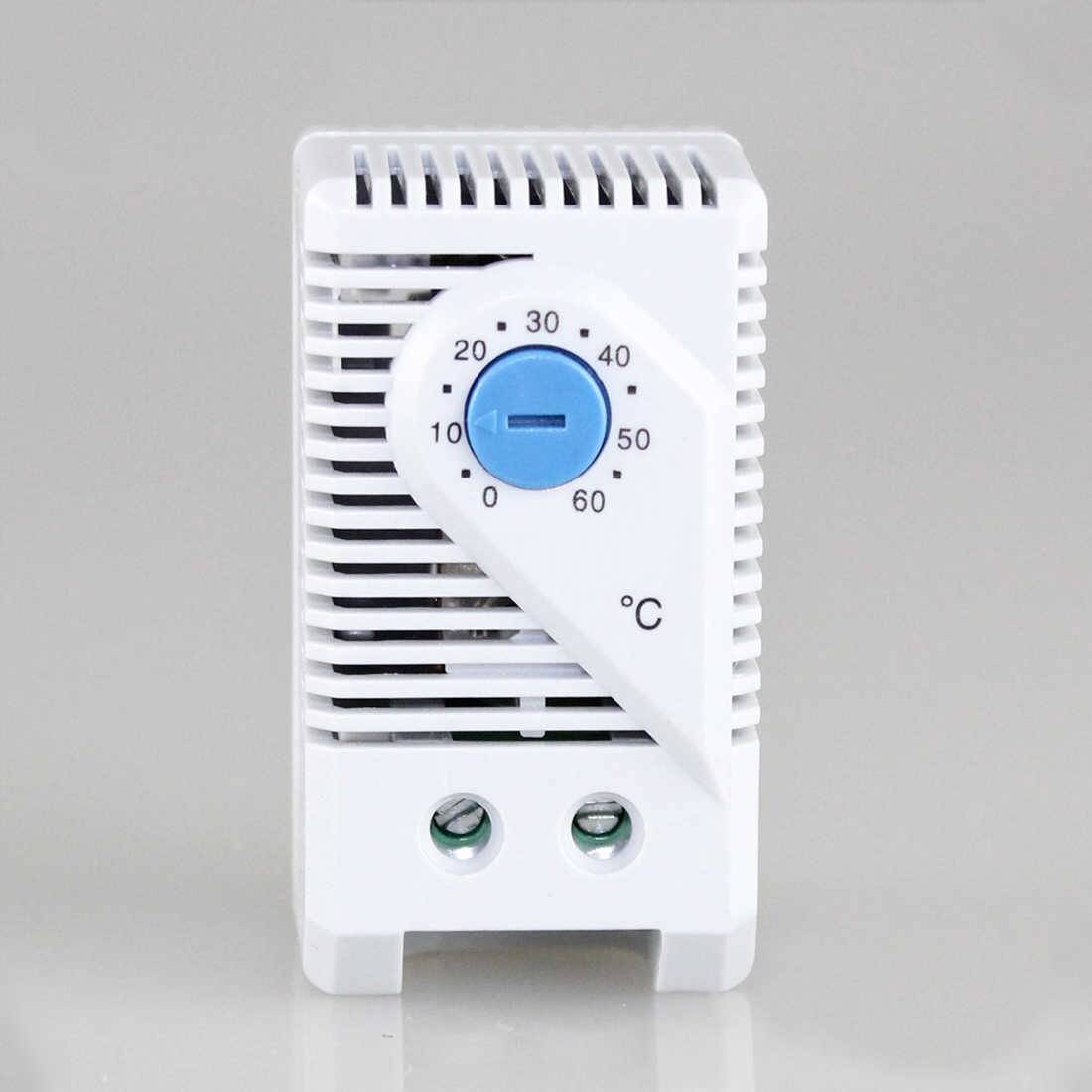


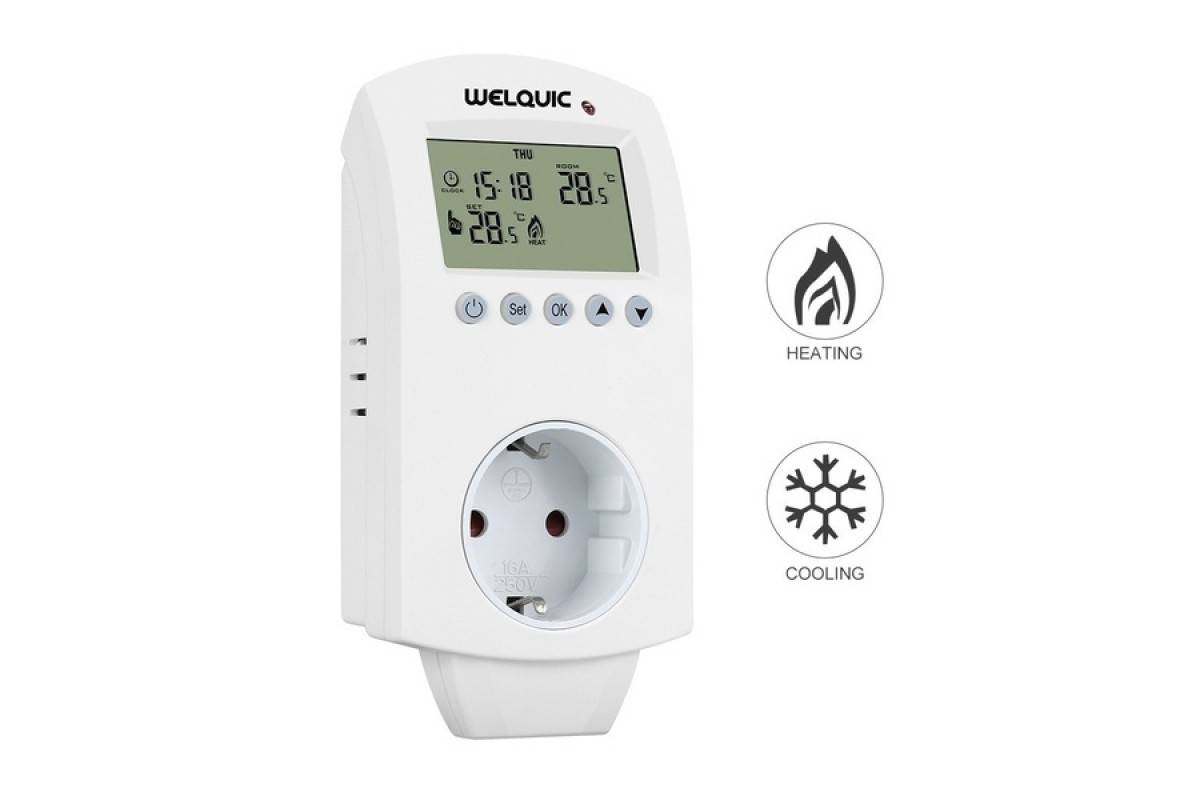
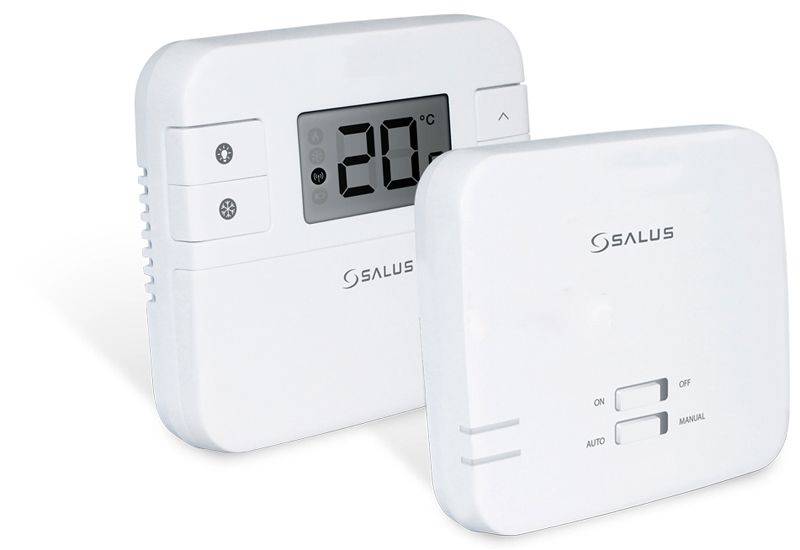 There are different types of sensors
Remote temperature sensors
Most thermostats are equipped with built-in sensors that allow you to determine the air temperature directly in the room where the heating equipment is installed. Using thermostats with a remote air temperature sensor, you can determine the temperature outside the room where the control unit is located. In this case, the device performs the same function - it receives data to adjust the degree of air heating.
Most often, thermostats with remote sensors are installed directly near the boiler, and a place in a heated room is chosen for the sensitive element. It is also possible to install outside the house in order to adapt the heating systems to external conditions. In this case, they act as additional indicators, and the main ones are the devices located inside.
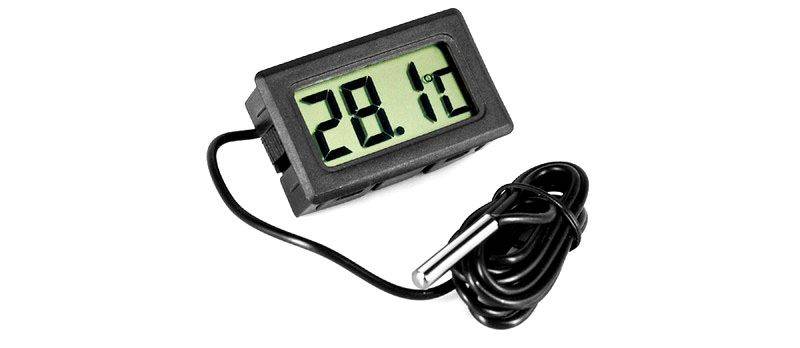 Devices with remote sensors allow you to measure air temperature at a distance
Electronic temperature sensors
Electronic devices are equipped with semiconductor parts, with which the change in temperature is measured. Allows you to automate the process. Electronic temperature sensors are installed on boilers and other heating equipment. Differ in wide functionality.
There are open and closed control systems. The first type has a large set of functions. Such devices can be programmed by performing fine tuning.However, a complex design imposes certain requirements on the knowledge of the consumer.
Sensors with a closed system operate according to a strictly specified algorithm. A limited number of programs and settings can be changed. Due to their ease of maintenance, they are most often purchased to equip household systems. Electricity is required to power the sensors. They are connected to an outlet, mounted on a DIN rail, or batteries are used.
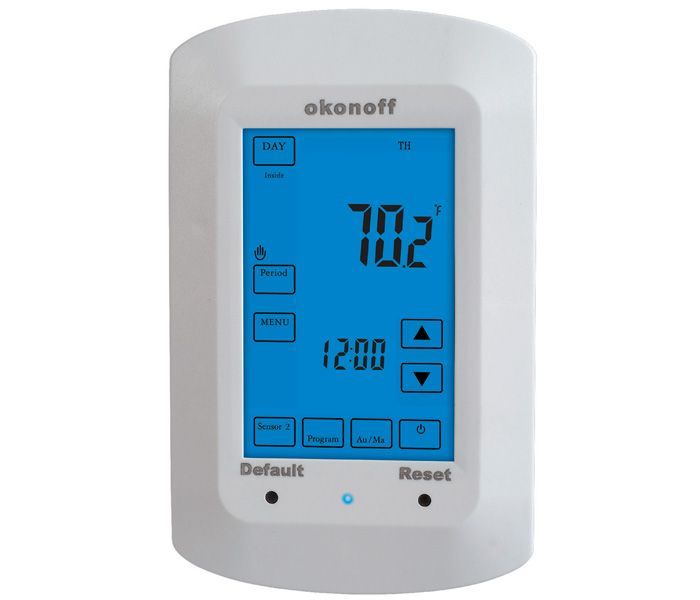
Electronic models are controlled by using special buttons or a touch panel. With their help, the user can change the temperature settings. The monitors additionally display the date and time.
Modern devices are able to work in day/night, weekend/weekday mode. There may be other features that increase the cost of the thermostat. Before buying, you should compare the need for these features with the cost of acquiring a specific model.
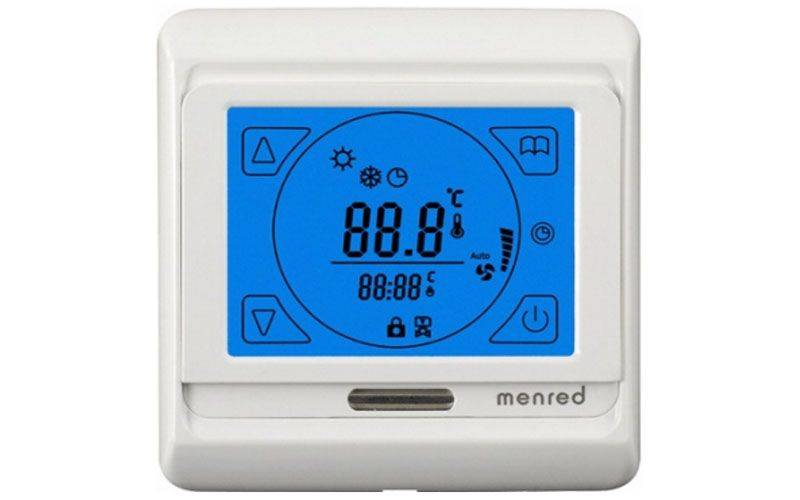 Electronic models are able to work in various modes
Other
It is customary to divide a thermal relay with an external temperature sensor into various types depending on the material used in the manufacture, functionality, and installation features. The temperature control method allows you to divide the device into devices:
- with air sensor control;
- with floor sensor control;
- combined. Consider data from various sources.
The first type is most widely used if it is necessary to automate the operation of a heating boiler or a heating battery. The second is relevant when installing the "warm floor" system, which significantly reduces the possible area of \u200b\u200buse.
Depending on the material used, sensors can be:
- bimetallic, in the manufacture of which hardened plastic is used;
- electronic thermistors;
- electronic thermocouples.
The last two types are used as a thermostat for heating equipment. They can be mechanical or electronic. The operation of mechanical devices is based on the principle of changing the volume of bimetallic plates with subsequent transmission of data to the control unit.
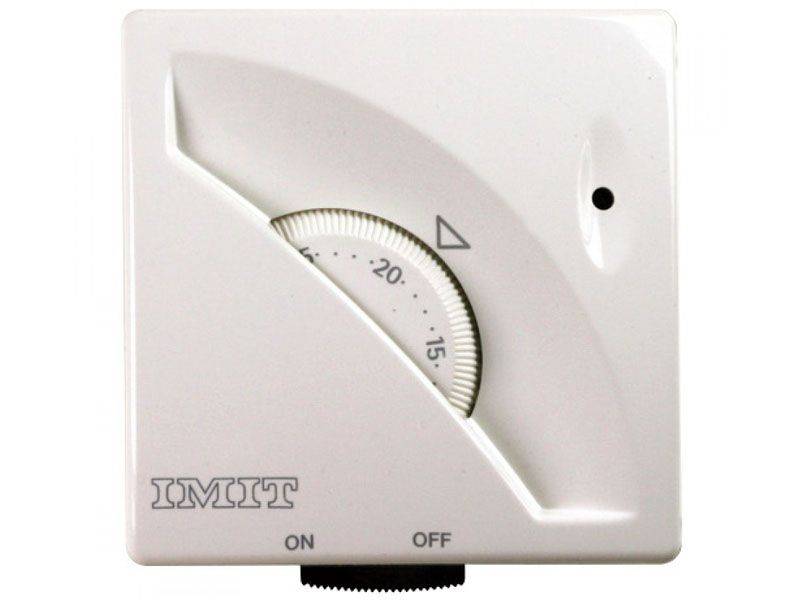 Mechanical devices have some inertia
How to choose a room thermostat for a heating boiler
Wired or wireless
Wired models are not limited in functionality, can be installed in any room (up to 20 meters from the boiler), are cheaper, but require a wired connection to the boiler. The wire itself is usually provided in the kit.
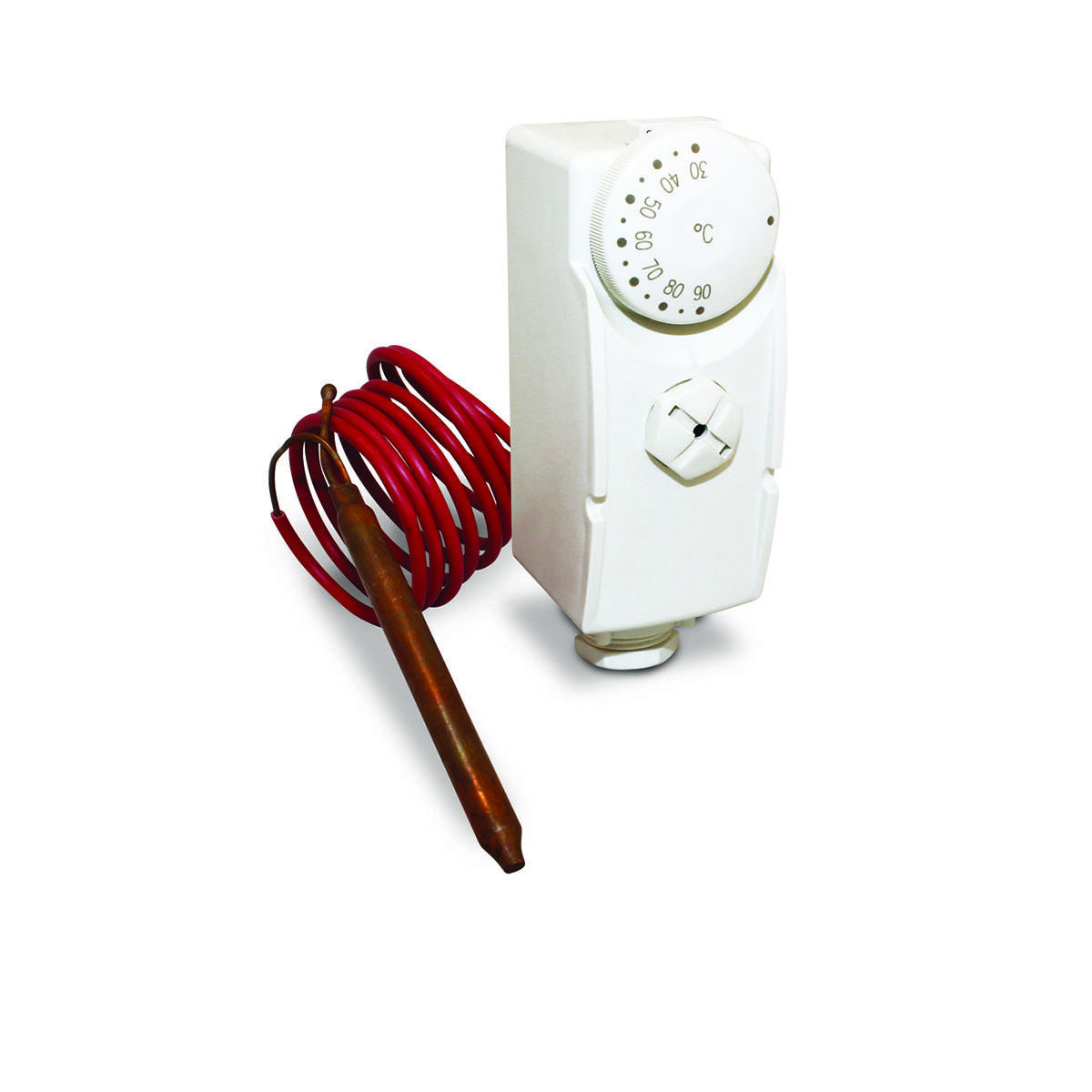

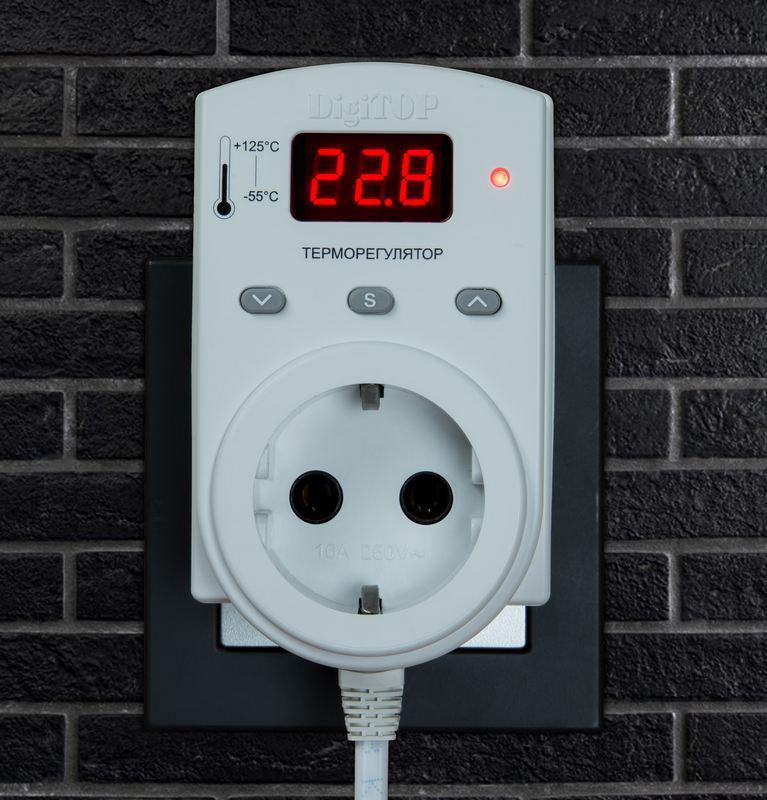

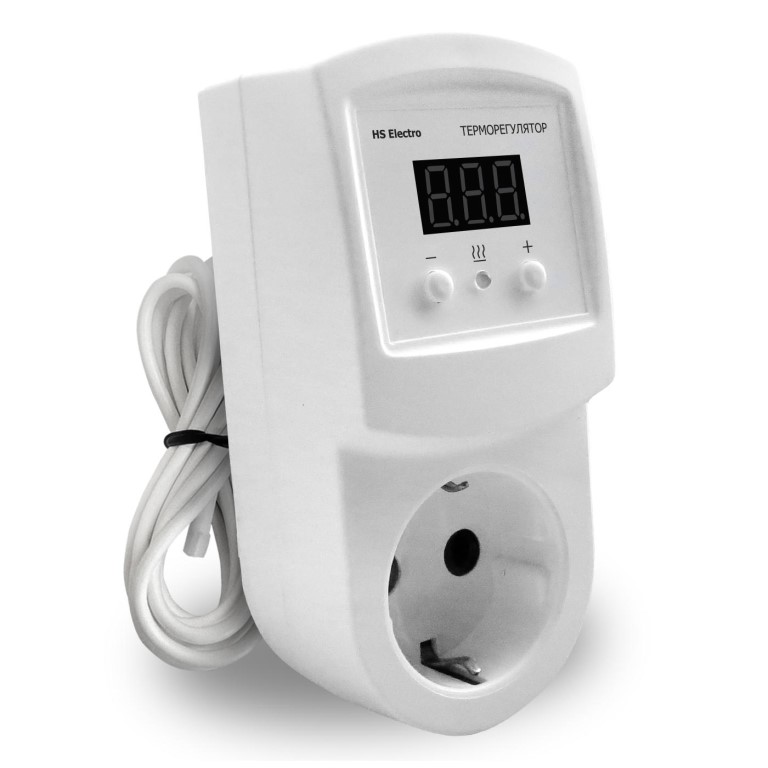
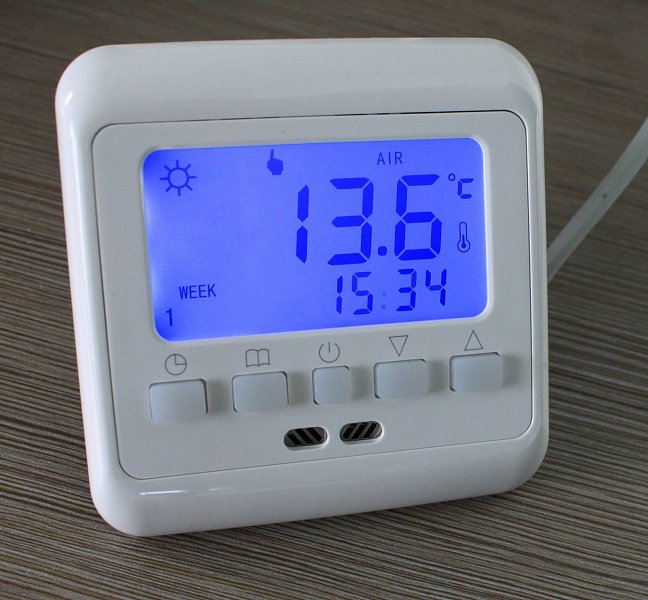


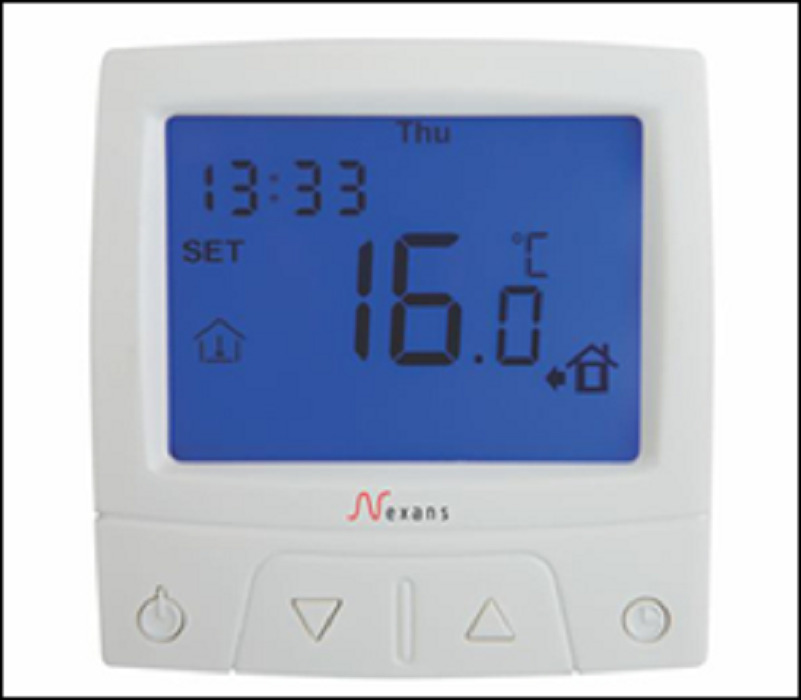
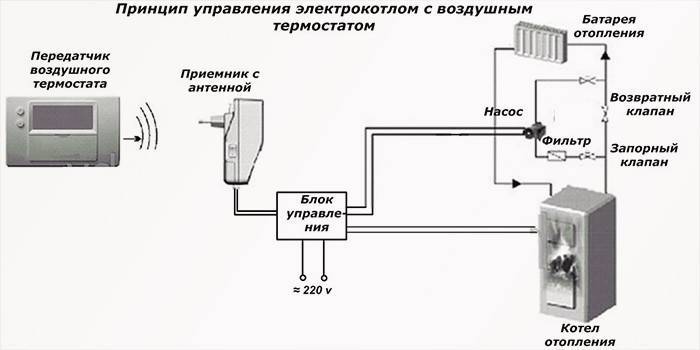
Wireless thermostats consist of a control panel with an air temperature sensor (essentially a conventional thermostat) and a receiver that receives a signal from the remote control and transmits it to the boiler in a wired way. Accordingly, the receiver is installed in the boiler room, and there may be more than one thermostat, for example, in several rooms. The advantages of wireless communication are obvious: there is no need to lay a wire through the whole house.
From the thermostat to the receiver, the signal is transmitted via a standard channel of household appliances with a frequency of 433 or 868 MHz and does not affect any other household appliances or any other electronic devices in the house. Most models transmit a signal over distances up to 20 or 30 meters, including walls, ceilings or partitions. It is worth considering that batteries are required to power the wireless thermostat, usually 2 standard AA batteries.
Temperature setting accuracy
Mechanical and electromechanical thermostats are quite cheap, but they have a high error in the context of home heating - from 2 to 4°C. In this case, the temperature adjustment step is usually 1°C.
Possibility to set the hysteresis value
Hysteresis (lag, delay) in the context of the heating system and the thermostat is the difference between the temperature on and off the boiler with a uniform flow of coolant. That is, if the temperature is set to 22°C on the thermostat, and the hysteresis is 1°C, then when the air temperature reaches 22°C, the boiler will turn off and start when the temperature drops by 1°C, that is, at 21°C.
In mechanical models, the hysteresis is usually 1 or 2°C and cannot be changed. In electronic models with the ability to adjust it, you can set the value to 0.5°C or even 0.1°C. Accordingly, the smaller the hysteresis, the more stable the temperature in the house.
The presence of a programmer
An example of a programmable thermostat showing a temperature graph on the main screen.
The programmer is the ability to set the boiler operation template for a time period from 8 hours to 7 days. Of course, manually lowering the temperature before going to work, leaving or going to bed is quite troublesome. Using the programmer, you can create one or more work patterns once and, depending on the temperature and hysteresis settings, save up to 30% of fuel each subsequent month.
Availability of Wi-Fi or GSM module
Wi-Fi enabled controllers can be connected to a home network and controlled via a smartphone app.A rather tangible advantage is the GSM module, with which you can not only turn on the heating system in advance and heat the house even before arrival, but also control the operation of the system during a long departure: in case of any malfunctions, a corresponding notification will be sent to the phone.
Security systems
Protection against overheating or freezing of the heating system, protection against stopping the circulation pump, protection of the pump against acidification in the summer (on once a day for 15 seconds) - all these functions seriously increase the safety of the heating system and are often available in boilers of medium and high price segments. If such systems are not provided by the boiler automation, the issue can be resolved by choosing a thermostat with their presence.
3 Liquid and gas-filled thermostats
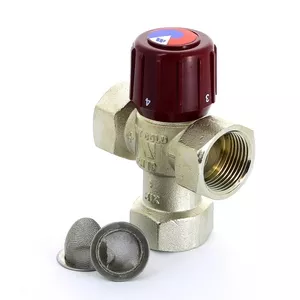
Gas-filled regulators are characterized by a long service life, while they provide the highest possible accuracy. Thanks to the use of a gaseous thermostatic element, a clear and smooth adjustment of the heating temperature of the radiators is achieved. Electromechanical devices are supplied with sensors that determine the air temperature in the room, which ensures maximum accuracy in controlling the heating system.
Of the advantages of liquid models, they note their high accuracy in transferring pressure to internal moving mechanisms. Such regulators provide the most accurate operation of heating radiators in accordance with a pre-set program. Depending on their modification, liquid regulators can have remote and built-in sensors.Devices equipped with an internal unit for measuring temperature are installed strictly horizontally.
Controllers with remote sensors can be used in the following cases:
- radiators are installed in a niche;
- the thermostat is in a vertical position;
- the battery is covered with thick airtight curtains.
Typical solutions for automation of the heating system.
Due to the large range of models of electronic thermostats, the cost and functionality fluctuate in a wide range, which gives a wide range of applications in the automation of the heating system. Almost all thermostats are designed for loads up to 2.5 kW, which is quite enough. Using ingenuity the heating system can be upgraded economically at home. For example, put the chronothermostat on control
normal food electric boiler
with TEN.
And what to do if a fine repair has already been made in the house and there is no opportunity and desire to hammer walls and pull wires? In this option come to the rescue wireless thermostats and chronothermostats. Of course, such a solution is more expensive than wired ones, but it is worth the cost. Installation does not take and does not require strong skills. You take a wireless thermostat on batteries and hang it in a place convenient for you. Then the adoptive remote control unit connect to a 220V network and connect a thermal servo, pump, or boiler to it.
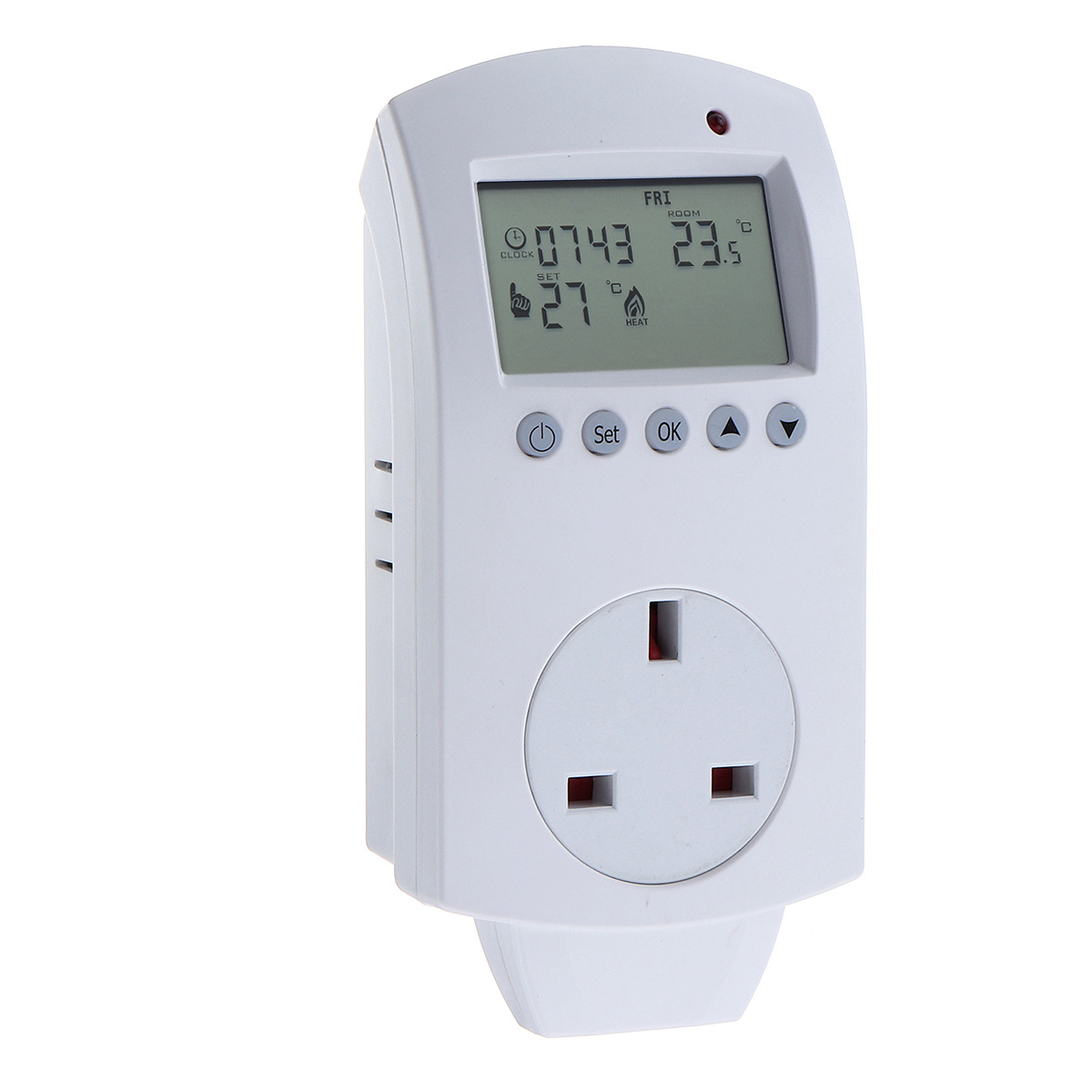

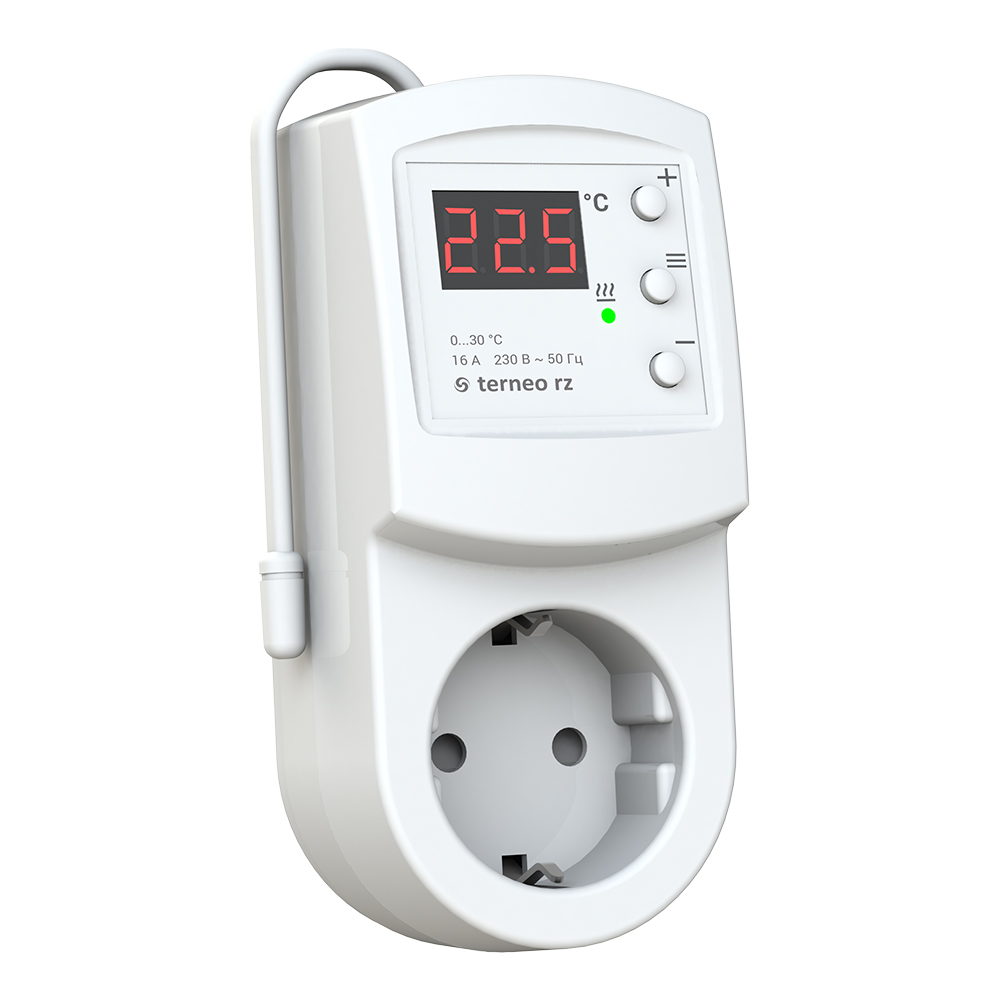
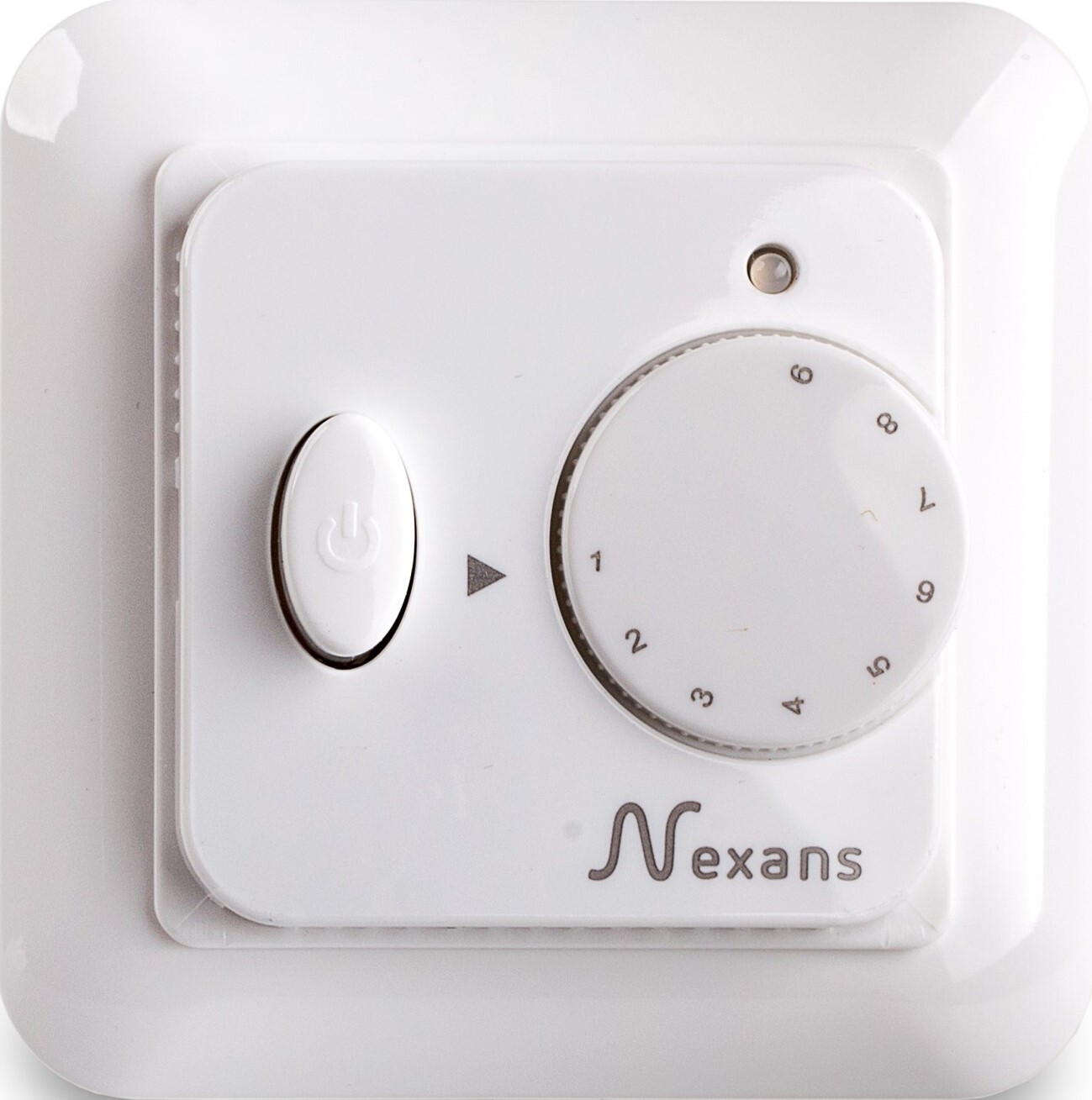
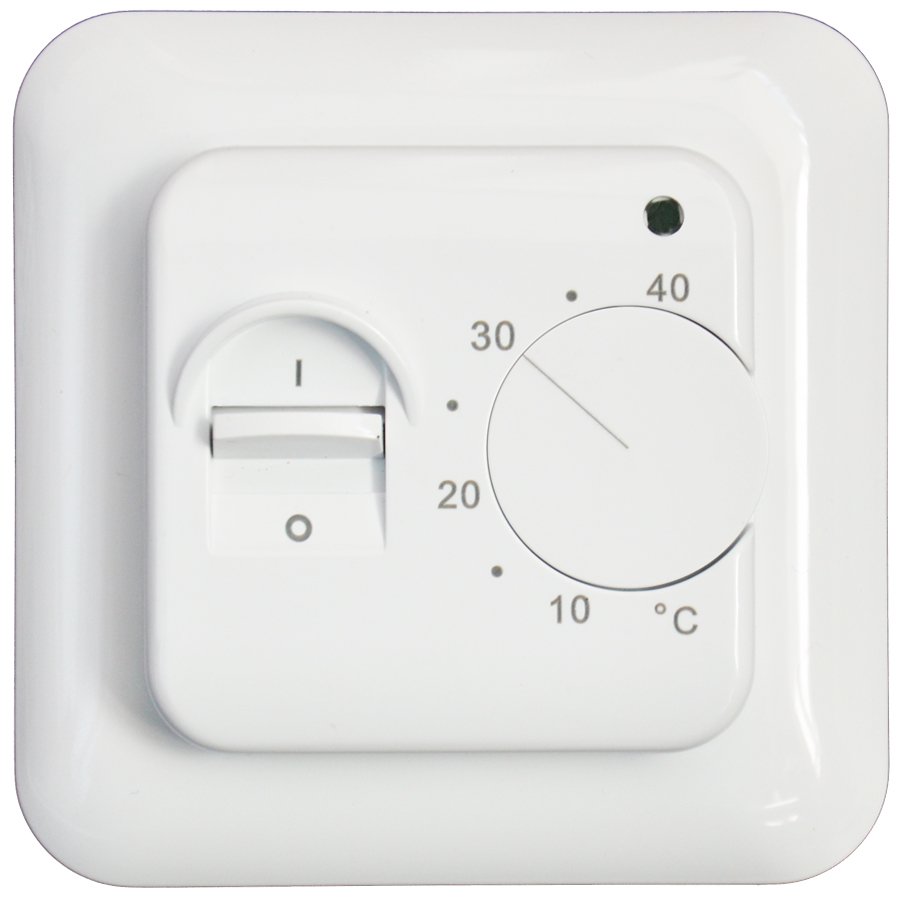


Usage motorized servos will organize control of several heating circuits. Such servos are controlled by three wires, one wire is neutral (N), and the other two are 220V phases
(one for opening, one for closing).
Electrothermal Servo Drives full analogues of thermal heads (can be installed instead of a thermal head), but due to the absence of external influence on the flask and the presence of a thermoelement, the response speed is higher. Working principle of thermal servo simple: When the thermostatic tap valve needs to be opened, the electronic thermostat supplies 220V (24V, 48V, 110V) voltage to the thermal servo contacts. In the servo, there is a heating element on top of the bulb, which within one minute heats the cylinder to the gas expansion temperature. Next comes temperature control processlike with a thermal head. When the desired room temperature is reached, thermostat stops supplying voltage and the flask begins to cool, closing the tap. The average cooling time is 3-5 minutes. The advantage of thermal servo drives is versatility, and not only, among the performance servo drives are divided into "NC - normally closed" and "NO - normally open". The cost of thermal servos is lower than the cost of a thermal head. And the total cost of a set of electronic chronothermostat and a thermal servo drive is only 1.5-2 times higher than a thermal head with a thermostatic tap. However, the economic efficiency of maintaining automatic heating temperature by electronic methods is much more comfortable and profitable. The system will pay for itself in the first season.
Another example of comfortable and economical automatic control of the heating temperature is the direct control of the boiler!!! By the way, the boiler can have built-in automatic control of the temperature of the heating system. But sometimes it becomes necessary to control the temperature by the air of the room, and not by the temperature of the coolant!!! That's when they come to the rescue dry contact electronic room thermostats. All boilers are equipped with a special outlet for connecting a room thermostat. This allows you to expand the functions of the boiler and increase the comfort of operating the heating system. Agree, thermal heads will not give you such advantages.
But what to do when you have a house in the suburbs and you want to remotely control the temperature of the heating system? For such purposes, there are special devices, they are called GSM remote temperature control module. This equipment allows remote control of the room temperature. There are many implementation options. For most brands, the main functions are similar - this is air temperature control, leakage control (flooding), control of opening doors or breaking glass. This set of functions allows you to see the temperature in the room, control the switching on and off of the boiler of the heating system, and be aware that everything is in order at home. All devices of this type are equipped with a dry contact controlled by the room temperature. The functionality is of course limited compared to the chronothermostat, but it appears possibility of remote temperature control.
Download wiring diagram for electronic thermostats myou can here.
Relay on DIN rail
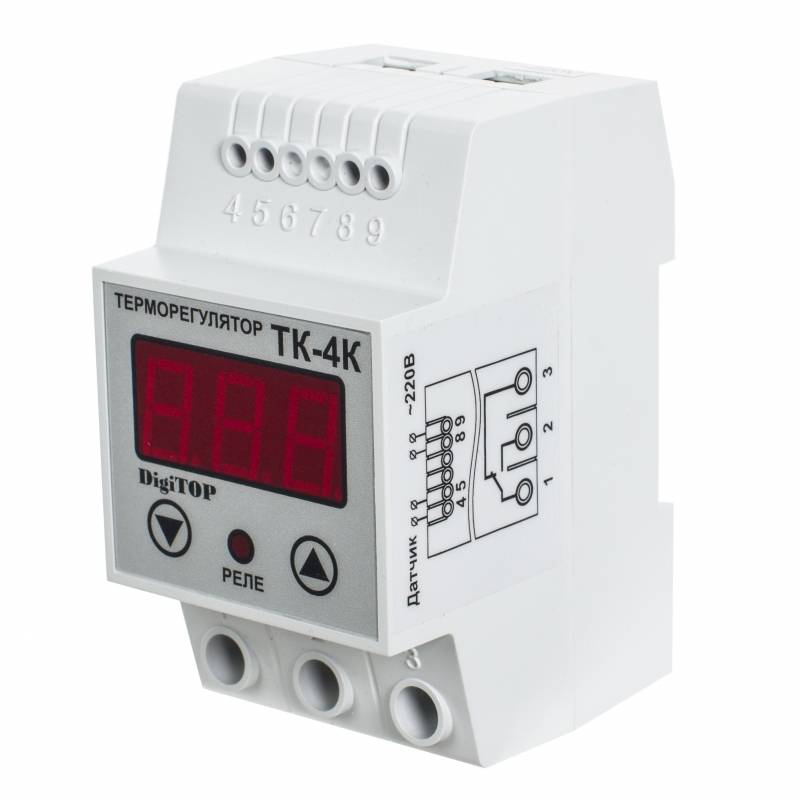
Modules assembled on a DIN rail have now finally replaced the old panel mounting of equipment in cabinets, which is very inconvenient for maintenance and repair. Snapping onto the rail takes seconds.The wires are laid in cable trays within the cabinet and clamped with screw terminals at the connection points with their full accessibility for installation and illumination.
In this way, electrical equipment for industrial, municipal and domestic purposes is assembled. Thermal relays are no exception, which are also produced in a housing for mounting on a DIN rail.
Thermostat in DIN rail housing
When installed in a cabinet or box, there is no need to spoil the walls and the appearance of the premises. The relay sensors are displayed in the controlled area, and the relays themselves stand with the rest of the equipment in the cabinet.
The device and principle of operation of the thermostat
thermostat
thermostat&#; - shutoff and control valves for automatic control of heating or cooling equipment. Maintains the temperature at the level set by the consumer. They are used in artificial climate installations, in cooling and freezing installations, in space heating systems, in greenhouses.
Types of thermostats
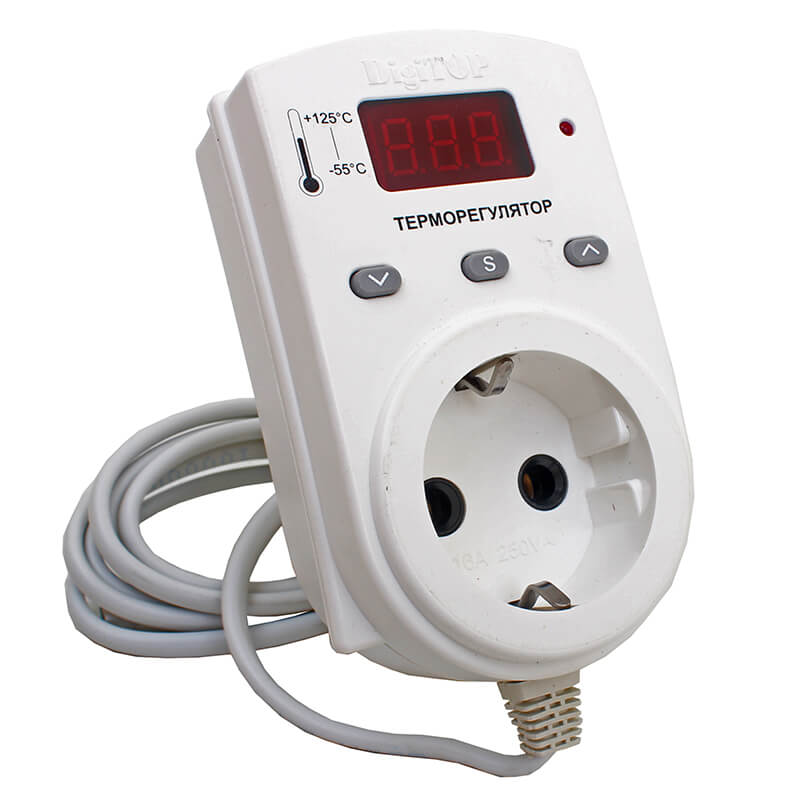
Mechanical thermostats
Mechanical thermostats include capillary ones, the principle of which is based on the expansion of liquid in a temperature sensor and in a capillary tube. The liquid presses on the membrane installed in the thermostat, which leads to the opening of the contact in the electrical circuit. Capillary thermostats are non-volatile. They are used in fan heaters and air conditioning systems.
Another example is a bimetallic thermostat, in which a bimetallic disk, when a certain temperature is reached, bends and opens the contact of the electrical circuit through a lever. To reset the thermostat, press the manual reset button. Such thermostats are used to protect equipment from overheating.




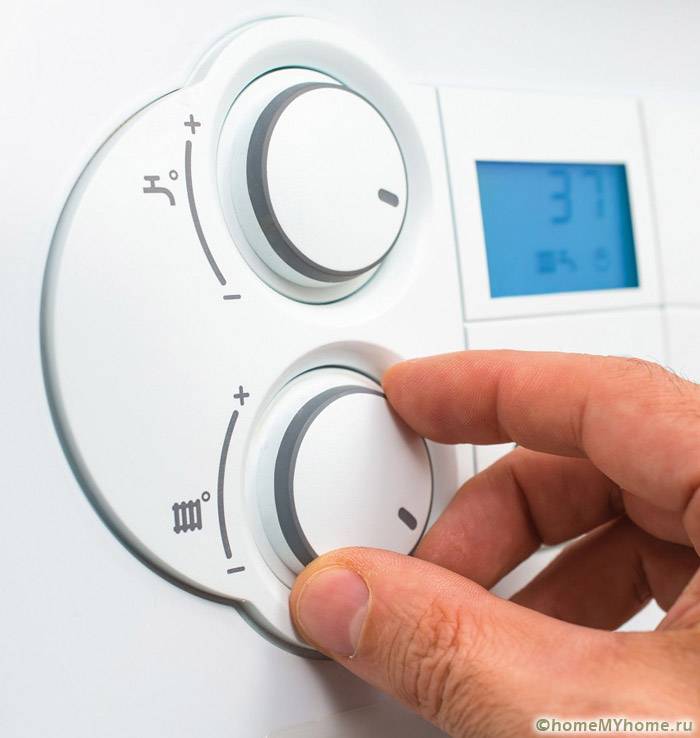

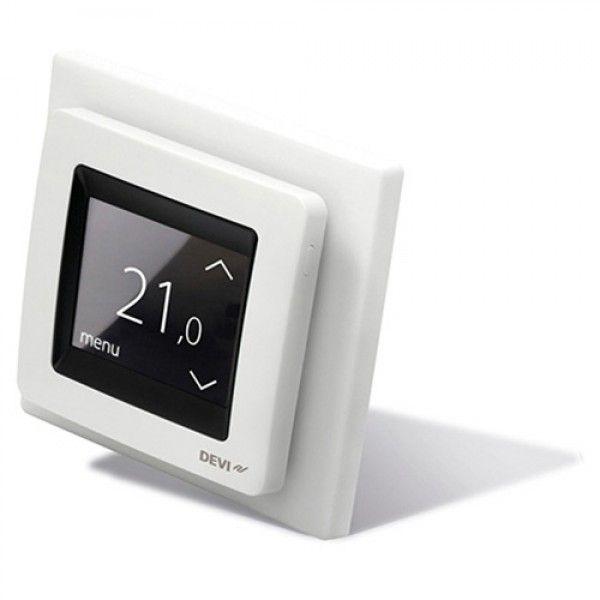
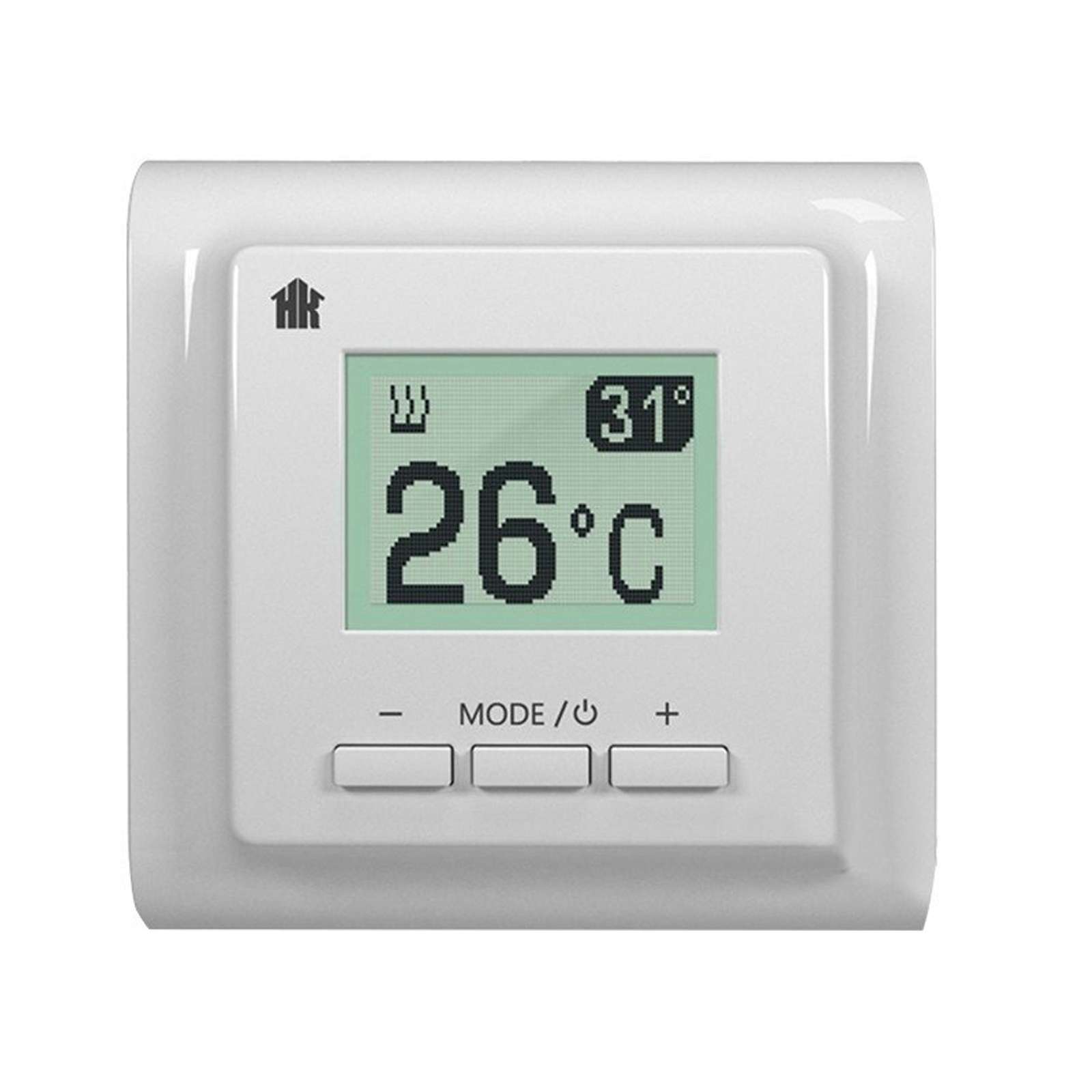
Programmable electronic thermostats
Thermostats are:
- Depending on the design, there are: electromechanical (using the principle of operation of a bimetallic plate) and electronic temperature controllers, characterized by increased control accuracy.
- By temperature control: air, floor, combined control method;
- By functionality: simple, programmable, two-zone.
- According to the method of installation (installation) - overhead and mortise.
The principle of operation of the thermostat
The temperature controller has a built-in or remote temperature sensor, which is installed in a zone free from direct exposure to heating devices and supplies the temperature controller with information about the air temperature in the area where the temperature sensor itself is located. Based on these data, the thermostat controls the heating devices in the room.
It is recommended to install thermostats in the same room where heating devices are installed, except for rooms with high humidity, and place them in a convenient place on the wall at a height of about 1.5 m.
Popular Models
If you are going to buy a thermostat with an air temperature sensor, you will definitely need information about the most popular models. In our review, we will introduce you to the descriptions of these models and the estimated prices on the market.
BAXI Magictime Plus
Before us is an inexpensive, but multifunctional room thermostat that allows you to adjust the air temperature in the premises without access to the heating boiler. It is equipped with an informative liquid crystal display and an accurate temperature sensor. The accuracy of maintaining a given temperature regime is 0.1 degrees. Also on board there is a programming system for the week ahead - you can set the required modes in increments of 15 minutes. The thermostat can work with BAXI gas boilers of convection and condensing type. The price for the presented model is about 4-4.5 thousand rubles.
TEPLOCOM TS-2AA/8A
This thermostat can work not only with heating equipment, but also with air conditioners, providing support for the set air temperature in the range from +5 to +30 degrees in increments of 1 degree. Also on board is a night mode function that reduces the temperature by 4 degrees from the set limit. To control the current temperature mode, a small liquid crystal display is located on the front panel. The thermostat is powered by two AA batteries, and electricity is consumed as economically as possible, providing long-term operation from one set. The cost of the device is approximately 1400-1500 rubles - this is one of the most affordable offers on the market.
Buderus Logamatic Delta 41
The last of the three most popular models. It is wired and multifunctional. The thermostat can work with heating and hot water circuits, including indirect heating boilers connected to heating systems. For convenient temperature control in the circuits, an LCD display is provided on board.Due to the presence of an electronic sensor, the thermostat maintains the set mode with an accuracy of 0.1 degrees. He can work in manual, automatic and programmable modes. Also, the “Vacation” program has been implemented here, which provides economical heating of the home in the absence of residents.
Temperature controllers with an air temperature sensor: characteristics and features
A thermostat or thermostat is a device responsible for maintaining a set temperature value in a heating device. This mechanism is considered the main control elements of the coolant.
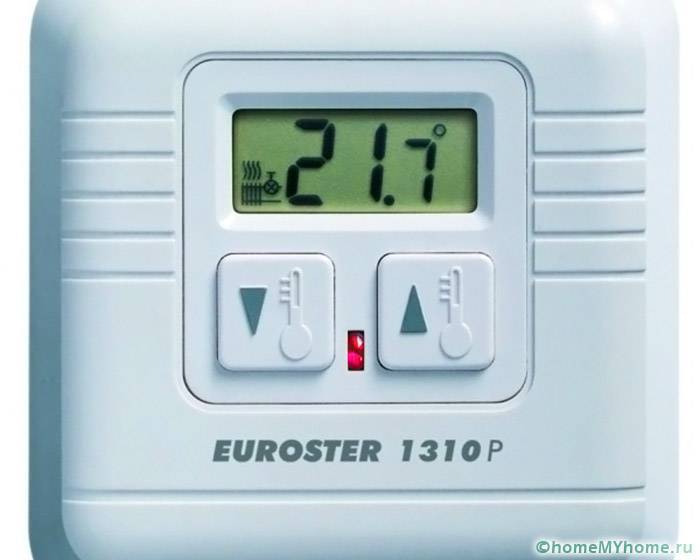
Modern thermostats are equipped with a small display
In manual mode, the desired value is set, and then the device automatically maintains it. Temperature controllers with an air temperature sensor are considered part of a cooling or heating system. They are inserted into different climate control equipment.


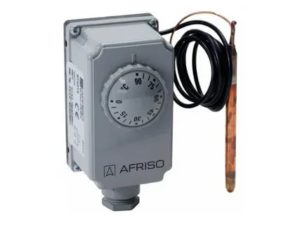
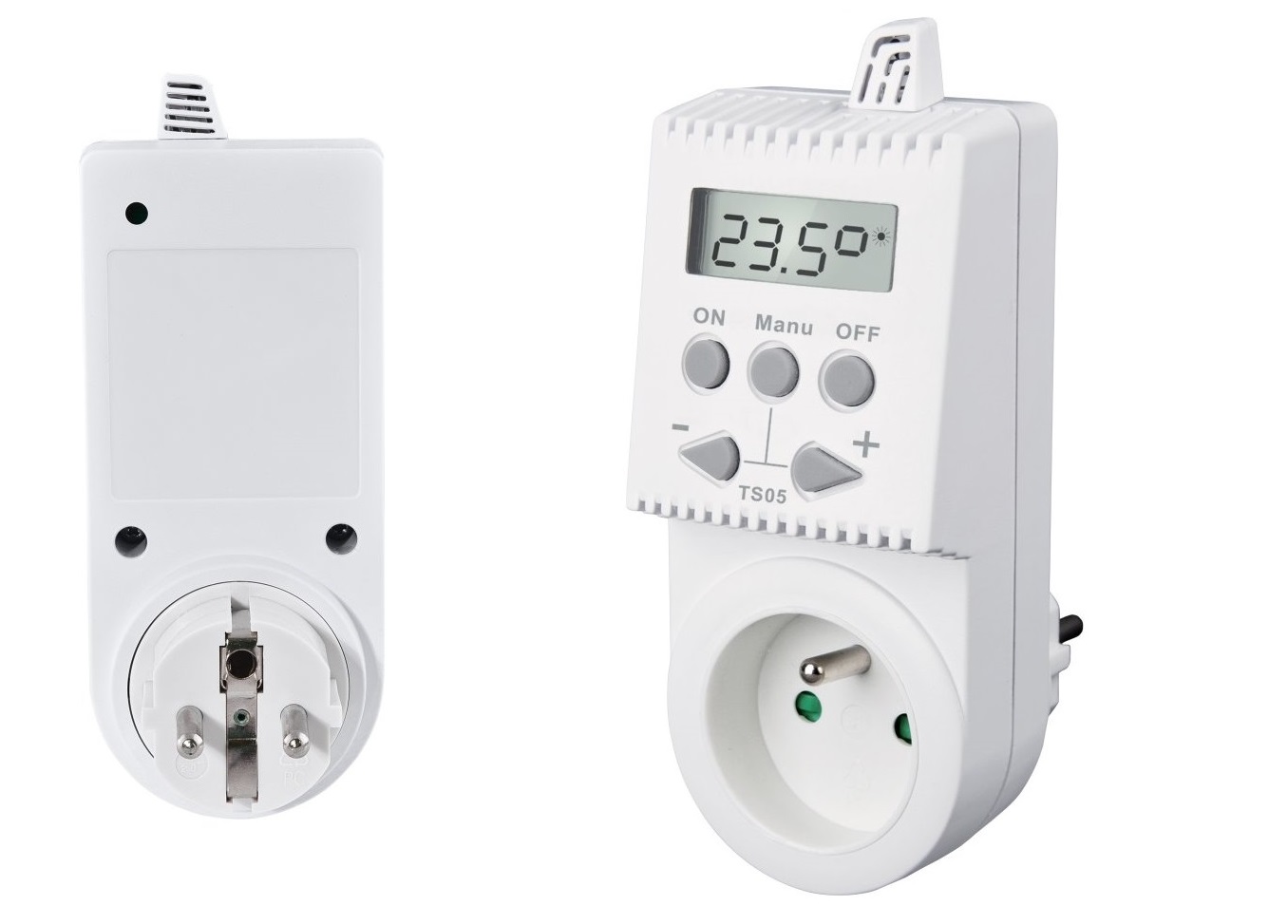
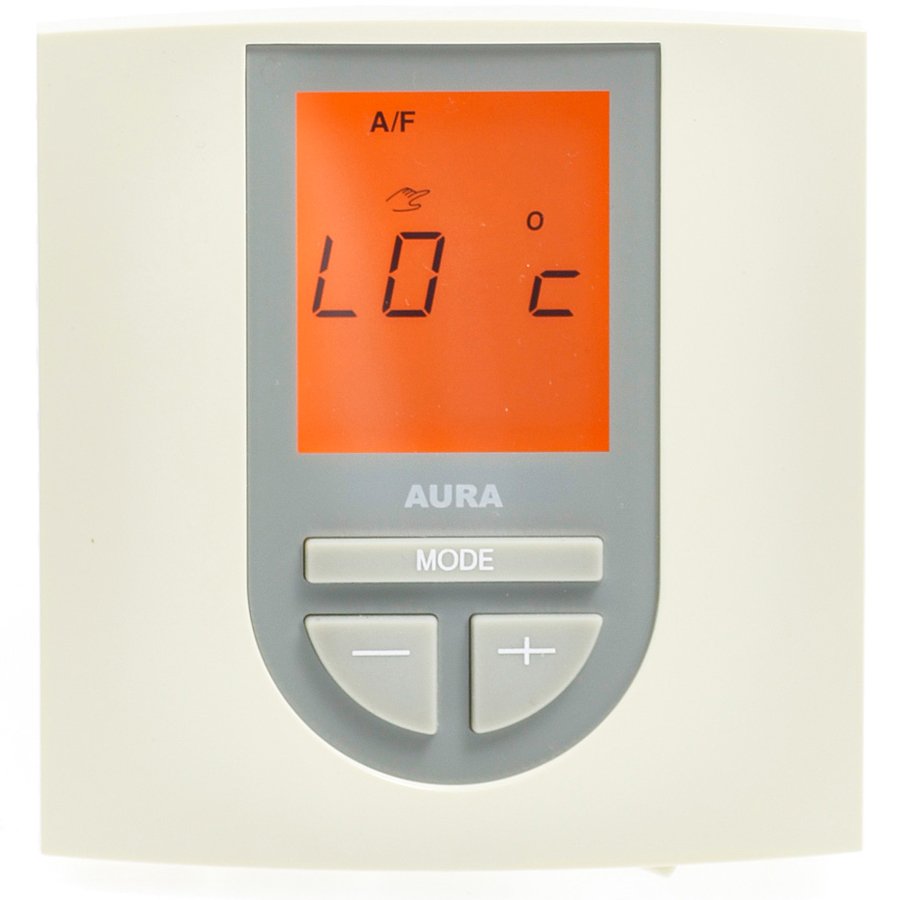
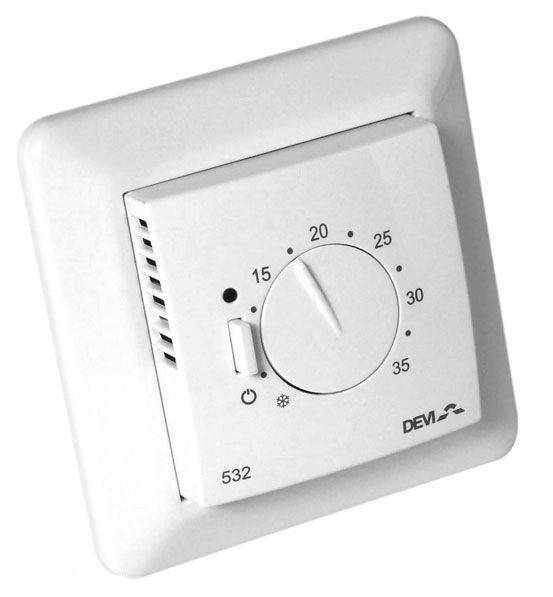


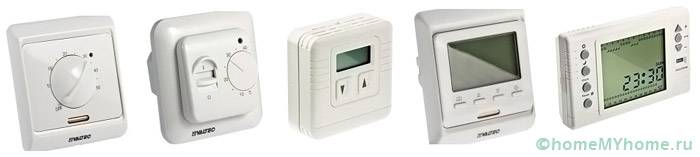
Thermostats differ in a certain set of functions and design
How to make a simple thermostat with your own hands
To make the device, you will need three elements:
- thermocouple;
- operating block;
- actuating mechanism.
Thermocouple
The part is a soldering of conductors from two dissimilar metals. When the air temperature changes in the metal compound, the resistance changes, which causes a change in the characteristics of the electric current flowing in it.
Operating block
The block is the thermostat itself, which, reacting to a change in the current characteristic in the thermocouple, transmits a signal to the actuator.
Actuating mechanism
This is the relay that turns the heaters on and off. When the air temperature drops, the mechanism closes the power contacts of the heating system.Upon reaching the desired temperature level, the relay opens the power circuit.
Schemes of homemade temperature controllers are published on the Internet. A thermocouple can be used taken from some old device (refrigerator, microwave oven, etc.). In the same way, you can get a relay.
The expediency of installing thermostats makes sense in individual buildings where there is no central heating. The operation of temperature control systems saves energy resources, which creates a significant economic effect.



