
- Signs of a broken temperature relay
- Faulty thermostat in the refrigerator "Stinol"
- Signs of a faulty thermostat
- Formation of frost on the walls of the unit
- Refrigerator won't turn on
- Symptoms
- How to check the operation of the temperature relay at home
- Temperature control device
- Rules for dismantling the thermostat
- Design features and principle of operation
- How can you tell if your thermostat needs repair?
- In the case when the refrigeration unit does not turn off, it works without interruption:
- If the refrigerator turns off by itself:
- The procedure for carrying out work when replacing the thermostat
- Characteristics
- Design features and principle of operation
- Location of thermostat
- Symptoms of a malfunctioning thermostat
- The unit works without shutting down
- Refrigeration unit does not turn on
- Ice buildup on the walls of the refrigerator
- Temperature standards for the refrigerator for various products
Signs of a broken temperature relay
Do we really need a temperature controller? Maybe the cause of the breakdown is completely different? Most often, the signs of a thermal relay failure are obvious: (See also: Why the refrigerator does not freeze - what to do?)
- the refrigerator works non-stop and does not turn off on its own;
- the unit begins to freeze heavily in the refrigeration compartment, where, in normal mode, there should be a low, but still positive temperature;
- the refrigerator spontaneously turns off and no longer makes any sounds.
Each of these faults can be caused by the temperature controller. In order not to spend money on calling a specialist, we will try to fix the breakdown with our own hands.
Faulty thermostat in the refrigerator "Stinol"
This brand of refrigerators is very popular in our country. Almost the only disadvantage of such units is that the thermostat becomes faulty very quickly (after 5-6 years of operation). The reason for the breakdown is the short working life of this device, supplied by the German company RANCO (5 years). The tightness of the bellows, which is sensitive to temperature fluctuations, is broken in the thermostat.
Defects indicating that it is the refrigerator thermostat that is faulty:
- "Stinol" does not start when the switch is turned to the "off" label (no click).
- The temperature in the refrigerator is above normal even with the regulator set to “maximum”.
- The compressor of the device works without stopping, even when the regulator knob is in the “off” position.
At home, it is impossible to accurately determine the malfunction of the Stinol refrigerator thermostat. But if the compressor turns on with the jumper closed, it means that there is a high probability that the temperature controller is faulty, and therefore it is necessary to contact a company that performs urgent repairs of refrigerators.
Signs of a faulty thermostat
You can determine the serviceability by the continuous operation of the cooling system, the device cannot turn itself off.
There are several signs that indicate a possible failure of the thermostat:
- rapid build-up of a layer of snow in the freezer and compartment;
- violation of the cycle in the operation of the apparatus;
- inability to turn on the refrigerator.
In these situations, the first step is to determine what state the thermostat is in. A more accurate diagnosis is carried out by specialists.
Formation of frost on the walls of the unit
To check the operation of the thermostat, the adjustment knob during compressor operation must be turned in the direction of increasing temperature. If the thermostat is working, then the sensor will mark the required temperature level, the compressor will turn off. If the engine continues to run, then the part is replaced.
When the relay is working properly after diagnosing, food is removed from the refrigerator, so it should work for 6 hours. You need to see how long the compressor will be idle. If the approximate time is 40 minutes, then the appliance can be used. Frequent turning on and off is regulated by the thermostat settings. If this fails, it is changed.
Refrigerator won't turn on
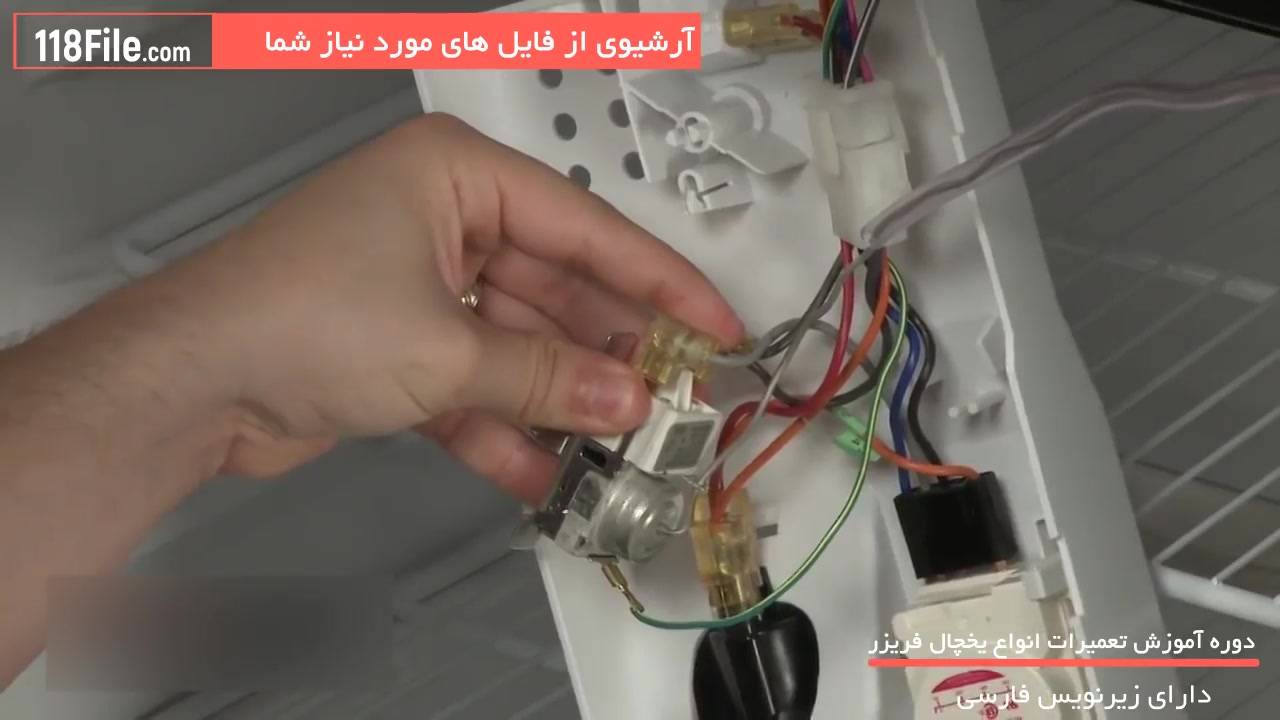
In order to check whether the thermostat is working, the device is disconnected from the mains, the casing is removed and the wires are examined. In old refrigerators, two pieces fit the terminals. They must be removed and closed with a piece of wire. If the compressor starts, then the relay is faulty, and if it does not work, then the motor most likely burned out or the start-up relay broke.
In modern models, 4 wires of different colors are suitable for the thermostat, which differ depending on the purpose. For grounding, yellow with a green stripe is used, it is not necessary to touch it. The rest are disconnected and closed to each other.The refrigerator is turned on, if it does not work, then the relay is working, the reason must be sought in the start-up relay or compressor. And if the device turns on, then a new thermostat should be installed.
Symptoms
If the refrigeration device always works at the maximum of its capabilities, does not change modes and does not turn off, then it is imperative to check the performance of the thermostat. The task is performed without removing the device, but dismantling is required if the refrigerator does not react to anything at all or even does not turn on. Another reason to suspect a malfunction of the temperature switch is the systematic formation of ice on the walls.
How to check the operation of the temperature relay at home
First, let's figure out what to do if the refrigeration unit does not turn off. The sequence of actions is as follows:
- free the refrigerator and freezer;
- pull out the plug from the socket;
- set the lowest temperature or instant freeze mode;
- we put a thermometer inside the refrigerator (not a freezer), which also displays minus temperatures (you need to place it on the middle shelf, you definitely shouldn’t put it on the door);
- close the refrigerator door and turn it back on;
- After 2 hours, we take out the thermometer and check the readings.
If the thermometer shows 6-7 degrees, then everything is in order with the temperature relay. Other numbers are a reason to contact a refrigerator repairman.
If the problem is that the equipment does not turn on at all, the explanation for this can be sought in the malfunction of several nodes and devices at once. But first, you should check the thermostat. They do it like this:
- turn off the unit;
- remove the cover;
- study the wire system (2 or 4 wires can fit the relay terminals);
- close the wires;
- look at the reaction (if the compressor is working, then the problem lies in the thermostat).
The test is easier on older models. They have only 2 wires, they close both. In new devices, not 2, but 4, and manufacturers do not adhere to a single color symbolism. Therefore, the desired wires may look like this:
- brown (it moves away from the fork);
- black, red or orange (from the compressor engine);
- green, white or yellow (from signal lamp).
The listed wires must be closed, but the fourth one should not be touched.
With frost, the same experiment is carried out as with a refrigerator that does not turn off. If the indicators are different, and not 5–7 degrees, the regulator knob is turned to the left until the compressor stops completely. If the expected shutdown does not occur, then the problem really lies in the thermostat.
Temperature control device
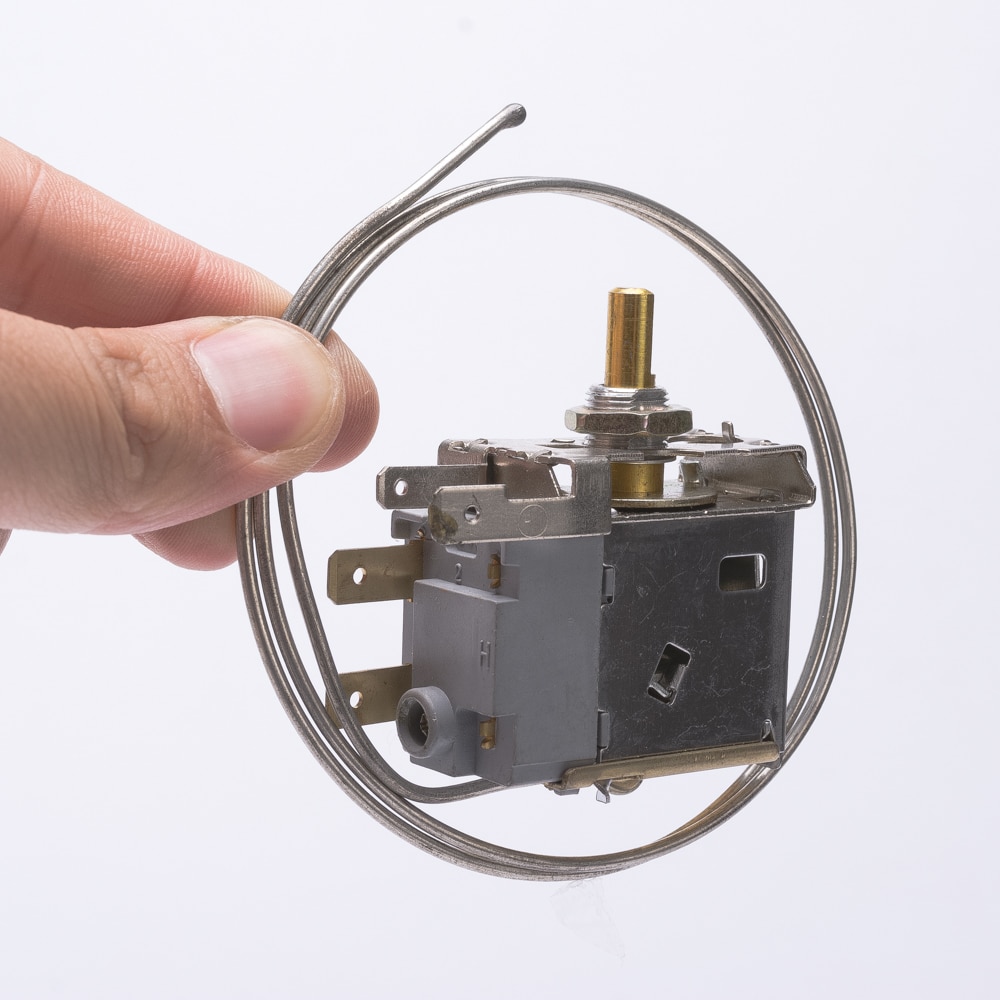
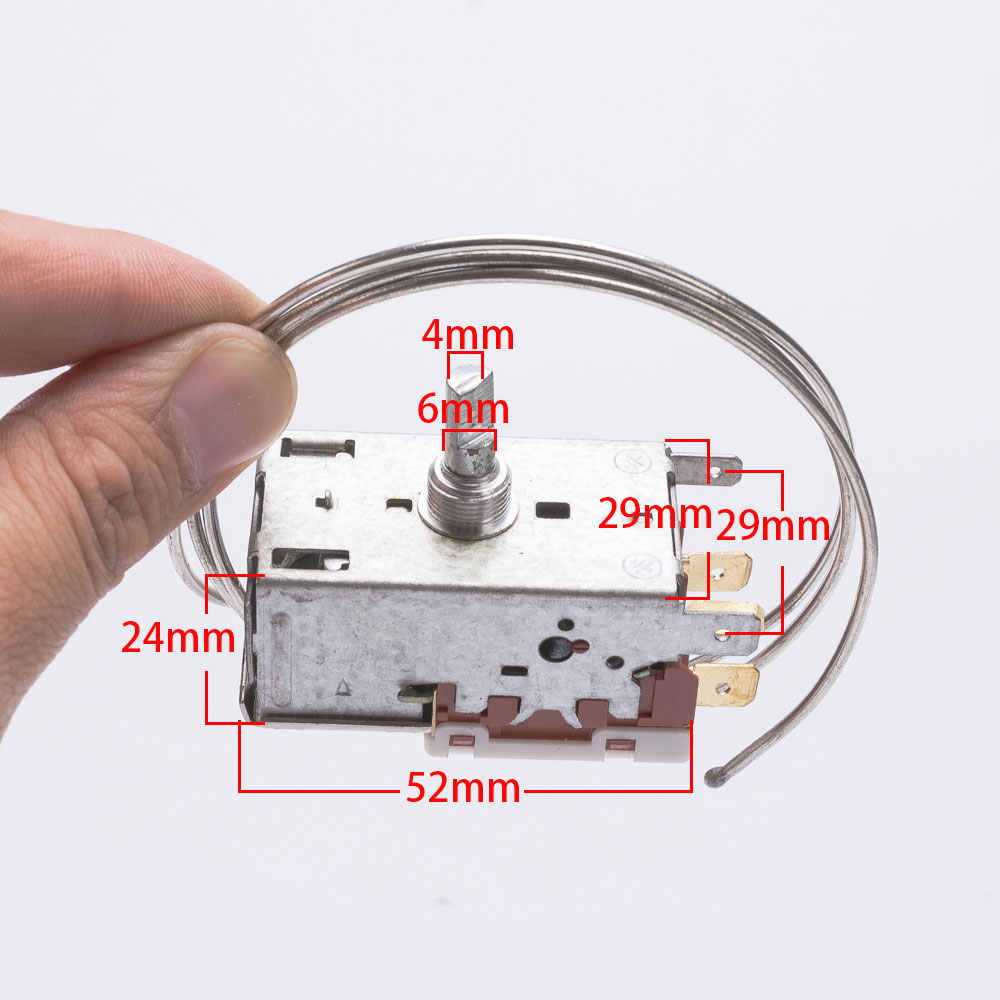
The thermostat is a fairly simple device. Even in modern refrigerators and refrigerators, this is a simple contact group. It is controlled by a manometric device with a capillary tube, the end of which is in the chamber and measures the temperature. Today there are two types of temperature controllers in refrigerators: mechanical and electronic.
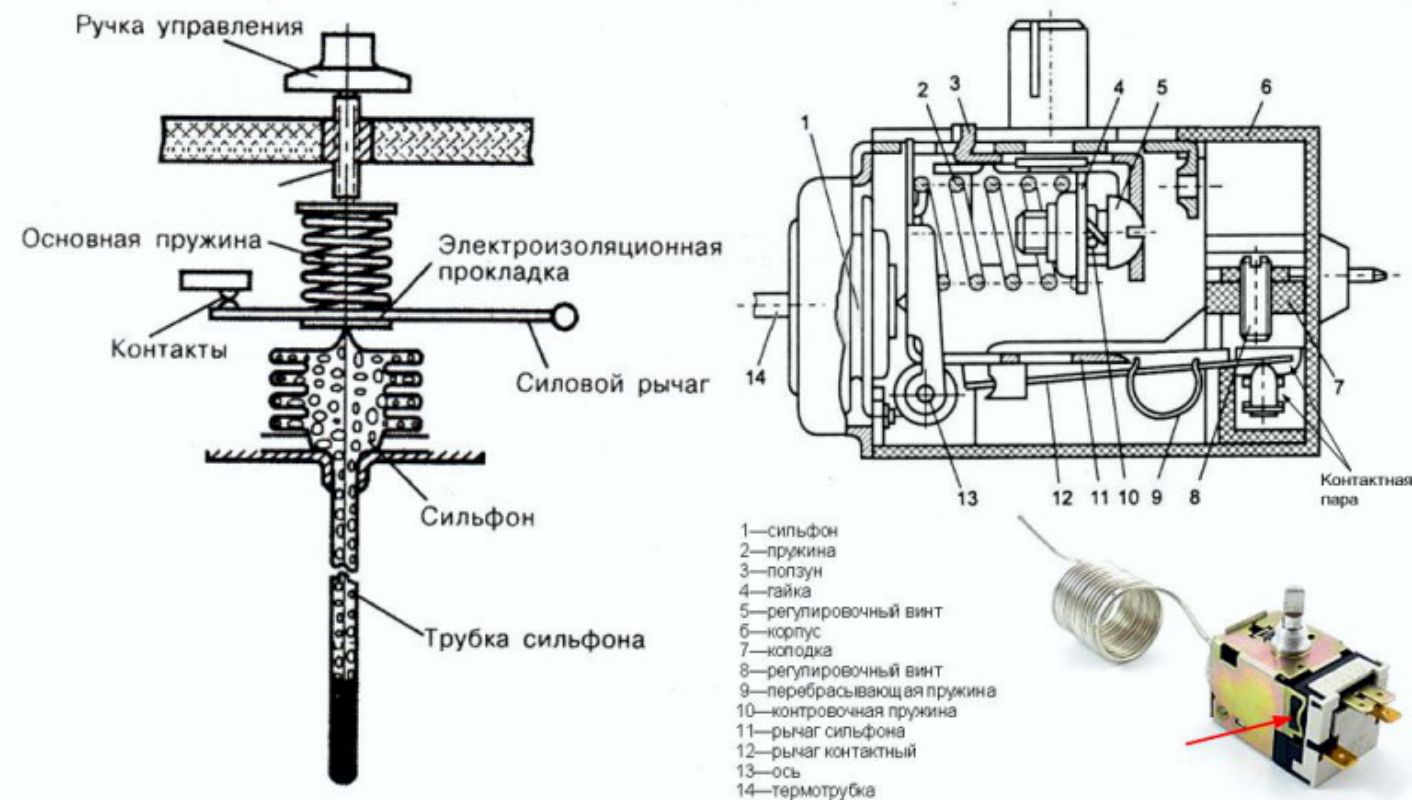
A modern thermostat has two main elements. This is a box in which there are control and actuators, and a capillary extended into a tube. The box is a bellows (hermetically packed tubular spring). The accuracy of the determined indicators depends on its tightness. Compression and expansion of the bellows is regulated by a spring, optimizing it with pressure indicators.Modern mechanical thermostats may have multiple springs. It depends on the destination: refrigerator or freezer.
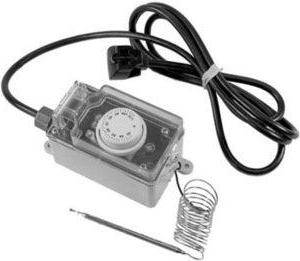
More reliable and allows you to smoothly regulate the operation of the entire refrigeration system - an electronic thermostat for the refrigerator. The price of this device is much higher than mechanical ones and ranges from two thousand rubles (while a mechanical one costs up to a thousand). In an electronic thermal relay, a thyristor, sometimes a resistor, is responsible for sensitivity.

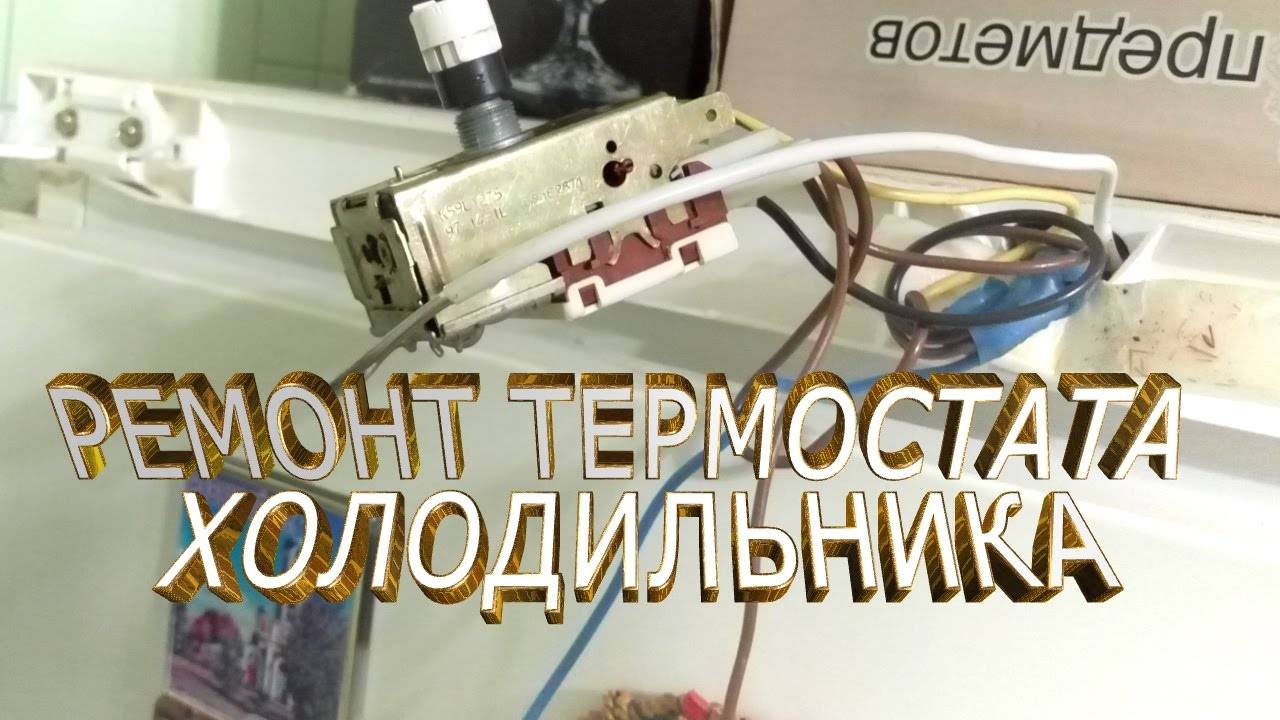



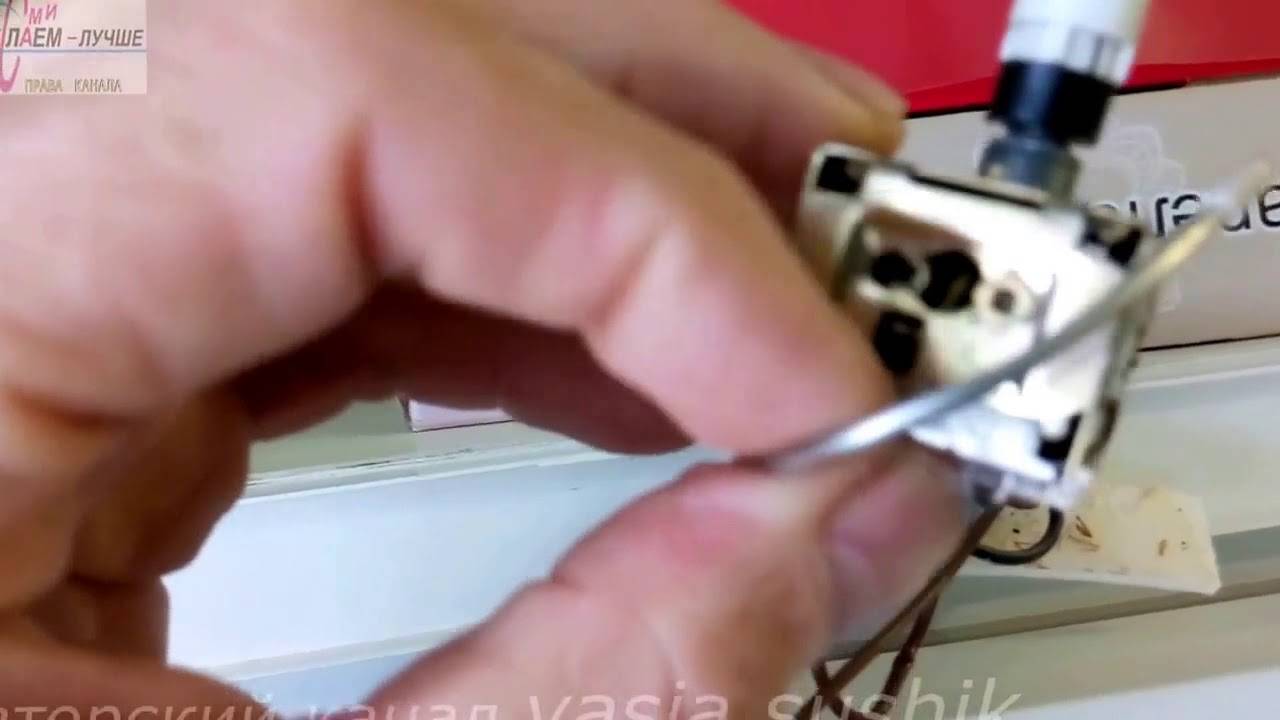


In refrigerators with high energy consumption, such thermostats quickly fail. In Class A+ refrigeration units with linear compressors, electronic temperature controllers need to be replaced much less frequently. Therefore, most of the manufacturers of such equipment today are switching to linear compressors with electronic temperature controllers.
Rules for dismantling the thermostat
If the refrigerator does not turn on at all, it will be impossible to carry out the diagnostics described above. The likely cause of the breakdown can be called an electrical failure of this element.
But a compressor malfunction can also become a problem, for example, burnt motor winding. To understand if the thermostat needs to be replaced, it will have to be removed from the refrigerator for examination.
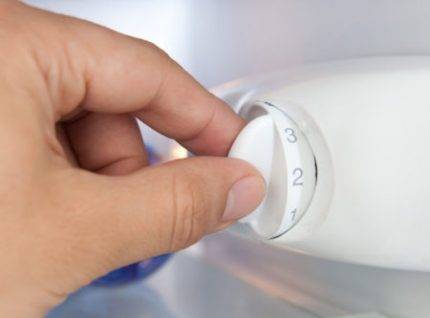
Usually the thermostat is located next to the adjustment knob, with which the air temperature in the refrigerator is set. Two-chamber models are equipped with a set of two such handles
First you need to unplug the refrigerator. Now you should find the place where it is located, as described earlier.Usually you need to remove the adjustment knob, remove the fasteners and remove the protective elements.
Then you need to carefully inspect the device, paying close attention to the wires through which the power supply is connected. All of them have different color markings depending on the purpose.
Usually, a yellow wire with a green stripe is used for grounding. This cable should be left alone, but all the others should be disconnected and shorted to each other
All of them have different color markings depending on the purpose. Usually, a yellow wire with a green stripe is used for grounding. This cable should be left alone, but all the others should be disconnected and shorted to each other.
Now the refrigerator is turned on again. If the device still does not turn on, the thermostat is probably working, but there are serious problems with the compressor.
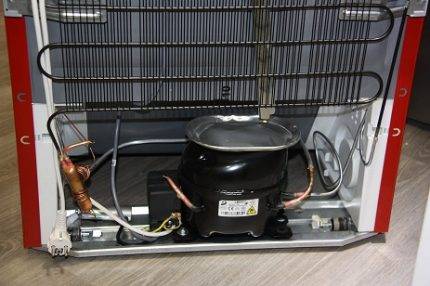
If the refrigerator does not turn on at all, the cause may be not only a malfunction of the thermal relay, but also a compressor breakdown, for example, a blown motor winding
If the engine is running, we can make an unambiguous conclusion that the relay needs to be replaced. Before starting work, it does not hurt to arm yourself with a smartphone or camera in order to consistently record all operations.
When installing a new thermostat, these images can be very helpful, especially for beginners.
It is necessary to clearly remember which cable core was used for what purposes. Usually, a black, orange or red wire is used to connect the thermal relay to the electric motor.
A brown wire leads to zero, a yellow-green wire provides grounding, and a pure yellow, white or green wire is connected to the indicator light.
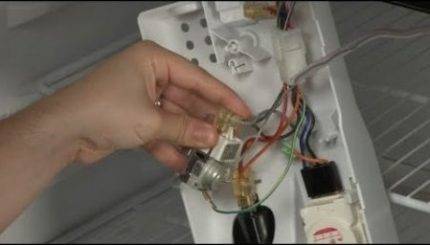
To connect the thermal relay, wires with different color markings are used, you need to remember the purpose of each wire so as not to be confused during reassembly
Sometimes it can be difficult to remove a damaged regulator, especially when it is placed outdoors. For example, in some models of Atlant refrigerators, you have to completely remove the chamber door from its hinges.
To do this, remove the trim, which is installed above the upper hinge, and unscrew the bolts hidden under it.
Before you remove the adjustment knob, you also have to remove the plugs and unscrew the fasteners. All these operations must be done carefully.




Fasteners and linings are best stored in a small container so that they are not lost. The thermostat itself is usually screwed to the bracket, it must be carefully removed, unfastened and removed.
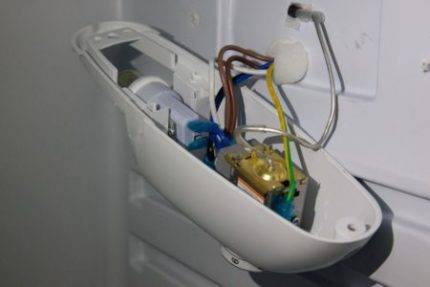
If the thermostat is located inside the refrigerator compartment, it is usually hidden under a plastic casing, where a lamp for lighting can also be mounted.
A new thermostat is installed in its place, following the reverse assembly order. Sometimes the breakdown of the thermostat is associated with a malfunction of the so-called capillary tube or bellows. If you replace only this element, the relay can be left.
To perform this procedure, you will have to remove the thermal relay, following the method described above. The bellows must be disconnected from the evaporator and carefully removed from the device housing.
Now install a new capillary tube, attach it to the evaporator, and mount the relay in its original place, and connect the disconnected wires.
Design features and principle of operation
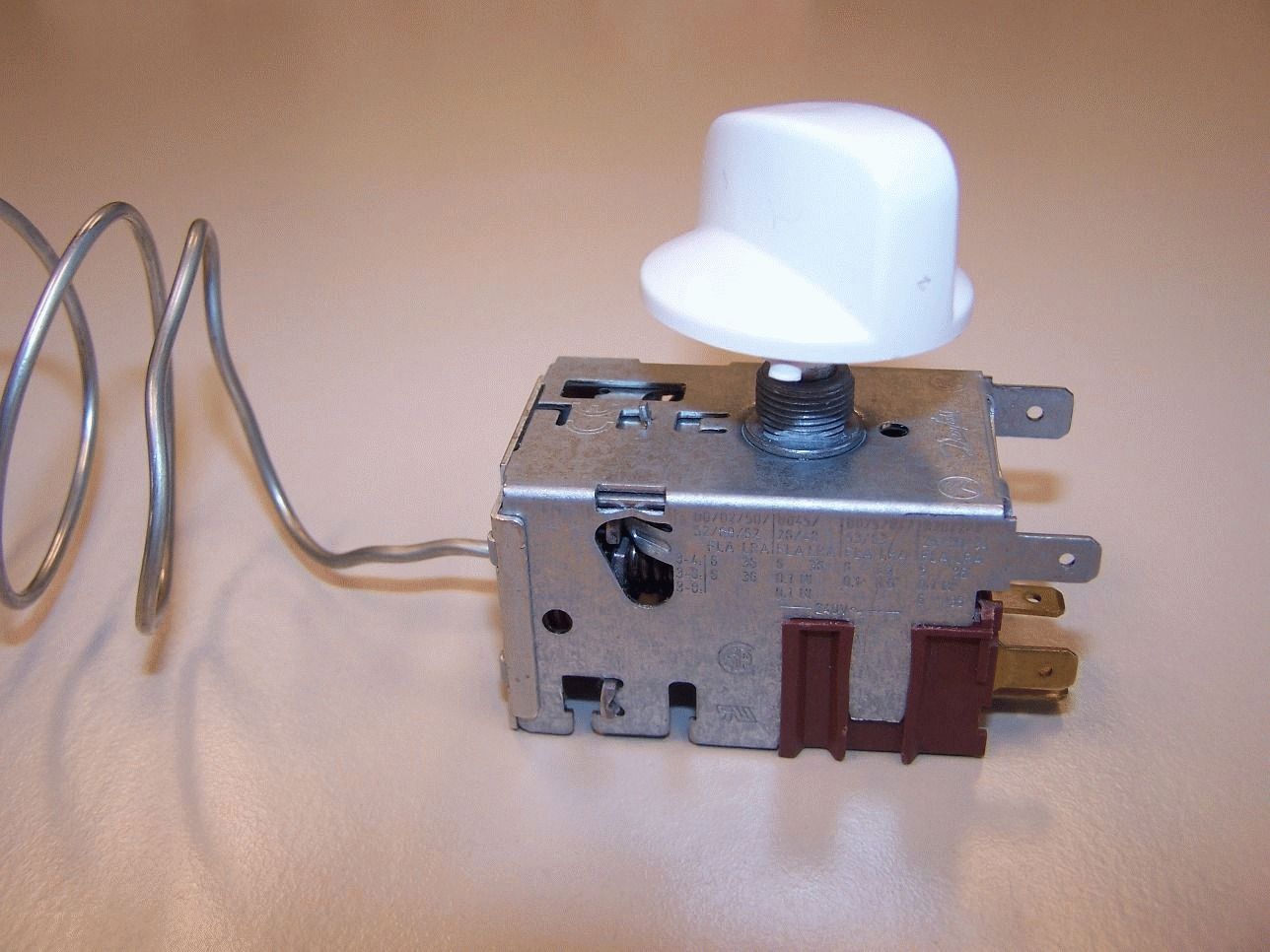
The temperature regulator or thermostat is one of the main elements, without which the normal operation of the refrigerator is impossible. It captures the readings of the temperature sensors in the refrigerator and freezer and sends a signal to the compressor start relay.
According to these signals, the compressor turns on if the chamber is not cold enough, and turns off when the temperature reaches the set level. Technically, the thermostat is a relay, at one end of which there is a sealed tube filled with freon.
On the other hand, contacts are installed, the opening and connection of which sends a signal to the compressor. The end of the tube with freon, it is also called a capillary tube, is fixed on the evaporator.
The refrigerant placed inside is sensitive to heating and cooling. When the temperature drops or rises, the pressure inside the tube changes, causing the relay contacts to connect or open.
The movement of the contacts is controlled by a small spring. It is used to set the temperature level that should be inside the refrigerator compartment. A temperature control knob is attached to the spring. Turning this knob changes the tension of the spring.
As a result, more or less force is needed to close and open the contacts. This affects the level of pressure in the capillary tube at which the contacts actuate.
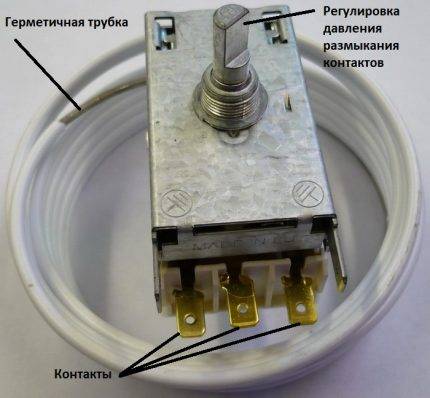 The thermostat is a small device that is equipped with a sealed tube with a sensor filled with refrigerant. Based on changes in the evaporator temperature, the relay switches the compressor on or off.
This regulates the degree of cooling of the air in the refrigerator.When using an electronic controller, this process is carried out somewhat differently, but the principle remains approximately the same: the desired temperature level is set based on the actual indicators that the capillary tube fixes.
But in such models, an electronic control module is used that can simultaneously manage data from several sensors. It is not always possible to repair or replace such a thermostat at home. Handling complex electronics requires knowledge and special equipment.
Typically, the thermostat is installed inside or outside the refrigerator compartment. Before starting the repair, it does not hurt to study the device of the refrigerator and the data sheet of the device. There can be a lot of useful information on the device of a particular model of thermostat, as well as on its location.
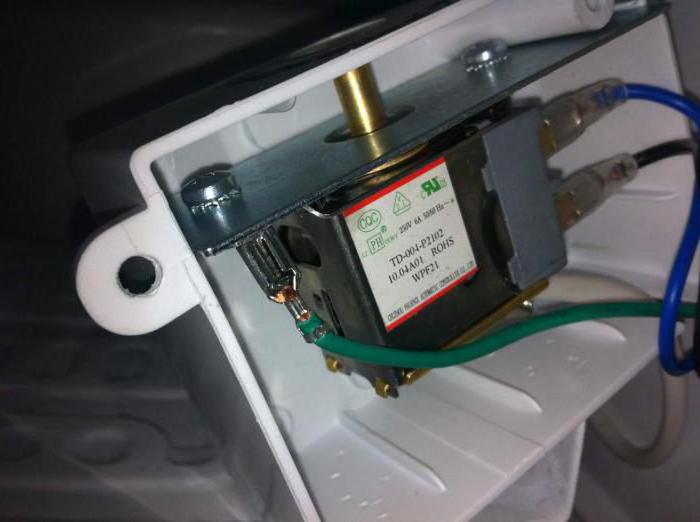
Usually the thermostat is located next to the knob for setting the temperature. The internal arrangement is typical for relatively old models. Inside the chamber, the element is usually enclosed in a plastic protective case.
The adjustment knob is located right on it. To remove the thermostat, you need to remove this handle and unscrew the fixing screws to remove the housing.
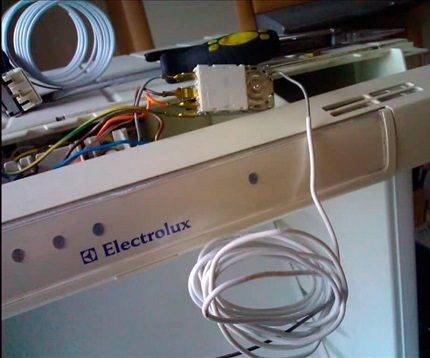
For more modern models, the thermal switch is placed outside the chamber in order to save precious cubic centimeters of internal space and not spoil the design with additional elements.
But you also need to look for the thermostat near the control knob, usually under the refrigerator body somewhere at the top. The handle is removed in the same way, the fasteners are unscrewed and they find what they are looking for behind the protective panel.
How can you tell if your thermostat needs repair?
To determine whether the refrigerator really refuses to work due to a broken thermostat, some characteristic signs will help:
- the refrigerator runs continuously;
- the temperature of the refrigerator compartment is below zero;
- The unit has turned itself off.
All of the symptoms described can be the cause of other problems with the technique. To establish the fact that it was the refrigerator temperature sensor that failed, several steps must be taken.




In the case when the refrigeration unit does not turn off, it works without interruption:
- disconnect the device from the electrical network;
- remove all contents and defrost;
- set the thermostat knob to the maximum position, or, depending on the brand of the unit, turn on the freezing function;
- put a thermometer with a negative scale in the middle of the plus refrigerator compartment;
- without filling the refrigerator with food, turn it on to the power supply;
- after a couple of hours, evaluate the readings of the thermometer: its column should be in the region of 6 - 7 degrees, otherwise repair or replacement of the thermostat is inevitable.
Do not try to fix the breakdown yourself, especially if the refrigerator has an electronic thermostat. Entrust the work to the employees of a specialized workshop: 8 (495) 109-02-72.
If in the refrigerator compartment, where it should be positive in normal mode, the temperature begins to fall below zero:
- do the actions of the previous paragraph;
- when the temperature drops below +6 degrees, turn the thermostat knob until the device turns off.
The refrigerator turned off, so everything is in order. If not, then within a few hours the intervals between turning on and off the refrigerator engine are checked.They should be within 40 minutes, if less, cold should be added.
Did everything go well? You can fill the refrigerator with food. Problems have not disappeared - the thermostat will have to be replaced.
If the refrigerator turns off by itself:
- de-energize the device;
- find the thermal relay and remove the protective cover;
- close all the wires going to the thermostat, except for the yellow-green ground wire;
- turn on the refrigerator.
The refrigerator began to work, a smooth hum of the motor is heard, which means that the temperature sensor needs to be changed, but this procedure should not be trusted to home-grown craftsmen. Contact a dedicated service center.
The procedure for carrying out work when replacing the thermostat
The thermostat can fail not only in an old Soviet-era refrigerator, but also in a new unit purchased recently. The repair depends on the brand and design of the device. Where is the thermostat located in different models? They can be located behind the lining on the evaporator or on the side wall of the refrigerator compartment. But regardless of the place, the repair of the thermostat takes place in several steps according to the same scheme.
First step: find a thermostat. It will be easy to do this - it is directly connected to the temperature control knob. In early modifications, the thermostat is located inside the refrigerator chamber under a special casing. To get it, you need to remove the handle and unscrew the protection.
Models of modern appliances, in including refrigerators with function nofrost are somewhat different, the thermostats are placed outside the chamber and are located in the upper part of the case, above the door. To dismantle the thermostat, it is enough to remove the panels covering it.
Second step: removing the thermostat. The freon tube going into the housing is disconnected from the evaporator
The thermostat is detached from the holder, while it is important to remember the location of the disconnected wires
Third step: installing the new part in place. All necessary contacts are connected, the relay is fixed in place.
Fourth step: connecting the tube to the body. The bellows tube is carefully inserted and securely fixed to the evaporator.
Fifth step: setting up and adjusting the operation of the refrigeration unit.
This technology for replacing the thermal relay is informative, if you do not have experience and special skills in working with refrigeration units, value your time, effort and money, contact the specialists.
The master will arrive exactly at the time stated by you, carry out repairs quickly and efficiently. Warranty cards will be issued for all replacement parts and services rendered. If necessary, the masters will carry out maintenance of the device.
Leave a request with a detailed description of the problem - and today we will solve it.
Tell your friends about us and get a 5% discount!
Characteristics
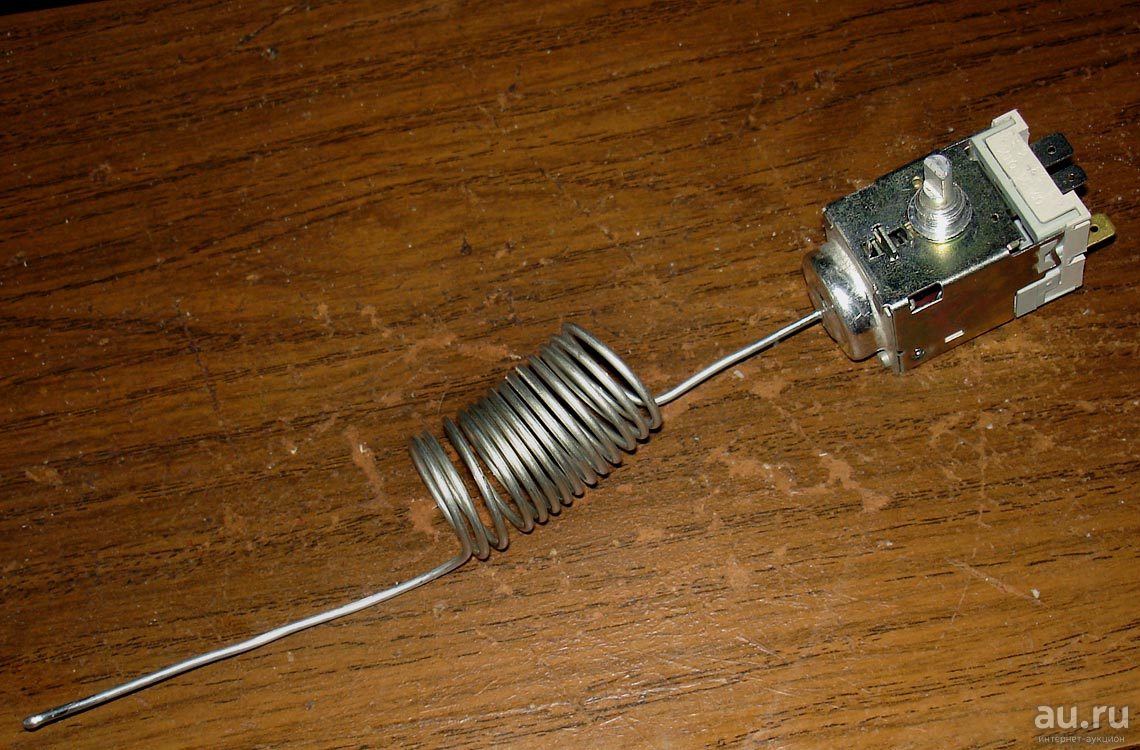
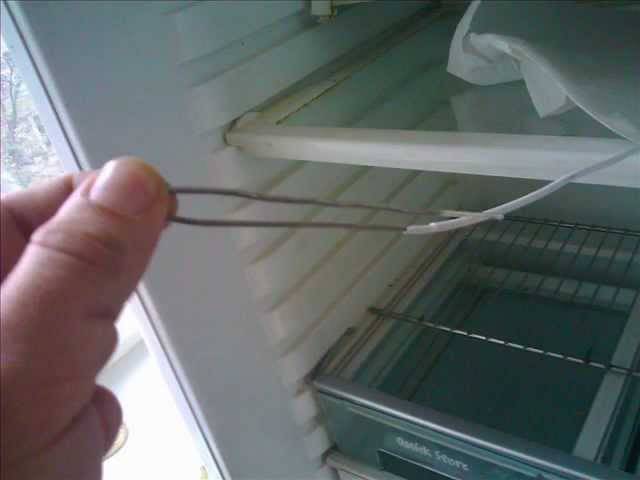
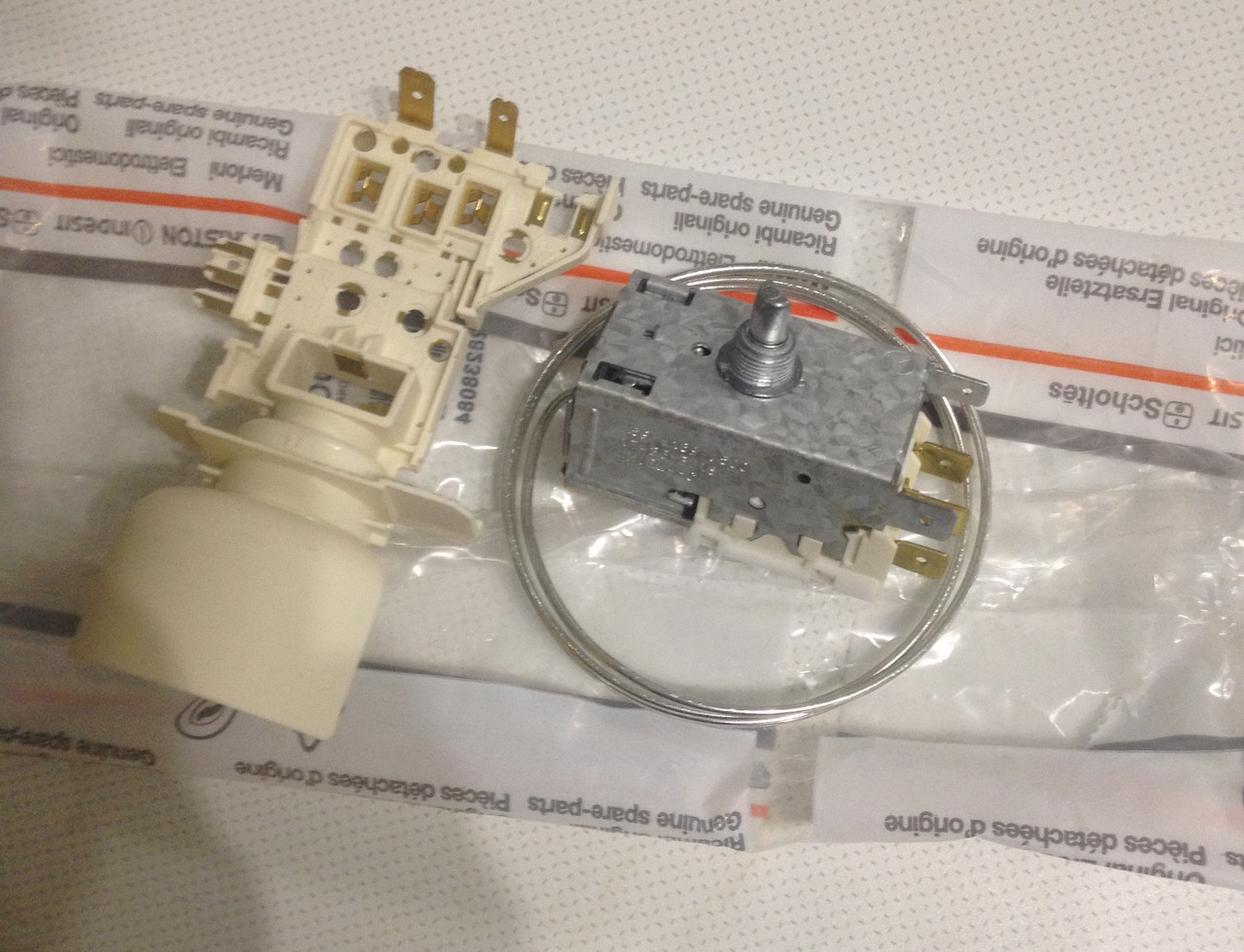
The thermostatic element in the refrigerator is used to maintain the temperature of the evaporator of a single-chamber or two-chamber refrigerator. To adjust the temperature, you need to turn the knob or press the buttons. They are switching contacts (opening, closing) with a membrane (corrugated bulb) in the housing, which operate at a temperature according to the sensor, namely the capillary or bellows tube. The length of the tube for the thermostat is different, depending on the dimensional characteristics of the refrigerator. Almost every temperature sensor has an analogue of both foreign and domestic production. This information is given in the description for each product. For example, the domestic TAM 133 is an analogue of Ranco K59 or Danfoss 077B6.Foreign ones (German, Dutch, Italian) are more expensive due to the brand and logistics, although they are simple in design and there is no point in overpaying for foreign counterparts.






Design features and principle of operation
The temperature regulator or thermostat is one of the main elements, without which normal operation of the refrigerator is impossible. It captures the readings of the temperature sensors in the refrigerator and freezer and sends a signal to the compressor start relay.
According to these signals, the compressor turns on if the chamber is not cold enough, and turns off when the temperature reaches the set level.
Technically, the thermostat is a relay, at one end of which there is a sealed tube filled with freon.
On the other hand, contacts are installed, the opening and connection of which sends a signal to the compressor. The end of the tube with freon, it is also called a capillary tube, is fixed on the evaporator.
The refrigerant placed inside is sensitive to heating and cooling. When the temperature drops or rises, the pressure inside the tube changes, causing the relay contacts to connect or open.
The movement of the contacts is controlled by a small spring. It is used to set the temperature level that should be inside the refrigerator compartment.
A temperature control knob is attached to the spring. Turning this knob changes the tension of the spring.
As a result, more or less force is needed to close and open the contacts. This affects the level of pressure in the capillary tube at which the contacts actuate.

The thermostat is a small device that is equipped with a sealed tube with a sensor filled with refrigerant. Based on changes in the evaporator temperature, the relay switches the compressor on or off.
This regulates the degree of cooling of the air in the refrigerator. When using an electronic controller, this process is carried out somewhat differently, but the principle remains approximately the same: the desired temperature level is set based on the actual indicators that the capillary tube fixes.
But in such models, an electronic control module is used that can simultaneously manage data from several sensors.
It is not always possible to repair or replace such a thermostat at home. Handling complex electronics requires knowledge and special equipment.
Typically, the thermostat is installed inside or outside the refrigerator compartment. Before starting the repair, it does not hurt to study the data sheet and the instructions for the device, there can be a lot of useful information on the device of a particular model of thermostat, as well as on its location.
Usually the thermostat is located next to the knob for setting the temperature. The internal arrangement is typical for relatively old models. Inside the chamber, the element is usually enclosed in a plastic protective case.
The adjustment knob is located right on it. To remove the thermostat, you need to remove this handle and unscrew the fixing screws to remove the housing.
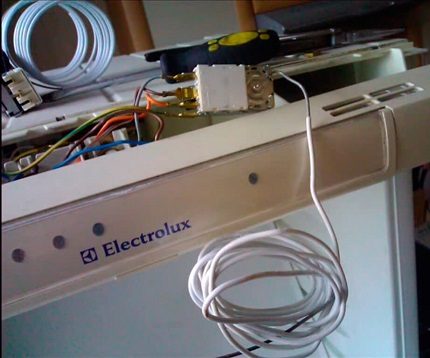
For more modern models, the thermal switch is placed outside the chamber in order to save precious cubic centimeters of internal space and not spoil the design with additional elements.
But you also need to look for the thermostat near the control knob, usually under the refrigerator body somewhere at the top. The handle is removed in the same way, the fasteners are unscrewed and the protective panel is found.
Location of thermostat
The temperature regulator is always associated with a knob that switches temperature regimes. In models of generations of past years, the thermostat is located under a plastic cover inside the refrigerator compartment. To replace it, you need to pick up the mode switch with a flat screwdriver, remove it, then dismantle the plastic cover.
In models of recent years, from the attached instructions (refrigerator diagram), you can find out where the thermostat is located in the refrigerator. Most often it is placed above the door. To get to it, you need to dismantle the mode switch and the plastic structure that covers the thermal relay.
Symptoms of a malfunctioning thermostat
The thermostat is faulty if:
The unit works without shutting down
The performance of the thermostat is checked in this case without removing it. For this you need:
- Pull the plug out of the socket.
- Free the cameras from the products.
- Set the knob to the maximum cold position or start the fast freezing mode, if any.
- Place a thermometer on the middle shelf of the refrigerator (not the freezer), it is desirable that it can also measure minus temperatures.
- Turn on the refrigerator with empty chambers.
- Remove the thermometer after a couple of hours. It should show 6 - 7C. If the readings are different, the thermostat will need to be replaced.
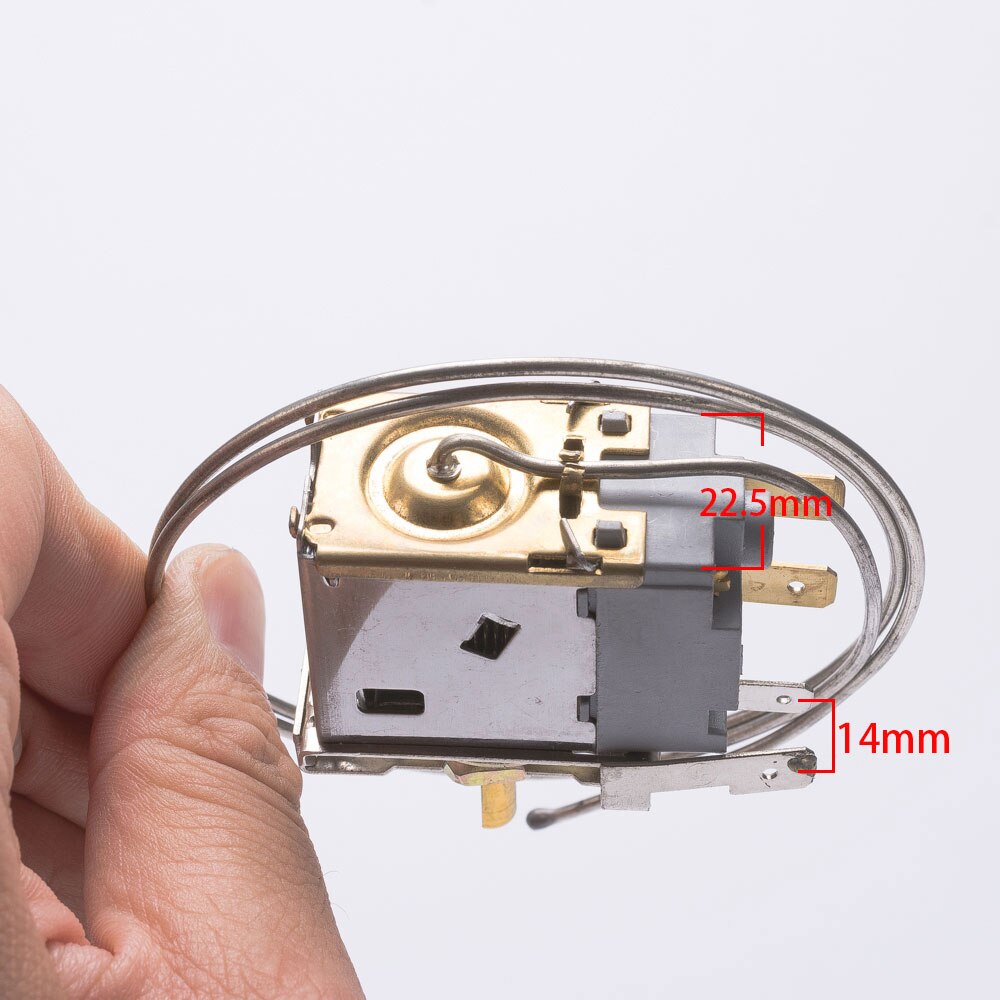
So that the check does not take much time, you need to get to the thermal relay and move the plate located near the pin on which the handle is put on. If there are no clicks during its movement or it does not move, the thermostat changes.


If a snow coat appears in the refrigerator compartment, the thermostat is not working properly or does not work at all.
Refrigeration unit does not turn on
The cause of this malfunction can be not only a thermal relay, but also a burned-out compressor motor or a breakdown of the start-up relay. But before calling the wizard, you should check the health of the thermal relay. To do this, you need to remove the casing, after disconnecting the unit from the mains, and sort out the wires.
In older models, only a couple of wires fit the thermostat terminals. They are removed and closed together with a piece of wire or even a paper clip, bending it properly.
The wires are shorted to each other - the compressor has earned. So the thermostat is faulty. And if the compressor did not start when closed, it means that the start-up relay is faulty or the engine burned out. It became impossible to do without a master.
In modern units, 4 multi-colored wires are connected to the thermostat:
- the wire from the compressor motor is orange, red or black;
- from the fork - brown;
- from the signal light - white, yellow or green;
- ground wire - yellow with a green stripe.
You need to close the first 3 wires, and then as indicated above.
Professionals consider it more reliable to check with a multimeter, which a home master can do. The thermostat will have to be removed.If the multimeter, the analog switch is set to the position of measuring low resistances, and the arrow, with the probes closed, is set to “0” with the wheel on the left side. On a digital instrument, the switch is set to “200”.
In order for the test to be carried out under conditions as close as possible to the working conditions, the end of the bellows tube is placed in ice water for a couple of minutes. Then measure the resistance between the terminals. If the arrow goes off scale on the analog multimeter, and “1” is displayed on the digital one, the thermostat is sent to a landfill.
Ice buildup on the walls of the refrigerator
This phenomenon is also observed with other malfunctions, but the check should begin with the thermostat. To do this, you need to perform the actions indicated for the non-shutdown unit. When the thermometer reads 5 - 7 C, the temperature setting knob is turned to the left until the compressor stops.
If the compressor stops, the thermostat is good. Otherwise, it is changed. When turned off, the unit is left to work for 5-6 hours with empty shelves. This time measures the time between starting and stopping the unit. During normal operation, the length of the intervals is about 40 minutes. At lower values, turning the knob to the right adds cold. If that doesn't help, change the thermostat.
Temperature standards for the refrigerator for various products
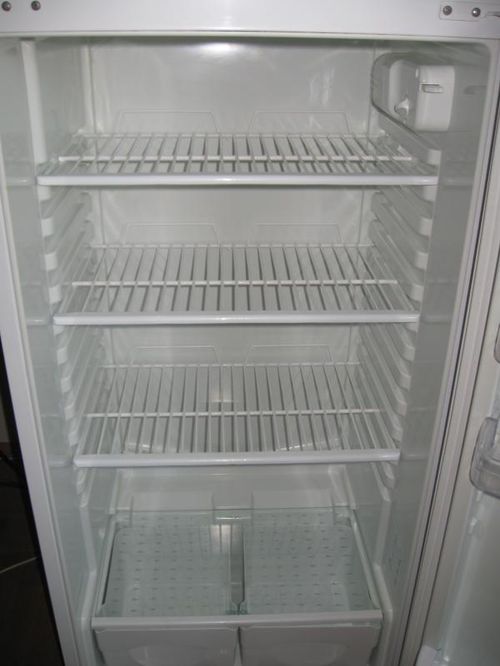
The temperature regulator of the Stinol refrigerator must be fixed in a position that, according to the instructions, is most consistent with the ideal temperature regime.After that, the products are placed on the shelves in accordance with the storage standards established for them and the cold distribution system throughout the chamber (for some models, the coldest shelf is the top one, and for some it is the middle one).
Refrigerator Stinol
So, what temperature in the Stinol refrigerator will be optimal for the different foods stored in it:
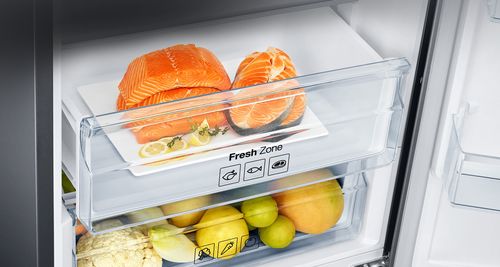
- Meat and fish dishes, as well as eggs, hard cheeses, milk and dairy products, sauces are best preserved at a temperature of +1 to +3°C, so they are placed on the coldest shelf.
- In the range from +2 to +4°C, sausage, cheese, ready-made cereals and semi-finished products feel great.
- Soups, boiled vegetables and bread stay fresh longer if stored at +3 to +5°C – this is the middle shelf.
- The established temperature norm for seafood is from +4 to +6°C, therefore, this should be the temperature on the shelf where they lie.
- Fresh vegetables and fruits are placed on the lowest shelf or in a special compartment where the temperature ranges from +6 to +8 ° C (the only exceptions are pineapple and banana - it is better to keep them outside the refrigerator at room temperature).
Food in the refrigerator
If frozen, any product will be stored for a sufficiently long period.



