
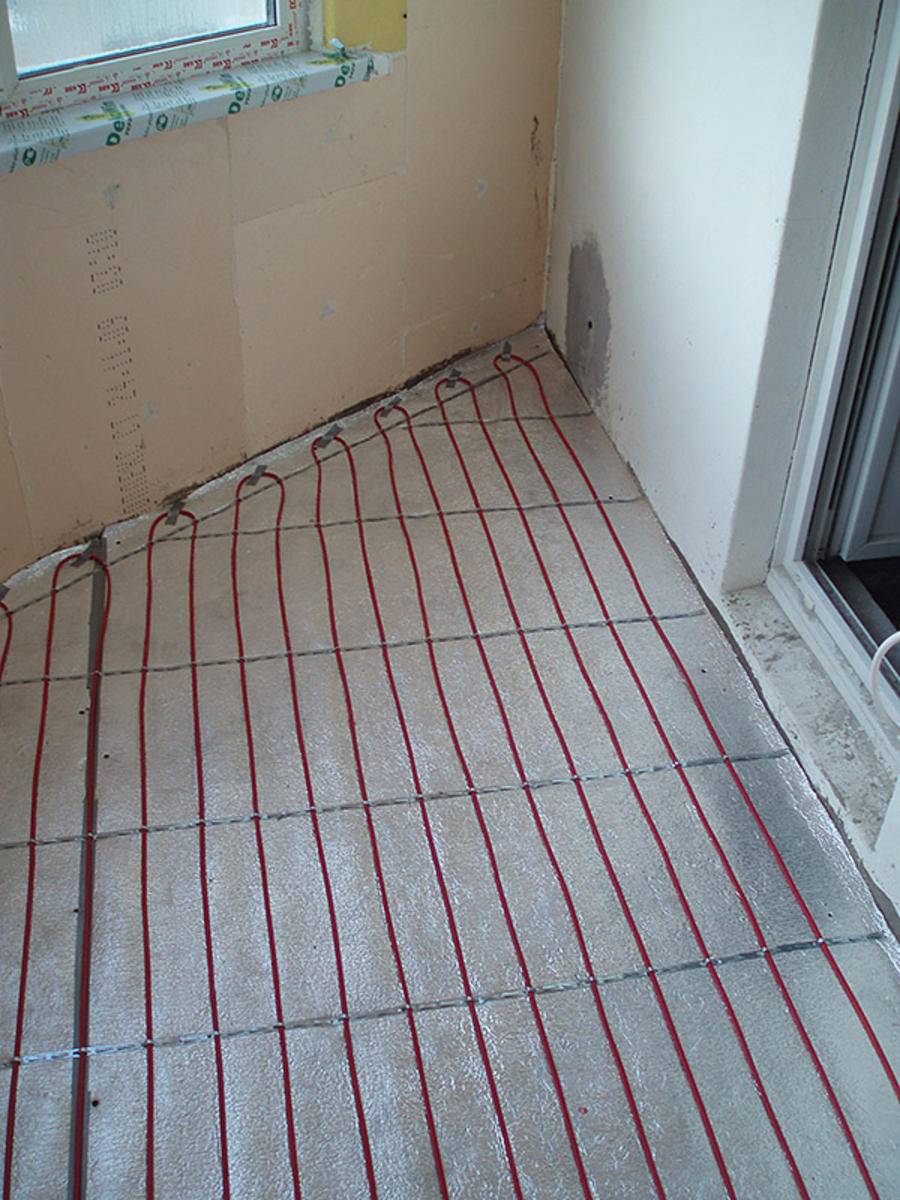
- What worries citizens when buying "warm floors"
- Do-it-yourself step-by-step instructions for warming a balcony with your own hands
- Preparation for warming the balcony
- Vapor barrier of the floor and walls of the balcony
- Balcony floor insulation
- Wall cladding on the balcony
- Finishing the floor and walls of the balcony
- Heating with infrared emitters
- ↑ Features of installing a warm floor on a balcony
- Balcony upgrade 80 lvl: underfloor heating on the balcony
- Wood
- Pros:
- Minuses:
- Ceiling insulation
- First option: KNOW HOW from DEVI
- Balcony / loggia insulation scheme
- Loggia insulation sequence using PENOPLEX COMFORT
- The following bases can be laid on PENOPLEX thermal insulation:
- Linoleum
- Features of laying underfloor heating on the loggia and balcony
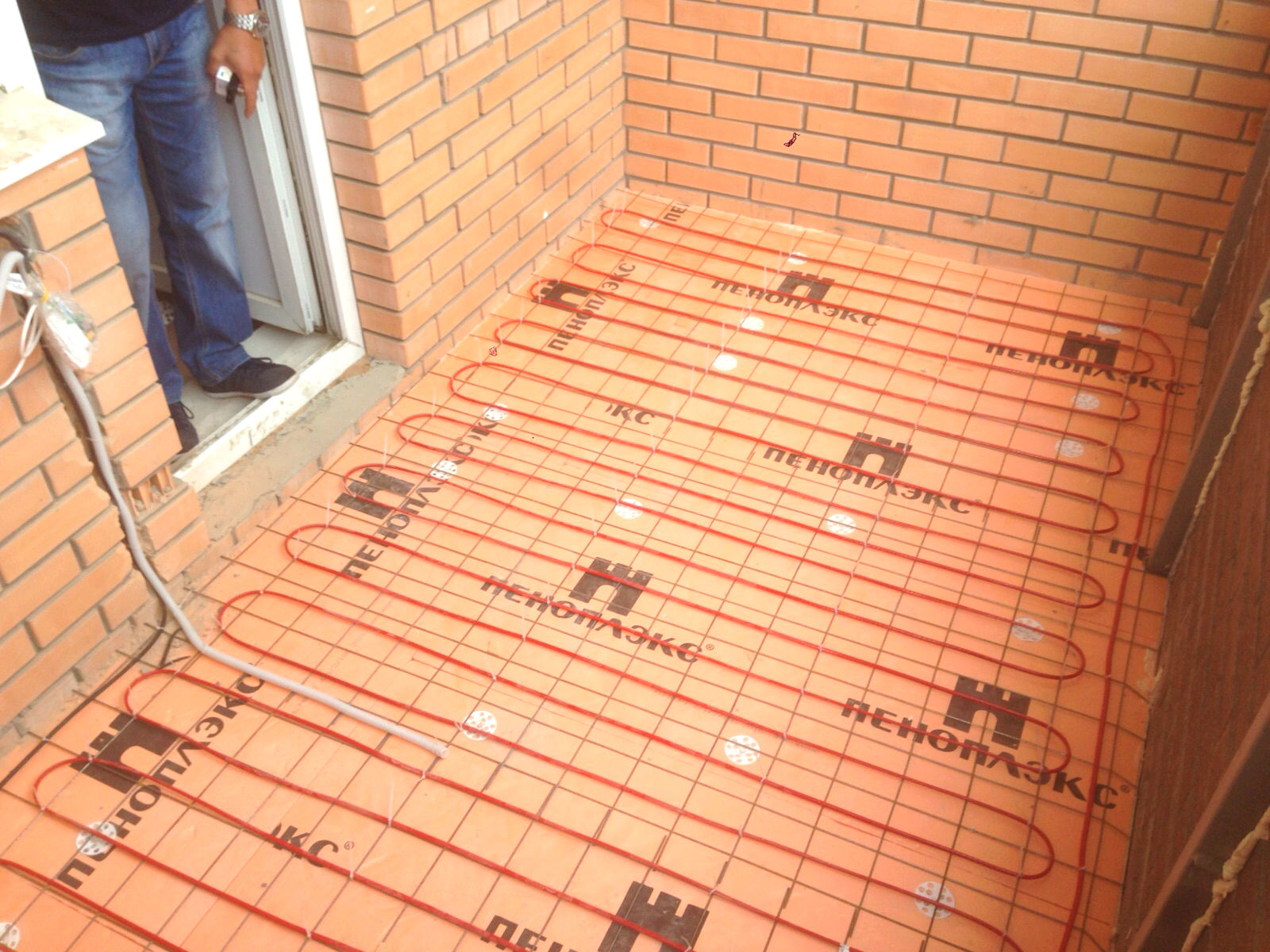
- Installation of water floors
- Electric floor installation
- Connecting infrared floors
- Options for arranging a balcony floor
- Options for arranging a warm base
What worries citizens when buying "warm floors"
Complaints that warm floors do not heat well, that it is cold on balconies or loggias, could not be found. Apparently, in this regard, purchases justify expectations.
Typical complaints:
"Headache"
“My husband put underfloor heating, and I'm afraid of leukemia”
"The air has become dry and itchy in the throat"
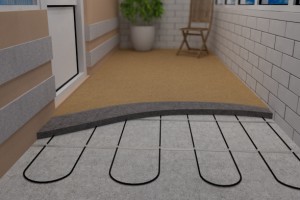
Scheme of laying the cable heater
Finally, there are even recommendations that the cable must be laid without fail two-core, so that the electromagnetic fields created by it extinguish each other. Laying a single-core cable is a sure cancer.
This is all, of course, nonsense, because the electromagnetic radiation of any kind of "warm floor" is less in its values than that produced by conventional electrical wiring.
Regarding headaches and sore throats: a glazed and insulated balcony is usually a poorly ventilated room, where heaps of all sorts of junk are piled, weeping due to condensate; there may also be rotten “stocks for the winter” in the form of frozen carrot potatoes. If the temperature in such a room is sharply raised (and emitters and heaters do this rather quickly), then all these “ragweeds” will evaporate and, indeed, their head and nasopharynx may ache.
Flowers to improve the atmosphere balcony
Electric or water balcony heating is usually arranged in order to grow flowers or any vegetable crops here (on the balcony). At the same time, balcony plant growing contributes to the improvement of the microclimate in the glazed space, and increases the immunity of those who spend time here.
For information on how to grow flowers on a balcony, read the article on our website “How to decorate a balcony with flowers? Landscaping ideas and tips.
You can also ennoble the atmosphere on the balcony in winter. Information about this is contained in the article on our website "How to make a winter garden on the balcony with your own hands."
Another way to improve your own health using a balcony is to arrange a gym on it. How to do this - also read on our website.
Therefore, follow Suvorov's commandment: keep your feet warm and your head cold - ventilate the rooms in which you are more often!
Do-it-yourself step-by-step instructions for warming a balcony with your own hands
- Determination of the purpose of warming the balcony space;
- choosing the right type of insulation;
- preparation of the balcony for insulation (sealing cracks, gaps and holes);
- waterproofing of the balcony space;
- balcony glazing with aluminum windows with double-glazed windows;
- laying a heat-insulating layer;
- installation of vapor barrier;
- Ceiling and floor finishing.
Using such step-by-step instructions will allow you to insulate the balcony with your own hands as efficiently as possible and in the shortest possible time. In addition, during the work, the type of house in which the insulation is being installed should be taken into account.
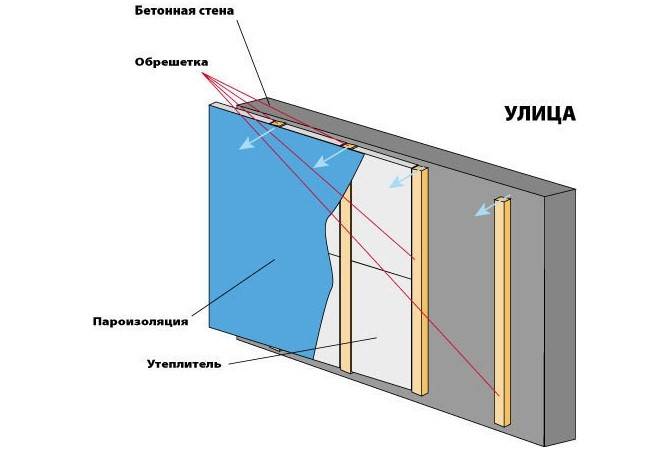
Rice. 16. Lathing, vapor barrier and installation of insulation are the main processes for thermal insulation of a balcony.
Preparation for warming the balcony
In order to competently insulate the balcony, it is necessary to make preliminary preparation of this room. First of all, it consists in strengthening the balcony structure. In addition, window frames may need to be installed. Such preparation is necessary if glazing is planned. Also, before warming the balcony space, you should take care of its waterproofing. High-quality insulation additionally requires sealing all existing cracks and gaps. This is especially true for brick houses, in which there are technological slots on the balcony.
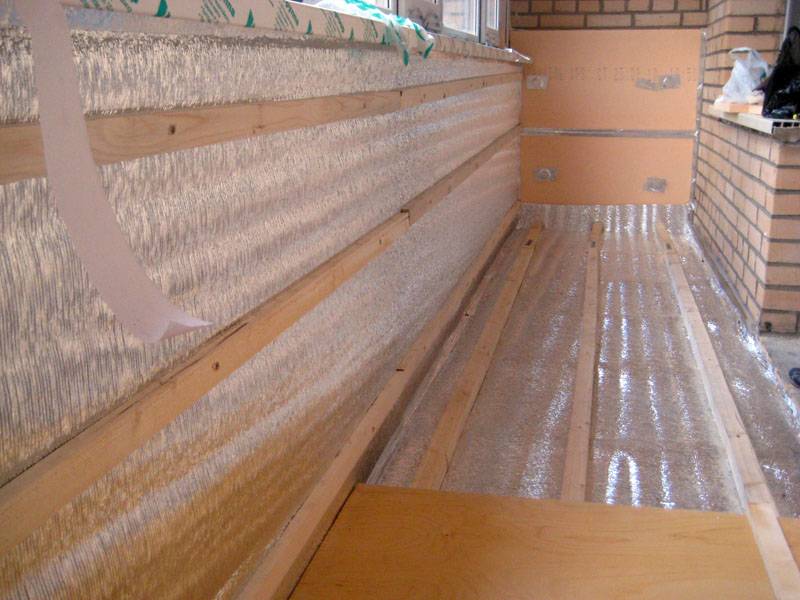
Rice. 17. Preparing the balcony for insulation.
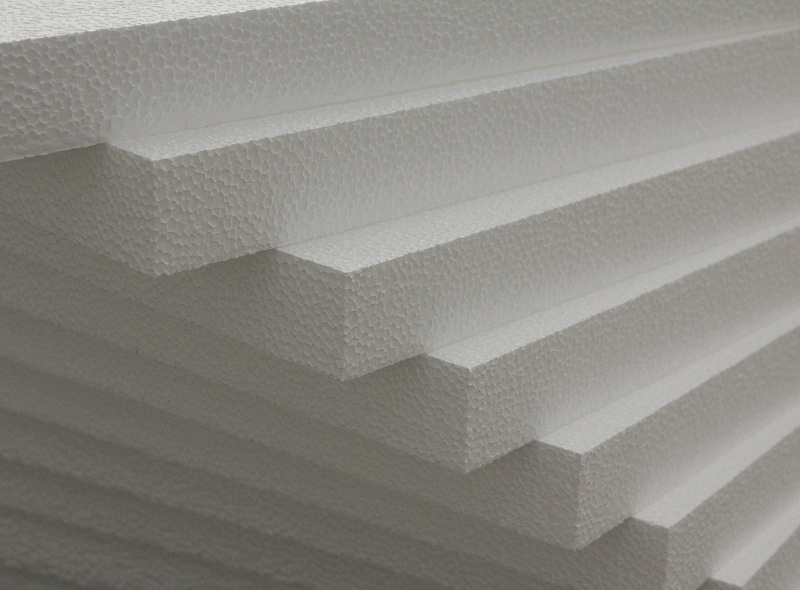
Rice. 18. Styrofoam is the most popular balcony insulation.
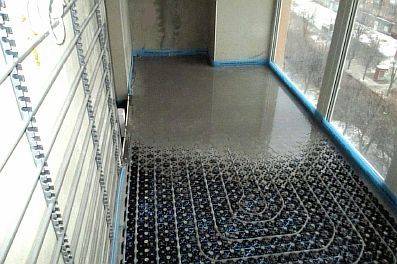
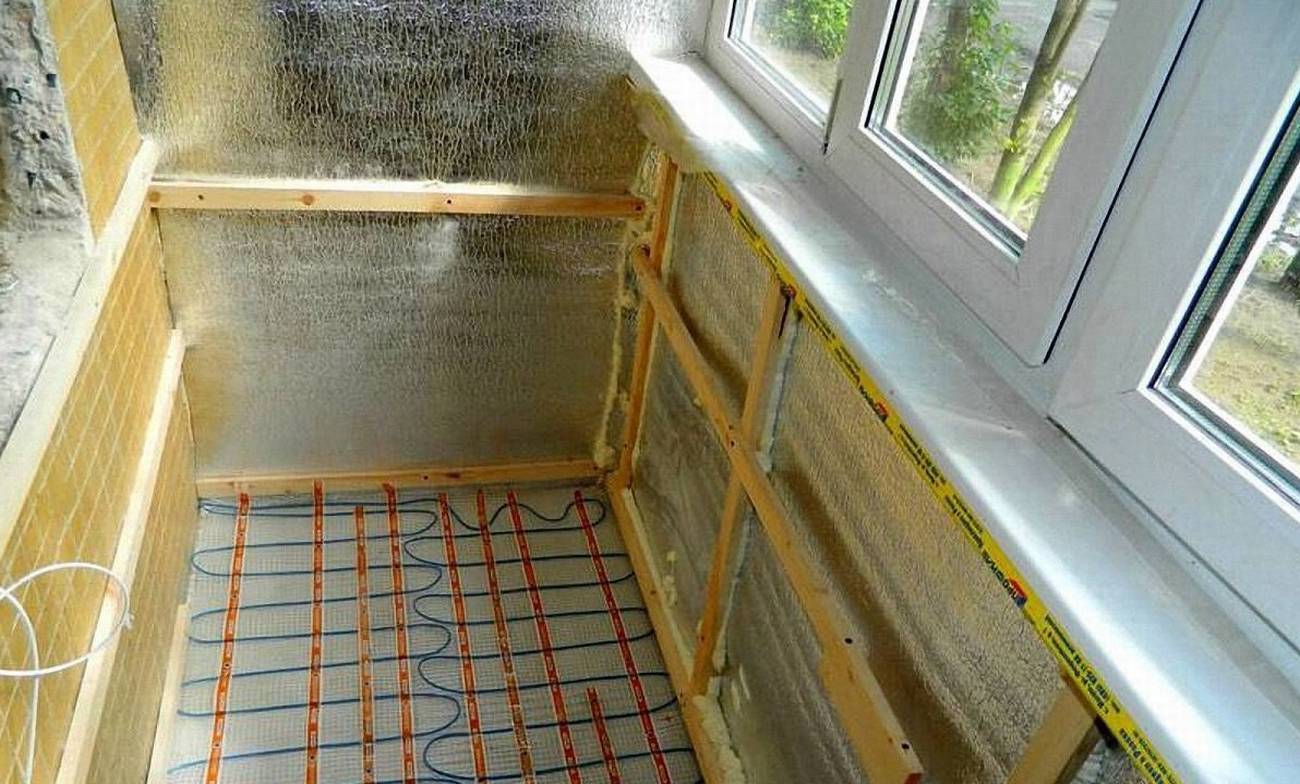




Vapor barrier of the floor and walls of the balcony
One of the most important stages in the process of balcony insulation is vapor barrier.It is she who allows you to achieve the necessary microclimate in the apartment. Thanks to the vapor barrier, cold air from the street will not penetrate into the room. In addition, an effectively selected vapor barrier allows you to create a barrier that will prevent the penetration of moisture vapor and reduces the likelihood of condensation, which negatively affects the quality of building materials. For the purpose of vapor barrier, two main materials are used today - vapor-permeable membranes and films. These materials protect the insulation system from the penetration of water vapor. They also provide protection from the negative effects of the wind.
Rice. 19. Vapor barrier protects the balcony from the negative effects of vapors.
Balcony floor insulation
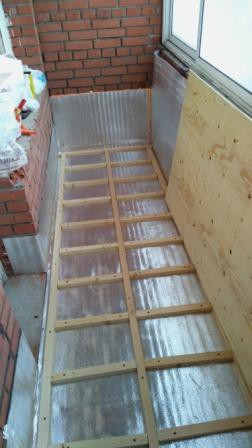
It is impossible to imagine high-quality insulation of a balcony without thermal insulation of the floor. For this, 4 types of materials are used - penofol, polystyrene, polystyrene or mineral wool. Penofol, which is the "last generation" heater, deserves special attention. It is made of polyethylene foam and aluminum foil. Before insulating the floor, it must be checked for curvature. Next, you need to clean the floor surface of any debris and things. Before installing the insulation, you will need to install the crate. Openings in the crates must be filled with insulation.
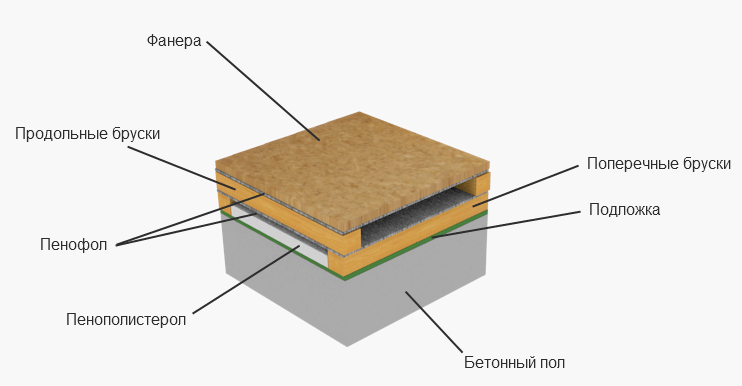
Rice. 20. Penofol and polystyrene foam are the most popular floor insulation on the balcony.
Wall cladding on the balcony
Another important step in the thermal insulation of the balcony is the lathing of the walls. In this case, it is necessary to use steel racks placed at all corners of the room. You will also need steel bars to fence the balcony.Work on the lathing of the walls involves the use of a drill, drill and taps.
As a material for the crate, wood, metal and plastic can be used. Wood is a fairly flexible material. Therefore, from it you can make a crate for any purpose. Of the minuses of this material, one can note its low fire safety and susceptibility to moisture. Therefore, galvanized profiles are most often used for wall lathing.
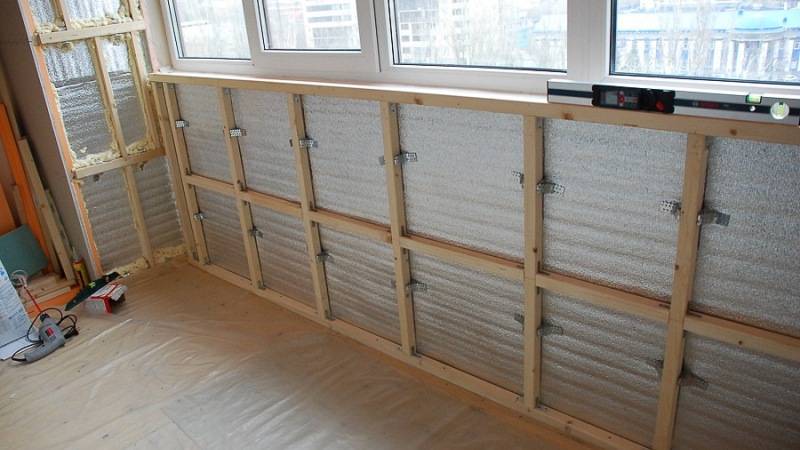
Rice. 21. Lathing is the most important stage of thermal insulation.
Finishing the floor and walls of the balcony
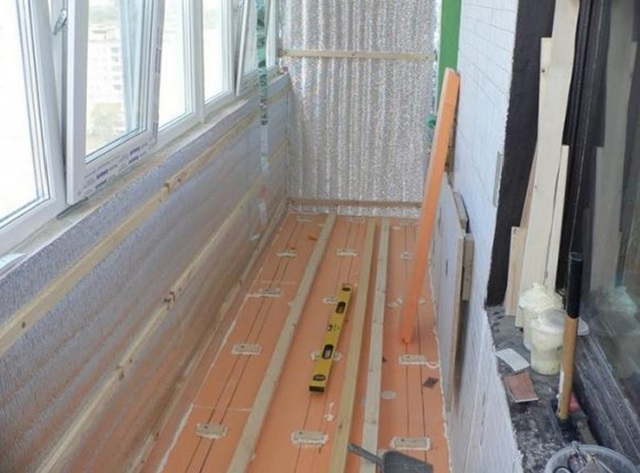
One of the most popular ways to insulate a balcony is a device floor by joists. For this, special waterproofing is used, to which logs are mounted. Further, thermal insulation is mounted between the lags, on top of which a vapor barrier is installed. After that, the stage of facing works begins.
For wall cladding, as a rule, putty is used, which evens out their slight curvature. The walls of the balcony are most often sheathed with clapboard. This finishing option allows you to perfectly align the wall. Also, the walls can be painted with acrylate paint or glued with wallpaper.
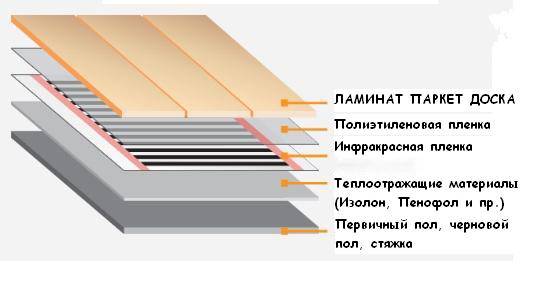
Rice. 22. Do-it-yourself warm floor.
Heating with infrared emitters
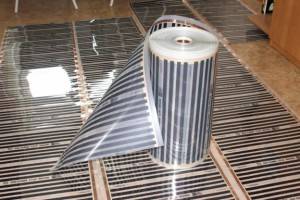
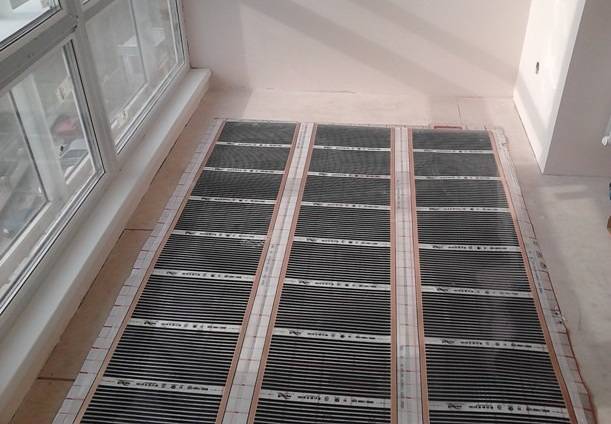
Infrared emitter laid on the balcony
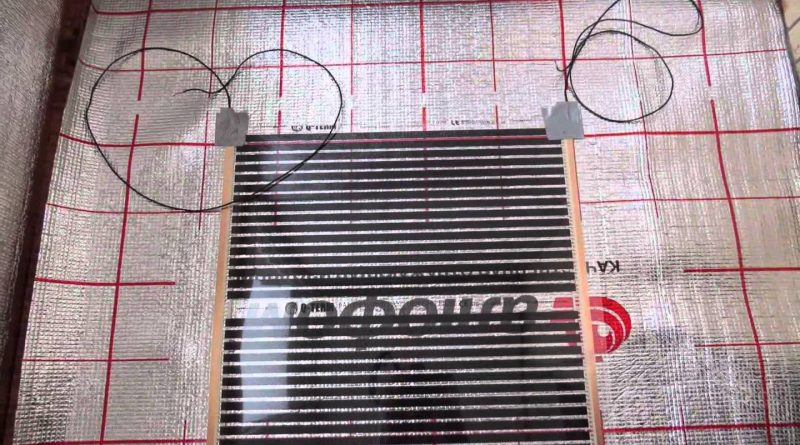
Heating with infrared emitters is the most modern approach. As the main element, a thin (0.4-0.8 mm) carbon film is used, on which strips of material are applied, which converts the energy of an electric current into infrared radiation.
The room is heated not due to heat radiation by the heater itself, but due to the heating of interior items, including floors, walls, etc., by this infrared radiation. The film itself does not heat up, although there are options that combine the functions of an infrared emitter and direct heating (for example, the Korean film OKondol, whose surface temperature reaches 60 degrees).
The film can be laid in any way, including under carpet, laminate, linoleum, cut, glued to walls or ceilings. A number of sources claim that the efficiency of such a film is up to 98% (that is, 98% of the electricity consumed is converted into heat). In general, a miracle, not material!
↑ Features of installing a warm floor on a balcony
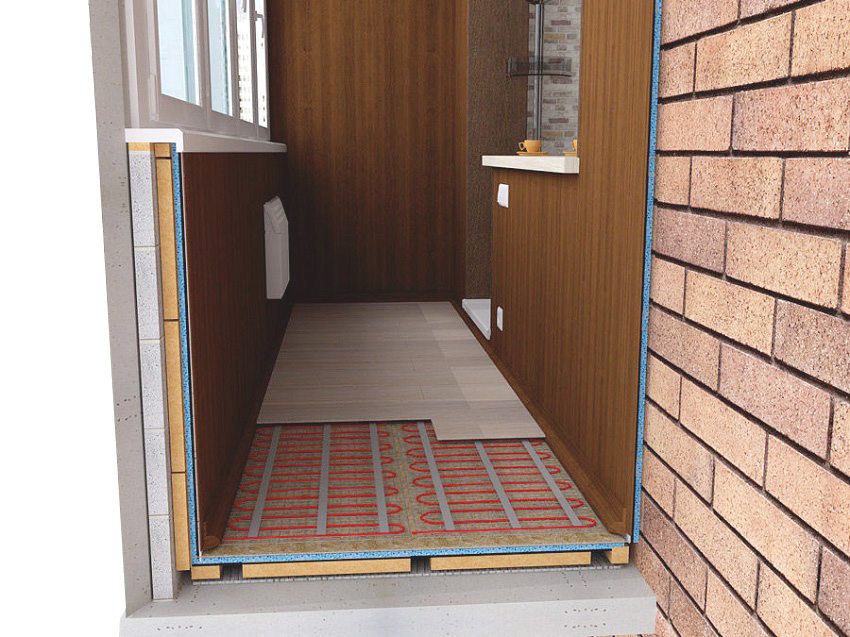
The installation process of the system is warm balcony floor slightly different from its own styling in other rooms of the apartment. The thing is that the walls of the balcony do not have the characteristics of strength and thermal conductivity that are inherent in the walls of the house, therefore, before installing a warm floor, you will have to take up the insulation of the balcony.
To do this, it is necessary to lay insulation not only on the side walls, but also on that part of the wall that adjoins the balcony, as well as on the floor, and it is desirable to cover the base of the floor with a vapor barrier material, and glue all the joints between the walls and the vapor barrier surface with metallized adhesive tape. Thus, your balcony will turn into a real "thermos" that retains heat and prevents it from leaking.
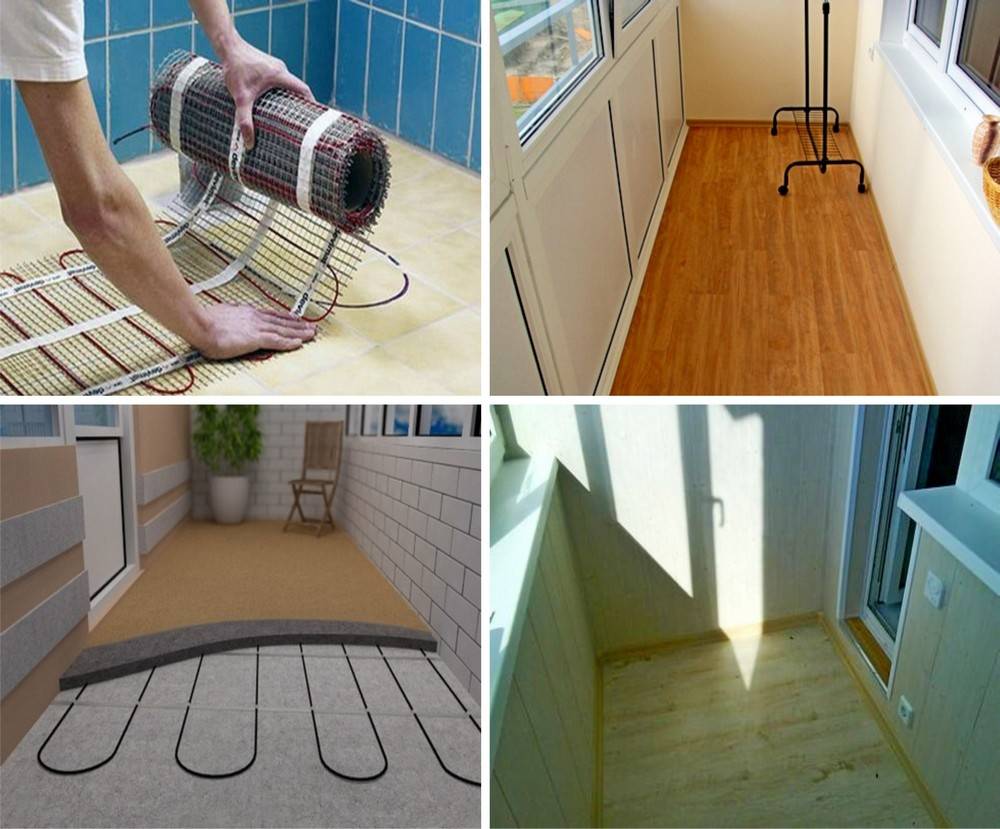
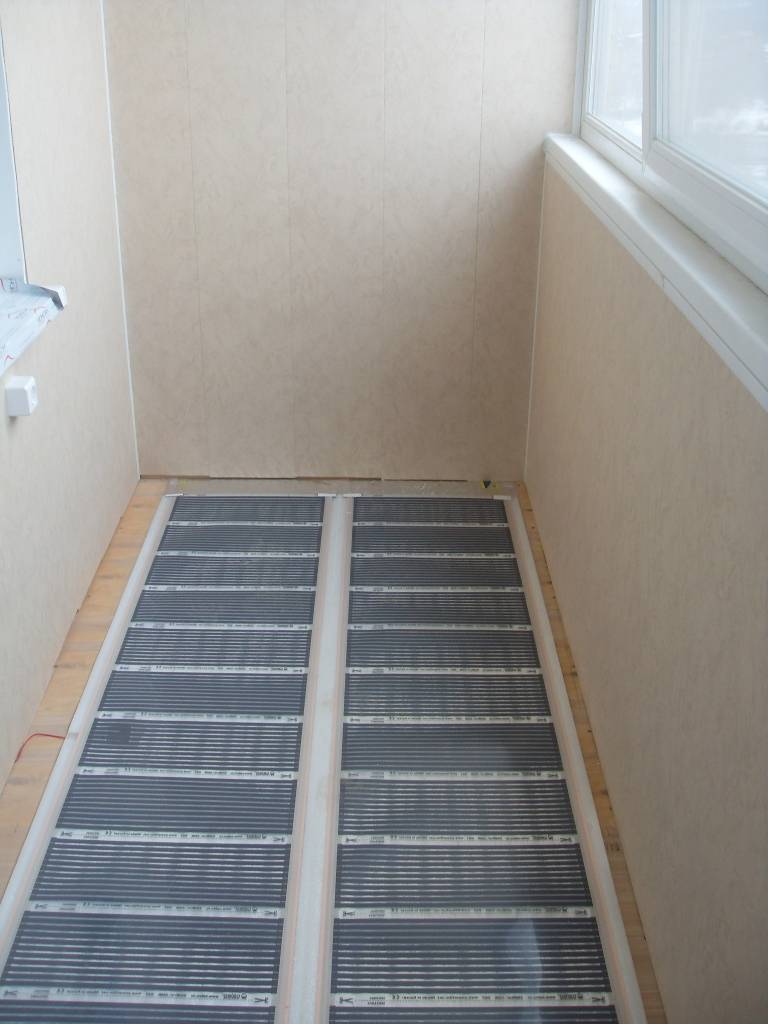

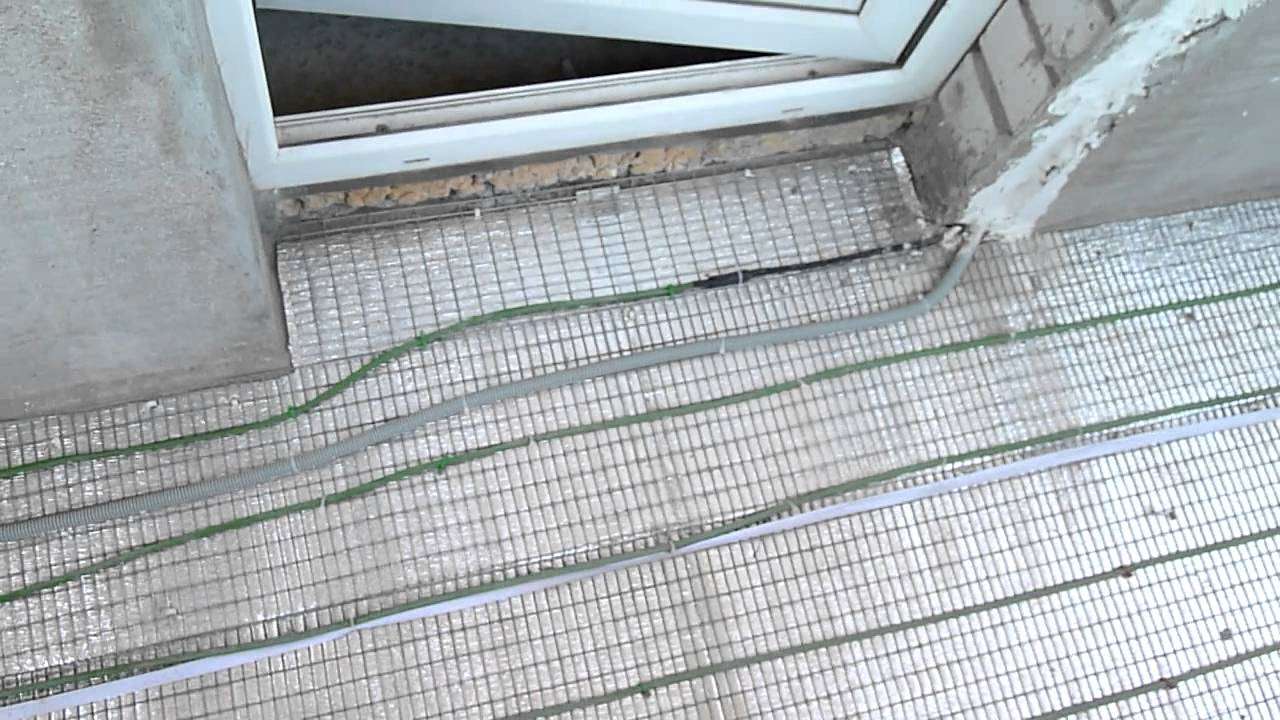
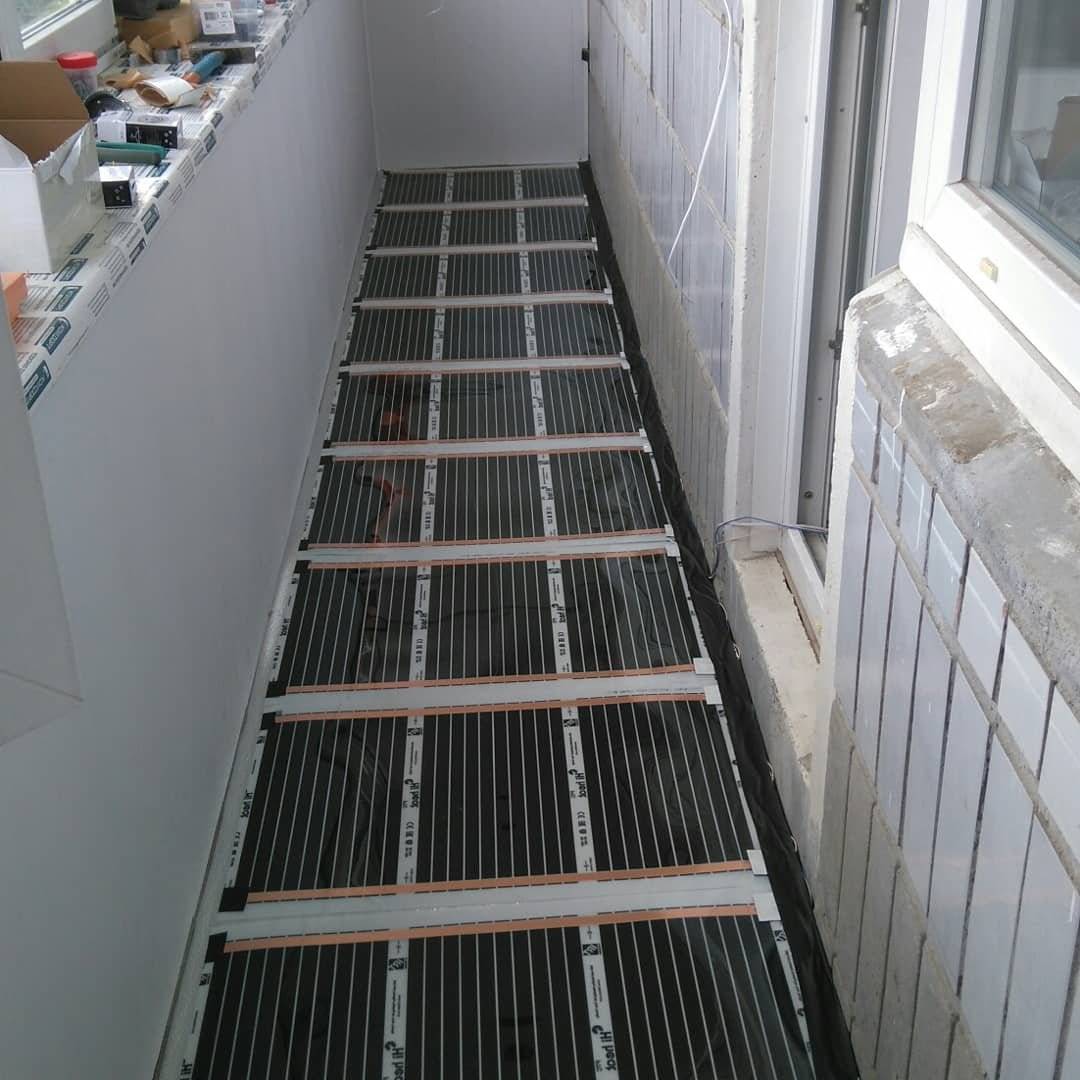

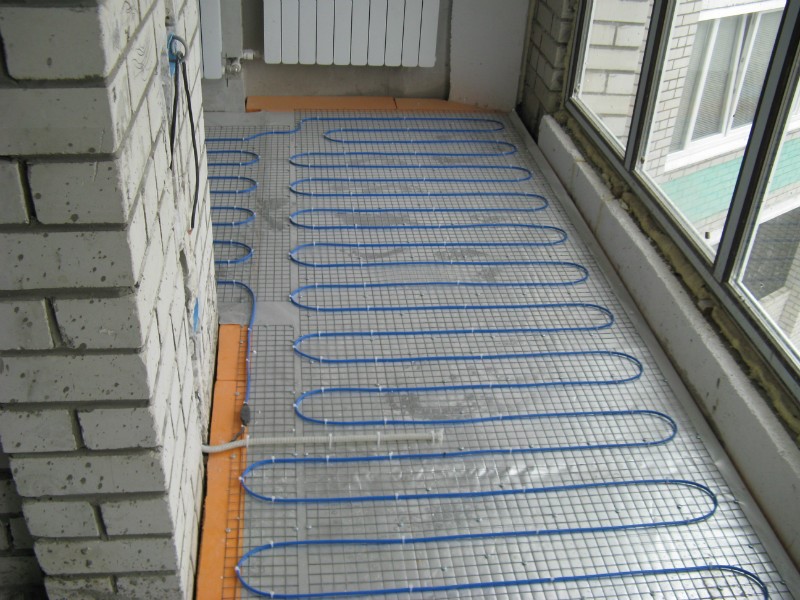


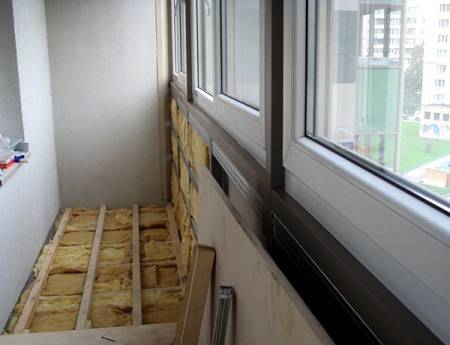
Before installing a warm floor, you need to insulate the walls and the concrete base
And now in more detail about the features of the installation of different types of electric underfloor heating (this is what you need to use for insulation of the balcony).
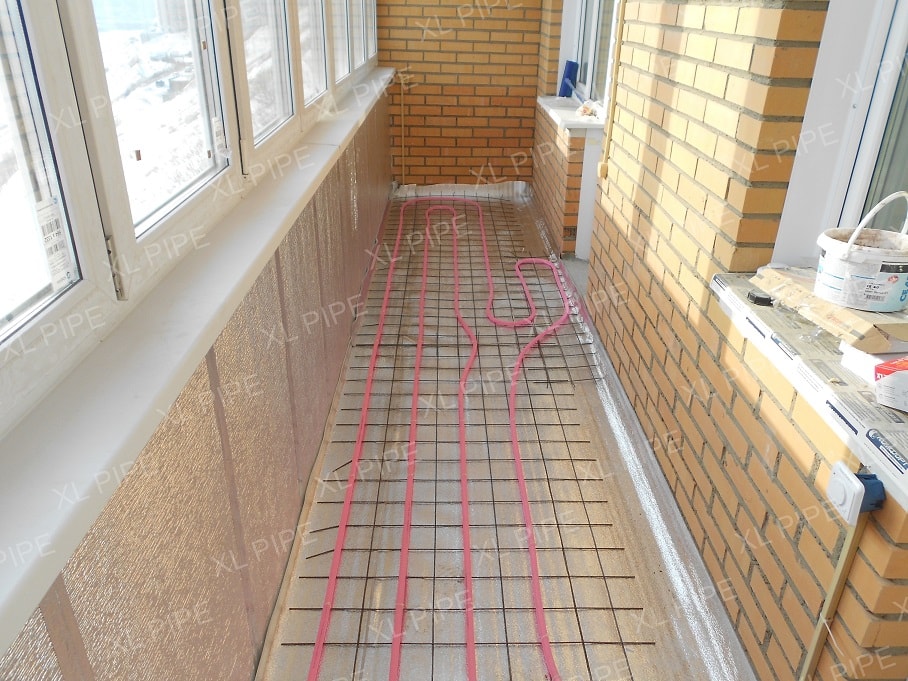
Cable heating sections are used in the presence of a screed with a mandatory layer of insulation and waterproofing, otherwise the bulk of the heat generated by the underfloor heating system will go down and actively heat the ceiling of your neighbor.
The cement-sand screed must have a thickness of at least 45 mm, and the heating cable in it must be located at a depth of about 30-35 mm from the top edge. It is best to complete the work with tiles - it has a high thermal conductivity, which means it will instantly heat up, giving off its heat to your legs. True, you will be able to take advantage of all the possibilities and delights of the cable floor heating system only after three to four weeks - that is how much time the screed will take to dry completely.
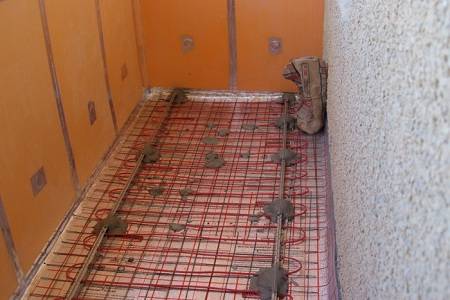
Cable underfloor heating - long and expensive
This system is advisable to use if the use of a cement-sand screed is not possible.
You can place heating mats directly on the adhesive composition intended for laying tiles. The substrate here will be a leveling layer, old ceramic coating, concrete, etc. After laying the last tile, the floor is ready for use - you do not have to wait a day, but you can immediately enjoy the warmth and comfort.
True, the system has a couple of drawbacks - it cannot accumulate heat, which means it can only be used as an additional source of heating and has a rather high price when compared with the cost of a cable floor heating system.
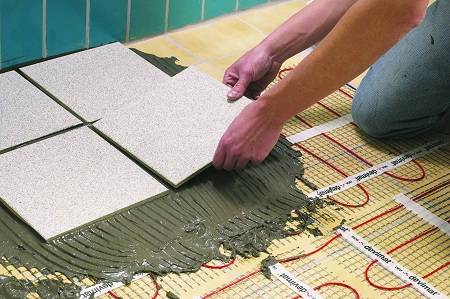
Tiles can be laid directly on heating mats
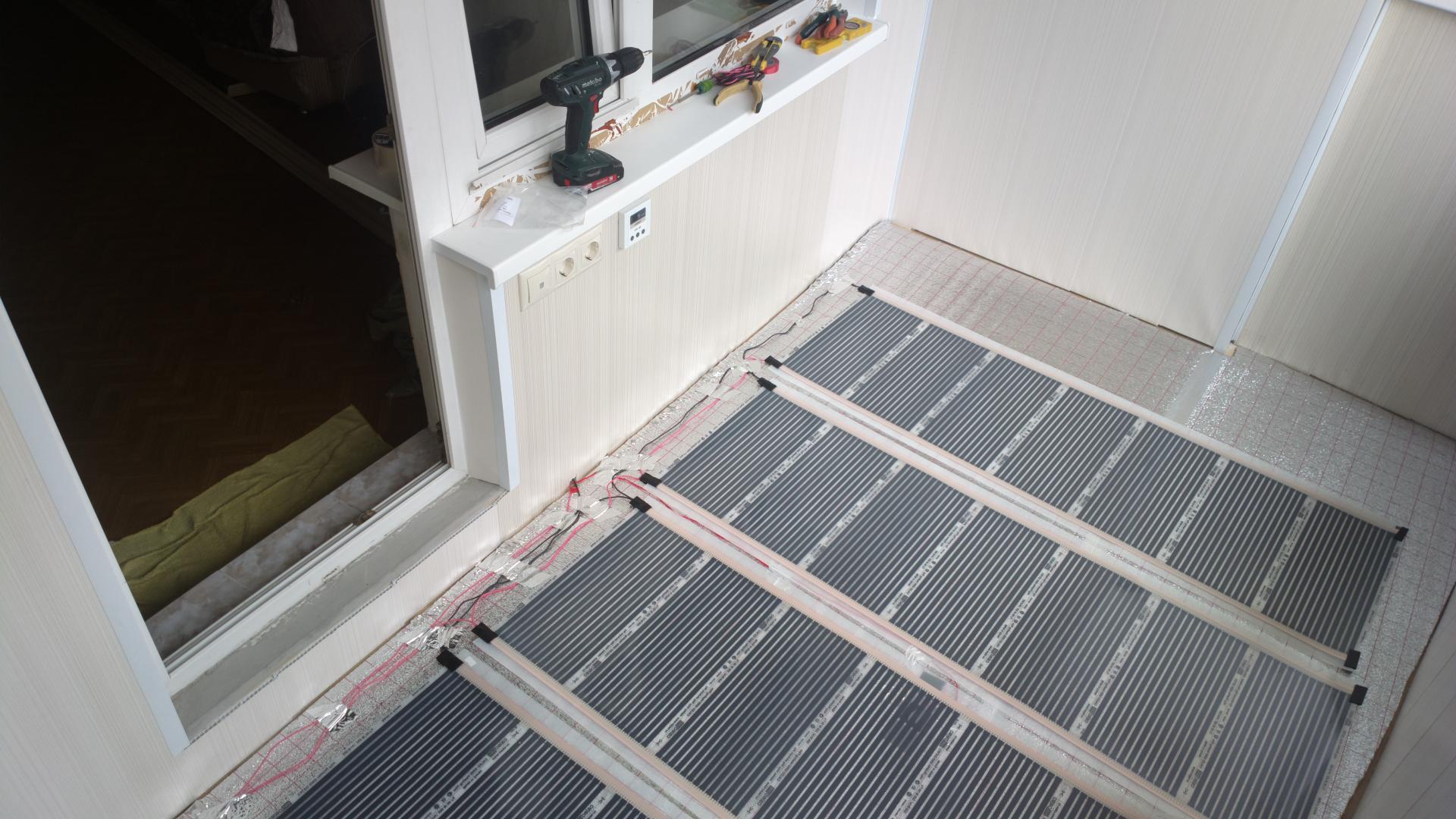
Film underfloor heating is the easiest to install. Put the sheets, secured them with tape and you're done.The basis of such a system are heating elements that emit heat rays. They are able to heat the floor, walls and objects, and those, in turn, give off heat to the environment without heating the air. Thus, indoors not only a comfortable temperature is created for a person to stay in it, but also ideal conditions in terms of air purity and its humidity.
Infrared floors are compatible with all types of floor coverings: laminate, tile, parquet, linoleum and even carpet.
Underfloor heating film - the perfect way to "warm" the balcony
With the underfloor heating system, you can realize your ideas: turn an old balcony littered with rubbish into a gym or a cinema, a game room or an office, a greenhouse or a bar. Whatever the ideas and dreams, the main thing is that they come true.
Balcony upgrade 80 lvl: underfloor heating on the balcony
To feel comfortable in this room, you need to take care of a few things: install soundproof and airtight windows, and think about how to heat the new interior of the house in winter or cold season. Do you need a warm floor on the loggia or balcony, or you can do and without it? We will answer this way: the warm floor on the heated balcony remains one of the best ways to insulate balcony.
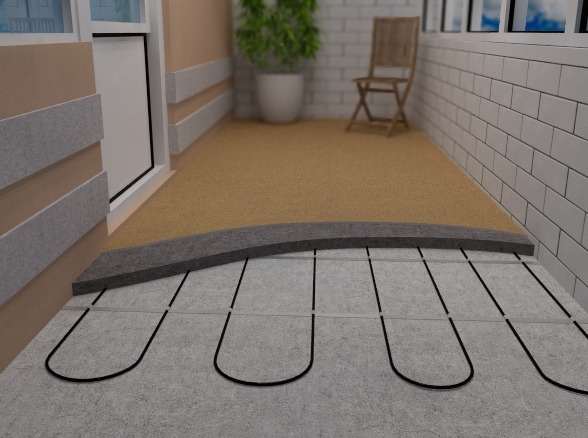
Sectional view of underfloor heating on a loggia
There are several ways to make a warm balcony. Usually one of three options is used, but which one is better is up to the consumer to decide:
- Water heating;
- Electric heated floor;
- Infrared floor heating.
Wood
The most popular species are oak, larch, teak, birch. They are the most resistant to moisture. After mounting, the boards must be impregnated with stain or paint with varnish.





Pros:
- Does not create a large load on the base plate.
- Looks great and creates a cozy atmosphere.
- Relatively easy to install.
Minuses:
- Will last less than concrete or tile.
- The paint needs to be renewed periodically.
There is also decking. Other names - terrace board, garden parquet. Decking is made from solid wood or wood-polymer composites (WPC). It is easy to lay it, it does not rot, does not dry out, it tolerates temperature extremes and mechanical stress well.
First, a waterproofing film or penofol is laid on the base. On it - logs with insulation and another layer of waterproofing. Then they make boards and paint them.
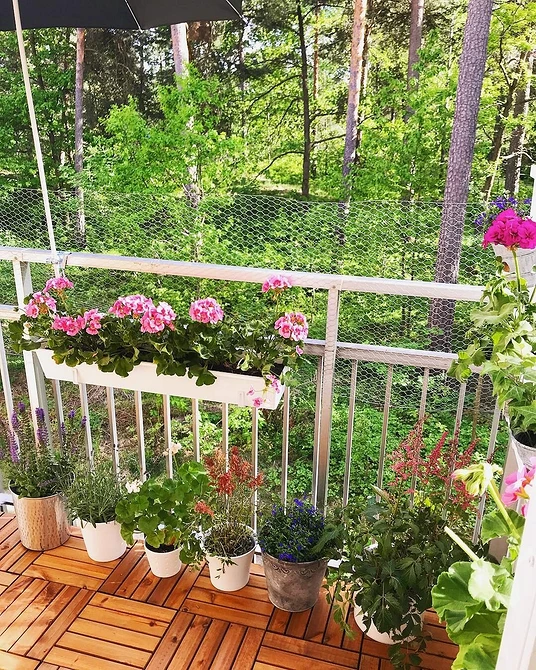
Instagram @natalia_home
Instagram @realclimat
Ceiling insulation
If you plan to insulate the balcony with your own hands, then it is best to start from the ceiling and move further from top to bottom. Of course, if the ceiling of your loggia is the floor of your neighbors, then the process of protecting the room from frost and wind is much simpler. However, if the roof is independent, then a little effort should be made to insulate it.
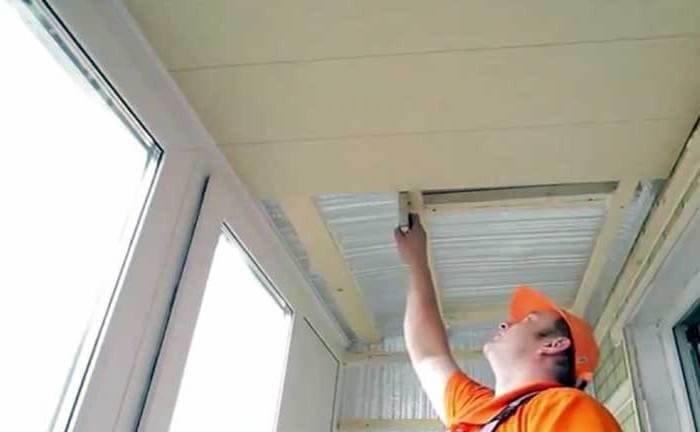
For the best protection of the balcony from cold and wind, we recommend that you perform work in the following sequence:
- Spraying or special film for sound insulation.
- Balcony ceiling waterproofing. In this case, the most popular materials are PVC or polyester.
- The special membrane protecting from wind.It freely passes the steam that is released from the insulation, but it helps to completely isolate the ceiling from the wind and drops that can enter the room with it.
- Anti-condensation material that protects the insulation from the formation of water droplets.
- Frame (metal or wood of your choice). The crate is an optional element. Insulation can be installed using special glue. The main thing is to make sure that the mixture does not contain toluene. For greater reliability, when fixing the sheets, use dowels.
- Insulation for the ceiling of the balcony. We recommend that you use polystyrene foam, polystyrene foam or mineral wool. They provide good protection from the cold and are easy to install, which is especially important when insulating the balcony ceiling.
- Vapor barrier for insulation. It does not allow water vapor to pass inside, due to which the thermal insulation properties of the material are significantly increased.
First option: KNOW HOW from DEVI
This is the "Devicell Dry" system - it allows you to install the heating cable in a dry way under a specialized laminated parquet board. This system has huge advantages, namely:
- you can start using a warm floor immediately after installation, and not wait a whole month, as in the variant with a screed;
- the load on the ceiling (floor) of the loggia is lightened by 2-3 times (depending on the floor area covered on the loggia);
- installation is carried out within one working day;
- installation can be carried out at any negative ambient temperature, which cannot be allowed in the version with a screed.
Balcony / loggia insulation scheme
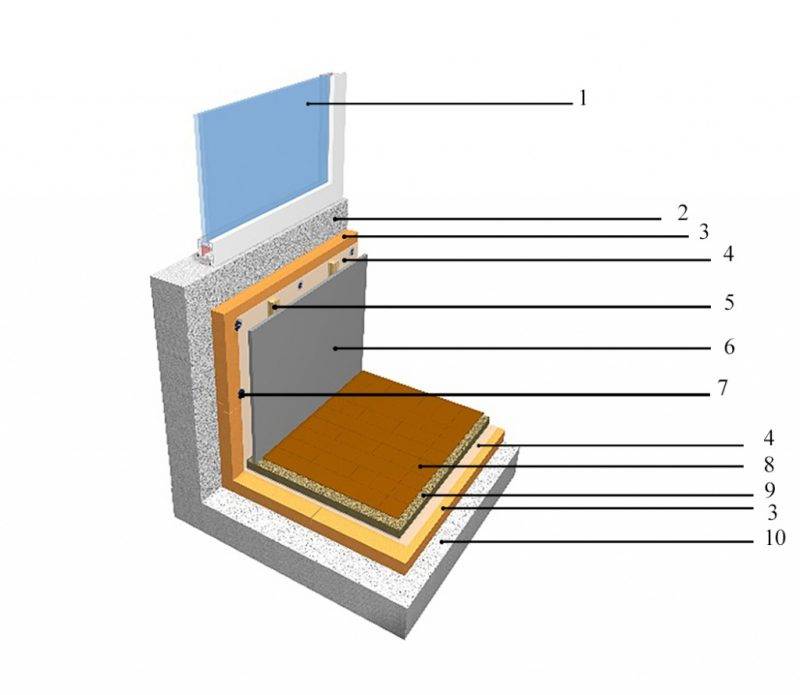
- Balcony/loggia glazing
- Balcony / loggia wall
- Thermal insulation PENOPLEX COMFORT
- vapor barrier
- crate
- Wall finishing (plastic panels or moisture-resistant drywall)
- Fastener
- Screed for floor finishing
- Floor finishing
- Balcony/loggia floor.
Loggia insulation sequence using PENOPLEX COMFORT
- Window blocks are installed. The PENOPLEXFASTFIX polyurethane foam will be the optimal means of sealing the joints.
- PENOPLEXFASTFIX boards are fastened with PENOPLEXFASTFIX polyurethane adhesive, which is also used to process joints between structures.
- The vapor barrier is attached - foil polyethylene film - using double-sided tape. The vapor barrier is placed end-to-end, while the joint between the canvases and structures is glued with metal tape.
- We mount the floor of the balcony.
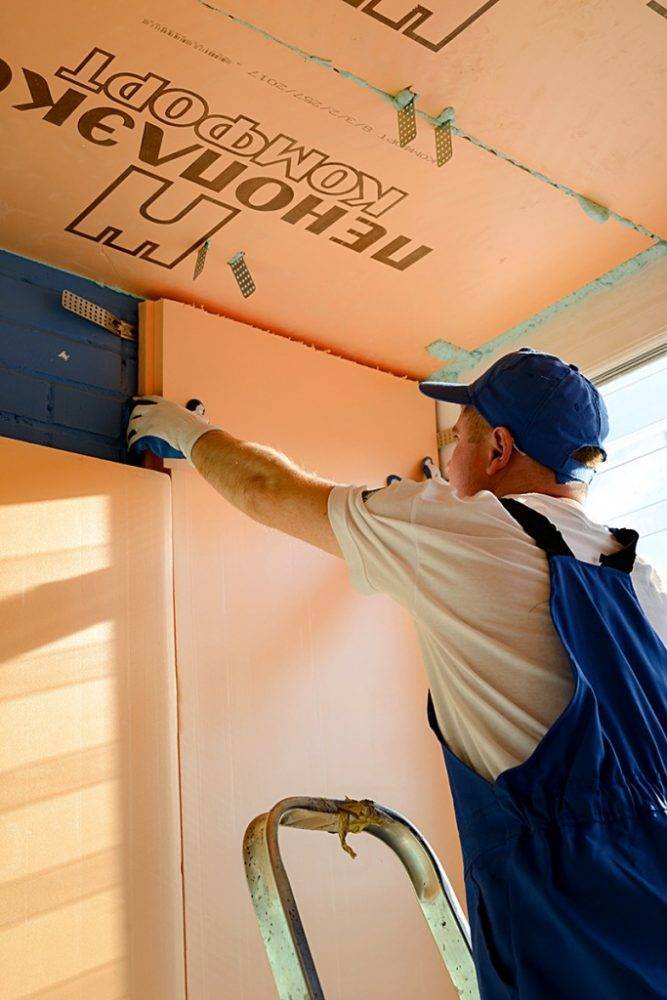
In the photo - insulation of the loggia with PENOPLEX plates in the apartment of actress Marina Dyuzheva
The following bases can be laid on PENOPLEX thermal insulation:
- Cement-sand screed (thickness 4 cm). Between the vertical wall and the screed, it is necessary to leave a temperature gap of 1 cm. To do this, it is enough to install a strip of foamed PE 1 cm thick around the perimeter before pouring the screed. After the screed has hardened, the finishing layer is laid.
- DSP screed with electric heating - according to the technology of the device of the underfloor heating system.
- Solid flooring from GVL (gypsum fiber sheets) - is arranged in two layers with a mandatory overlap of joints.
- The lathing on the walls, ceiling and parapet is made of dry wooden (treated with an antiseptic) slats and is exposed to vertical and horizontal levels. Attaches directly to concrete with dowels and self-tapping screws. Reiki can be 40x20 mm in size.
- Finishing trim is attached to the crate.Usually these are plastic panels 25 cm wide or moisture-resistant drywall. In the case of using drywall, additional finishing work is required, namely: priming, puttying, corner processing, leveling, wallpapering or painting.
- Electric heaters, lighting, etc. can be installed on the loggia. Electrical wiring is mounted to the interior in non-combustible boxes.
Linoleum
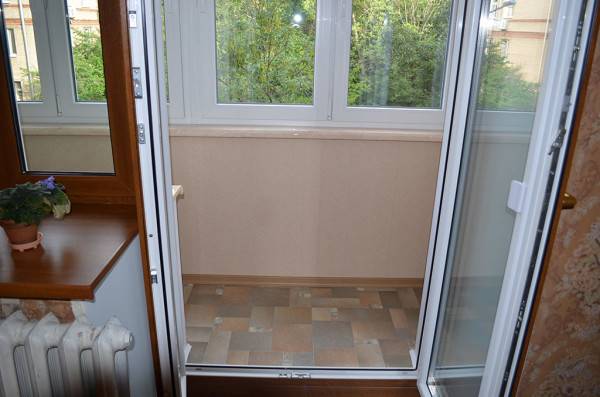
Linoleum
The advantages of linoleum:
- great variety and decorativeness;
- ease of installation;
- ease of care;
- relatively low price;
- water resistance.
Modern types of linoleum are distinguished by increased abrasion resistance, less fading in the sun, and more resistant to aggressive substances.
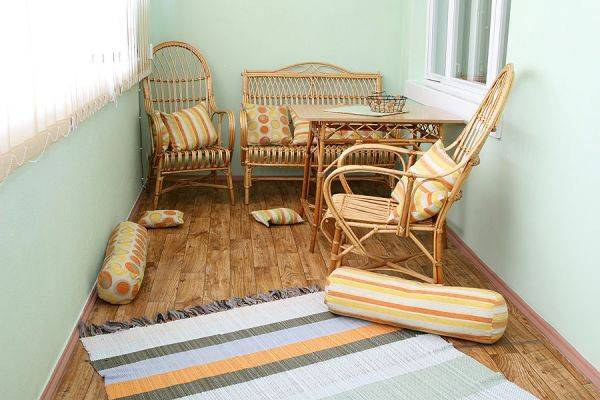
Linoleum - an inexpensive and practical coating
Flaws:
- short service life;
- some species emit harmful fumes;
- when the temperature drops, linoleum loses its flexibility and can break;
- deformed under mechanical stress.
Some types of linoleum can even be laid on open balconies
Traditional types of linoleum are not intended for laying in unheated rooms, especially on open balconies. But thanks to the development of technology, frost-resistant linoleum appeared, as well as coatings with an anti-slip surface. Add to this the aesthetic appeal of the material - and you will get an excellent covering for the balcony, regardless of its type and the presence of heating. Of course, the cost of such linoleum is higher than usual, but not much. Linoleum can be baseless, as well as jute and foam-based.




| Basis of linoleum | Description |
|---|---|
| baseless linoleum | This material is distinguished by the uniformity of the structure throughout the entire thickness of the layer.This means that during prolonged use, the coating will not burn out, and the pattern will not be erased. Some models have a rough surface, so the risk of slipping is minimal. The thickness of such linoleum is 3 mm, and you need to lay it on a carefully prepared even base. |
| Foam based | This type of linoleum is considered the most durable and easy to use. Due to its resistance to moisture, it can be used in absolutely any room. On a closed insulated balcony, such a coating will freely serve up to 10 years with appropriate care. |
| Jute based | The thick jute base perfectly retains heat, so this linoleum is quite suitable for a glazed balcony. You can lay it directly on the screed, self-leveling floor, as well as raised floors from chipboard or plywood. On open balconies, this type of coating cannot be used. |
Features of laying underfloor heating on the loggia and balcony
Having decided in favor of underfloor heating, it is necessary to choose the appropriate variety. Modern systems, known as "warm floor" are divided into three types:
-
Water.
-
Electrical.
-
infrared.
When choosing a floor, the features and complexity of the installation, the conditions of the balcony room, installation costs, and economic feasibility during operation are evaluated. All types of warm bases have common characteristics. Each of them requires a heat-insulating layer, high-quality screed and decorative flooring on the loggia.

Installation of water floors
The contour of a water-heated floor is a coil from a tube in which hot water or antifreeze circulates.The system is connected to centralized heating or to a heating boiler. In the latter case, an expansion tank and an automated distribution unit are required.
Water heated floor is characterized by high heat transfer. However, it is not suitable for installation on balconies in high-rise apartment buildings, as they are prohibited from connecting to the general heating system due to possible emergencies. In general, installation of warm pipes with water is not recommended on any classic balconies. This type of floor is suitable only for insulated loggias in private houses, the slab of which can withstand the additional weight of the circuit filled with coolant, and connection is possible to an autonomous boiler.

The cost of a water-heated floor on a balcony is one-time - when it is installed. However, installation is classified as complex. Difficulties also arise when adjusting the temperature during operation.
Electric floor installation
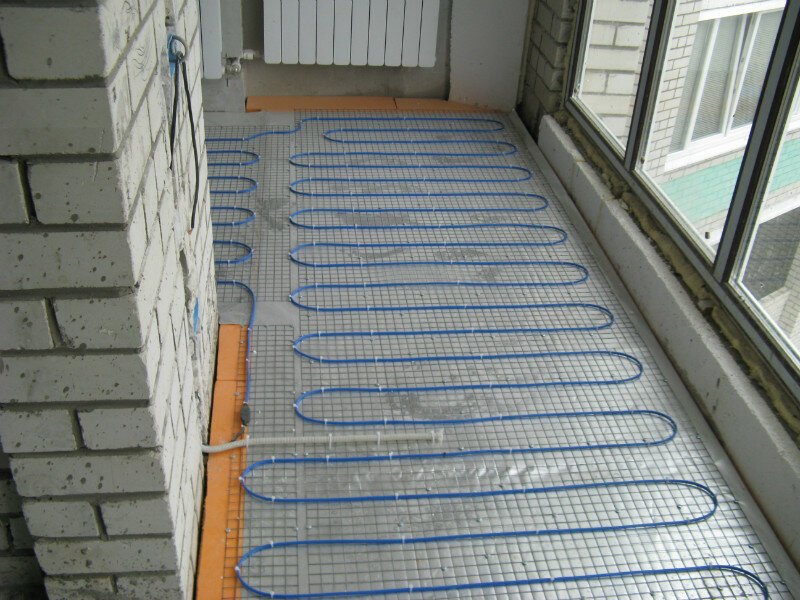
The basis of the electric underfloor heating is a circuit connected to the mains from a cable or special mats. The use of such heating elements for heating a balcony is considered beneficial. It is much more convenient to make a warm floor from cable mats than from a free cable, but they are more expensive.
Air bubbles do not accumulate inside the finished warm structure, so the system's shelf life is quite high. Electric underfloor heating works through a thermostatic sensor that facilitates temperature control. In financial terms, the installation of this type of floor belongs to the budget category. The advantage is also the rapid detection of defects during operation and their elimination.
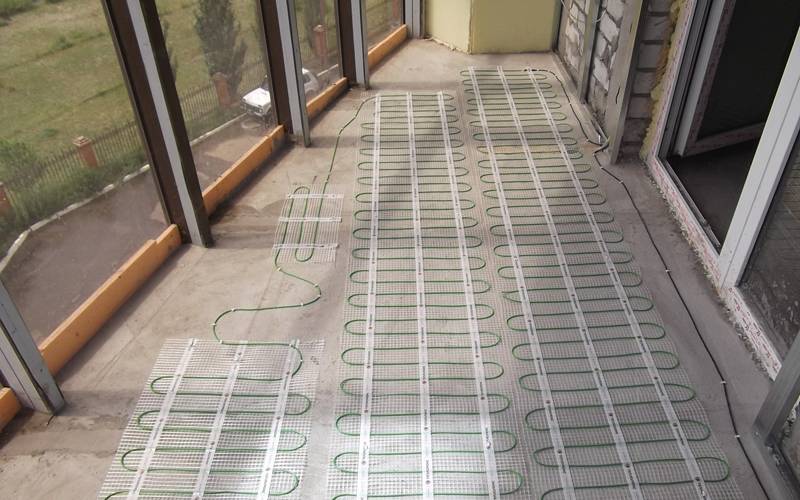
With all the positive aspects, the operation of the electric floor requires the cost of electricity, which means additional cash costs for this resource during the heating season. In addition, the system is a source of electromagnetic radiation. Although this minus matters if the balcony is used as a living space.
Connecting infrared floors
For the device of an infrared warm floor, a thin sheet is used, in the structure of which conductors and strips of graphite are mounted. The material is covered with a polyester film on top. The principle of operation of the element is to generate infrared rays.
The IR film is flexible, so it easily wraps around any bumps and crevices. Ease of installation is due to other advantages of the infrared floor. It does not need a screed and adhesive base. A stapler is enough for fixing. The warm floor in the form of an IR sheet is very easy to dismantle if necessary.

The disadvantage of a warm infrared base is the high price of the material. But given that the balcony area is small, and the heating method is quite effective, IR floor film is in demand. The cost of electricity from which the system operates can also be attributed to disadvantages. But the sums of money are not too great.
Sometimes there are recommendations to do without floor insulation if IR film is used. Since this heater works on the principle of radiating energy upwards. However, if for a number of reasons such floors are disconnected from power, then their surface will become icy. Therefore, ideally, you should not abandon the device of a traditional heat-insulating layer.






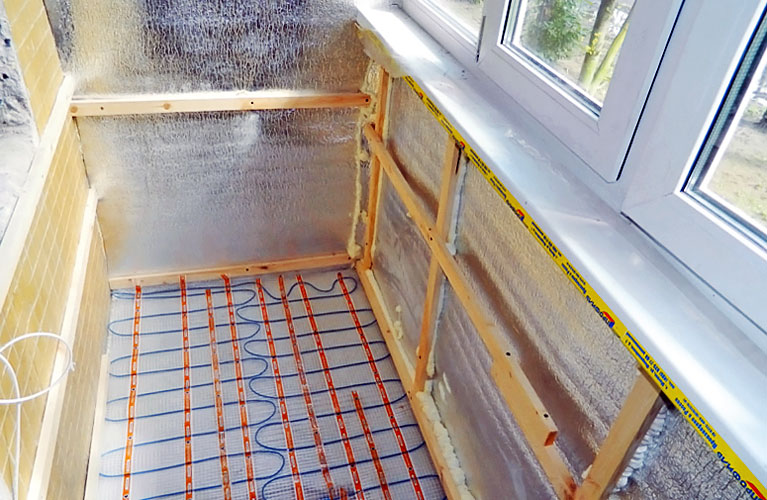
Options for arranging a balcony floor
Initially, you need to determine what design you want to get as a result. She may be:
- Cold. The plate is made out by a floor covering.
- Insulated. A heat insulator is laid between the base and the finishing material.
- Warm. A heating floor system is mounted on the base, a finish is placed on top.
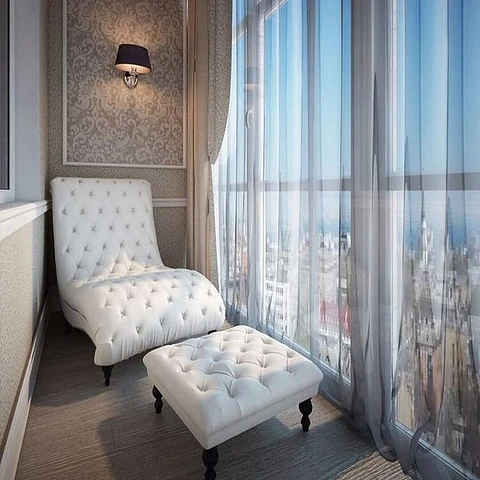 Instagram raheema_ahmedd
All three types, if desired, are quite simply equipped on their own.
It is only important to choose the right system. So, for example, heating loses all meaning if the structure is not glazed
In conditions of high-quality glazing, heating turns the balcony into another living room. You can realize your idea in different ways. Practice shows that such options are most often chosen.
Options for arranging a warm base
- Leveling with a cement screed without or with an insulating layer. In the latter case, expanded polystyrene, mineral wool, expanded clay, etc. are laid as an insulator.
- Leveling the base with a semi-dry screed with or without insulation.
- Installation of wooden logs with or without installation of a heat insulator. Subsequent installation of a rough base made of boards or wood-based panels, laying finishes such as linoleum, laminate, etc.
- Installation of extruded polystyrene foam as a heat insulator without lag. Subsequent laying of OSB as a base for a top coat.
- Arrangement of a concrete screed for laminate, linoleum, tiles.
- Installation of a heating floor of any type: electric or water.
Unsplash
For open spaces, ceramic tiles laid on a screed are suitable. For glazed systems, heating structures, insulated structures on logs or without them are chosen. Floor covering can be anything.



