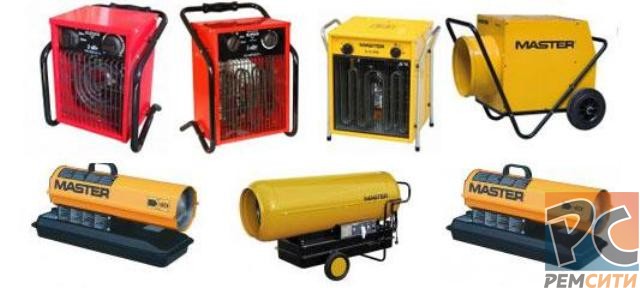
- Additional functions and features of heat guns
- Electric heat guns
- Instrument shape
- Heating element material
- Power
- Other
- The device and types of heat guns
- Types of electric heat guns
- What are electric heaters?
- Which heat gun to choose: rating of the best devices
- The best diesel heat guns
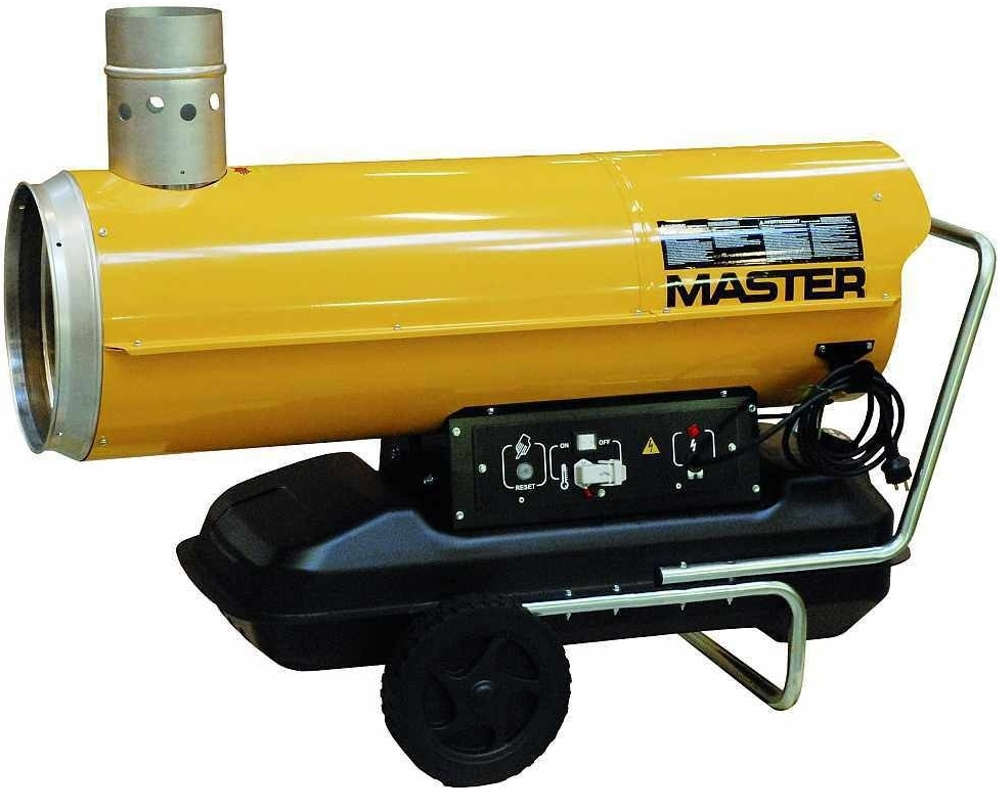
- Master B 100 CED
- RESANTA TDP-30000
- RESANTA TDP-20000
- Description
- Types of heat guns
- Overview of the top heat guns with the best combination of price and quality
- Instrument differences
- The principle of operation of a gas heat gun
- Rating of the best heat guns
- Which heat gun to choose for the garage
- How to calculate the power of a heat gun - formula
- Summing up
Additional functions and features of heat guns
Electric heat guns can be equipped with additional features and capabilities that can significantly affect the choice of a particular model:
- Temperature regulation. This function will allow you to adjust the operation of the device under certain conditions. For example, a stretch ceiling needs a certain temperature and overheating is undesirable.
- Power adjustment. Changing the power affects the blowing force of the fan: the higher the power, the stronger the fan will blow.
- Thermostat.The thermostat maintains the set temperature at the desired level and turns on the device when it drops, and vice versa turns it off when the room has warmed up to the desired temperature. Although the vast majority of heat guns are equipped with a thermostat, there are still models without this design detail.
- Ventilation without heating. This function allows you to start the fan without turning on the heating element. This may be required when the air is warm enough and the room needs to be dried. For example, this is necessary during finishing work, such as plastering.
- Overheat protection. The device will automatically turn off when the critical temperature is reached (each model has its own critical temperature threshold). This is especially useful in cases where it is not possible to control the operation of the unit.
Engine shutdown delay. In models with this function, the heating element is first turned off, and the fan continues to spin for some time. Usually this time is 1 - 2 minutes. During this time, the residual heat is dispersed throughout the room, and the heating element cools down faster. Relatively few models are equipped with this feature. Of the good ones, we want to recommend Ballu BHP-P-5.
Electric heat guns
Since our eyes fell on this particular type of heater, it is worth considering the technical characteristics of the guns in more detail: power, material of the heating element, shape of the device, and so on.
Instrument shape
It would seem, what difference does it make whether the cannon has a cylindrical structure or a rectangular one. But there is a difference. Round types are usually designed to stream to a specific area, while trapezoidal ones evenly distribute air in all directions.Accordingly, if the gun is used to dry surfaces, then the shape of the body should be taken into account in order to achieve a faster effect.
Heating element material
There are 3 types: ceramic, spiral and heating element. The first option is the most expensive among its "colleagues", since it uses ceramic plates, which provide a large heating area and burn oxygen much less.
The spiral is, on the contrary, the cheapest of this list. In terms of heating rate, it is higher, but in terms of the rest of the functionality it is inferior. So, for example, if among the criteria for choosing a gun you have a high degree of fire safety, then it is better to give preference to a ceramic version or a heating element.
The heating element is a tube filled with quartz sand. In fact, this is an improved spiral. But, unlike the progenitor, the heating element lasts much longer and is more fireproof.
Power
This indicator is in the range from 1 kW to 50. The most popular are 2, 3 and 5 kW. As mentioned above, those guns, the power of which exceeds 5000 W, operate on a 380 V network. And in general, we understand how much it costs to use bulky electric guns - very expensive.
Other
This section includes a complete set of goods of individual brands (Resanta, Ballu), the presence of external elements (handle, wheels) and the number of adjusting "twists".
The device and types of heat guns
A floor fan heater (also known as a “heat gun”) is a household or industrial heating device that has a built-in fan in addition to the heating element. The first heats the air inside the case, and the second pushes it into the heated room.
Moreover, the circulation process occurs continuously and at high speed. This is the reason for the high efficiency of heating large areas with this type of thermal equipment. During operation, about 200–300 cubic meters of air mass passes through a fan heater with a power of only 2–3 kW per hour.
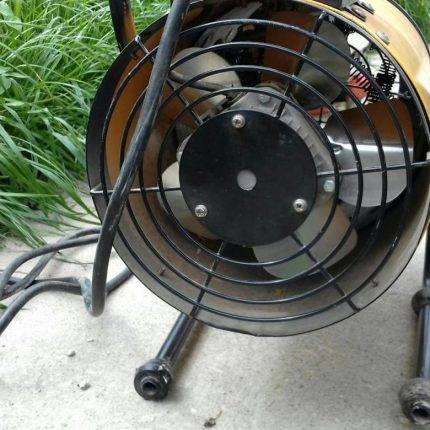 Without a continuously operating fan, a heat gun would be of little use, only thanks to it the heater in question is so efficient and productive
With the help of a thermal electric gun, they heat:
- construction sites;
- garages and workshops;
- premises for agricultural and industrial purposes;
- living rooms;
- greenhouses;
- warehouses.
It is also often used to heat or dry various surfaces: stretch ceilings, plastered walls, etc. The electric fan heater during operation does not emit exhaust gases and toxins. From an environmental point of view, this equipment is completely safe and harmless.
A thermal electric gun should not be confused with its counterparts - a gas gun or a diesel unit. Calling them environmentally friendly is difficult. With heated air, at least carbon dioxide escapes from them, large volumes of which are dangerous to health.
Electric heaters are spared from this, they by definition do not burn anything to produce thermal energy.
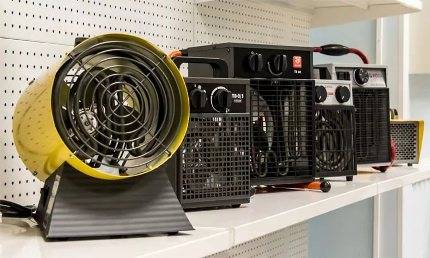
An electric heat gun should not be confused with gas, diesel or infrared - in the first two cases, a different source of energy is used, and in the second, the principle of heat transfer is changed
An infrared heat gun is similar to a fan heater in design and appearance. However, there is no fan as such.The transfer of thermal energy here is not due to forced air exchange, but through infrared radiation.
That is, the heat in this case is transferred directly to the heated surfaces and objects using infrared rays, and not through preheating the air.
Types of electric heat guns

It is no secret that not every type of heating equipment can be used in residential areas. For example, a gas gun, which is capable of capturing a large heating area, is not only undesirable to install in an apartment, but also dangerous. The same applies to diesel options.


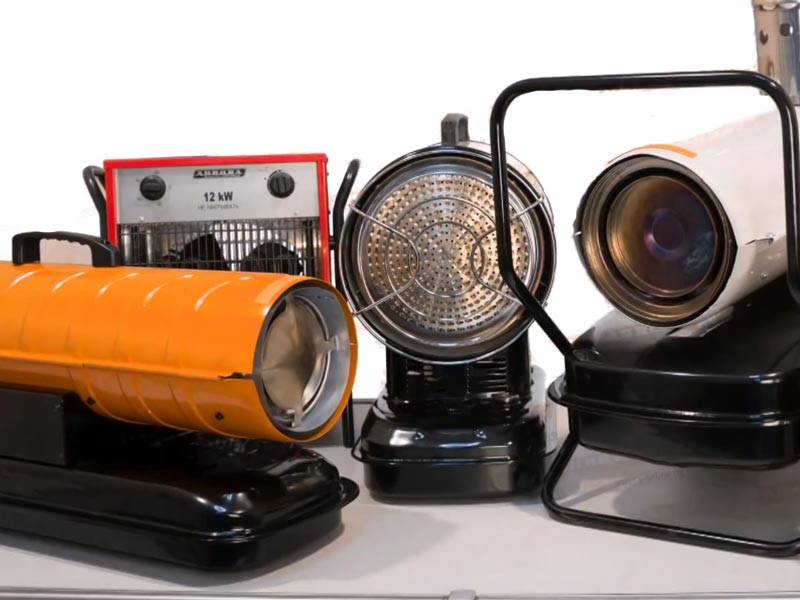
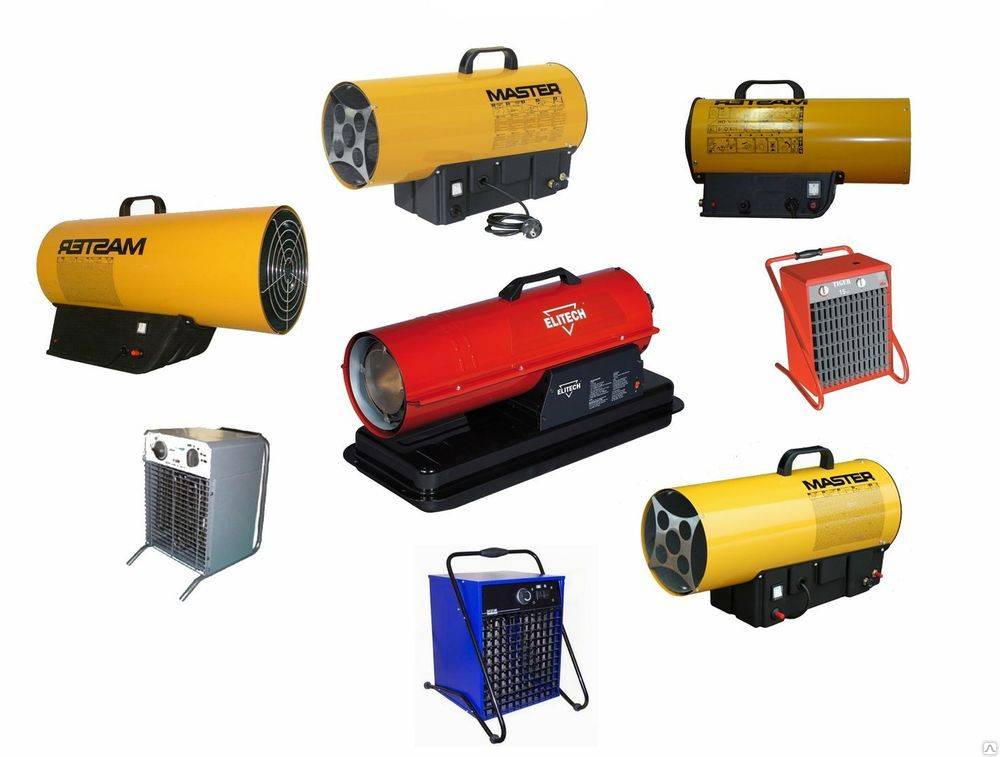


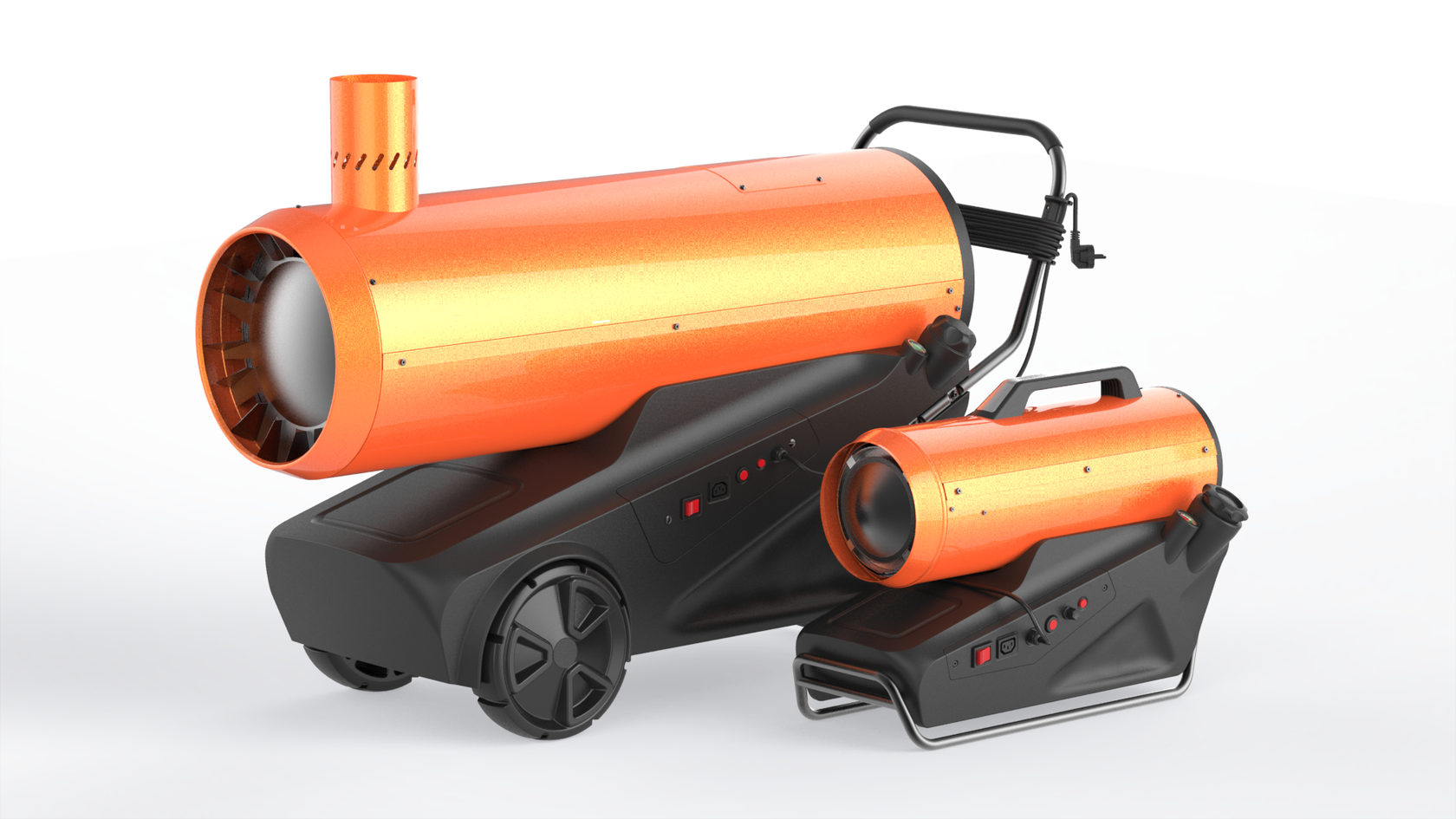
Therefore, the best option would be to give preference to electric.
What are electric heaters?
Heat guns. This subgroup belongs to the most budget options, since it has a very simple principle of operation. At the same time, it quickly heats the air and keeps the heat in the room well. The disadvantages include the fact that the air becomes burnt over time and ventilation is required. The most preferable in residential premises will be the use of low-cost low-power fan heaters.
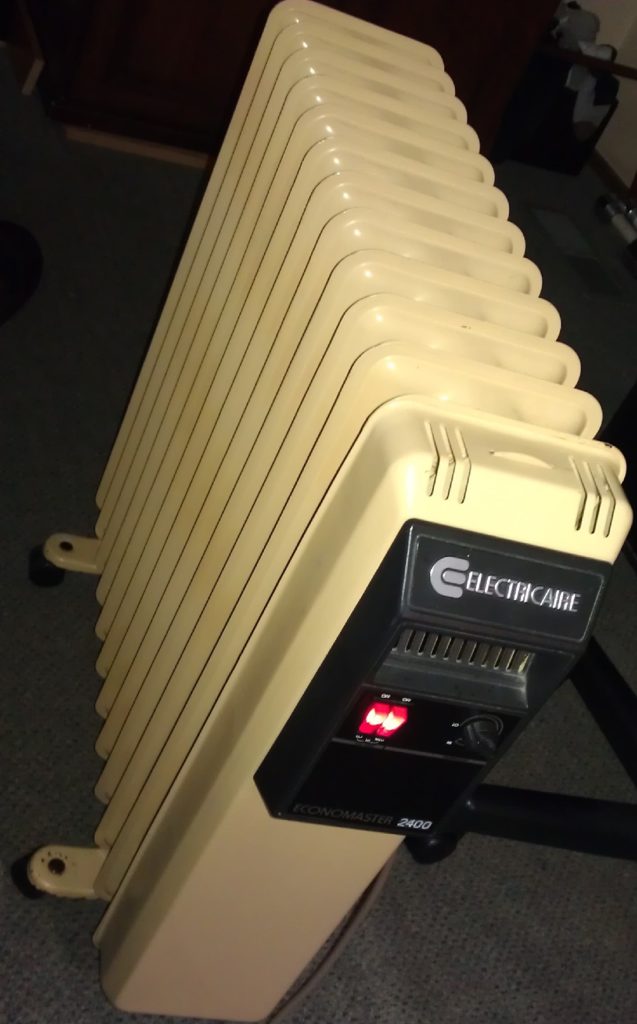
Oil - very similar to conventional batteries. The only difference is that instead of water, oil circulates in them. This version of heaters is especially popular in offices where, due to the large number of people, a sparing mode of influence on the atmosphere of the room is required.

- infrared. This type is often referred to as a "single story". However, it is powered by electricity, which means it belongs to this group. The bottom line is in the IR heating of the hotel elements around them.So you can save heat in a certain area without wasting it on the whole room. Savings are evident. Nevertheless, infrared devices themselves have a fairly high average price, which is why the popularity of models of this type is inferior to its competitors.
- Convectors. According to some ratings, and, according to some buyers, it is convectors that are the most efficient in terms of heating. And this happens due to the natural circulation of air: the cold one enters the lower part of the device, the hot one comes out of the upper one. This is how the natural movement of air occurs, because the cold is always lower than the warm. However, to heat a large room, you will need very high power. In this regard, it would be more expedient to use convectors in small and medium-sized areas.
- Thermal curtains. The latter option is rarely used for the home. However, it certainly deserves attention. A thermal curtain is an excellent assistant in those places where the door is constantly opened / closed or remains open at all. The advantages of curtains are that, thanks to a powerful air flow, they create an air barrier that does not allow cold to enter the room, and heat to leave. Also a big plus is that the thermal curtain can be used in the summer - without heating. In this case, the flow will keep the "products" of the conditioning inside.
In addition to differences in operating principles, heaters are also classified according to the type of fuel, power, shape and material.
Which heat gun to choose: rating of the best devices
When choosing heat guns, you should take into account the experience of buyers. Based on user feedback, you can compile an overview of the most high-quality and efficient heating devices
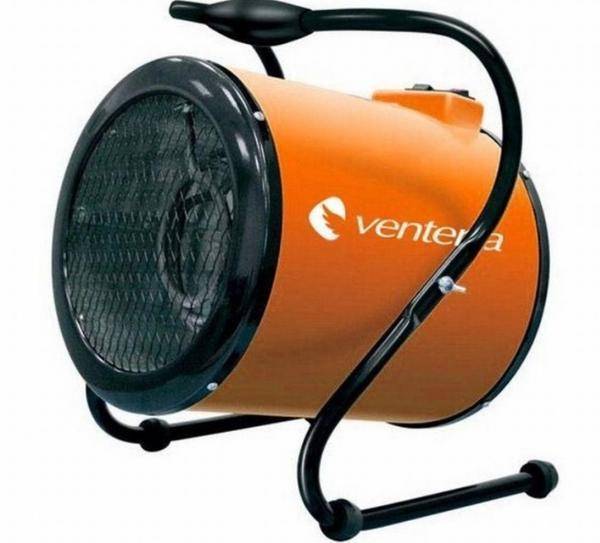
So, they have proven themselves well:
- Electric heater Interskol TPE-3;
- Gas gun BLP 17M from the American company Master;
- Liquid fuel heater BV 77E from Master.
High-quality products are distinguished by models from manufacturers Sial and Kroll. Both companies make mobile heat guns with built-in thermostats, a reliable overheat protection system and a large number of additional options.
The best diesel heat guns
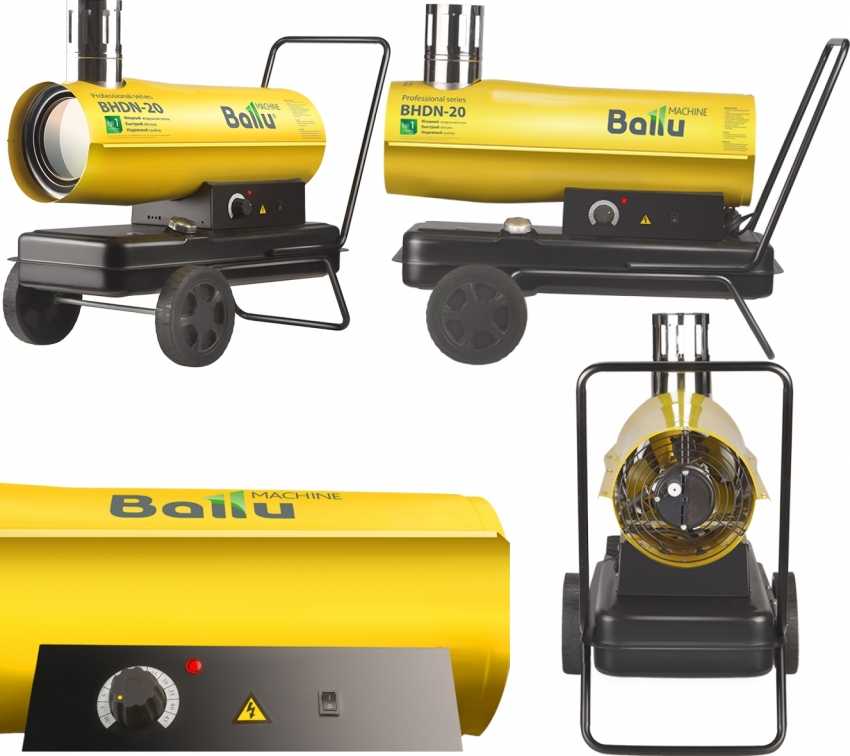
After studying the reviews and opinions of users, in the rating diesel heat guns, we have included the following devices.
Master B 100 CED
Main characteristics:
- Maximum heating power - 29 kW;
- Maximum air exchange - 800 m³ / hour;
- Protective functions - shutdown in case of overheating.
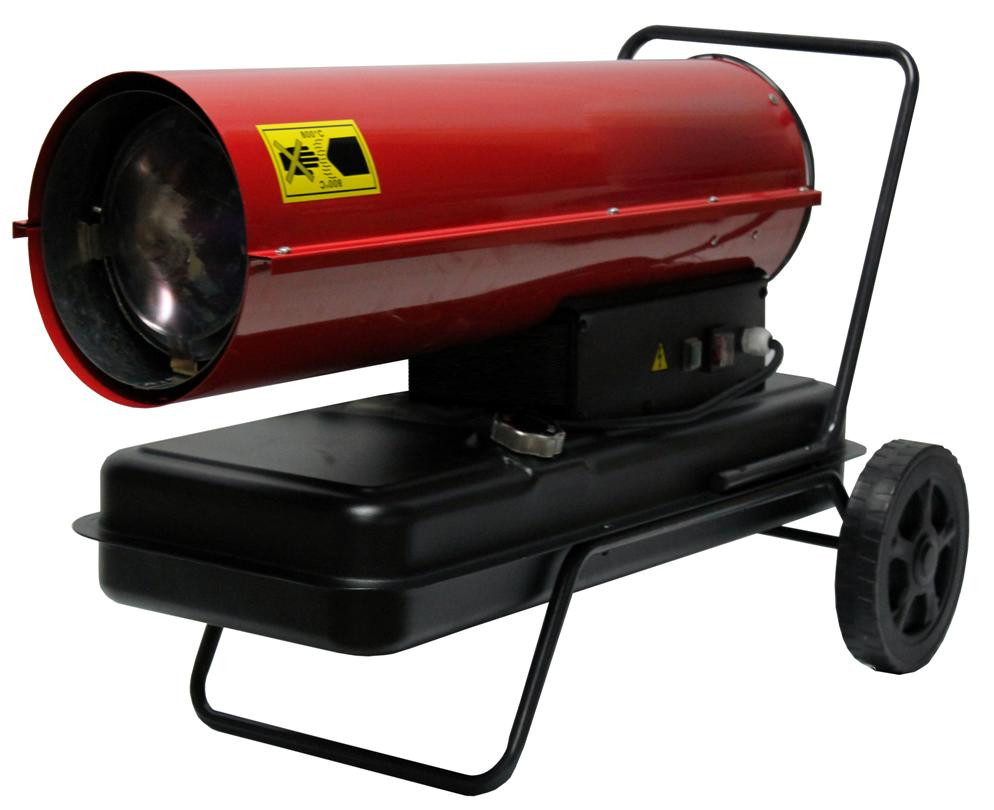
Frame. This heat gun is mounted on a two-wheeled trolley with a pair of handles for ease of movement. A fuel tank with a volume of 43 liters is fixed from below. Own weight of the unit is 25 kg with dimensions of 1020x460x480 mm.
Engine and heating element. The heater uses the energy of combustion of diesel fuel or kerosene. The maximum liquid flow rate is 2.45 kg/h. A full charge is enough for 14-16 hours of intensive work. The thermal power of the gun is 29 kW. It is enough to heat rooms up to 1000 m3 in winter.
For greater reliability, the burner and combustion chamber are made of stainless steel. Air is supplied in the amount of 800 m3/hour. Its outlet temperature can reach 250°C. The fan consumes 230 W of electrical energy.
functionality and management.For ease of operation and user safety, the unit is equipped with an electronic flame adjustment unit with a lock in case of extinction, a fuel level control device, and overheating protection. It is possible to work in automatic mode with adjustment according to the readings of the built-in or remote temperature sensor.
Advantages of Master B 100 CED
- High thermal power.
- Reliability.
- Easy start.
- Stable work.
- Economical fuel consumption.
Cons of Master B 100 CED
- Large dimensions. For transportation in the trunk of a car, you have to disassemble the structure into its component parts.
- High purchase cost.
RESANTA TDP-30000
Main characteristics:
- Maximum heating power - 30 kW;
- Heating area - 300 m²;
- Maximum air exchange - 752 m³ / h;
- Protective functions - shutdown in case of overheating.
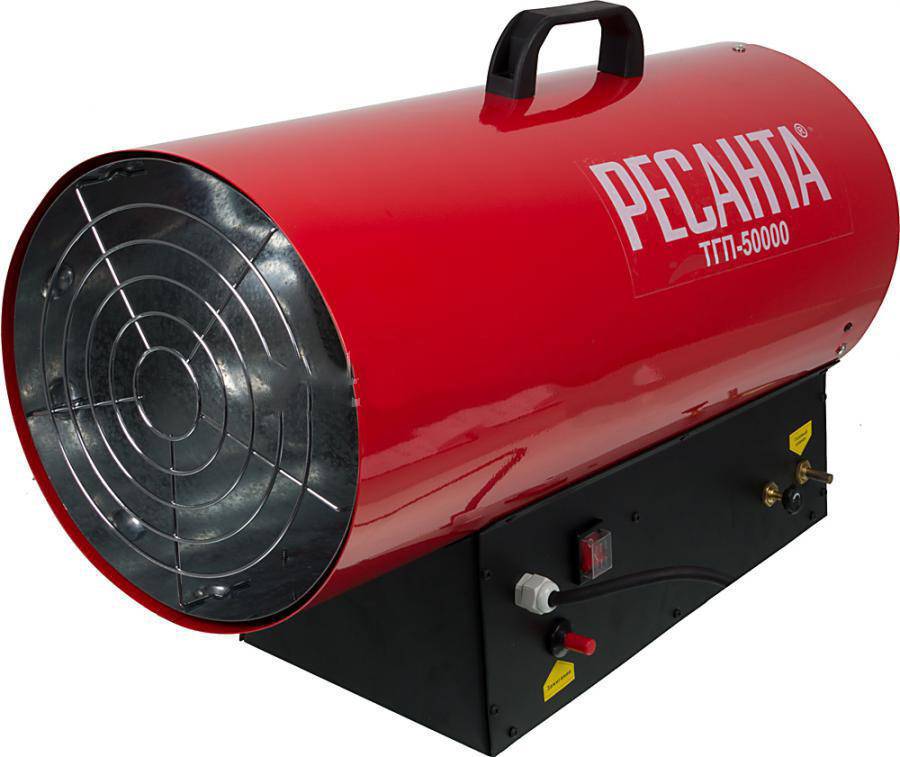
Frame. This model of the well-known Latvian brand consists of a 24-liter fuel tank and a cylindrical nozzle placed above it. All main elements are made of steel with coloring with heat-resistant compositions. The device weighs a little more than 25 kg, occupying a space of 870x470x520 mm.

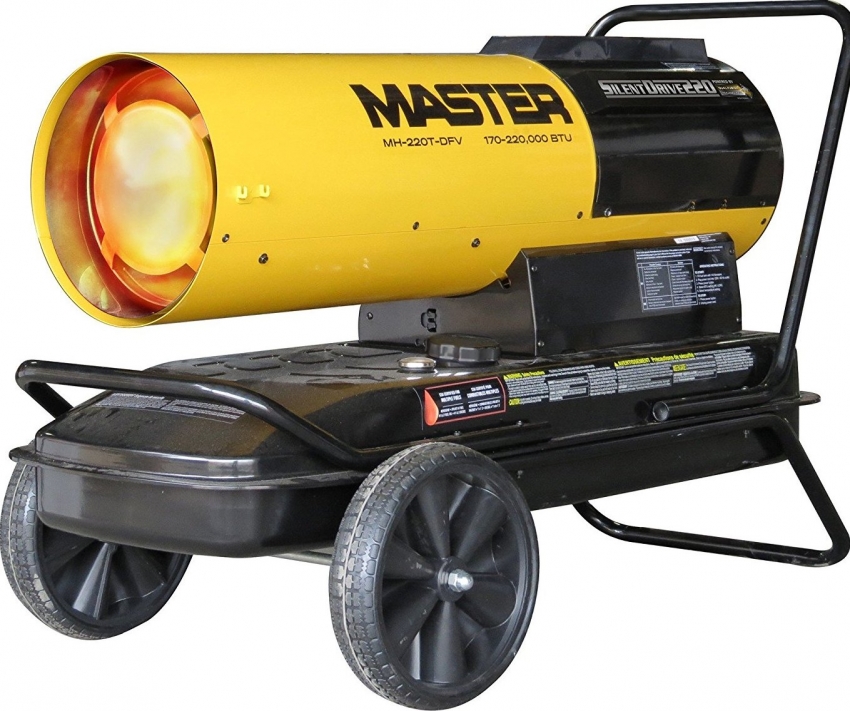


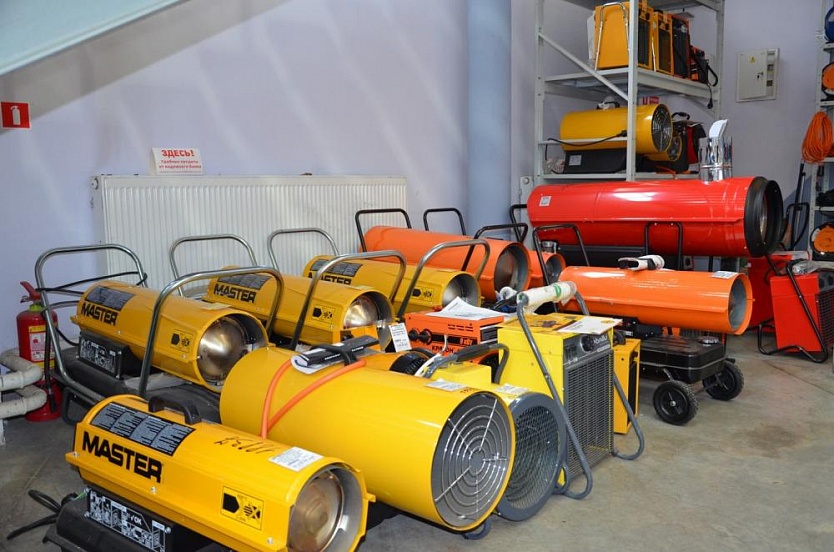

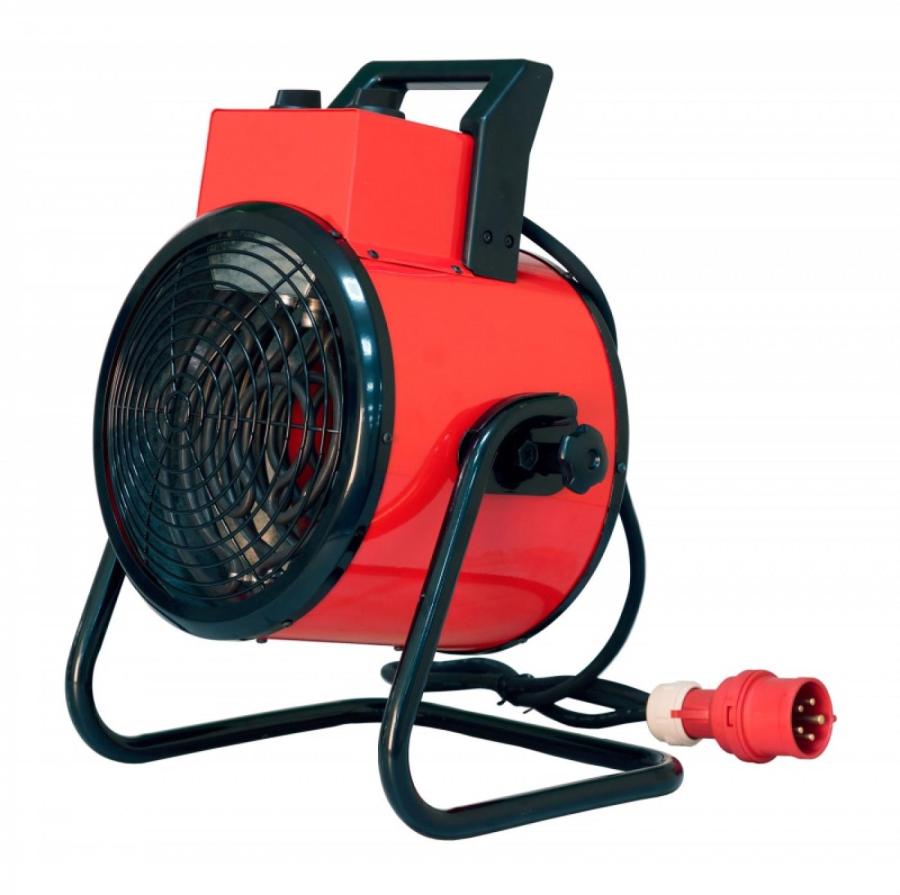
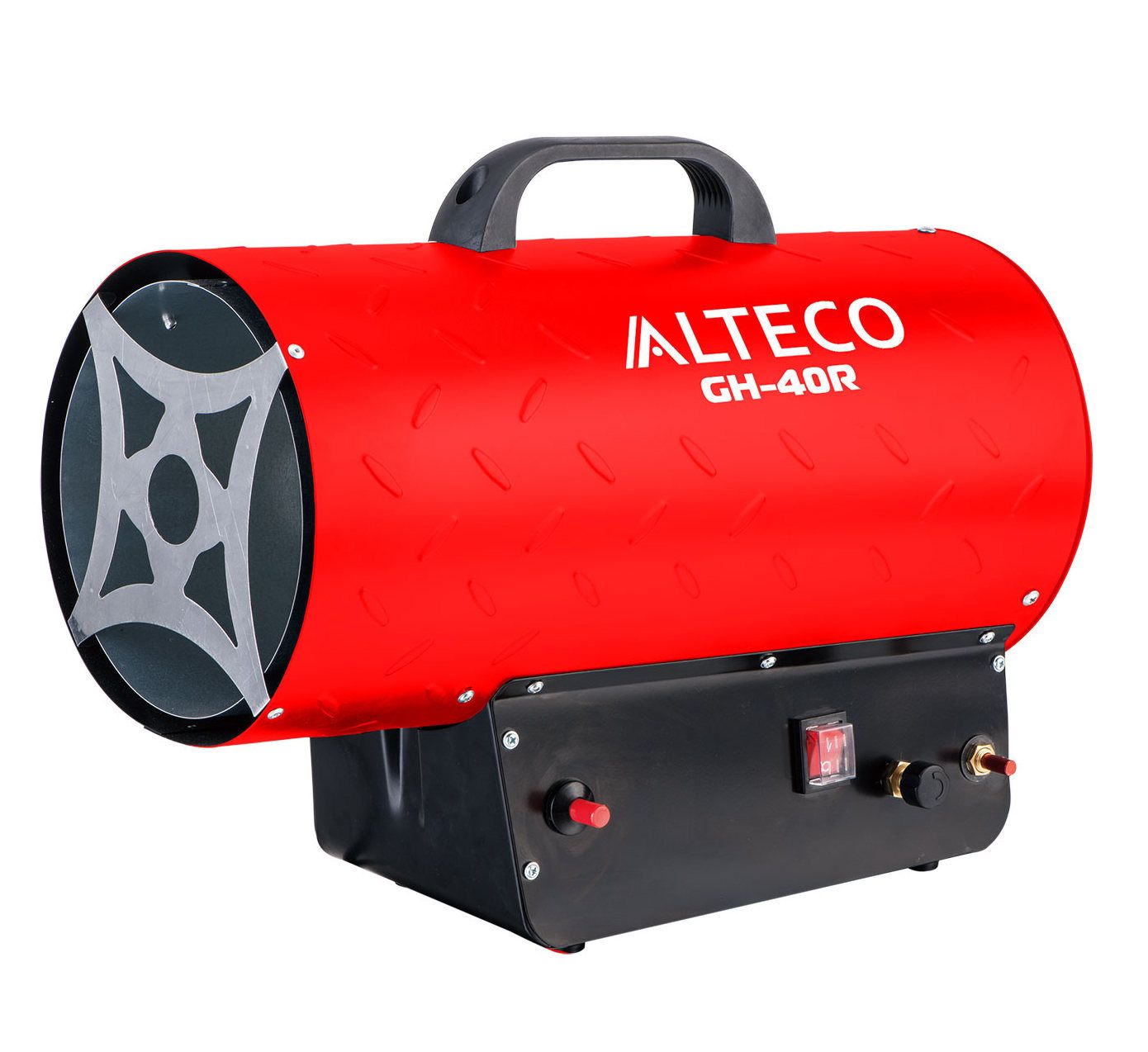

Engine and heating element. The heat gun runs on kerosene or diesel fuel. Their maximum consumption reaches 2.2 l / h, while the thermal power is 30 kW. The battery life is 10-12 hours, which is more than enough to heat a large room during a work shift. To improve air exchange, a built-in fan with a capacity of 752 m3 / h is used with an electricity consumption of only 300 watts.
functionality and management. The heater control panel consists of a start switch and a mechanical power regulator.The protection system includes a flameout lockout and an emergency shutdown in case of ignition.
Advantages of RESANT TDP-30000
- Robust design with the ability to disassemble and assemble.
- Simple control.
- Economical fuel consumption.
- High power with not the largest dimensions.
- Acceptable price.
Cons of RESANT TDP-30000
- There are defective products.
- No transport wheels.
RESANTA TDP-20000
Main characteristics:
- Maximum heating power - 20 kW;
- Heating area - 200 m²;
- Maximum air exchange - 621 m³ / h;
- Protective functions - shutdown in case of overheating.
Frame. Another model from the same manufacturer is a set of a fuel tank with a capacity of 24 liters, with a power unit with a thermal power of 20,000 W, mounted on a fixed support with a handle. It weighs just over 22 kg and has dimensions of 900x470x540 mm. All steel parts are painted. To avoid burns in case of accidental contact, a small gap is made between the nozzle and the outer wall.
Engine and heating element. The liquid nozzle is designed for a maximum kerosene or diesel fuel output of 1.95 l/h. For proper combustion, it needs an excess of air, which is supplied from a built-in fan with a maximum flow rate of 621 m3 / h.
functionality and management. The device is controlled by a start key and a power regulator. For safe operation, the manufacturer has provided a lock in case of emergency ignition or accidental extinction of the nozzle flame.
Advantages of RESANT TDP-20000
- Quality materials.
- Good build.
- Safety.
- Good power.
- Convenient management.
- Affordable price.
Cons of RESANT TDP-20000
- There is a marriage.
- No transport wheels.
Description
Thermal gas guns are a kind of heater, only of a large size. They are used for residential and industrial premises. The device is indispensable in those houses where heating has not yet been done. You can successfully use it in the country. This is precisely the versatility that has made thermal gas guns extremely popular on the market for modern heating appliances.
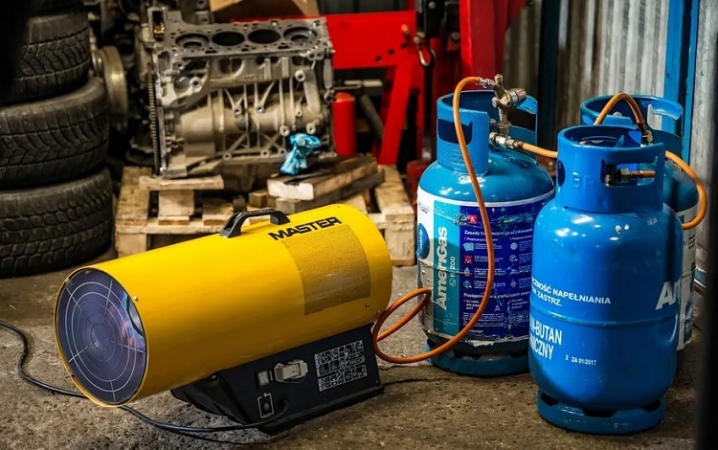
If we talk about the principle of operation of the equipment in question, then it is simple and understandable. The built-in fan has a lot of power, it supplies air through the air gun, driving it through the built-in element, which directly heats up. Heat quickly spreads inside the room. The undoubted advantage of a heat gun is its high performance, thanks to which it is possible to evenly heat a large living room.
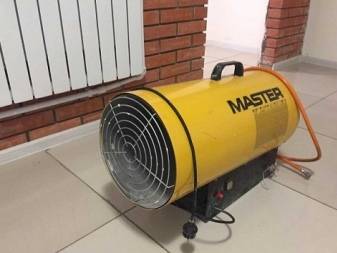
The gun, whose operation is carried out by supplying main gas, can be used in rooms for any purpose where there is no usual heating, since its fuel consumption is small, and the heat output is quite large. The device, in the design of which there is an additional thermostat, will allow you to adjust the operating time. Thus, the activation of the unit will occur when the air temperature inside the room drops below the permissible level.
It is important to say that there is practically no smell from the gun when using it, and no soot is formed.
Experts do not forget to repeat that in areas where there is no ventilation, it is not worth installing such equipment. Thermal equipment of this type can be used not only as traditional heating in a house that is ready for operation, but also at the time of its construction. Manufacturers have tried to offer the user a wide range of units with different technical characteristics. Among it, any user will be able to choose a unit for their own needs.
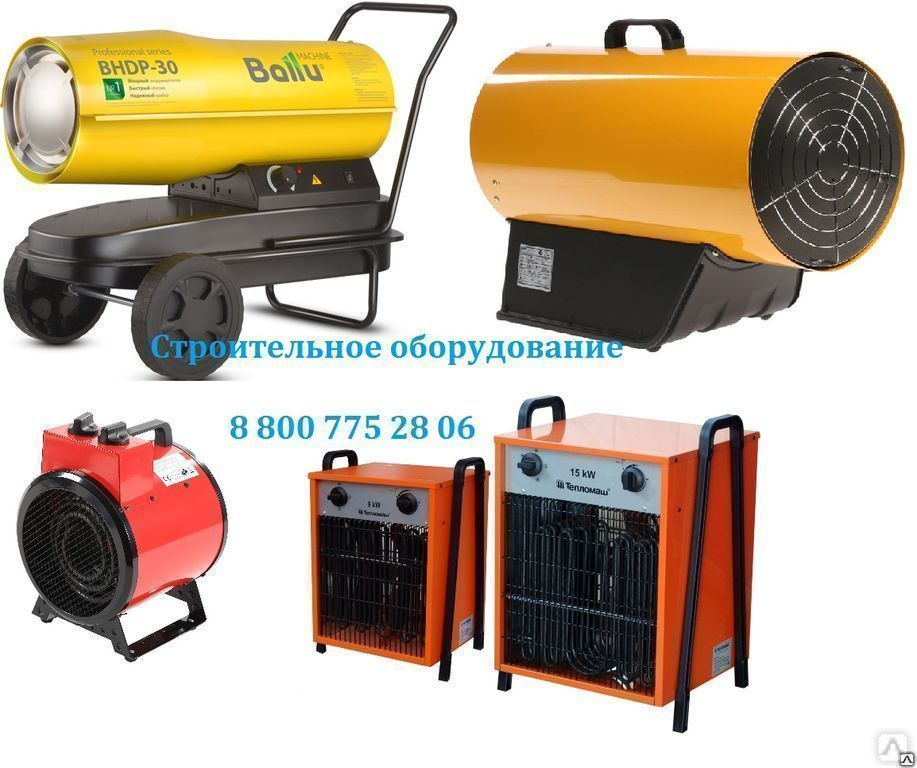


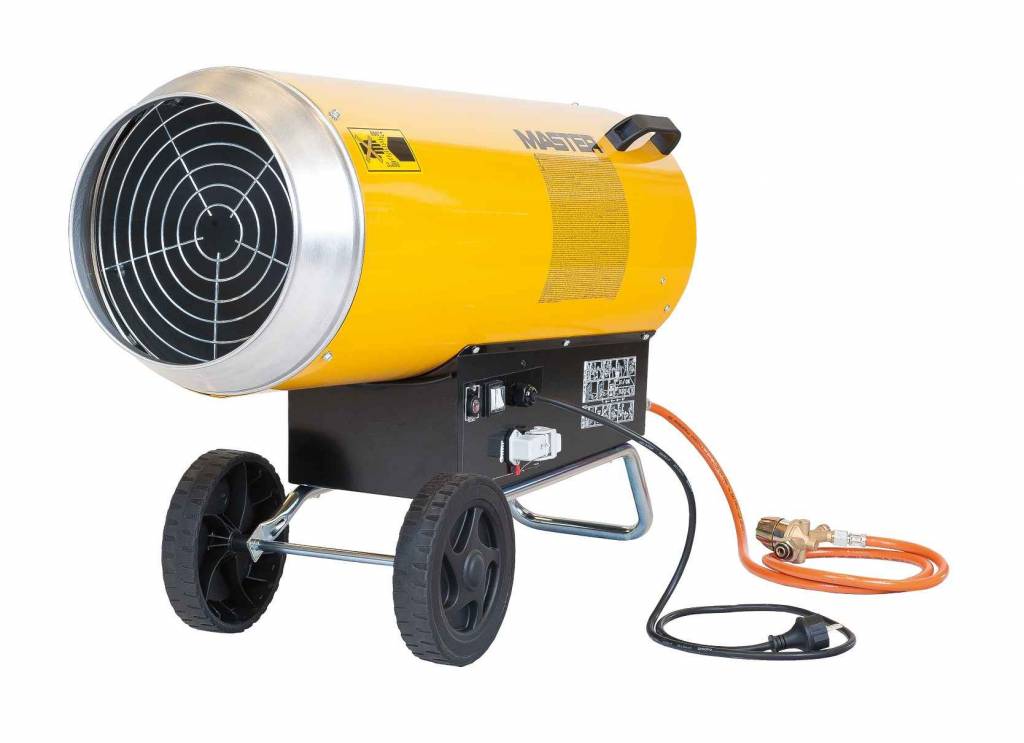
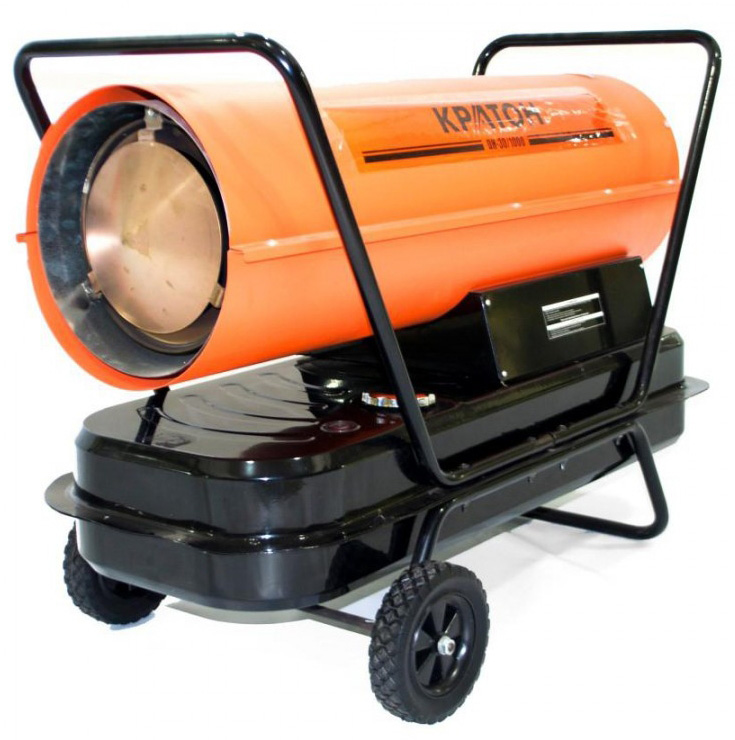


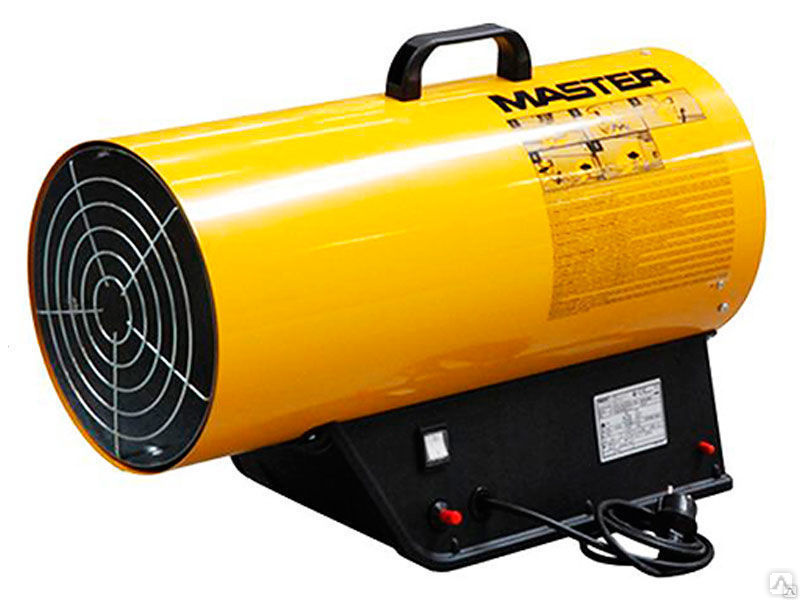

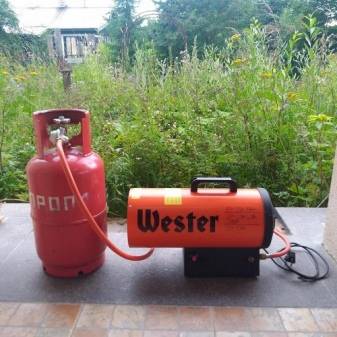
All guns on the market run on gas, diesel, electricity. There are also multi-fuel models - they need to be filled with used oil. Equipment that works on gas makes it possible to warm up even a large greenhouse in a short period, while the user's costs will be minimal. It is ideal for heating warehouses, construction sites, hangars. In addition, it can help to heat the air in semi-open and open spaces.
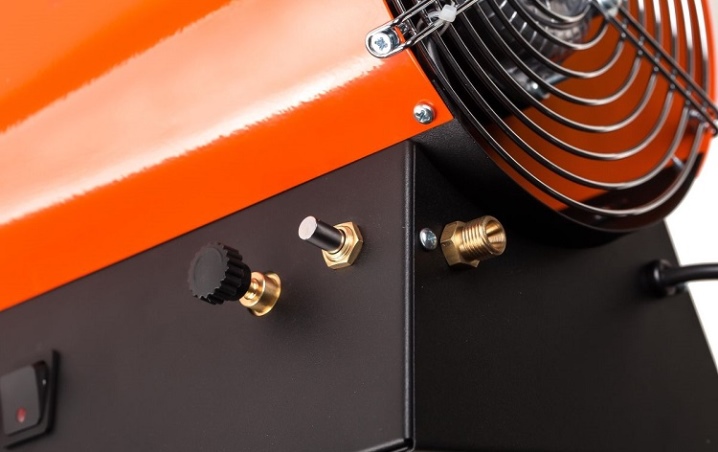
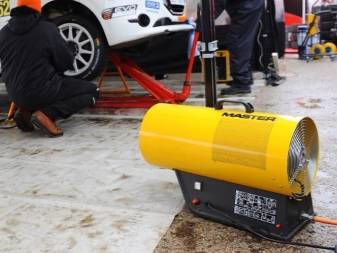
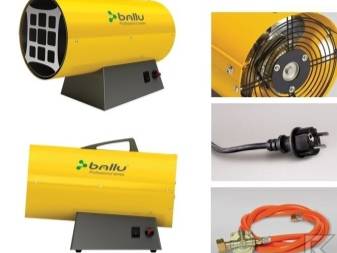
Thermal gas guns can be compact and stationary. Models of the first type are small in size, have a built-in handle and wheels to move the device indoors and out. The power that such a product demonstrates can vary from 10 to 100 kW.
Types of heat guns
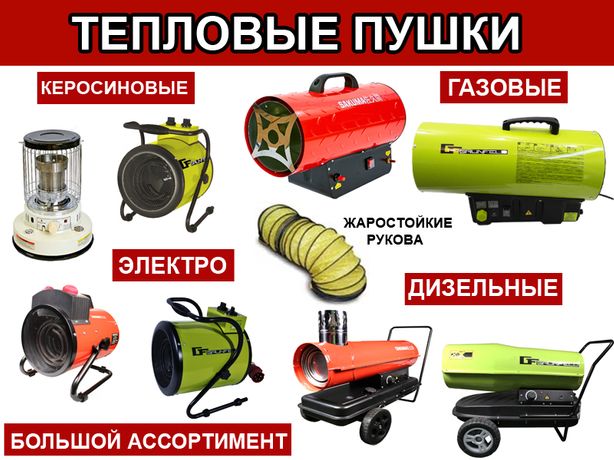
All existing heat guns can be divided into several groups depending on the fuel consumed or the electricity used. The most widespread are such types of these devices as:
- diesel;
- gas;
- electrical.
 Types of heat guns
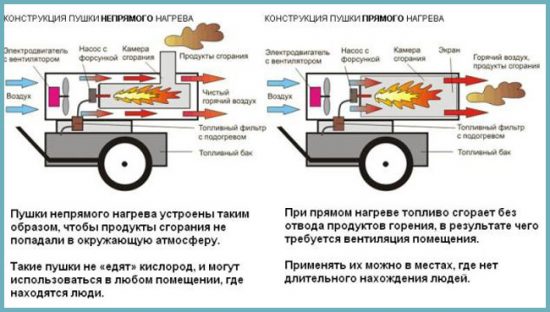
In turn, those running on liquid fuel, and in particular diesel ones, are direct heating or indirectwhen combustion products are removed from the room. For the operation of gas heat guns, both main gas and in cylinders can be used. Most often, these 2 types of devices are used to heat the premises of buildings under construction or where there is no access to electrical networks. During the operation of these devices, oxygen is burned, as a result of which their use is more relevant in the open air or in a room where there is forced ventilation.
Heat guns powered by electricity are practically devoid of such a disadvantage as burning oxygen during air heating. Therefore, they are more often used in residential, commercial, office or other similar premises.
Overview of the top heat guns with the best combination of price and quality
| Category | Place | Name | Rating | Characteristic | Link |
| Electrical equipment | 1 | 9.9 / 10 | Simple and clear mechanical control system | ||
| 2 | 9.8 / 10 | Built-in protection against non-standard situations | |||
| 3 | 9.5 / 10 | Excellent combination of price and quality | |||
| 4 | 9.3 / 10 | Good value for money | |||
| Gas Models | 1 | 9.9 / 10 | Fast heating of even large rooms | ||
| 2 | 9.7 / 10 | High efficiency | |||
| 3 | 9.4 / 10 | Reliability and overheating protection | |||
| 4 | 9.2 / 10 | Compact size and reasonable price | |||
| Diesel devices | 1 | 9.9 / 10 | Power and build quality | ||
| 2 | 9.7 / 10 | Best fire protection | |||
| 3 | 9.5 / 10 | Economical fuel consumption | |||
| 4 | 9.4 / 10 | Multifunctionality |
And which of these would you prefer?
Instrument differences
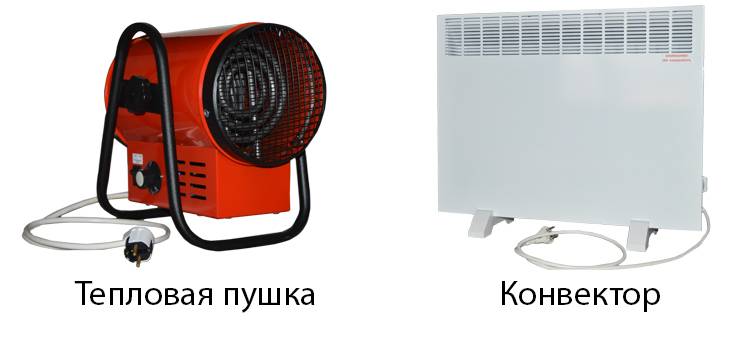
Shown in a table below
Characteristic
heat gun
Convector
Principle of operation
Forced warm air supply
Air heating due to its natural circulation
Power
5-140 kW
0.25-3 kW
Coolant consumption during continuous operation
High due to high power
Average due to low power and the presence of a thermostat
Heating rate
High, used for short-term rapid heating of the room
Medium
Heat dissipation
high
Medium
Views by type of installation
Floor portable, wall, ceiling
Floor, wall, built-in floor, combined
Mounting
Floor mounted does not require installation, industrial large-sized ones are mounted under special conditions
Floor models do not require installation. Wall-mounted and built-in floor - easy to install, they can be combined into a single heating system.
Room area
They are used for heating premises with a large area - trading floors, warehouses, greenhouses, construction sites, open areas.
For home, office, garage, only electric guns are suitable, based on safety considerations
They are used to heat small areas - rooms, houses, apartments, garages, cottages, where you need to maintain a constant air temperature.
The presence of a thermostat
Not
There is. Allows you to adjust the temperature, periodically turns off the convector, preventing it from overheating
Damage to health
Diesel and gas guns burn oxygen. Lack of oxygen and excess of carbon dioxide causes dizziness, fainting, poisoning in people.
Therefore, it is important to ventilate the room more often or provide forced ventilation.
It gets very hot so be careful not to burn yourself.
Does not harm human health. It is recommended to humidify the air and ventilate the room as usual.
The surface heats up slightly
Some portable models are recommended for use in a children's room.
The presence of noise during operation
The device makes a lot of noise due to the built-in fan.
Silent.Makes a slight noise if the model has a built-in fan.
Operational safety
Gas and diesel engines require careful observance of safety regulations, since you are dealing with fire.
Security level is high
The weight
5-30 kg, industrial stationary - up to 3000 kg.
4-30 kg
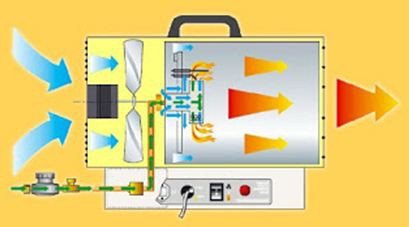
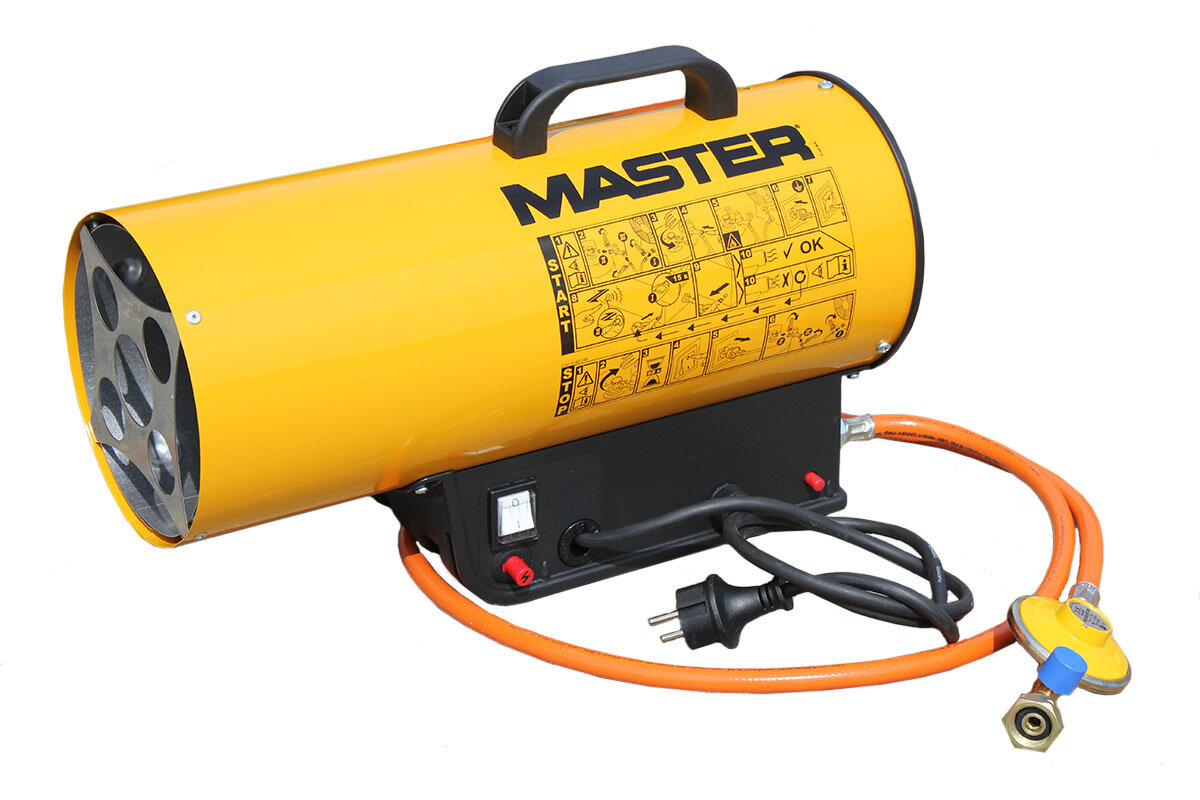
The principle of operation of a gas heat gun
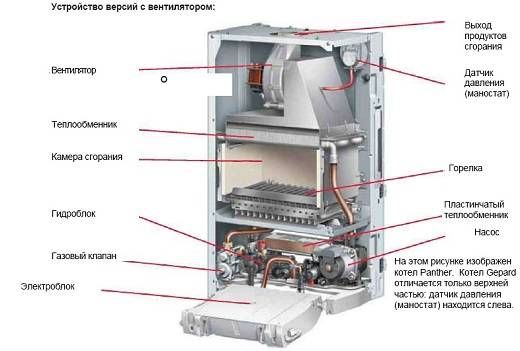
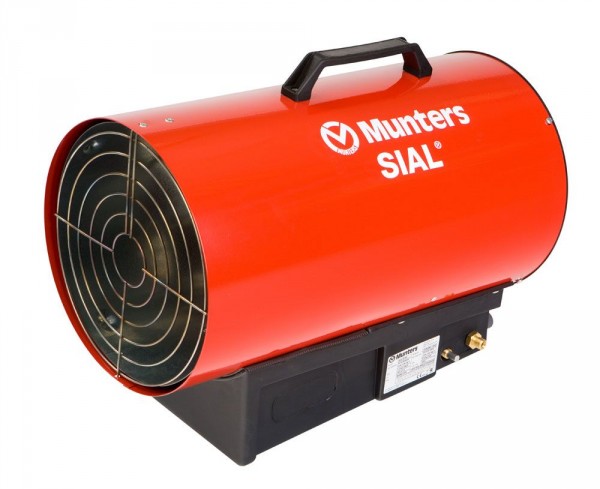
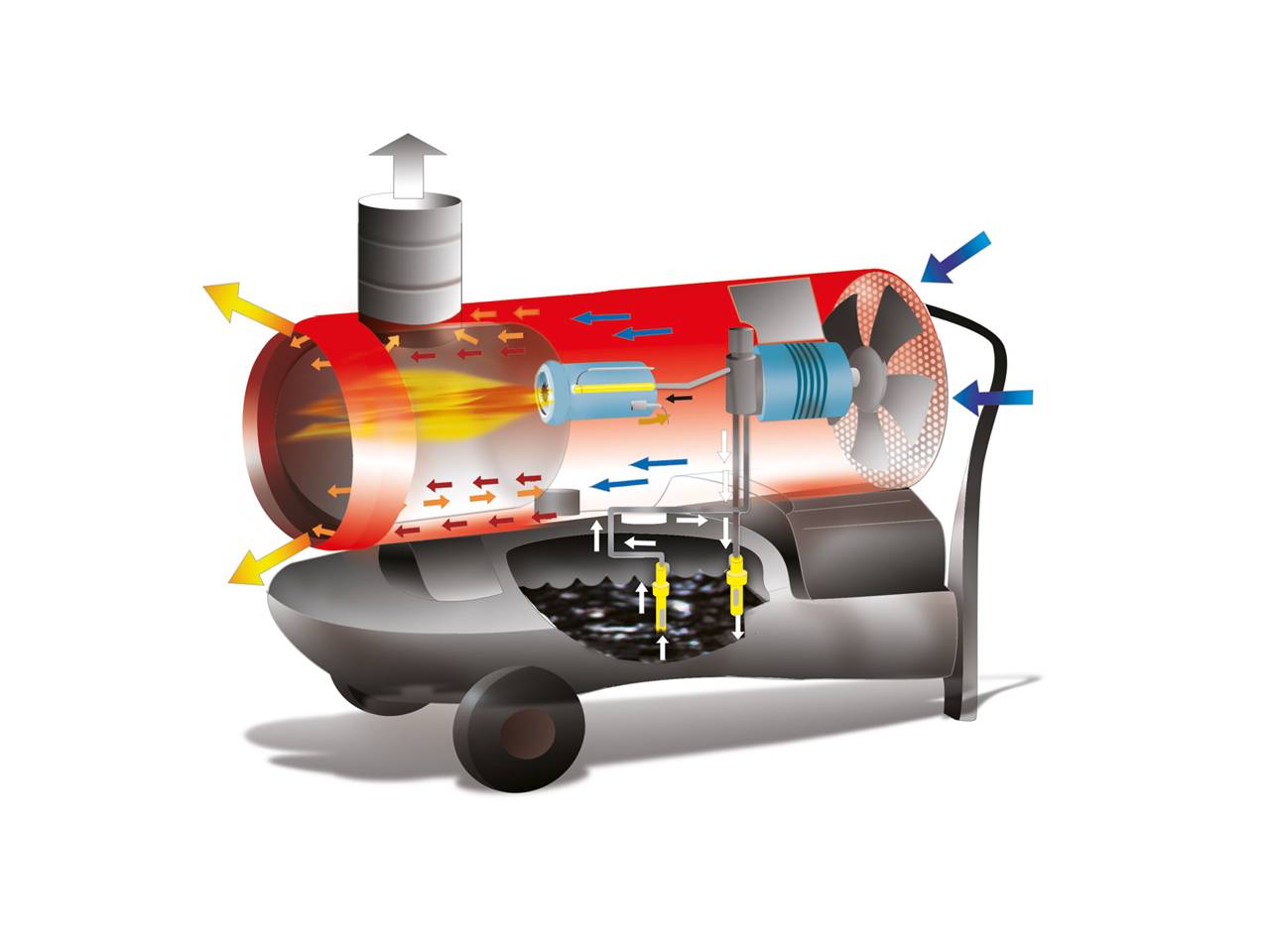
With the help of an electric motor, a fan is started, sucking cold air into the gun. Fuel, in the form of gas, enters the burner through the reducer. Ignition occurs by means of a piezoelectric element (the safety of the unit is ensured by an automatic system with a temperature sensor that stops the gas supply if the flame goes out). The streams of heated air passing through the gun are pushed out with the help of a fan.
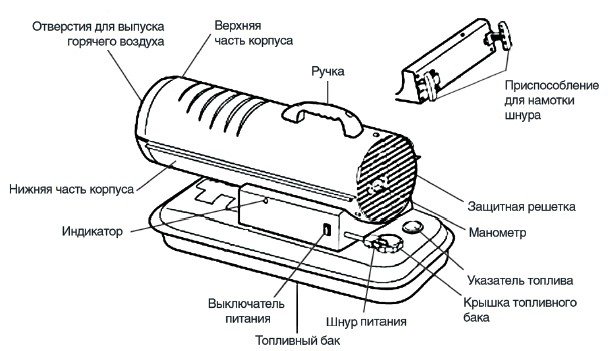
Some features of gas heat guns
- Possibility of quick connection and replacement of the gas cylinder
- Stable operation even in severe frost (in the worst case, you need to shake the bottle)
- The efficiency of the device is close to 100%
It is important to remember that during the operation of the unit, oxygen in the room burns out, therefore, when heating, people should not be in the room, and after the unit is completed, ventilation is necessary
Rating of the best heat guns
So that you can choose the most optimal option for you, we have selected about a hundred good models and have already identified 9 winners among them. In this, we relied on the opinion of experts, customer reviews, the cost and brand of the product, various technical parameters. These include:



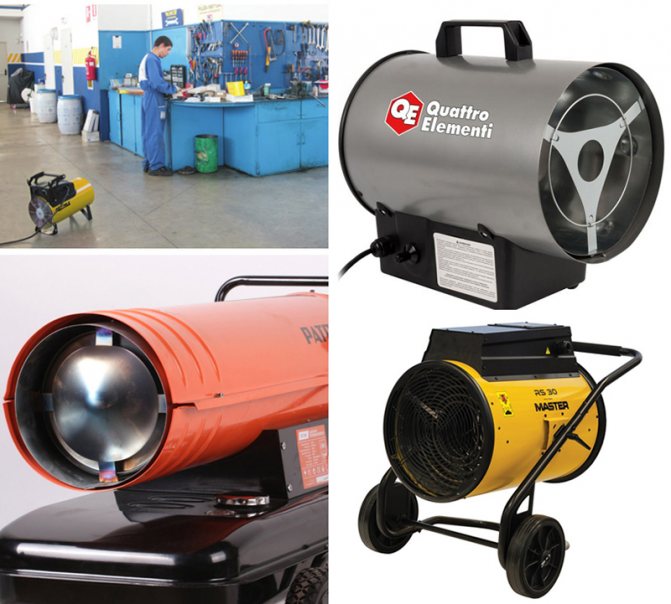

- The weight;
- Fuel consumption;
- Dimensions;
- Type of;
- Thermal power;
- Type of power - electricity, gas or diesel fuel;
- Ignition method;
- Degree of protection against overheating and human;
- Noise level;
- The degree of wear resistance of the body;
- The quality of thermal insulation;
- Ease of maintenance;
- Performance.
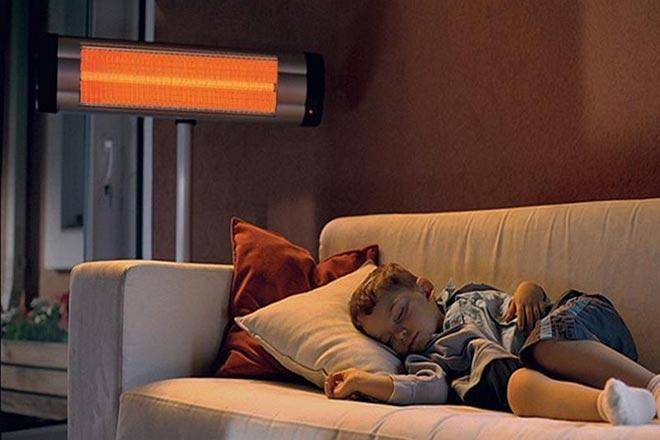
The best infrared heaters
Which heat gun to choose for the garage
A garage is an uninhabited room, but, nevertheless, people are present in it, so you should select a heater for the garage, not only based on the area and, as a result, a certain power of the heat gun for heating, but also on the safety of people.
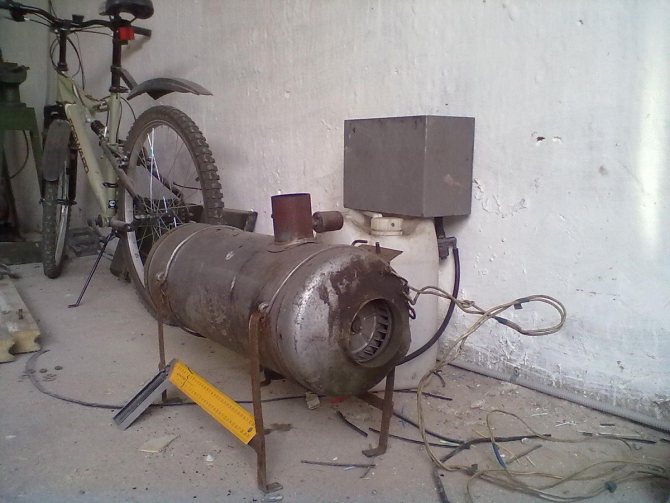
To avoid negative consequences, it is better choose a heat gunoperating on fuel with an additional system for removing combustion products to the street. If the garage has good wiring that can withstand a certain load, then it is best to purchase an eclectic heat gun or fan heater to heat the garage.
Peculiarities:
- Most of the models sold in stores are designed to be installed on the floor, but, nevertheless, there are models that can be installed on any elevation or broadcast on the wall.
- If the garage is large, then you can choose floor models, if not, then you should look at more compact models.
- The second important point when choosing a heat gun is its power so that it maintains the optimal temperature in the room.
- It is believed that for every 10 m2 a power of 1 kW is needed. That is, to put it simply, for a medium static garage, the power of a heat gun of 3–5 kW is sufficient, provided that it is insulated.
Some people use combined garage heating, for quick heating with advised ventilation, use a gas heat gun or working on solar, and to maintain a constant temperature, other models, for example, electric ones.
How to calculate the power of a heat gun - formula
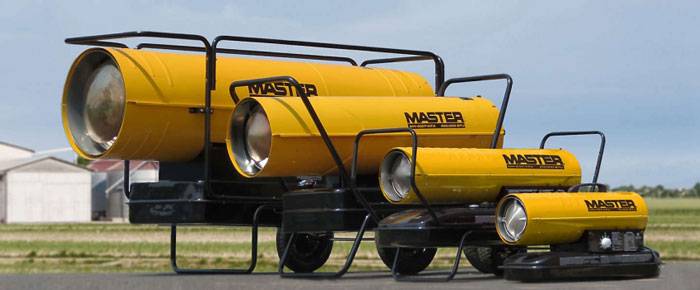 Using the same values, you can estimate the maximum volume of the room that will effectively heat the device. In general, the right choice begins precisely with the calculation of power.
From this "stove" and it is worth dancing further. And then buy "by eye", and then you will write such reviews on YouTube.
To visually estimate and understand what thermal power a gun will need, you can use the following table:
When choosing just such a power, in just 1 hour the thermal unit will be able to raise the temperature immediately by 15 degrees. Of course, if everything is fine with thermal insulation. 
You can calculate this whole thing more accurately using the following formula: 
V
room volume in m3
T
difference outdoor air temperature and the temperature that needs to be created inside, degrees C
K
coefficient building heat loss
860
number to convert kilocalories/hour to kW/hour
Coeff. heat loss, choose based on the design of your building.
K=3.0-4.0 - for buildings without thermal insulation
K \u003d 2.0-2.9 - there is little thermal insulation (walls in one brick, a simple roof and a regular double-glazed window)
K \u003d 1.0-1.9 - a building of medium thermal insulation (walls in 2 bricks, a roof with a standard roof)
K = 0.6-0.9 - high thermal insulation (walls and roof with double thermal insulation, double glazing)
For example, let's take a metal garage with a volume of 90m3 without any thermal insulation. The temperature difference is 30 degrees. That is, when it's -10C outside, you want it to be +20C inside.
Substituting the data into the formula, we get that to heat such a garage, you will need a gun with a power of at least 12 kW.If you have 3 phases, then you can think in the direction of the electric option.
If only phase-zero comes to the garage or there is no constant light at all, then you have a direct road for a diesel or gas model.
Only after these calculations do not buy guns with a large margin, even if funds allow.
According to the instructions, each such unit has a minimum volume of heated space. If you have clearly less, there will be problems with noise, rapid burning of oxygen, dizziness, etc.





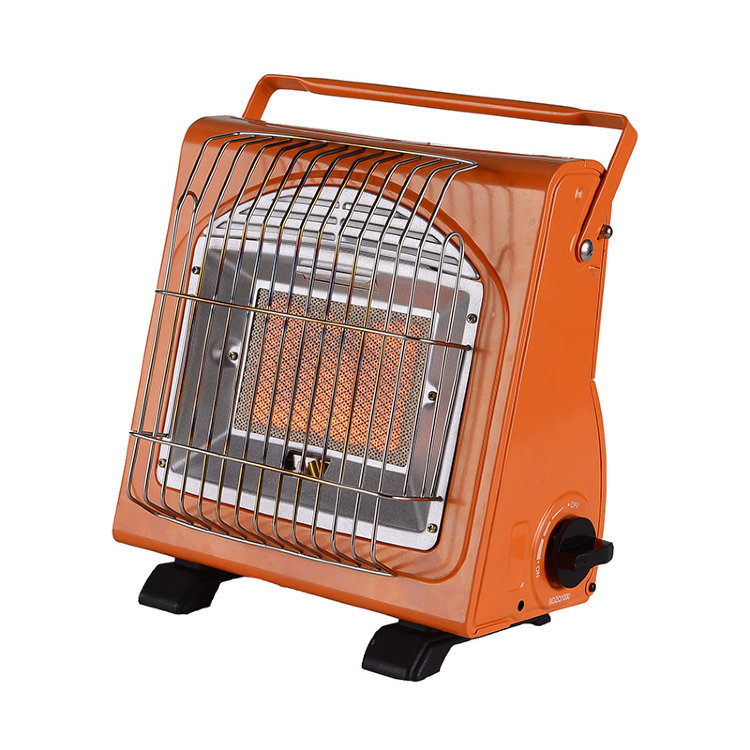
gas
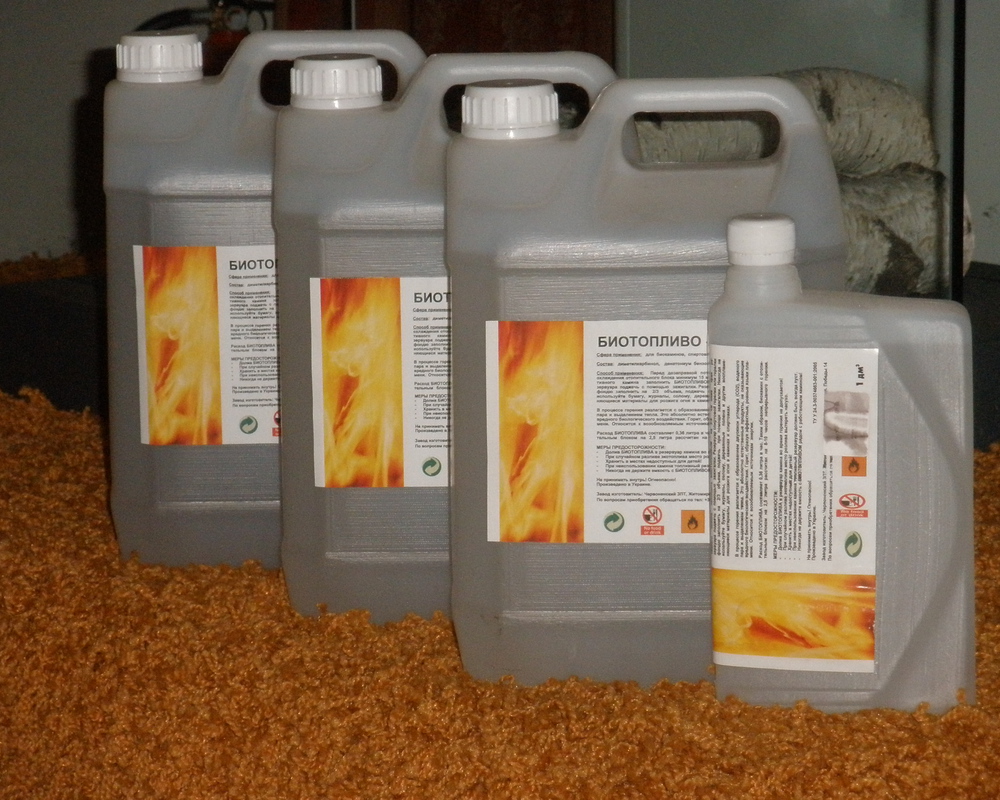
diesel-kerosene or multi-fuel
electrical
Summing up
Before deciding between a heat gun and a convector, do the following:
- Specify the purpose of using the device. For continuous long-term heating of a house, apartment, small office or premises, the best option is a convector or a convector system. If you need to heat a large warehouse, retail space, greenhouse or quickly warm up a summer house, garage, a heat gun is best suited. It can also be used for an open veranda, cafe, playground in the off-season.
- Study the operational characteristics of the devices (power, electricity consumption, coolant consumption, heat transfer, safety, reliability, economy). Analyze their advantages and disadvantages, the benefits that you will receive when using.
- Please note that devices that burn oxygen are not recommended for use at home. Do not put yourself and loved ones in danger.
- Calculate the cost of the purchase and correlate it with financial capabilities. Buying one convector is cheaper than buying one heat gun.
- Calculate the power of the device required for heating, knowing the area of \u200b\u200bthe room, the difference in temperatures inside and outside, the thermal insulation coefficient of the walls and ceiling.