
- Type and structure
- Type of well shaft
- How to identify an aquifer
- Bottom filter in the well
- Location selection
- What is a bottom filter?
- What to choose, concrete rings or a wooden frame?
- How do you know when to stop digging?
- Definition of an aquifer
- Preparation for work
- Choosing a place to stay
- How to determine the depth of a well
- Selecting a build configuration
- Safety
- The best time to dig a well
- Stage four. We protect the structure from surface water
- On what horizon to dig a well?
- Well location
Type and structure
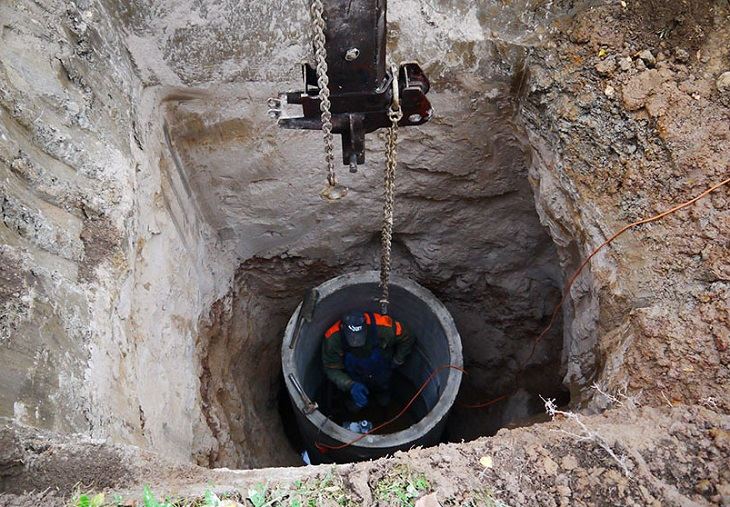
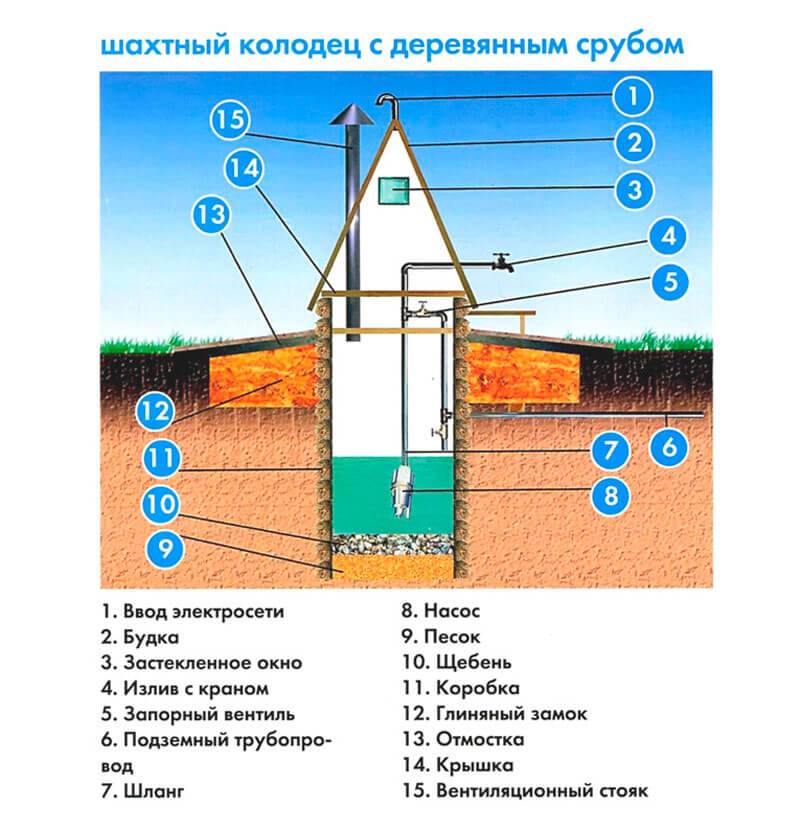
If you have decided on a place, it remains to choose which one you will make your mine. You can only dig a shaft well, and the Abyssinian can be drilled. The technique here is completely different, so further we will talk about the mine well.
Type of well shaft
The most common today is a well made of concrete rings. Common - because it's the easiest way. But it has serious drawbacks: the joints are not airtight at all and through them rain, melt water enters the water, and with it what is dissolved in it, and what is drowned.
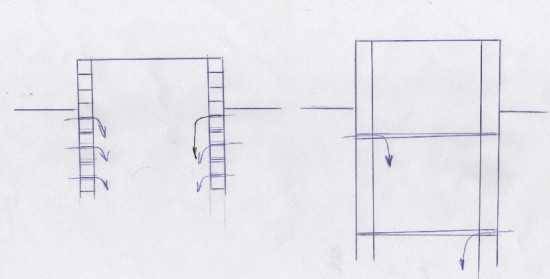
Lack of a well made of rings and logs
Of course, they try to seal the joints of the rings, but those methods that will be effective cannot be applied: the water must be at least suitable for irrigation.And just covering the joints with a solution is very short and inefficient. The cracks are constantly growing, and then not only rain or melt water enters through them, but also animals, insects, worms, etc.
There are lock rings. Between them, they say, you can lay rubber gaskets that will ensure tightness. There are rings with locks, but they are more expensive. But gaskets are practically not found, like wells with them.
The log shaft suffers from the same “disease”, only there are even more cracks. Yes, that's what our grandfathers did. But they, firstly, had no other way, and secondly, they did not use so much chemistry in the fields.
From this point of view, a monolithic concrete shaft is better. It is cast right on the spot, putting a removable formwork. They poured out the ring, buried it, put the formwork again, stuck the reinforcement, poured another one. We waited until the concrete "grabbed", again removed the formwork, digging.
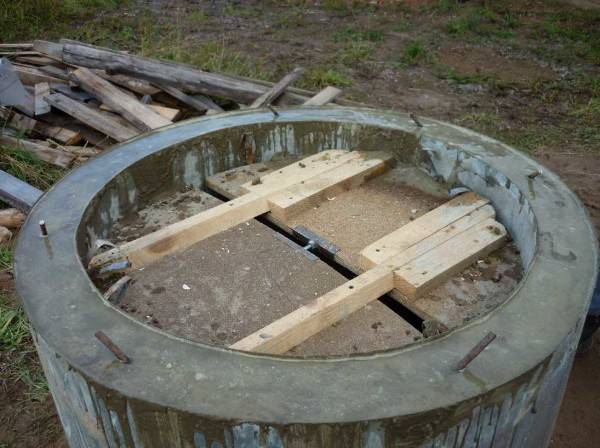
Removable formwork for a monolithic concrete well
The process is very slow. This is the main drawback. Otherwise, only pluses. First, it turns out very cheap. The cost is only for two galvanized sheets, and then for cement, sand, water (proportions 1: 3: 0.6). It is much cheaper than rings. Second, it's sealed. No seams. Filling goes about once a day and because of the uneven upper edge, it turns out to be almost a monolith. Just before pouring the next ring, scrape off the risen and almost set cement laitance (gray dense film) from the surface.
How to identify an aquifer
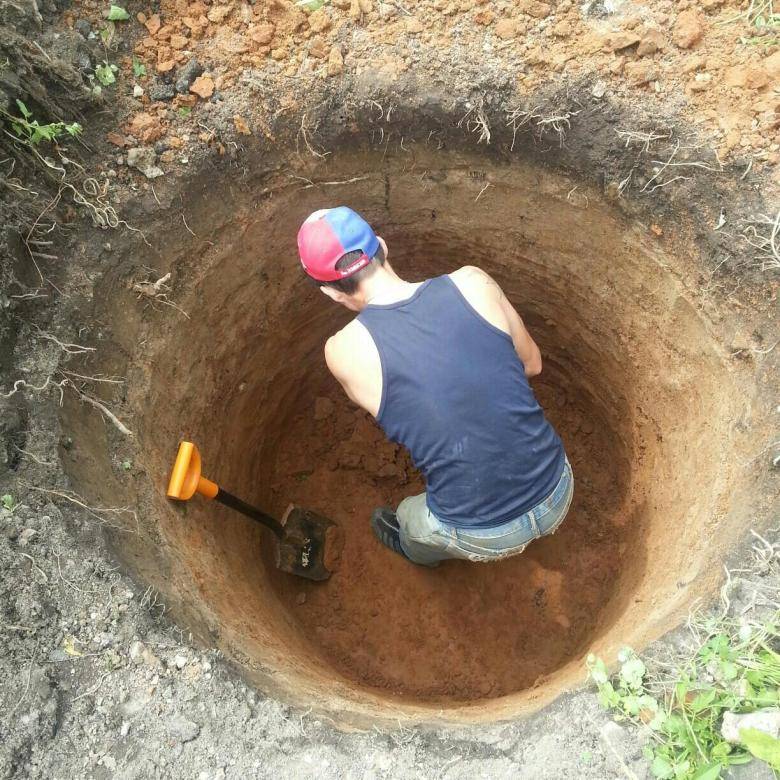
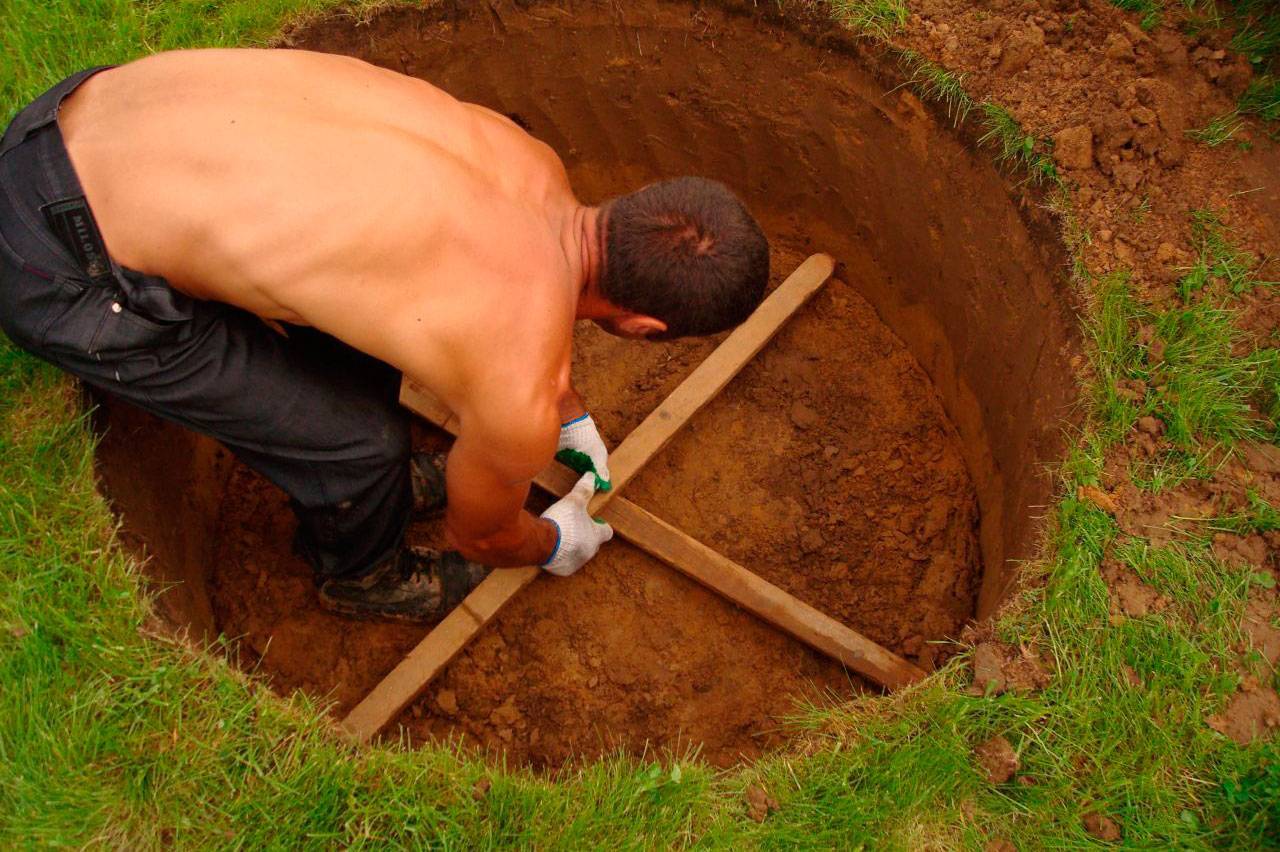
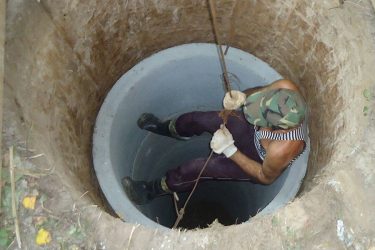
According to the technology, the soil is taken out inside the ring and under it. As a result, under its weight, it settles. Here is the soil that you take out and will serve as a guide.
As a rule, water lies between two water-resistant layers.Most often it is clay or limestone. The aquifer is usually sand. It can be small, like a sea, or large interspersed with small pebbles. Often there are several such layers. As the sand has gone, it means that water will soon appear. As it appeared at the bottom, it is necessary to dig for some more time, taking out the already wet soil. If the water comes actively, you can stop there. The aquifer may not be too large, so there is a risk of passing through it. Then you have to dig until the next one. Deeper water will be cleaner, but how much deeper is unknown.
Next, the well is pumped - a submersible pump is thrown in and water is pumped out. This cleans it, deepening it a little, and also determines its debit. If the speed of the arrival of water suits you, you can stop there. If not enough, you need to quickly pass this layer. With the pump running, they continue to take out the soil until they pass this layer. Then they dig to the next water carrier.
Bottom filter in the well
Bottom filter device for a well
If you are satisfied with the speed of the arriving water and its quality, you can make a bottom filter. These are three layers of cameos of different fractions, which are laid at the bottom. They are needed so that as little silt and sand as possible get into the water. In order for the bottom filter for the well to work, it is necessary to lay out the stones correctly:
- Large stones are placed at the very bottom. These should be fairly large boulders. But in order not to take much of the height of the water column, use a flatter shape. Spread at least in two rows, and do not try to keep them close, but with gaps.
- The middle fraction is poured in a layer of 10-20 cm. The dimensions are such that stones or pebbles do not fall into the gaps between the bottom layer.
- The top, smallest layer.Pebbles or stones of small size with a layer of 10-15 cm. Sand will settle in them.
With this arrangement of fractions, the water will be cleaner: first, the largest inclusions settle on large stones, then, as you move up, smaller ones.
Location selection
For some reason, it seems to some inhabitants that water should be present everywhere. It is enough to make the hole deeper - and the well is ready. As a result, a wasted mine, wasted time and nerves. Moreover, the vein can pass just a couple of meters from the dug well, which remained dry.


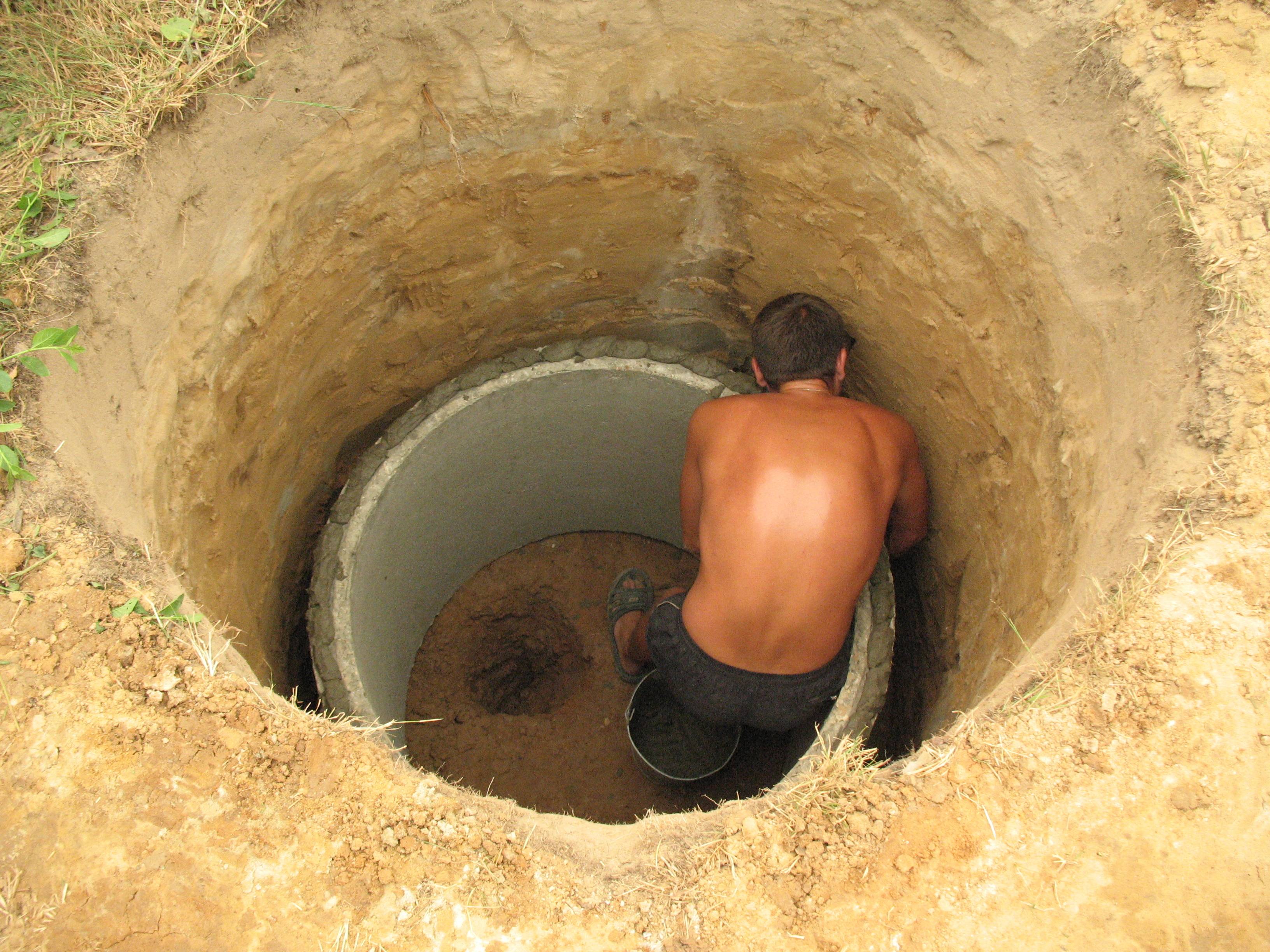

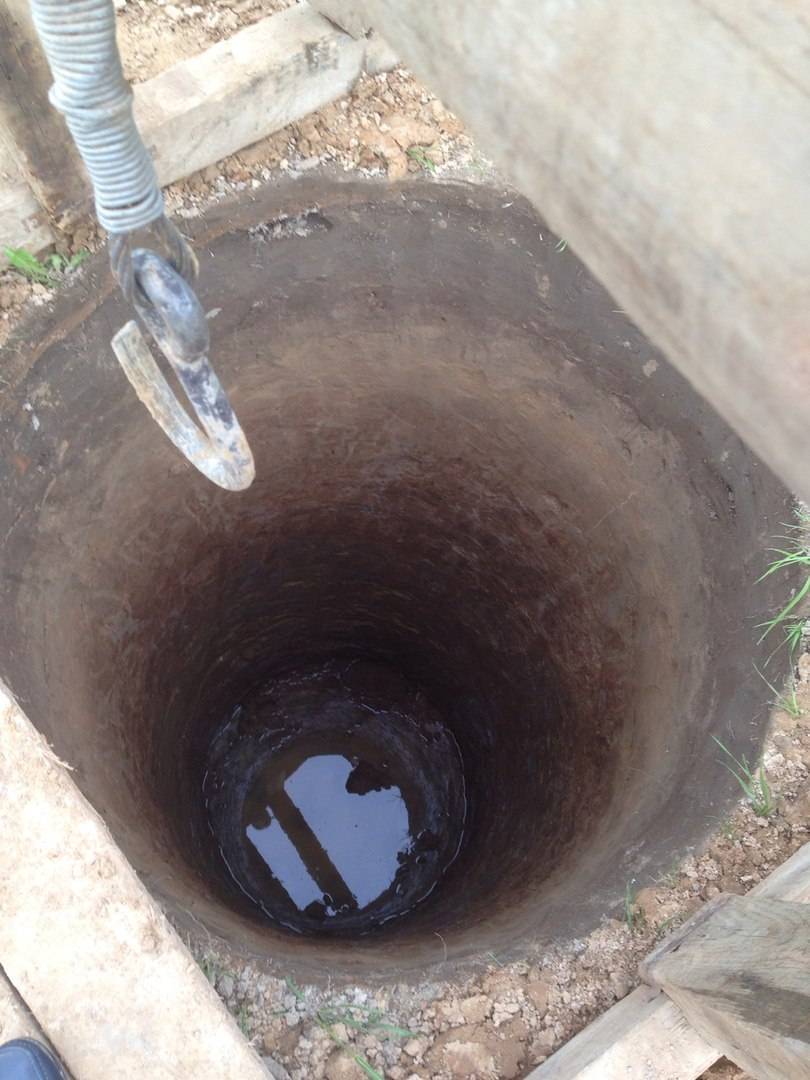
To search for a nearby water reservoir, the dowsing method has been successfully used to this day. Once upon a time, branches of viburnum, hazel or willow served as natural biolocators. Today, even experienced drillers often replace them with pieces of copper or aluminum wire with ends bent at 90 degrees. They are inserted into hollow tubes and, holding them in their hands, pass the site meter by meter. In the place of close passage of water, the wires begin to cross in the direction of the current. To be sure, the site is surveyed in this way several times.

Search using dowsing
When looking for a place for a well in the country, you should also pay attention to the color of the greenery growing on the site. It's more juicy near water.
Willow, meadowsweet, ivy and meadowsweet are very fond of such places - where they have chosen a place for growth, they will definitely live. Nettle, horse sorrel, cinquefoil, naked licorice, coltsfoot, horsetail also grow here. But apple and plum trees, on the contrary, take root worse and often die.
Alder, willow, birch, willow and maple will always tend to the aquifer.Solitary oaks are also a sign of the high standing of the waters. They grow exactly where they intersect.
It has long been noticed that cats like to bask in such places. Dogs, on the other hand, avoid such areas. It is also worth watching the red ants. They try to locate anthills away from water. Near it in the evening, a large number of mosquitoes and midges always hover. In the mornings there is also always more dew and fog.
After finding the alleged location of the aquifer, before digging a well in the country, exploratory drilling is carried out. For these purposes, it is allowed to use an ordinary garden drill. Since it will have to go deep by 6-10 m, its length will have to be increased. If moisture appeared after digging the well, then the location of the water reservoir was determined correctly.

Types of groundwater by depth
If you don't trust the old tried and tested methods, contact a nearby exploration site. In the arsenal of such organizations there are always special geophysical instruments that can accurately determine the close location of an aquifer.
When the formations are below 10-15 m, the idea of digging a well should be abandoned. In this case, well drilling will be required.
How to make a cellar in a private house or in the country with your own hands: diagrams, step by step guide, proper ventilation (55+ Photos & Videos) + Reviews
What is a bottom filter?
Do you need a well filter? If there is a quicksand in it without bottom filter - layer sand, crushed stone, gravel or pebbles, which serve to purify incoming moisture from earth suspensions, is a necessity. Completely, of course, it will be problematic to get rid of them, but he will be able to precipitate most of the small particles of soil.Such a filter works on the principle of a conventional sieve.
But among the owners of wells (and many specialists) there is often an opinion that such cleaning is also necessary in the absence of quicksand. Allegedly, only she is able to provide perfectly clean water. Indeed, at first, a small film of special algae and bacteria is formed in the sand layer, eating microorganisms dissolved in water. But the service life of such a biological filter is short. Over time, the biofilm layer increases, the filtration rate decreases, and the well quickly silts up.
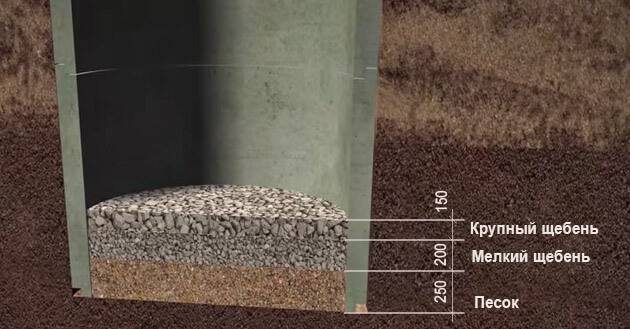
Bottom filter scheme
A properly equipped well should be filled only through the bottom. In practice, it is not always possible to provide only bottom inflow. Water often begins to seep through the walls. In this case, its cleaning through the bottom filter simply does not occur.
Plus, a significant layer of backfill (and it should be at least half a meter) reduces the volume of water. Its inflow is also decreasing. It becomes difficult to carry out high-quality cleaning of a silted well in the presence of a layer of sand and gravel.





In villages, large stones are sometimes laid on the bottom. But this is required only in order not to muddy the water when scooping up during seasonal shallowing. If the well is deep enough, and its level does not fall too low, this is not particularly necessary.
When a quicksand is found, in addition to the bottom filter, it will also be necessary to build a special shield made of wood or steel with holes that can contain the flow of soil mixed with liquid.
What to choose, concrete rings or a wooden frame?

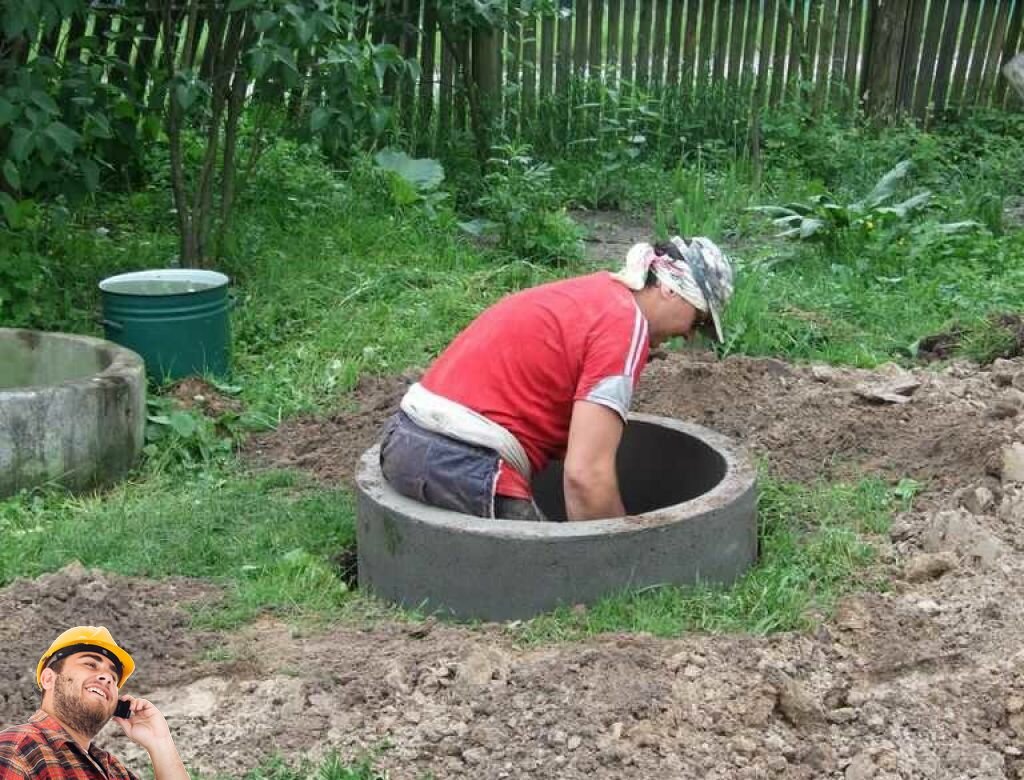
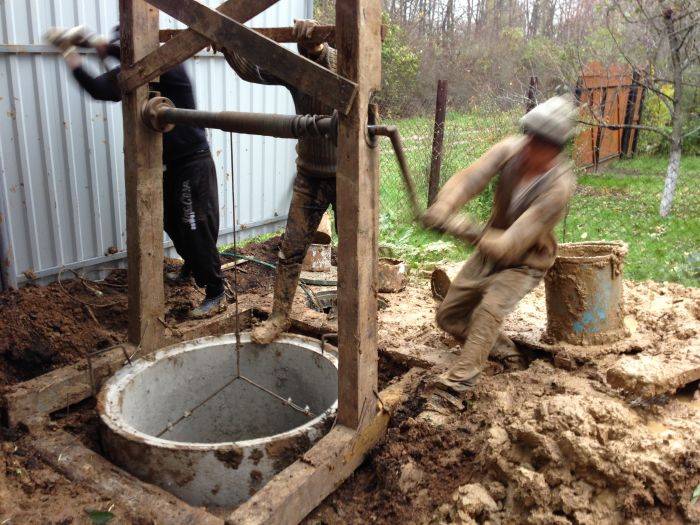
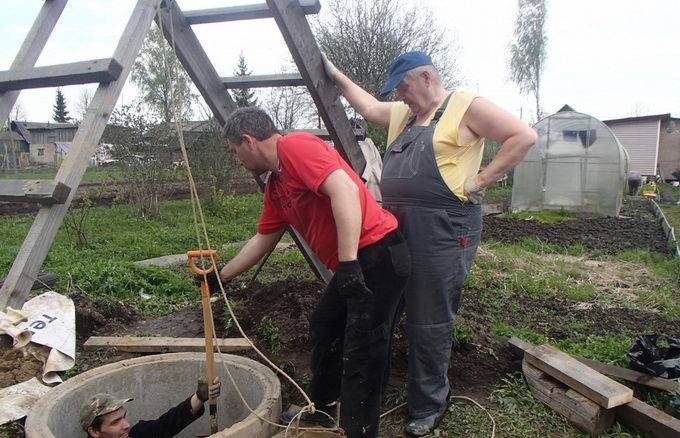
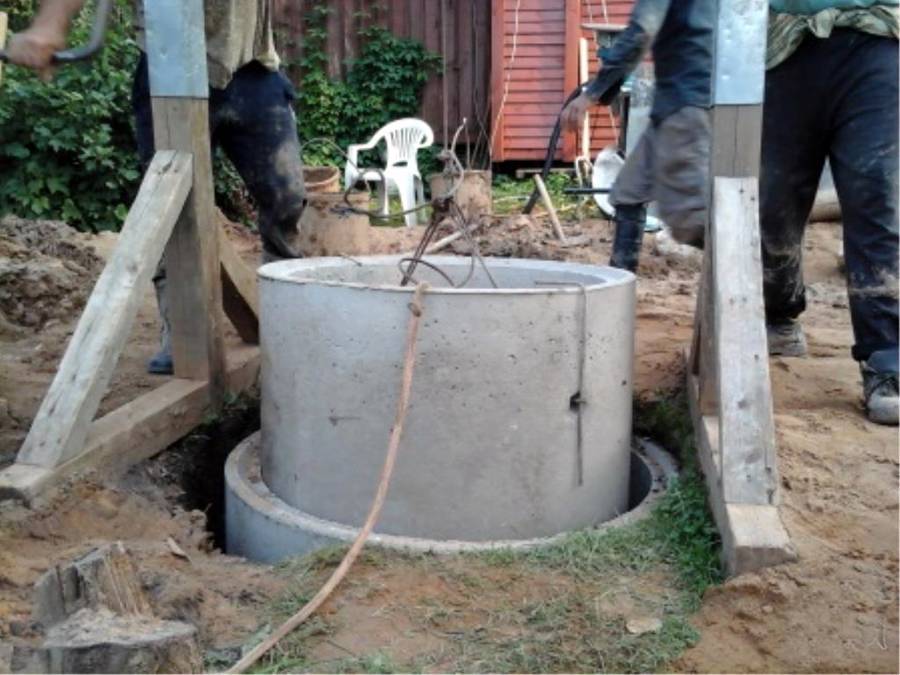
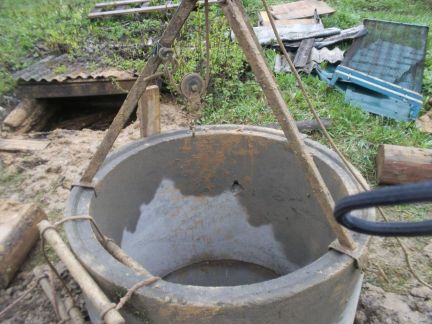
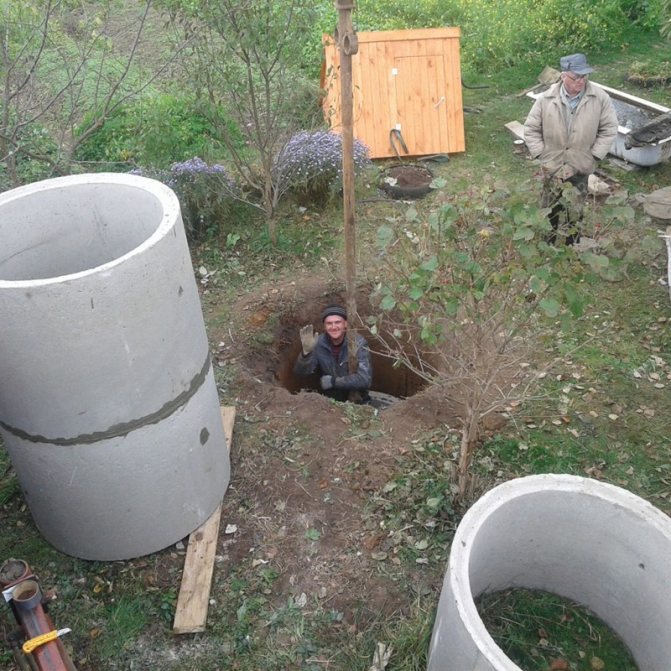
Installation of concrete rings
Just digging a well is not enough. He needs reliable protection from collapse.For this, concrete rings or wood can be used. Brick shafts are rarely used - laying them out is too laborious a process. Plus, a metal frame is required to strengthen the brick, otherwise the walls will begin to crumble quickly. It is made from a profile, fittings or durable wood.
Concrete rings will last longer. It makes sense to choose log cabins made of wood if the entrance and delivery of rings to the selected site is impossible. The price of a well made of wood is unlikely to be lower than a structure made of concrete rings, and it will take more time to build. Yes, and such mines silt up faster, and they will have to be cleaned more often.
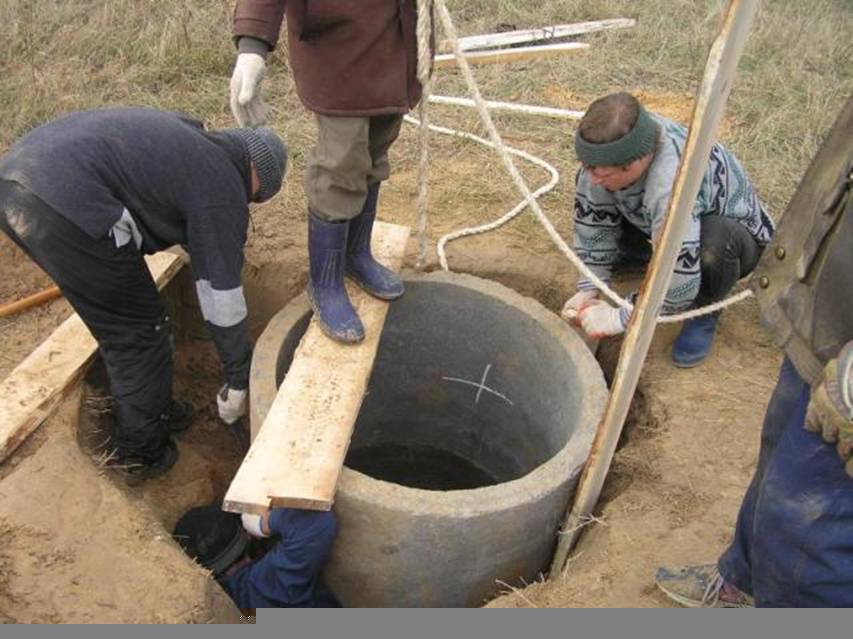
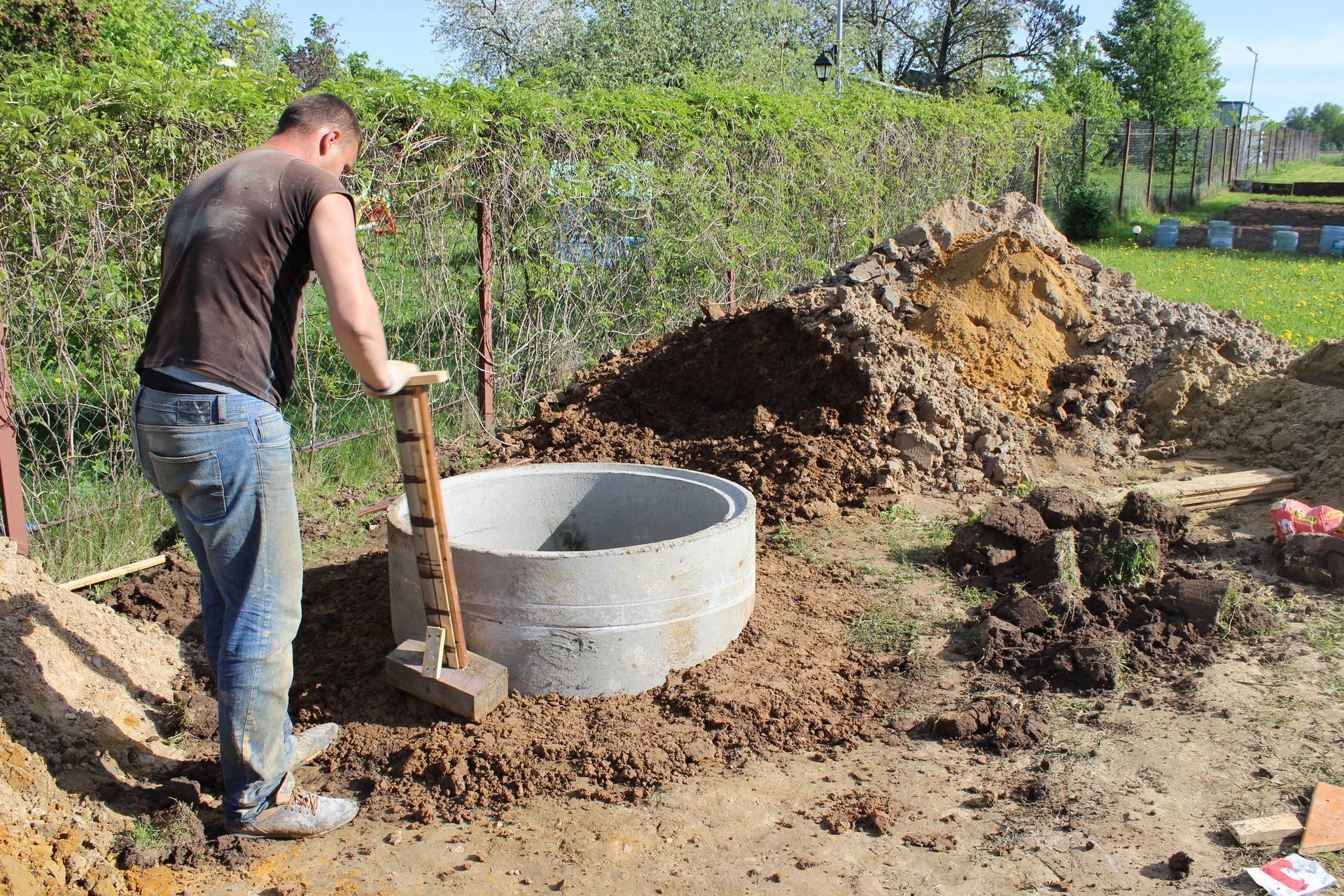
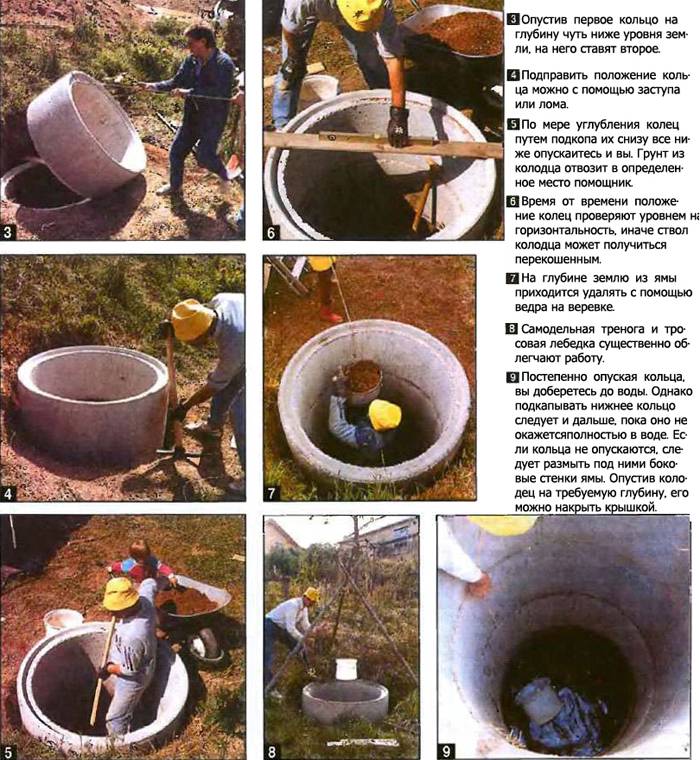
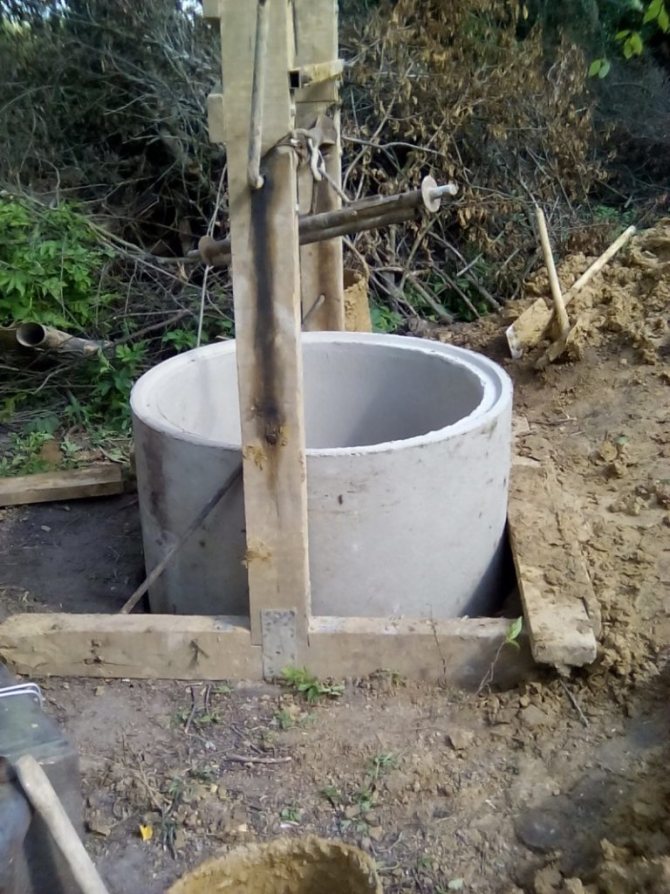
The use of concrete rings greatly simplifies and speeds up the work. They are installed on top of each other. To avoid displacement, such rings are fastened together with steel brackets. To prevent chipping along the edges, steel strips of 40-60 mm can be made.
The joints of the rings are coated with concrete mortar and additionally sealed with tarred hemp or liquid glass. On loose soils, it is better to put strong boards at the bottom of the mine so that the rings stand up straight.
Monolithic concrete wells are prepared using formwork. At a considerable depth, concrete is first poured to a shallow depth. Then they continue to dig a hole, making a tunnel under a layer of concrete and installing props for it. After passing another 2 meters, a new formwork is being prepared. In order for the walls to become stronger, a time of 7-10 days is maintained between each filling.
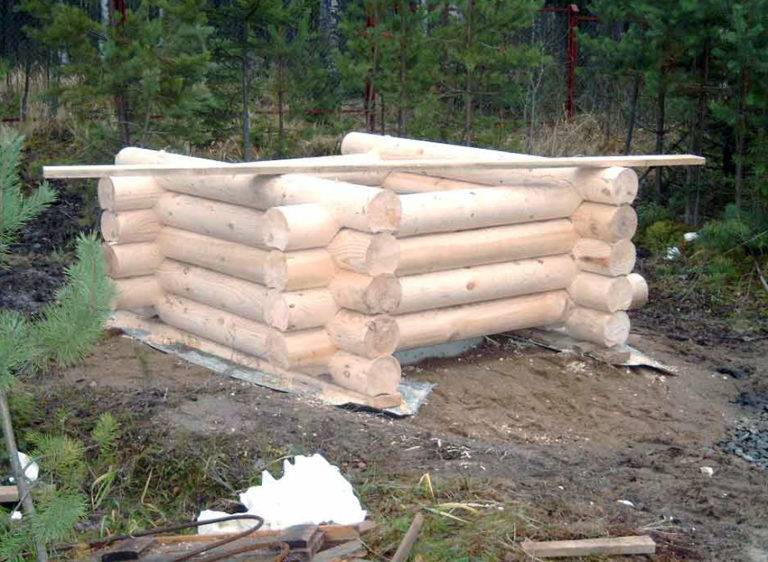
Log preparation
For wooden log cabins, you will need a log of moisture-resistant ash or oak with a diameter of 15 cm or more. Thicker logs with a thickness of 22 cm or more are cut in half. It is not recommended to take conifers - they will give drinking water a little bitterness.
The log house is assembled with locks “in the paw”, that is, several spikes are prepared at one end of the log, and grooves at the other. They do this first on the surface, marking the number of each crown, and then reassemble it already in the mine. The crowns are fastened with dowels (metal pins) vertically. The upper crowns are additionally reinforced with steel brackets.
In order to avoid the ingress of sewage, it is forbidden to locate a drinking well at a distance closer than 30 m from sewer and cesspools. To avoid weakening the soil under the foundations from the nearest buildings, it must be removed by at least 8 m.

How to make a tapestry with your own hands? Original ideas and drawings (110+ Photos & Videos) + Reviews
How do you know when to stop digging?
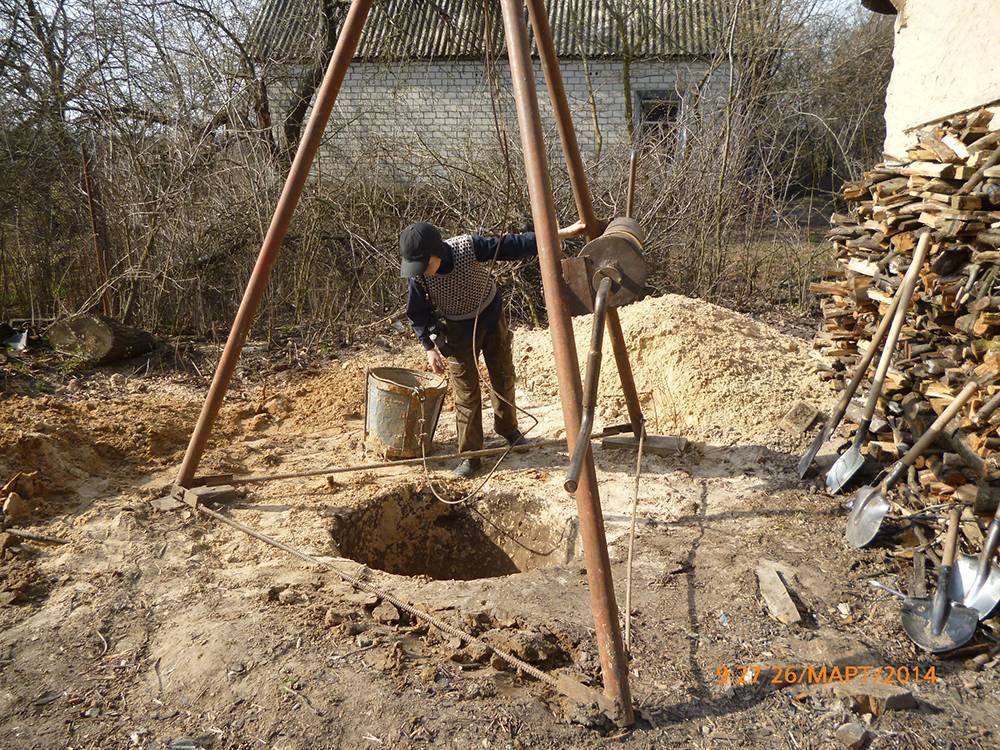
According to the technology, the soil is removed inside the ring and under it. Because of what he settles under his own weight. The soil that is taken out and will be a guide. Usually water is located between two water-resistant layers. Often it is clay or limestone.
The aquifer is usually sand. It can be either small, like the sea, or large interspersed with small pebbles. Most often there are several such layers. As soon as the sand goes, it means that you need to expect water soon. As soon as it appears at the bottom, you need to dig for some more time, taking out the already wet soil.
In the event that there is a strong influx of water, you can stop. The aquifer is not very large, as there is a chance to pass through it. In this case, you will have to dig until the next one. The deeper, the cleaner the water will be, but how much deeper, no one can say for sure.
After that, the well is pumped - they throw in a submersible pump and pump out water. Thus, it is cleaned, deepening a little, and besides this, its debit is determined. If you are satisfied with the speed at which the water arrives, you can stop there. If not, you need to quickly go through this layer. The soil continues to be washed out with a running pump until this layer is passed. Then they dig to the next aquifer.
If you are satisfied with the incoming water and its quality, you can build a bottom filter. It consists of three layers of stones of different fractions, which are laid on the bottom. This is necessary so that as little silt and sand as possible enter the water. For such a filter to work, you need to correctly lay out the stones:


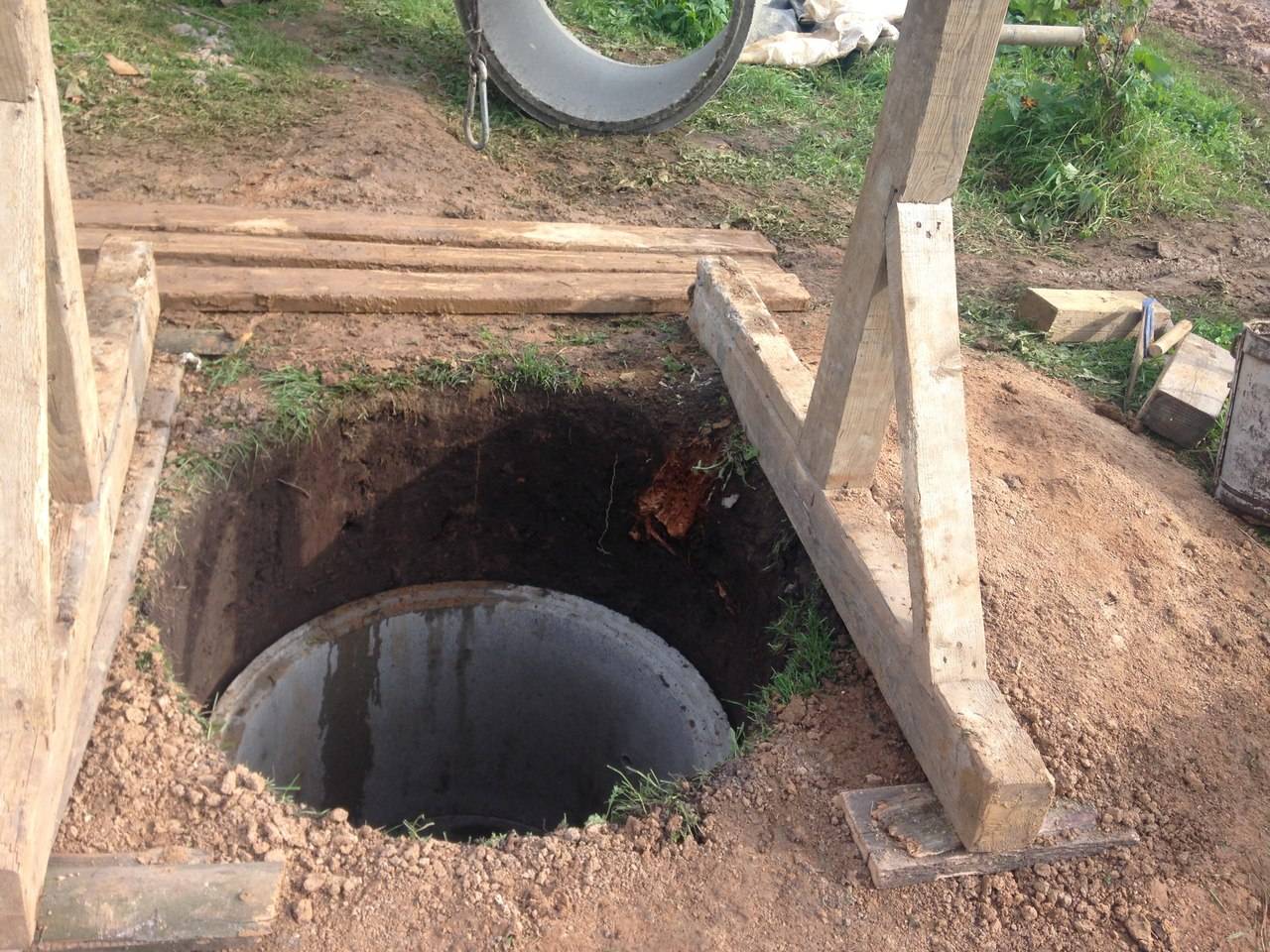



- The largest stones are placed at the very bottom. These are fairly large boulders. But in order not to take the height of the water column too much, it is better to use the most flat stones. They need to be laid out in two layers, while it is not necessary to lay them close, but with small gaps.
- The middle fraction is poured in a layer of 10-20 cm. Their dimensions should be such that pebbles or stones do not fall into the gaps of the lower layer.
- The topmost, smallest layer. Pebbles and small stones in a layer of 10-15 cm. They are necessary for sand to settle.
With such an embankment of fractions, the water will be cleaner: at first, the largest inclusions settle on large stones, as they move up, smaller and smaller.
Definition of an aquifer
When digging a well, the question arises of how deep you need to dive if the water has already begun to seep through the walls of the mine. To find out where it is time to stop, it is worth considering all the layers passed during digging.
The top layer is fertile soil. Its thickness is 25-40 cm.Further, sedimentary rocks, sand and clay, which is an aquiclude, alternate.
Between impermeable layers, underground sources pave their way. The closest to the surface is perched water, which consists of seeped precipitation, melt water and occasional runoff. It is not suitable for domestic needs, it is too polluted, and the level is unstable, depending on the weather.
When constructing a well, they try to get to the second or third aquifer. After passing through the thickness of the soil, the water is purified and becomes suitable for consumption.
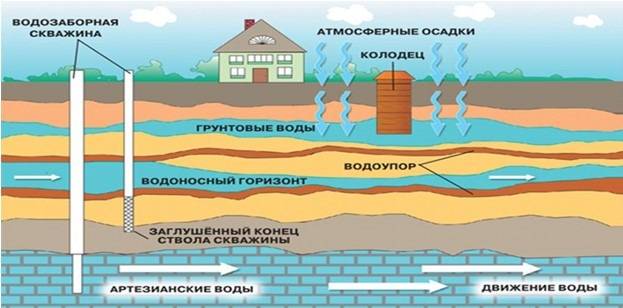
When digging, you need to stop in time - there is a danger of passing the aquifer and going deep into a thick layer of clay. It is also possible for the mine to sink over time, which will lead to blockage of the water supply path. You need to navigate the neighboring hydraulic structures in order to "catch" the moment and not make a mistake.
Preparation for work
You can start digging a well yourself after carrying out some work, but at the very beginning you should figure out what this design is like, you need to know the basic technological principles and be sure to follow safety precautions.
Choosing a place to stay
You need to dig a well yourself in a properly located place. This structure must be placed according to the rules, otherwise you can harm the structure, for example.
The foundation will simply sag and you will not understand for what reason. There is a detailed article on our website that tells how to search for a driver, but there are still rules that should be considered when choosing a place.
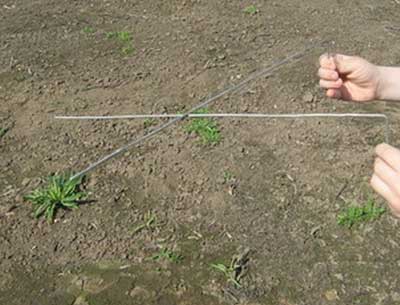
Looking for a place for a well
So:
- It is necessary to dig a well yourself no closer than thirty meters to the toilet and other places of pollution. It can be both a garbage dump and a road;
- After determining the aquifer, it is also necessary to choose a place not in the lowland. There, when it rains, the accumulation of water and the well can become contaminated. It is better to choose a hill;
How to determine the depth of a well
It is necessary to start digging a well with carrying out the simplest geological surveys for the presence of groundwater at the construction site. The depth of their occurrence is determined.
This can be done using special instruments: an aneroid barometer or spirit level. You can determine the presence of deep waters by nearby sources.
There are several ways to determine the depth of water:
- Determination of magnitude by an aneroid barometer. This method is as follows: On the device, the division value is 0.1 millimeters. This corresponds to one meter difference in height. For example: at an existing well at ground level, the atmospheric pressure that the device shows is 745.8 mm, and at the site of the proposed construction, 745.3 mm. The difference is 0.5 mm, which means that we are digging a well five meters deeper, but this is only if the aquifers are horizontal and lie in the form of a water basin.
- Groundwater often has slopes that look like a groundwater flow. In this case, the depth of occurrence is determined by the method of interpolation of the measurement results, but it gives an approximate result.
- The most reliable way is exploratory drilling before starting work.
- If none of the above methods is suitable, then on a hot summer day you need to watch a reservoir that is far from the chosen place for the well. The formation of a small fog (haze) over the site in the evening indicates the presence of water, the thicker it is, the closer it is to the surface.
Selecting a build configuration
Every well is a large round or square shaft dug into the ground to reach artesian water that can be consumed by a person. The depth of such a mine is usually close to 10 meters, but sometimes it can reach a value of 30-30 meters.
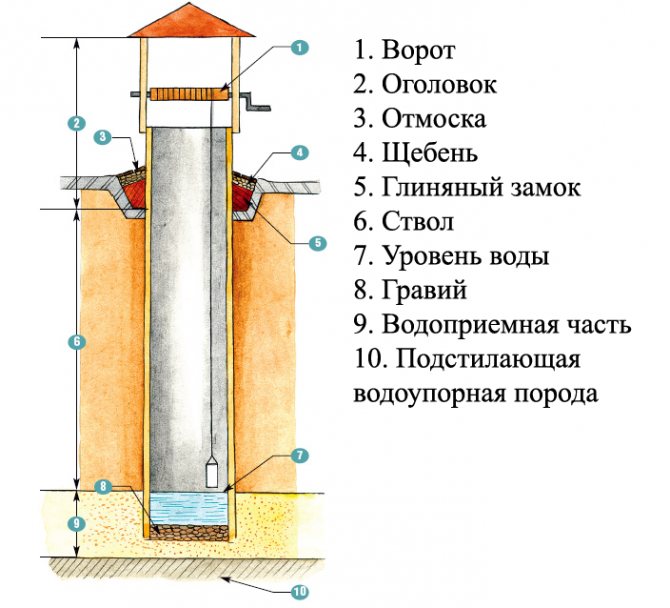
The well consists of the following parts:
- Head, which is above the ground;
- Mines - the deepening of the well;
- The receiver for water is the lower part of the well where water is collected.
The well shaft can be made of stone, brick, wood, concrete. The usual and easy option is the use of concrete rings. We will tell you more about the construction of such a well.

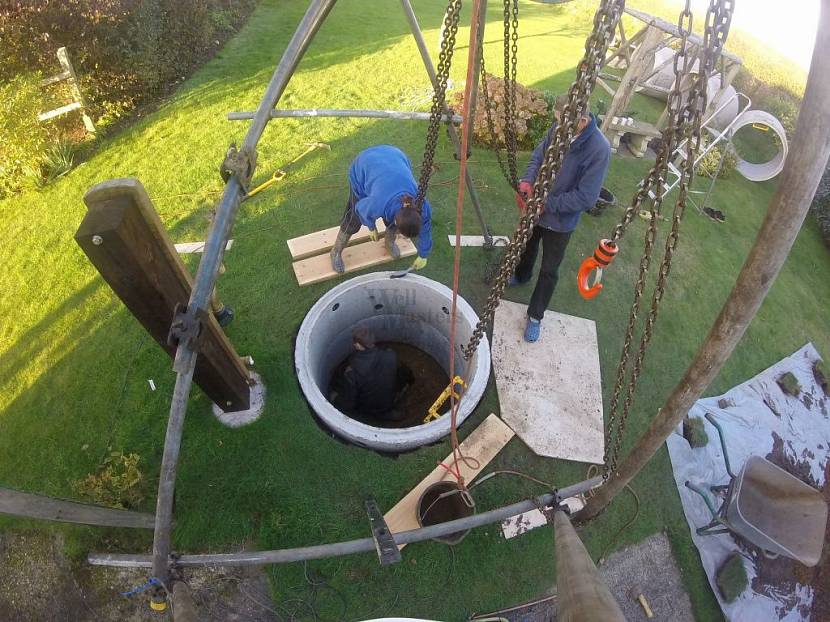

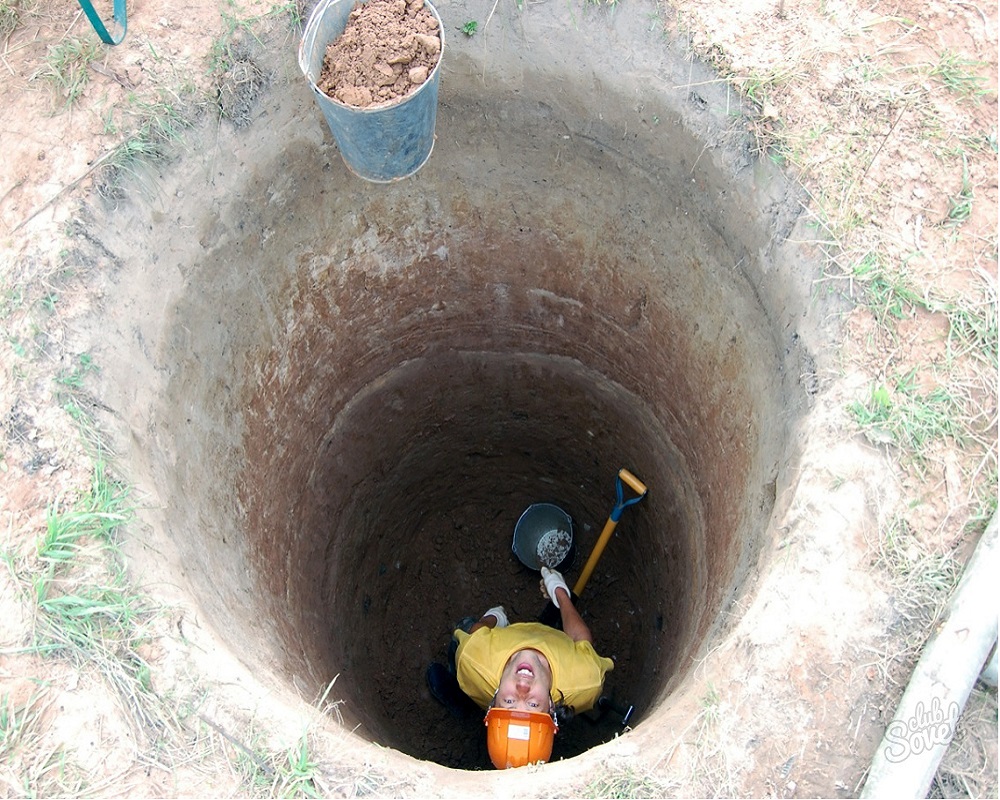


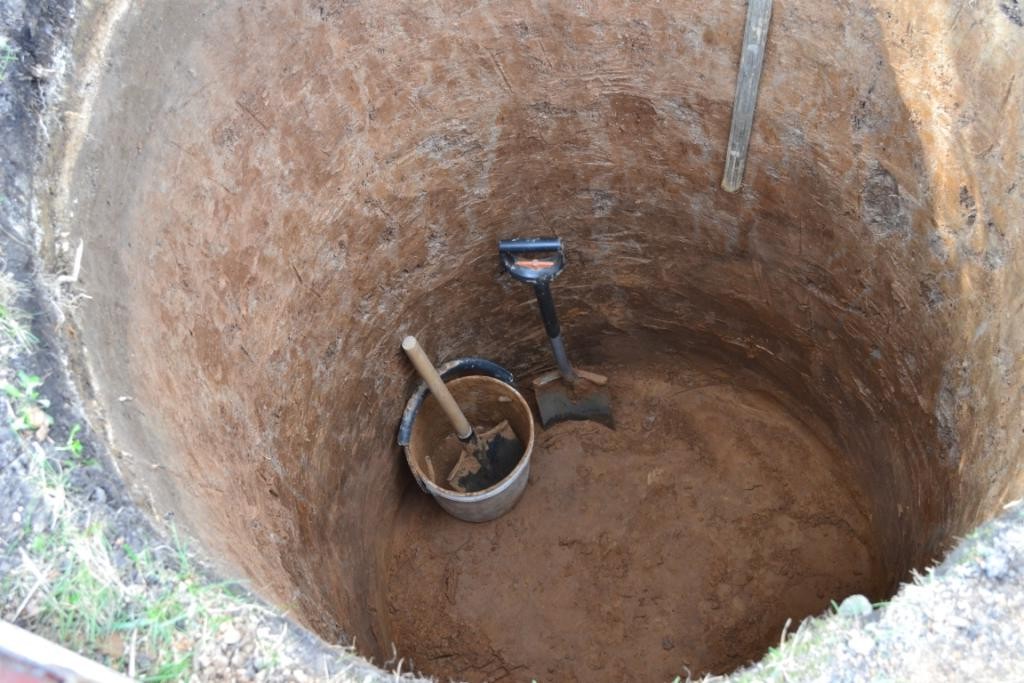
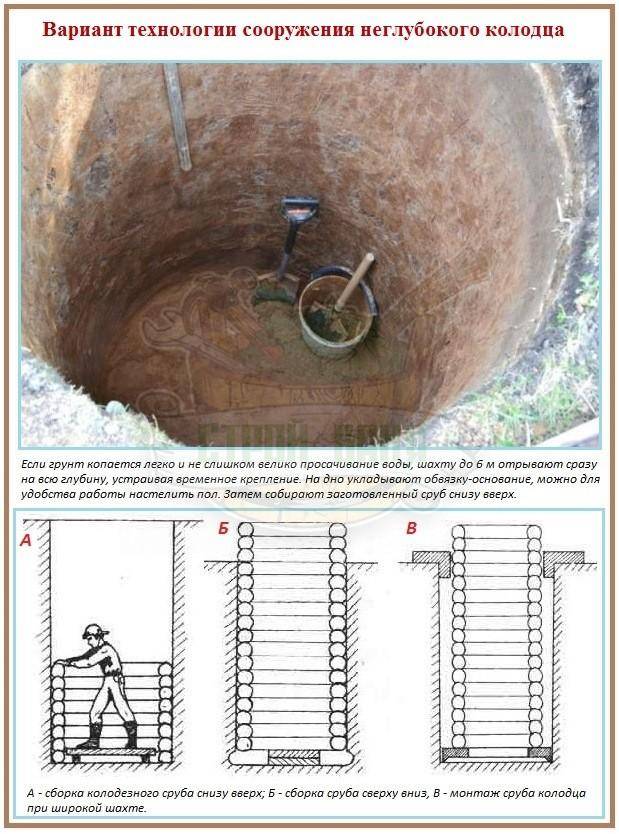
Safety
Digging a well shaft is a dangerous occupation for a person.
Therefore, you should adhere to some easy installations aimed at safety:
- It is mandatory for the worker to have a helmet to protect against the ingress of stone and soil on the head, which may fall during the removal of materials from the well;
- In the process of earthworks, it is periodically necessary to check the strength of the rope. To do this, a large and heavy sinker is hung to it;
- It is mandatory to check the reliability of all fastenings of the bucket pulling out the earth;
- Due to the fact that high humidity and cold earth are bad for health, do not stay in the well for too long, you can get sick.
The best time to dig a well
The groundwater level changes throughout the year. Fluctuations in the depth of the liquid reach 2 m. The most suitable for building a well season - after a long drought at the end of summer or in the second half of winter, when precipitation in the soil is minimal. The filling of underground sources decreases naturally.
If you dig a well with your own hands after the rains or in the off-season, it is possible that the water will leave in a couple of months and the mine will be empty.
The time for digging is chosen depending on the type of soil. Clay soils freeze with the advent of winter, the water in the capillaries turns into ice. Such land is very difficult to hollow out, it is easier to cultivate it in the warm season. Sands and sandy loams remain loose despite frosts. A well can be dug both in summer and in winter.
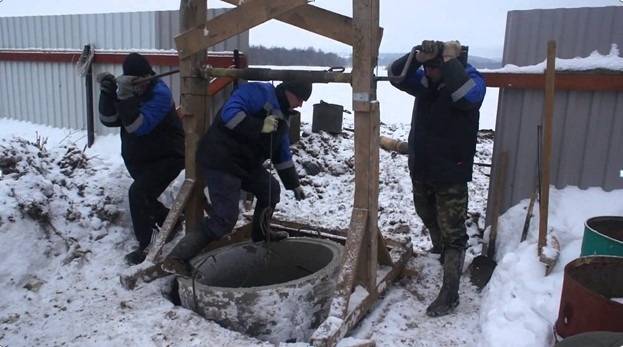
Installation of rings in winter
If there are difficulties in removing the top frozen layer of soil, specialized equipment can be involved for these works. Below the freezing depth, which reaches 0.7-1.2 m in the European part of the country, the sands are already quite loose and accessible for processing.
Another argument in favor of the winter device of the well is the prices for earthworks. They are significantly lower than in summer, when demand increases.
A team of three people digs a mine in 3-4 days. It has the equipment and well-established technology. If you work alone, it will take much more time. Sometimes it's weeks or even months - you need to select several cubes of rock. The work is complicated due to precipitation, soil erosion and possible collapse of the walls. It is necessary to arrange the structure in the right way so that you do not have to re-clean the bottom and remove dozens of buckets of crumbled soil.
Stage four. We protect the structure from surface water
To keep the well clean, it must be properly protected.Water should enter the shaft only from below, and therefore the walls must be reliably insulated. To do this, we firmly connect the rings to each other, resorting to one of two possible methods.
Well
- We drill the walls of the rings and fix them with metal brackets mounted on bolts.
- We twist the rings with steel wire, catching it on the loading eyes. To twist the wire, we use a metal rod, for example, a crowbar.
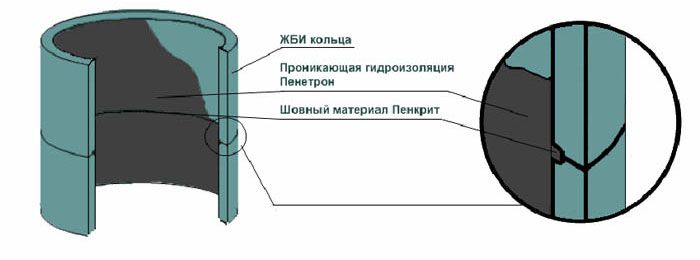
External and internal sealing of concrete rings with traditional bituminous materials We strengthen the seams according to the following scheme.
Step 1. We put pieces of linen rope in the voids between the rings (an excellent material - natural and environmentally friendly).
Step 2. We cover the ropes with a solution of sand, cement and liquid glass. In this way, we will achieve reliable waterproofing, which, moreover, will be completely neutral when in contact with water.
Step 3. On top of the upper rings, we dig a pit of a meter depth.
Step 4 We waterproof the outer surface of the rings using liquid bituminous mastic.
Step 5. We lay a thermal insulation layer around the upper rings (we can use any foamed polymer, for example, foam).
Step 6. We fill the pit around the well with clay. This is called "clay castle".


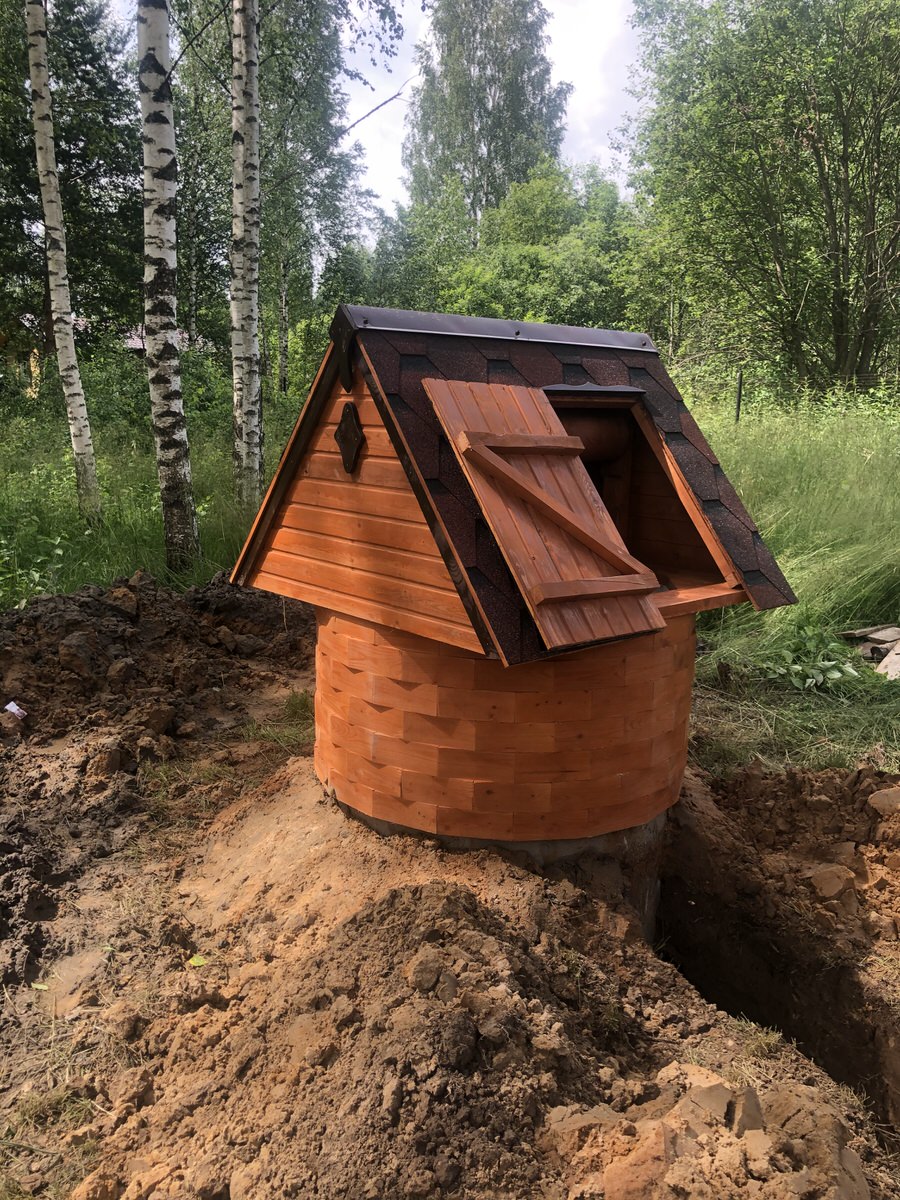


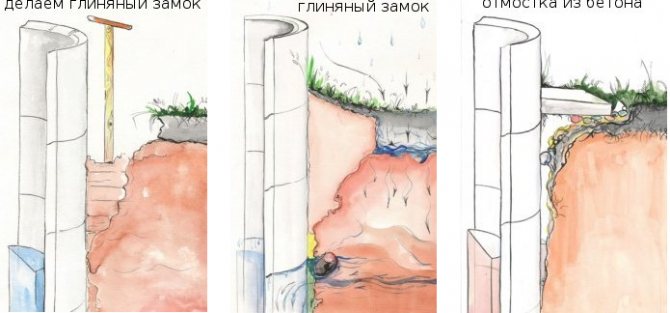
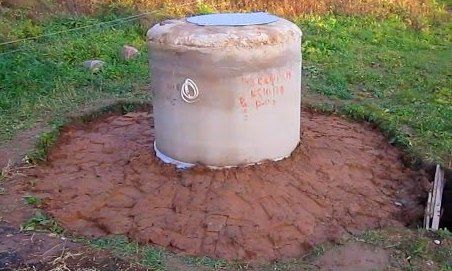
Clay well castle
On what horizon to dig a well?
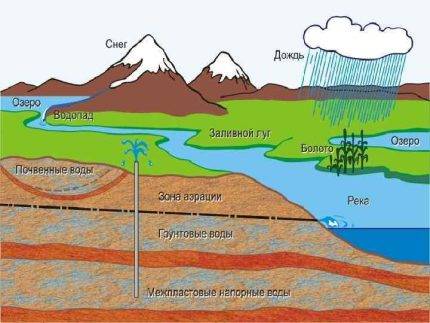
Aquifers can occur at several levels. The topmost is usually located close to the surface of the earth. This layer is called the top layer. It may be contaminated with agricultural chemicals, faecal bacteria from sewage, etc.
Verkhovodka is not suitable for feeding the well, unless the water is planned to be used exclusively for technical purposes or for watering garden plants. It should also be taken into account that during seasonal changes, the amount of water can significantly decrease or increase.
Wells are dug into the groundwater horizon. This aquifer lies below the perch. The waters in it are often free-flowing, so their level in the well is the same as in the aquifer. During the construction of hydraulic structures, groundwater is cut off from the layers of perched water to protect it from pollution.
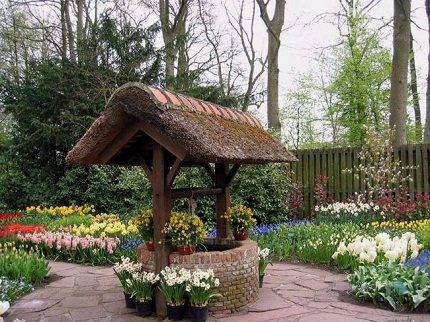
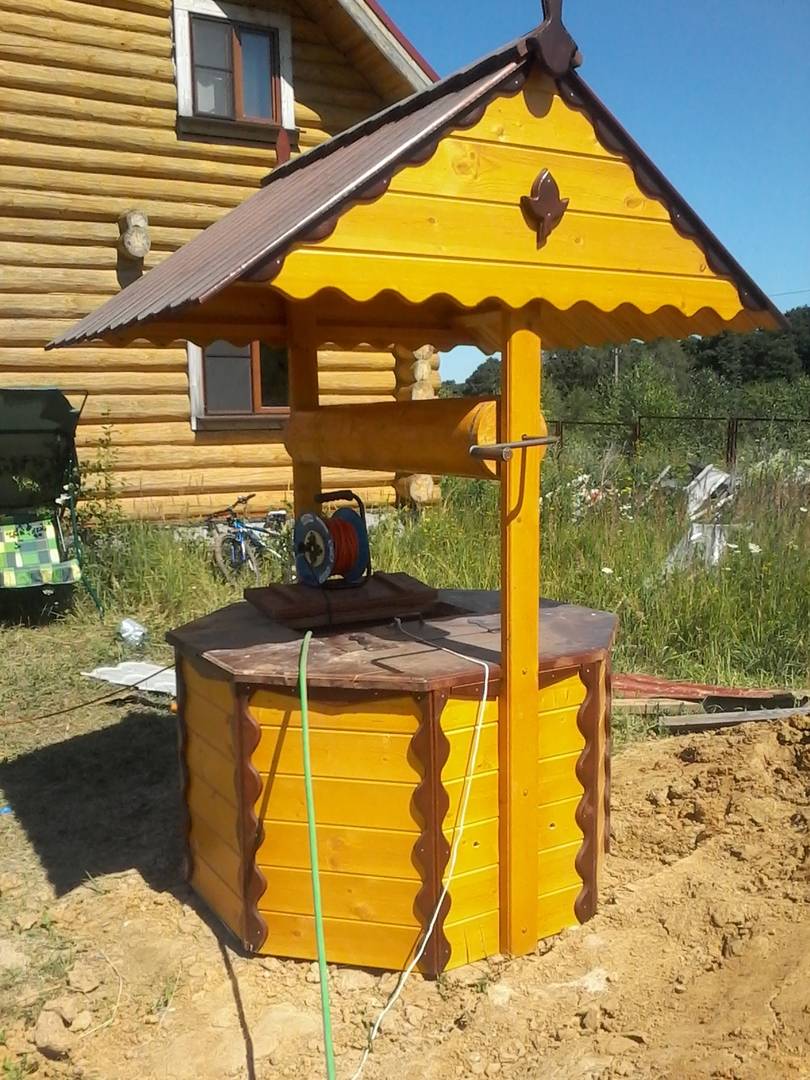
An aesthetically designed well will not only provide the site with water, but also decorate the local area
Artesian waters lie below groundwater. Wells are not dug on this horizon, and the construction of wells is very expensive. In addition, it is necessary to issue a permit for the use of water resources.
Artesian waters are pressurized, so the water level in the well is higher than in the horizon, even gushing is possible.
 Different zones of the same aquifer may differ. They have a different chemical composition, temperature, differ in degree of purity. Therefore, it is imperative to take water for analysis, even if there are wells nearby dug to the same horizon, and the water in them is good.
Well location
Where to dig a well? Of course, this is the very first question that arises at the initial stage. There are several important factors to consider here:
it is absolutely impossible to arrange a well near large sources of pollution, because the water, passing through the upper permeable layers, will absorb bad substances.This means that the well should not be located near compost, manure, garbage heaps, in the wastewater discharge area;
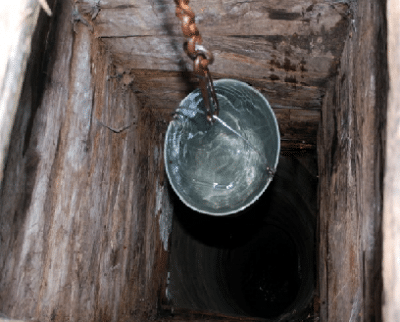
Clean water is the key to health
- the presence of water largely depends on the relief and the type of soil, for example, water may not be found on a slope at all, or it will be impossible to reach it using manual digging;
- in the country it is better to place the well closer to the place of water consumption, because this significantly reduces the cost of delivery. But close proximity is also inappropriate - at least five meters from the house.
It should also be noted that a well with an aquifer of 5-20 m is quite suitable for autonomous water supply of a summer cottage (irrigation, utility needs). And although there are wells up to 30 m, such a depth can cause complications in the future, and it is also unprofitable compared to well.
Many people believe in prejudice and use the services of shamans who advertise their ability to determine the location for a well. They used to use wicker dowsers, but today wire frames are popular. Believe or not believe these peculiar spiritualistic seances, a private matter for everyone. But if the neighbors have a well, you can safely dig it on your site, and if not, you will have to additionally drill an exploratory well.



