- Components of a private sewage treatment plant
- Liquid collection container
- sand trap
- Oil separator or oil separator
- Sorption device
- What is the danger of clogging the system?
- Use of sand traps
- Routine maintenance of outdoor drainage systems
- Roof top cleaning
- Storm drain cleaning methods
- professional methods
- Roof system cleaning
- Cleaning open systems
- Cleaning closed systems
- Main problems and features
- Emergency sewer cleaning
- Self cleaning
- Sequence of activities
- Storm sewer cleaning technique
- Surface water treatment plant
- Types of water drainage systems from the site
- Features of open drainage
- Varieties of closed drainage
- What is a private house storm sewer system and what is it like?
- Where to put water?
- Types and their features
- What is the danger of clogging the system
- Roof drain cleaning
- When Cleaning Is Necessary
- Methods for cleaning storm sewers
- Mechanical method of cleaning the rain sewer network
- Hydrodynamic method
- thermal method
- Chemical way to clean the storm system
- Features of the storm sewer device
- Appointment of stormwater
- The need for scheduled cleaning
- Additional purges
- The need for scheduled cleaning
- Additional purges
Components of a private sewage treatment plant
The cleaning system, which is used for domestic purposes, has the following structural elements:
- a special container for collecting liquid;
- sand trap;
- oil trap or oil trap;
- sorption device.
Liquid collection container
This element of the treatment system is joined directly to the storm sewer. Such a tank is designed to collect wastewater, which is formed as a result of heavy precipitation or snow melt.
The wastewater collection tank collects liquid. From this capacity, moisture enters other parts of the structure, where a phased cleaning of storm drains takes place. The main function of this tank is to protect the cleaning elements of the system from overload.
sand trap
This device is put into operation at the first stage of cleaning. The sand trap performs a filtering function and separates large particles that are contained in wastewater. Such a part is indispensable, as it is able to hold about 65% of the debris that contains sewage wastewater.
When operating the sand trap, it must be remembered that it needs regular cleaning. Checking of this equipment should be carried out at least once every 3 months, as well as immediately after a large amount of precipitation.
Oil separator or oil separator
Any treatment plant must be equipped with an oil trap or oil trap. Such equipment is designed to purify storm sewer wastewater from oil waste and oils. These substances pollute the soil, water and are emitted primarily from cars.
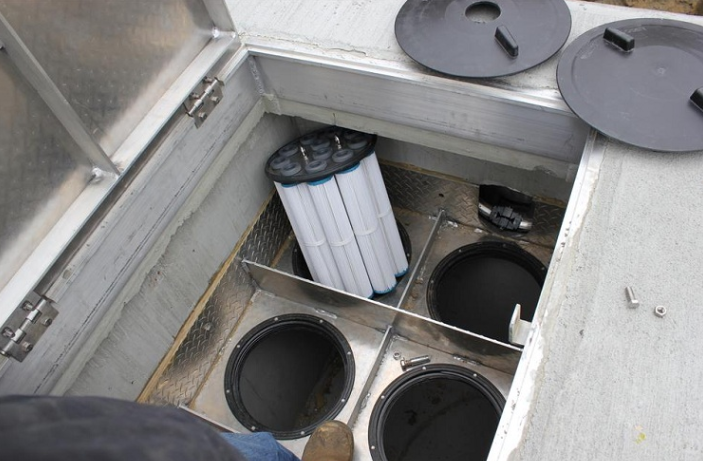
Storm water treatment
Special filters retain oil and oil products contained in the water flowing into the system.
Wastewater treatment from oil products is carried out by means of filtration. After the contaminants are filtered out, they are coagulated (combined) into larger constituents. After coagulation, oily stains fall on the surface and are removed using special equipment.
Sorption device
The sorption unit is the last stage of wastewater treatment from harmful impurities. This device adsorbs small particles that have passed through the first stage of purification, and also collects the remains of petroleum products and oils remaining in the water after the oil trap.
The sorption device is equipped with several filters that capture the smallest particles. These filters must be replaced periodically.
What is the danger of clogging the system?
If, having studied all the technologies for cleaning storm sewers, you are seriously thinking in the direction of “do I need it”, take note of the list of problems that a lack of system maintenance can lead to.
- Stagnation of water masses in pipes and gutters creates an additional load on the fasteners. They can simply not withstand and bring down the system.
- The accumulated debris clogs the drains, and the water not only undermines the base of the house, but also seeps in through the ceilings and walls - yes, damp spots and moldy finishes can be clear evidence of problems on the roof.
- Fallen fruits and berries create favorable conditions for the settlement of entire colonies of wasps, hornets, ants, and moss, mold and even mushrooms can grow under wet leaves.
- In a dry summer, debris on the roof can easily cause a fire.
As you can see, regular cleaning of storm drains is not only a matter of comfortable housing in the house, but also of your safety.
Use of sand traps
With such a device, you will prevent sand grains from entering the system, which will reduce the risk of congestion. The sand trap must be installed at the beginning of the outlet pipe. Water enters this container and exits the pipe without sediment, so all small particles remain in the formed trap.
For the manufacture of such traps, polymer concrete or very durable plastic is used. You can purchase such materials and build a sand trap yourself. In order to quickly clean it, a removable rainfall container is placed inside. They can be installed on sidewalks, platforms and under roofs, in places that require it.
Routine maintenance of outdoor drainage systems
In order for your gutter system to be able to serve the entire stipulated warranty period and even longer, it needs periodic preventive inspection and cleaning from external contaminants and debris. It is pollution and debris that most often cause stagnation of water in gutters and storm pipes, disrupting the functionality of the entire system and often leading to violations and damage to its elements. As a result of the accumulation of debris, water stagnation, metal corrosion or the appearance of hardened dirt occur.
First of all, when inspecting, it is necessary to pay attention to such places that are most often subject to obstruction of the passage of debris: this usually occurs at the junctions of system components. In such cases, it is necessary to clean the drains from debris. Debris and leaves from gutter systems must be removed periodically.
Debris and leaves from gutter systems must be removed periodically.
During operation, damage to the elements of gutters occurs due to mechanical influences. Particularly frequent consequences are the appearance of cracks after hail, ruptures and deformations after freezing of water at low temperatures.
Roof top cleaning
When identifying places where water does not drain into the sewer, check the elements of the system most prone to water blockages, such as gutters, places where water enters the pipes, starting with the elements installed on the roof, and then work down the level.
If a blockage is found, remove debris, leaves, etc., i.e. use a mechanical method. To protect the system from debris entering it, a special grate or cap is used, mounting them in places where water is drained, they can also cause the system to fail to function, and you will have to resort to the hydrodynamic method to clean them.
Storm drain cleaning methods
As a rule, storm sewer maintenance is recommended to be done once or twice a year. Be sure to inspect the system in the spring, after the bulk of the snow melts. It does not hurt to audit the condition of the stormwater in the fall.





professional methods
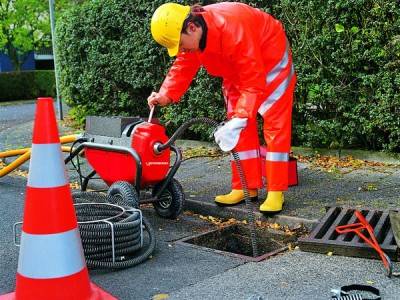
Companies that clean sewer systems professionally use the following methods:
- Mechanical, that is, simple removal of dirt and punching plugs.
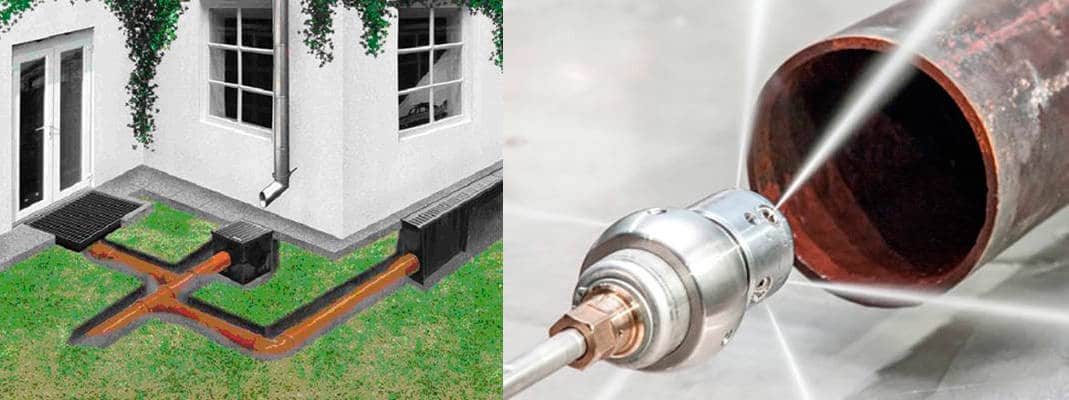
- Hydrodynamic - cleaning pipes with a jet of water supplied under pressure.
- Thermal - the use of hot water or steam.
- Chemical - the use of various reagents that can destroy blockages, but are harmless to pipes.
In practice, hydrodynamic cleaning of the storm sewer system is most often carried out using mechanical ones.
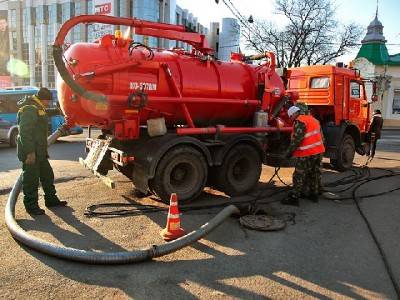
Roof system cleaning
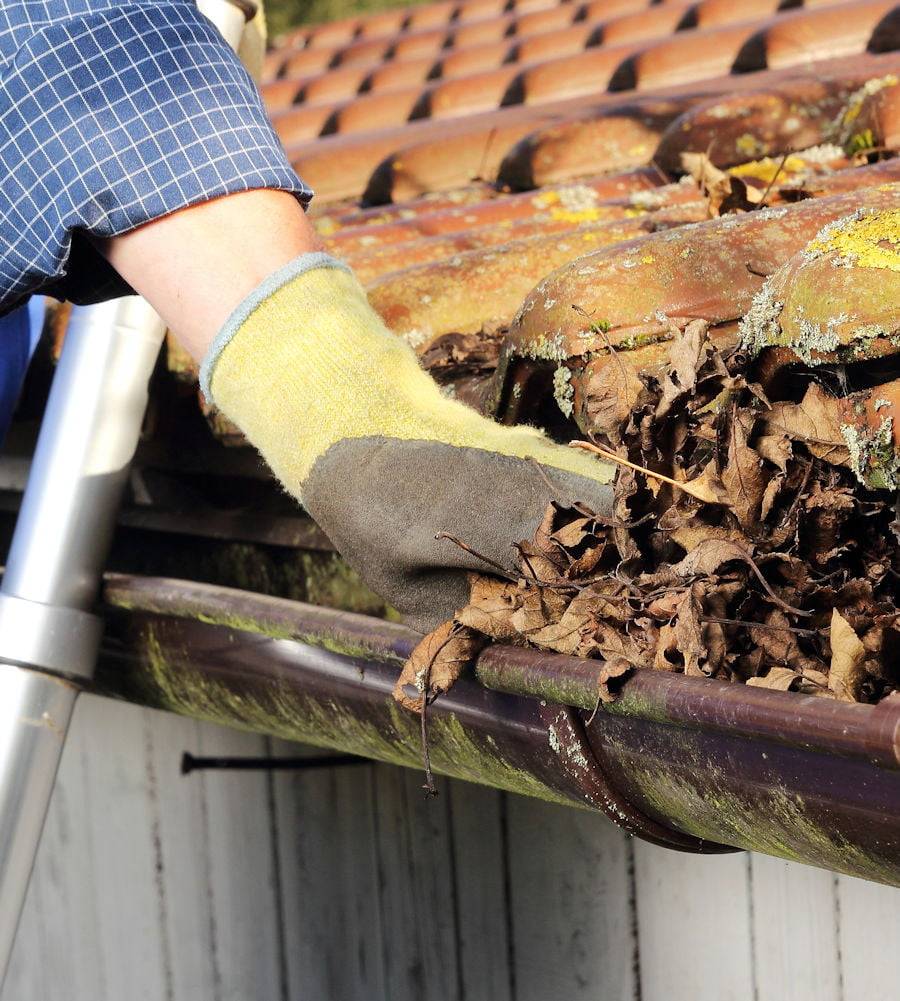
If the water after the rain began to stagnate, then you should start inspecting the system from the roof of the building. There are gutters, funnels, downspouts. Make sure that these devices are not filled with debris, and if a blockage is found, remove it. As a rule, gutters are cleaned mechanically, simply by collecting leaves, branches and other debris that have accumulated in them.
Since the water intake funnels are protected by gratings or caps, blockages in them occur less frequently. However, if the storm sewer stops working, these devices can be cleaned using the hydrodynamic method, that is, by supplying pressurized water from a hose.
Cleaning open systems
If an open type storm drain is used on the site, then it will not be difficult to clean it. For this you need:
- Remove the grids covering the trays.
- Remove the accumulated debris in the channel.
- Flush the channels with pressurized water.
- Install the grids in place.
Cleaning closed systems
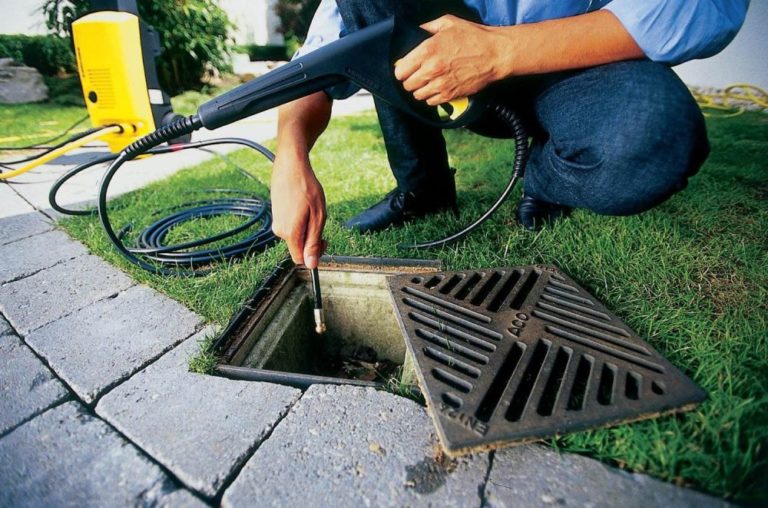
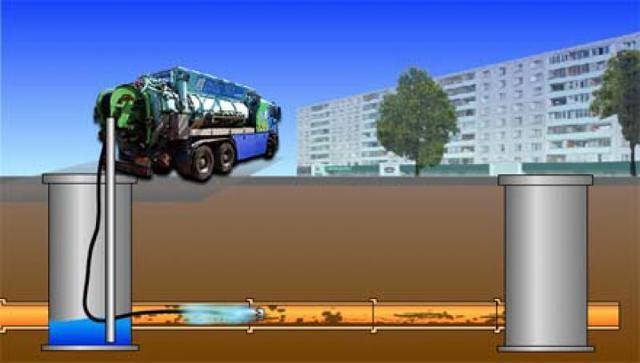
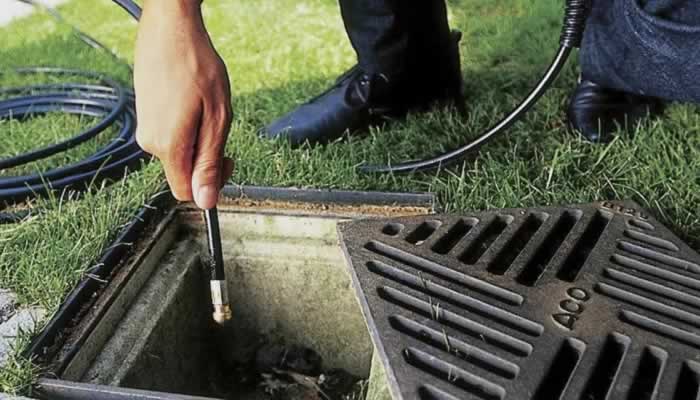
It is much more difficult to clean systems assembled from pipes laid underground. In this case, a hydrodynamic flushing of the storm sewer pipe system is carried out. The essence of the method lies in the fact that a jet of water under pressure is supplied to the system.
Strong water pressure can break the plugs of sand and debris, and flush out the accumulated contaminants from the system. As a result of such actions, the performance of the system is restored.
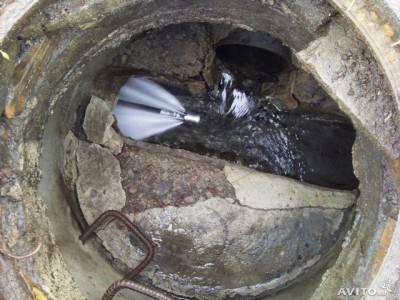
The possibilities of carrying out this method of cleaning pipes depend on their diameter. So, if pipes with a cross section of up to 200 mm were used to assemble the system (and when arranging storm drains in private areas, this most often happens), then it will be possible to flush the system using a household car wash that can supply water under pressure up to 350 bar. For flushing larger pipes, professional equipment must be used.
Main problems and features
An open type drainage system is one of the most popular and easy-to-perform ways to solve the problem of excess water. Manufacturers produce trays, gutters and drains of any color and size - choosing the most suitable stormwater design will be quite simple.
Closed systems are more difficult to install. For their correct assembly, it is necessary to make calculations that take into account the level of groundwater and the amount of precipitation in a particular area. It is not always possible for the owners to make such calculations.
Therefore, it is practiced to contact architectural bureaus or city water utilities, whose specialists can help to correctly calculate the diameter and length of pipes, as well as determine the system configuration. Sometimes additional installation of pumping equipment is required, without which water cannot drain into the collector.
A mixed type of storm water is an ideal solution for saving the family budget. Small areas are served without problems by compact engineering structures located around the house and in the adjacent territory.
Emergency sewer cleaning
Are you in need of an emergency call? Emergency cleaning of sewer pipes is carried out at any time of the day in Moscow and the Moscow region.And at the same time, we not only eliminate the resulting blockage, but also restore the normal functioning of the entire sewer system as a whole.
The quality of work performed, an integrated approach, highly qualified specialists and the performance of work of any degree of complexity in cleaning sewer systems is our main competitive advantage. Professional equipment, many years of experience, a well-functioning system of cleaning - a guarantee of the quality of the work performed.
The company "Aquatechno" will provide you with a high-quality organization of emergency work in the shortest possible time with a miscalculation of the necessary material costs.
Self cleaning
The simplest, accessible to an amateur method of cleaning storm drains is mechanical, for cleaning an open system for removing atmospheric water. Under the mechanical cleaning of storm drains here we understand the removal of contaminants from gutters, channels, trays, gratings manually. At the same time, improvised tools are used: scrapers, brushes, brushes, shovels. The final stage of manual cleaning is washing the channels with a pressure of water from a hose.
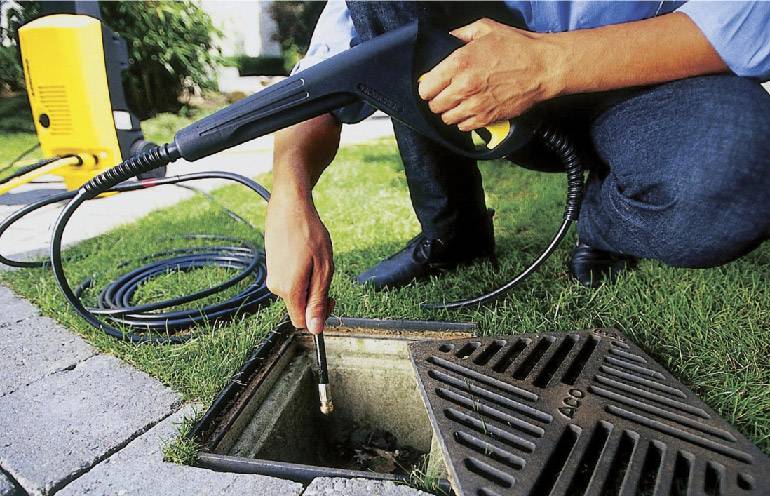
For washing pipes of small diameter, up to 20 cm in diameter, you can use a Karcher car wash. With its help, it is convenient to remove pollution from storm drains after heavy rains, when there is no traffic jam yet, but its formation is more than possible.
Sequence of activities
If your home has a clogged sewer, then, first of all, you should identify what type of pollution is present. In fact - determine which foreign body got into the pipe and caused the problem.
For starters, you can use a plunger.This is a simple technical device, which can be purchased at a regular hardware store. However, its use is sometimes very useful.
So, place the fixture in the sink or bathroom so that its rubber element is securely attached to the drain, and water is on top. Do not forget to pre-block the overflow hole - often it is located either on the side, or even at the top of the bath itself.
Move the instrument rhythmically once or twice, alternately raising and lowering it.
There is a high probability that after such an event the problem is successfully leveled - a tool such as a plunger successfully creates a vacuum and also leads to a pressure drop, as a result of which even solid debris moves through the pipe and leaves it.
Interested in Cleaning do-it-yourself grease traps - working methods
Storm sewer cleaning technique
If this is an open drainage system, then in most cases, to eliminate the blockage, it is enough just to carefully remove the protective covers from the trays and use a shovel or scoop to eliminate the obstacle to water. And sometimes even a jet from a hose is enough for this.


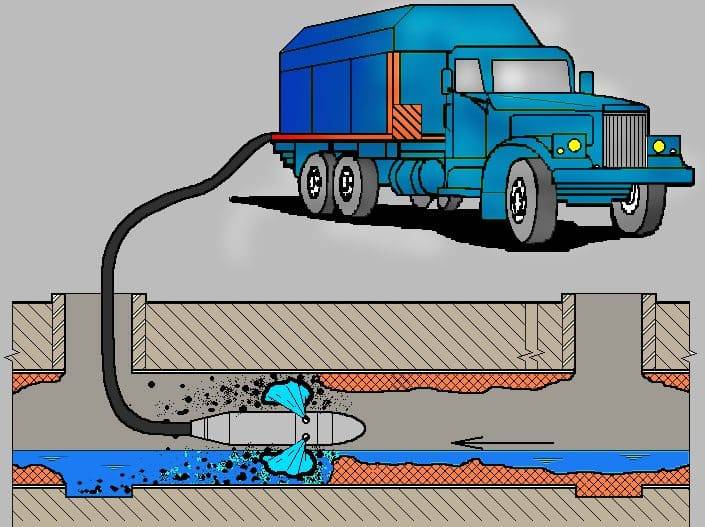
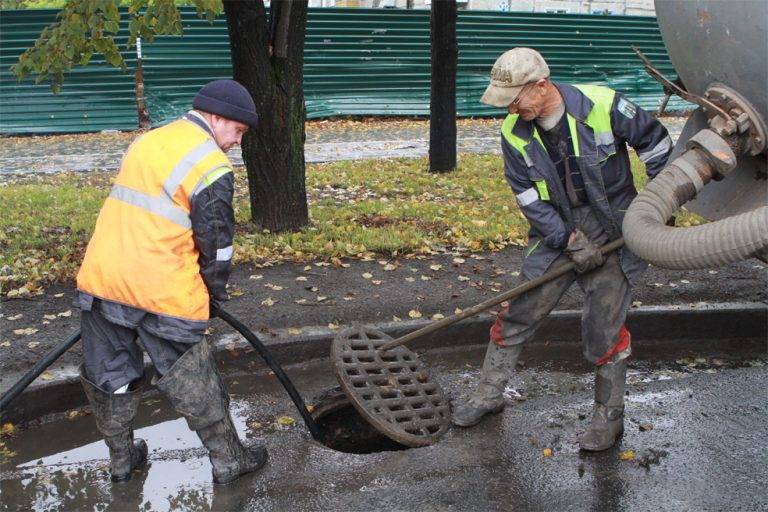
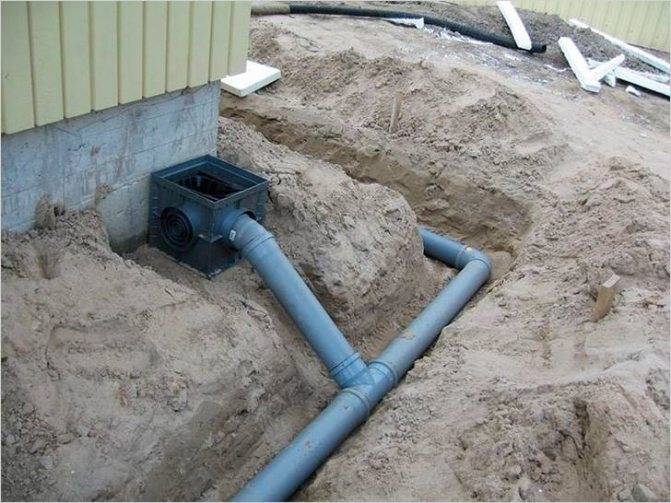
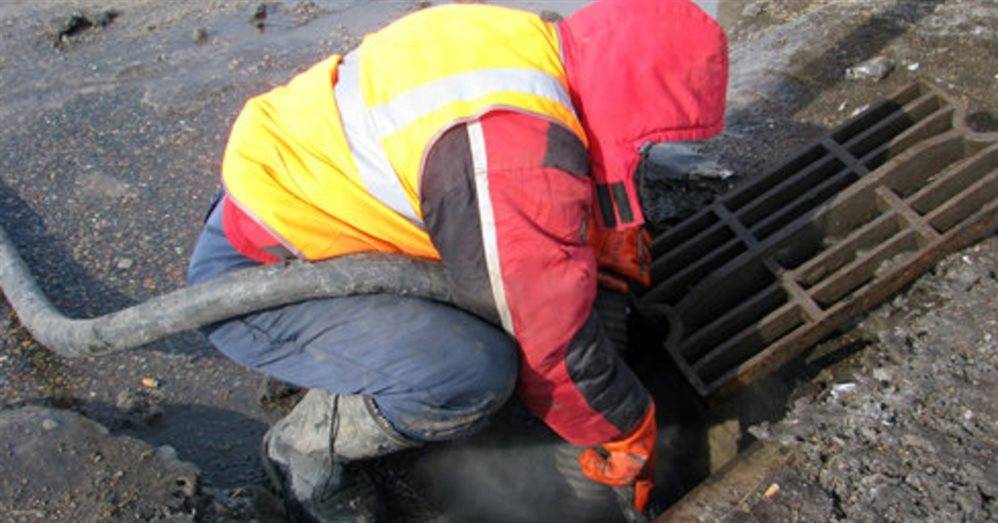
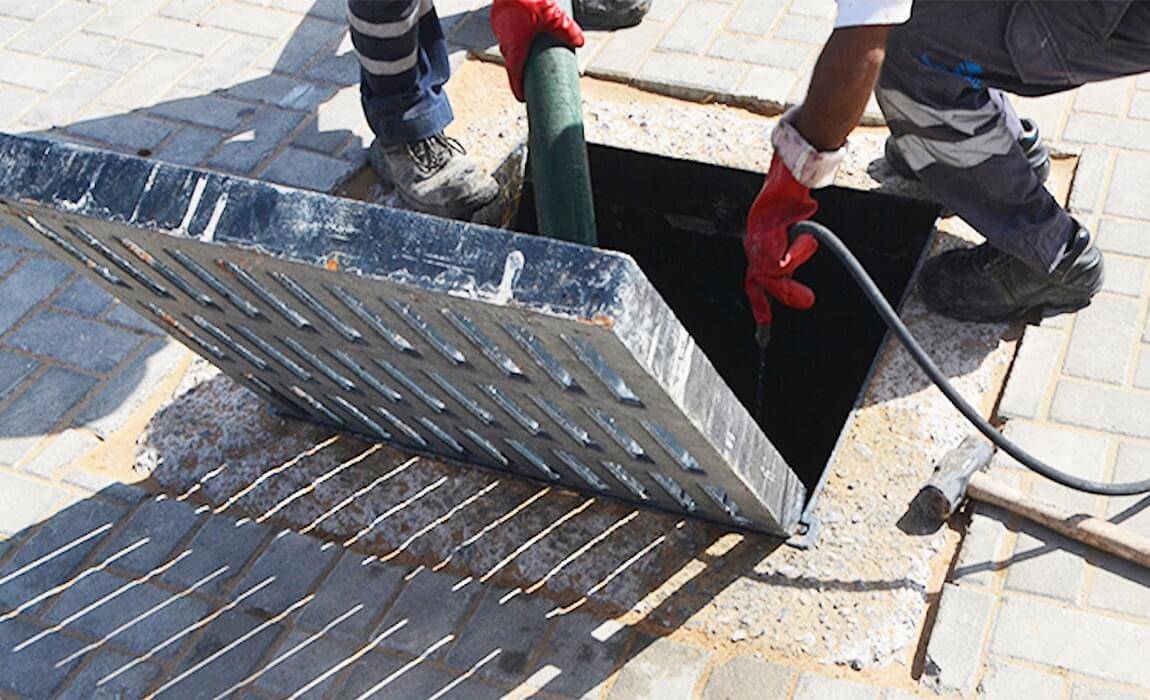
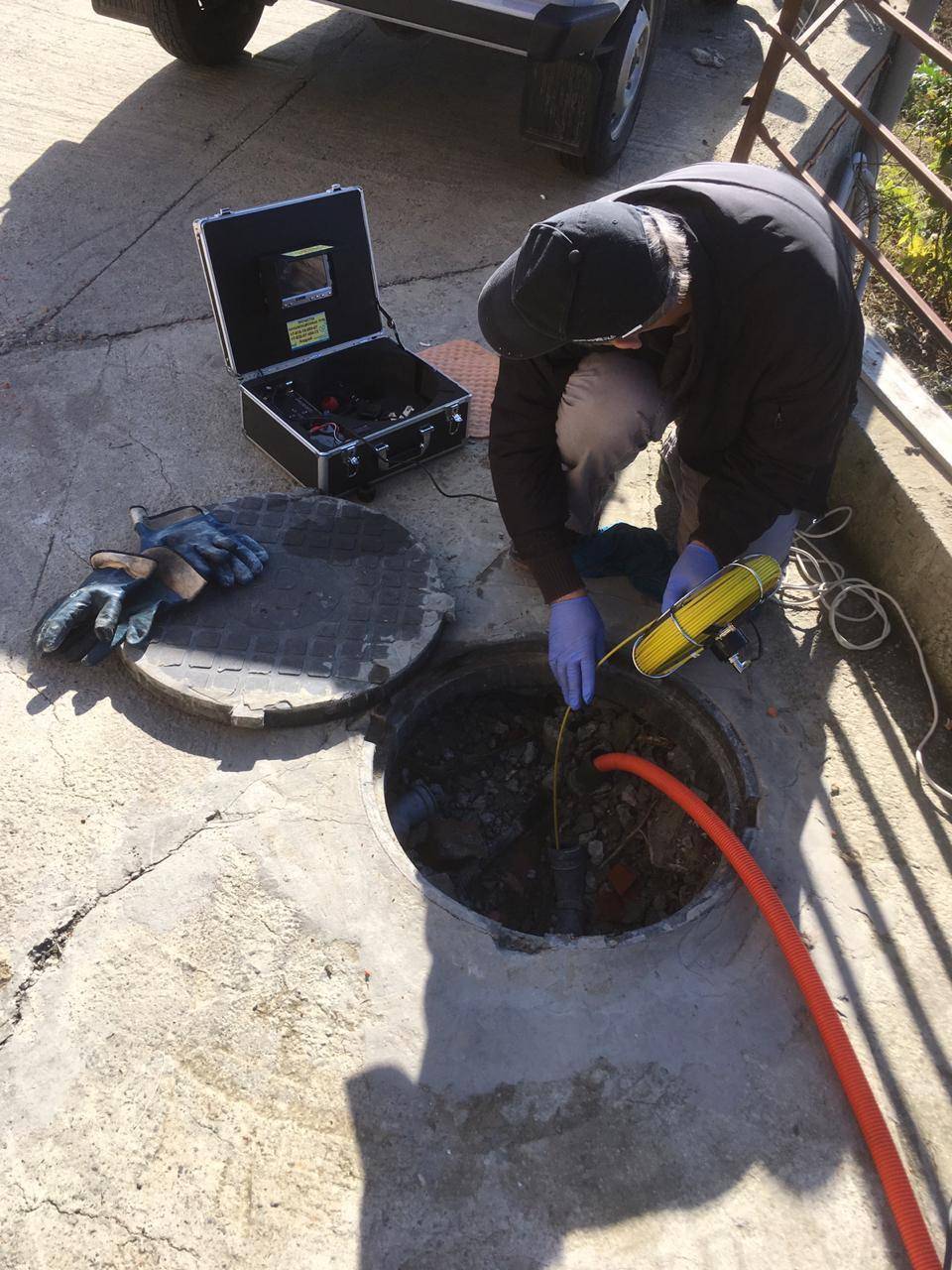
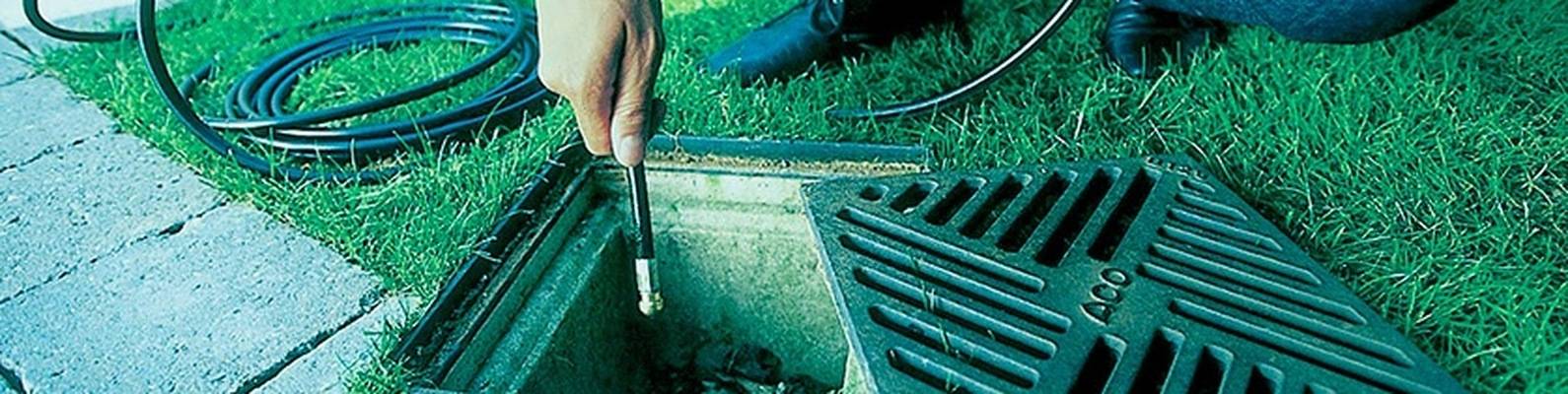
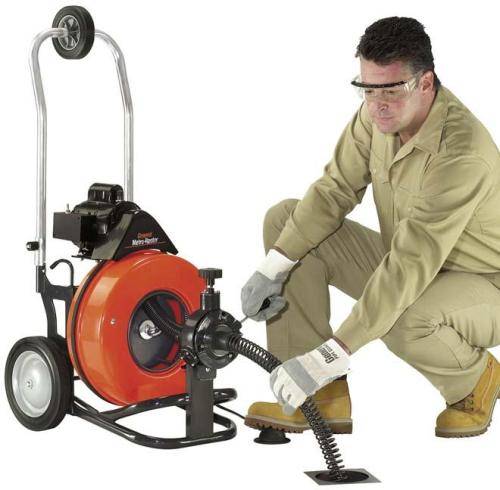
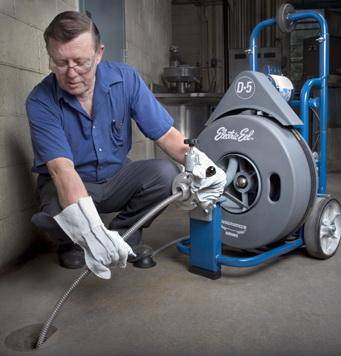
Cleaning a closed storm drain is a little more complicated, but quite affordable for self-conduct. First of all, it is necessary to remove and thoroughly clean and rinse the filters of storm water inlets and sand traps. If this does not help, then the main blockage falls on underground pipes, for which it is best to use a plumbing steel cable to clean.To do this, insert the free end of the cable into the pipe as close as possible to the intended blockage site and, while rotating the handle, try to push it through to the blockage site. Having reached the blockage, you need to continue rotating the cable until it breaks through the blockage. Usually it is enough to just punch a small hole in the blockage, and the accumulated masses of water will independently complete the cleaning, rushing down the system and taking the particles of the blockage with them.
Surface water treatment plant
Stormwater treatment plant (VOC) is an effective storm sewer system, the main purpose of which is to receive, purify and drain rain, melt and irrigation water from residential areas and enterprise sites from oily, oily and other types of impurities, as well as solid particles. To ensure that the water level at the outlet corresponds to the parameters that allow its further discharge into the centralized city sewerage, into water bodies for domestic, recreational, and also fisheries purposes. Storm sewage treatment plants are used for parking lots, car services, parking lots, gas stations, highways and industrial enterprises.
The local treatment system includes several facilities in separate buildings located in a specific order, or monoblock (when several functional units are located in 1 building). The availability of these and other stormwater treatment designs depends on the needs of the area, the type of wastewater and the individual goals of the enterprise. It:
- distribution well;
- sand separator (sand trap);
- oil and petrol separator;
- UV disinfectant for water;
- sorption filter;
- well for sampling;
- post-treatment blocks;
- storage containers.
When connected to the system of such storm / rainwater treatment facilities as a sand and oil separator and an oil and petrol separator, the liquid at the outlet will have a degree of purification: up to 20 mg/l for suspended solids and up to 0.3 mg/l for oil products.
The sorption unit in the system ensures the level of effluent purity in accordance with the standards for water discharge into fishery reservoirs, and reaches the following indicators: up to 3 mg/l for suspended solids and up to 0.05 mg/l for oil products.
Treatment facilities for storm sewage (storm drains) of the Rainpark trademark have a number of advantages, namely:
- All products and components are made from durable innovative raw materials;
- Structures are resistant to the effects of the environment and aggressive substances;
- The compact dimensions of the products, which allows you to place treatment systems in limited areas;
- Rainwater treatment plants are completely ready for installation and operation;
- The ability to clean structures from accumulated dirt;
- Service life - about 50 years;
- If necessary, you can use a bypass line (bypass);
- The ability to adjust the height of service wells, which allows you to install structures at a given depth of the route;
- No need to construct additional buildings and structures.
Types of water drainage systems from the site
There are many drainage schemes, but all varieties can be combined into three large groups: open, closed and combined. In accordance with this, there are three main types of drainage structures: surface, deep and also combined. Consider the features of each.
Features of open drainage
Water is collected by open drainage thanks to a system of ditches and trenches, that is, objects that are not covered by a layer of earth from above. They arrange it to collect and drain water from the soil-vegetative layer, i.e. for site drainage. The principle of operation of an open system is based on the ability of underground water to rush into the space freed from soil, as it flows into a well.
They arrange an extensive network at a slight angle so that the water flowing into the grooves moves by gravity beyond the boundaries of the site (quarry or fire reservoir) or accumulates for irrigation in a storage well.
The walls of the grooves of an open system, if necessary, are strengthened with compacted crumpled clay, laid out with cobblestones or tiles. It is permissible to carry out reinforcement with flexible branches of shrubs or suitable trees woven together.
In order for the water inlets of the drainage system of the site not to be clogged with debris and foliage, sometimes protective gratings are installed over the ditches
The end point of the water collection of the floating drainage system is natural (rivers, lakes, ponds) and artificial reservoirs, as well as ditches, ravines, quarries located behind the fences of the suburban area. The storage type drainage network involves the collection of transported underground water into a storage well.
- coverage of all points of water accumulation;
- calculation of the slope of drainage trenches;
- ensuring system protection from clogging;
- measures to prevent the emergence of new wetlands;
- the location of the water collector at the lowest point of the relief.
The norms of the slope angle of the channels depend on the type of soil: for clay from 0.002, for sandy - from 0.003.
There is an opinion that open drainage is not aesthetic.This is not so, because many ways have been developed to beautifully design outdoor drainage systems.
One way is to use a pump to make a small waterfall or stream. In the dry season, the rocky or pebbly bottom turns into a “dry stream”, which also looks very attractive among the greenery.
A significant drawback of open drainage lies in a noticeable reduction in the usable area of the site. There are restrictions on the depth of cuvettes and grooves, because it is not customary to arrange them below 0.5 - 0.7 m from the daylight surface.
If it is necessary to build a drainage system at a greater depth, it is necessary to increase the width of the trenches, arrange transitional bridges, and carefully consider the drainage scheme so as not to impede the movement of people and personal equipment around the site.
Varieties of closed drainage
For the arrangement of closed drainage, an engineering project will be required, since all elements are underground, and the functionality of the system depends on their correct location. There are local and general types of deep drainage.
If you need to protect the foundation of only one building or divert water from the road - this is a local variety, if you decide to drain the entire area - a common one.
Local types of systems, in turn, are divided into:
- wall-mounted (in clay soils, on the surface, along the perimeter of buildings - houses, baths, garages);
- reservoir (in the ground under the building);
- ring (in sandy soils, around buildings, below the foundation).
All of the listed types of closed drainage serve to prevent the foundation from underflooding, as well as to protect against infiltration of groundwater into the basements and basements.
Depending on the location of the drainage pipes, the systems are divided into various types: horizontal (most in demand in summer cottages), vertical and combined.
All of the listed types (wall, ring and reservoir drainage) belong to the horizontal variety. Pipes are placed with a slight slope under the foundation or around it.
For the arrangement of the vertical system, pumping equipment is used. This is a complex structure, so it is rarely used for the improvement of the private sector. Accordingly, the combined type of deep drainage is not common.
What is a private house storm sewer system and what is it like?
In regions with a high amount of precipitation, it is necessary to divert rain and melt water somewhere. If this is not done, the paths are gradually destroyed, the earth in the yard becomes limp, and then dries out for a long time. If you still do not make a blind area around the house, rainwater will wash and gradually destroy the foundation. In general, rain sewerage in a private house - a guarantee of the longevity of your home, order and neat appearance on your site. This type of engineering systems is also called stormwater or rainwater drainage.





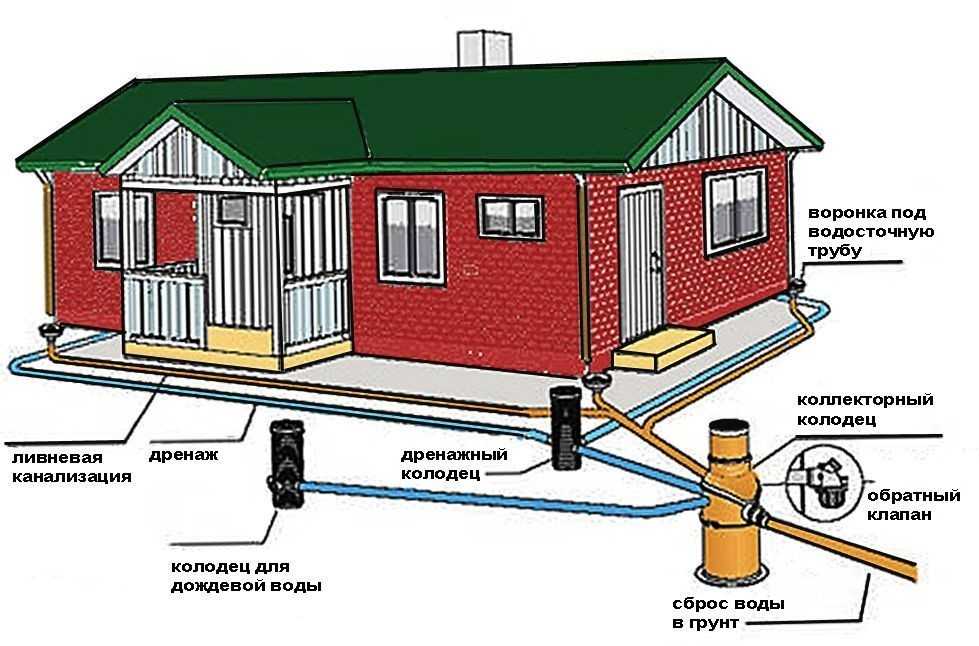
Storm sewer device
The composition of the system is as follows:
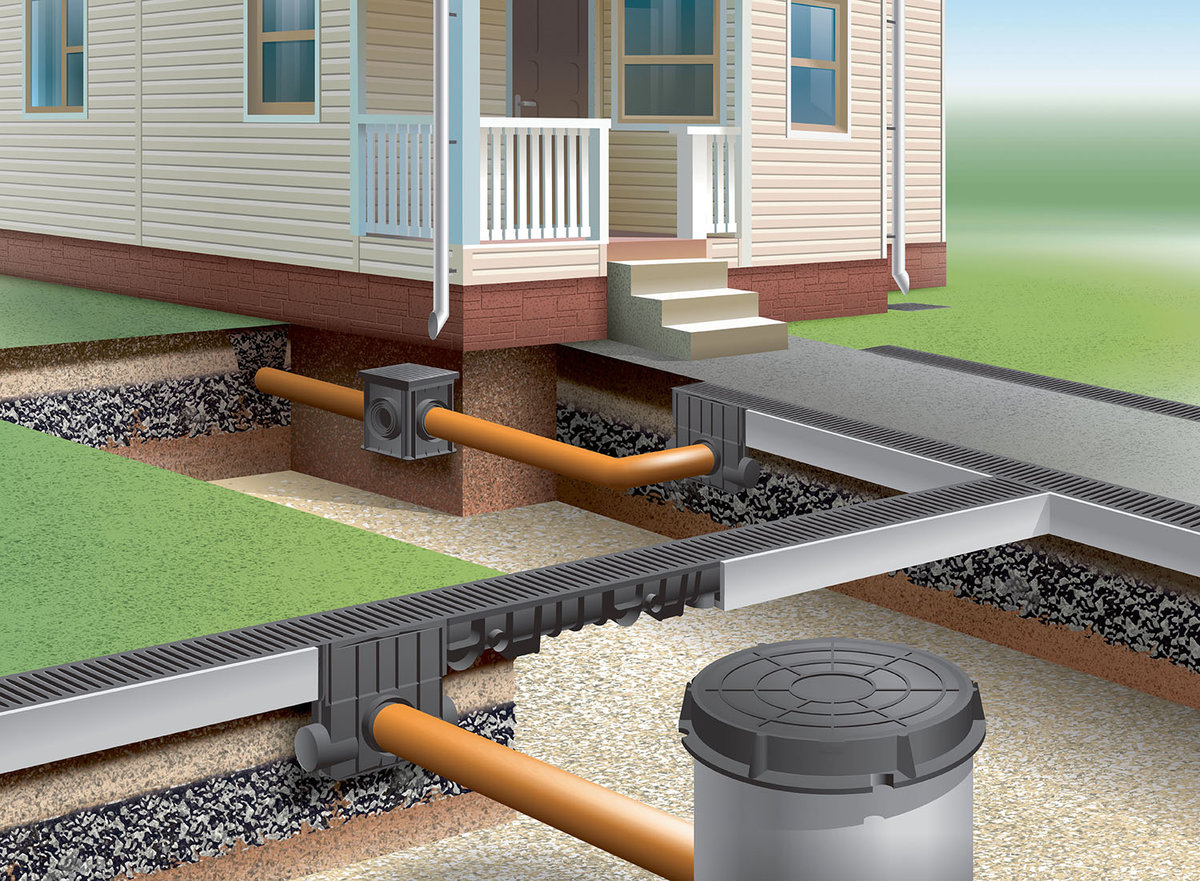
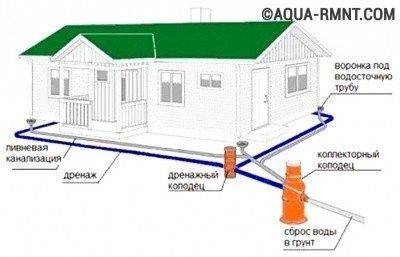
- Roof drain systems. These are gutters fixed along the bevels, into which rainfall from the roof is collected. They flow down through the installed funnels and drainpipes.
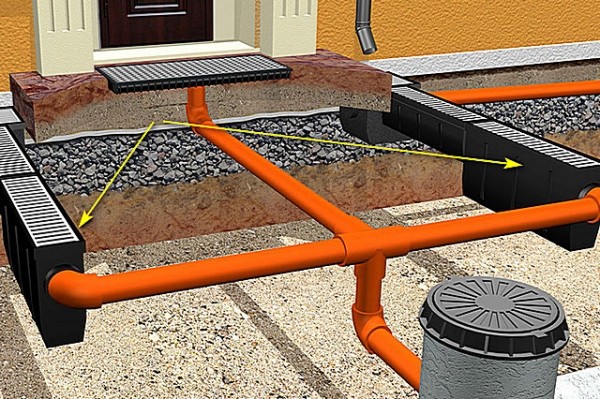
- A certain number of rainfall receivers on the ground (receiving funnels, storm water inlets, linear drainage systems, sand traps). They are arranged in such a way as to receive precipitation as efficiently as possible.Typically, point receivers or funnels are placed under drainpipes, several receivers are placed on concrete, asphalt sites, where paving slabs are laid. Linear receivers are placed along the tracks, and in order for the water to drain normally, the coating is laid with a slight slope.
- A system for storing, redistributing or dumping sediments.
Where are the parts installed?
Where to put water?
Most of the questions arise with what to do with the rapidly pouring precipitation. Firstly, a storm sewer in a private house can become a supplier of water for irrigation. To do this, all the pipes of the system are reduced to a large container or several containers, and from there, using a pump, they can be pumped into the irrigation system.
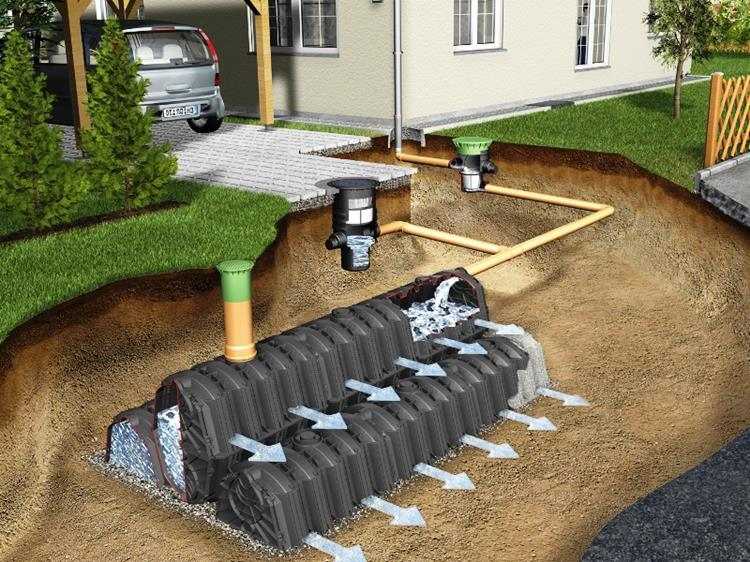
An example of rainwater discharge to the ground
Secondly, if there is nothing to water or nowhere to put such a volume of liquid, it is possible to divert storm water into a centralized sewer, a gutter located near a reservoir. If these opportunities cannot be realized, they arrange a system for discharging water into the ground. These are perforated plastic pipes buried below ground level.
Types and their features
Storm sewers in a private house can be of three types:
- Underground. All parts of the system are below ground level. From the point of view of aesthetics, this is excellent, but it requires a large amount of land work and fairly large investments. It is possible to equip such a system during construction or a complete alteration of the site. There are two types - freezing and not. Freezing in winter and early spring do not work, but their device is simpler - the depth of occurrence is usually less than a meter (minimum - 30 cm). For non-freezing storm drains, laying pipes below the freezing depth of soils is required.It has its own for each region, for Central Russia - about 150-170 cm. The pros and cons are immediately clear - a large amount of land work, and therefore their high cost.
Storm sewage in a private house: hidden (underground) type
- Overhead. Storm drains of this type are drainage gutters in the coating, through which water flows to a certain place or is discharged into the garden / vegetable garden.
The simplest open-type stormwater
- Mixed. Part of the rain sewer is made in the ground, part - from above. The best option both in terms of costs and in appearance, and in terms of the amount of funds required.
In each case, you have to design your own scheme - there is no single recipe. Each has its own site with its features: the absorbency of the soil, relief, building, layout.
What exactly needs to be done is to divert water away from the house. This can be done as in the photo above - by installing gutters in the path and draining water onto the lawn. But this is just one of many options. The second place where it is desirable to divert water is a vast paved area. As a rule, large puddles form here, which are difficult to deal with. You can solve the problem by making one or more water collection points - put point storm water inlets and divert water according to one of the recipes.
What is the danger of clogging the system
If, having studied all the technologies for cleaning storm sewers, you are seriously thinking in the direction of “do I need it”, take note of the list of problems that a lack of system maintenance can lead to.
- Stagnation of water masses in pipes and gutters creates an additional load on the fasteners. They can simply not withstand and bring down the system.
- The accumulated debris clogs the drains, and the water not only undermines the base of the house, but also seeps in through the ceilings and walls - yes, damp spots and moldy finishes can be clear evidence of problems on the roof.
- Fallen fruits and berries create favorable conditions for the settlement of entire colonies of wasps, hornets, ants, and moss, mold and even mushrooms can grow under wet leaves.
- In a dry summer, debris on the roof can easily cause a fire.
As you can see, regular cleaning of storm drains is not only a matter of comfortable housing in the house, but also of your safety.
Roof drain cleaning
In general, it is recommended to start the inspection of the entire storm sewer system from the roof and right under the roof. First of all, the accumulated debris in the gutters, downpipes and funnels is removed. As a rule, the usual mechanical cleaning method is used in this case.
Stormwater elements located under the roof, as a rule, are equipped with special gratings, so it is unlikely that debris will accumulate in them. But, if this nevertheless happened, then it would be preferable to use the hydrodynamic method of cleaning - that is, under a powerful pressure of water.
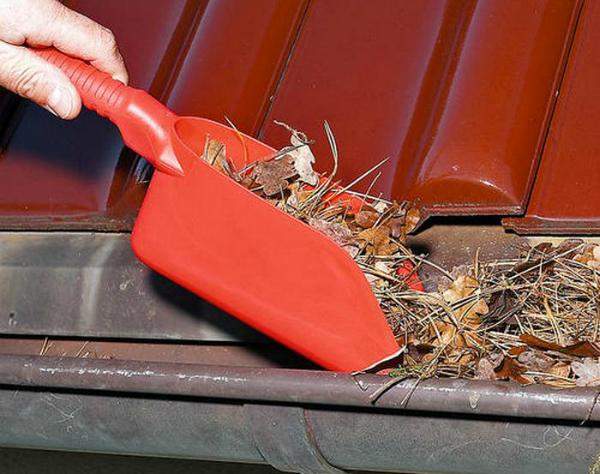
Cleaning of sewerage elements is necessary for arranging blockages that occur as a result of the accumulation of foliage and dust.
When Cleaning Is Necessary
Household users should be aware that problems do not always appear suddenly. For example, sewer cleaning is required after oil products or lime enter it. The second common reason is the ingress of silt into the pipes. In this case, you need to dig everything out. Local repairs are not enough.Malfunctions often arise due to the mistakes of the site owners themselves or neighbors. For example, improperly carried out earthworks provoke the ingress of soil into the system.
To be effective, storm drains must be cleaned regularly.
The geological and geographical features of the area should not be written off. If the site is located near a hill, then heavy rains will bring a lot of silt and other dirt.
In addition, problems may arise due to other circumstances:
- Pet activity;
- Construction and installation works carried out nearby;
- If the sewer system of the site is connected to the general one, then the breakdown of one provokes a chain reaction;
- Incorrect flushing;
- Partial shift of the building foundation.
Storm sewers of closed and open type can fail for many reasons
The sooner the owner of the site pays attention to the breakdown, the better. Regular preventive inspections can help reduce downtime due to a malfunction.
They are held after rain, hurricane and other vagaries of nature.
Methods for cleaning storm sewers
Currently, storm sewer cleaning can be done in the following ways:
- mechanical;
- thermal;
- hydrodynamic;
- chemical.
Mechanical method of cleaning the rain sewer network
The mechanical method is most often used to clean individual sewer systems.

Mechanical cleaning method
The essence of the method is to manually remove the accumulated dirt in the following sections of the network:
- gutters fixed around the perimeter of the building;
- storm water inlets, where water enters from the gutters;
- drainage channels;
- systems for cleaning the collected liquid.
To clean the storm sewer system, you can use any improvised means, for example, a mop, a broom, or a special device with various tips. The collected garbage is disposed of.
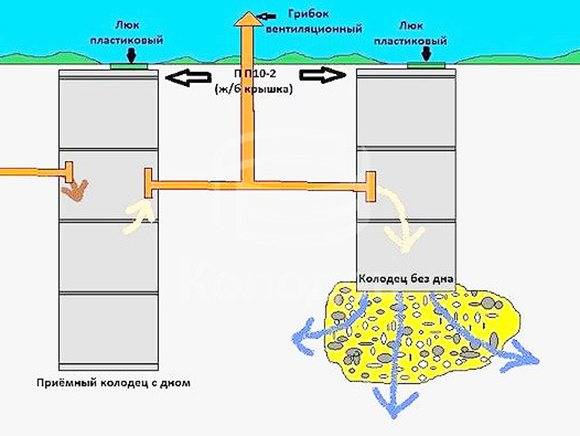


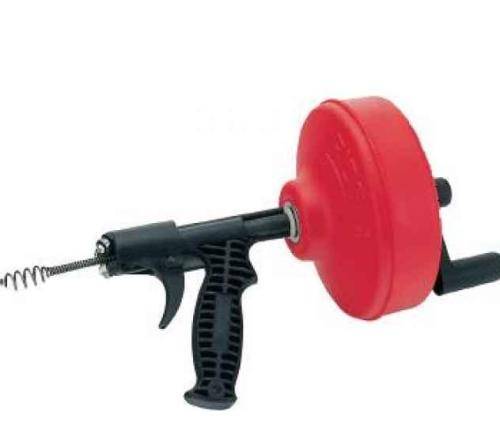
Device for mechanical cleaning of storm sewer network
The mechanical method for cleaning the sewer network is the most affordable and cheapest.
Hydrodynamic method
When using this method, the storm sewer is flushed with water, which is supplied under high pressure.
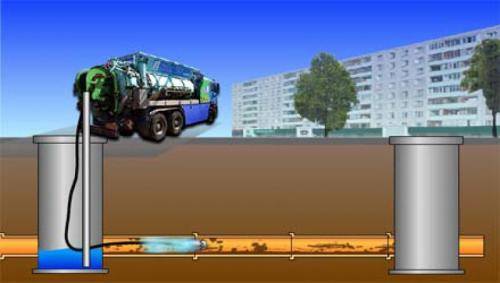
Hydrodynamic cleaning of rainwater drainage
Blockages are destroyed by the action of a jet of water and removed from the system.
For hydrodynamic cleaning, you can use powerful household pumps that supply water from the site's water supply source or specialized equipment, such as a high-pressure washer.
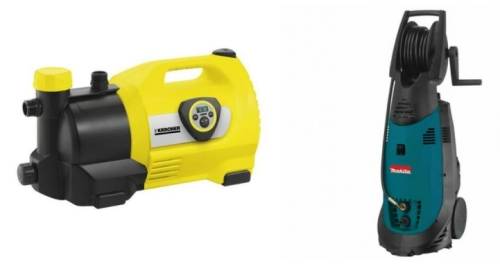
Household pump that pumps water from the source to the point of use and a pressure washer
thermal method
Thermal flushing of storm sewers differs from hydrodynamic in that water enters the sewer system not only under pressure, but also at high temperature (approximately 120º - 140º).
Thermal cleaning method
The advantage of this method is the ability to clean the system not only from debris and dirt, but also from fat deposits that have accumulated in pipes or drainage trays.
It is necessary to work with equipment that supplies high-temperature liquid under pressure in accordance with all safety rules specified in the instructions for the device.
Chemical way to clean the storm system
The use of reagents and chemicals to clear blockages is recommended in situations where other methods do not help. Most modern drugs are toxic, so when using them, one should strictly follow the elementary rules of human protection.
Entering reagents into the sewer
Cleaning of storm sewers with reagents is carried out using special equipment that supplies the composition to the sewer network. Next, the chemicals interact with the accumulated deposits, splitting them or turning them into a liquid state.
Preparations for chemical cleaning are developed in specialized laboratories. The method is mainly used for cleaning storm systems in enterprises.
Features of the storm sewer device
Classic stormwater consists of:
- Conveying system: gutters, pipes, channels, trays. This is the backbone of communication, which collects and diverts water from buildings and the site.
- Wastewater treatment system. It consists of gratings, filters, sedimentation tanks, sand traps. Its purpose is the gradual treatment of wastewater and the localization of pollution.
- The system of accumulation and liquidation of effluents. There are several options here. It can be: a container for the accumulation of rain (melt) water, with its subsequent use; access to the city storm sewer; exit to the sewer; connection to a domestic septic tank.
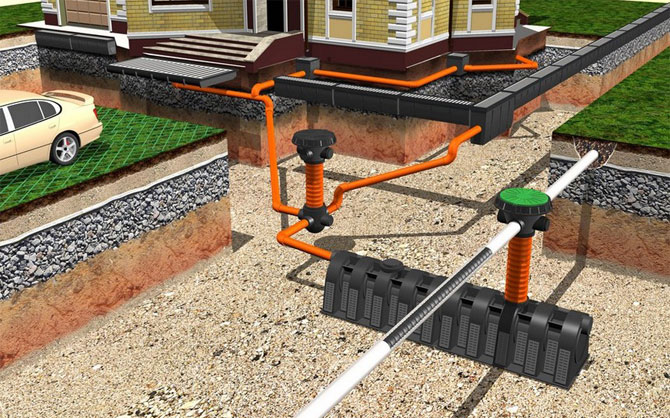
Appointment of stormwater
Storm sewer is designed to control the level of ground and surface water. During the period of spring snowmelt or heavy summer rains, well-laid sewers prevent flooding of the site and erosion of the foundation.
Obviously, without this hydraulic system, the owners will hardly be able to cope with excess water without damage to property.
In suburban areas, three types of stormwater can be used:
- open - in the form of trays and storm water inlets;
- closed - in-depth system or pipeline;
- mixed - a system with surface and deep engineering elements.
The need for scheduled cleaning
The sewer will not clog if it is cleaned in a timely manner. Preventive cleaning is most often carried out 2 times a year - in the spring before the snow melts, and in the autumn, before it covers the ground. Of particular importance is the performance check in the spring, otherwise the blockage found, due to the abundance of melt water, will be difficult to eliminate.

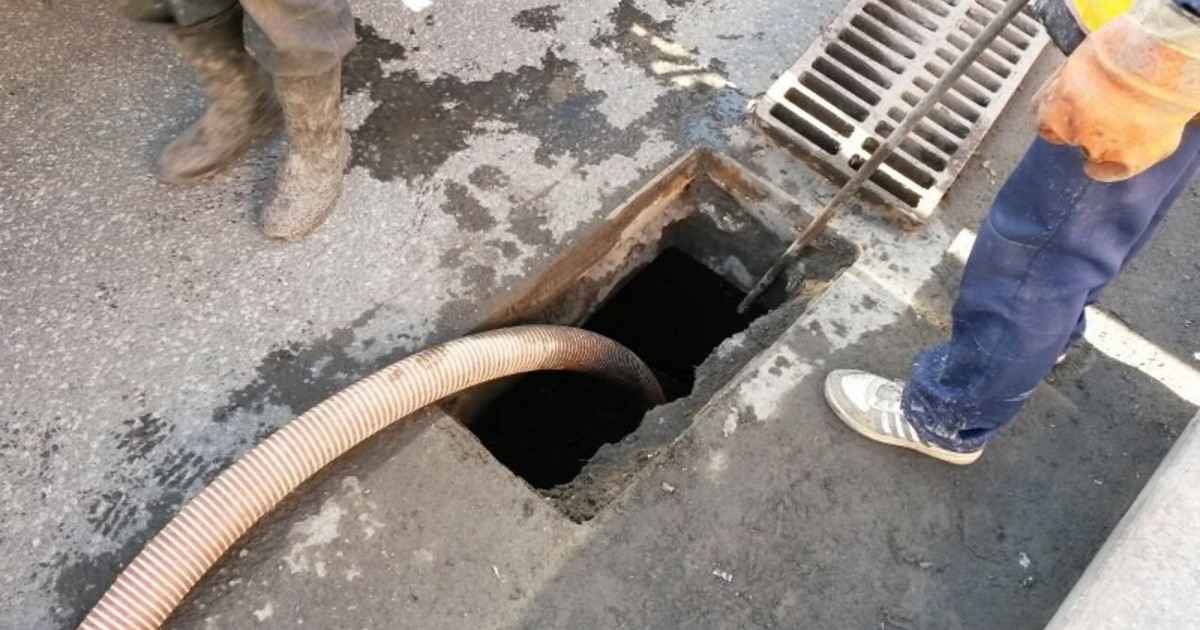


If you have paving slabs on the site next to the storm sewer, then the risk of finding a clogged system greatly increases. The reason is that it is placed on the sand, it gradually erodes and penetrates the system with water.
Additional purges
In addition to cleanings planned in advance, there may be a need for emergency cleaning. Basically, this happens as a result of large debris entering the system or when one of the filter elements of the system breaks down.
If the area near your home has been damaged by a flood, a nearby river overflow, or a landslide, causing the system to become clogged with small rocks, algae, or simple silt, you also need to urgently remove debris and flush the sewer system.
The need for scheduled cleaning
The sewer will not clog if it is cleaned in a timely manner.Preventive cleaning is most often carried out 2 times a year - in the spring before the snow melts, and in the autumn, before it covers the ground. Of particular importance is the performance check in the spring, otherwise the blockage found, due to the abundance of melt water, will be difficult to eliminate.
If you have paving slabs on the site next to the storm sewer, then the risk of finding a clogged system greatly increases. The reason is that it is placed on the sand, it gradually erodes and penetrates the system with water.
Additional purges
In addition to cleanings planned in advance, there may be a need for emergency cleaning. Basically, this happens as a result of large debris entering the system or when one of the filter elements of the system breaks down.
If the area near your home has been damaged by a flood, a nearby river overflow, or a landslide, causing the system to become clogged with small rocks, algae, or simple silt, you also need to urgently remove debris and flush the sewer system.