
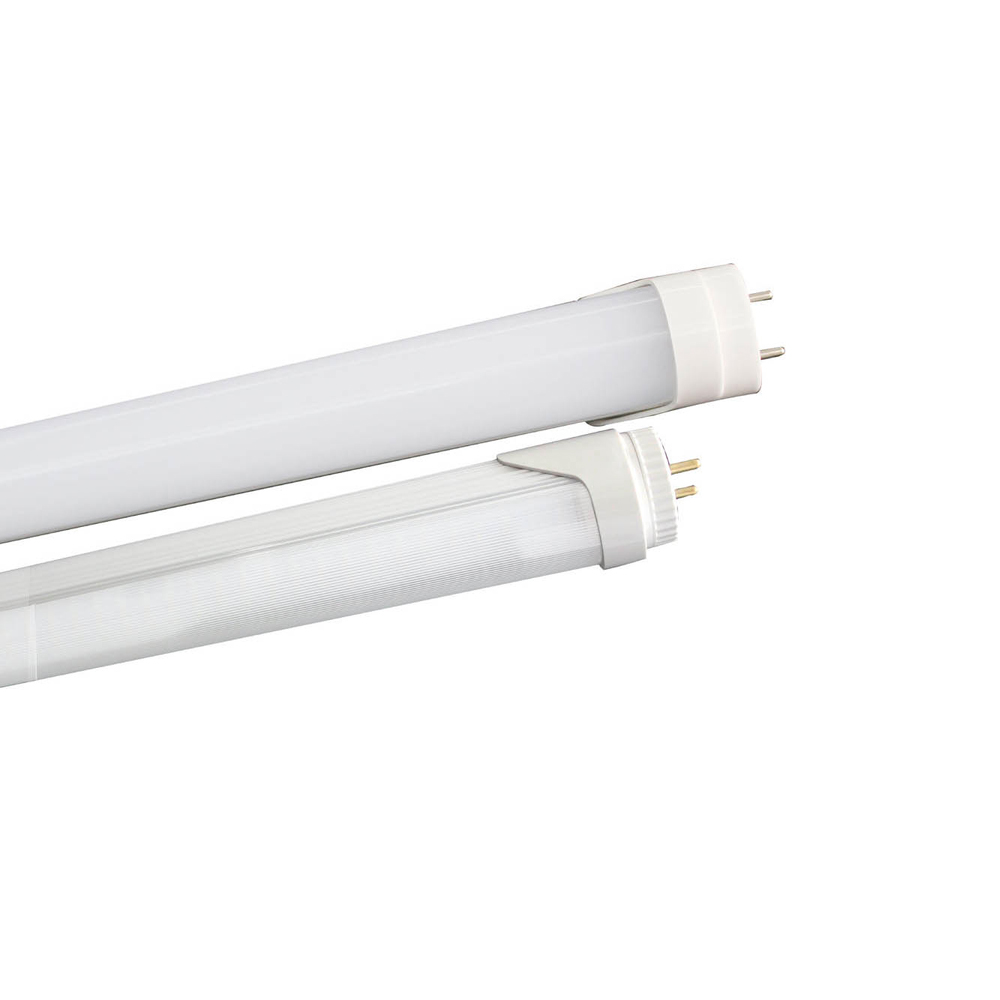
- T8 LED tube
- Technical advantages
- Board Features
- The device and types of T8 LED tubes
- Overview of LED tube manufacturers
- Replacing T8 fluorescent lamps with LEDs
- Which is better: LED vs fluorescent
- Comparison of the main parameters and characteristics
- Comparison of the power of LED lamps
- Comparison with incandescent lamps
- Comparison with halogen lamps
- Comparison with fluorescent light sources
- Reasons for the differences
- Types of T8 lamps
- Construction and plinth
- Comparison of energy saving and LED lamps
- Power consumption
- Environmental Safety
- Working temperature
- Life time
- Comparison results (table)
- Which fluorescent lamp to choose for the house
- Traditional fluorescent VS innovative LED?
- Wiring diagrams for G13 lamps with LEDs
- Emitter parameters
- Benefits of replacing fluorescent light bulbs with LEDs
T8 LED tube
Technical advantages
The main feature that ensures a long service life of a 220-volt LED lamp is well-thought-out heat removal from light elements. The main radiator, which provides heat dissipation, duplicates an additional device in the form of a longitudinal plate along the entire length of the tube. As a result, the equipment does not overheat, which means that it does not fail longer.
In addition, there is a third point of heat removal - this is a double-sided printed circuit board made of special fiberglass with increased density.
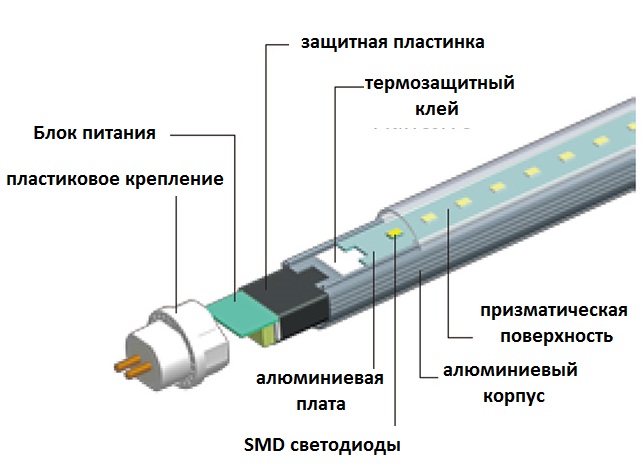
The structure of the LED tube
Board Features
Surprisingly, the contacts on the diode lamp board are not soldered. Installation is carried out using innovative contact connections, which are gold-plated in order to increase reliability and increase service life.
The driver is based on microcircuits that minimize the size and eliminate the need for such parts as a high-voltage electrolytic capacitor. As a result of these innovations, the operation of the lighting device is improved, voltage surges are reduced to zero, in particular when it is applied to the lamp, and there is also no electrical interference.
The stabilizing device is mounted using PWM (pulse width modulator), which maintains the required voltage on the LEDs with a difference in these indicators from 175 volts to 275 volts.
The maximum allowable load on the pole-width modulator is 35 watts. Therefore, even with a heavy load, the temperature of the device does not increase.
Modular System LED Tube
The device and types of T8 LED tubes
Lighting in offices and public buildings today is most often made of luminaires with daylight fluorescent lamps. And for the most part, these are compact “squares” on the ceiling with mercury tubes for the G13 base. These luminaires are standardized to fit 600x600 mm Armstrong ceiling systems and can be easily integrated into them.
Fluorescent tubes were once widely introduced as part of energy savings. Lights are often on around the clock in public buildings and buildings.Ordinary incandescent lamps in such conditions quickly burn out and consume too much electricity. Luminescent counterparts are 7–10 times more durable and 3–4 times more economical.
Ceiling lamps with T8 lamps - a classic in lighting modern offices, warehouses, trading floors, as well as educational, administrative and medical institutions
However, technologies continue to develop, and LEDs are gradually replacing tubes with harmful mercury. This novelty is even more durable and already consumes an order of magnitude less electricity than the old light bulbs with a tungsten filament.
"LED" (Light-Emitting Diode) outperforms competitors in all respects. The only drawback of such LEDs is the rather high price. But it is gradually decreasing as the market for LED lamps develops.
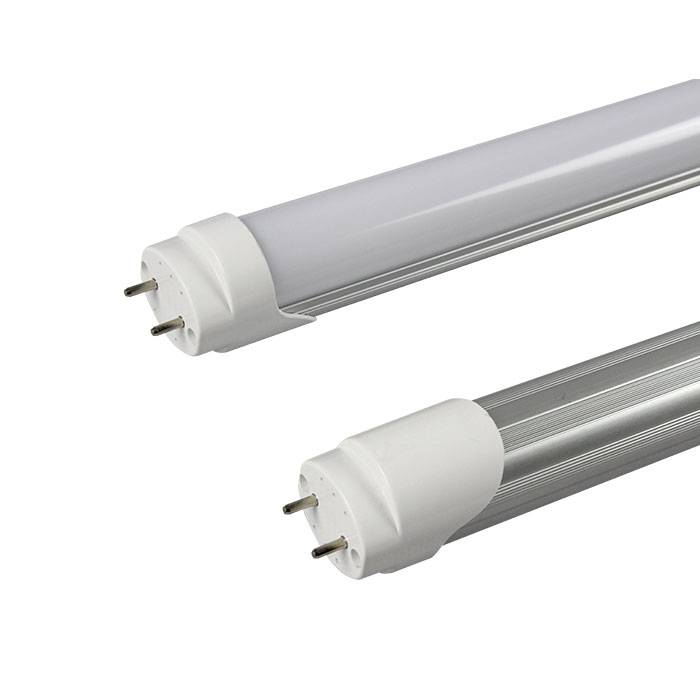
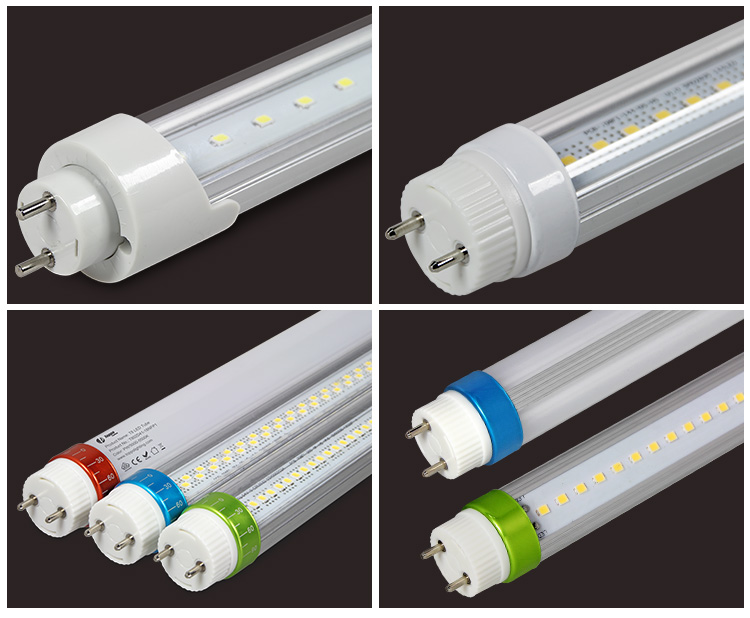
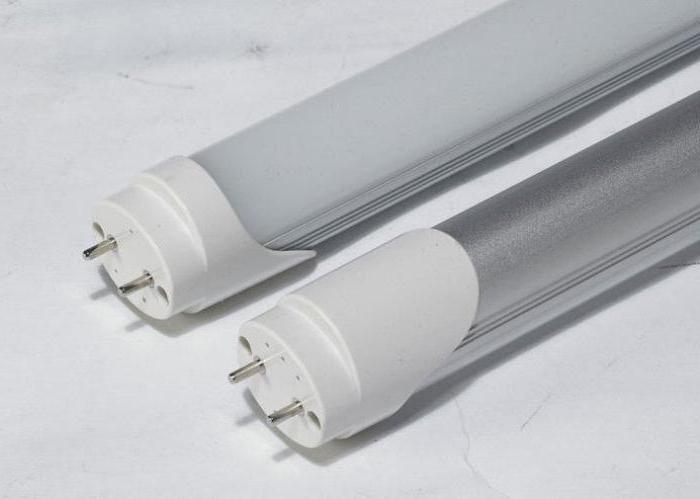
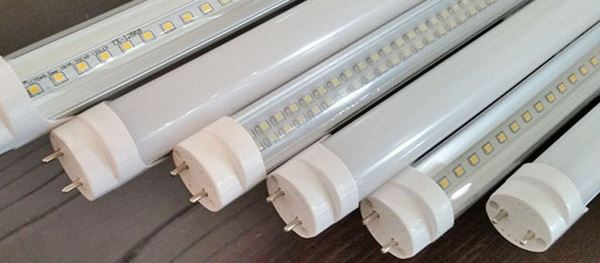
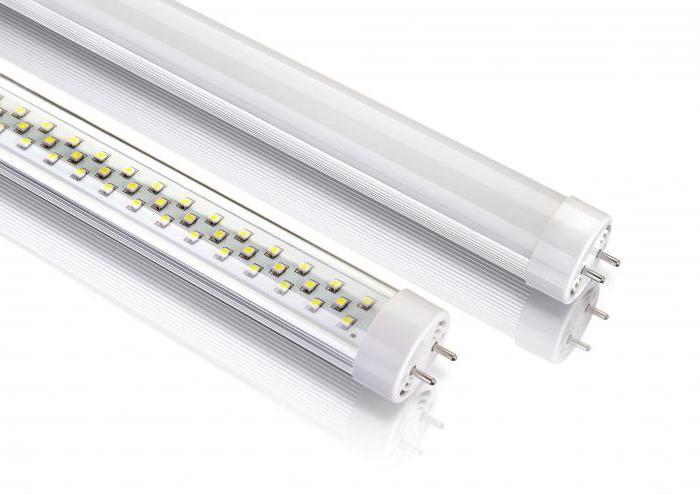
Outwardly and in size, the T8 LED tube completely repeats the electroluminescent counterpart. However, it has a fundamentally different internal structure and a different principle of nutrition.
The considered LED lamp consists of:
- two swivel plinths G13;
- diffuser flask in the form of a tube with a diameter of 26 mm;
- driver (power supply with surge protection);
- LED boards.
The flask is made of two halves. One of them is an aluminum substrate-case, and the second one is a rear light-scattering plafond made of transparent plastic. In terms of strength, this design greatly exceeds conventional glass tubes with mercury. Plus, aluminum perfectly removes the little heat that is generated during the operation of LED elements.
The diffuser can be transparent (CL) or opaque (FR) - in the second case, 20–30% of the light flux is lost, but the blinding effect of burning LEDs is eliminated
To power the LED, you need a constant voltage of 12–24 V. To transform the alternating electric current from which the lamps are powered, the lamp has a power supply unit (driver). It can be built-in or external.
The first option is preferable, as it simplifies installation. If the handset has a built-in driver, then you just need to insert it in place of the old one. And in the case of a remote power supply, it will still need to be placed and fixed somewhere. It is recommended to choose an external option only when all lighting is completely replaced. Then such a PSU allows you to save a lot, you can connect several tube lamps to it alone at once.
The number of LEDs on the board can be up to several hundred. The more elements, the higher the light output of the lamp and the more powerful it is. But a lot depends on the size of the tube.
T8 LED lamps in length come in:
- 300 mm.
- 600 mm.
- 1200 mm.
- 1500 mm.
Each option is designed for its own type of fixtures. The tube can be found under any size of the lighting device and on the ceiling, and for desktop models.




Overview of LED tube manufacturers
In recent years, the LED technology market has been booming. The number of brands and manufacturers is growing exponentially.
This leads to a gradual reduction in prices for LED in stores. However, for an ordinary buyer, these processes are not always beneficial, since there is a high risk of running into a frankly low-quality product.
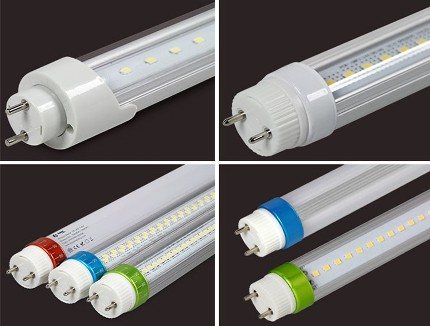
Most LED tubes are made in China - if this is a well-known brand, then there is nothing to worry about, but you should not buy products from an unknown manufacturer from China
Among the numerous manufacturers of T8 LED lamps, the deserved trust is enjoyed by:
- From the European-world - "Gauss", "Osram" and "Philips".
- From Russian - "Optogan", "Navigator" and "SVeto-Led" ("Newera").
- Of the proven Chinese - "Selecta" and "Camelion".
The price of LED tubes for ceiling lights largely depends on the region and the specific seller. Plus, the characteristics of the model also play a significant role.
Before you buy one or another option, you need to carefully study the labels on the packaging.
What to do with the old fluorescent fixture after it has been replaced, see the following article on disposal of devices containing mercury.
Replacing T8 fluorescent lamps with LEDs
As you have already noticed, both fluorescent and T8 LED tubes have similar dimensions and are equipped with the same connectors. This greatly simplifies the replacement of one type of lamp with another directly in the luminaire. That is, if you already have lamps using LDS, you do not need to buy new ones to switch from fluorescent lamps to LED counterparts.
But simply removing one lamp from its socket and inserting another is not enough. You will have to change the scheme of the lamp itself. Despite the apparent complexity, it is quite simple to do this for anyone who has a basic knowledge of the basics of electrics.
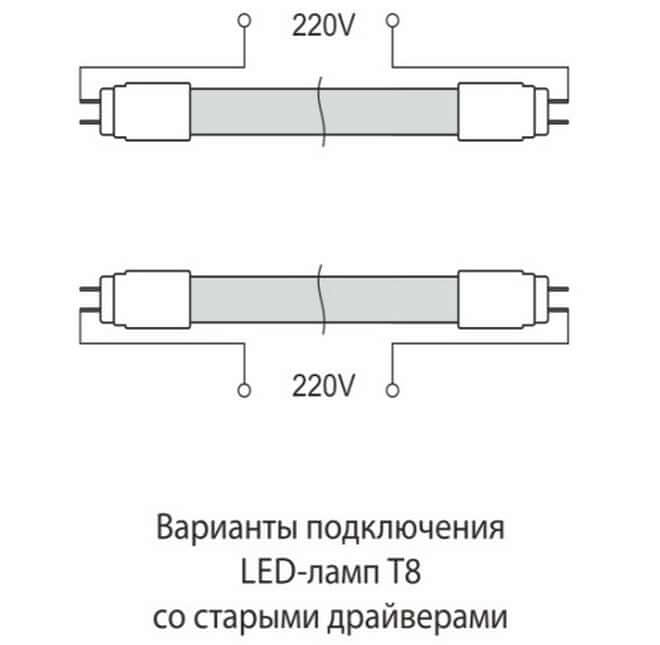
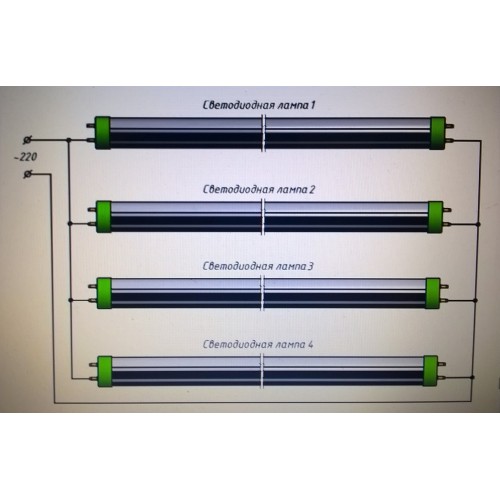
First of all, let's see how an LED lamp can be connected to the network. Depending on the model, the T8 semiconductor tubular lamp has the following switching scheme:
Typical scheme for switching on the T8 LED tube
At the same time, lamps that have a switching circuit through one connector (figure on the left) usually do not have a built-in driver.And lamps that are switched on through two connectors (picture on the right) have a driver, and they can be connected directly to a 220 V network.
Now let's say that you have 2 T8 lamps with standard switching. One without a driver (fig. on the left), the other with a built-in one (fig. on the right). How to replace LDS with LED in a conventional luminaire designed for the use of tubular fluorescent lamps? The easiest way to do this is to have a semiconductor light source with a built-in driver. To do this, it is enough to perform two simple operations:
- disable the starter by removing it from the socket;
- short the throttle.
Wiring diagram for a T8 LED lamp with a 220 V driver instead of a fluorescent lamp in a standard lamp
Since the inductor is short-circuited, it does not participate in the process of supplying the lamp, and if desired, it can even be dismantled.
If you accidentally or unknowingly bought a T8 diode lamp without a built-in driver, then, alas, you will have to buy it. In this case, the scheme for finalizing a standard fluorescent lamp will look like this:
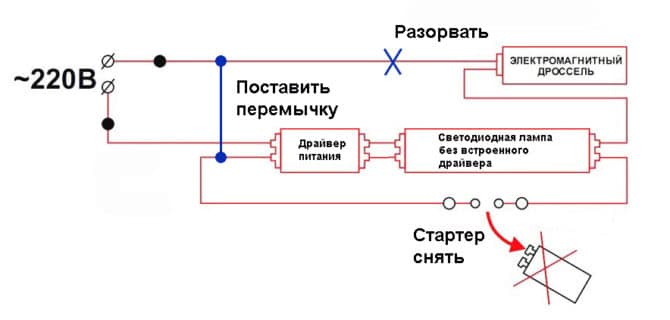
Refinement of a fluorescent lamp for T8 tubes for an LED tube lamp without a driver
This scheme is, of course, somewhat more complicated. But if you studied well at school and remember electrical engineering, then such a refinement will not be difficult for you.


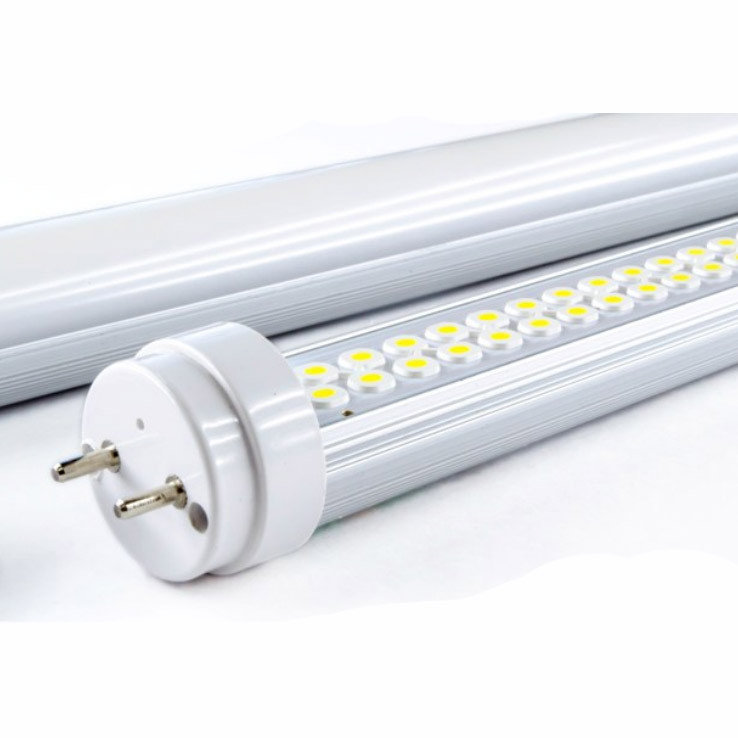


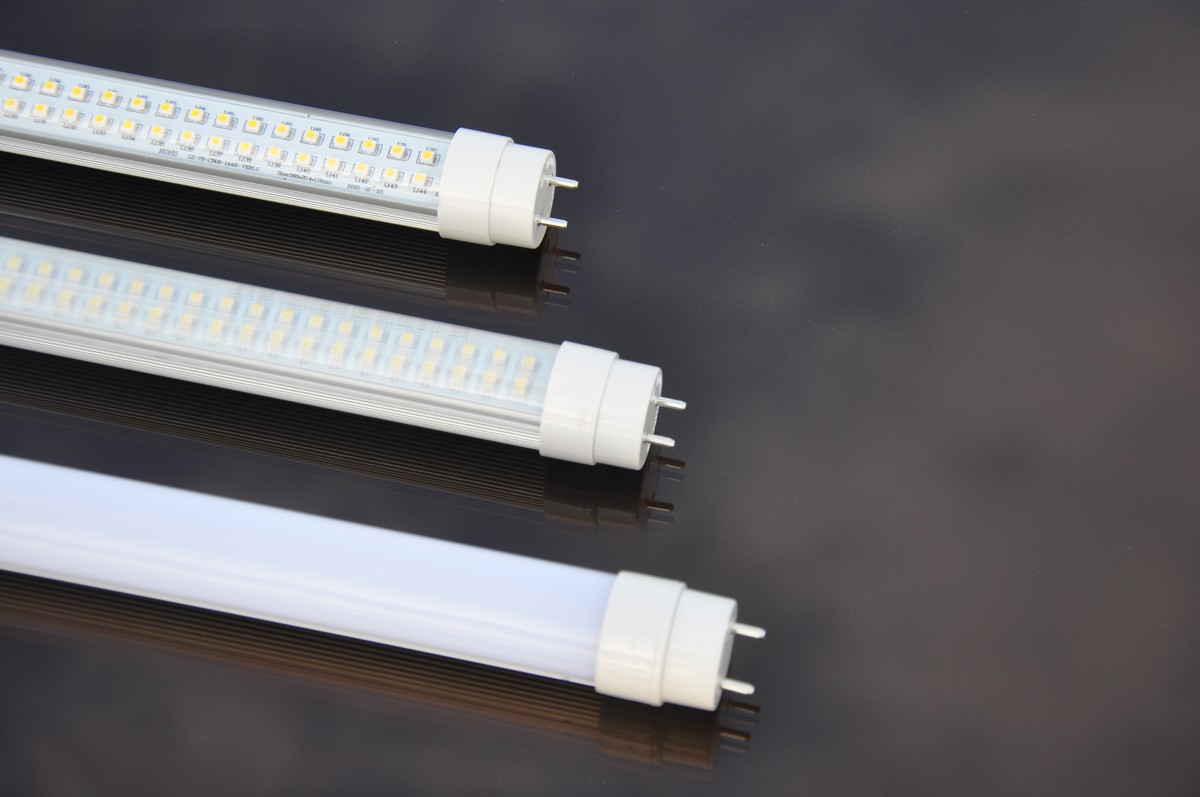
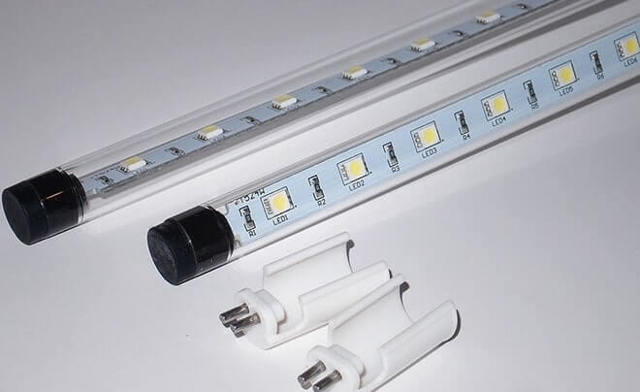

So we figured out the T8 lamps. Now you not only know how a fluorescent light bulb differs from an LED one, but you can also replace one type of lighting fixture yourself to another at no extra cost purchase of new lamps.
Previous
Lamps, sconcesChoosing LED ceiling lamps Armstrong
Next
LED What are dimmable LED lamps and their differences from conventional ones
Which is better: LED vs fluorescent
When compared with other lamps, LEDs greatly benefit in terms of efficiency. However, their replacement of fluorescent tubes is associated with a number of problems. You can’t just insert an LED into a lamp in place of a gas-discharge light bulb.
The process of replacing phosphor lamps with LED counterparts requires rewiring in the luminaire, which must be performed by a professional electrician - while such modifications do not fully comply with safety requirements
Before installing T8 LED tubes in a luminaire designed initially for connecting fluorescent lights, it is necessary to remove the starter (starter). If the LED lamp has a built-in driver, then it only needs direct power from the 220 V network.
But in the circuit there is also a ballast (choke). Some tubes with LEDs are compatible with it. They may well work without extracting the given element. In this case, it is only necessary to unscrew the starter. However, there are modifications of LED lamps for which a ballast load is completely unnecessary and even contraindicated. It also needs to be removed by connecting the wires at the place of the gap.
Such alterations lead to the fact that after putting back the luminescent tube it becomes impossible. At the same time, usually no notes are made on the body of the lamp about these modifications of the power circuit. As a result, a new electrician comes in and, for one reason or another, inserts a luminescence. And this is a direct path to problems in the power grid.
Plus, measurements show that T8 LED lamps connected through a ballast can lose up to 20% energy efficiency.This is additional wasted electricity. And a lot depends on the manufacturer. Some reduce these losses to almost zero, increasing the cost of the product, while others simply do not mention them on the packaging.
All changes in the power supply circuit of the luminaire must be reflected in the form of stickers or inscriptions on its body, otherwise problems in the future cannot be avoided
It is best to initially choose a handset designed for direct connection. Then it will only be necessary to remove everything unnecessary from the lamp and make notes on the lighting fixture about the changes made. This is a more difficult solution to install, but not as problematic in the future.
In general, replacing T8 fluorescents with LED lamps of similar size has a number of advantages:
- Energy saving, consumption is reduced by 50-80%.
- Longer service life (manufacturers claim 5–6 years of continuous operation, but practice speaks of 3–4).
- No flicker effect.
- No hazardous mercury fumes.
- Higher light output.
Almost all models of T8 LED tubes have a narrow luminous flux of 180 degrees. A luminescent opponent, on the contrary, shines in all directions, losing most of the light that is directed upwards directly into the body of the ceiling light fixture.
Comparison of the main parameters and characteristics
There are several criteria used to compare different types of lamps.
The main indicators of performance and functionality are the following:
- The amount of light flux. It is used for comparison in the first place and is tied to parameters such as energy efficiency and economy.Both of these indicators are taken from conventional incandescent lamps, and based on the data obtained, a further comparison is made. The value of the luminous flux shows the degree of illumination of a particular room. The unit of measure is the lumen (Lm). The higher this indicator, the brighter the room will be during the operation of a particular lamp. Gradually, during operation, this indicator may decrease due to the wear of individual components. LED lamps are superior to fluorescent lamps in this indicator. To create a luminous flux of 200 Lm, they need 2-3 watts of power, while their competitors consume 5-7 watts.
- Efficiency - efficiency. To determine it, it is necessary to divide the luminous flux by the operating power of the light source. In this case, the unit of measure becomes lm/W. A high value indicates a more economical operation of this lamp. For example, for incandescent lamps, it is only 10%, while LEDs give out 90%, and fluorescent lamps - about 90%.
- The quality of light sources is another criterion by which a light bulb is selected. In turn, this parameter is divided into several components. Among them should be noted the brightness or luminous intensity, measured in candela, color temperature or color rendering index, measured in kelvins. It is divided into warm and cold colors, the value of which is indicated by numbers on the product packaging.
Comparison of the power of LED lamps
Before replacing light bulbs, it is necessary to study the general characteristics. Comparison of the pros and cons will allow you to choose the right model. Durability, brightness, power of street LED lamps differ from incandescent and fluorescent lamps.Lamps are mainly used at night, so it is desirable that the light be soft - usually warm, yellowish is chosen. Such light comes from the classic products of Ilyich, but they do not differ in a long service life. Other characteristics are also important.
Comparison with incandescent lamps
Light output is one of the main indicators. For incandescent lamps, the limit is 8-10 Lm / W, LEDs - 90-110 Lm / W, some models have indicators of 120-140 Lm / W. The difference is at least 8-12 times. The power of the LEDs is 5 times lower, but the brightness of the glow remains at the same level.
Heat dissipation is an equally important characteristic. The glass of classical products is heated up to 170-250° Celsius. Therefore, they are considered the most fire hazardous; installation in wooden houses is not recommended. The maximum heating temperature of the LEDs is 50° Celsius.
The service life is uneven and is one of the main reasons for replacement. According to the manufacturer, LED lamps work for about 30-35 thousand hours under the right conditions of use.
Comparison with halogen lamps
It does not take much time and effort to replace the lamp in the lamp with a halogen product. The light is warm, close to daylight, sunny. At the same time, the cost of products is acceptable, affordable for most buyers. Therefore, production and consumption remain at a high level. More often halogens are found in car headlights.
Efficiency is low -15%. Electricity is spent on heating and maintaining heat. The average service life is 2000 hours. The indicator directly depends on the frequency of inclusions.In some cases, the installation of additional equipment is required - special dimmers that provide smooth switching and extend the service life.
Comparison with fluorescent light sources
The main difference is the principle of operation of the devices. Fluorescent lamps work with mercury vapor. Under the influence of an electric current, the substance is heated, an ultraviolet glow appears, which charges the phosphor (a special chemical compound). It glows, creating a different spectrum of lighting.





The LEDs also have a phosphor that coats the crystals. Under the influence of current, the semiconductor glows, the color is always blue.
The main difference is the efficiency. LEDs do not use additional elements, so the indicator of these products is always higher.
Reasons for the differences
The differences between the lamps are due to the structure of the devices. Ilyich's light bulb works by heating a tungsten filament, the glow is yellow. The latest generation lamps have a different approach - light is formed after the activation of various chemical compounds (phosphor).
An additional advantage - technologies allow you to get light of different shades (daylight, warm, cold). Various base diameters allow you to quickly select the best replacement option.
Types of T8 lamps
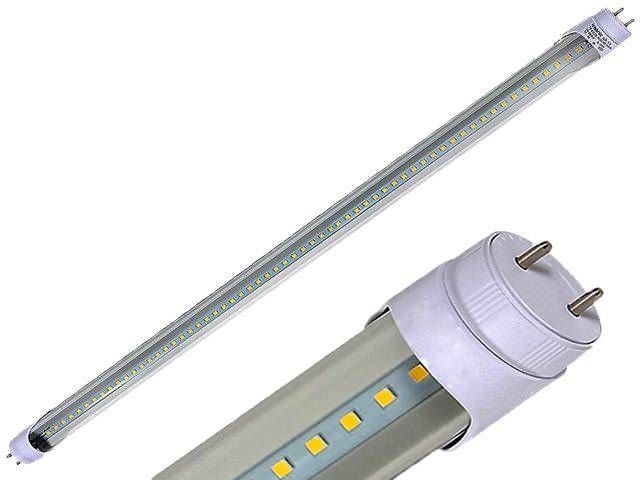
The second name of these lamps is tubes with diodes. According to external indicators, a lamp with T8 diodes with a g13 base really has the shape of a tube. Its frame can be made of transparent or matte polycarbonate. The inner space of the tube is filled with light diodes. As for the dimensions, they are fully consistent with fluorescent lamps, that is:
- 600 millimeters;
- 900 millimeters;
- 1200 millimeters.
The designs of LED lamps are divided into two types:
- Drivers are installed in the inside of the tube, so the ice lighting starts to function only at a voltage of 220 volts.
- If an external driver is used, then the voltage will need only 12 volts.
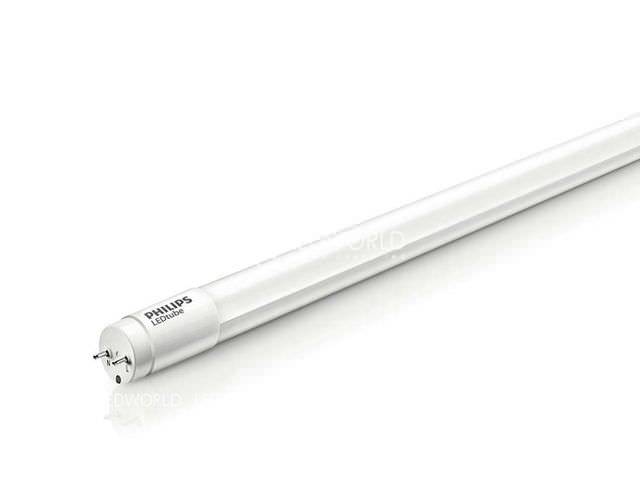
The bulb itself, made of transparent polycarbonate, does not lose light fluxes, while a matte one can lose up to 20% of light radiation during work. The best option can be considered a translucent flask. During operation, it takes only 10% of the light from the light.
Polycarbonate is considered one of the most reliable materials that perfectly resists mechanical damage. This is one of the weighty arguments why manufacturers chose it for the manufacture of light bulbs.
It is important to know that the supply of light fluxes depends solely on the size of the lamp itself. LED tubes have a color gamut equal to the same colors as LED lamps.
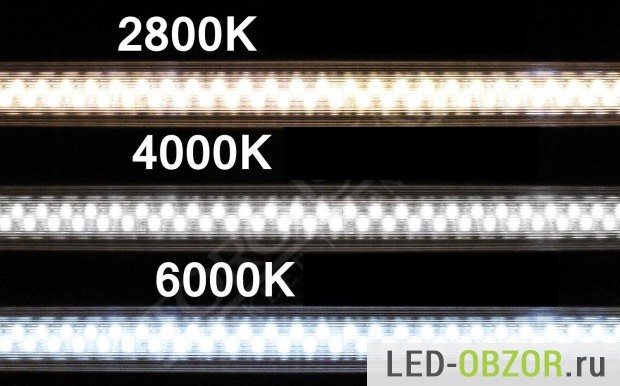
The light can be either a shade of warm tone or cold. For a normal effect on the human eye, it is best to give preference to shades that are fully consistent with daylight, that is, neutral.
Construction and plinth
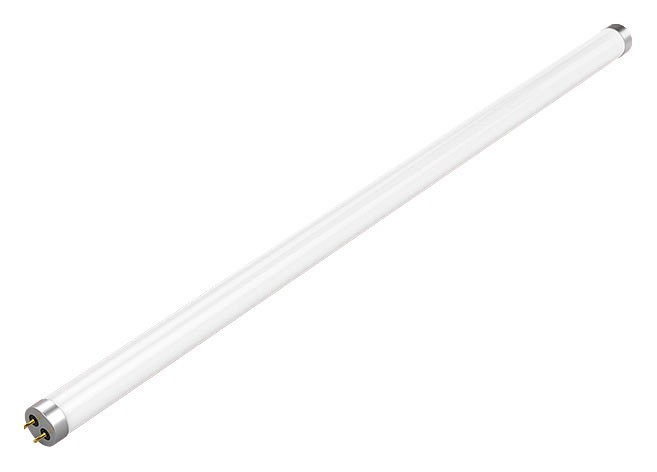
The T8 bulb is structurally made in the form of a tube with a diameter of 25.4 mm (0.8 inch), at the ends of which there are pin bases g13 with a distance between the pins of 13 mm. These pins serve to supply power to the device and at the same time fix it in the lamp. Due to their shape, such light sources are called linear or tubular.

As you can see in the photo, the length of the tube can be different and depends on the power of the device and its purpose:
Standard sizes of tubular light sources and their approximate power
| Flask length (with base), mm | Power, W | |
| fluorescent | LED | |
| 300 | – | 5-7 |
| 450 | 15 | 5-7 |
| 600 | 18, 20 | 7-10 |
| 900 | 30 | 12-16 |
| 1200 | 36, 40 | 16-25 |
| 1500 | 58, 65, 72, 80 | 25-45 |
The most popular T8 devices are 600 mm and 900 mm long. Lamps with two such bulbs were installed everywhere both in public institutions and in domestic premises. Tubes of 1200 mm and 1500 mm were less common and were used mainly for lighting industrial facilities and large public halls.
The shortest devices are used for local lighting or in raster fixtures: both overhead and built-in. A classic example is the Armstrong raster four-lamp ceiling lamp:
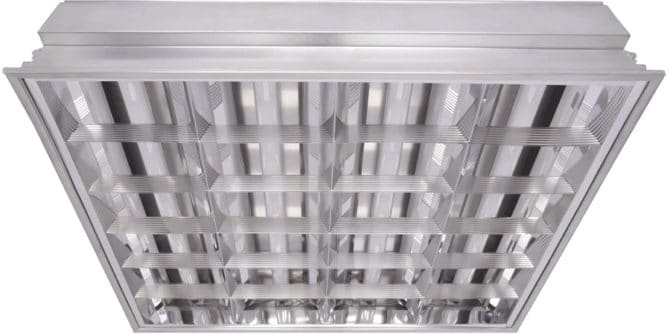
Raster recessed ceiling luminaire with four semiconductor illuminators t8 10 W 600 mm
Comparison of energy saving and LED lamps
To determine which lamp is better: LED or energy-saving, it is not enough to get acquainted only with their characteristics.
It is important to pay attention to the operating conditions
Energy consumption of different types of light bulbs.
When it comes to environmental friendliness, the LED lamp is also preferred, since there are no harmful fumes inside it. It is worth considering that it is not advisable to install CFLs together with a switch that regulates the intensity of light. It can burn either at full power, or be turned off. This is due to the ionization of the gas, which cannot be controlled.




Power consumption
According to the results of the research, it turned out that fluorescent (energy-saving) lamps are 20-30% more economical than conventional incandescent lamps. LED, in turn, are more economical than CFL by about 10-15%. It all depends on the power and brands.
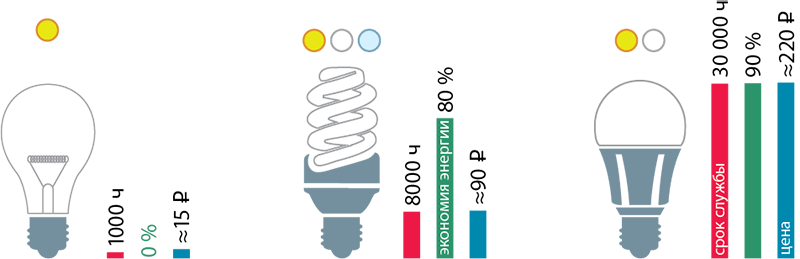
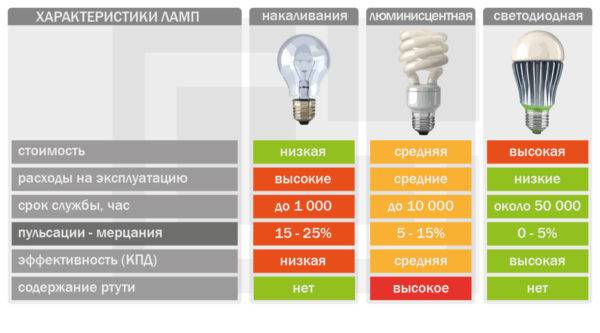
Comparison of indicators of profitability, service life and price of different types of lamps.
The only advantage of an energy-saving lamp in this case is the cost. LED will cost a lot more. But under proper operating conditions, it will last 2-3 times longer.
Environmental Safety
CFL contains approximately 5 ml. mercury, its amount may slightly increase or decrease depending on the size of the product. This metal is considered harmful to the human body. It belongs to the highest hazard class. It is forbidden to throw away such a light bulb along with the rest of the garbage, so it will have to be taken to a specialized collection point.
The effect of CFL on the body.
Working temperature
The maximum incandescent temperature of a fluorescent lamp reaches 60 degrees. It will not provoke a fire and is not capable of injuring human skin. But if there is a malfunction in the wiring, the temperature can rise significantly. It is believed that the likelihood of such a situation is extremely small, but the risk is still there.
Speaking of LED bulbs, they practically do not heat up. Especially if you choose high-quality products from popular brands. This is due to semiconductor technology based on LED crystals. For most people, the heating performance is insignificant, as they do not need to touch the lamp while it is working.
Life time
If the budget is unlimited and you need to buy a light bulb with the longest lifespan, it is better to purchase an LED one. But in order for the price to justify itself, you should buy products from popular brands, which will be discussed below.
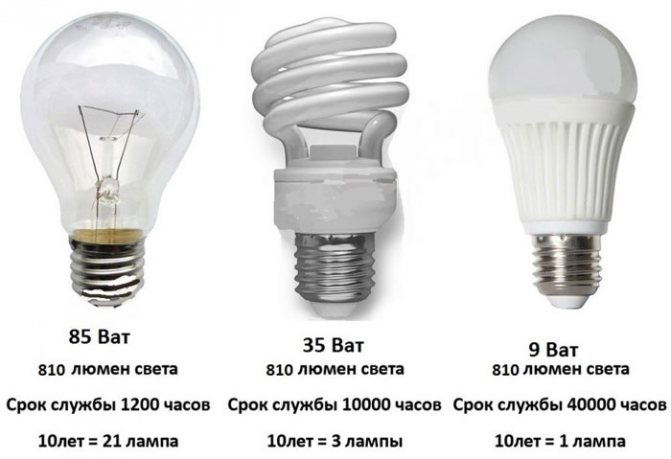
Service life of different types of light bulbs.
Having studied the results of the research, we can come to the following conclusion: on average, LED light sources last 4-5 times longer than fluorescent ones. To check this information, just read the text on the package. An LED bulb, under proper operating conditions, lasts up to 50,000 hours, and an energy-saving one about 10,000.
Comparison results (table)
| Light bulb type | Energy saving | Lifetime | Safety and disposal | Case heating | Price |
| LED | + | + | + | + | — |
| energy saving | — | — | — | — | + |
| Outcome | 4:1 winner led lamp |
Which fluorescent lamp to choose for the house
Here's some more food for thought. Dutch physicist Arie Andries Kruithof, who specializes in lighting systems, has conducted studies that have determined the dependence of the level of lighting comfort on color temperature and brightness.
As a result, it turned out that the average area on the graph is the most comfortable for human eyes, and the perception of color temperature depends on the level of illumination.
So, a light bulb with a color temperature of 3000 K at an illumination level of 300 Lx will shine pleasantly. If the light level doubles, then the shade will most likely already be annoying, too yellowish.
From the same graph it can be seen that it is better to choose bright lamps in cold shades, and for lamps with warm light, muffled and less powerful (up to 100 Lx).
Traditional fluorescent VS innovative LED?
When choosing between fluorescent and LED models, consider the strengths and weaknesses: why are such luminescent ones so good:
- in a good model (for example, from Philips), the glow appears due to a 5-band phosphor, each layer of which gives its own spectrum. As a result - light close to ideal - solar;
- there are special series for aquarium or plant lighting equipment that give pets the light they need in the spectrum that LEds cannot provide.
Disadvantages for domestic use:
- not environmentally friendly. It must be carefully stored, specially disposed of. It is highly undesirable to break them indoors, therefore they are not suitable for a children's room;
- not immediately after switching on, the maximum value of the luminous flux is reached, but only after a few minutes;
- sensitivity to frequent on-off cycles: burns out faster, especially with frequent voltage drops. It is undesirable to install in bathrooms, corridors. For the same reason, do not use with motion sensors.
But other lamps are deprived of all these significant shortcomings ... - LED! At the same time, prices become comparable. From this we conclude that at home it is better to use such LED tubes (which are also more economical).
Wiring diagrams for G13 lamps with LEDs
The system for starting a luminescent tube is built on the basis of an induction electromagnetic (ballast) or electronic ballast (electronic ballast). If the T8 LED lamp is connected through them, then it must be designed to work with these circuit elements.
Before starting installation, it is necessary to carefully study the instructions attached to the LED tube, there are several varieties of these lamps and their connection schemes.
There are two basic schemes for connecting new LED lamps instead of fluorescents:
- Directly to the 220 V network with complete removal of the starter and ballast.
- Through the electromagnetic ballast in the luminaire.
The first option is also divided into a couple of subspecies, depending on the presence of an internal or external power supply. If the PSU is built into the LED tube, then you just need to insert it into the connectors. And if the lamp is designed for power at 12 V, then a separate power supply unit will have to be mounted somewhere nearby, and then the wiring will be connected through it.
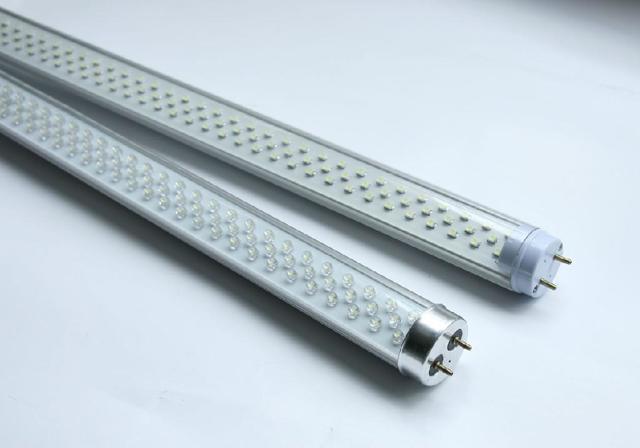
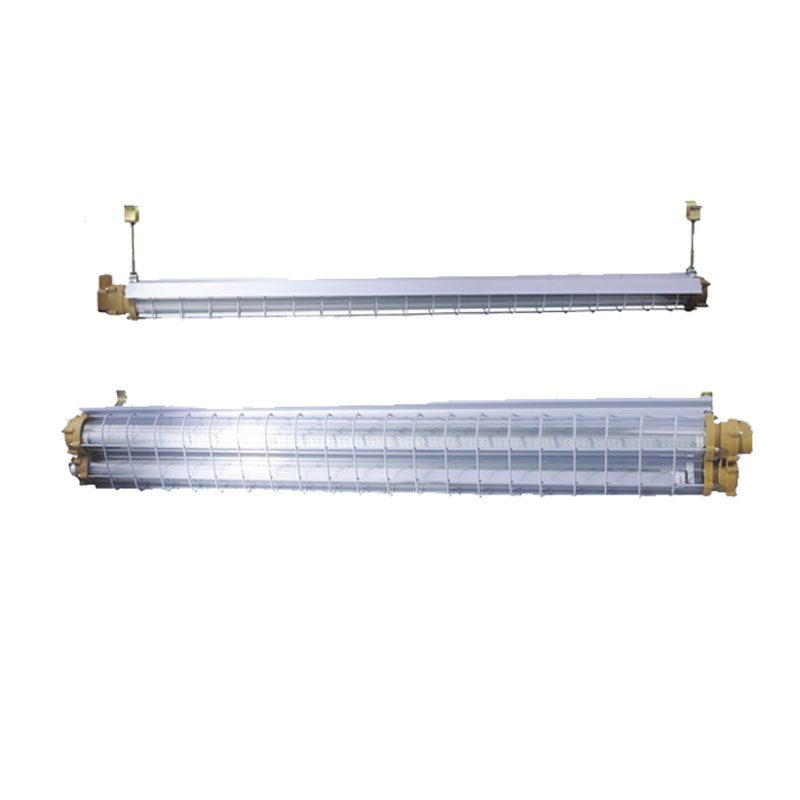
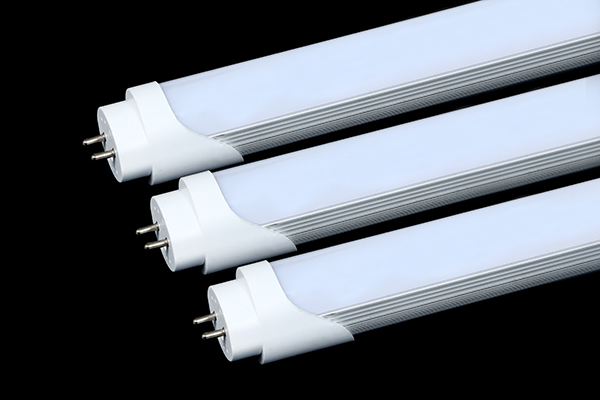


The connection of wires, depending on the model of the LED lamp, happens only on one of the sides or on both sides at once, the exact diagram of their connection must be specified in the instructions or data sheet of the light bulb
Installation is easy. In most cases, simply inserting a new tube in place of the old one is sufficient. The main thing is to choose it correctly. If a simple model is purchased without the ability to connect through a starter, then you will have to tinker with the wires. It is not enough to remove the ballast and starter, we must also short-circuit these gaps. And short wires in such lamps are often not designed for contraction, you have to make inserts.
Emitter parameters
By studying the parameters of the light emitter, you can determine its capabilities and evaluate how suitable it is for use in certain conditions. Like any device powered by electricity, the LED lamp has its own characteristics.
The most important ones to pay attention to are:
Power. There are two types of it - electric and light. The first means how much energy the lamp will consume during its operation. Its unit of measurement is the watt. The second indicates the amount of light flux and is measured in lumens.These two values are invariably linked: the brighter the light bulb shines, the more electricity it will consume. On average, it takes 1 watt of energy to produce 60 lumens. The most economical options can produce at 1 W a brightness equal to 90 Lm.
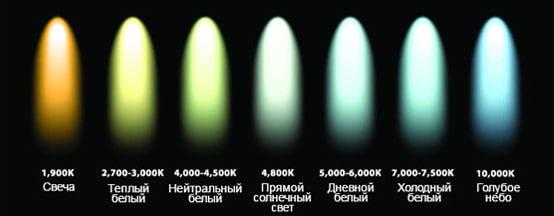
temperature gradation. Determines the light range. Not all types of LED lamps are suitable for home use, but only those that emit in the range from 2700 K (warm glow) to 3500 K (white light).
Color transmission. Light sources emitting in the same temperature range can give a variety of color perception.
Therefore, when testing LED lamps for the home, you need to pay attention to the transmission index. The higher this coefficient, the less color distortion of the illuminated objects occurs.
An index of 80-1000 is considered a good indicator.
lighting angle. The release of energy in a crystal occurs in beams, so the light emitted by it has a directed shape. In order to illuminate a large area, diffusers are used, and the emitters are placed at different angles relative to each other. The average value of these angles is 120-270°, and 90-180° will be optimal.
Plinth. There are different standards in lighting equipment. In accordance with them, light bulbs are produced for installation in different cartridges. The most used are E 14 (minion), E 27, E 40.
Radiator type. The use of high-power LEDs involves the use of large heatsinks that allow efficient heat dissipation. They are made of aluminum or plastic and can be of different shapes. There are ribbed, smooth, ceramic and composite devices.Plastic has the worst thermal conductivity, and composite is optimal.
Benefits of replacing fluorescent light bulbs with LEDs
The transition to identical LED sources will save energy by 2-3 times. And this is true for any light bulb, regardless of its form factor. Do not forget that modern technologies are constantly improving, and in the case of LED, humanity has not yet reached the maximum heights of development. In the future, such products will be even more effective.
To feel the significant benefits when switching from fluorescent lamps to LEDs, let's calculate the difference in power for an apartment. Let's say 10 lamps are used, and the average duration of each lamp is 3 hours per day. Multiply these values with 30 days and get 90 hours per month. Let each lamp consume 50 W / h, so the monthly consumption is 45 kW. If the cost of 1 kW is 10 rubles, then the payment for electricity when using one such lamp will be 450 rubles.
When switching to LEDs and wanting to keep the illumination of the premises at the same level, it is enough to take 20 W LED sources. Thus, 18 kW will be spent on lighting per month, and the electricity fee will be 180 rubles. This is 2.5 times less, but in reality this figure can be much higher.



