
- Types of lamps for lighting
- Fluorescent
- Halogen
- Incandescent lamps
- LED
- Bathroom suspended ceiling lighting
- The choice of lighting for a stretch ceiling
- Types of luminous elements for stretch ceilings
- Spotlights
- Overhead lamps
- recessed lighting
- Hanging chandeliers
- LED types of fixtures
- The main types of fixtures - advantages and disadvantages
- Recessed ceiling lighting
- Side or ceiling area lighting and lighting
- Ceiling electrical wiring
- Cabling
- What not to forget when organizing lighting in the bathroom?
- 1 Benefits of LEDs
- We recommend to read
- Requirements for bathroom lighting fixtures
- Installation of ceiling lights for the bathroom
- Ceiling lamps in the bathroom for the main ceiling
- Features of mounting spotlights on a stretch ceiling
- The nuances of installing spotlights on a false ceiling
- Features of installing ceiling lights on drywall
- Which lamps are suitable for the bathroom
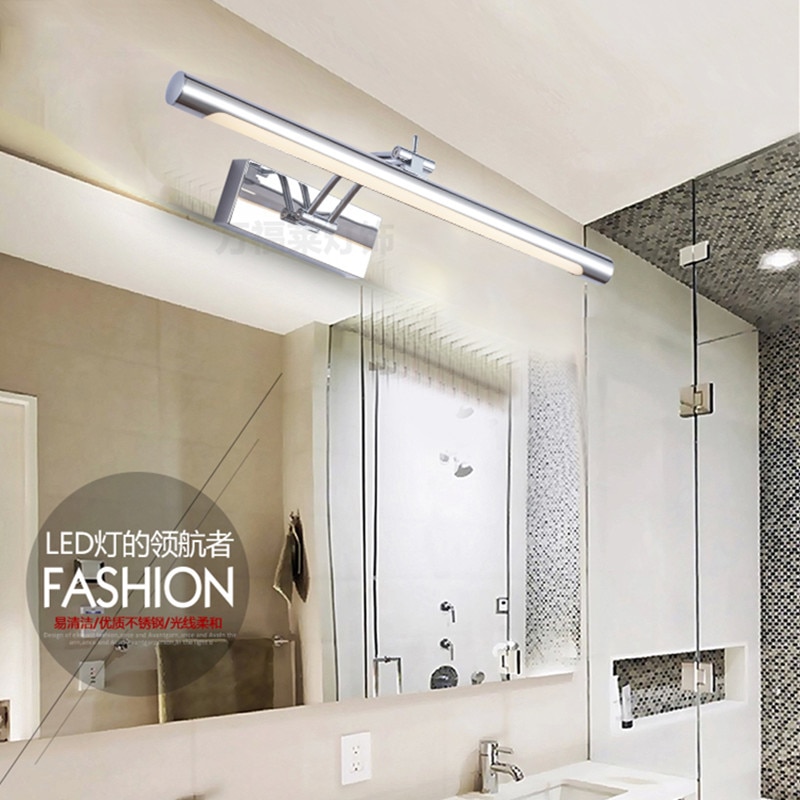
Types of lamps for lighting
Fixtures in the bathroom are equipped with electric lamps of various types. The illumination in the room and the level of energy consumption directly depend on the individual characteristics of the light source.
In most devices, it is allowed to use different types of lamps due to the universal landing connectors (socles) in the housing. The choice depends on personal preference.
There are 4 main types of bathroom lamps: fluorescent (energy-saving belong to the same category), halogen, conventional incandescent lamps and LED.
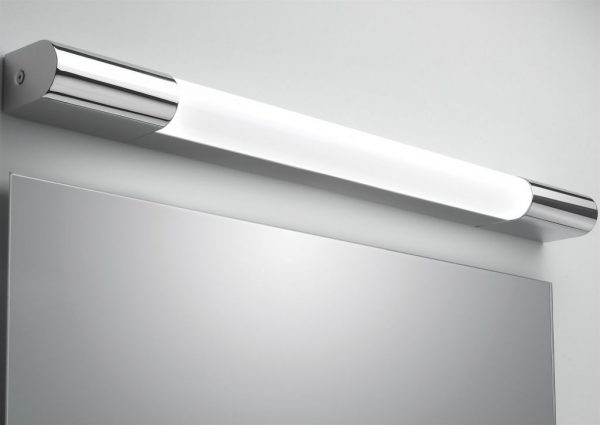
Fluorescent
The emitted spectrum of fluorescent lamps is closest to natural daylight. At the same time, the light output is several times (5-6) higher than that of similar incandescent lamps. Such lamps have a long service life and are characterized by low consumption of electrical energy.
They are used in various wall and ceiling lighting structures. Of the minuses, the warm-up time (up to several seconds), high cost and vulnerability to voltage drops are noted.
Halogen
Halogen lamps have the highest light output. They give a directional stream of light and are most often used in spotlights. They are compact in size and have a long service life, about 2 times longer than conventional incandescent lamps.
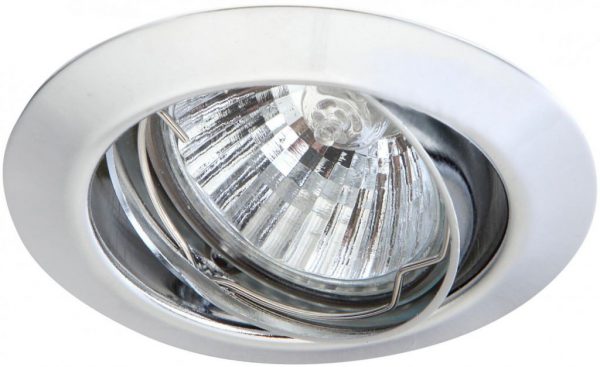 Halogen lamp
Their disadvantage is sensitivity to voltage fluctuations and excessive heating during operation. In addition, the level of energy consumption of halogen elements is quite high. The bulb of such a lamp must not be touched with bare hands, it is necessary to use cloth gloves or paper napkins.
Incandescent lamps
Conventional incandescent lamps are often installed in wall sconces and floor lamps, in which the working element is a white-hot spiral.This type is characterized by low cost, as well as resistance to power surges and temperature fluctuations.
However, the light transmission is low and the power consumption is high. They are used in lighting fixtures of any type and in different rooms. It is necessary to take into account strong heating during operation, from which the plastic case or ceiling is deformed.
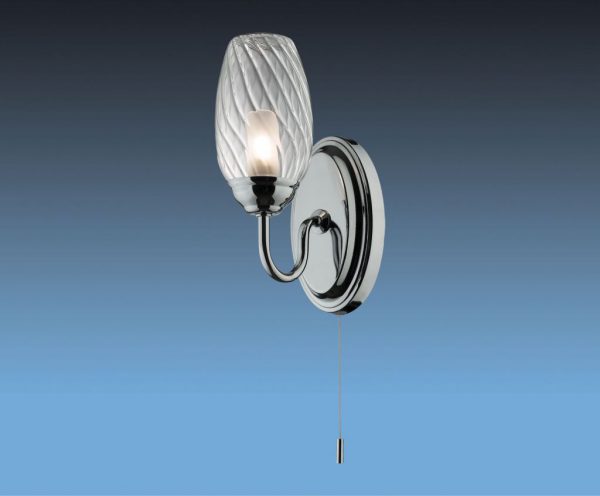 Incandescent lamps
Incandescent lamps are produced with a special matte coating (sputtering), which allows you to evenly distribute the beam of light. Light radiation passing through frosted glass does not blind the eyes.
On the shelves of shops there are interesting and original incandescent lamps of fantasy shapes (candle, fungus, etc.). It is recommended to use elements with a power of 15 to 40 watts to illuminate the bathroom.
LED
Lamps with LEDs operate from a low-voltage electrical network (12 or 24 V), therefore they are considered the safest. Diodes consume little energy, do not heat up and have a high light output.
They are used in any area of the bathroom and in any type of fixtures. The period of continuous operation of the LED backlight, guaranteed by the manufacturer, reaches 100,000 hours.
Bathroom suspended ceiling lighting
Lighting the ceiling of the bathroom, if it is made in the form of suspended - mounted from plasterboard, rails or ceiling tiles, is conveniently organized using built-in spotlights. Fittings of built-in spots are hidden in the sub-ceiling space, which is always present due to the installation features of suspended ceilings.Built-in ceiling lights are usually located with a certain pattern, keeping a distance of 0.5 to 1 m, which is selected depending on the dimensions of the bathroom.
Ceiling lamps for the bathroom can be not only built-in, but also overhead - suspended ceilings have sufficient rigidity and are able to withstand the weight of even massive lighting fixtures. The main condition for lamps for bathrooms - rooms with high humidity - is tightness. As a rule, manufacturers indicate the moisture resistance class on the packaging of the lamp. For the bathroom, light sources marked IP44 (protection against condensation and accidental splashes) and IP55 (protection against direct water jets) are suitable.
The choice of lighting for a stretch ceiling
Having started the design, it is important to determine the actual lamp. With the right organization of lighting, the comfort of the room will increase.
You need to choose based on the decorative parameters of the room and the amount of natural light.
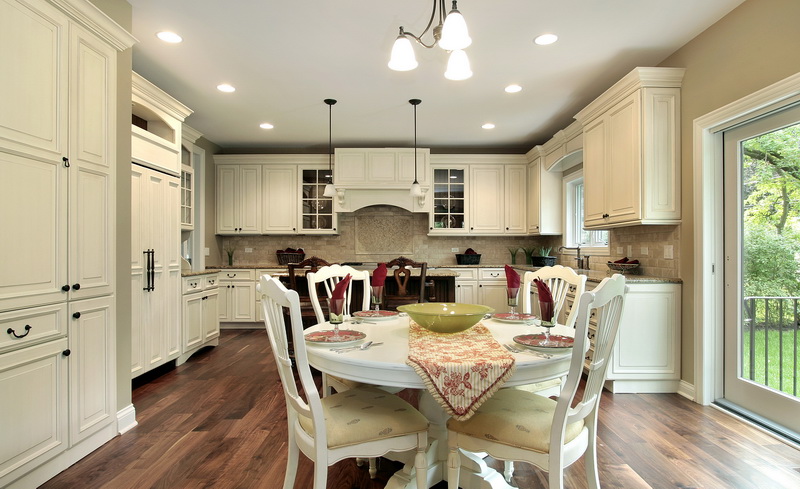
There are 3 types of chandeliers on the market, which differ in the type of attachment to the ceiling:
- Suspended;
- Embedded;
- Ceiling.
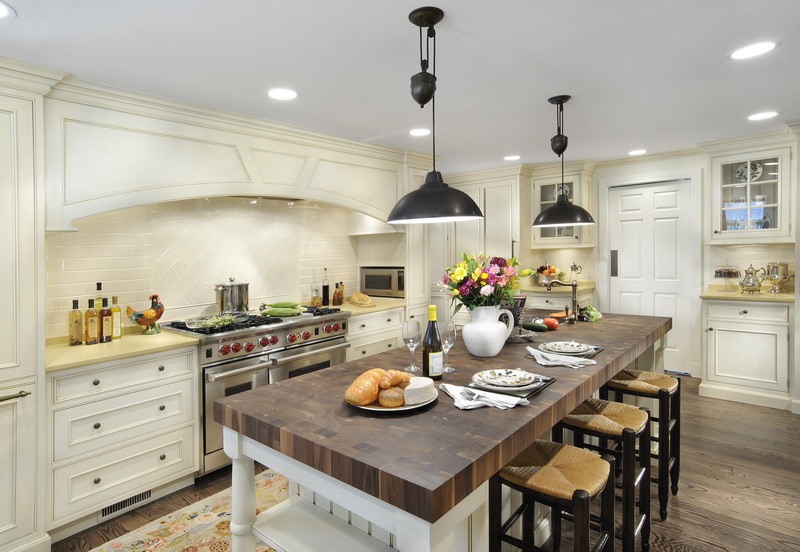
Suspended are attached directly to the ceiling with a hook and strap. Fixation is reliable, durable, fastener elements are not visible. The disadvantage of the system is that the chandelier is mounted to the bar with screws over the canvas. There are two downsides to this:


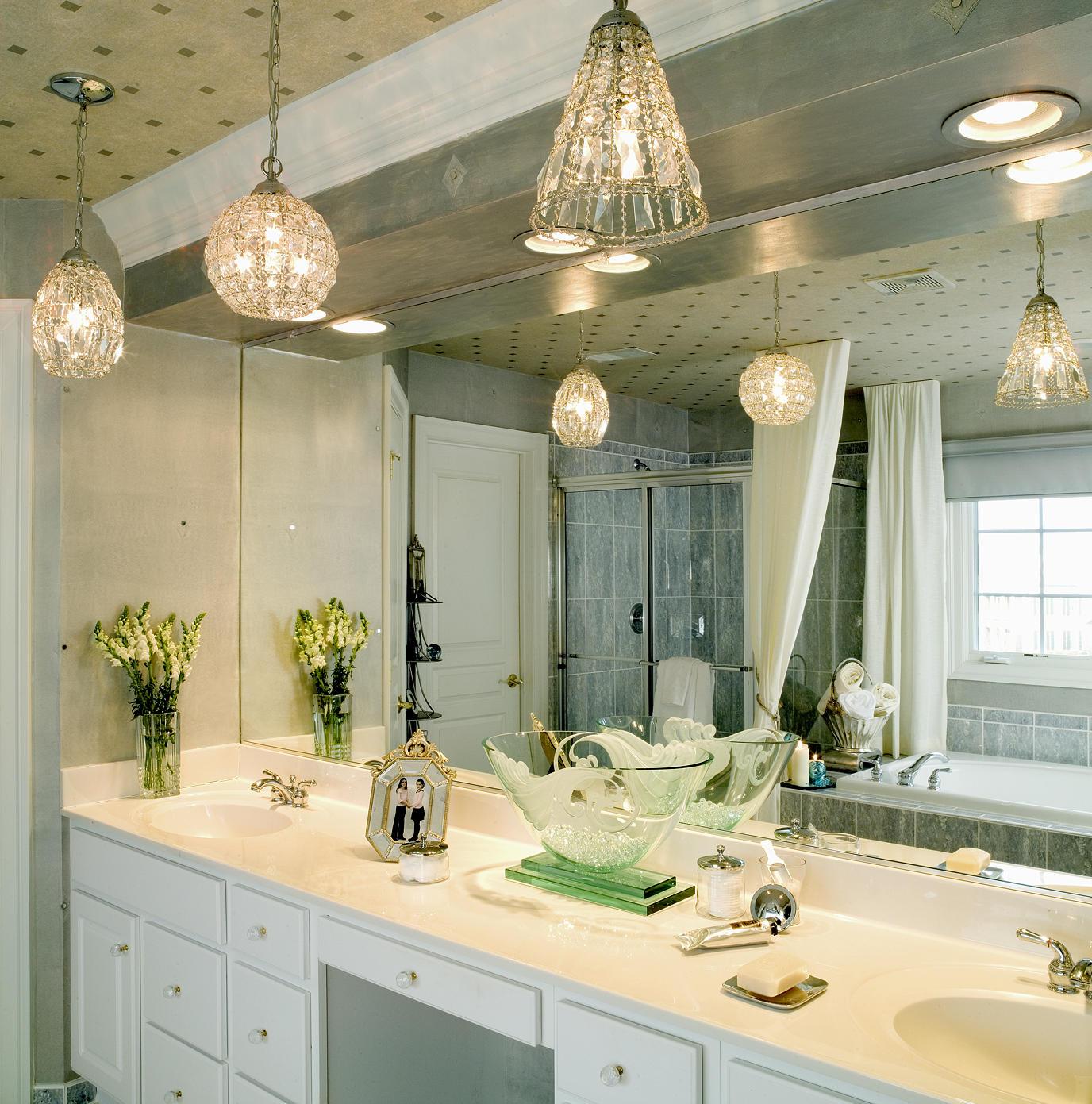
- The fabric can tear from tension and an uneven hole;
- The use of incandescent or halogen lamps may cause the plastic to melt.
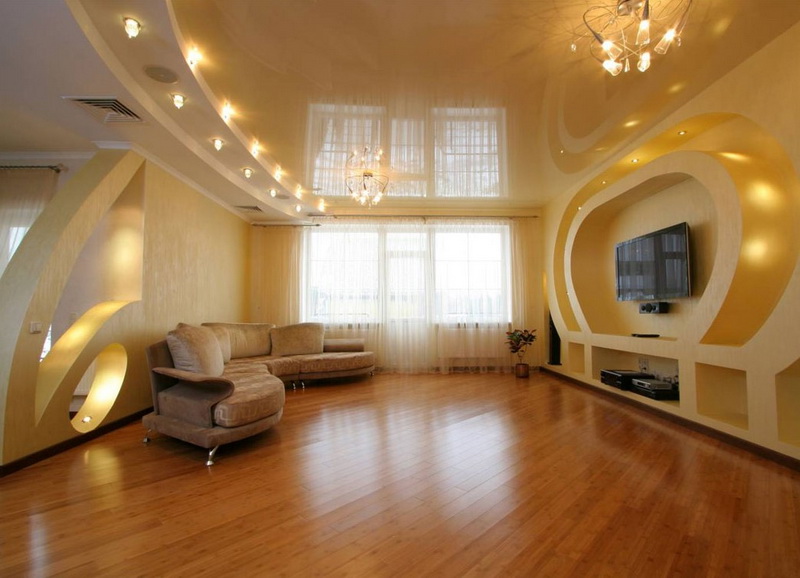
Hanging chandeliers are rarely used in residential areas, but are popular in cafes, restaurants, bars. They give a lot of light and cover huge areas.
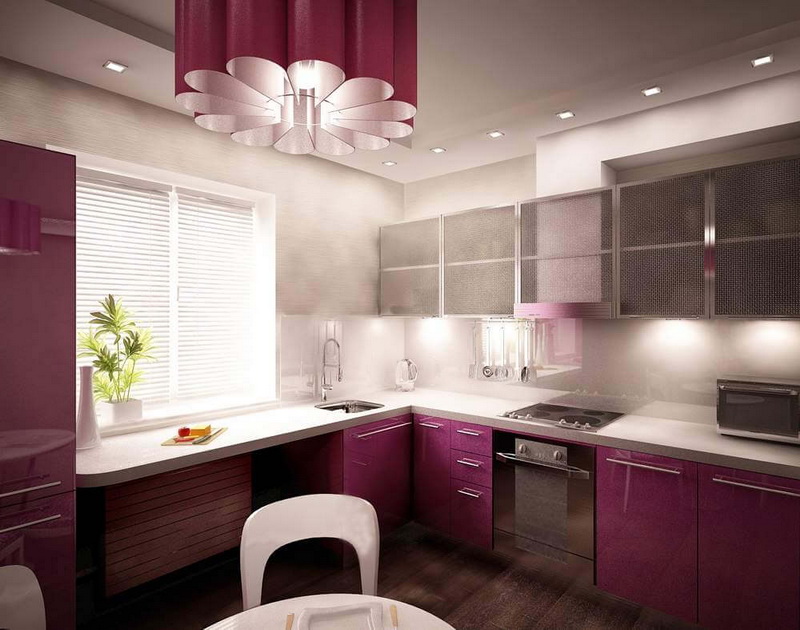
Embedded systems are almost invisible, as they merge with the panel. The base is mounted on the floor in advance. After mounting the ceiling, a hole is made in the fabric. A lamp with special springs is inserted into it. They straighten and tightly fix the body. Additionally, a decorative overlay is arranged on top.
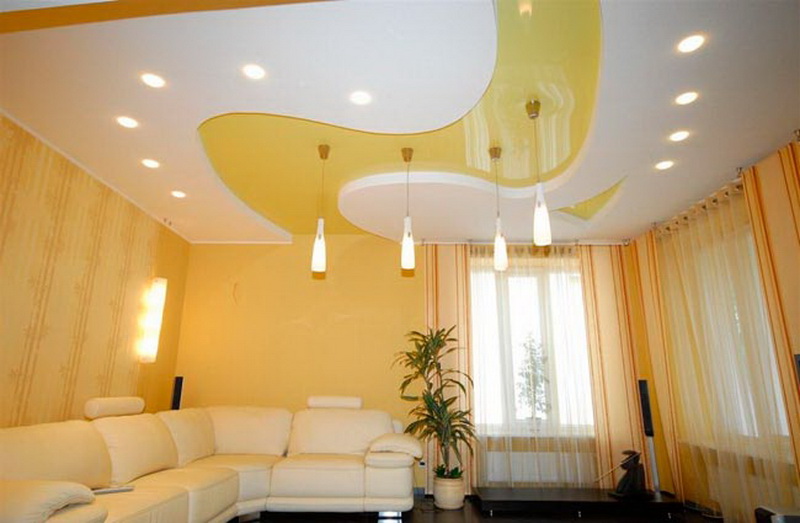
Visually, the light source completely merges with the surface. It looks concise, no screws are used. Suitable for residential buildings, allow you to zone the room. Spots are mounted in a group so that the light flux is more voluminous. Often equipped with a luminescent flux regulator.
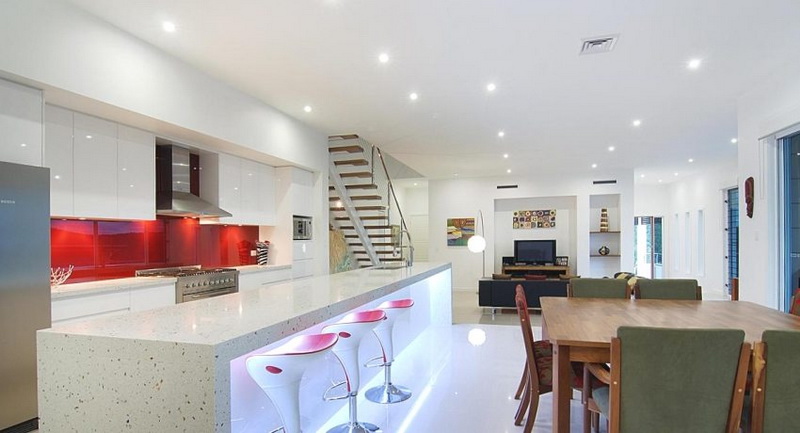
Overhead got its name due to the specifics of fastening. They literally overlap the fabric. The type of fastening is similar to the previous type. Do not spoil the design of the room.
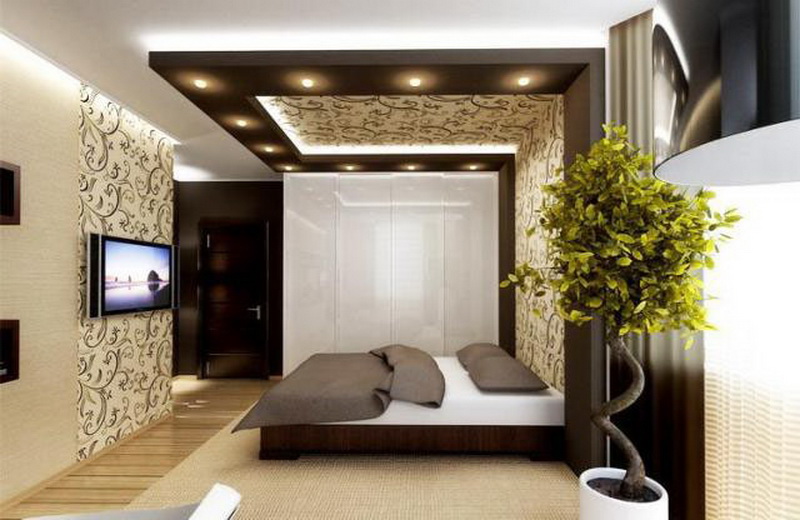
They can have a swivel (it is possible to manually adjust the direction of light) and non-swivel design.
Types of luminous elements for stretch ceilings
There are a wide variety of light bulbs on the market. With a responsible choice of the device, you will ensure fire safety and comfortable use of the room.
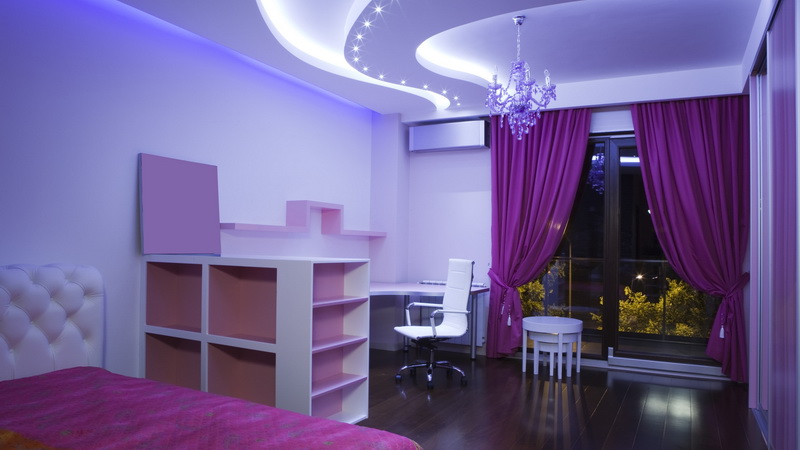
Spotlights
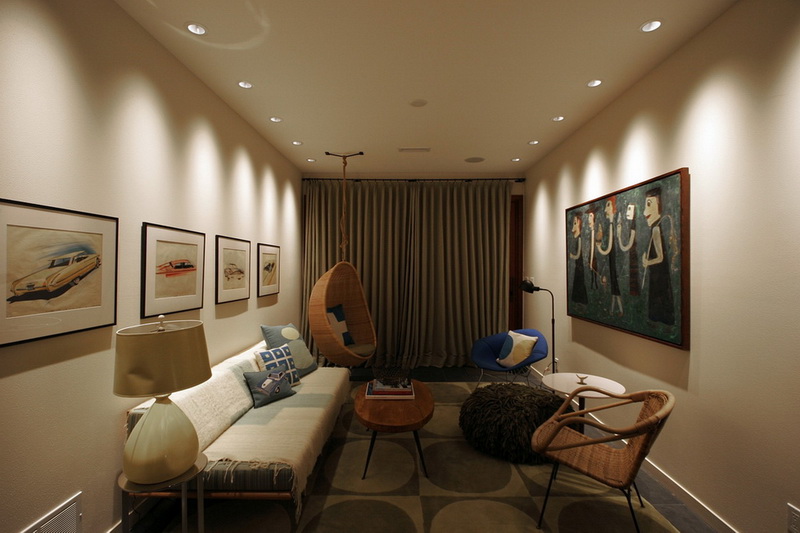
A spotlight is common for stretch ceilings. They are placed in any order you like.
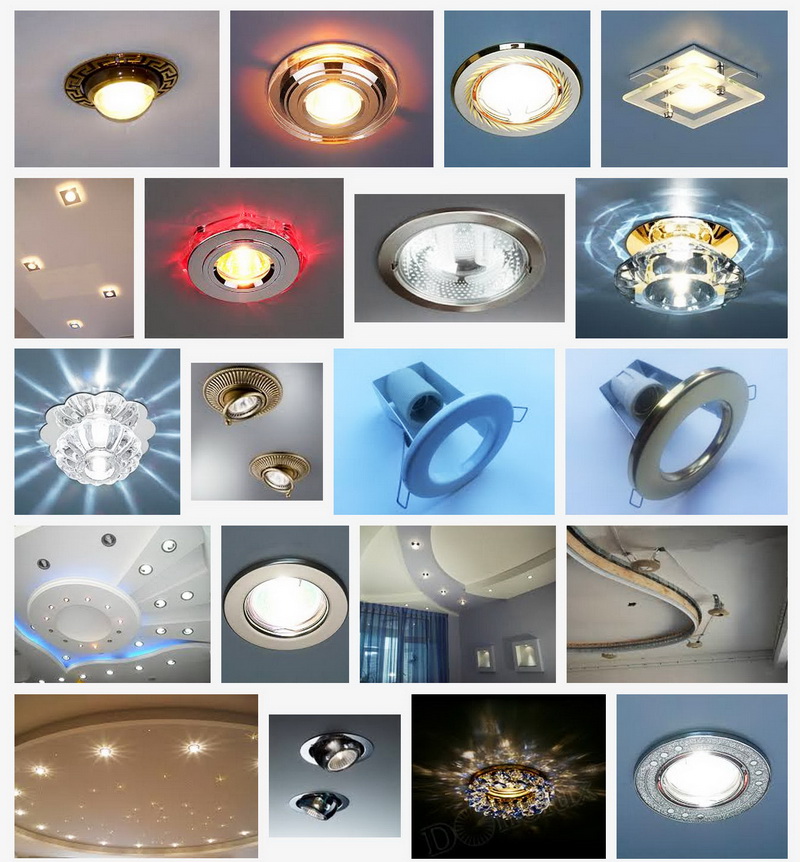
Spotlights for stretch ceilings are produced with different bases. A small translucent shade is installed on top of the lamp, which acts as a light diffuser.
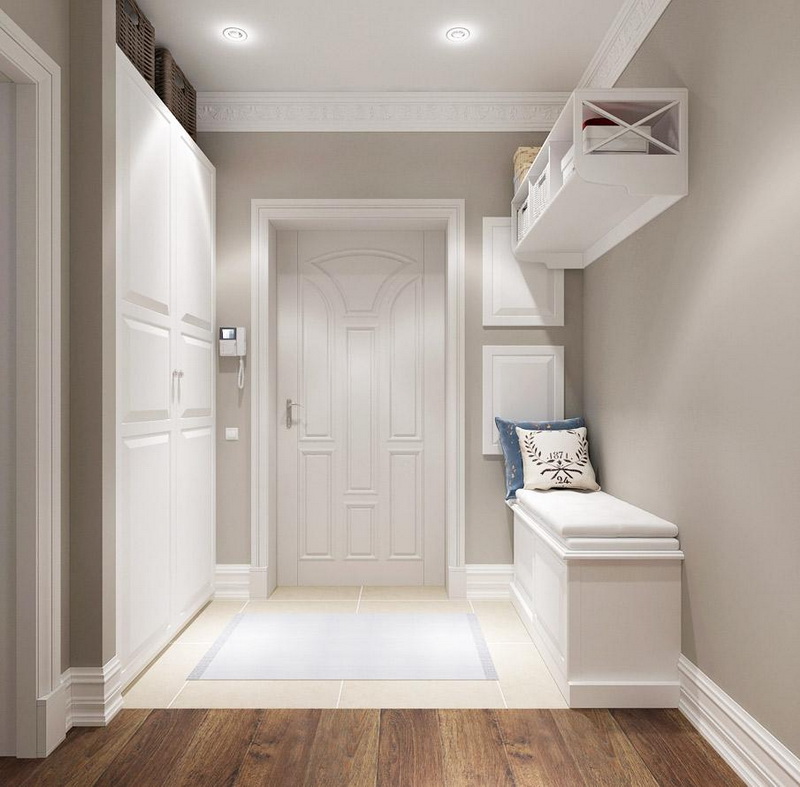
The location of spotlights on the stretch ceiling can be arbitrary, depending on your requirements. In addition to standard installation - in a row, it is possible to create compositions, patterns and shapes on the ceiling.Suitable for multi-level structures, allow you to zone the room. Suitable for any room. Often used in the kitchen, living room, bedroom and even the bathroom. There are models with different beam angles.
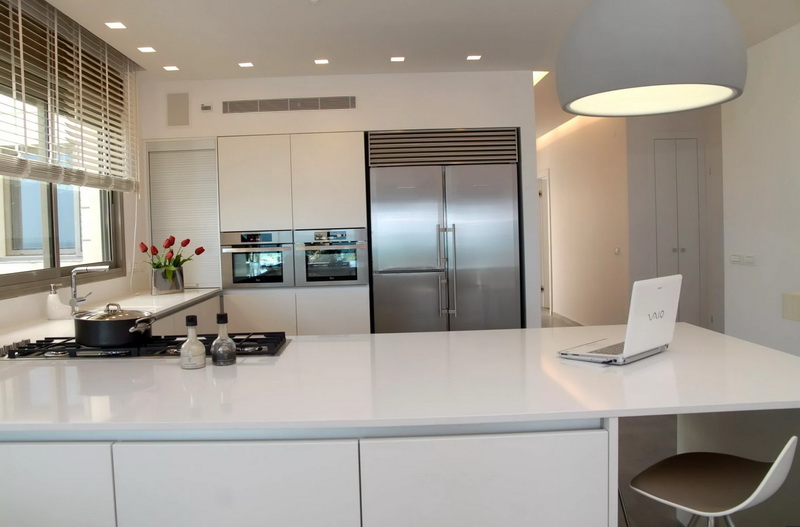
Overhead lamps
Installed on top of the ceiling using a special rack. A decorative cap is attached to the top. Designed for intense glow, which is convenient in homes with a large area and high ceilings.
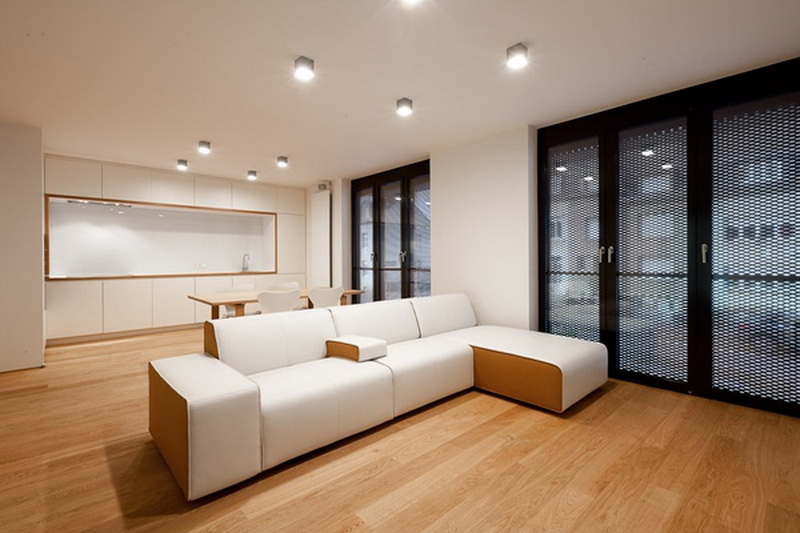
The light bulb does not come into contact with the cloth, so there is no strong local heating.
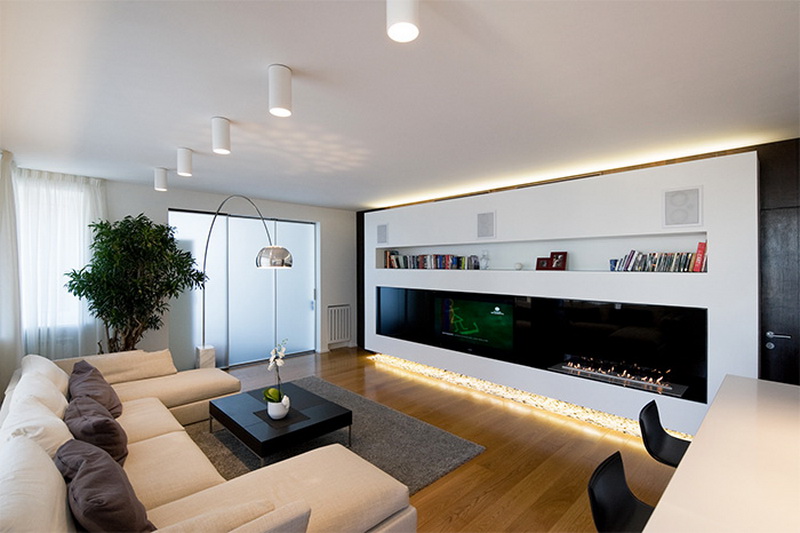
recessed lighting
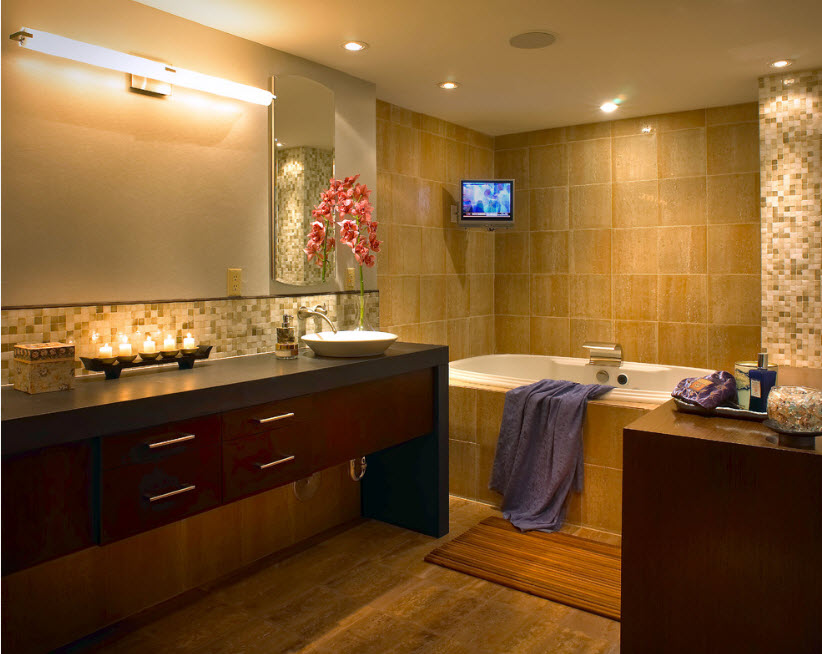
Predominantly used with halogen bulbs and designed for high performance. Since their main lighting element is halogen, powerful local heating occurs.
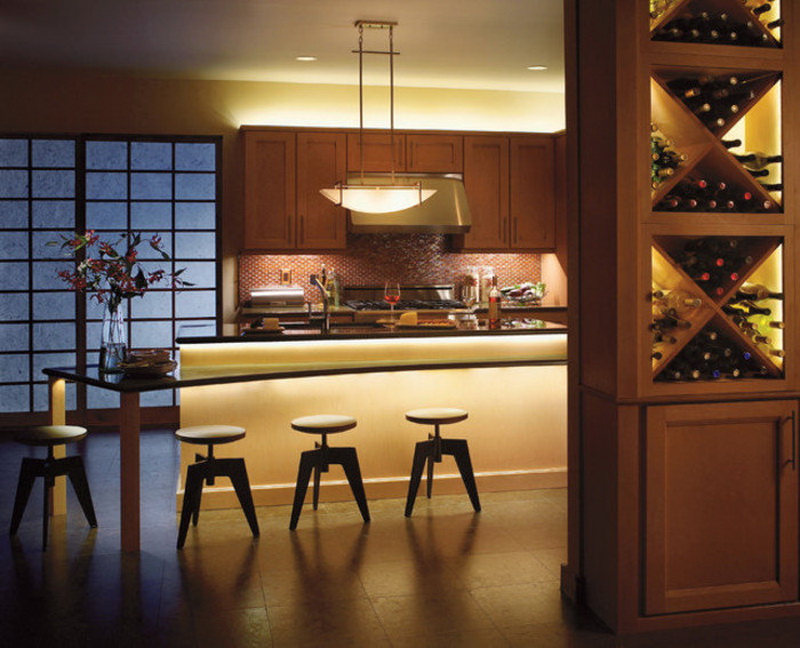
Mounted on a special rack with self-tapping screws. Among the shortcomings, the complexity of installation and the likelihood of damaging the canvas with self-tapping screws stand out.




Hanging chandeliers
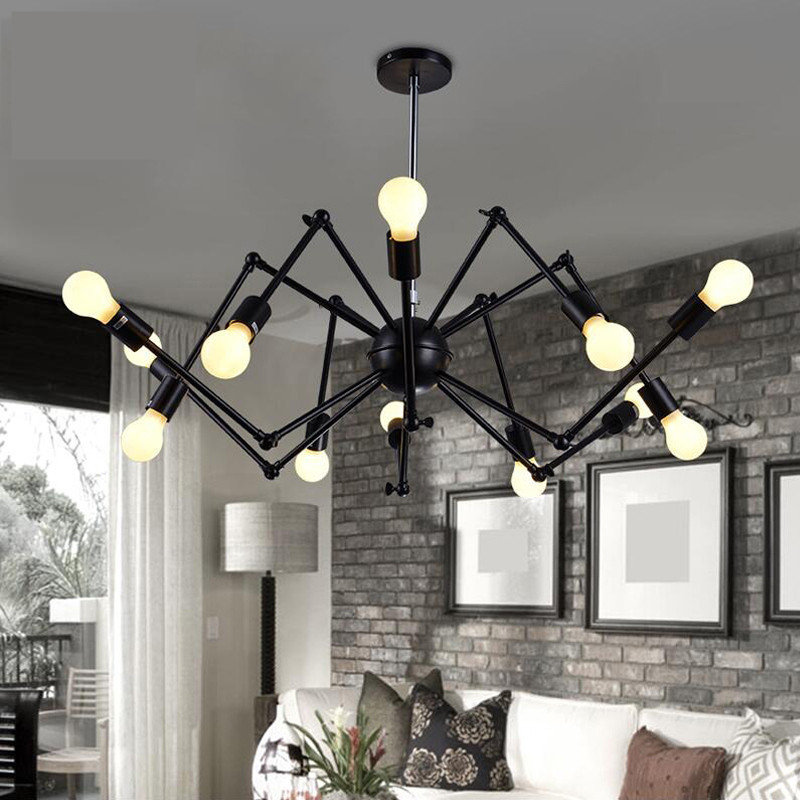
A common lighting fixture that is attached with a special hook to the ceiling rack. Installation problems may occur, as part of the installation is done before stretching. There is a possibility of accidentally damaging the film.
LED types of fixtures
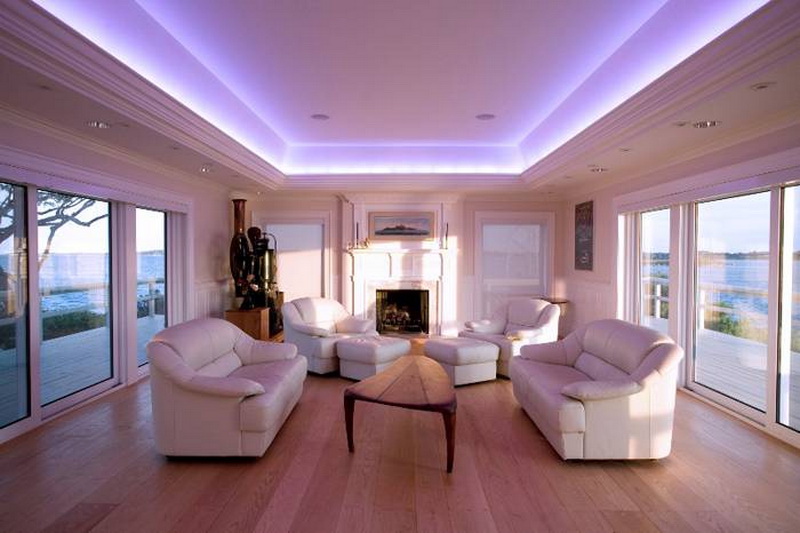
LED lights for stretch ceilings are common due to the high performance of the bulbs and minimal heating.
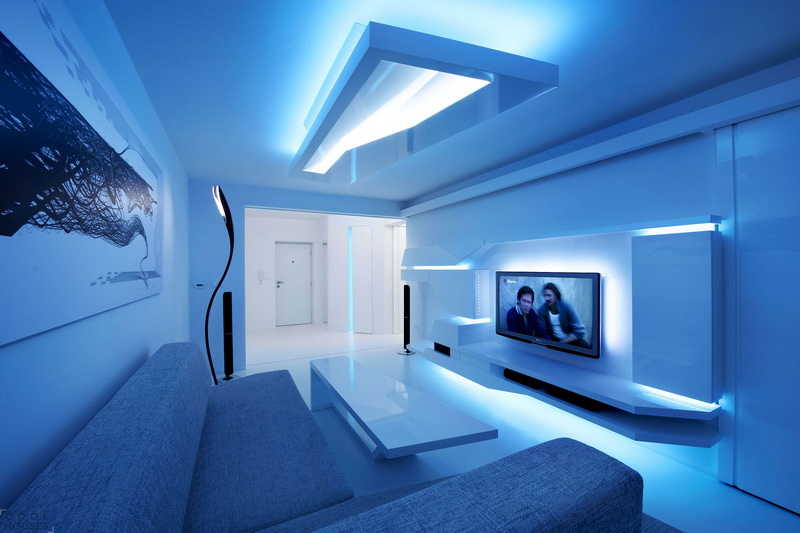
Versatile, can be used both in hanging chandeliers and in point light sources. Differ in the minimum consumption of energy at high productivity. Only 15 percent of all energy goes into heat, the rest is converted into soft light.
The main types of fixtures - advantages and disadvantages
It’s easy to get lost in the lighting department of a large store - there are a lot of options.But you need to understand, first of all, what are the advantages and disadvantages of different types of lamp design.
Recessed ceiling lighting
Ceiling lamps for the bathroom are convenient and practical, do not require much maintenance, but there are nuances in choosing one or another option:
- This option is not suitable for the base ceiling of a monolithic slab in apartment buildings, it is better to stay on the LED strip. High-tech wall hanging halogen lampshades look beautiful in such bathrooms.
- For drywall, you can choose any type of lighting, as it is resistant to high temperatures. The only rule is to position the built-in lamps so that the mount falls on the metal profile. Another important nuance is that the wiring should additionally be protected from moisture with a corrugated plastic hose.
It is strictly unacceptable for recessed fixtures to touch the base concrete ceiling, especially halogens. The distance to the stove should be at least one and a half centimeters.
For stretch ceilings, the frame of spotlights must be protected by a plastic thermal sealing ring so that the film does not start to melt
For stretch ceilings, it is better to stay on LEDs, as halogens get very hot.
Another important nuance is that there are raster lamps with and without rotation - spots, we pay attention to this. According to the area, the required number of lighting points is calculated along the diagonal of the room in increments of 50 cm to 1 meter. Swivel frame 90 degrees allows you to reduce their number by half
Since you can choose the location so that when you turn, a certain area is illuminated.
Swivel frame 90 degrees allows you to reduce their number by half. Since you can choose the location so that when you turn, a certain area is illuminated.
For example, when installing a shower with lighting on the ceiling, a lamp is not needed in this place, just like above a washing machine or a tall cabinet.
The mirror lamp in the bathroom can be a spectacular halogen lamp or decorated with a beautiful LED strip. It is convenient to choose a bill of lading on the wall with a turn to direct the beam of light in the right direction.
If you think about it, then the central lighting in a modern bathroom is almost never used anywhere. It is more comfortable for each zone to choose the best option, which does not have to be the same everywhere.
For example, the lamp above the mirror in the bathroom should be bright and provide the ability to adjust the angle of illumination. And above the bathroom, a spectacular bottom or side lighting is quite appropriate.
Side or ceiling area lighting and lighting
The most convenient option that will help to effectively design even a small bathroom. It is better to choose a wall sconce for one lamp or a spot. Conventional bathroom sconces are not suitable for two reasons:
- no protection against water;
- frequent rotation of the horns quickly renders the lamp unusable.
Mounting on the wall is simple and installation is quite possible to do it yourself
It is important to pay attention to the insulation of the wire connection. Now there are convenient plastic connectors that guarantee high-quality and reliable insulation.
The choice is guided by two important parameters:
The choice is guided by two important parameters:
- frame metal quality;
- plafond design.
Glass should be matte, smooth, not corrugated, the frame should be strong and heavy. Lightweight metal imitation is a cheap and short-lived option.

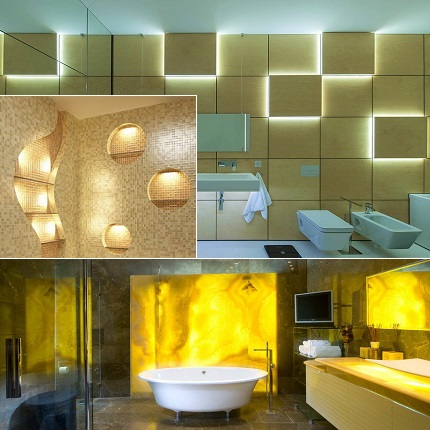


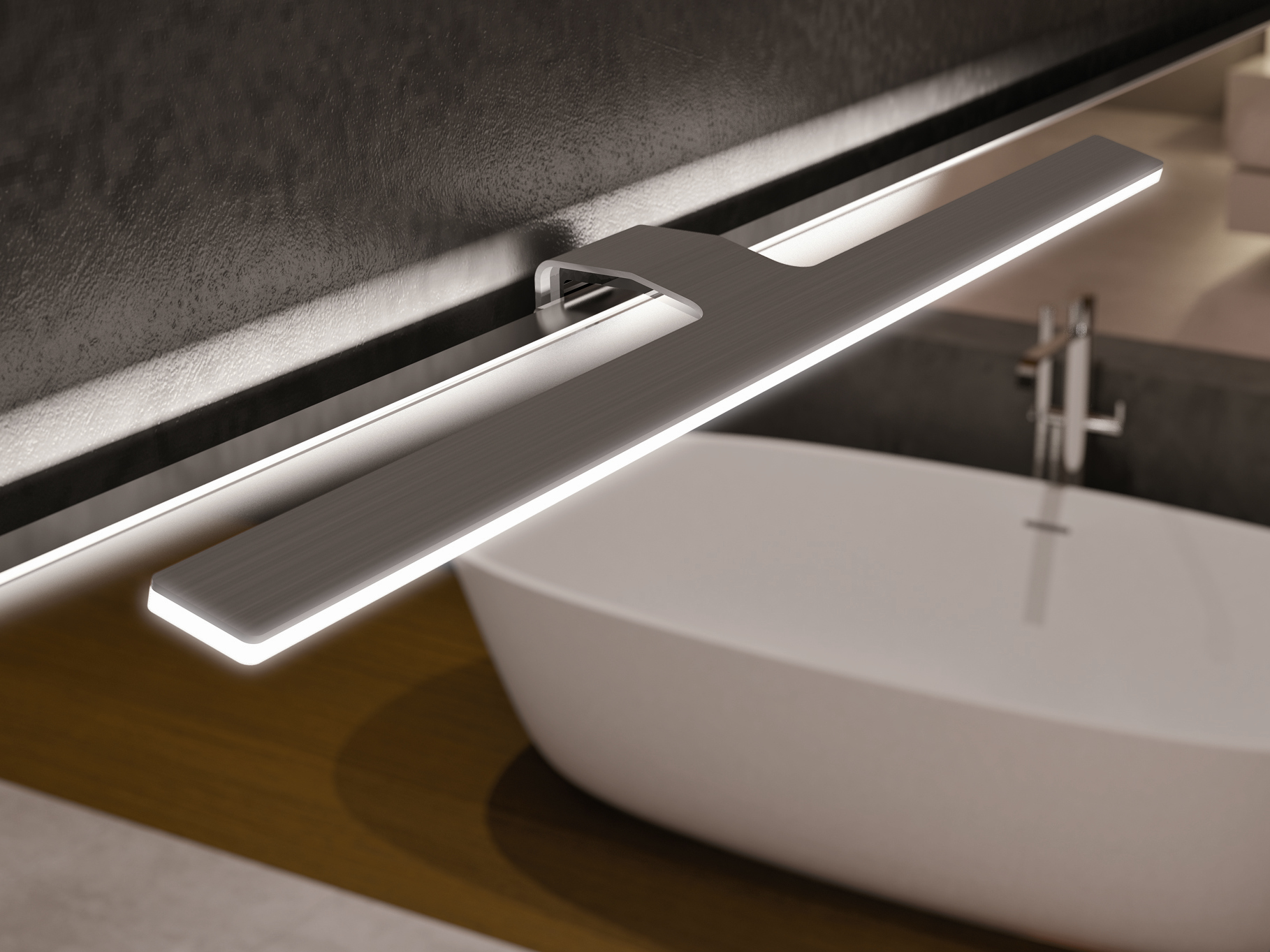


The 12 volt bathroom wall light requires additional installation of a voltage transformer. In a sconce for one light bulb, the wires are phase and zero, for several - we connect the wire with a gap only to the phase, and not to zero.
Another - nuance - side wall appliances require strobes in the walls for wiring, so you should think about this before laying tiles or other decorative finishes.
Ceiling electrical wiring
The correct location of light sources depends on the correct installation of electrical wiring. It is necessary to ensure that every corner of the room is equipped. Therefore, the placement of the cable is planned especially carefully. Rational cable placement will help save costs on its acquisition.
It is recommended to draw a diagram on the ceiling with a marker. The electrical cable for protection is placed in a corrugated pipe and then fixed on the ceiling. A copper cable with a cross section of 1.5 mm2 is purchased, a cable for sockets in the bathroom is laid with a cross section of 2.5 mm2. There is a cable from the common switch box of the apartment, which is located in the corridor.
It is recommended to connect lamps groups of 2-3 pieces. This will allow you to turn on the light in the room by zone, for example, above the shower, and not in the entire bathroom. The fan is connected to one of the groups.
Cabling
On the ceiling, a grinder with a diamond-coated disc is strobing. The electrical cable is placed in strobes, a solution of cement and sand is covered on top.Putty starting and finishing levels the surface of the ceiling.
What not to forget when organizing lighting in the bathroom?
Considering the plan of wet zones, posted at the beginning of this article, it is possible and necessary to make the bath a boring room in which it is pleasant and comfortable to be. It all depends on individual wishes.
Recommendations:
- provide ventilation and / or ventilation;
- In humid and wet areas, install luminaires with a suitable IP rating. Let the moisture protection be higher than recommended in some areas, but you will be calm and safe;
- consider the needs and desires of residents when designing lighting in the bathroom. Each person is individual and his personal opinion may not coincide with the traditional approach.

1 Benefits of LEDs
The main advantages of LED lamps include:
- efficiency - electricity consumption is 10 times less than that of incandescent lamps (1.5 volts instead of 220 volts);
- durability - 11 years of uninterrupted operation;
- easy disposal;
- safety - LED lamps do not contain mercury and other toxic substances;
- wide light spectrum;
- high light output.
Why are LED lights recommended for bathroom lighting? The main advantage of such lamps is that they are completely waterproof. The body of the LED lamp is covered with special moisture-proof plastic or glass, which prevents moisture from entering the lamp and the wiring as a whole. LEDs don't get hot. Therefore, their use is absolutely safe in wet areas.
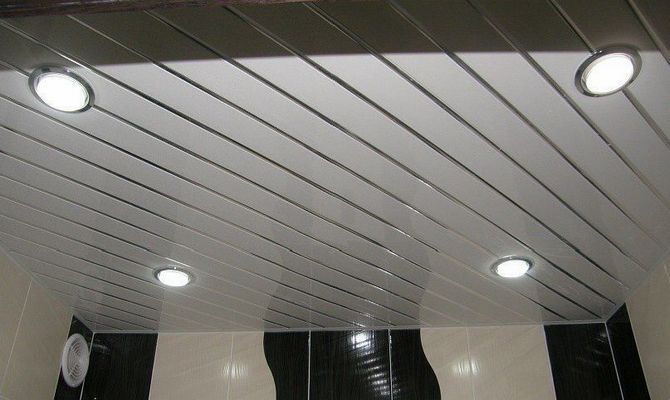 LED lights in the bathroom
We recommend to read
- What is better to buy fixtures on the ceiling in the bathroom
- Features of the choice and installation of a lamp in the bathroom above the mirror
- How to choose recessed bathroom fixtures?
LEDs need a small power consumption, and they are powered by direct current from a special transformer built into the lamp housing and converting the voltage from 220 to 12 volts.
Lamps with a built-in converter are connected directly to a 220 volt network. Or, if a transformer is not built into the lamp, the lamps are connected to one common converter, and it is connected to the network. Despite the low power compared to incandescent lamps, they illuminate the space no worse.
The only drawback of LEDs is the high cost of the lamp. However, in practice, with proper use of such lamps, they will not only pay off, but also save huge amounts of money on electricity bills. After all, a huge number of incandescent lamps can be replaced with one LED.
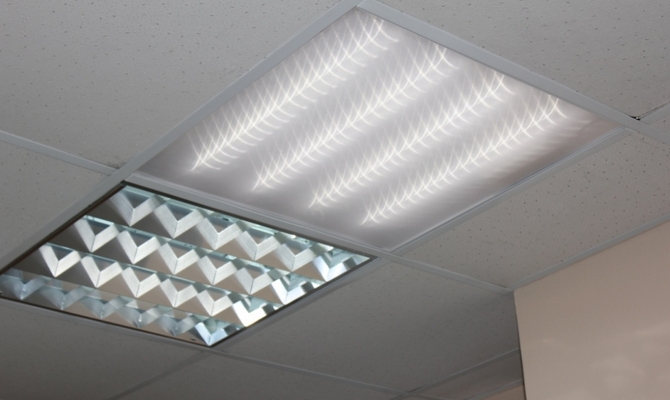 Choosing an LED Light
LED lamps are overhead and built-in. The most correct choice would be recessed LED lamps, as they are absolutely waterproof, and their wiring is hidden under the ceiling. Recessed fixtures, in turn, can be divided into spot and light panels. Light panels are predominantly used in offices, classrooms and retail spaces as they are very large and powerful. Therefore, it is worth buying recessed LED spotlights for the bathroom.
Requirements for bathroom lighting fixtures
In order not to have to frequently change not only light bulbs, but also the devices themselves, take care of the quality of the products.Expensive branded lamps or chandeliers for the bathroom, unlike cheap products, retain their aesthetic appeal for a long time.
However, you should not chase only external splendor - remember the safety of the lighting system as a whole.
Pay attention to the area painted in bright blue. This is the most dangerous area exposed to water splashes, so all electrical light sources must be marked IP65 - the maximum degree of protection. Here are a few provisions that will help you properly organize bathroom lighting - rooms with a high level of humidity:
Here are a few provisions that will help you properly organize bathroom lighting - rooms with a high level of humidity:
- use lamps with a degree of protection of at least IP24 - they are not afraid of moisture;
- at a sufficiently close distance from the shower or bath, you can place devices of the 2nd class of protection against electric shock;
- low-voltage devices (up to 12 V) are provided for the zone of high humidity;
- metal parts of the devices must be anti-corrosion, and the heating elements are hidden by protective shades.
Consider the characteristics of light rays. For example, fluorescent cold lamps in the wash area will give the skin a pale, bluish tint and prevent the correct application of makeup.

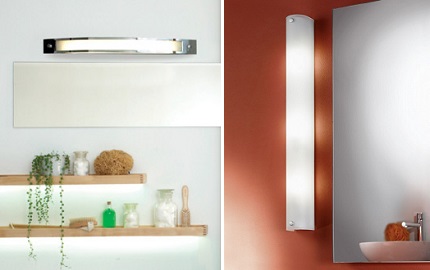
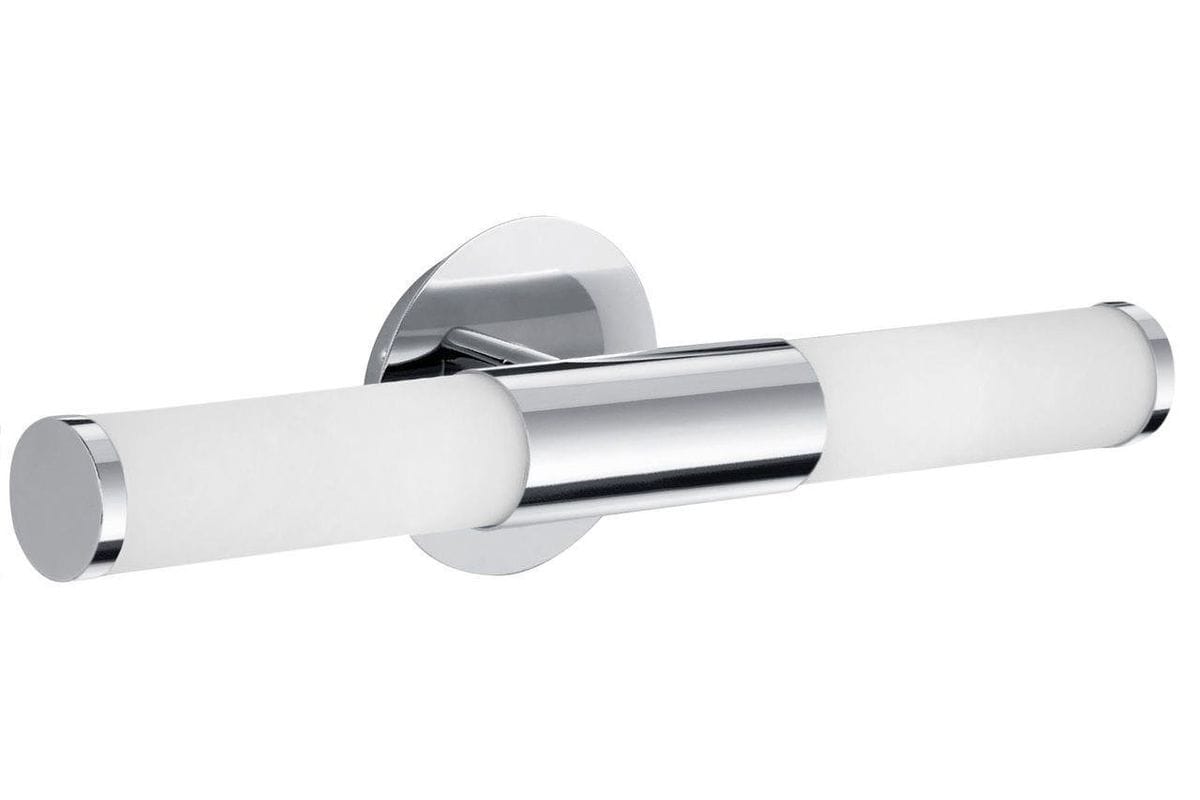


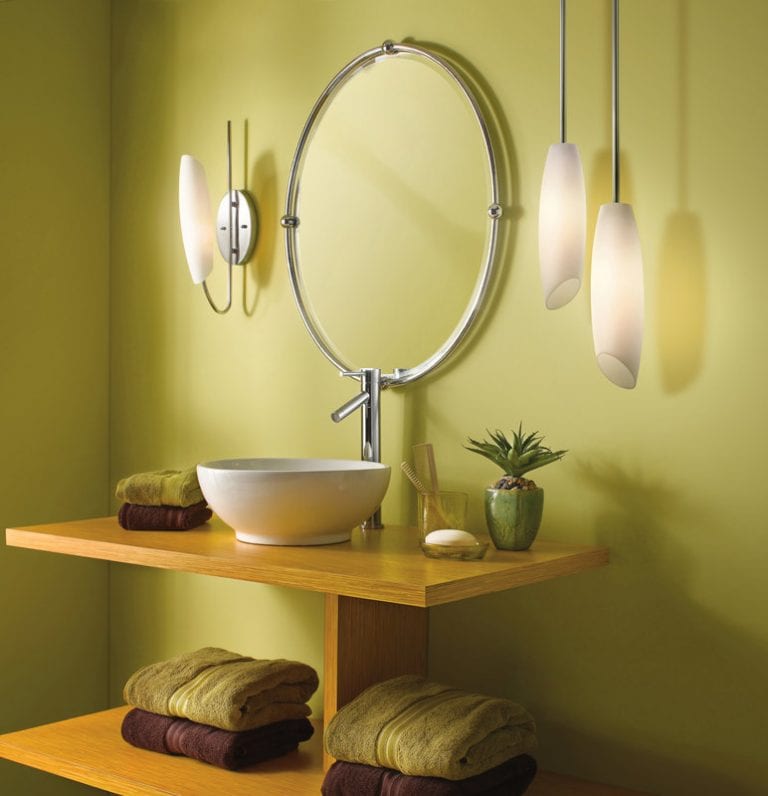
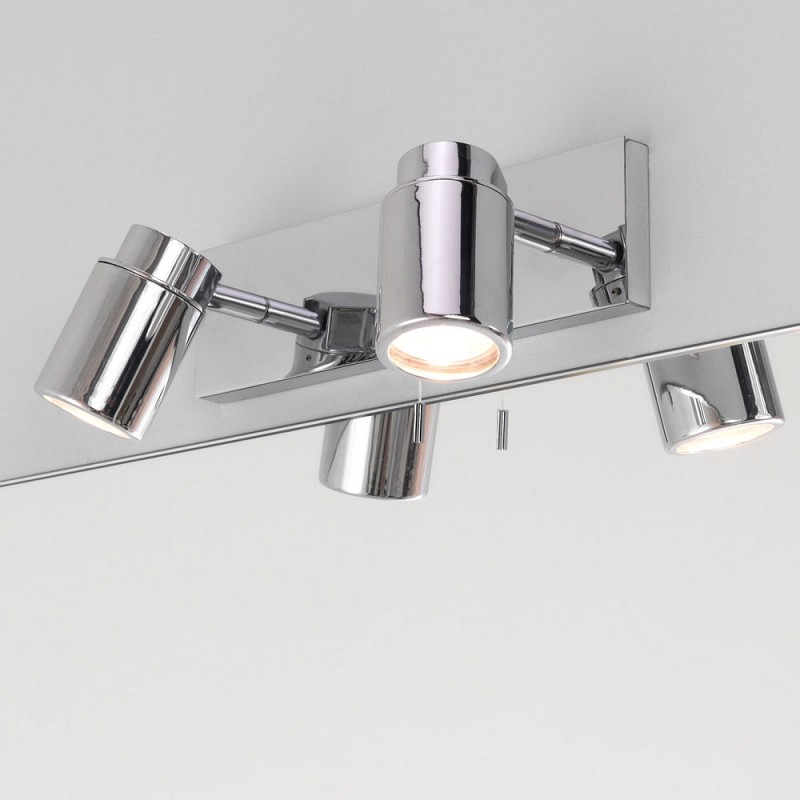

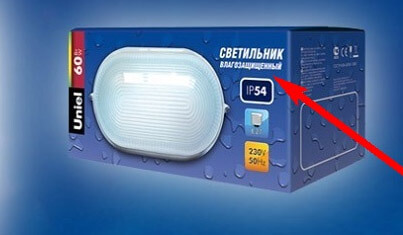

How to calculate the number of fixtures? For a room of 5 m², one device with two lamps (60 W) or two similar lamps at the edges is sufficient, but additional lighting is required in the wash area.
In the next video - general tips for choosing fixtures.
Installation of ceiling lights for the bathroom
The complexity of the installation will depend not so much on the fixtures themselves, but also on what kind of ceiling you have to deal with - the main or suspended, and if it is suspended, then plasterboard or vinyl. In addition, there are fixtures that can only be used for one type of ceiling, and there are those that are suitable for any ceiling.
Ceiling lamps in the bathroom for the main ceiling
If the ceiling in your bathroom is an ordinary putty concrete ceiling, there is no question of any spotlights or recessed lights. LED lighting is also not used here. The best option in this case is a ceiling in the form of a ball or plate, suspended from the ceiling on screws and dowels.
If you install fixtures on the main ceiling, first of all, you need to pay attention to the power of the installed lamps, their size (a large lamp will constantly come into contact with the ceiling, and it will heat up faster), as well as the decorative properties of the lamp itself
Features of mounting spotlights on a stretch ceiling
When choosing spotlights in the bathroom for a stretch ceiling, try to choose the size of the fixtures correctly, i.e. they must have exactly the same dimensions as the inner diameter of the platform on which the fixtures will be mounted. Usually the platform has dimensions of 60-85 mm. If you choose the wrong size of the mounts, the luminaire will not hold or simply will not fit into the mount hole. At installation of built-in spotlights in a stretch ceiling, the following conditions must be observed: the power of incandescent lamps must be no higher than 60 W, halogen lamps - up to 35 W .; avoid contact of the ceiling lamp with the ceiling canvas; use double thermal rings. As for the use of LED lamps in lamps, this is not recommended due to possible voltage drops. Constant switching on and off of the light can disable such lamps in a short time.
The nuances of installing spotlights on a false ceiling
You need to fix such lamps with separate suspensions - not on a false ceiling, on the main or ceiling. In this case, the suspended ceiling must be lowered by 6 cm or more. Usually 2-4 suspensions are used, but depending on the type of ceiling, the number of suspensions may vary. At the first stage, you need to draw up a connection diagram and then, when the installation locations of the fixtures are determined, you can proceed to the construction of reinforcing structures. When the false ceiling is installed, you need to stick special rings on it - they will prevent the canvas from tearing after you make holes in it. If necessary, you will also need to stick thermal insulation. At the final stage, you need to connect the lighting points and align the ceiling canvas.
Features of installing ceiling lights on drywall
At the initial stage, it is necessary to mount the frame for the plasterboard structure, make the wiring for each lamp, place all the wires that are in the ceiling sinus into the cable channel and attach to the main ceiling. Spotlights are first connected to electrical wires, their ears are squeezed and the fixtures are inserted into the prepared holes.You can also install large overhead lights on a plasterboard ceiling, but for this you need to install additional profiles at the place where the lights are mounted.
Watch this video on YouTube
The team hopes this article will help you get adequate, beautiful, and reliable lighting in your bathroom.
Which lamps are suitable for the bathroom
Almost all types of lamps can be used in the bathroom.
Incandescent lamps are easy to use, this is a budget option. The disadvantage of such bulbs is a short service life. Ceiling lamps have an aesthetic appearance, they serve as a ceiling decoration. The plafond protects the lamp from moisture and damage.
If you decide to install a Massive light source, please note that it gets very hot, and for this reason, when mounting it on a PVC ceiling, you need to equip an asbestos or wood gasket so that the ceiling does not “float”.
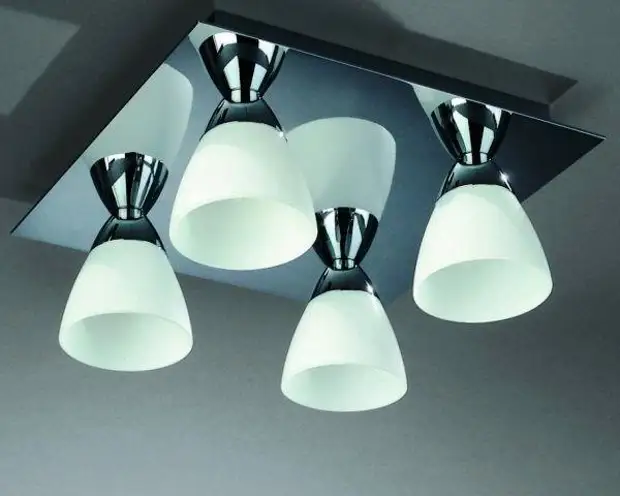
A halogen light source has a glass bulb with an incandescent filament.
Important! The main advantage of halogen lamps is their long service life. Such light sources are compact and inexpensive. Transparent tape is used for LED lighting equipment.
LED is a semiconductor device
Transparent tape is used for LED lighting equipment. The LED is a semiconductor device.


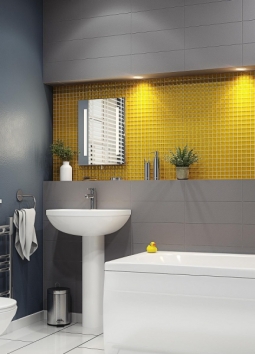
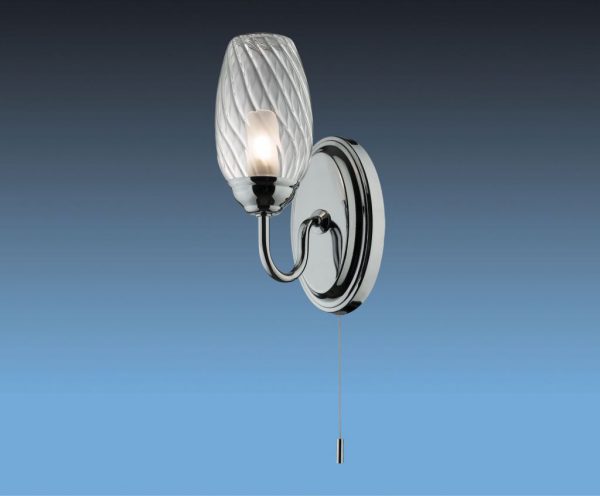
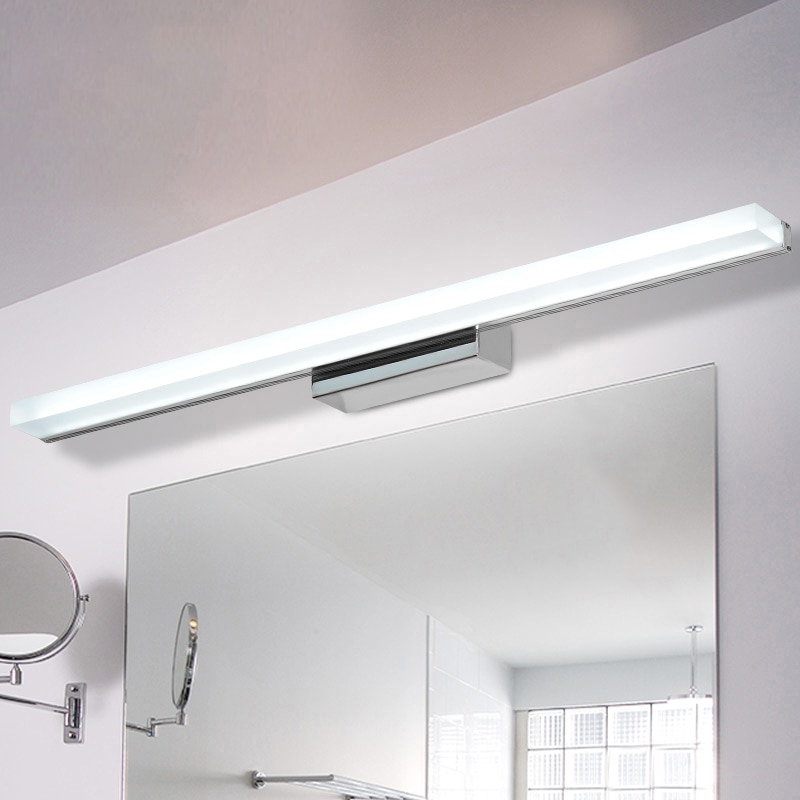
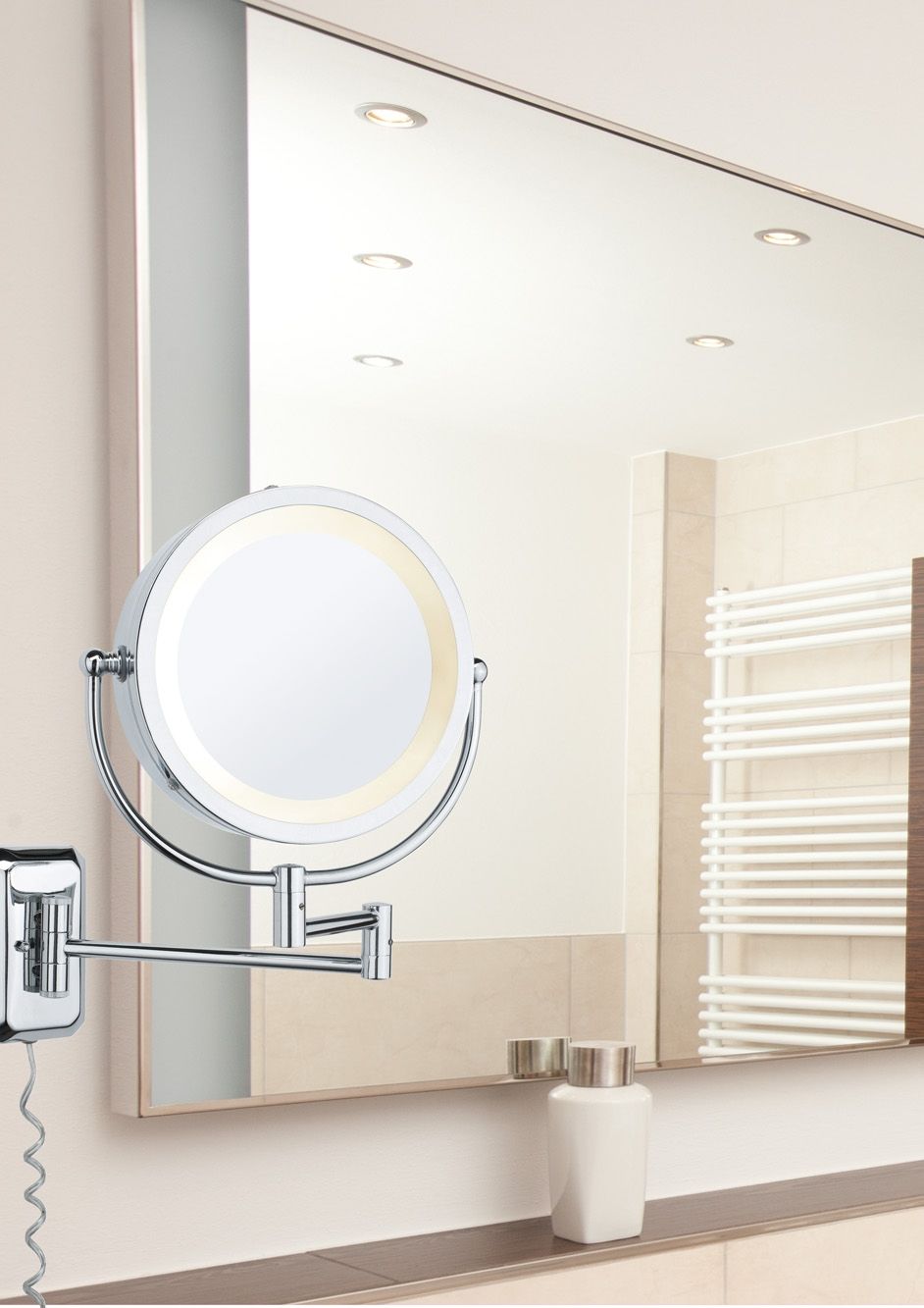
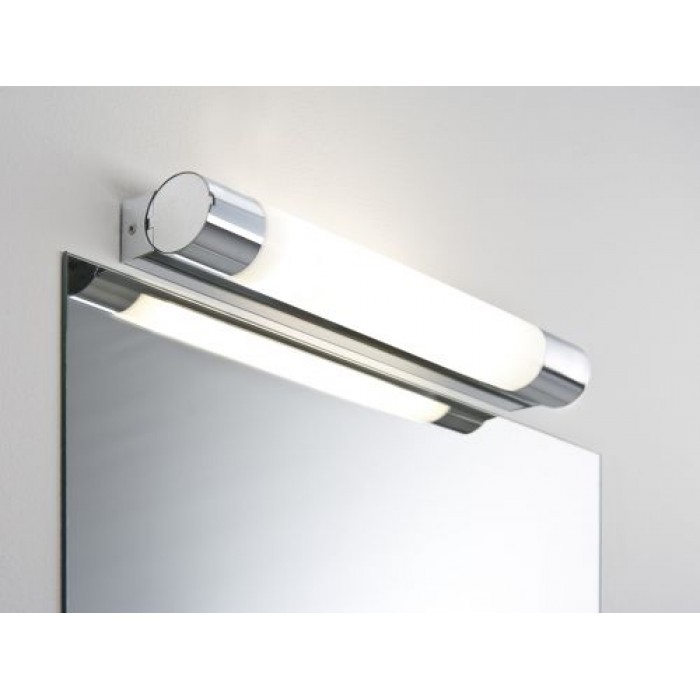
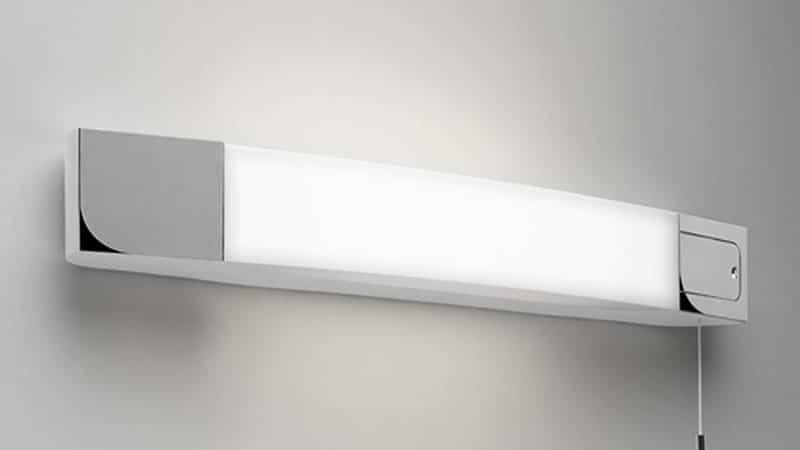

LED ceiling light sources allow you to save on electricity bills. Lamps with LEDs consume half the electricity than other light sources. Devices with LEDs almost do not heat up and are highly efficient.
Ceiling lighting with LEDs can be either white or colored.Such illumination in most cases is not the main source of illumination and is installed under stretch ceiling structures. LED strips are used as an additional light source.
The cost of lamps with LEDs is quite high, but the cost of purchasing a lamp justifies itself. Such lamps have a high luminous efficiency. Another advantage of LED lamps is their long service life.
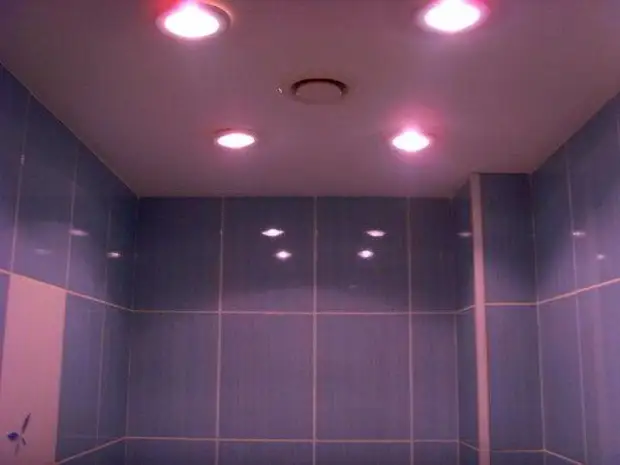
Luminaires designed for ceilings have different sizes, they can have one lamp or several.
Luminaires mounted on the ceiling can have a rotary type of design and a fixed one. Swivel lamps have the function of directing the flow of light in the right direction.
Domestic manufacturers offer fixtures for ceilings mainly with conventional incandescent lamps. Foreign manufacturers have a large selection of halogen models.



