
- How to purchase a high-quality and durable acrylic product
- Non-standard forms of a compact bath
- Out of competition: why in Soviet times cast-iron baths had no equal
- acrylic products
- Effect of materials on size
- Features of installation and connection
- Metal carcass
- Brick support
- Dimensions of bathtubs from different materials
- View 1. Cast iron fonts
- View 2. Steel counterparts
- View 3. Acrylic bowls
- View 4. Triangular and corner acrylic bathtubs
- Photos of bathrooms of different sizes
- Modern cast iron products
- Matching the bath to the size of the room
- Mounting Features
- Non-standard shapes and sizes of bathtubs
- Products of non-standard sizes
- What are the sizes of acrylic bathtubs - standard and non-standard
- What materials are used for production
- Cast iron bathtubs
- Steel baths
- Acrylic bathtubs
- Acrylic and polymer concrete
How to purchase a high-quality and durable acrylic product
The bath is a device with a long service life. Therefore, when choosing a product, you should be guided by the recommendations below in order to exclude the possibility of buying an expensive, but not high-quality product.
When choosing a specific model, it is necessary to study the thickness of the acrylic layer. To do this, shine an ordinary flashlight on one side of the bath.If light shines through from the other side of the product, the bath wall is too thin, which reduces the life of the device.

Most acrylic bathtubs are equipped with a convenient shelf for storing bath accessories.
The next step is to study the number of reinforcement layers. They can be seen on the edge of the walls. The layers resemble rings on a tree frame. The greater their number, the stronger the product. Next, tap the body. A booming sound will testify to the quality performance of the selected model. If the bath has an unpleasant smell of chemicals, it is made of cheap material. While running your hand over the surface of the product, dents, scratches and other defects should not be felt. You should carefully examine the color of the bath. It must be even. If there are visible stains on the surface, this is evidence of a defective product.
Non-standard forms of a compact bath
Non-standard compact products include a tub-chan. It is made of cast iron and steel under copper. The vat is finished with wood, bamboo, textiles. It is made in sizes from 1.04 m to 1.3 m. Due to the large volume of liquid, the human body is completely immersed in water. Such a font can be used for medicinal purposes.
The second unusual font is made in the form of a shoe or remotely resembles an armchair. One edge rises slightly, like the back of a chair, and the other edge is recessed. It is small in size but takes up a lot of space in a small bathroom. The length of this design: 120 cm, 132 cm, 167 cm, 170 cm, 190 cm.
For a small room, it is recommended to install a set of a bathtub and an elongated washbasin. They are installed side by side, which allows you to add useful additional centimeters.Mounting on the wall of a mixer with an elongated spout will also be a good way out.
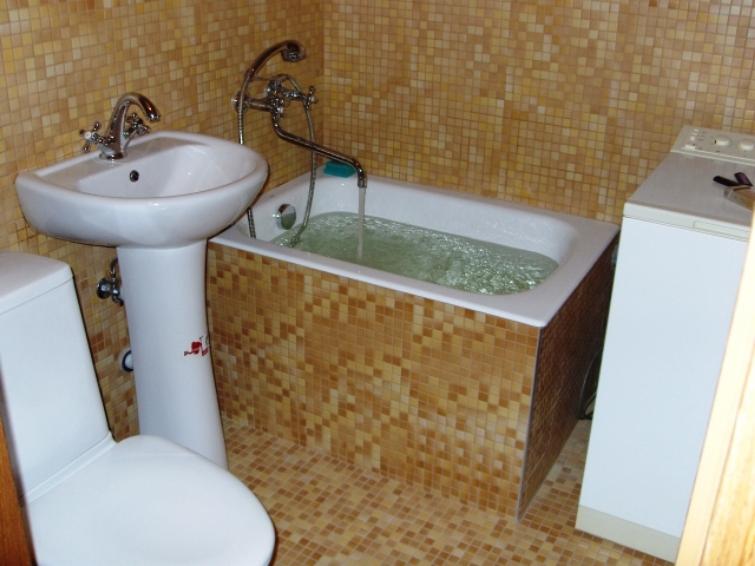
In this case, by turning the spout, one faucet is used both for filling the bathtub with water and for the washbasin. The set will look harmonious if the washbasin and bathtub are decorated in the same shade. It is recommended to choose an angular compact asymmetric model.
Out of competition: why in Soviet times cast-iron baths had no equal
In the USSR, they did not know about the existence of plumbing made of acrylic or liquid stone. Soviet cast-iron bathtubs according to GOST 1154-80 were made from oxygen-enriched iron, there were plenty of raw materials for production in the country, so the cost of production made it possible to purchase it for all categories of the population.
- Plain enameled cast iron bath. It included three sizes: 150, 170 and 180 centimeters with a depth of 45 cm, a width of 70-75 cm and a weight of 112 kg.
- Enamelled modernized VChM. Produced with the same parameters.
- Modernized lightweight HFMO. Due to the reduction in wall thickness, with a standard model size of 170 by 75 centimeters, it weighed 98 kg, which is 14 kg lighter than its predecessor.
- With a set of mixers VChM1. It had the dimensions of a standard model, but they were sold with a mixer, which was quite convenient. There was no need to select the right product in a shortage.
- Lightweight with a set of mixers VChMO1. Despite the “lightness”, such a product weighs only 1 kg lighter than its conventional counterpart. Sedentary 120 cm appeared, but they weighed at least 90 kg.
In addition, the quality of plumbing was at a high level, it was produced according to working drawings established in accordance with standards, and any deviation from the specified norm was severely punished.
acrylic products
Recently, the popularity of acrylic products has increased, bathtubs made of this material are distinguished by a beautiful glossy sheen, flawless whiteness, low heat transfer coefficient and a variety of colors. Not the last place among the advantages of these models is the abundance of various shapes and sizes offered by manufacturers. The size range of acrylic products is very flexible, it does not comply with the standard. The length and width of acrylic bathtubs is difficult to determine, as they often have a rounded, curvilinear shape.
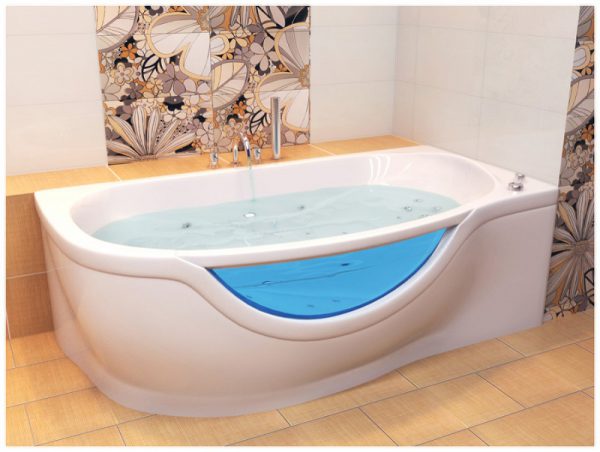 Acrylic bath
When choosing such products, consider the following factors:
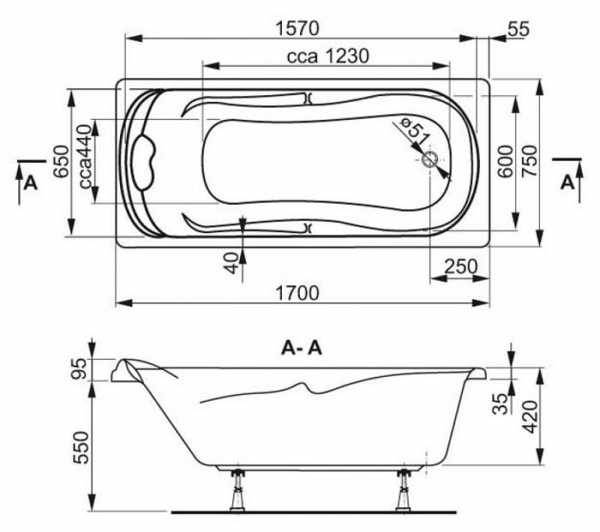
- The length of the bath of a standard model made of acrylic is 120-190 cm, and the width is 70-170 cm. Due to the depth of 65 cm and the steeper angle of the walls of the product, the volume of the tank is greater than that of cast iron and steel models.
- The main factor in the comfort of acrylic models is academic. The most comfortable bathtubs are made taking into account the shape of the human body, they are equipped with built-in headrests, handrails, a corrugated bottom surface to increase comfort during operation.
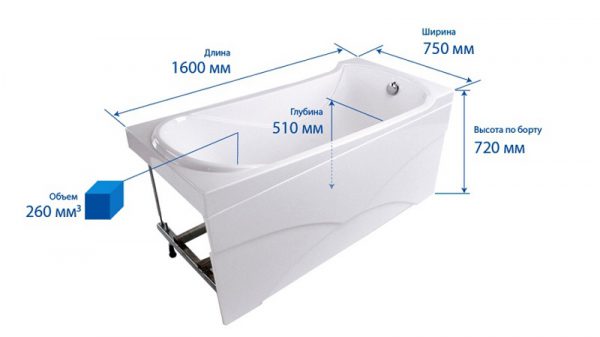 Dimensions of an acrylic bathtub, indicating the volume of water it can hold
Effect of materials on size
The parameters of the font often depend on the material from which they are made. Manufacturers are often limited by the capabilities of their equipment. Cast iron, steel and acrylic are commonly used for the manufacture of bathtubs.
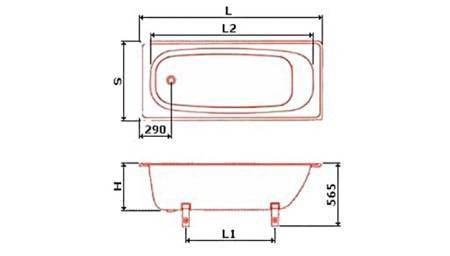
Cast iron products are very popular. They can hold heat well for a long time. The disadvantage is the too heavy weight of cast iron plumbing. The product is installed on cast supports attached to the body. There are three sizes of bowls:
- miniature sitting fonts can have a length of 100 to 130 cm, a width of 70 cm, a depth of half a meter, the volume of such models is 140 liters;
- medium models usually reach 150 cm in length, and in width - from 70 to 75 cm, in height - half a meter, the capacity can hold up to 170 liters of liquid;
- large comfortable fonts have standard dimensions (170x75 cm) with a height of 50 cm and a volume of 195 liters, although there are modifications with dimensions of 185x85 cm.
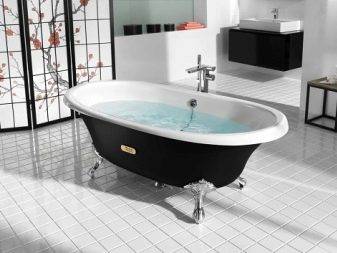
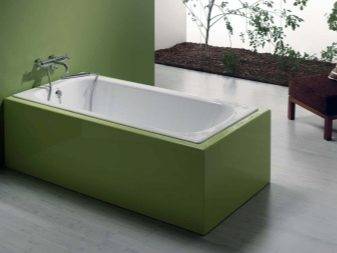
The most affordable option is steel plumbing. Buyers are attracted by the lightness of the models. Such a plumbing product is easy to install on your own. The dimensions of steel structures are no different from cast iron counterparts. The longer the font, the more comfortable it is. The standard height is 40-60 cm. Steel is easier to process than cast iron, so you can find steel oval, round, angular and rectangular designs. The disadvantages include the rapid cooling of water and noise during filling the container with liquid.
The acrylic model is made of fiberglass and covered with a 3-4 mm layer of acrylic on top. A lightweight, durable box can have a length of 120 to 190 cm, a width of 70 to 170 cm, a height of 38 to 65 cm. The largest design holds 400 liters of liquid. The parameters of acrylic bathtubs do not always comply with the standards. There are curvilinear and rounded shapes of models.
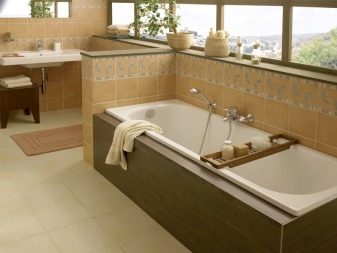
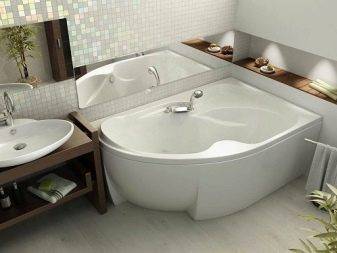
Bathtubs are fixed with adjustable screw legs to special supports. Polymer sides have low thermal conductivity, so the liquid in the font does not cool down for a long time. Asymmetric acrylic modifications are in demand. Some designs are equipped with headrests, handrails.The corrugated bottom surface prevents slipping.
Features of installation and connection
The installation of the bath can be done independently.
This will require the following tools:
- a hammer;
- Bulgarian;
- perforator;
- level;
- wrench;
- mounting tape;
- sealant;
- corrugated pipe;
- fastening details.
To install, perform the following steps:
- Shut off the water supply.
- Dismantle the old bath, clean the sewer hole.
- A new corrugated pipe is inserted into the socket, the joints are treated with sealant.
- Level the floor.
Further installation is carried out depending on the selected mounting method.
Mounting options:
- on a metal frame;
- on support legs;
- on a brick stand.
If the model provides for installation on legs, this is easy to do. The legs are screwed to the bottom of the bath using a special fastener.

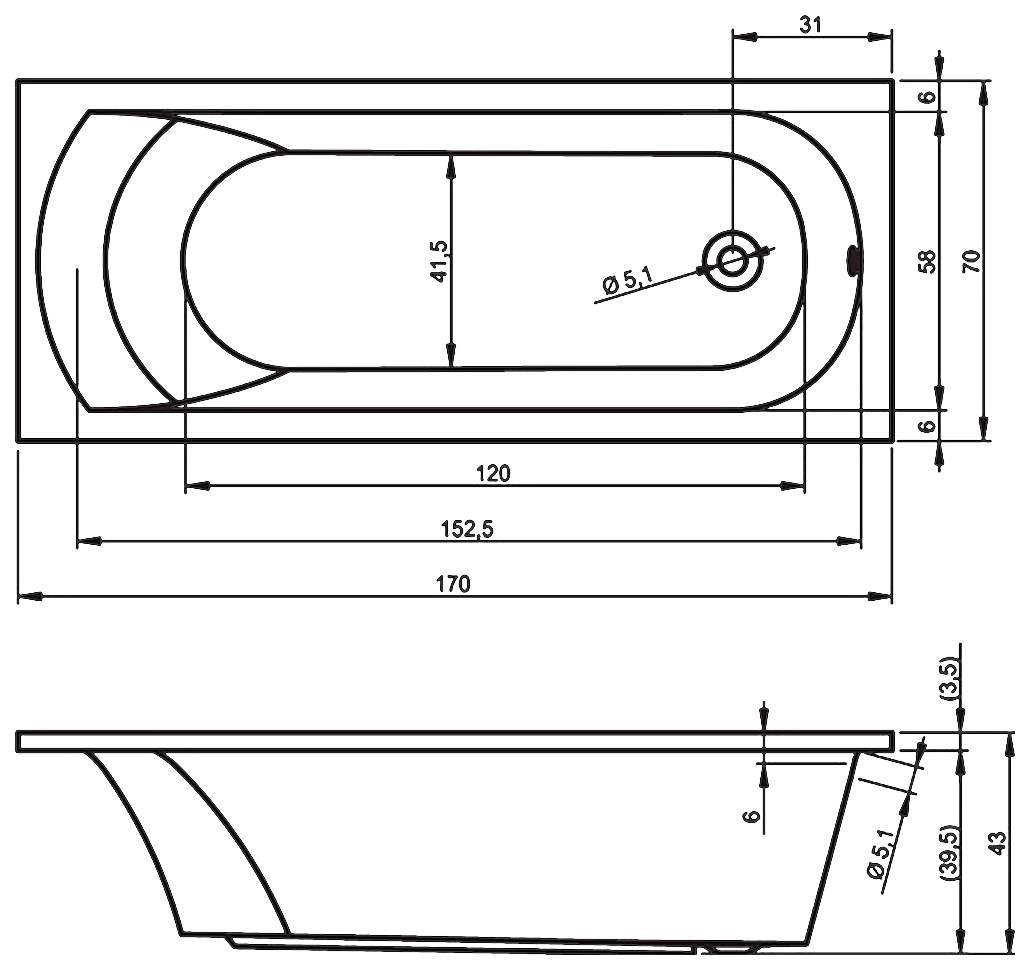




Metal carcass
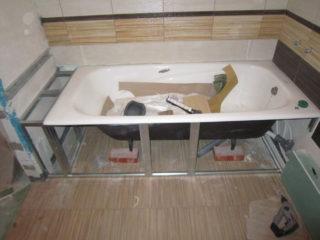 Metal frame for construction
If the bath is installed on a finished frame, perform the following steps:
- The frame is assembled according to the instructions.
- Use the long screws that are included.
- The product is turned upside down or laid on its side.
- The frame is installed in the center of the bottom, legs are attached to the support.
- Two supports are attached to the center, two along the wall, three racks are placed along the outer edge.
- Legs are height adjustable.
- The bath is put in place, regulated with a level.
- Connect the siphon and overflow.
- The bowl is attached to the wall with hooks or corners.
- For decoration, a screen is mounted.
All joints and connections are treated with sealant. Install the mixer and connect it to the water supply system.
Brick support
This method is the most expensive, but the design is particularly durable.Alternatively, the bath is installed on brick columns. The support creates less load on the floor. It will take a small amount of bricks.
To complete the build:
- They mark the location of the columns, one of them is placed in the middle, two at the edges of the bath.
- Perform laying with a length of 17–19 cm, the height of the device is not more than 65 cm.
- Leave to dry for a day.
- Connect the siphon.
- The gaps between the posts and the bottom are filled with sealant.
- The product is attached to the wall with hooks and corners.
The brick podium is performed more thoroughly. It will take more material and time, this is a costly process.
Before installation, mounting foam is applied to the bottom surface of the product. This retains heat, strengthens the surface, reduces the likelihood of damage.
Dimensions of bathtubs from different materials
The dimensions of the bowl affect the usability of it.
Bathtubs of different materials are available in different sizes.
View 1. Cast iron fonts
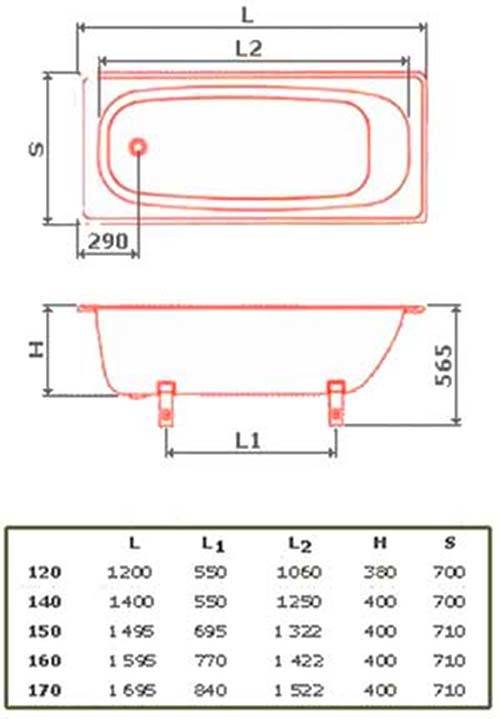
First, I’ll tell you what cast-iron bathtubs are and their sizes. These bowls are very durable and practical. Manufacturers produce them large, medium or small.
| Image | The size of the cast iron bath |
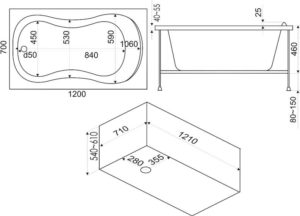 | Small font 120×70 cm. Allows you to save space. However, a person of average height (165 cm) will not be able to lie down in it. You can swim in such a font only reclining. |
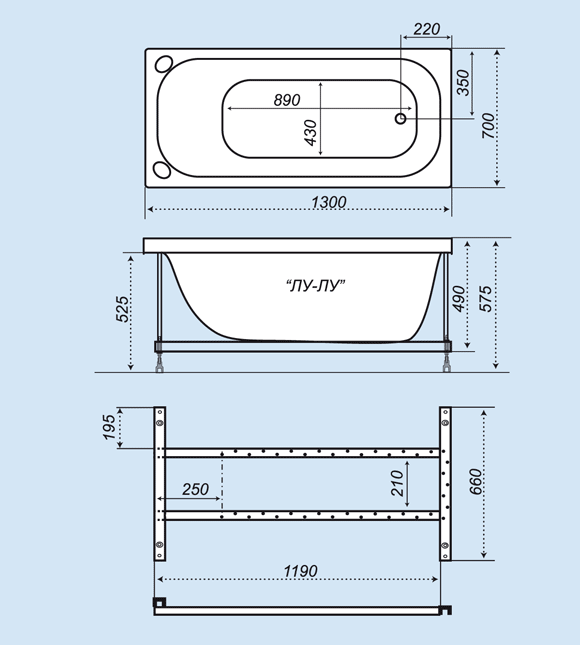 | The dimensions of the bowls 130 × 70 cm are also considered small. Tanks of this size are usually made to order. |
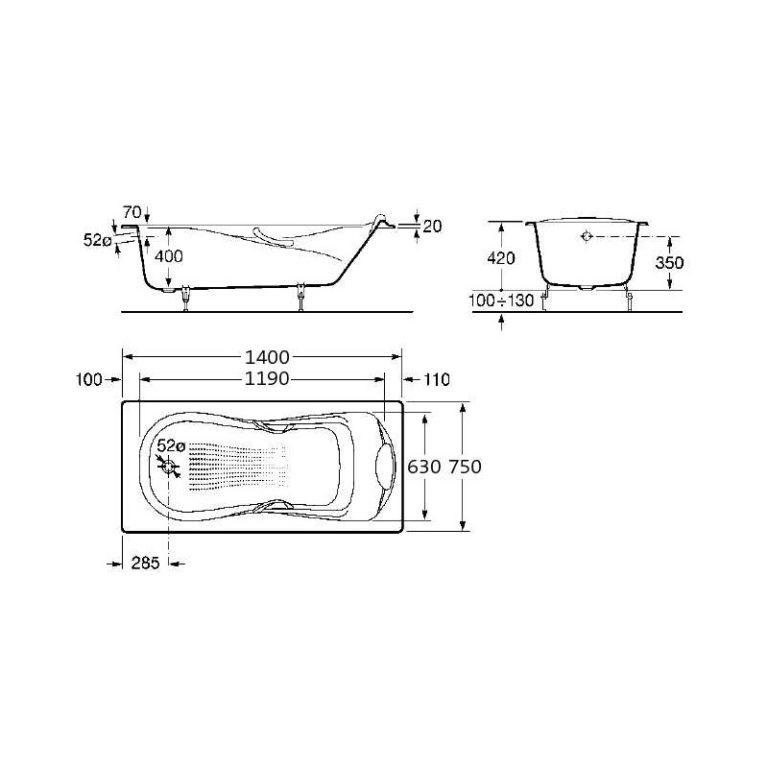
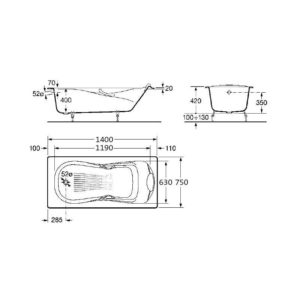 | Medium bowl 140×70 cm. Fits well in the bathroom of a non-standard configuration. |
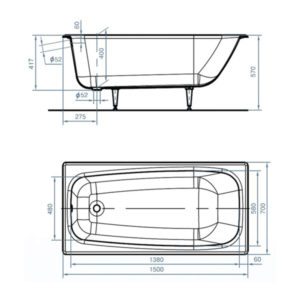 | Medium standard bath 150×70 cm. This size of cast iron bathtubs is most common among medium sizes. Some manufacturers produce similar bowls with an increased width of 75 cm. |
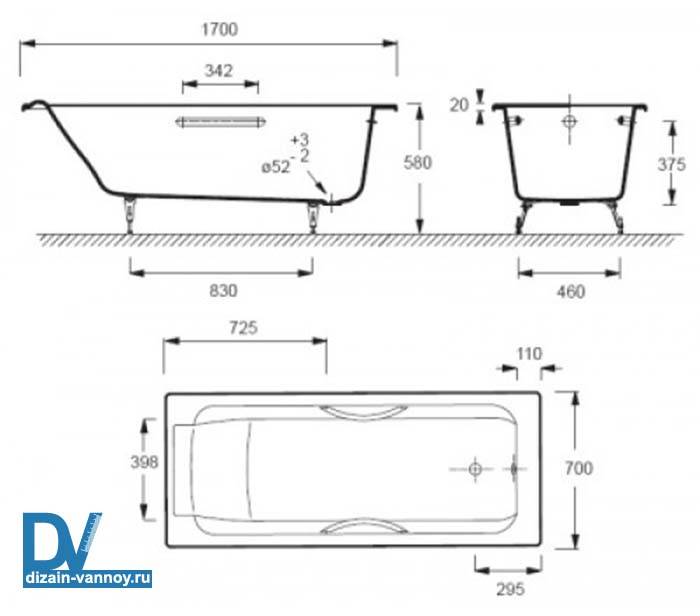
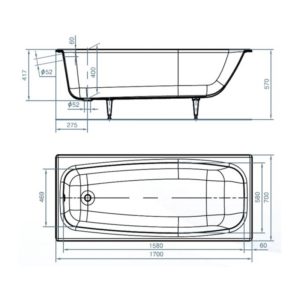 | Large font 170×70 cm. Designed for spacious bathrooms in apartments with a modern layout. Water procedures in it can be taken lying down. |
| Large bathtub 180×85 cm. This handy and very comfortable hot tub can be used in a large bathroom of your own home or in the bathroom of an elite apartment. |
View 2. Steel counterparts
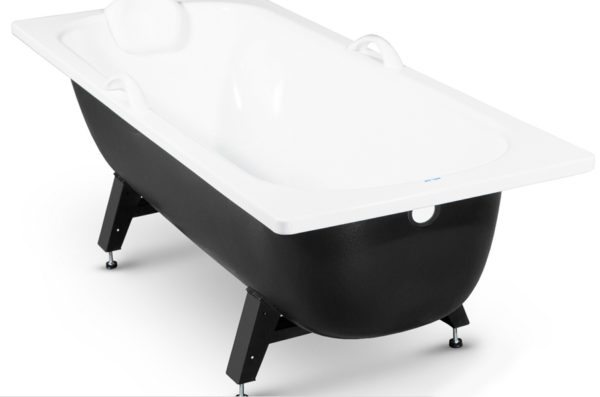
Steel bowls are inexpensive and very light.
Steel bathtubs are the cheapest. They are very light, their maximum weight is 30 kg. The wall thickness of such a bowl is 3 mm.
Disadvantages of steel baths:
- The ability to bend. Under the weight of a fairly large person, a thin font sags. This shortens the life of the enamel cladding.
- Lack of soundproofing. When choosing a bath, please note that the steel bowl has low sound insulation. It rattles when water flows.
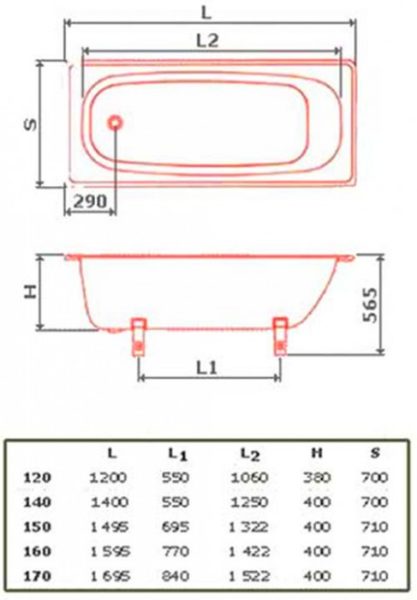
The dimensions of steel bowls are very diverse.
Steel bath dimensions:
- width can vary from 70 cm to 85 in 5 cm increments;
- length - from 120 cm to 180 in increments of 5 cm;
- height is 65 cm.
- depth - 50, 55 and 60 cm.
View 3. Acrylic bowls
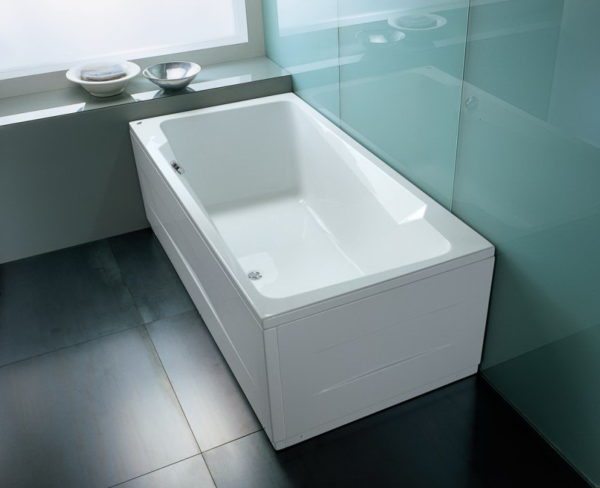
Acrylic appliances heat up quickly, they are comfortable and modern.
Acrylic bowls are warm and comfortable, with a high level of heat resistance and bactericidal properties.
The acrylic font is very light, so you can install it yourself quickly and without much difficulty. The color design of plastic bowls is very diverse. You can choose the color of the appliance to match the tone of the room, or vice versa, make an accent on the bath by choosing a contrasting color for it.
Standard sizes of plastic bathtubs are very diverse. The most requested dimensions are:
- width - 90 cm, 100, 105-135 in 5 cm increments;
- length - 185 cm, 150 and 140.
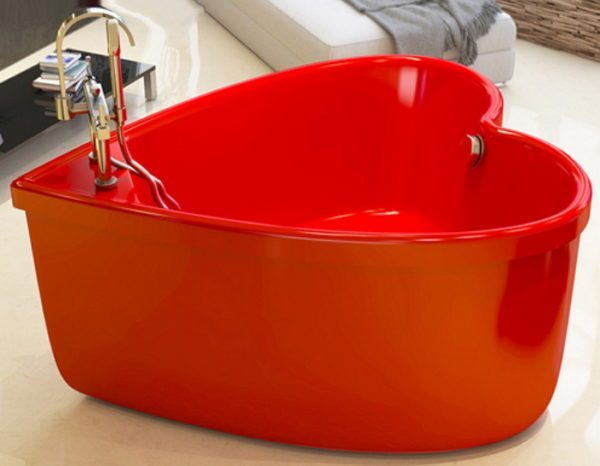
An example of exclusive sanitary ware made to order.
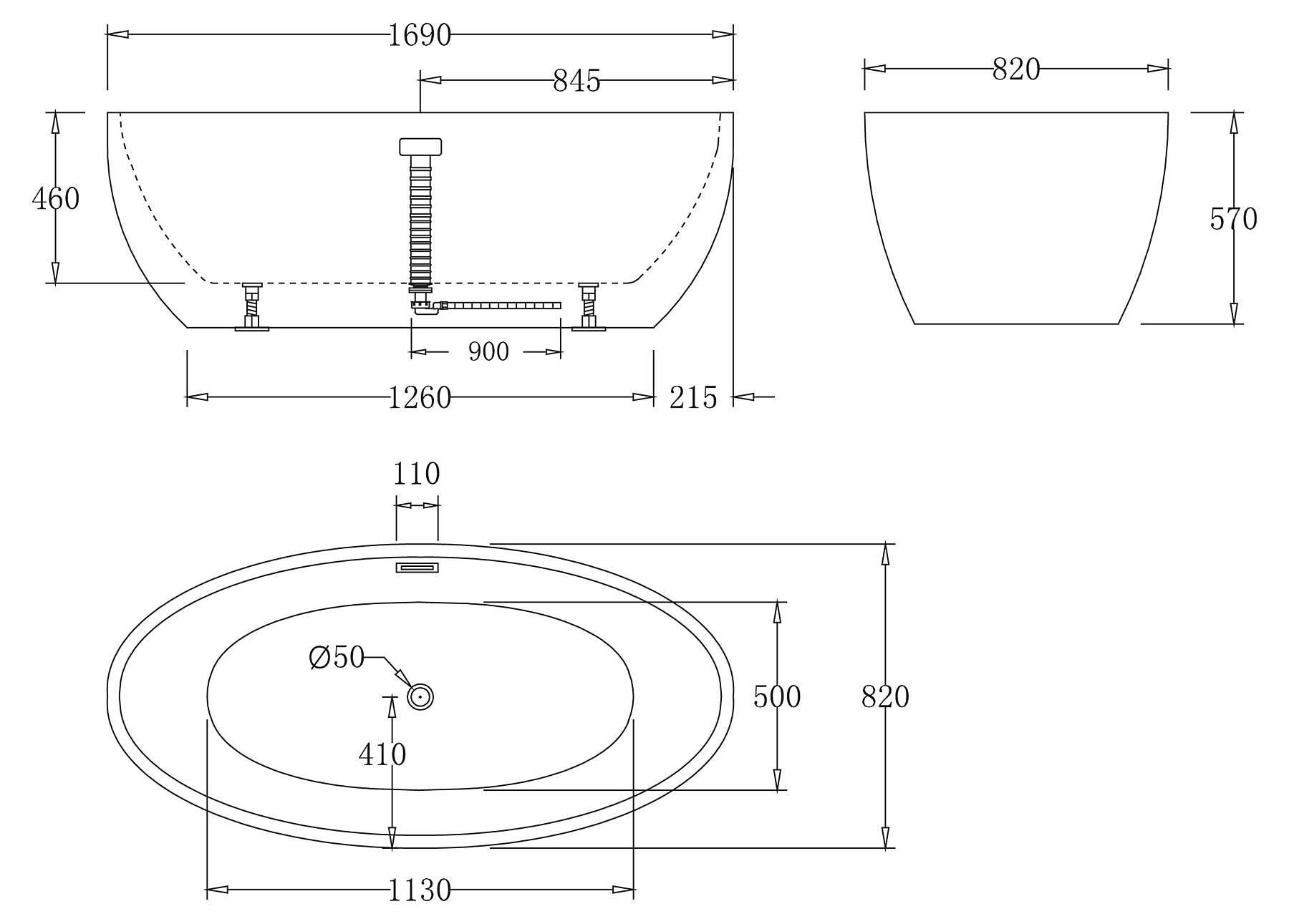
Most manufacturers now provide services for the production of acrylic bowls to order. The device according to your project can be of any size, shape and color. It can be equipped with appropriate style equipment and additional options.






View 4. Triangular and corner acrylic bathtubs
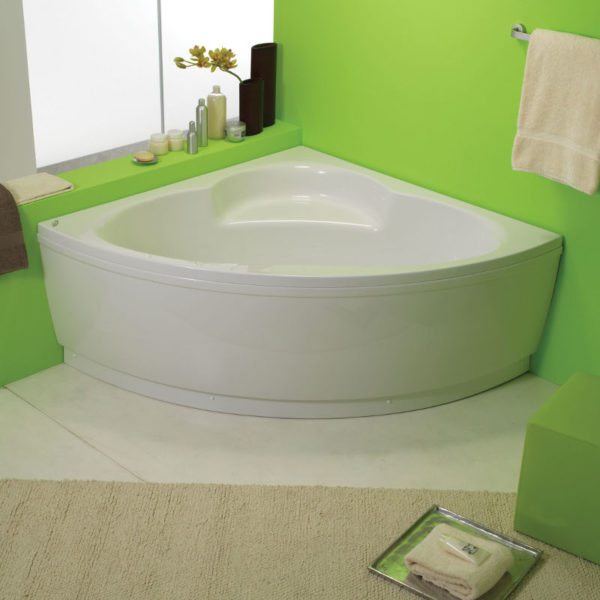
In the photo - a corner container for taking baths: it saves a lot of free space.
Molded plastic has perfect plasticity. Therefore, fonts of any design, size and shape can be made from it. For example, triangular and angular shapes of acrylic bathtubs are now popular. They save space in the room and bring variety to its interior.
Size of a standard triangular bathtub:
- side length - 150-180 cm;
- the depth of most of these models is 48-65 cm;
- the internal volume of a triangular font can reach up to 400 liters.
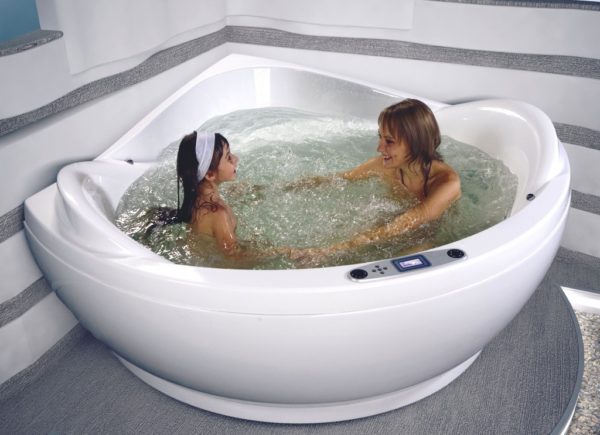
In a large plastic font, you can splash together.
In the largest models of corner fonts, two people can freely take water procedures. If there are anatomical recesses, niches, headrests, armrests, protrusions in the bowl, then the capacity of the container changes up or down. The price may also change.
Photos of bathrooms of different sizes







We also recommend viewing:
- Bathroom rod
- Bathroom glass
- Wiring in the bathroom
- Bathroom panels
- Bathroom enamel
- Pipes in the bathroom
- Soap in the bathroom
- Bathroom restoration with acrylic
- Bath towels
- Plaque in the bathroom
- Bathroom lighting
- Bathroom plumbing
- Liquid Acrylic for Bathroom
- bathroom leak
- Bathroom installation
- Drywall in the bathroom
- Bathroom frame
- Bath suction cups
- Long bathroom faucets
- How to choose a bathroom
- Bathroom paint
- Bathroom Sealant
- Blockage in the bathroom
- Bathroom restoration
- Bathroom screen
- Bathroom fixtures
- Washing machine under the sink
- Washing machine in the bathroom
- bathroom fan
- Bathroom installation
- Bathroom cornice
- Bath salt
- Round bath
- Bathroom Rosa
- Socket in the bathroom
- Bathroom sunroof
- Bath toys
- Shower curtain
Please repost
Modern cast iron products
With the advent of alternatives in the form of steel and then polymer baths, the popularity of cast iron products has decreased. However, their market share is still high.
This is due to their main two advantages:
- Strength. To break a cast-iron bowl, or at least break off a piece from it, you need to make incredible efforts. The most common problem with physical impact is just damage to the enamel.
- Thermal inertia. The significant heat capacity of cast iron leads to the fact that the water will cool more slowly than in an acrylic bath.
There are also two major disadvantages to be noted:
- The weight. Transportation and installation of a cast iron bath will require considerable effort.
- Lack of variety in forms. The bowls have a rectangular (sometimes slightly rounded) geometry.
There is some dependence of the length on the width of the models made of cast iron - wide, but short bathtubs were not found on sale
The greatest variety of models can be observed in medium-sized bathtubs: 150 * 70 cm and 170 * 70 cm.
Also, almost everywhere you can find both small specimens with a size of 120 * 70 cm, and more massive ones with parameters of 170 * 80 cm.
Matching the bath to the size of the room
Before deciding on a particular shape and size of bathtub, let's look at how much space you need so that it not only looks good, but you can use it freely.
So, here are the popular shapes and sizes of the bathroom:
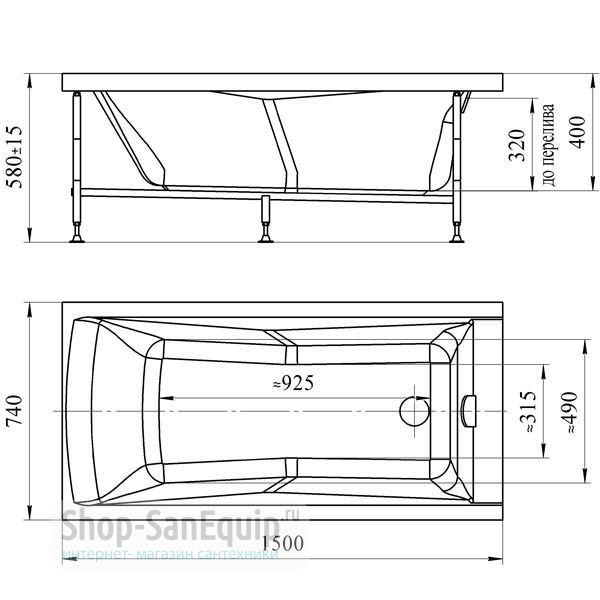
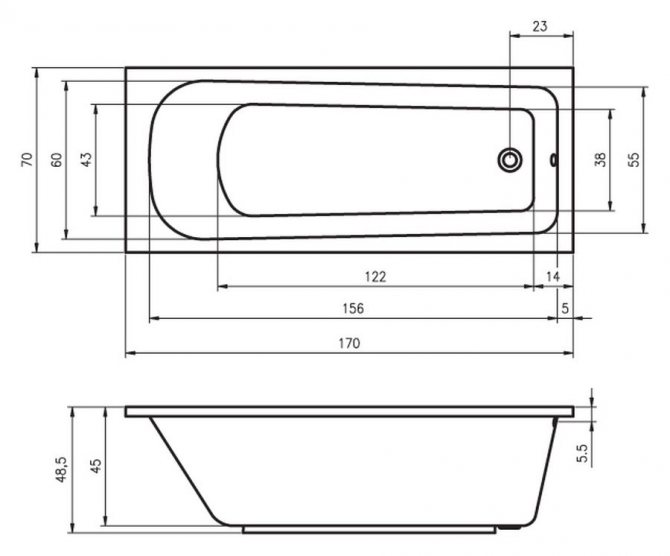
- Rectangular. Still the most popular option, not only because users are accustomed to this shape, but also because of the versatility of this kind of bath. They can be installed near the wall, in corners and niches. The length of typical rectangular baths is from 140 to 170 cm (dimensions change every 10 cm). A very small bathroom will look better and be more comfortable if you purchase a large shower tray.
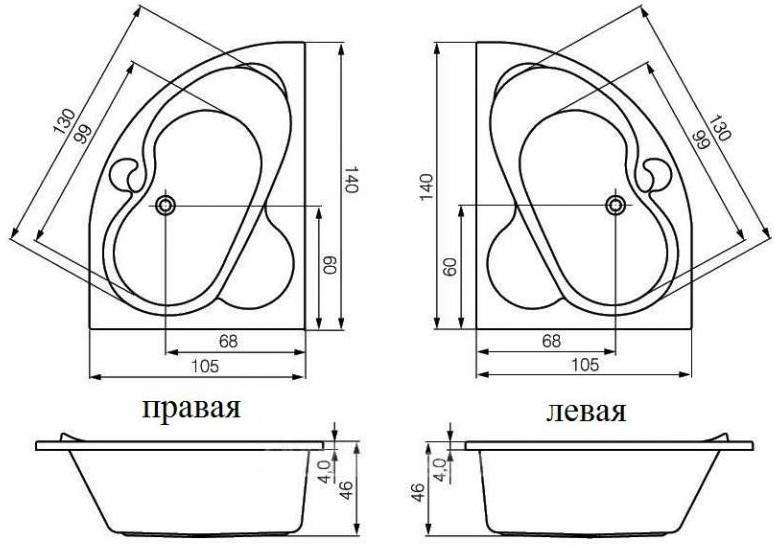
- Corner. Bathtubs of this shape are very trendy and, according to popular belief, are suitable for small spaces. This is only partly true. Corner models are of two types: symmetrical (both sides have the same length, from 110 to 160 cm, they take up quite a lot of space, but swimming in them is very convenient - not only thanks to the oval pool, but also, as a rule, located in the corner of the sculptural seat) ; asymmetrical (one of the sides is shorter, the smallest bathtubs are 90x140 cm, models of this type are recommended for small bathrooms, not only because they take up less space than rectangular ones of the same length, but because they have a wider basin ). Each asymmetric bathtub model is available in two versions - left and right, depending on the location of the short side of the bathtub: on the right or left side, respectively.
- Oval. Tanks are usually large, with a minimum width of 75-80 cm and a length of 170-195 cm for large rooms (more than 6 m2) and bathing salons.They can be installed in many positions - outside, against a wall or as freestanding.
- Steam room. A good option if the size of the bathroom exceeds at least a dozen square meters. The compartments are designed for two people, so you need a lot of space - at least 185x140 cm. The most common models are available as a freestanding profile and are equipped with armrests and headrests. They have a large capacity - more than 400 liters.
Attention! If you have hot water at home not from the city network, but from a boiler, then you should think about whether you have enough water to fill the tank
Mounting Features
Consider the main points that you need to pay attention to before starting the installation and during the work:
- On the eve of installation, make sure that the walls of the room are sufficiently even (irregularities must be eliminated);
- Follow the following order: first choose plumbing, then start repairs (cladding, etc.). Such a rule will eliminate unwanted errors;
- Choose the installation method: on a special base, which should be prepared in advance, or using metal legs and brackets (adjustable height);
- A day before installation, the product should be placed indoors so that the material gets used to the air temperature;
- For a quality installation, the bath must be firmly attached to the walls of the room, make sure that it is in the ideal position, after which you can create a base. You can form the base with cement mortar, blocks or bricks;
- The base should gain strength within 1-2 days, then the installation is carried out;
- After connecting plumbing to electricity, water and sewer, carefully check the system for leaks.The absence of leaks confirms the quality and correct installation;
- If there are gaps between the bathroom and the wall, we use a special silicone-based sealant to fill it, close it with a baseboard or tape from above.
Non-standard shapes and sizes of bathtubs
Rectangular structures, no matter what material they are made of, do not surprise anyone. The latest production technologies and designers' imaginations are embodied in unusual forms: small round bathtubs, triangular, polygonal and other asymmetric products. Consider their dimensions in more detail:
- the diameter of round baths can vary from 1.41 to 2 m, and since the shape itself is not standard, the size can be adjusted to individual customer requirements;
- corner fonts, otherwise called triangular - the capacity of these products reaches 400 liters, the length of the sides is approximately the same and is 1.5-1.8 m, and the depth is 0.48-0.65 m;
- vertical baths are suitable for the category of people who are not able to take baths lying down or sitting (the elderly; people who have recently undergone complex operations), so bathing in them is done while standing. Products of this kind are quite expensive, the height of the structure reaches 2 m and takes up little space in the room;
- sit-down baths are also a good option for those with space constraints. While sitting, they traditionally wash their faces in Asian countries, especially in Japan, where each piece of housing is worth its weight in gold (the average dimensions of a Japanese apartment are 30 m2). The size of baths, where people bathe while sitting, varies in length from 1.22 to 1.5 m, in width from 0.7 to 1.1 m, and in depth from 0.43 to 0.81 m.

With a modern range of designs, you can create an extraordinary, unique interior that can impress friends, relatives or just acquaintances. Additionally, you can arrange lighting for the bathroom to visually make it larger, as well as effectively highlight its flavor. Products of non-standard shapes can be installed not only against the wall, but also in the middle of the room. Everything depends only on the desires and imagination of the buyer, and manufacturers will try to satisfy these requirements.
- Acrylic bath weight
- The best cast iron baths, rating
- The best manufacturers of acrylic bathtubs
- Properties, characteristics and varieties of acrylic bathtubs
Products of non-standard sizes
Such baths deserve special attention. They will be useful for those who want to create an exclusive design in their bathroom, and owners of small bathrooms, and even people with special needs. The most common version of a non-standard configuration bath is corner models. This configuration allows the roomy bathtub to be placed very compactly, leaving plenty of space for the rest of the bathroom furnishings.
Corner baths usually have two identical straight sides, the length of which can be 150-180 cm, connected by a side bent around a circle of the corresponding diameter. There are also corner baths of compact dimensions with sides of 90 cm, but a tall person in such a bath will hardly be comfortable. The depth of such models usually varies quite widely: 48-65 cm. These are spacious bathtubs with a volume of about 400 liters. Round models with a diameter of 140-200 cm are considered exclusive. Such bathtubs look very impressive if they are fully or partially built into the floor.
Owners of small bathrooms should pay attention to ergonomically shaped models. Such baths are made in such a way that they have one end of a normal size, and the second is narrowed.
It turns out a compact version of the corner model of the bath. In narrow spaces, this cut-off end makes room for other fixtures such as a washbasin.
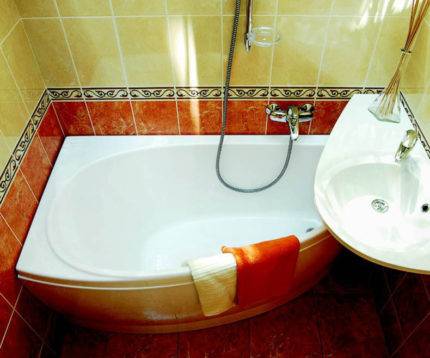 The combination of an asymmetrical bathtub and a washbasin of a similar configuration and design looks spectacular even in a small bathroom
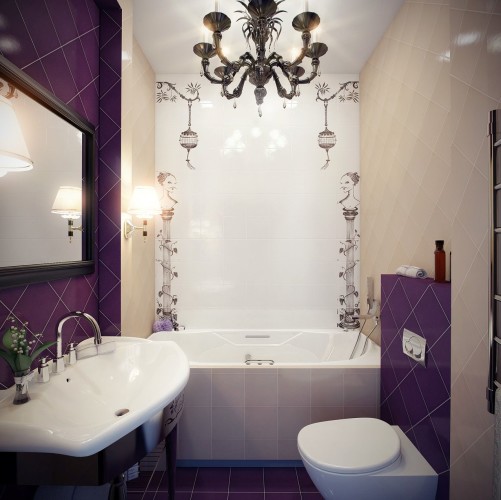
There are bath and washbasin sets, which also have an irregular, elongated shape. In a small room, such plumbing is installed side by side to save space. Convenient in such a situation may be a mixer with an elongated spout mounted on the wall.




The spout can be rotated using the same faucet for both washbasin and tub filling. Such sets look very stylish, especially if they are made in a common color scheme, and the modest size of the asymmetrical corner bath does not interfere with taking water procedures in comfort.
Vertical and seated models are another option for bathtubs that take up a minimum of space. In the first you can stand, the second have a seat. These are narrow and deep bowls, they occupy a much smaller area than conventional models. A special hermetic door is designed for entry, which facilitates entry into the bath bowl.
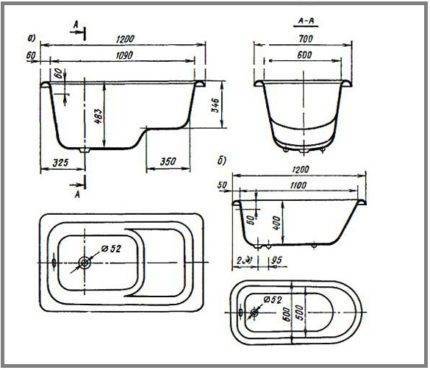
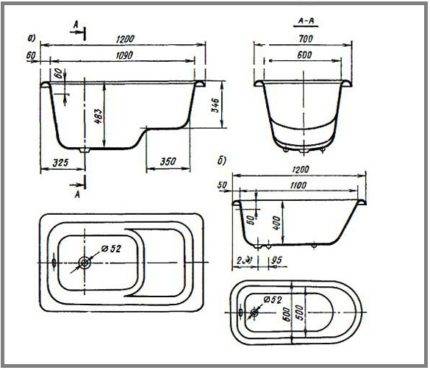 This figure reflects the structure and parameters of a standard size sit-in bath. Such models are intended mainly for persons with special needs.
Despite their compactness, seated and vertical models are not in great demand, since they do not always make it possible to immerse themselves in water completely. Most often they are used as an alternative to the traditional bath, as they are more convenient for the disabled, the elderly, the sick, i.e. for those who for some reason find it difficult to use the usual horizontal model.
The sizes of sitz baths vary in a fairly wide range. Large models with parameters of 120X110 cm are considered the most comfortable. Models with parameters of 120 or 150X70 cm are considered standard. Some people prefer to take a small volume model: 100X70 cm.
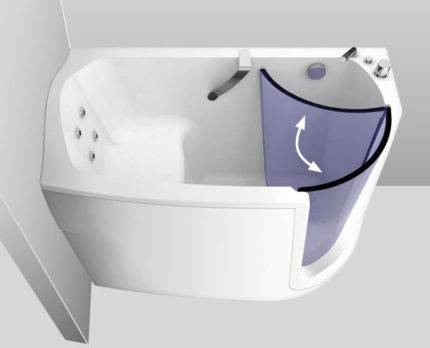 An interesting and useful addition to both a sitz bath and a regular model can be hydromassage equipment.
These procedures have a pronounced healing effect, useful both as part of the treatment of various diseases and for restoring strength after a hard day's work.
But acrylic is not the only option. In addition to the already mentioned cast iron and steel, you can order a bath from non-traditional materials. For example, some prefer to use glass, marble, a combination of several materials in one product. A bathtub made of a single piece of wood that is resistant to moisture looks completely non-trivial in the interior. If you decide to make a custom-made bathtub, you should remember that the implementation of such a project will not be cheap at all.
What are the sizes of acrylic bathtubs - standard and non-standard
The shapes and dimensions of acrylic bathtubs are striking in variety. Baths of various geometries are presented on the plumbing market: round, oval, rectangular, hexagonal, in the shape of an ellipse. This allows you to choose the right option for any room.At the same time, plumbing has not only different shapes, but also sizes.

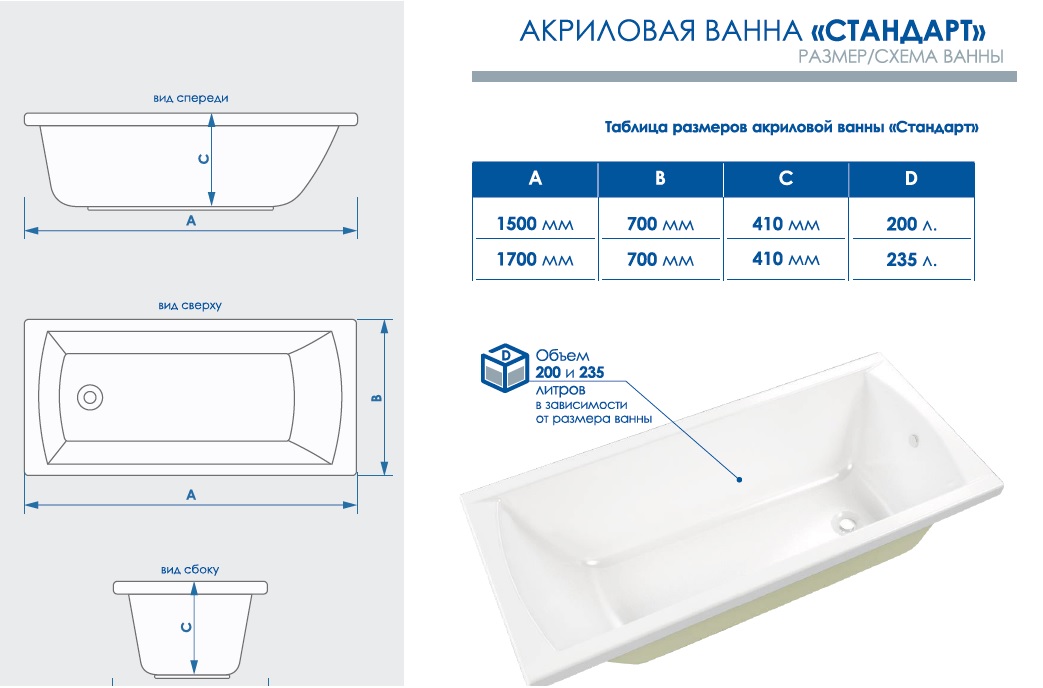
So, baths of standard forms have the following dimensions:
- length - 1400, 1500, 1600, 1800 mm;
- width - 700, 800, 850 mm;
- height - 650 mm.
Prior to the advent of acrylic tanks, bowl selection was limited to cast iron. Such baths do not differ in a variety of sizes, because cast-iron baths are quite heavy. But with the advent of acrylic, it became possible to pick up plumbing of any size. So, the following options are on the market:
- Miniature baths with dimensions of 1500x1200x700 mm.
- Large baths, similar to mini-pools, with dimensions from 1800x1200x700 mm and more.
- Corner models can be of different sizes: 1400x900, 1400x1400, 1600x1200, 1700x1000 and others.
What materials are used for production
Of course, when choosing a sanitary ware, the question of the material of manufacture is very important. But there is nothing to surprise you here. For the production of small-sized bathtubs, exactly the same materials are used as for classic bowls, that is, cast iron, steel, acrylic.
However, there is a certain dependence of small bathtubs on the material of manufacture. As we know, most plumbing manufacturers are trying to create the most comfortable small bath, for which they increase its depth.
It is in this dimension - length - that there is the main connection between the material and the form. For example, acrylic bathtubs and artificial stone bowls usually have a higher height than cast iron models. This difference is 15–20 cm.
Modern steel products are also quite practical, since the physical properties of the material make it possible to create bathroom sides that are strictly vertical and even.
Small bathtubs are made from various materials.
Cast iron bathtubs
The material has been familiar to us since childhood, since most of the baths in our homes are made of cast iron. As we ourselves have seen from our own experience, the main feature of the material is its durability, that is, strength.
The physical properties of the cast-iron bath retain the heat of the water for a long time and do not cause difficulties in installing the product. The material is durable and reliable, the maximum that can happen is the defects of the enamel coating, which is easily updated.
Among the disadvantages of cast iron baths, it is worth noting the large weight and high cost of the bowl.
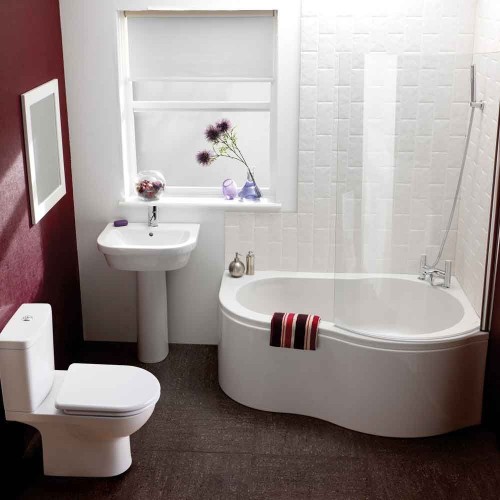
Cast iron bath
Steel baths
Steel in production undergoes careful processing and surface preparation to give a more attractive and aesthetic appearance to the product.
Advantages of a steel bath:
- little weight;
- high service life;
- low product cost.
Such a small bath looks quite impressive and respectable.
Of the shortcomings, remember that steel quickly loses heat (literally in 20 minutes the water in the bathroom will reach room values) and makes noise when in contact with water.
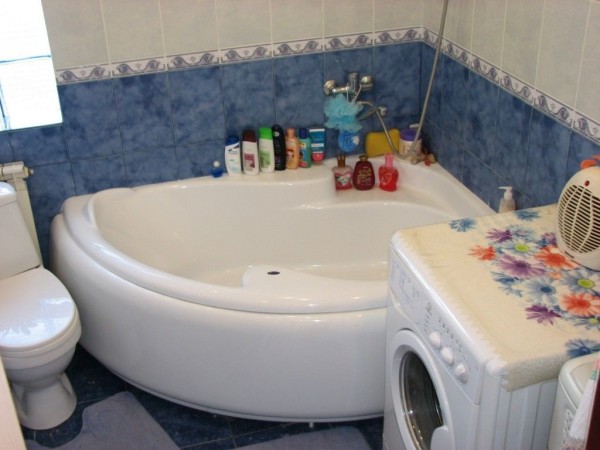
steel bath
Acrylic bathtubs
The material can rightly be called the leaders of modern sanitary production. Acrylic is used everywhere: for ordinary bathtubs, for small bowls, jacuzzis, for any non-standard shapes, different in color and design.

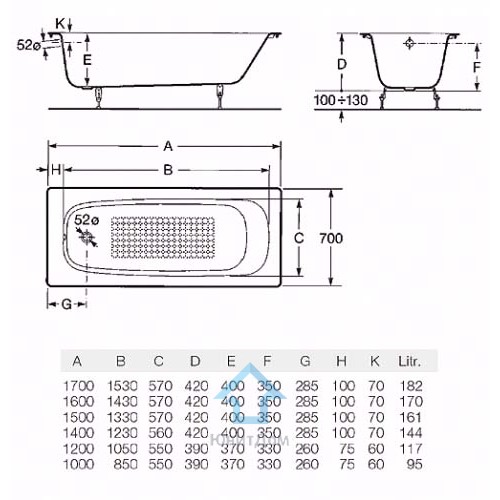
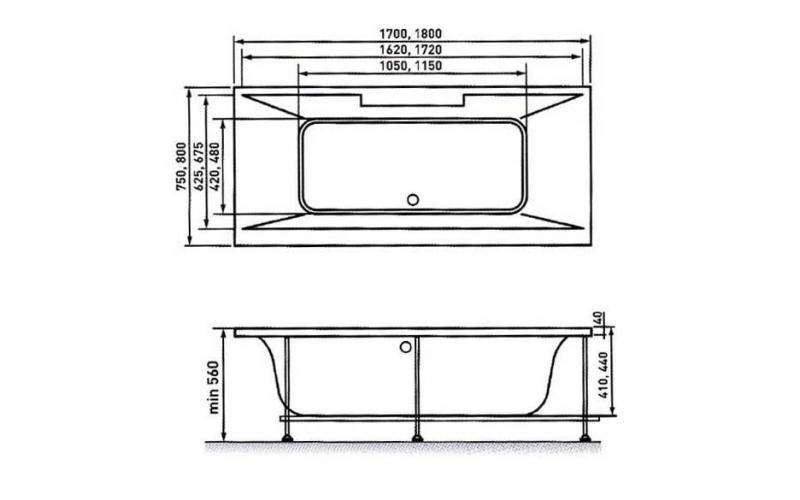
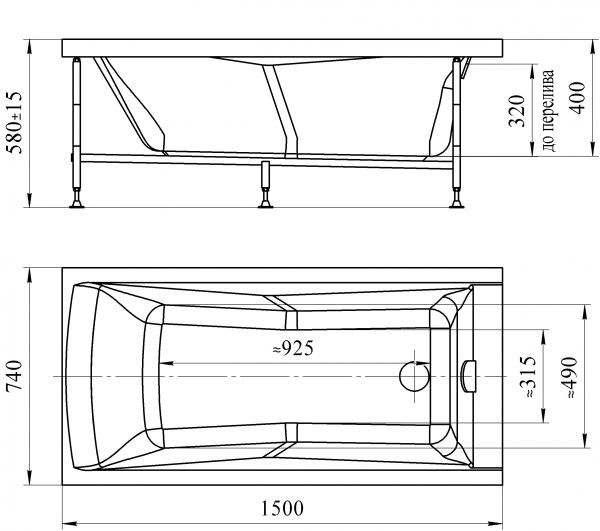
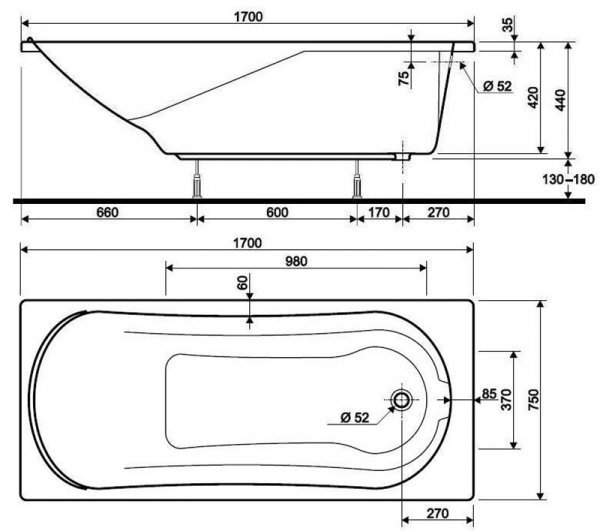


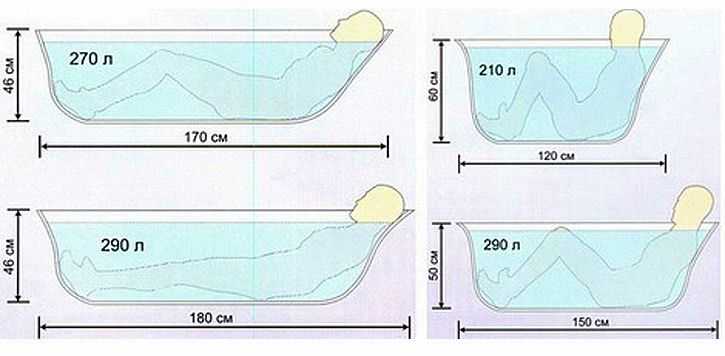
The high popularity of the material is due to its special strength, wear resistance and lightness. It should be noted that acrylic bathtubs perfectly retain heat, not inferior in this indicator even to cast iron.
Among the minuses, keep in mind that small acrylic bathtubs are expensive and, despite their strength, are quite fragile. If you accidentally apply mechanical shock to the acrylic surface, it may split or crack.
Acrylic and polymer concrete
The material, like no other, is distinguished by a wide variety of sizes, in particular, the smallest ones.
This mixture of materials attracts consumers with its appearance, completely imitating natural stone, and such an advantage, as we know, becomes the basis of high cost.
On the market, you will most likely find small bathtubs made of acrylic or steel, and their number will be an order of magnitude larger than cast iron and stone products. A similar nuance lies in the light weight of the first two materials: they are easy to work with, bathtubs do not cause problems in transportation and installation in the bathroom.

Acrylic bath
Unfortunately, cast iron and artificial stone do not have similar advantages. Which makes them rarer regulars in the plumbing market.
The question of buying a small bathtub arises only when you have a small bathroom. And as practice shows, only the shape of a compact parallelepiped can cope with such a problem. Only such a bath will fit neatly against a short wall and will not take up much space.
And such shapes as a circle, an oval require a certain location. And next to them, the space will not be entirely useful.
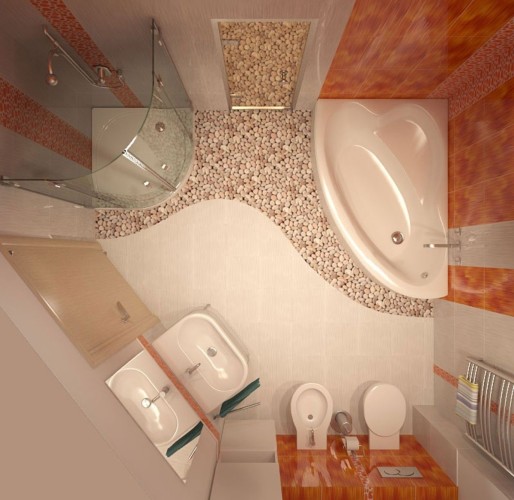
When buying, consider all the pros and cons of such bathtubs.
When deciding to buy such a non-standard bathroom, consider all the pros and cons. Try to match the shape to the size of your bathroom and, most importantly, do not be afraid to experiment.



