- How to use bacteria for septic tanks and pit latrines so that they work effectively?
- How to choose a means for cesspools?
- Means for septic tanks - clean correctly
- Chemical preparations for a septic tank
- Biological cleaners
- Funds from the Dr. Robik series
- Features of the use of biological preparations
- Bacteria for septic tanks
- Biological methods of wastewater treatment. What's this?
- What bacteria is best for a septic tank (anaerobic, aerobic, live)
- Anaerobic bacteria for septic tanks
- Aerobic bacteria for septic tanks
- Advantages of the combined cleaning method
- Live bacteria to clean septic tanks
- How to choose bacteria for sewer cleaning?
- What bacteria is best for cesspools
- Chemicals for cesspools and septic tanks
- Disinfectant solutions based on formic aldehyde
- Preparations based on ammonium salts
- Nitrate oxidizing agents - spare nature, destroy metals
- Bleaching powder
- How to arrange a cleaning system
- Biochemistry in Sevastopol
- Features of the use of biological products
- Possible ways to treat wastewater with tablets that decompose solid waste
- The subtleties of the acquisition
- Possible forms of biological products
- Assortment of offers
How to use bacteria for septic tanks and pit latrines so that they work effectively?
Since microorganisms are living beings, they will function normally under a number of conditions:
Temperature range: from +4 to +30°С. If the thermometer drops below, then the bacteria "hibernate". When it warms up, they become active. If the toilet is cold, then germs will not be able to function normally there in winter.
Microorganisms constantly need food. With its lack, they die. If the toilet is rarely used, then additional portions of bacteria will need to be injected periodically.
If the toilet is used only in the summer (in gardens, for example), then every year you will need to create a new colony of bacteria.
Another important condition for ensuring the vital activity of microorganisms is a sufficient level of humidity. For normal operation, it is necessary that the water rises 2-3 cm above the level of solid waste. If it is not enough, then you should add a little liquid.
Bacteria do not process inorganic waste, so it makes no sense to throw metal and plastic elements into the pit: they will remain there
Some substances, such as chlorine or manganese, can completely destroy the colony.
When preparing the drug, you must strictly follow the instructions, because if the necessary conditions are not met, microorganisms may “not wake up”.
If it is not enough, then you should add a little liquid.
Bacteria do not process inorganic waste, so it makes no sense to throw metal and plastic elements into the pit: they will remain there. Some substances, such as chlorine or manganese, can completely destroy the colony.
When preparing the drug, you must strictly follow the instructions, because.if the necessary conditions are not met, microorganisms may “not wake up”.
How to choose a means for cesspools?
Before choosing a biological product for cesspools, you need to study the recommendations of experts:
- If during the use of sewage it will not be necessary to dispose of waste, it is best to use bacterial agents with a maximum reduction in the solid phase. In this case, all waste will pass into a liquid state.
- Tablets are perfect for a country cesspool. They can quickly turn paper and feces into a harmless liquid that can be used to fertilize the soil. In addition, 1 such tablet will help to cope with a cubic meter of pollution.
- If you plan to fertilize the land with fecal decomposition products, you can use bioactivators or nitrate oxidizers for the cesspool. They will not reduce the quality of the fertilizer.
- For autonomous sewage systems, it is not advisable to use microorganisms, since everything happens naturally there. If there is an unpleasant odor, blockages or silting, nitrate oxidizers can be used.
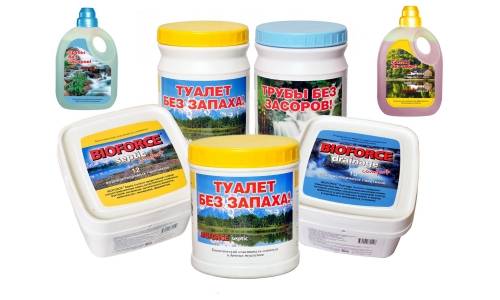
For any type of drug, its effectiveness, which depends on the concentration of bacteria in it, plays a decisive role. After all, some biological preparations for cesspools, if the pollution is too extensive, can simply “choke” and die. This indicator is indicated on the packaging.
It is worth paying attention to the number of types of bacteria. The higher this indicator, the more effective the remedy will be.
But with the level of dry sediment, the opposite is true: it should be minimal.
As for specific examples, today such biological preparations for cesspools are widely used:
- Saneks. A brown powder used in septic tanks and pit latrines.Allows you to clean pipes from plaque. One pack can last more than 1 year.
- Atmosbio. Powdered product, designed for 24 weeks. Works only in humid environments.
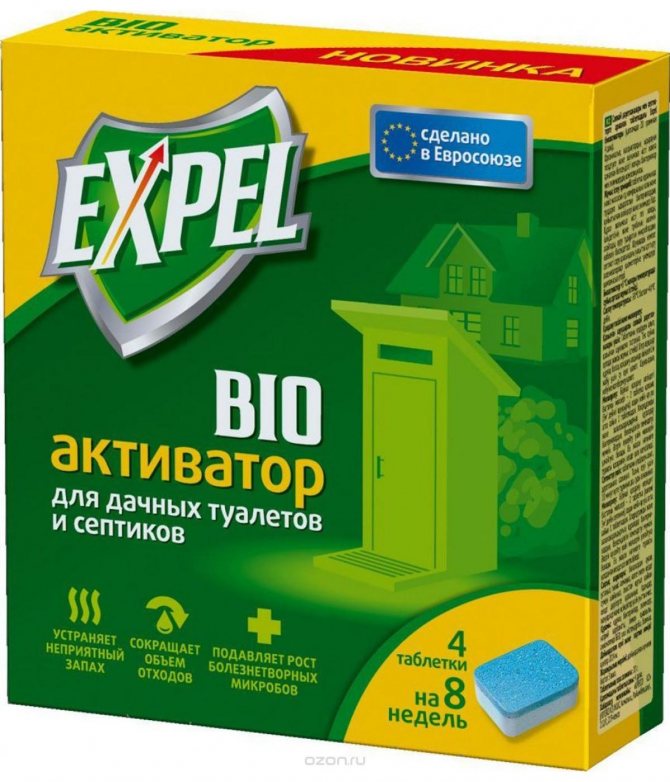
- Means Micropan Cesspool. These tablets are especially popular among summer residents.
- Roebic. An effective dry product that is equally well suited for a septic tank and a cesspool.
- fatcracker. Cleans sewer pipes. It shows good results in the fight against soap solutions from cars.
- Biofavorite. Used successfully in septic tanks and cesspools. Differs in high speed of work.
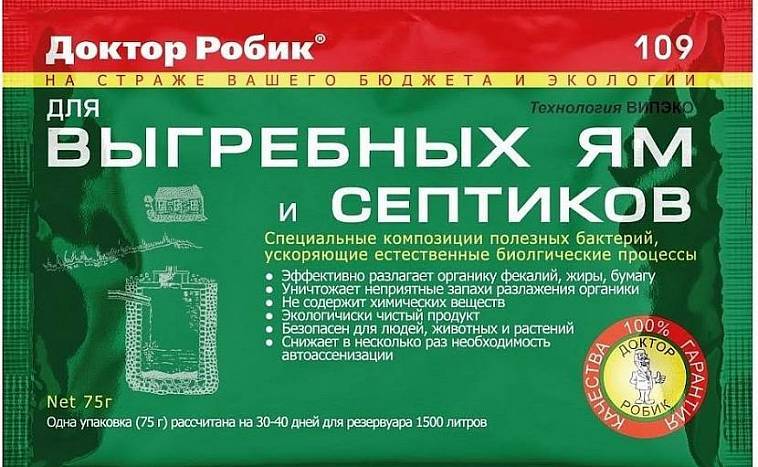
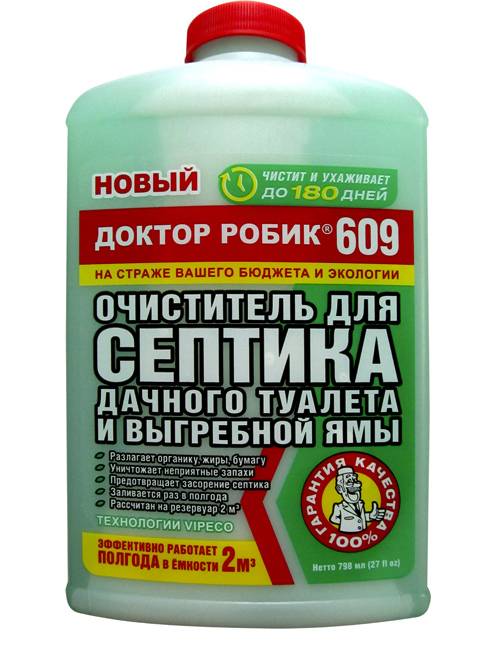
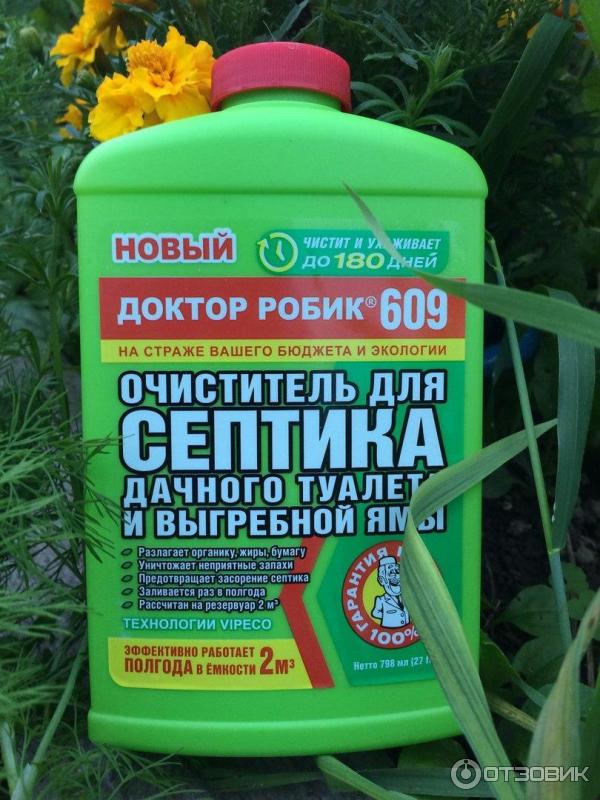
- Dr. Robik is often used for paper, fats and slow-burning fractions.
Thus, choosing bacteria for drain pits is not as difficult as it might seem at first glance. The vast majority of drugs will help turn the unpleasant process of recycling into a useful procedure.
Means for septic tanks - clean correctly
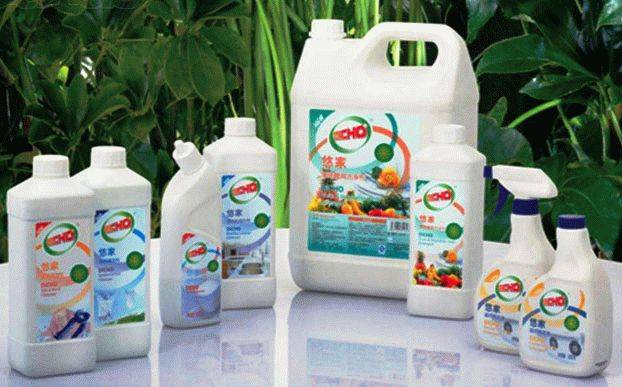
Chemical preparations for a septic tank
Such substances have been widely used for more than a dozen years. Thanks to them, you can speed up the process of processing wastewater and remove unpleasant odors. But at the same time, chemicals for a septic tank pose a danger to the environment, therefore, at present, such drugs have become less commonly used.
- Based on ammonium compounds. Such antiseptics are effective, they accelerate the decomposition of wastewater and quickly remove odor.
- Based on formaldehyde. These products are the cheapest, but it has already been proven that they are highly toxic, so they are practically not found on sale.
- Based on nitrate oxidizers. In their composition, these preparations are similar to nitrogen fertilizers used in agriculture.
Any of the above chemical reagents for a septic tank is dangerous for the environment, so today they have become less common.
Biological cleaners
Biological products are concentrated formulations containing strains of bacteria involved in the processes of organic decomposition.
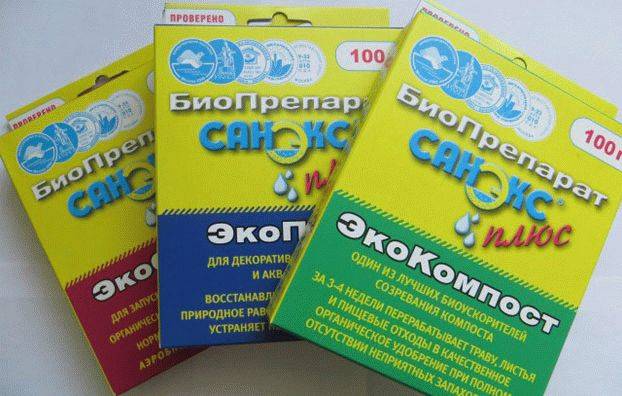
The benefits of these supplements include:
- natural origin, so they do not harm the environment;
- no impact on the sewer system itself, regardless of what material its constituent elements are made of;
- increase in the speed and quality of cleaning;
- liquefaction of sediment at the bottom;
- elimination of an unpleasant smell from the sewerage;
- with regular use of biological products, it is much less common to clean the chambers from solid waste.
Funds from the Dr. Robik series
Modern drugs include bioactivators for septic tanks brand "Doctor Robik". The series contains several types of drugs designed to solve various problems that arise during the operation of an autonomous sewer.
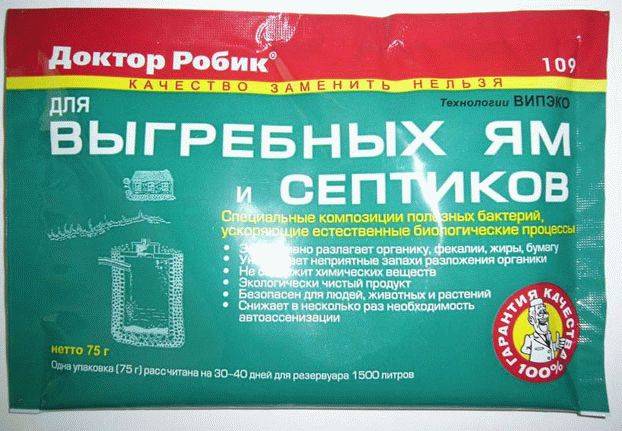
- Means DR 37 for anaerobic septic tanks. It allows you to increase the service life of the sewer system, reduce the likelihood of blockages, and accelerate the decomposition process.
- Repair agent DR 57. Under the influence of this drug, the operation of the septic tank is resumed, which has become ineffective due to pollution.
- Means DR 47 for cesspools and treatment facilities with air supply. It contains aerobic bacteria, which contribute to the rapid decomposition of organic matter without the release of methane. Thanks to this, when using the product, an unpleasant odor does not occur.
- Special tool DR 87. This drug is designed to quickly remove soap deposits.Currently, household chemicals are used everywhere, and some detergents are unsafe for septic tanks. In the case of using DR 87, the risk of death of bacterial colonies under the influence of household chemicals is reduced.
All these products are sold in plastic bottles. One package is enough for a whole year when operating a sewer system with a tank with a capacity of up to 2 cubic meters.
Features of the use of biological preparations
In order for the powder, liquid or tablets for the septic tank to fulfill their purpose, they must be used correctly.
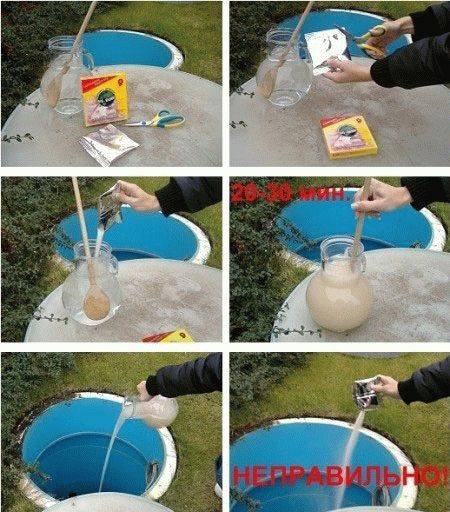
It is important to remember that if the sewer system has not been used for more than two weeks, then bacteria in the pit can die due to lack of nutrient
Bacteria for septic tanks
A private house or cottage requires constant attention. Comfortable living in a country house depends on the timely implementation of certain work on the maintenance of the building.
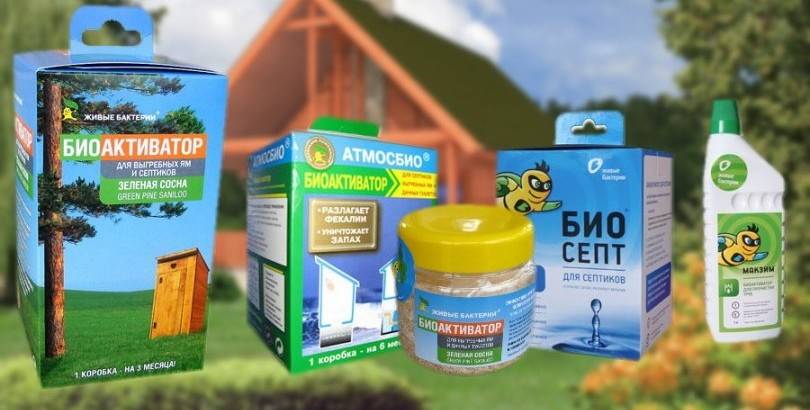


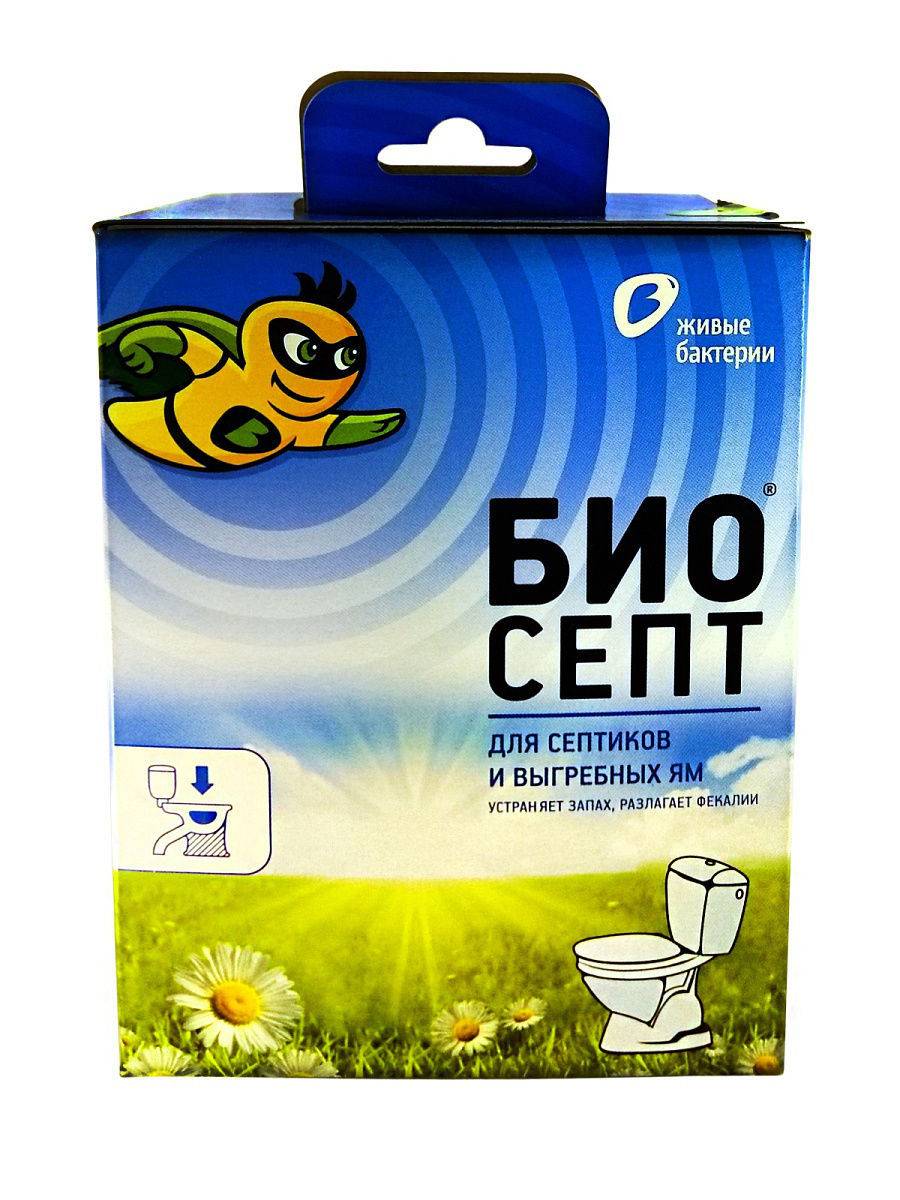
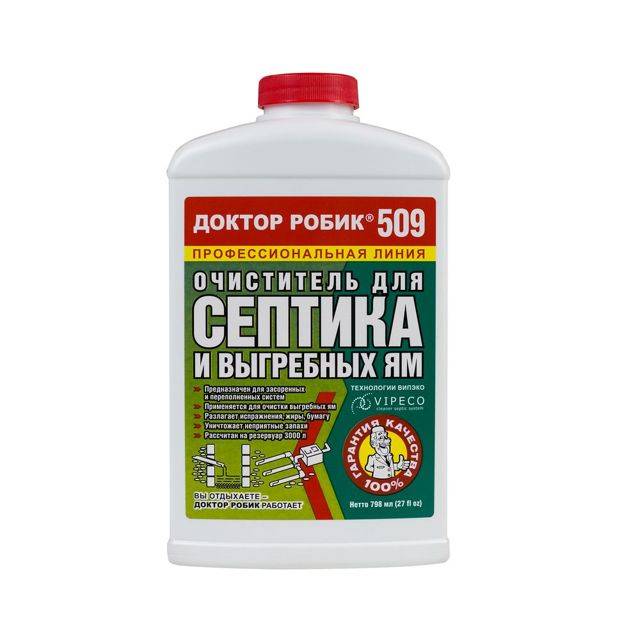


To facilitate the unpleasant duty of cleaning the sewer or processing waste from the cesspool, special bacteria for the septic tank will help.
Biological methods of wastewater treatment. What's this?
If you decide to independently equip the sewer in a country house, the use of biological cleaning methods will help you:
- Perform effective cleaning of the septic tank;
- Disinfection of drains;
- Qualitatively clean the drainage well or cesspool.
- Reduction or complete removal of odors from sewage;
- Reducing the volume of organic waste;
- It is possible to pump out sewage and waste less frequently with the constant use of bioactivators.
What bacteria is best for a septic tank (anaerobic, aerobic, live)
To ensure a high quality septic tank, it is important to know which bacteria to use in the cleaning process. Waste entering the septic tank creates a favorable environment for the reproduction of microorganisms
The process of decay begins, which occurs over a fairly long period and is accompanied by a large amount of solid residue.
To speed up the process and make the cleaning of organic matter more efficient, it is necessary to introduce special microorganisms into the septic tank. The result of their activity is the decay of organic waste to the simplest substances that are harmless to humans and the environment: carbon dioxide, water, nitrites and others.
Anaerobic bacteria for septic tanks
They do not require oxygen to survive. The presence of these microorganisms in the chamber of any septic tank leads to the decay of organic waste entering it. Gradually, the water becomes cleaner, more transparent, and all solid waste falls to the bottom, where it slowly rots.
A large amount of undecomposed waste;
Aerobic bacteria for septic tanks
These microorganisms begin to act in the presence of sufficient oxygen. The range of their application is wider: in addition to septic tanks, bacteria are used in special biofilters and in filtration fields. In order for the cleaning process to be successful, a powerful air compressor is connected to the septic tank. Oxygen "awakens" the bacteria, and they begin to act.
The use of bacteria that need oxygen has a number of advantages over the method using anaerobic microorganisms:
Much less solid waste;
And this article talks about the characteristics of linoleum.
Advantages of the combined cleaning method
The use of aerobic and anaerobic bacteria allows for the most effective treatment of sewage. Waste and water requiring treatment are exposed to two types of bacteria when they enter the septic tank.
- First stage: Anaerobic microorganisms decompose most of the solid organic waste;
Live bacteria to clean septic tanks
Bioactivators (live bacteria) quickly begin to act when they get into favorable conditions. Only two hours - and the process of cleaning the contents of the local sewerage is already running.
They need a sufficient amount of water to survive. The combination of bacteria is selected by microbiologists. Each package contains instructions for use, which must be strictly followed in order to achieve maximum cleaning efficiency.
Advantages of using bioactivators:
The use of live bacteria allows you to quickly and efficiently clean the contents of the septic tank;
Manufacturers of additives for cleaning the contents of septic tanks offer both special and universal biological products:
- Start the system starting bioadditives;
How to choose bacteria for sewer cleaning?
In septic tanks, it is recommended to use biological products, thanks to which the percentage of solid waste will be very low. It will be possible to call a vacuum cleaner quite rarely;
Useful tips for using bioactivators:
The water level should always be sufficient for the normal functioning of bacteria;
And here is an article about floor insulation in a wooden house.
What bacteria is best for cesspools
No one can unequivocally say “buy this drug and everything will work”. The same means work perfectly well for some, averagely for others, and almost do not work for others.Possible reasons are described above, but it may still depend on the type of waste that falls into the pit. In the country there will be a little chemistry, but, most likely, a lot of organic matter and bacteria will be more active. There are more chemicals in household drains, as a result, the same drug may no longer be as effective, but another one will work very well.
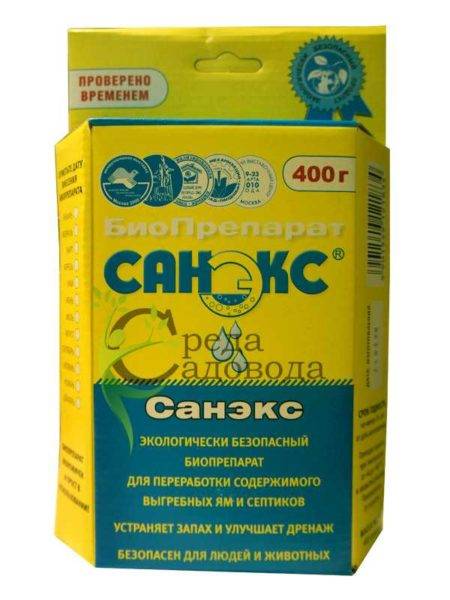
One of the effective drugs - Saneks
In general, what can I advise - try different drugs, starting with cheap ones. One of them will help you. By the way, there is one trick that will help activate the recycling processes. Periodically pour expired kefir or sour milk into the sewer, you can pour a bag or two of semolina. Bacteria love protein, and there is not much of it in the waste. By feeding them, you stimulate the development of the colony, the decomposition process will go faster.
| Name | Application temperature | Packing | For what volume | Initial download | Regular monthly download | Drug type | Acidity of the environment | Winter work | Producing country | Price |
|---|---|---|---|---|---|---|---|---|---|---|
| Bioenzyme BIO-P1 | from 5°C to 40°C | 1 package 100 g | up to 4 m3 | 200 g (2 packs) | 100 g (one package) | mixture of bacteria | PH = 5.0 - 7.5 | Works on a double dose | Czech | 6-7$ |
| Biosept 600 | from 5°C to 40°C | 24 bags of 25 g | up to 4 m3 | 4 bags (100 g) | 2 bags (50 g) | mixture of bacteria | PH = 5.0 - 7.5 | dormant | France | 20$ |
| ORO-fresh WC-Active | from 5°C to 60°C | 12 bags of 25 g | up to 4 m3 | 4 bags (100 g) | 2 bags (50 g) | mixture of bacteria | PH = 4.0 - 10 | sleeping | Germany | 12$ |
| Vodohray | 30°C to 40°C | up to 2 m3 | 100 gr | 20 g | Ukraine | 12$ | ||||
| EPARCYL (Eparsil) | 22 bags of 32 g | up to 2 m3 | 2 bags (64 g) | 1 package (32 g) | mixture of bacteria | France | 30$ | |||
| Saneks | from 5°C to 45°C | 400 g + scoop | up to 2 m3 | 2-5 scoops | 2 scoops | mixture of bacteria and enzymes | PH = 5 - 8.5 | Works at positive temperatures in the pit | Poland | 12$ |
| (SEPTIFOS) Septifos | from +2°С to +40°С | 18 bags of 25 g | up to 2 m3 | 3 sachets (75 g) | 2 packets (50 g) one twice a month | 27,5$ | ||||
| Microzym Septi Treat | +2 to 45°C | 250 gr | 1-2 m3 | 250 gr | 50-100 g | mixture of bacteria | pH = 5 - 9 | dormant | Russia | 12$ |
| biological product Lucky | 30 gr | 0.5 m3 | 1 pack every week | 1 package | mixture of bacteria | Russia | 1,2$ | |||
| BIOTEL | from 4°C | 25 gr | 1 m3 | 5-7 grams once a day | bacterial-enzyme composition | in a non-alkaline environment | inactive | Russia | 1 $ | |
| Atmosbio | from 5°C to 40°C | 24 bags of 25 gr | 1 m3 | 5 sachets | 1 pack per week | mixture of bacteria and enzymes | France | 17$ | ||
| Septic System Mainteiner DWT-360 Mainteiner DWT-360 SSM | from 5°C to 40°C | 454 gr | up to 2 m3 | 3 scoops | 1 scoop | mixture of bacteria | USA | 30-40$ | ||
| Dr. Robik Roebik 109 | from 5°C to 40°C | 1 package 75 g | 1.5 m3 | 1 package 75 g | 1 package 75 g | mixture of bacteria | Russia | 1,8$ | ||
| Dr. Robik Roebik 509 for overcrowded and old pits | from 5°C to 40°C | 798 ml (liquid) | 1.5 m3 | single use | concentrate | Russia | 14$ |
There are a couple of comments about the means for country toilets "Doctor Robik". These are products of an American company, but they have a factory in Russia. Russian-made drugs are called Roebik, American Roetech. The price difference is quite significant. Previously, the domestic Robik worked perfectly, so there was no point in overpaying, but in the last year the situation has worsened, so it's worth thinking about.
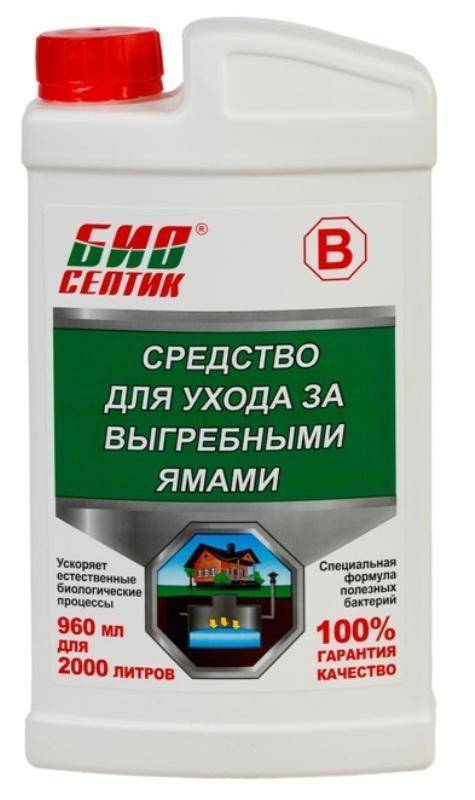
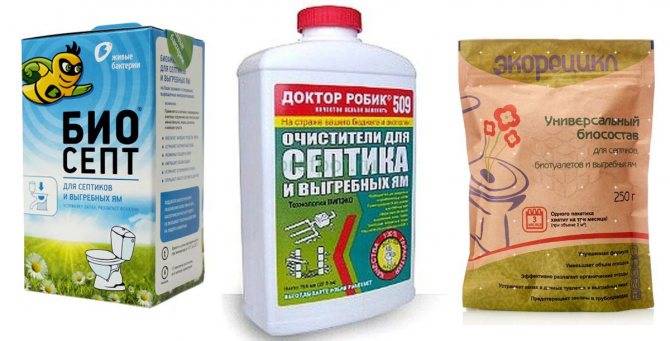
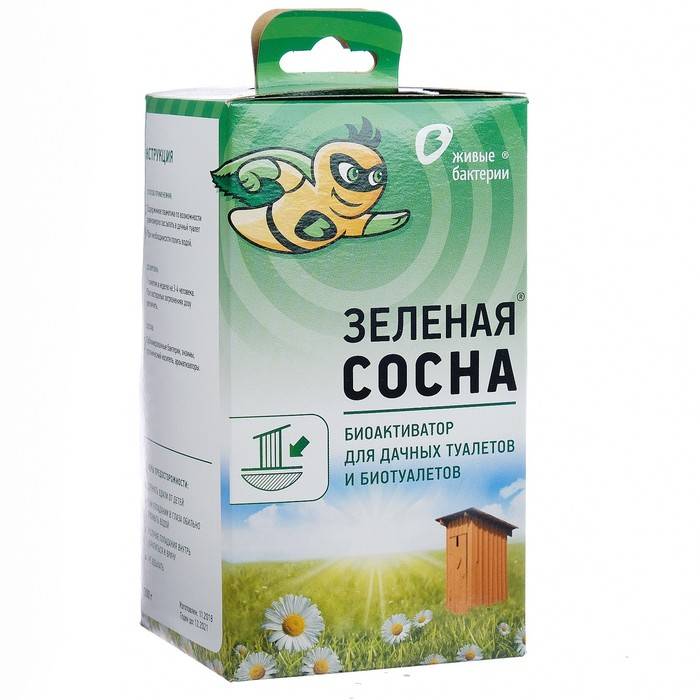


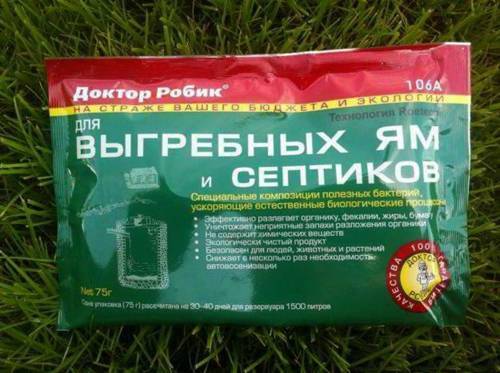
Any of the list of drugs has good reviews. It is impossible to say that all of them are positive, but most of them speak of good results.So that bacteria for cesspools and country toilets do not disappoint, you need to buy them not in the market, but in the store. There are more chances that the rules of storage will be observed. And in order not to buy a fake, it is advisable to buy from the official representatives of the campaign. Information about this can be found on the manufacturer's website in the "Where to buy" section.
Chemicals for cesspools and septic tanks
According to the mechanism of action, chemical cleaners for autonomous sewer systems belong to antiseptics. They kill bacteria that cause decay of the organic components of faecal water. This reduces odor and ensures efficient decomposition of solid residues.
The composition of such funds can be one of four active ingredients:
- formic aldehyde;
- ammonium salts;
- nitrate oxidizing agents;
- bleaching powder.
The properties of the drug largely depend on the qualities of the main component. Let's analyze them in more detail.
Disinfectant solutions based on formic aldehyde
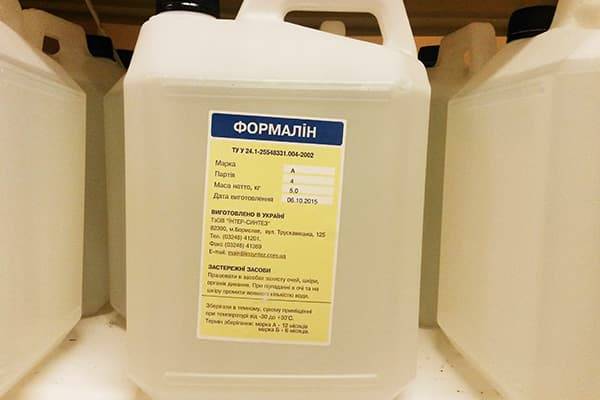
Until recently, formic aldehyde (more precisely, its solution, formalin) was practically the only disinfectant pits of street toilets. This drug kills almost all varieties of bacteria, stops putrefactive processes, stops the release of toxic and fetid gaseous decay products. In combination with a low price, this efficiency ensured the popularity of formalin.
However, today the use of formic aldehyde-based formulations is being abandoned. Formalin has been proven to be a strong carcinogen. Therefore, preparations based on it are not recommended for wastewater treatment.
Preparations based on ammonium salts
Ammonium compounds have a positive molecular ion based on tetravalent nitrogen. When dissolved, such salts provide the alkalinity of the medium. Solutions of ammonium salts have a bactericidal effect, effectively decompose sewage, remove unpleasant odors.
However, detergents and other household chemicals contained in wastewater can significantly reduce the effectiveness of ammonia preparations. They work best when cleaning drains from toilets.
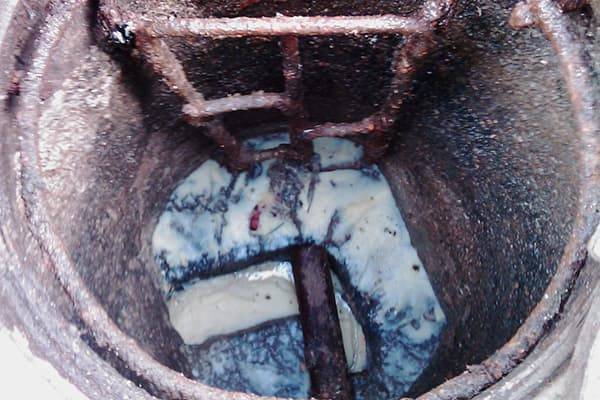
Nitrate oxidizing agents - spare nature, destroy metals
Compared to formalin and ammonium compounds, nitrate oxidizing agents practically do not harm the environment. These substances, obtained from nitric acid, effectively fight putrefactive bacteria, eliminate unpleasant odors from sewers and help dissolve solid deposits. Under the action of nitrate oxidizers, the contents of the pit are converted into nitrogen-rich fertilizer.
However, drugs in this group interact aggressively with metals. The surface of metals is covered with a crust of nitrate salts. This is especially dangerous for pipes: deposits can significantly reduce their clearance.
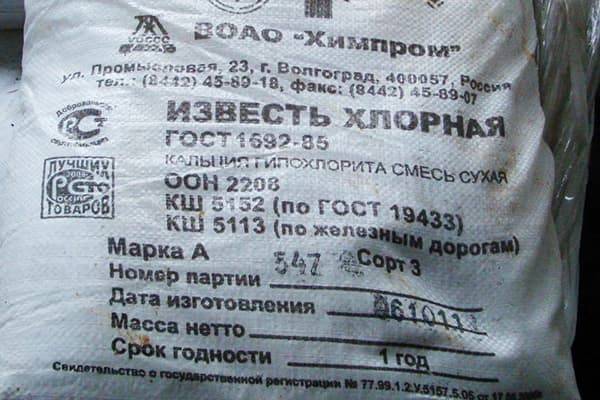
Bleaching powder
Another aggressive antiseptic with a carcinogenic effect. Bleach is dangerous for the human body: the vapors released during its use irritate the mucous membranes of the eyes and respiratory tract. When working with preparations based on bleach, it is necessary to strictly follow the instructions.
How to arrange a cleaning system
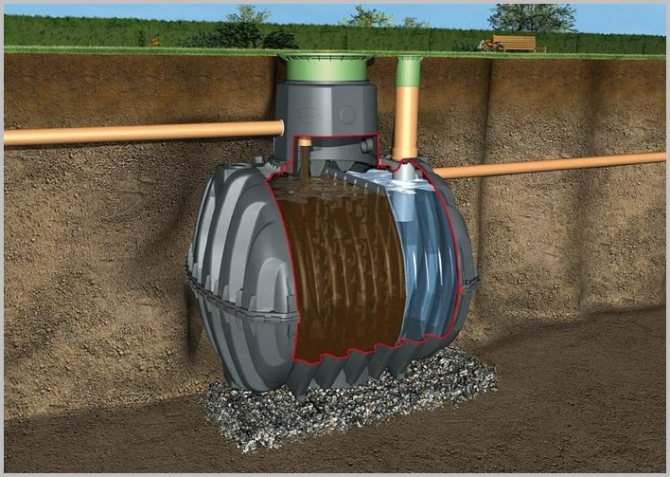
A septic tank with bacteria for a country toilet, although it is a mini option, still requires certain rules to be observed during its installation. So, the main ones are:
- The right choice of material for a mini-septic tank.Ideal are plastic tanks, concrete rings or simple brickwork. All three options are good both in terms of durability and resistance to aggressive environments in which they will be used. At the same time, the installation of a mini-cleaning system will not be difficult in any of the three cases.
- The correct location of the toilet with a septic tank. Here it is worth observing the norms of SNiP, clearly prescribed and regulated. Even taking into account the fact that there will not be as much wastewater as when household water is discharged from the house, you should still take care of the safety of buildings and the environment. And for this purpose, it is best to place a septic tank for toilet cesspools at a distance of at least 5 meters from all buildings; from water supply points (wells and wells), the toilet must be removed at a distance of at least 20 meters; it is also worth taking care that the ventilation of the septic tank does not bother the neighbors with an unpleasant smell. Therefore, a septic tank for a toilet in the country must be removed from the fence at least three meters away.
- A well-chosen septic tank. Here it is not necessary to make the receiver very large. Even for a family of 3-4 people, the volume of tanks in total reaching 1 m3 will be enough. Under the condition of year-round use of the country street toilet, it is unlikely that the volume of drains in it will be more than 500 liters per month. In this case, it is necessary to make the first storage chamber larger than the rest of the tanks. The ideal option would be when the settling chamber has 2/3 of the total volume of the treatment system.
- Good quality septic tank. So, a large sewage treatment plant does not need to be insulated during installation, since it deepens below the level of soil freezing. And the bacteria themselves, actively feeding on effluents, produce some heat.However, a mini-septic tank, which does not need to be deepened much, can be cooled from the ground in the autumn-winter season. As a result of the cold, the work of bacteria will be slowed down or stopped altogether. Therefore, as a heater, you can use expanded clay sprinkling or simply polystyrene foam plates at the stage of installing the tank in the ground.
Biochemistry in Sevastopol
Producer - Chisty Dom
Country of manufacture - Russia
Producer - Chisty Dom
Country of manufacture - Russia
Country of manufacture - Russia
Package size (cm) - 7x55x42
Country of manufacture - Russia
Package size (cm) - 7x55x42
Country of manufacture - Russia
Tank volume (l) - 1
Country of manufacture - Russia
Country of manufacture - Russia
Producer - Markopul Chemicals
Tank volume (l) - 1
Country of manufacture - Russia
Tank volume (l) - 1
Country of manufacture - Russia
Producer - Markopul Chemicals
Producer - Markopul Chemicals
Country of manufacture - Canada
Producer - Markopul Chemicals
Producer - Markopul Chemicals
Dimensions (LxWxH) (cm) - 9x12x0.5
Packing size (cm) - 5x9x12
Country of manufacture - Canada
Dimensions (LxWxH) (cm) - 9x12x0.5
Packing size (cm) - 5x9x12
Country of manufacture - Canada
Country of manufacture - Holland
Dimensions (LxWxH) (cm) - 6x13x23
Package size (cm) - 23x6x13
Country of manufacture - Canada
Country of manufacture - Holland
Dimensions (LxWxH) (cm) - 14.5×14.5×11.5
Package size (cm) - 11.5x14.5x14.5
Country of manufacture - Thailand
Country of manufacture - Holland
Country of manufacture - Holland
Dimensions (LxWxH) (cm) - 9.5 × 9.5 × 16
Package size (cm) - 16x9.5x9.5
Country of manufacture - Thailand
Dimensions (LxWxH) (cm) - 9.5 × 9.5 × 16
Package size (cm) - 16x9.5x9.5
Country of manufacture - Thailand
Country of manufacture - Holland
Country of manufacture - Holland
Dimensions (LxWxH) (cm) - 9.5 × 9.5 × 16
Package size (cm) - 16x9.5x9.5
Country of manufacture - Thailand
Dimensions (LxWxH) (cm) - 9.5 × 9.5 × 16
Package size (cm) - 16x9.5x9.5
Country of manufacture - Thailand
Bioactive preparations for sanitization of street toilets
Now in dry closets they use various special preparations that destroy bacteria, eliminate unpleasant odors, turn paper and excrement into a homogeneous liquid mass. This process greatly facilitates the cleaning of the toilet, making it environmentally friendly. These drugs include peat, dry closet liquid.

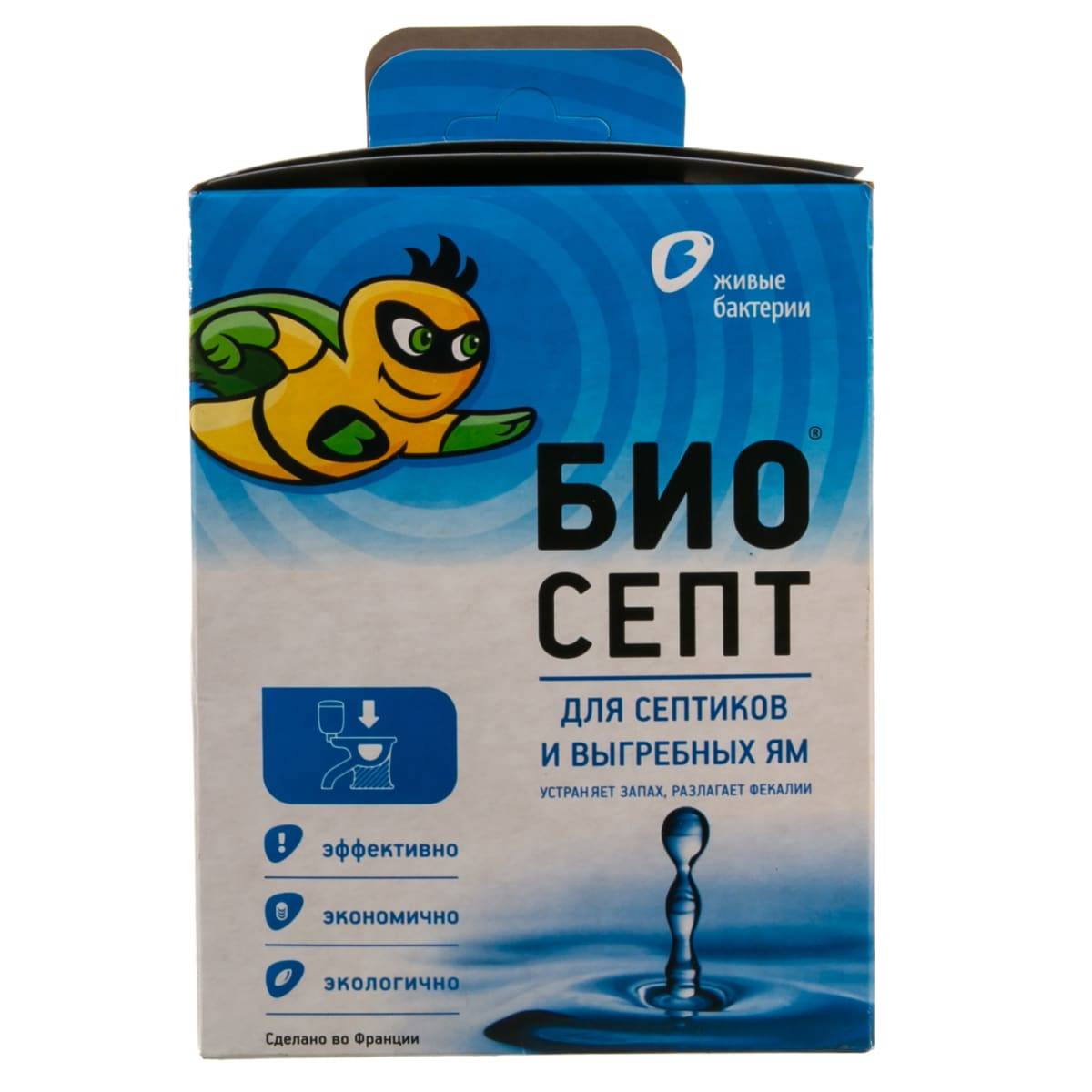


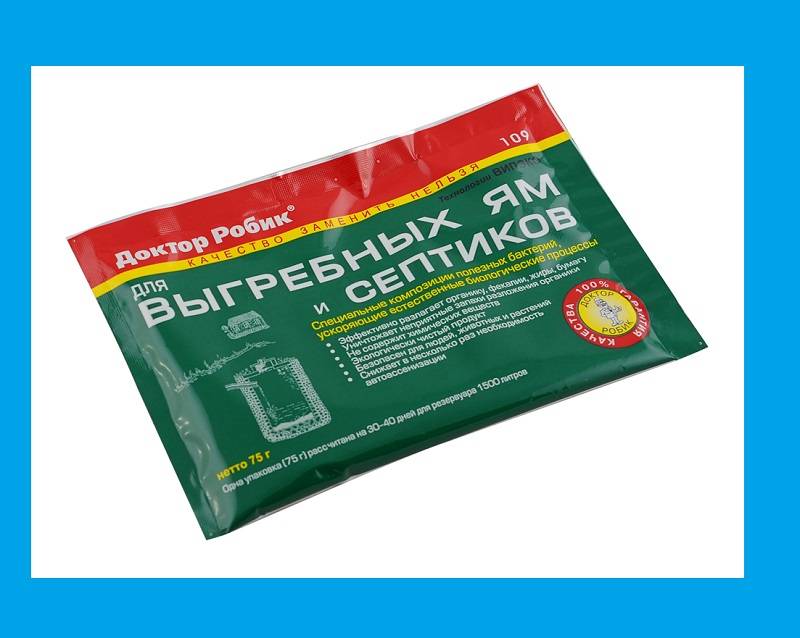
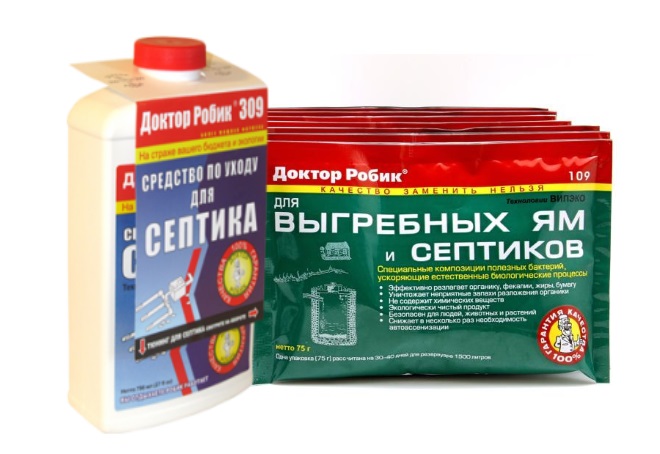
Literally in a day, a chemically active agent turns feces into a homogeneous mixture. It is worth noting that it has a neutral smell. In this case, gases are not formed at all. Such sanitary preparations are now widely used in dachas for deodorization and disinfection of the contents of cesspools and septic tanks.
Sanitary product for the care of the upper tank of the dry closet is a kind of technical shampoo that improves the quality of flushing. This water deodorizing liquid prevents the formation and accumulation of sediment, which has a positive effect on the service life of the toilet.
We offer to buy various consumables from us in Sevastopol, allowing you to make the operation of your toilets economical and environmentally friendly. A wide range of septic tanks and special products are available. We assure you that the ratio of price and quality of service will suit you.
Biochemistry in Sevastopol A wide range of Bioforce Septic Comfort bioactive chemicals in Sevastopol for the care of dry closets, the elimination of waste that poses a threat to the environment.
Features of the use of biological products
The best result can be obtained only in the case of careful selection of the product with respect to the specific features of the sewer system. Therefore, when choosing, we take into account that:
- The dry closet should be cleaned with special tablets that will equally effectively dissolve any organic matter, turning it into a liquid.
- The composition of activators should include components that reduce the proportion of solid fraction in wastewater, including dissolving fats.
Bacteria feed on residual products and self-destruct in the clean sewerage of a private house.
There are several rules that must be observed in order to obtain high performance:
- With an insufficient amount of liquid, microorganisms are not able to work - the water level should be controlled;
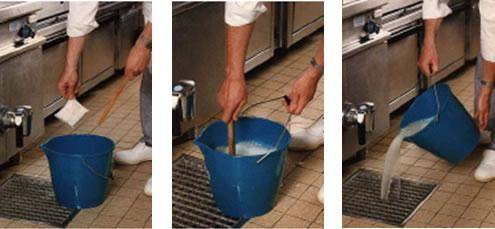
- The drug is diluted according to the norms of the scheme - instructions. It is usually required to stir the granules in water, and simply shake the liquid formulations.
- Periodic use of sewerage leads to a decrease in the effect of bioactivators. Living organisms in the absence of a nutrient medium die. Only a two-week downtime of the system is allowed.
- According to the rules, the required liquid level should be twice the volume of solids. In this case, water is poured into the cesspool.
- Bacteria do not take root in an aggressive environment. Chemical household products with antibacterial content should not be drained into the sewer. When using washing machines and dishwashers, you should buy formulations with the appropriate labeling.The presence of chlorine will kill bacteria colonies. This also applies to components for water filtration, as well as manganese or antibiotics.
- If an aggressive substance enters the septic tank, it will be necessary to revive the functionality of the drug by adding water and a new portion of the drug.
- In this case, the "Start" mark will become the starting point for launching the biological system. This is a special development with an operational restoring effect.
Possible ways to treat wastewater with tablets that decompose solid waste
The technologies developed to date make it easy to cope with the tasks of operating septic tanks and cleaning sewage. There are several most effective ways to dispose of waste and treat wastewater on a personal plot:
- The most familiar and simple: calling a sewage truck to pump out sewage.
- Chemicals for septic tanks and cesspools, quickly and effectively decontaminating and decomposing sewage.
- Biological products for cesspools (septic tanks) - live bacteria for a septic tank are able to process household waste into a harmless liquid in a matter of hours, which can be used later as biofertilizers.
The subtleties of the acquisition
Arriving at the store, you will see that bacteria are sold in various forms:
Possible forms of biological products
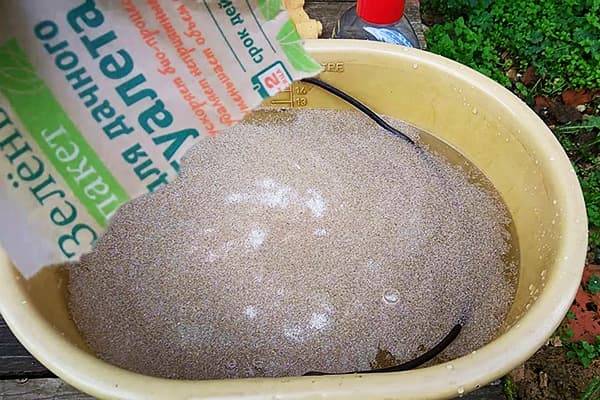
Powder. The powder substance consists of enzymes and microorganisms, and can also be sold in the form of granules. A distinctive feature is the ease of transportation and storage: it will not break, will not be lost. But it should also be borne in mind that the bacteria in this case are in a dormant state, and they still need to be “awakened” before being added to the drains, or rather mixed with water;
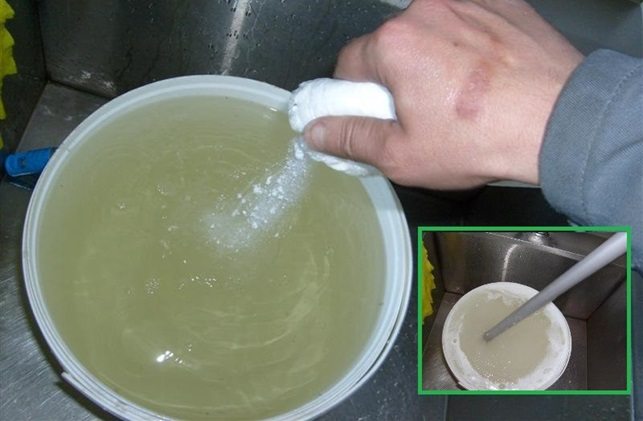
Stirring dry biopreparation
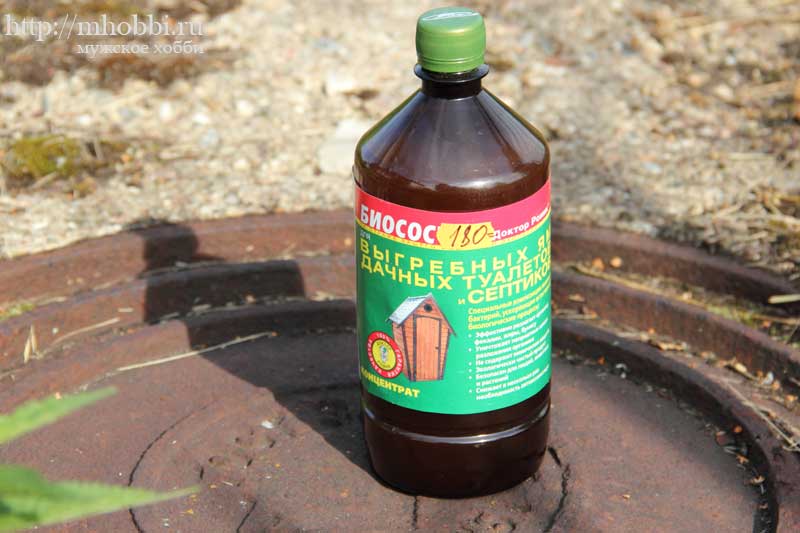
An example of a liquid biological product for dry closets, septic tanks and cesspools
Tablets. The most simple and easy to use. It is enough just to throw the necessary amount of them into the drive, after which the unpleasant odor will disappear, most of the bottom accumulations of feces will dissolve and suspended sewage particles will disappear.

Convenient pit septic bacteria tablets
Assortment of offers
In addition to different forms, the biopreparations sold, of course, have different manufacturers and, therefore, their own structural features. This, in turn, affects the efficiency of their use in a particular part of the sewer system.
I will try to give you comprehensive recommendations on this part:
- Directly for the cesspools themselves and septic tanks are best suited:
"Doctor Robik":
| Parameter | Description |
| Packing | 70 grams package |
| Waste volume processed | 2000 l |
| Validity | 30-40 days |
| The price of one package |
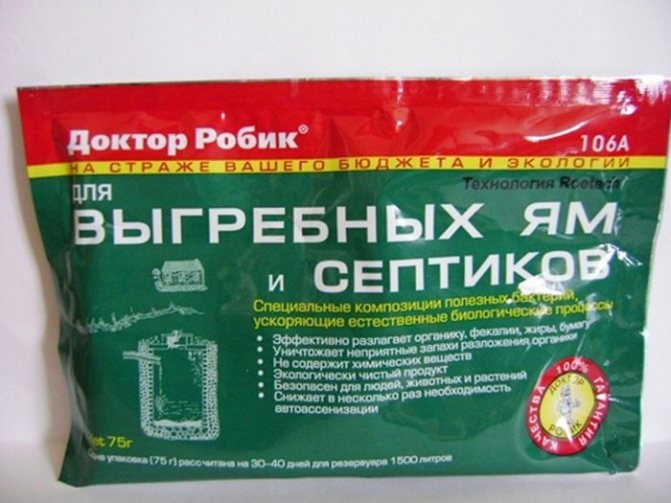
Sample of the biological product "Doctor Robik"
"Sanex":
| Parameter | Description |
| Manufacturer country | Poland |
| Packing | 400 gram package |
| Starting dose | 2-5 spoons per 2 m3 |
| Monthly dose | 2 spoons per 2 m3 |
| The price of one package | 640 rubles |
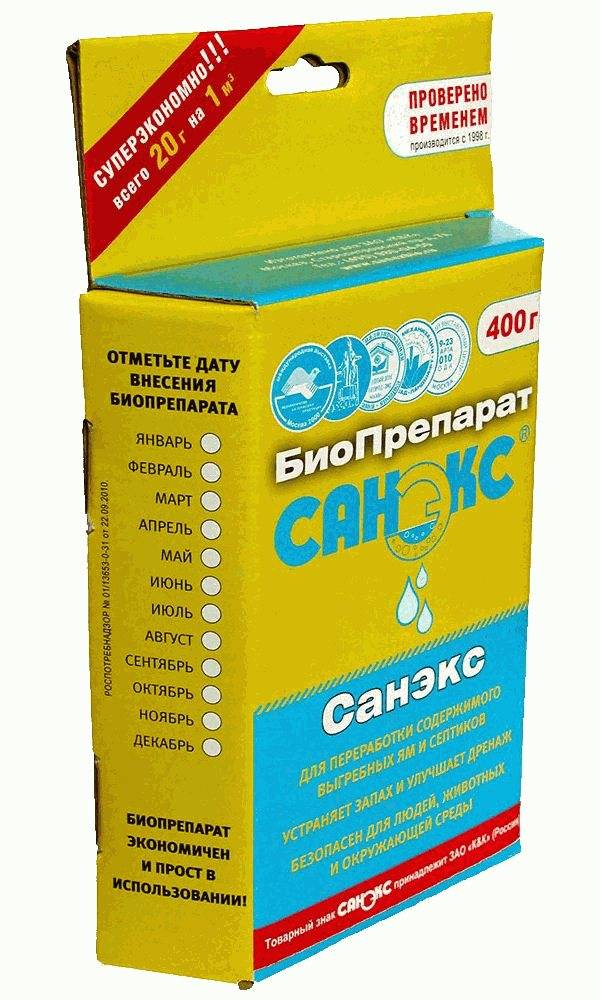
Sample of the biopreparation "Sanex"
"Micropan".
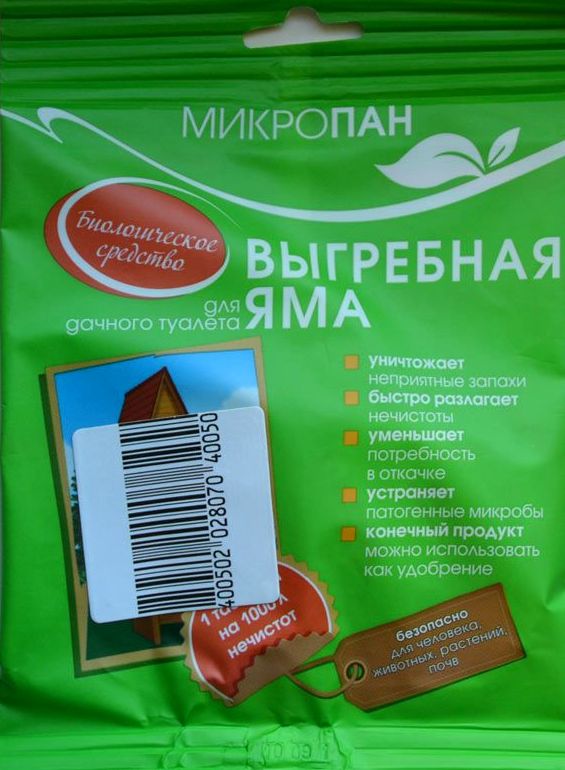
Sample bag "Micropan"
- It is desirable to treat dry closets with the following bacterial compounds:
"Biola";
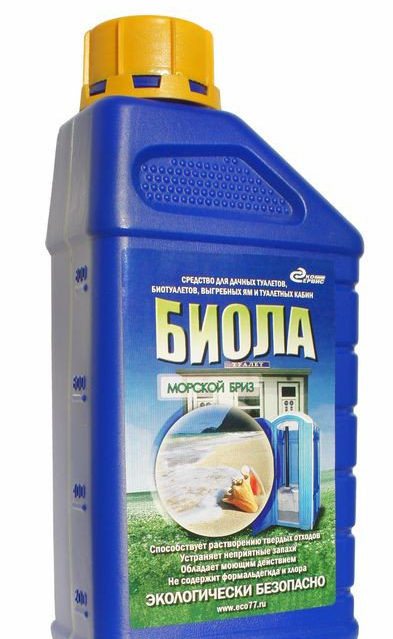
liquid con sample
"Biofresh";
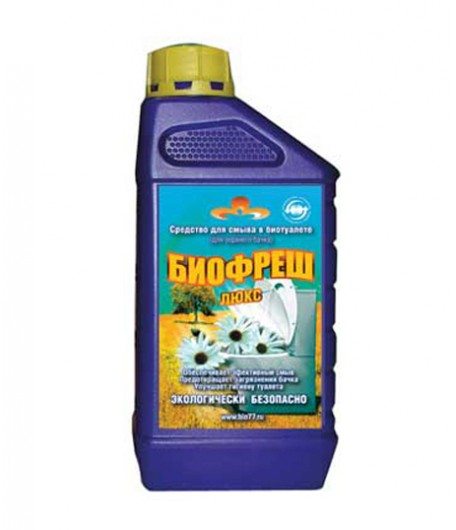
Biofresh sample
"Sunnyfresh";
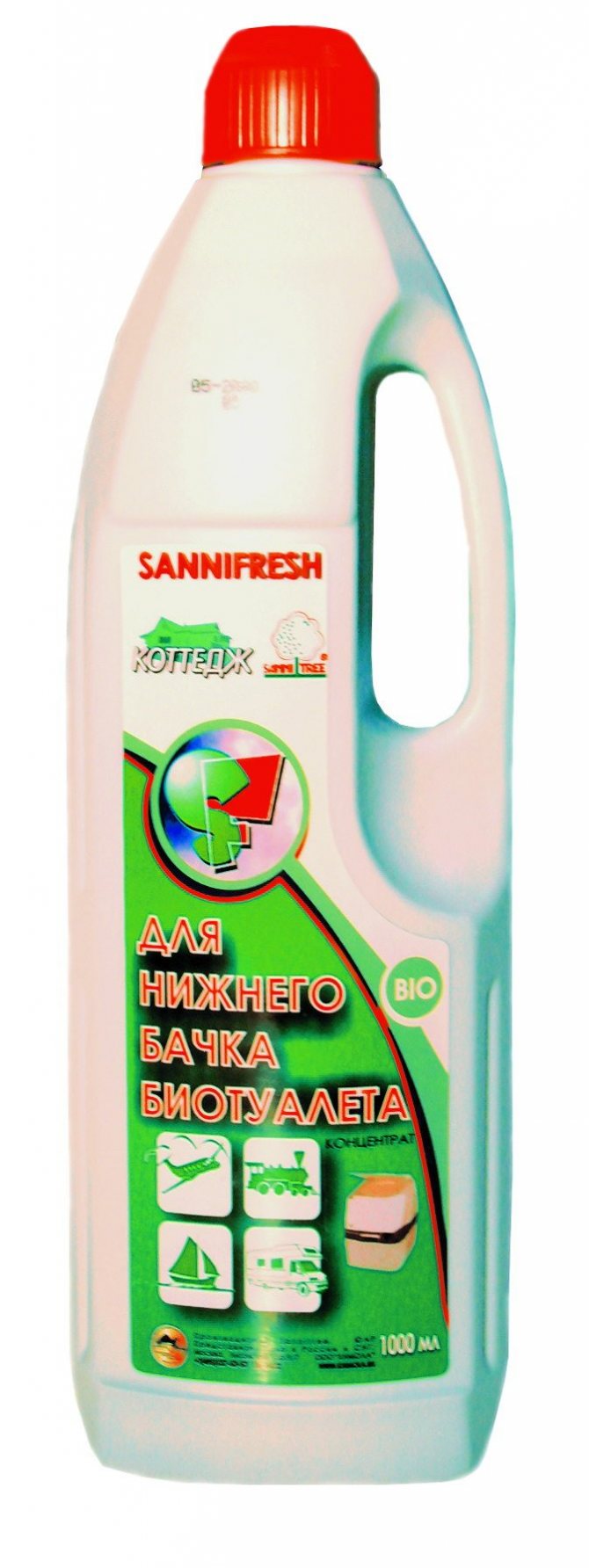
Sunnyfresh Liquid Sample