- What is solar energy
- How can you estimate the amount of solar energy
- The development of solar energy in different countries and its prospects
- Excursion into history
- Panel types
- What are non-traditional energy sources
- Conditions for work and efficiency
- Development of solar energy
- Solar power plants operate in
- Power plants are in the stage of project development and construction
- Transmission of solar energy to Earth
- laser transmission
- microwave
- Important Technology Information
- Where is solar energy used?
- Features of the use of solar energy
- What is solar energy converted into and how is it produced?
- Solar panels, device and application
- Efficiency of solar batteries
What is solar energy
The sun is a star, within which, in a continuous mode, thermonuclear reactions take place. As a result of ongoing processes, a huge amount of energy is released from the surface of the sun, part of which heats the atmosphere of our planet.
Solar energy is a source of renewable and environmentally friendly energy.
How can you estimate the amount of solar energy
Experts use to evaluate such a value as the solar constant. It is equal to 1367 watts. This is how much solar energy per square meter of the planet.About a quarter is lost in the atmosphere. The maximum value at the equator is 1020 watts per square meter. Taking into account day and night, changes in the angle of incidence of the rays, this value should be reduced by another three times.
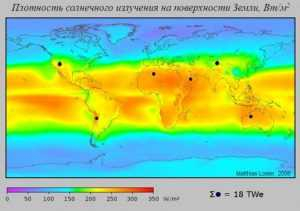
Distribution of solar radiation on the map of the planet
Versions about the sources of solar energy were very different. At the moment, experts say that energy is released as a result of the transformation of four H2 atoms into a He nucleus. The process proceeds with the release of a significant amount of energy. For comparison, imagine that the conversion energy of 1 gram of H2 is comparable to that released when burning 15 tons of hydrocarbons.
The development of solar energy in different countries and its prospects
Alternative types of energy, which include solar, are developing most rapidly in technologically advanced countries. These are the USA, Spain, Saudi Arabia, Israel and other countries where there are a large number of sunny days a year. Solar energy is also developing in Russia and the CIS countries. True, our pace is much slower due to climatic conditions and lower incomes of the population.
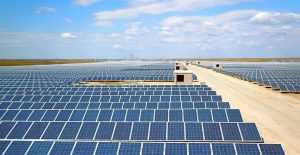
In Russia, there is a gradual development and the emphasis is on the development of solar energy in the regions of the Far East. Solar power plants are being built in remote settlements of Yakutia. This allows you to save on imported fuel. Power plants are also being built in the southern part of the country. For example, in the Lipetsk region.
All these data allow us to conclude that many countries of the world are trying to introduce the use of solar energy as much as possible. This is relevant because energy consumption is constantly growing, and resources are limited.In addition, the traditional energy sector greatly pollutes the environment. Therefore, alternative energy is the future. And the energy of the sun is one of its key areas.
Excursion into history
How has solar energy evolved to the present day? Man has thought about the use of the sun in his activities since ancient times. Everyone knows the legend according to which Archimedes burned the enemy fleet near his city of Syracuse. He used incendiary mirrors for this. Several thousand years ago, in the Middle East, the palaces of rulers were heated with water, which was heated by the sun. In some countries, we evaporate sea water in the sun to get salt. Scientists often conducted experiments with heating devices powered by solar energy.
The first models of such heaters were produced in the XVII-XVII centuries. In particular, the researcher N. Saussure presented his version of the water heater. It is a wooden box with a glass lid. The water in this device was heated to 88 degrees Celsius. In 1774, A. Lavoisier used lenses to concentrate heat from the sun. And lenses have also appeared that allow locally to melt cast iron in a few seconds.
Batteries that convert the energy of the sun into mechanical energy were created by French scientists. At the end of the 19th century, researcher O. Musho developed an insolator that focused beams with a lens on a steam boiler. This boiler was used to operate the printing press. In the United States at that time, it was possible to create a unit powered by the sun with a capacity of 15 "horses".
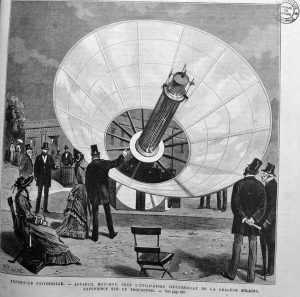
Insolator O. Musho
In the thirties of the last century, Academician of the USSR A.F. Ioffe proposed the use of semiconductor photocells to convert solar energy.Battery efficiency at that time was less than 1%. Many years passed before solar cells were developed with an efficiency of 10-15 percent. Then the Americans built solar panels of a modern type.





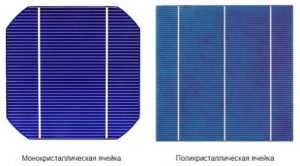
Photocell for solar battery
It is worth saying that semiconductor-based batteries are quite durable and do not require qualifications to care for them. Therefore, they are most often used in everyday life. There are also entire solar power plants. As a rule, they are created in countries with a large number of sunny days per year. These are Israel, Saudi Arabia, the south of the USA, India, Spain. Now there are absolutely fantastic projects. For example, solar power plants outside the atmosphere. There the sunlight has not yet lost energy. That is, the radiation is proposed to be captured in orbit and then converted into microwaves. Then, in this form, the energy will be sent to the Earth.
Panel types
There are different types of solar panels in use today. Among them:
- Poly- and single-crystal.
- Amorphous.
Monocrystalline panels are characterized by low productivity, but they are relatively inexpensive, so they are very popular. If it is necessary to equip an additional power supply system for alternative current supply when the main one is turned off, then the purchase of such an option is fully justified.
Polycrystals are in an intermediate position in these two parameters. Such panels can be used to provide centralized power supply in places where there is no access to a stationary system for any reason.
As for the amorphous panels, they demonstrate the maximum productivity, but this significantly increases the cost of the equipment. Amorphous silicon is present in devices of this type. It is worth noting that it is still unrealistic to purchase them, since the technology is at the stage of experimental application.
What are non-traditional energy sources
A promising task in the energy complex of the 21st century is the use and implementation of renewable energy sources. This will reduce the burden on the ecological system of the planet. The use of traditional sources negatively affects the environment and leads to the depletion of the earth's interior. These include:
1. Non-renewable:
- coal;
- natural gas;
- oil;
- Uranus.
2. Renewable:
- wood;
- hydropower.
Alternative energy is a system of new ways and methods of obtaining, transmitting and using energy, which are used poorly, but are beneficial for the environment.
Alternative energy sources (AES) are substances and processes that exist in the natural environment and make it possible to obtain the necessary energy.
Conditions for work and efficiency
It is better to entrust the calculation and installation of the solar system to professionals. Compliance with the installation technique will ensure operability and obtain the declared performance. To improve efficiency and service life, some nuances must be taken into account.


thermostatic valve. In traditional heating systems, a thermostatic element is rarely installed, since the heat generator is responsible for regulating the temperature. However, when arranging a solar system, one should not forget about the protective valve.

Heating the tank to the maximum allowable temperature increases the performance of the collector and allows you to use solar heat even in cloudy weather
The optimal location of the valve is 60 cm from the heater. When located close, the "thermostat" heats up and blocks the supply of hot water.
Location of the storage tank. The DHW buffer tank must be installed in an accessible place.
When placed in a compact room, special attention is paid to the height of the ceilings
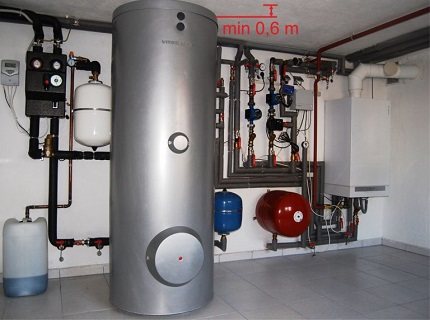
The minimum free space above the tank is 60 cm. This clearance is required for battery maintenance and replacement of the magnesium anode
Installing an expansion tank. The element compensates for thermal expansion during the stagnation period. Installing the tank above the pumping equipment will provoke overheating of the membrane and its premature wear.
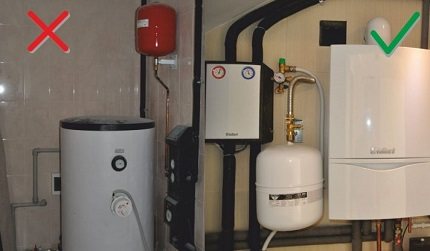
The optimal place for the expansion tank is under the pump group. The temperature effect during this installation is significantly reduced, and the membrane retains its elasticity longer.
Connecting the solar circuit. When connecting pipes, it is recommended to organize a loop. "Thermoloop" reduces heat loss, preventing the exit of the heated liquid.
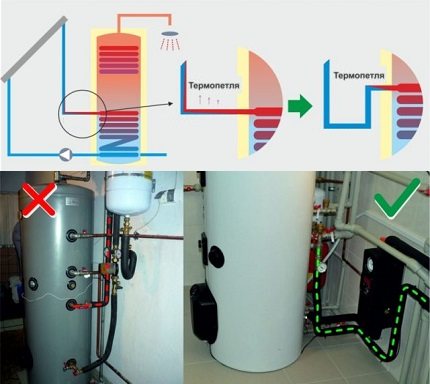
Technically correct version of the implementation of the "loop" of the solar circuit. Neglect of the requirement causes a decrease in the temperature in the storage tank by 1-2 ° C per night
Check valve. Prevents "overturning" of the coolant circulation. With a lack of solar activity, the check valve prevents the heat accumulated during the day from dissipating.
Development of solar energy
As already noted, the figures reflecting today the characteristics of the development of solar energy are steadily growing.The solar panel has long ceased to be a term for a narrow circle of technical specialists, and today they not only talk about solar energy, but also make a profit from completed projects.
In September 2008, the construction of a solar power plant located in the Spanish municipality of Olmedilla de Alarcón was completed. The peak power of the Olmedilla power plant reaches 60 MW.
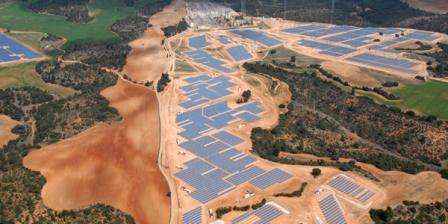 Solar station Olmedilla
In Germany, the Waldpolenz solar station is operated, which is located in Saxony, near the cities of Brandis and Bennewitz. With a peak power of 40 MW, this plant is one of the largest solar power plants in the world.
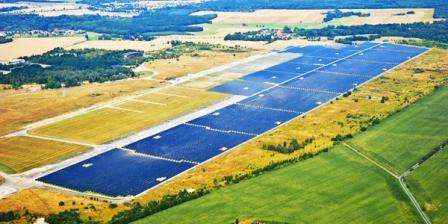 Solar station Waldpolenz
Unexpectedly for many, good news began to please Ukraine. According to the EBRD, Ukraine may soon become a leader among green economies in Europe, especially in relation to the solar energy market, which is one of the most promising renewable energy markets.


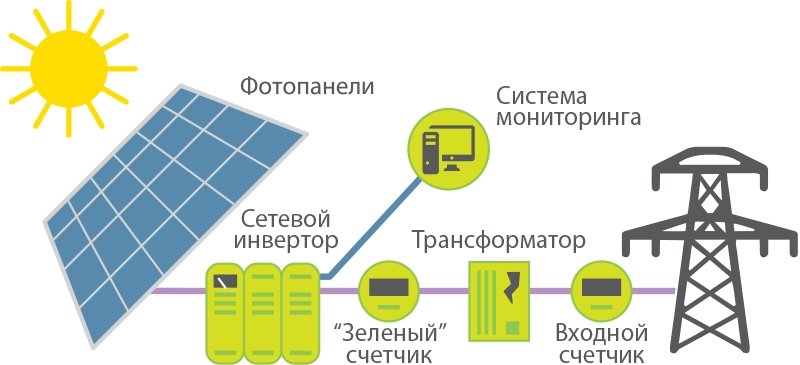

Solar power plants operate in
- Orenburg region:
"Sakmarskaya im. A. A. Vlaznev, with an installed capacity of 25 MW;
Perevolotskaya, with an installed capacity of 5.0 MW. - Republic of Bashkortostan:
Buribaevskaya, with an installed capacity of 20.0 MW;
Bugulchanskaya, with an installed capacity of 15.0 MW. - Republic of Altai:
Kosh-Agachskaya, with an installed capacity of 10.0 MW;
Ust-Kanskaya, with an installed capacity of 5.0 MW. - Republic of Khakassia:
"Abakanskaya", with an installed capacity of 5.2 MW. - Belgorod region:
"AltEnergo", with an installed capacity of 0.1 MW. - In the Republic of Crimea, regardless of the Unified Energy System of the country, there are 13 solar power plants with a total capacity of 289.5 MW.
- Also, a station operates outside the system in the Republic of Sakha-Yakutia (1.0 MW) and in the Trans-Baikal Territory (0.12 MW).
Power plants are in the stage of project development and construction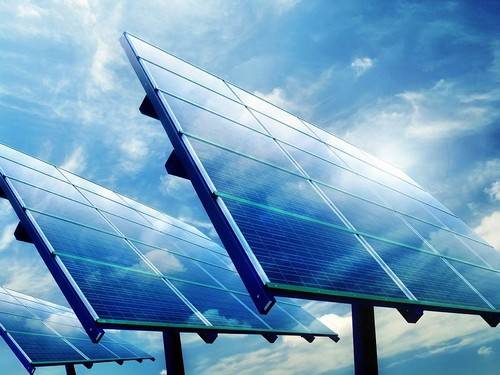
- In the Altai Territory, 2 stations with a total design capacity of 20.0 MW are planned to be put into operation in 2019.
- In the Astrakhan region, 6 stations with a total design capacity of 90.0 MW are planned to be put into operation in 2017.
- In the Volgograd region, 6 plants with a total design capacity of 100.0 MW are planned to be put into operation in 2017 and 2018.
- In the Trans-Baikal Territory, 3 stations with a total design capacity of 40.0 MW are planned to be put into operation in 2017 and 2018.
- In the Irkutsk region, 1 station with a projected capacity of 15.0 MW is planned to be put into operation in 2018.
- In the Lipetsk region, 3 stations with a total design capacity of 45.0 MW are planned to be put into operation in 2017.
- In the Omsk region, 2 stations with a projected capacity of 40.0 MW are planned to be put into operation in 2017 and 2019.
- In the Orenburg region, the 7th station, with a designed capacity of 260.0 MW, is planned to be put into operation in 2017-2019.
- In the Republic of Bashkortostan, 3 stations with a projected capacity of 29.0 MW are planned to be put into operation in 2017 and 2018.
- In the Republic of Buryatia, 5 plants with a projected capacity of 70.0 MW are planned to be put into operation in 2017 and 2018.
- In the Republic of Dagestan, 2 stations with a projected capacity of 10.0 MW are planned to be put into operation in 2017.
- In the Republic of Kalmykia, 4 plants with a projected capacity of 70.0 MW are planned to be put into operation in 2017 and 2019.
- In the Samara region, 1 station with a projected capacity of 75.0 MW is planned to be put into operation in 2018.
- In the Saratov region, 3 stations with a projected capacity of 40.0 MW are planned to be put into operation in 2017 and 2018.
- In the Stavropol Territory, 4 stations with a projected capacity of 115.0 MW are planned to be put into operation in 2017-2019.
- In the Chelyabinsk region, 4 stations with a projected capacity of 60.0 MW are planned to be put into operation in 2017 and 2018.
The total projected capacity of solar power plants under development and construction is 1079.0 MW.
Thermoelectric generators, solar collectors and solar thermal plants are also widely used in industrial plants and in everyday life. The option and method of use is chosen by everyone for himself.
The number of technical devices that use solar energy to generate electrical and thermal energy, as well as the number of solar power plants under construction, their capacity, speak for themselves - in Russia, alternative energy sources should be and develop.
Transmission of solar energy to Earth
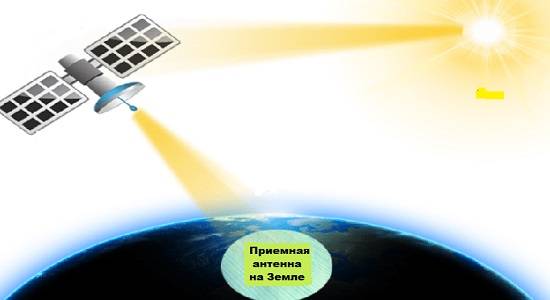
Solar energy from a satellite is transmitted to Earth using a microwave transmitter through space and atmosphere and is received on earth by an antenna called a rectenna. A rectenna is a non-linear antenna designed to convert the energy of the field of the wave incident on it.
laser transmission
Recent developments suggest using the laser with newly developed solid-state lasers allowing efficient energy transfer. Within a few years, a range of 10% to 20% efficiency can be achieved, but further experimentation still needs to take into account the possible hazards this may cause to the eyes.
microwave
Compared with laser transmission, microwave transmission is more advanced, has a higher efficiency of up to 85%. Microwave rays are well below lethal concentration levels, even with prolonged exposure. So a microwave oven with a frequency of 2.45 GHz microwave wave with a certain protection is completely harmless. The electrical current generated by photovoltaic cells is passed through a magnetron, which converts the electrical current into electromagnetic waves. This electromagnetic wave passes through the waveguide, which forms the characteristics of the electromagnetic wave. The efficiency of wireless power transmission depends on many parameters.
Important Technology Information
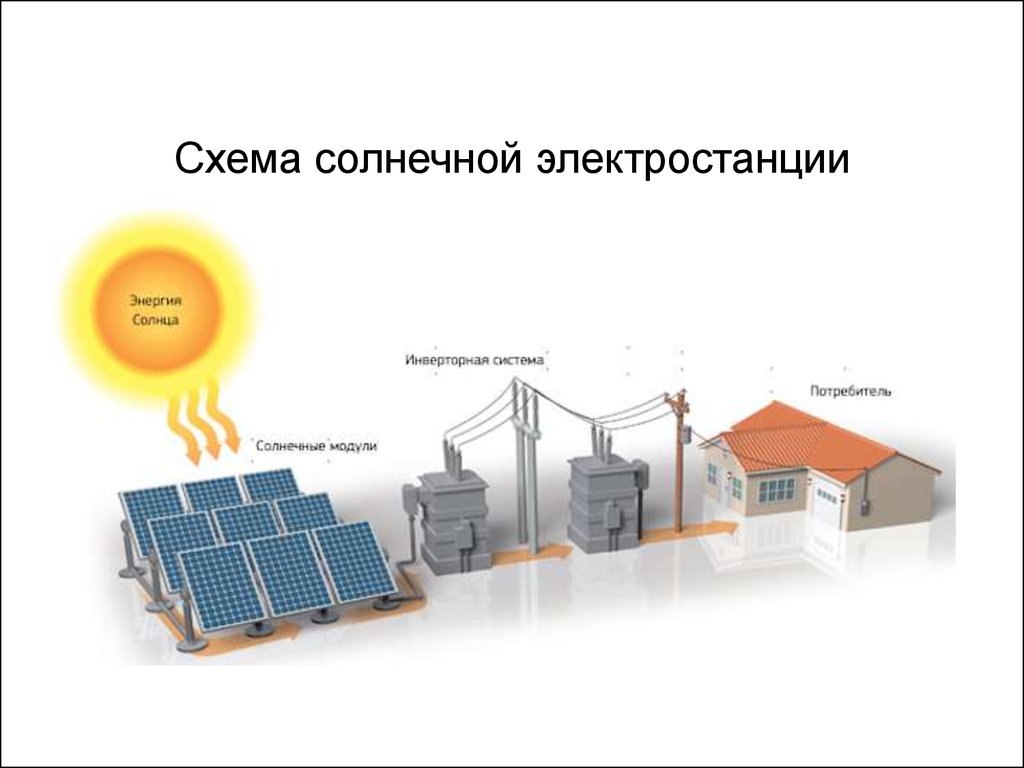
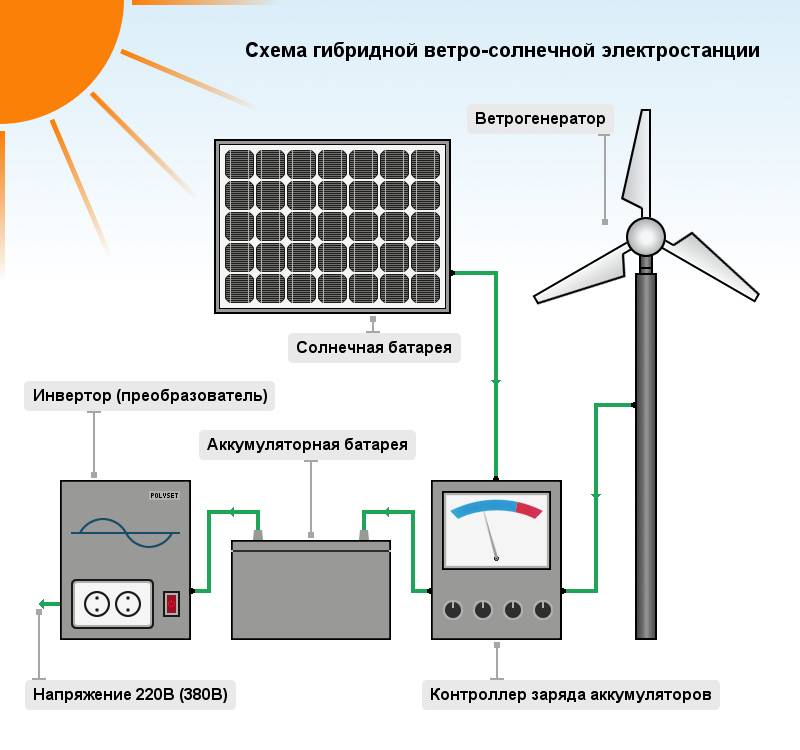
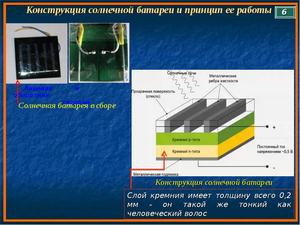 If we consider in detail the solar battery, the principle of operation is easy to understand. Separate sections of the photographic plate change the conductivity in separate sections under the influence of ultraviolet radiation.
As a result, solar energy is converted into electrical energy, which can be immediately used for electrical appliances, or stored on removable autonomous media.
To understand this process in more detail, several important aspects need to be assessed:
- A solar battery is a special system of photovoltaic converters that form a common structure and are connected in a certain sequence.
- There are two layers in the structure of photoconverters, which may differ in the type of conductivity.
- Silicon wafers are used to manufacture these converters.
- Phosphorus is also added to silicon in the n-type layer, which causes an excess of electrons with a negatively charged index.
- The p-type layer is made from silicon and boron, which leads to the formation of so-called "holes".
- Ultimately, both layers are located between electrodes with different charges.
Where is solar energy used?
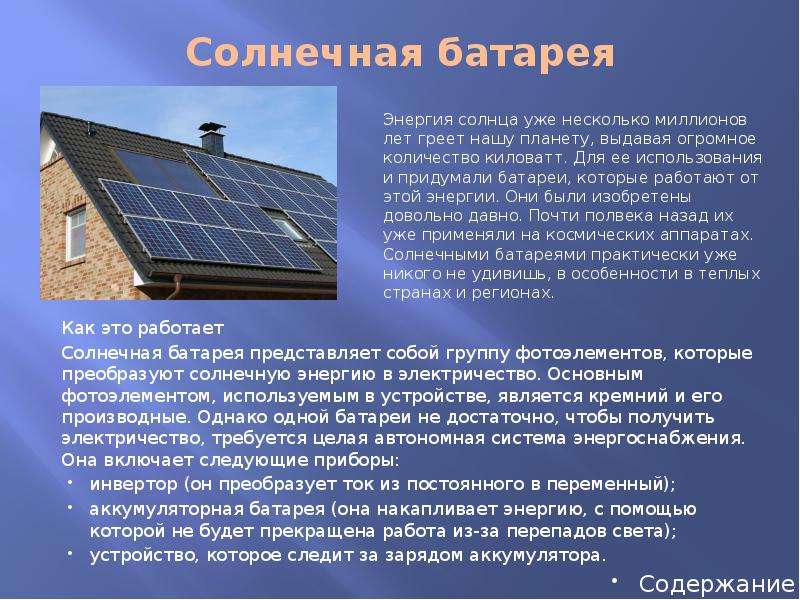
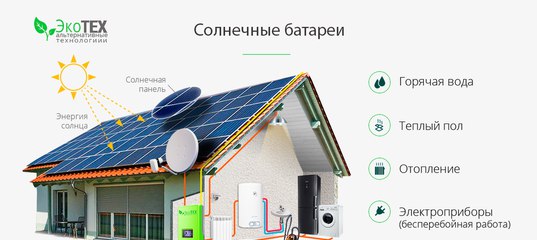
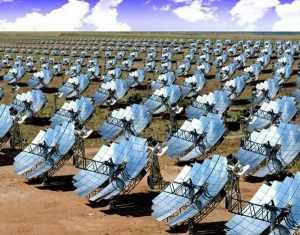
The use of solar energy is increasing every year. Not so long ago, the energy of the sun was used to heat water in the country house in the summer shower. And today, various installations are already used for heating private houses, in cooling towers. Solar panels generate the electricity needed to power small villages.
Features of the use of solar energy
The photoenergy from the sun's radiation is converted into photovoltaic cells. This is a two-layer structure consisting of 2 semiconductors of different types. The semiconductor at the bottom is p-type and the top one is n-type. The first has a lack of electrons, and the second has an excess.
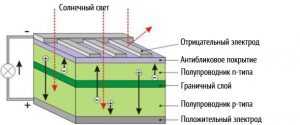
The electrons in an n-type semiconductor absorb solar radiation, causing the electrons in it to de-orbit. The pulse strength is enough to transform into a p-type semiconductor. As a result, a directed electron flow occurs and electricity is generated. Silicon is used in the production of solar cells.




To date, several types of photocells are produced:
- Monocrystalline. They are produced from silicon single crystals and have a uniform crystal structure.Among other types, they stand out with the highest efficiency (about 20 percent) and increased cost;
- Polycrystalline. The structure is polycrystalline, less uniform. They are cheaper and have an efficiency of 15 to 18 percent;
- Thin film. These solar cells are made by sputtering amorphous silicon on a flexible substrate. Such photocells are the cheapest, but their efficiency leaves much to be desired. They are used in the production of flexible solar panels.
solar panel efficiency
What is solar energy converted into and how is it produced?
Solar energy belongs to the category of alternative. It is developing dynamically, offering new methods for obtaining energy from the Sun. To date, such methods of obtaining solar energy and its further transformation are known:
- photovoltaics or photoelectric method - the collection of energy using photovoltaic cells;
- hot air - when the energy of the Sun is converted into air and sent to the turbogenerator;
- solar thermal method - heating by rays of a surface that accumulates thermal energy;
- "solar sail" - a device of the same name, operating in a vacuum, converts the sun's rays into kinetic energy;
- balloon method - solar radiation heats the balloon, where due to heat steam is generated, which serves to generate backup electricity.
Receiving energy from the Sun can be direct (through solar cells) or indirect (using the concentration of solar energy, as is the case with the solar thermal method).The main advantages of solar energy are the absence of harmful emissions and lower electricity costs. This encourages an increasing number of people and businesses to turn to solar energy as an alternative. Most actively alternative energy is used in countries such as Germany, Japan and China.

Solar panels, device and application
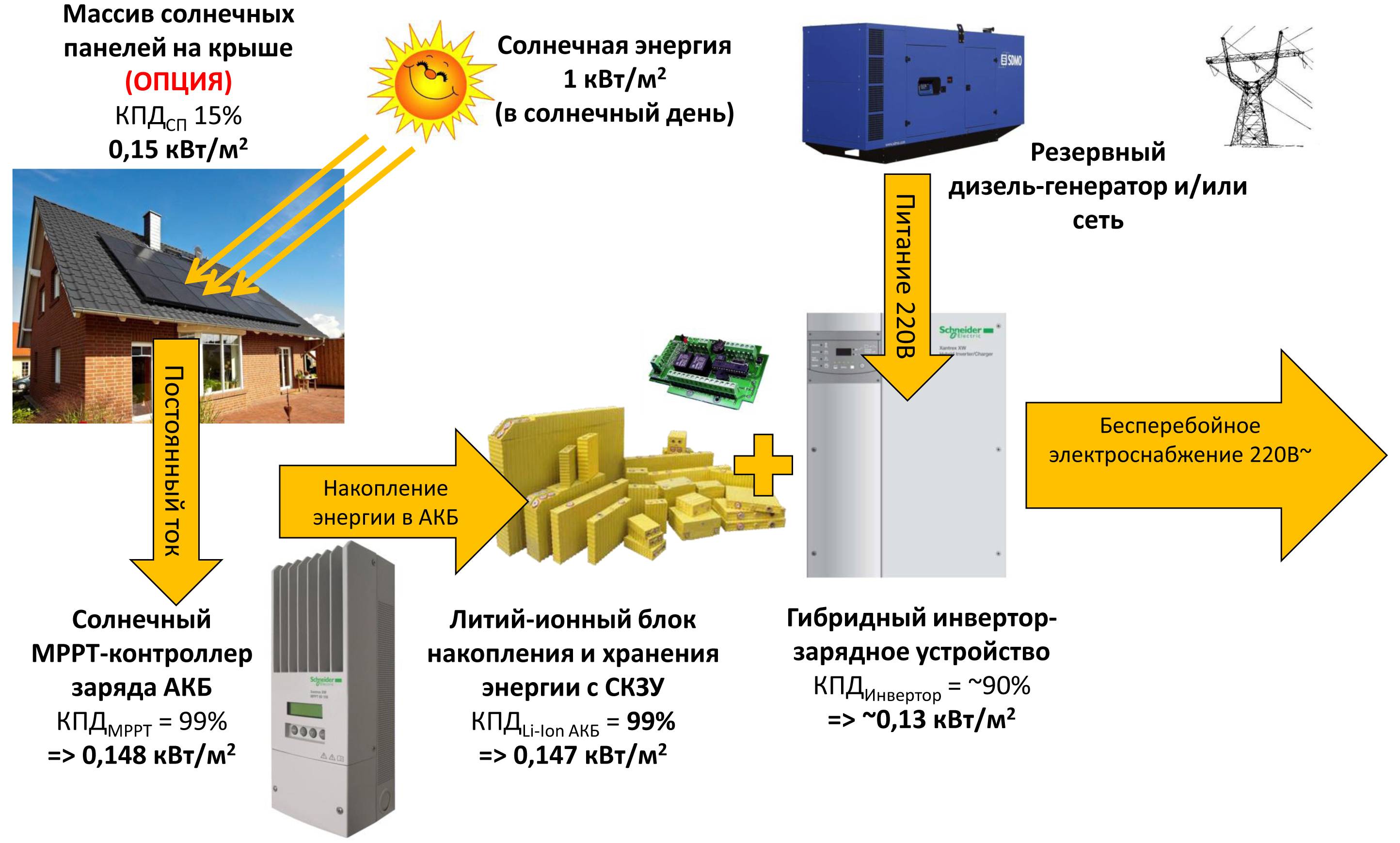
More recently, the idea of getting free electricity seemed fantastic. But modern technologies are constantly improving and alternative energy is also developing. Many begin to use new developments, being away from the mains, gaining full autonomy, and without losing urban comfort. One such source of electricity is solar panels.
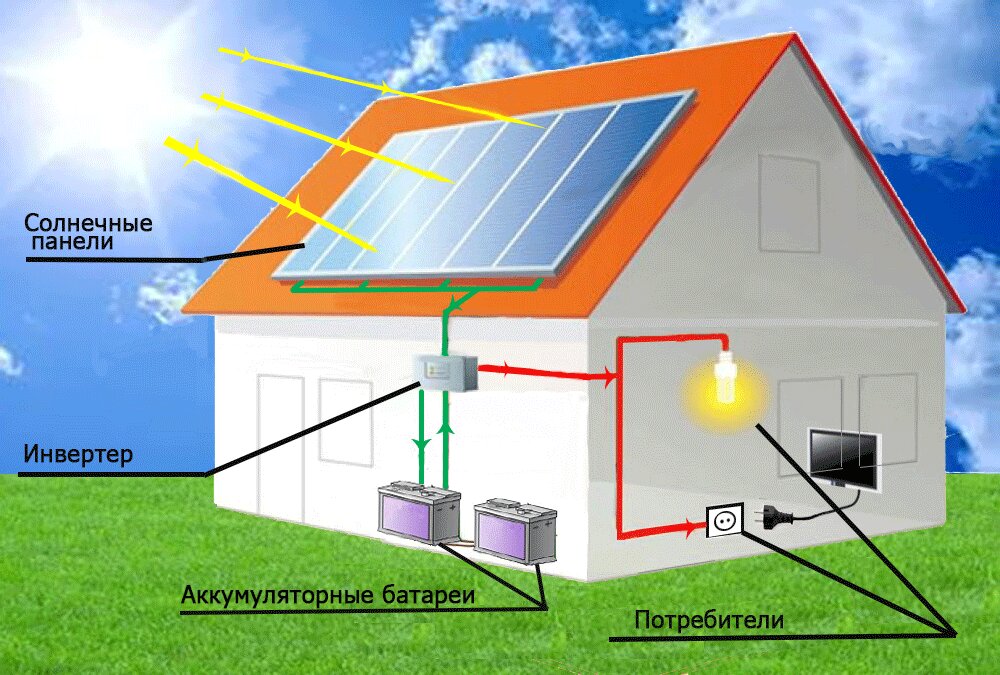
The scope of such batteries is mainly intended for power supply of country cottages, houses and summer cottages, which are located far from power lines. That is, in places where additional sources of electricity are required.
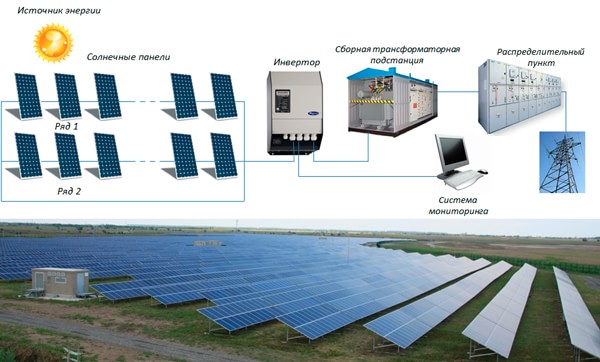
What is a solar-powered battery - these are numerous conductors and photocells connected into one system that convert the energy received from the sun's rays into electric current. The efficiency of this system reaches an average of forty percent, but this requires suitable weather conditions.
It makes sense to install solar systems only in those areas where the weather is sunny most of the days of the year. It is also worth considering the geographical location of the house. But basically, under favorable conditions, batteries significantly reduce the consumption of electricity from the general network.
Efficiency of solar batteries
One photocell, even at noon in clear weather, produces very little electricity, sufficient only to operate an LED flashlight.
To increase the output power, several solar cells are combined in parallel to increase the constant voltage and in series to increase the current.
The efficiency of solar panels depends on:
- air temperature and the battery itself;
- correct selection of load resistance;
- the angle of incidence of the sun's rays;
- presence / absence of anti-reflective coating;
- light output power.
The lower the temperature outside, the more efficient the photocells and the solar battery as a whole work. Everything is simple here. But with the calculation of the load, the situation is more complicated. It should be selected based on the current output by the panel. But its value varies depending on weather factors.
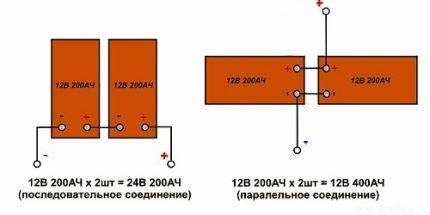 Solar panels are produced with the expectation of an output voltage that is a multiple of 12 V - if 24 V is to be supplied to the battery, then two panels will have to be connected to it in parallel
Constantly monitoring the parameters of the solar battery and manually adjusting its operation is problematic. To do this, it is better to use the control controller, which automatically adjusts the settings of the solar panel itself in order to achieve maximum performance and optimal operating modes from it.
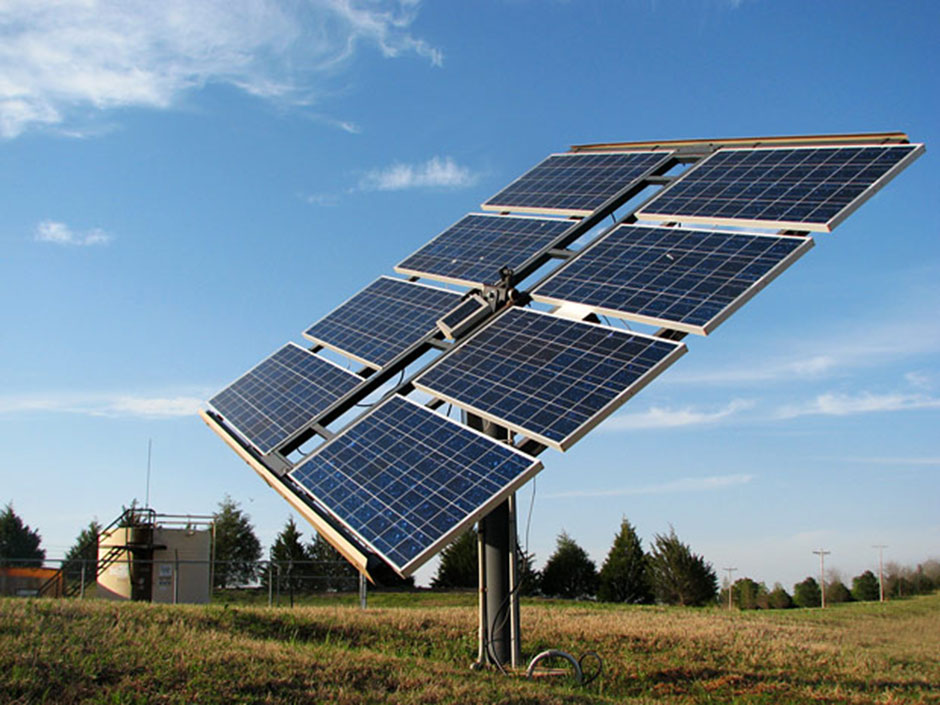
The ideal angle of incidence of the sun's rays on the solar cell is straight. However, when deviated within 30 degrees from the perpendicular, the efficiency of the panel drops by only around 5%. But with a further increase in this angle, an increasing proportion of solar radiation will be reflected, thereby reducing the efficiency of the solar cell.


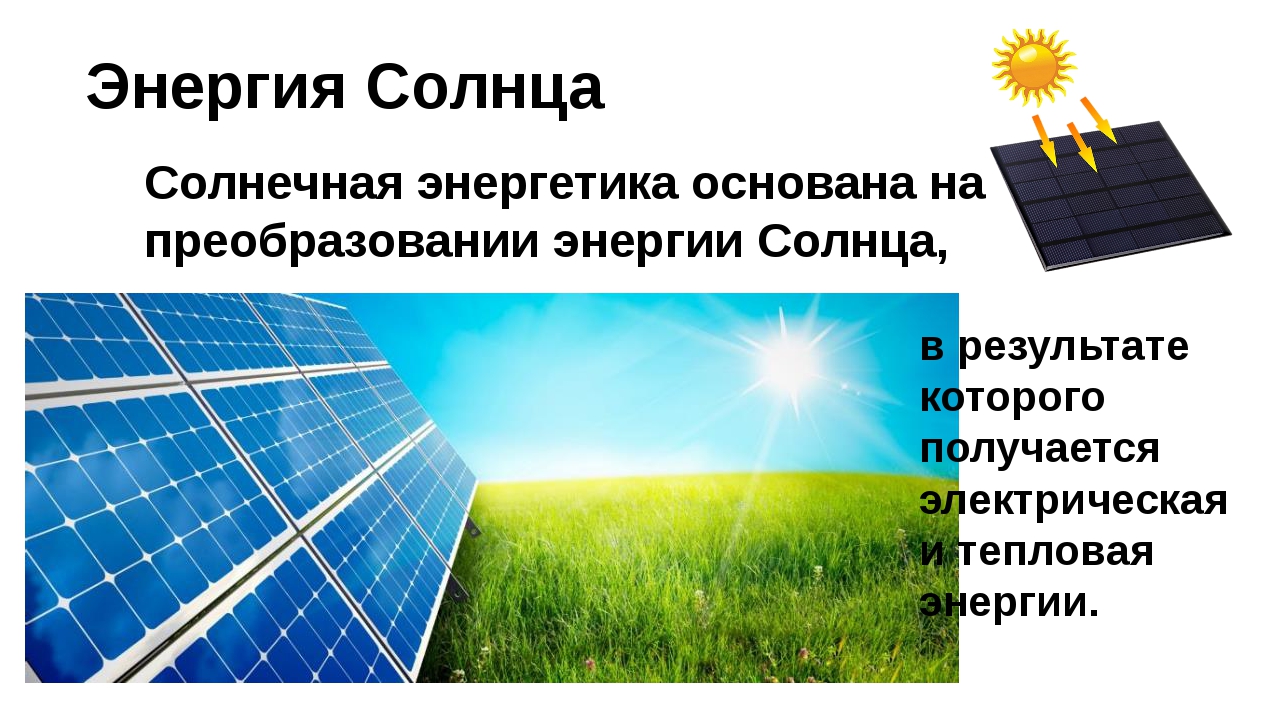
If the battery is required to produce maximum energy in the summer, then it should be oriented perpendicular to the average position of the Sun, which it occupies on the equinoxes in spring and autumn.
For the Moscow region, this is approximately 40-45 degrees to the horizon. If the maximum is needed in winter, then the panel should be placed in a more vertical position.
And one more thing - dust and dirt greatly reduce the performance of photocells. Photons through such a “dirty” barrier simply do not reach them, which means there is nothing to convert into electricity. The panels must be washed regularly or placed so that the dust is washed off by rain on its own.
Some solar panels have built-in lenses for concentrating radiation on the solar cell. In clear weather, this leads to an increase in efficiency. However, with heavy cloudiness, these lenses only bring harm.
If a conventional panel in such a situation continues to generate current, albeit in smaller volumes, then the lens model will stop working almost completely.
The sun should ideally illuminate a battery of photocells evenly. If one of its sections turns out to be darkened, then unilluminated solar cells turn into a parasitic load. Not only do they not generate energy in such a situation, but they also take it from working elements.
The panels must be installed so that there are no trees, buildings and other obstacles in the path of the sun's rays.