
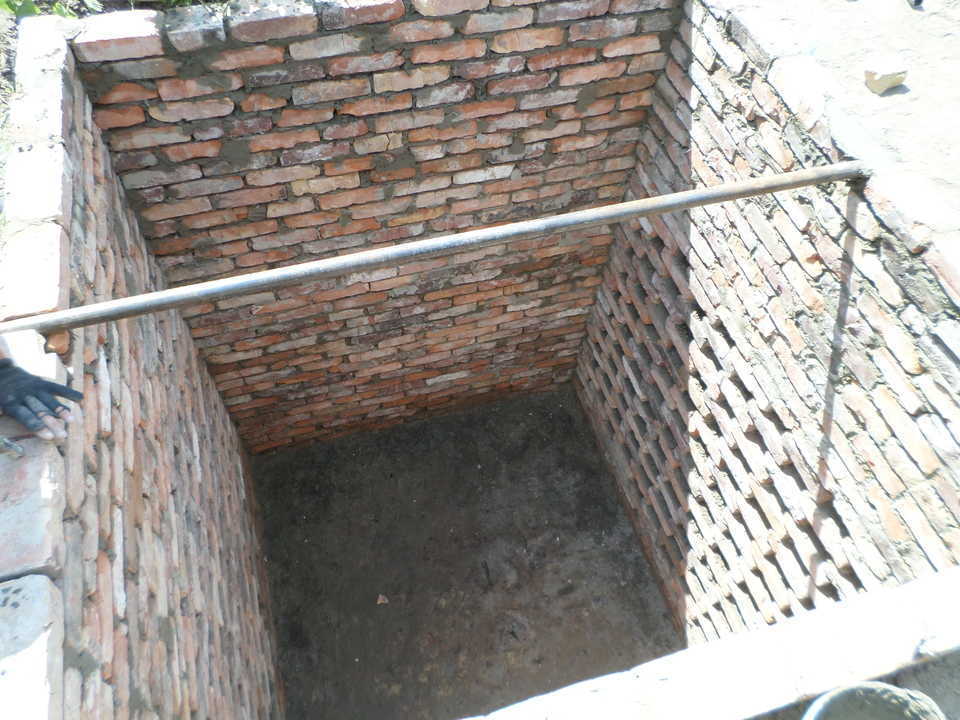
- The walls of the drain pit and its cover
- Types of structures
- Simple tank device
- Principles of design and preparation of sewage pits
- Eliminate bad odor
- Construction planning
- How to determine the volume of the drain pit?
- Where is the drain hole located?
- The choice of material for construction
- The choice of material for construction
- brick
- From car tires
- From monolithic reinforced concrete
- From concrete rings
- From metal and plastic containers
- Installation of an object from concrete rings
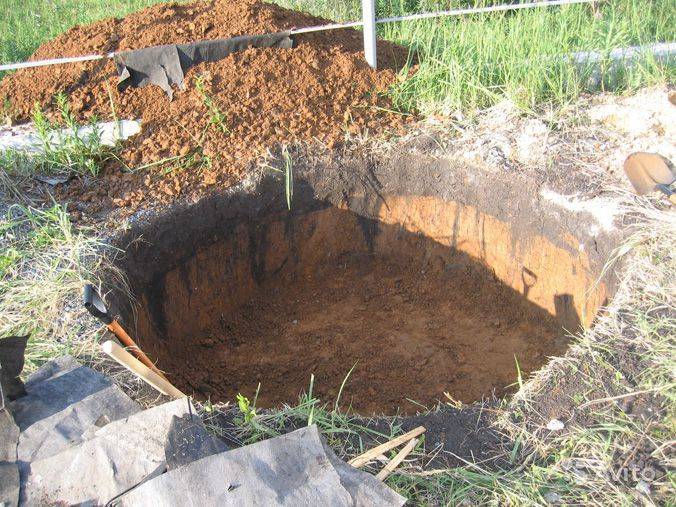
- Choosing a place and preparing a pit for a drain pit
- Characteristic features of a single-chamber design
The walls of the drain pit and its cover
From materials for wall decoration you can use:
- concrete solution. Formwork is pre-installed with inserted rods, and then the walls are poured. The thickness of the concrete layer must be at least 7 centimeters;
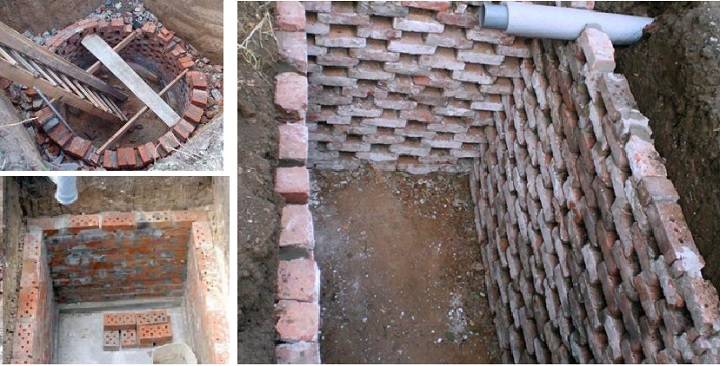
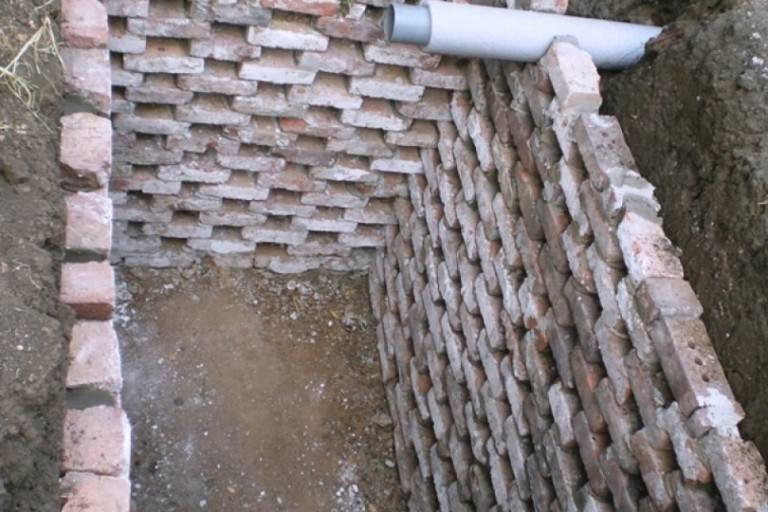
- Red brick. They lay out the walls from the bottom to the very top;
- reinforced concrete poles. They are placed on the cement mortar in a row. In order to avoid collapse, limiters are made on both sides of the masonry;
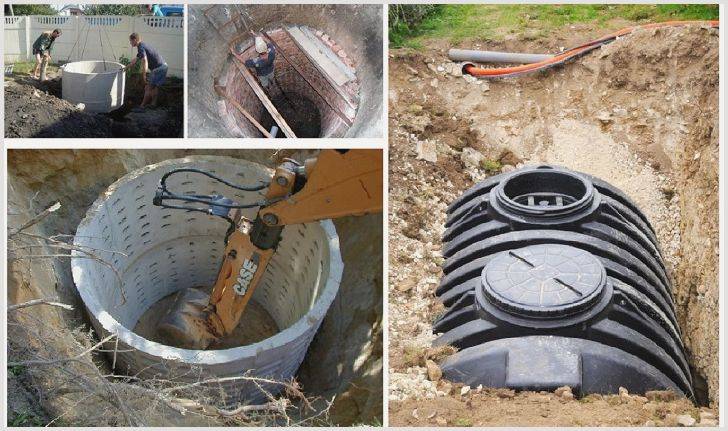
- concrete rings. A crane is required for their installation. The rings are placed on a concrete base, equipped at the bottom of the pit. The joints between the elements are coated with cement mortar;
- the simplest solution is a ready-made container (plastic as an option) placed in a pit. Before digging a drain hole, you need to know the parameters of the tank (purchased tank) so that they match its size.
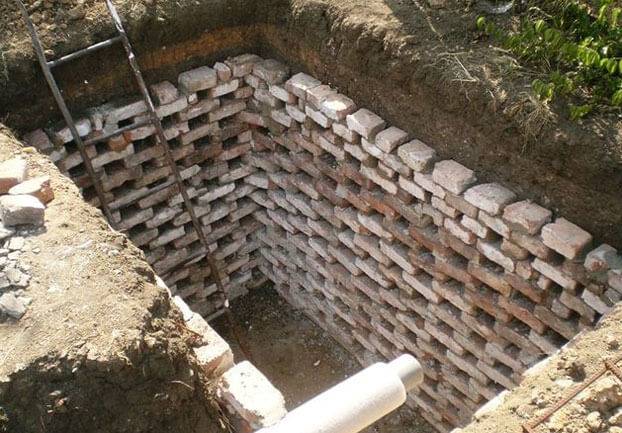
Types of structures
The safest, but costly, are airtight. This design has no bottom and is suitable only for certain conditions. The choice of this structure directly depends on the type of soil foundation.
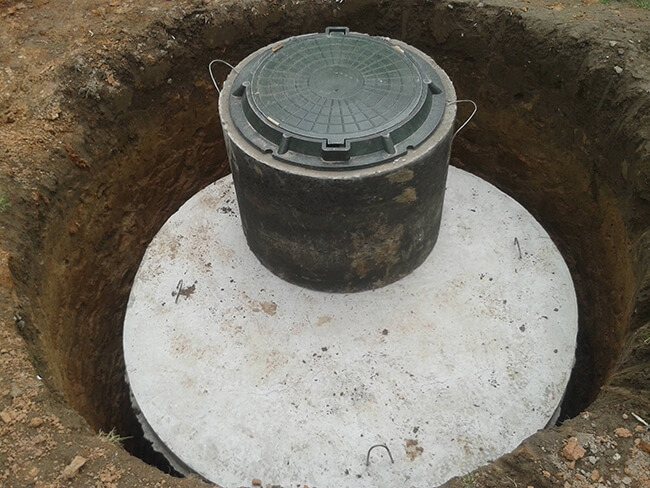
A more complex structure is considered to be concrete or brick. In turn, such a construction eliminates the possibility of sewage entering the ground. The volume of the sump will depend solely on the needs of the user.
Simple tank device
The operation of sealed tanks is possible with the use of specialized biological activators. They will help to eliminate unpleasant odors, and make the cleaning process much easier. In areas dominated by sandy soil, you can get by with the simplest option.
When constructing a structure without a bottom, a completely different technology is used. Instead of a concrete or brick bottom, ordinary crushed stone is used.
This design provides for the nuances associated with the amount of incoming water.
Principles of design and preparation of sewage pits
A carefully designed project and competent planning will help to avoid problems during the construction process in terms of existing rules and regulations.
First of all, attention should be paid to the most important points:
- Safe location in terms of sanitary requirements.
- The choice of the type of system depending on the specifics of the site and housing construction.
- Decide on the dimensions of the recess.
- Plan the production technology in advance.
- Prepare appropriate materials.
Each of the items in the above list has its own nuances, the implementation of which is very important for safe and reliable operation.
- The place where the structure will be located must necessarily be remote from fences, residential buildings, wells. From a reservoir with drinking water, for example, the distance is maintained at least 25 meters, and from the house - starting from 5 meters.
- With existing relief irregularities, placement in the lower part of the site should be avoided. Flooding during periods of heavy rains and snowmelt threatens to contaminate the soil and groundwater. Construction technology is selected from the characteristics of the soil in the surrounding area.
- Dimensions are primarily calculated taking into account the number of residents. For one person, a daily volume of 0.5-2.0 cubic meters is planned. m drains. The need to pay for each call of equipment, with the help of which the cesspool is pumped out after it is filled, requires one more rule to be followed - to make the volume of the structure a multiple of the capacity of the sewage machine.
- The task of diverting drains is solved using the technology of an eternal cesspool. The design feature of this method is the construction of two containers, interconnected by a special branch pipe under a certain slope. After filling the first tank, the liquid flows into the second. This technique allows you to significantly increase the area of \u200b\u200bsoil for water drainage, and only large fractions and feces will accumulate in the main pit.
- A do-it-yourself cesspool of a hermetic design is a recess with a concreted bottom.The main advantage of such a device is the complete isolation of sewage and the absence of any odors on the site and in the house itself. But a relative disadvantage is the rapid filling and frequent pumping out, especially in the presence of washing machines and dishwashers, intensive use of the bathroom and shower.
A careless approach to planning and performing installation work threatens with the following consequences:
- unpleasant "aroma" inside the building and on the site;
- freezing of water residues inside sewers;
- penetration of harmful substances into the soil.
Careful execution will create a favorable and comfortable environment for living and recreation. You only need to clean the cesspools on time and periodically monitor the state of the system.


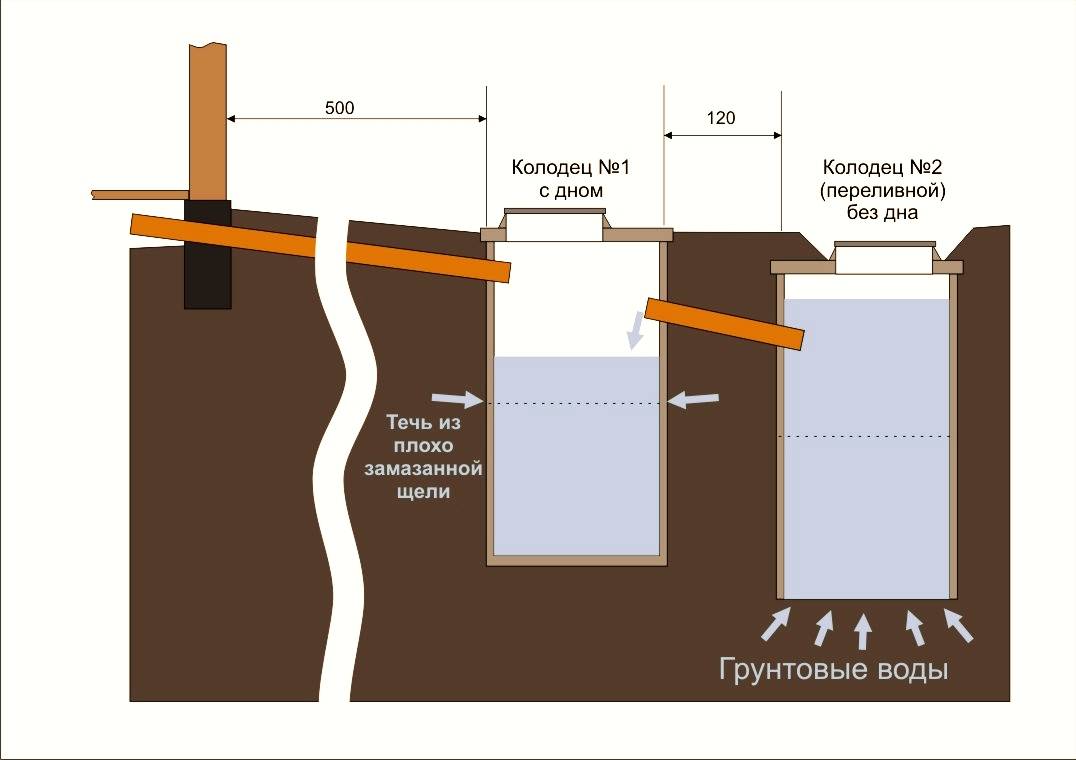




Let us consider in more detail the features of the construction of different types of such a sewer system.
Eliminate bad odor
The stench accompanies almost all street toilets and cesspools. If ventilation is connected, then the unpleasant odor spreads less over the site, but does not disappear. To combat this trouble, you must first clean the drain from silt, which is the main cause of stench, and then carry out preventive work.
-
Good reviews about microbiological waste tank cleaners. They not only effectively deal with the remnants of silt and solid parts, but also completely eliminate the smell. The option is not suitable for cleaning a pit with soapy or chlorinated wastewater;
- Chemical cleaning agents are versatile, they are able to eliminate odors in any conditions. But acids and alkaline compounds can damage the integrity of plastic and metal drums. Therefore, they are used exclusively in concrete sinks.
Related video:
Construction planning
Before you make a drain pit, you should draw up a construction plan. It is necessary to decide on the type of structure, choose the place of construction and determine the required volume of tanks.
How to determine the volume of the drain pit?
The main indicator on which the volume of the drain pit will depend is the intensity of use of a residential facility. It is clear that a larger pit is needed for a house than for a summer residence.
When determining the volume of the tank, the following factors should be taken into account:
- Availability of sewer services.
- The volume that sewage equipment can pump out at a time.
Where is the drain hole located?
Next, you should decide where and how to properly dig a drain hole? When choosing a suitable site for construction, it is necessary to evaluate the following factors:
- Soil water should lie deep enough on the site, since the minimum depth of the pit is two meters.
- If there is a source of drinking water nearby, then a pit should be placed at a distance of at least 30 meters from it.
- The cesspool cannot be placed on a slope.
- Provision should be made for the availability of free passages for servicing the pit.
- You can not have a hole next to the house and the fence of the neighboring area. The minimum distance to housing is five meters.
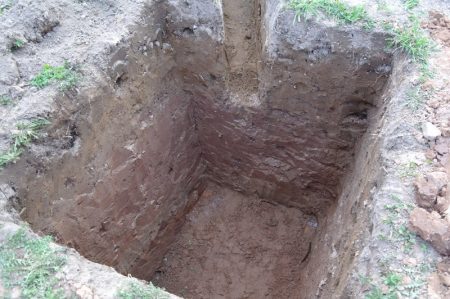
In a word, it is quite difficult to choose a place for construction, especially if the site is already equipped. However, you cannot deviate from the above rules.
The choice of material for construction
For the construction of a sealed pit, the following materials are used:
- Concrete solution. A formwork is being built into which the solution is poured.The thickness of the walls and the bottom should be at least 7 cm, it is advisable to reinforce with a steel mesh.
- Plastic containers. This is the least labor intensive option. A pit is being prepared, in which a finished plastic container is installed.
- concrete rings.
- Ceramic brick.
When choosing the last two options, you have to carry out additional measures to seal the seams. To do this, the brickwork (or the joints between the rings) is treated with mortar from the inside, the bottom of the pit is concreted.


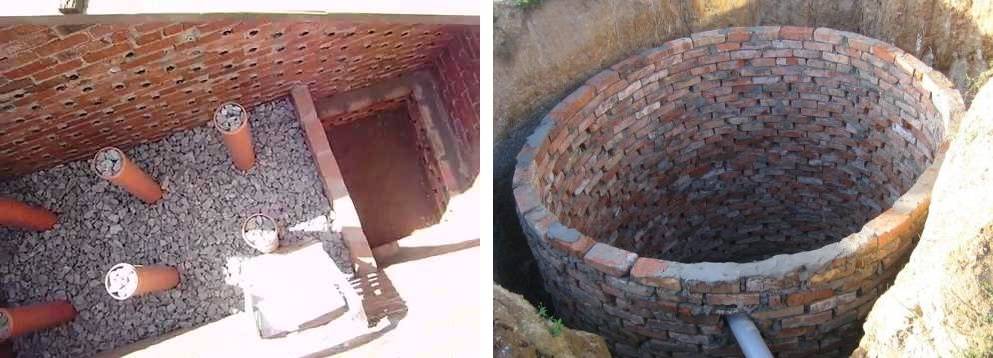
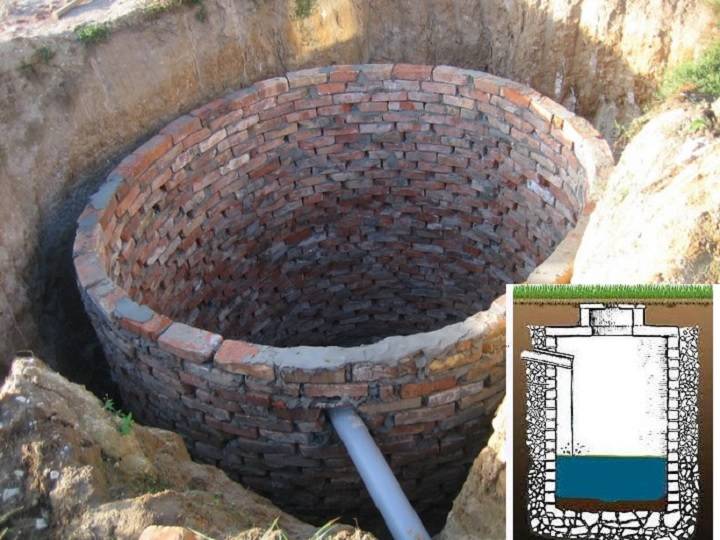
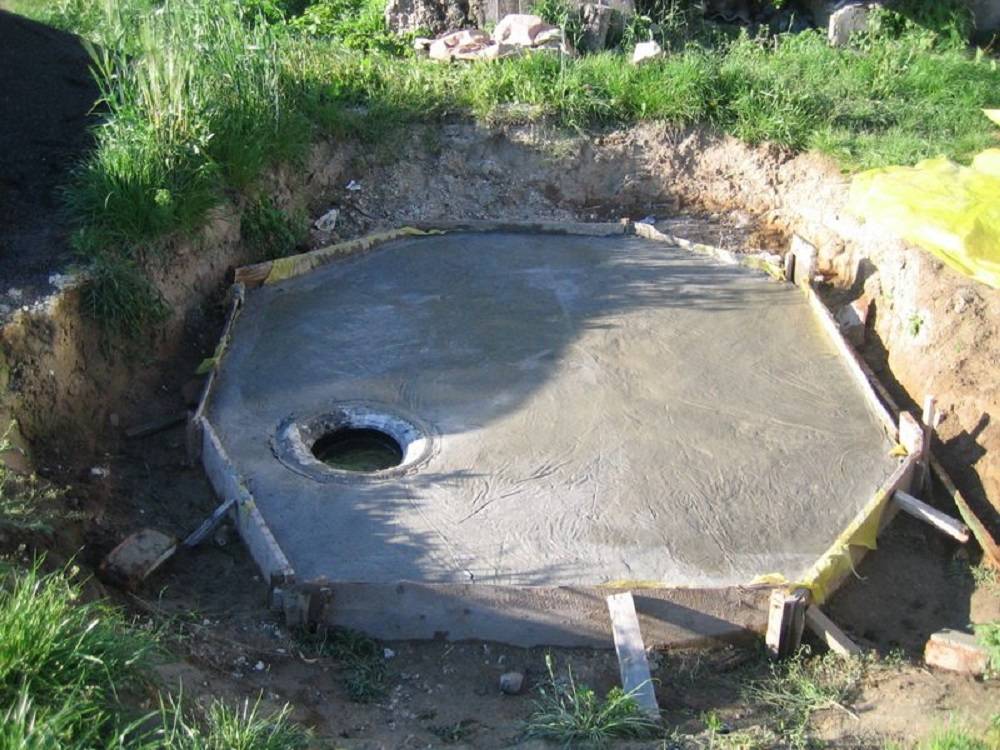
Additionally, from the inside, the walls are covered with a bitumen solution, and from the outside they are covered with a thick (20 cm) layer of greasy clay. And what is the best way to overlay the drain pit if a filtering version of the treatment plant is being built? There are no less options. Great for:
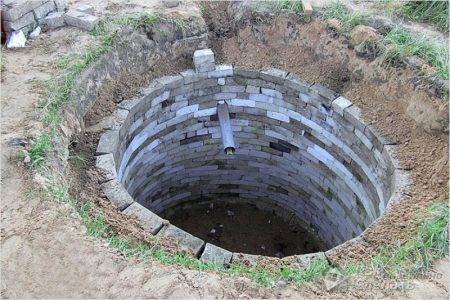
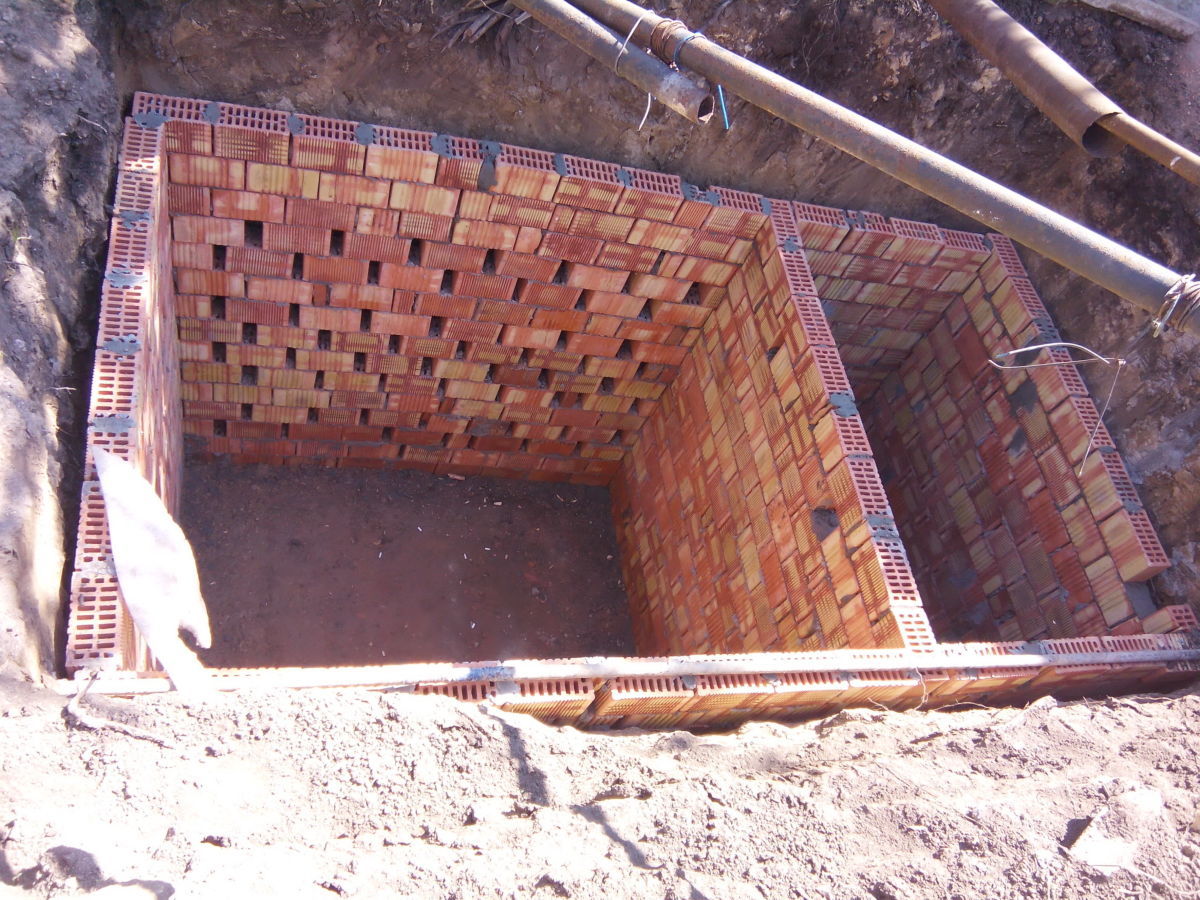
- Brick. The walls should be laid out so that between the rows there are five-centimeter gaps arranged in a checkerboard pattern.
- Reinforced concrete rings. Manufacturers specially produce rings for the construction of drainage wells, they are perforated. If it was not possible to buy such rings, holes in solid products can be made independently using a perforator.
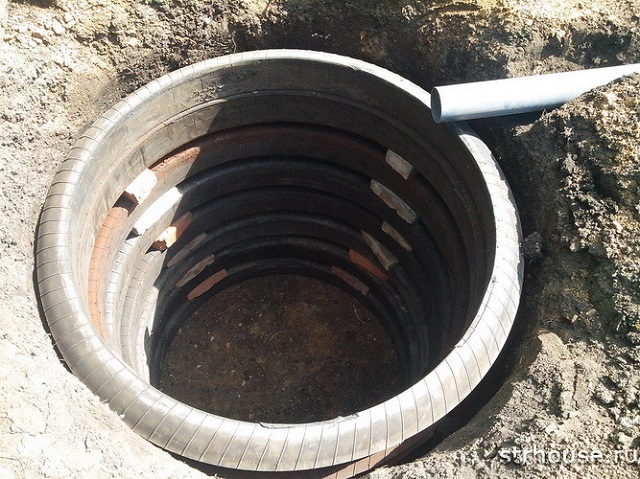
- Old car tires. From this improvised material, you can easily assemble a drainage well. Tires are stacked one above the other, having previously cut off the lower rim on each of them.
- Old plastic or metal barrels. For the construction of the pit, a barrel without a bottom is used, while a number of holes are made in its lower part for better water filtration.
The choice of material for construction
The filtration pit can be built from whole or broken bricks, gas silicate blocks or concrete rings.Also, the walls of the structure are made of concrete, they use capacious iron containers without a bottom or old car tires. In a word, any suitable materials will fit for arranging a leaky structure.
For the manufacture of drain collectors of the second type, solid concrete structures are used, as well as sealed containers made of metal and plastic. In addition, it is possible to build a pit in the traditional way - from bricks or reinforced concrete rings, concreted its bottom, and ensured the watertightness of the walls.
brick
Brick pit absorbing type
A waste tank built of brick is one of the most inexpensive and simple options, especially if you need to build a pit without pumping. Brick allows you to make the walls solid or with gaps that increase the filtration capacity of the structure. The advantages of this design include the possibility of building a pit of any size and configuration. Brick absorbent wells are not without the disadvantages inherent in any leaky systems - silting and a negative impact on the environment. In addition, masonry brick under aggressive operating conditions quickly collapses, which leads to a short service life of filtration systems - about 20 years.
From car tires
Worn truck tires are a cheap and durable material for equipping a sewage tank without pumping
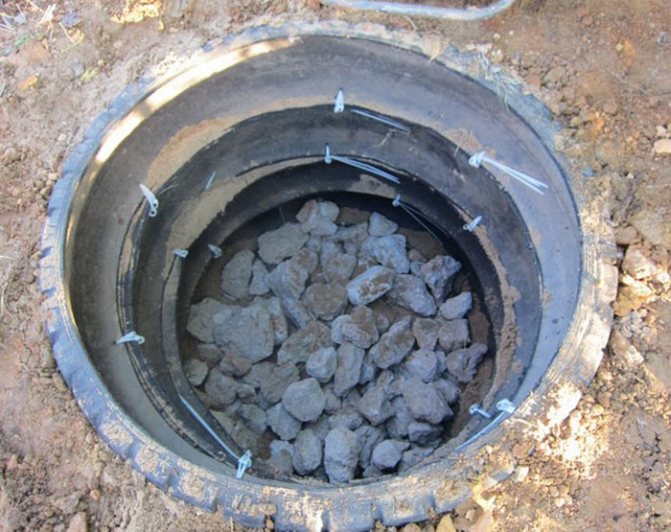
It is possible to build a drainage system for the bathroom and toilet of a country house at a minimal cost, using car tires as a building material for an absorbent cesspool. To do this, it is enough to dig a pit of sufficient size and equip a filter layer of crushed stone at its bottom.Tires installed one on top of the other form a durable structure that prevents shedding of the walls of the structure.
As in the previous version, the negative aspects include a high probability of environmental pollution with wastewater and tire decomposition products, rapid silting and a decrease in the efficiency of the system.
From monolithic reinforced concrete
A concrete tank is one of the strongest and most durable sewer structures.
A cesspool of this type is a structure with concrete walls and a bottom constructed by pouring concrete mixture into an installed crate. Despite the fact that such a container is considered the most reliable and durable, high labor costs do not allow us to call this design the best. Currently, this method of construction is being crowded out by ready-made sets of reinforced concrete rings and covers.
From concrete rings
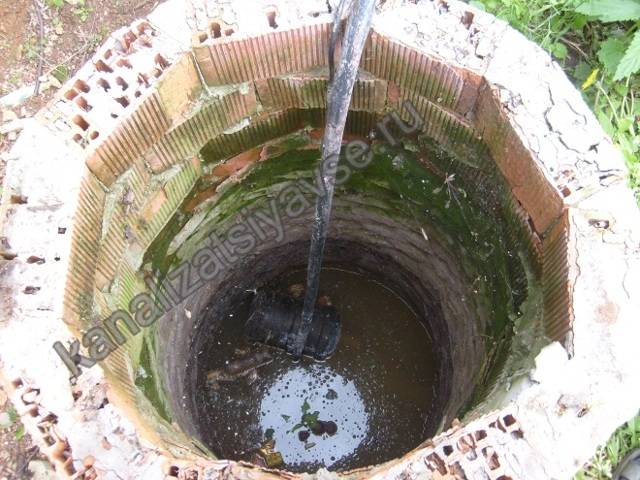
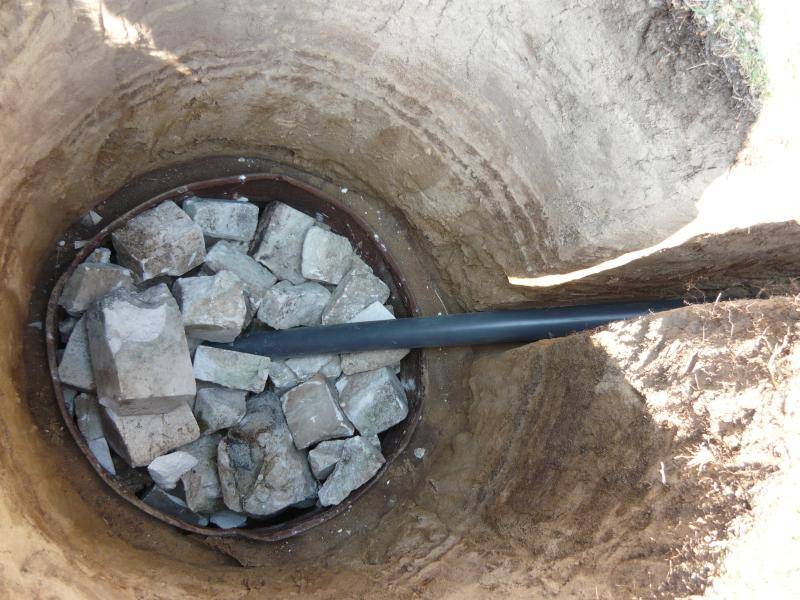
Depending on the tightness requirements, concrete rings can have solid or perforated walls.
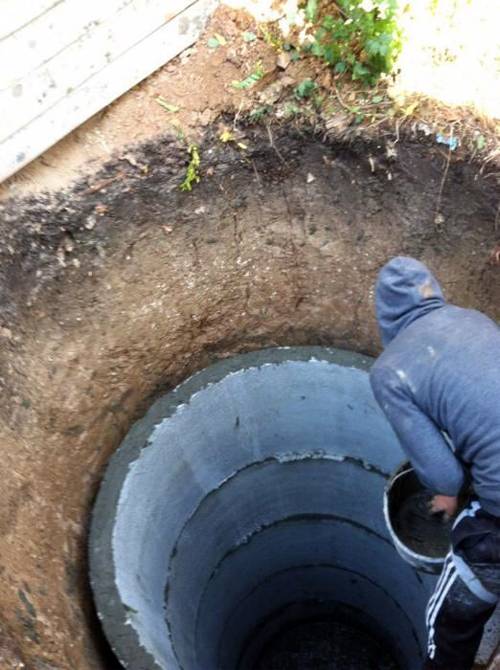
The arrangement of a cesspool from cast concrete rings can only be partly attributed to inexpensive options. This is due to the fact that building materials will have to be not only bought, but also hire equipment for loading and transporting to the site. In addition, the installation of heavy reinforced concrete products will also require the use of lifting mechanisms (further we will tell you how, if you wish and have free time, you can get by with just a shovel). Nevertheless, it is this option that is the simplest and most durable way to equip both absorbent cesspools and hermetic structures.Reinforced concrete rings with perforated walls are currently being produced, which are ideal for the construction of waste collectors without pumping.





From metal and plastic containers
Even from an old metal barrel, you can build a filtration pit, which will ensure the efficiency of the sewerage of a country house
The easiest way to make a sewer pit is to bury a plastic or metal container of a suitable volume at a depth. Moreover, this method allows you to get both a sealed structure and an absorbent system. The difference between the second option and the first one is the absence of the bottom of the tank and the presence of perforations in the walls. In addition, in the latter case, you will have to additionally prepare the bottom of the pit by making a crushed stone filter pad.
Installation of an object from concrete rings
Since concrete rings are the most common option for building a cesspool, it makes sense to consider it in detail.
Here is a general scheme for the installation work:
- Run markup.
- Dig a pit.
- Install rings.
- Bring a sewer pipe to the object.
- Make a hole for the pipe and insert it into the container.
- Seal all connections.
- Apply a layer of waterproofing material.
- Lay a filter of sand and gravel on the bottom of the structure.
- Backfill the pit.
- Install top cover with cover.
- Fill the floor with soil or decorate it.
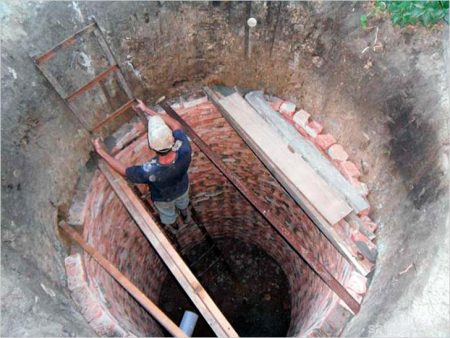
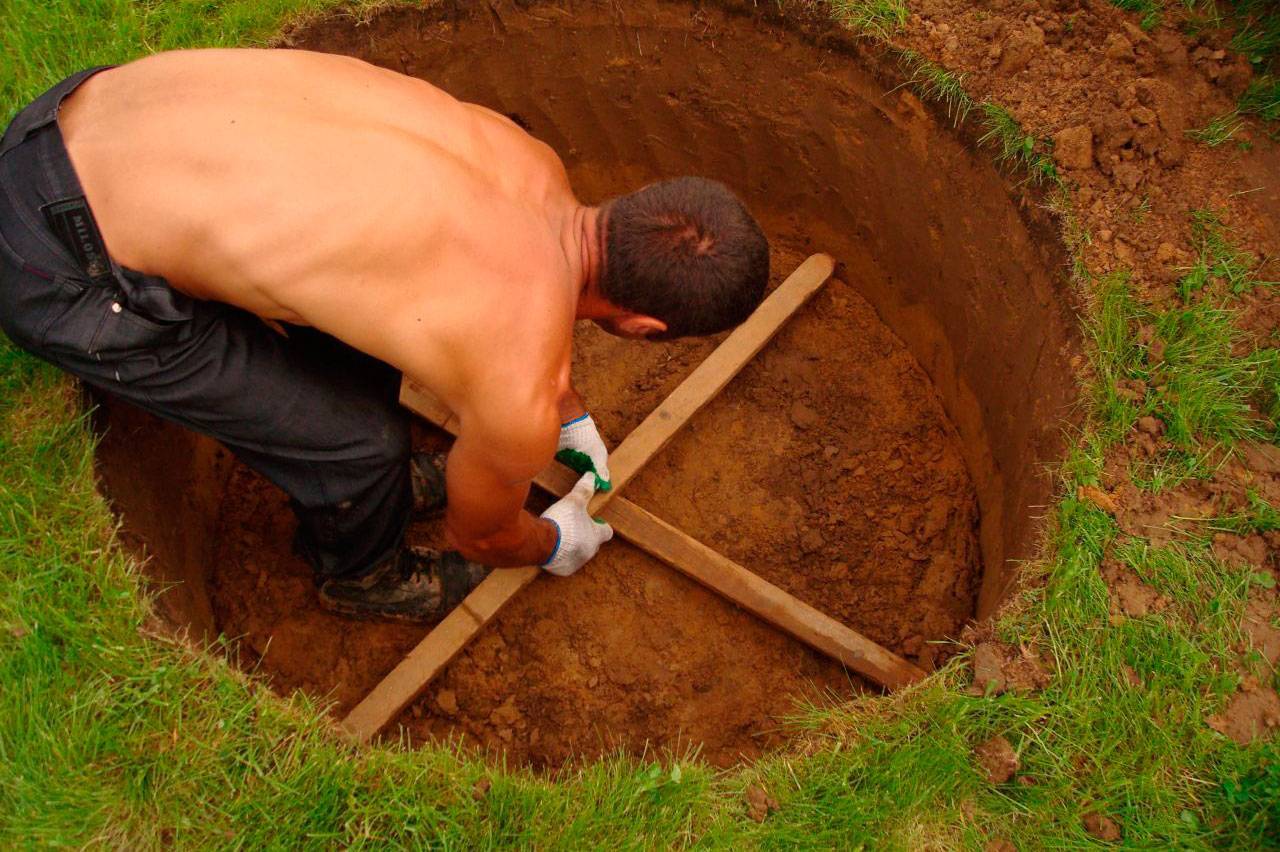
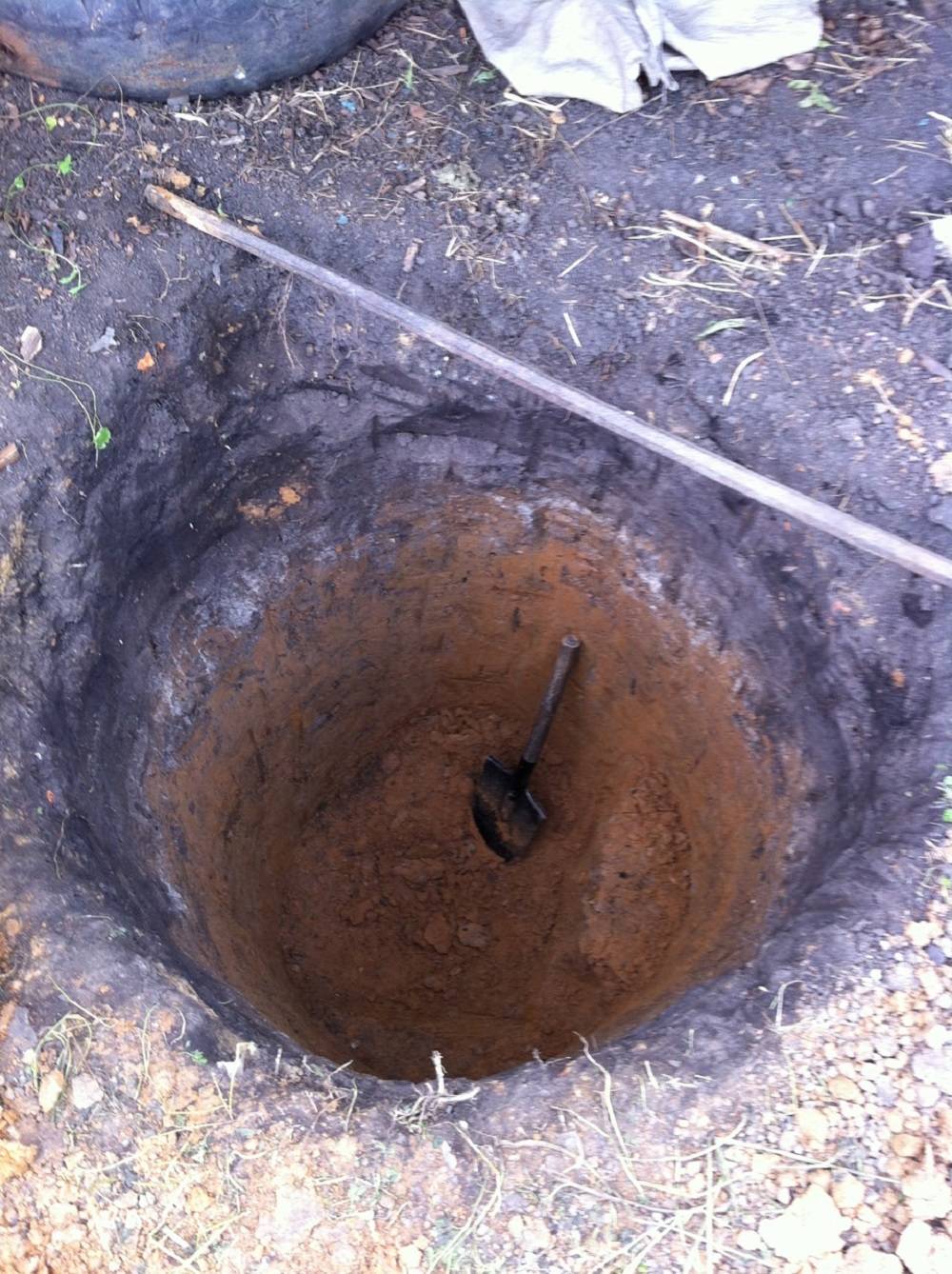
Under a small hole, a pit can also be dug manually. You need a bayonet shovel to dig, a bucket on a rope to take out the soil, a shovel to pour it into the bucket, and a partner on top to pull this bucket out. The concrete ring is placed on the ground, and they are digging inside.
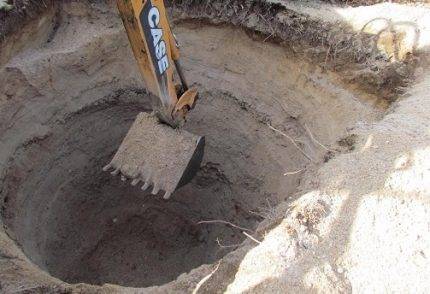
If a large pit is needed for a cesspool without a bottom, it makes sense to rent an excavator so that the work goes faster
As a result, the ring gradually lowers, preventing the collapse of the walls of the pit. For a large cesspool, it is still better to spend money on renting an excavator. The speed of work will increase significantly. Here you can also first put the ring on the ground, and then start work. You will need an excavator with the appropriate bucket size and an experienced operator.
The trench for the sewer pipe should have a slight slope, 2 - 3 cm per linear meter. If freezing of the soil in winter is typical for this area, then the pipe above this mark must be insulated.
A hole for the pipe is punched in a suitable place after it is laid. If you make such a hole in advance, you can simply not guess the height of the pipe entry.
The concrete rings at the bottom of the cesspool pit should be placed very carefully with a crane to avoid damaging them.
The joints of concrete rings, as well as the pipe entry point, are treated with a solution. Then a layer of waterproofing material should be applied. Inexpensive coating insulation will do.
This step is not considered mandatory if all joints are securely sealed. However, the waterproofing layer will protect the structure from damage, and this will significantly increase its service life.

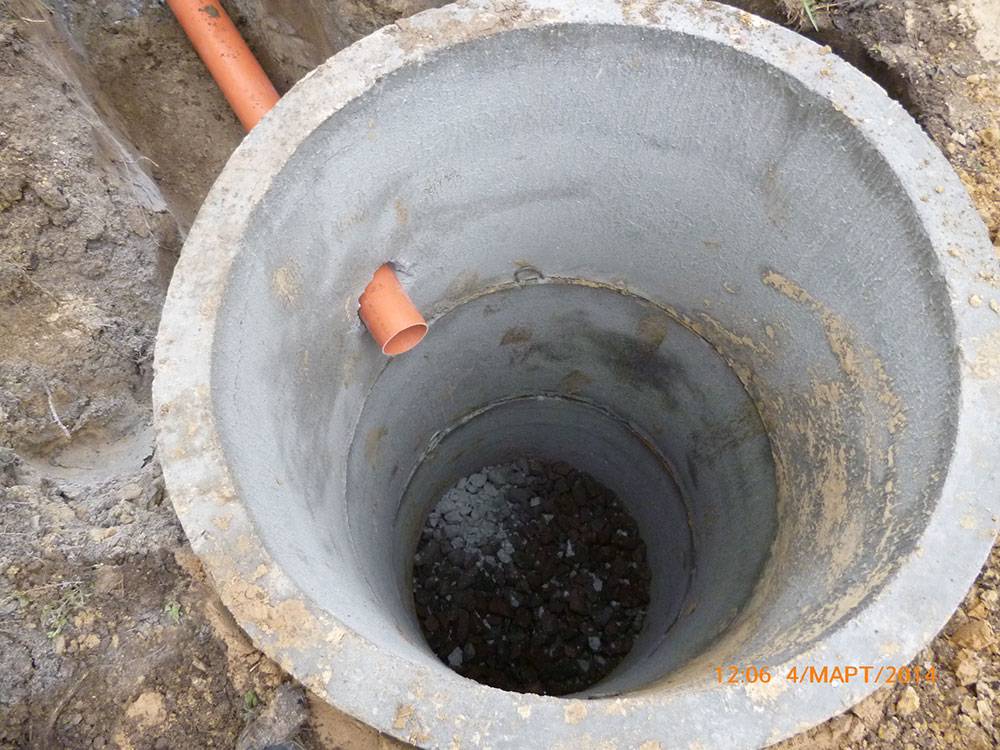

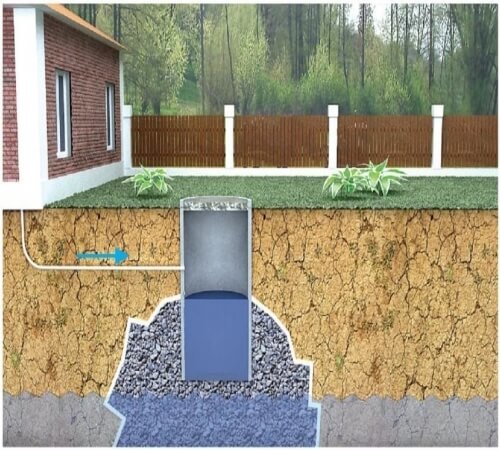



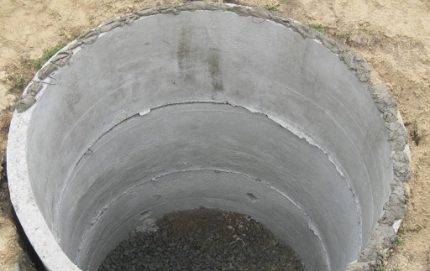
The joints between the concrete rings of the cesspool are fastened with mortar, then all joints are carefully covered with a layer of waterproofing material
The bottom filter is formed from river sand and gravel. You can also use crushed stone of suitable fractions. First, sand is covered with a layer of about 30 - 35 cm, then - two layers of gravel or crushed stone of approximately the same thickness.
Small particles should be at the bottom, and large ones at the top. Now you need to install the top cover. Usually, a ready-made concrete slab of a suitable size and configuration is taken for this.
There must be a hole in the ceiling large enough to allow not only to lower the suction hose, but also to send a person to inspect the condition of the container after it has been cleaned. This hole is covered with a lid so that extraneous odors do not disturb others.
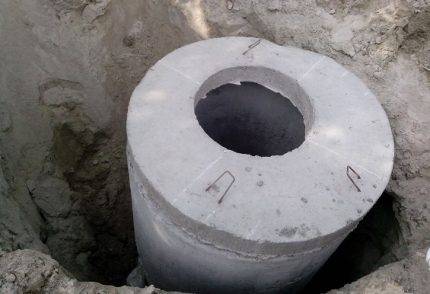
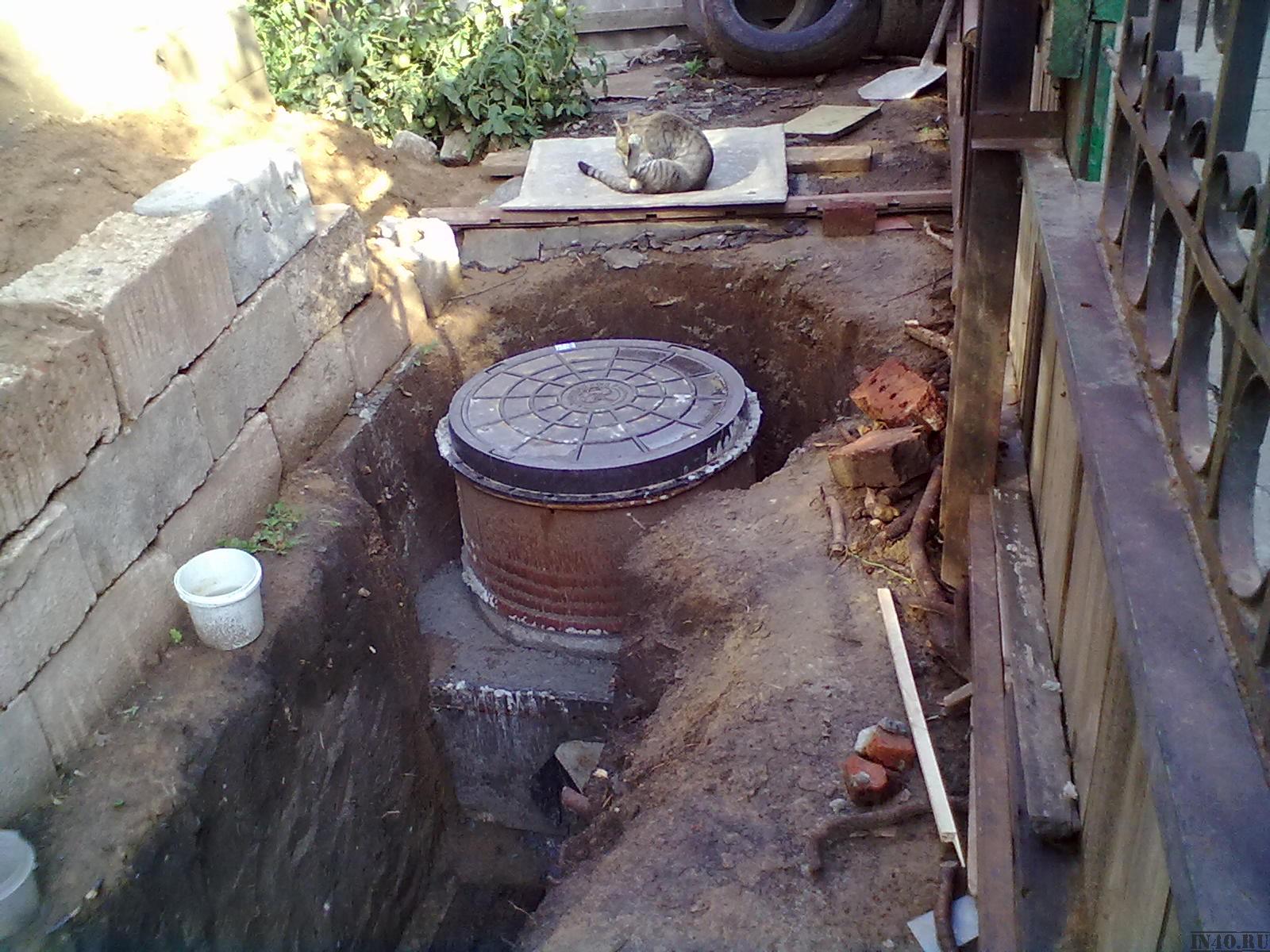
A concrete floor with a hole for the cover is the best option for installing a cesspool made of concrete rings. Such structures are also used in the construction of sewers from other materials.
Some owners prefer to make a double lid. It reliably protects both from smells and from freezing of drains in the winter. A layer of soil is usually applied on top of the floor so as not to spoil the landscape.
The lid, of course, must be left free, it should be 20–30 cm above ground level. Now you just need to monitor the level of drains in the tank and remove them in a timely manner.
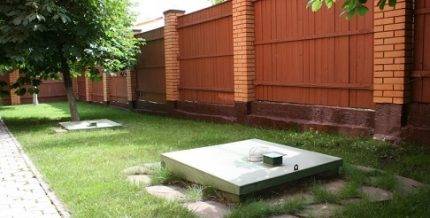
The double lid above the cesspool tank without a bottom has enhanced heat-insulating properties and reliably cuts off unpleasant odors
If everything is calculated correctly, then cleaning is needed only a couple of times a year. After the cesspool is cleared, it is not possible to put down a person in overalls. His task is to inspect the walls of the structure, check their integrity.
Periodically, the bottom filter is washed or completely replaced. All work inside the cesspool should be done only in the presence of a partner, who is upstairs for insurance.
Choosing a place and preparing a pit for a drain pit
When arranging a drain pit, it is very important to choose the right place for its arrangement. To reduce the risk of contamination of groundwater and the well or well existing on the site, this structure should be located at least 50 m from a source of drinking water or a reservoir
From fruit trees, the drain pit should be at least 15 m away. The distance to the house should be at least 7 m. In addition, when forming a single-chamber septic tank, it must be taken into account that a sewage machine must drive up to it freely, otherwise it will be difficult to use this collector well. Among other things, it must be borne in mind that it is advisable to equip a structure with a natural waste disposal system only in places where the level of groundwater is low, since otherwise, the pit will quickly fill up after heavy rainfall.
In addition, it should be borne in mind that on clay soil there is a high probability that polluted effluents will not go into the soil from a drain pit that does not have a sealed bottom. In addition, if the soil is heavy, it is best to dig a deeper hole for arranging an autonomous sewer. On light soils, where water will quickly be absorbed, you can equip a small cesspool.


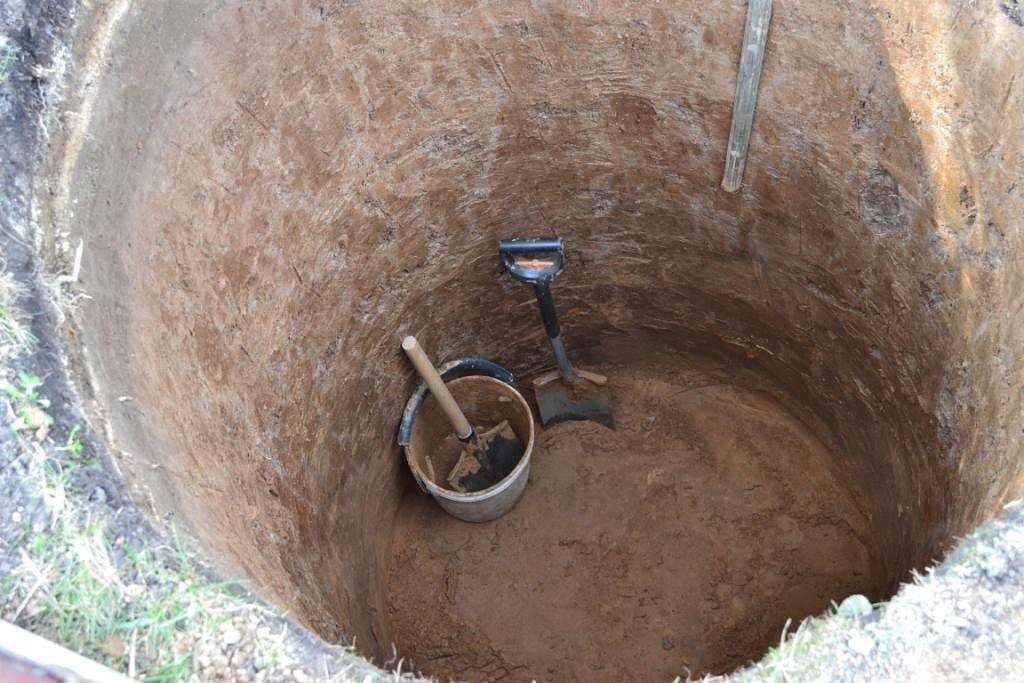

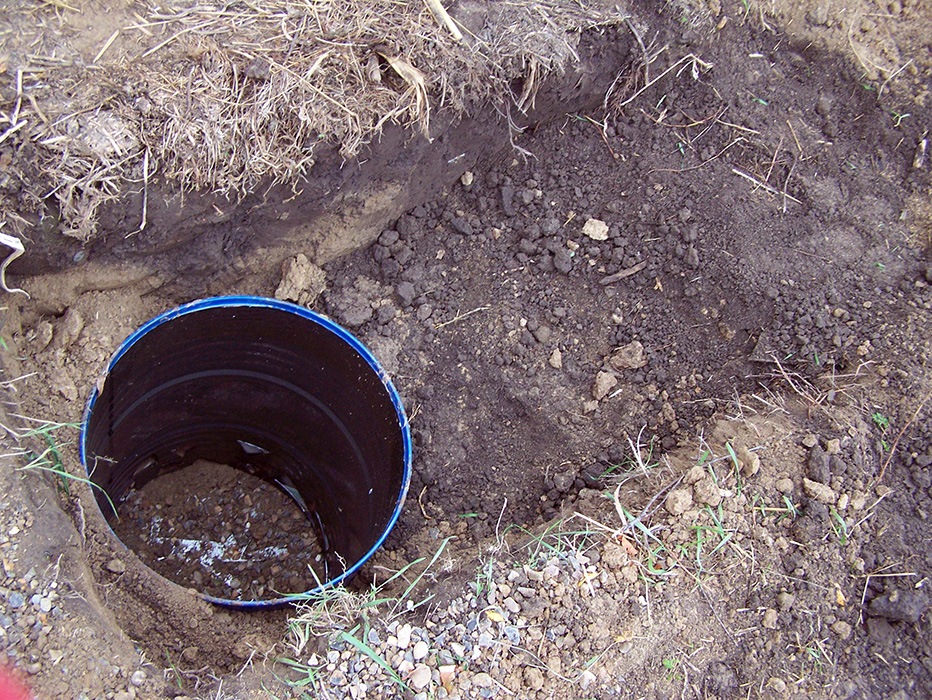
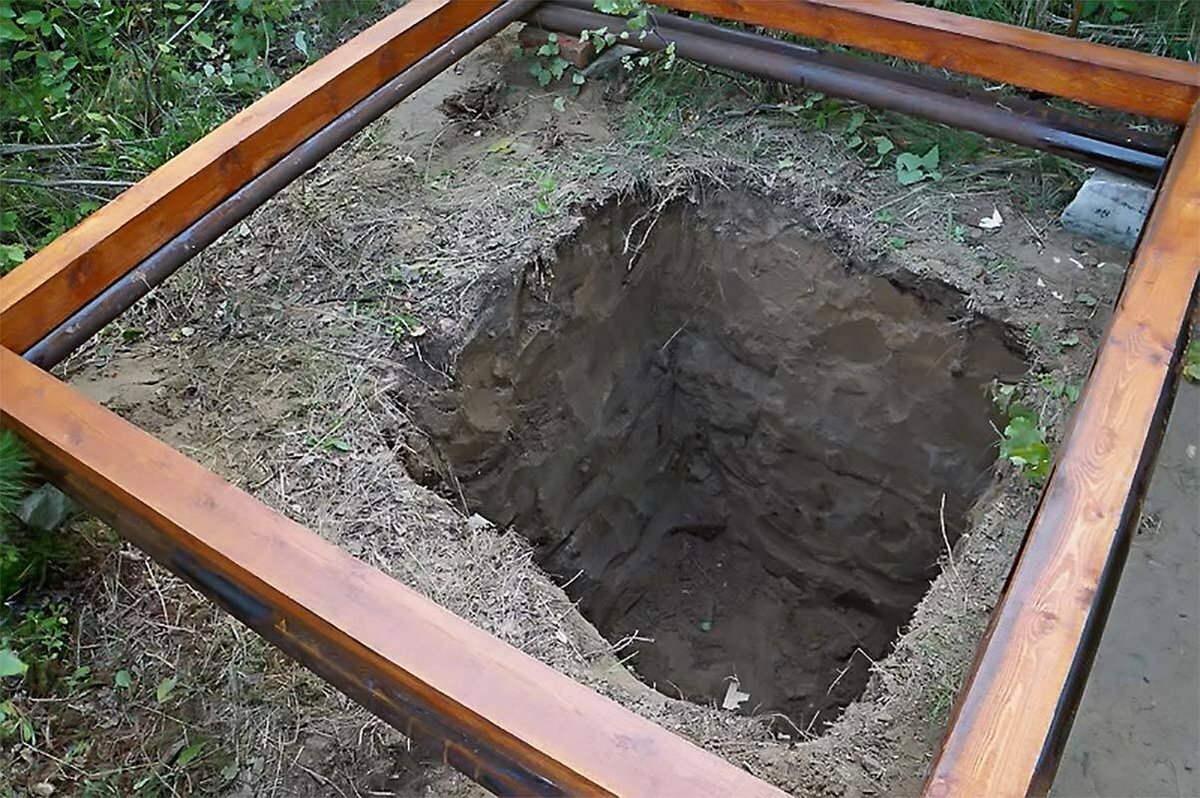

After choosing a suitable place on the site, you can proceed to the direct digging of the pit. An excavator can be used to facilitate this process. If there is no entrance for such a large vehicle, you can carry out the work yourself. Using a shovel, you can make a foundation pit cheaply, but you will have to make some effort.The pit should be 80 cm deeper and larger than required to equip the drain pit of the required size.
At the bottom of the pit, a 10 cm layer of sand should be covered. It should be carefully tamped. After that, it is necessary to fill in at least 50 cm of gravel and brick battle. Be sure to tamp this layer. After that, you can begin to form a drain pit with a natural filtration system. If it is planned to carry out a sealed septic tank, 20 cm of gravel is laid on the bottom. A reinforcing mesh is laid on top of this layer. After that, you can start pouring the concrete base. Considering that in this case a lot of cement-sand mixture is required, it is better to use a concrete mixer for its preparation.
Characteristic features of a single-chamber design
The features of the operation shown in the figure, the design of a single-chamber cesspool of a drainage type, have their positive and negative sides. The first ones include:
- simple installation and low selling price;
- a large selection of materials, the tank can be made of barrels, concrete rings, etc.;
- this type of do-it-yourself cesspool will function without regular pumping, that is, there is no need to call vacuum trucks, at the same time, if it is silted up, it is easy to clean it;
- small volume of the absorbing reservoir.
As for the disadvantages, there are only two of them:
- with a significant amount of wastewater, such sewage may not be able to cope with the processing, that is, the earth will not have time to absorb them;
- sewage is not cleaned well enough, which leads to contamination of the surrounding soil, resulting in an unpleasant odor.
Related video:
Note that the last drawback is easy to deal with if you complicate the design a little, namely, make a two-chamber cesspool.



