- What fuel is better to choose in order to heat the garage
- Design features
- Tips & Tricks
- Types of air heating
- Advantages and disadvantages of air heating
- Principle of operation
- Air heating system design
- Principle of operation
- Installation instructions
- House types
- Pros and cons of air heating in the house
- Scheme and installation device
- How to warm the house with air?
- Equipment, components and materials
What fuel is better to choose in order to heat the garage
Before you start installing indoor heating for cars with your own hands, you must first decide what type of fuel will be used. After all, it directly depends on which heating unit is worth buying.
So, which unit, and on what fuel, can be used for a home-made installation in the garage:
- Potbelly stove that runs on solid fuel;
- A device that runs on liquid fuel;
- Gas-fired boiler;
- A device that generates heat through electricity.
The easiest option for home-made installation of heating equipment is the installation of units that run on solid fuel (wood).These can be various potbelly stoves, as well as the so-called Buleryan stoves, which can produce long-term burning thanks to firewood and not only, and which have convectors. Potbelly stoves and other heating units quickly warm up the garage, but the downside is that after turning off or burning out the combustion products in the stove, the garage cools down just as quickly.
How to make heating in a solid fuel garage better, and can this be realized? Can. To do this, you just need to also connect water heating to a potbelly stove or to a Buleryan wood-burning stove. In order to make garage heating with your own hands, you need to install a wood-burning potbelly stove and other heating appliances around the entire perimeter of the garage. The expansion tank must be installed at the highest point of the garage.
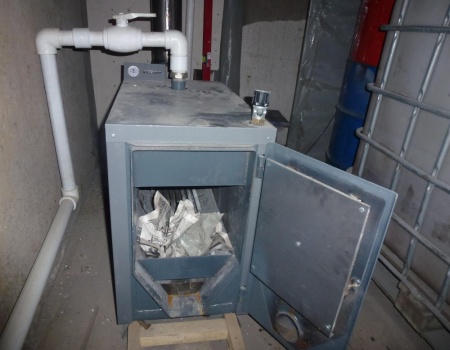 Rice. 2 Garage heating system
In order to keep the heat from the potbelly stove longer, you can purchase a hydraulic accumulator, a volumetric tank, which is perfectly thermally insulated. Garage owners often rarely use the heating system, therefore, so that the water in the heating rooms does not freeze (and the potbelly stove works well), it is better to choose antifreeze as a coolant. Do-it-yourself install a potbelly stove or another wood-burning stove (or other type of fuel) is possible, thereby saving your money.
Benefits of a potbelly stove:
- The potbelly stove quickly heats up the room, but at the same time, after the firewood burns out, the potbelly stove cools down quickly. This is due to the fact that the potbelly stove is made of metal. In order for the potbelly stove not to cool quickly, the potbelly stove must be overlaid with bricks.
- Potbelly stove can be installed in the garage with your own hands. You can even make a diagram, and then the potbelly stove itself, too.
- Potbelly stove requires a long firebox. Therefore, in order to make the potbelly stove a more economical unit, you can create a so-called screen between the stove and the brick - then the firewood will burn more slowly.
- A potbelly stove is a fairly economical heating system, so everyone can afford to install it in a garage.
Design features
In order for the gravity system to work effectively, the following requirements must be met:
- any non-volatile heat generator with outlet pipes with a diameter of 40-50 mm acts as a heat source;
- at the outlet of the boiler or stove with a water circuit, an accelerating riser is immediately mounted - a vertical pipe through which the heated coolant rises;
- the riser ends with an open-type expansion tank installed in the attic or under the ceiling of the upper floor (depending on the type of wiring and design of a private house);
- tank capacity - 10% of the volume of the coolant;
- under gravity, it is desirable to choose heating devices with large dimensions of internal channels - cast iron, aluminum, bimetallic;
- for better heat transfer, heating radiators are connected according to a versatile scheme - lower or diagonal;
- on radiator connections, special full-bore valves with thermal heads (supply) and balancing valves (return) are installed;
- it is better to equip batteries with manual air vents - Mayevsky cranes;
- replenishment of the heating network is organized at the lowest point - near the boiler;
- all horizontal sections of pipes are laid with slopes, the minimum is 2 mm per linear meter, the average is 5 mm / 1 m.
On the left in the photo - the heat carrier supply riser from the floor-standing boiler with a pump on the bypass, on the right - the connection of the return line
Gravity heating systems are made open, operated at atmospheric pressure. But will gravity flow work in a closed circuit with a membrane tank? We answer: yes, natural circulation will continue, but the speed of the coolant will decrease, the efficiency will drop.
It is not difficult to substantiate the answer, it is enough to mention the change in the physical properties of liquids under excess pressure. With a pressure in the system of 1.5 bar, the boiling point of water will shift to 110 ° C, its density will also increase. The circulation will slow down due to the small difference in the masses of the hot and cooled stream.
Simplified gravity flow diagrams with an open and membrane expansion tank
Tips & Tricks
In order for the air heating system to serve reliably for a long time, it must be pre-calculated and installed according to the project.
If the owners themselves are involved in the installation, they should consider the following recommendations.
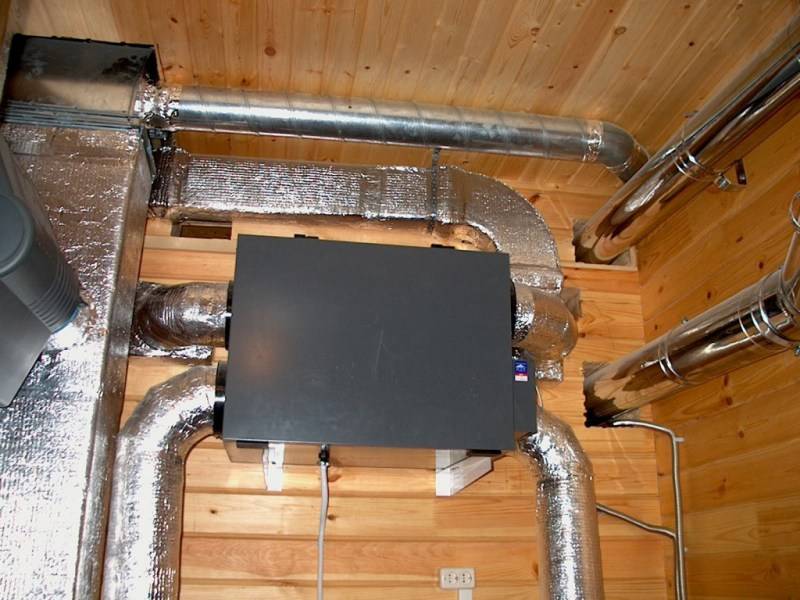
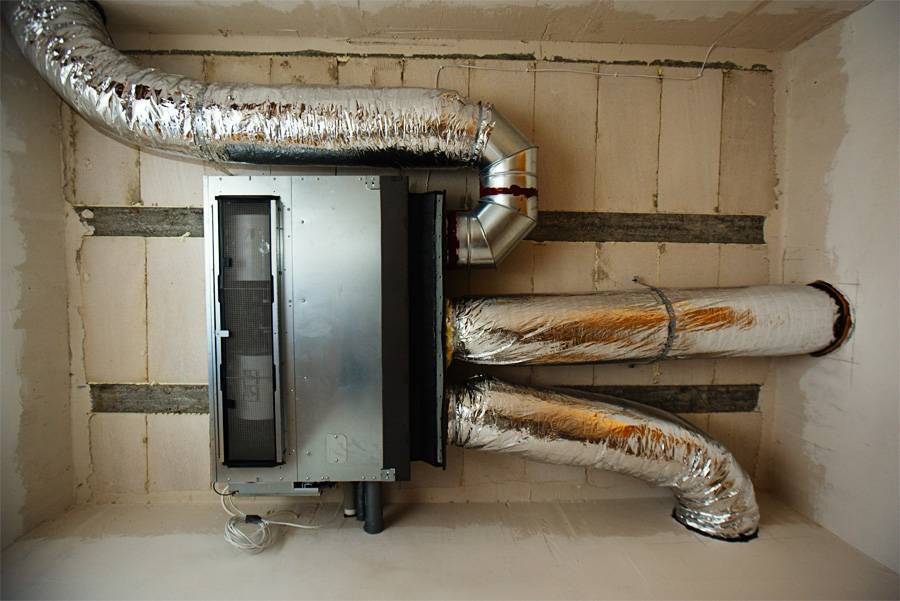
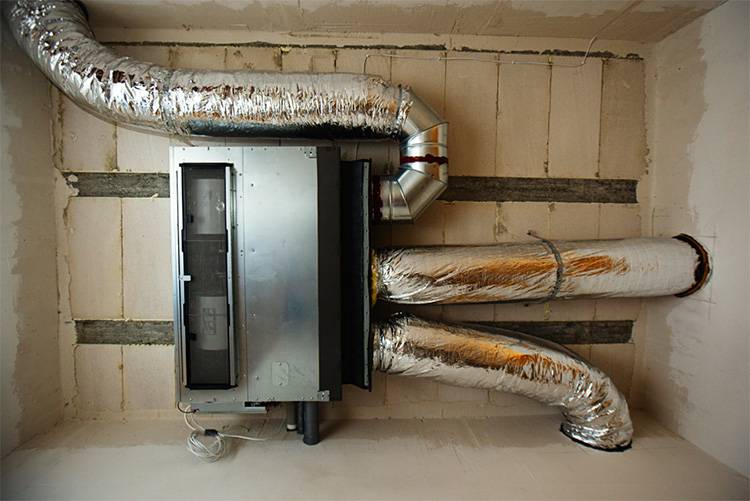
It is desirable to fix and seal the joints of the pipeline with aluminum tape. It is durable and provides reliable reinforcement to the coating. Pipes are usually attached to the ceiling with clamps.
Air outlets must be placed as low as possible to the floor
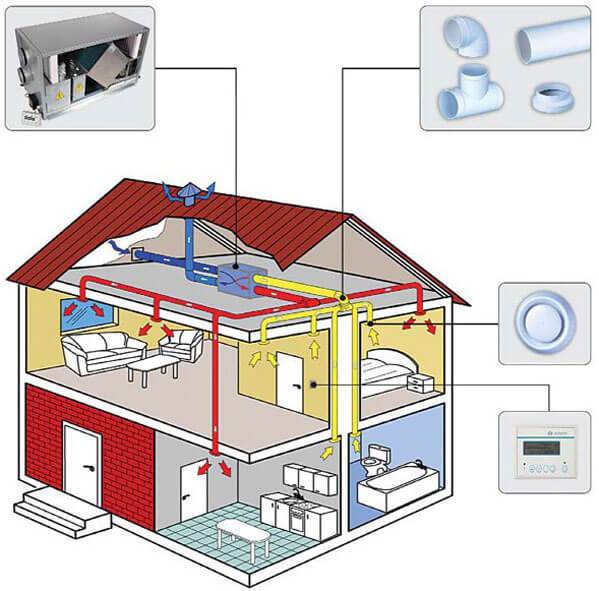
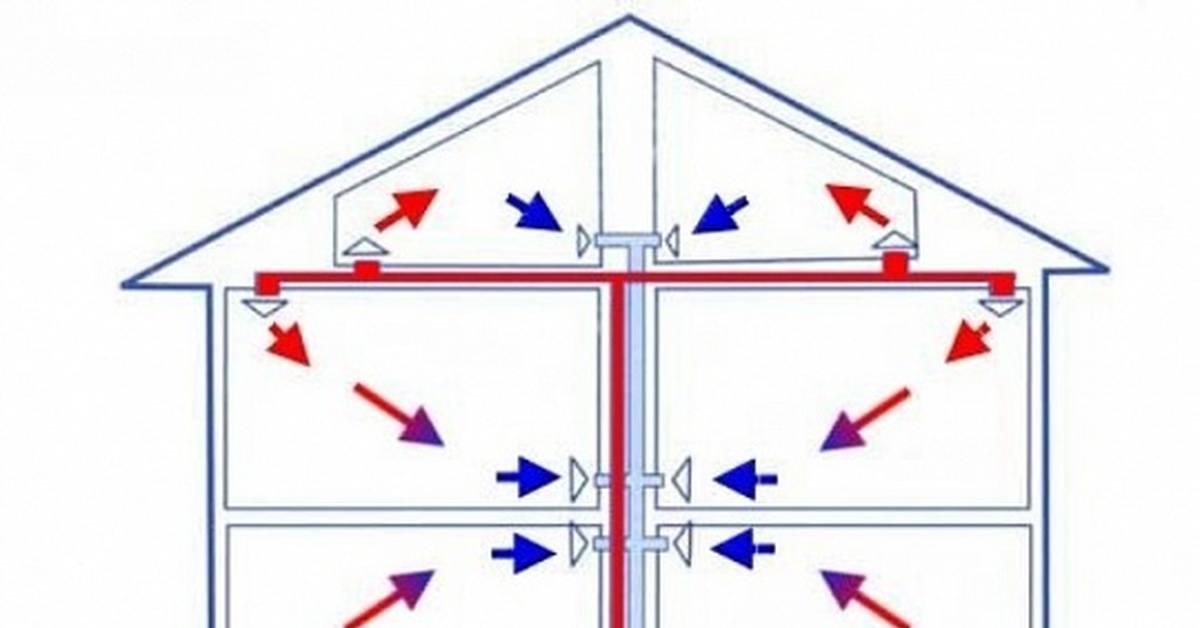
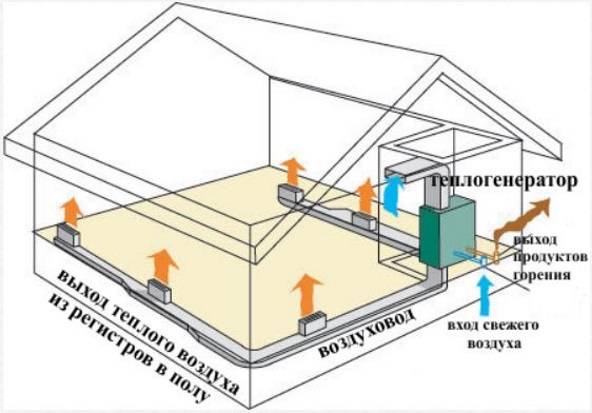

If this is not done, then it will be cold.
If the building has air conditioning, then it is important to insulate all the components of its structure, otherwise condensation and evaporation may form.
Intake sleeves must be mounted with a minimum number of bends and elbows, this will help to avoid heat loss.
To clean the air, you can additionally install filters, but they will increase the costs of the entire system. Therefore, first you need to calculate everything and determine their benefits.
Tips for installing air heating in a private house - in the next video.
Types of air heating
Air heating systems are classified into several types.
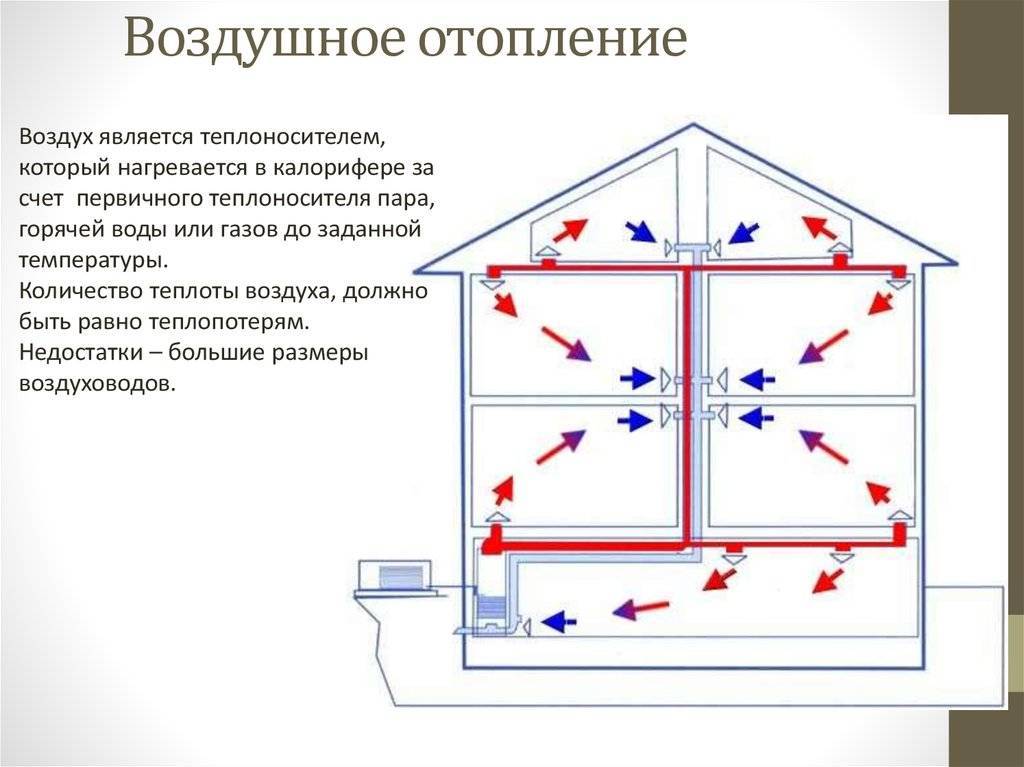
According to the principle of air circulation: forced and natural air heating systems
- The forced system includes a fan that creates the necessary pressure for the movement of air flows. Most often, the fan is located at the bottom of the heater.
- The natural (or gravitational) scheme operates by changing the density of heated air. Such a system does not depend on the supply of electricity, but at the same time the circulation of air masses in the room can be unstable, it can be disturbed by an open window or a draft.
On the secondary use of air: direct-flow and recirculation air heating systems
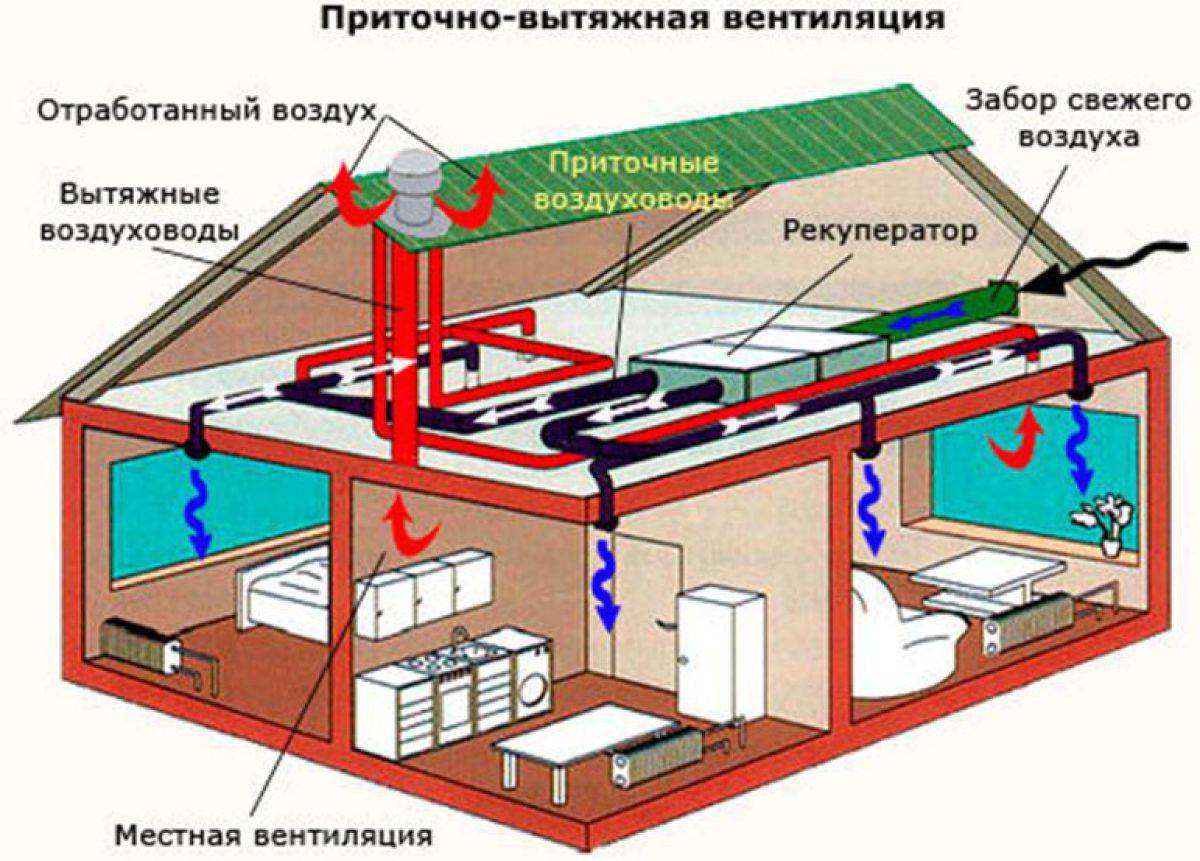
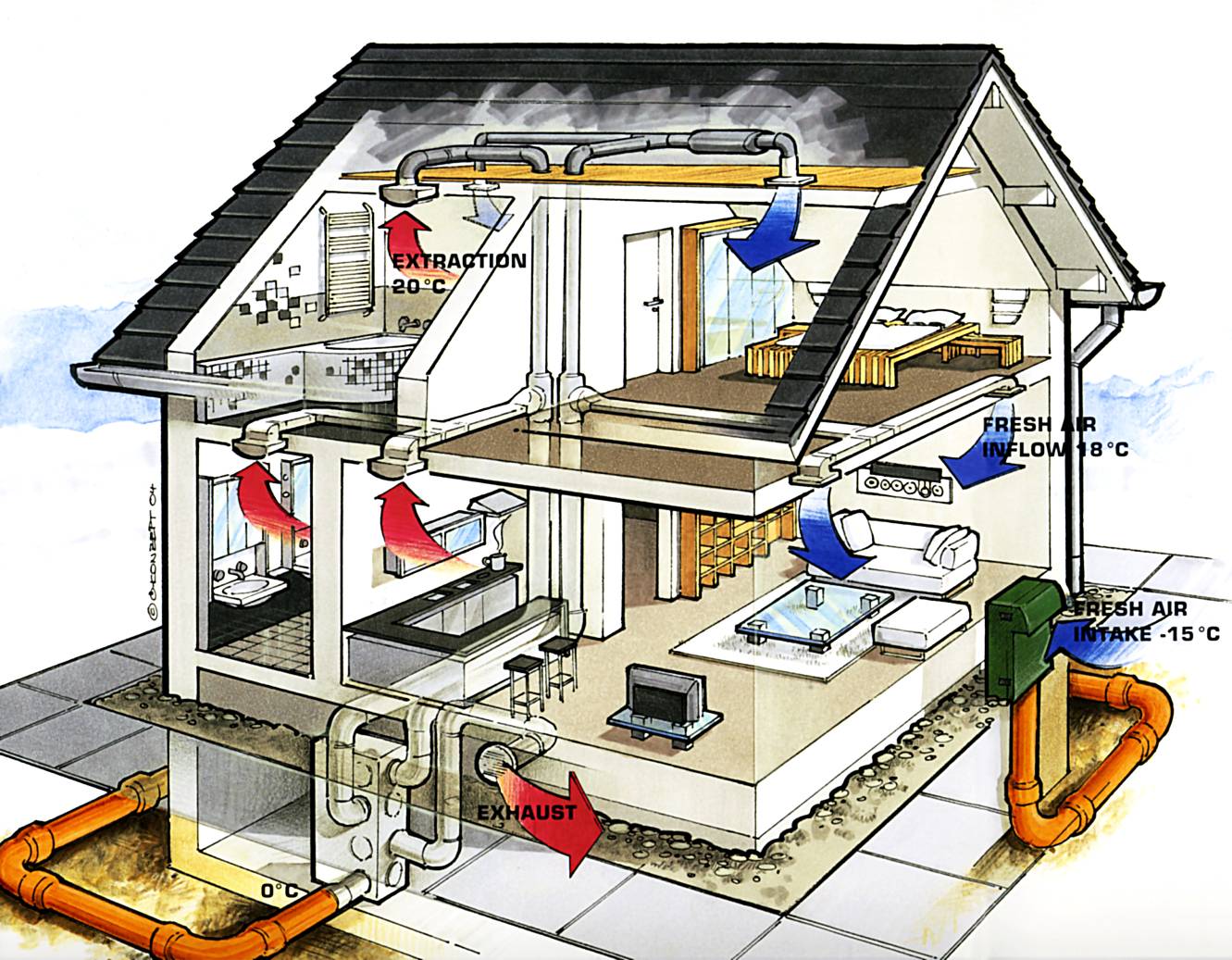
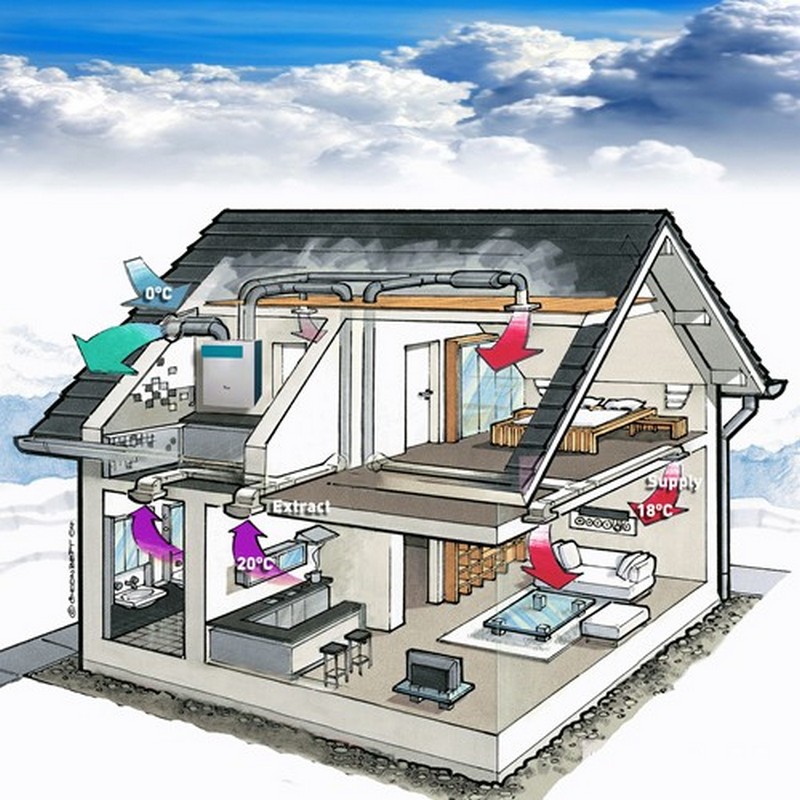
– Direct-flow heating. The heated air is sent to the premises, where it gives off heat, takes away carbon dioxide, allergens and microbes, after which it is carried out by reverse draft through the mine. Instead, fresh air comes in from the street, which heats up and goes through the cycle again. The direct-flow circuit is the most hygienic, but at the same time, thermal energy is removed with the exhaust air.
To reduce heat loss, recuperators are used, where the exhausted warm air transfers part of the heat to the incoming flow coming from the street.
- Recirculation heating is different in that the air used for the first time is not removed from the system, but is again sent to the heat exchanger, where it is heated for reuse. For saturation with oxygen, a mixture of fresh air from the street is used.
The heat loss of the system is reduced, but hygiene is reduced, as more dust settles in the air ducts and harmful substances can enter the rooms again.
Recirculation is used where hygiene requirements for ventilation are not so important.
For the distribution of warm flows in the premises: duct and local air heating systems
— Channel air heating. There is a system of air ducts through which air enters and is distributed throughout the premises of the house.
All parameters (temperature, humidity, air exchange rate) can be adjusted using automation and a system of sensors installed in the premises.
Automation saves energy costs by reducing heating when necessary (for example, at night or in the absence of residents).
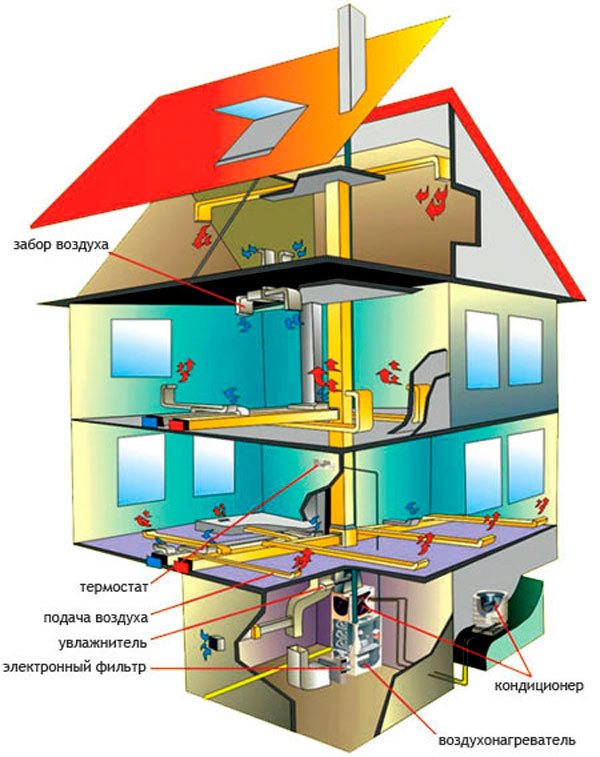
The air heater processor can also control the air conditioner, humidifier, electronic filter and other accessories.
These functions can be modularly added to the basic heating system at any time at the request of the user.
The products of combustion are expelled to the outside through the chimney.
- Local air heating. Heating equipment in this case is installed directly in the heated area - most often such a system is used for heating production, storage facilities, as well as greenhouses, garages, basements and utility rooms.
The air in the room is heated directly by air heaters.
For industrial and agricultural facilities, this is the most economical way of air heating, both in terms of design and installation, and when using the system.
Advantages and disadvantages of air heating
Compared to liquid heating, air heating has several advantages:
- The distribution part of the heating system has an extremely simple device and is fully available for self-production. It's just a network of air ducts with dampers - no expansion tank, no radiators, no air vents with safety valves.
- Air ducts are easily made from the cheapest materials - plywood, drywall, tin or even cardboard. In this case, the simplest tool is used - no pipe benders or welding machines are needed.
- The dampers used to adjust the temperature regime are a primitive and cheap device, which cannot be said about expensive control valves for a water heating system.
- You can forget about the danger of leaks or freezing of the system forever.
- Due to the low thermal conductivity of air, heat losses to the walls of the building are reduced (the water system loses up to 15% of heat in this way).
- The entire heating system is laid in a hidden way, so the interior of all rooms has an impeccable appearance.
- The system has practically no inertia.
- A cold house warms up very quickly.
Since air is supplied to all rooms through a duct system, it is enough to install only one humidifying filter on the main air duct to clean and humidify it.
Air heating device
As always, there are also disadvantages:
- In an already finished building, it is impossible to switch to air heating - it is integrated into the design of the house and is being built in parallel with it. Changing the system, for example, for the purpose of modernization, will not work either.
- Regular maintenance is required - cleaning of filters or air ducts if filters are not installed.
It is not possible to build a heat accumulator, as in a liquid heating system. This problem is relevant for diesel and solid fuel heaters, the efficiency of which is maximum only when operating in the rated (highest) power mode.

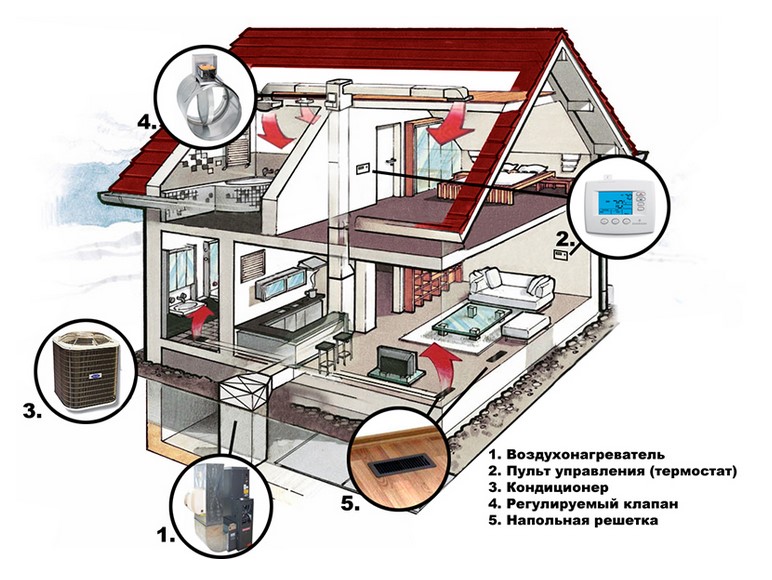


Principle of operation
Many of our fellow citizens imagine the heating system only as a circuit filled with water or antifreeze from pipes and radiators. Meanwhile, the use of a liquid heat carrier in an autonomous heating system of a private house is nonsense, a vivid example of thoughtlessly following established stereotypes. After all, we are building such a complex and expensive system only because it is on this principle that centralized systems are arranged.
At the same time, no one thinks that they work in completely different conditions: the heating unit is located at a considerable distance from consumers (large heat losses), and the consumers themselves - public and residential buildings - have a very extensive distribution network. To bring heat to the most remote radiator, a coolant with a very large heat capacity is needed, and water is best suited for this.
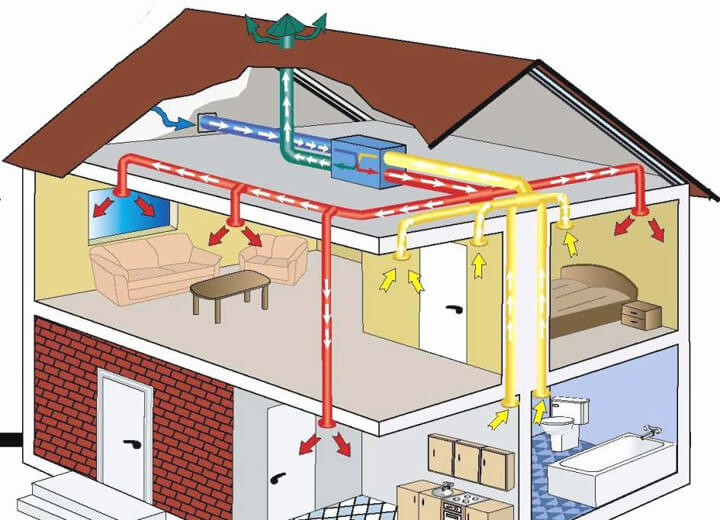
Schematic diagram of air heating
In an autonomous system, nothing of the kind is observed: the boiler room is located right in the house, therefore there are no heat losses as such; while the maximum distance to the most remote room usually does not exceed several tens of meters. Under such conditions, the medium can be used as a heat carrier, for the sake of heating of which everything is started, that is, air.
The heat capacity of air is 800 times less than that of water, but it will be quite enough to distribute heat within the house.
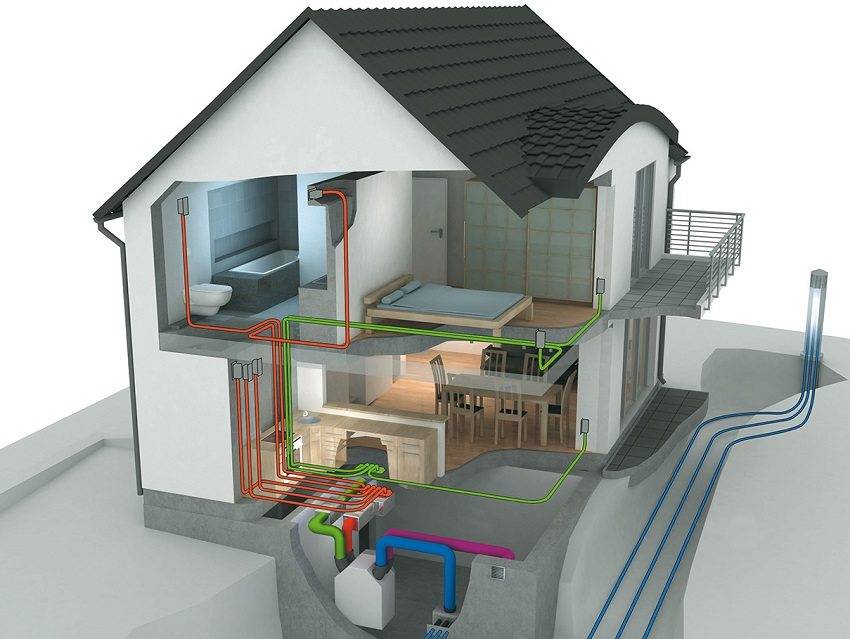
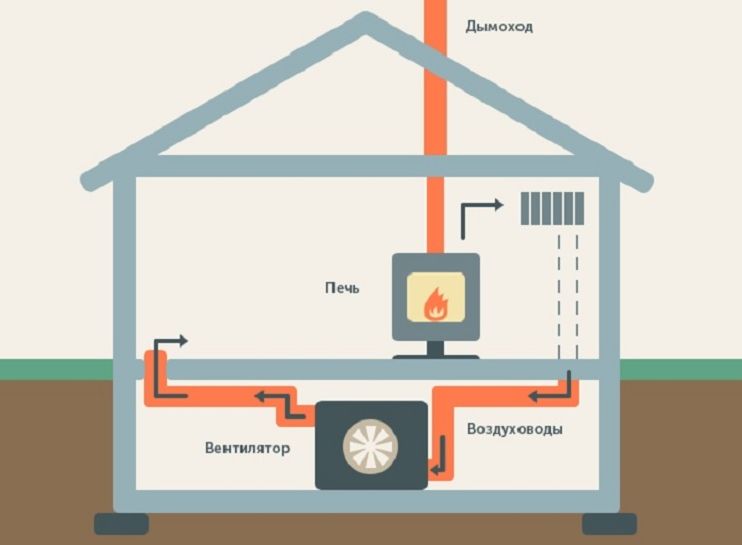
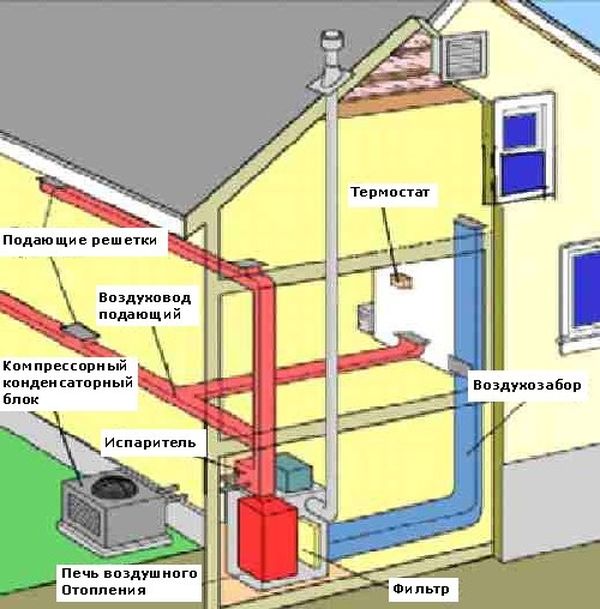
This distribution is the principle of operation of the air heating system. The air is heated by a convection-tube stove (the common name is a heater), which runs on gas, wood with coal or diesel fuel, and is distributed through a network of air ducts to all rooms. In each of them, you can set your own temperature regime by blocking part of the outlet of the duct with a damper.
Air heating system design
In order to
leaving the project is worth contacting specialists, because it is very important to take into account some indicators:
The power of the equipment that should work for heating
When calculating, it is necessary to take into account the amount of heat loss.
The speed required for the correct supply of heated air.
It is equally important to pay attention to the aerodynamic performance of the line, since the size of the air ducts directly depends on this.
The development of the project should be carried out along with the construction of the house
This will prepare the surface for the location of air ducts and other equipment.
In the event that the calculation is performed incorrectly and poor-quality installation follows, you can get a system that differs from expectations. The development of the project should be carried out along with the construction of the house. This will prepare the surface for the location of ducts and other equipment.
Principle of operation
works according to certain principles
Air heating to the required temperature
Heating is carried out using a heat generator. In the course of work, it uses electricity, hot water or a certain type of fuel. Automation controls the operation of this device. When the set temperature is reached, the device turns off, and then works in standby mode.


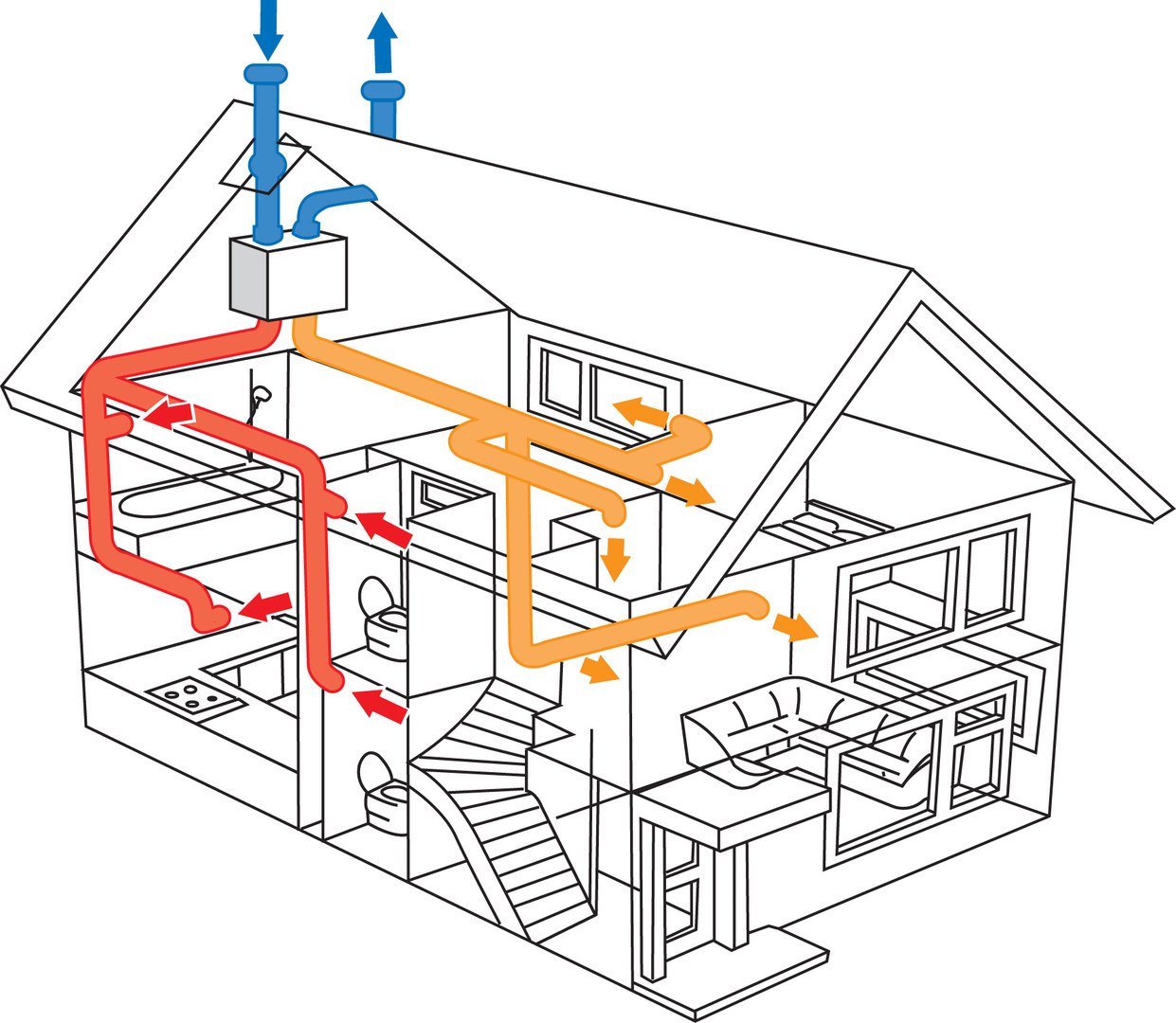


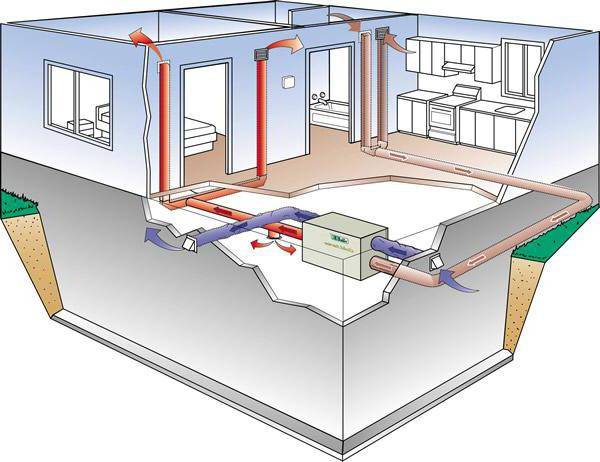


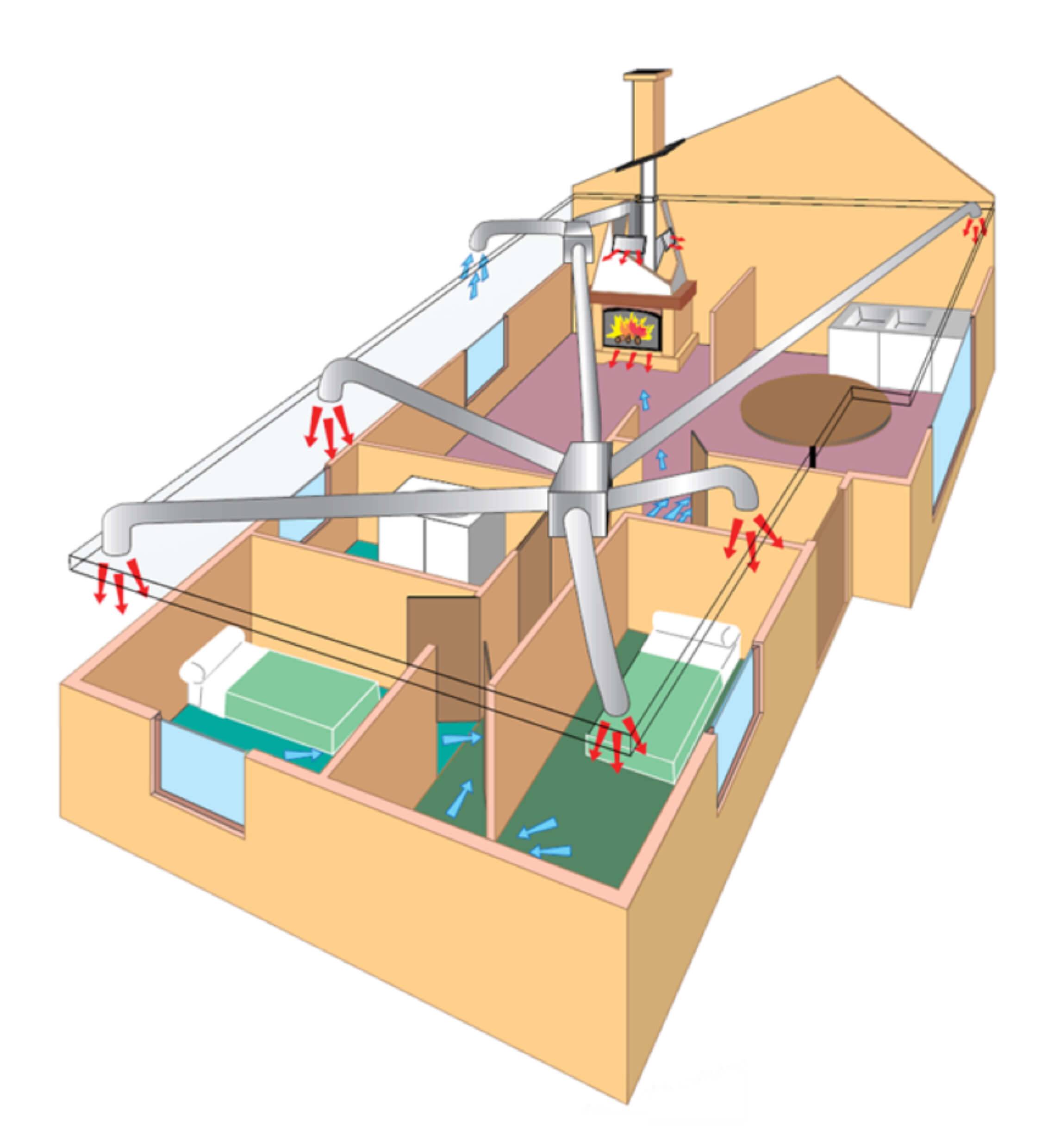

Indoor air heating
This process takes place thanks to the duct system. They can be round or rectangular in shape.
Less aerodynamic resistance is typical for round ducts. Rectangular also have their advantages. They fit perfectly into the interior of the house, because they have a more perfect design.
Warming up the room
Through a special distributor at the outlet, the air flow enters the room, after which it is evenly heated. The cooled air returns to the heat generator, where it is reheated while passing through the individual pipes of the air duct system. Thus, there is a circulation of flows. The efficiency of this equipment depends on:
- correct selection of components;
- accurate engineering calculations;
- choice of fuel;
- correct temperature.
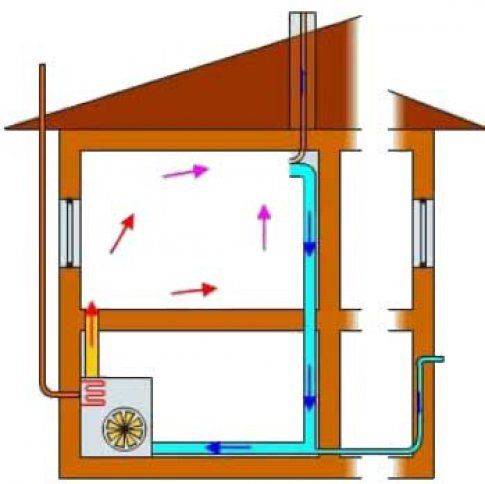
Inside the heating system, air circulation can be forced and natural. When a natural circulation scheme is used, when moving, the heated air rises, giving way to the cooled air, which has already warmed up the room.
With a forced circulation scheme, the movement of air flows is provided by a fan. The pressure generated by it forces the air to move inside the ducts.
Installation instructions
The system is assembled in the following sequence:
- Install a heater with a fan and connect it to the chimney.
- Collect a network of supply air ducts. Separate pipe sections are best connected with reinforced aluminum tape. The supply network is built in such a way that warm air is supplied to the room from below.
- In the same way, a network of return ducts is assembled (for systems with recirculation). They should have a larger diameter than the feeders. The return network should have as few bends and branches as possible.
- A humidifying filter is installed on the root supply air duct.
Grilles with dampers are installed in the outlet openings of the supply air ducts.
House types
| Price from 1,600 rubles/m2 |
The main advantages of using this system are:
- High efficiency of air heating. Thermal energy is transferred directly from its source to the premises. Thus, an additional link is eliminated - the coolant, for constant maintenance, the temperature of which requires additional energy
- Possibility of year-round operation of the heating system (in summer - in ventilation or air conditioning mode)
- Independence from outside temperature. At strong negative temperatures in the water heating systems of a country house, the coolant may freeze. With air heating, this situation is excluded.
- The ability to quickly turn on and off the system without complex and lengthy preparatory procedures
- Heating a house in which there is no liquid coolant eliminates the occurrence of emergencies due to leaks or breakage of radiators, pipes
- Small inertia of the system.If the power of the heat generator is calculated correctly, then the air in the room is heated as quickly as possible.
Air heating has no pronounced shortcomings. However, some features should be considered:
- Warm air is displaced upward, so it is desirable to place air ducts under the floor or in the lower part of the room, which is not always possible
- Air ducts have a larger sectional size than pipes, so the task of "hiding" them is not always easy to solve. Accordingly, the holes for them in the walls and ceilings are also much larger.
Maintaining a comfortable temperature in the house while spending a minimum amount of money is the dream of absolutely any homeowner. In this article, we will consider how to do air heating of a private house with our own hands, how such a system works and what are its advantages. Some nuances of independent installation and operation of the air heating system will also be highlighted. Let's get started!
Heating, ventilation and air conditioning in one installation
A system of this type includes either a water heater or a heat generator. These devices are responsible for heating the air. In the room, warm air is distributed using a special fan that directs it to the desired areas. The best way to organize air space heating are portable heat guns. They quickly and intensively heat the necessary areas. Currently, many have begun to use this method in country houses and in the country.
Pros and cons of air heating in the house
The advantages of this heating method include:
- The efficiency is up to 93%;
- there are no intermediate links during the transfer of warm air, such as radiators and pipes;
- heating and air conditioning systems can be easily combined. Therefore, the temperature in the room is maintained exactly as it was set by the users;
- low passivity of the system, with which you can heat the necessary areas to a high temperature.
But, despite the many positive qualities of heating, there are also disadvantages. They must be remembered by those who want to make air heating of a private house with their own hands. These include:
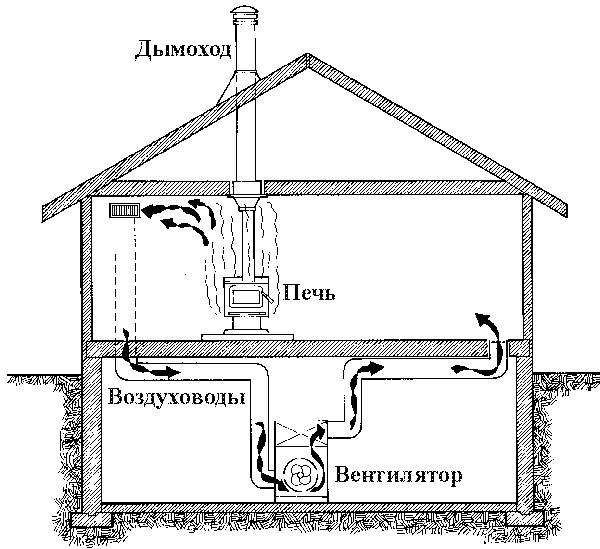



- installation of the unit can only be carried out during the construction of the premises. It is imperative to develop and calculate all the parameters of the system before carrying out construction work;
- air heating must be constantly maintained;
- this system is not improved;
- electricity consumption is quite large. To save money, it is best to purchase a backup power supply.
Scheme and installation device
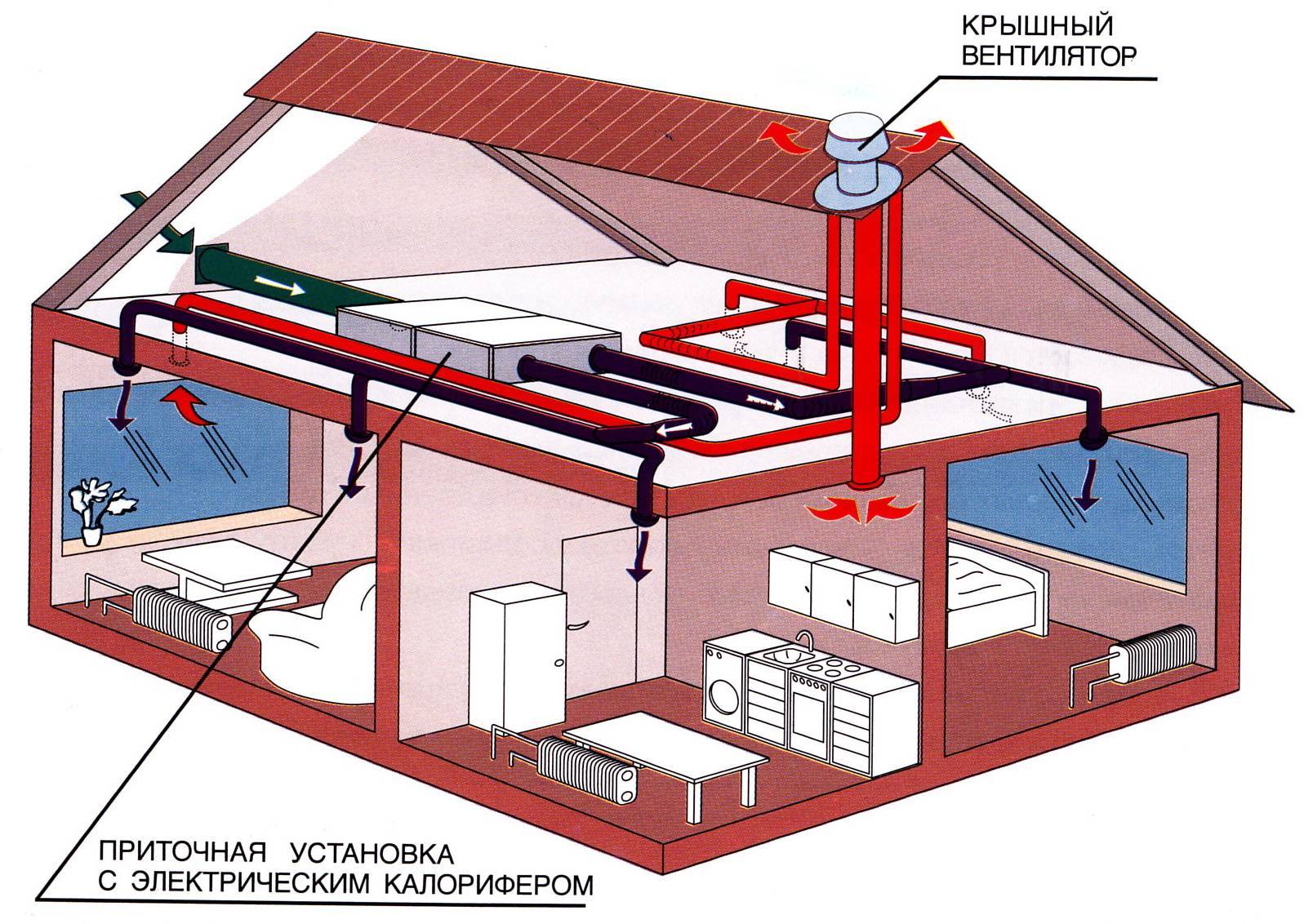
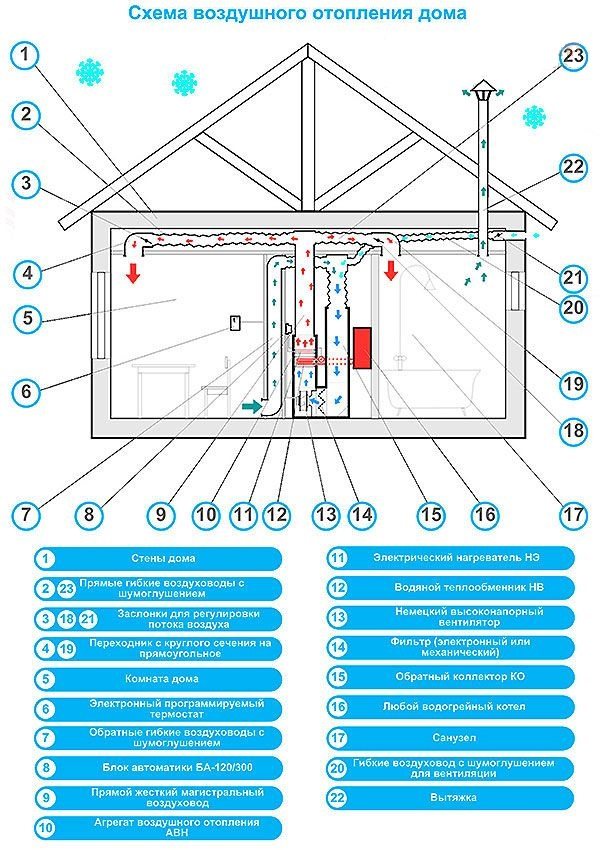
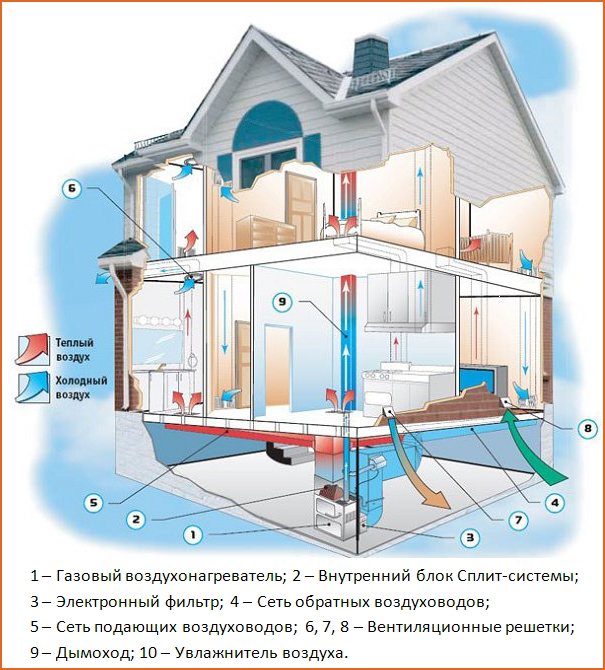
Below is the components of air heating of a private house with your own hands:
- Bake;
- Filter elements;
- A pipe that takes air from a room;
- Hood;
- A pipe that brings fresh air;
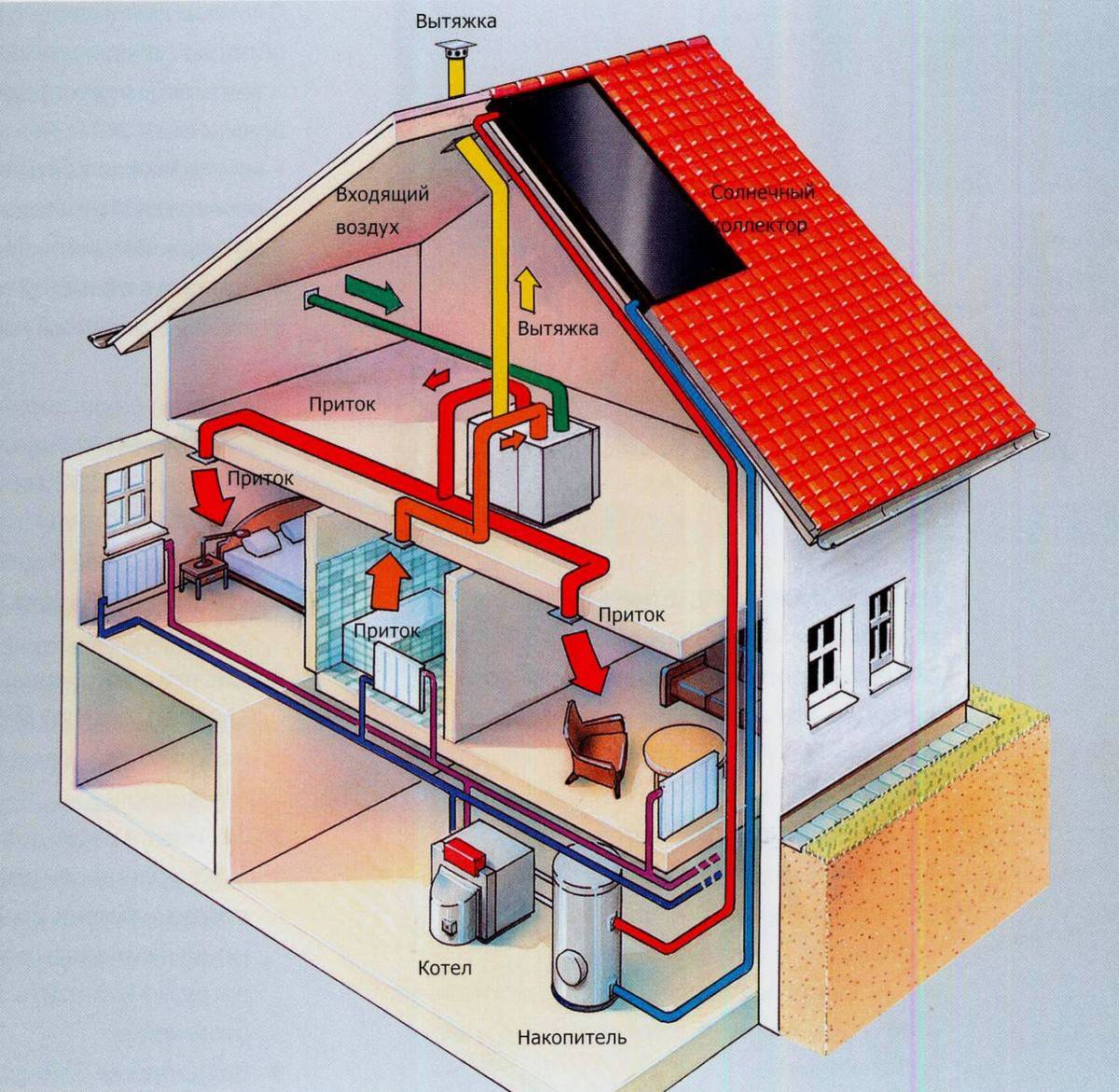
- Supply of warm air to the room;
- A system that removes cooled air from the house;
- Chimney.
In the form of a heat generator, a liquid or gas heater equipped with a programmable controller is perfect. After the house is completely warmed up, the automation immediately works and maintains the temperature according to the specified parameters.
How to warm the house with air?
Air is a very efficient coolant, much more convenient than water.The simplest option for such heating is a conventional fan heater. This device, consisting of a fan and a heating coil, can warm up a small room in just a matter of minutes. Of course, for a private house you will need more serious equipment.
As a heat source, you can use a gas or solid fuel boiler. An electric heater is also suitable, but this option is considered not very profitable, since electricity costs increase significantly.
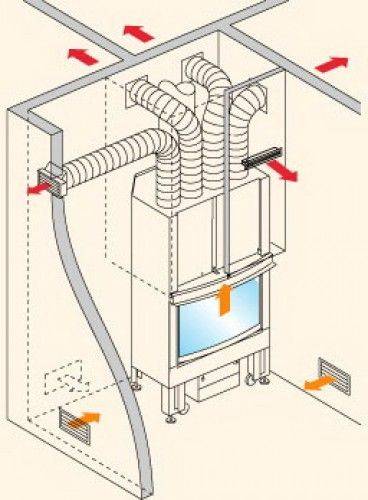
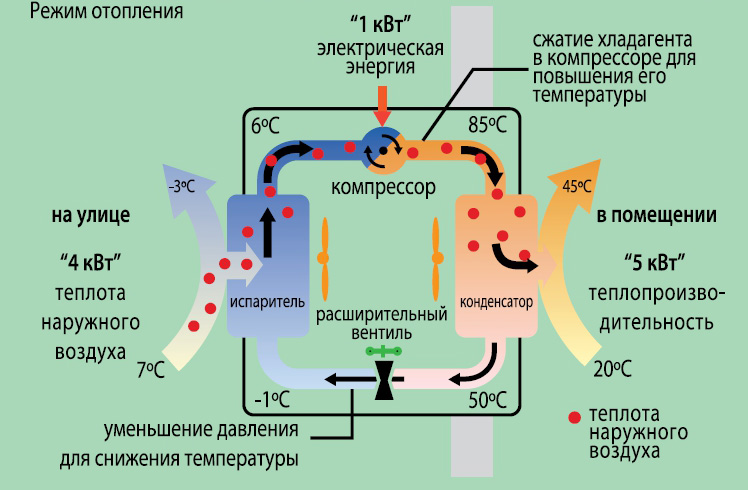
Image galleryPhoto from In air coolant systems, the air itself is a secondary coolant that is processed by heating units before being supplied Air for air heating systems is heated by water or steam, the preparation of which is carried out by all known types of heating equipment Fire furnaces are used as heating equipment, processing solid, liquid and gaseous options fuel Until now, Russian stoves are used in heating schemes for country houses.Their disadvantage is that they can normally heat no more than three adjacent rooms. A common option for heating private cottages is based on the use of a fireplace with heat sinks connected to it. Decoupling of heat pipes of an air heating system is usually arranged within the attic or located behind suspended ceiling structures. A very economical way to obtain energy for heating air involves the use of an air-to-air heat pumpIn the scheme of operation of an air-to-air heat pump, the indoor unit outwardly resembles a similar part of climatic equipmentThe principle of heating the heat carrierInstallation with a gas heaterFire furnace outside the roomStove in the heating of a country houseFireplace in the formation of heating a private houseHeat removal device within the atticOutdoor air-to-air heat pump unitIndoor unit air-to-air heating systems
An interesting and environmentally friendly heating option - use of solar panels or solar collector. Such systems are placed on the roof. They either directly transfer the thermal energy of the sun to the heat exchanger, or convert it into inexpensive electrical energy. In the latter case, the fan can also be powered from the battery.
The air is heated in the heat exchanger and enters the individual rooms through the air ducts. These are rather bulky structures made of durable metal. The cross section of the air ducts is much larger than the diameter of the water heating pipe.
Gas boilers and other types of heating equipment are also suitable for air heating. The efficiency of such systems reaches 90%, they are used not only in residential premises, but also in workshops and warehouses.
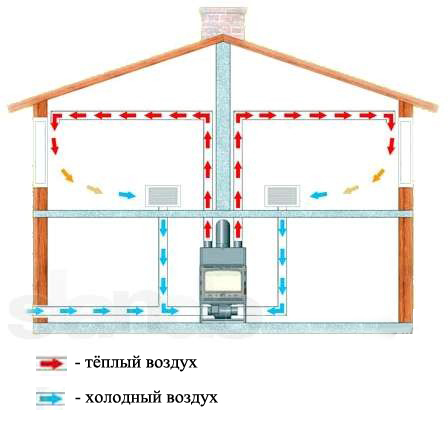
But radiators for air heating are not needed. Warm air simply fills the rooms through special grilles. As you know, hot gas tends to rise. Cold air will then be pushed down.
From here, cold air flows back to the heat exchanger, heat up, enter the rooms, etc.
This diagram clearly demonstrates a recirculation-type air heating device with a partial intake of outside air, as well as an air conditioner, an ionizer and an ultraviolet purifier
Almost all air heating systems include the installation of a fan that pumps hot air and forces it to move through the heating system. The presence of such a device makes the system dependent on electrical energy.
You can also make a system in which hot air will move naturally, without any fan. However, the efficiency of such systems usually leaves much to be desired, since the rooms in this case warm up too slowly.
A convincing argument in favor of organizing an air heating system is to exclude accidental leaks and flooding with resulting property damage. In addition, in case of damage to the air ducts, the automation will stop the system.
Equipment, components and materials
The next step after the development of the scheme is the selection of all heating elements:
- heat generator;
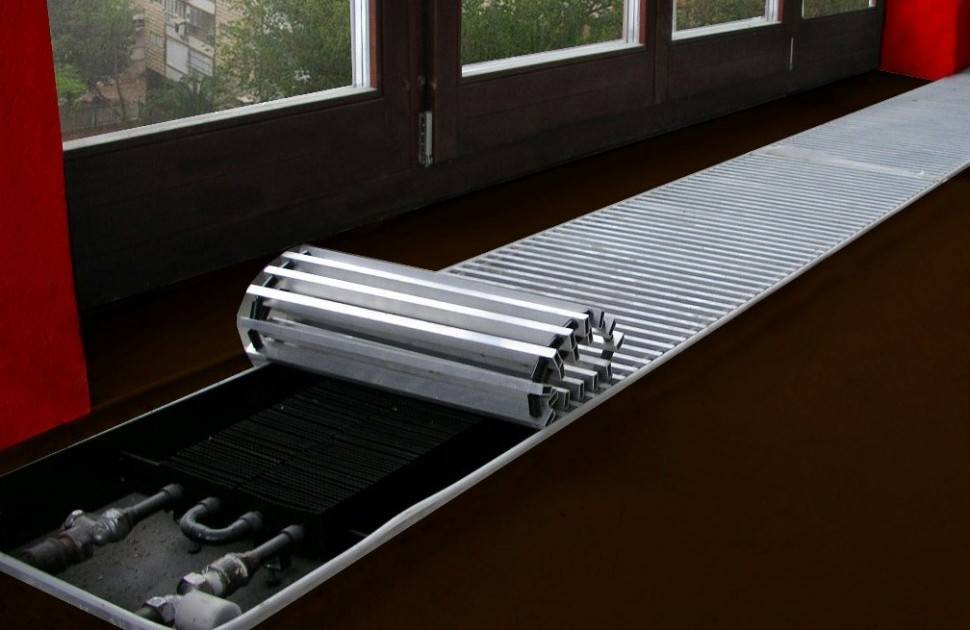
- radiators, underfloor heating collectors;
- pipes;
- expansion tank, circulation pump, fittings and heater piping parts.
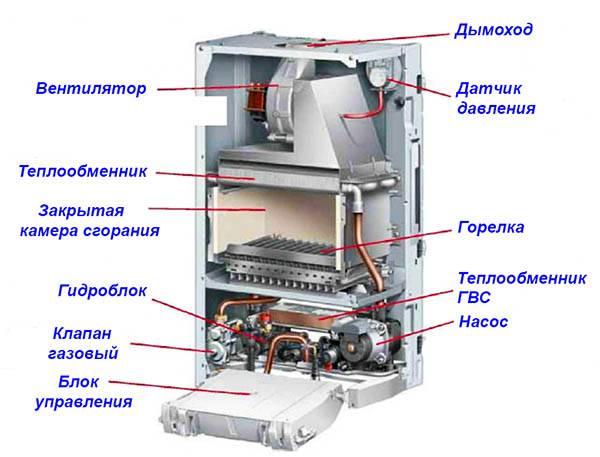
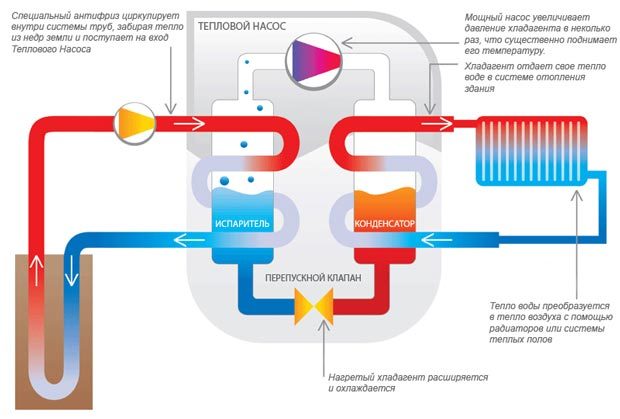
Immediately make a reservation that we will consider a water boiler as a heating unit.You will not be able to install an air or geothermal heat pump without the help of specialists, and the connection of the water circuit of the stove is carried out similarly to the piping of a solid fuel heat generator.


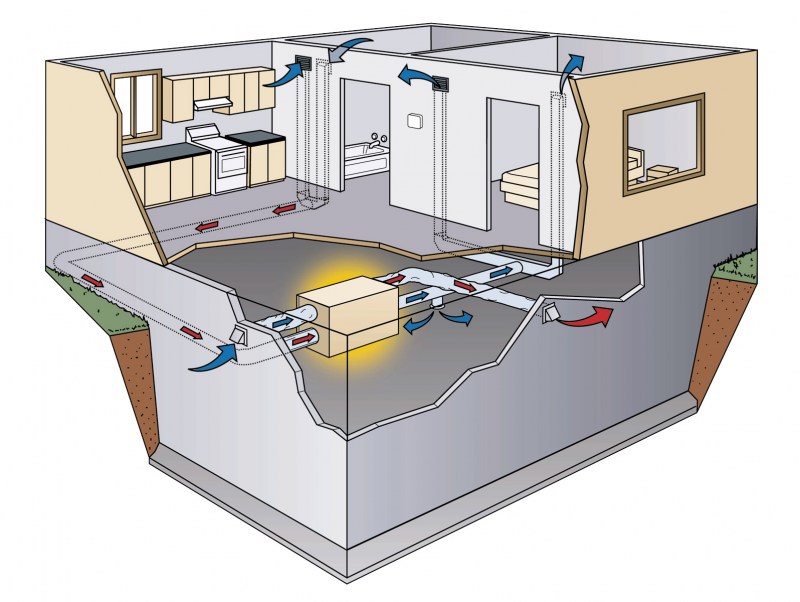
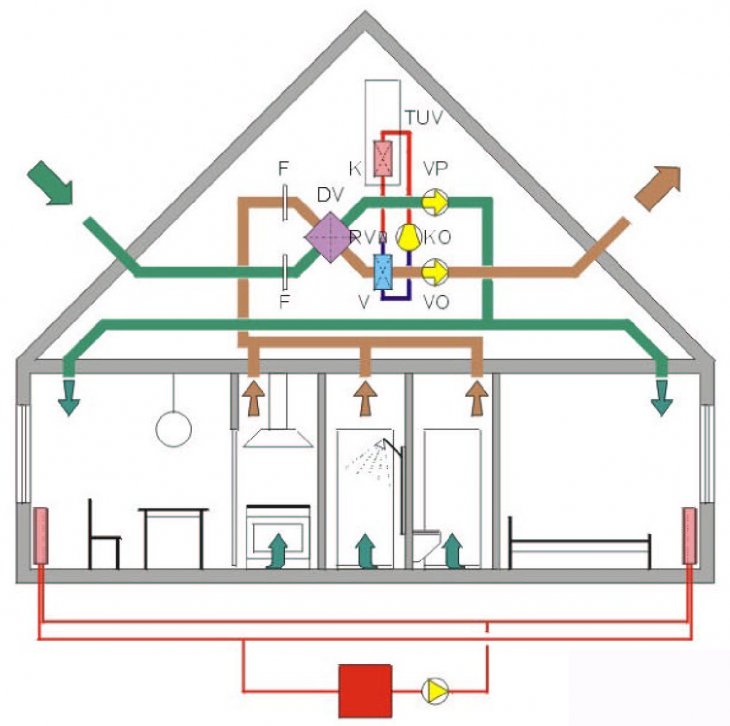

How to calculate the capacity of the expansion tank, choose the right pump and fittings:
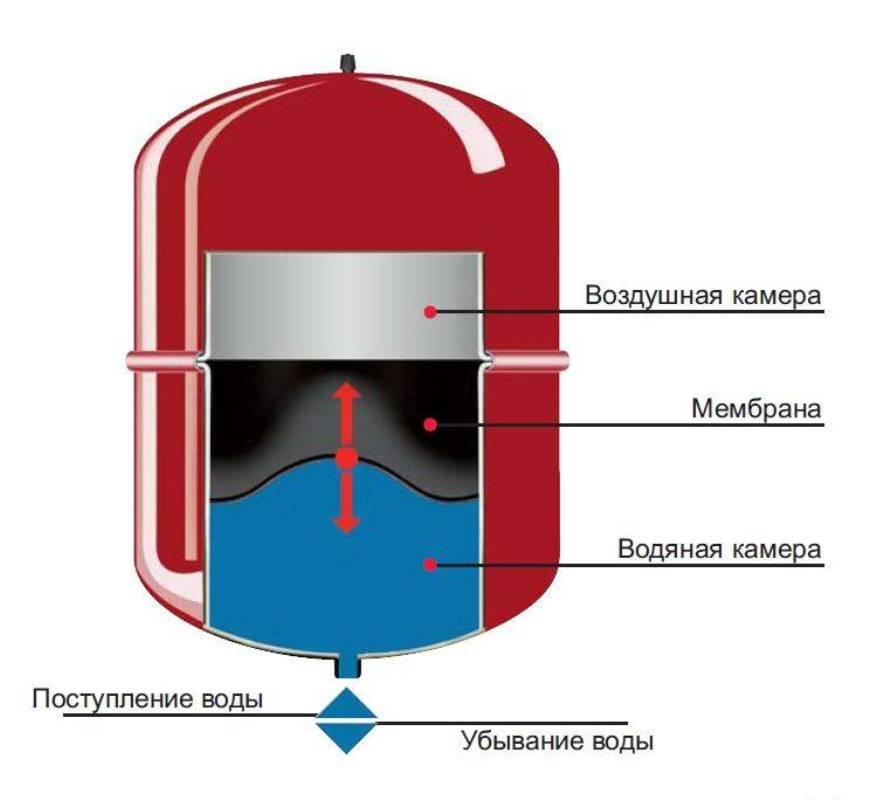
- The useful volume of the tank must be at least 10% of the total amount of coolant circulating in the heating network. The water jacket of the boiler also counts.
- If the building area does not exceed 150 m², then the circulation will be provided by a pump with 25/40 or 32/40. The first digit is the diameter of the threaded connection, the second is the developed pressure. The 25/40 unit is equipped with a 1” pipe thread and is capable of delivering a head of 0.4 bar.
- For a large cottage and floor circuits, it is better to choose a pump according to the algorithm.
- Shut-off ball valves are placed in front of the heat generator, expansion tank, pumping unit and on the make-up pipe. Additional equipment - a buffer tank, an indirect heating tank, a solar system - must also be cut off with cranes.
- Each heating radiator is supplied with a thermostatic valve at the inlet and a balancing valve at the outlet. In the non-adjustable version, a ball valve is installed on the battery supply pipe.
The final list of components is compiled after the selection of the main elements - a thermal power plant, batteries and a pump with a tank. Accordingly, we will consider the question further ...