
- Installing Your Purchased Product
- How to properly organize a drain in a small bathroom
- Why is it needed?
- Stage # 6 - connecting to the electrical network
- Siphon for bathroom, washbasin or kitchen
- Types of siphons and their device
- Advantages and disadvantages of different types of connection
- Siphon with check valve
- Washbasin connection
- Product types
- Separate siphons
- Combined siphons
- Rubber cuff
- Selection according to installation conditions
- Features and connection rules
- Kitchen
- Instructions for installing a siphon in the kitchen
- About valve
- Device Installation Tips
- Types of siphons
Installing Your Purchased Product
When installing a siphon yourself, you should always take into account a number of mandatory rules. Otherwise, it will not be possible to organize an effective drain of contaminated water, and this will also affect the performance of the washing machine.
The mandatory installation rules include the following points:
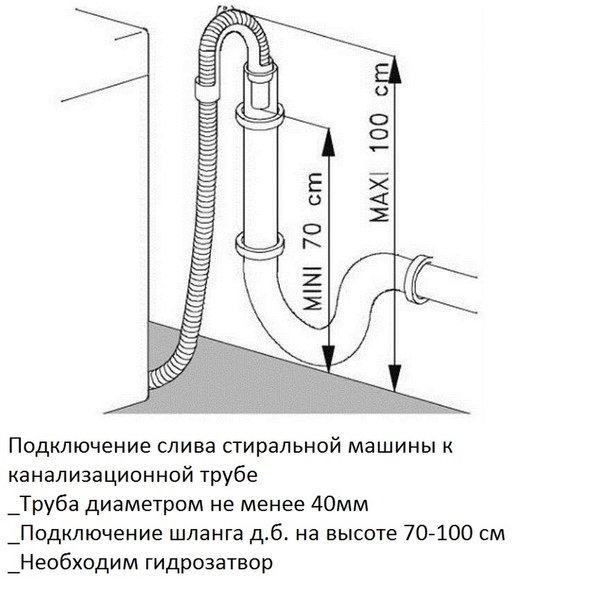
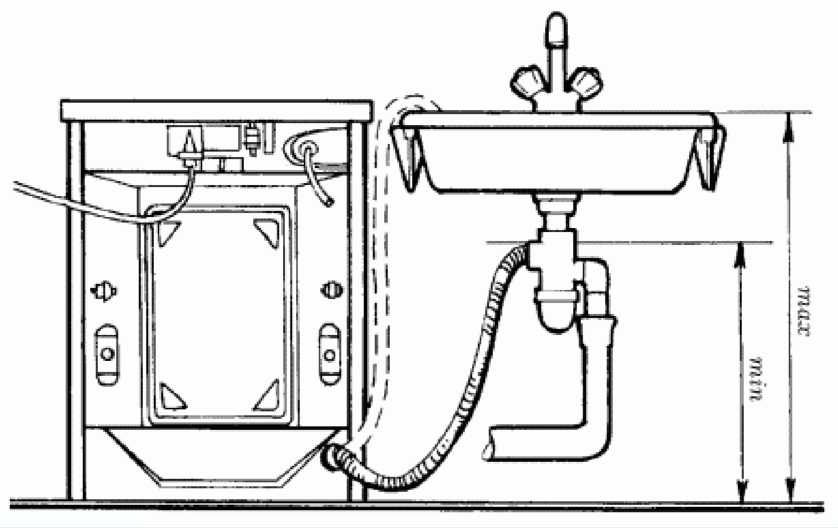
- the siphon cannot be installed higher than 80 cm from the level at which the washing machine is located - non-compliance entails a large load on the pumping device, which leads to its rapid wear;
- do not extend the drain hose, such a solution will again lead to a significant increase in the load on the pump of the washing machine.
If you still had to perform an extension, then this should be considered as a temporary solution. In addition, the drain hose does not need to be thrown to the floor, as the pump will have to exert even more extra effort to perform its functions.
Therefore, the best way to solve the problem with the length is to connect the sewer pipe to the required distance.
The installation of any siphon is a simple operation, but this only applies to the situation when all preparatory work has been completed and communications have been connected
If this is not possible, then the hose should be laid along the wall with the necessary slope in order to ensure the gravity flow of water. In this case, the permissible loads will act on the pump of any washing machine, which means that the service life will not be reduced.
When a person has a desire to install a purchased siphon on his own, then you need to understand that this will be a simple operation only if sewer pipes, sinks, a washing machine, etc. are installed and connected. And the necessary preparatory work was completed, for example, a recess was made in the wall for a built-in siphon.
Installation and connection of the washing machine must be carried out in strict accordance with the manufacturer's instructions, the exact recommendations of which are given in the technical documentation for the product (+)
In addition, a number of features must be taken into account. For example, if the mentioned internal siphon is installed, and tiles are used to finish the walls of the bathroom, then the cladding is first performed. And only then a place for drain fittings is selected. Since work in the specified sequence will allow you to get higher aesthetic qualities.
If any of the above conditions is not met, then essential knowledge and a special tool will be required for installation. What makes the possibilities of an unprepared person limited.
In addition, mistakes are often made that lead to financial losses. This indicates the need to use the services of craftsmen for complex work on wiring communications and other things.
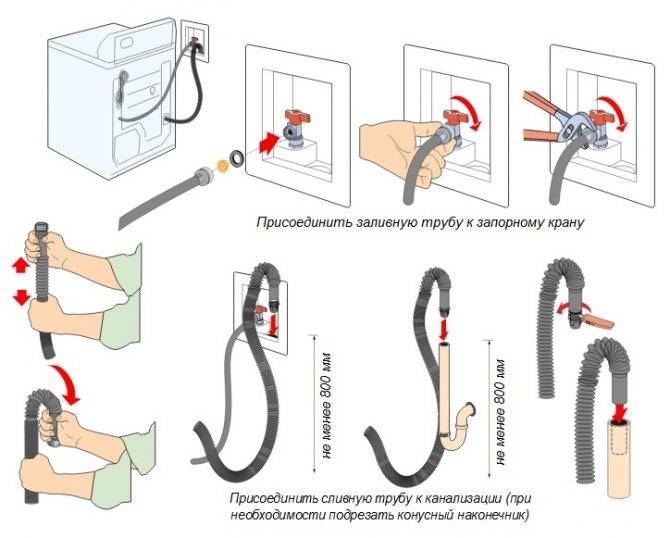
The drain pipe from the washing machine must be connected to the sewer system at a strictly defined height, which may differ slightly depending on the brand of the machine, more precisely, on the capacity of the drain pump
Nevertheless, the usual replacement of the siphon or just the installation is quite simple to perform. Why you need to connect the product to the sewer pipe, and then bring the drain hose. New gaskets must be used to ensure proper tightness. And after dismantling the old siphon from the sewer pipe, traces of contaminants must be removed from the hose.
After completing the installation procedure, carefully check the tightening of all available clamps, bolts, and other fasteners. Next, you need to drain the contaminated water in test mode.
Why toilet paper is placed under the siphon - such a simple solution will reveal even minimal leakage, which is not always possible to do visually. Therefore, verification should be carried out only using the specified method of control.
If a combined type of drain fitting is used, then it is worthwhile to simultaneously drain from all equipment in use. This will allow you to check the tightness and performance at maximum load.
This is how the drain hose is mounted to the sewer pipe, if there is a desire to save on the siphon, although this is not the best solution
If the testing did not reveal any leakage of the siphon to drain the contaminated liquid from the washing machine, then the owner can proceed to its normal use. And without any restrictions.
How to properly organize a drain in a small bathroom
Due to the small area of the room, you need to carefully consider the location of the washing machine and the drain system.
There is a good solution - a hanging mirror cabinet and a sink with a cabinet, since the remaining space is occupied by the passage and the bath itself.
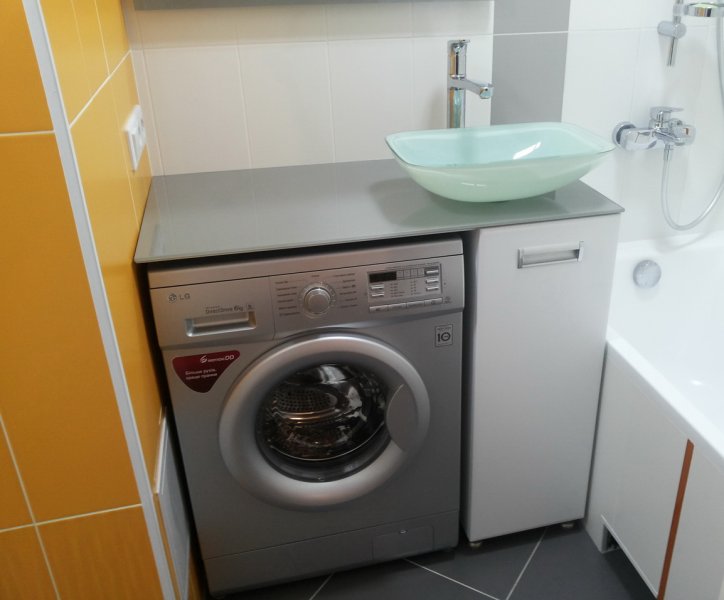
If there is a desire to place a washing machine in such a bathroom, then the only possible options are either the complete dismantling of the sink and the use of the vacant drain for the outlets of the washing machine, or the installation of a washing machine under the sink bowl.
When the washing machine is installed under the sink, the bowl needs to be replaced with a different type, called a "water lily".
From ordinary bowls of sinks, the “water lily”, installed above the appliances, differs in a smaller depth, but in large sizes and a drain of a certain shape.
The bowl should be as flat as possible, the average height in combination with the drain protrusion is 20 cm.
The width of the bowl is about 50-60 cm, models with smaller sizes are rare. Such parameters are due to the fact that moisture from the sink should not fall on the machine body.




The drain hole of the "Water Lily" is located in the center, or else - a little to the side. Bowls with a central drain are characterized by greater depth, since the outlet pipe takes up some space.
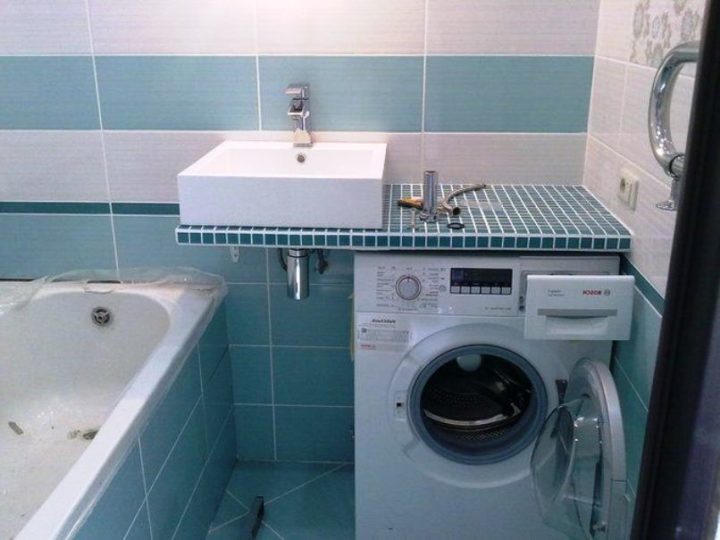
When installing such a bowl, a small gap remains between the body of the machine and the sink - this ensures greater reliability due to the fact that the bowl will not be subjected to vibrations of the machine during washing.
When installing and connecting to the sewerage of a washing machine, a flat siphon for the sink is required.
A similar variation has found application not only for washbasins above the washing machine. A specific type is used for:
- shower cabins with a low pallet;
- when installing Jacuzzi bathtubs;
- to hide pipes and their protrusions;
- when installing wall-mounted sink bowls.
A flat siphon is one of the few options that allows you to save more space in a small bathroom without neglecting sanitary standards.
When choosing a flat siphon for a washing machine, it is better to give preference to types with a jet break - this is a complete solution to the problem with unpleasant odors.
A water lily sink with a flat tray is actually the only option for a washbasin in a miniature bathroom if you want to install a washing machine there as well.
Why is it needed?
There are 2 main types of valves. The first category includes inlet solenoid valves, the second - siphons with a check valve considered within the framework of this publication.
The inlet valve forces the flow of clean tap water into the tank of the washing machine. The return siphon is responsible for the normal removal of dirty water from the machine after the completion of the washing program and prevents the liquid from flowing back into the tank.
Sometimes there are situations in which, it would seem, the mentioned devices are connected in accordance with the established technology, but do not work as they should: either the machine washes for too long, or the laundry after washing does not have the most pleasant smell, etc.
The root of the problem in most cases is the siphon effect. The problem is that the drain hoses used with household washing machines have a smaller diameter than a sewer pipe.
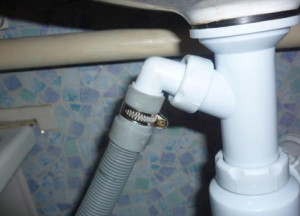 Such a difference in size contributes to the occurrence of rarefied pressure. Even if it is insignificant, it will still lead to pumping out a certain amount of liquid from the machine. Modern washing machines are "smart" appliances.
As a result, the liquid withdrawn as a result of the rarefaction will simply be taken by the machine from the water supply. Because of this, washing takes longer and its quality generally deteriorates.
To eliminate the occurrence of the considered problem, the system is equipped with a siphon with a check valve.
Important note! Many owners, in an effort to minimize the violation of the aesthetic appeal of the bathroom interior, organize the drain of sewage at a minimum distance from the floor. Such a solution is not correct and is classified as an error that can lead to the above problem and other problems.
Between the drain and the floor, at least a 5-10 cm distance should be maintained, preferably a little more.
Such a solution is not correct and is classified as an error that can lead to the above problem and other problems. Between the drain and the floor, at least a 5-10 cm distance should be maintained, preferably a little more.




Stage # 6 - connecting to the electrical network
Specific information on how to properly connect a newly purchased washing machine to the mains can be found in the instructions.
Particular attention is required to be paid to safety rules, since the device has a high level of power consumption (1.5 - 2.5 kW), and also comes into contact with water
To connect the unit to the mains, it is important to carefully select the outlet. The device must necessarily be grounded, in addition, it is advisable to choose a model with a cover. As a rule, for do-it-yourself connections the washing machine requires a three-wire socket, which has a phase, zero and a carefully insulated ground wire
The switchboard is grounded by using a special bus with a cross section of at least 0.3 cm
As a rule, to connect a washing machine with your own hands, you need a three-wire socket, in which there is a phase, zero and a carefully insulated ground wire. The switchboard is grounded by using a special bus with a cross section of at least 0.3 cm.
When connecting, it is advisable to follow a few recommendations:
The best option is an individual power supply. In this case, the washing machine is powered from the switchboard through a separate input, and the electricity is supplied through additionally laid power cables. So that the wires do not spoil the interior, they can be placed in neat plastic boxes.
The use of specialized electrical protection devices. In addition to the mandatory circuit breakers, it is recommended to additionally mount a residual current device (RCD) in the power supply line of the automatic machine.
Strict compliance of all components of electrical circuits with the requirements / technical / operational characteristics
For wiring, it is important to use three-core cables, while the cross-sectional area should exceed 1.5 sq.cm.
Connecting the outlet according to the scheme specified in the instructions. It is important to comply with the mandatory condition - the presence of protective grounding
The wire must be connected to the ground bus of the switchboard.
Connecting the conductor to heating or plumbing communications is strictly prohibited, since this can lead not only to the failure of the machine, but also to the creation of emergency situations.
It is better to give preference to sockets with IP44-IP65 when choosing models with a high degree of security; it is desirable that they have a lid that protects against moisture and a ceramic base.
Extension cords, tees and adapters should be avoided when connecting the washing machine: additional connections inevitable in this case can provoke an increase in temperature in the contacts, which leads to a breakdown of the unit.
It is undesirable that the socket for the automatic machine is located in rooms with constant high humidity. If the length of the electrical cord is enough, it is better to place the power supply in an adjacent space, for example, a corridor.
Siphon for bathroom, washbasin or kitchen
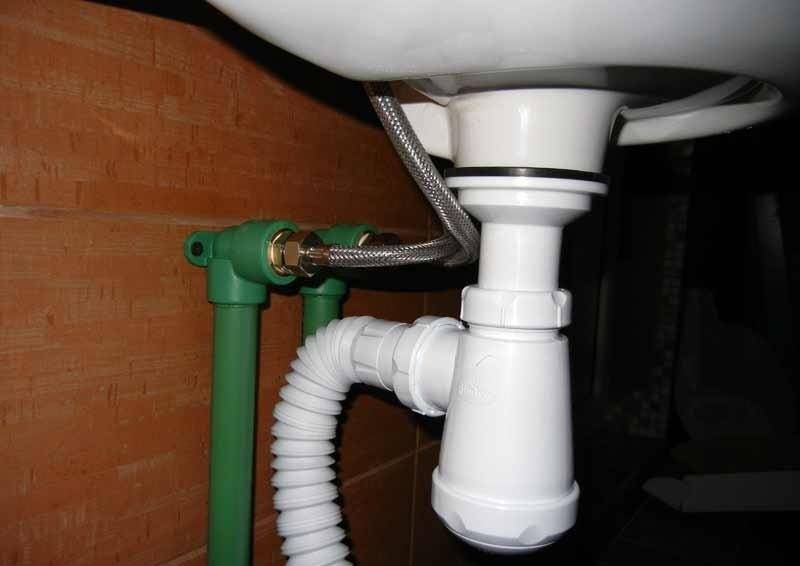
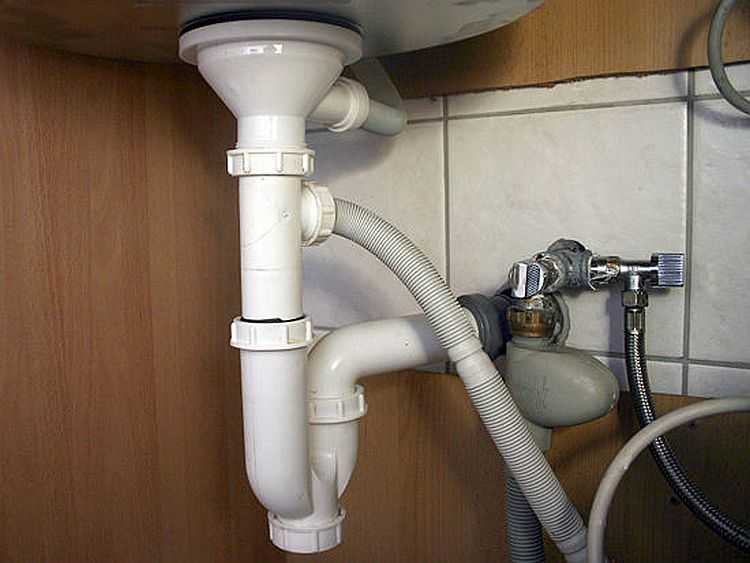
Thanks to the siphon in the box, there is space under the sink in the bathroom and in the kitchen.To mount the device in the wall, make a hole of the appropriate size. The siphon is masked in the wall, and a tube is led to it. For the bathroom, you can take a curved pipe. In addition to it, there is a corrugated hose that connects the drain to the overflow.
Often, bath drains have a plug designed for installation in a drain hole. A siphon with a small height is suitable for a shower cabin, and a bottle drain is mounted under the sink. Concealed design suitable for assembling a system for washing machines and dishwashers. In the kitchen, it is recommended to install a branched drain.
Types of siphons and their device
Different types of these devices provide the implementation of the most appropriate and convenient connection schemes. Currently, manufacturers offer siphons made of stainless steel, cast iron, copper, brass or polymeric materials. The most popular and affordable are varieties made of plastic. Specialists distinguish the following types:
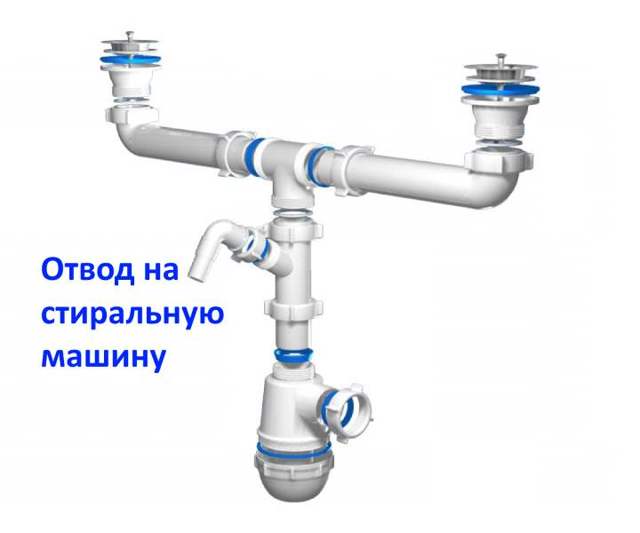
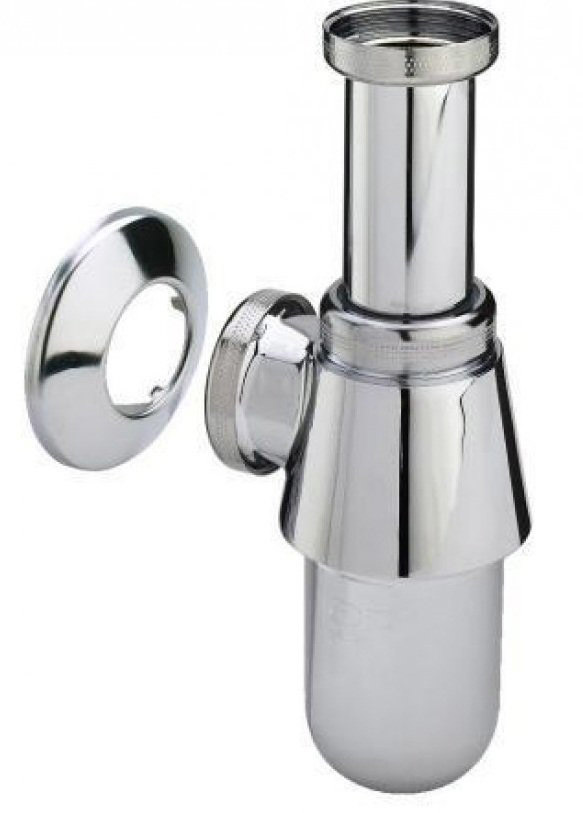
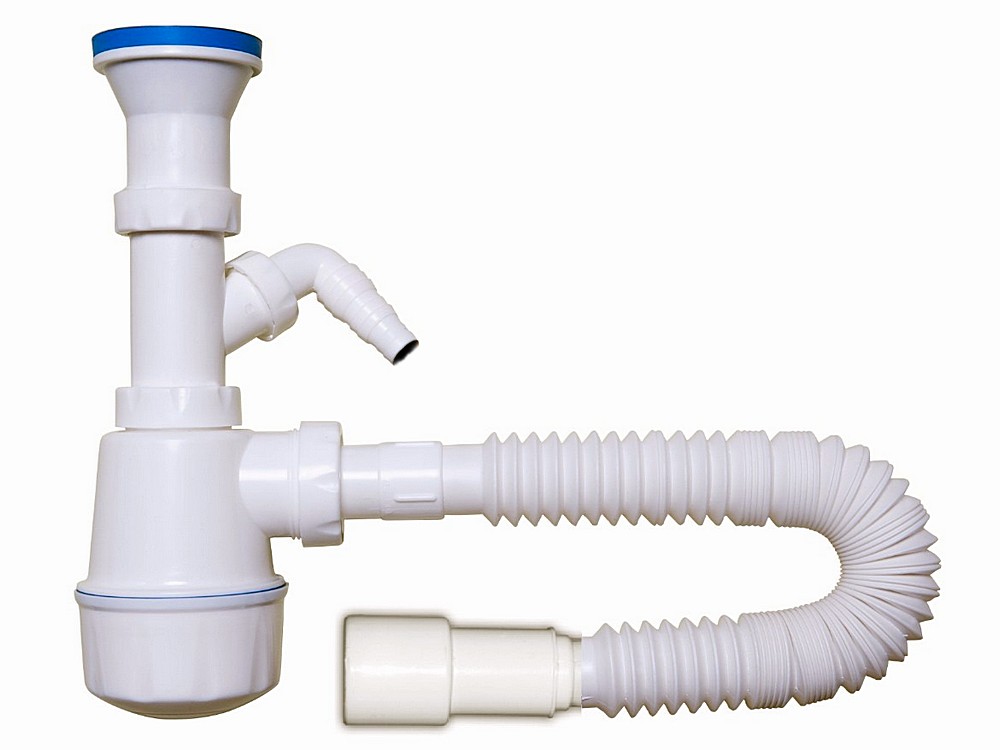
a standard, combined siphon with an outlet, installed under a sink, washbasin or bathtub, a variation of which is a siphon with two outlets;
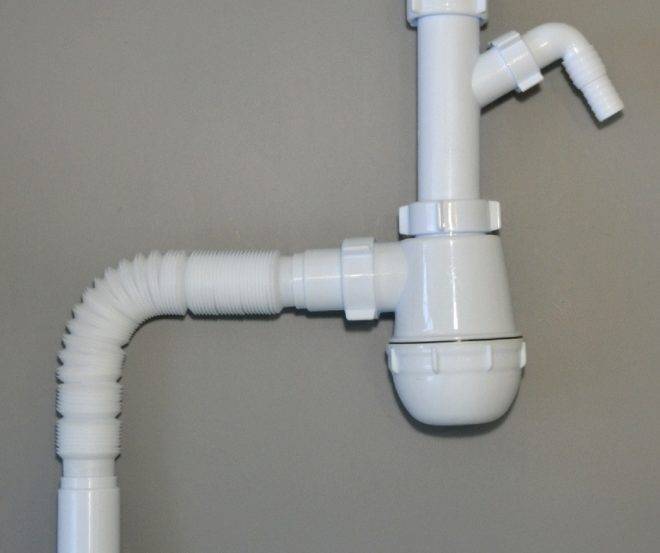
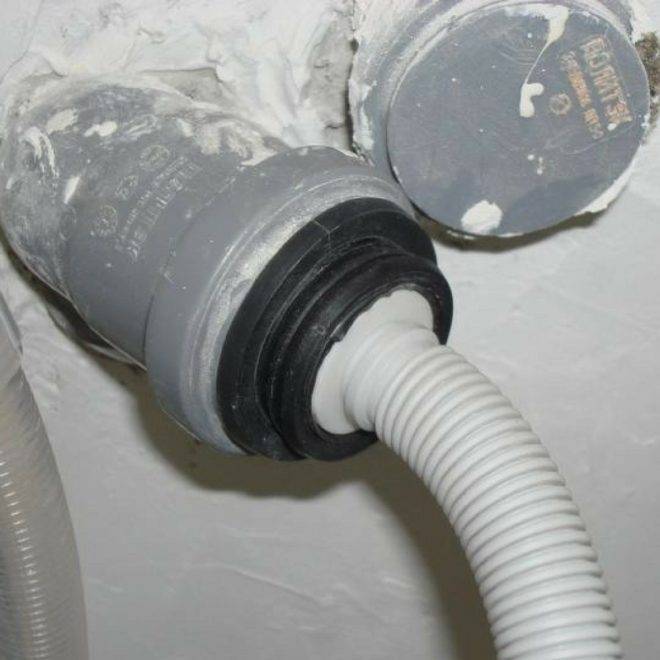
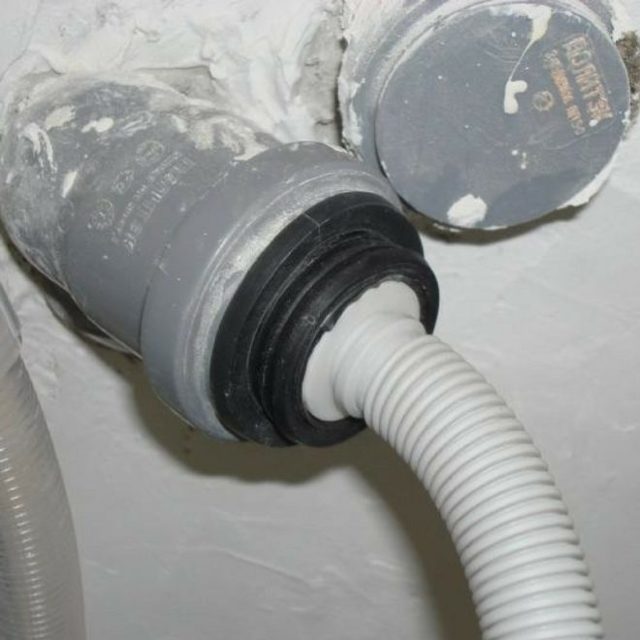
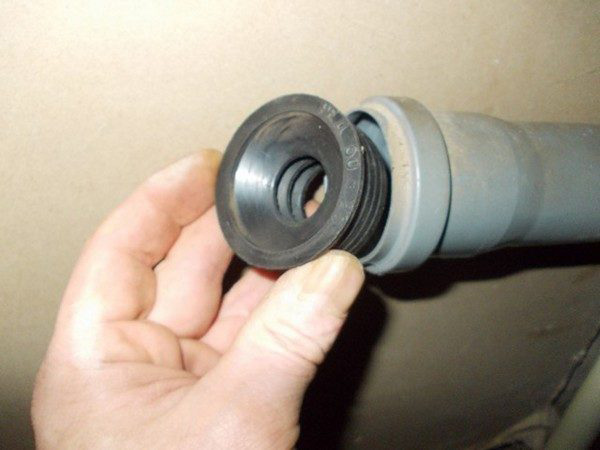
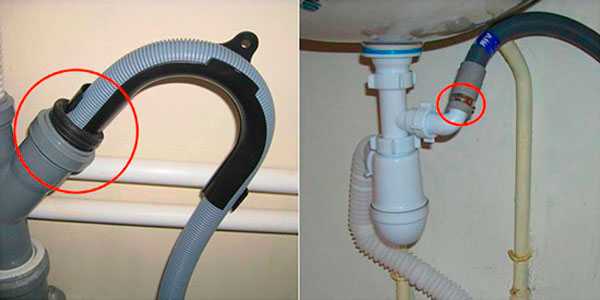
siphon - a cuff consisting of a rubber sleeve tightly inserted into the sewer pipe. The bend of the drain hose acts as a water seal;
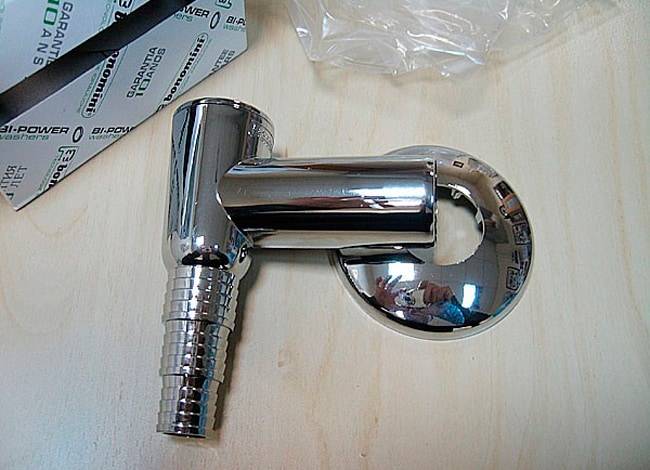
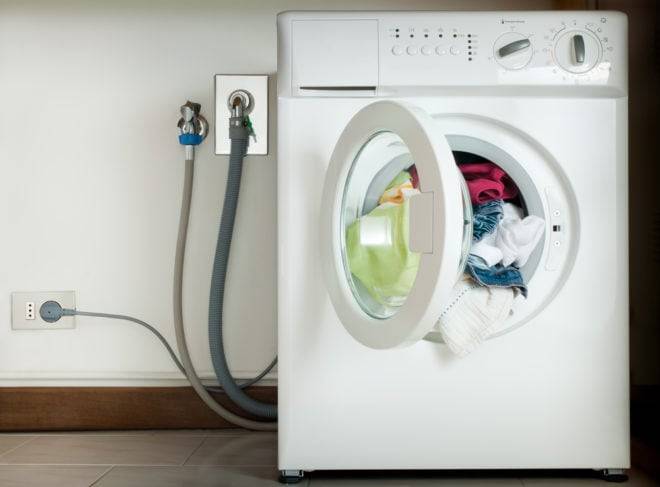
an external siphon that provides connection only with a washing machine;
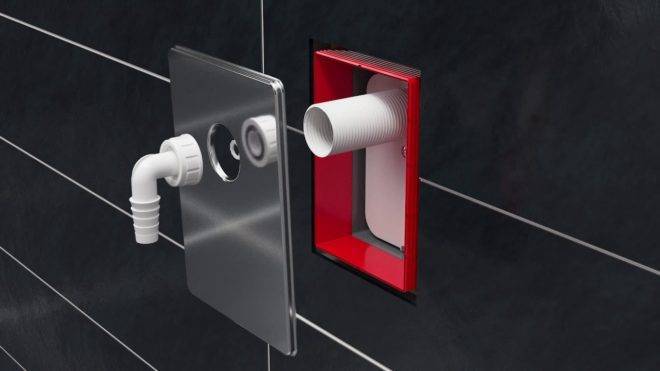
built-in siphon of a hidden type, which is installed in the wall. As a rule, the device kit includes a decorative element used in the subsequent finishing of the wall surface;
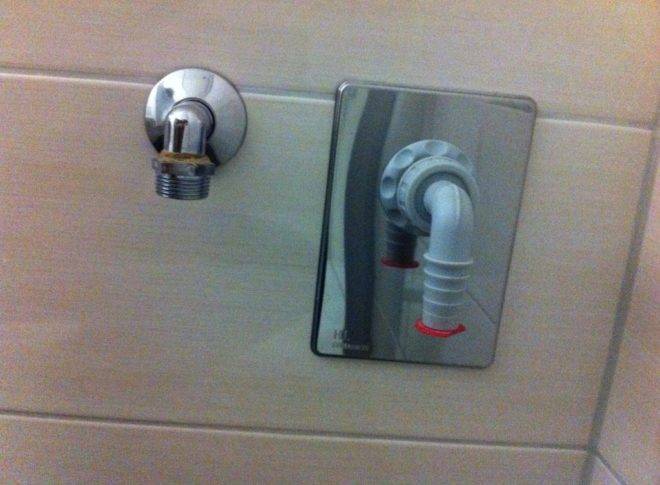
a siphon with a check valve, a spring and a plastic ball having a hollow structure serve as a shut-off device that prevents the flow of drain fluid back into the machine.
Advantages and disadvantages of different types of connection
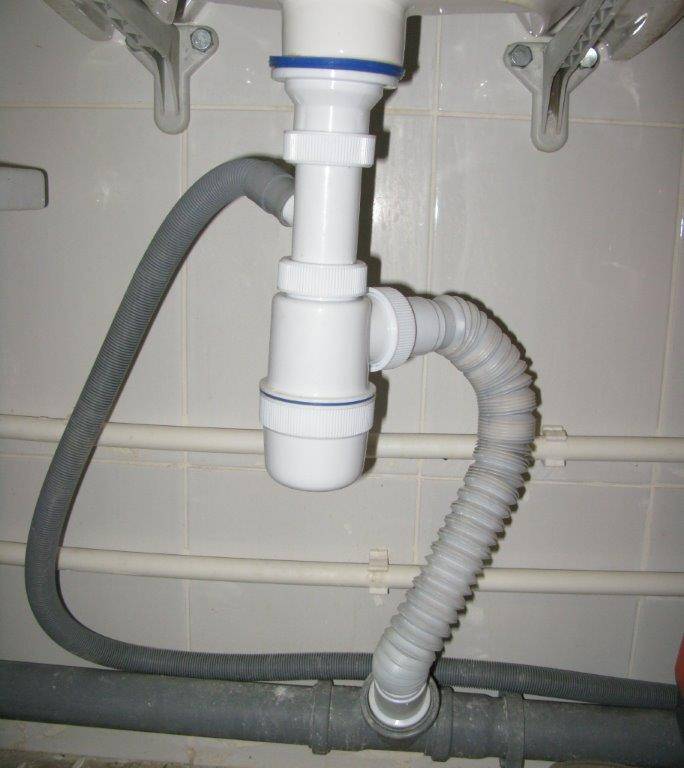
Combined sink siphons for a washing machine and dishwasher are quite often used if both units are installed in the kitchen and located next to the kitchen sink. This type is not difficult to install and easy to use.


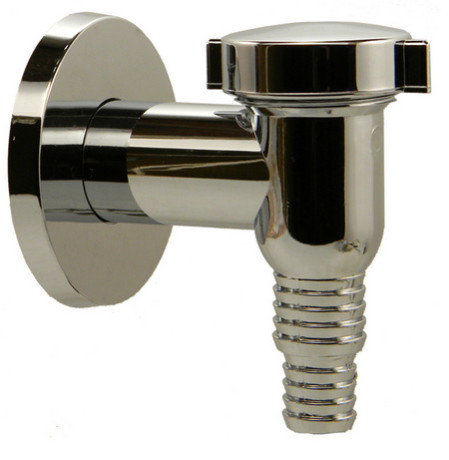

If the distance to the sink or water supply does not allow the installation of drain hoses without a significant increase in their length, an external siphon is used. The main disadvantage of this type of connection is the inability to move the washing machine close to the wall, since the device requires a certain amount of space.
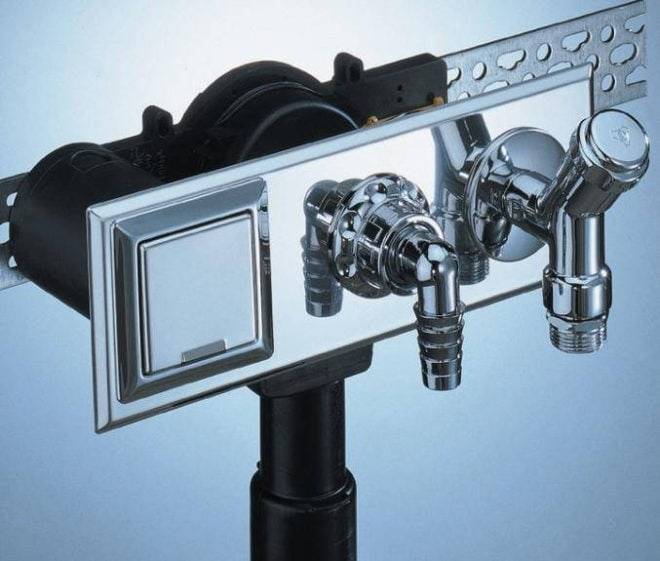
Built-in siphons do not take up much space and fit perfectly into any interior of a bathroom or kitchen, so when planning and carrying out repairs, it is worthwhile to determine a place for it and install it in advance.
Siphon with check valve
Proper installation and connection to the water supply and sewerage system affect its efficient and trouble-free operation to no lesser extent than the quality of assembly, materials and technologies. Sometimes, for the correct operation of the washing machine, it is necessary to install a siphon with a check valve or a check valve as a separate element. The main task of such devices is to protect the drain system from returning wastewater to the pump, tank and other parts of the unit.
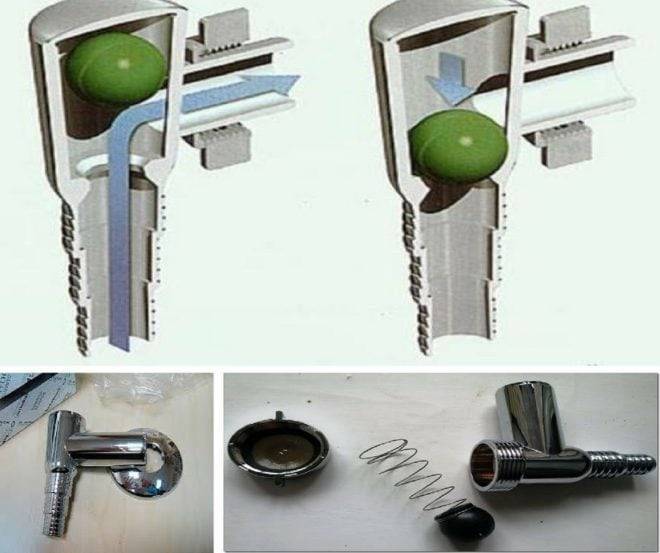
The simplest and most reliable way under these conditions is to connect through a check valve. This completely eliminates the siphon effect.With this method, a drain hose is connected to the check valve on one side, the second end of the valve is inserted into the sewer pipe system. In this configuration, you can place this node both under the bathroom near the floor, and under the sink or on a convenient section of the wall.
At any location, the jet break provides a device with a check valve with the complete elimination of the siphon effect. Alcaplast siphons, produced in the Czech Republic, have a dry spring lock and can be installed in any position, reliably protecting the elements of the washing machine and ensuring its correct operation. The undoubted advantages of such devices include not only a variety of sizes and colors, but also low cost. In addition, it will not be difficult to install an antisiphon even for a person who does not have special training. When installing all elements of the drain system, it is necessary to ensure their accessibility for revision and ease of replacement.
Washbasin connection
To arrange the connection of the sink in the kitchen and its subsequent comfortable operation, it is recommended to use products with a drain hole of 3.2 cm in diameter. It is these hole parameters that are considered the most convenient and at the same time compact, in addition, this parameter ensures ease of installation of the siphon for various sinks, as well as ease of subsequent operation.
Before undertaking the installation of the product, you should first get acquainted with its device. Any siphon for connecting sinks in the kitchen is a product consisting of such components as:
- throughput plastic pipe, complete with a metal insert;
- pipe gasket made of latex;
- nuts with a diameter of 3.2 cm made of plastic;
- cuff-skirt made of elastic and soft plastic, with a hole in it 3.2 cm in diameter;
- tightening screw made of steel;
- overlay for the drain part, also made of steel;
- the body of the product, called the bottle;
- bottom plug;
- rubber gasket in the form of a ring;
- plug for locking the drain, consignment note.
In the process of installing siphons of this kind on a sink or washbasin, maximum attention should be paid to such a parameter as the tightness of each connection of the structure.
Product types
Separate siphons
Installing a hidden siphon not only makes it easier drain pump operation, protect the sewer from clogging with debris from the surface of the clothes, and the room - from the penetration of unpleasant odors. Such a device can be hidden in the wall from the eyes, because it is much more pleasant to contemplate even finished surfaces than pipes, hoses and connections protruding from everywhere.
The only disadvantage of installing a built-in product is that you need to think about its location before making repairs in the room, and install it into the system before finishing the walls. After the work has been done, a small outlet will peek out of the repaired surface, which will need to be connected to the drain hose. Thanks to this, you can move the washing machine as close to the wall as possible, thus saving a lot of space.
The external siphon for the washing machine is installed in the sewer socket. Despite the fact that this product is relatively small, it still does not allow you to put the washing machine close to the wall, which is not always convenient, given the small size of our bathrooms and kitchens.
Combined siphons
Such products are standard siphons installed under a sink or sink, but having a special pipe that allows you to connect an automatic machine. This device simultaneously serves both washing appliances and sinks. Such products are convenient precisely because of their versatility, ease of connection and the absence of the need to globally redo the sewer system. But at the same time, the washing machine should be located at the sink as close as possible.
Rubber cuff
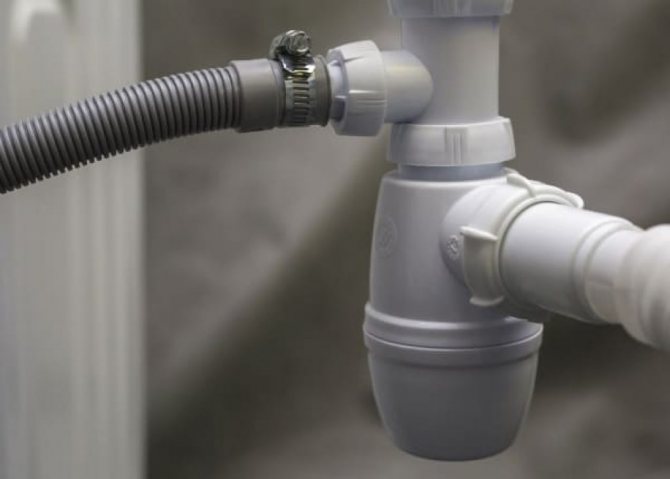
The rubber cuff, which is attached to the socket of the sewer pipe, seals and hermetically fastens it to the drain hose. With such a connection, the role of the siphon passes to a reinforced PVC tube, through which soapy water is drained from the automatic machine. Using the hook included in the washing equipment kit, the hose is suspended at a level above the sewer, which creates a water seal. Despite the apparent cheapness, it is better to abandon such a handicraft and unaesthetic system and purchase a special siphon with a drain for a washing machine.


Selection according to installation conditions
For the most efficient operation of the washing machine, any siphon model is selected. From the point of view of observing the interior of the room, comfort in installing the structure, several options for installing the drain are considered:
- outdoor model - is installed if space is not limited and the entire drain structure will be hidden behind appliances, furniture, so as not to spoil the look of the interior. It is not difficult to install such a model, it is not necessary to assemble it, since it is most often already on sale in a complete state;
- siphon for a hidden type washing machine - for a small room. Considered a difficult installation job;

combined drain fittings with the connection of several consumers will allow in a small area not to build tricky plexuses with a drain system from each point.
The model with a check valve does not serve as its protective function every time the machine is turned on, but in an emergency it will save the situation. Therefore, do not ignore the purchase of a model with protection.
The correct installation of the drain system and its performance depends on the quality of all parts of the system. You should not choose low-priced drain fittings so that you do not have to deal with replacing parts soon.
Features and connection rules
Installing a siphon for a washing machine is quite simple, you do not need any tools or specific knowledge, you just need to correctly plan the location of plumbing facilities and choose the right equipment.
Connecting a siphon to a washing machine has its own characteristics. First of all, it must be taken into account that a hose of about 3 m is included with the washer, less often the length of the hose is 5 m. If this length is not enough, the hose can be extended, but no more than 3 m. in diameter. Nevertheless, it is better not to extend a short hose, but to immediately buy a longer one, since an extended one will increase the load on the pump responsible for draining the water. This is quite an expensive part and it is better to save it.
It is best to calculate the connection in such a way that a standard short three-meter hose is enough. The use of a long hose will increase the load on the drain pump, and the hose itself will more often become clogged at bends and constrictions. And this will lead to the need for frequent cleaning.
To connect a washing machine to a siphon, you need to know two things:
- the drain must be at least 60 cm high to reduce the load on the drain pump;
- it is advisable not to build up the hose, for the same reason.
If, nevertheless, the length of the hose is not enough, then you can use a sewer pipe that has about 3 cm in diameter. It is necessary to connect the siphon for the washing machine in such a way that the pump pushes water through the hose, and then it would run on its own. The extended hose must be fixed at a certain height, it must not be thrown to the floor. So that the water can drain on its own without the help of a pump, an angle is formed from the hose.
There are several options for connecting to sewerage from plastic pipes:
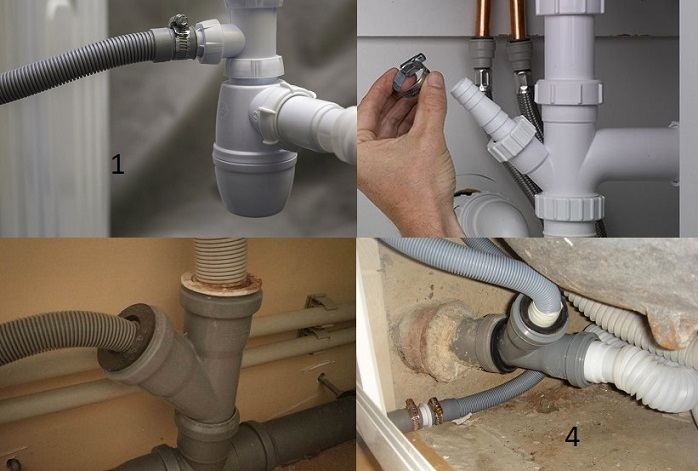
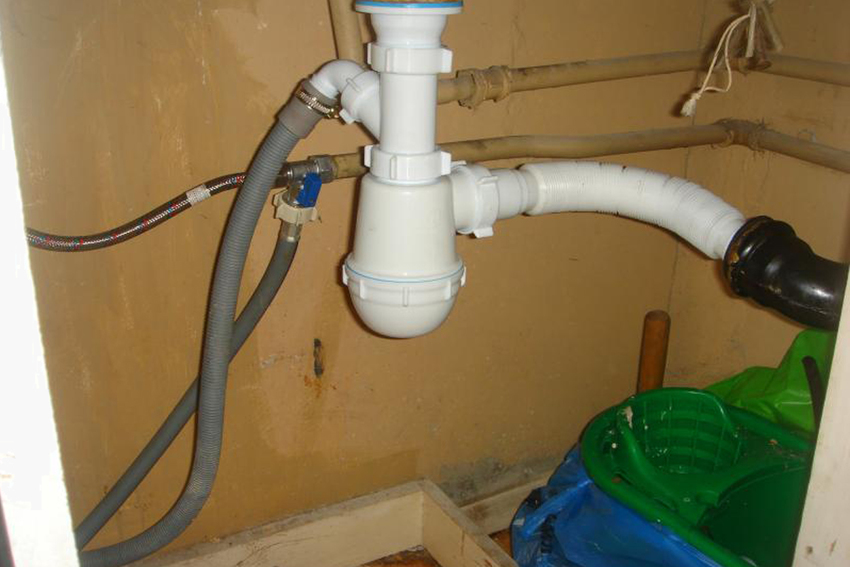
- the washing machine is located under the sink. Here it is best to use a built-in or flat siphon. In this case, you will need a model with three holes, one of them will be connected to the sewer, another one to the sink, and the third will be used to connect the corrugated hose of the washing machine;
- if the machine is located to the left of the sink, under the countertop, then a siphon with a tap or a built-in version will do;
- when the washing machine is far from the sink, you can use any version of the siphon to drain. The main thing is that it looks quite aesthetically pleasing. Since often with such a connection it will not be possible to hide it from prying eyes. In addition, it is advisable to take into account that the distance is still not too large, because then you will have to purchase a special long hose and change the drain pump of the washing machine more often.
If it becomes necessary to connect a plastic siphon to cast iron pipes, you will additionally need to use special rubber and plastic adapters to connect cast iron and plastic to each other. The installation process will look like this:
- remove the old siphon, if it was;
- fix a rubber adapter on the cast-iron pipe, which will allow it to be connected to plastic;
- use a plastic adapter in the form of an oblique tee with a diameter of 5 cm;
- then insert the rubber adapter and secure the drain hose.
 Installing a siphon for a washing machine
In general, installing a siphon is not such a complicated procedure, regardless of whether it needs to be connected to plastic or cast iron sewer pipes. The main thing is to stock up in advance with all the necessary details such as adapters, nuts and clamps, and also do not forget to put a rag or put a water container under the place of work. To reduce leakage during installation, you can turn off the water supply to the apartment.
Kitchen
Installation siphon in the kitchen both simple and complex at the same time. Simple - because the nozzle and sink are fairly easily accessible. Complicated - because the desired kitchen siphon can be a rather complex design. For a washing machine, a siphon with an additional fitting is needed. If the kitchen also has a dishwasher - with two. For a sink, if it is double, you will need a siphon with a double drain.

Kitchen siphons
In addition, in new houses, the sewer pipe is located on the wall and goes straight into the riser; in this case, there are several risers per apartment. From the point of view of sanitation and hygiene, this is excellent, but the release of the siphon will no longer go down, but back or sideways.Some types of kitchen siphons are shown in the figure; according to the diagram on the left, you can calculate the size of the free space for the siphon.
Instructions for installing a siphon in the kitchen
- We check the fit of the drain grate in the sink sink. It may turn out that the stamping in the sink is too small. This is unacceptable: a puddle around a protruding grate will quickly become a breeding ground for infection. In such a case, it is advisable to agree with the seller on a replacement when buying. In extreme cases - put the grate without a gasket, on the sealant.
- In the sewer pipe we put the installation cuff, lubricated with sealant. The mounting surface of the nozzle must be dry.
- We check the end (docking) surfaces of the body threads. With a sharp knife we cut off the burrs and flash (they can damage the gaskets) and with the same knife or a scraper (reamer) we remove chamfers of 0.5-1 mm.
- We cut to size, if necessary, the outlet end of the drain pipe, put it in the cuff, fix it. If the fastening is with a clamp, you will need a screwdriver, tighten the clamp screw. The threaded end of the outlet pipe must face the body of the siphon (bottle or elbow).
- If the spout goes down, we plant a square on the upper end of the exhaust pipe on the sealant.
- We install a drain grate in the sink of the sink. We do not put the bottom gasket of black rubber yet.
- We put a thin ring gasket in the groove of the plug and lubricate it with sealant, capturing the root of the thread for 2-3 turns. We close the cork.
- We insert a valve into the outlet pipe of the bottle, if provided. The damper blade must open outwards.
- We connect the siphon bottle to the outlet pipe: we put a conical gasket on the sealant to release the narrow end to the bottle, put it into the bottle, screw the side nut of the bottle onto the thread.We don't tighten it.
- We put the bottom drain gasket on the sealant into the groove of the upper couple of the bottle, bring it to the drain pipe of the drain grate, do not tightly wrap the top nut of the bottle.
- Slightly shaking the bottle, alternately tighten the top and side nuts of the bottle tightly.
- If the washer and sink fittings are not yet used, we plug them with rubber plugs, complete or suitable in size. Otherwise, just pull the drain hoses on them.
About valve
In the case of a flood, even a unkempt, slimy valve saves the apartment: with it, it’s a general cleaning, not a repair. But the valve is overgrown with sludge, so the siphon with the valve must be periodically disassembled and cleaned. That's why:
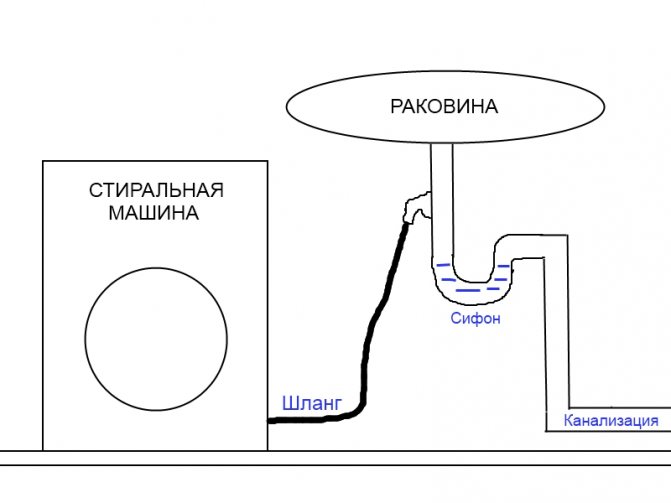
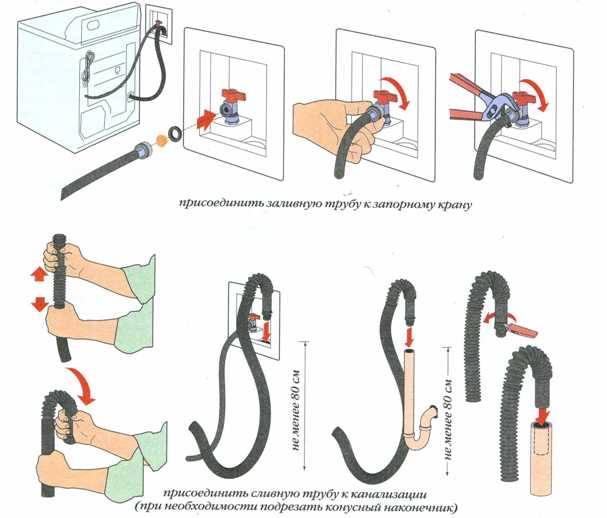
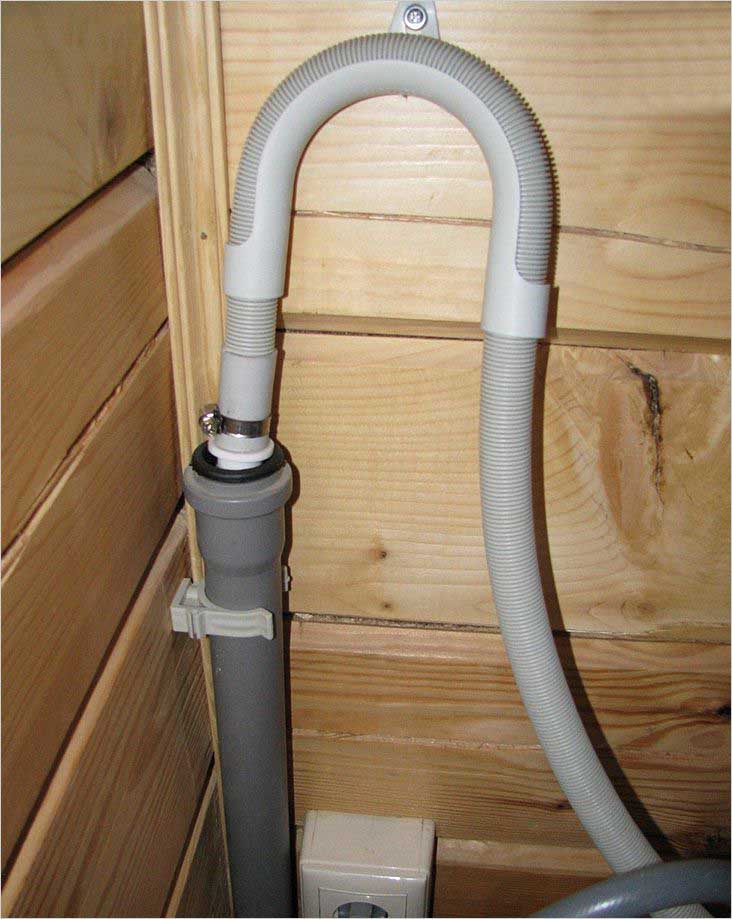


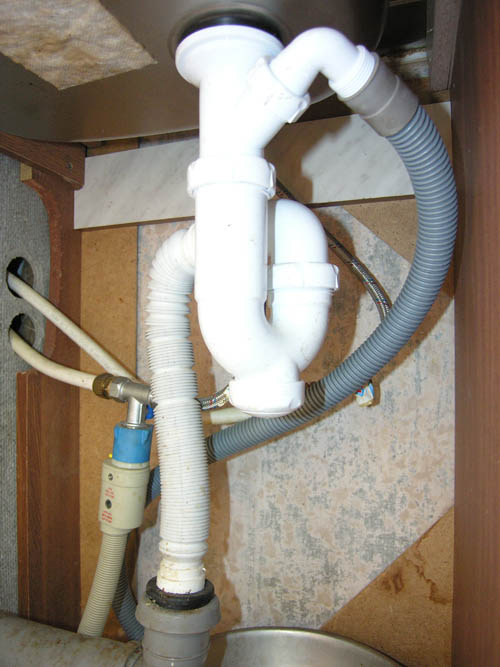

- On the top floor, or in new houses with separate risers, the valve is not needed at all: there is no one to fill and / or it is impossible.
- In 97% of cases, with undisturbed sewage, the first floor is flooded. Here the valve is needed in any case.
- In other cases, be guided by the neighbors BOTTOM: how neat, respectable they are and prone to illegal initiative, like installing a safety pin in a riser.
Device Installation Tips
Without fulfilling the requirements for installation of drain fittings there will be no effective output of waste water, the washing machine will work intermittently, which will shorten its service life.
If installed at a height of no more than 80 cm from the level of the floor covering, then the load on the pumping pump will not increase. The equipment will work as usual. The maximum height can reach 90 cm. The indicator depends on the model of the washer, on the power of the pump.
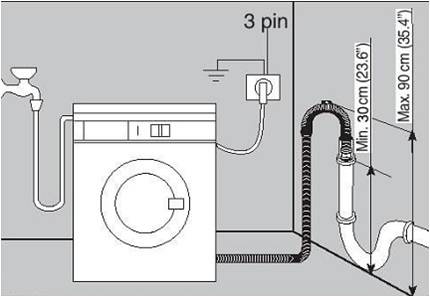
- Spare the pump and the short drain hose. The longer it is, the more the pumping pump works.
- The extension is carried out only for a short period of time. In addition, it cannot be laid on the floor (on the bottom). This increases the power of the pump. In such a situation, the option of approaching the sewer pipe to the installation site of the washer is considered.
- If a long drain hose remains, then it is mounted on the surface of the wall with a slope for gravity flow of the liquid. Then the load on the pump will drop, and it will work in an acceptable mode.
- If a hidden type drain is installed, then the dimensions of the niche for its installation are selected taking into account the width of the facing tiles or panels, so that the material does not have to be cut out.
- If you do not feel the strength and confidence in the performance of work, then it is recommended to invite a master who will cope with the communication lines and install, prepare the equipment for work strictly according to the instructions.
Types of siphons
First of all, you need to correctly select the siphon itself to ensure long-term and high-quality operation of plumbing. There is a big difference between designs for draining a bathroom bowl and siphons for connecting a kitchen sink. There are the following options siphons for washbasin in the bathroom and the bathing bowl itself:
Connecting a bottle siphon.
- Bottle design. This product has a fairly large size, so this type of siphon is chosen, taking into account the fact that there will be a sufficient amount of free space under the sink. The advantages of the design include the presence of a shutter, the provision of self-cleaning in a regular mode, an overflow drain device. In addition to these functions, this type of design allows you to connect the sewer drain not only to the sink, but also to the washing machine and dishwasher.
- Corrugated siphon.Such a product can complement the kitchen sink, bathtub and washbasins of various types. This design is endowed with one drawback associated with the complexity of cleaning the sewer, which is possible only with the use of special equipment. The advantages include flexibility, which makes it possible to install the siphon in the most inconvenient places.
- Pipe construction. This type of product is designed to create a sewer drain from shower and bath trays.



