
- Arrangement of a septic tank from barrels with your own hands
- Mounting diagram
- List of materials
- Stages of work
- Organization of septic tanks for cottages with a high level of groundwater
- Choosing a septic tank for a site with high groundwater
- Sanitary standards
- Power
- Location
- Place for draining liquid
- What are the differences. What types are there and when to use them
- Peculiarities
- Features of the installation work
- Stage # 1 - sizing and excavation
- Stage # 2 - installation of plastic containers
- Stage # 3 - filter field device
- How does it all work?
- Planning a septic tank from barrels
- Work technology
- Pit preparation
- Platform preparation
- Tank preparation
- Installing cubes
- Connecting pipes (fittings)
- Exterior finish
- Helpful Hints
- Septic without pumping
- How does a septic tank work without pumping?
- Which septic tank without pumping to choose?
- Conclusions and useful video on the topic
Arrangement of a septic tank from barrels with your own hands
To ensure normal wastewater treatment, it is desirable to use two chambers in the septic tank: in the first, heavy substances settle to the bottom, and in the second, clarified water settles before being discharged into the ground.
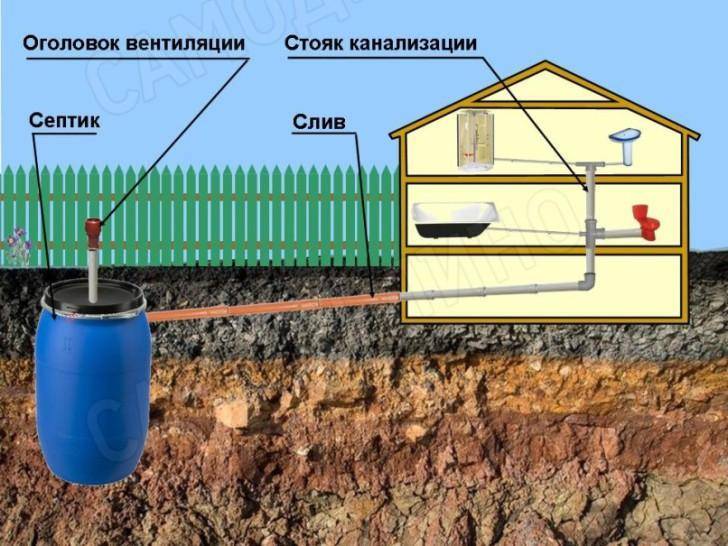
Below we consider an example of arranging a septic tank from two plastic barrels with our own hands.This instruction can be considered universal, since most of the points are applicable to the installation of metal containers.
Mounting diagram
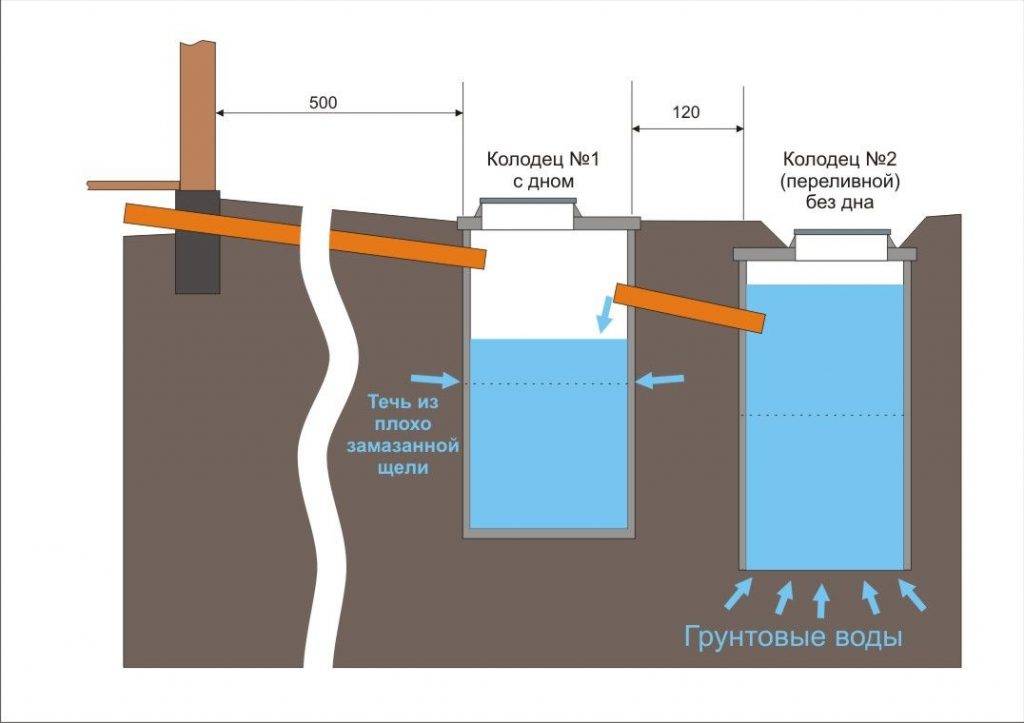
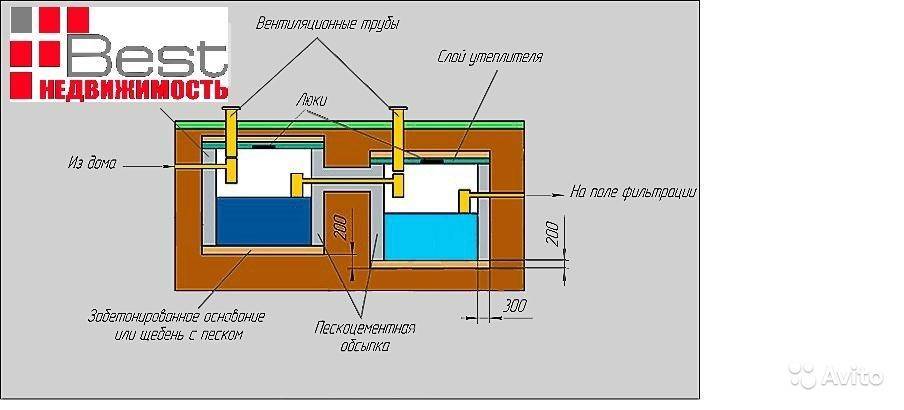
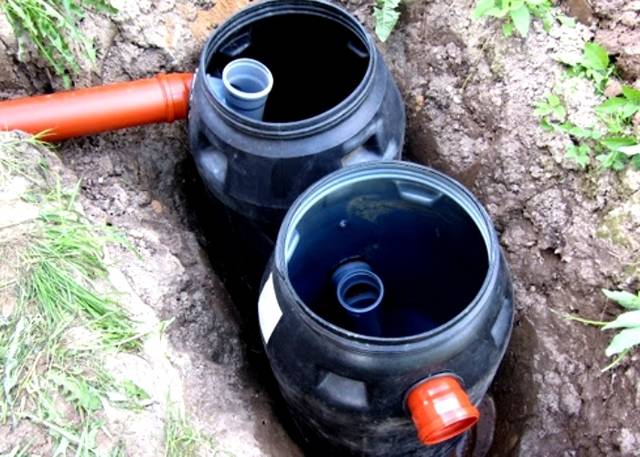
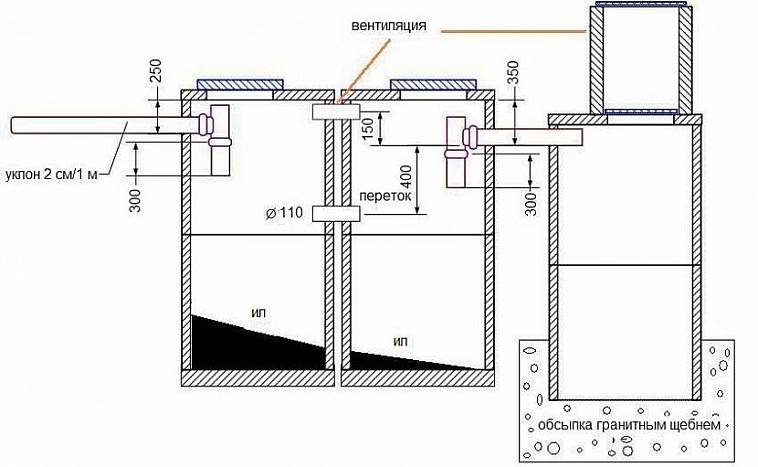
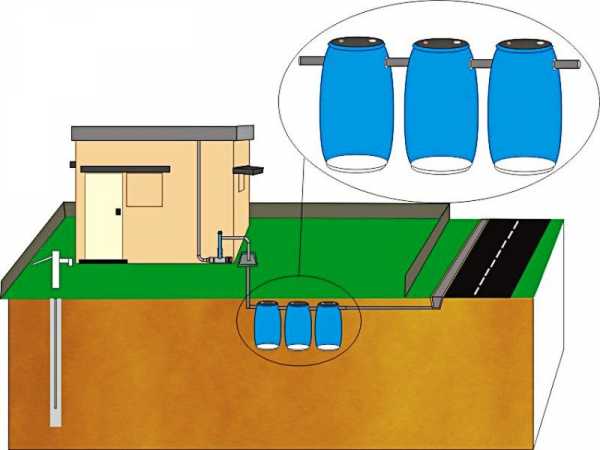
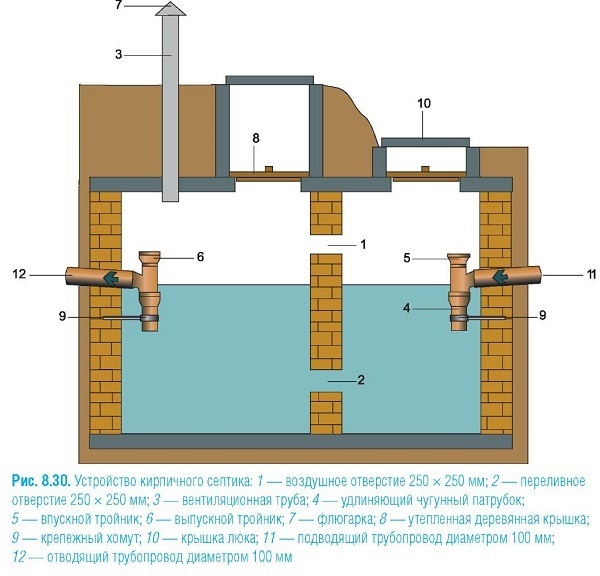
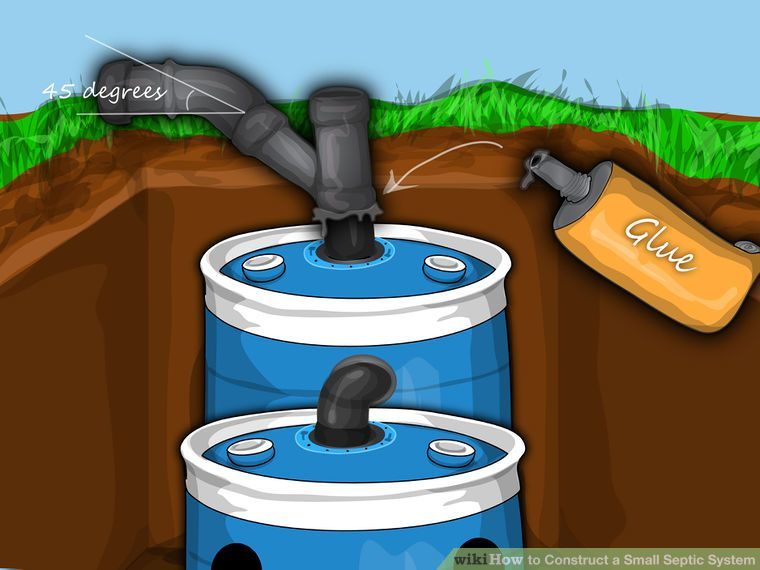
The design of such a treatment plant is not particularly complex. The barrels are sequentially connected to each other by means of an overflow pipe, while the second container is located 10-20 cm deeper than the first. Holes are cut in each tank for connecting sewer pipes and a ventilation outlet
It is important to observe the correct position of the inlet and outlet relative to each other: the inlet must be placed 10 cm above the outlet
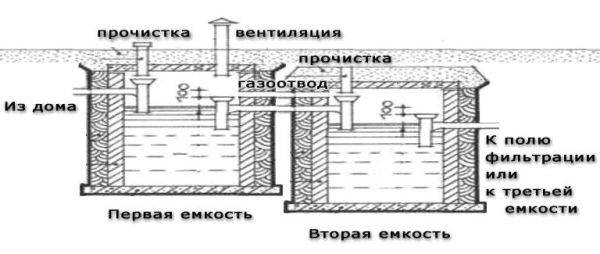
Wiring diagram of a septic tank of two barrels
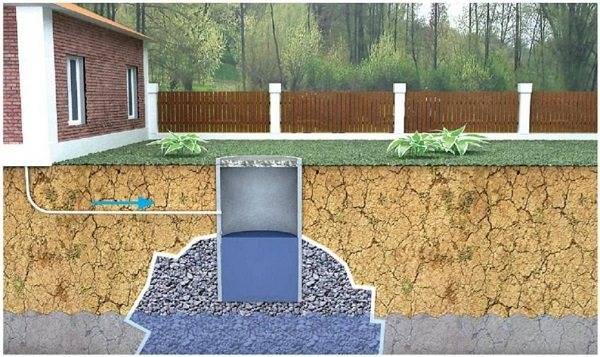
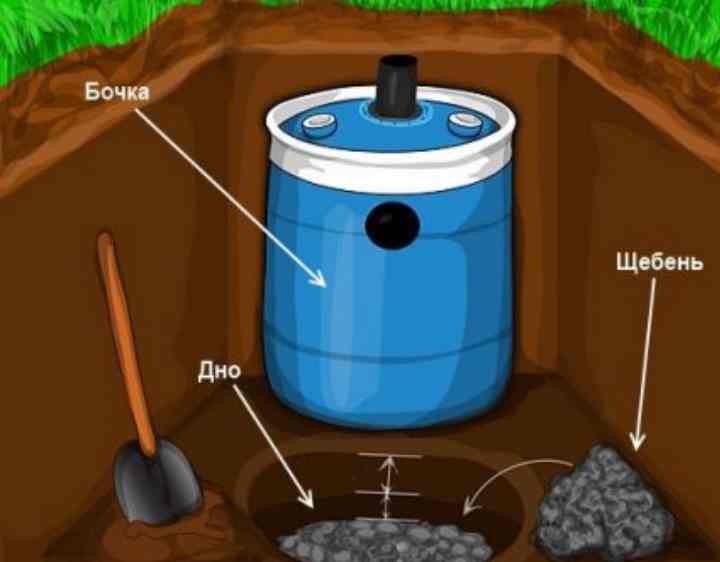
Clarified water can be drained into a filter well or a filtration field can be used. The well is used at low groundwater level and good soil permeability. For its installation, a bottomless barrel is used, in the lower part of which a 30-cm gravel pad is made.
The filtration field has a larger capture area, due to which water is drained even in conditions of low soil throughput. In this case, water is discharged from the second chamber of the septic tank into a drainage pipe, which is located in a layer of gravel or crushed stone.
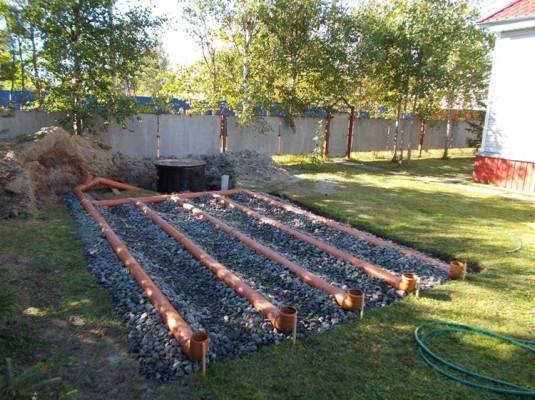
The number of drainage pipes in the filtration field directly depends on the volume of wastewater
List of materials
To complete the work, you will need the following materials:
- two barrels with a volume of 250-1000 liters (depending on the number of drains);
- sewer pipes with a diameter of 110 mm for outdoor installation (orange color);
- corners and tees for connecting pipes;
- glue and sealant for PVC;
- crushed stone of fine fraction (2-3.5 cm);
- cement;
- sand.
A set of tools for mounting a septic tank from plastic barrels is standard: a shovel, a rake, a level, a jigsaw and a container for mixing the solution.
Stages of work
- In barrels, using a jigsaw, holes are cut for sewer pipes and a ventilation riser. For the inlet, 20 cm recede from the upper edge, and for the outlet 30 cm. The gaps formed between the holes and pipes are filled with sealant.
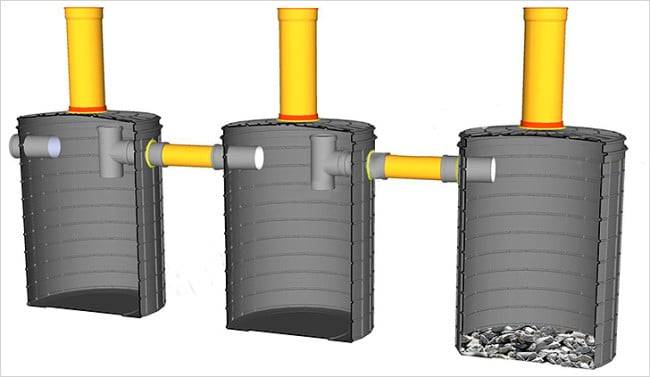
Connections of elements of a homemade septic tank from plastic barrels
- The size of the pit is calculated in such a way that 20-30 cm remain between the soil and the wall of the tank. The walls of the pit are leveled, and the bottom is rammed.
- Before installing the barrels, the bottom of the pit is poured with a layer of concrete, in which several lugs or pins should be provided for anchoring the septic tank.
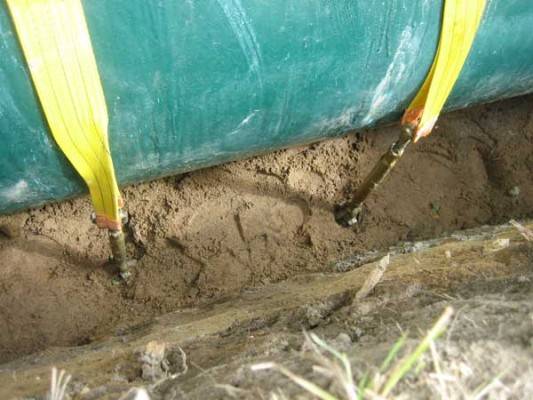
The tank is fixed with a strong cable or straps.
- In order for the walls of the septic tank to be protected from seasonal soil movements, the gap between the barrels and the soil is filled with a sand-cement mixture. To prevent deformation of the barrels as a result of the pressure created by the backfill, they are pre-filled with water.
- In the immediate vicinity of the septic tank, a pit is dug for a filter well or a filtration field is made to drain purified water into the ground.
- When all installation work is completed, the barrels are covered with a layer of soil. If desired, this place can be hidden from others with the help of grass and other vegetation, leaving only inspection hatches and ventilation on the surface.
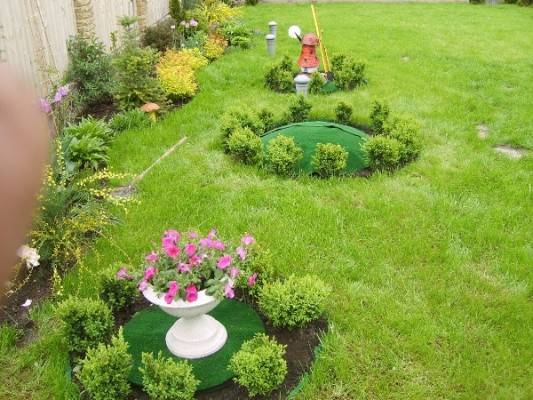
Septic tank as an element of landscape design
After completing all the points in this manual, you can equip a simple septic tank from plastic or metal barrels with your own hands.For the installation of more complex treatment facilities, it is better to use the services of professionals.
The owners of country houses do not want to give up the usual urban amenities and have to equip the sewer system on their site on their own. Often it is a simple cesspool, made from a barrel or otherwise, but if there is running water and households actively use plumbing fixtures, its capabilities will clearly not be enough.
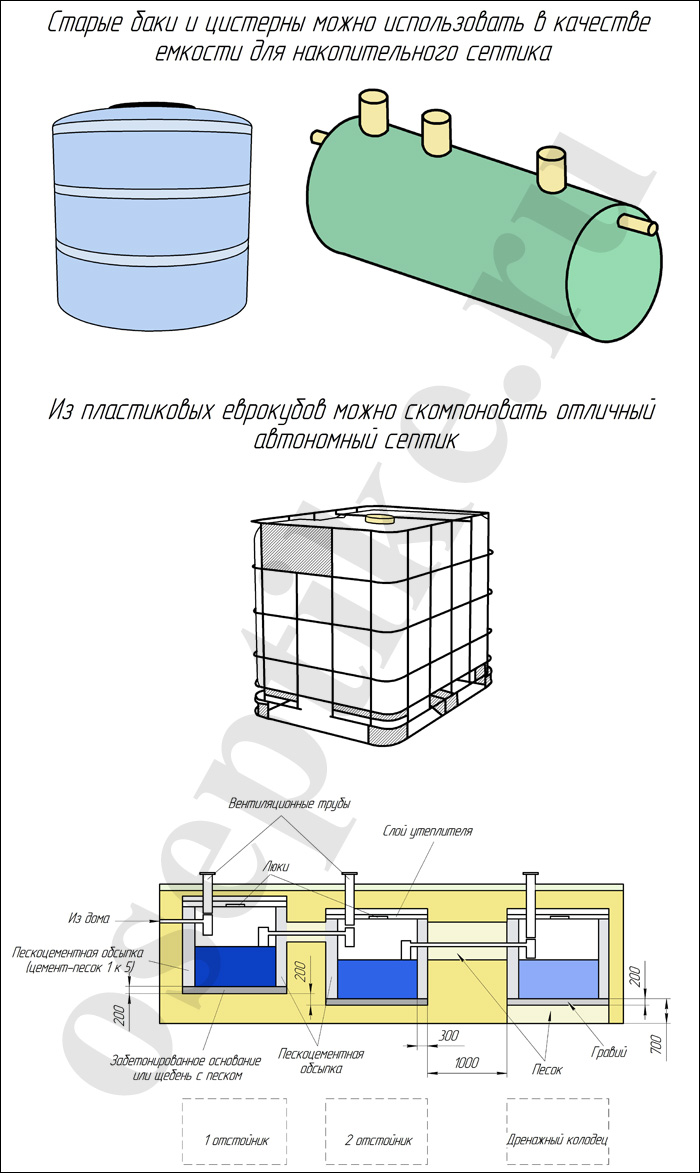
The country sewerage scheme includes a collector receiving sewage, internal and external pipeline networks. Depending on financial capabilities, the collector is built of bricks, concrete rings, large car tires, eurocubes or a 200 l barrel.
Organization of septic tanks for cottages with a high level of groundwater
The construction of a sewer system can be complicated by the presence of a high level of groundwater on the site. These conditions impose restrictions on the treatment of wastewater passing through septic chambers, and the durability of the structure itself is significantly reduced.
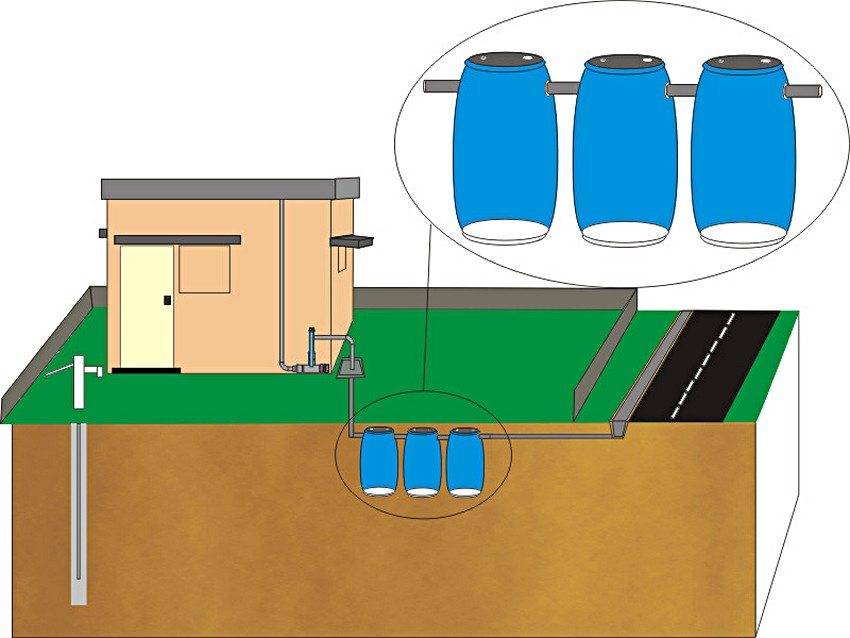


The way out of this situation will be the construction of a sealed storage septic tank. Due to sealing, ground moisture, which is in excess, will not be able to interact with drains and affect the process of their treatment. Such structures have only one drawback. There is a need for regular use of the services of a sewage machine. And this already goes against the desire to create a cleaning structure that provides a long period of use without pumping.
Draining water from a septic tank into a ditch or storm drain
To achieve the desired result, you can use a typical scheme with a more complex structure.The design provides for the installation of a sealed container. The material for it can be concrete or plastic. This container is to be divided into chambers designed to supply waste water and remove the treated liquid.
The process of installing a septic tank at a high level of groundwater
Choosing a septic tank for a site with high groundwater
In the presence of high groundwater in a suburban area, when choosing a treatment plant, some rules should be followed. They will help you choose the right type of septic tank and make a quality installation.
Basic Rules:
The volume of the treatment structure is calculated based on the rate at which wastewater treatment will be carried out for a set period (day).
Materials of polymer origin or concrete are the safest and most reliable basis for creating a septic tank.
The highest efficiency can be offered by horizontally located septic tanks with a small depth.
Suitable variants of treatment structures: accumulative or providing the possibility of forced pumping of the purified liquid.
Increasing the number of chambers increases the degree of purification.
Scheme of selection of a treatment plant depending on the level of groundwater
Groundwater close to the surface limits the use of some materials.
In such conditions, the construction of septic tanks should be abandoned:
- from brickwork with gaps;
- from tires;
- from concrete rings.
Perforated pipes for drainage should also be excluded from the list of materials used.
The choice of septic tanks for installation is quite large.Most of them can be mounted by hand. You can use improvised means, for example, bricks or tires (only for drains from a country shower) or purchase a finished structure from a specialized company.
Sanitary standards
Before starting the installation of a septic tank in a summer cottage, you need to study the sanitary standards, select the area, the installation capacity. If something goes wrong, you can poison the soil with waste, harm the people who live in the surrounding area.
Power
The power of a septic tank is its dimensions. To calculate what size the structure should be, you need to perform several actions:
- On average, after three people, 100 liters of water drain.
- This number must be multiplied by 3. The resulting 300 liters are converted to m3. This amount is enough for 1 day.
- It should be borne in mind that the water must stand for 14 days for complete cleaning.
The optimal chamber volume for 3 people is 4 m3.
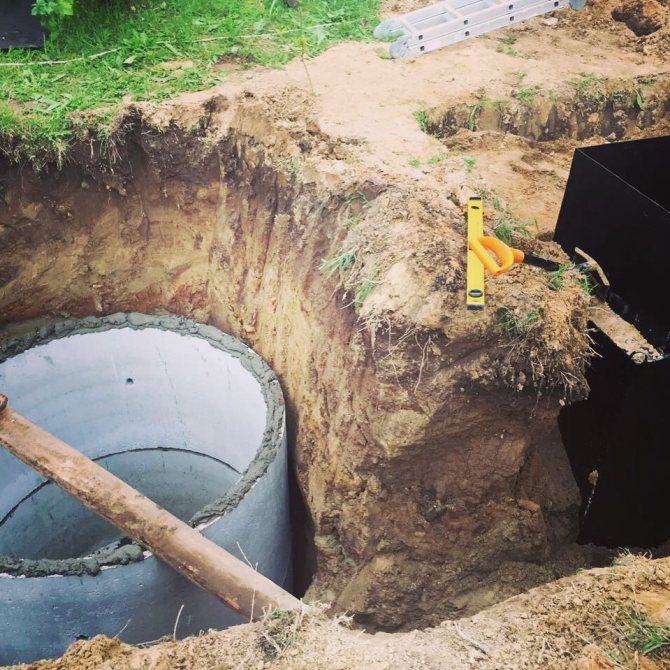
Location
The location must be chosen, depending on the type of surrounding buildings, plants:
- fruit trees - 3 meters;
- fences - 3 meters;
- residential buildings - 5 meters;
- stream, pond - 10 meters;
- wells - 25 meters;
- reservoirs - 30 meters;
- wells - 50 meters;
- treatment facilities - 5 meters.
It is recommended to draw in advance a diagram of the location of the main objects on the site, to consider the location of the septic tank.
Place for draining liquid
There are several options for the place where the waste fluid is drained:
- on uneven terrain;
- into the soil;
- into the reservoir.
Water must undergo long-term filtration in order to be cleared of any debris, harmful substances.
What are the differences. What types are there and when to use them
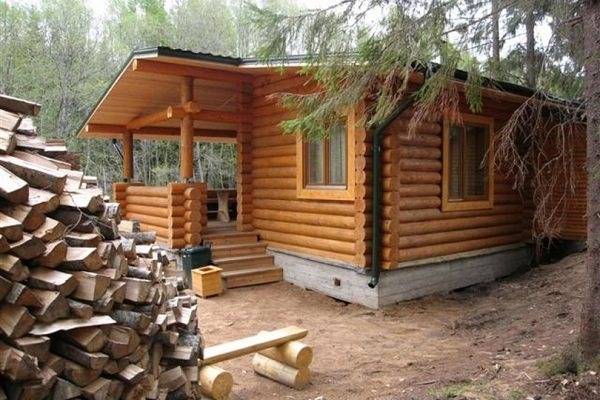
A large number of septic tanks have been developed for the bath.They have significant differences, representing containers made of plastic, metal, reinforced concrete of different volumes.





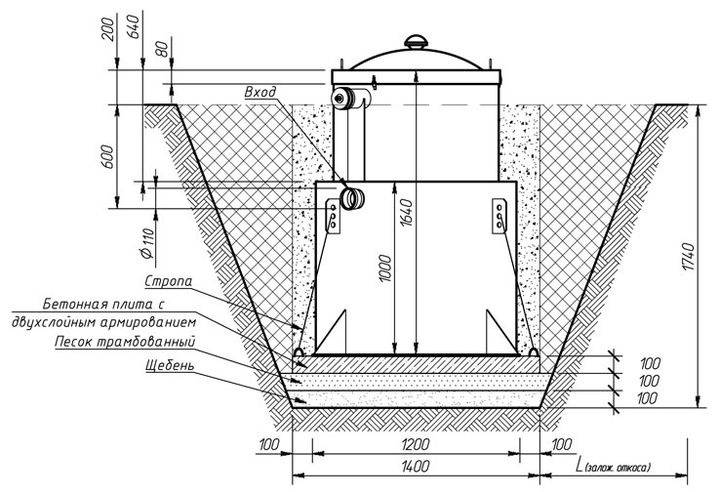

In addition to the material, these devices differ in the principle of operation. The most recognized and effective method is biological treatment. Microorganisms that feed on waste in wastewater independently process human waste products.
Another simple way is partial cleaning and post-treatment in the soil. So, passing through a layer of rubble, the drains end up in the soil. This contributes to their more thorough cleaning.
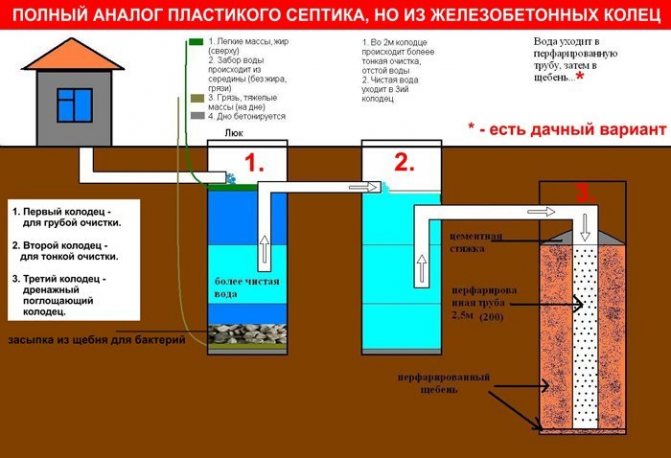
Almost all designs work according to the same scheme. The first stage is to separate the dirty water from the faeces by settling them at the bottom of the tank.
Second stage: water passes into the second compartment. Here she is cleared up.
The third stage - drains are clarified even more. At the last stage, the water is completely purified. Special filters can be used for this. The result is water that is not suitable for drinking, it is used only for technical needs.
Also, septic tanks can be divided by type of installation. There are solid structures (made of reinforced concrete), as well as prefabricated ones.
Important! A septic tank can be made from different materials, but the price of the structure will eventually be approximately equal. Therefore, when choosing them, it is better to focus on the properties of the structure and its functionality.
The most popular are reinforced concrete prefabricated septic tanks.
Peculiarities
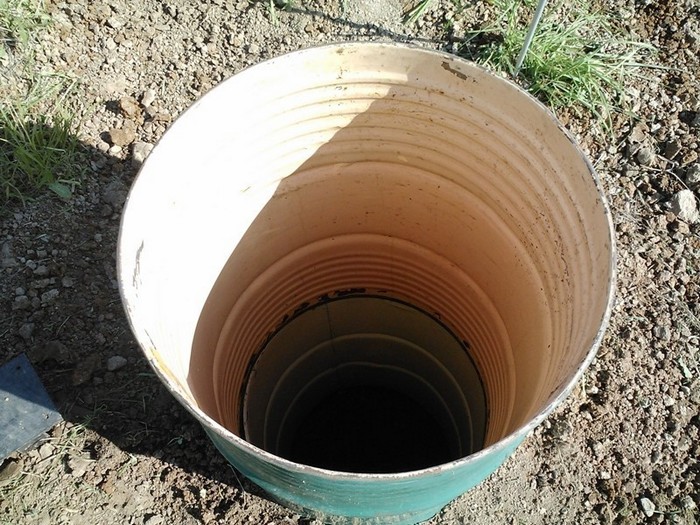
A septic tank from a barrel can be made with your own hands from different materials. The barrel can be plastic or metal. But the latter option is not the best, since the metal quickly corrodes in conditions of constant humidity, so the design will turn out to be short-lived.It is better to make a septic tank for a small dacha from polymer containers with a volume of 200-250 liters. If many residents live in your dacha or the building can be used year-round, then the volume of containers should be even larger.
There can be many options for self-construction in the country of water supply and sewerage. So, water supply can be equipped from a well or a well, and the choice of a septic tank design depends on the characteristics of the effluents, the hydrogeological conditions at the site and the required quality of wastewater treatment. A septic tank from barrels can be:
Single chamber. This homemade septic tank, in fact, is an ordinary cesspool. It can be with or without a bottom, depending on the type of soil and the level of standing groundwater. Wastewater from the sewerage system enters the tank, where it is either pumped out by sewers as it accumulates, or filtered into the ground through a special layer of gravel and crushed stone at the bottom. Such a septic tank is suitable for a shower or bath without a toilet. The thing is that this septic tank will not harm the environment, only if fecal sewage does not get into it.
- Two-chamber. A septic tank of two containers is more perfect. For a small cottage, two barrels of 200 liters are enough. Drains immediately from the sewer enter the first chamber, where they settle, as a result of which the heavy components settle to the bottom. In the second chamber, the clarified waters undergo a post-treatment process. A septic tank of two containers can be made with a bottom in both chambers or only in the first of them. Then a filtering layer is arranged at the bottom of the second chamber, and water is discharged into the ground.
- Three-chamber. The best option is a sewerage system for giving from three containers with a volume of 200-250 liters each.In this design, the necessary degree of wastewater treatment is achieved, which does not contradict sanitary standards. Such effluents can be discharged into the ground without the risk of environmental degradation. Drainage from the sewerage is settled in the first chamber. Then the pre-treated waters flow into the second compartment, where they are further purified by the biological method. There is also a small precipitate of small impurities. Only then the purified water enters the filtration chamber, where it is discharged through a layer at the bottom into the ground.
Features of the installation work
First, using a jigsaw, holes are cut in the barrels for installing overflow pipes and a ventilation riser. The hole for connecting the incoming pipe to the chamber is made at a distance of 20 cm from the upper edge of the container. The outlet is made on the opposite side of the chamber 10 cm below the inlet, that is, at a distance of 30 cm from the top edge of the barrel.
Installing the overflow pipe into the hole cut in the first plastic sump drum and filling the gap with a two-component epoxy sealant
The ventilation riser for the removal of gases is mounted only in the first settling barrel. It is also desirable to provide for this chamber to have a removable cover, which makes it possible to periodically clean the bottom of settled solid particles. In the second settling tank, two holes are made at the bottom, located relative to each other at an angle of 45 degrees, for connecting drainage pipes laid along the filtration field.
Important! The gaps in the holes, which are formed due to loose contact between the pipes and the walls of the barrel, are filled with a two-component epoxy sealant.
Stage # 1 - sizing and excavation
When calculating the dimensions of the pit, it is assumed that between the barrels and its walls there should be a gap of 25 cm around the entire perimeter. This gap will later be filled with a dry sand-cement mixture, which serves to protect the walls of the septic tank from damage during seasonal soil movement.
If you have finances, the bottom under the settling chambers can be filled with concrete mortar, providing in the “cushion” the presence of embedded metal parts with loops that will serve to secure the plastic containers. Such fastening will not allow the barrels to “float” with a vein, and, thereby, disrupt the equipped autonomous sewage system.
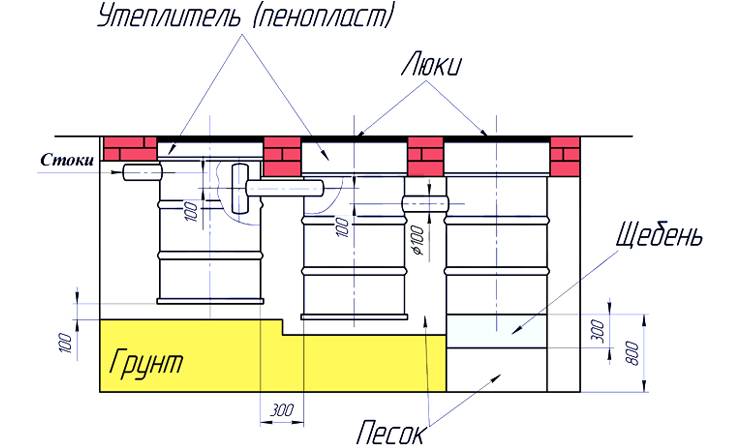





The stepped bottom of the pit must be leveled and covered with a layer of compacted sand, the thickness of which must be at least 10 cm.
Stage # 2 - installation of plastic containers
Barrels are installed on the prepared bottom of the pit, fixed with straps to metal loops immured in concrete. Connect all pipes and seal the gaps in the holes. The remaining space between the walls of the pit and the tanks is filled with a mixture of cement and sand, not forgetting to carry out layer-by-layer tamping. As the pit is filled with backfill, water is poured into the containers to prevent deformation of the walls of the barrels under the pressure of the sand-cement mixture.
Preparation of a hole in the second settling barrel for connecting an overflow pipe. In this version, the flange is connected not from the side, but from above
Stage # 3 - filter field device
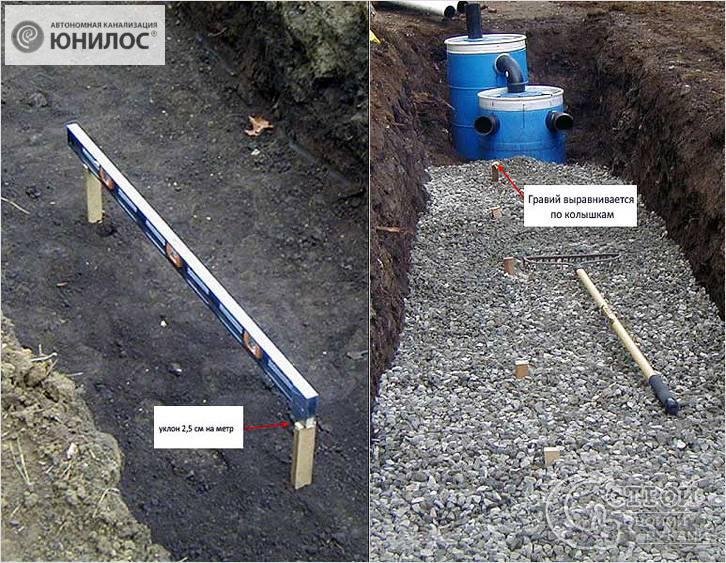
In the immediate vicinity of the septic tank, a trench is dug 60-70 cm deep, the dimensions of which should allow the placement of two perforated pipes. The bottom and walls of the trench are lined with a geotextile fabric with a margin, which is necessary to cover pipes covered with rubble from above.
A 30-cm layer of crushed stone is poured onto the geotextile, the bulk material is leveled and rammed
Drainage pipes with perforation in the walls are laid, which are connected to the second settling barrel. Then another 10 cm of crushed stone is poured on top of the pipes, leveled and covered with a geotextile cloth so that the edges overlap each other by 15-20 cm. Then it remains to fill the filtration field with soil and decorate this place with lawn grass.
As you can see, any summer resident can make a septic tank from barrels. It should only be remembered that this facility is designed for the collection and disposal of a small amount of liquid household waste.
Somehow I didn’t think that I could make a septic tank with my own hands, I’ve been wanting to go to the country for a long time, but it’s a little expensive. I looked - at least 25,000 rubles, and then if you put it yourself. And it will only be used for 3 months in full. Here it is also necessary that the hands be inserted with the correct end. A neighbor in the dacha bought it ready-made, did everything according to the instructions, there it must be walled up in the solution. I did it, I walked proudly for 2 weeks, like you are all the old fashioned way, but I have civilization. And then from this civilization such a smell went that at least run. So he just didn’t do anything and foam it and wrap it with a film, in short, he practiced with him all summer. After all, you can’t pull it out of concrete already. That's it.
Site navigator
Hello! Cold water is leaking from the single-lever faucet. I changed the cartridge but nothing changed.
How to determine if the shower system is suitable for the faucet? I have a bath faucet.
Hello! Such a problem. The ceiling in the bathroom is leaking when the upstairs neighbors are active.
How does it all work?
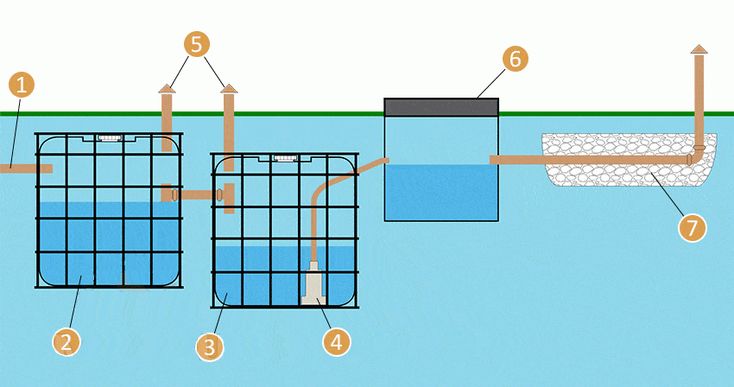
The left barrel is the last one! All water from it is pumped out by a drainage pump into a pit on the street (or a filtration well / filtration field - according to the circumstances). And the first barrel on the right goes there from the toilet bowl, everything in it floats that does not sink, and sinks what turned into silt.
To speed up biological processing in the first barrel, constant aeration is carried out with an aquarium compressor (you can use something more productive - then the design will begin to strongly resemble a full-fledged automatic cleaning station, such as Unilos Astra). It will also be useful to periodically add bacterial cultures through the toilet (there are a large selection in stores).
When summer comes, I will insert the pump into the first barrel and throw the end of the hose into the garden, clean the bottom of the silt and then return everything to its place.
the pump is necessary or drainage with a float (price 1,500-2,500) or to make a float for the baby so as not to run around with the pump all the time!

Planning a septic tank from barrels
To build a sewer structure that will serve for a long time, you first need to choose the right place for its location. If you plan to install a large 2 or 3 chamber system, you must comply with sanitary standards.
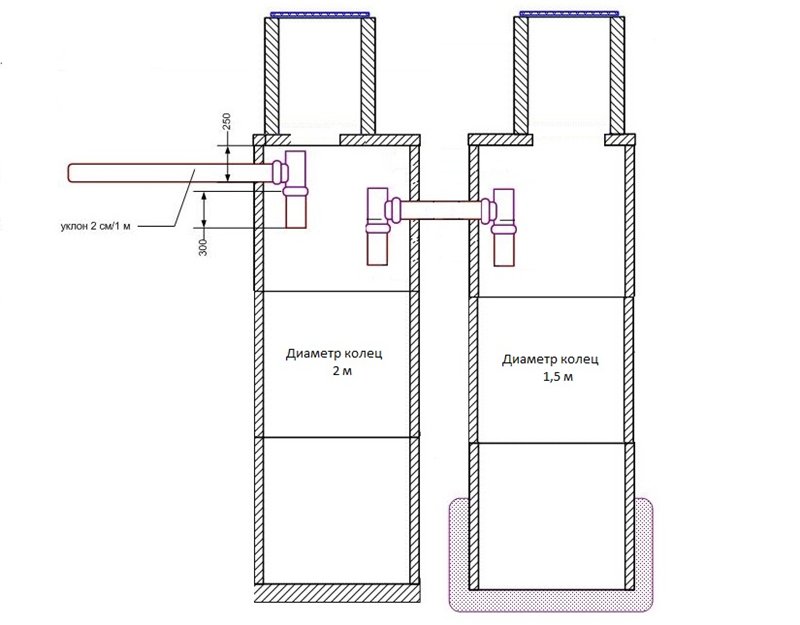
The house, garage, sheds and other buildings should be located 5 m from the treatment plant. In addition, it is necessary to ensure that the distance to the nearest water source is at least 15 m.When choosing a place, it must be taken into account that when arranging the sewerage, a slope of at least 2 cm per meter of pipe will need to be observed. The localization of the septic tank should be such that when laying pipes it is not necessary to make bends at a large angle, as this will lead to layering of waste in the lumen.
Work technology
Pit preparation
Its dimensions are determined by the dimensions of the septic tanks. At the same time, it should be taken into account that the containers from all sides will subsequently be insulated and concreted. Therefore, you need to dig a trench about half a meter wide (a margin of 25 cm from each side). As for the length, the need to connect the cubes with an overflow is also taken into account, so they are somewhat spaced apart (by 15 - 20 cm). The depth is recommended at least 0.5 m, but here it is necessary to focus on the characteristics of the climate, more precisely, on the amount of soil freezing.
Platform preparation
Consider one option - drainage into the soil. We will only discuss the features of the second method. So, the most common way to remove waste from the territory is into the ground, and this is done directly through the bottom of the 2nd cube. In this case, for the 1st, a platform is concreted on which it will be mounted.
For the 2nd cube, a certain depression is made at the bottom of the pit (about 35 - 40 cm). Coarse-grained sand and crushed stone of medium fractions are poured there (layer thickness of about 25 - 30 cm). Thus, it turns out that the difference in height between the containers is approximately 0.2 m.
Tank preparation
In the 1st it is necessary to introduce a pipe of the sewerage system. Between the cubes you need to arrange an overflow (also through a pipe segment).If a “territorial” drainage system (field) is provided, then in the 2nd tank there is one more hole for draining.




In the walls of the containers, holes are cut out quite simply, according to the diameter of the pipes used. Since the cubes are made of plastic, the pipes must also be made of the same material. If you use products made of metal, cast iron, then the difference in the coefficients of thermal expansion will lead to the formation of cracks and subsequent leaks.
The entrance to the 1st container is at the top. The overflow hole on the opposite wall is 15-20 cm lower.
For connections, various tees and transitions are used, among other things. It all depends on the features of the installation of the route, how it fits the tanks, what is the difference in height (if any). Any owner will figure out what he needs.
In addition, in each cube, in the upper part, holes are cut out for ventilation pipes, otherwise gas contamination of the containers with all the consequences cannot be avoided (read more about septic tank ventilation here).
We must not forget about the drainage itself. Therefore, in the bottom of the 2nd container, as well as along the perimeter of the lower part (to a height of about 15 cm), a “mesh” of holes is drilled through which the liquid will leave.
Some sites say that this is done through the hole under the vent pipe (after it is removed). But the question arises - what should be its diameter so that you can clean the septic tank with high quality?
Installing cubes
There is nothing to explain here, except for one thing. They must be fixed so that it is possible to produce a high-quality finish with insulation and subsequent concreting. This is done in different ways.Given that the cubes are "dressed" in metal frames, this is not difficult to do. For example, weld them to the loops, hooks specially built into the concrete using strips, a rod.
Connecting pipes (fittings)
All joints must be carefully sealed. To do this, you need silicone sealant. The solution should not be used, as such sealing will not last long.
Exterior finish
As a heater, given the correct shape of the cubes, you can use foam (both from the sides and from above). If you lay mineral wool, how then to concrete? And this must be done in order to prevent the deformation of containers due to seasonal soil displacements.
Applying a layer of solution to the entire surface of the septic tank. Depending on local conditions, additional reinforcement can be made on top of the foam boards.
All that remains is to fill the pit with earth and tamp it well.
Helpful Hints
- Since additional "strengthening" of cubes is provided during the installation process, it is advisable to purchase used products. They are much cheaper - from 1,500 to 2,500 rubles / piece.
- When determining the depth of the septic tank, it is necessary to take into account the features of laying the sewer route from the house. To ensure reliable flow, it should have a slope towards the tanks of about 1.5 cm per linear meter.
- If the groundwater is sufficiently "high", then the autonomous system is mounted according to the "drainage field" option.
- In order to reduce the intensity of the formation of solid fractions at the bottom of the 2nd tank and thereby increase the period until its next cleaning, it is advisable to pour special bioadditives into this cube. They are on sale. This will increase the degree of splitting of solids and reduce silting of the bottom of the septic tank.
Septic without pumping
The presence of a stable autonomous sewage system is one of the main conditions for comfortable living in a country house or country house. Most often, septic tanks are used to organize modern sewage in the country.
Summer residents pay special attention to autonomous septic tanks without pumping out, which do not require frequent maintenance and calling a special sewage truck. In addition, such treatment facilities have other positive qualities, thanks to which they have earned such great popularity.
Autonomous septic tanks do not require frequent maintenance and call a special sewage machine!
Surely you have already wanted to install such a turnkey septic tank in your country house, because it is simple, convenient and profitable. However, which treatment plant from this category to choose, and how do they work? The answers to these frequently asked questions will surely help you make the right choice.
How does a septic tank work without pumping?
The principle of operation of a septic tank that works without pumping wastewater is simple. It consists of several chambers interconnected by an overflow system. The first tank acts as a sump in which solid sediment falls out of the wastewater and remains at the bottom of the chamber. Also in the first tank, the effluent undergoes primary mechanical treatment with separation of fractions.
In the tanks that are located further, wastewater flows as the first chamber is filled (only light fractions merge there). In the last chamber, the wastewater passes the final stage of biological post-treatment, after which the purified water is sent outside the septic tank.
Certificates and expert opinion
Despite the fact that an autonomous septic tank without pumping can function for a long time without pumping out solid waste generated at the time of separation of wastewater into fractions, pumping is still necessary. But this is not even waste, but the waste products of bacteria living in a septic tank. As a result of the operation of the station, a harmless sludge is formed, which can be pumped out with almost any submersible pump and disposed of independently.



Which septic tank without pumping to choose?
If you do not want to bother with the need for annual cleaning of the septic tank from accumulated solid masses, pay attention to flow-through septic tanks. Due to the design features and special treatment technology, these facilities do not need constant waste pumping, as storage models
Thus, after installation, it will be possible to forget forever about calling a sewage truck and only rarely carry out maintenance.
A septic tank without pumping out The presence of a stable working sewage system is one of the main conditions for a comfortable stay in a country house. Most often, organizations in the country have modern sewage systems, septic tanks are used
Summer residents pay special attention to autonomous septic tanks without pumping out, which do not require frequent maintenance and calling a special sewage machine
Conclusions and useful video on the topic
Tips for those who are interested in the proper arrangement of the cesspool.
Video #1 Theoretical preparation for the construction of a cesspool:
p>Video #2. Equipment of plastic barrels:
Video #3 Installation and insulation of the overall tank:
The installation of a finished factory model is within the power of the owner of a summer house or a country house, even if he has never dealt with a sewerage device before. However, before starting work, we recommend that you study the installation standards for the cesspool and enlist the support of a professional with an engineering education.
Write about how you built a cesspool in your own summer cottage. Tell us about the nuances of operating an independent sewage treatment plant. Please leave comments and photos on the topic in the block below the text of the article.



